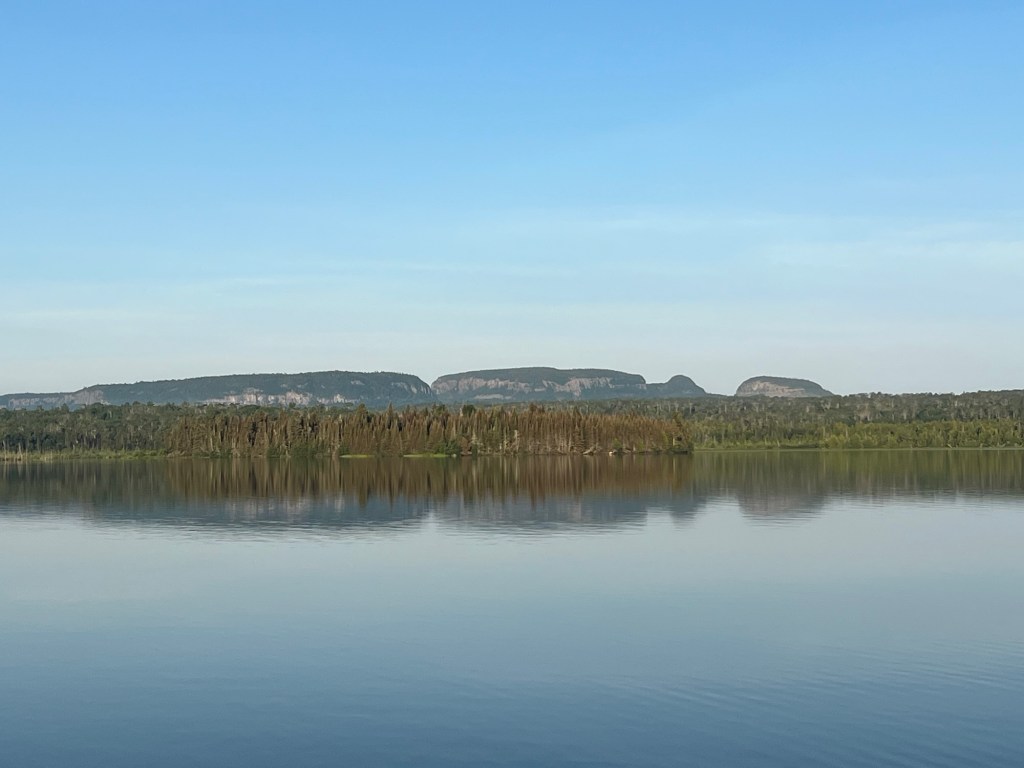
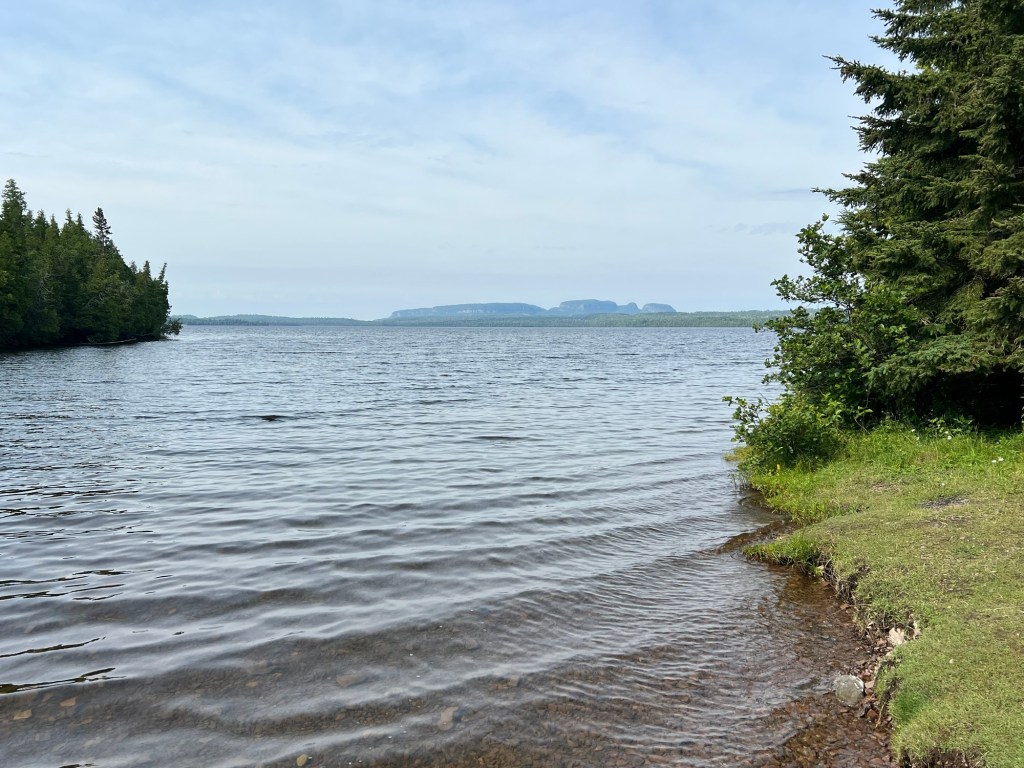
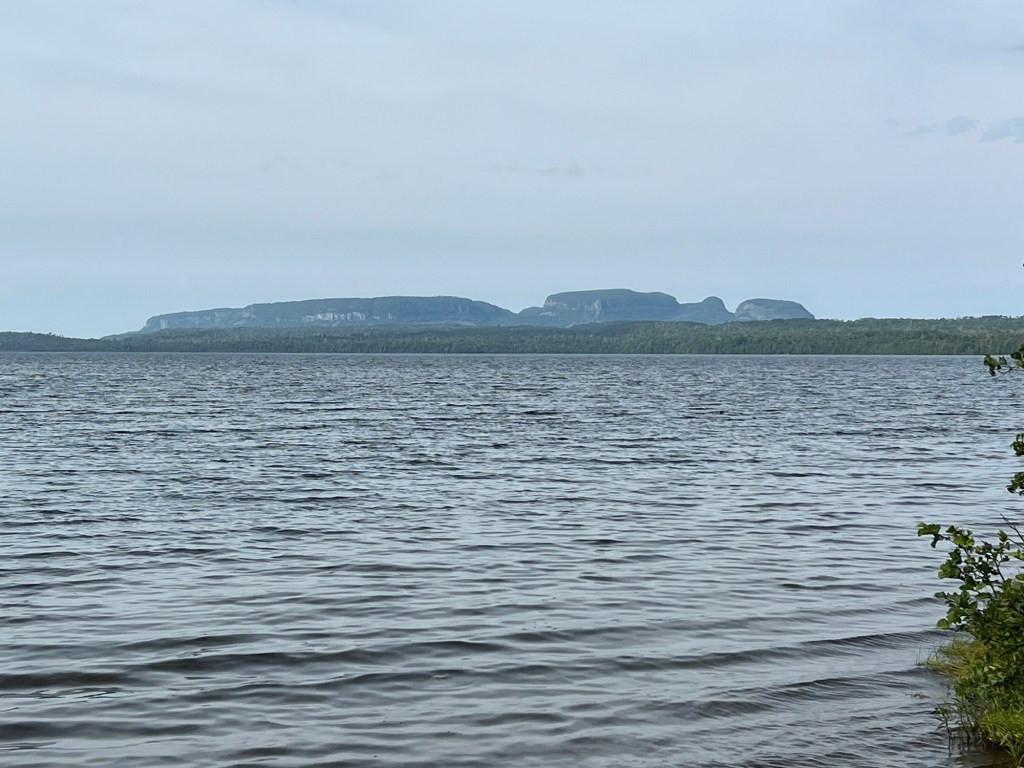
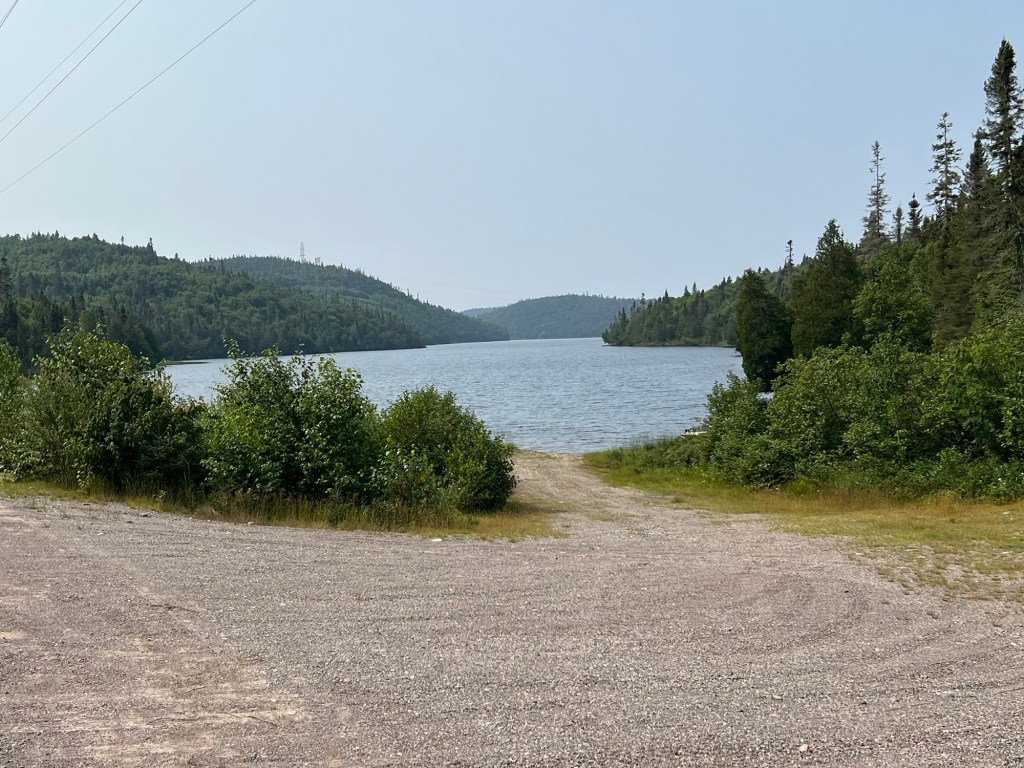
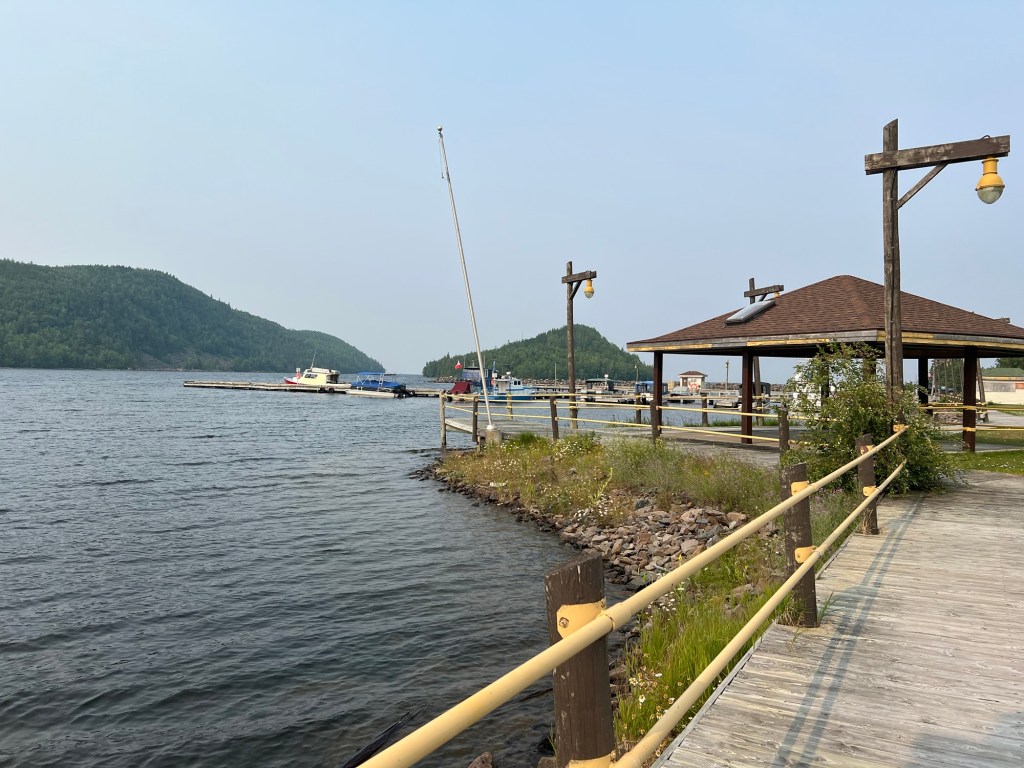
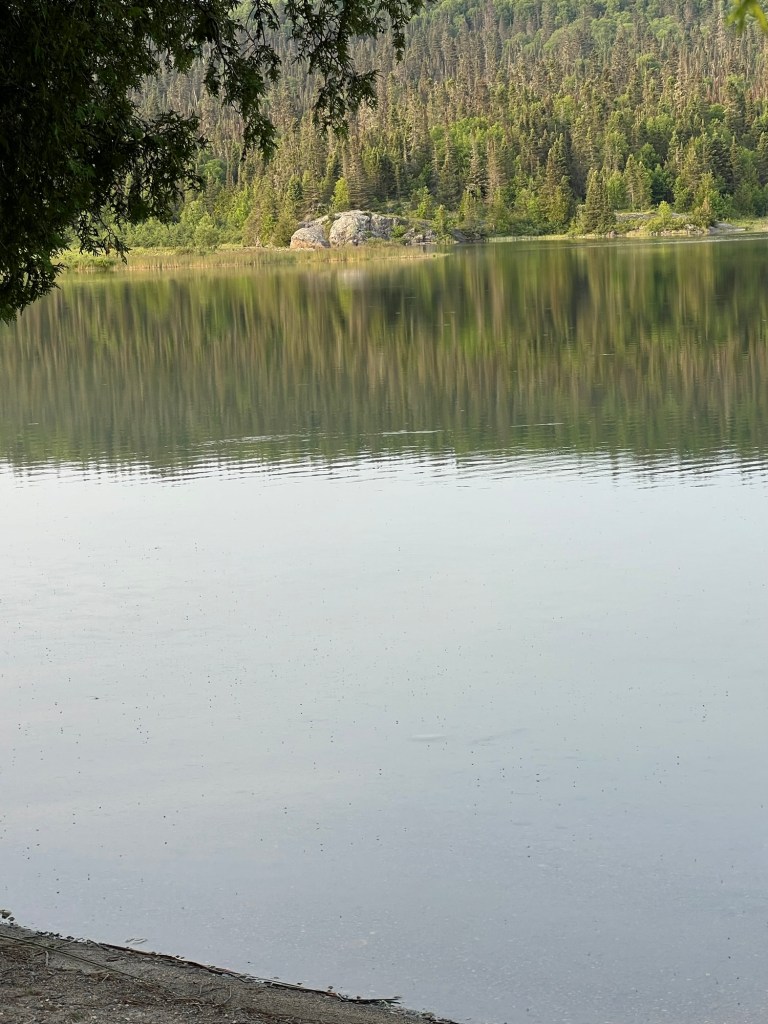
We are now at Sleeping Giant Provincial Park and that is the Sleeping Giant as viewed from the boat ramp at the main campground on Marie Louise Lake.
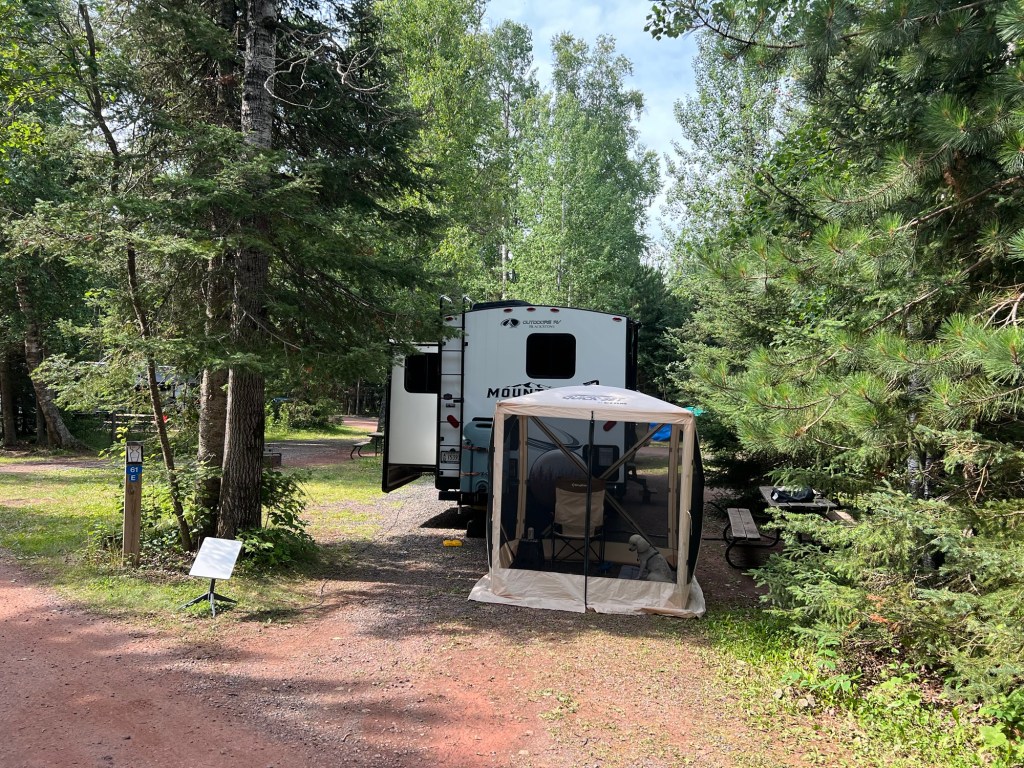
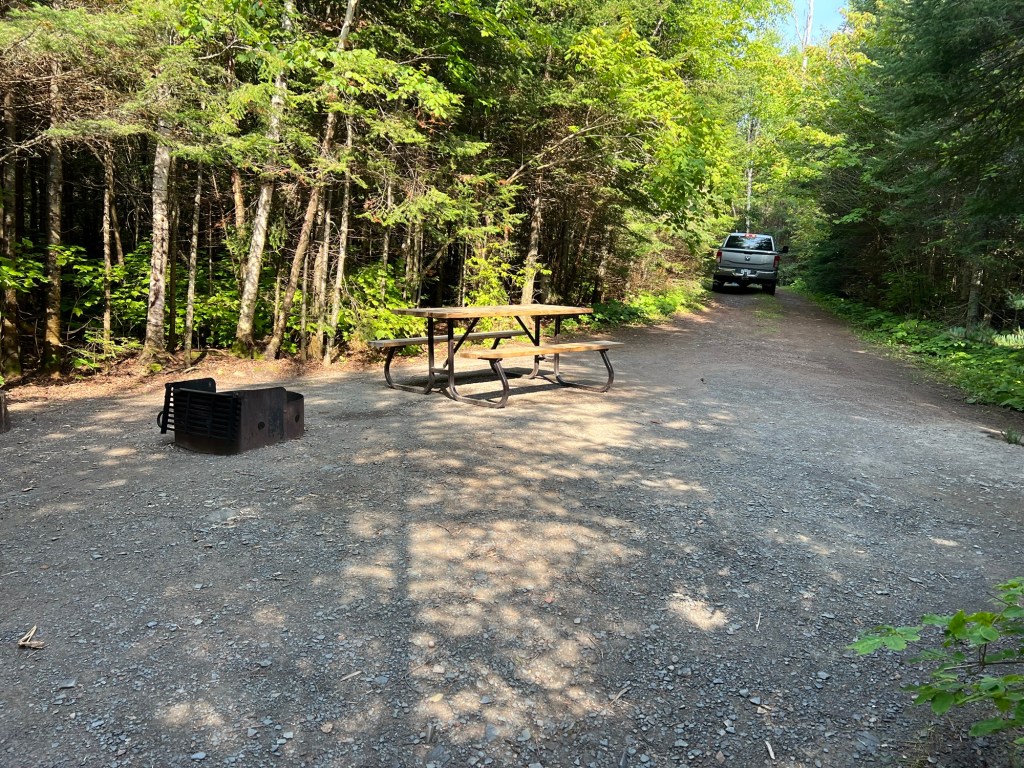
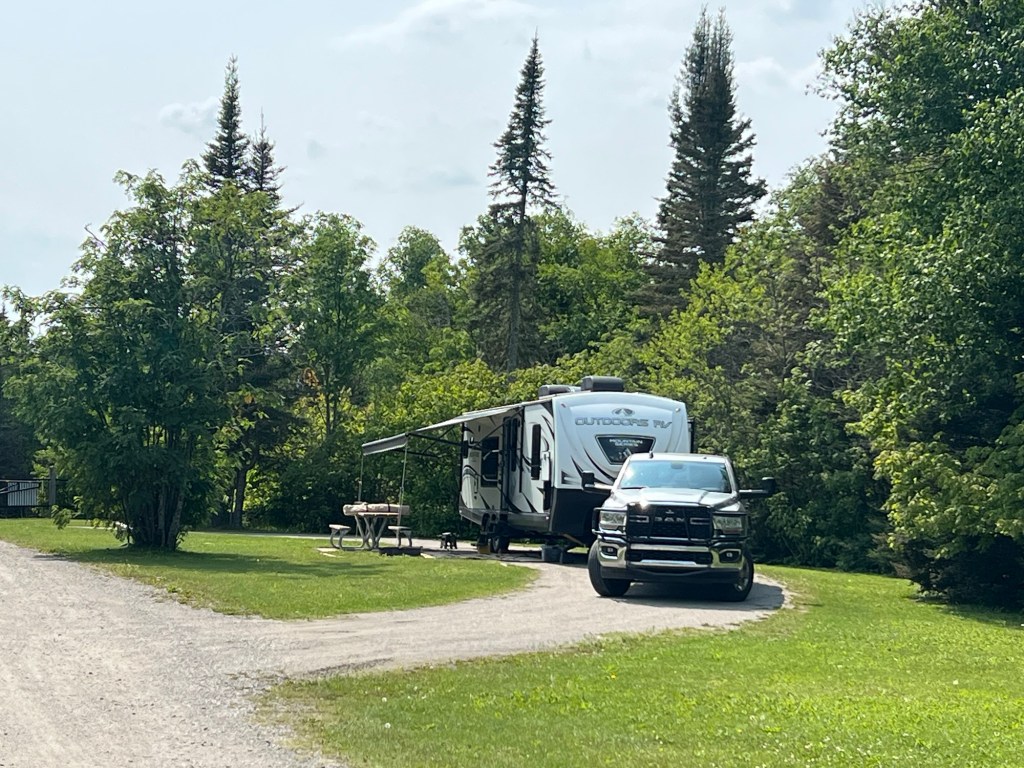
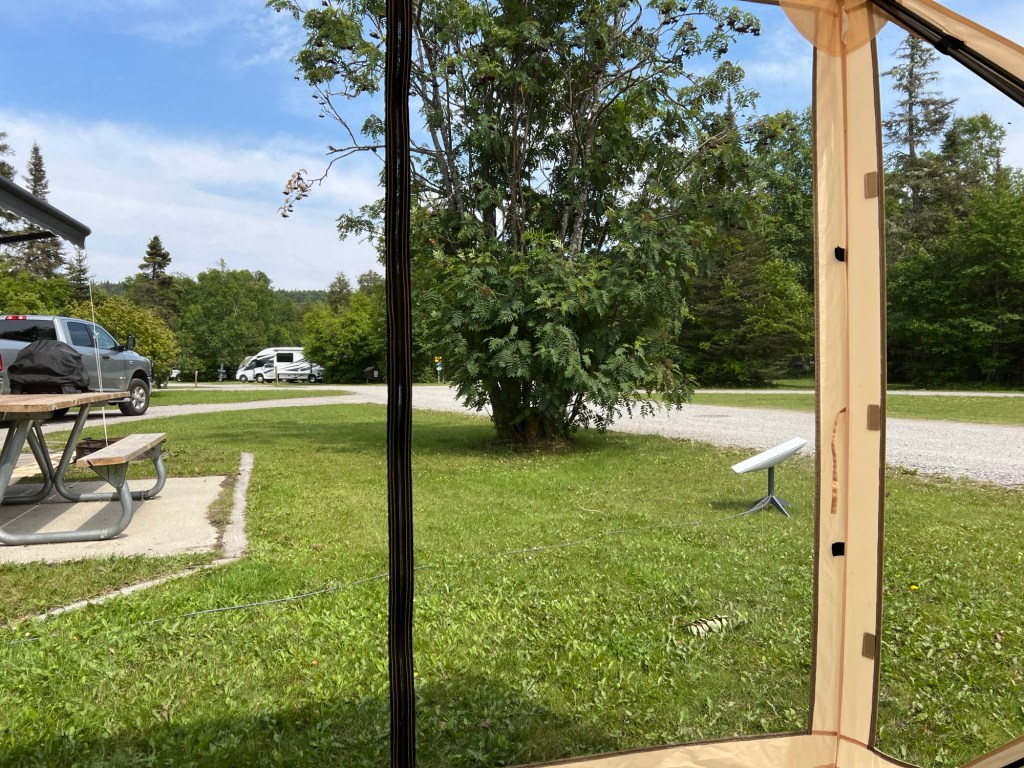
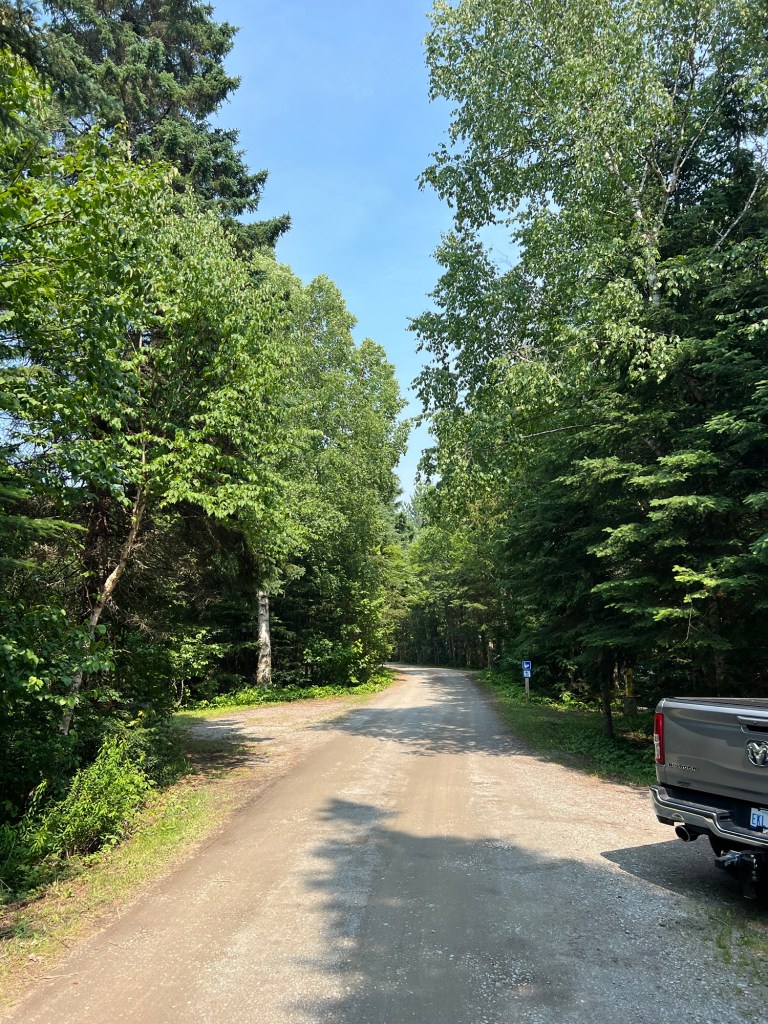
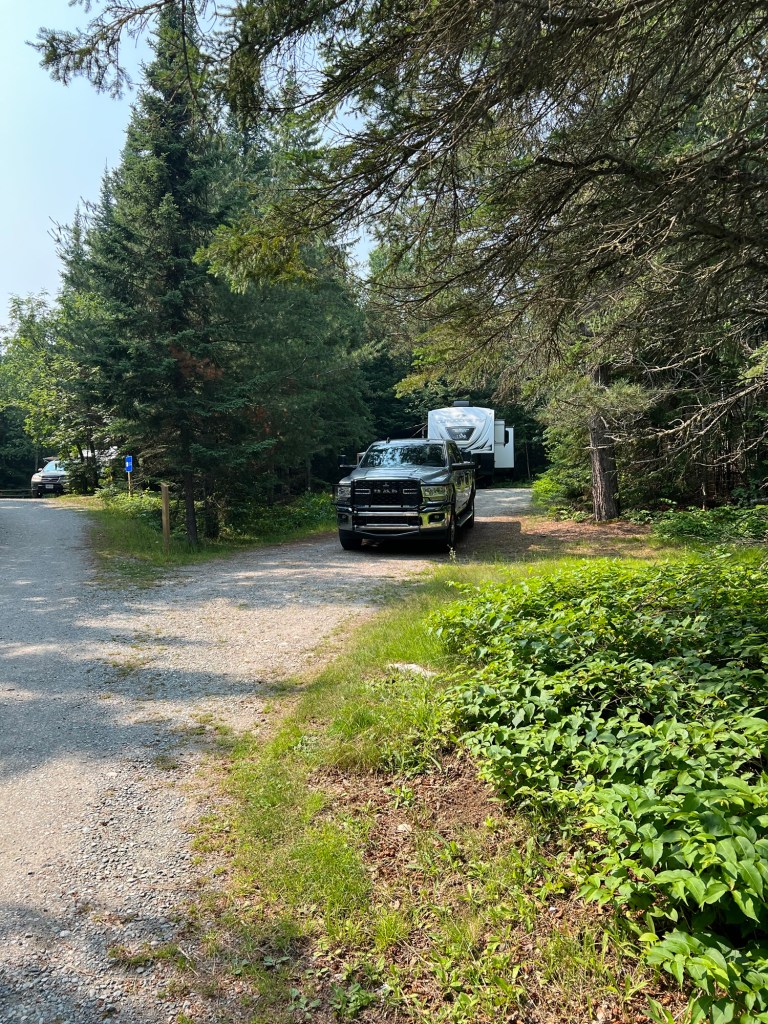
Our site is another fairly narrow pull through, like at Rainbow Falls, although this site is tighter than that one with less vegetation to screen us. It was nice with the folks in the next slot gone, but about an hour after they left another camper pulled in, so now the driveway you can see on our left has a trailer in it.
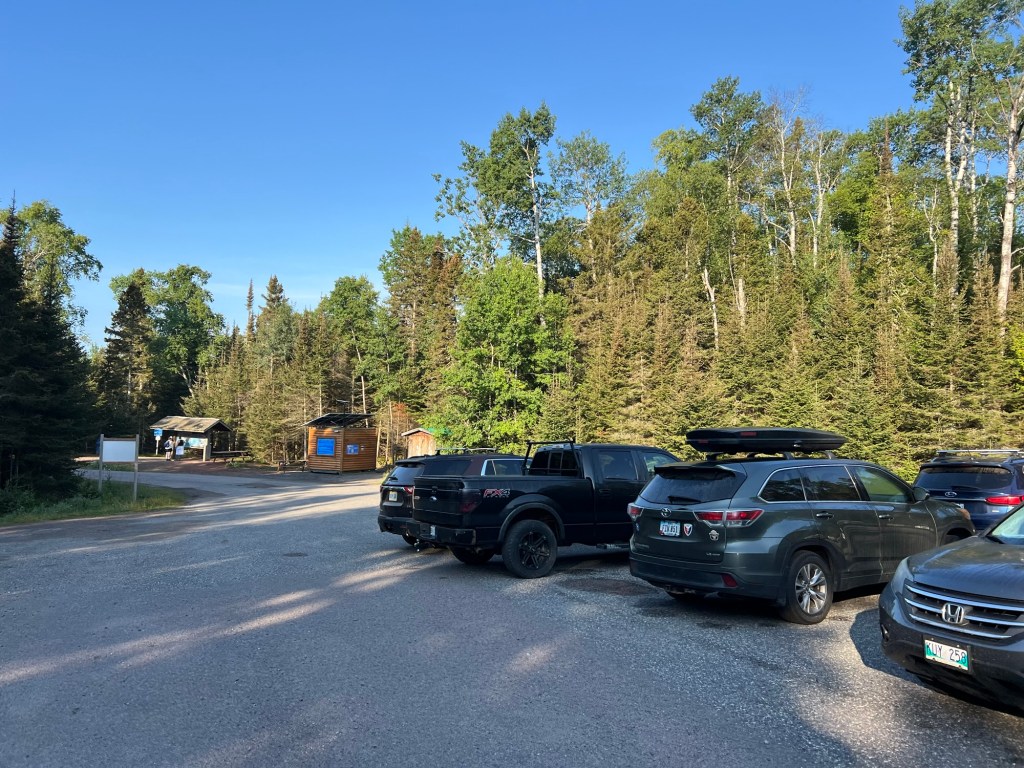
This is a huge park. This morning we set out early to hike a short trail. We were a bit dismayed to find the parking lot fairly full at the trailhead. However, there are several trails here and on the spur trail we took we only saw one other hiker.
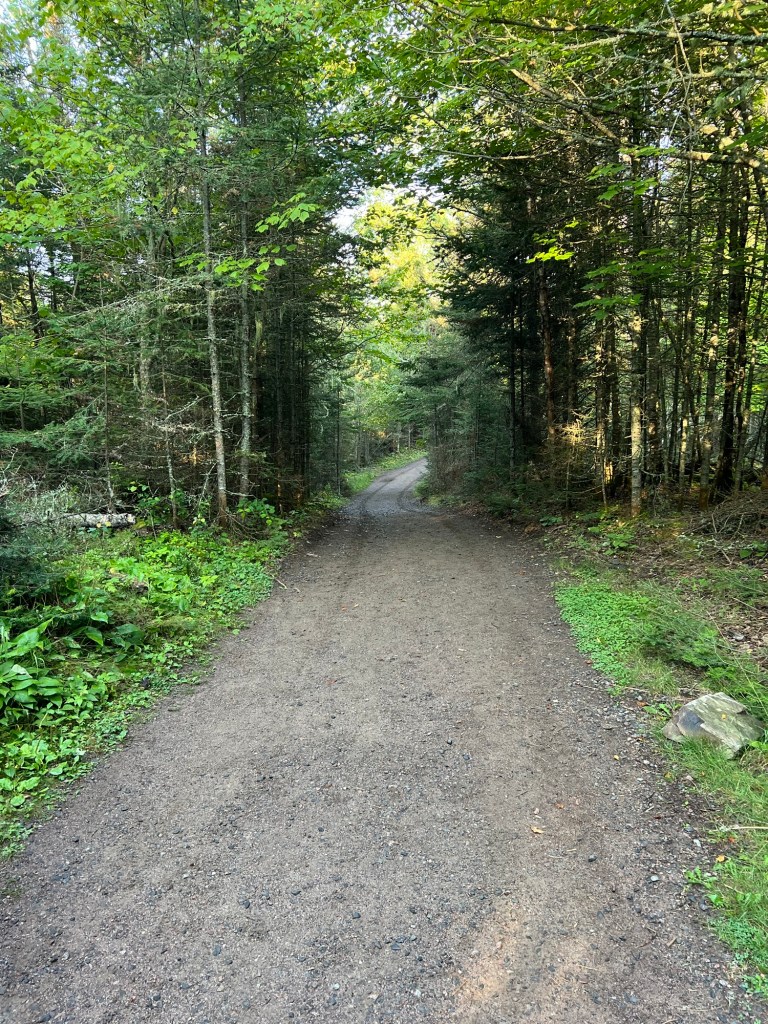
The main trail was quite wide. This is the south end of Kabeyun Trail which runs 23 miles around the south end of Sibley Peninsula and then along the west side to a point about 2/3 up the peninsula. The park takes up almost the whole peninsula.
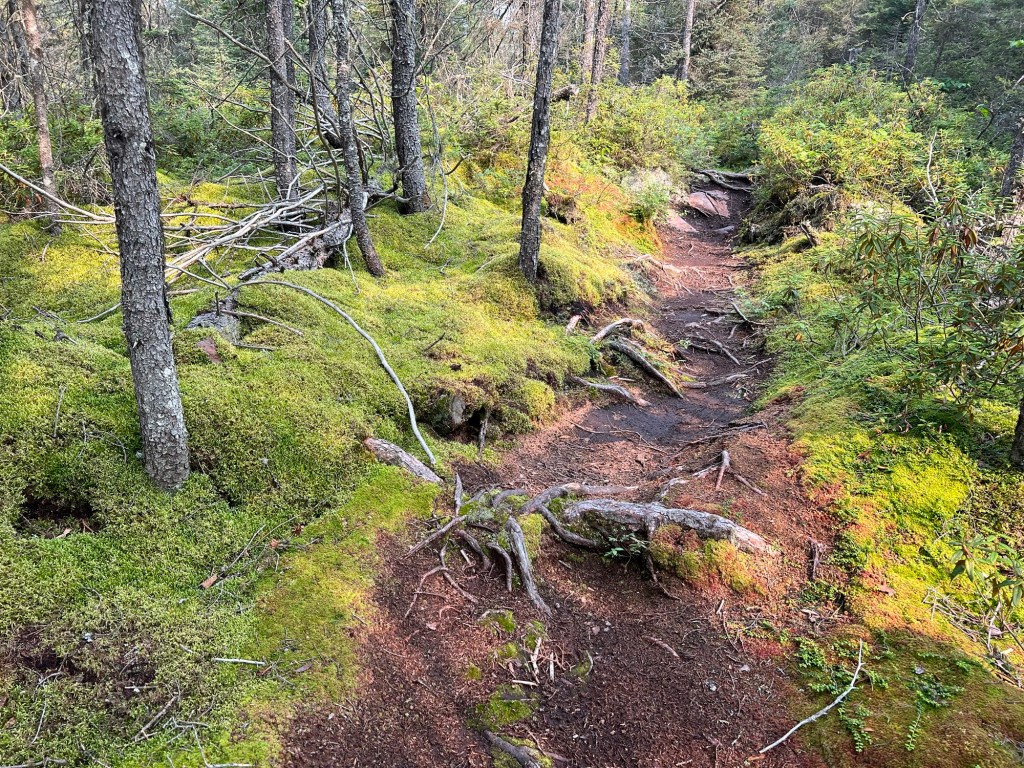
Just about a half mile down the main trail we turned off on the more rugged and narrow Sea Lion Trail.
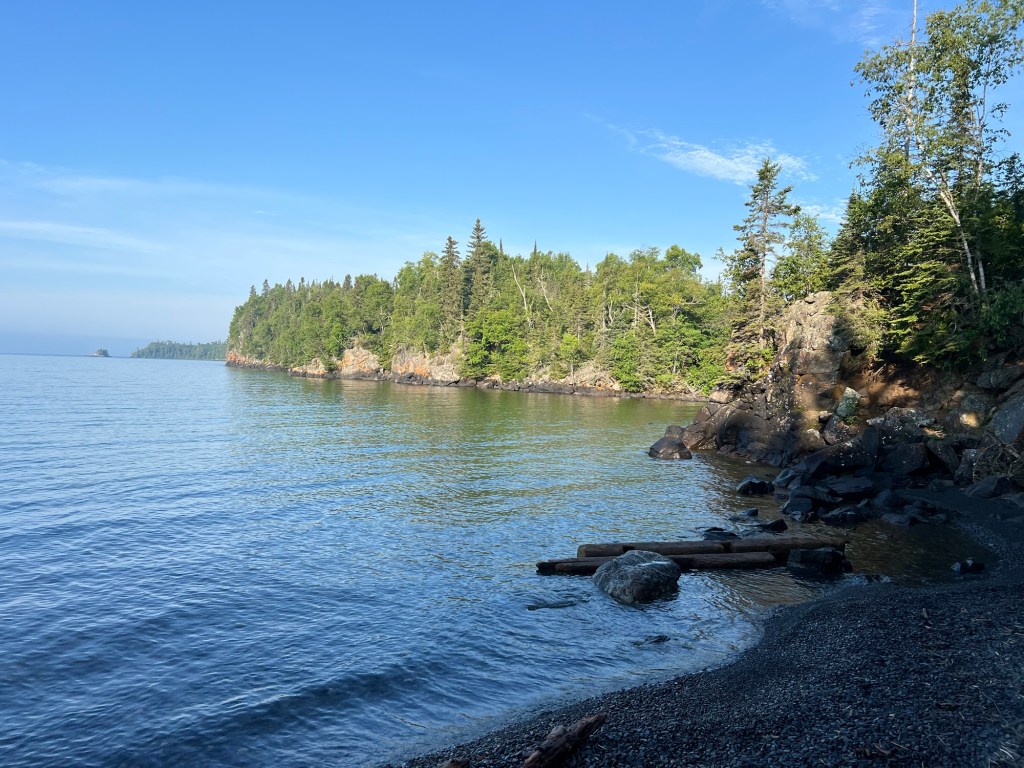
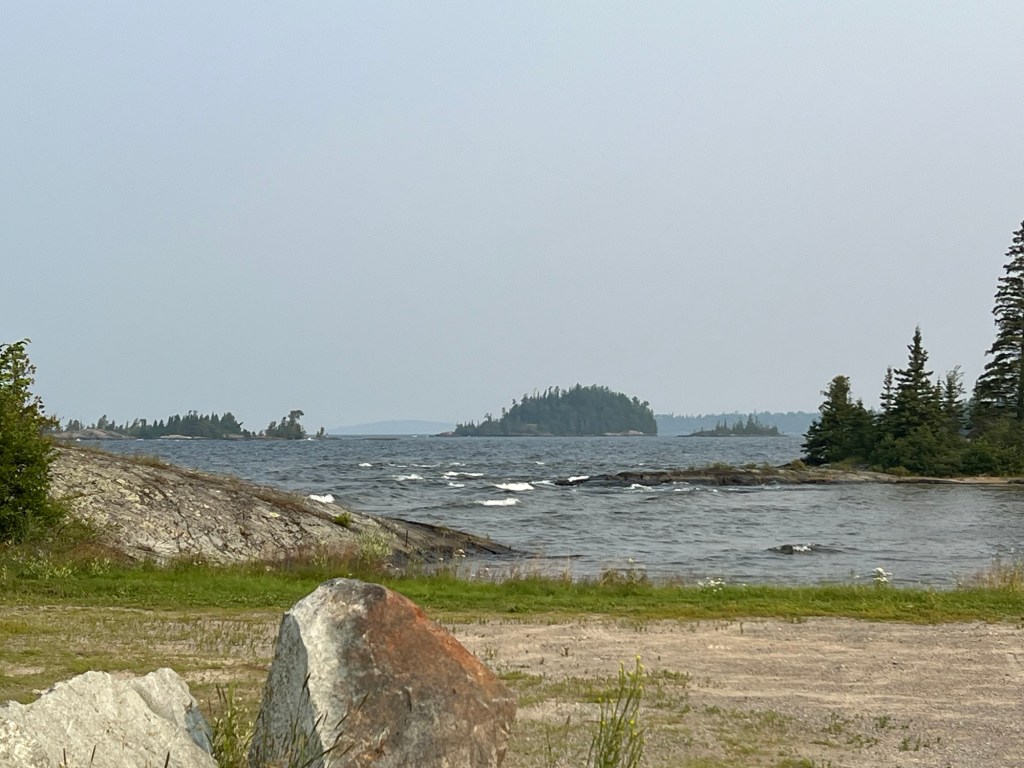
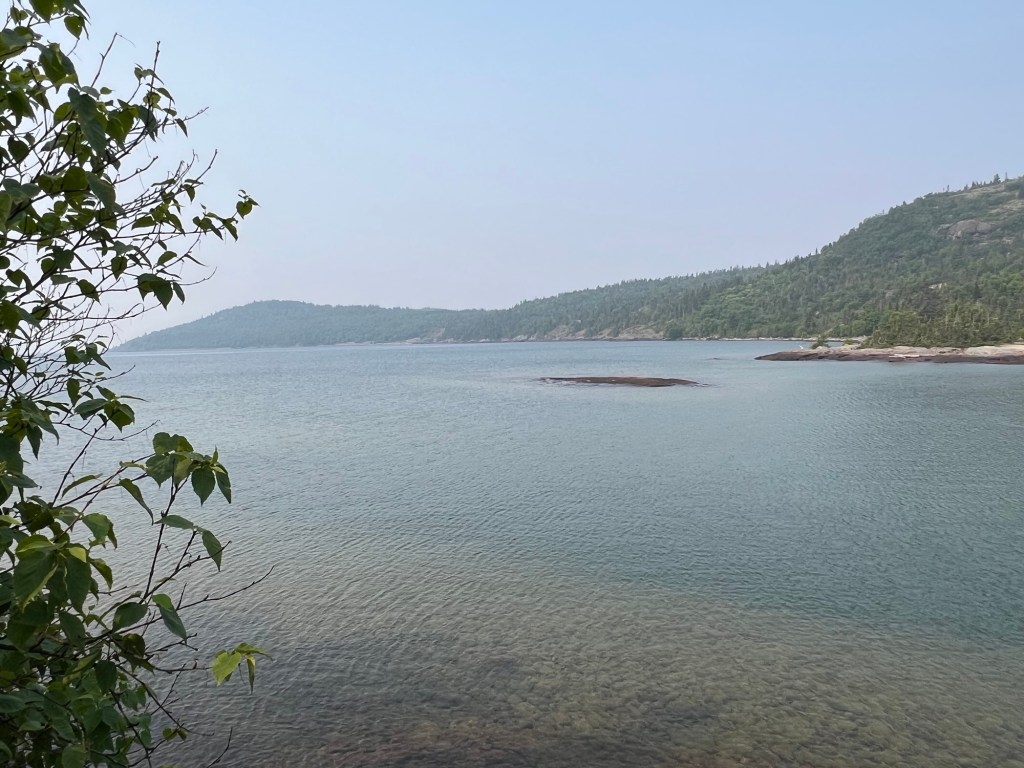
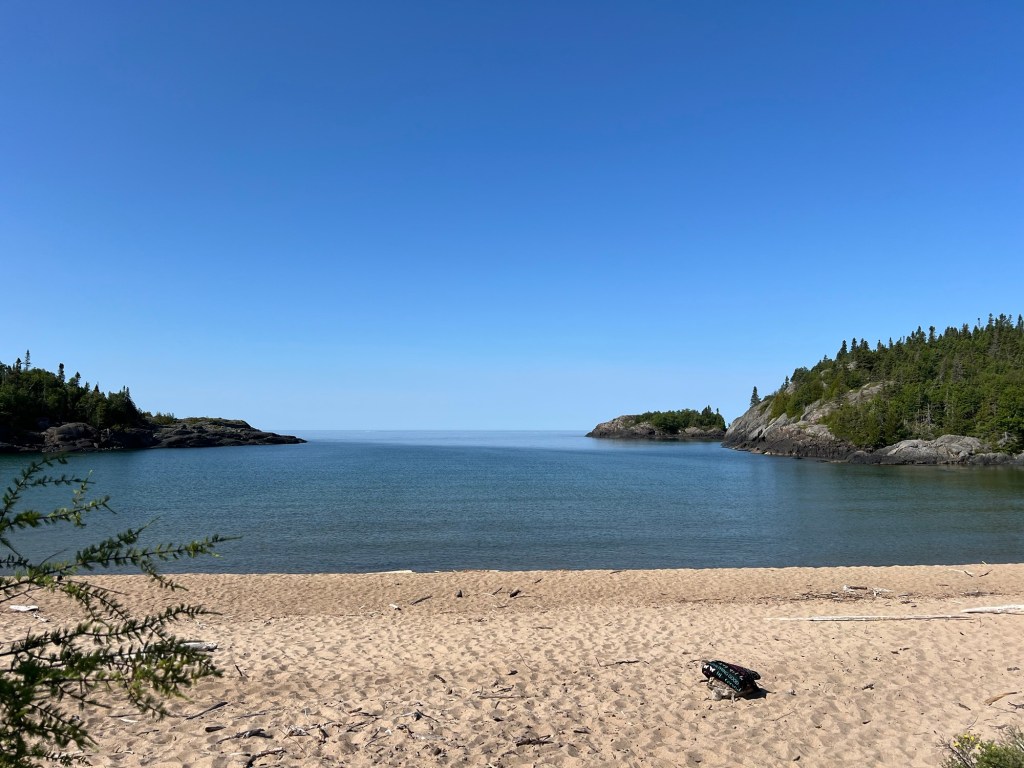
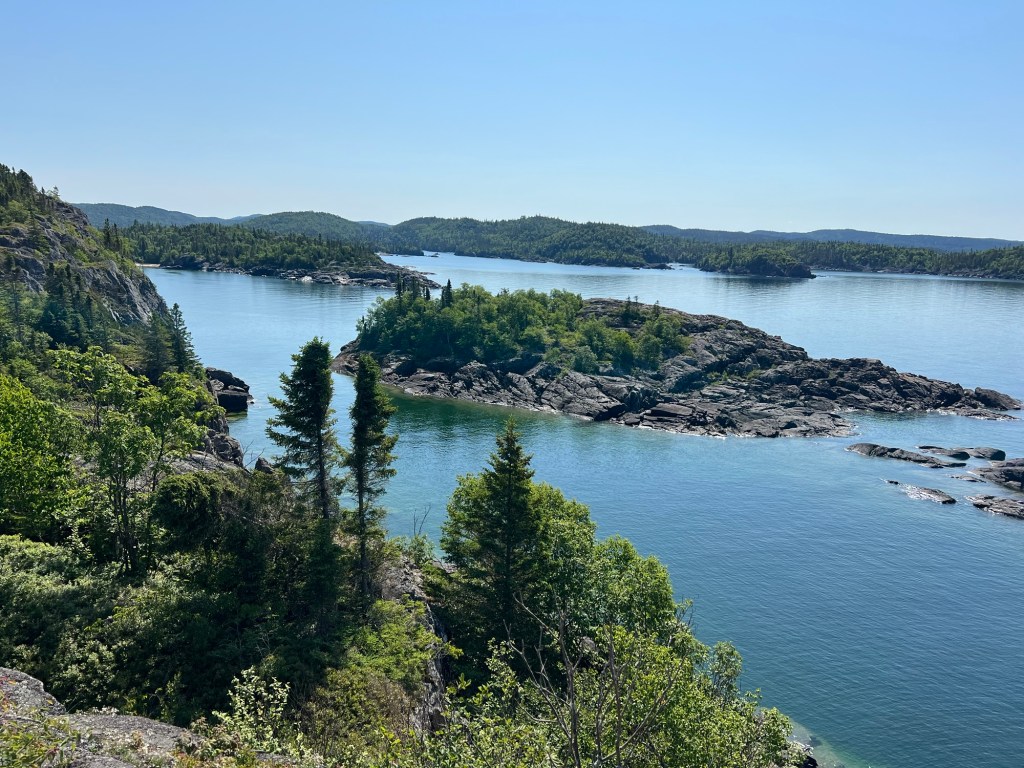
It led just a short way past this lovely little cove on Lake Superior…
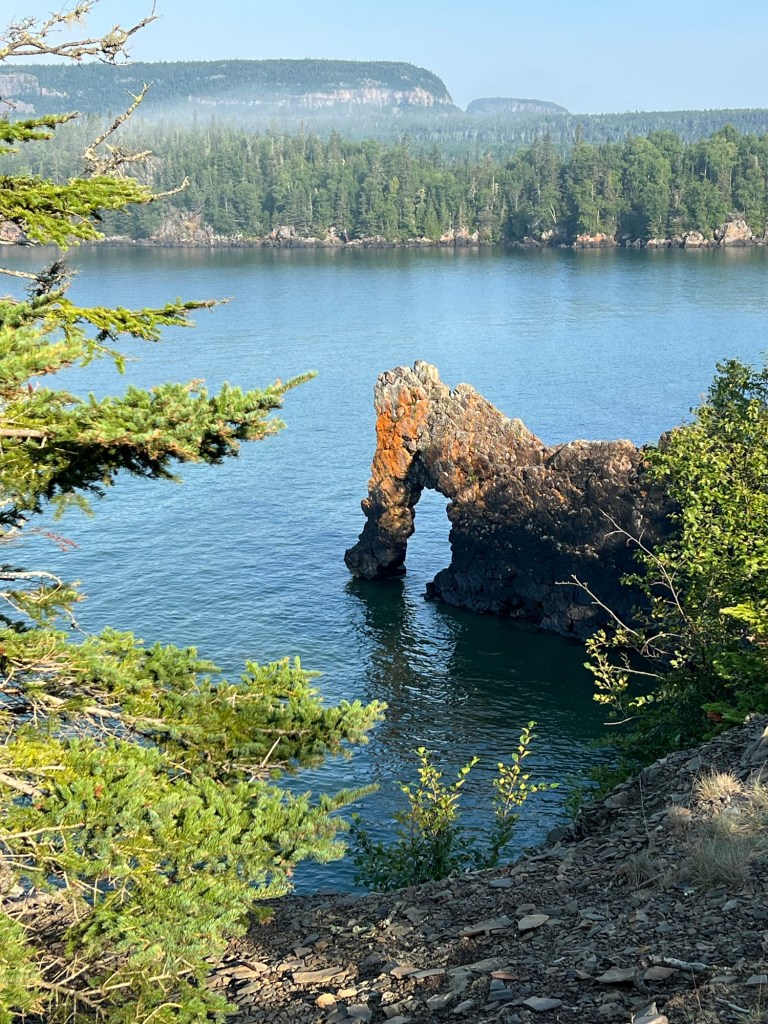
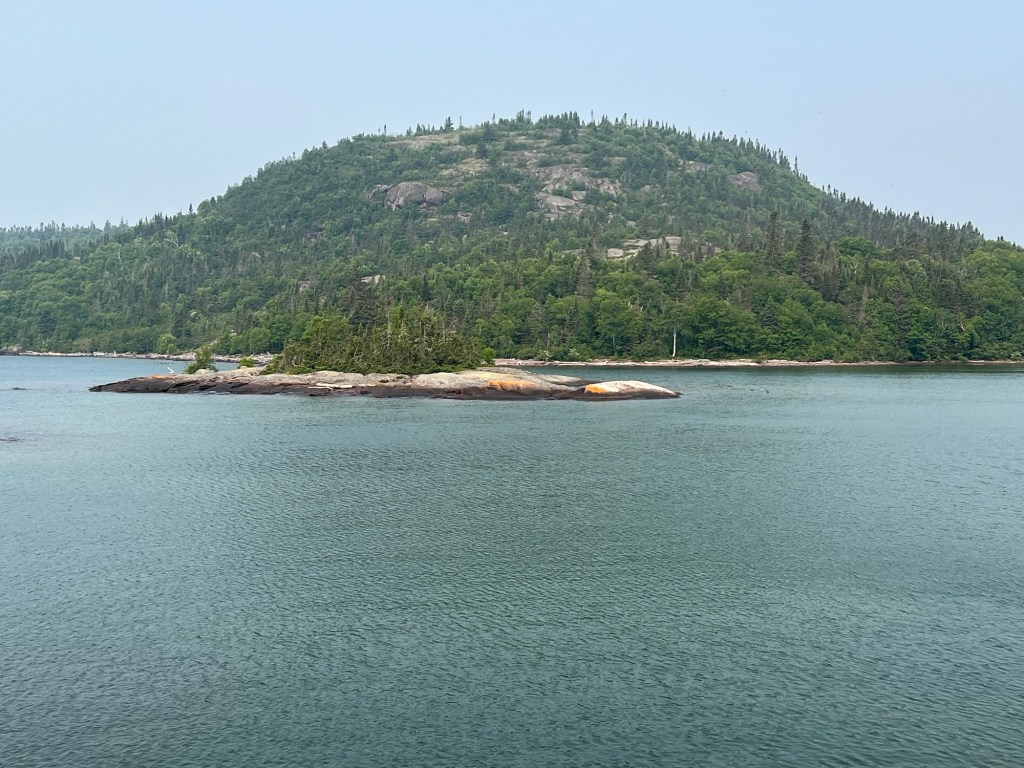
to this natural arch called the Sea Lion. The formation, which is made of crystallized magma called diabase, used to have more rock that made its head. The head fell many years ago but the name stuck.
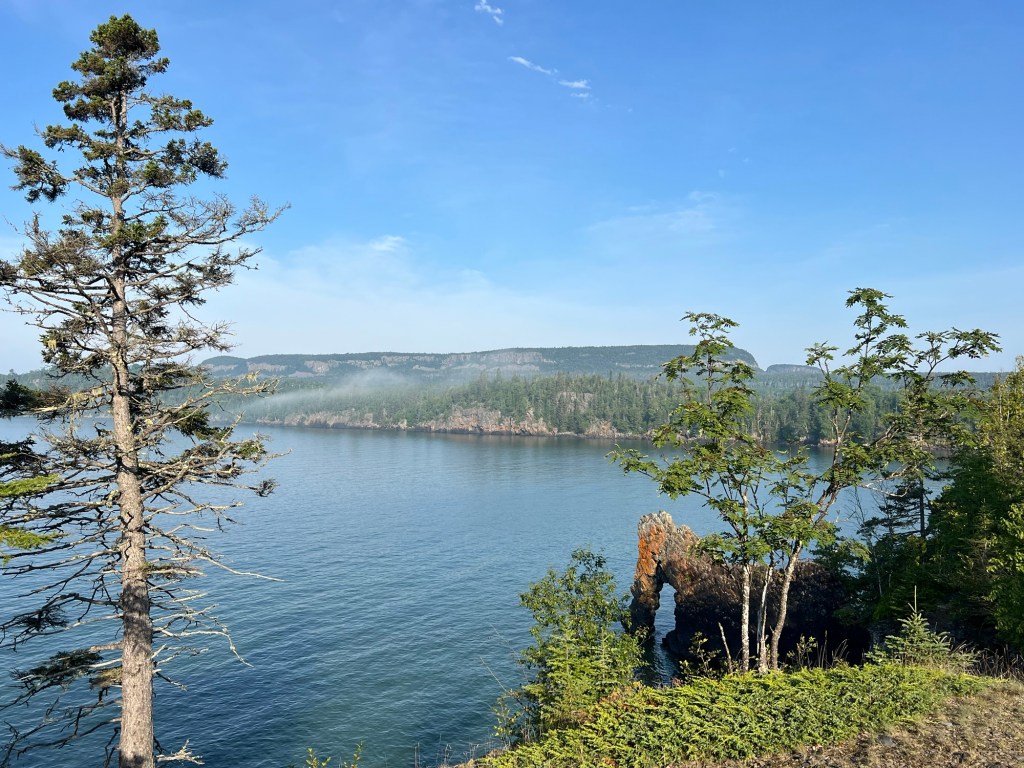
And in the background is the Sleeping Giant.
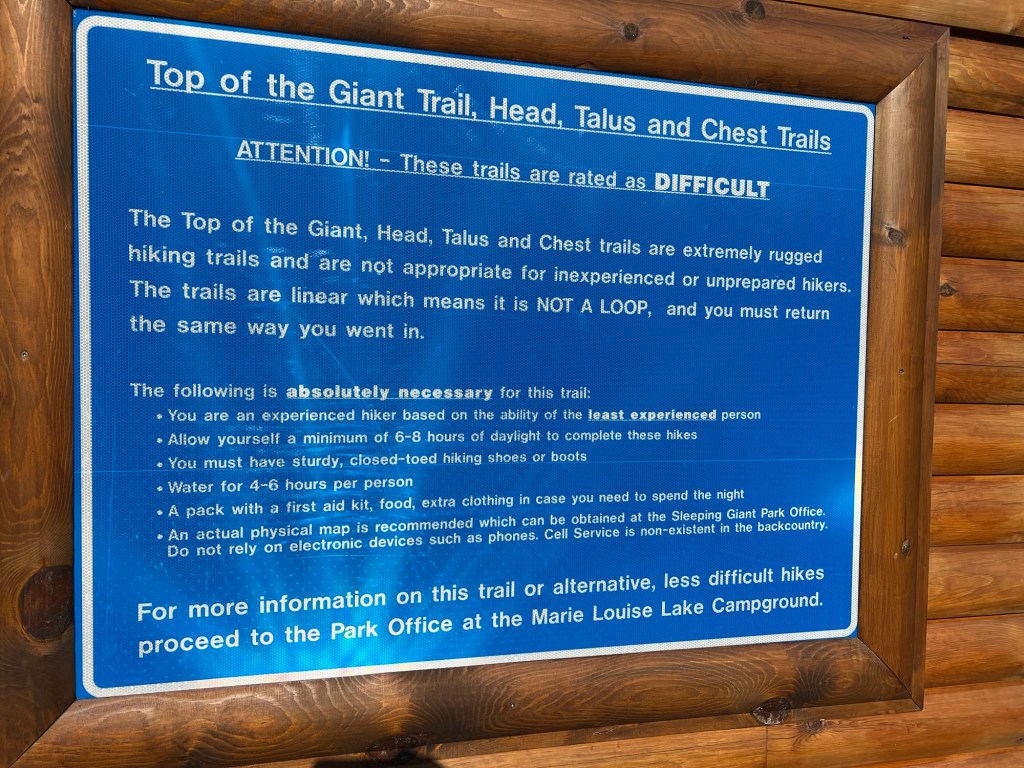
From pictures I’ve seen there are some stunning views in this park. Unfortunately the best are from these trails, the shortest of which is 10 miles, so we won’t be seeing those.
Instead, after our short hike we drove along Marie Louise Drive, a one way, dirt road along the far side of Marie Louise Lake.
There are a few very nice tent sites back here,
each with its own lake access.
Further down the road a porcupine crossed in front of us. Although he went slowly, he blended so well with the forest floor I could not get a good picture.
Back on the main road we pulled into a picnic site with a view of Marie Louise Lake…
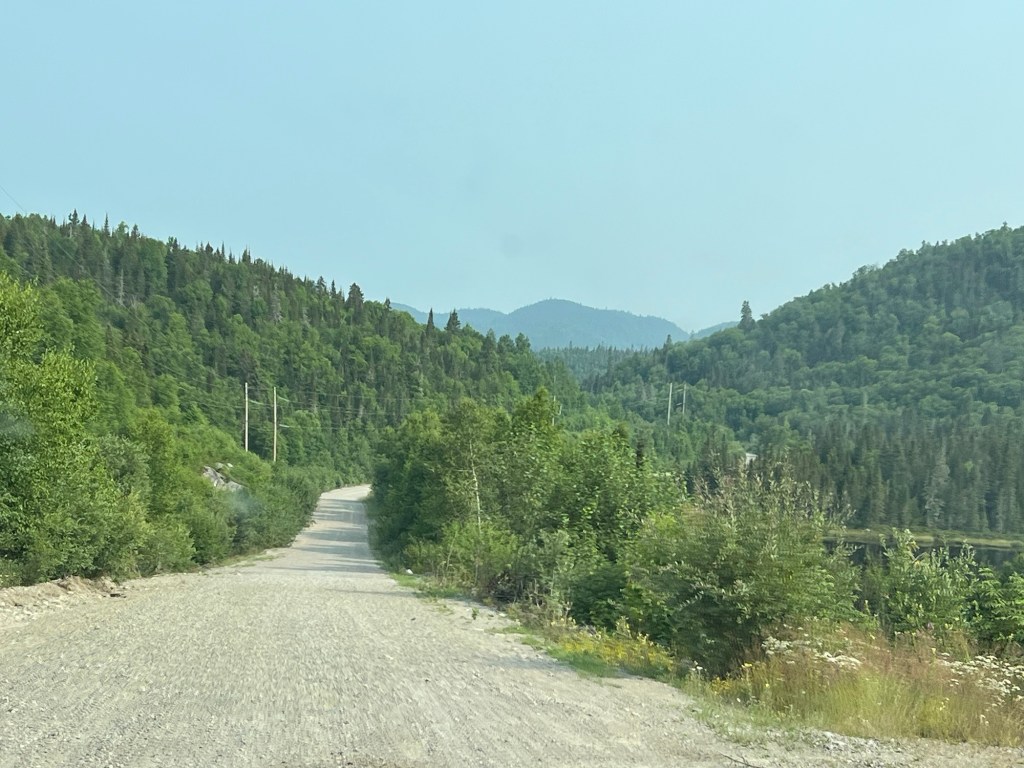
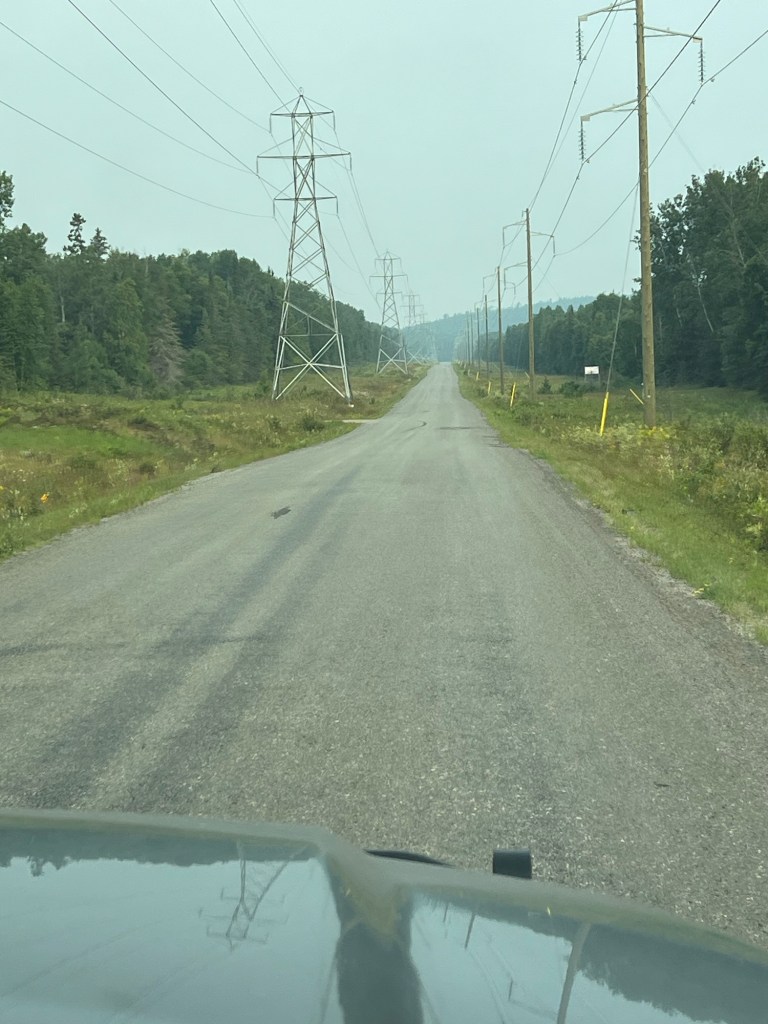
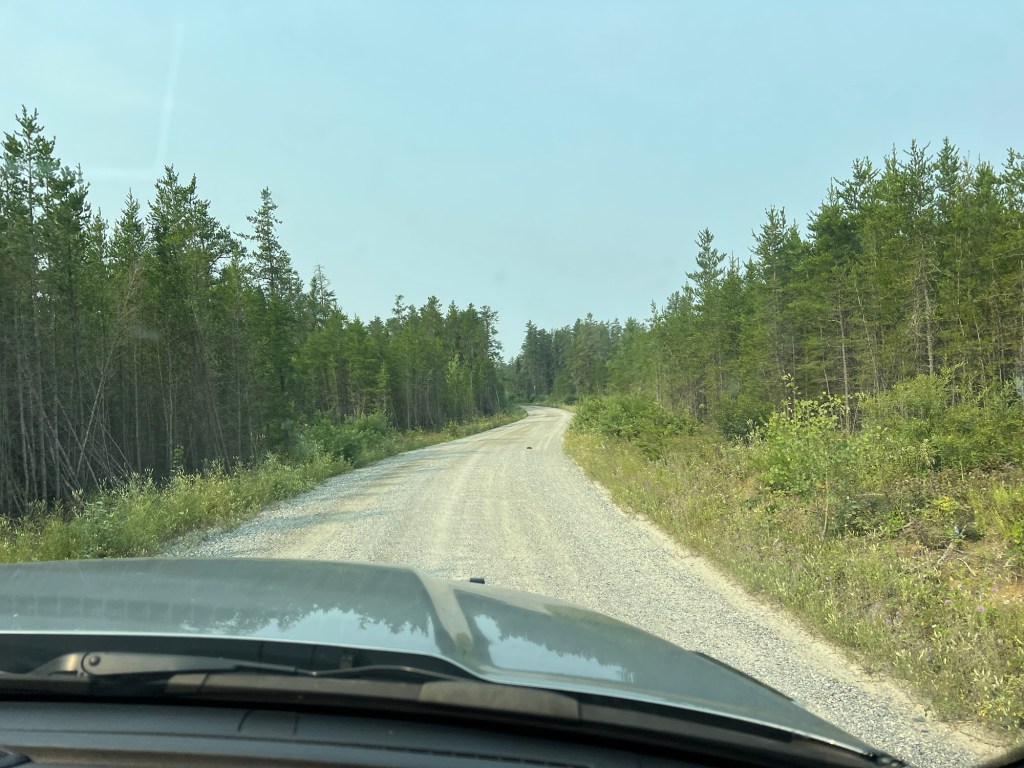
I was looking for something for us to do that didn’t involve a hike when I noticed a road on the map that led well inland. This is very unusual here, so I suggested we check it out. It was a paved road for a bit, but in less than a mile it turned to gravel. It led back through the hills and lakes here and had a set of power lines running along it.
The paved part ran along the other side of Whitesand Lake from the park and had some houses, cottages and campers along it.
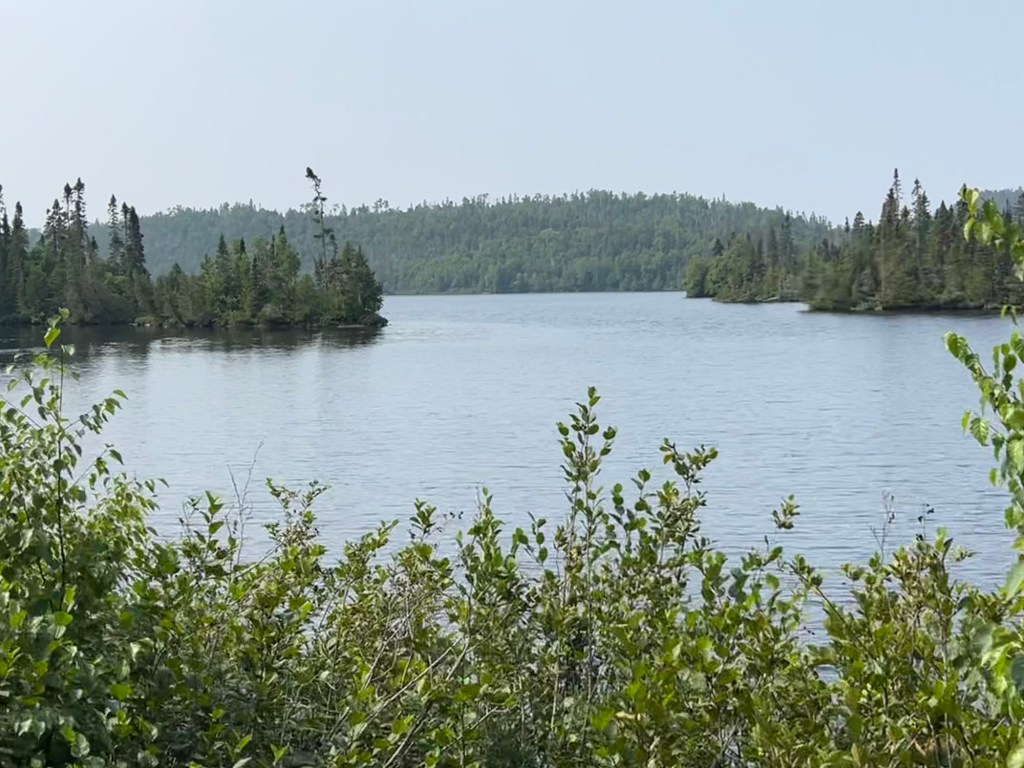
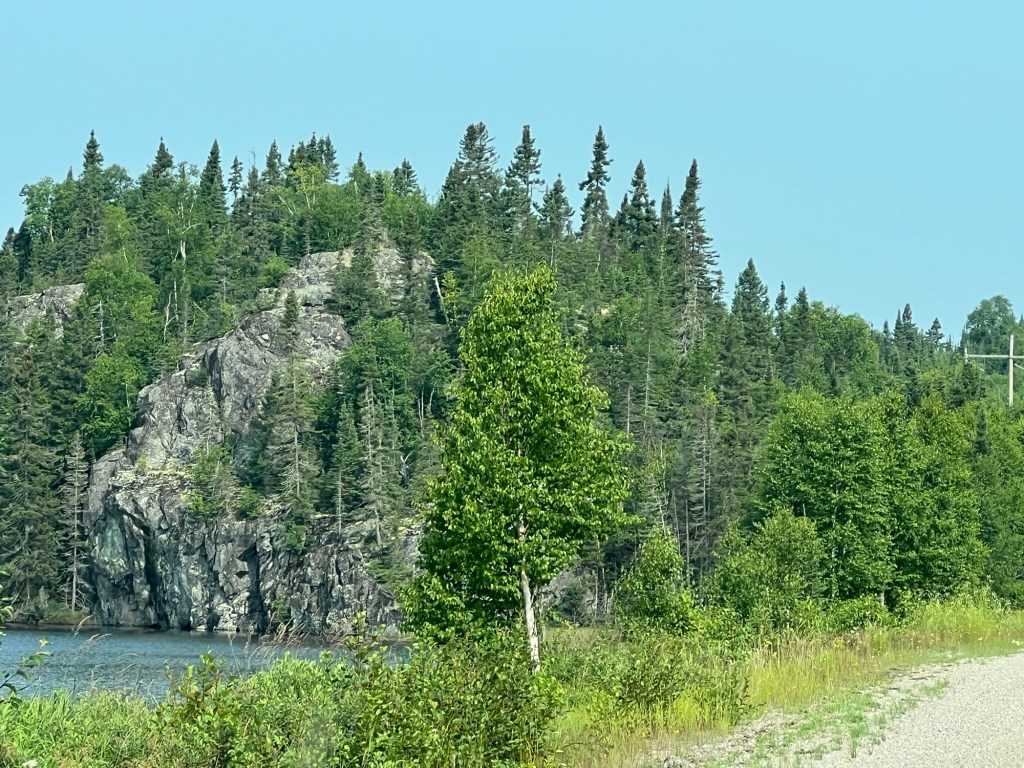
This is all very rugged and very pretty country.
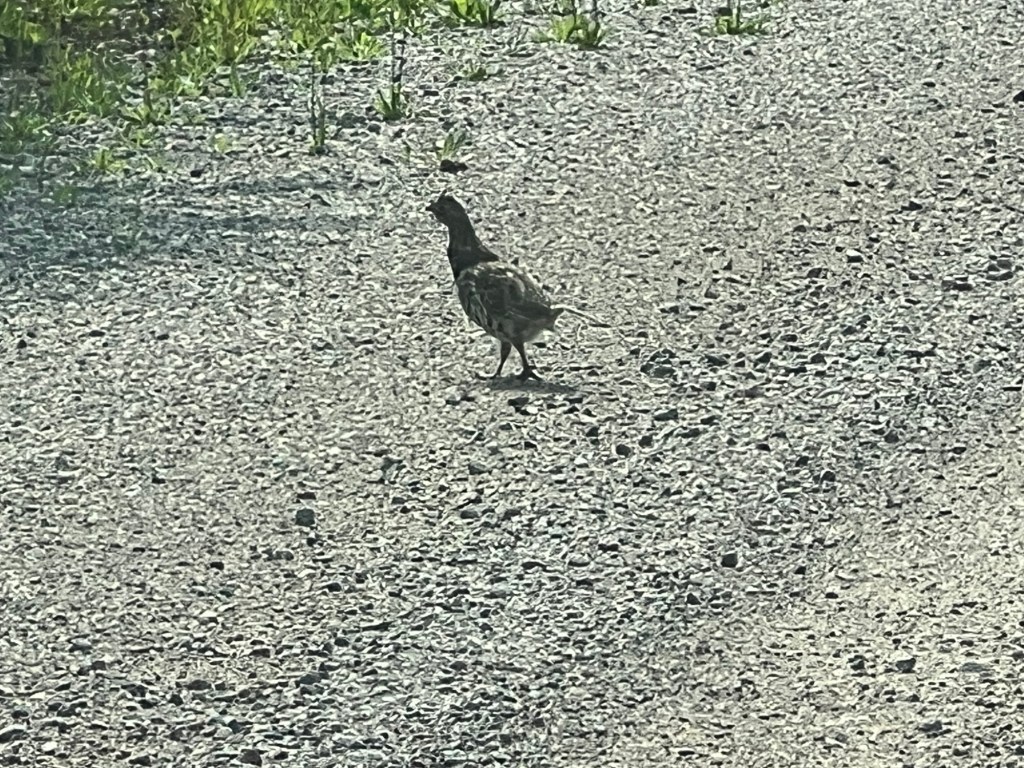
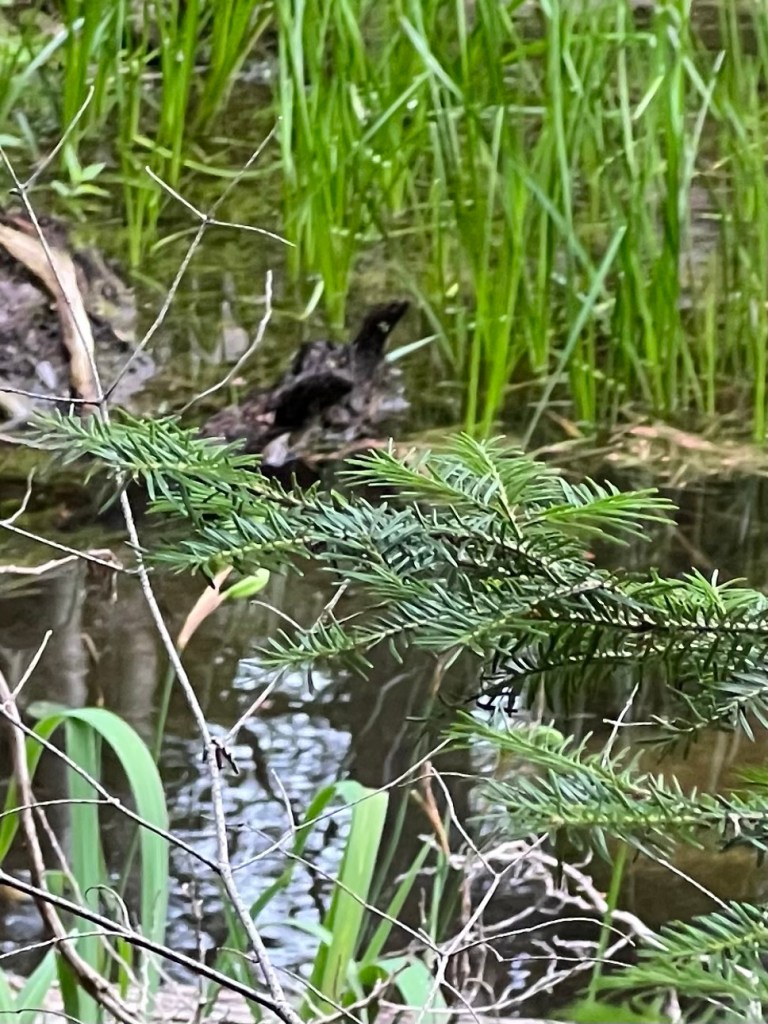
We kept checking the lakes and marshes for moose or beaver and although we saw beaver dams and lodges the only wildlife we saw was this grouse.
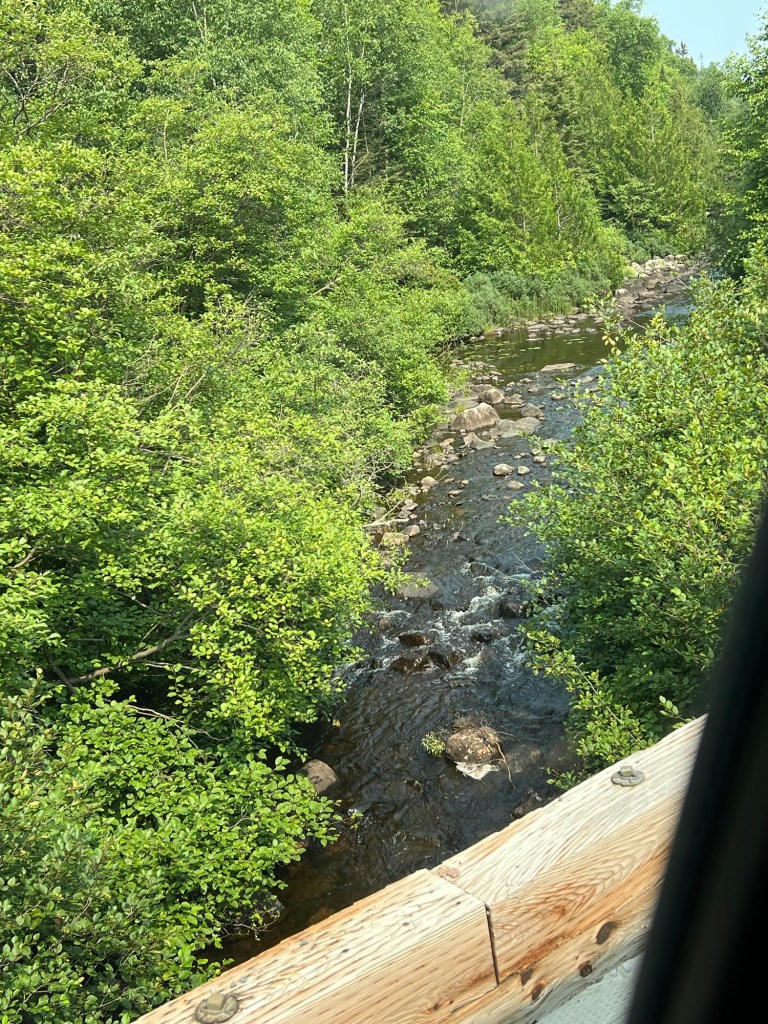
The road got smaller and at one point crossed this one-lane bridge. We were also going generally uphill, although gradually.
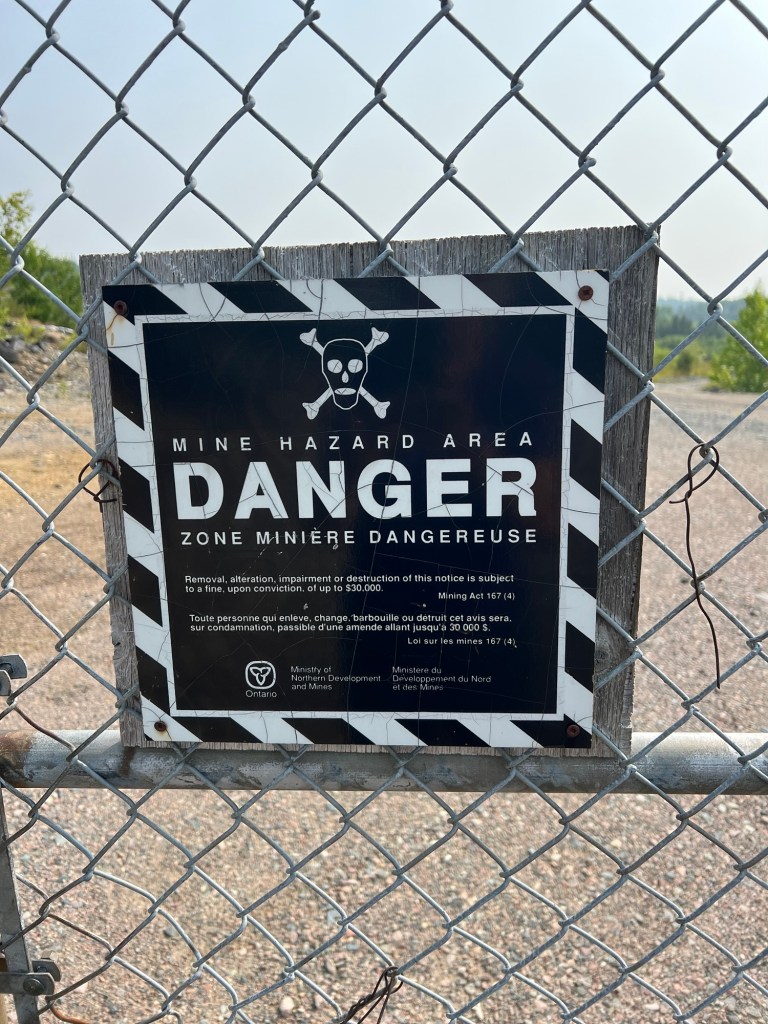
After 13 miles and 500 feet the road ended here. I assume the power lines were for the mining operation, probably now defunct, but they disappeared from sight beyond the fence.
Oh well, we saw some pretty lakes.
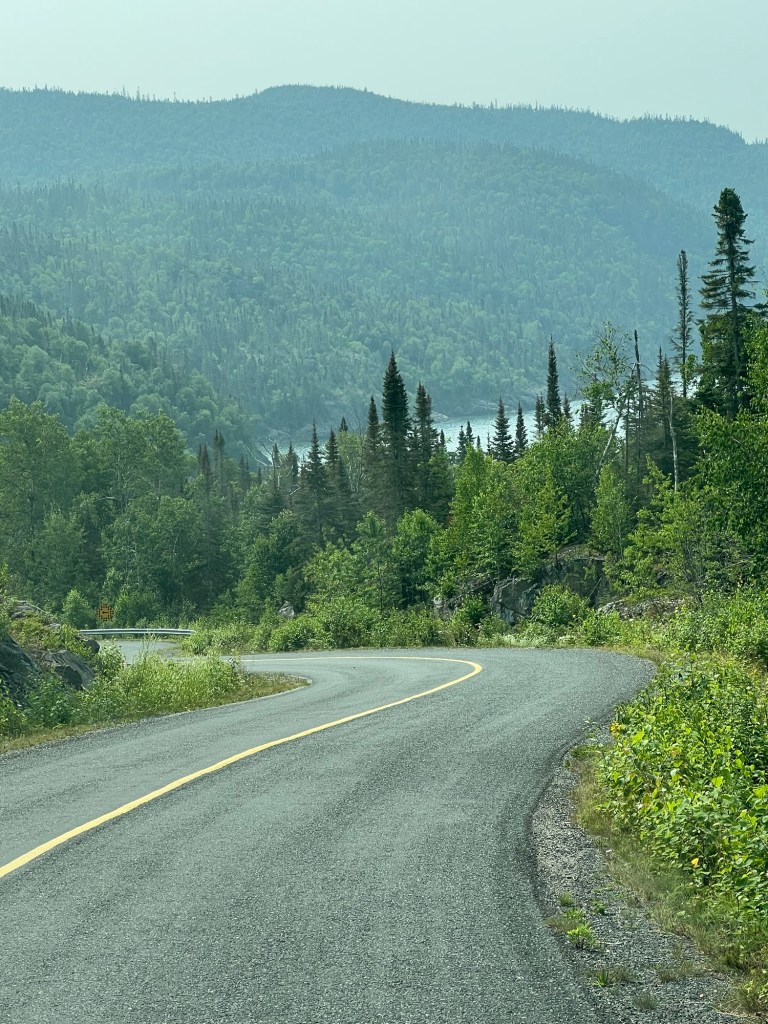
Since we were out and about we decided to drive the few miles further to the little town of Schreiber and check out their beach. The road to the beach was dramatic.
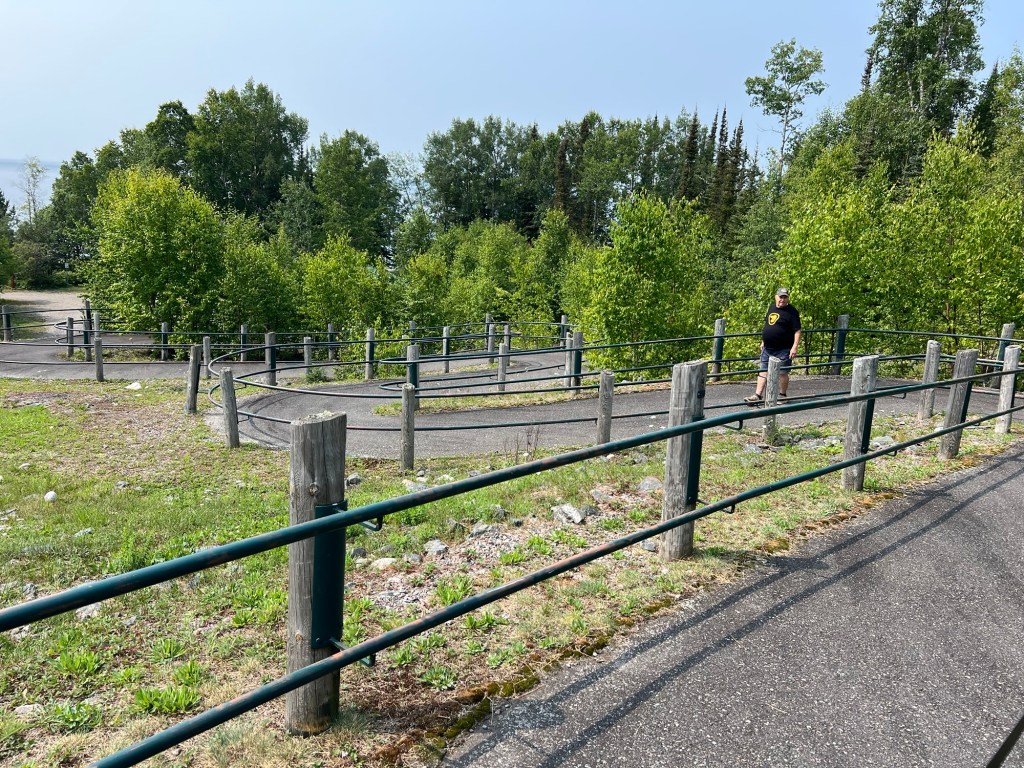
The lake shore on the north side of Superior is usually steep, and the hill continued from the parking lot down to the beach.
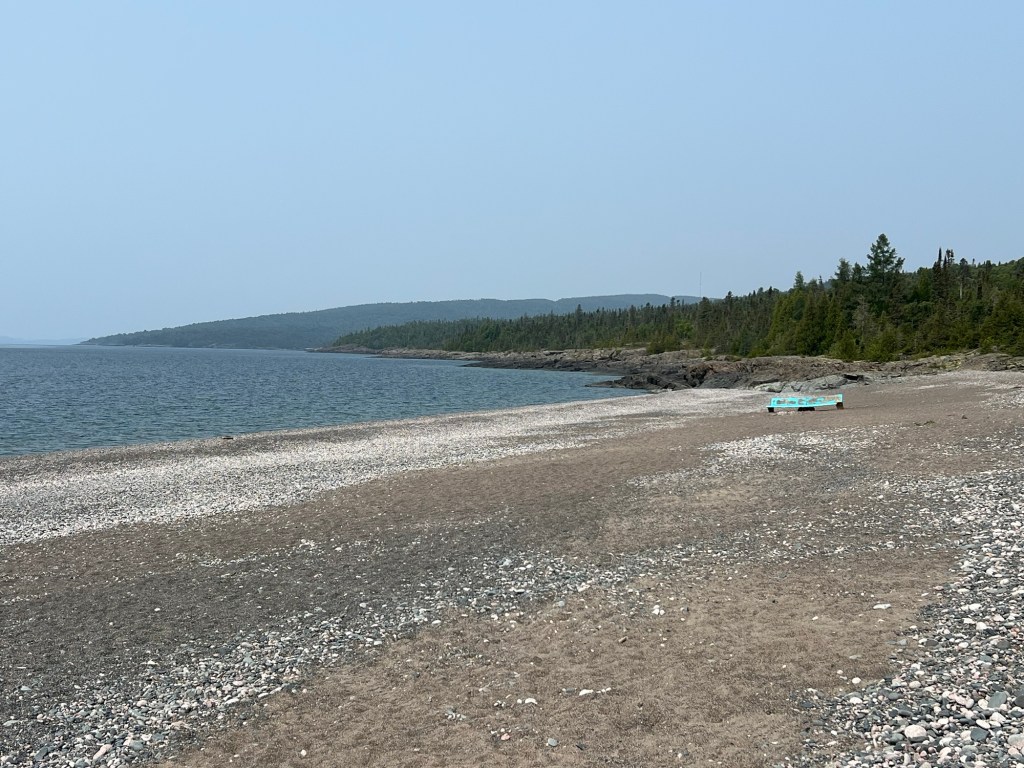
It was a nice little beach.
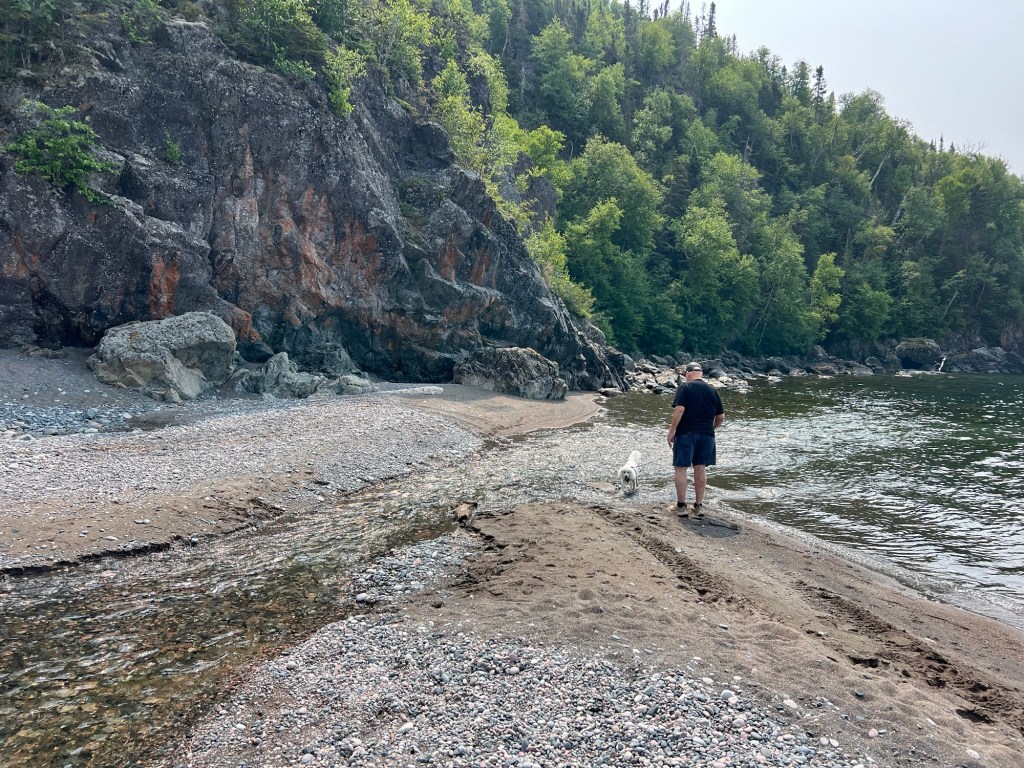
We walked down to where a little creek ran into the lake…
and Matey went wading.
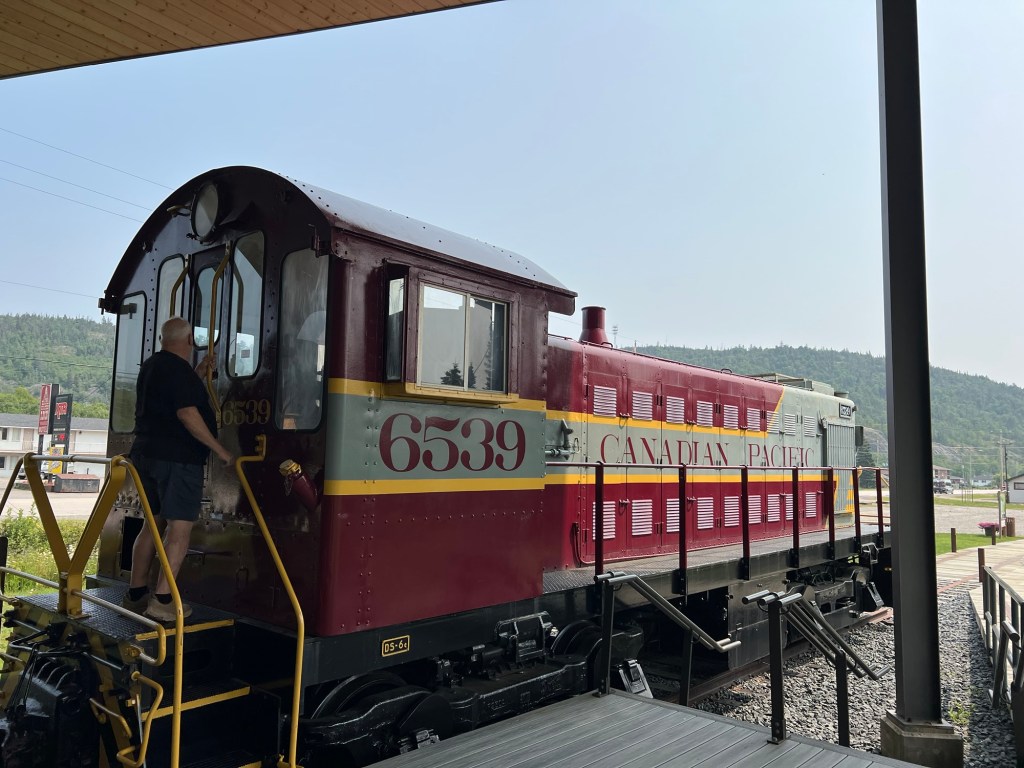
On the way out of town we stopped at their Welcome Center and railroad museum. Unfortunately you couldn’t go inside the engine.
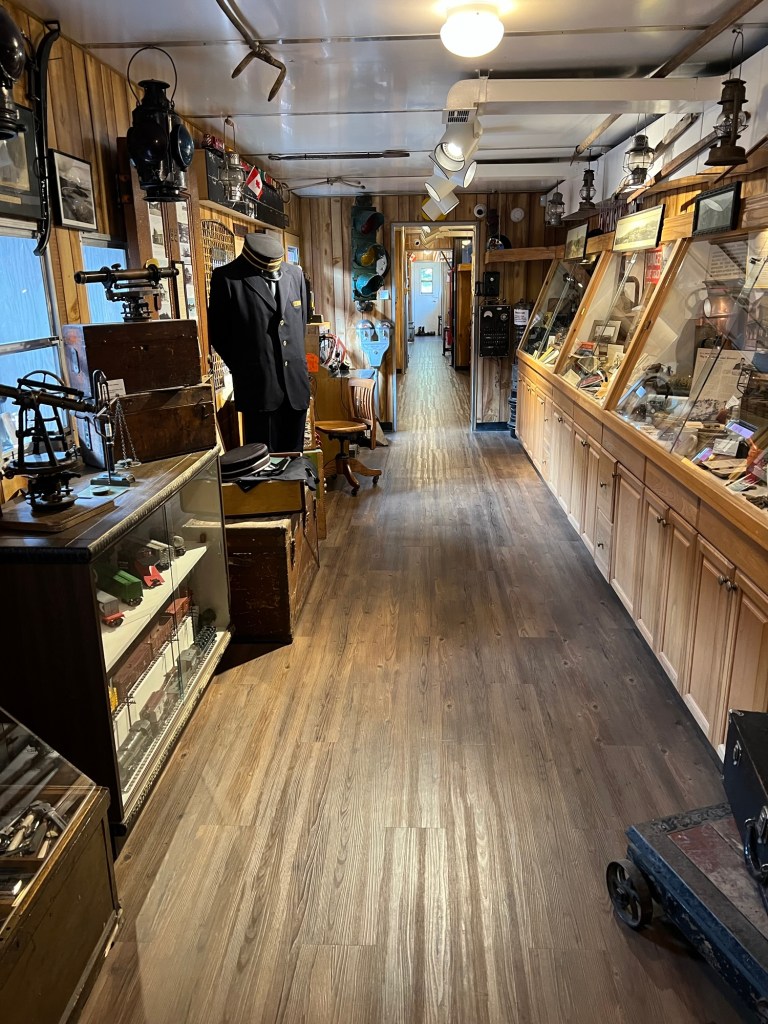
They did have an old passenger car converted to showcase museum items. That was interesting.
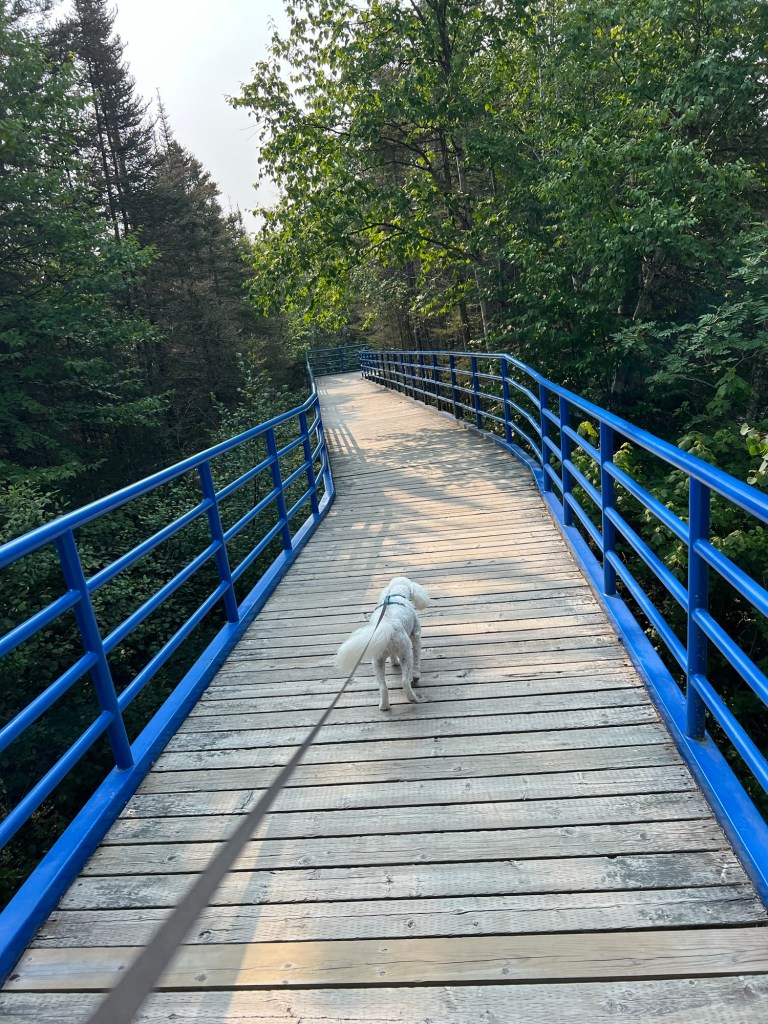
The highlight of our two days of exploring came today. I had seen Aguasabon Falls, just outside of Terrace Bay, advertised in the brochure we picked up on “The Lake Superior Circle Tour”. I checked and it was just fifteen miles away, so we decided to drive there this morning. This is the walkway we found leading to the falls.
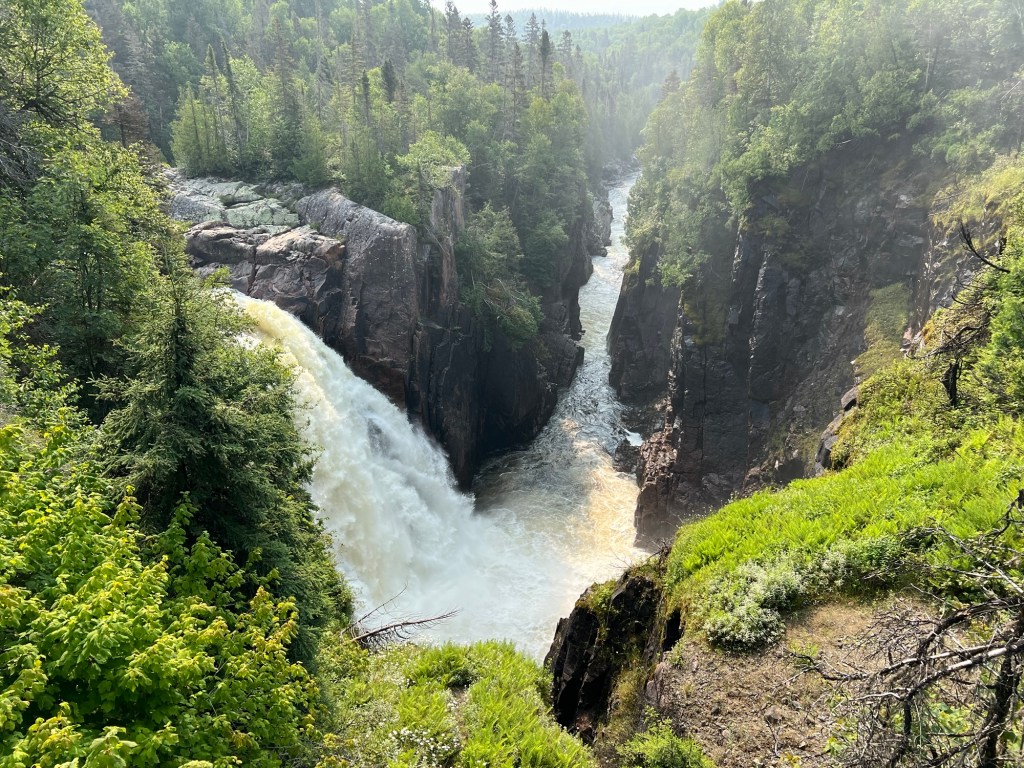
And this is the falls and the gorge.
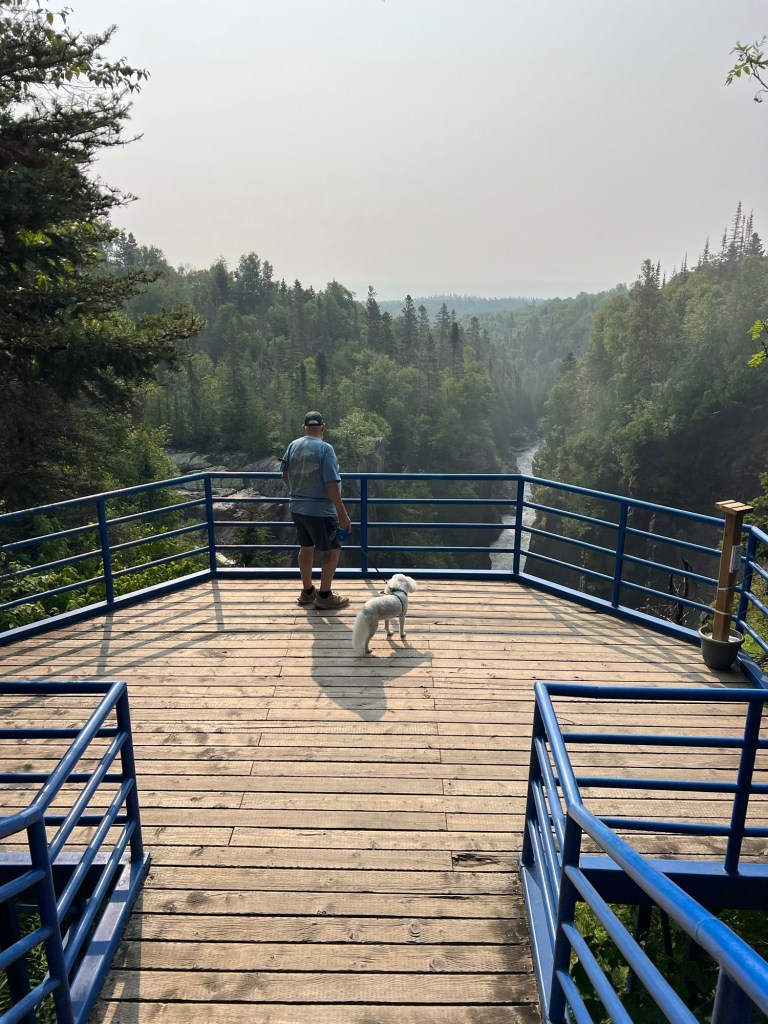
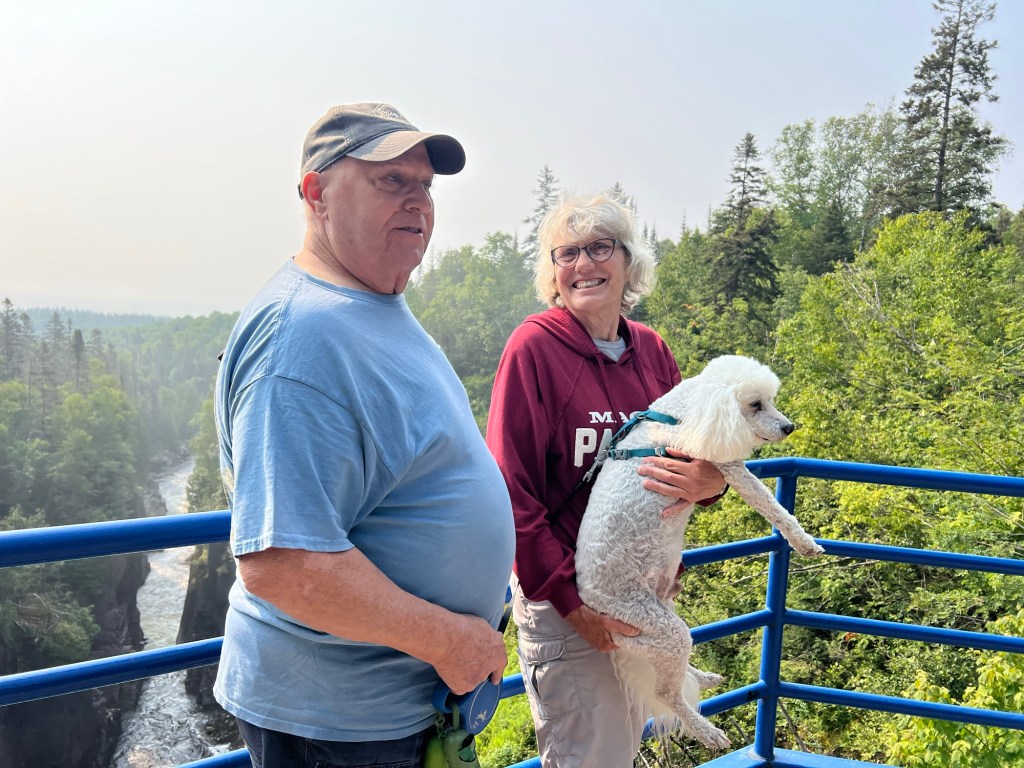
I stepped back to capture how close the viewing platform was to the river. A man offered to take a picture of us with the falls in the background.
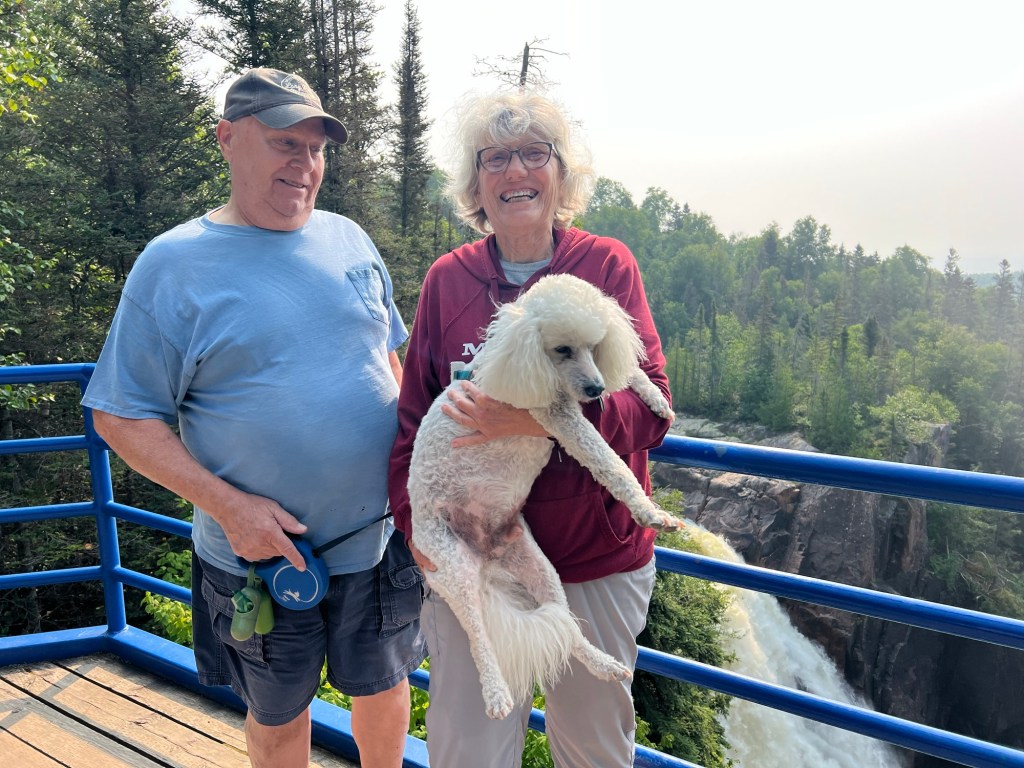
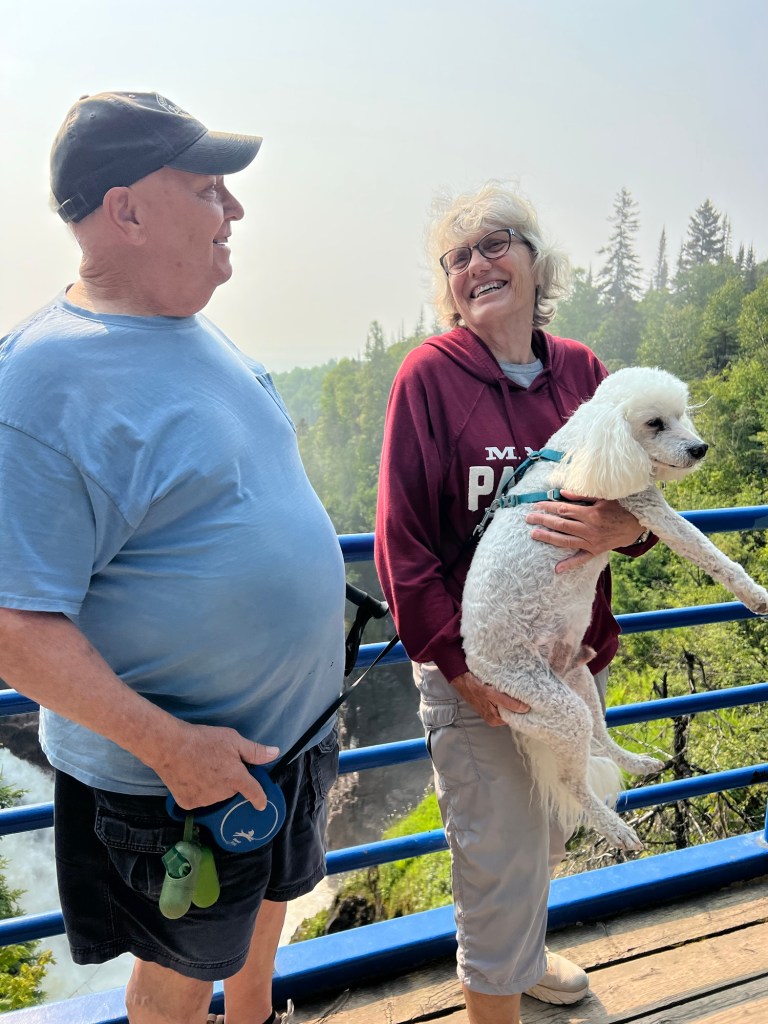
So here we are with the falls…
and the gorge. I was trying to get Bud to look at the camera,
but he never did. Of course Matey didn’t either.
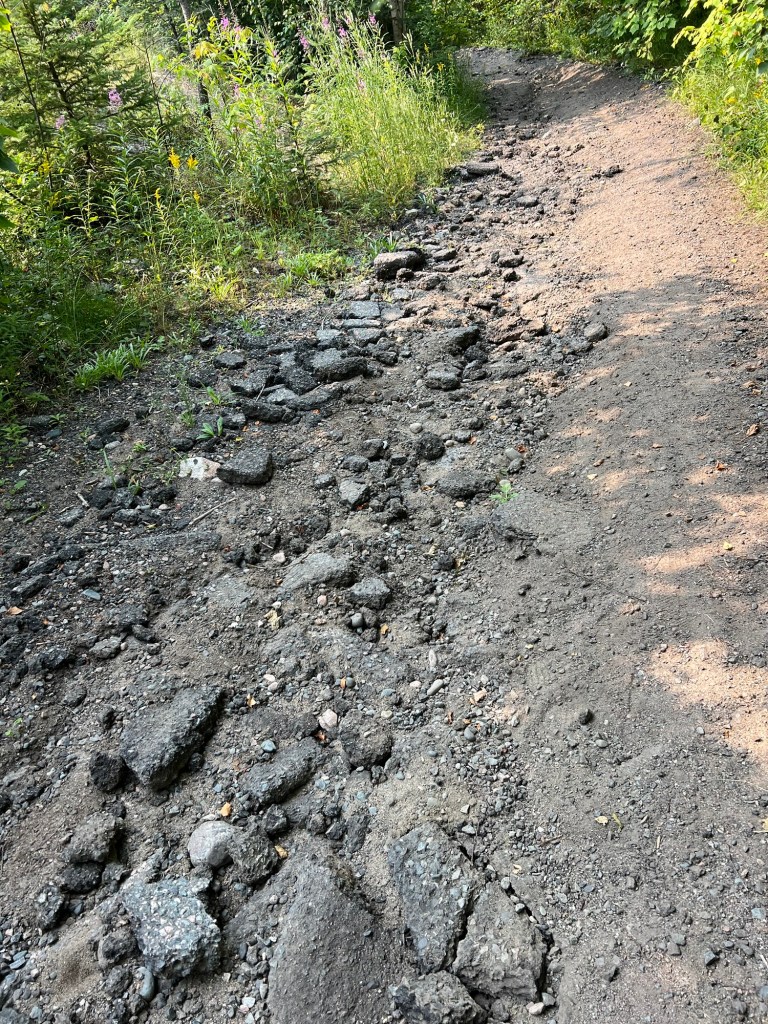
There was a trail that went from the falls down to the beach a bit over a mile away. Bud said he’d pick Matey and me up at the bottom, but Matey had already walked a mile that morning and refused to go down the trail, so he rode with Bud. The top of the trail had a lot of busted up asphalt and looked like it had once been paved.
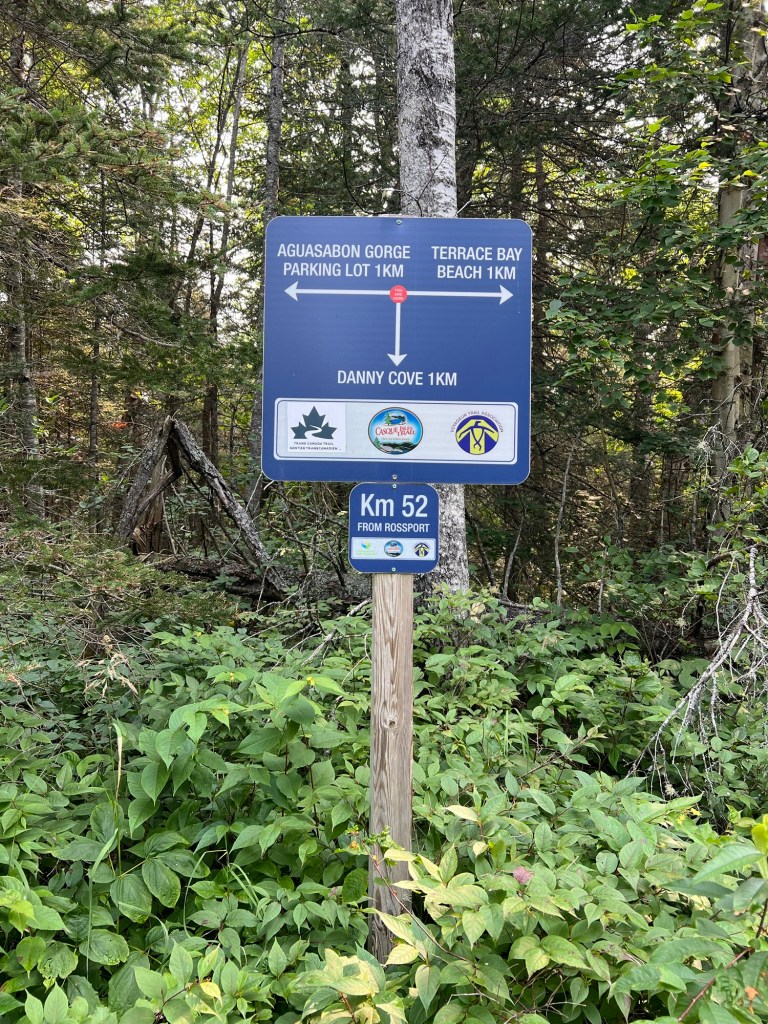
Here’s the junction where the Casque Isles Trail went to Danny Cove and then beyond. I walked on down to the Terrace Bay Beach.
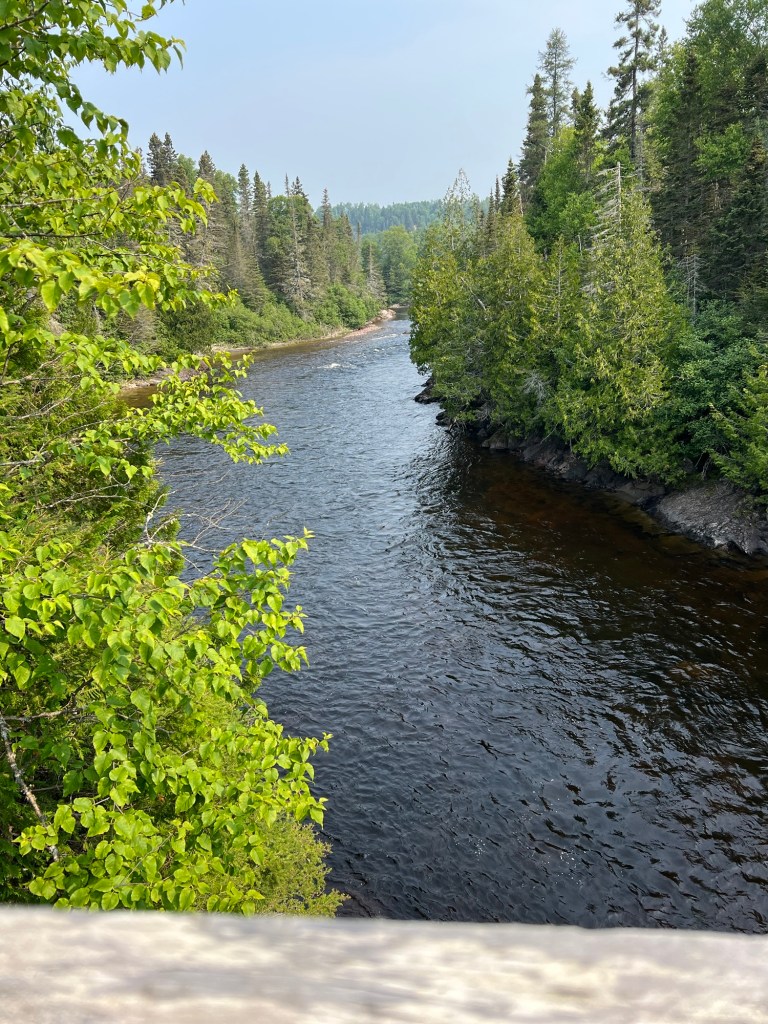
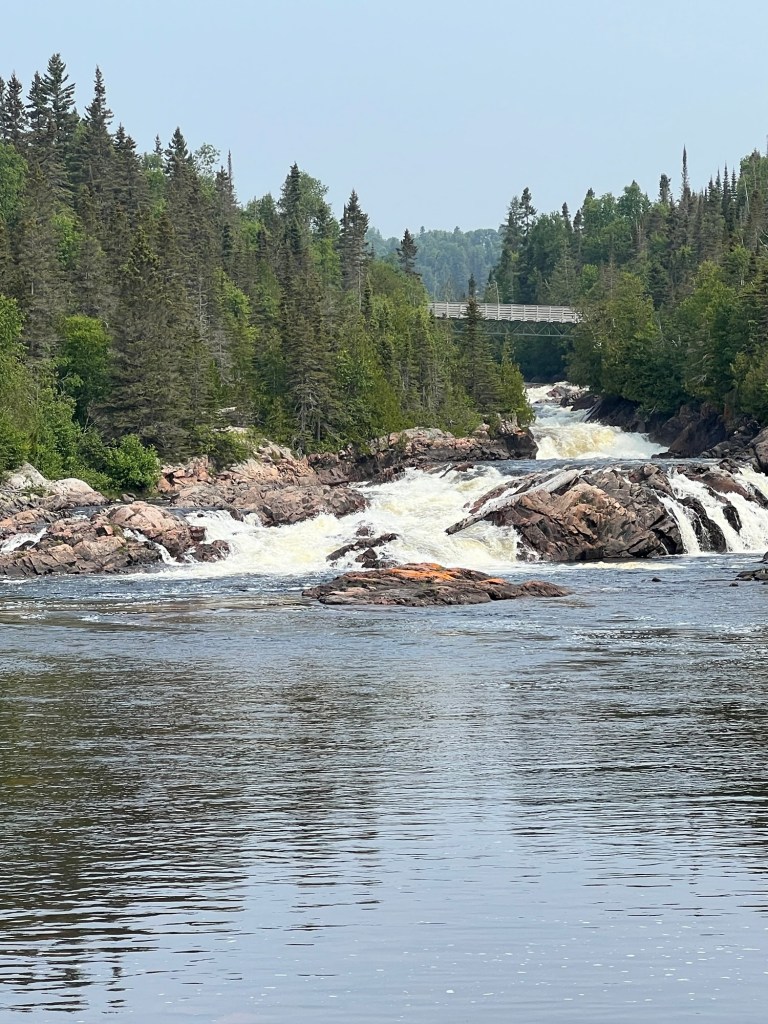
The trail soon crossed a footbridge where you could see the river coming down from the falls…
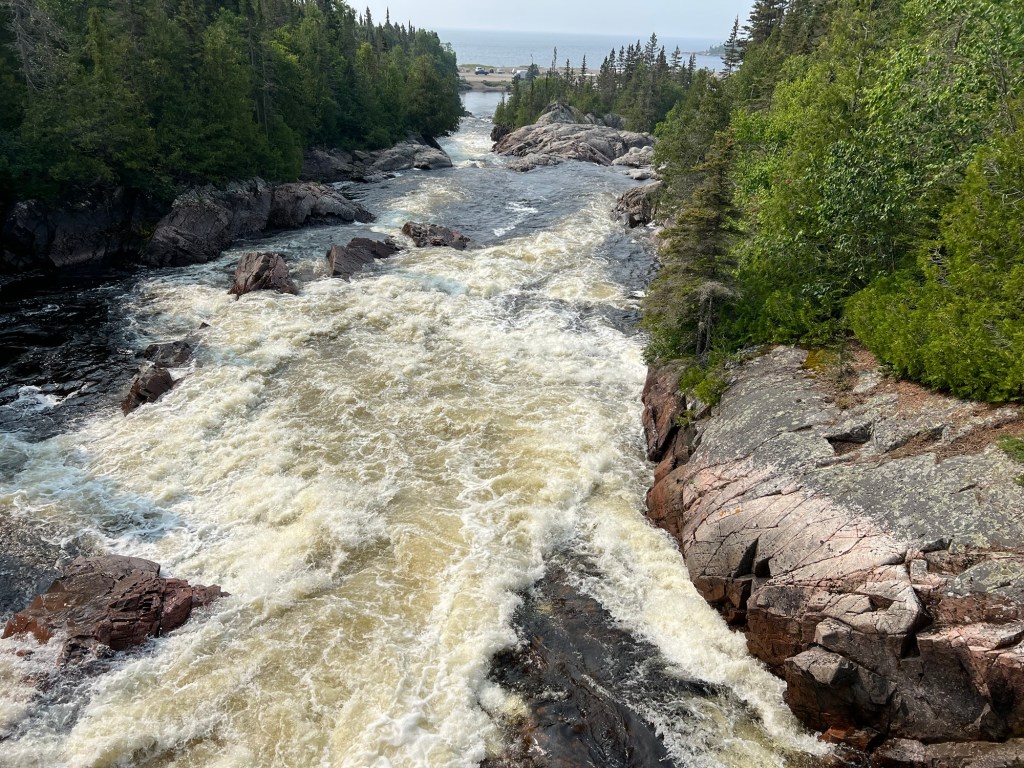
and continuing down through some steep rapids to Lake Superior.
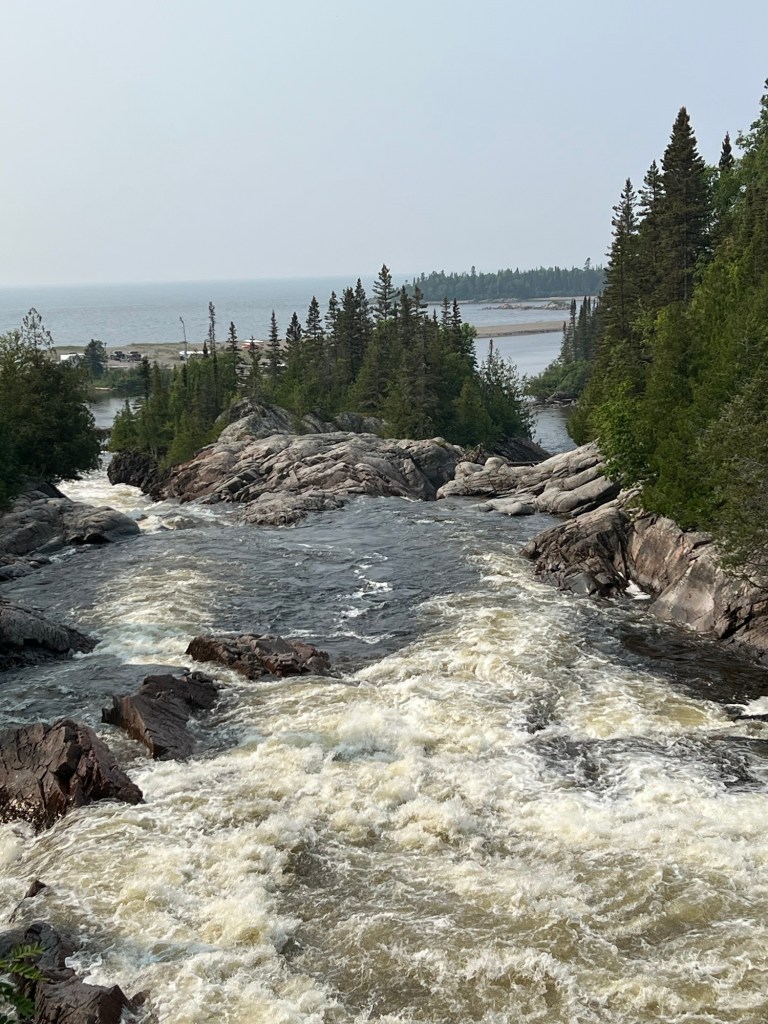
The river split around a rocky island just as it tumbled into the inlet on the lake.
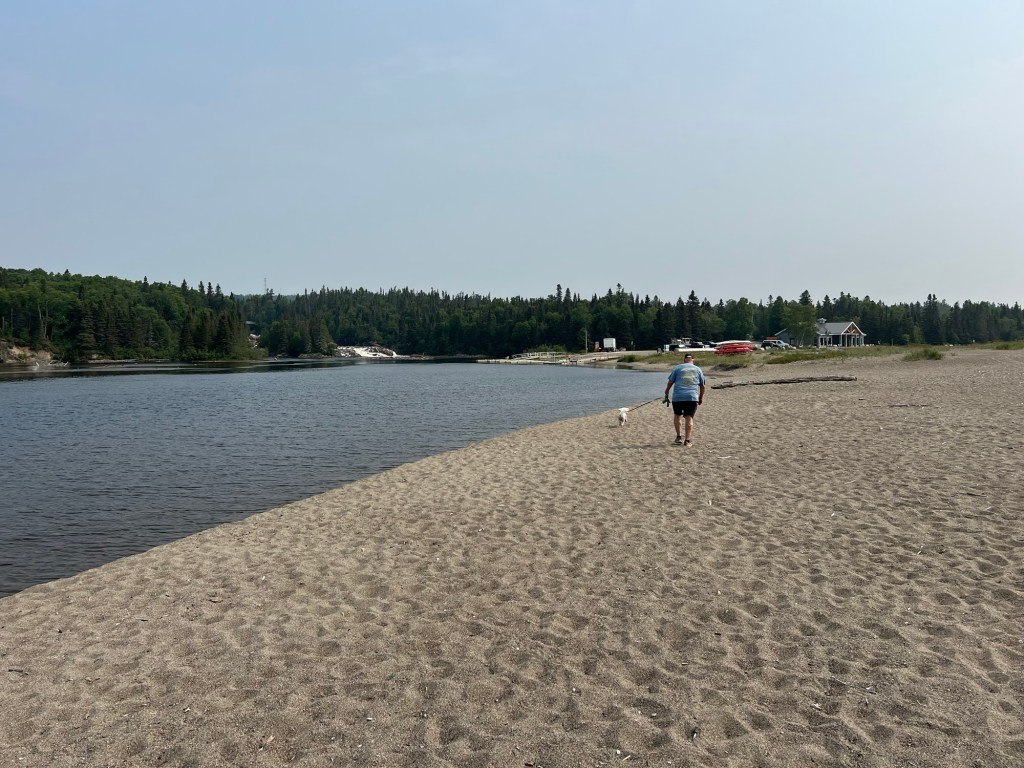
Bud and Matey were waiting at the beach and we walked out the sandy spit.
There’s the footbridge I crossed on the trail.
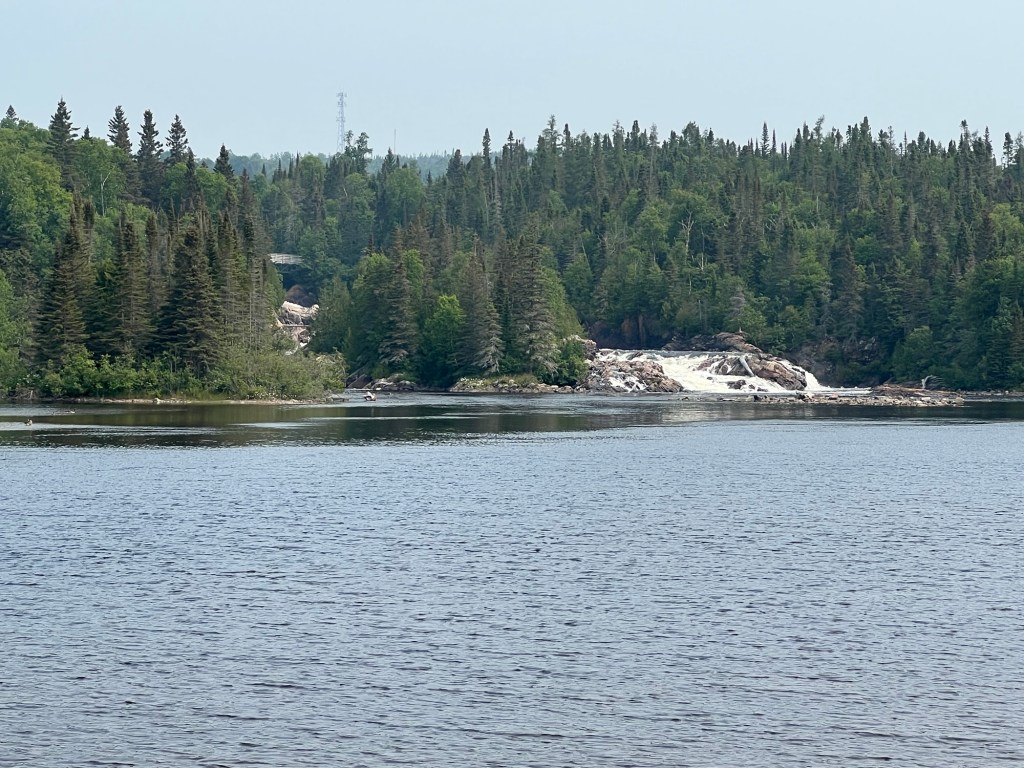
You had to be a long way out on the spit to see the little island with the bit of river on the far side.
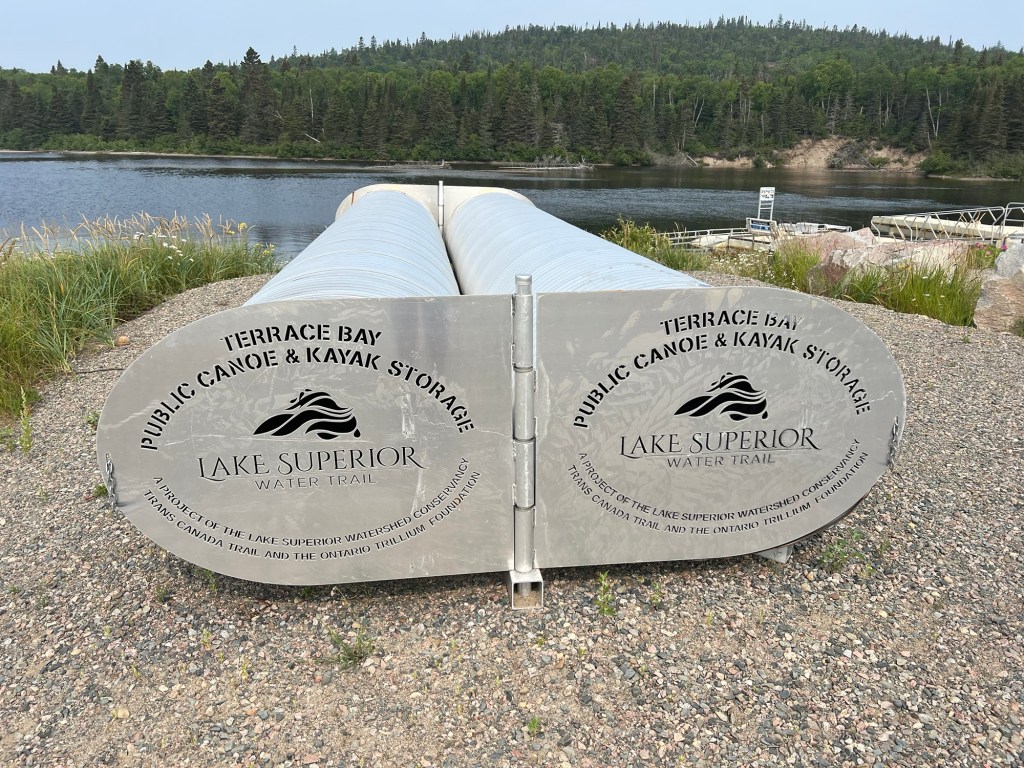
We passed these corrugated aluminum tubes and were trying to figure out what they were. Bud noticed the incised inscription “Public Canoe and Kayak Storage”. Oh.
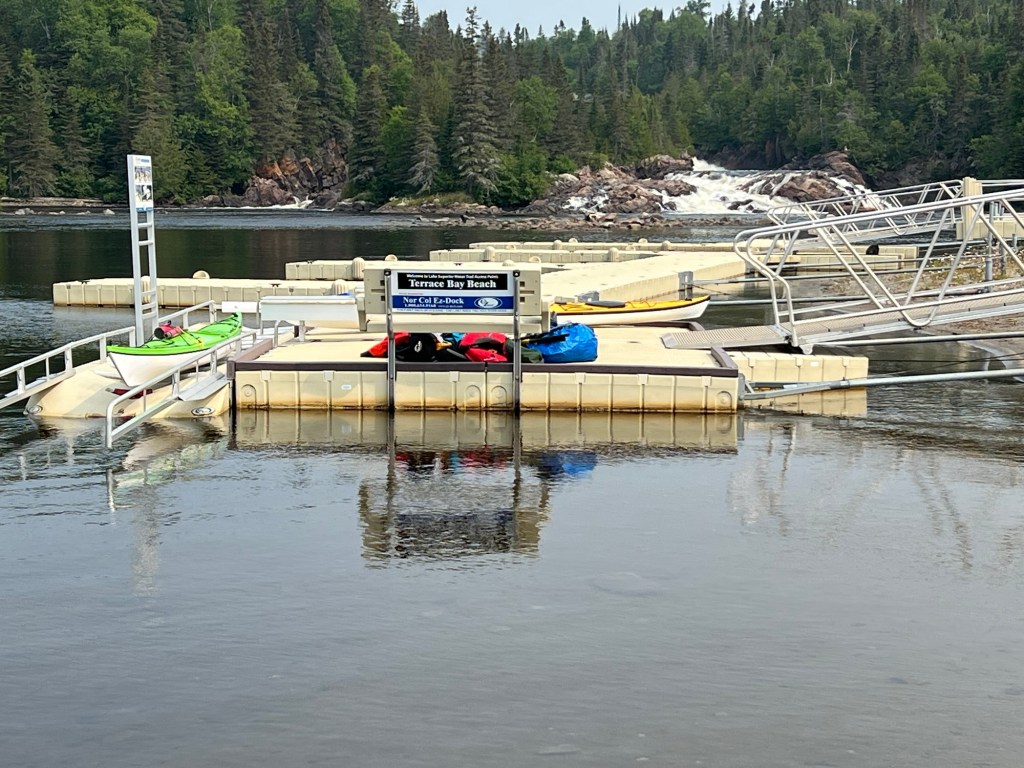
There are canoe and kayak routes all along this shore. I noticed the dock was labeled for paddlers coming from afar. There is a canoe and kayak route circumnavigating the whole lake, a far more daunting journey than the highway Circle Tour.
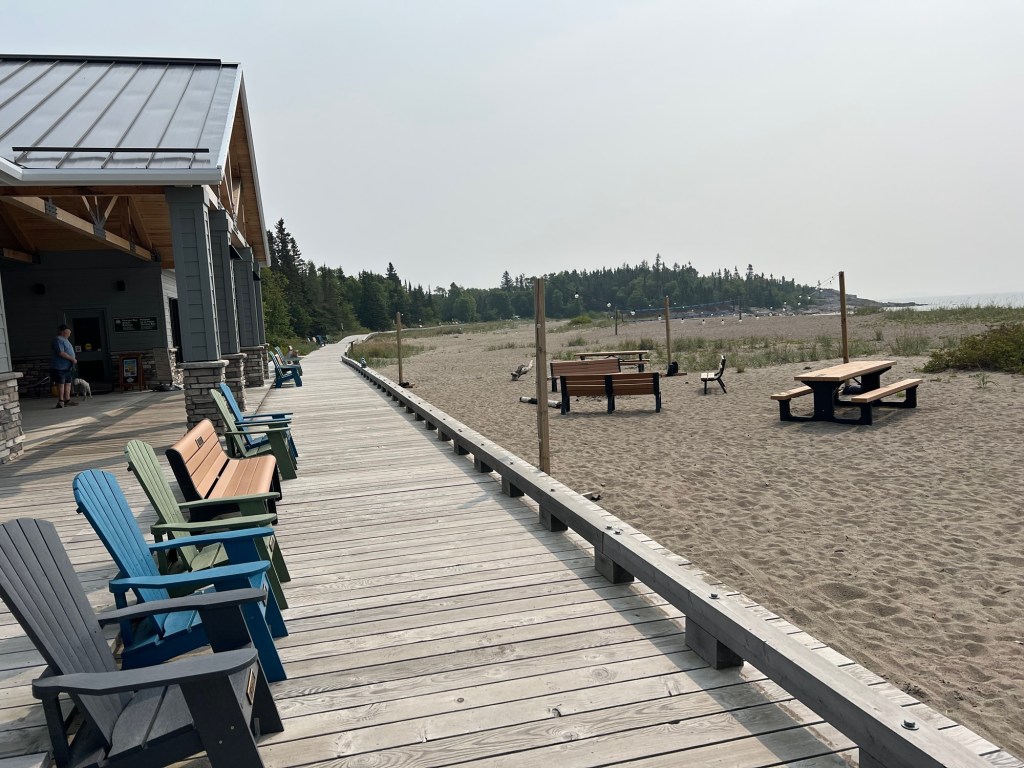
This is a much bigger and more developed beach than the one at Schreiber.
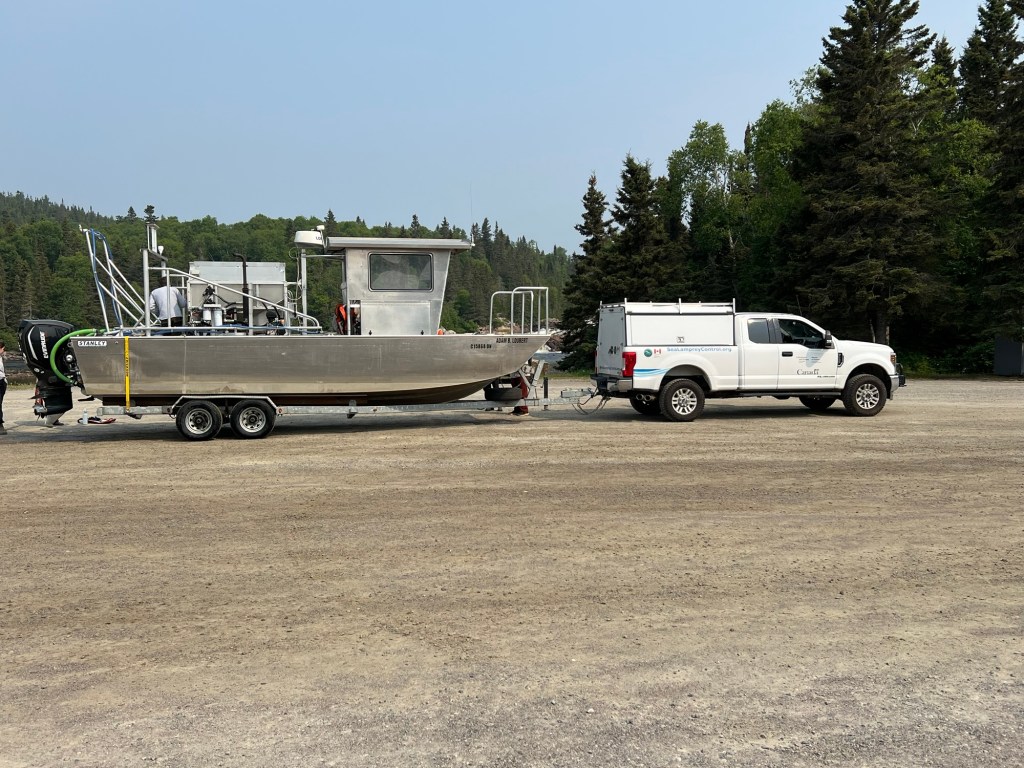
While we were at the beach a crew had pulled this boat out at the boat ramp. If you look closely at the truck you can see that these folks are from sea lamprey control. We talked to a young woman on the crew and she explained they put lampreycide in the water at a concentration that kills the lampreys but not the other species. They came here because the lampreys spawn in this inlet. She said the control is quite effective, much more so than for many other invasive species. The US and Canada cooperate in this venture. Canada covers Lake Ontario and during COVID they couldn’t travel there to carry out their work. Lamprey numbers shot up; but the population is coming back under control now that the work has been resumed.
Seeing new places, meeting new people and learning new things are what make this lifestyle rewarding for me.
I’m writing this in my tent, now at our campsite at Rainbow Falls Provincial Park, about 50 miles back east from Nipigon. This is not a very level site, it has only electric, no water or sewer, and only 30 Amp service, and we love it. We’re away from the highway, with some woods around us and a reasonable distance to our neighbors.
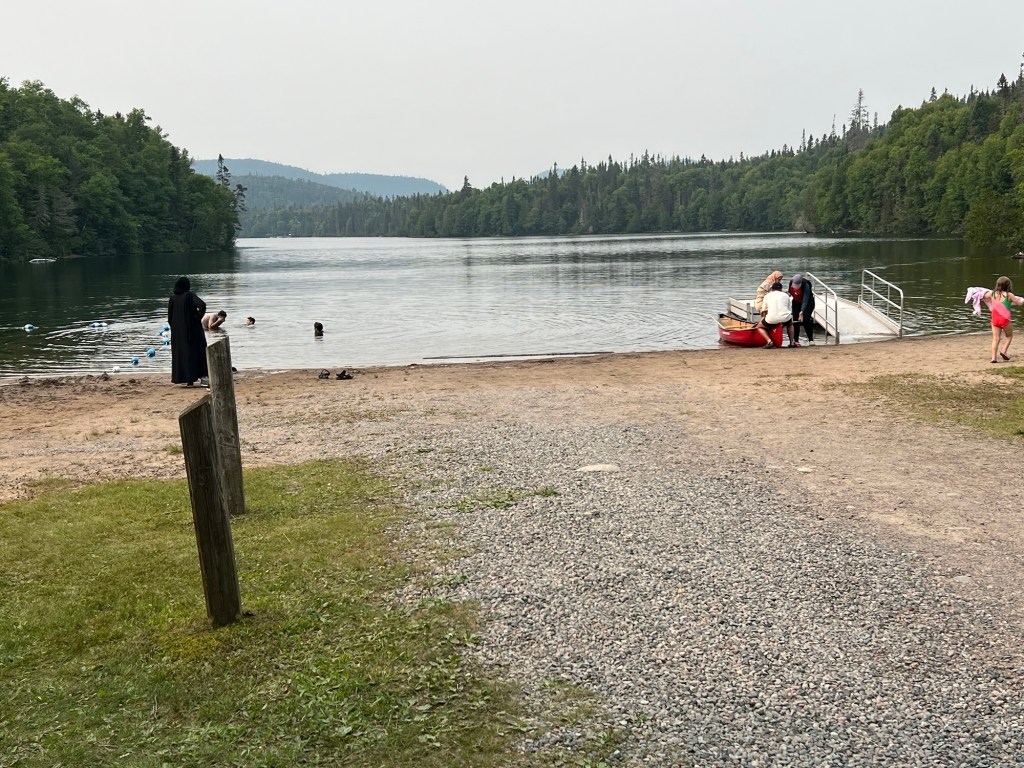
We’re staying at the Whitesand Campground and this is one little beach near us on Whitesand Lake.
This morning we went to the trail to Rainbow Falls, on the Hewiston River. Just a short way and a few steps down a wooden walkway was a viewing platform where you could see the top of the falls, which is the outflow of the natural dam forming Whitesand Lake.
The little river continued down and there were stairs going down along it. Bud opted to stay with Matey at the top.
I continued down,
and down,
and down,
and down until I arrived at a footbridge that gave views upstream…
and downstream. Altogether there were 165 steps, and the river tumbled down the whole way.
Back at the top, we took Matey to a bit of a dog beach where he waded in this very pretty lake.
I was going to walk back via another trail, but a few steps down the trail I realized I didn’t have the air horn and besides bears there was a warning sign about an “active lynx” in the campground. So I retreated and flagged Bud down before he left. He offered to take me back to the camper for the air horn and I decided I would do that. The knee Bud had replaced 20 years ago has been hurting him when he walks down steep hills or stairs. We won’t know what’s going on until we’re back in Hot Springs in November. Meanwhile, if I want to walk any distance over rough terrain I will have to do it alone, so I might as well get used to it.
So armed with the air horn I went back down Superior Trail.
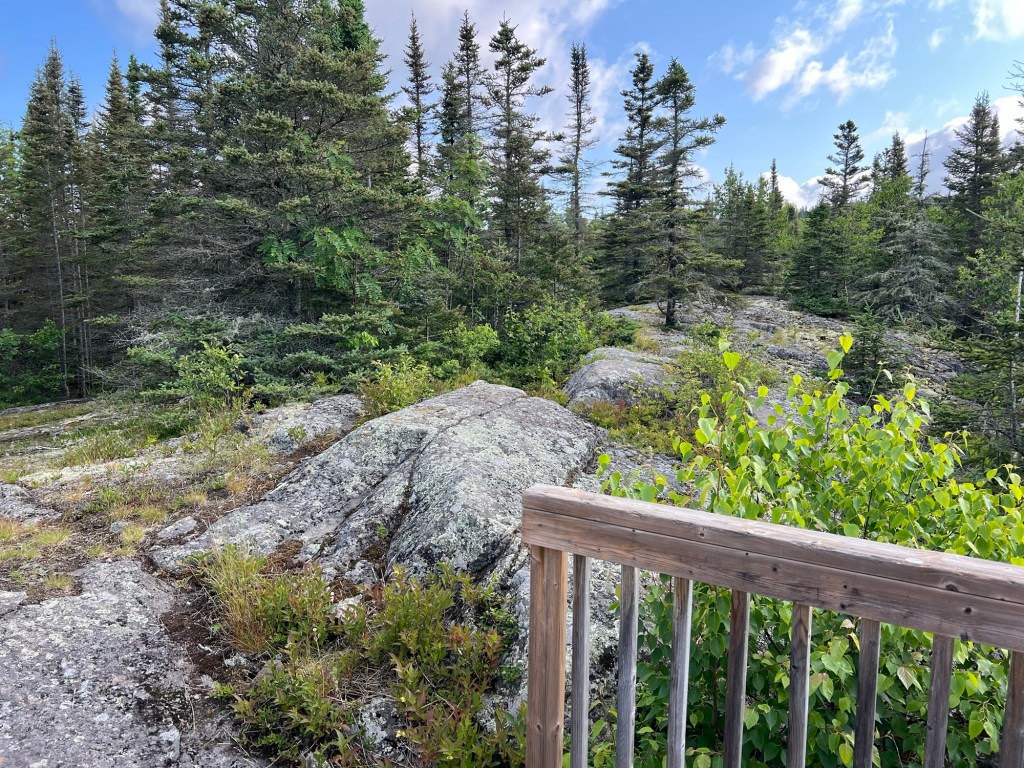
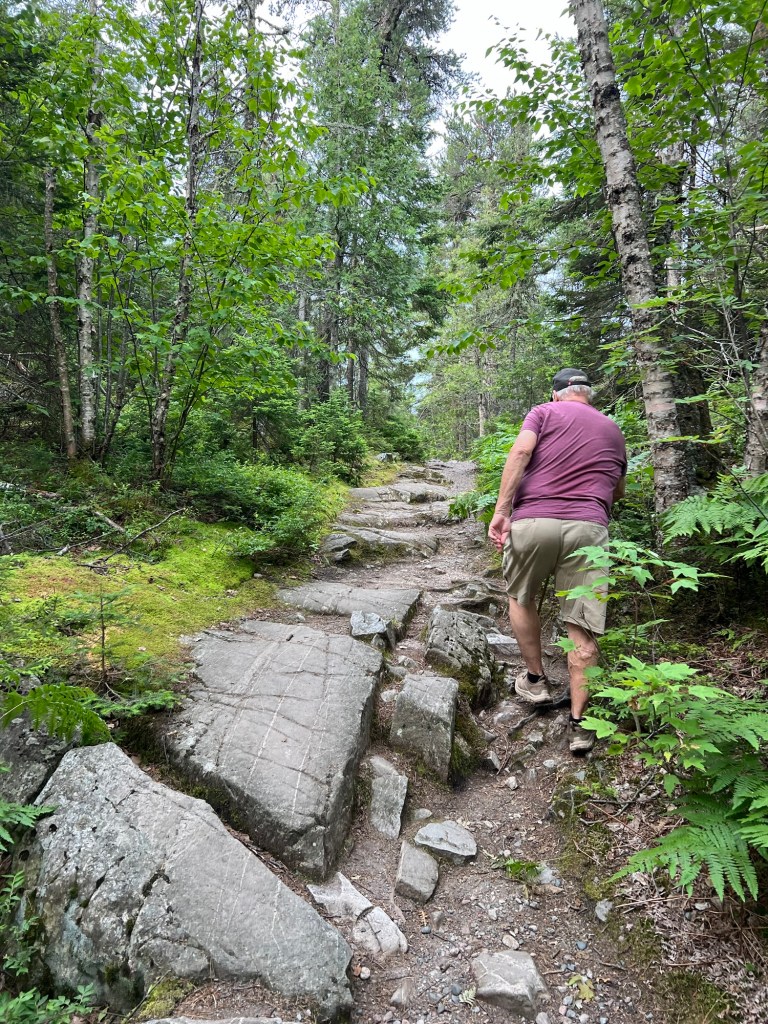
It soon led out of the woods and up onto a rocky ridge.
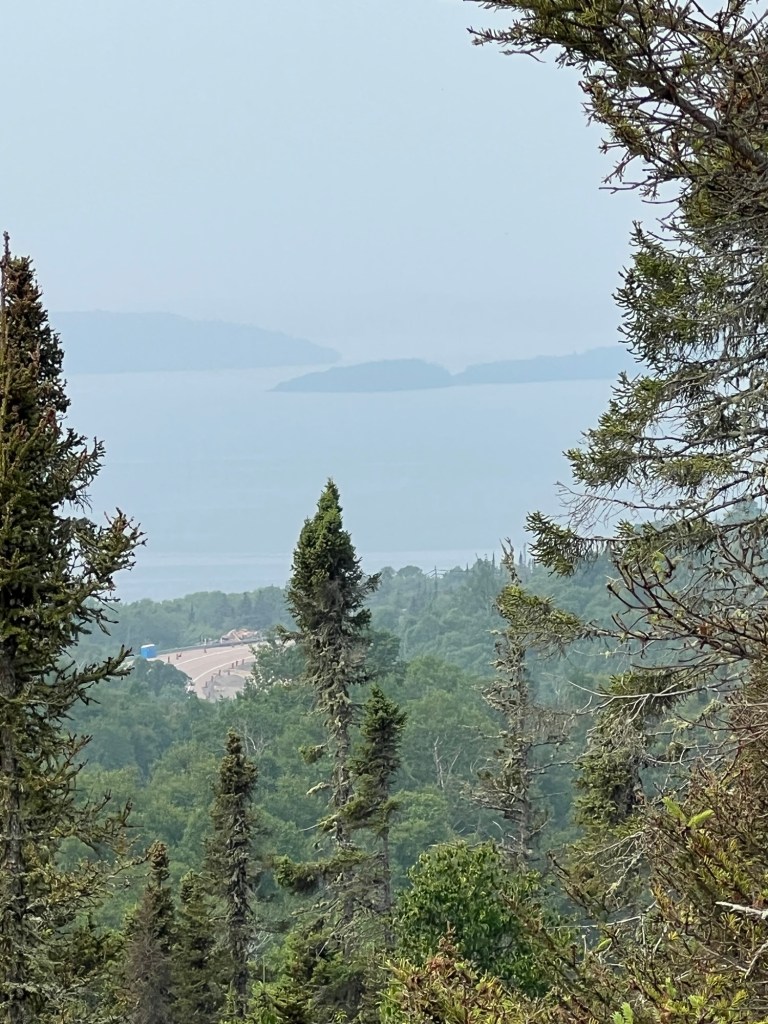
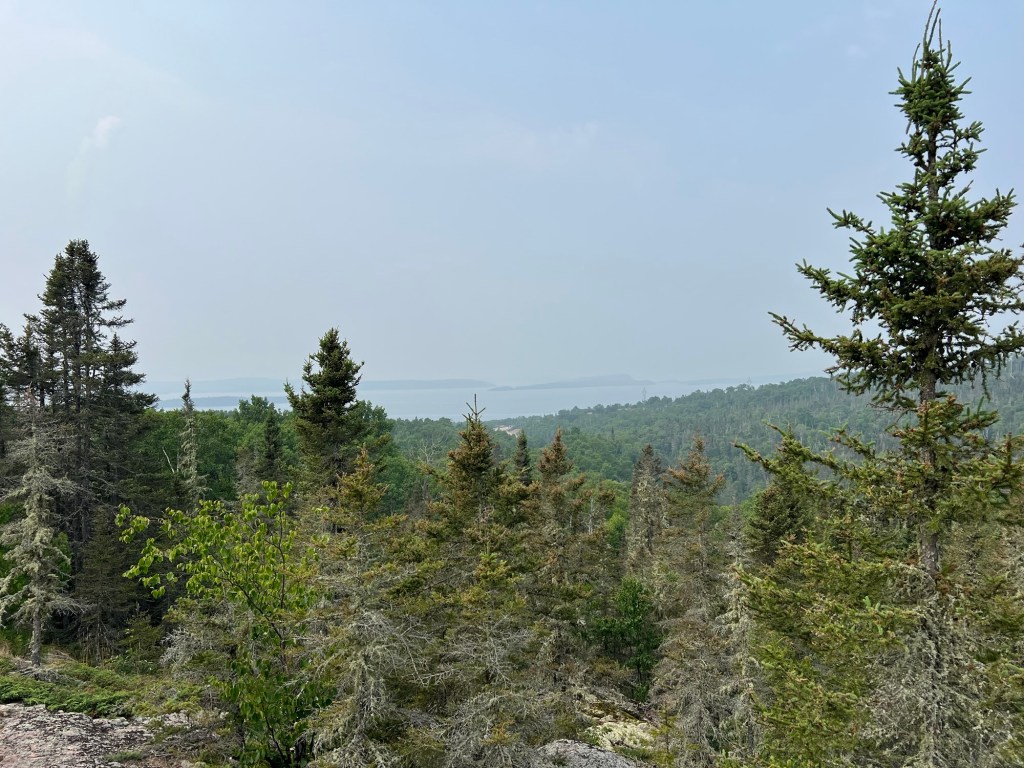
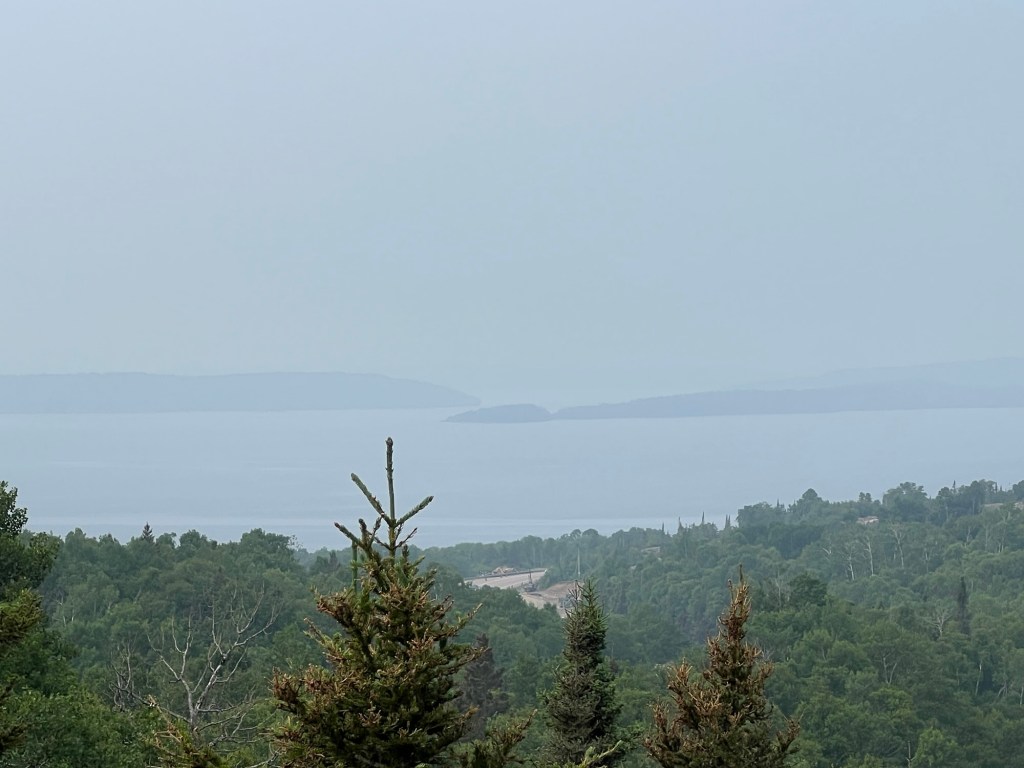
The ridge rose until you had a view over the highway to Lake Superior. Again there is smoke. It isn’t bothering my eyes today, but it ruined the view.
The vantage here would be gorgeous without the smoke,
and if we get a clear day I’ll come back for more pictures.
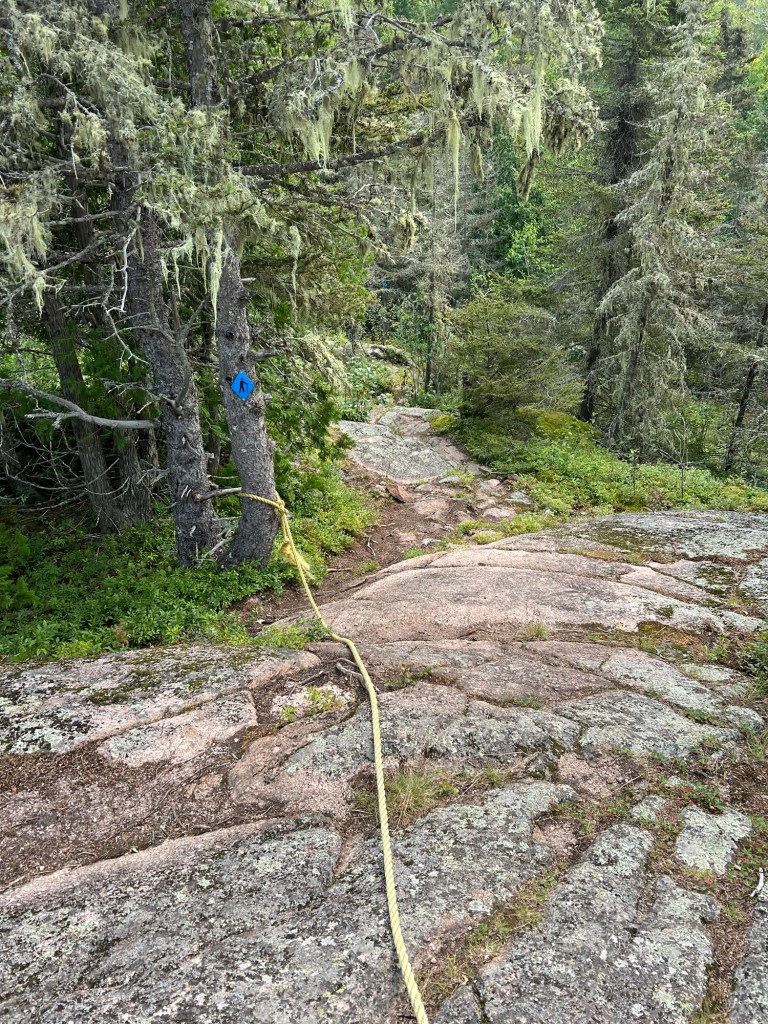
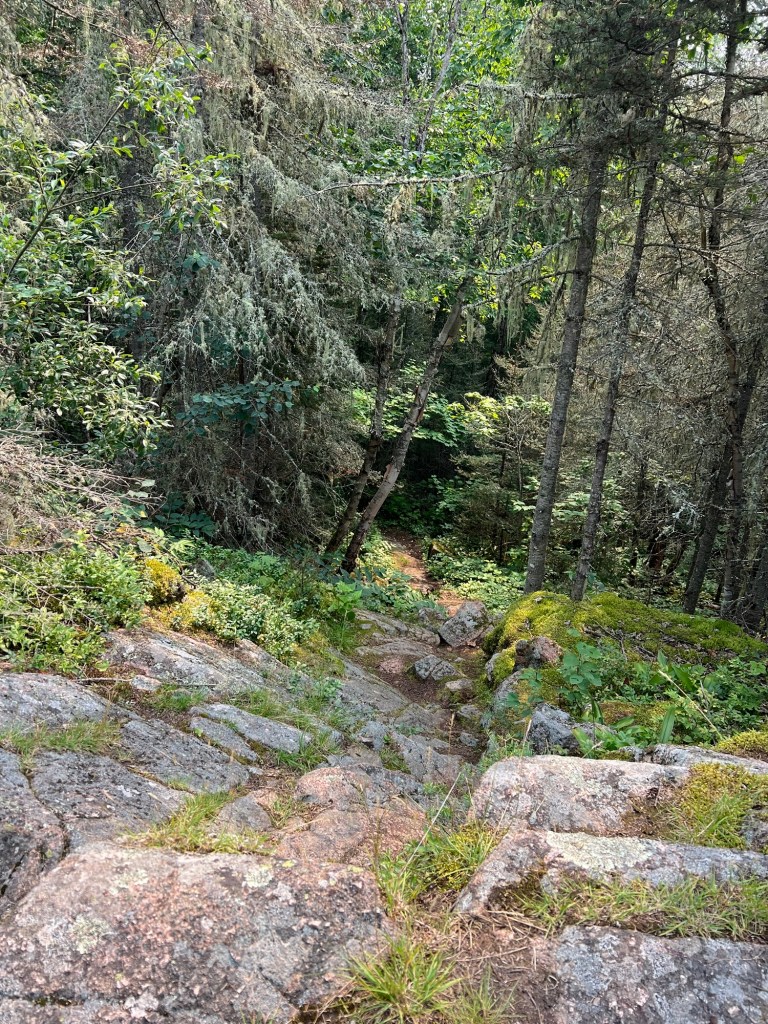
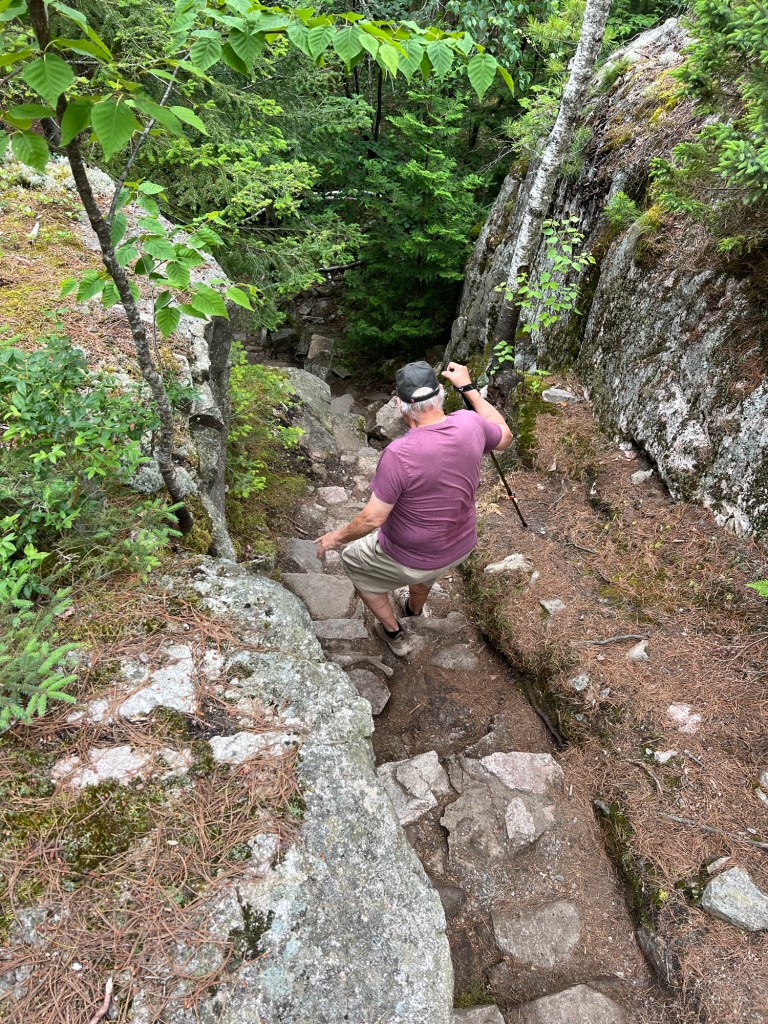
The trail then descended steeply over large rocks…
and down natural steps to the woods below.
A short easy path took me back to the park road. I then cut on another path through more campsites so I didn’t have to walk down the road back to our campsite. Altogether it was only about eight tenths of a mile.
I’m glad I took the walk and happy to be back in a park!
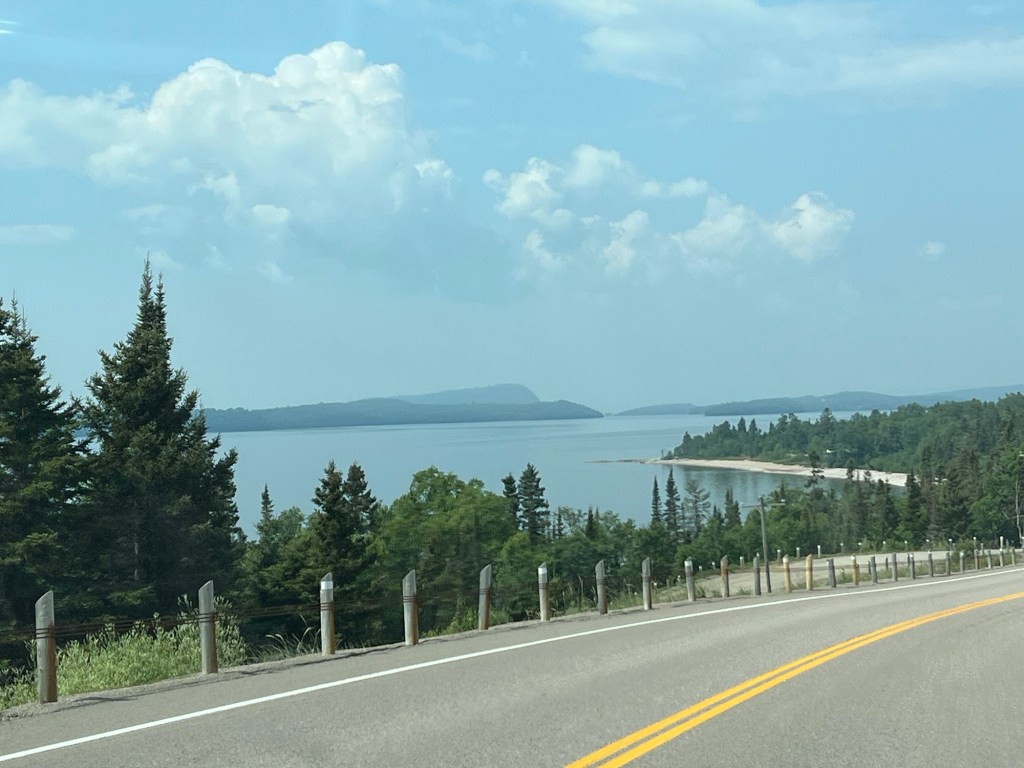
Thursday we drove along the shore of Lake Superior and came to Nipigon.
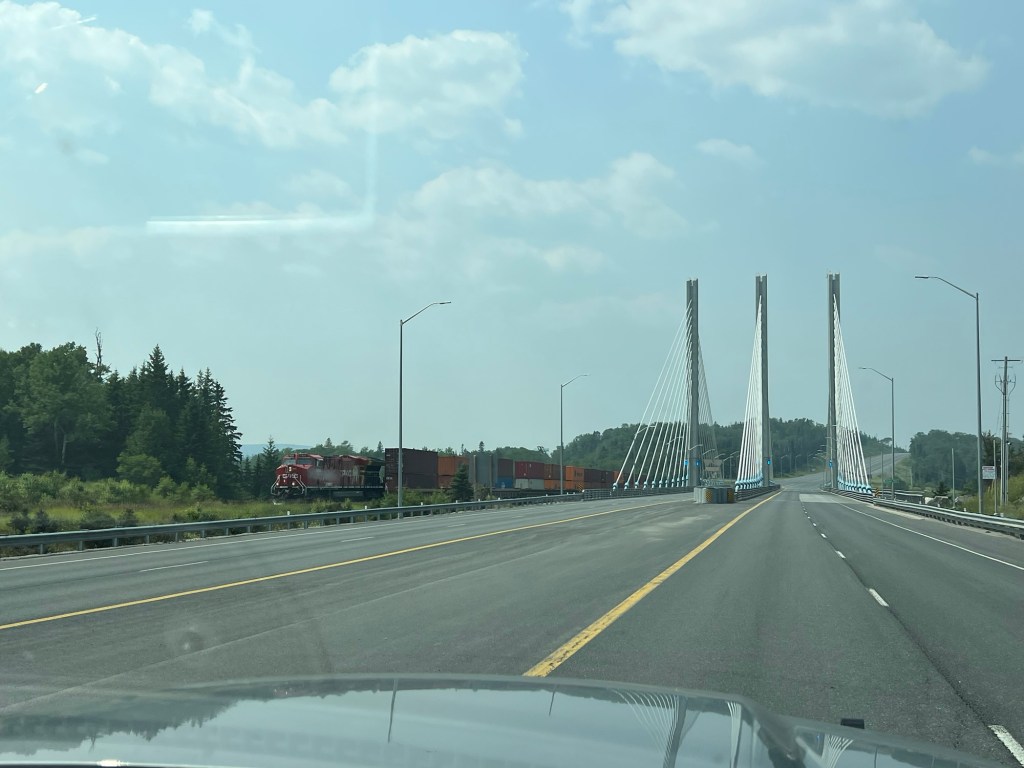
Canada 11 joins Canada 17 just east of this bridge over the Nipigon River. From here to Thunder Bay there is only one east-west road in Canada, and this is it.
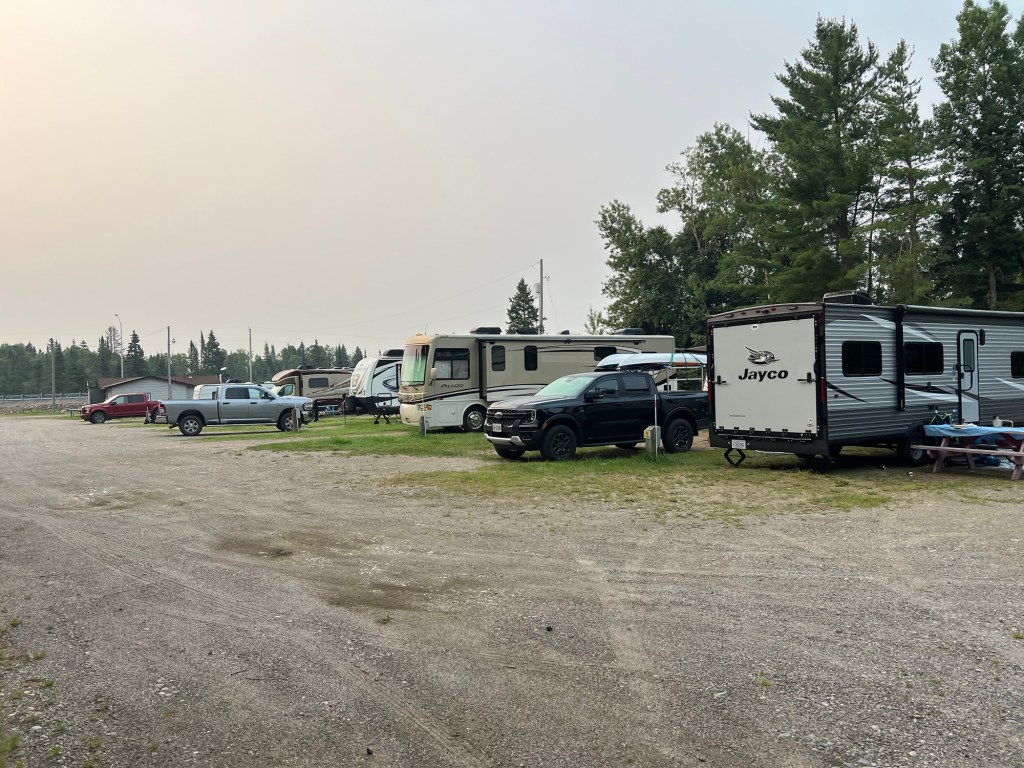
Unfortunately, the little commercial campgound I found is basically a gravel parking lot just off the highway.
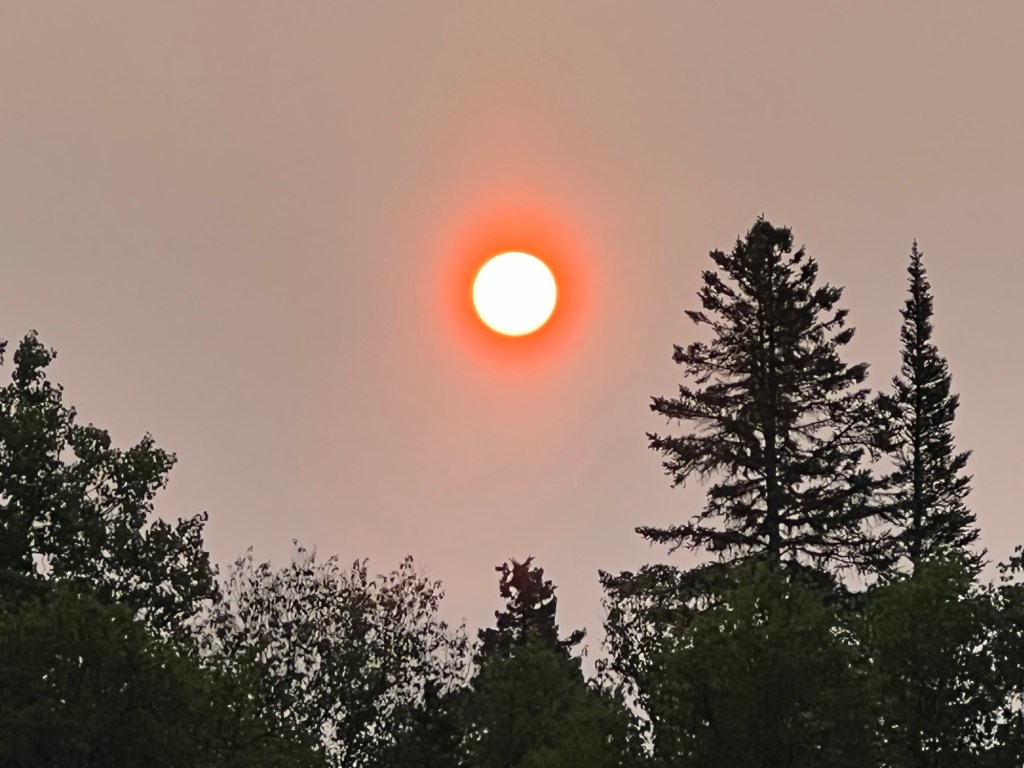
And we have been plagued by smoke. This is the sun in an otherwise clear sky just before 8 AM this morning. So a three night, two day stay is enough.
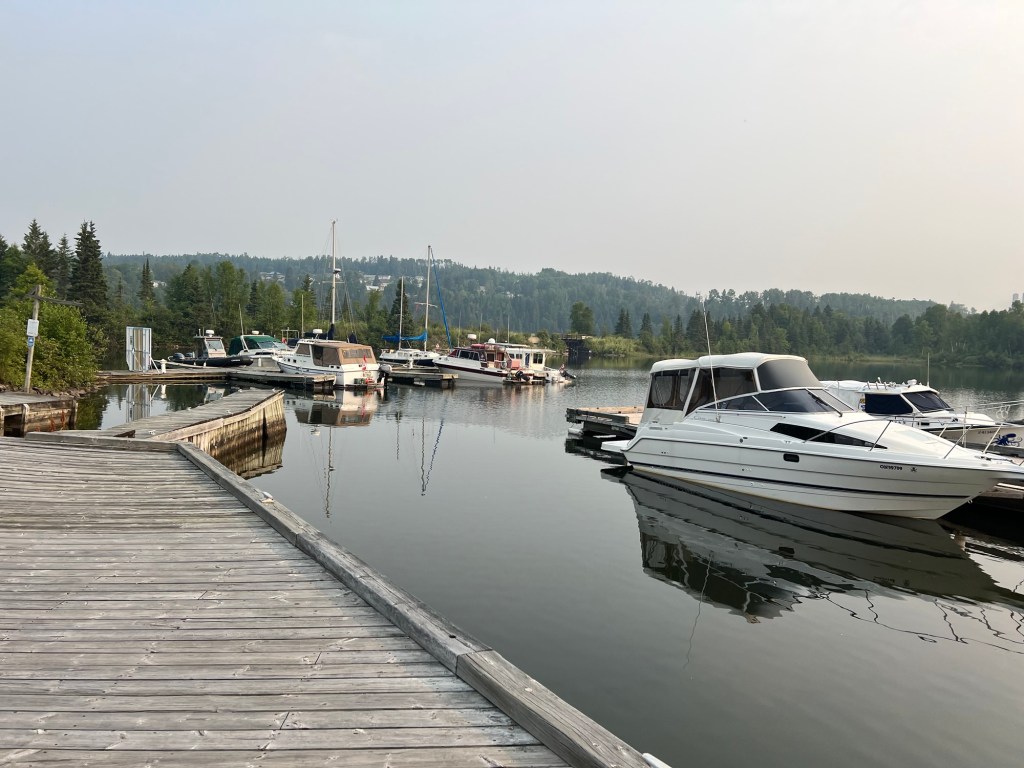
We made the most of it. Friday we drove into the little town and down to their nice marina on The Lagoon, an area just off the Nipigon River.
We walked down a trail…
until we couldn’t.
We drove north on a side route,
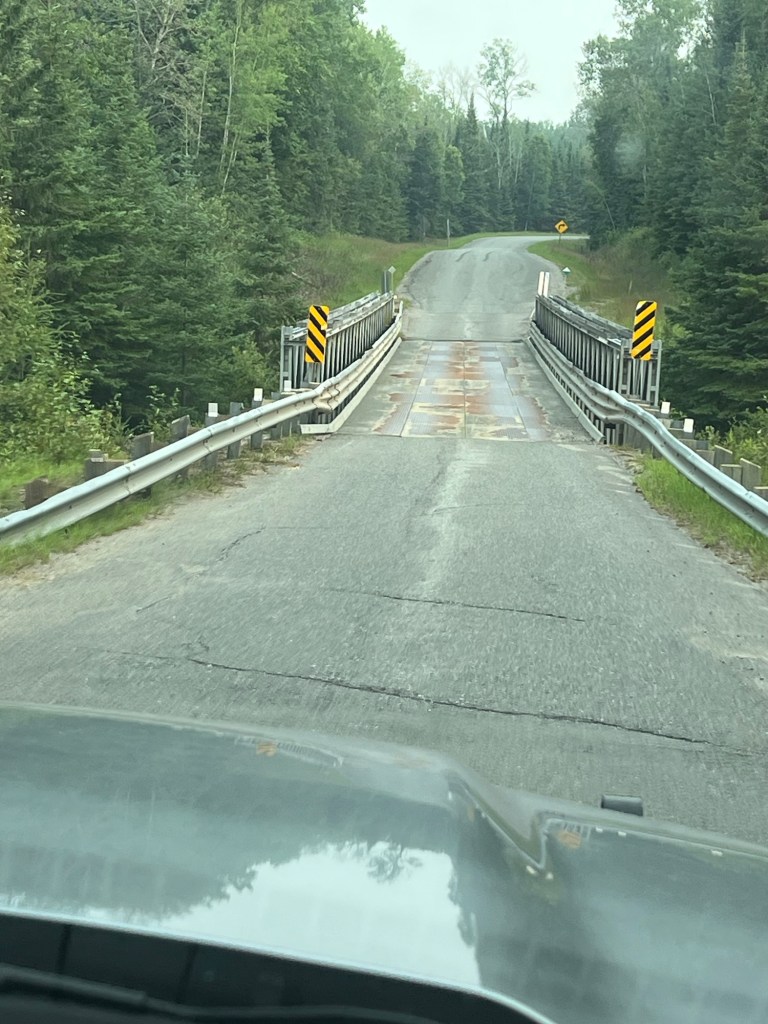
across several of these Bailey bridges,
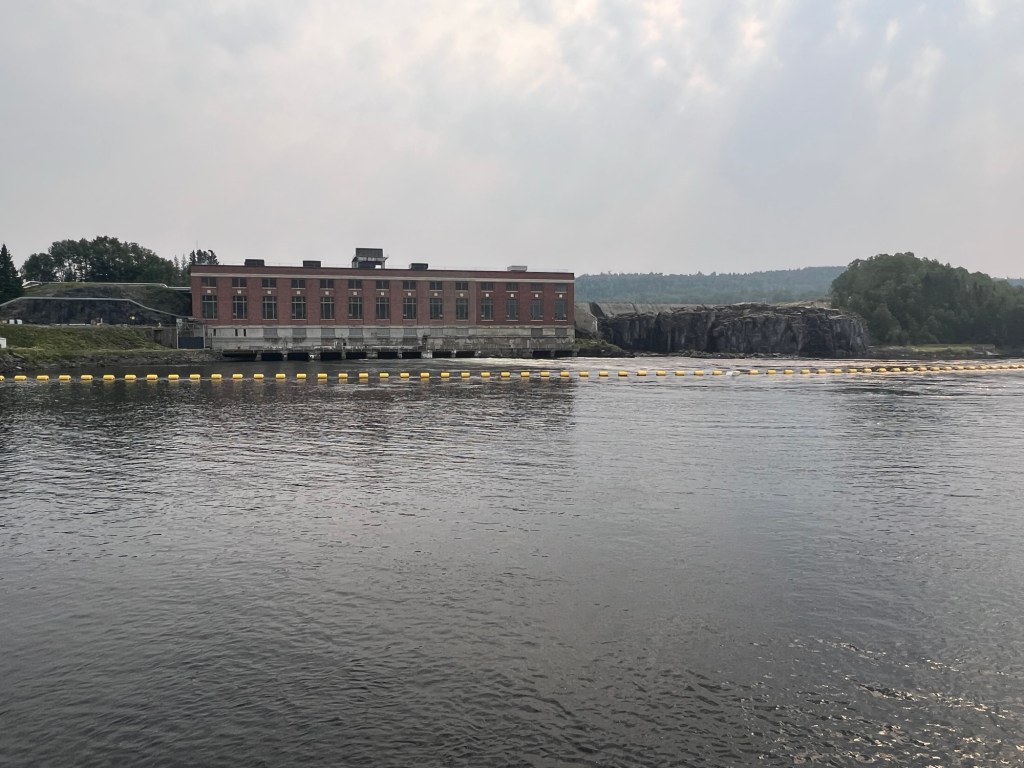
to a lookout at the Alexander Power Generating Station. There are three power plants on the Nipigon River between Lake Nipigon and Lake Superior.
We then came back to the TransCanada Highway (11 and 17), went a few miles west and turned south to Red Rock, which sits where the Nipigon River flows into Nipigon Bay, a bay on Lake Superior. All the distant views were obscured by smoke.
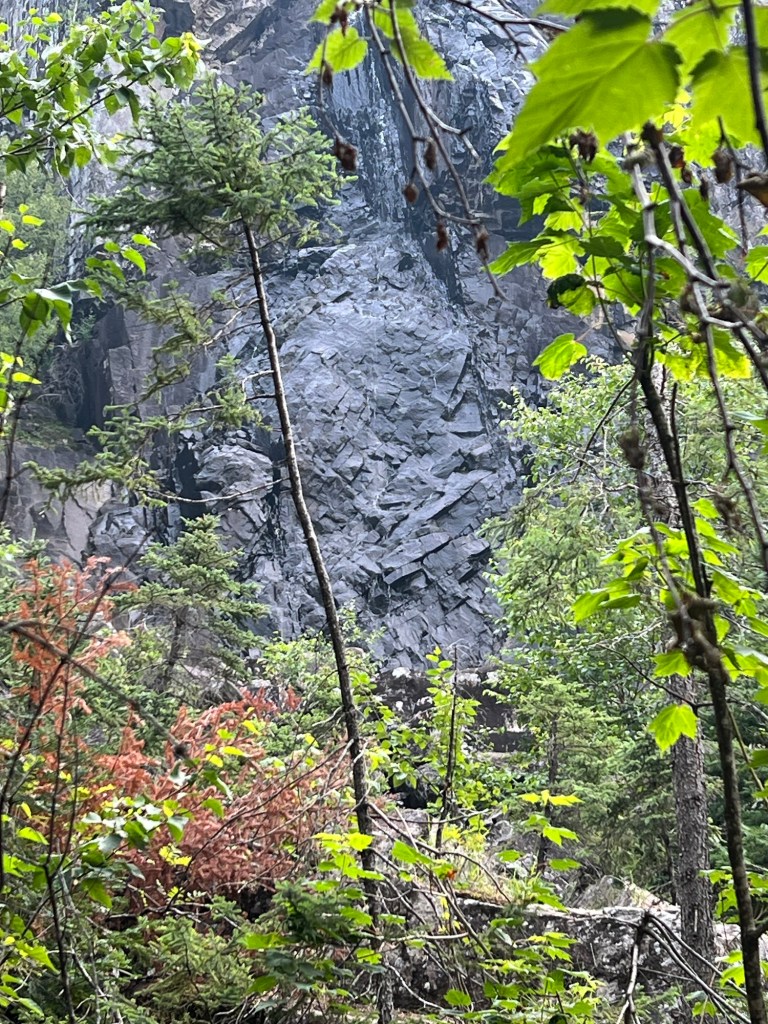
It was a pretty little place with a nice marina backed by an impressive cliff. That rock didn’t look particularly red to me, but maybe it would without the smoke.
Today we decided to head north on Route 11, the northern branch of the TranCanada Highway through central Ontario. This is Helen Lake, one of a series of lakes formed by the Nipigon River.
Our goal was Lake Nipigon, but about halfway up we stopped at Pijtawabik Palisades to walk back to Cascade Falls.
The palisades were beautiful.
There wasn’t much of a trail back towards the falls.
And you could hear water running, but could barely see it. I guess other times of the year it’s impressive, but it wasn’t today.
It was a pretty area, though.
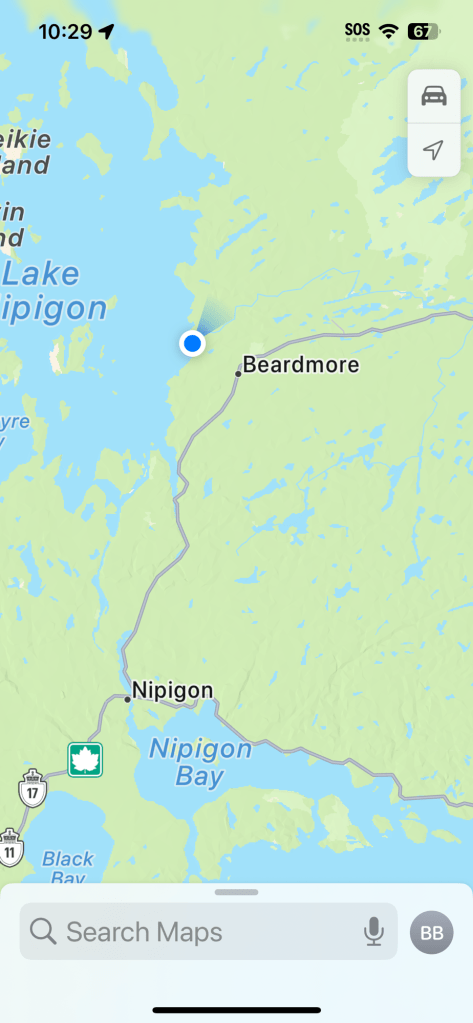
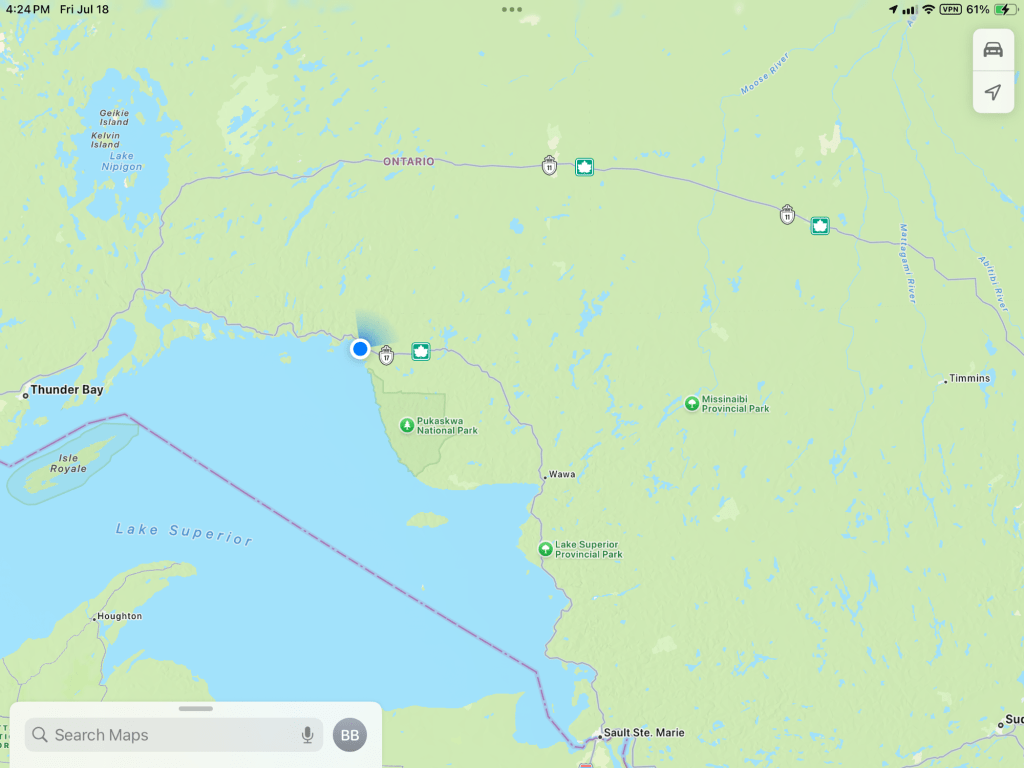
We drove on route 580 over to Poplar Lodge Park on Lake Nipigon. We followed the road until it turned into a two track, single lane dirt road. That’s as far north as we’re going to get this year, so I took a screen shot of our position.
Poplar Lodge was a campground with mostly seasonal people.
Lake Nipigon was pretty, but there was nothing for anyone who wasn’t camping.
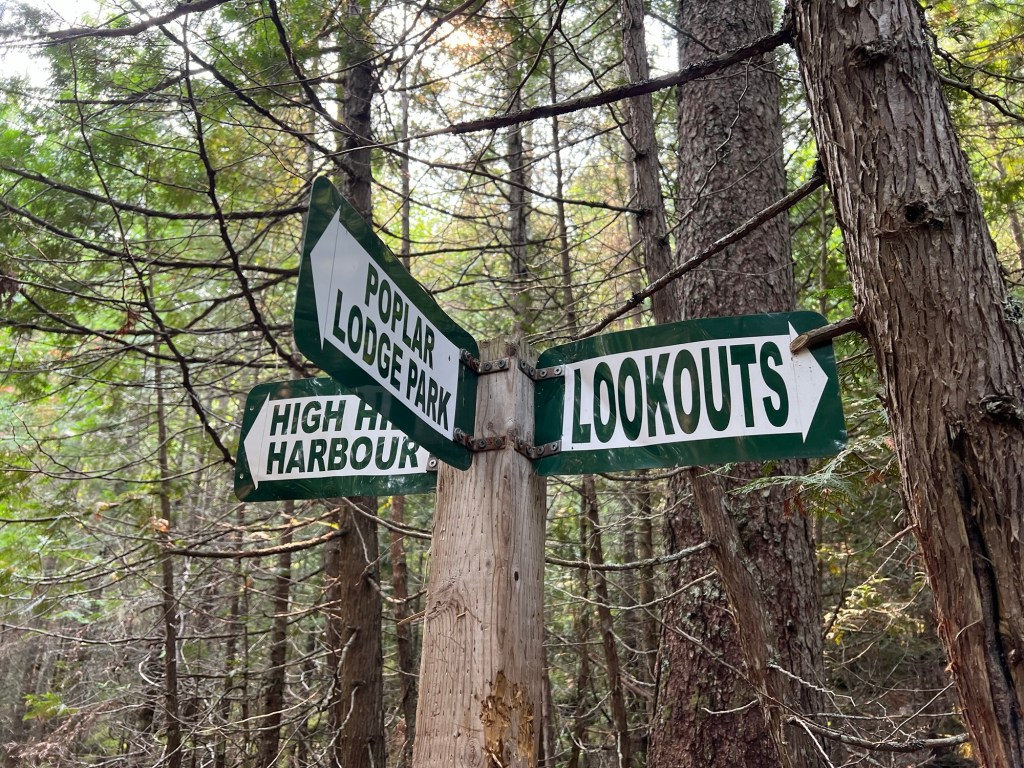
We had passed a sign for High Hill Harbour, so we headed down that road.
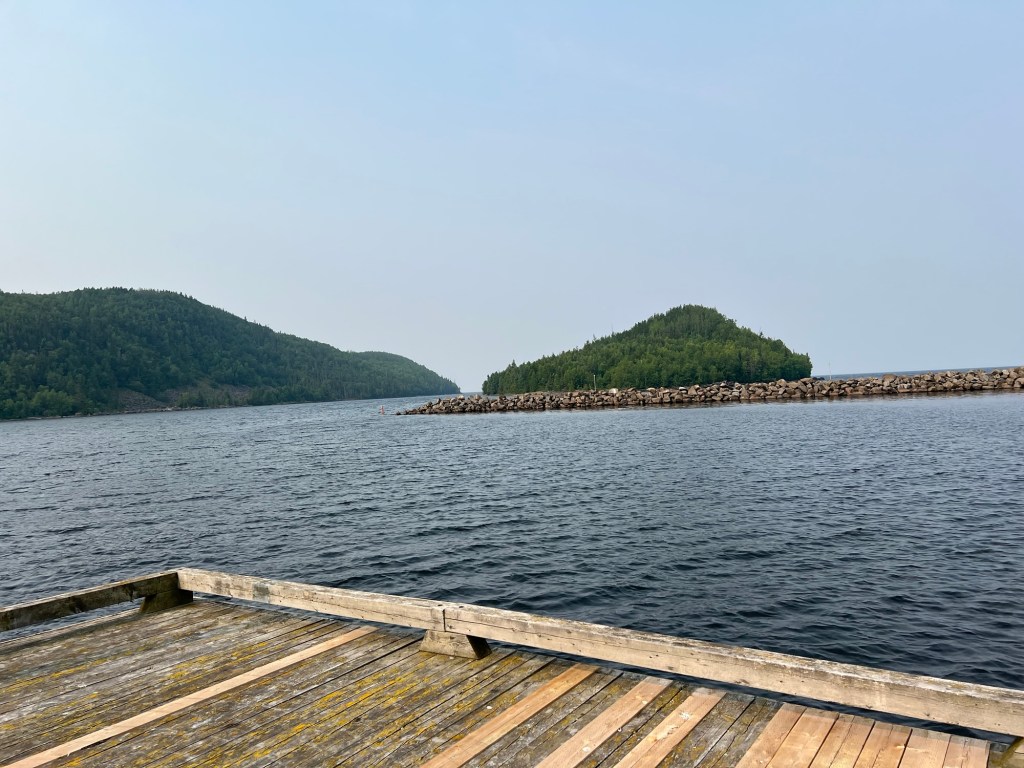
Three miles later we came out here.
This was really quite a nice spot. Besides the boat docks it had a few campsites. There were only a couple of campers here, more our kind of place.
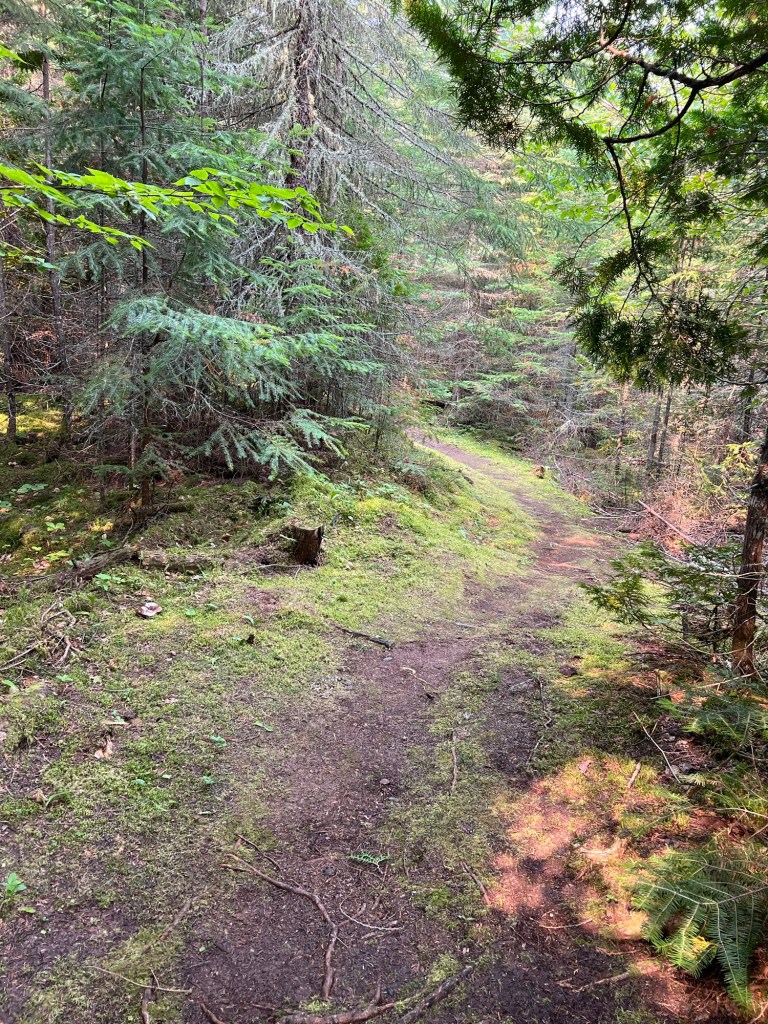
We went back a few hundred yards to where we’d seen a sign for the Lake Nipigon Shore Trail. Now this was a very nice trail.
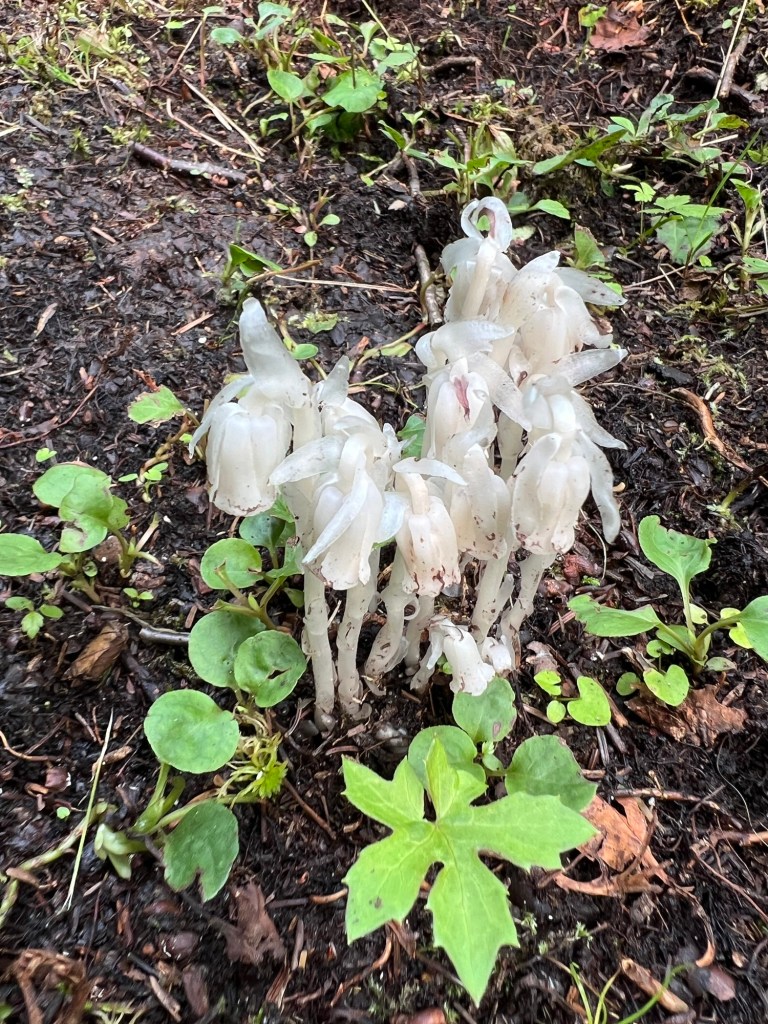
Bud spotted these ghost plants along the trail.
It was not long until we came to the turn off to go up to the lookouts.
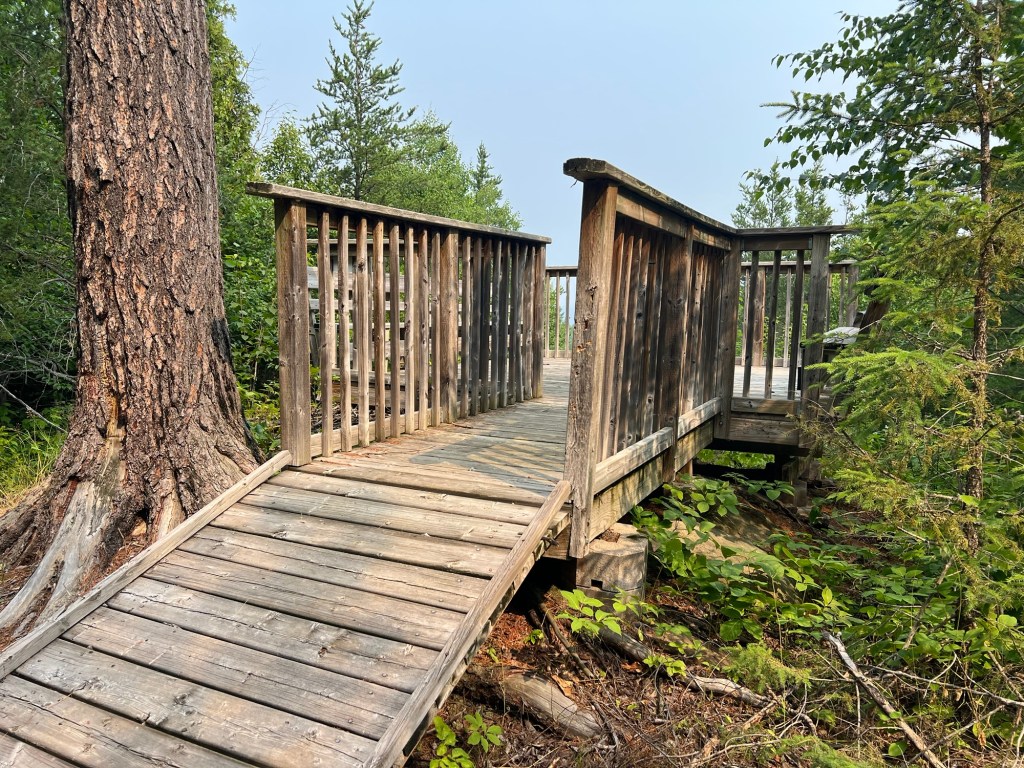
There were two well made lookouts about 0.3 mile apart.
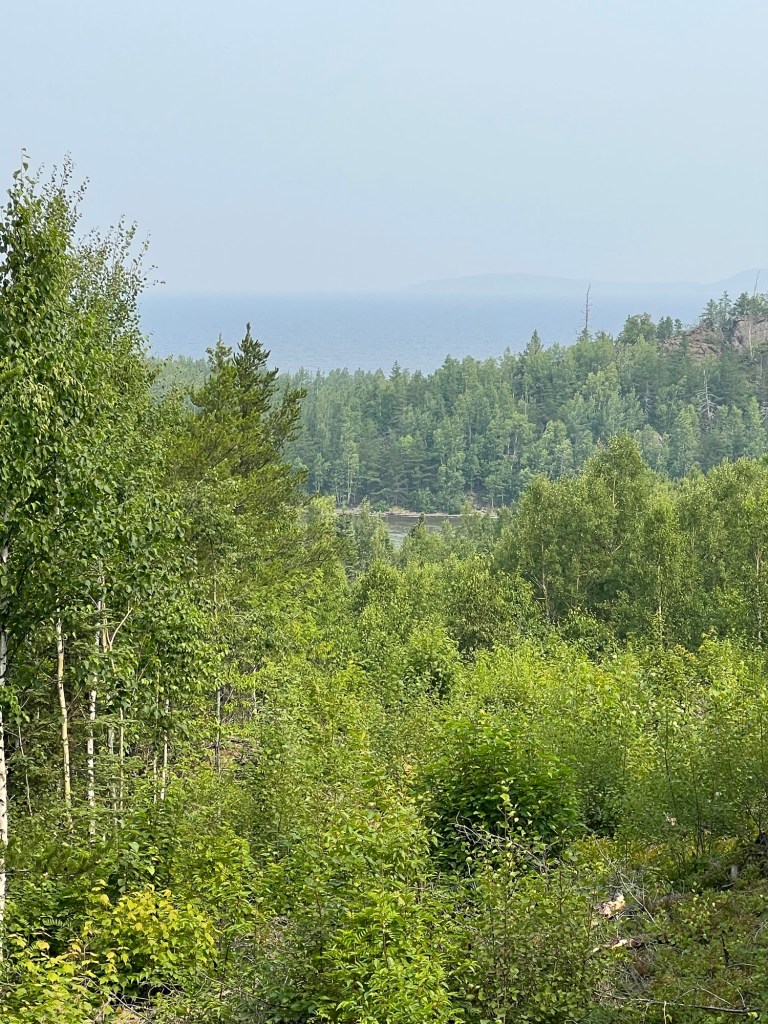
The view from the first wasn’t too good, especially with the smoke.
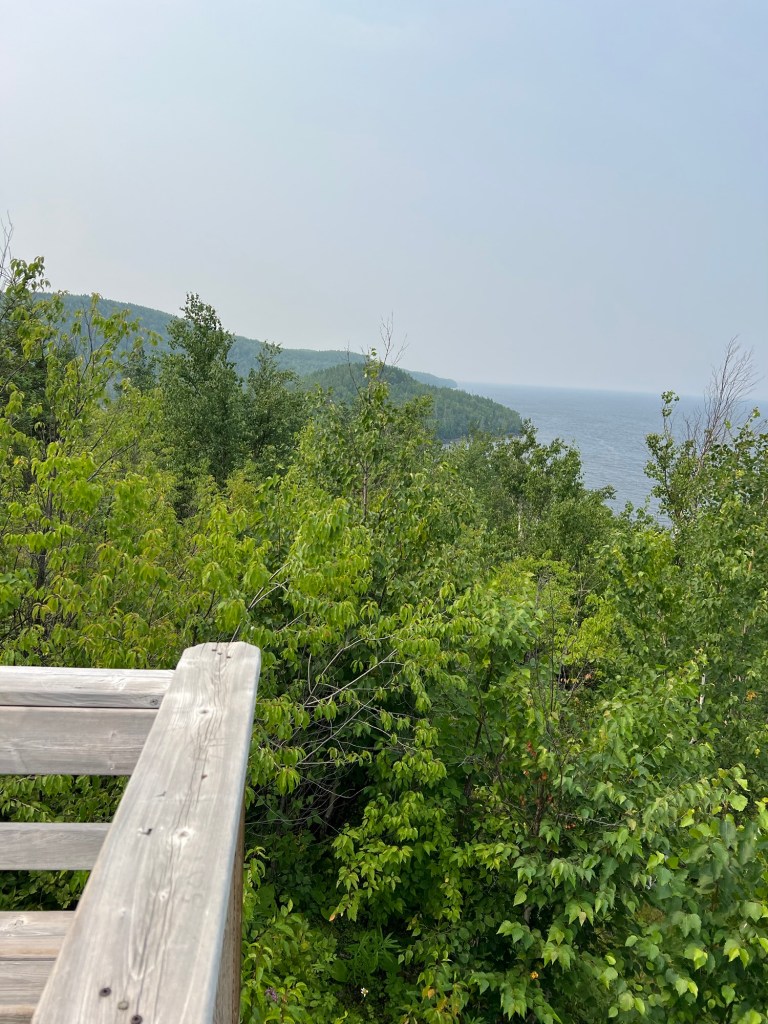
The second lookout had nice views of the shoreline…
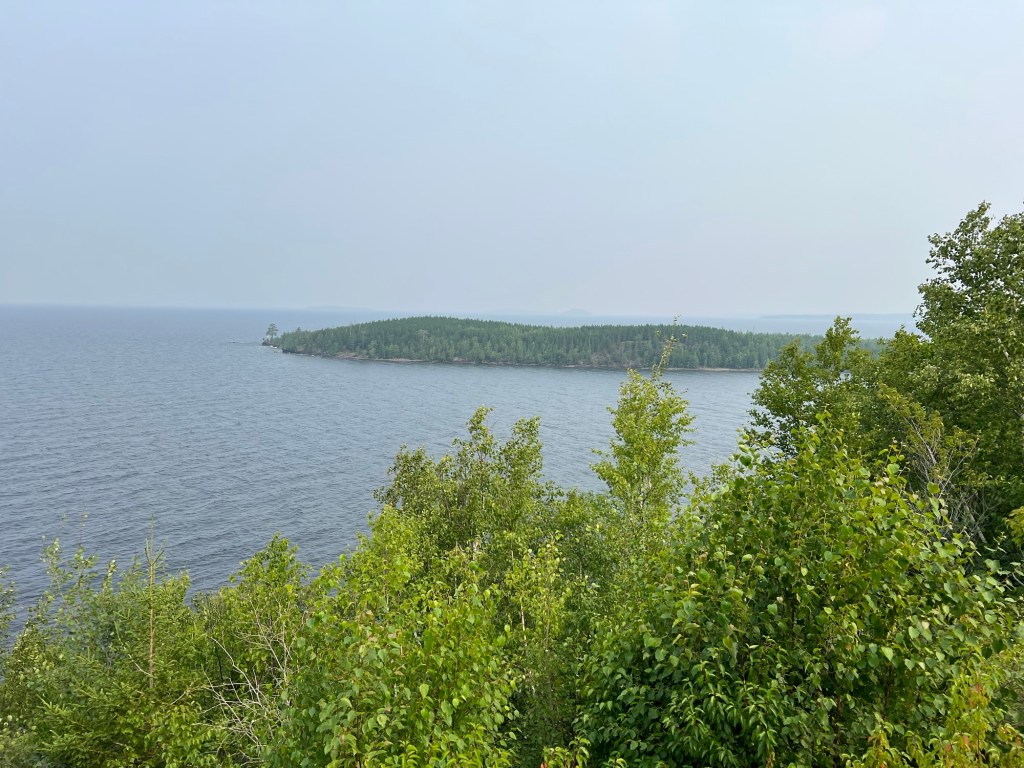
and an island. I think that’s the far shore visible, but hard to see with the smoke. Still, it was a pretty nice day.
All in all a decent stop but we’ll be glad to get back to a Provincial Park tomorrow.
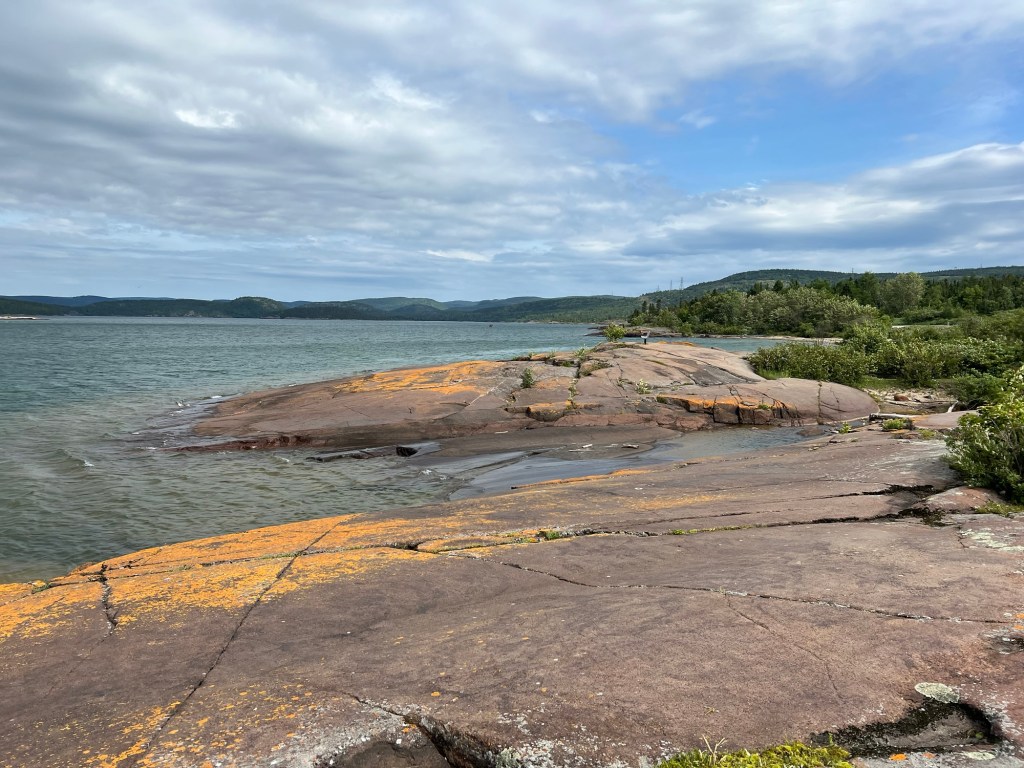
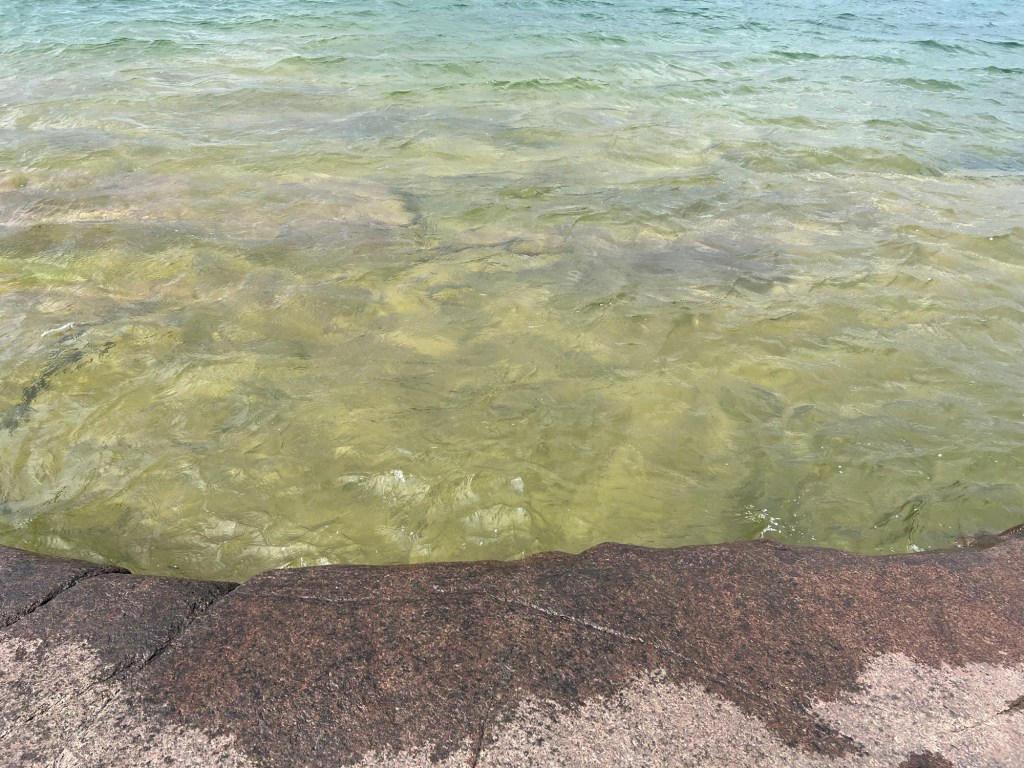
We are still at Penn Lake Park Campground in Marathon, Ontario. The other day we were exploring the streets and found our way here, near the boat ramp. This isn’t a beach, it’s more like a rock swimming pool.
Here you could sit on the edge of the rock ledge and slip to another smooth rock surface about three feet down.
While driving around we came upon a large sign with a map of trails and roads in town. From that I discovered Carden Cove just west of town down a dead end gravel road.
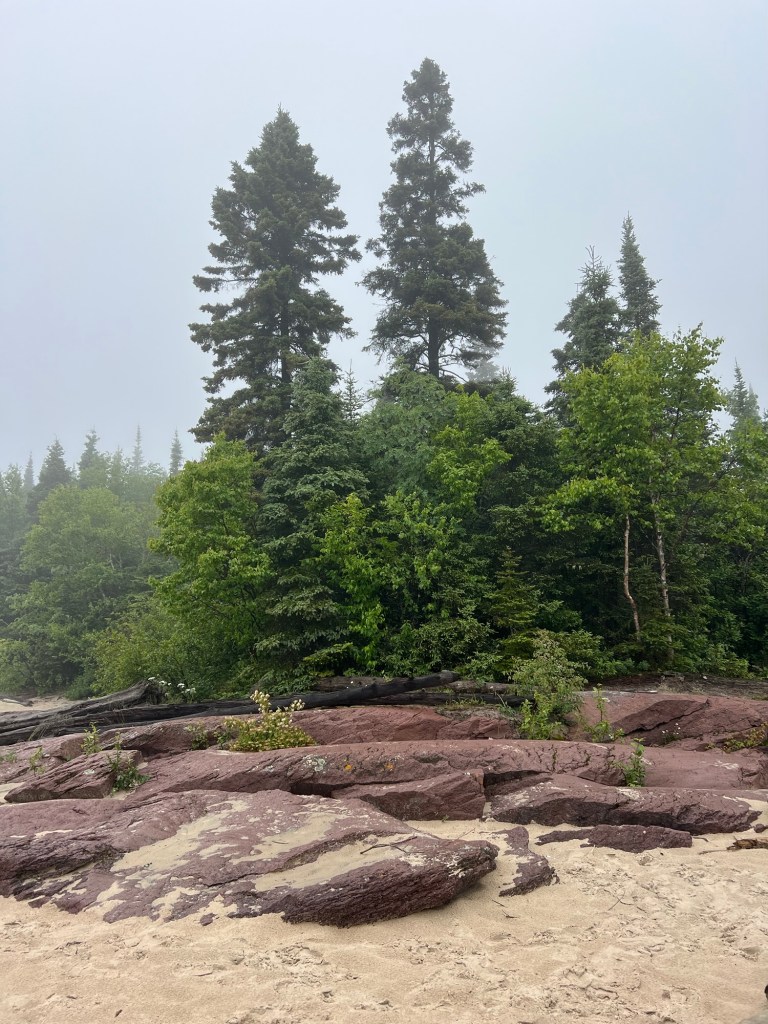
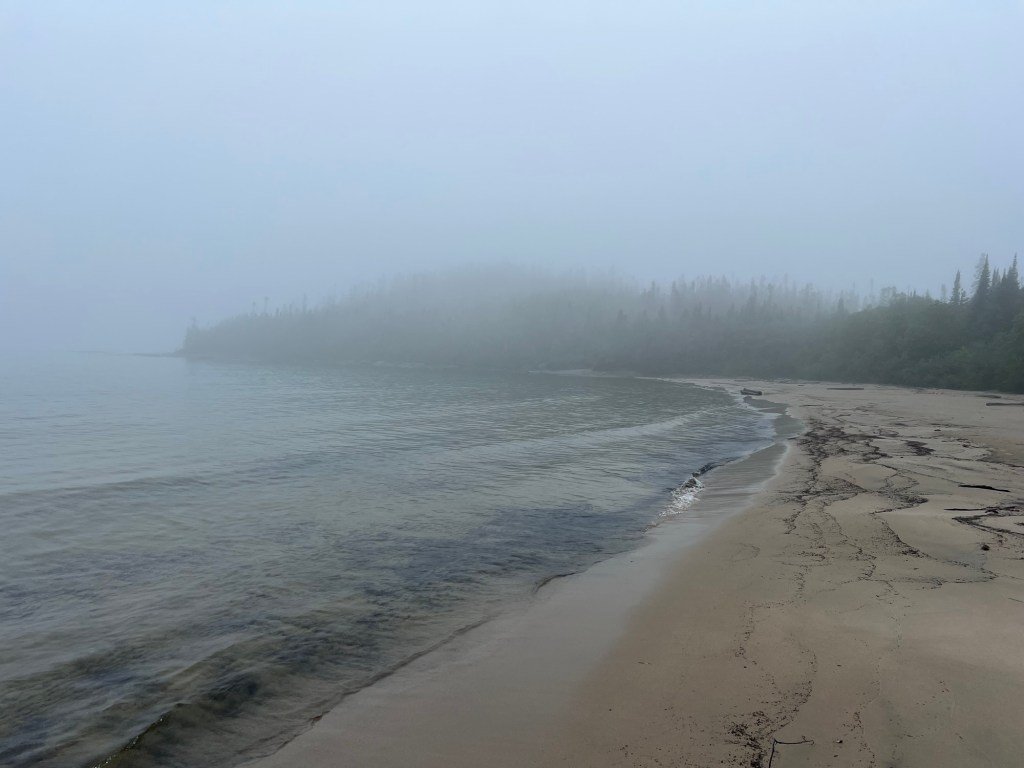
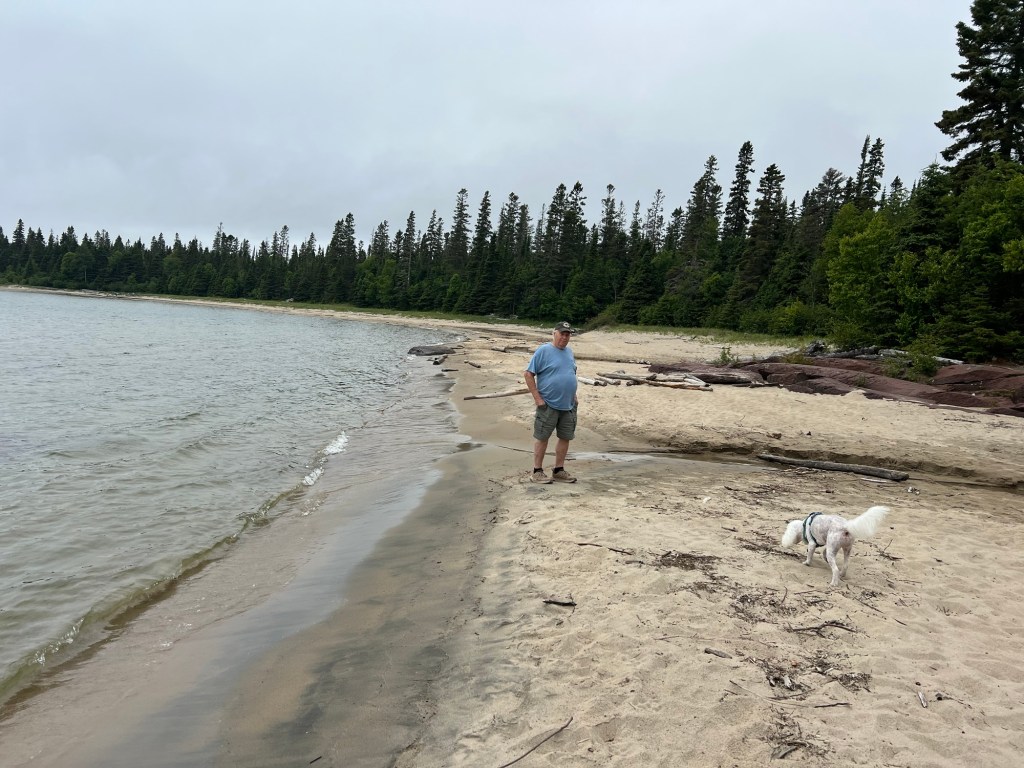
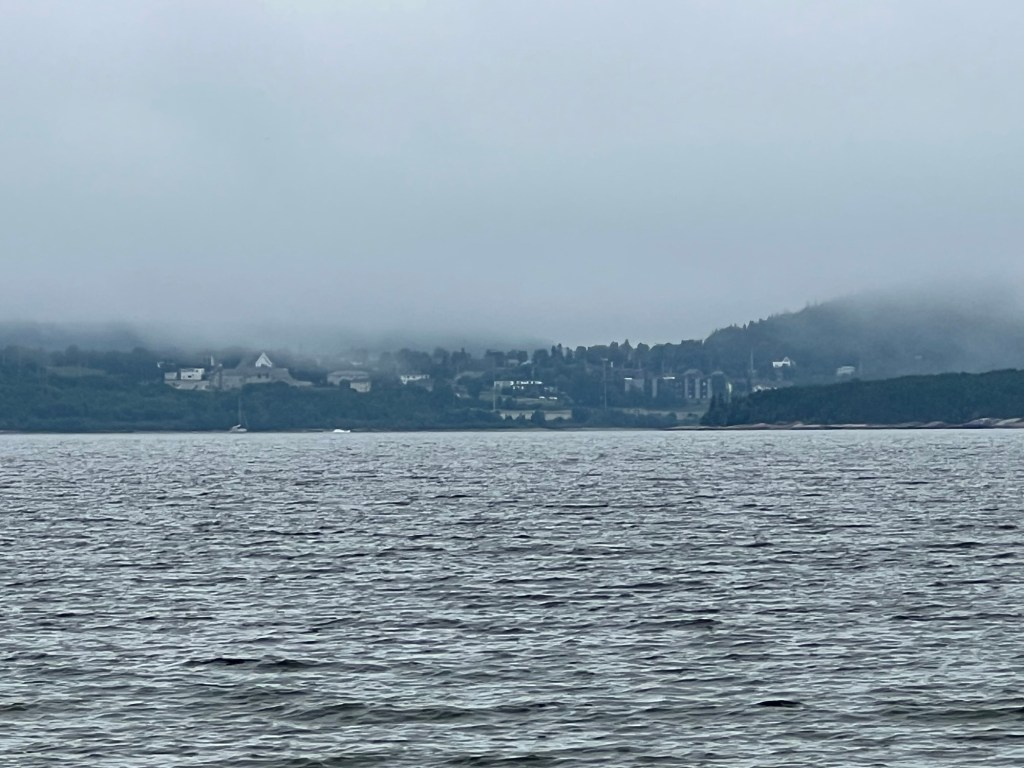
It has a pretty nice beach, but the first day we visited you couldn’t see much because of the fog.
We went back another day, and although overcast, the fog was gone.
You could even get a glimpse of Marathon across the cove.
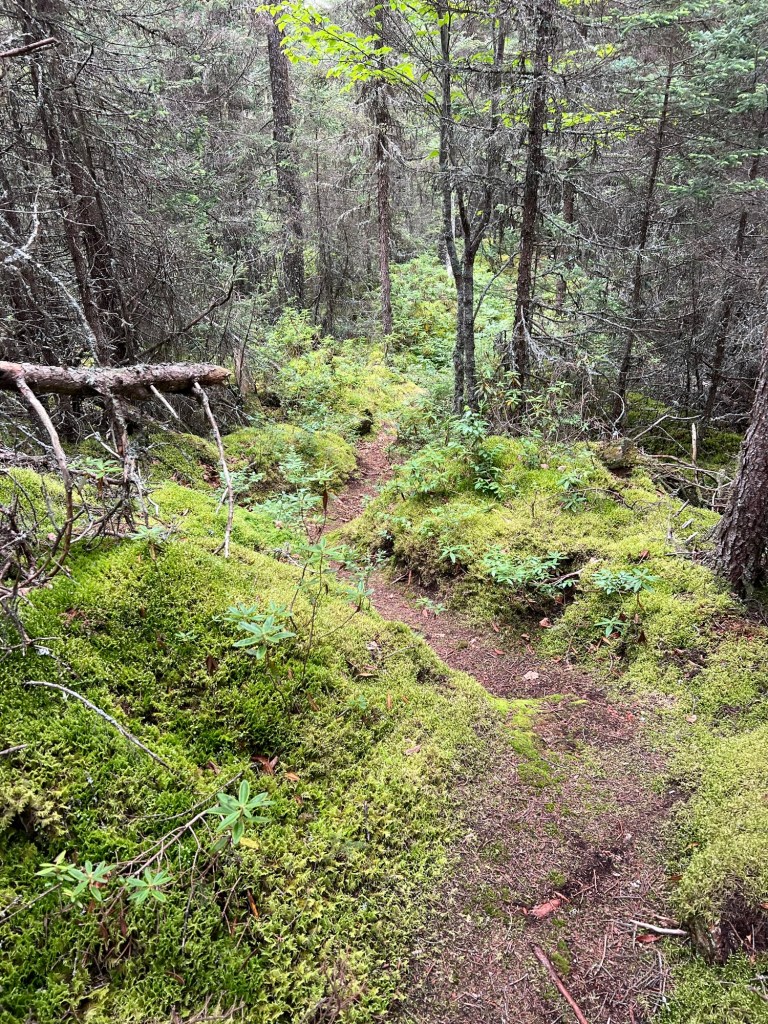
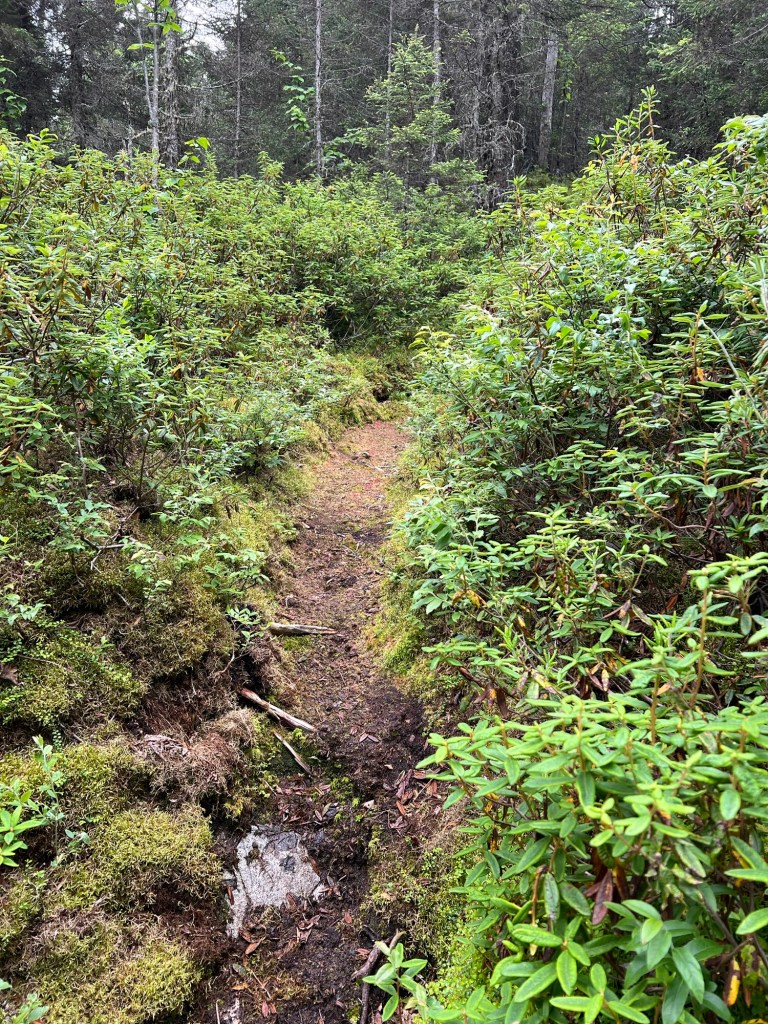
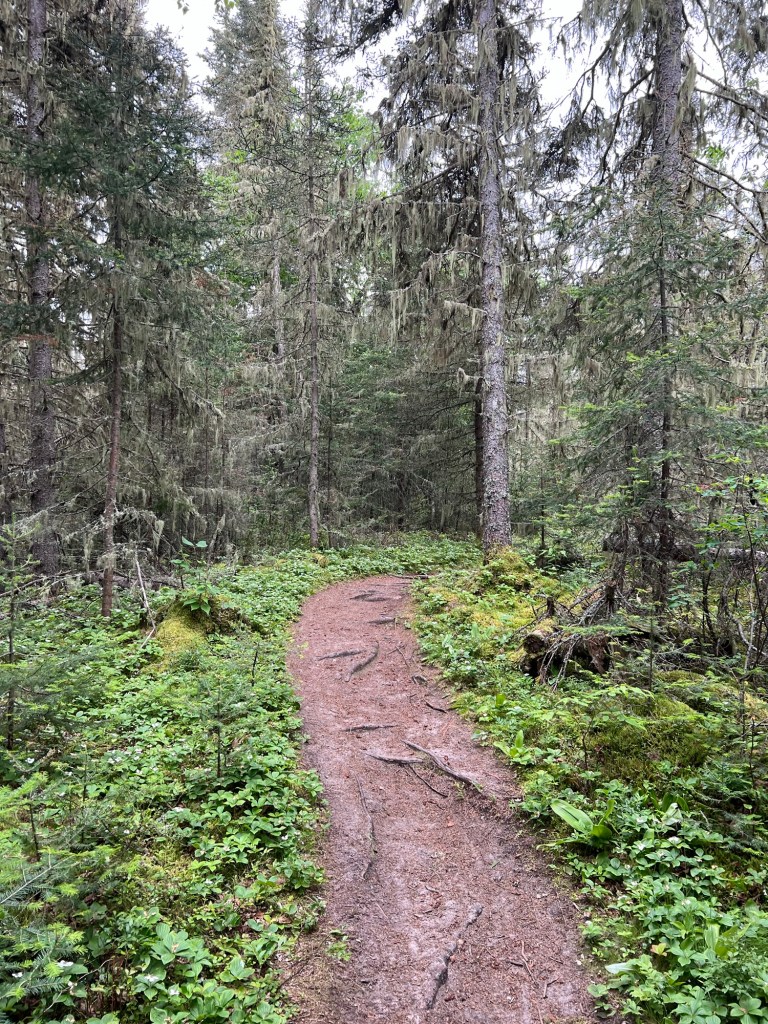
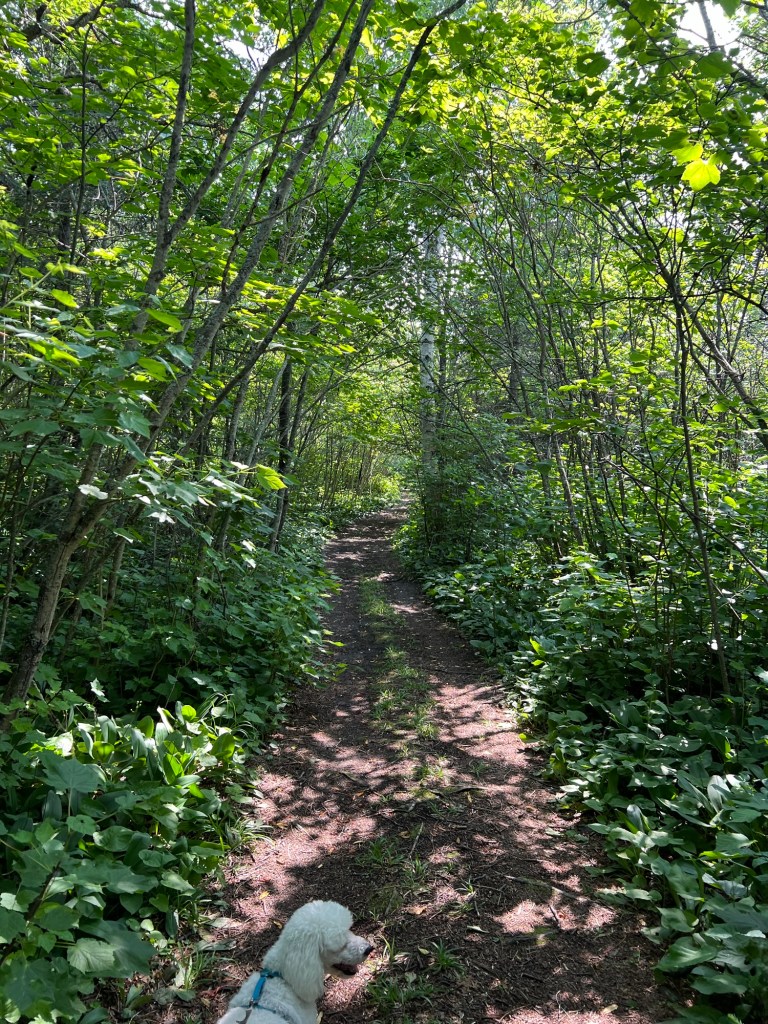
That day we decided to walk a trail to the next cove. The trail was worn deep into the sphagnum.
We were worried about bears. There are signs advising to be “bear aware” at every campgound and trailhead.
The trees and brush are so dense that it would be easy to come upon a bear unawares. That day we cut our walk short.
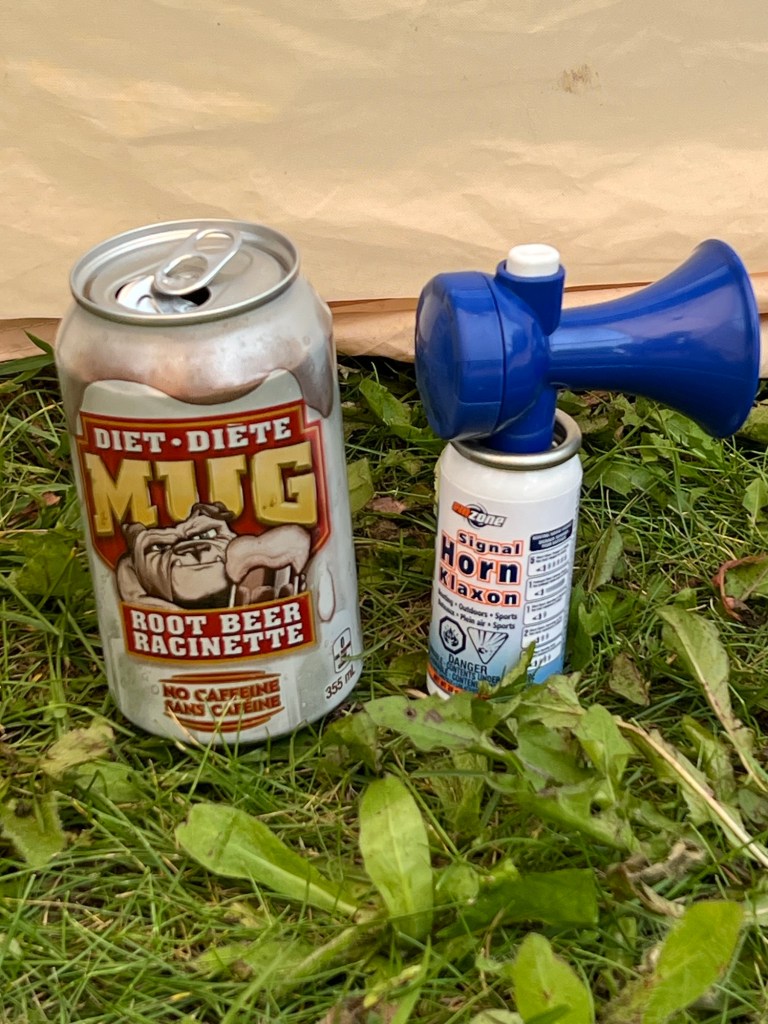
We have bear spray, but really don’t want to get close enough to use it. So we went to Canadian Tire and bought this really small air horn. All the online references said that bear bells don’t work, but bear spray and air horns do.
Armed with our new air horn we went back to the trail and this time headed for a side trail to the beach on the next cove.
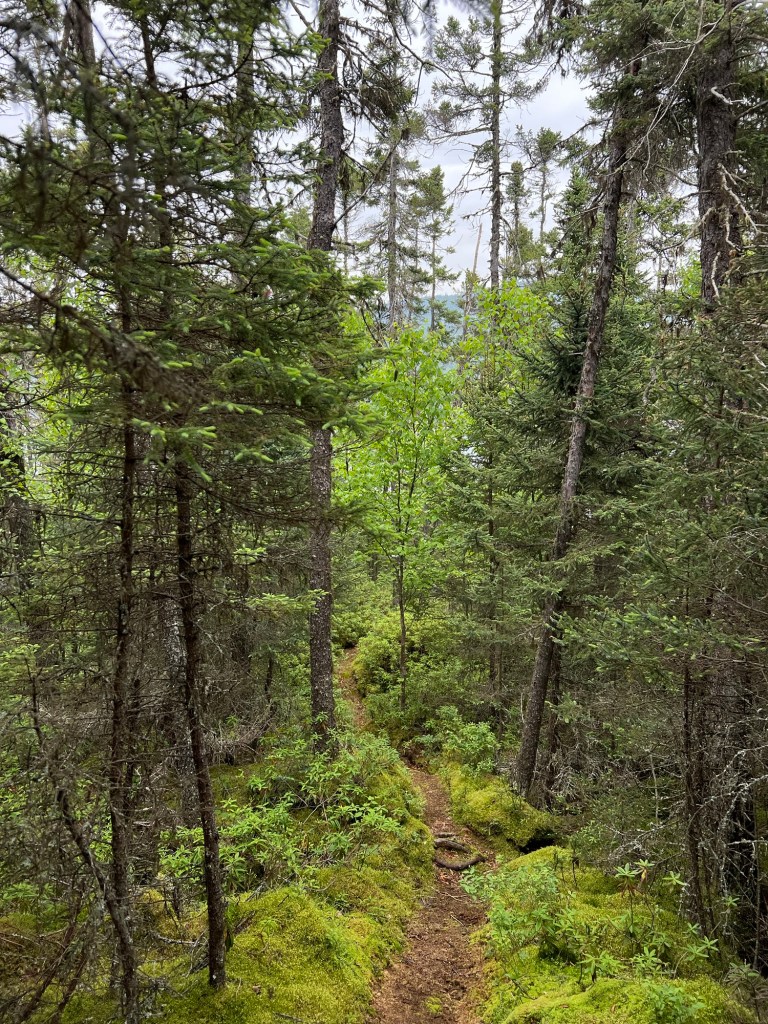
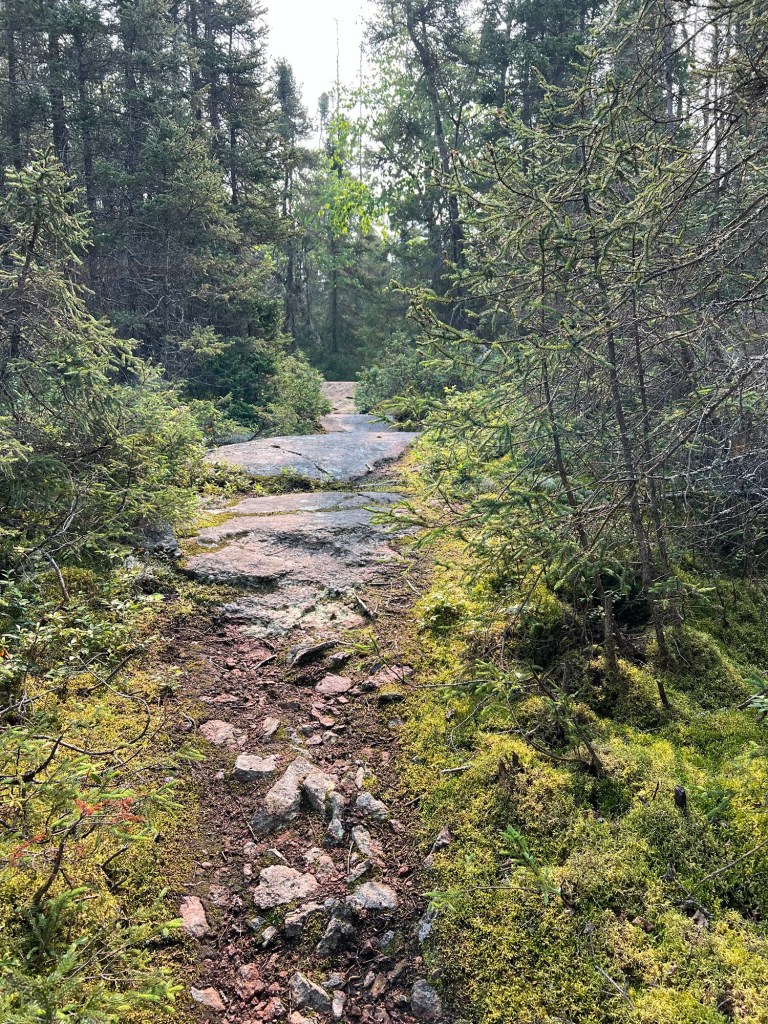
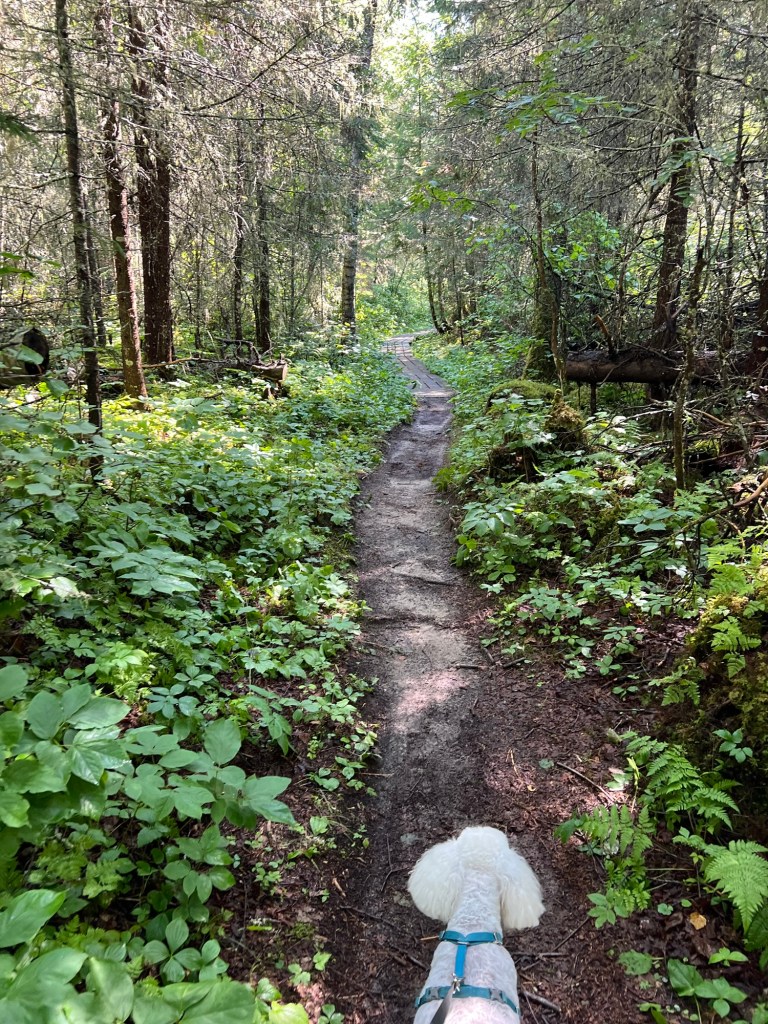
The main trail was a bit more open and rocky,
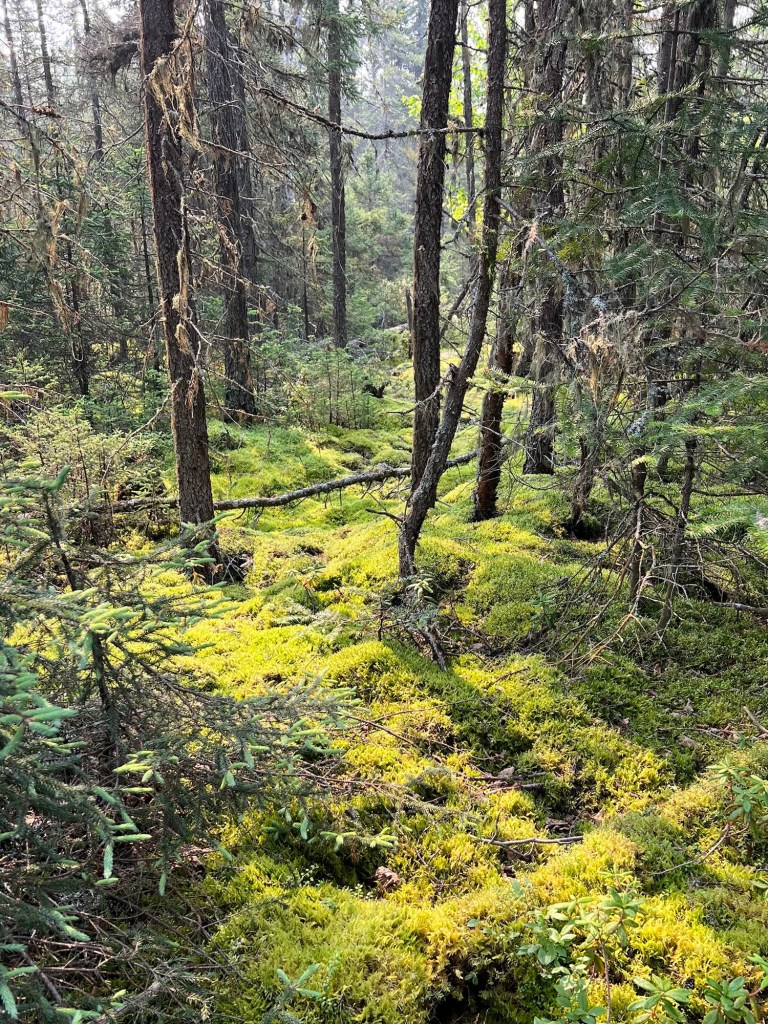
though there were still plenty of trees and sphagnum.
We walked until we found an overlook of Beatty Cove. This time the haze was smoke from the wildfires (mostly in Manitoba).
There wasn’t much of a beach, there was a lovely island. The hill across the cove is Picnic Table Hill and I would have loved to tackle that hike but my two walking partners (Bud and Matey) were not up for that.
At least we got a nice walk in the woods and didn’t worry about meeting a bear.
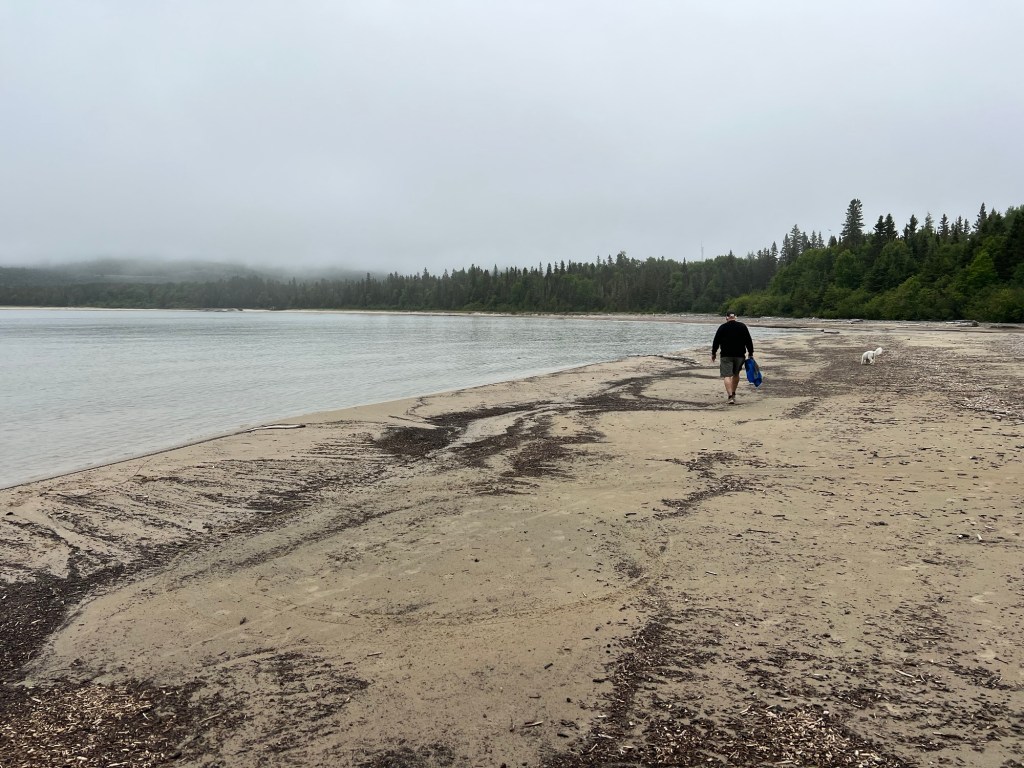
And Matey, even if he’s having a wobbly day, always enjoys trotting on the beach.
I was searching for other places to take Matey and came across a Facebook entry about the mouth of the Pic River. We decided to try that. When we got partway down the gravel road there was a big sign saying No Trespassing and advising people that this was private property owned by the Pic River Ojibway and permission was needed for entry. We turned around, but on our way back stopped at a tribal gas station for diesel. Not only did we save a lot of money, when he paid Bud asked about going to the land at the mouth of the river. “Oh, that’s fine,” they said. “No one will say anything if you go there.”
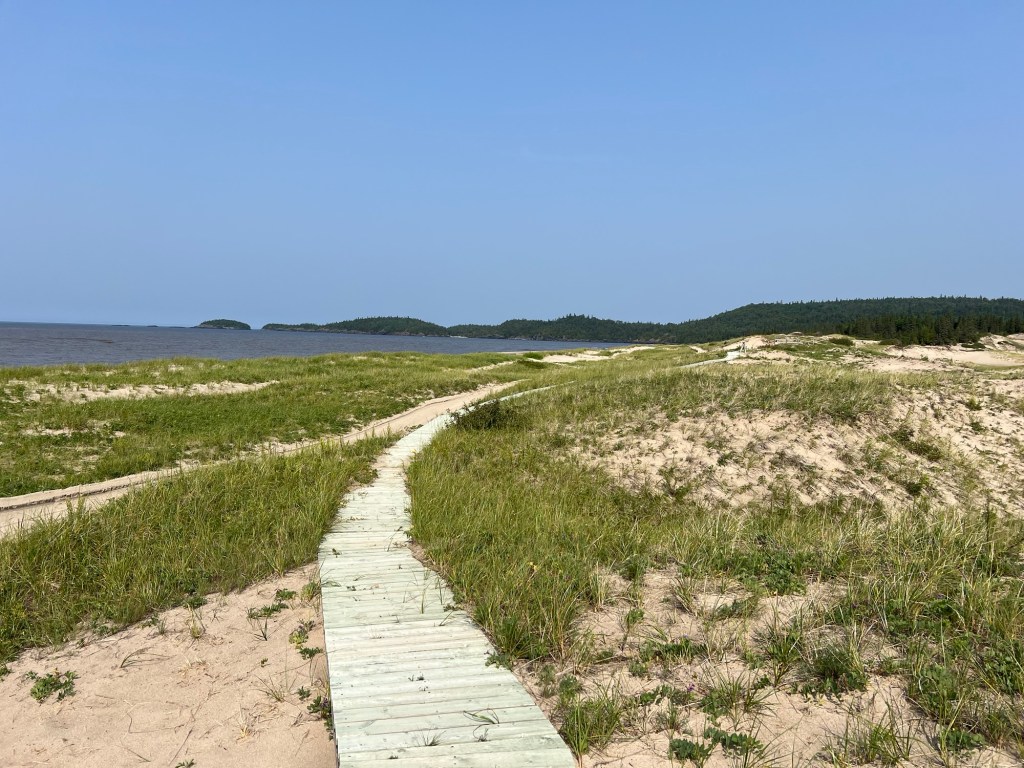
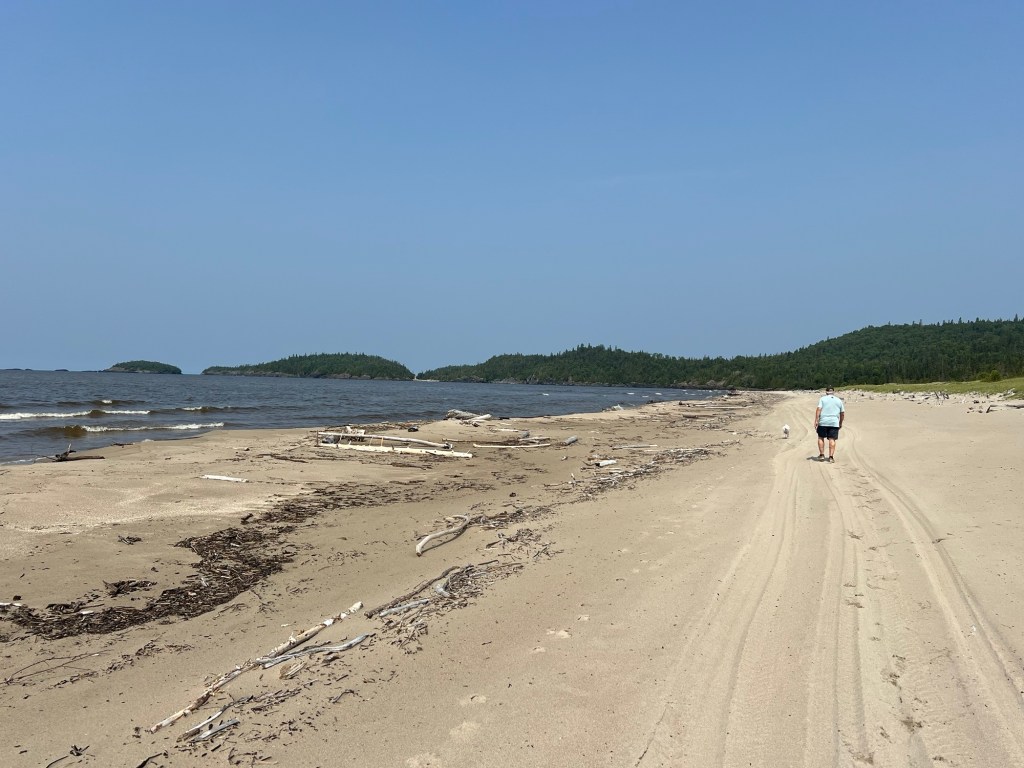
So we went, and it is a spectacular place.
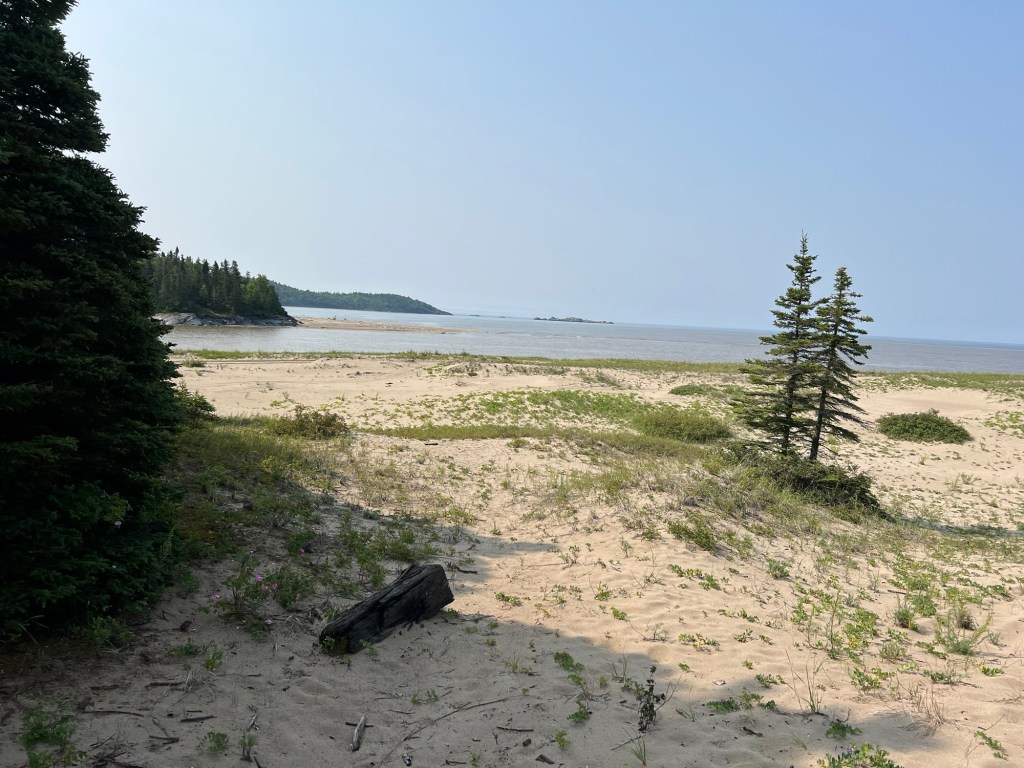
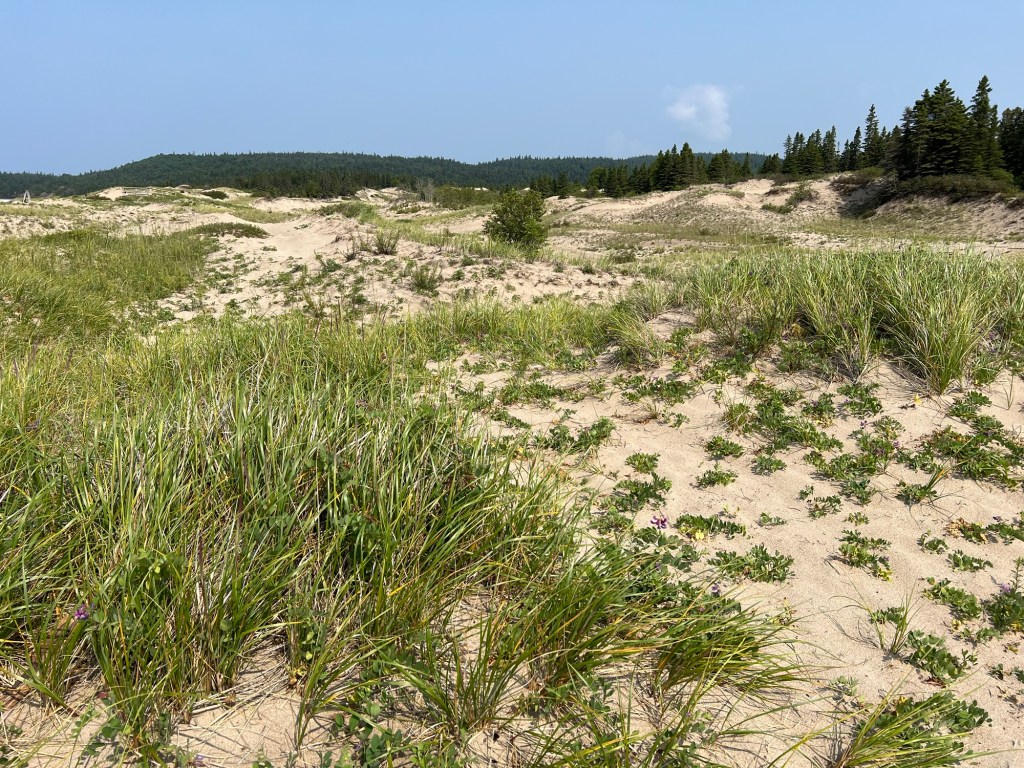
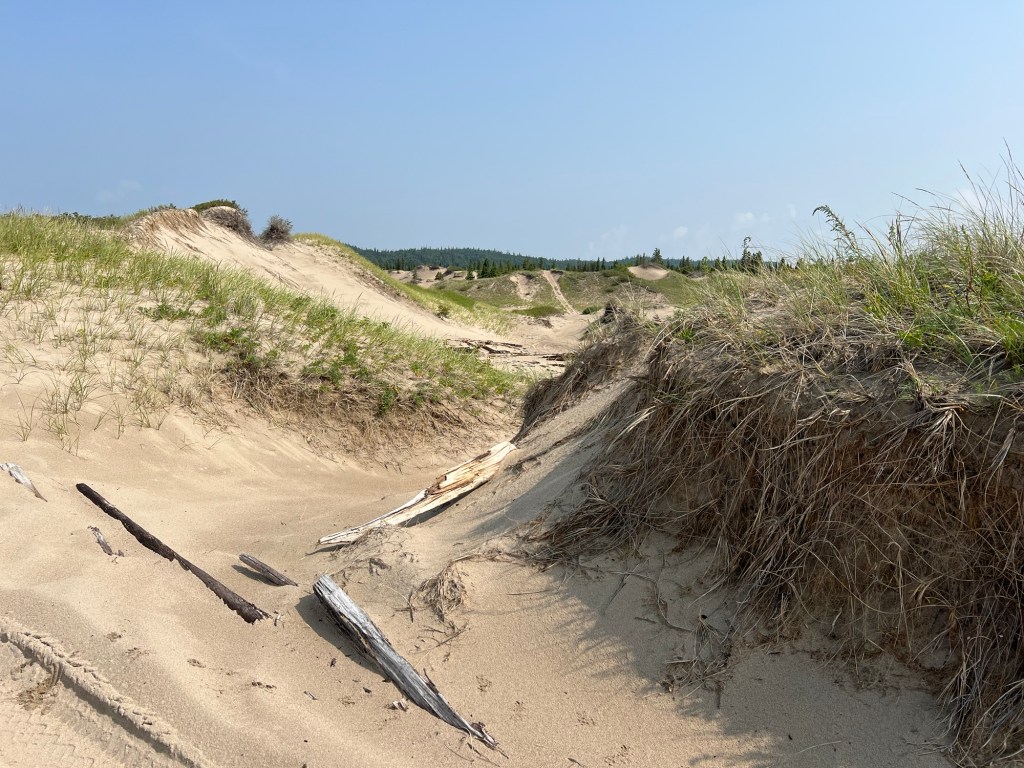
There is a huge area of sand with dunes reaching back at least a quarter mile.
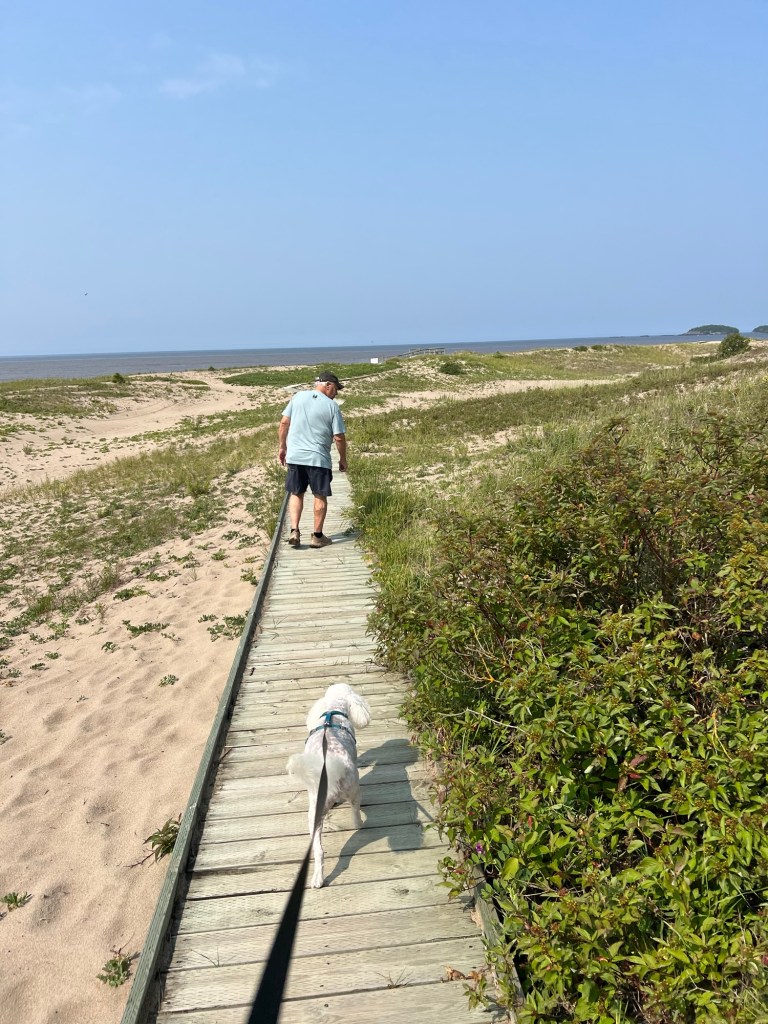
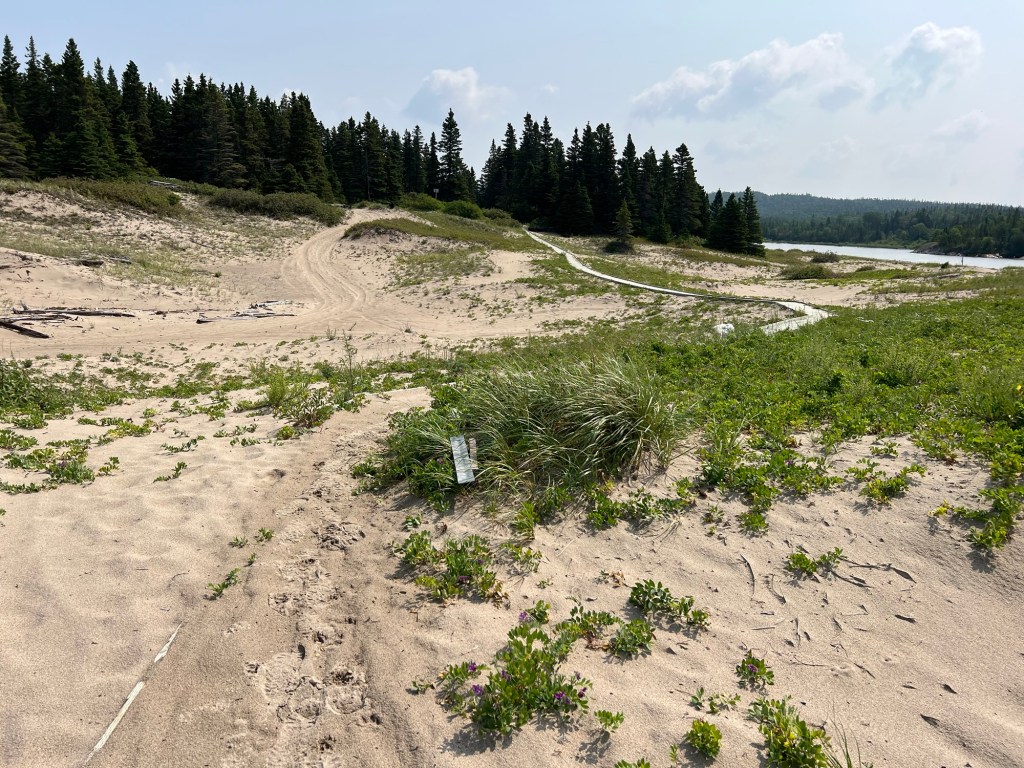
There was a boardwalk built out towards the edge of the lake.
It continued along the edge of the beach but parts were damaged, probably by winter storms. We walked the sandy track next to it.
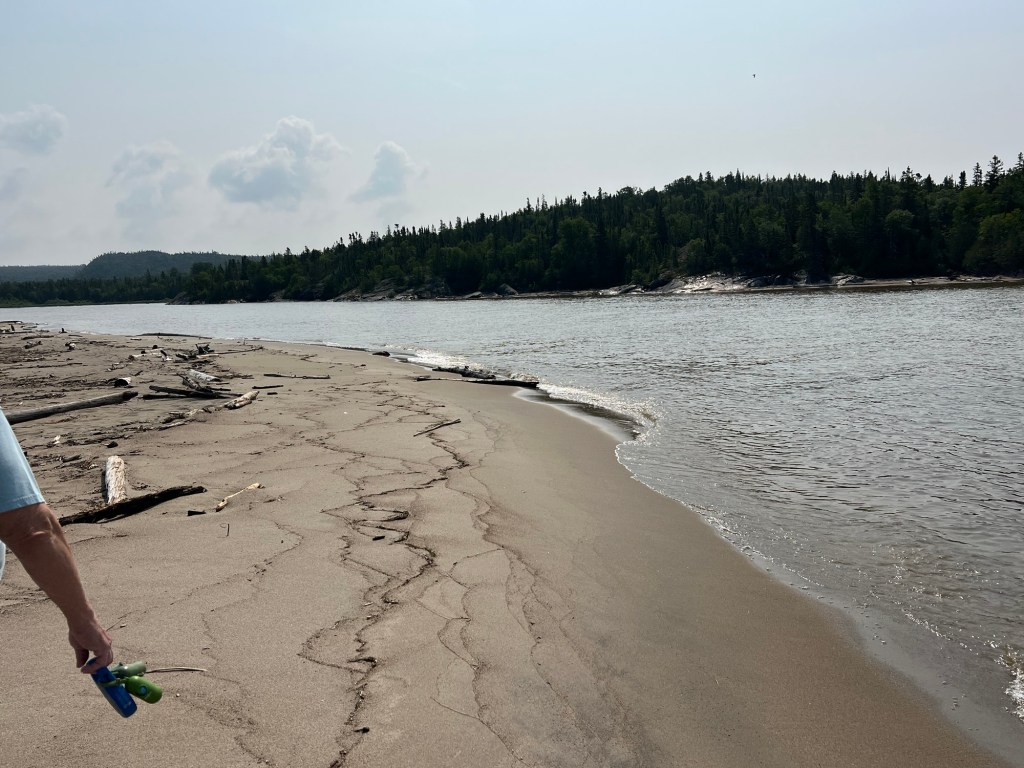
This is the mouth of the Pic River. I was facing southeast here, and the sky was white with smoke.
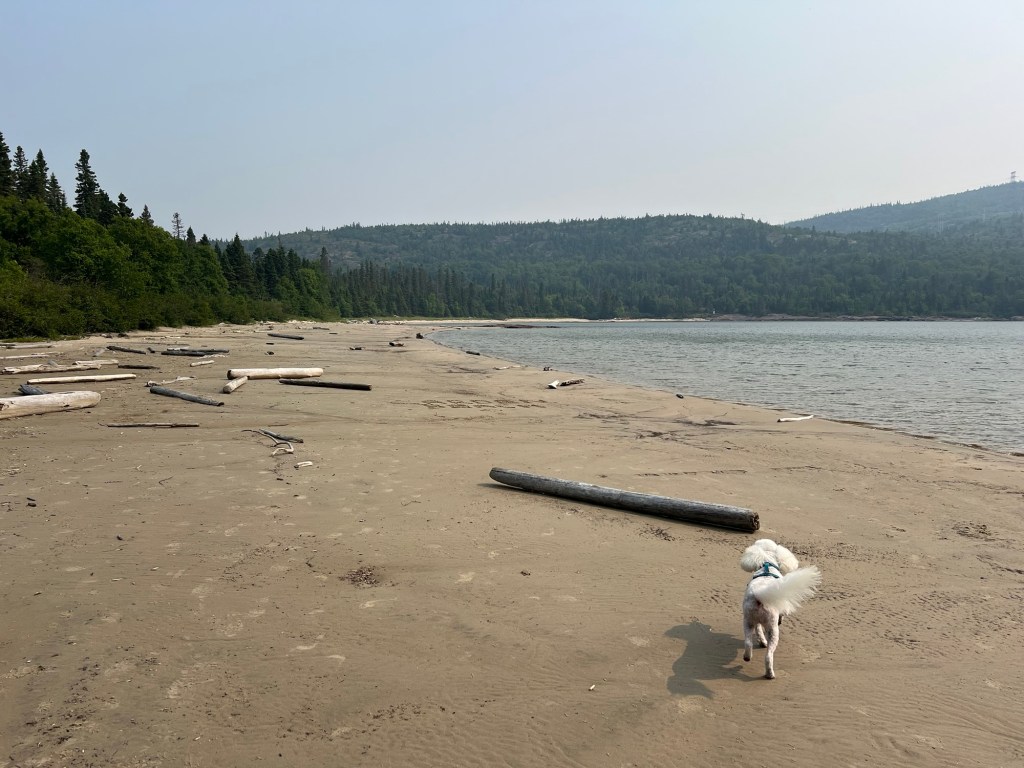
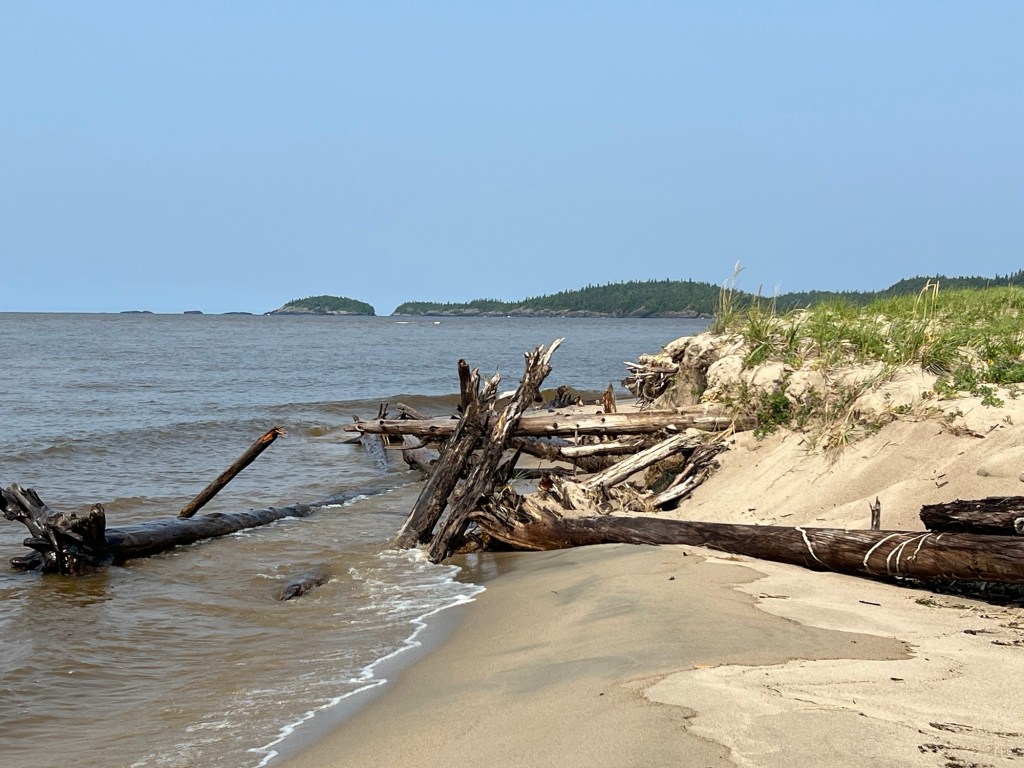
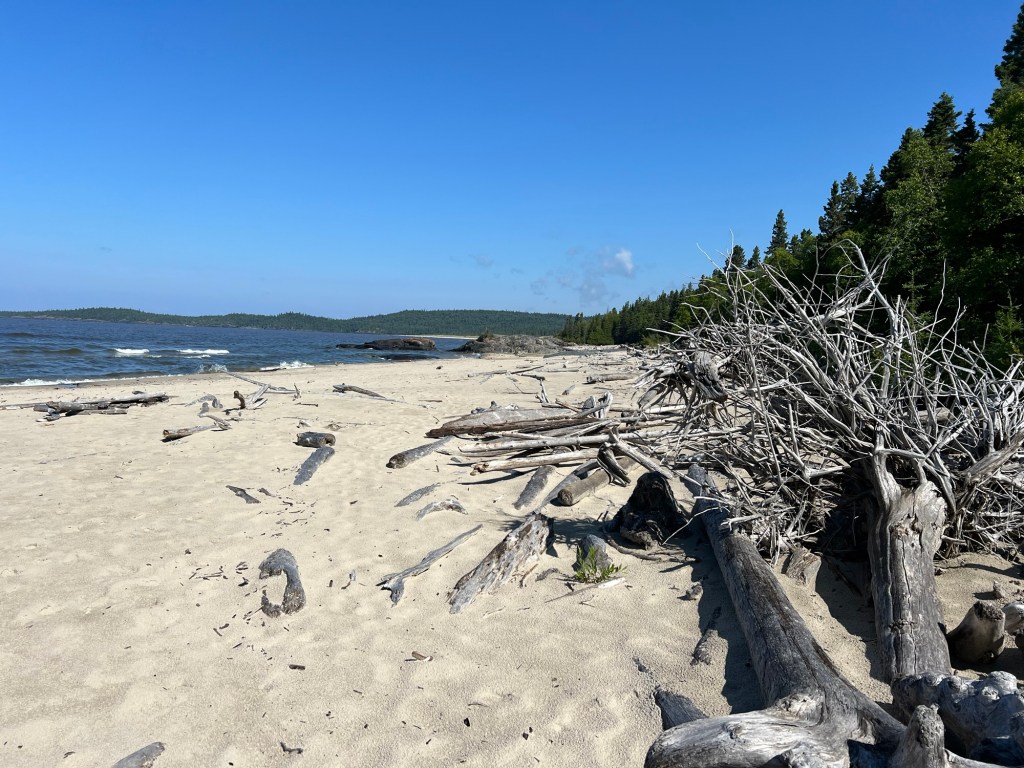
Heading away from the river the sand was eroded and choked with logs. And facing northwest the sky was clear.
The top of that was smooth, like a snow drift, and the sand curled over like drifted snow.
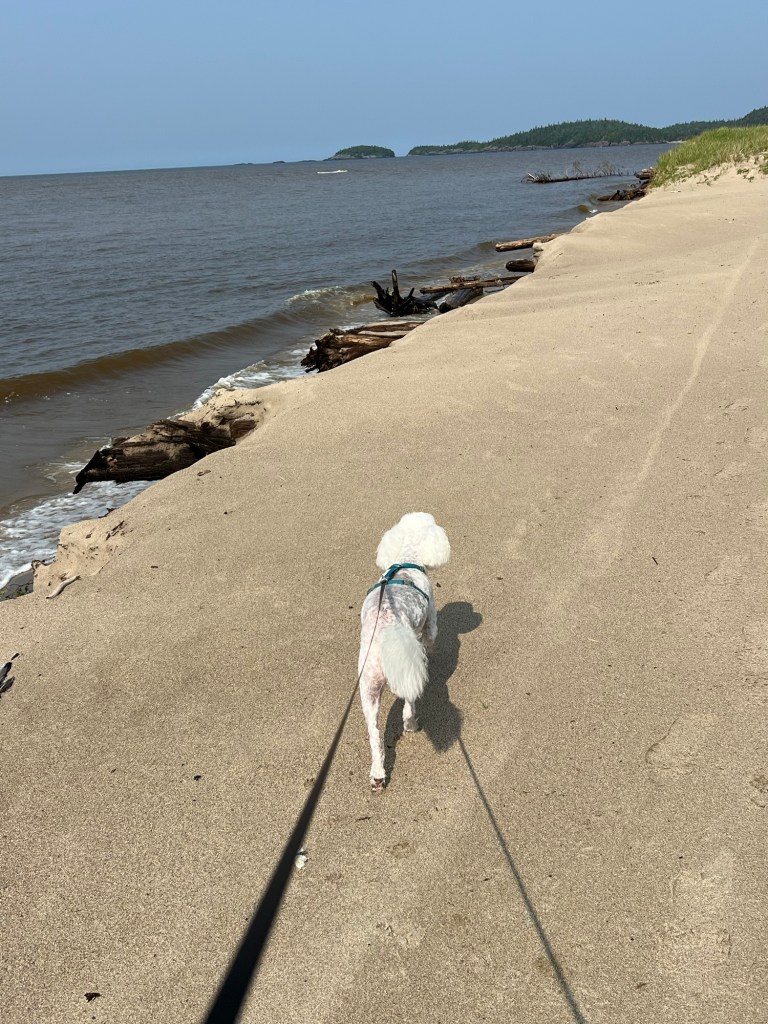
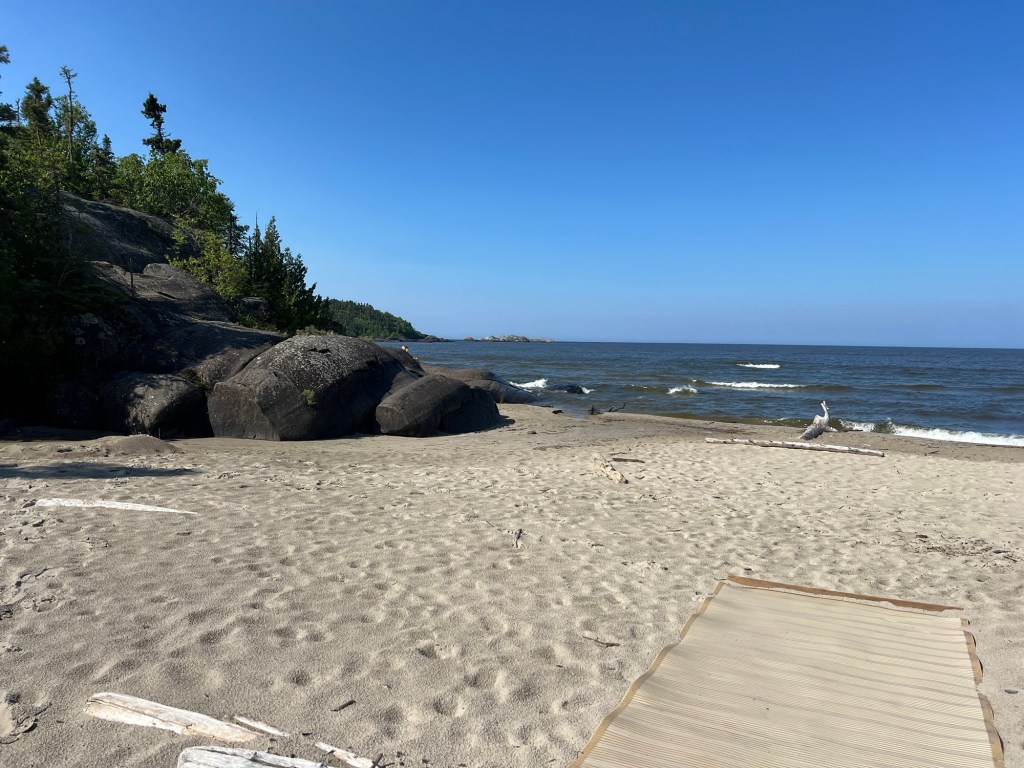
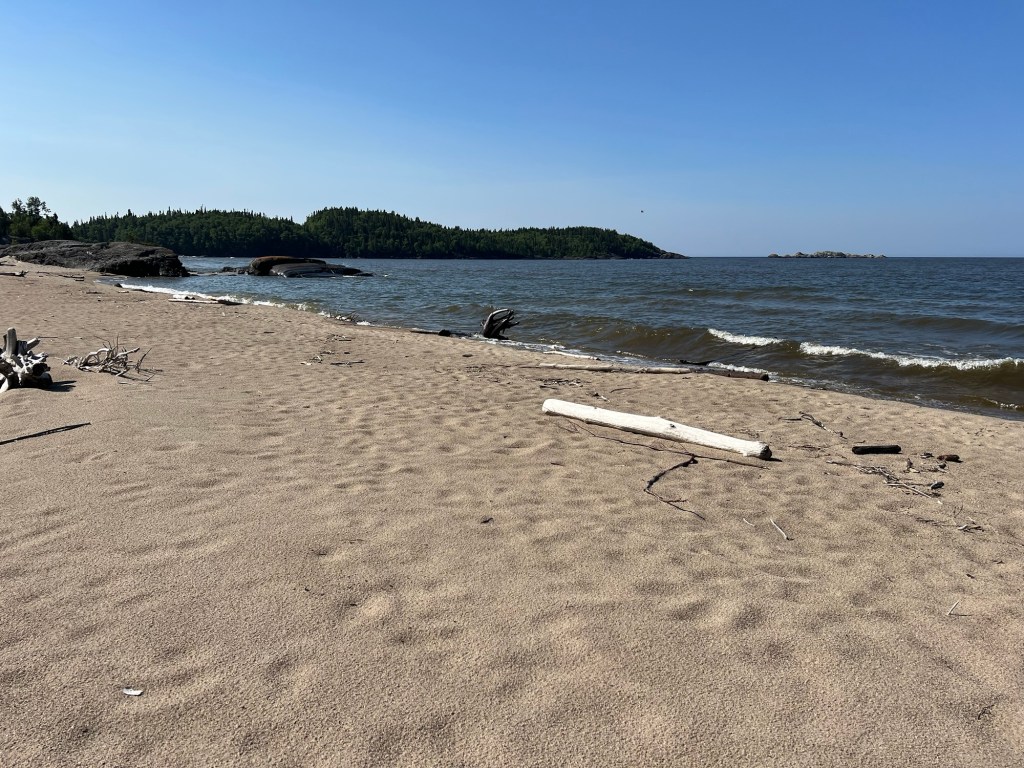
Further along there was plenty of beach.
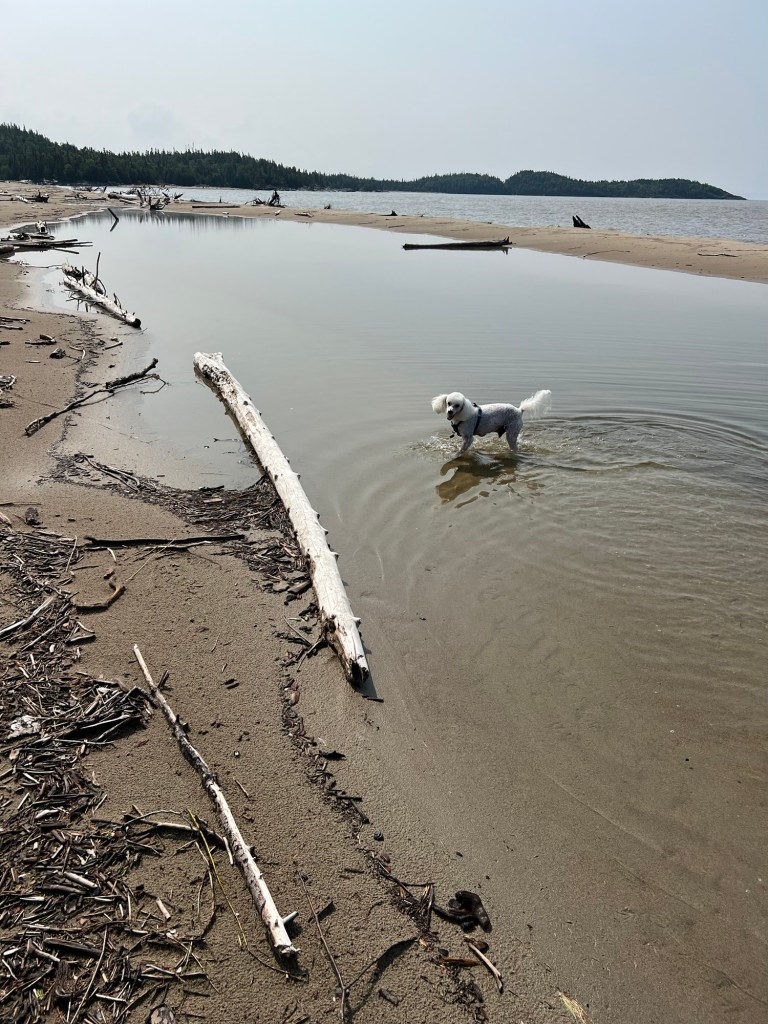
Matey waded in the quiet water trapped behind a sand bar.
Inland were the big dunes.
It was beautiful and I’m so glad we went there.
We went to one other beach. We went back to Pukaskwa National Park and hiked a short, easy trail…
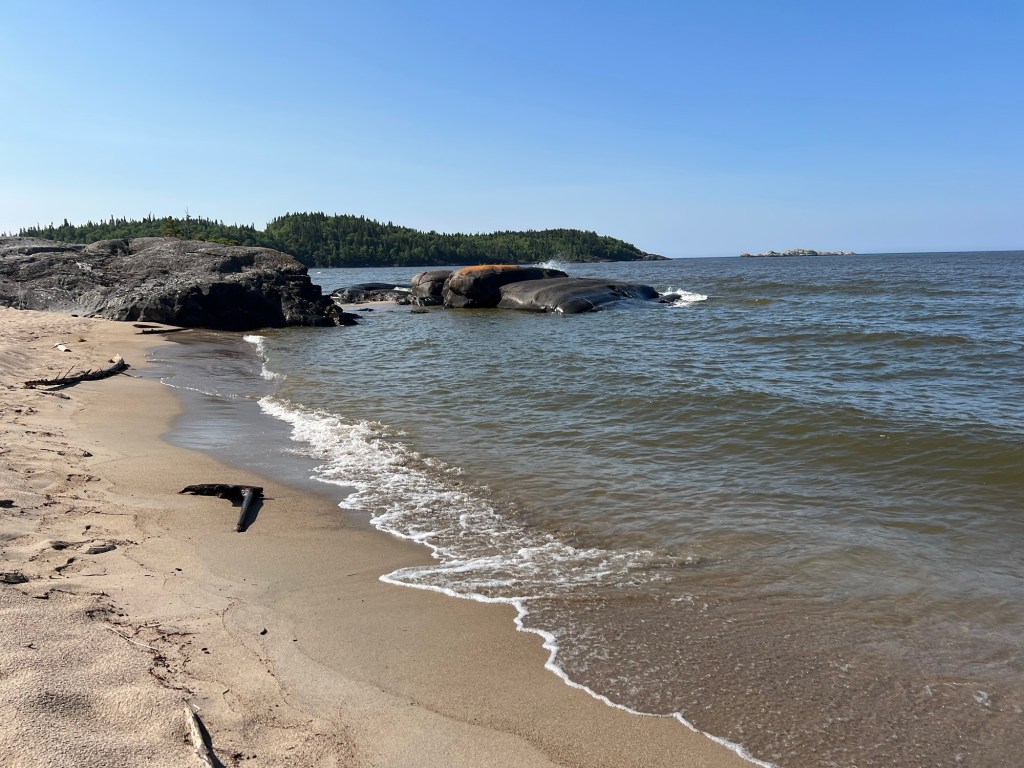
out to North Beach.
No fog or smoke that day, just the spectacular rocks, trees and sand of the north shore of Lake Superior.
We walked to the end of the beach. From the rocks there you could see across to the dunes we went to on the other side of the mouth of the Pic River.
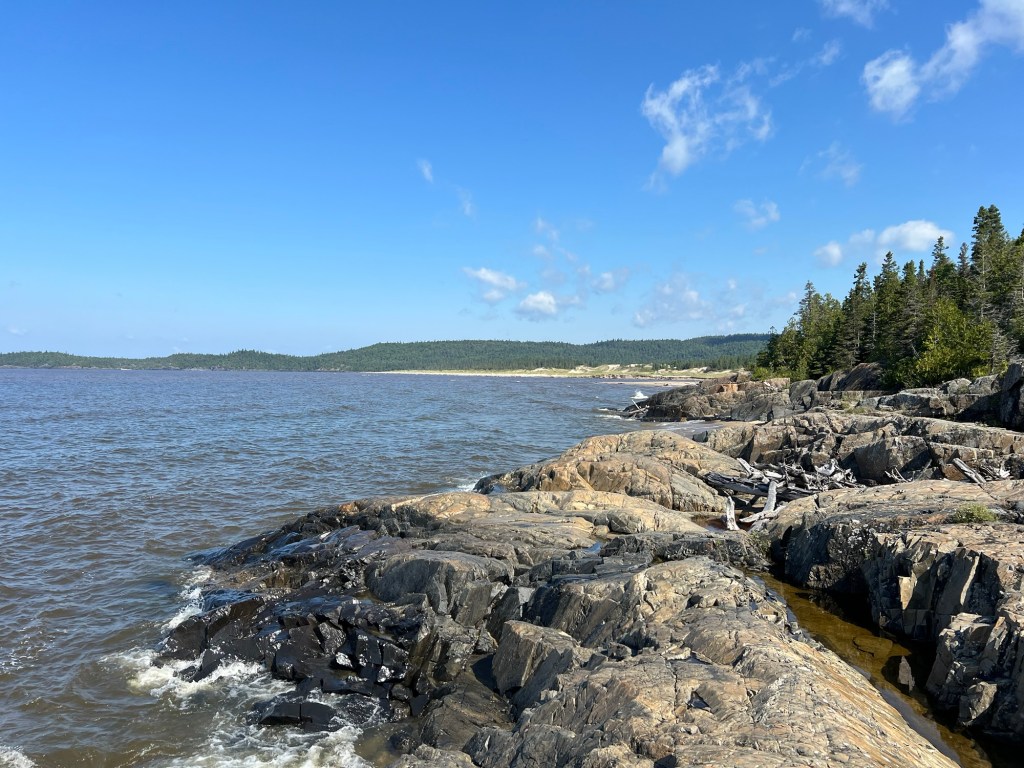
To the southeast are the rocky points we hiked in the park.
There were no quiet pools for Matey here, but there were also no other people or dogs, so he got to be leash free for a while.
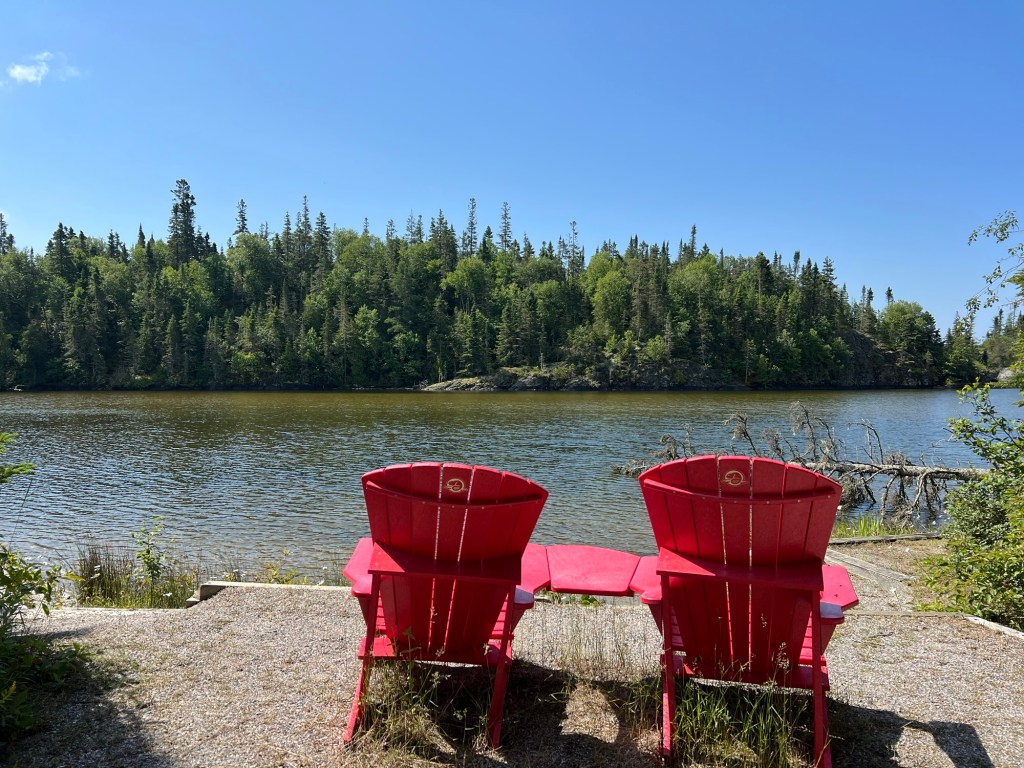
When we came back from our walk we looked around near the Visitor Center. We found one set of Red Adirondack Chairs (every Canadian National Park has them).
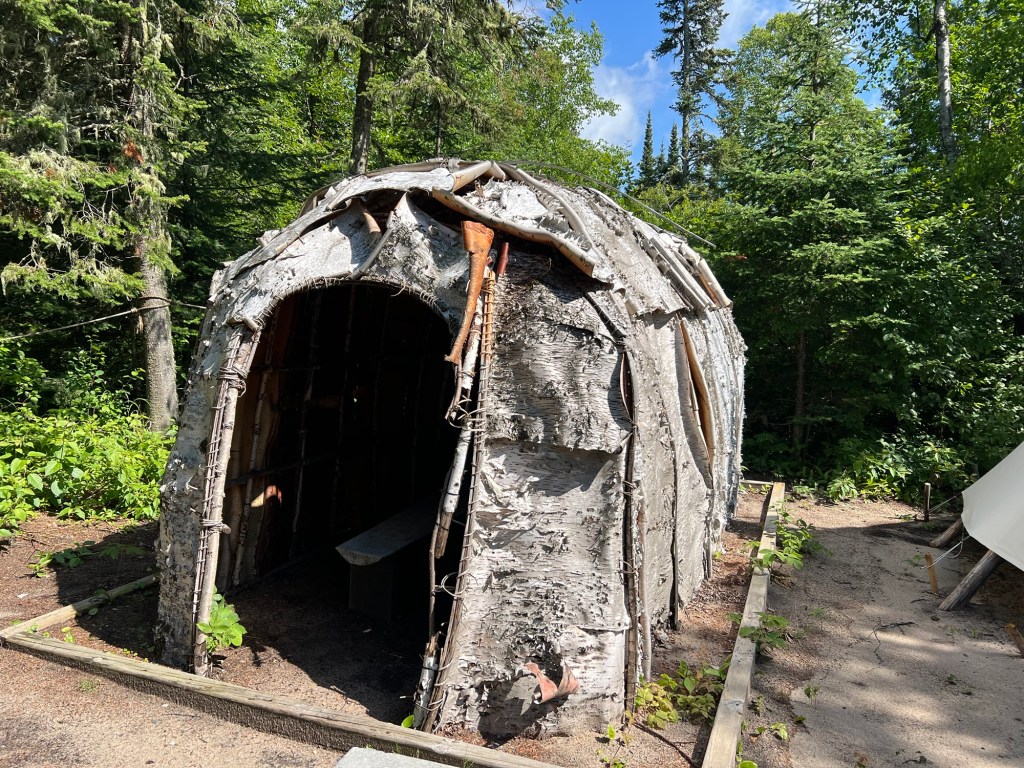
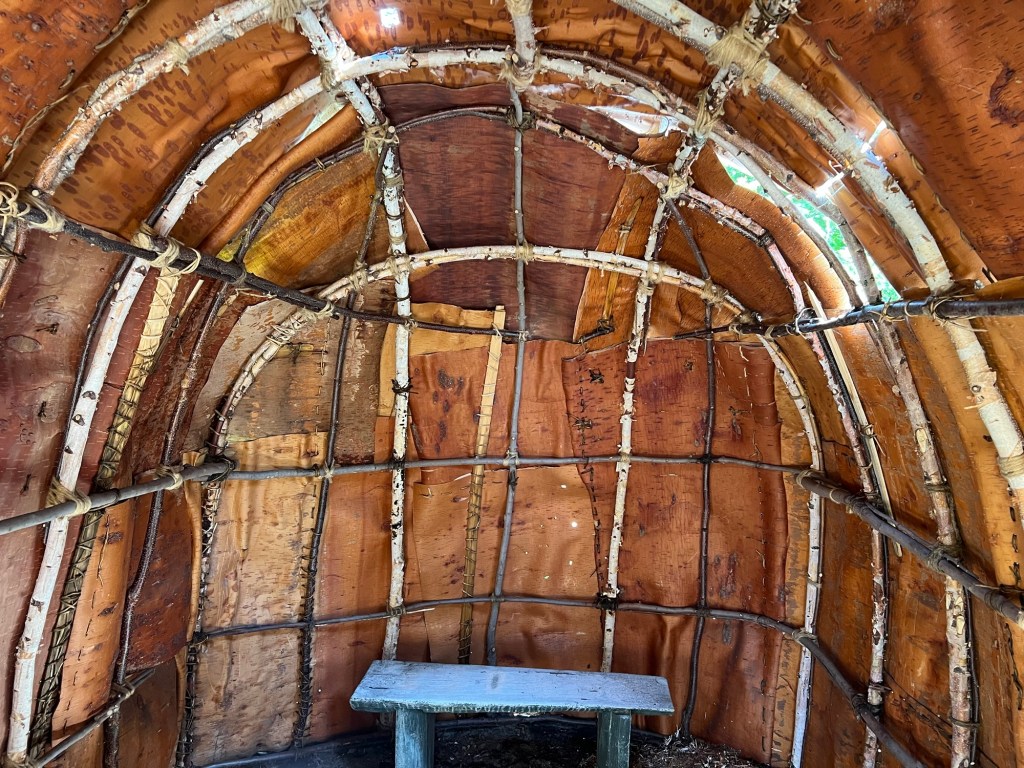
We also found where Anishinaabe (Ojibway) knowledge keepers had built a shelter using traditional techniques.
Although in need of repairs, it was beautiful and calming inside.
In spite of fog, smoke and bears we have loved our time here and would be happy to come back.
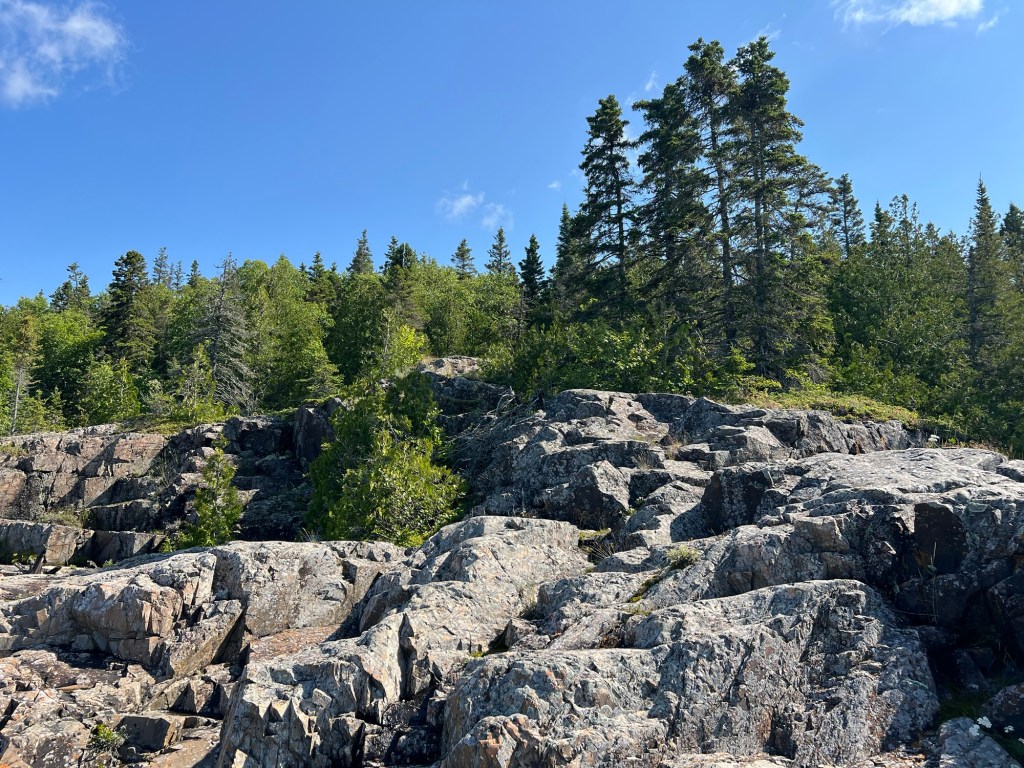
We have been doing some exploring around here and all of the region shows that it is part of the Canadian Shield. This is the largest mass of Precambrian rock exposed on earth. The Shield stretches from Saskatchewan through Quebec and from Baffin Bay to Lakes Superior and Huron, with small extensions into Minnesota and Wisconsin, but the exposed and glacial polished rocks are in every landscape here.
This is Neys Provincial Park, where we went Saturday. We took a trail over the thin soil through the Boreal forest of spruce, fir and birch.
There was a dog beach here, like we’re finding at most Canadian Parks.
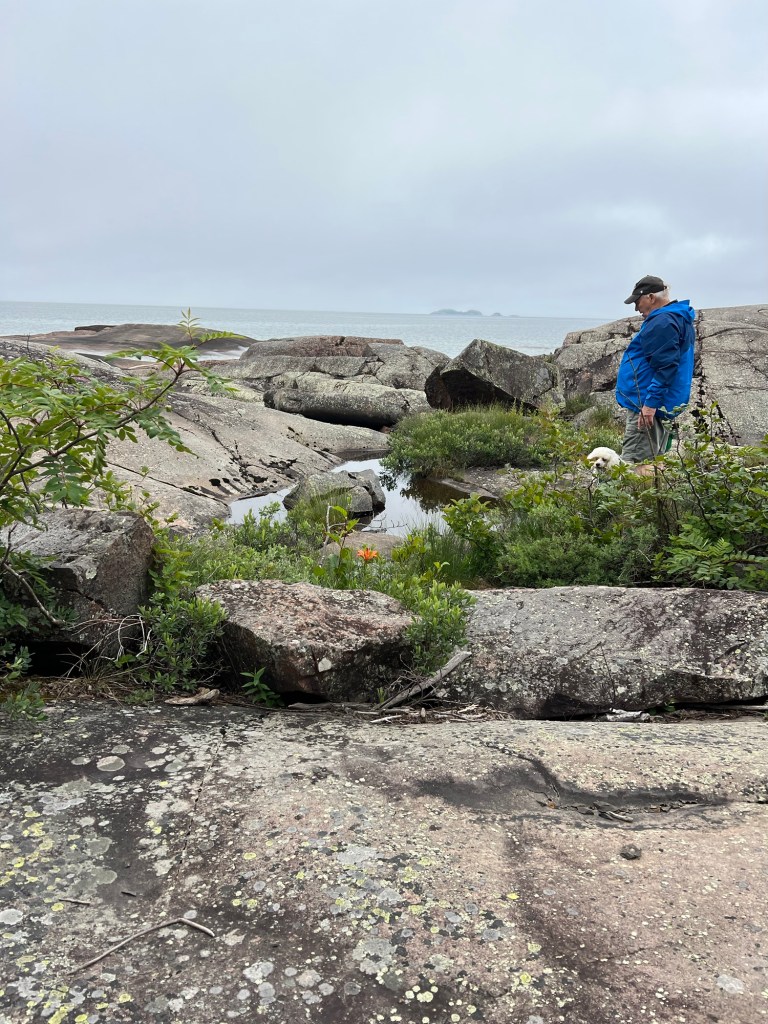
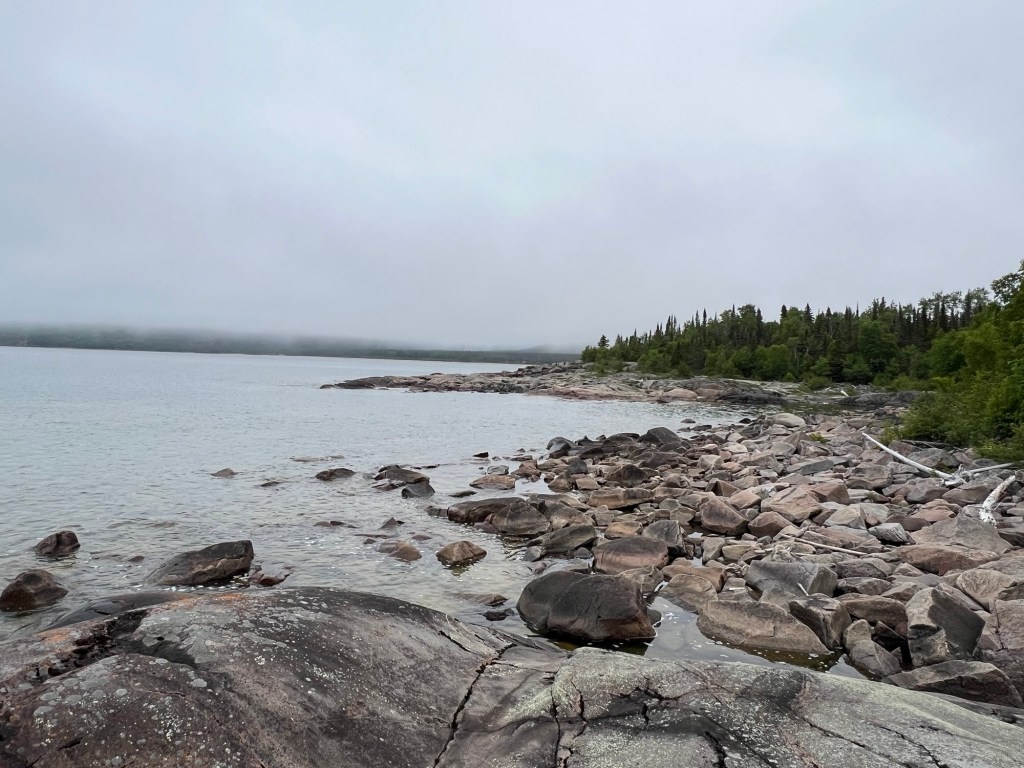
But though there are some sandy beaches, you are never far from rocks.
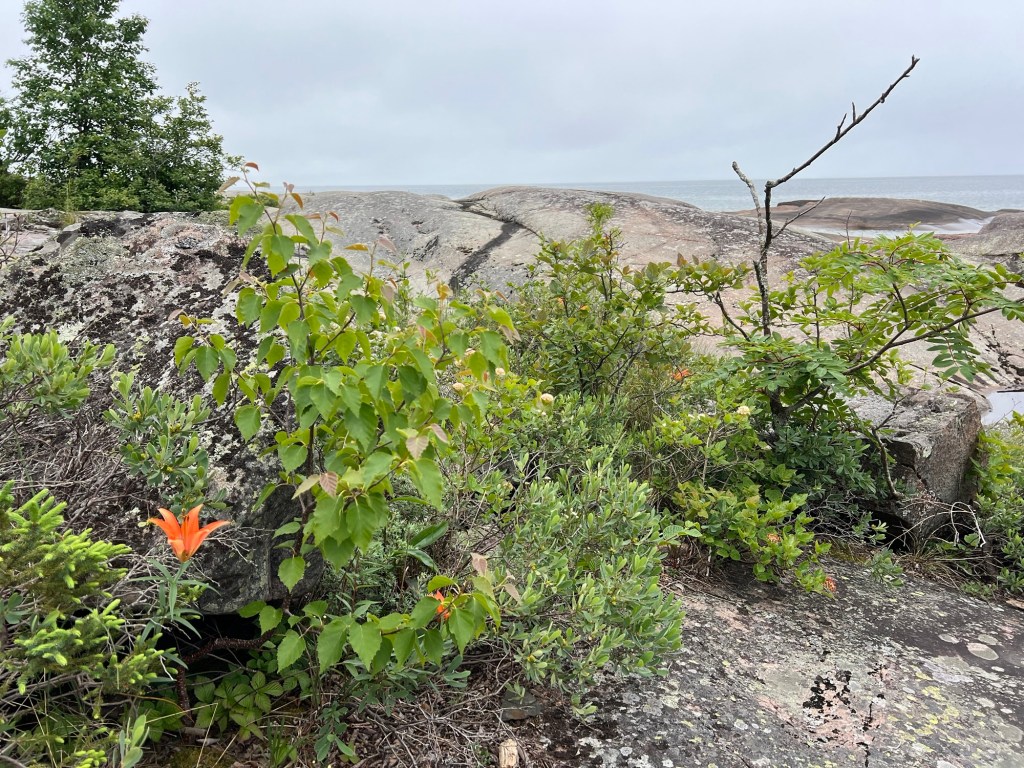
The trail led to the point, where I was delighted to find wood lilies growing in the hollows of the massive rocks.
On Sunday we made the hike around Penn Lake here at the campground.
This area reminds us of Newfoundland, and like Newfoundland the town here has built walkways and stairs to help you enjoy the vistas.
The steps were not part of the trail, just a way to the top of the rocks to take in the sights.
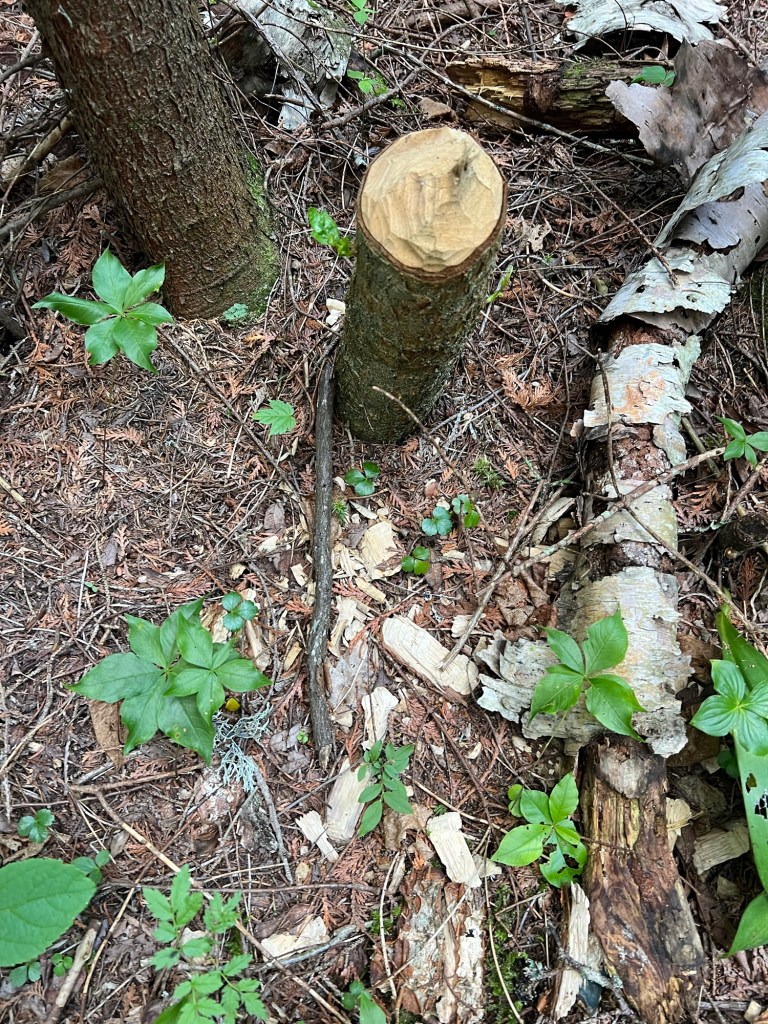
We saw signs of beaver and bears, but no animals. I’d love to see a beaver, not so much a bear. Another camper just warned me that four bears have been seen in the area. I won’t be walking the trail alone.
Today we went to Pukaskwa (puck-a-saw) National Park. We walked along park roads and accessible trails to beautiful Horseshoe Bay. We left Matey’s stroller there and continued on the trail out to the point on the right.
It was a gorgeous walk, though a bit challenging. We don’t trust Matey on stairs anymore as he sometimes slips. So I carried him up and down many sets of stairs, big and small.
We got peeks out to Lake Superior on both the right…
and left from a bridge down inside a ravine. (There were stairs down to the bridge on either side.)
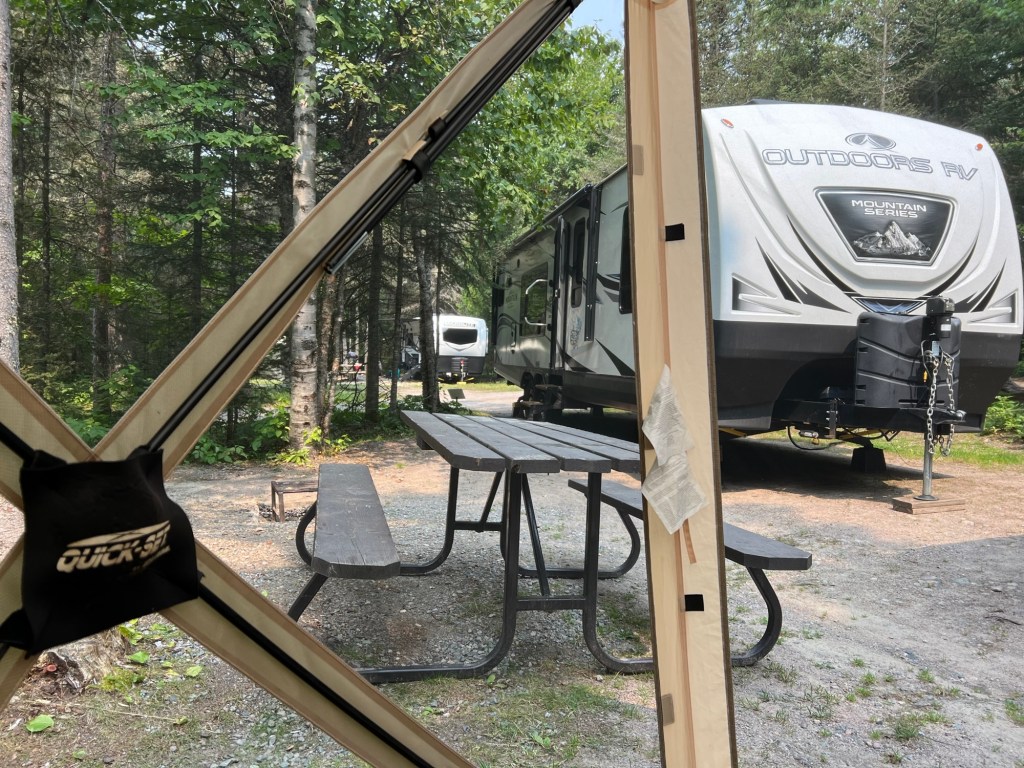
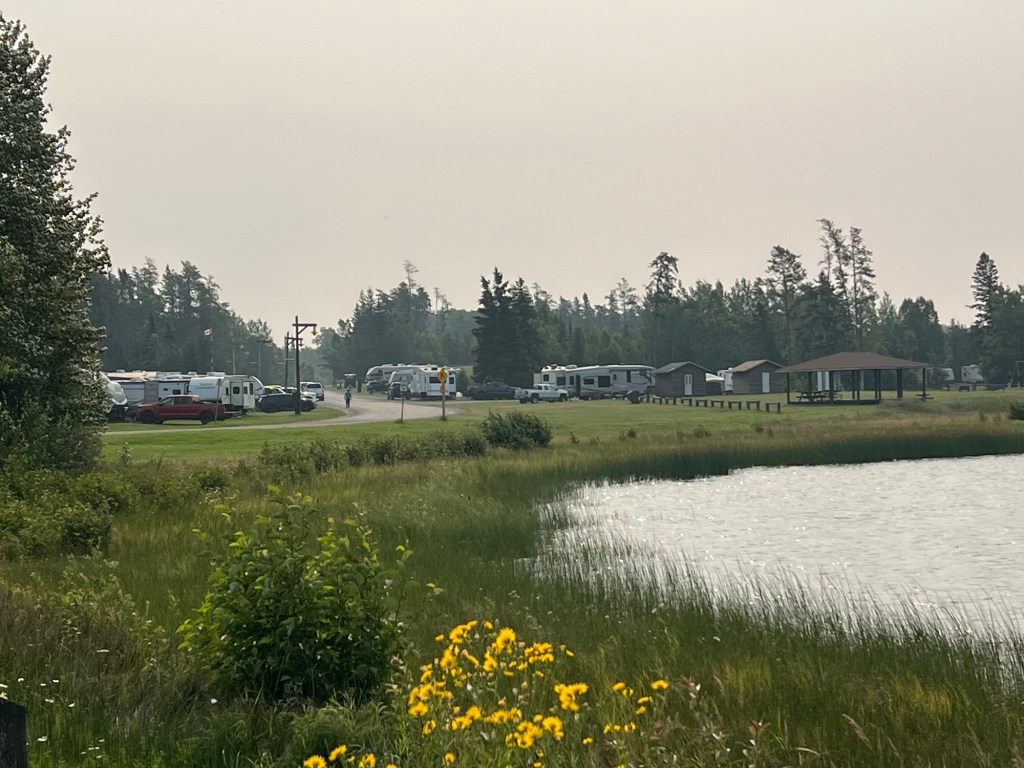
We moved yesterday to a very nice campsite at Penn Lake Park and Campground. This campground is owned and operated by the Town of Marathon, ON. We have full hookups and 50 amp electrical service. As you can see, there is nothing behind our site but trees, so we have a good deal of privacy. There are only 18 serviced and 9 unserviced sites.
Marathon is on the shore of Lake Superior about halfway between Sault Ste. Marie and Thunder Bay.
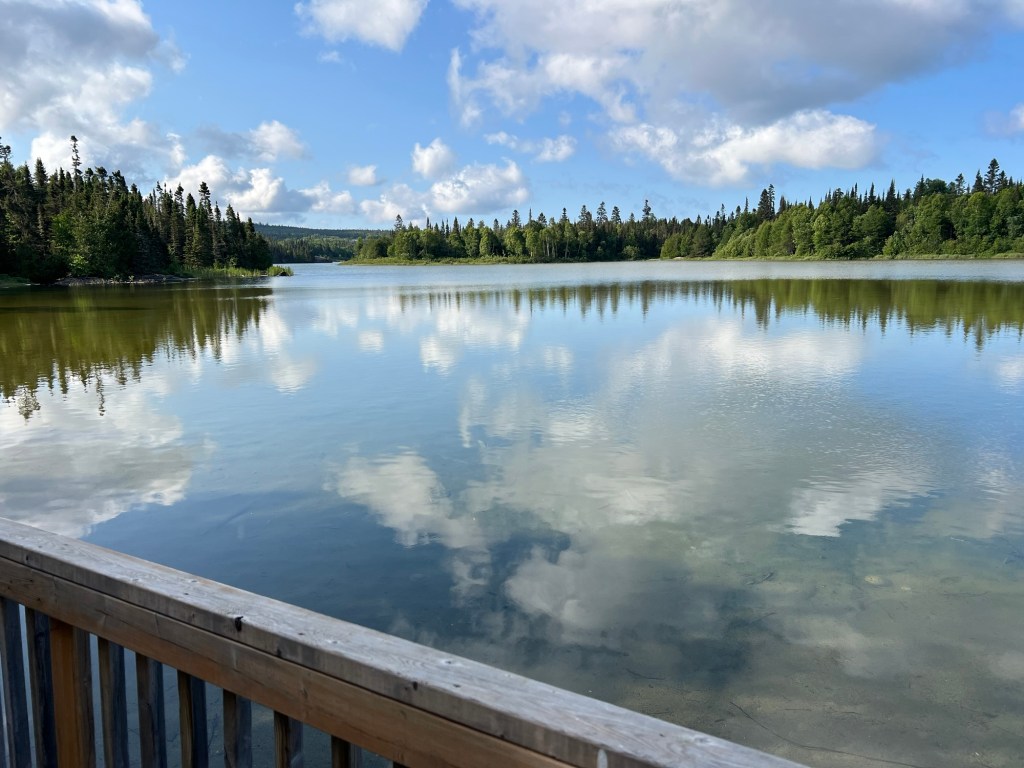
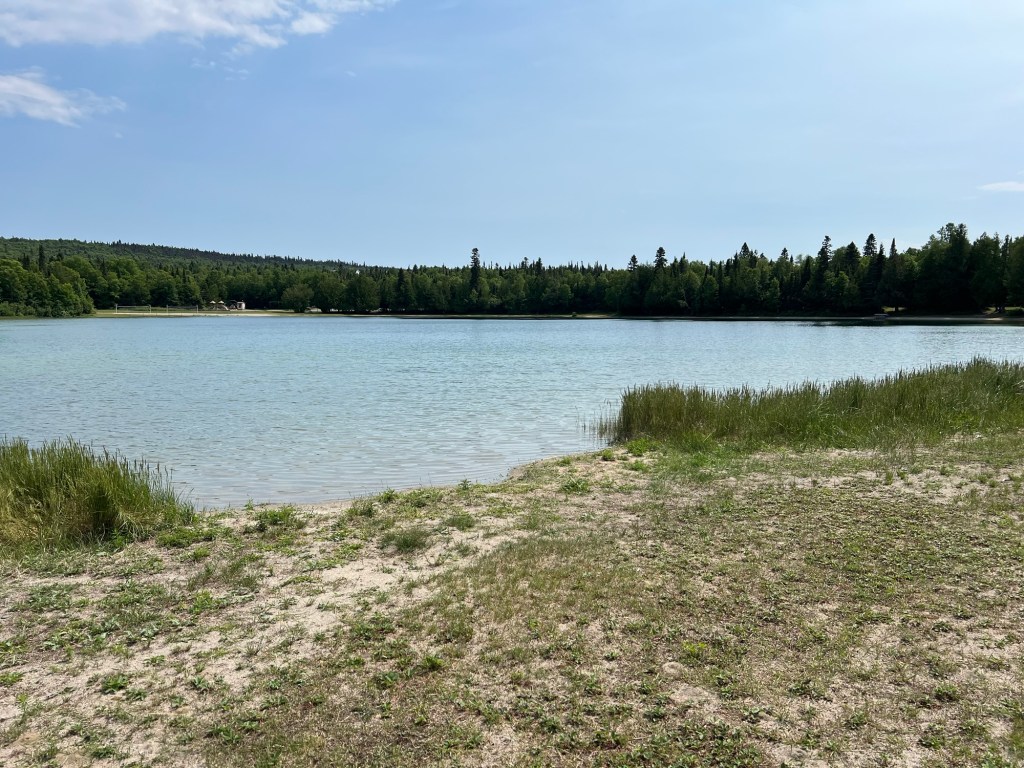
The campgound sits on pretty little Penn Lake. Across this end of the lake you can see the sandy beach.
The other end of the lake is rockier and more wild.
There’s a nice trail that goes around the lake, but neither Bud nor Matey has wanted to walk around it with me yet. This is just the section behind the tent sites.
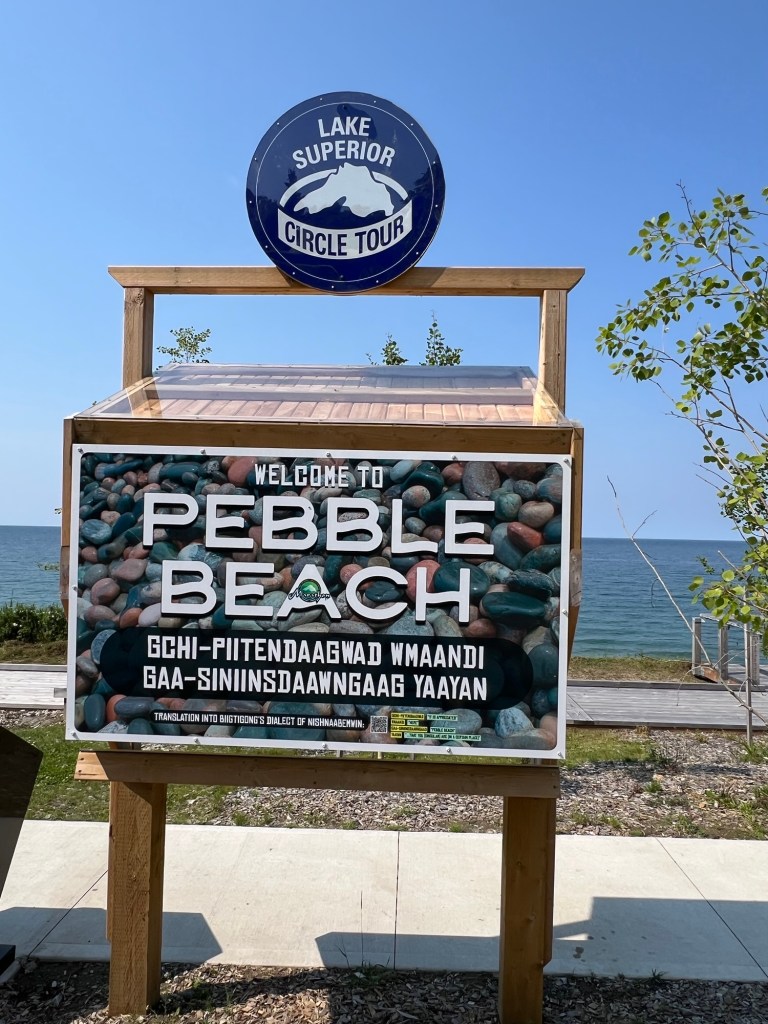
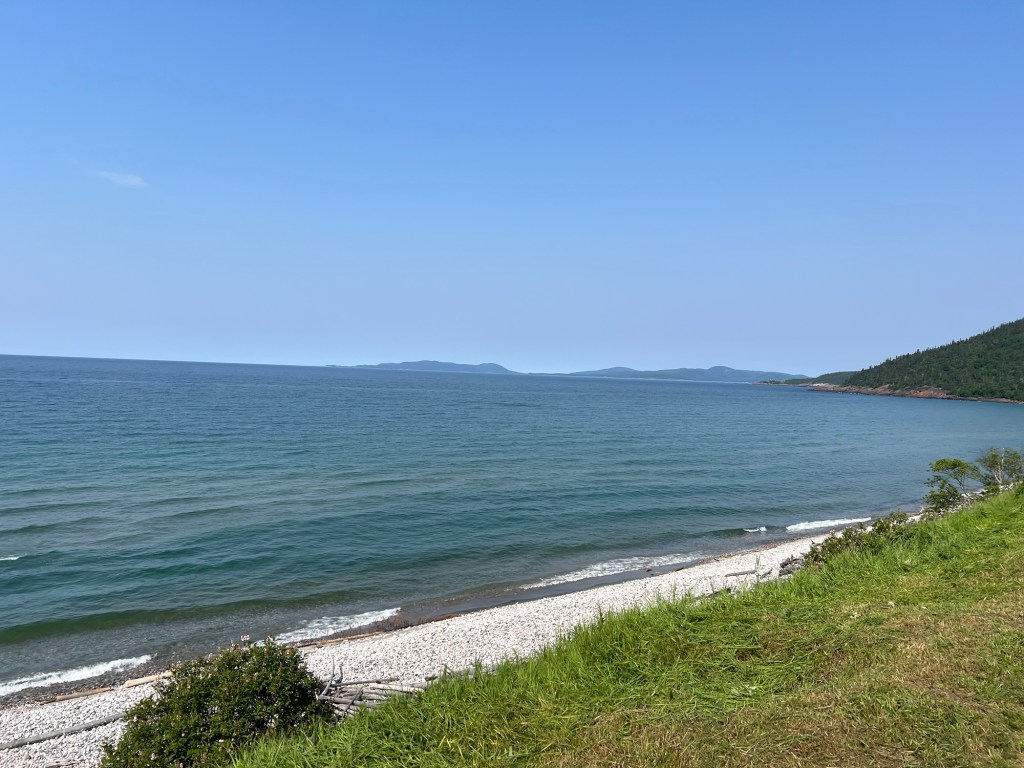
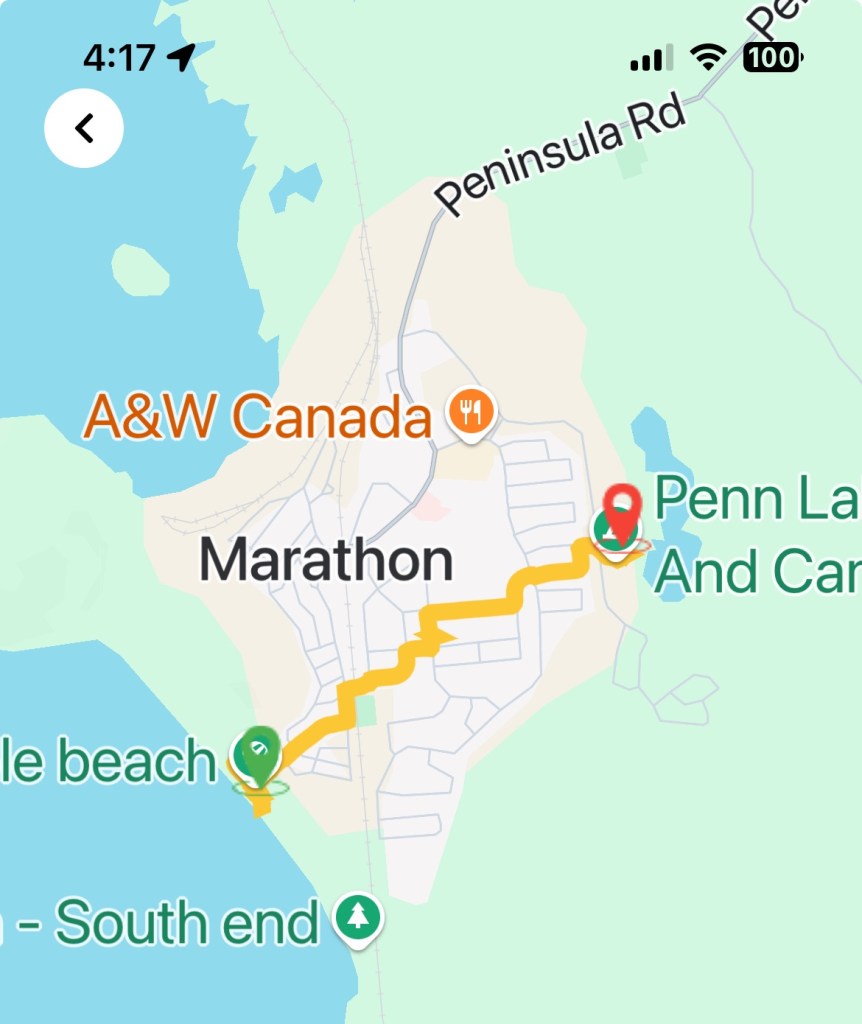
This morning we drove across town to the beach at Lake Superior.
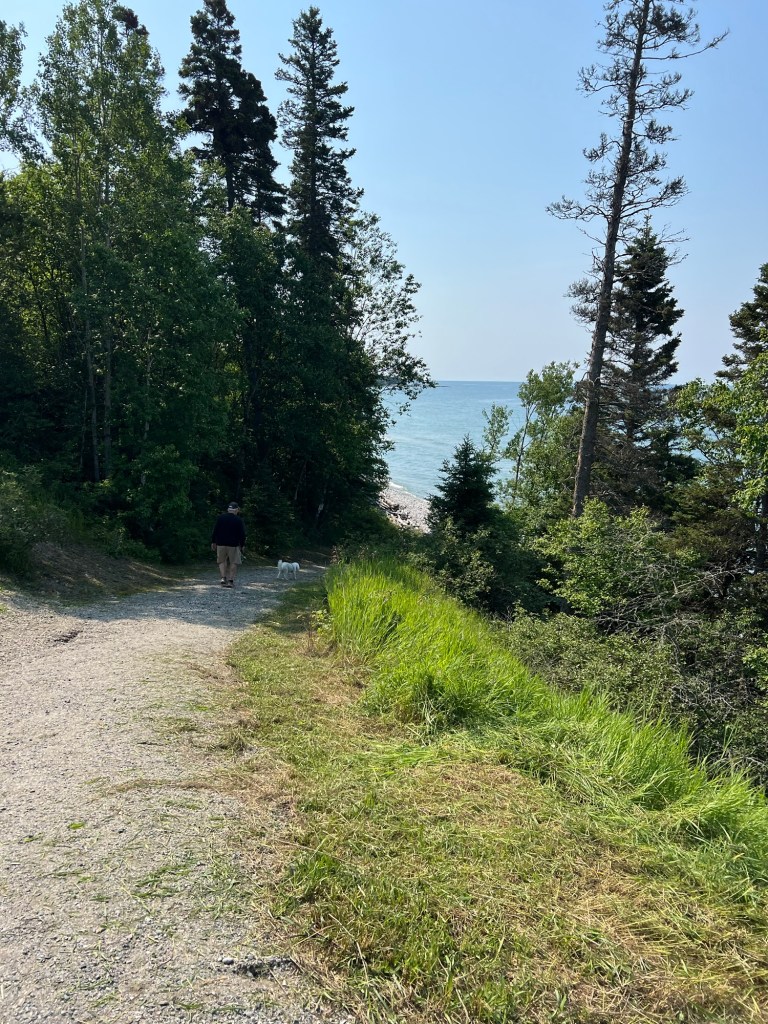
The beach is down a bank. At the top are benches and lookouts.
There’s a steep bit of trail down.
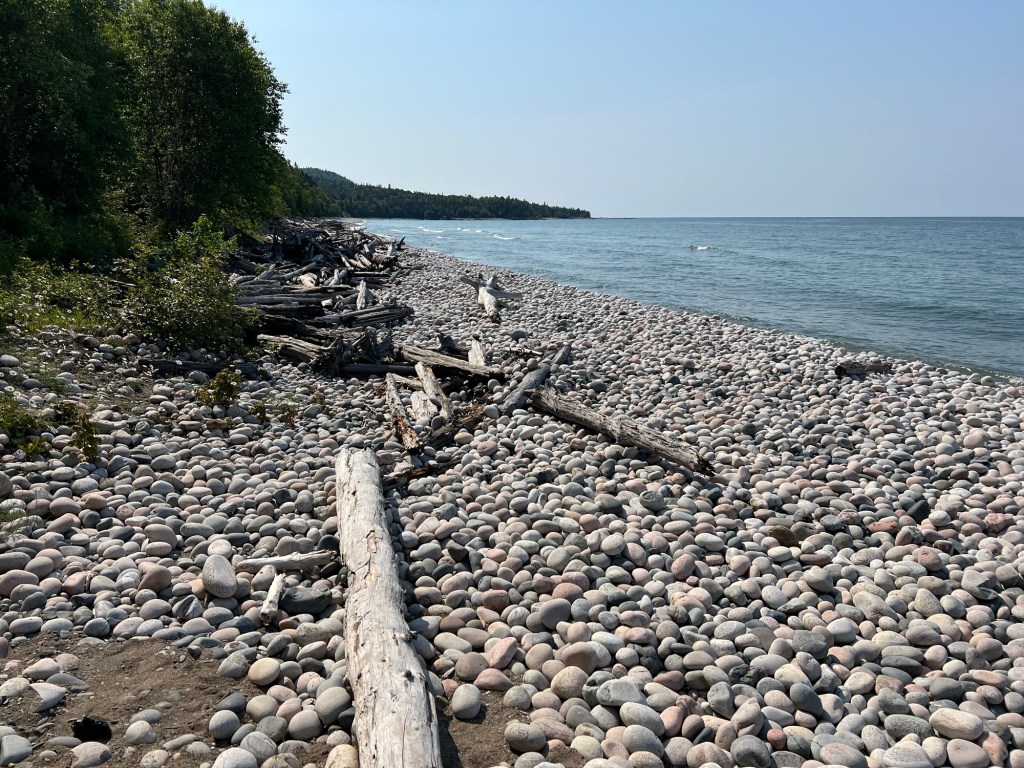
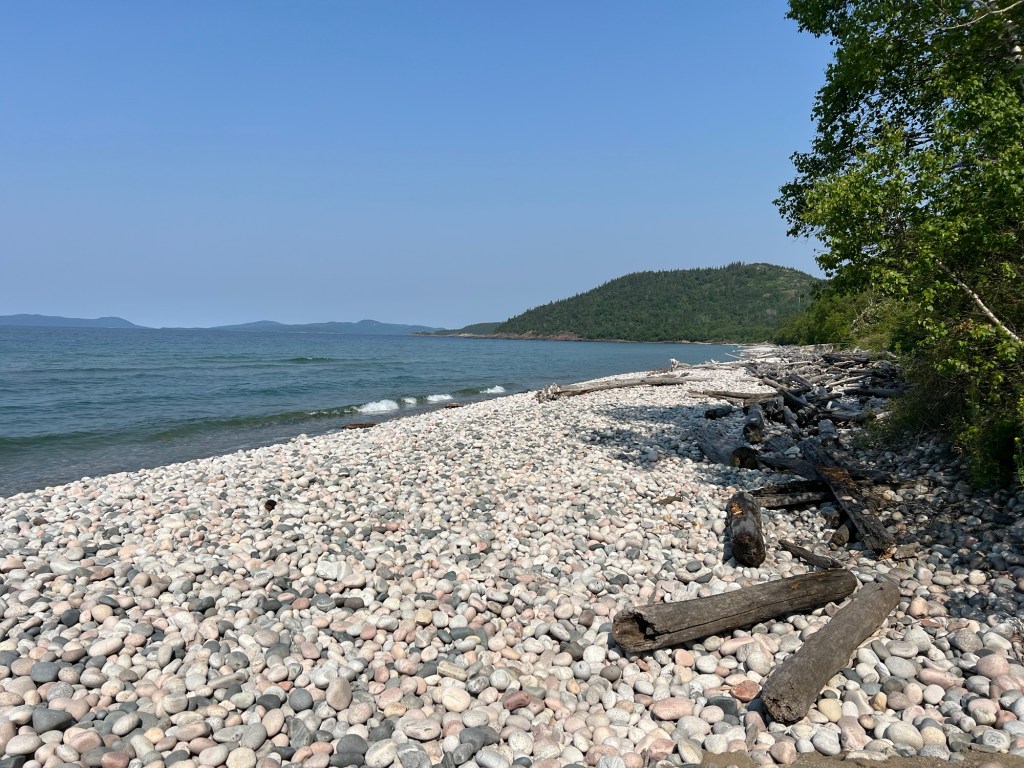
Pebbles indeed! These rocks were the size of cantaloupes.
Very pretty to look at but not a place to lay your towel down for sunbathing.
Bud then went grocery shopping while I pushed Matey back to the campground in his stroller.
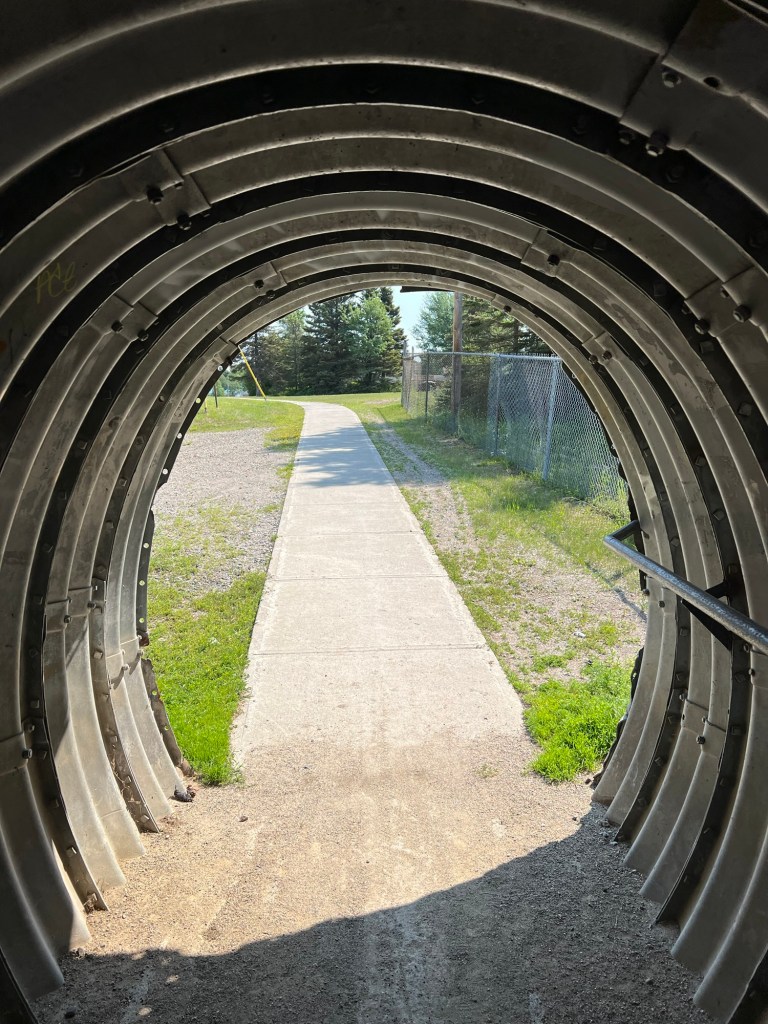
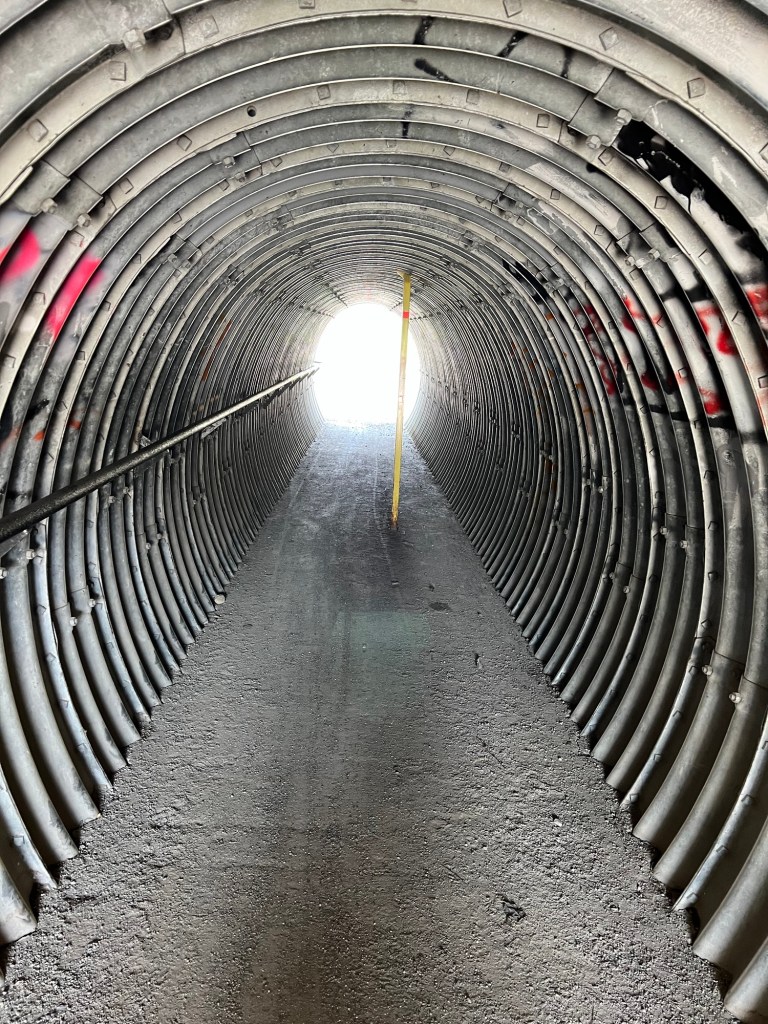
There are several pedestrian walkways, including this culvert under the railroad tracks.
I think that post is there to keep ATVs from using this, as there are also ATV trails through the town.
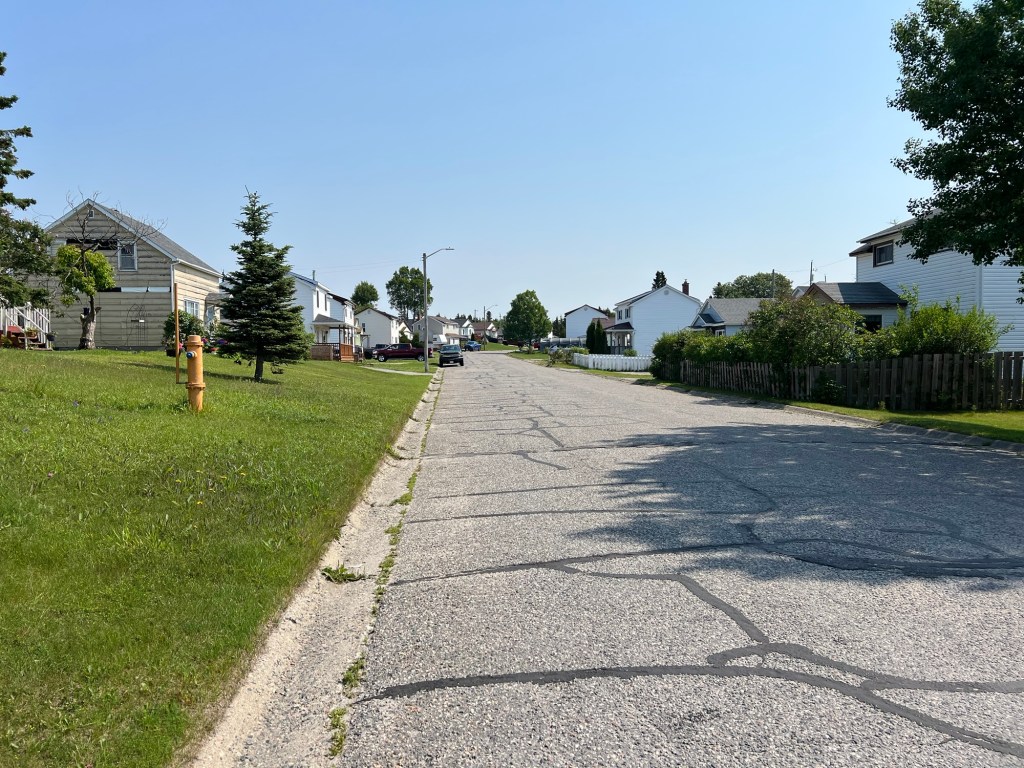
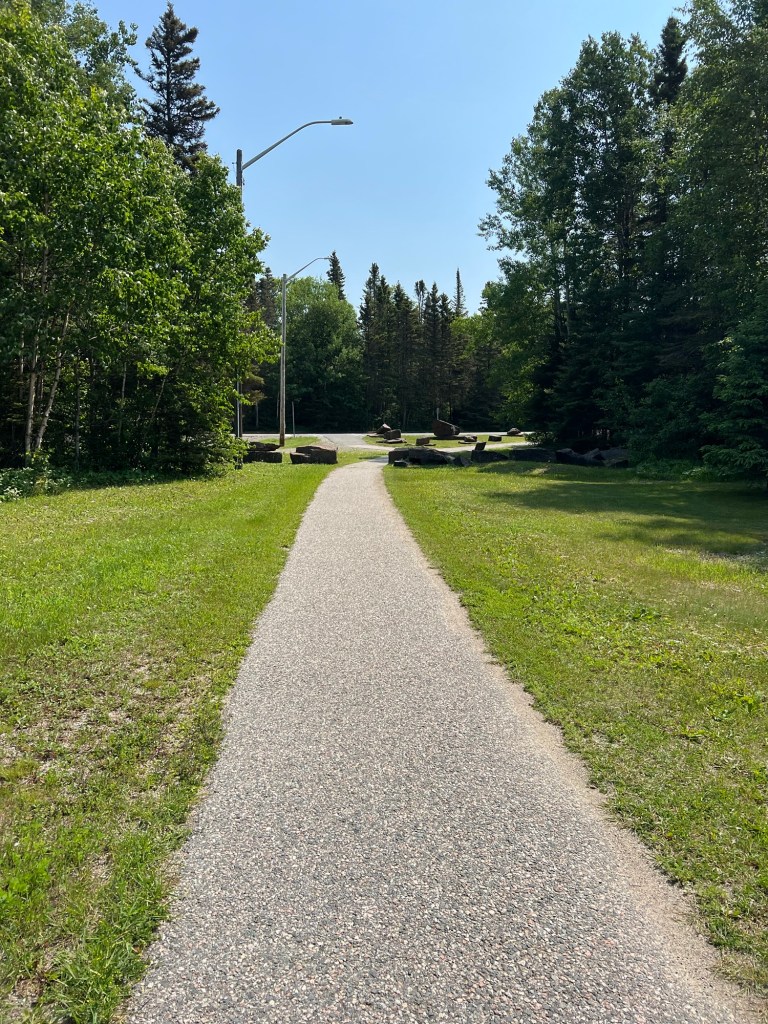
I stayed on sidewalks and pedestrian walkways.
It was a nice walk and from Lake Superior back to the campsite, crossing the whole town, was only a bit over a mile and a half.
Now Matey and I are out relaxing in my tent. Yeah, I think this place is pretty nice.
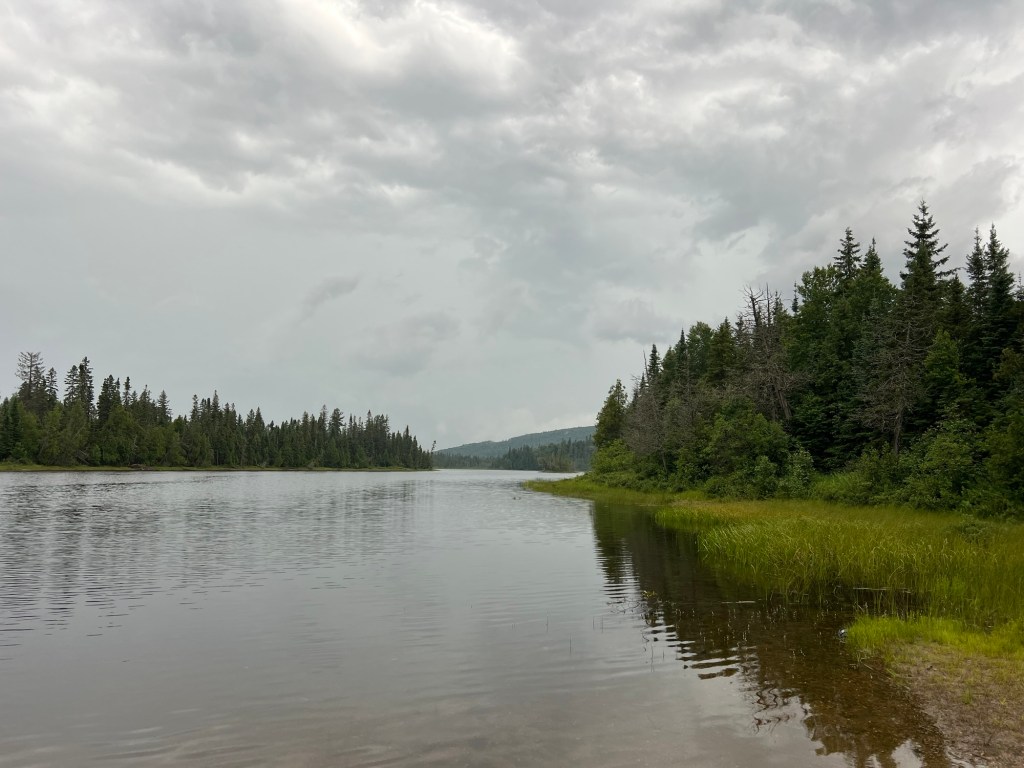
This is Rabbit Blanket Lake and our skies have been cloudy most days. Yesterday and last night it really poured for a while.
I didn’t realize how much it had rained until I tried to put a route in Apple Maps for another provincial park just north of here and Highway 17 showed up as closed. Closed?! We’re supposed to leave tomorrow and Matey has a vet appointment in the next town, Wawa.
A guy walking by with his dog told Bud he had just driven in from Wawa. We walked up and asked at the campground office. The young woman there said the road was open to the north, but closed beyond the park office, about three miles south of us. Right now it would take almost 5 hours to make the two hour trip we made coming here. There aren’t a lot of roads through here.
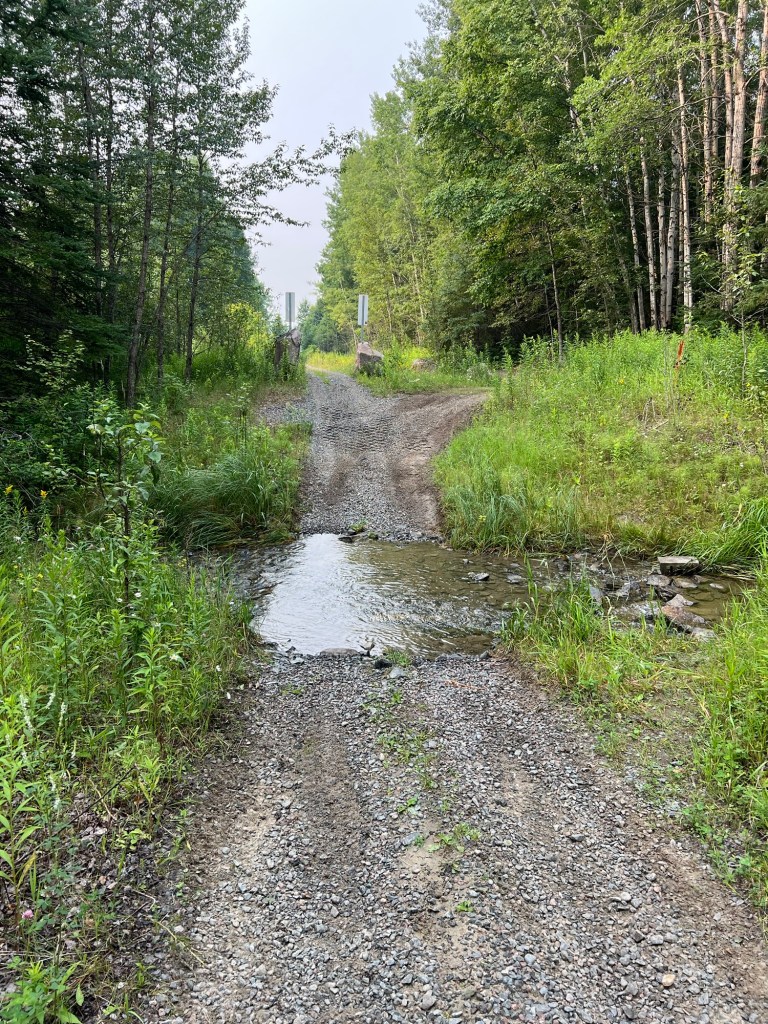
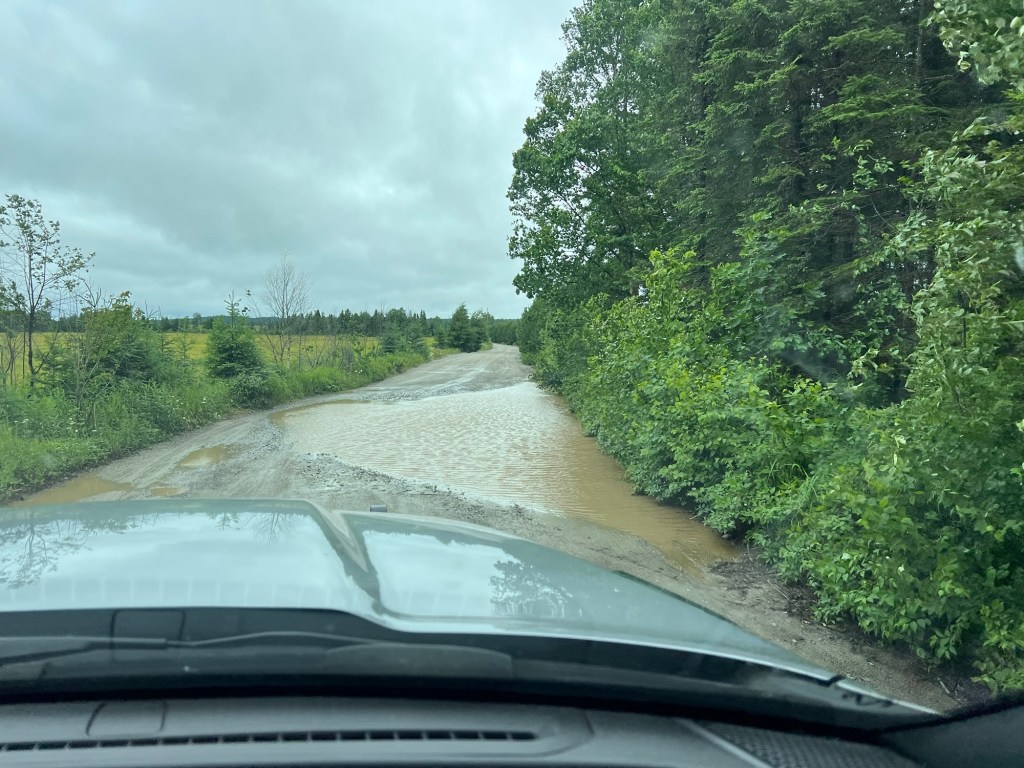
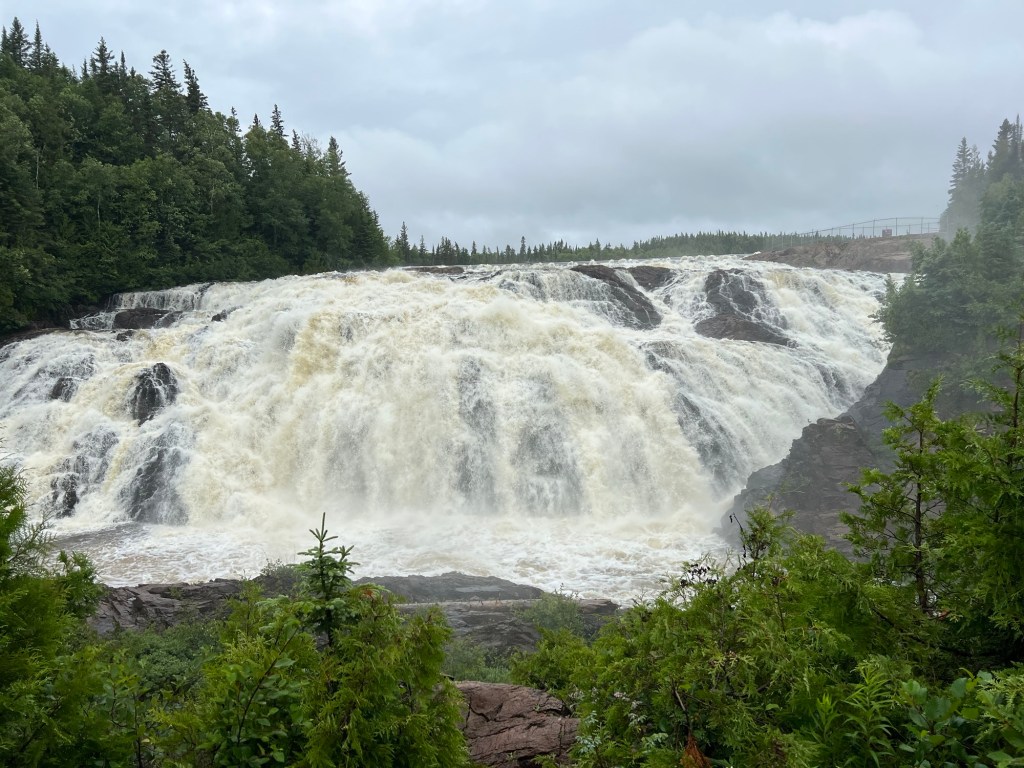
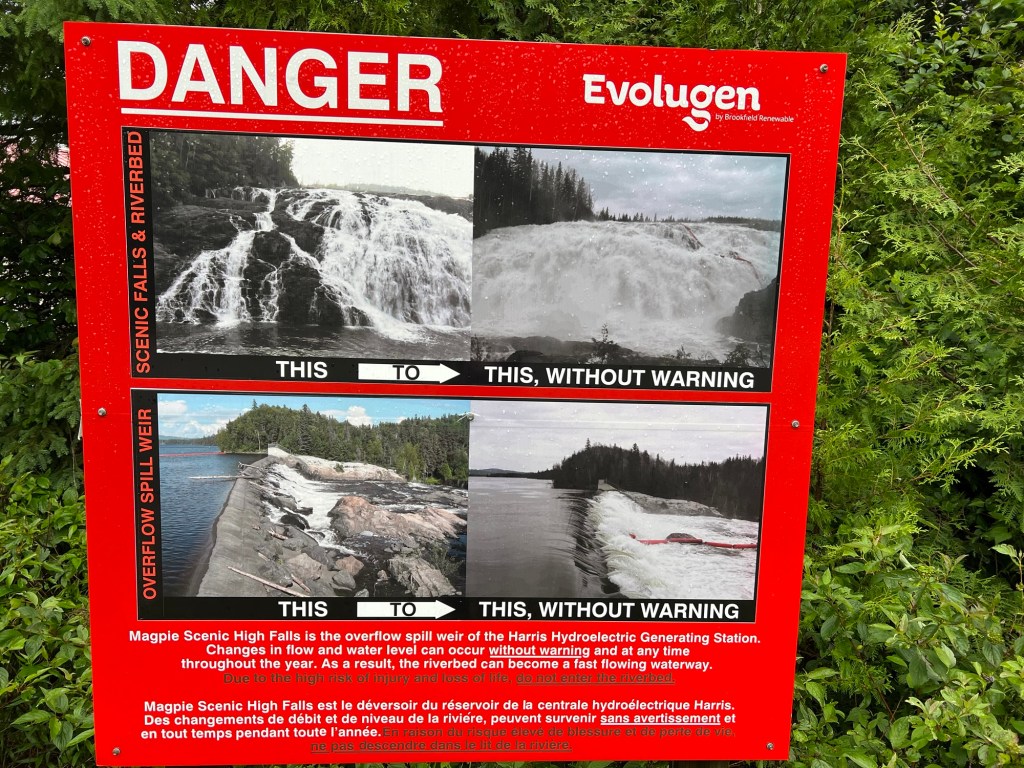
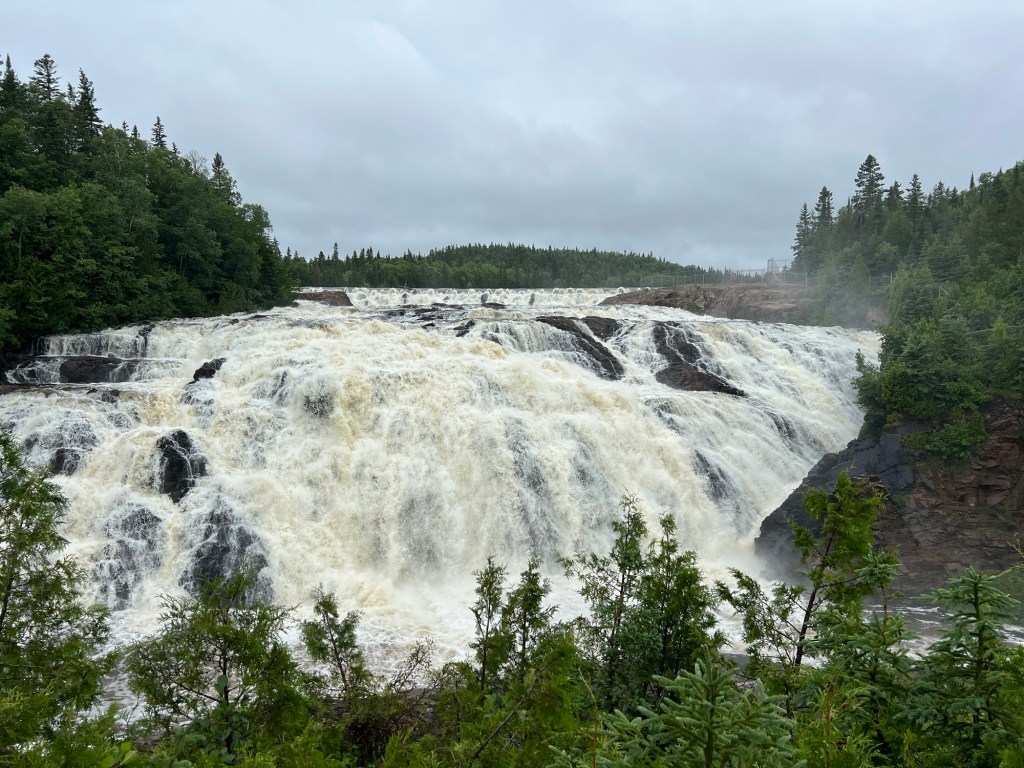
Anyway, since the road was open we drove north to find the vet’s office we have to stop at tomorrow. We wanted to make sure there was room to park the trailer, as we’ll be towing it. There is. On the way we stopped at High Falls on Magpie River. The road back wasn’t great and was a bit flooded, but nothing too bad.
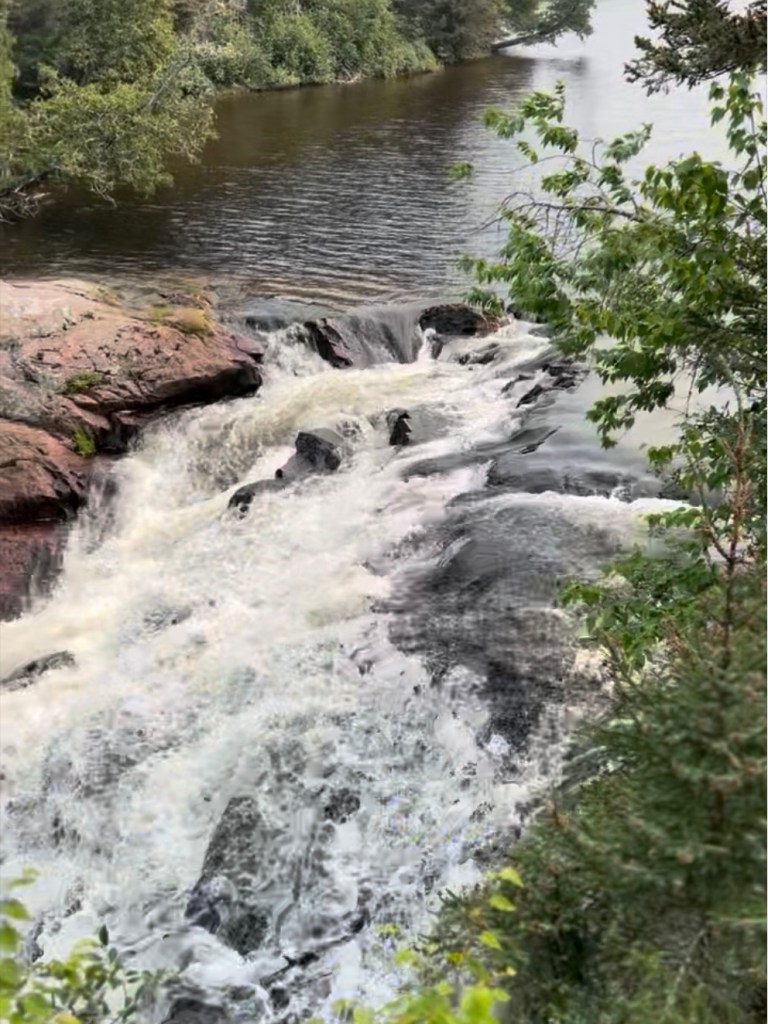
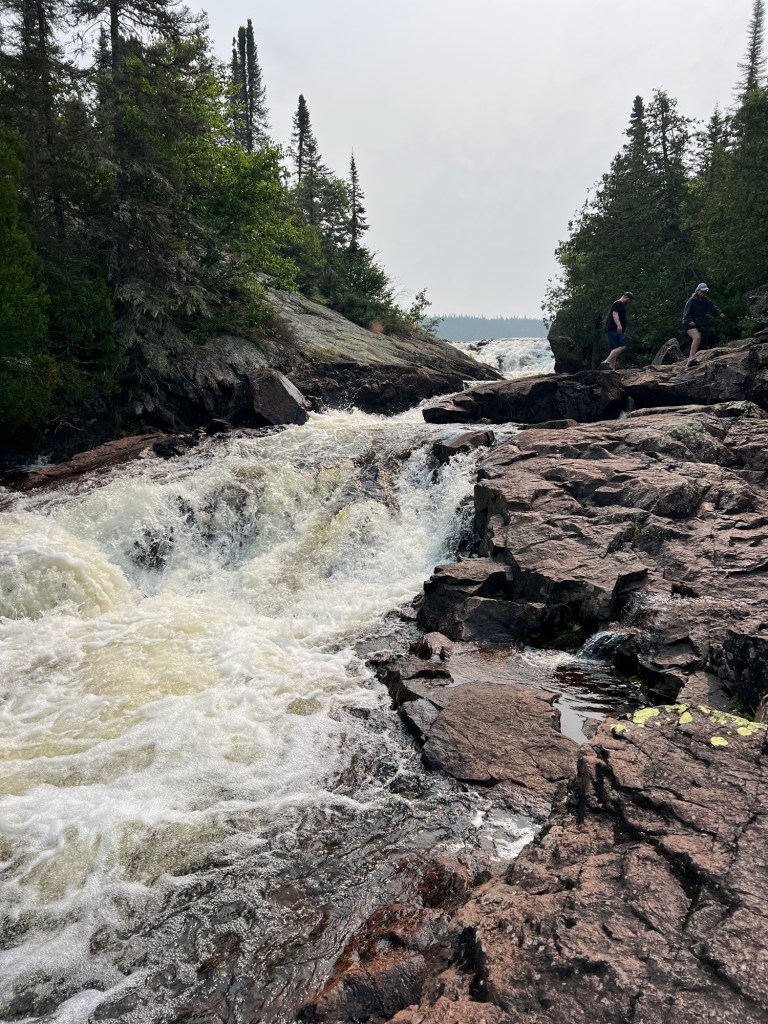
The falls were pretty impressive.
Evidently all the rain we’ve had has transformed the falls to its dangerous self.
Besides making the falls roar…
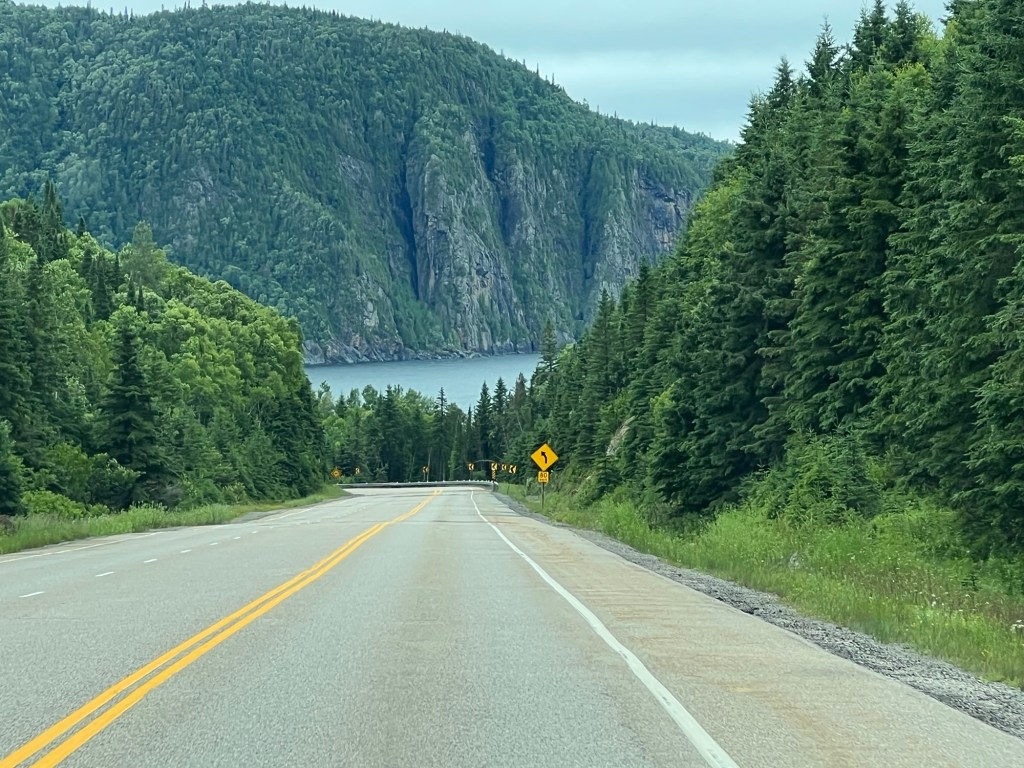
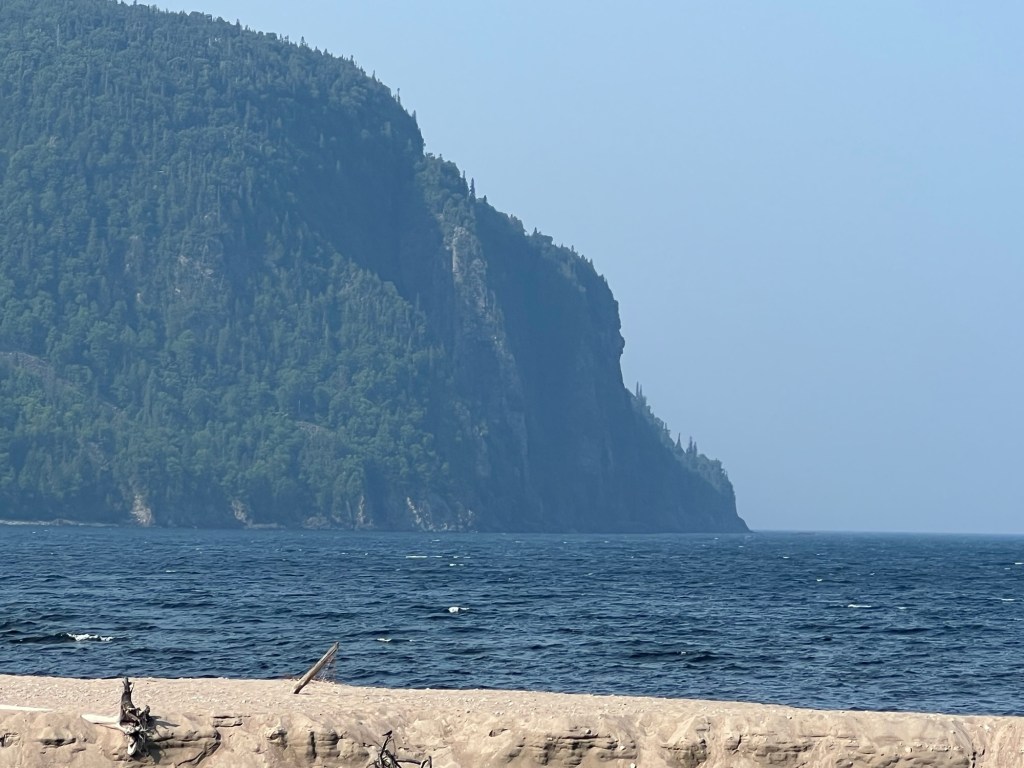
the rain cleared the air and made the cliff at Old Woman Bay all the more dramatic. But I will welcome the sun when it returns.
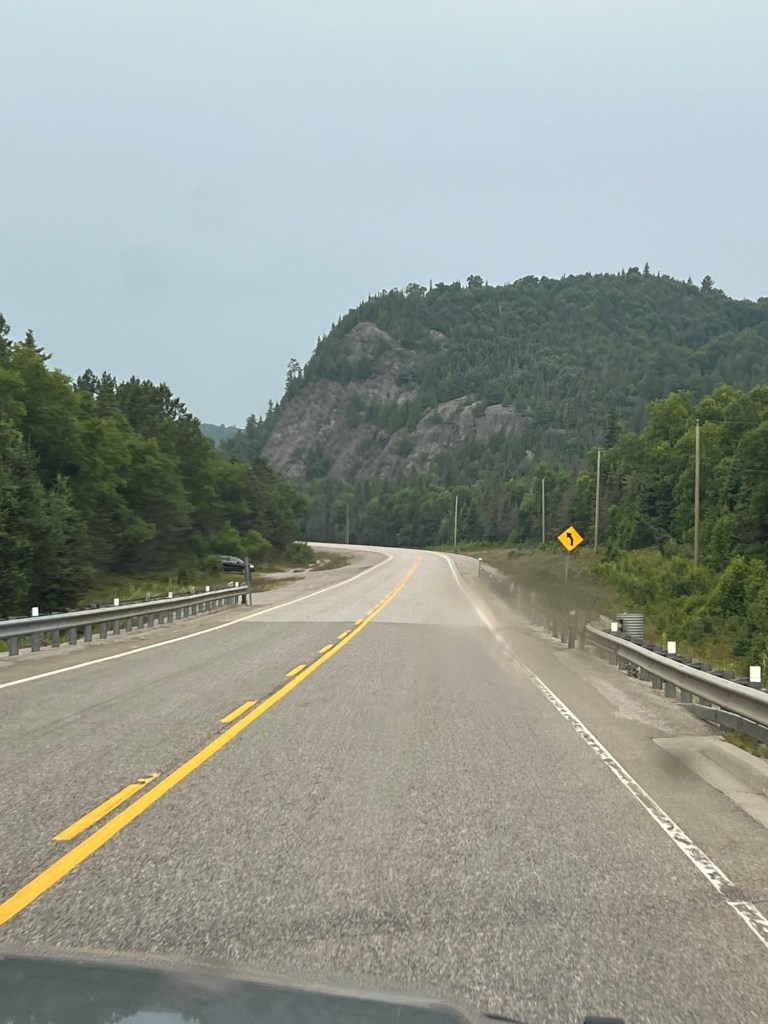
We have made it to the north shore of Lake Superior and it is beautiful. The weather has not been cooperative for picture taking, but we still love it. This photo looks misty because of wildfire smoke. We’ve either had poor air quality or rain.
We’re staying at Rabbit Blanket Lake Campground. This park is huge. We drove a bit under 70 miles to get to the park boundary from Sault Ste. Marie and then almost 50 miles further along 17 to get to the campground. And there is still another 20 miles of park beyond this campground.
We’re very happy to be back in a place where we have some room.
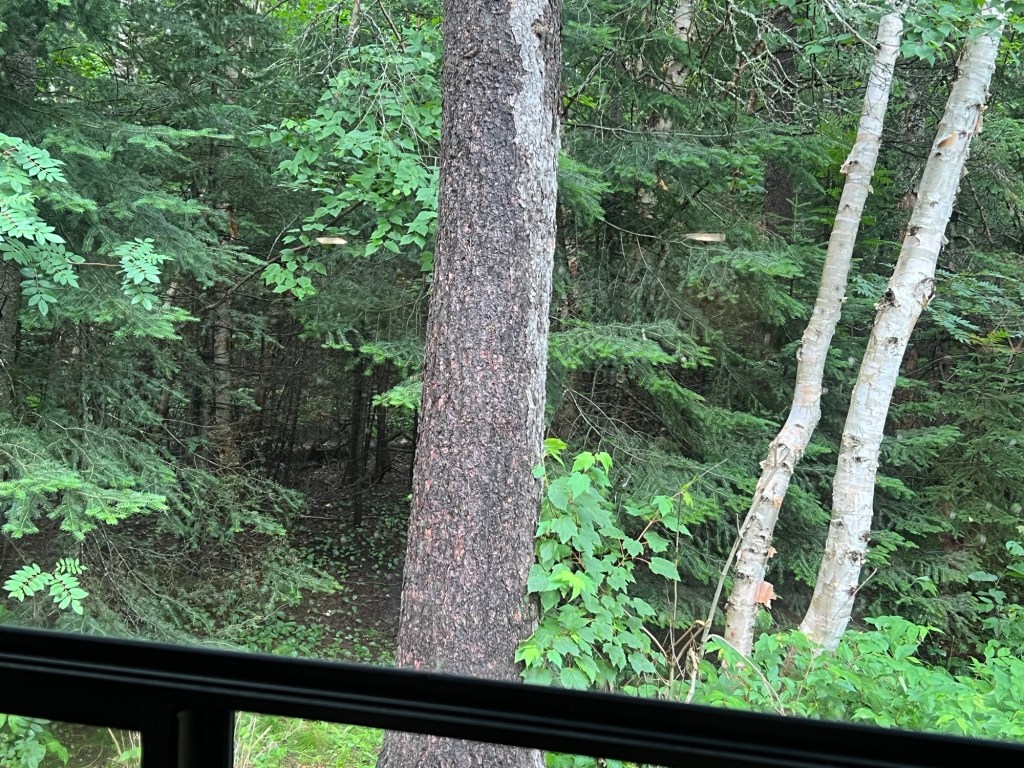
And we especially love the view out the dinette window.
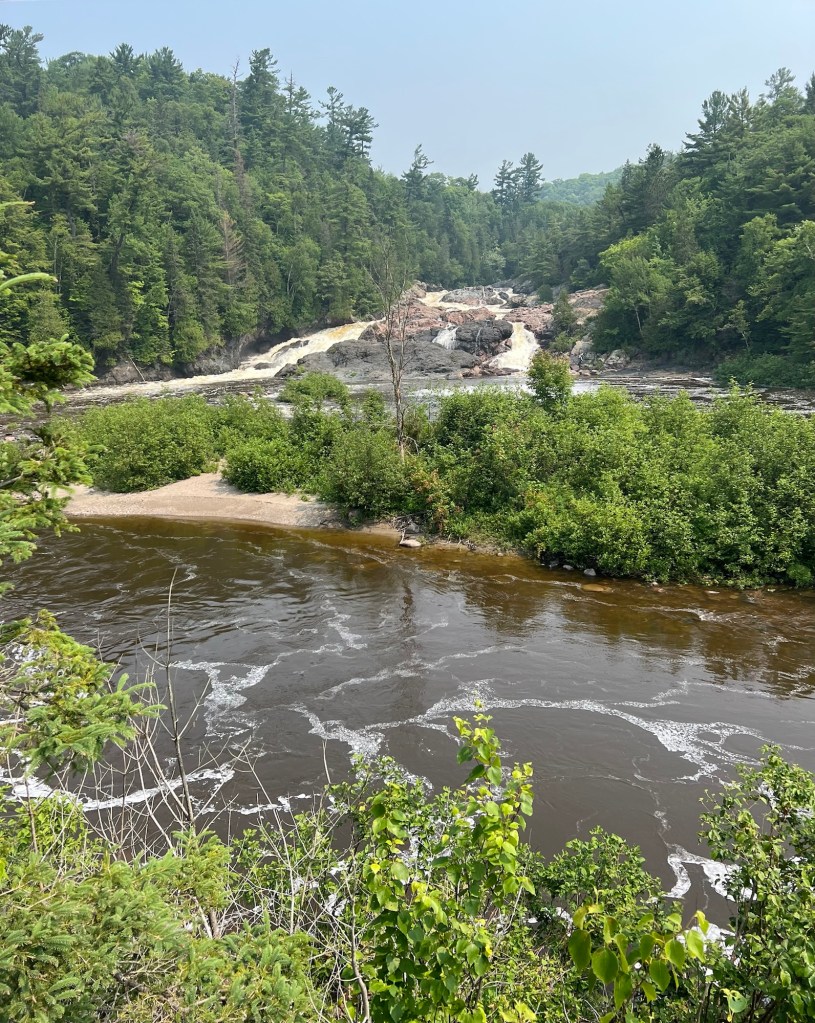
On the way here we stopped at Chippewa Falls, which is at the midpoint of the Trans Canada Highway.
Yesterday we tried to take a short hike on South Old Woman River Trail that is just across the road from our campground.
It was quite pretty.
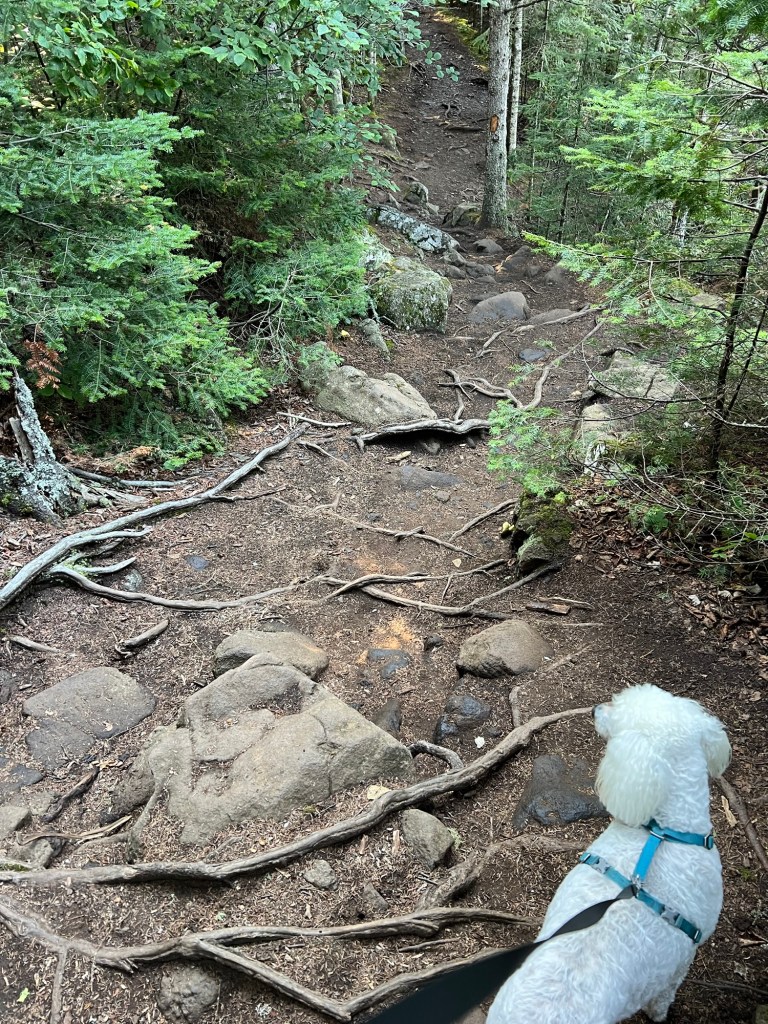
But when they said it was rooty they weren’t kidding.
We couldn’t make this river crossing. I would have had to carry Matey as he is still too wobbly to be reliable jumping. And those gaps were too wide and the rocks too slanty for me to try.
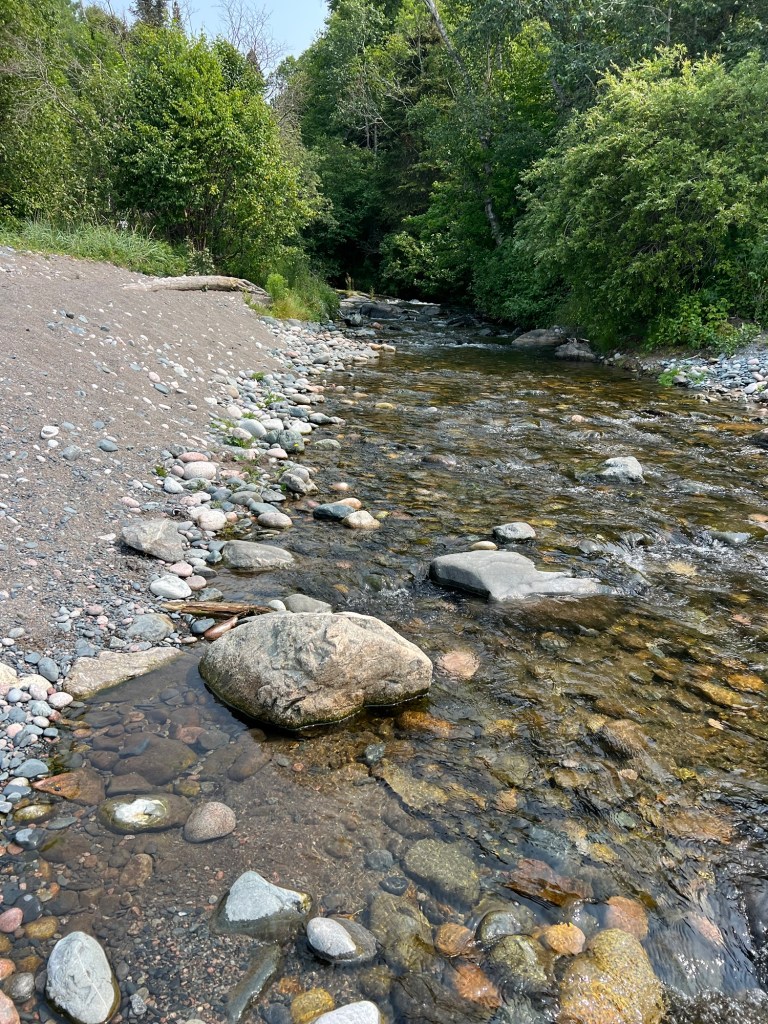
Instead we drove a few miles to where the river emptied into Lake Superior.
There were no dogs allowed out on the beach, so I just took some pictures.
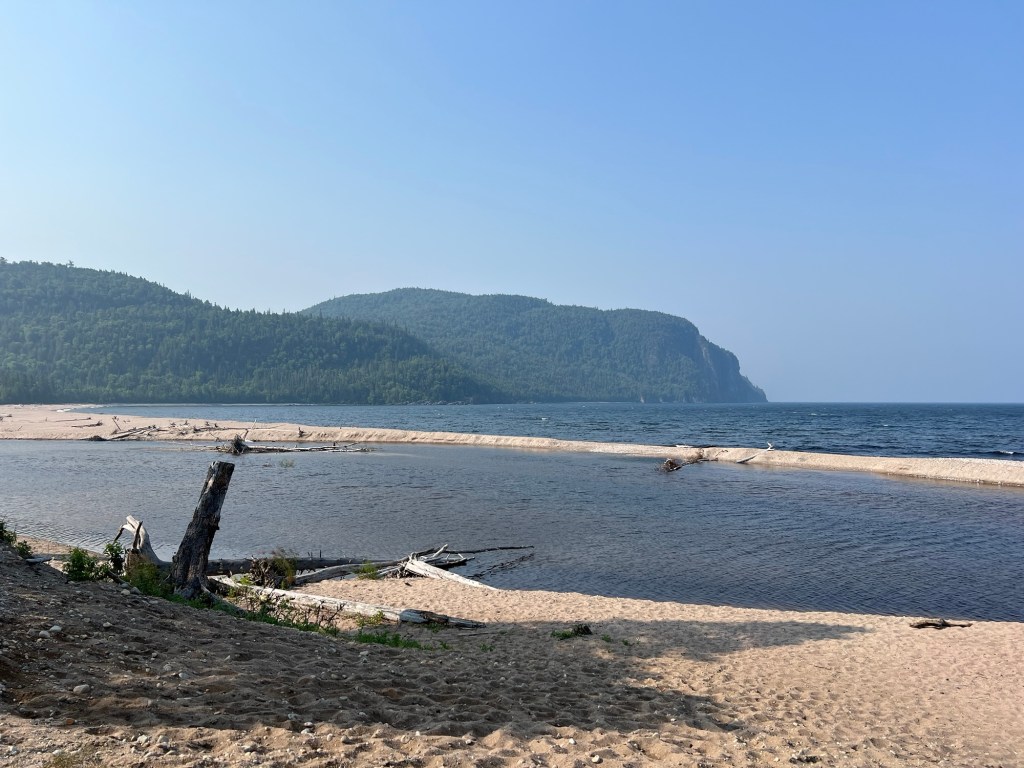
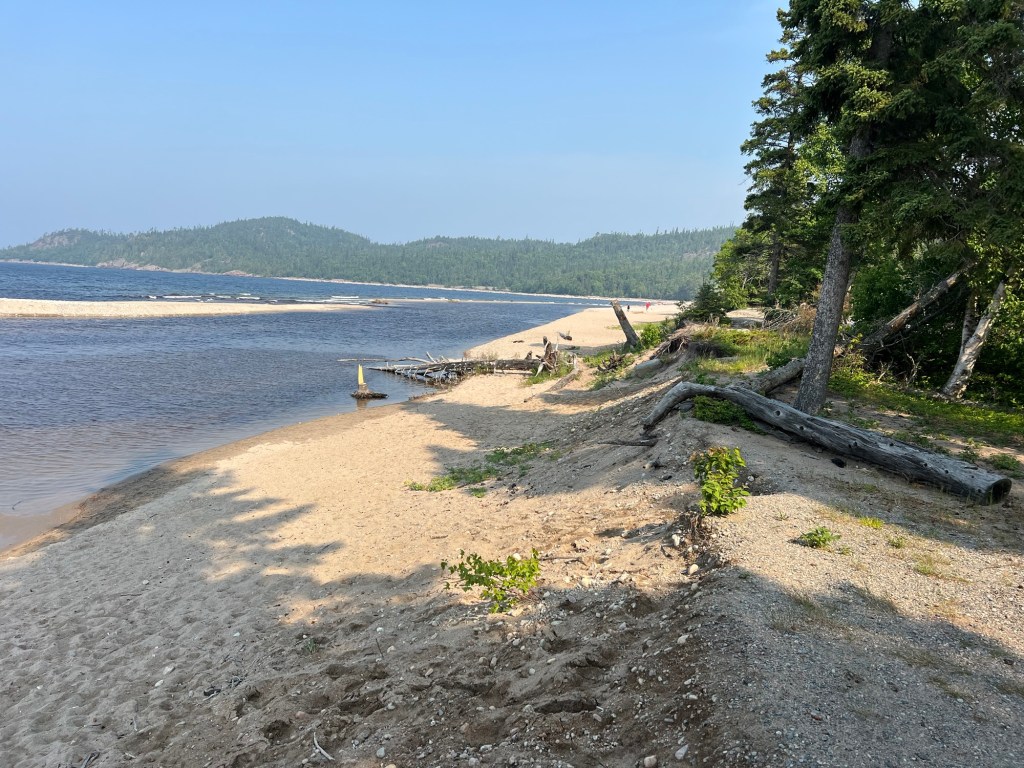
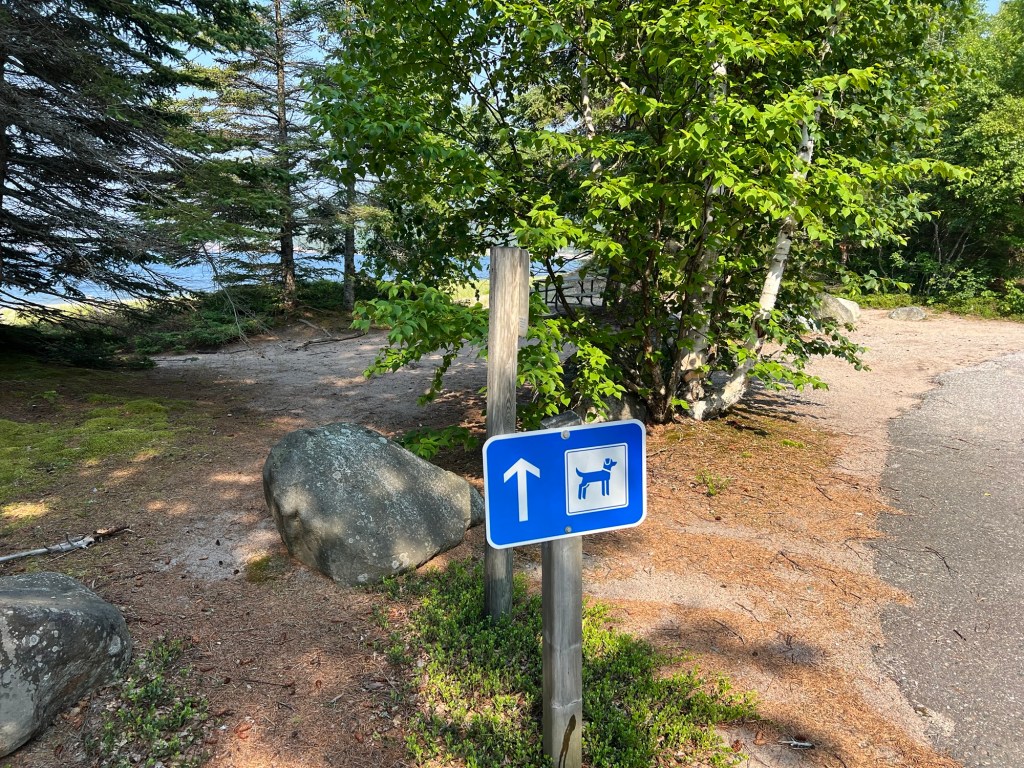
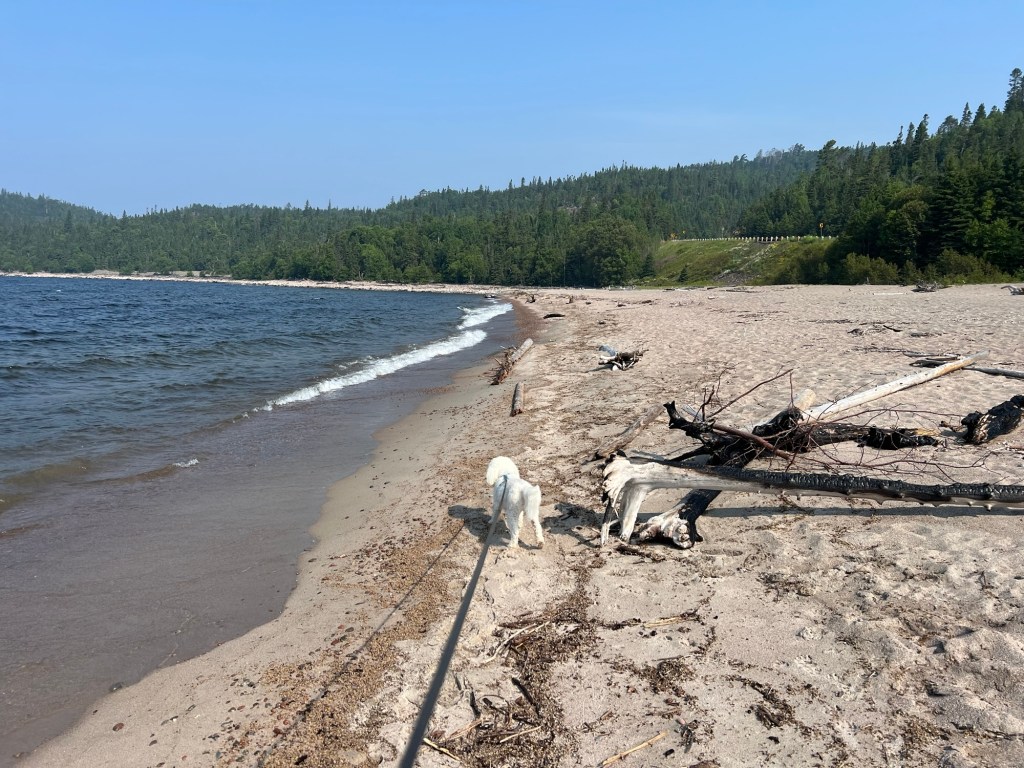
We walked down the park road along the beach and at the end there was a dog beach.
So we walked out there.
Today it was supposed to start raining at about 11, so we got going early and at 8:15 we were 16 miles down the road walking Trapper’s Trail. This was one that Matey could handle.
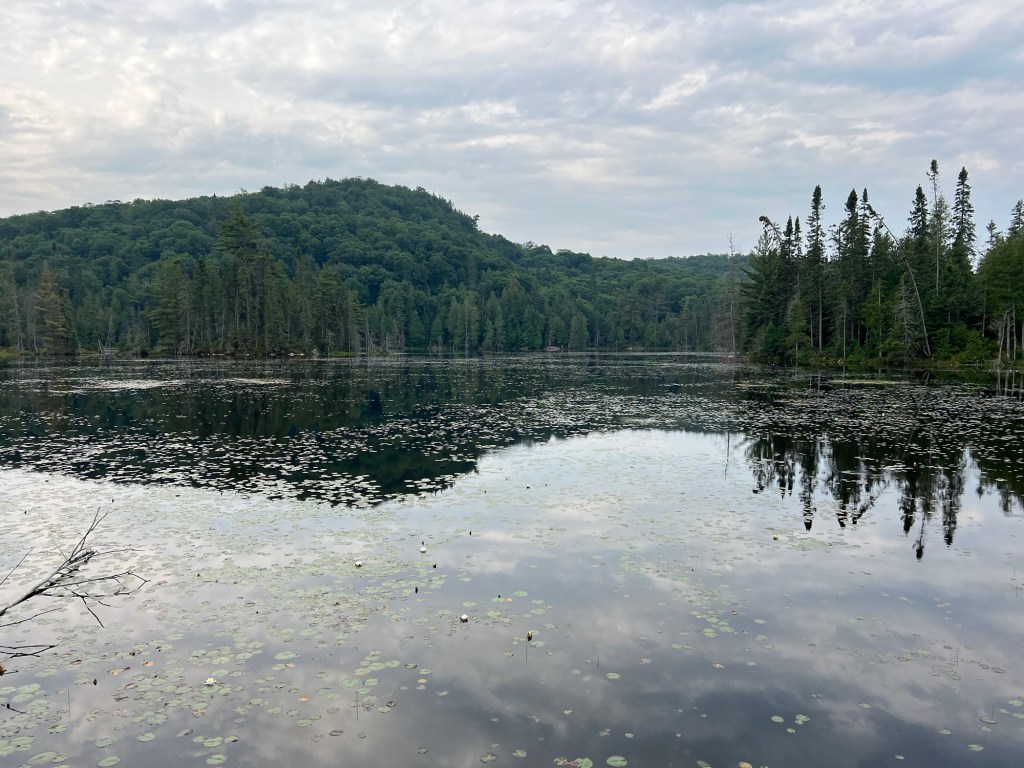
It circled pretty little Trapper’s Lake.
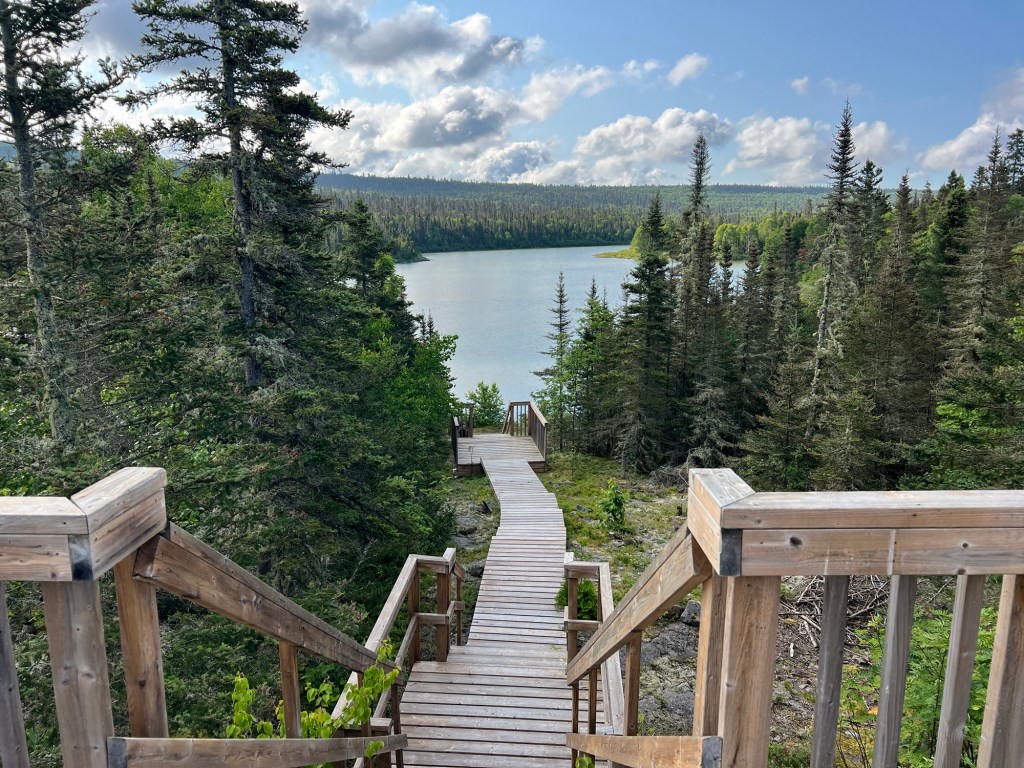
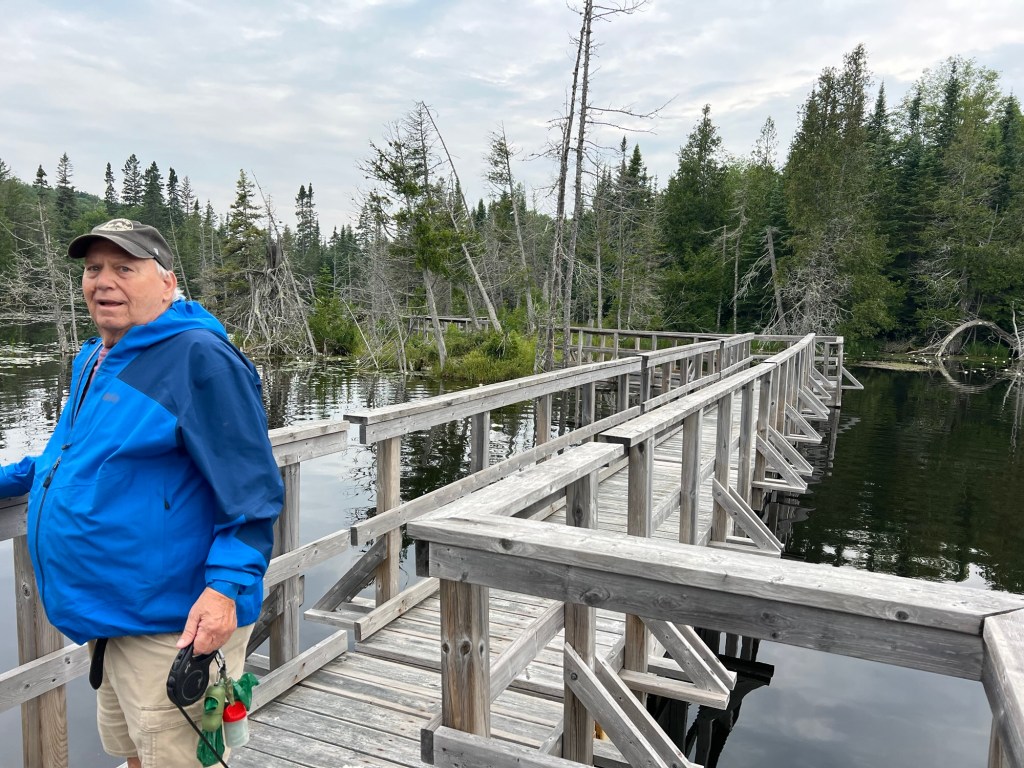
There were some boardwalks and lookouts,
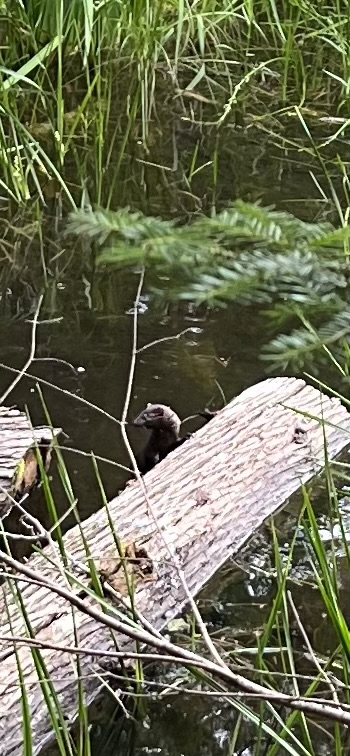
But the highlight for us was watching a family of minks playing around some logs on the edge of the pond.
It was really hard to catch a picture because they were so fast.
This is the only one I got of one of them swimming, and it’s hard to even find it. Sorry, limitations of picture taking with an iPhone.
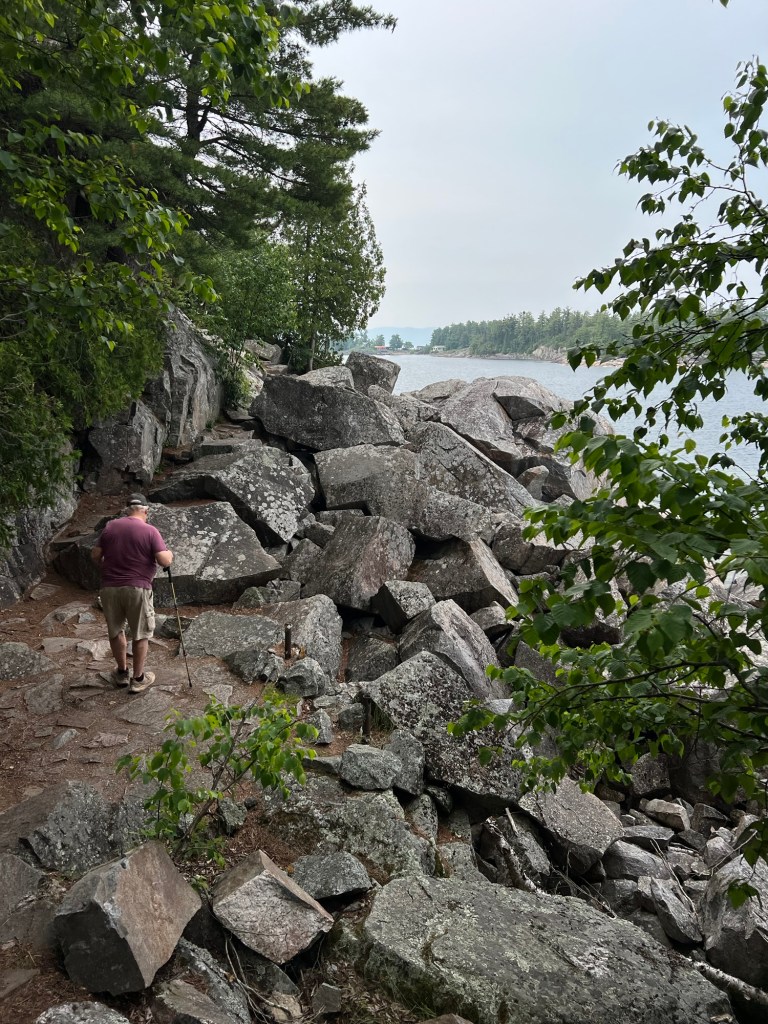
We then drove another 16 miles to the trail to the Agawa Rock Pictographs. Matey had to wait in the truck for this one.
This was listed as a moderately difficult trail, though it was short.
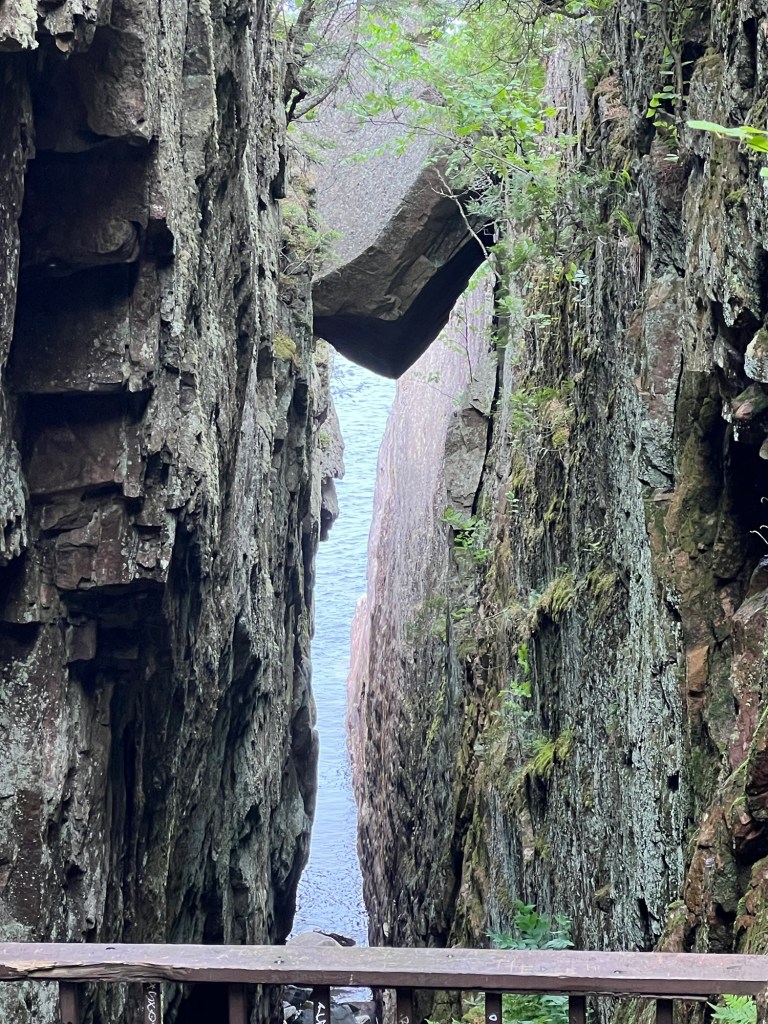
We passed this fissure that made a window to Lake Superior. That boulder was suspended there.
Matey would never have made it here!
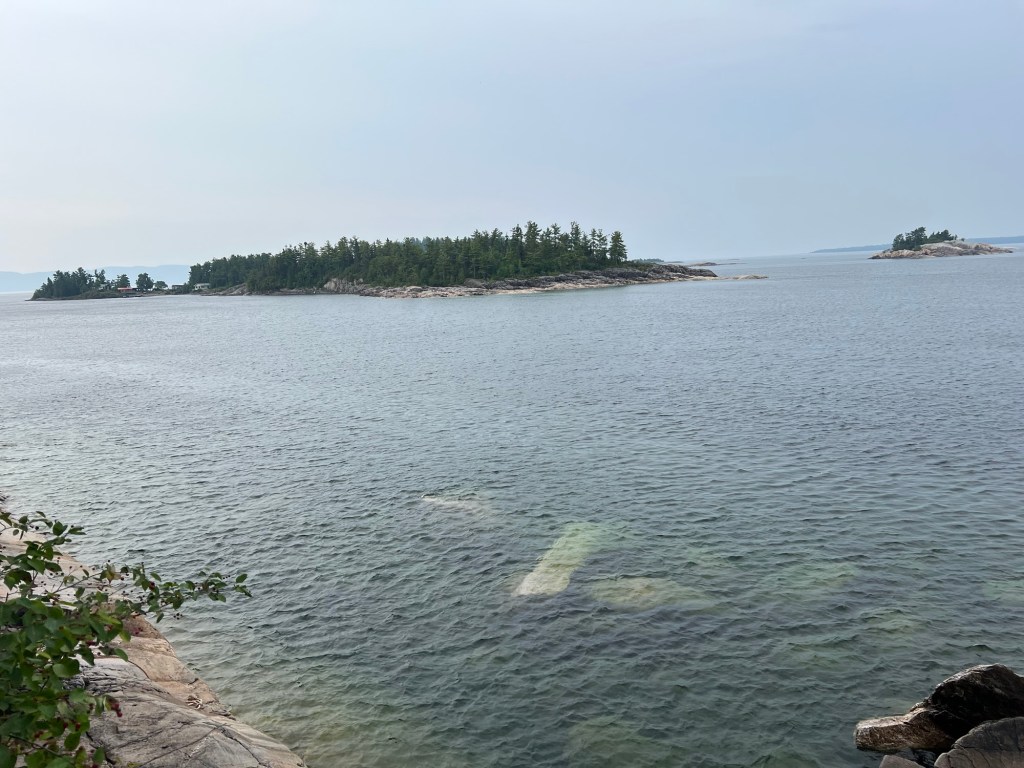
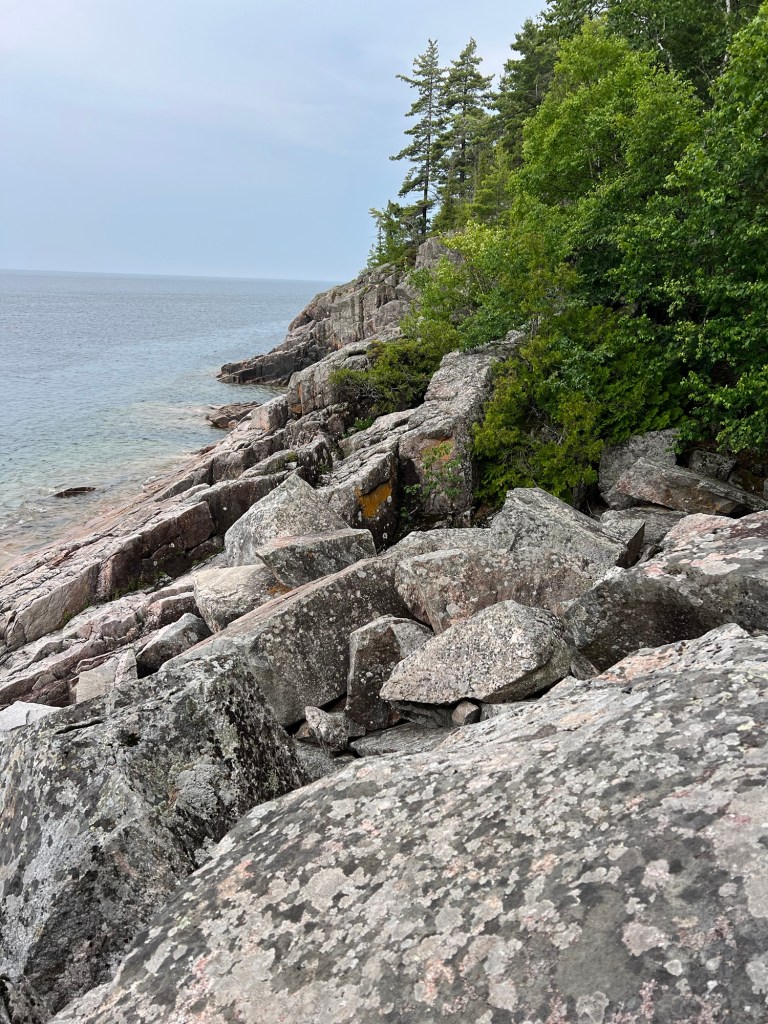
It was a beautiful shore. Those are huge pieces of rock just under the water.
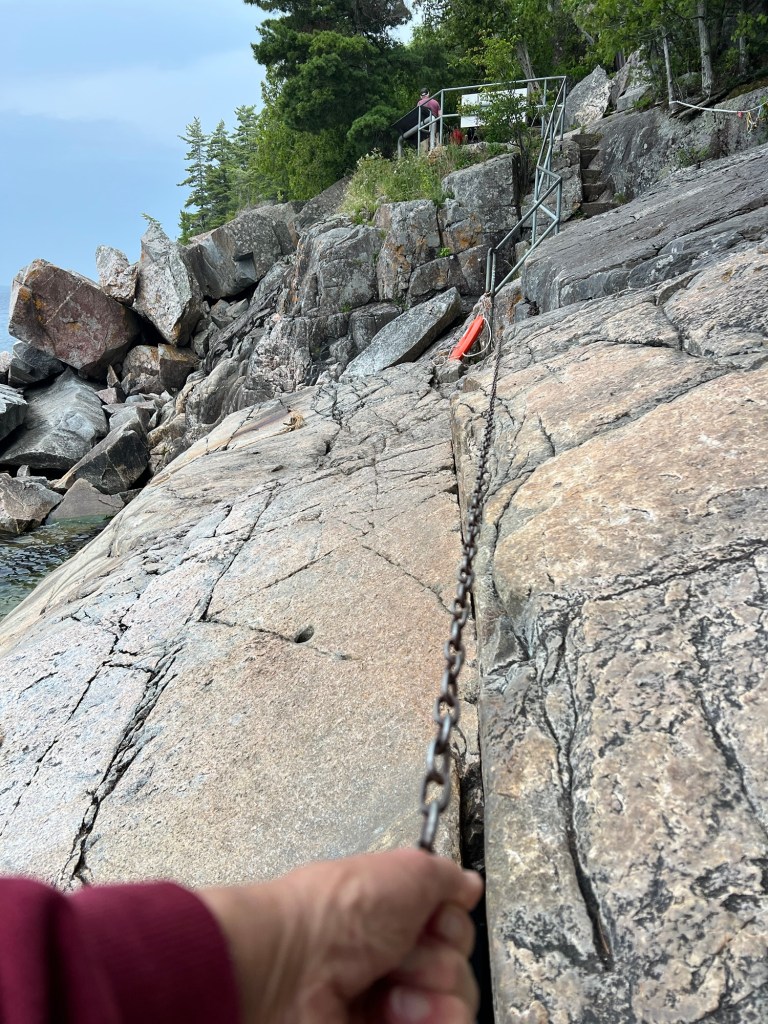
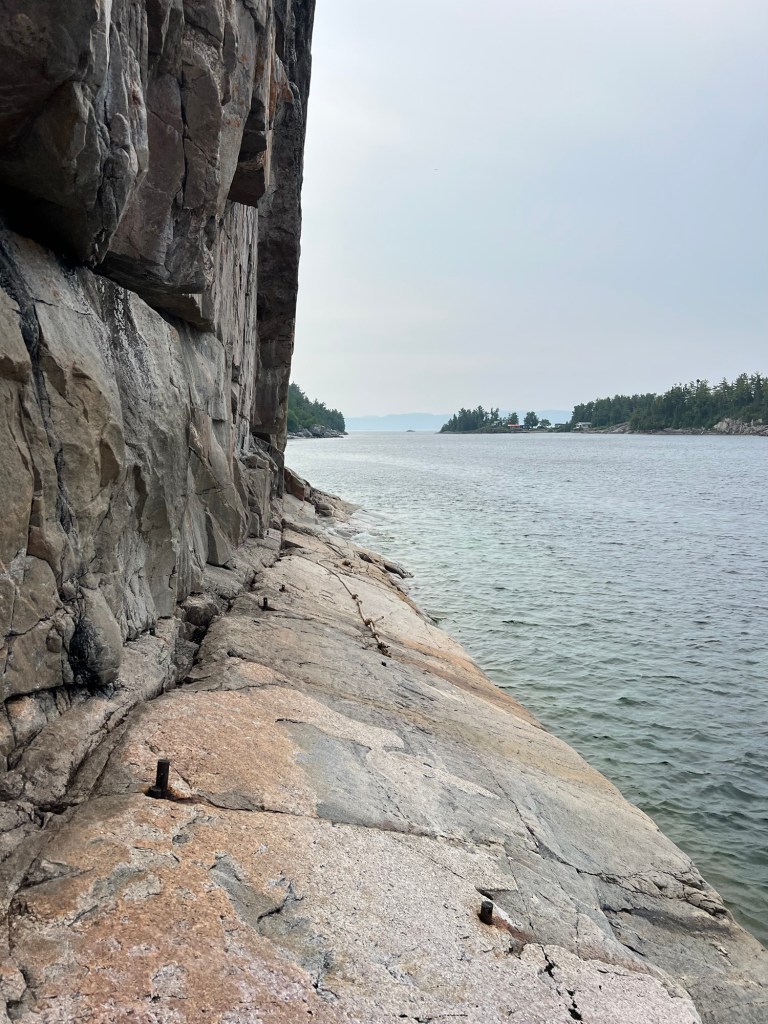
But we never saw the pictographs. I went out along the slanted rock where they had this chain to hang onto.
But the pictographs were out on that verticals rock wall, and the ledge below was quite slanted. And there was nothing to hang on to. Neither of us was willing to try it.
Still, the view was definitely worth the scramble.
We were driving back to camp by 10:30.
By noon the rains came! Our weather obsession paid off, we got two hikes in and stayed dry.
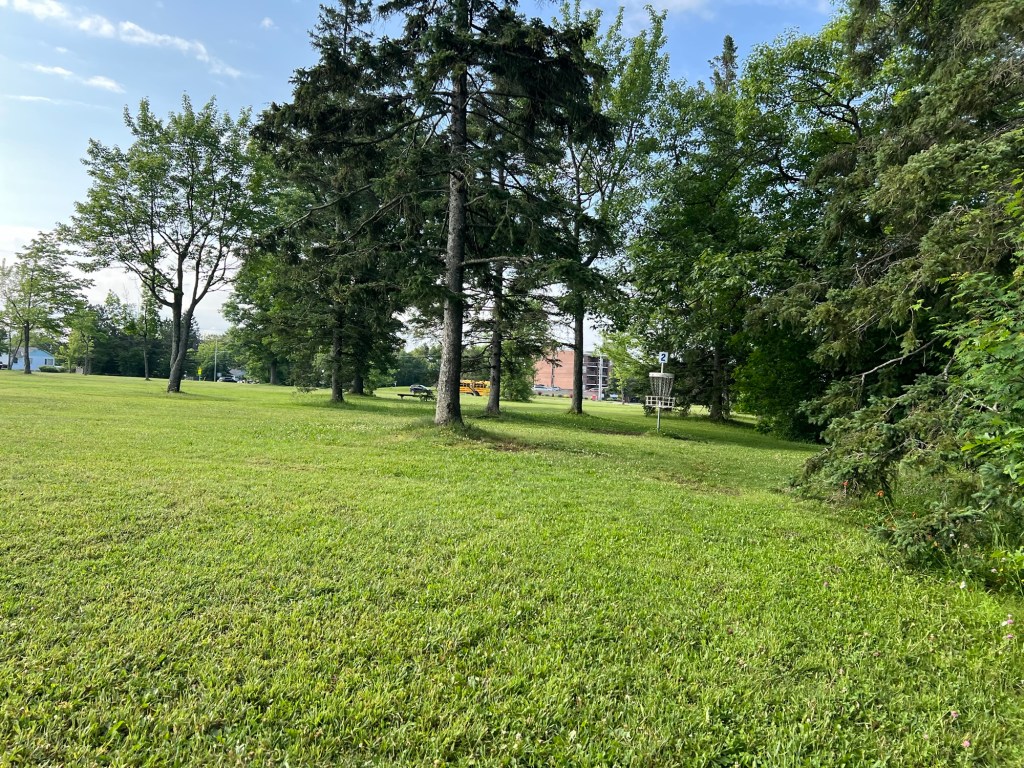
Wednesday we played disc golf at a little course we found. There aren’t too many courses in Canada, so this was a treat.
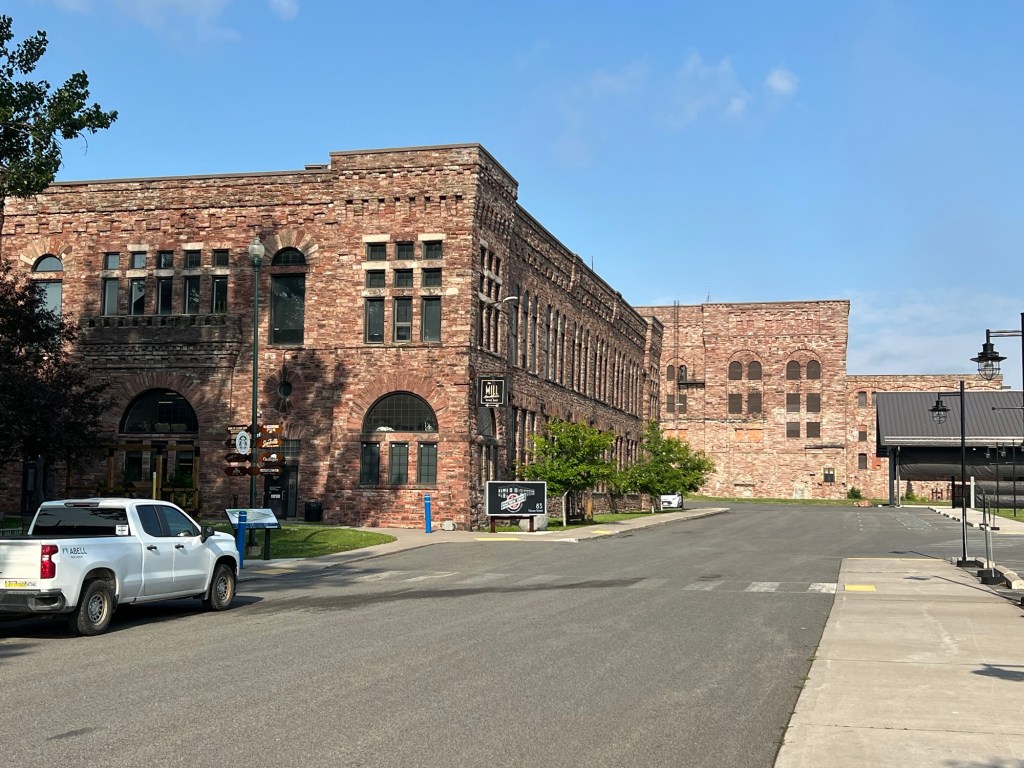
Afterwards we decided to drive to the waterfront. We missed a turn and found these old buildings, now repurposed.
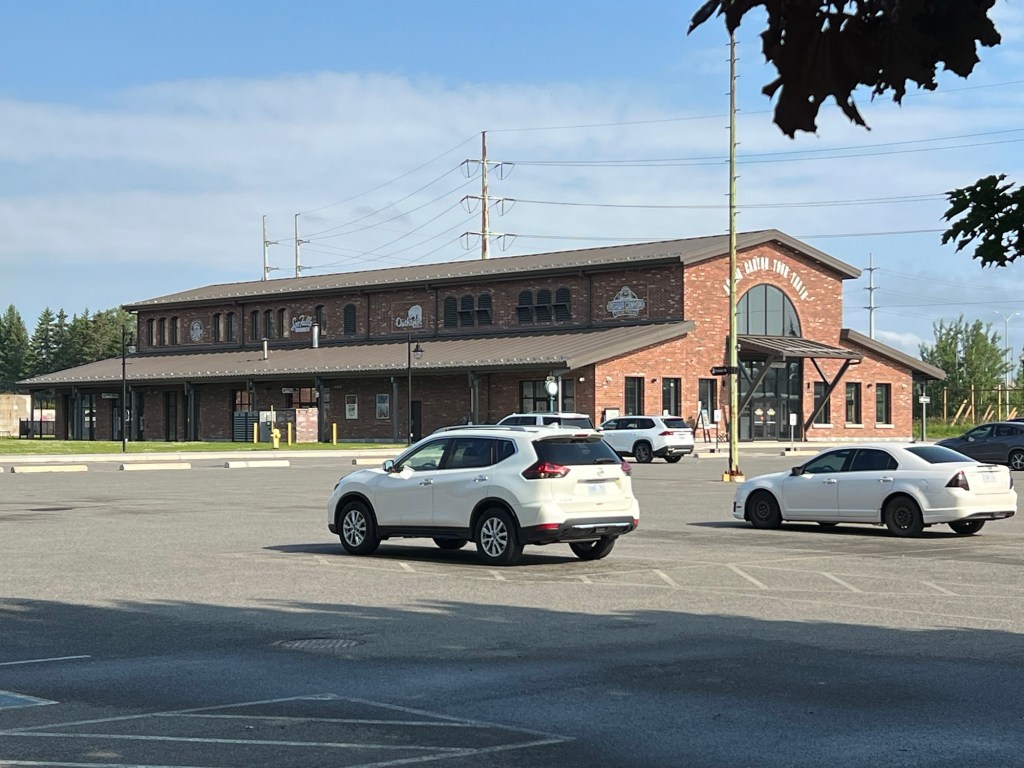
And this train station, still in use for a tourist train that looks like a great day long excursion but is booked up until August.
Going back to Canal Street we drove out to St. Mary’s Island, which is bisected by the old canal.
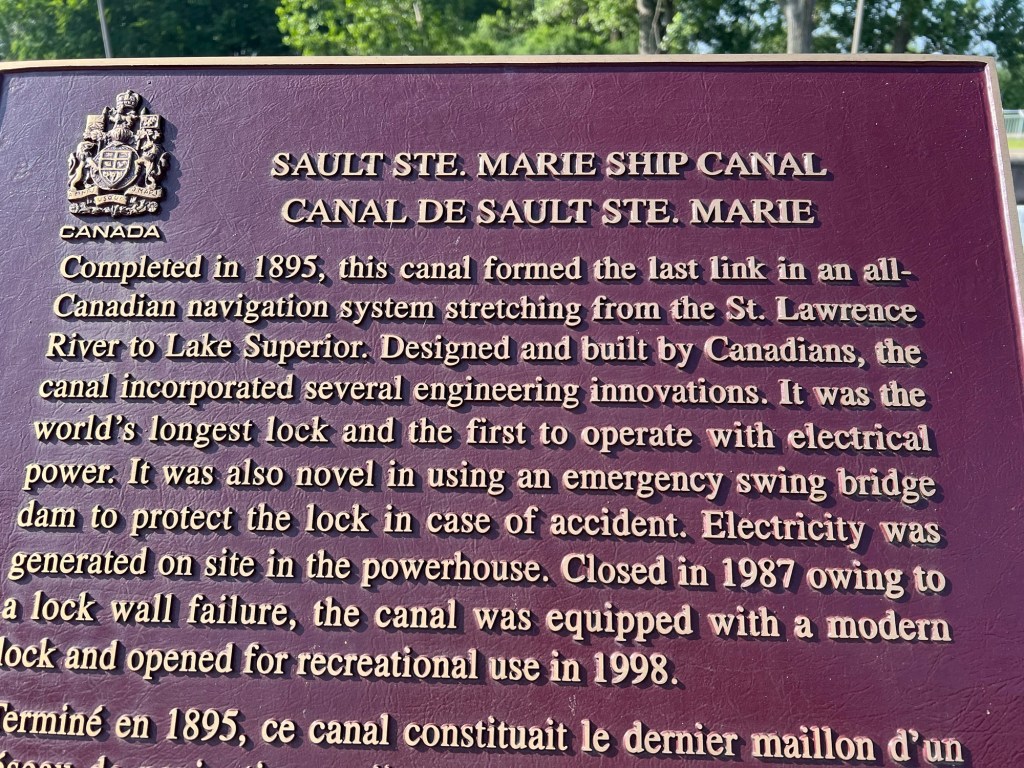
We didn’t realize from our map that this was a National Historic Site.
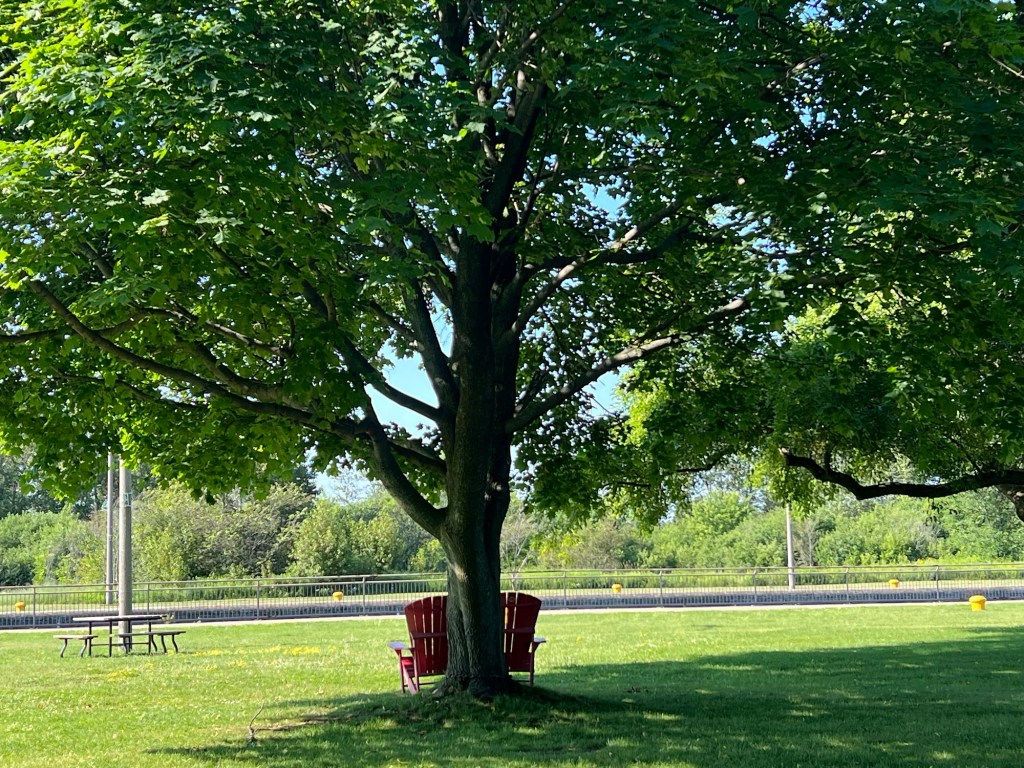
But it is, complete with the Red Adirondack Chairs found in all of Canada’s National Parks.
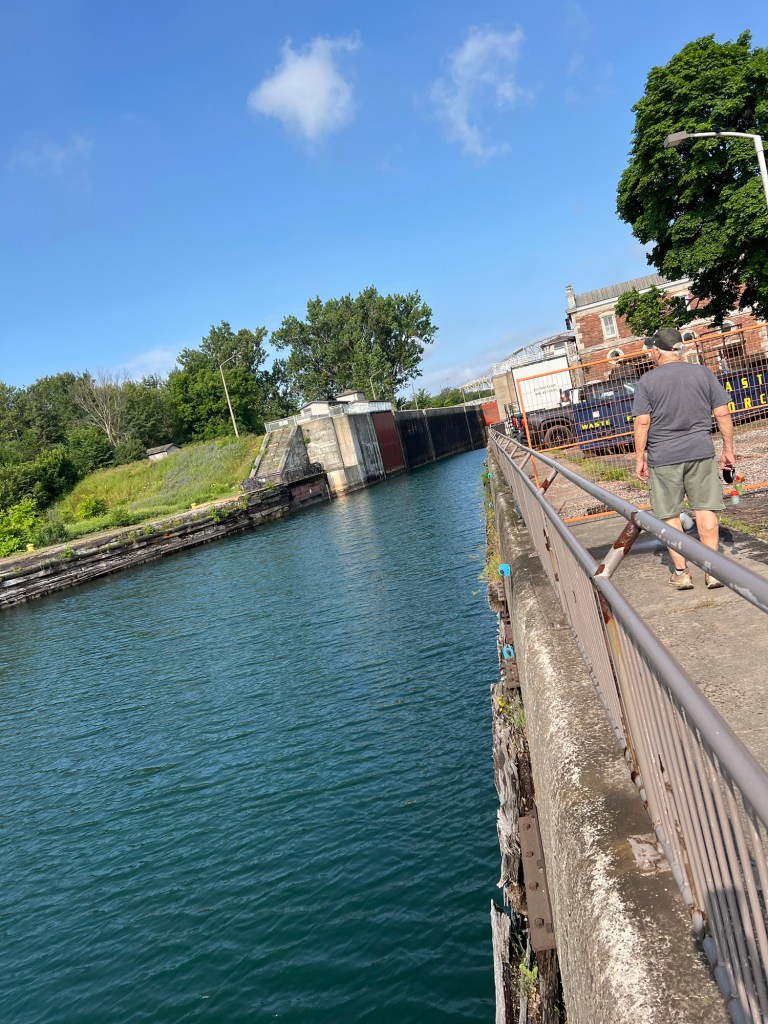
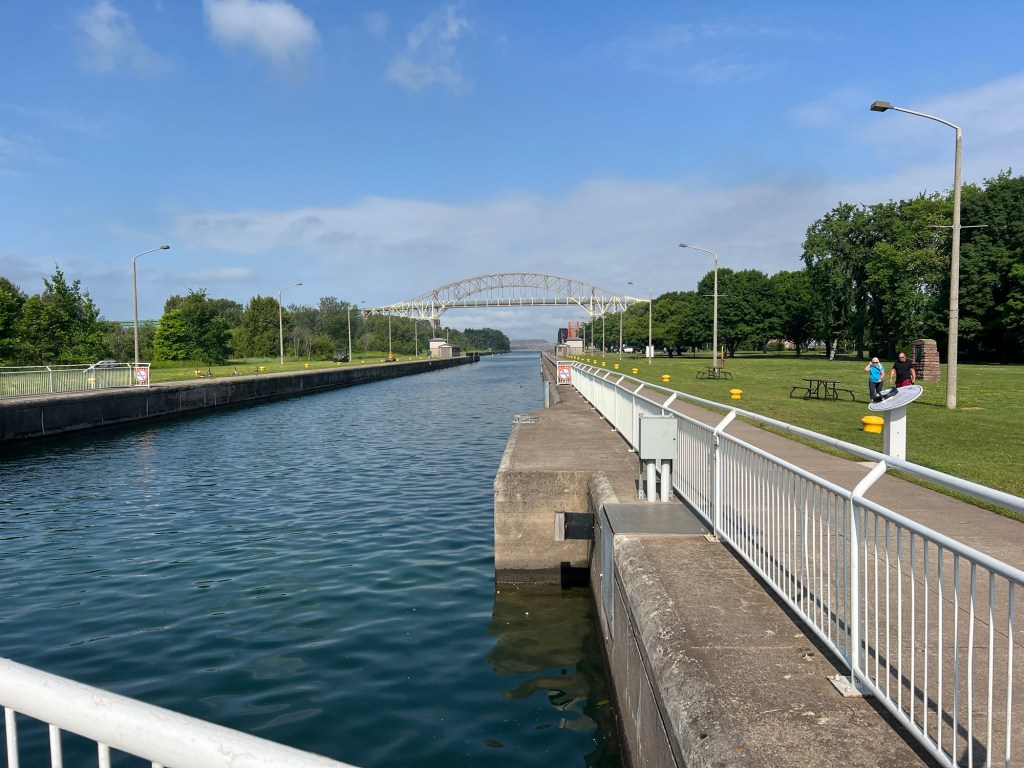
We walked far enough to see the old canal that now handles just recreational boats. Lake freighters use the Soo Locks on the U.S. side of St. Mary’s River.
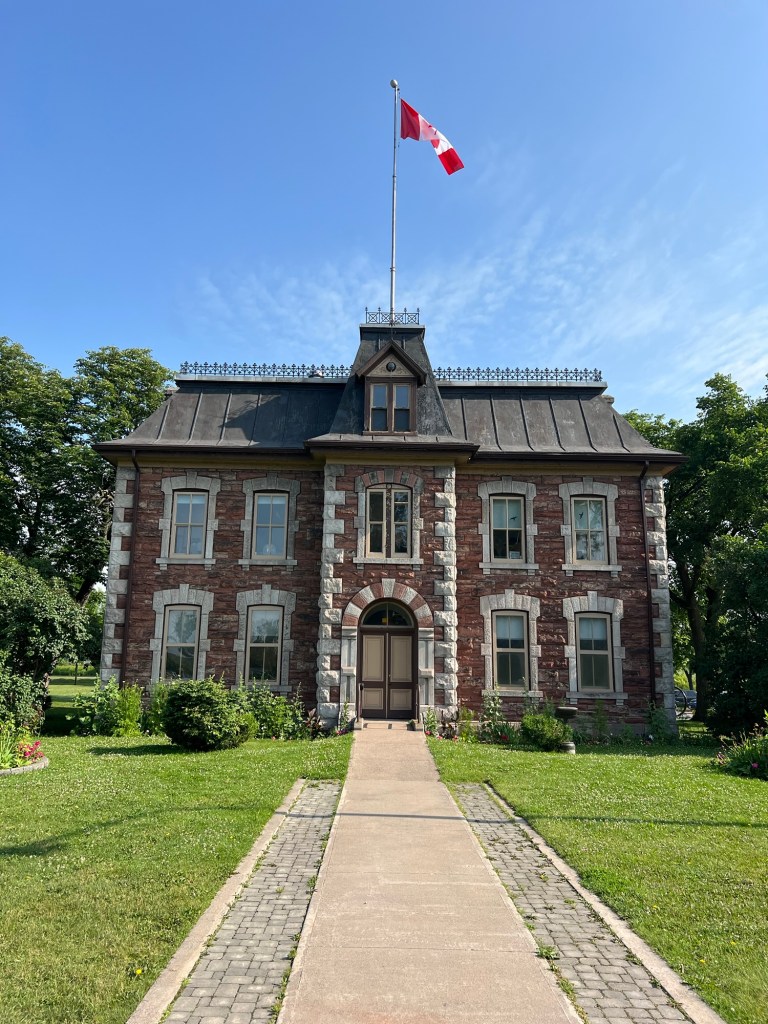
We passed the old superintendent’s residence. Nice place!
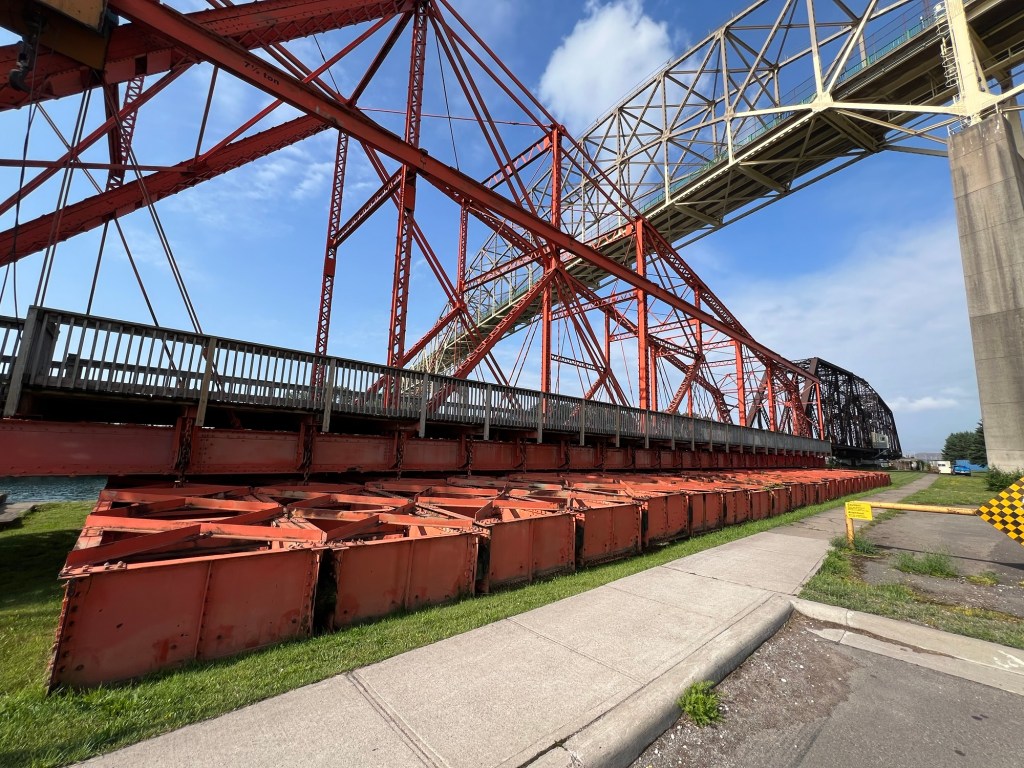
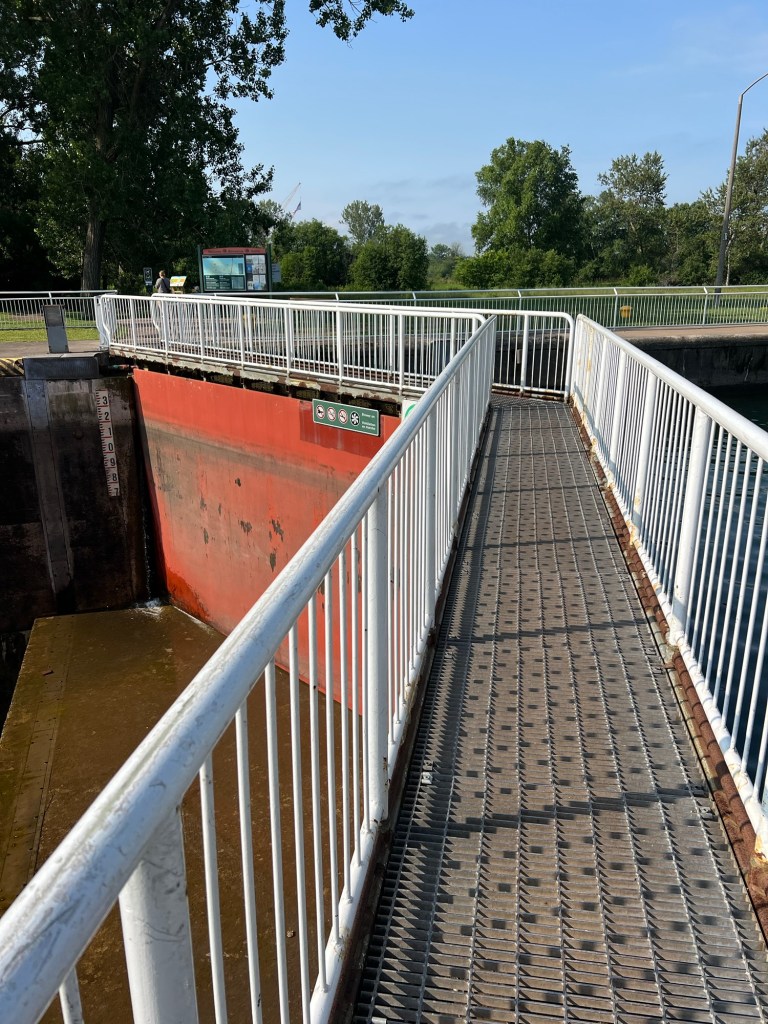
A bit further were these bridges. The orange structure is the swing dam and bridge. In an emergency it can be swung out so the large steel pieces hang down into the canal and dam the water, keeping it out of the lock. Behind it is a black swing bridge for the railroad and above them both is the international highway bridge.
We found out there were trails accessible beyond the locks, so today we went back and I carried Matey across the walkway on top of the lock gates.
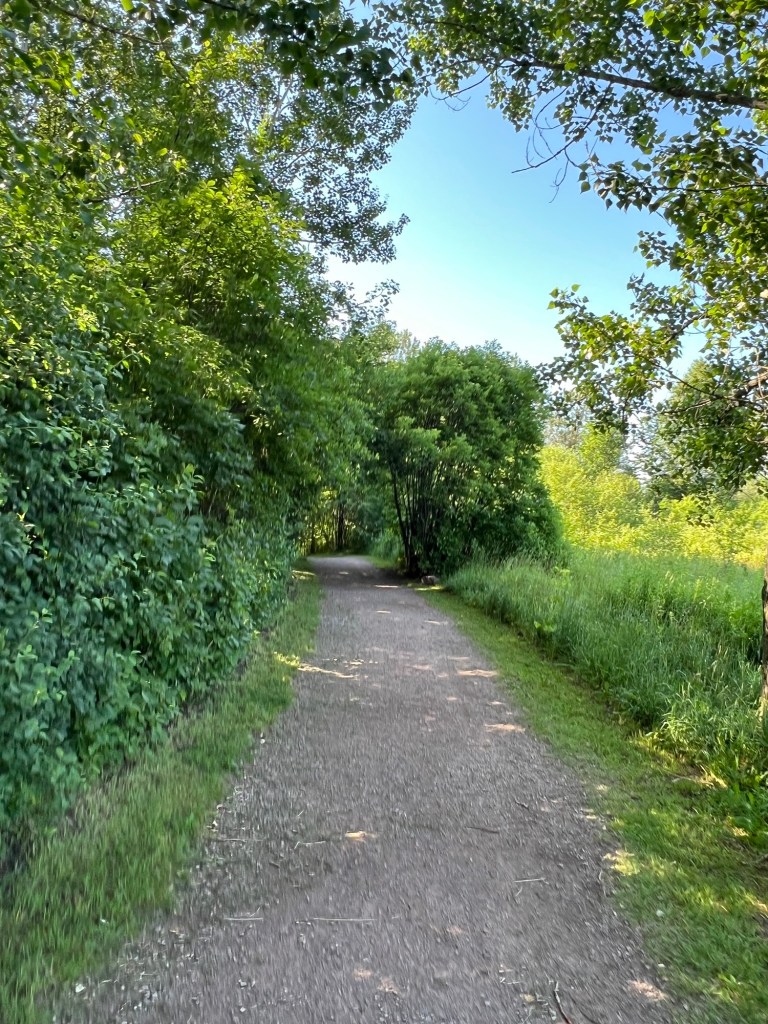
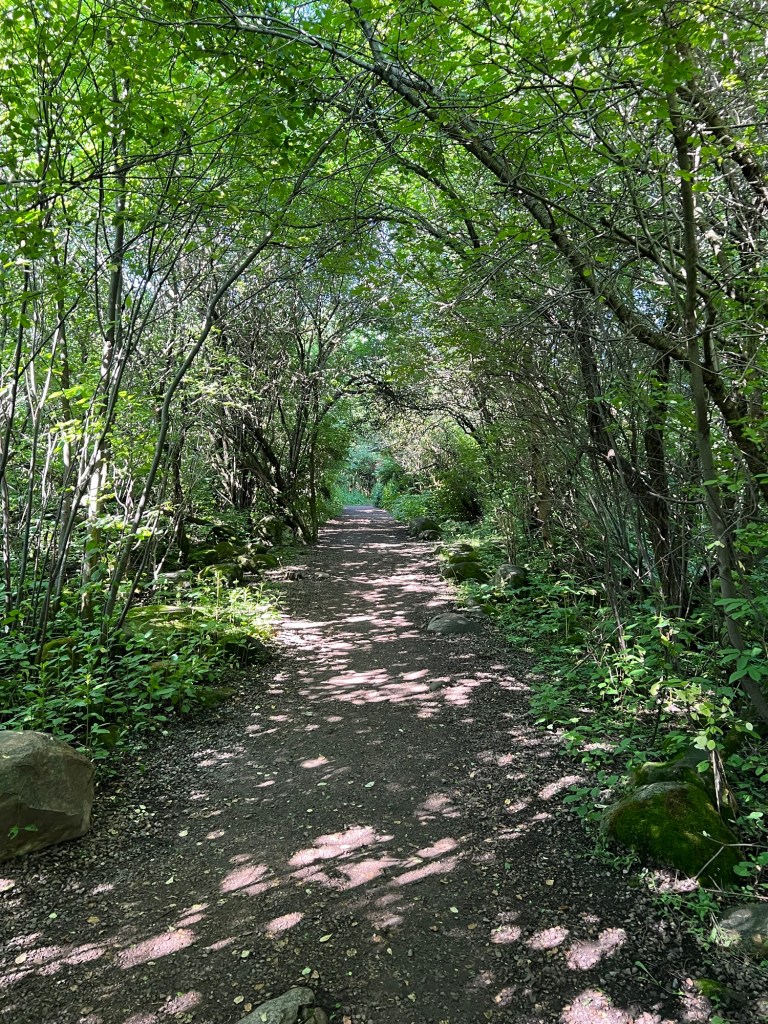
A nice groomed trail leads across the other side of St. Mary’s Island.
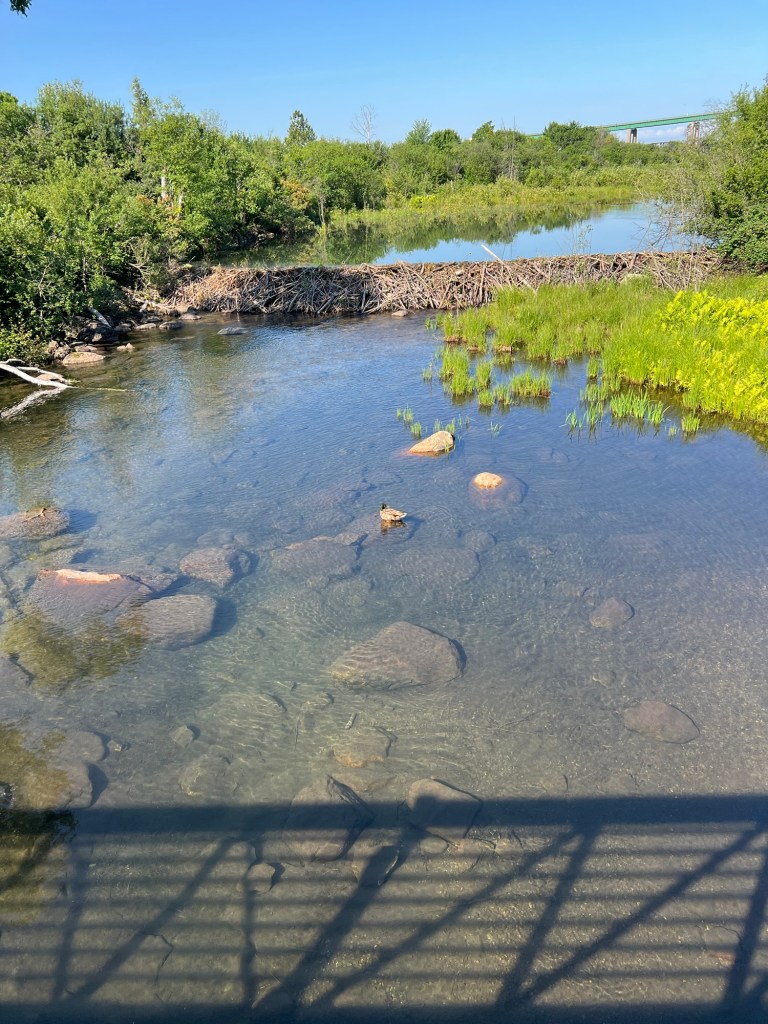
A footbridge took us across to Whitefish Island. The bit of river between these islands had multiple beaver dams.
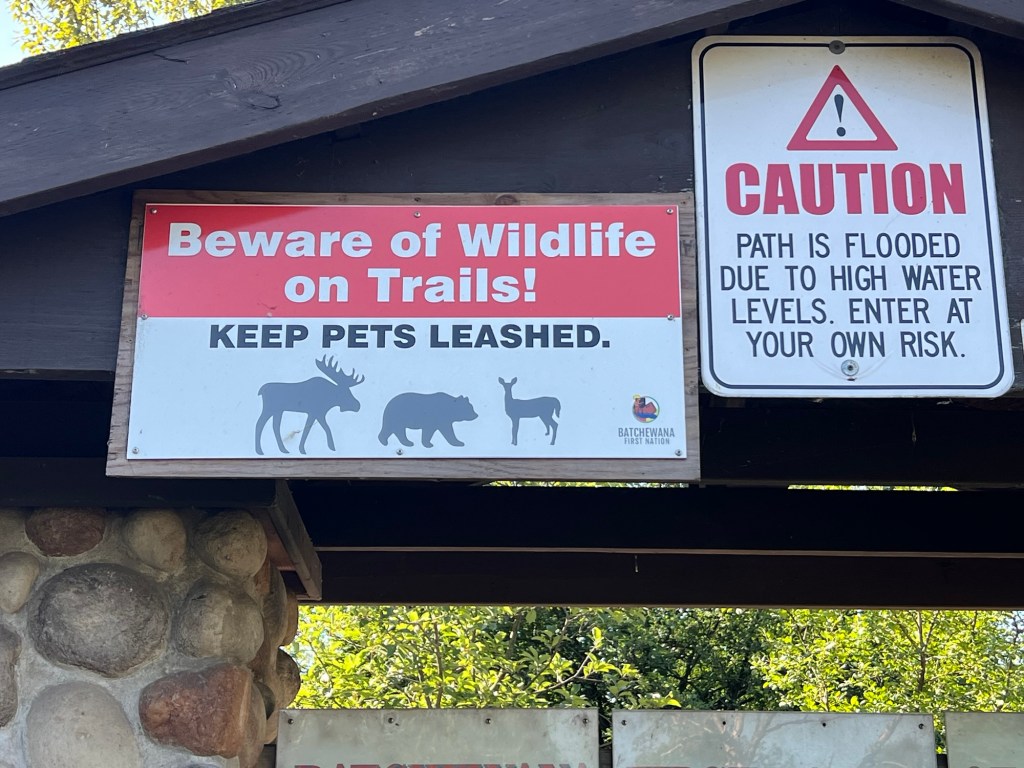
Aside from the path, Whitefish Island is left wild, and as unlikely as it seems between downtown Sault Ste. Marie, Ontario and downtown Sault Ste. Marie, Michigan, wild animals live here.
This is the only wildlife we saw besides ducks.
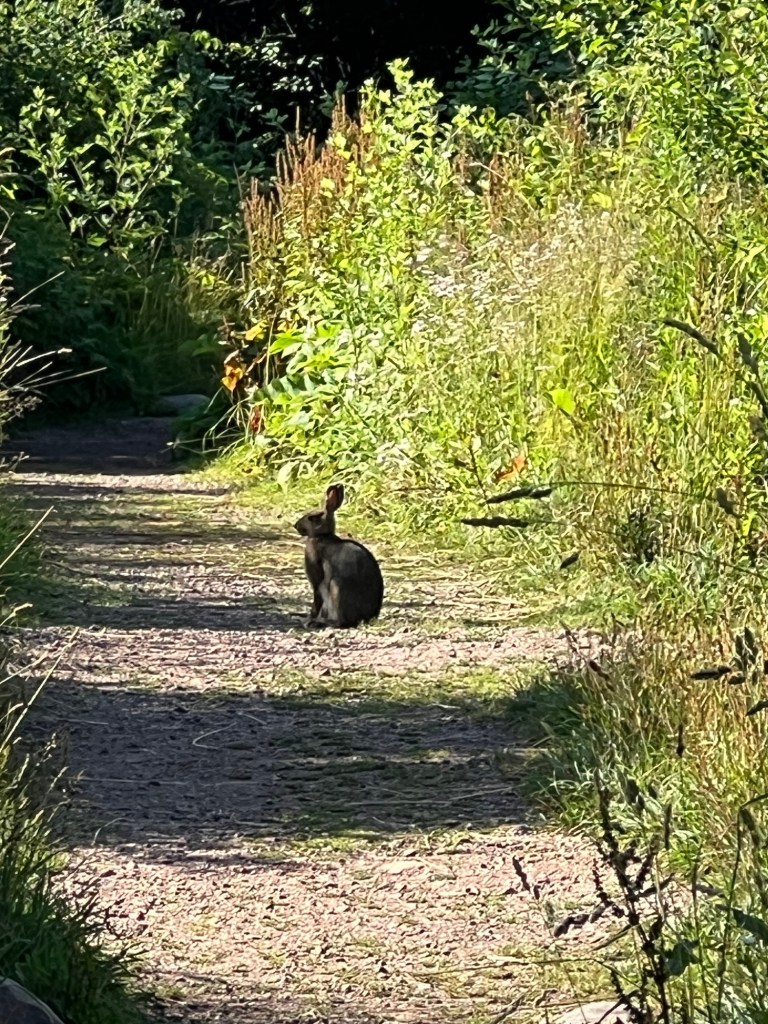
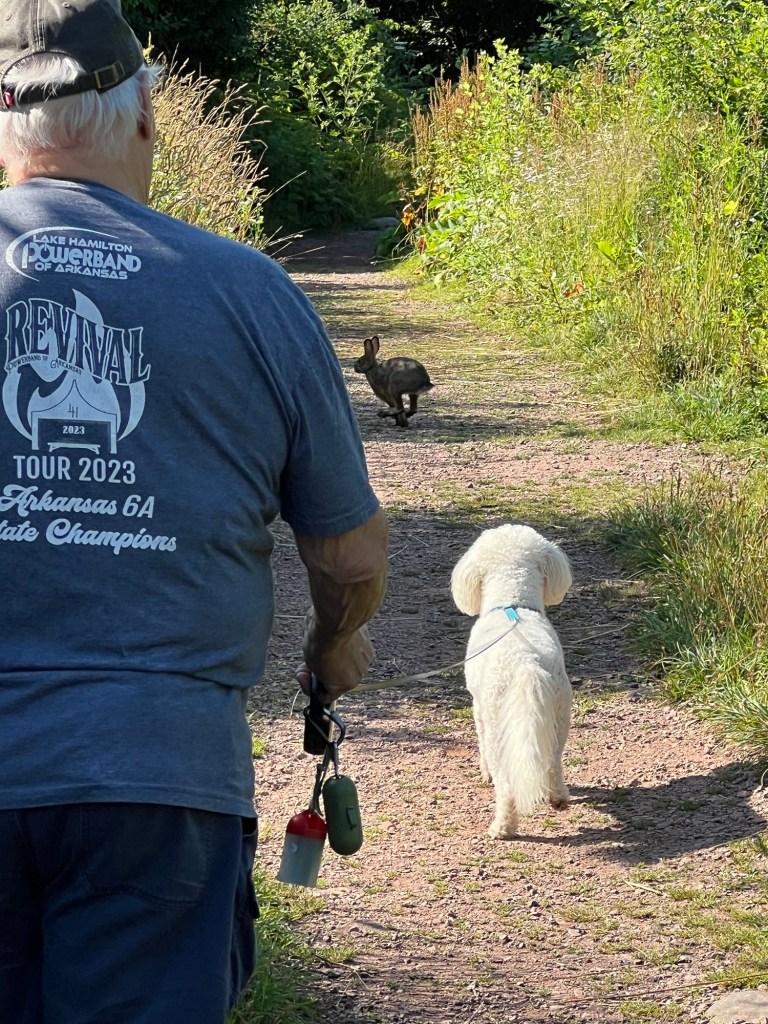
And this rabbit is obviously used to visitors.
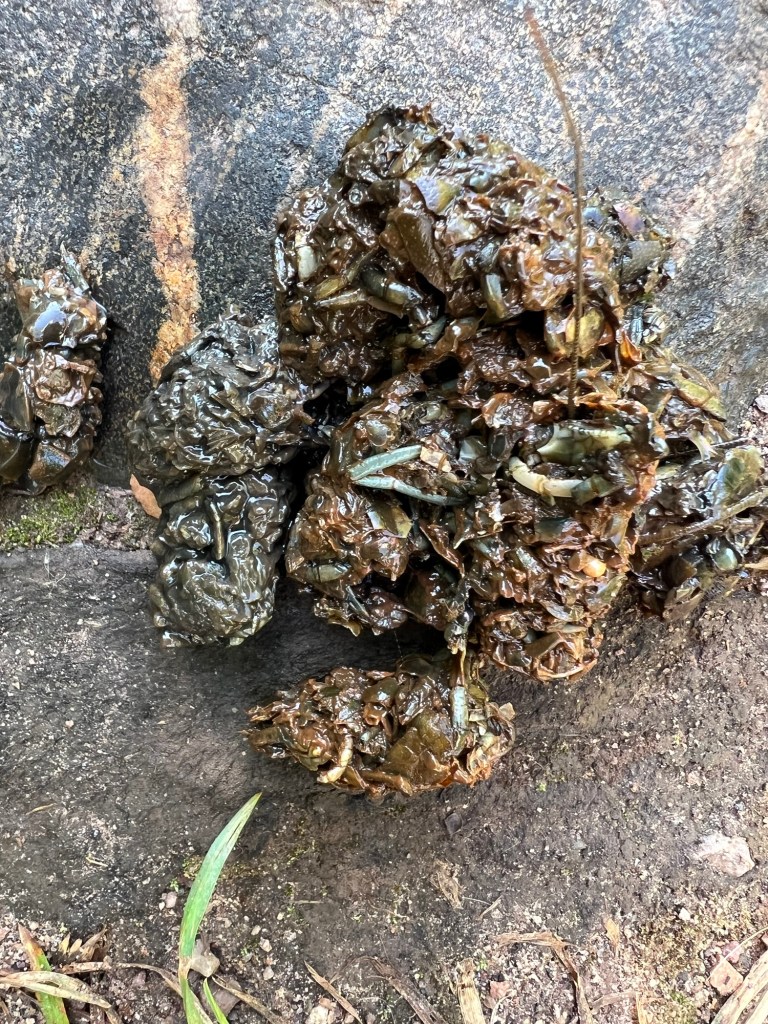
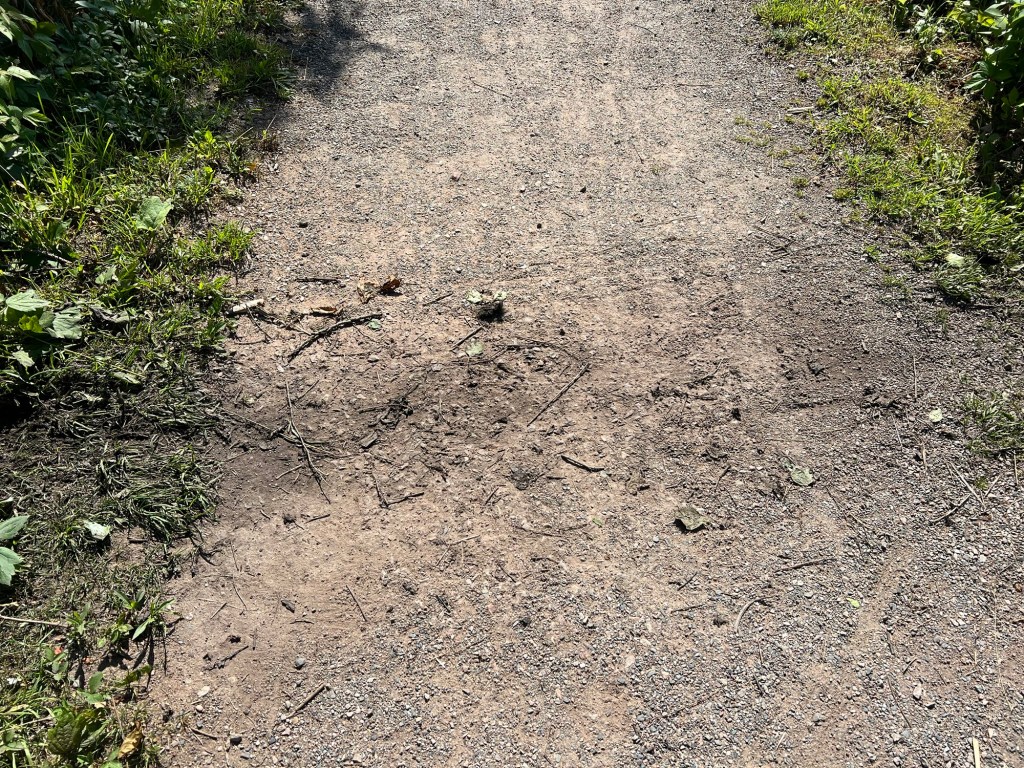
I did, however, see this bear scat.
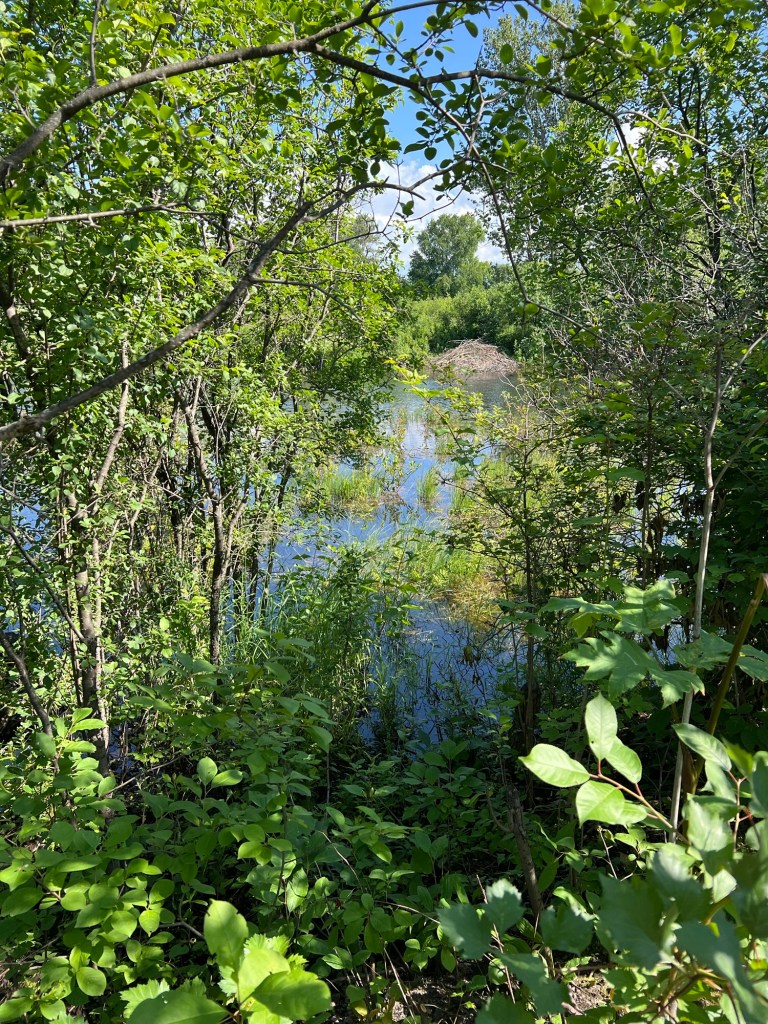
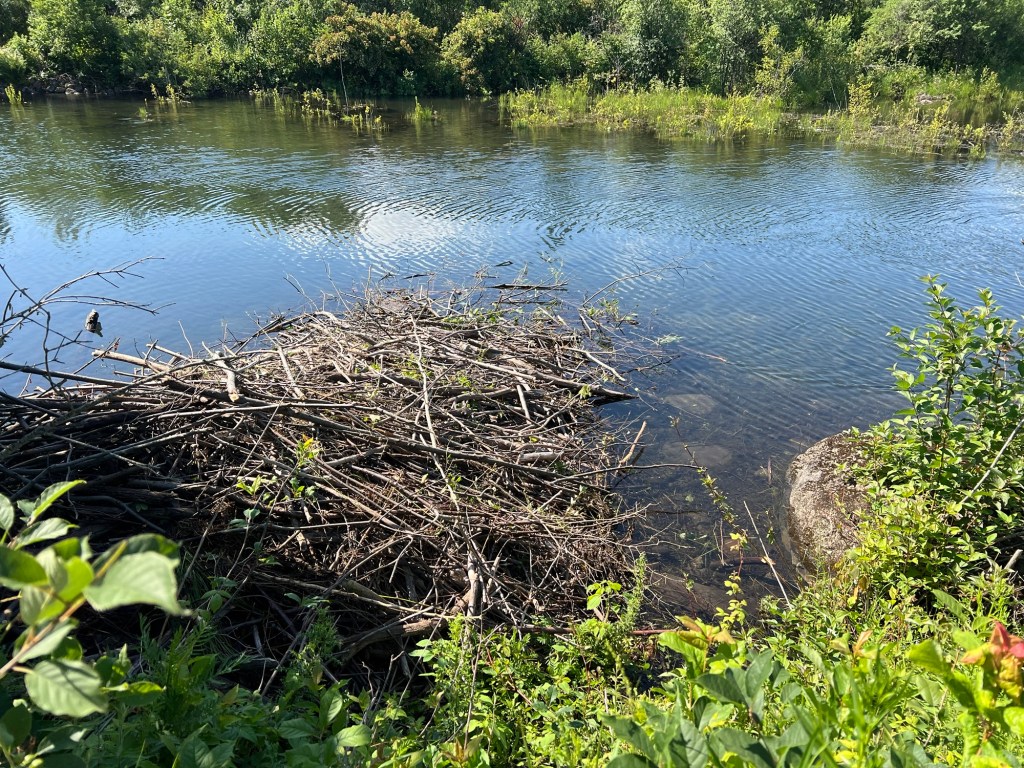
And we saw a beaver lodge.
Another path took us behind the beaver lodge.
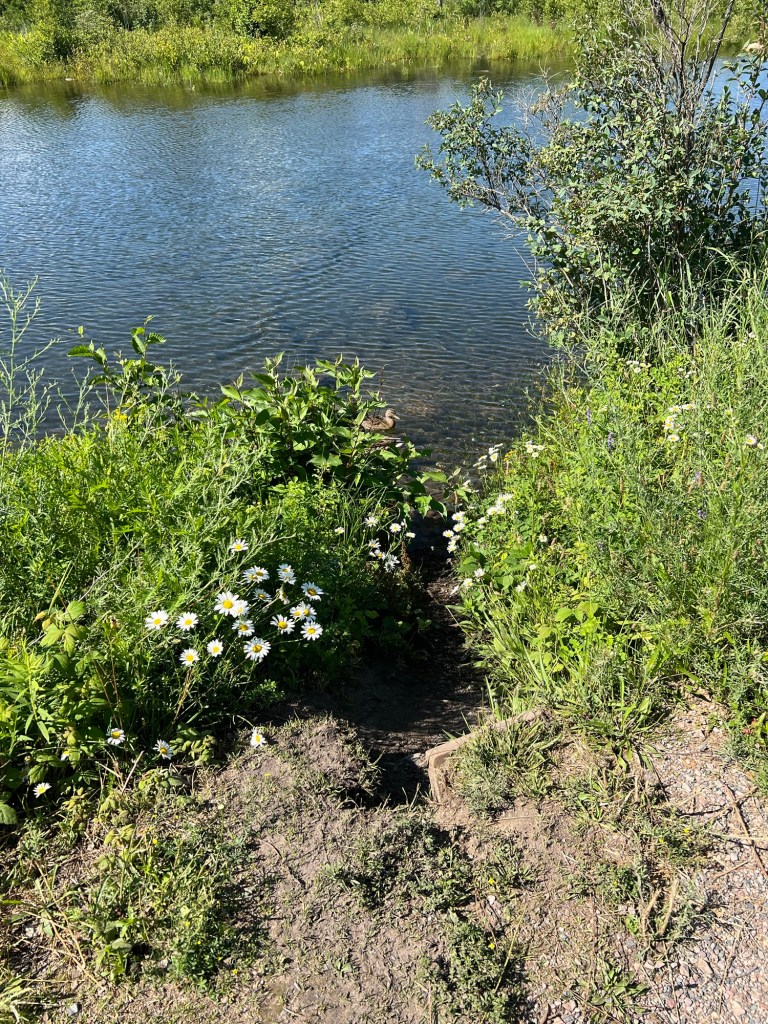
And we saw several places where they went from water to land.
They were obviously using these places to bring branches back. But, alas, we saw no beaver.
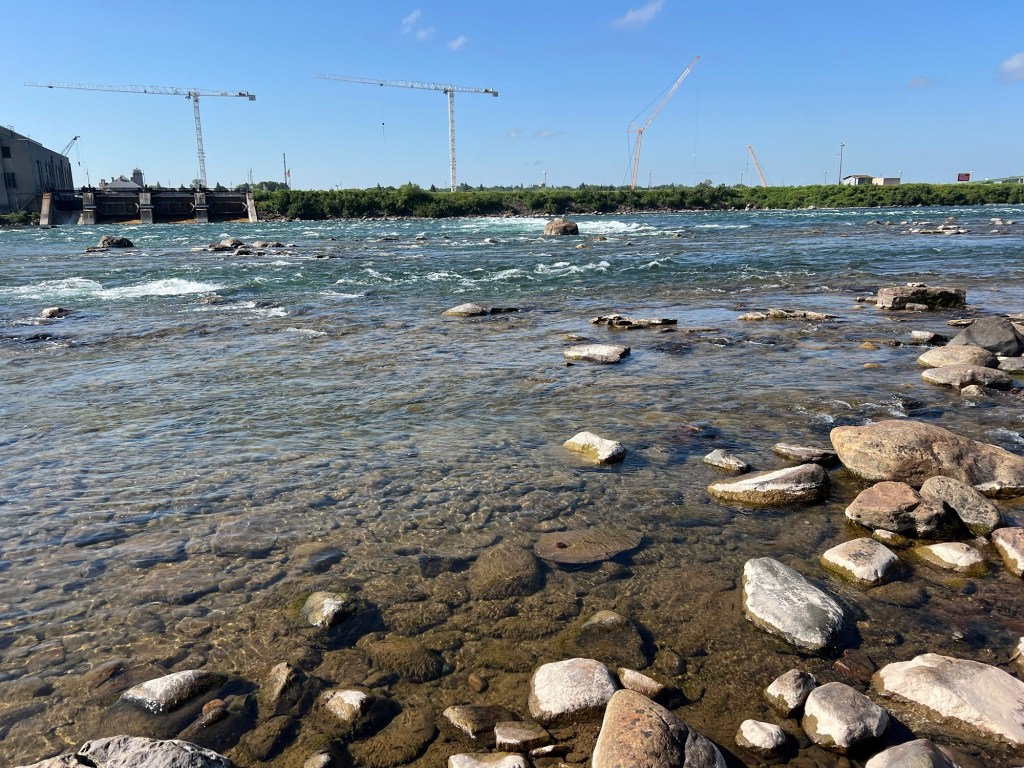
On the far side of Whitefish Island were the rapids, and beyond those the commercial locks.
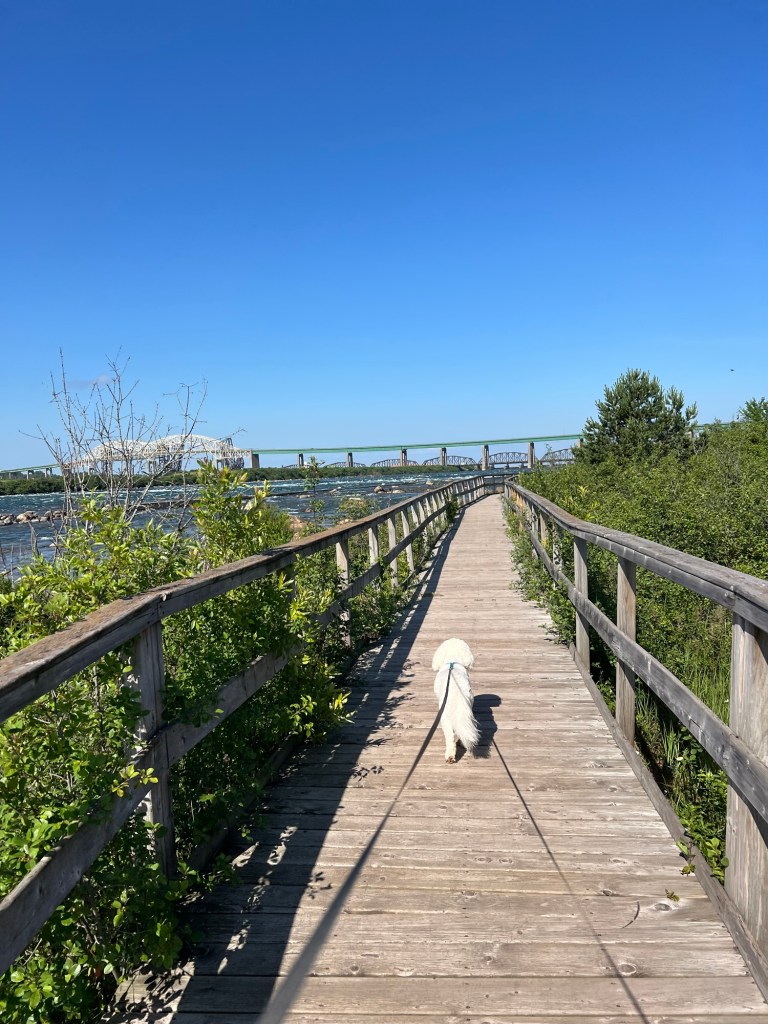
There was a nice boardwalk along the river. In the distance are the international highway and railroad bridges.
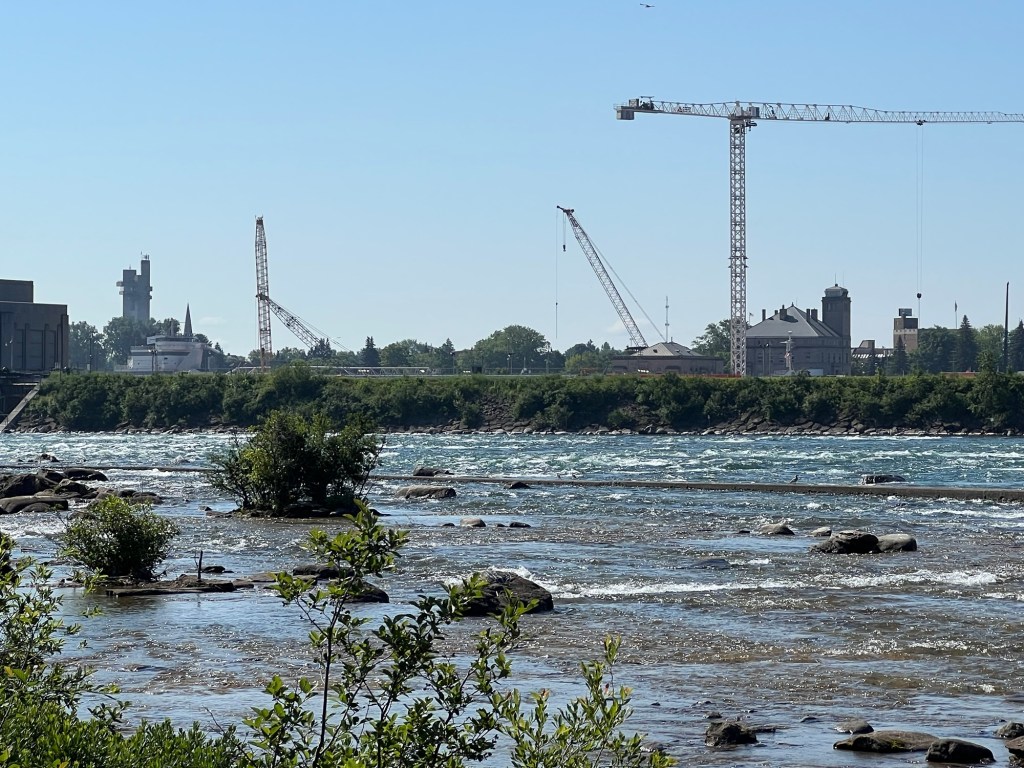
At one overlook we noticed an upbound lake freighter. We only noticed it because it was moving. The superstructure is aft on these ships, that’s it on the left in front of the two stacks and the spire. The ship is white. Then there are some yellow steel rails along the deck and at the front a yellow tower with lights and radar. You can see that towards the right in front of the square building just to the right of the nearest crane. The rest of the ship is below the bank.
It was an interesting walk, wild and serene against a backdrop of commerce.
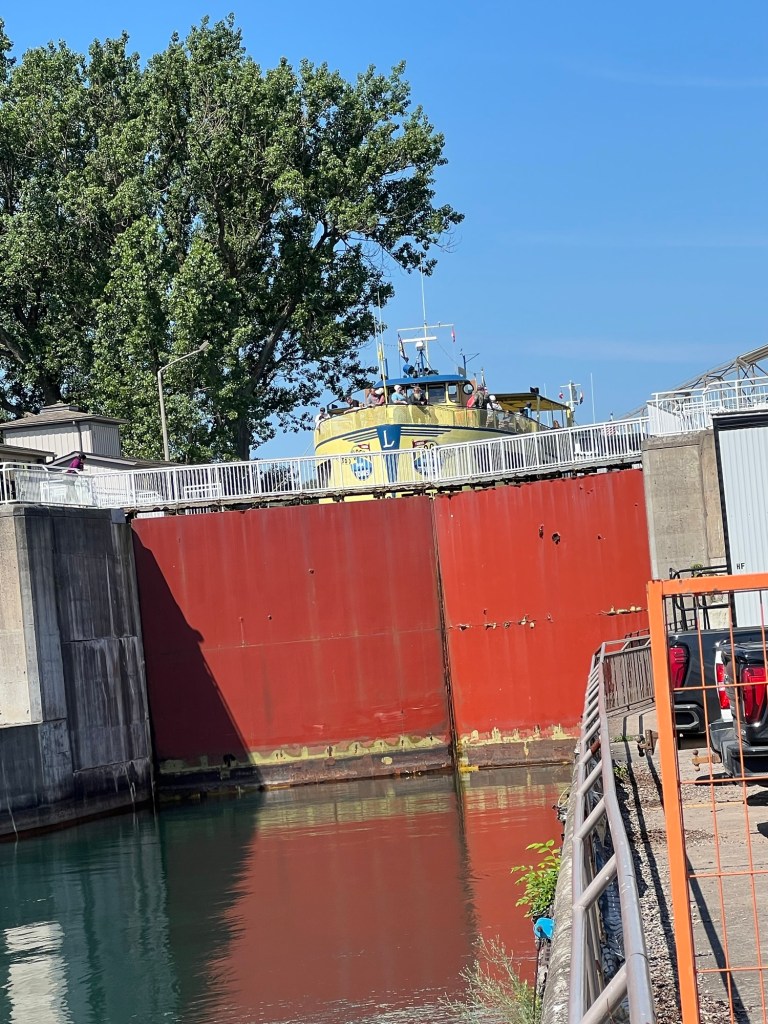
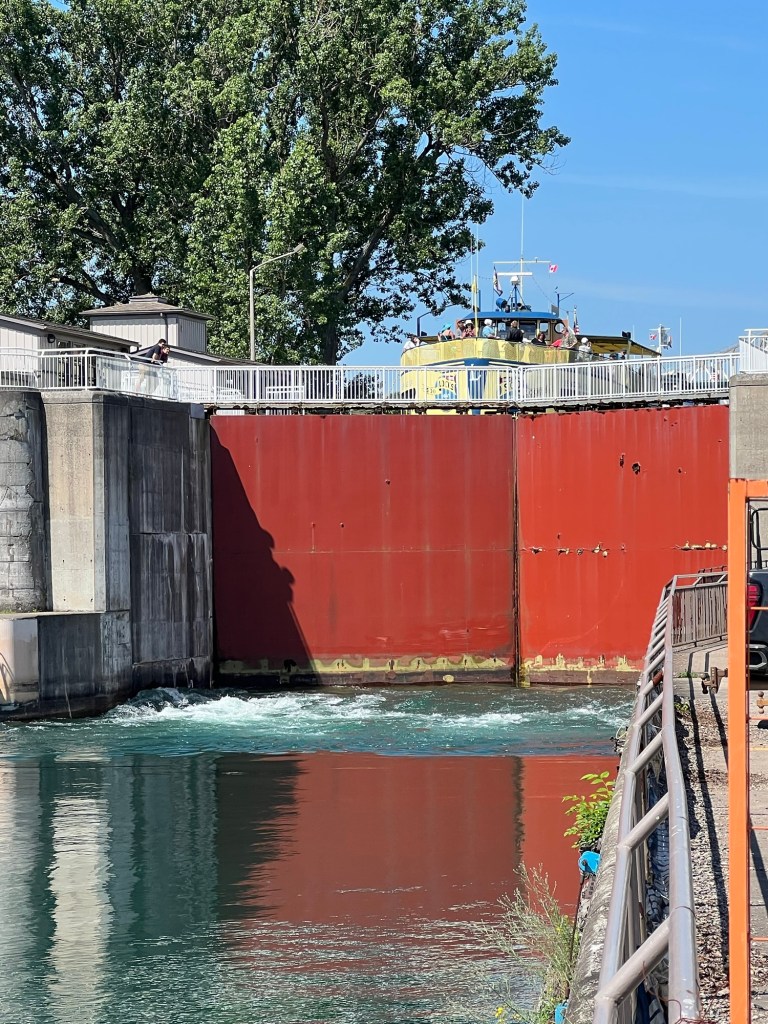
As a bonus when we got back we got to watch a couple of tour boats come down through the recreational lock. Here’s the lead boat waiting in the lock.
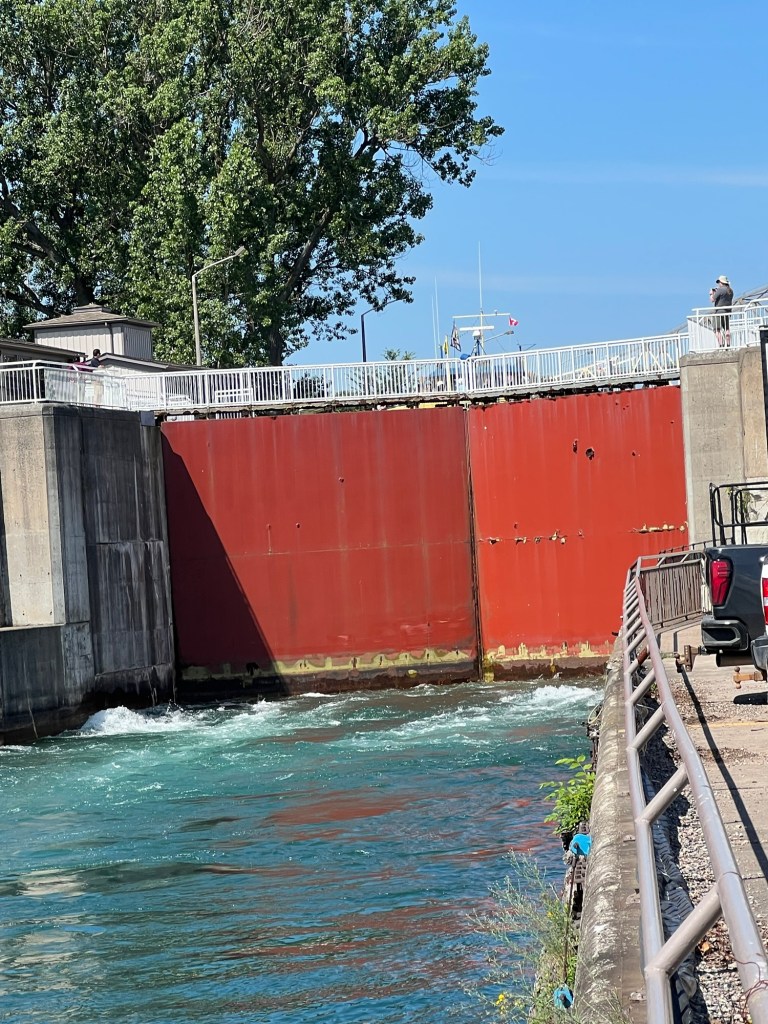
When they start to let the water out it really comes fast.
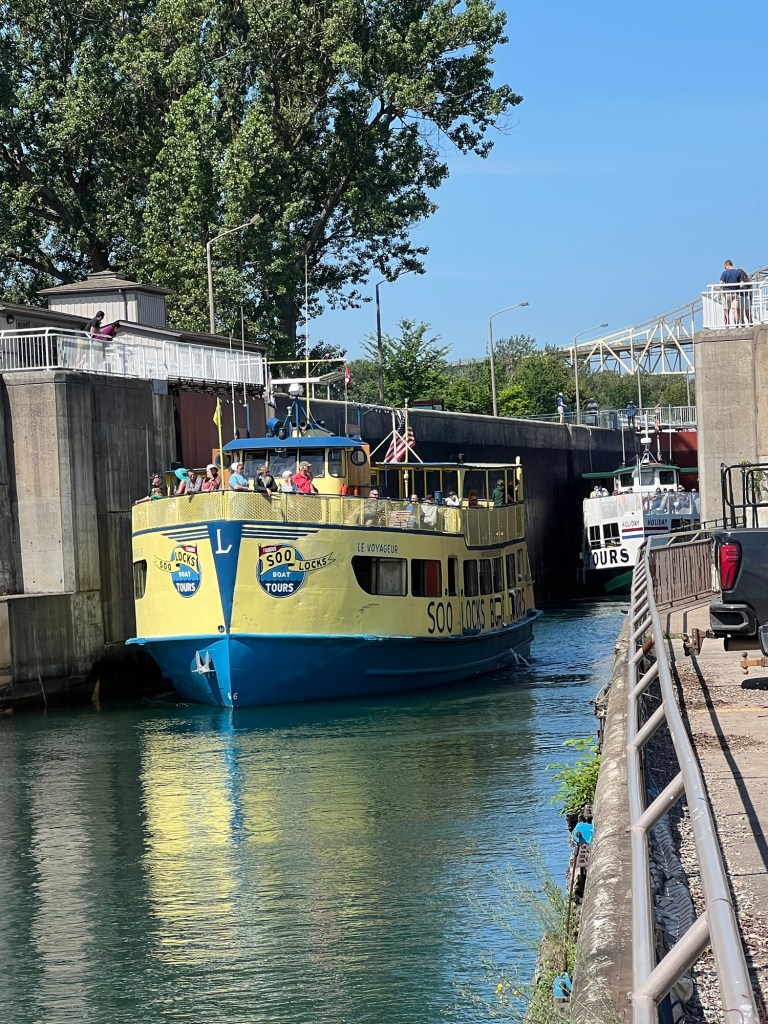
Almost down.
And there they go. From where I was standing I didn’t even know there was a second boat until the locks opened.

 On the Roam Again