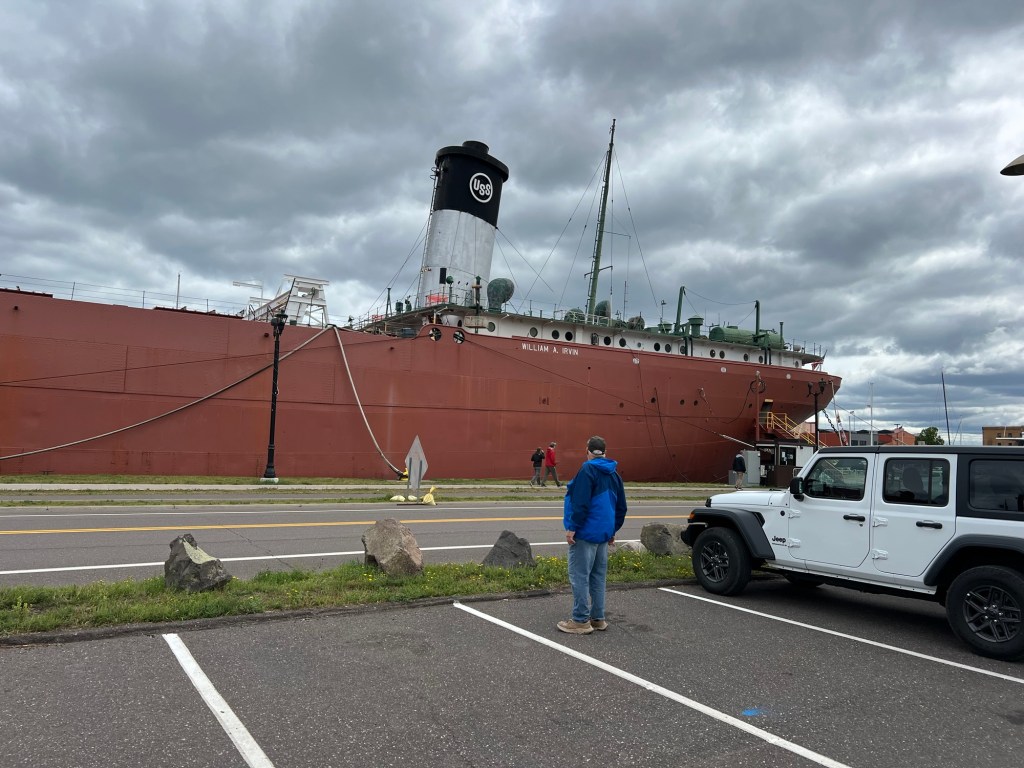
Thursday was our last day in Duluth and it was chilly and drizzly, so it seemed like a good day to tour the William A. Irvin, a retired bulk carrier owned by the city and berthed just across the canal from our parking lot campground.
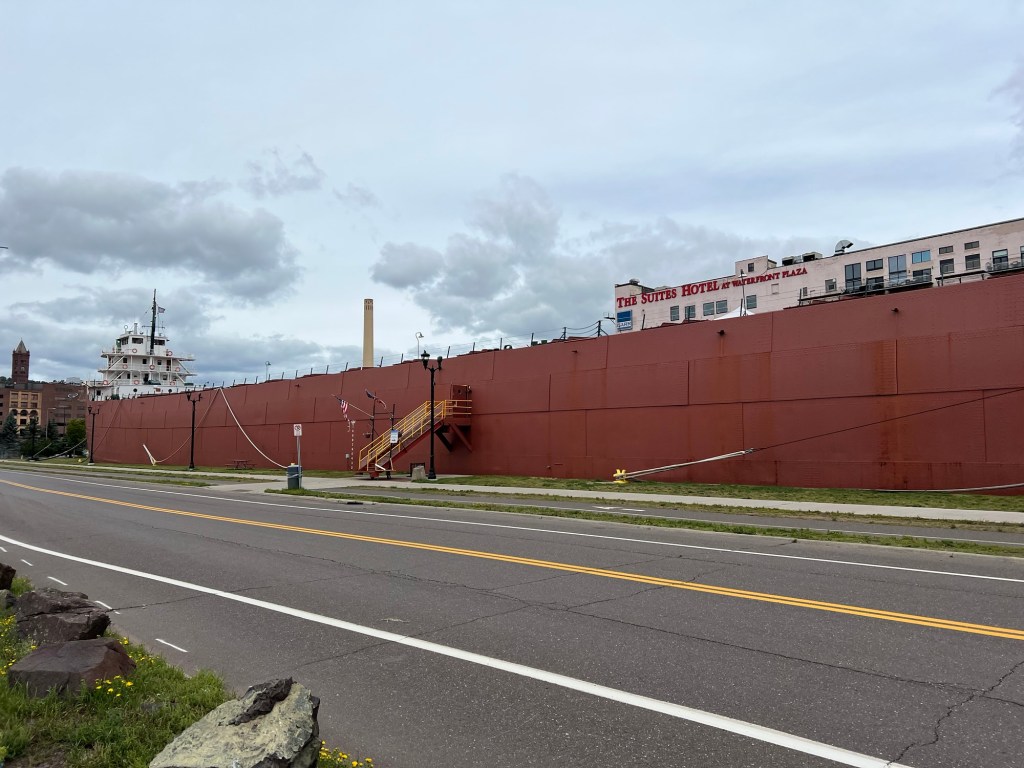
She was built for US Steel in 1937 and when she was launched in 1938 she was the biggest ship on the Great Lakes at 610 feet long and 60 feet wide. She was named for the president of US Steel at the time, William Irvin.
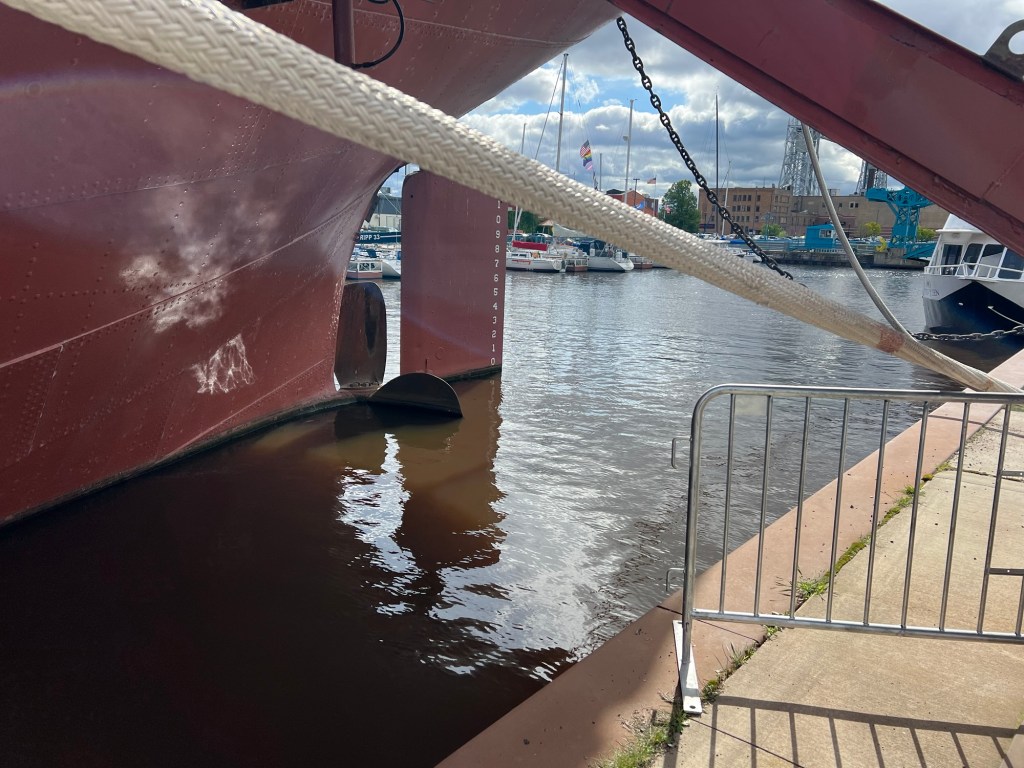
Her last voyage was in December of 1978, hauling a small load of coal from Sandusky to Duluth. Although many of her crew expected to be back aboard in the spring, the move in December from the unloading dock to the Fraser Shipyards where she was prepared for winter was the last time this 15’ 6” propeller drove her through the water. (In use there would be enough weight in her hold to sink the hull to the point where the entire propeller was underwater.)
Since then when she has been moved in the harbor tugboats have moved her. And recently when she was taken to a shipyard to have her hull refurbished, front end loaders inched her out of her slip, as there is only 15 inches to spare in the gate through which she must exit. The docent said she made it out and back without a scratch. Good thing they have tugs and front end loaders, as this huge ship has just a single screw and no thrusters!
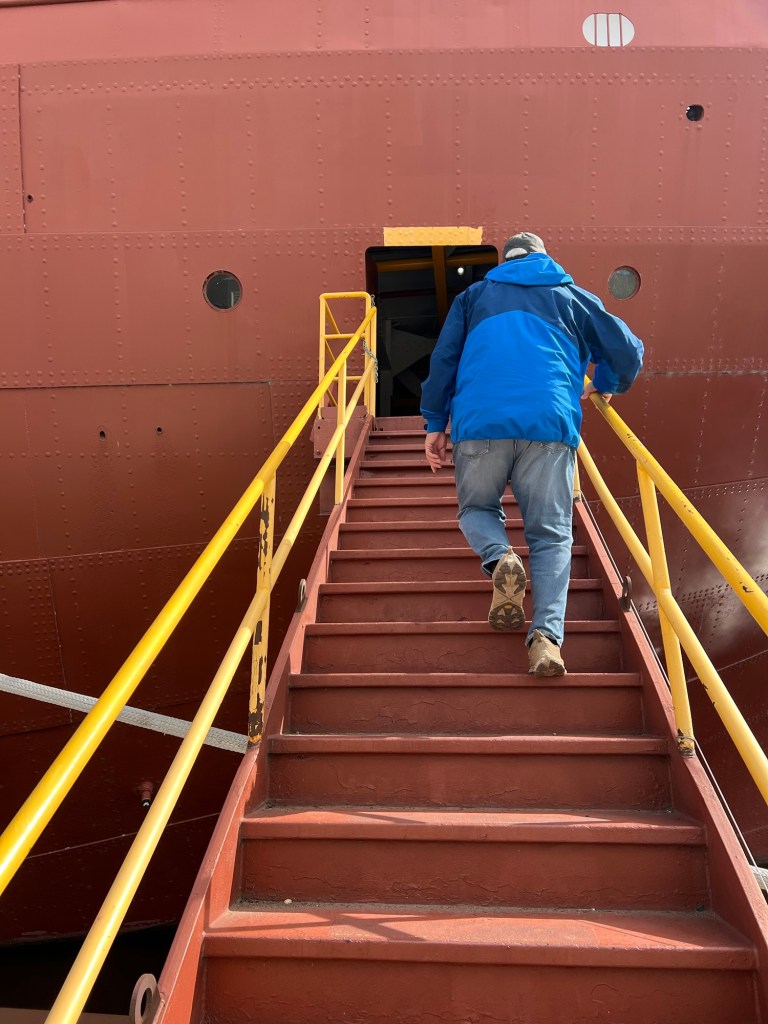
Although she is massive, she was retired when USS launched its first 1,000 footer. And so she became a tour boat.
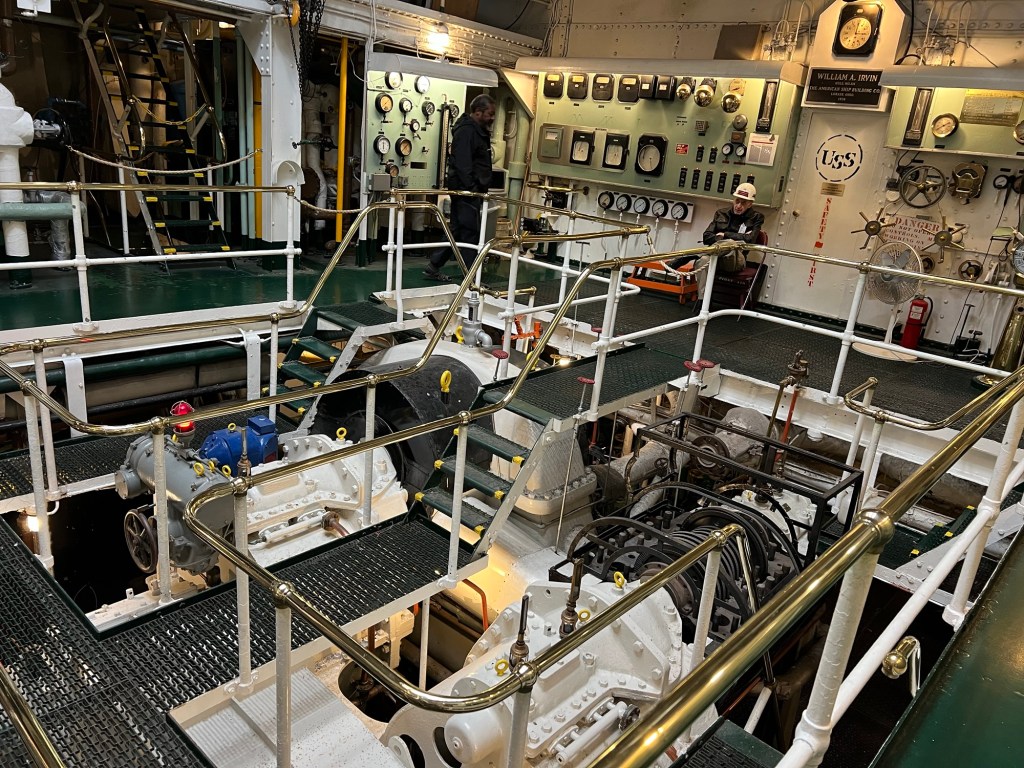
The tour starts near the stern in the engine room, where you can see her two coal fired steam engines. They burned 1.2 tons of coal per hour and generated 2,000 horsepower.
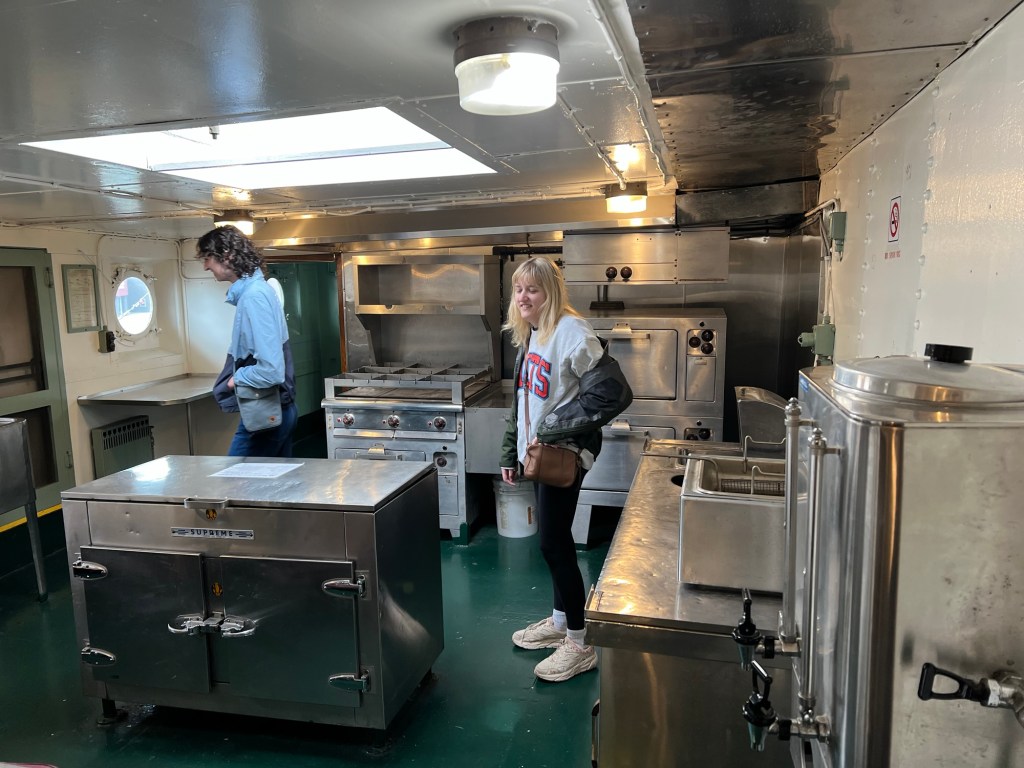
Also in the stern are the main galley,
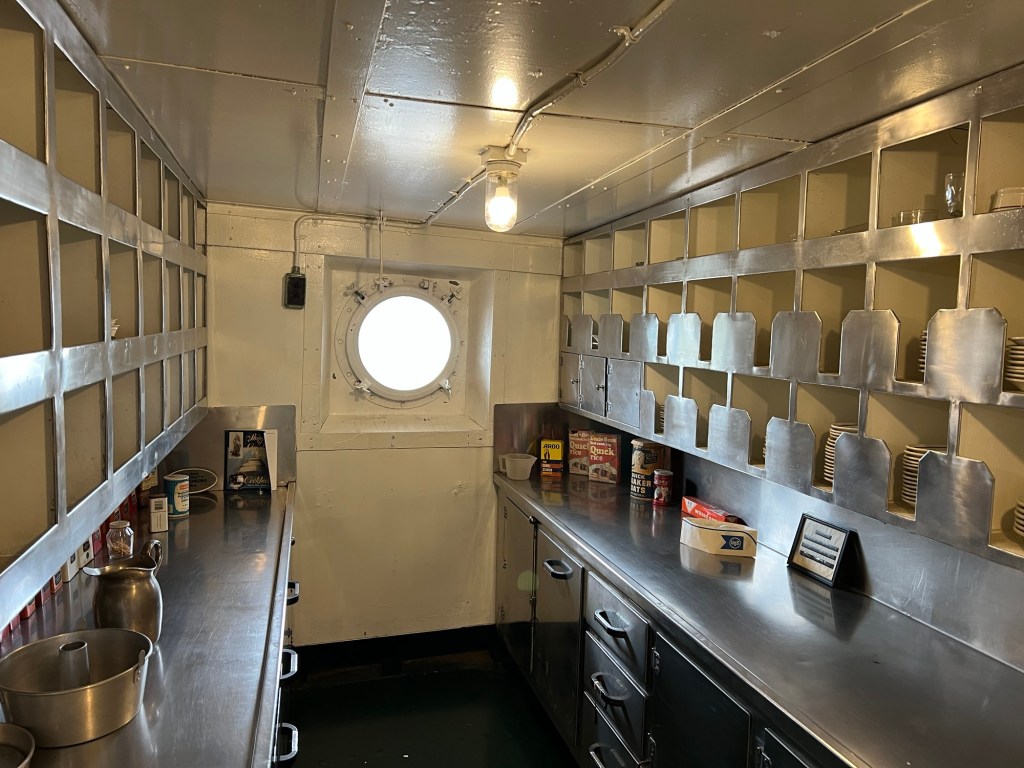
and the pantry.
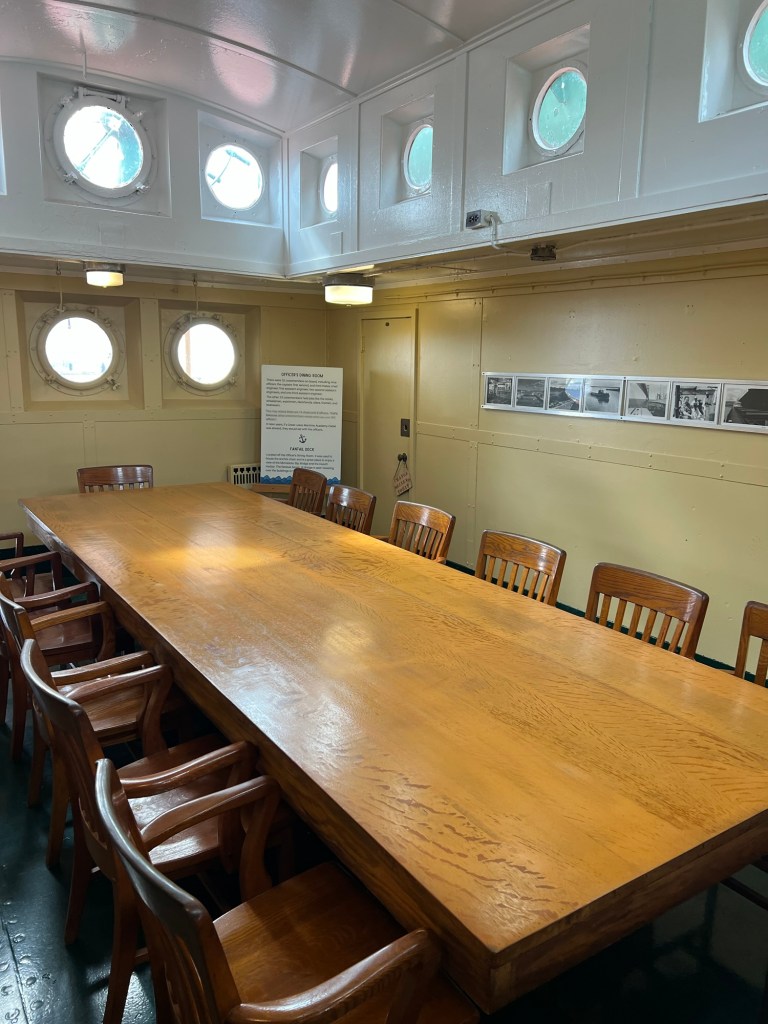
The Irvin carried 9 officers and 22 crew. This was the officers dining room in the stern.
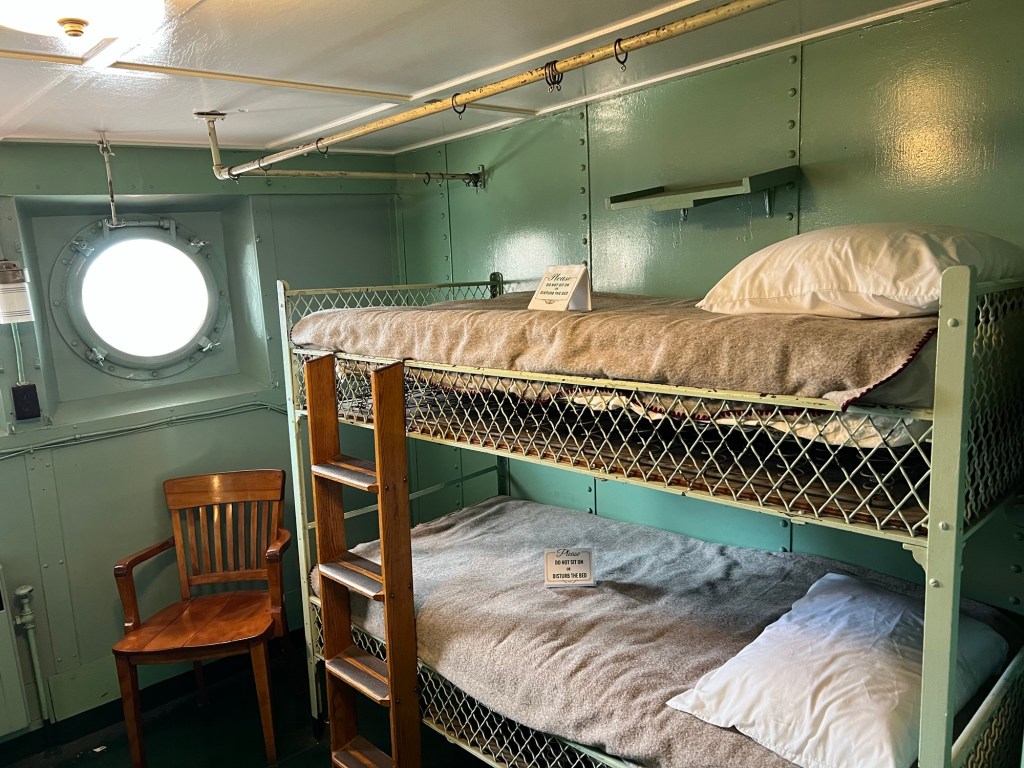
And this was one room of the crew quarters.
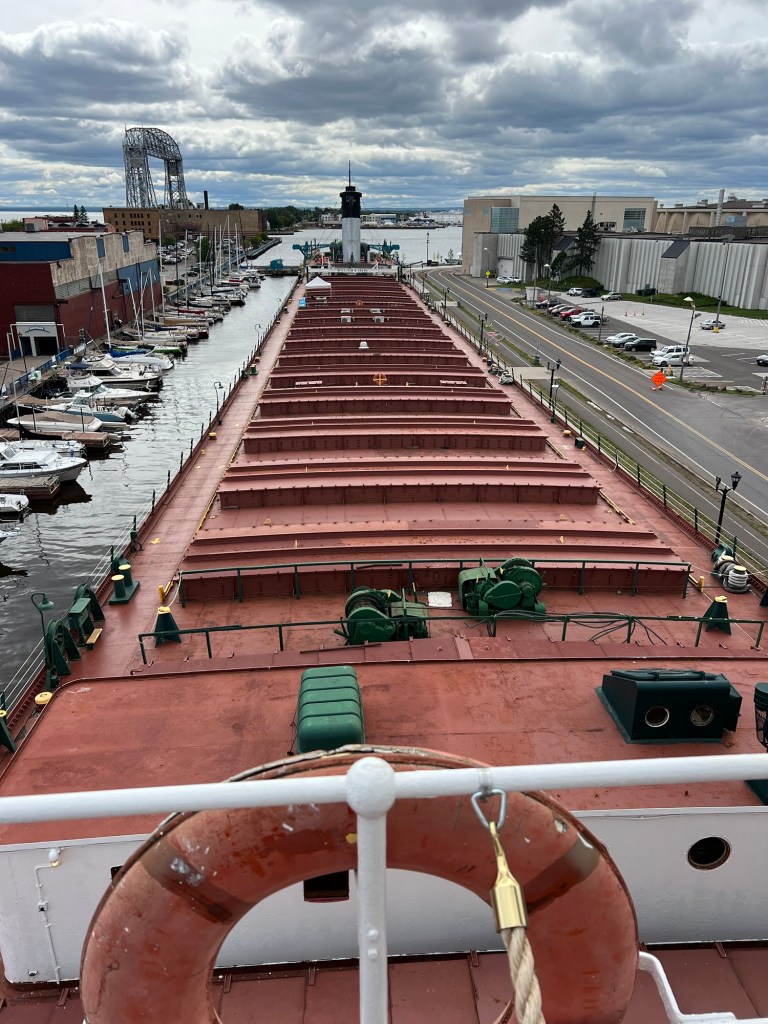
Walking up to the bow and looking back you really got a sense of the size of this ship. She was the flagship of the USS fleet for many years. She was one of the first ships to be welded, not riveted. She was also one of the first ships to have below deck passages from bow to stern so in bad weather the crew didn’t need to walk on the deck.
In 1940, using the new Hulett cranes on the shore, the William A. Irvin set a record that still stands by unloading 13,856 tons of iron ore in 2 hours and 55 minutes. Ships are now self unloading, which requires no machinery on shore, and they can unload somewhat faster than that record, but no ship without self unloading has ever beat her record.
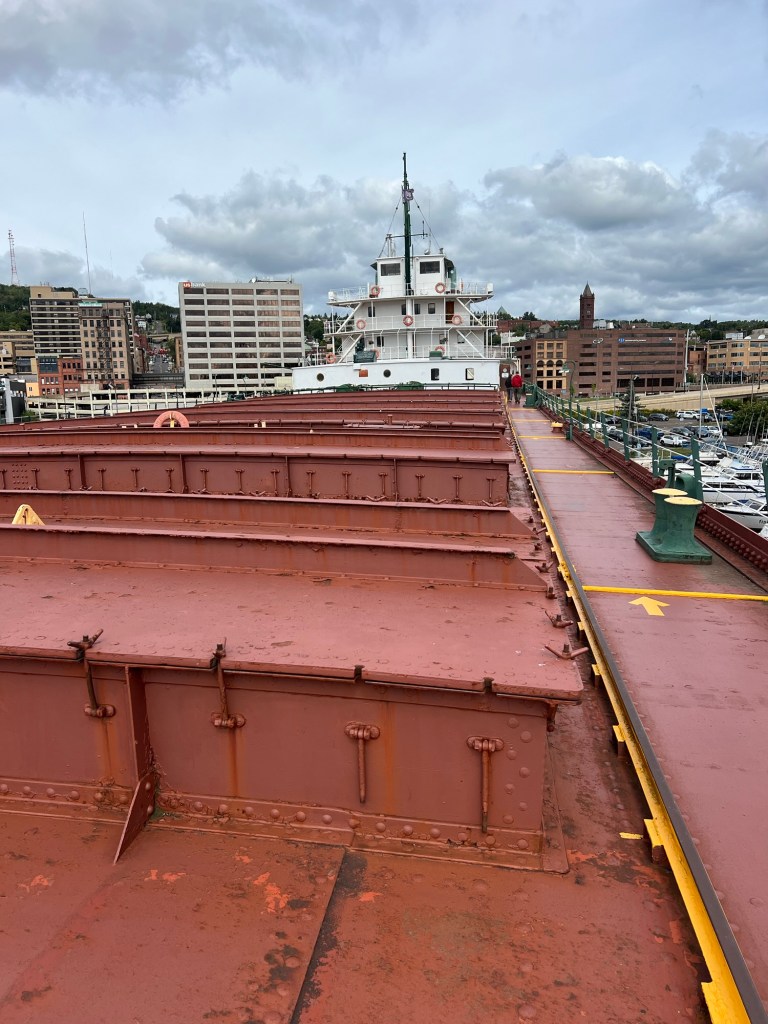
The Irvin was also unusual in that she had three decks to her bow cabin, not the usual two.
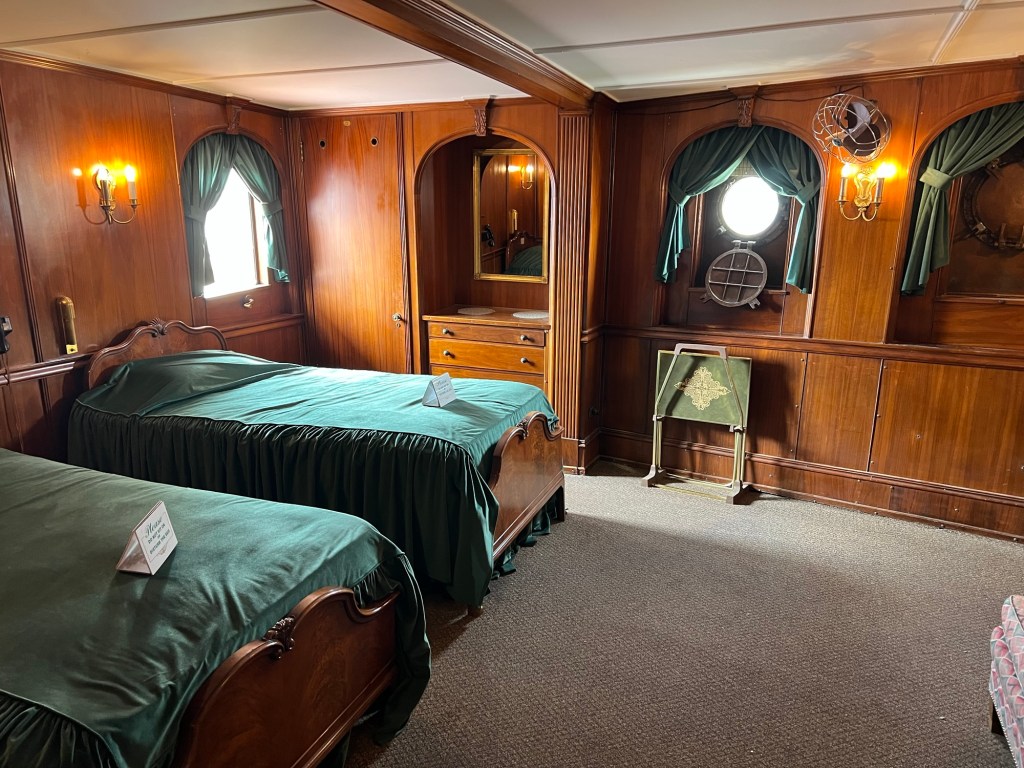
The added middle deck accommodated four guest cabins,
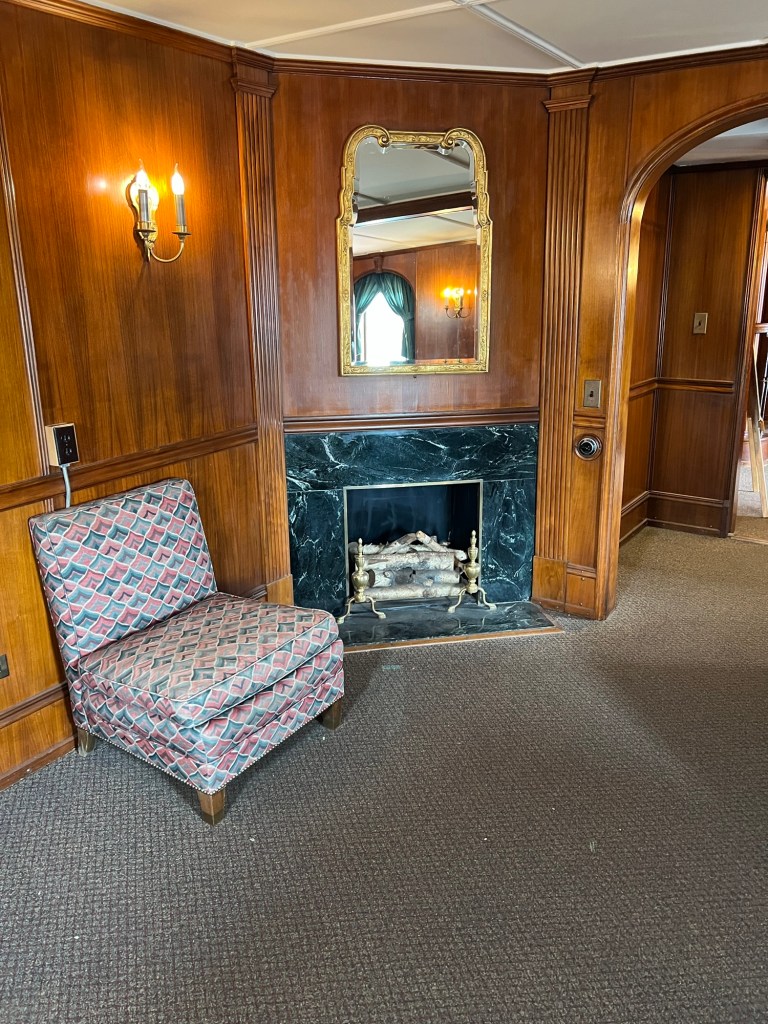
with electric fireplaces.
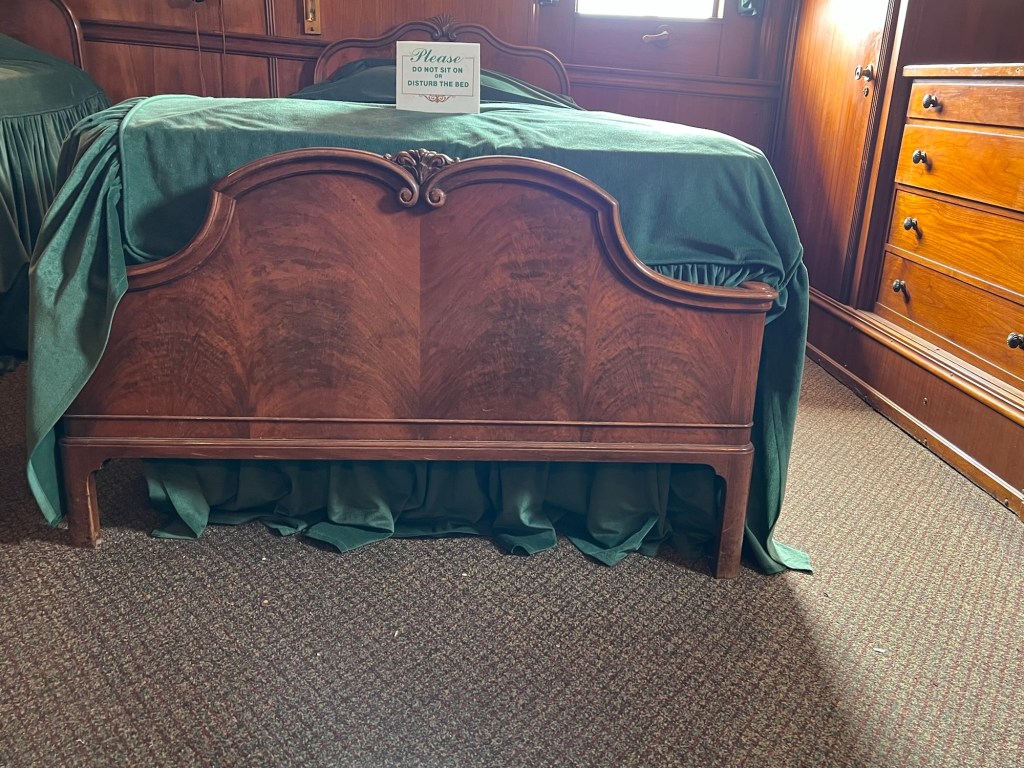
Since the decks are cambered for strength, the legs on the beds were different lengths to fit the camber.
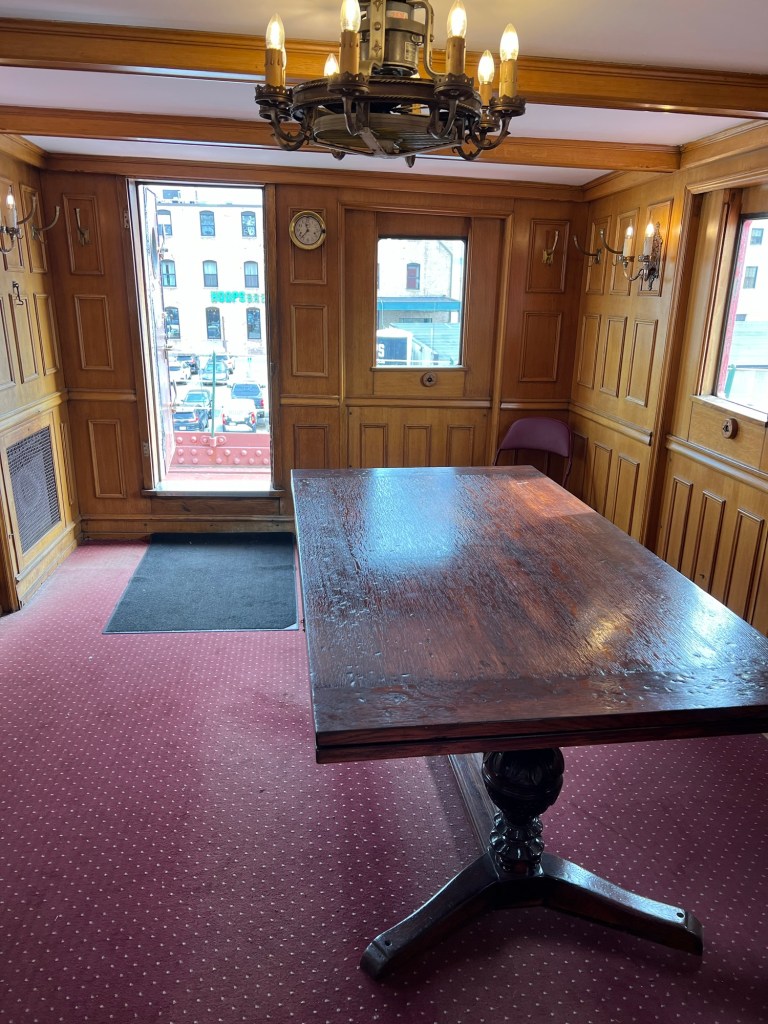
There was a dining room…
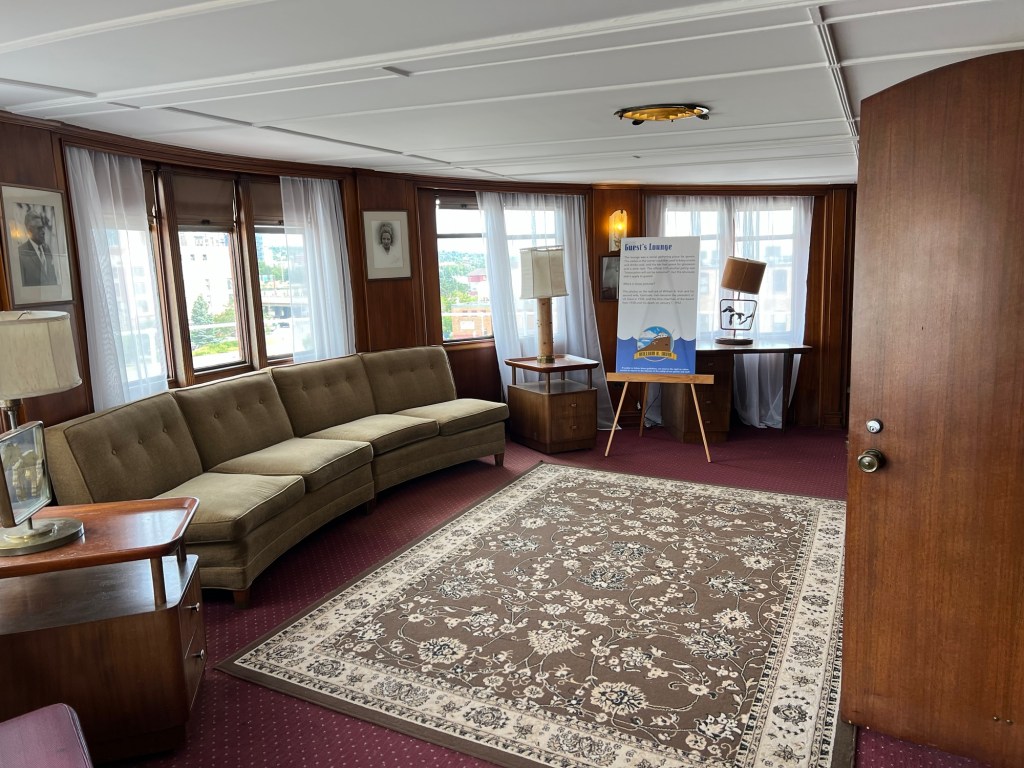
and a lounge.
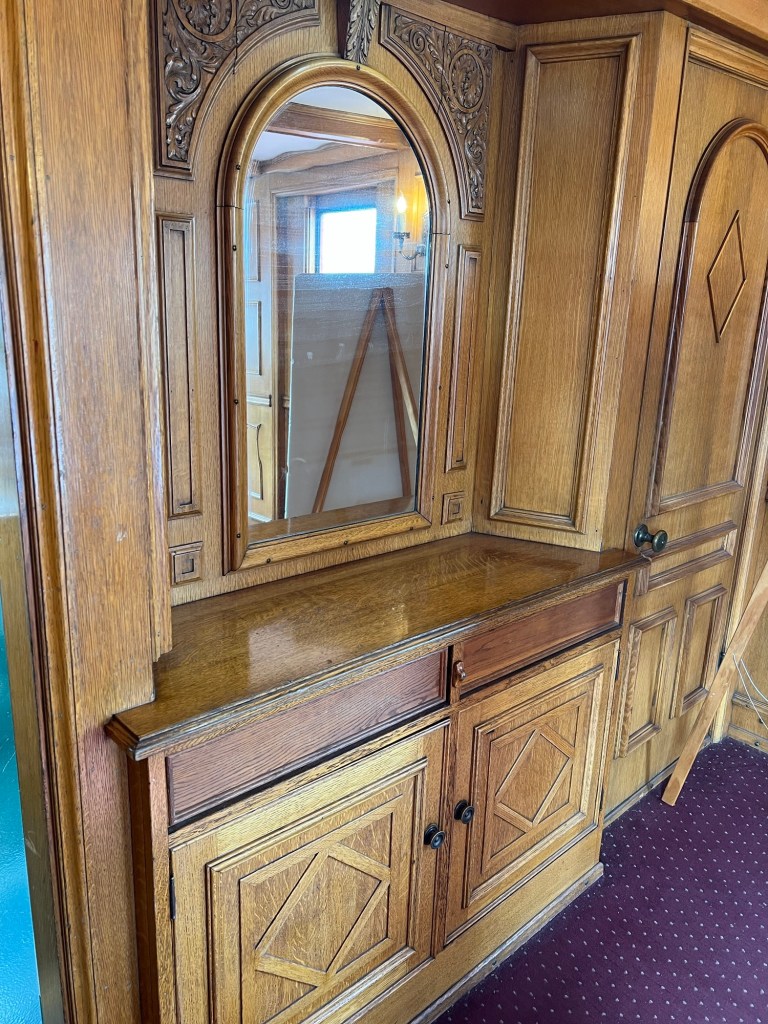
It was all done in oak and walnut veneer.
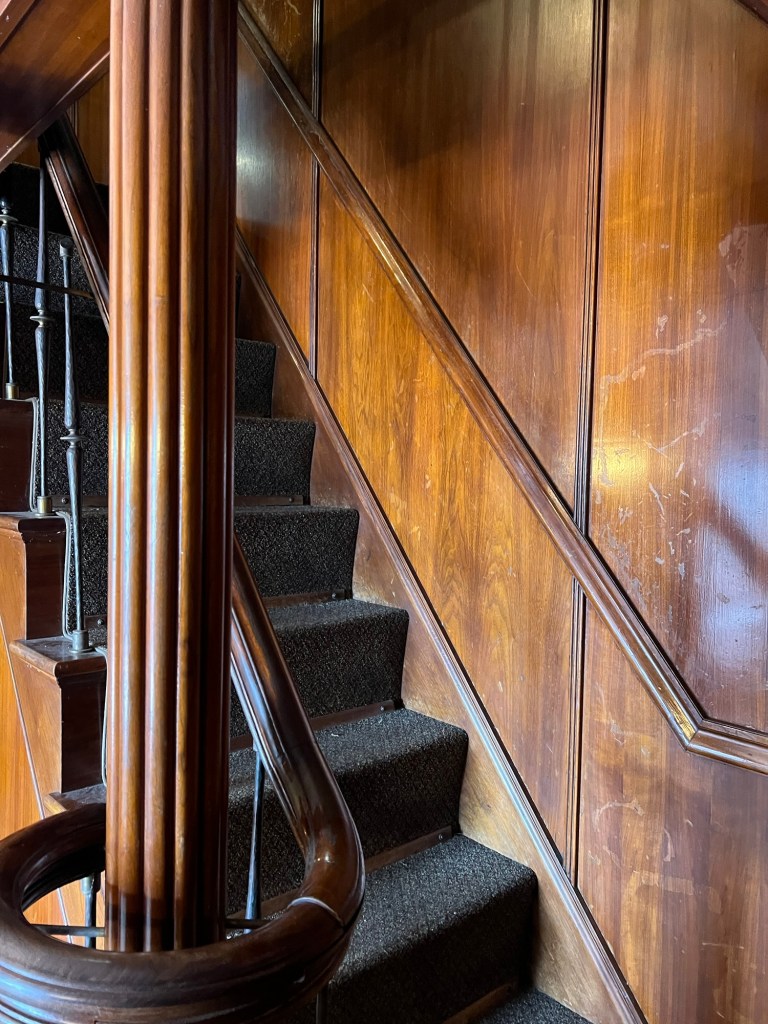
Going up to the top deck…
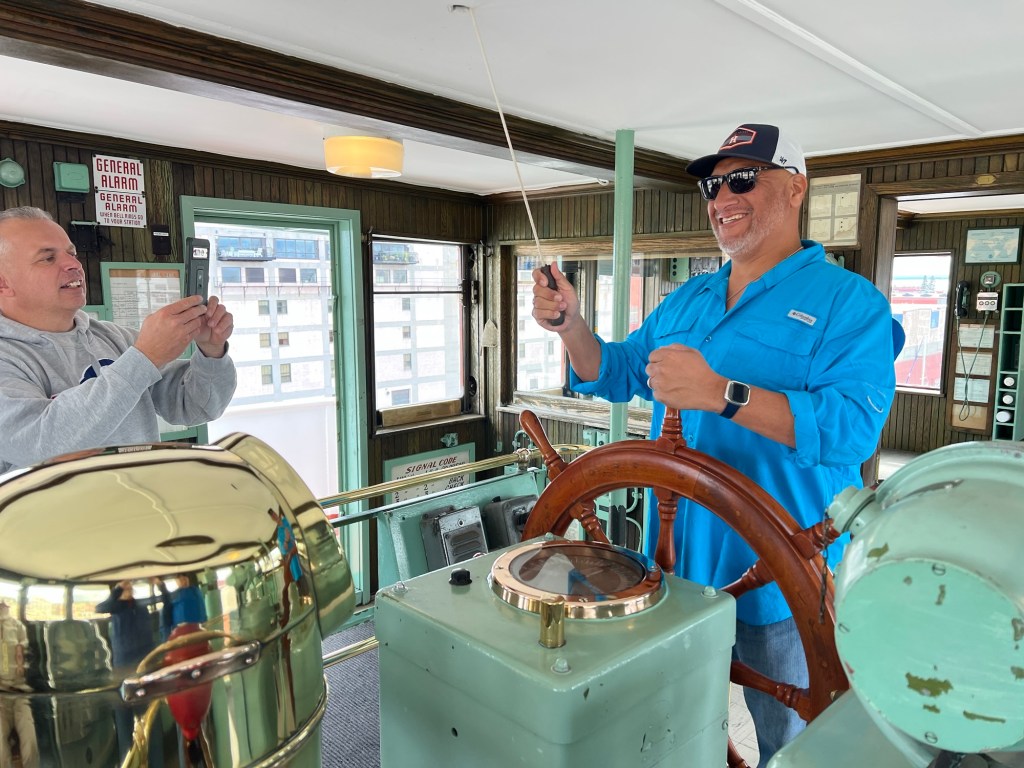
you find the wheelhouse. There were four retired navy men who were visiting and obviously enjoying the nostalgia. The docent explained that since this wasn’t a navy ship it was a wheelhouse, not a bridge. You had a wheelman at the wheel, not a helmsman at the helm.
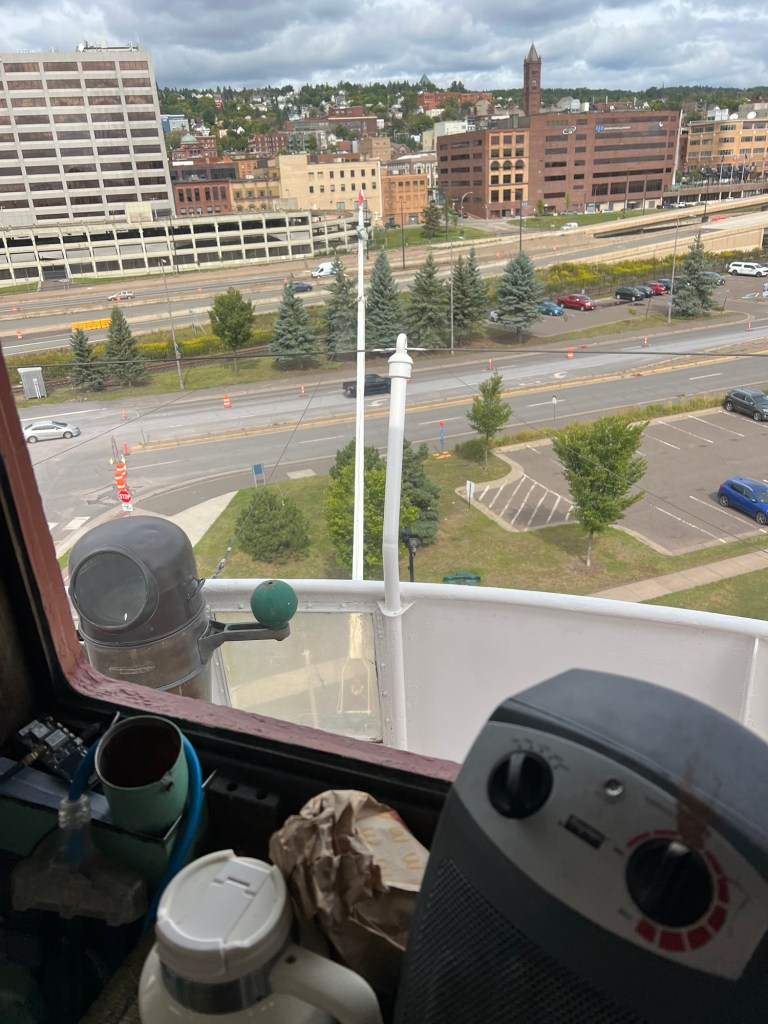
The cabin and its wheelhouse were at the very front of the ship. I asked why now all the lake freighters have the wheelhouse in the back. The docent said that’s because of radar. Without radar you need the captain and the wheelman right at the front so they can see obstacles in the fog. With radar, it’s cheaper to build everything in the stern, where the engine and engine room and most of the crew have to be. And you don’t need to go between the bow and the stern anymore.
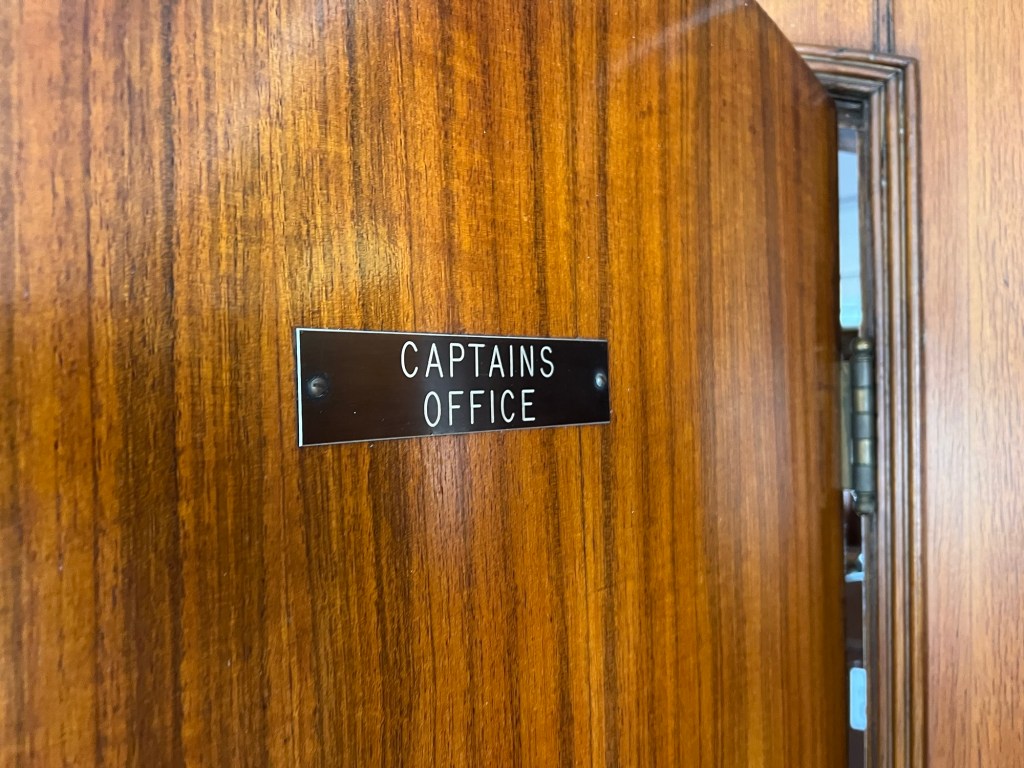
On the Irvin the Captain’s office,
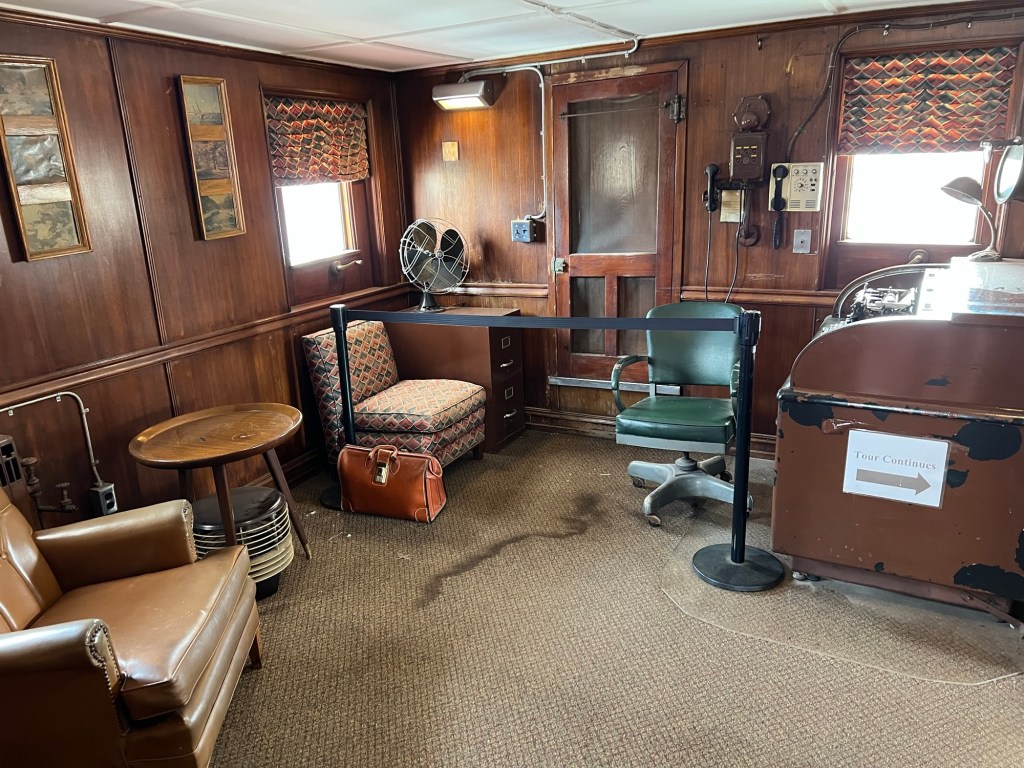
which we walked through,
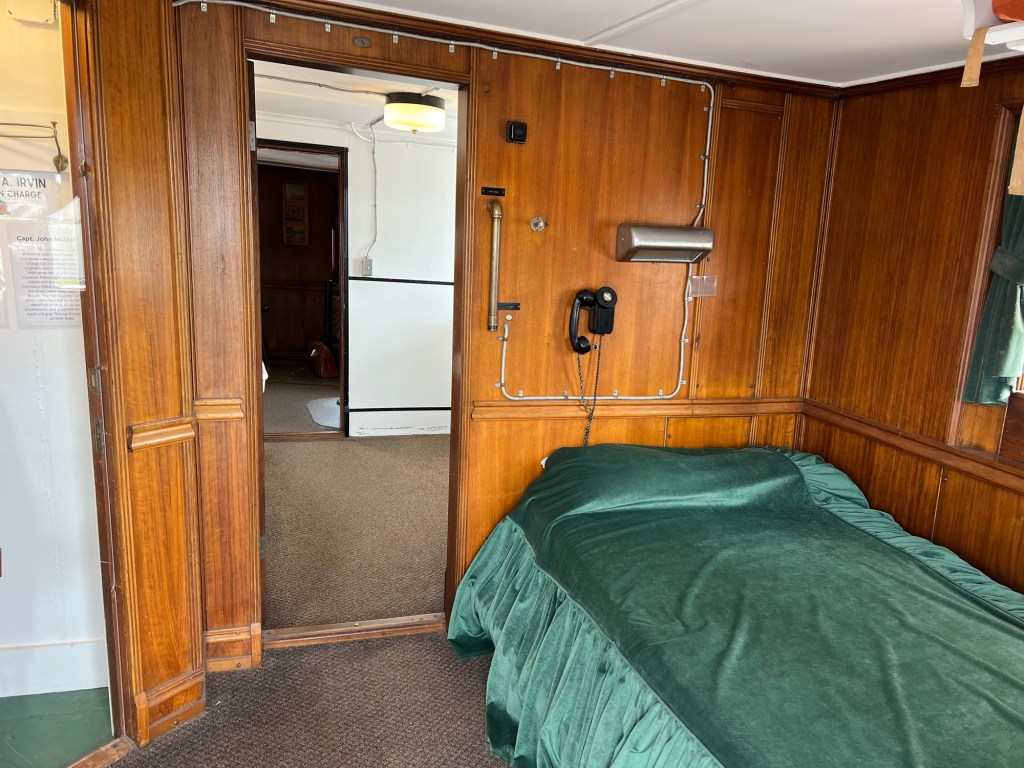
and his quarters are on the top deck of the bow cabin, just behind the wheelhouse. I noticed the phone on the wall behind his bed so he can always be reached at a moment’s notice.
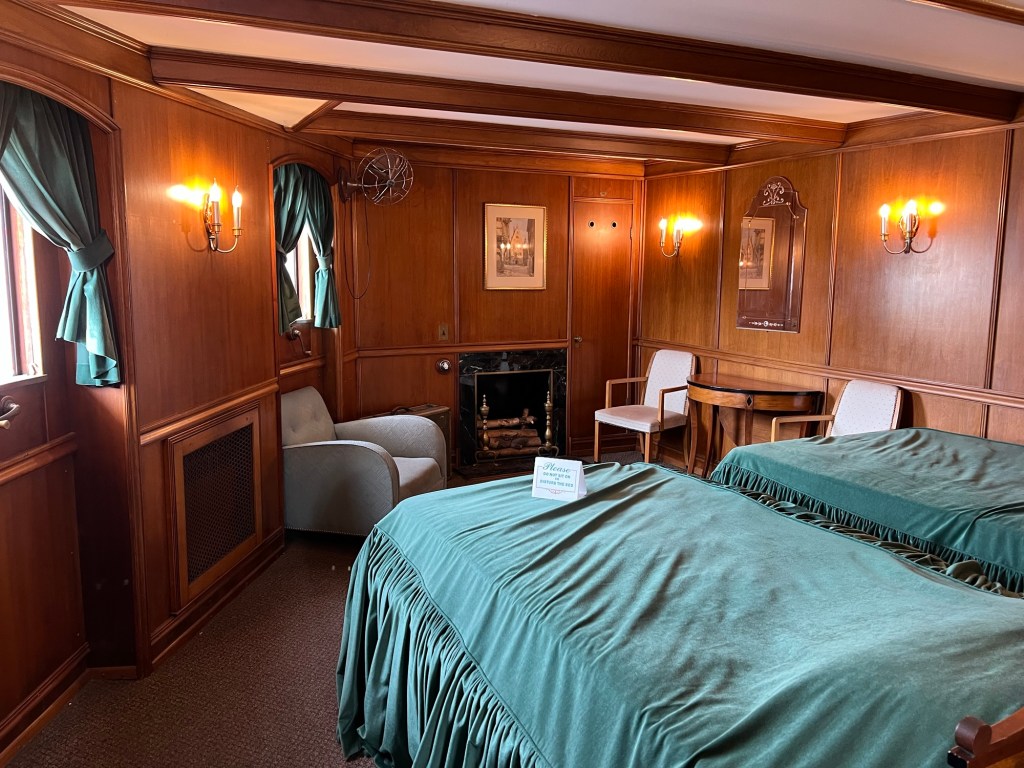
That was a fun tour, and with accommodations like this I would have loved being a guest back when she sailed!


