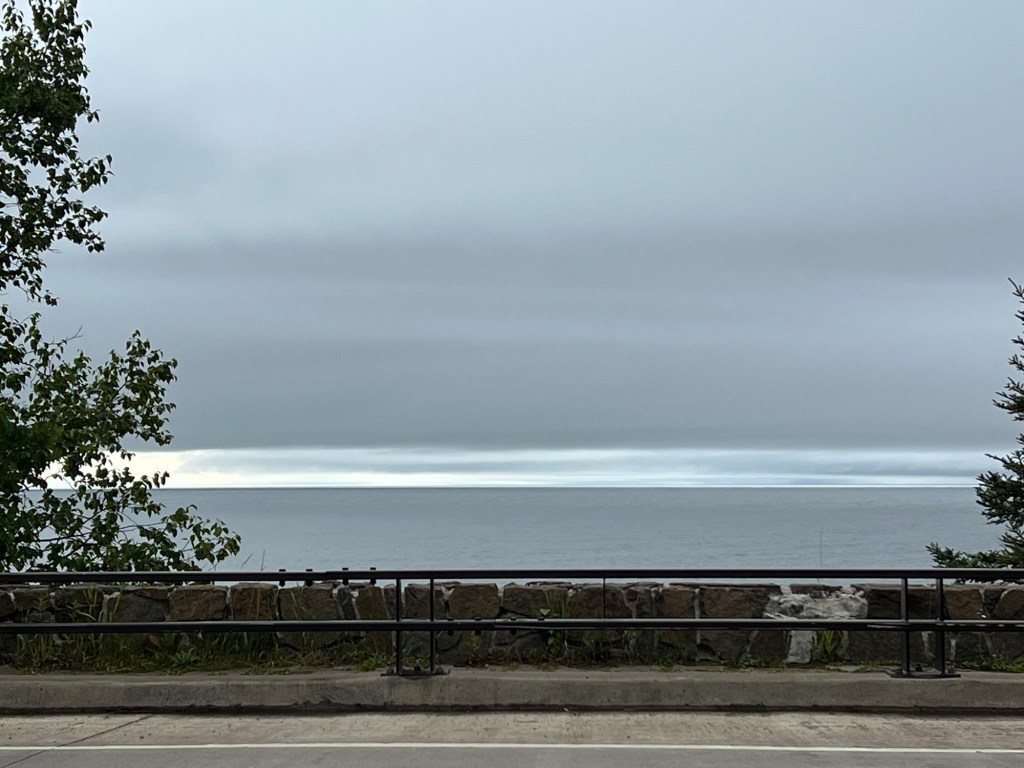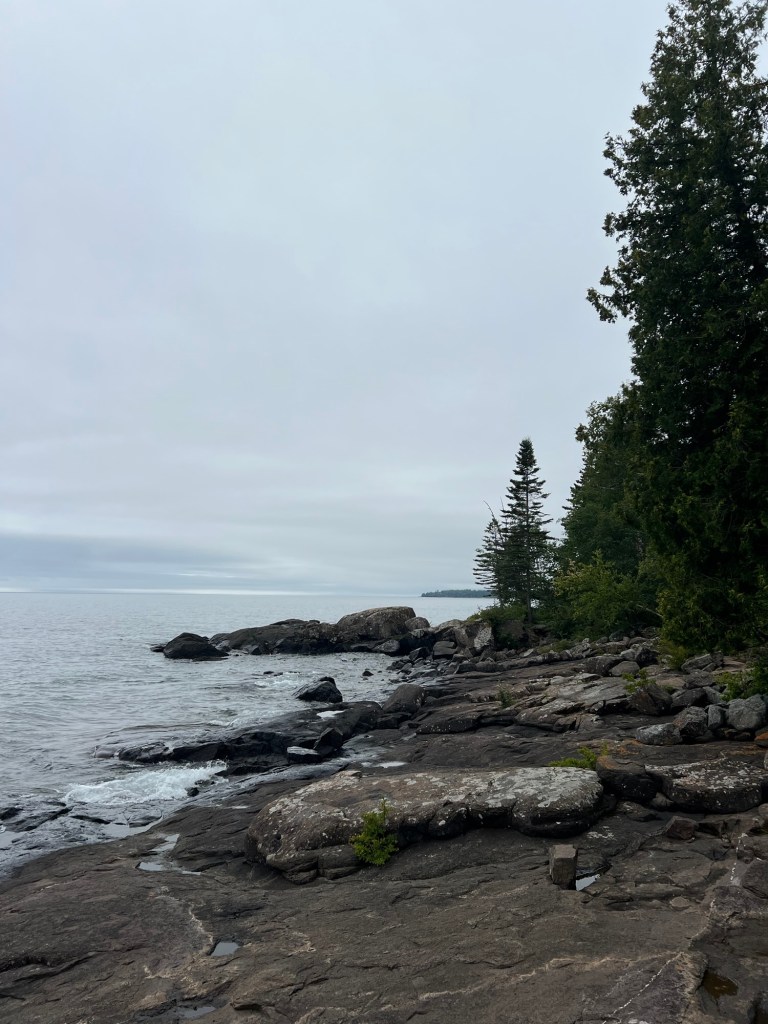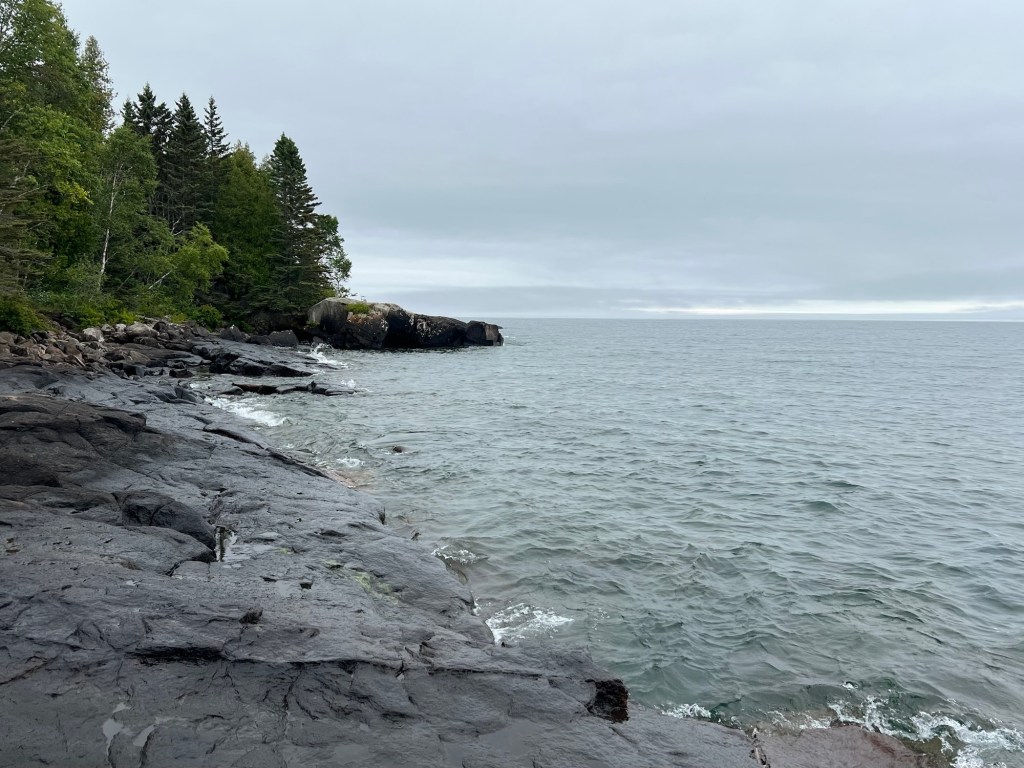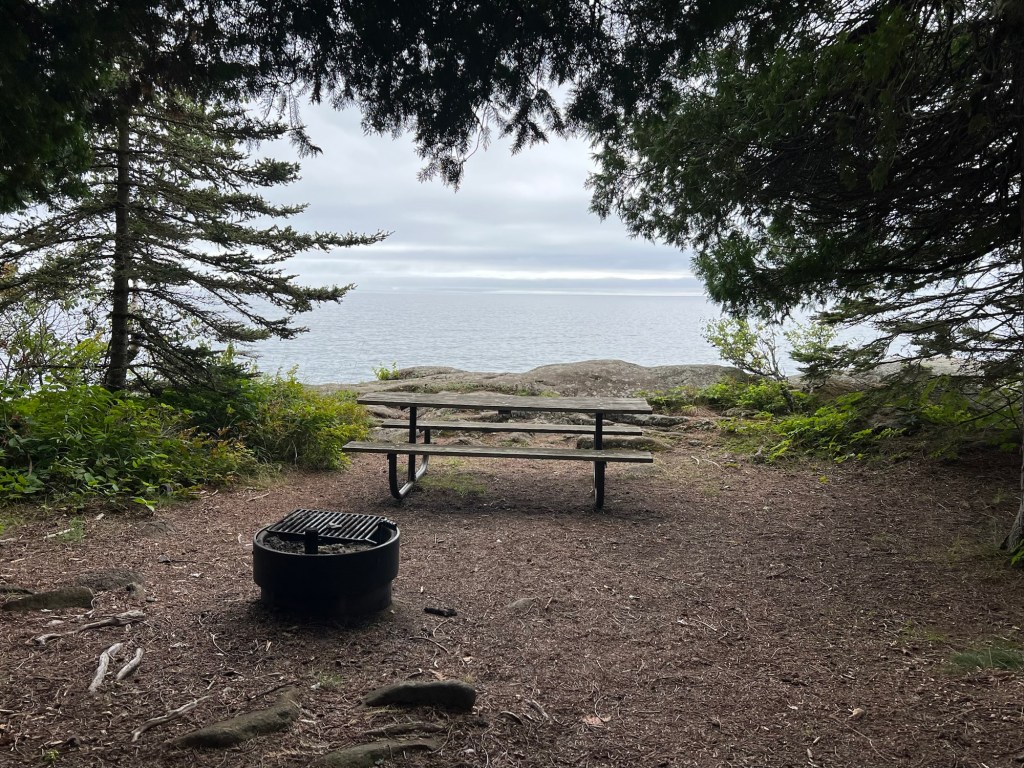
Duluth and Superior

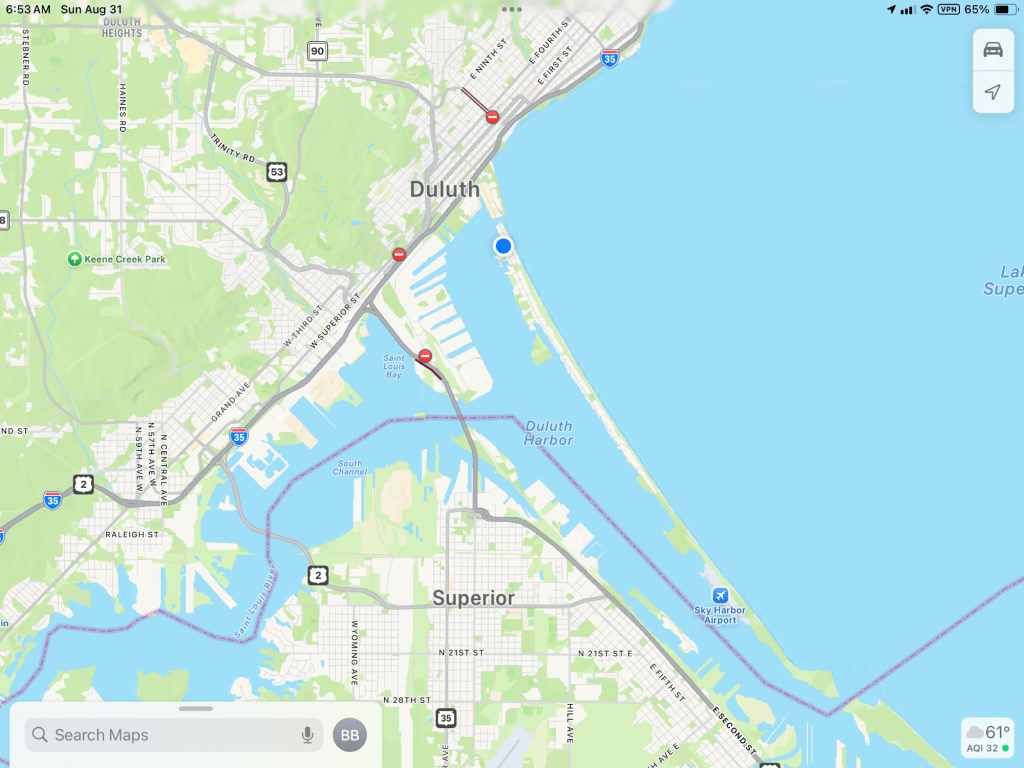
There are two cities here, Duluth, MN, along the side of this ridge,
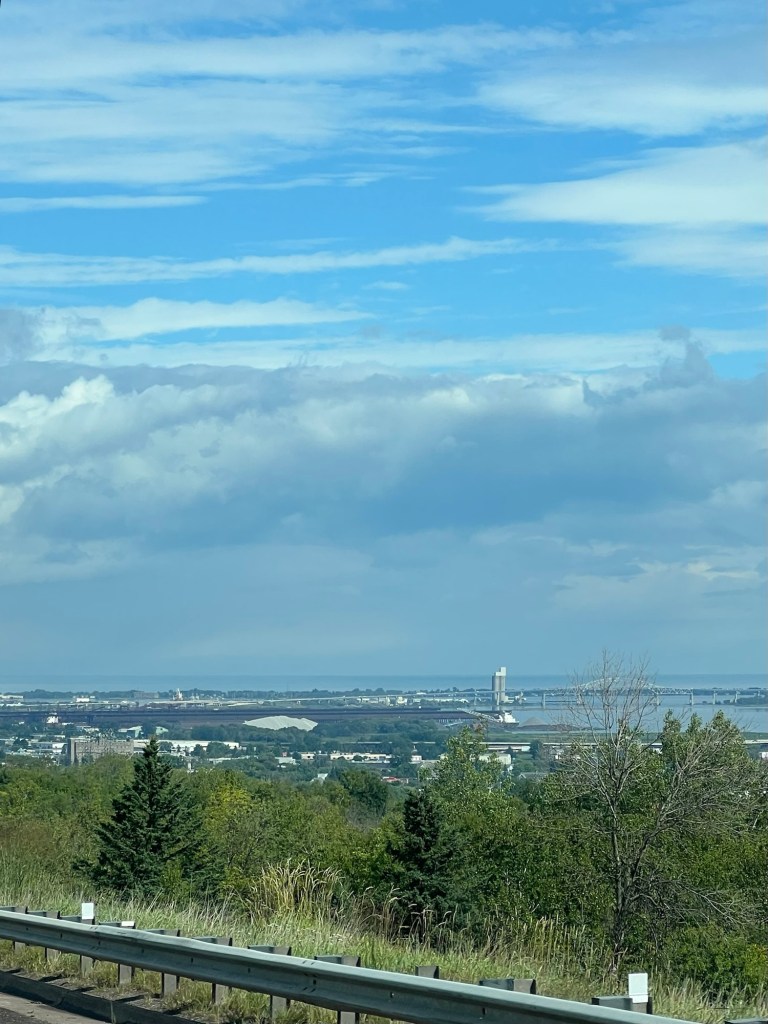
and Superior, WI, which occupies much flatter land to the east.
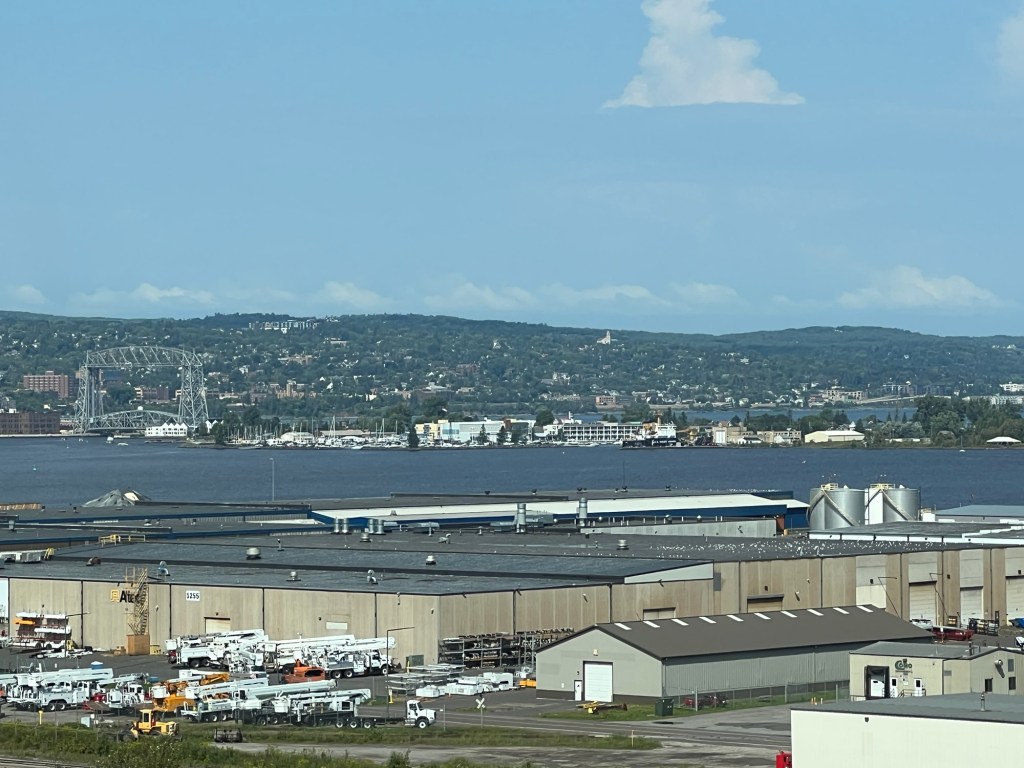
They share this huge harbor,
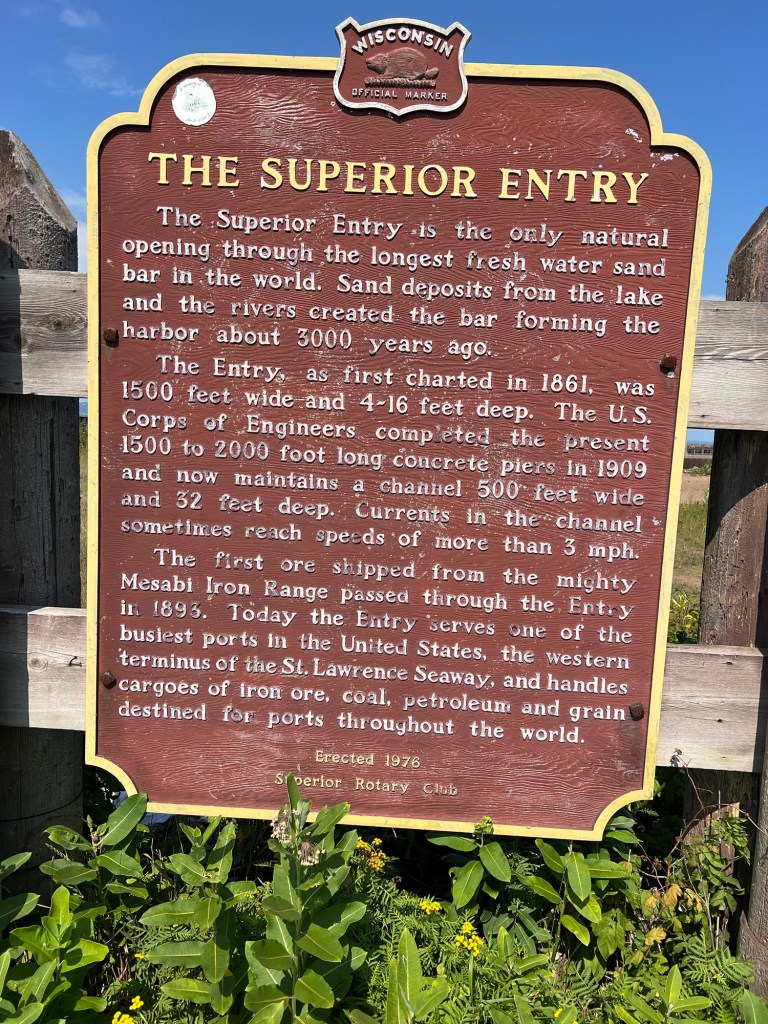
which is formed by the longest fresh water sand bar in the world. We are staying on the western end of the bar, Park Point, Duluth. The other day we drove around to see the eastern end, Wisconsin Point.
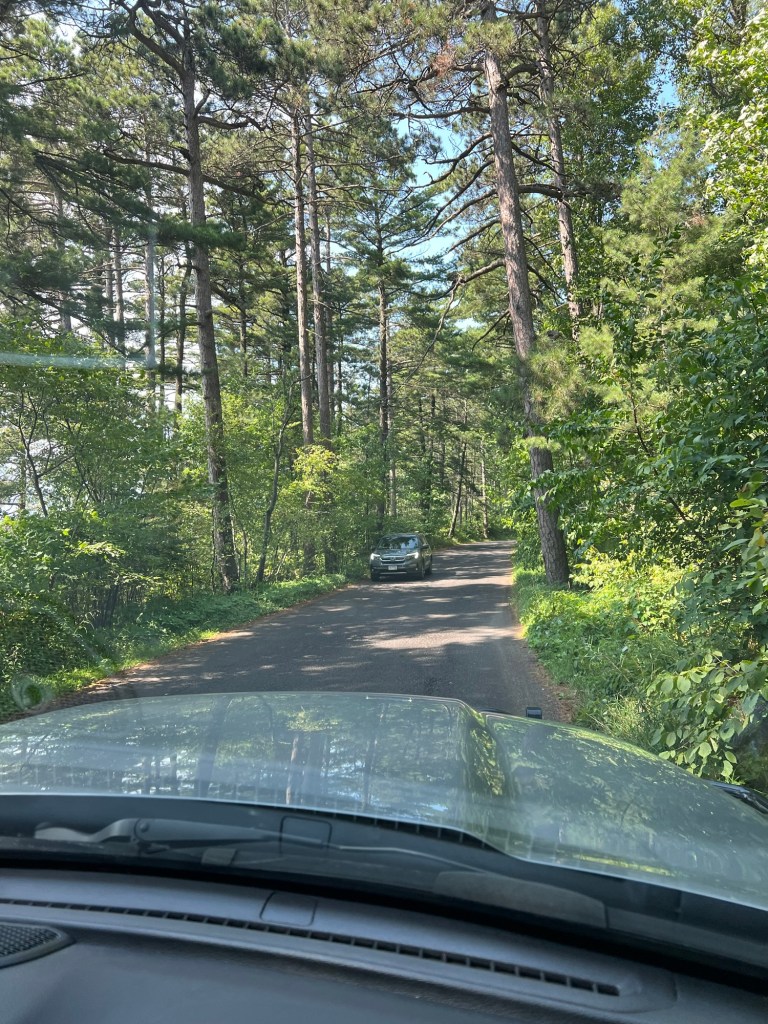
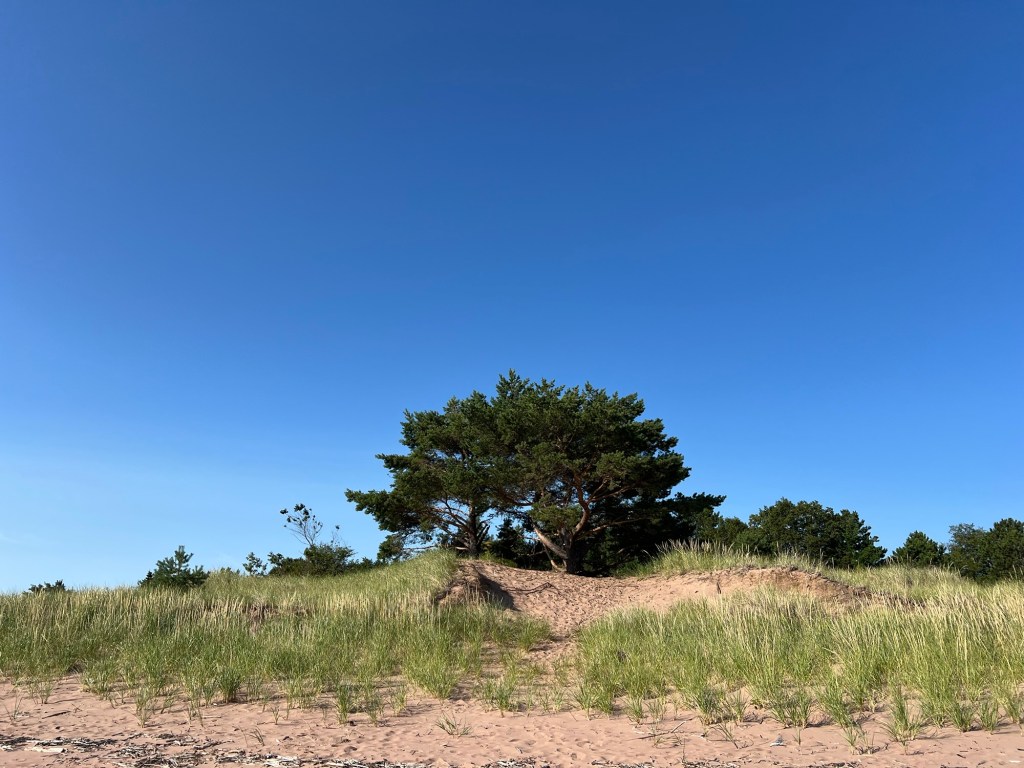
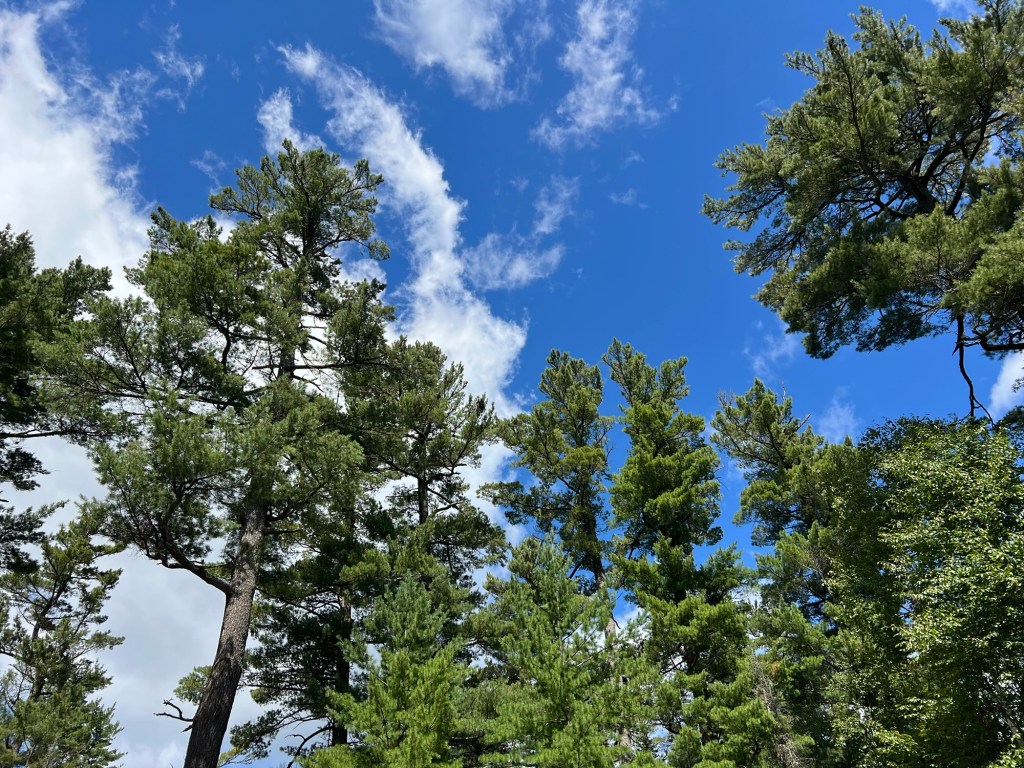
This end has no houses, just beaches, and I was surprised to find a white pine woods.
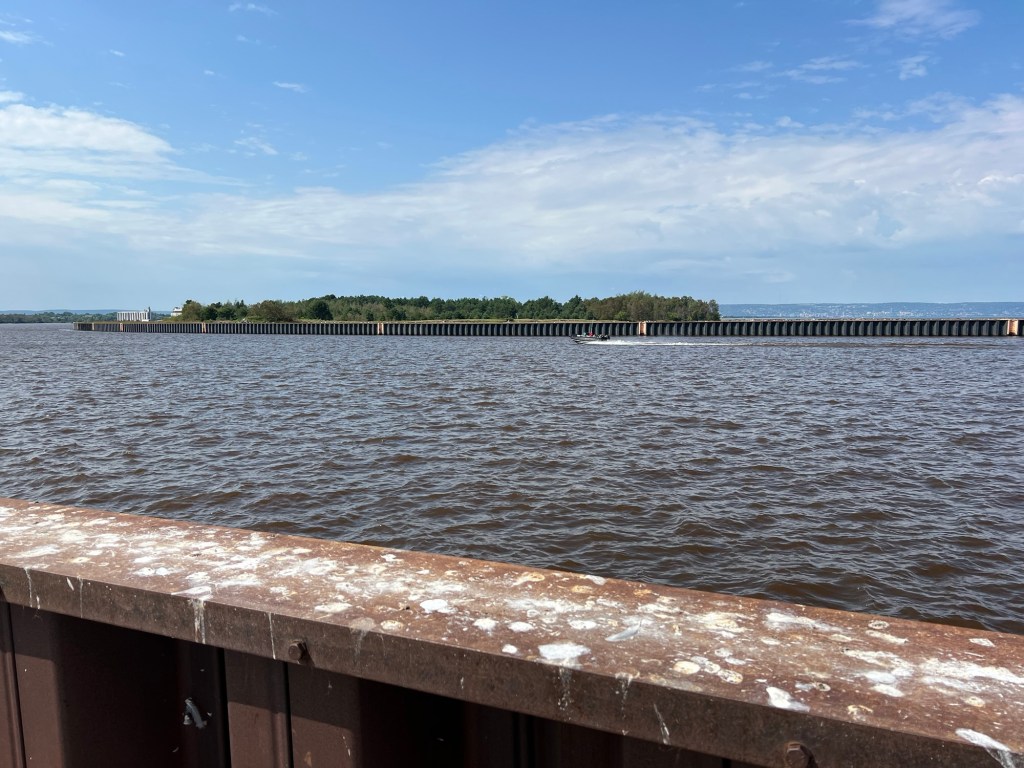
The cut here is unbridged. This is the only natural entrance to the harbor.
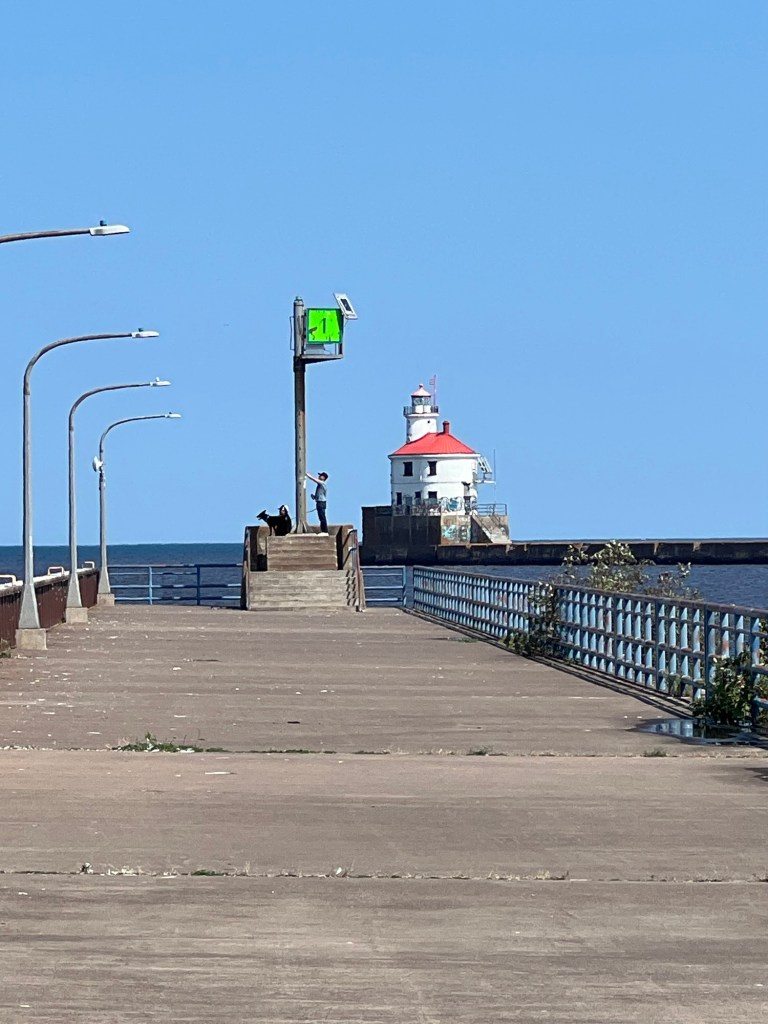
It does have jetties and lights and is navigable. Before the Army Corps of Engineers added concrete piers and jetties the entrance was shallow and difficult to navigate.
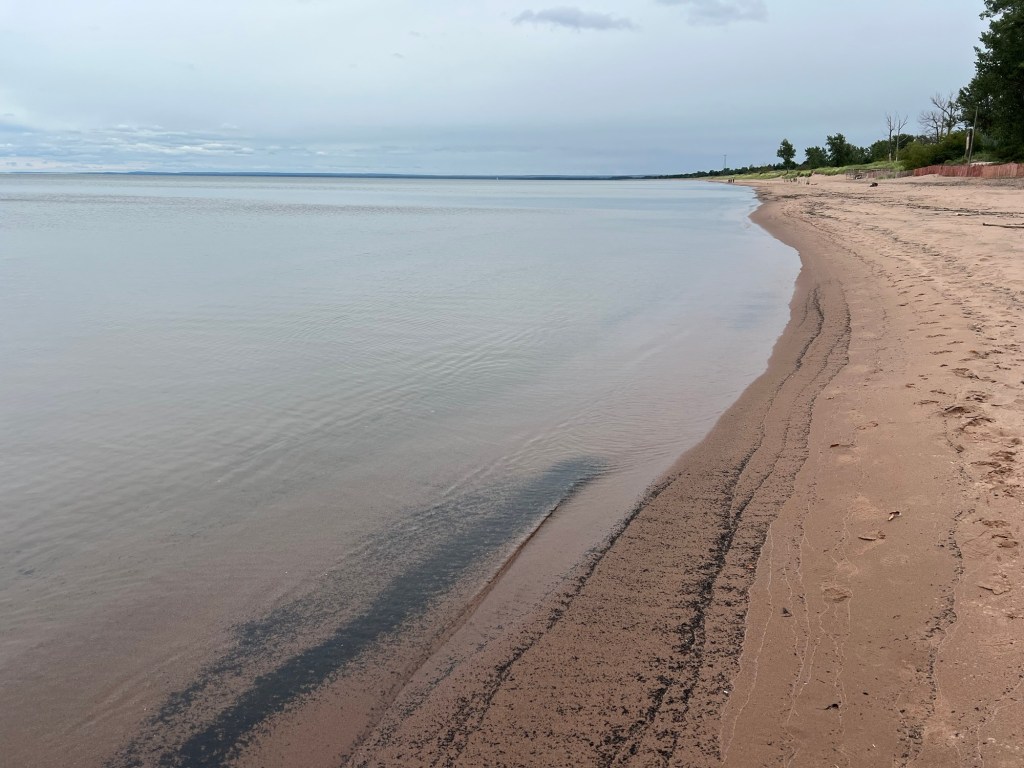
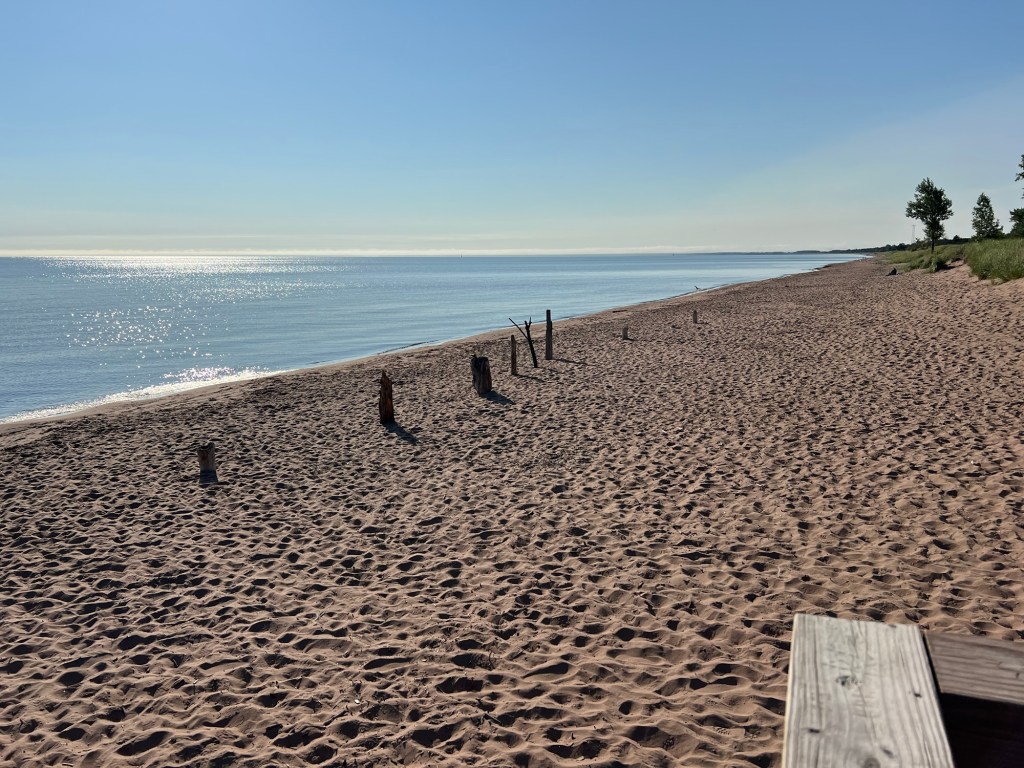
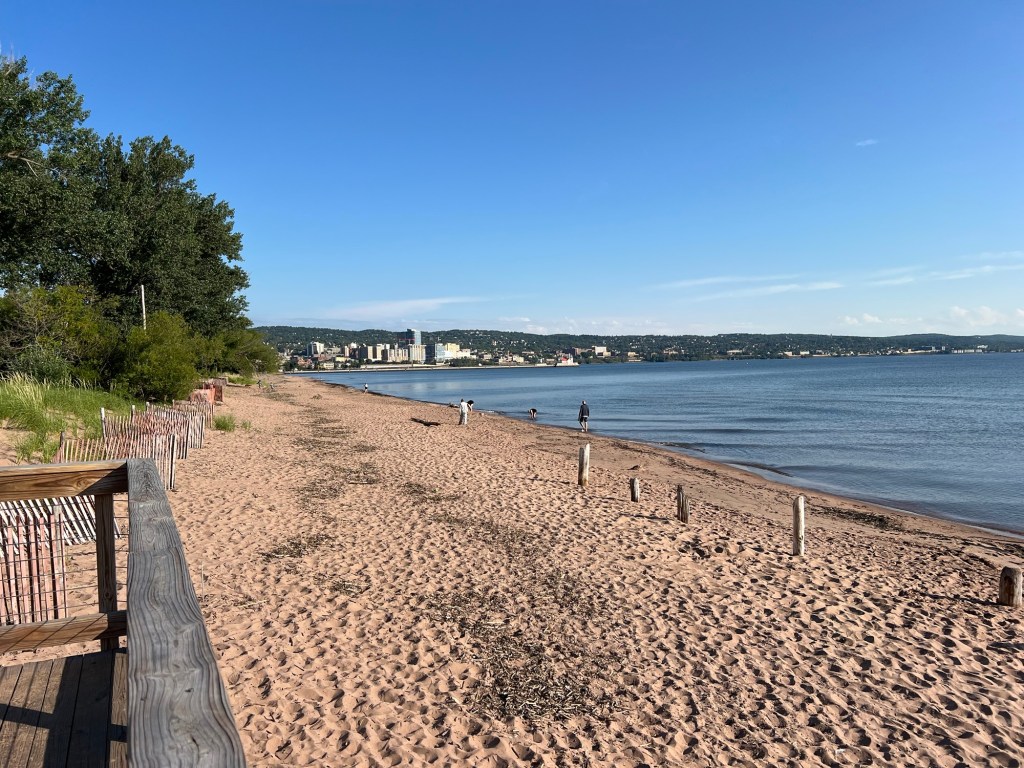
Today I took a picture of the sand bar from our western end of the beach. If you enlarge it and look closely you can see the white lighthouse at the natural opening way out on the arc of the bar.
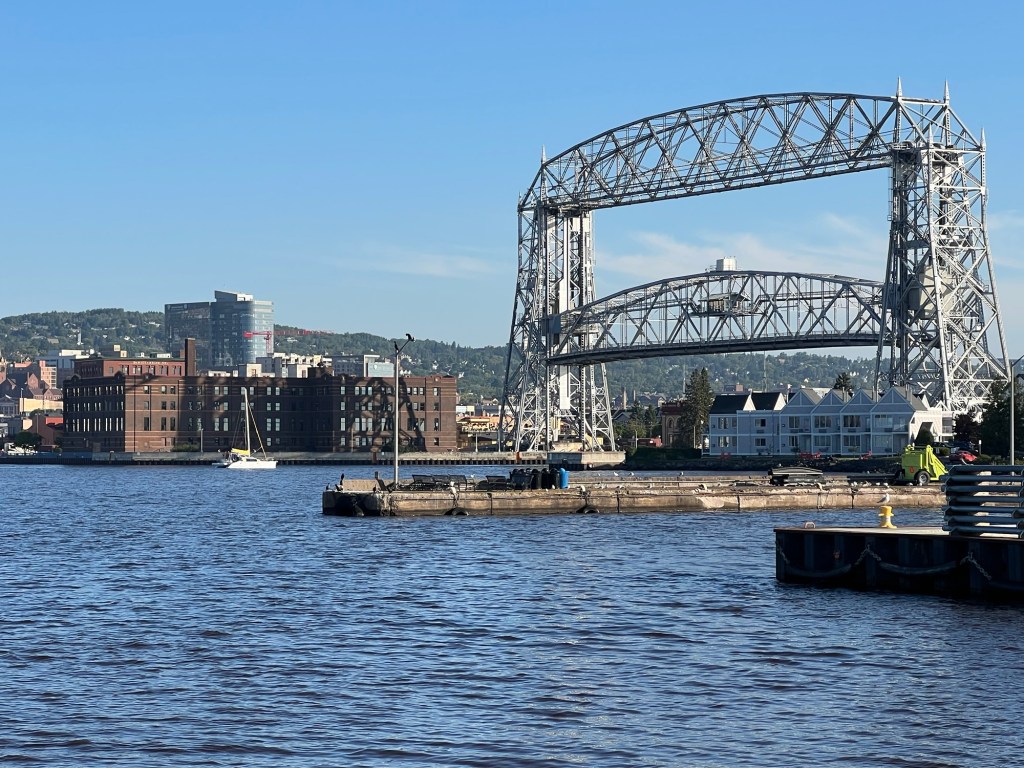
Duluth wanted a canal on their end of the bar, as the natural entrance favored Superior. The canal was dug in the fall of 1870 and finished in the spring of 1871. The Army Corps of Engineers warned that the change in water flow made by the canal might harm the natural entrance. Duluth went ahead and started digging. Superior filed an injunction. The digging moved faster than the courts; the first boat went through the canal on May 6, 1871 and Superior’s suit was heard in June. As things turned out, the canal did not harm the natural entrance, but it did provide a more direct entry.
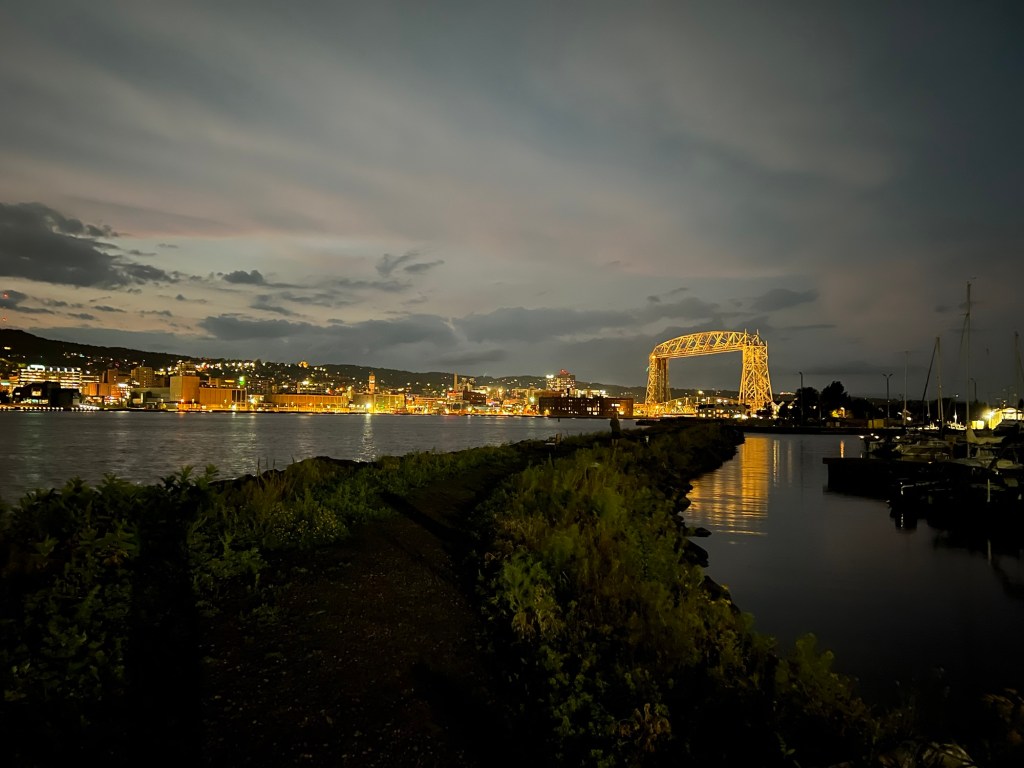
Today, the canal and the Aerial Lift Bridge define Duluth, which has a population of almost 88,000.
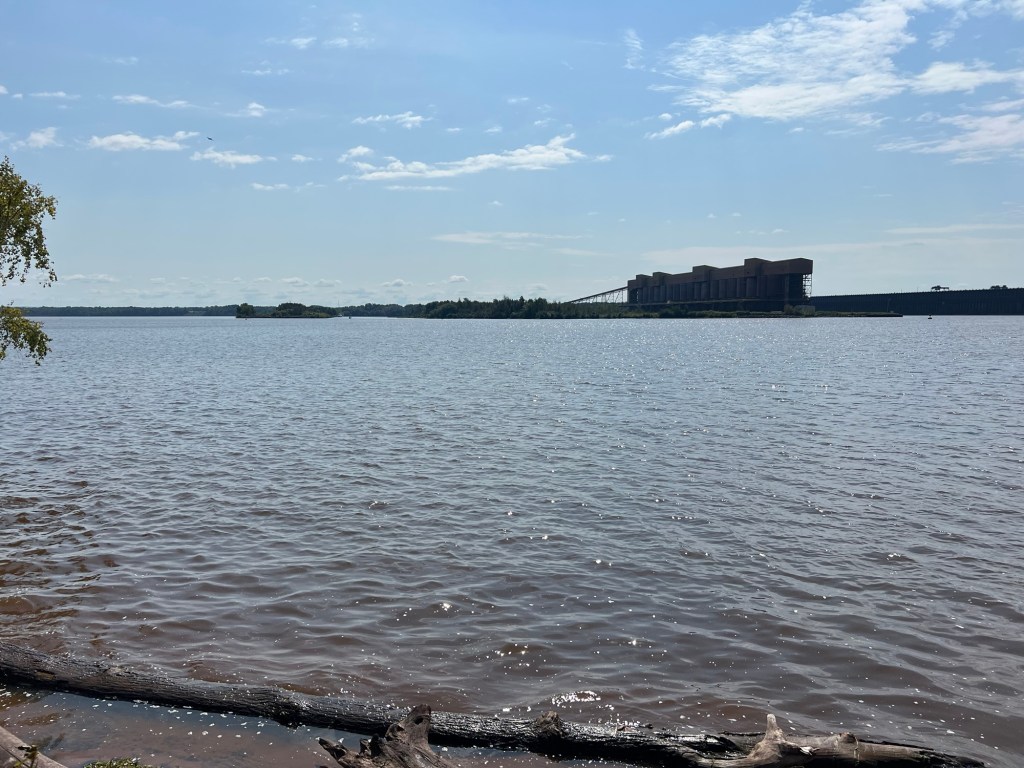
Superior has some incredibly large factories on their side of the harbor, but Duluth snagged the most business and the most growth and Superior’s population is 26,600, less a third of Duluth.
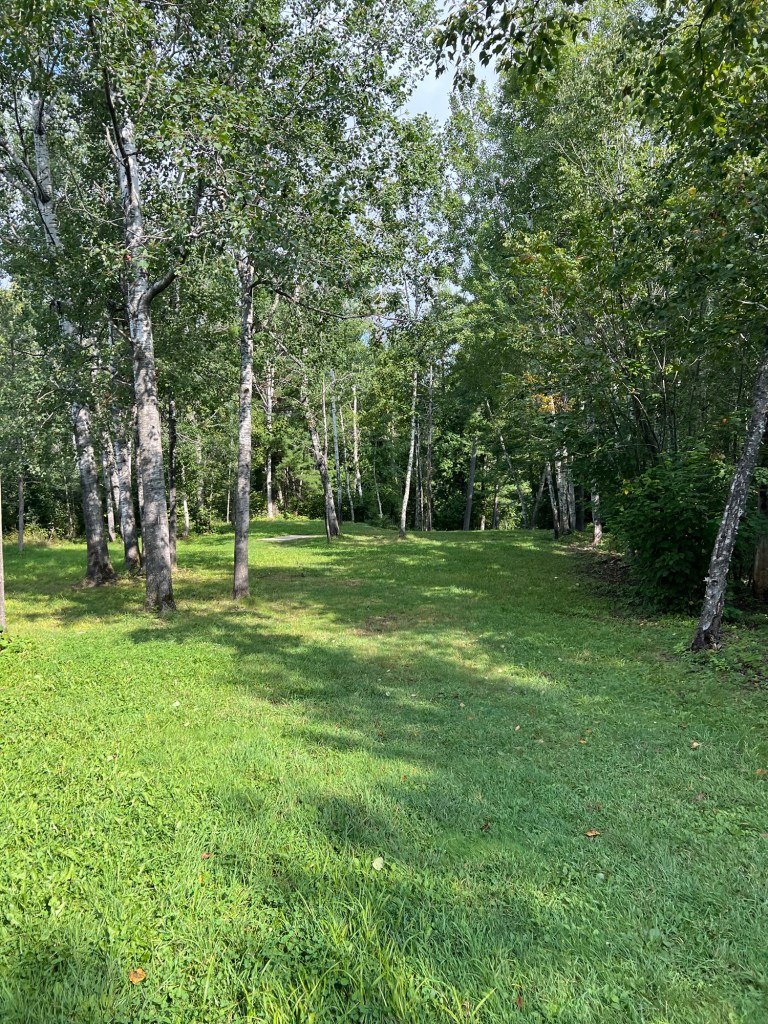
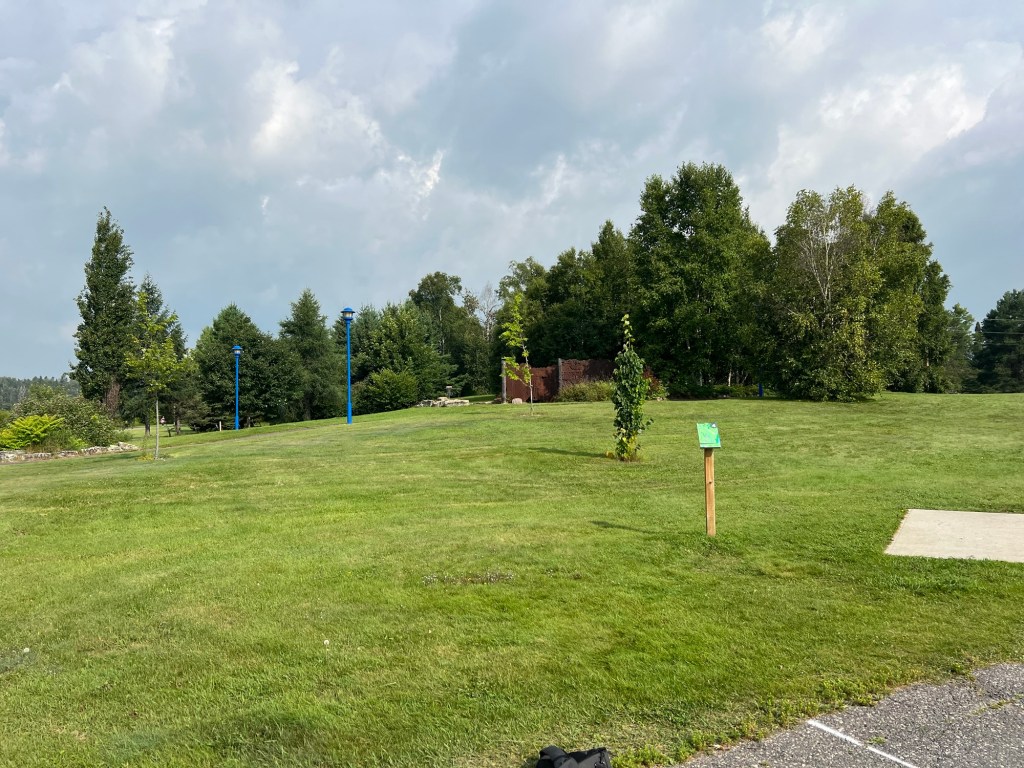
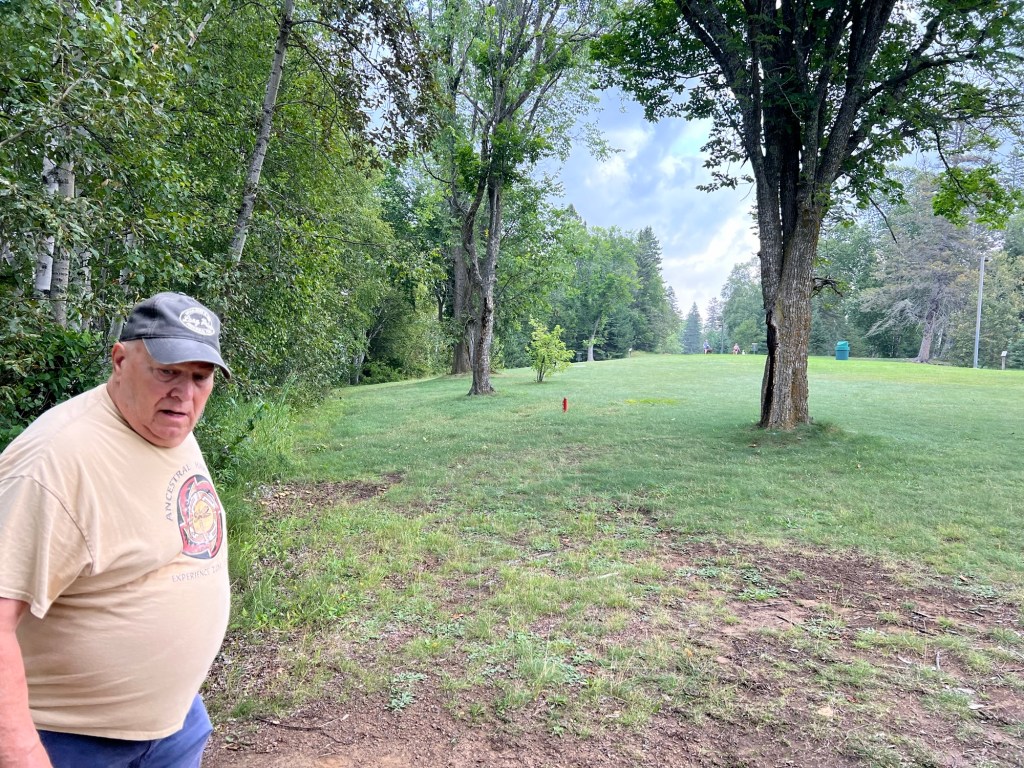
Superior does have a Municipal Forest, something I’ve never seen before. There’s a great disc golf course there.
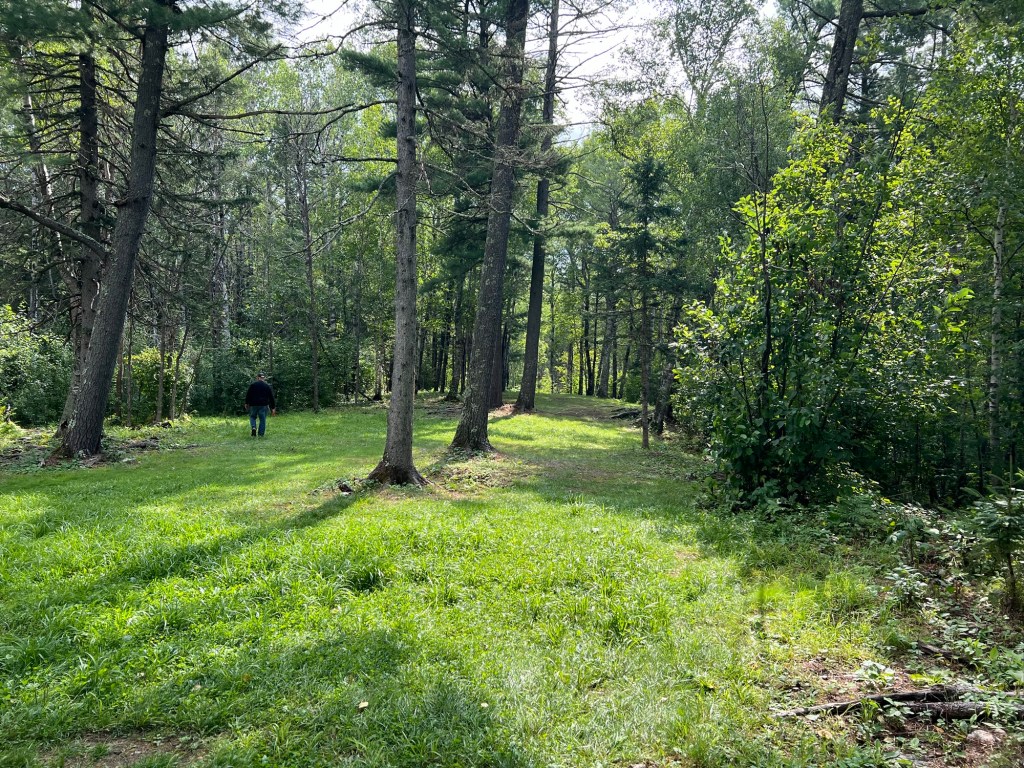
We played there a couple of times.
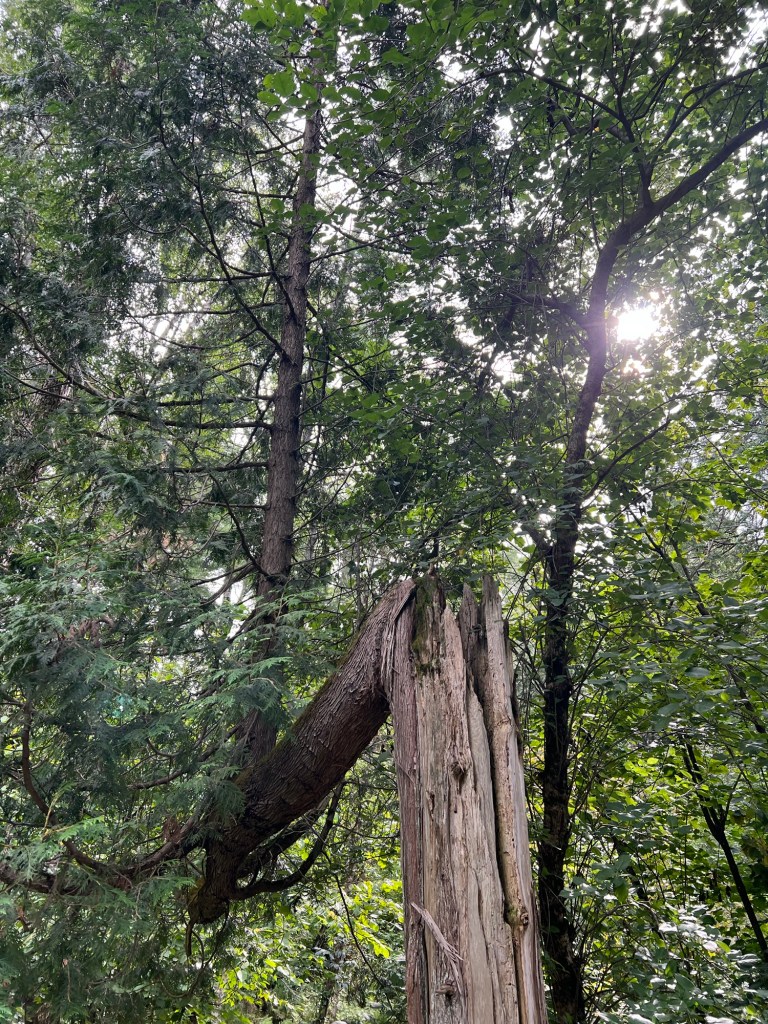
It also has a new nominee to my tree hall of fame! This tree has a full sized vertical tree growing up from a lone horizontal branch that survived some horrific damage to the main trunk. Amazing!
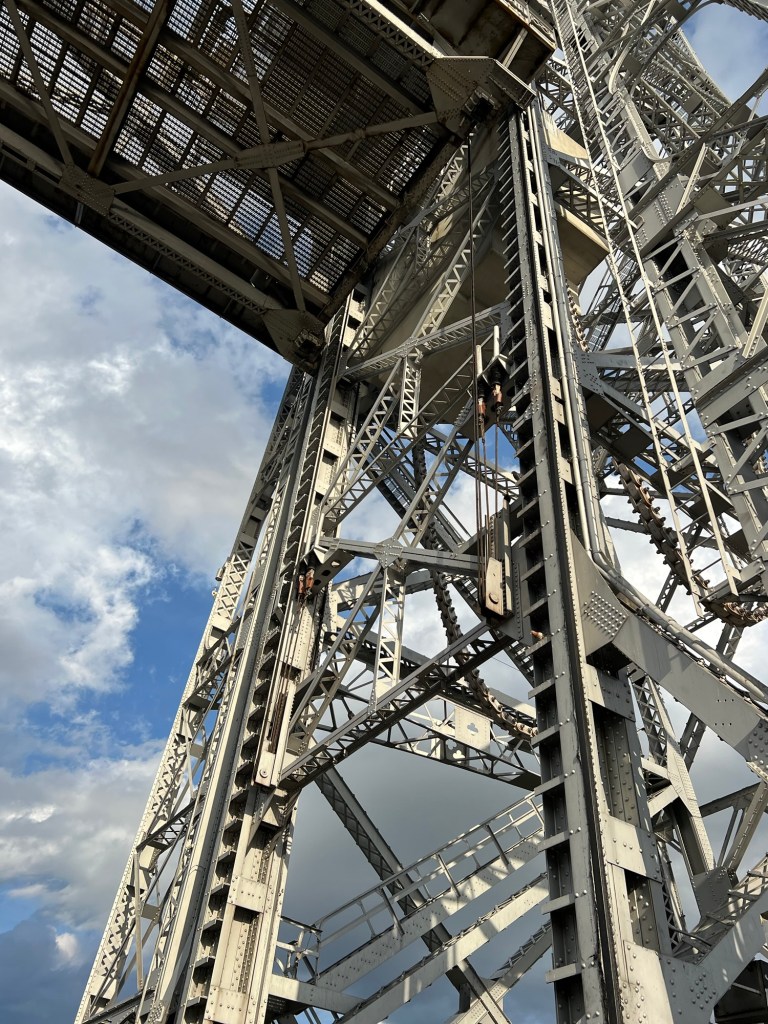
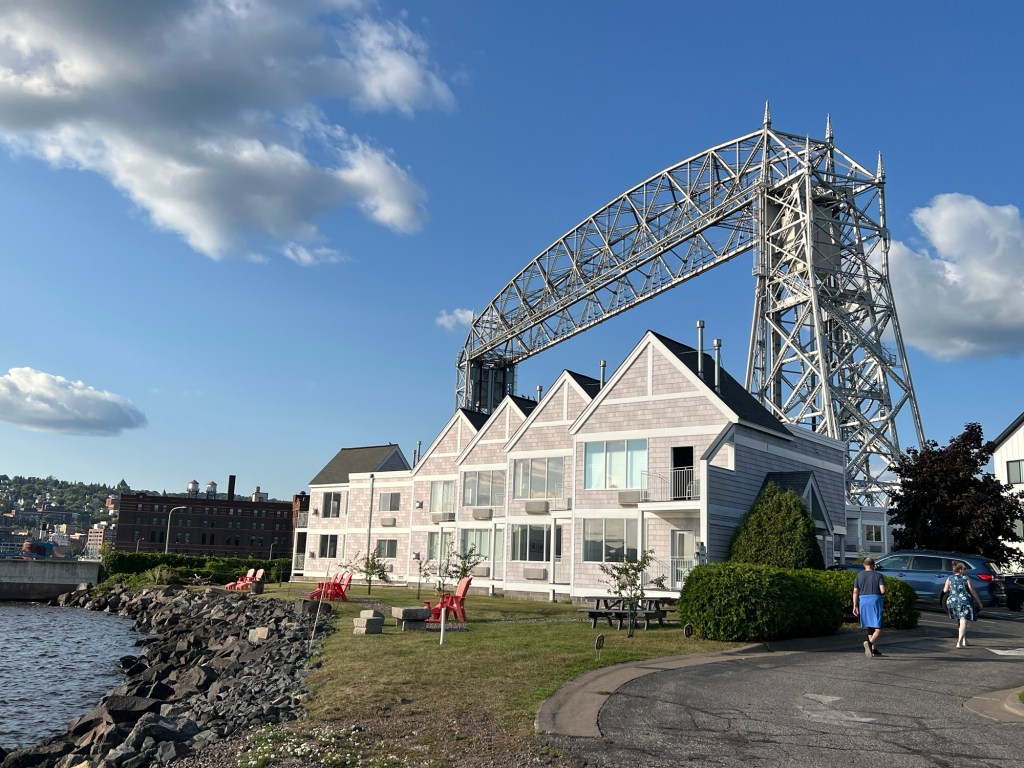
We’re happy to be just a few blocks from the canal. The Aerial Lift Bridge is fascinating. See the huge chains that raise and lower the bridge deck and counterweights.
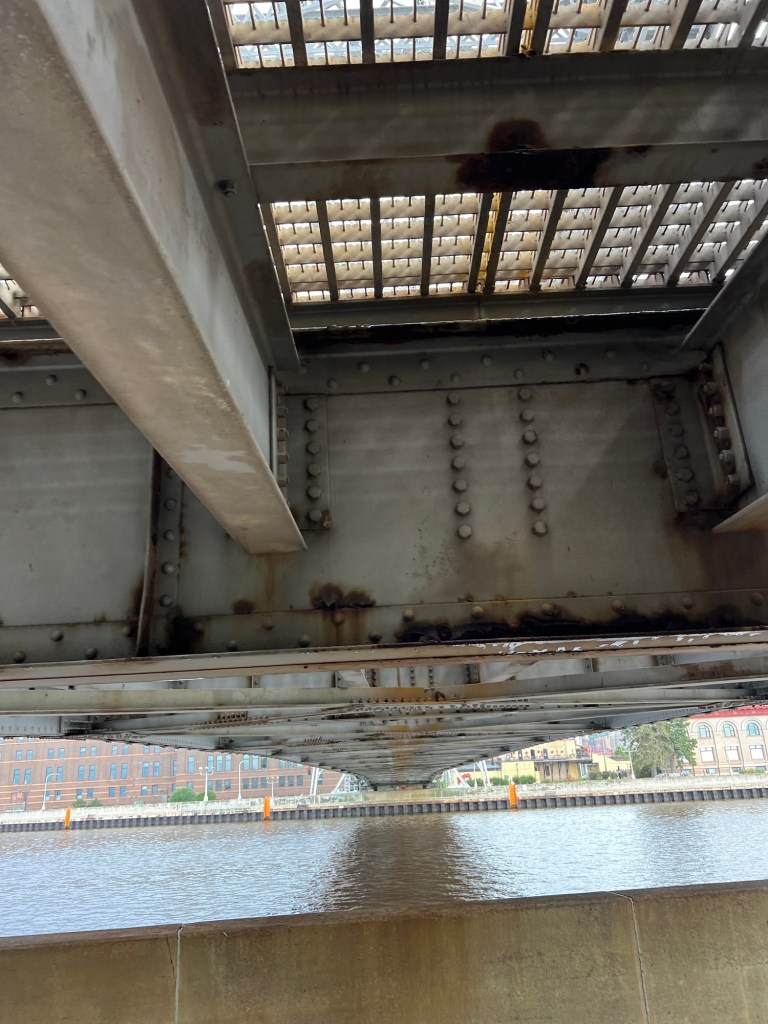
This is directly under the bridge when it’s down. You can see the steel deck immediately above me and then the bottoms of the girders across the span.
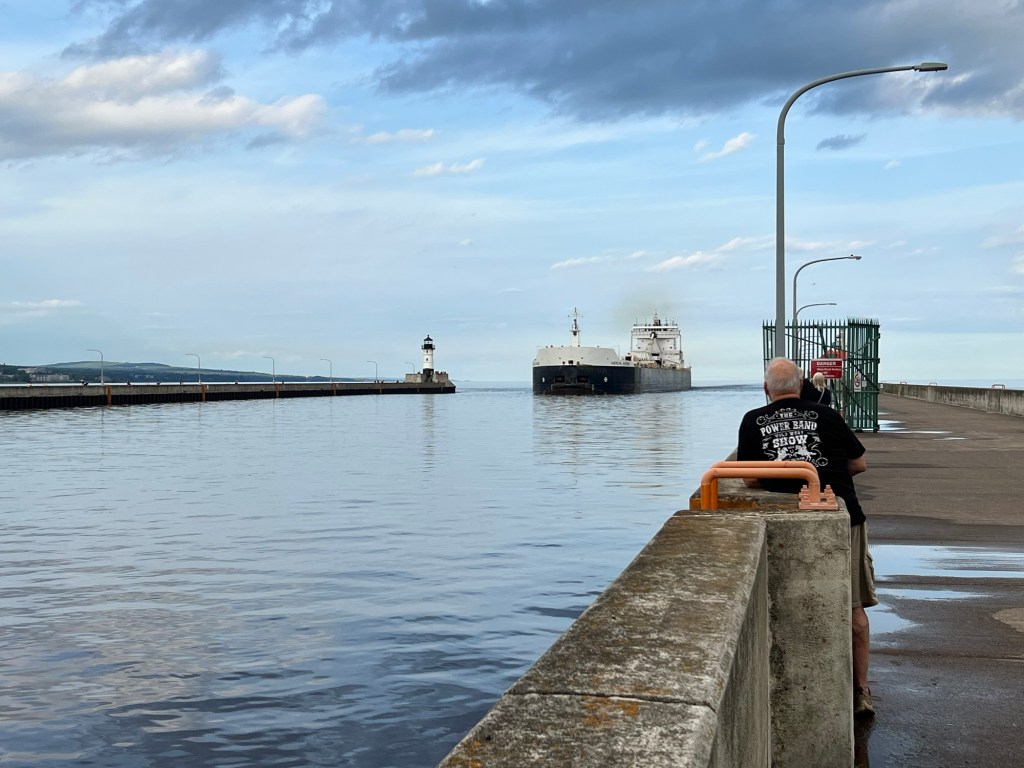
Tuesday evening we saw the American Mariner come in.
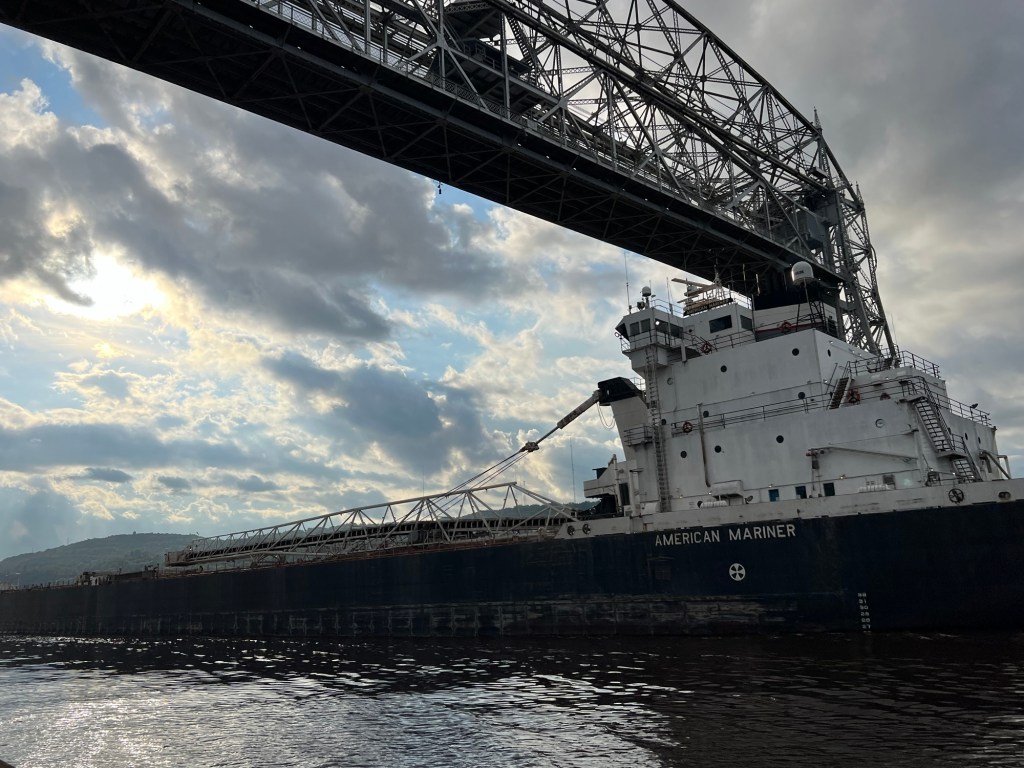
The bridge doesn’t always raise to full height, but it did for this ship. She is a 740 foot long bulk carrier. The longest ship now sailing the Great Lakes is 1,013 feet long, but this was still an impressive sight.
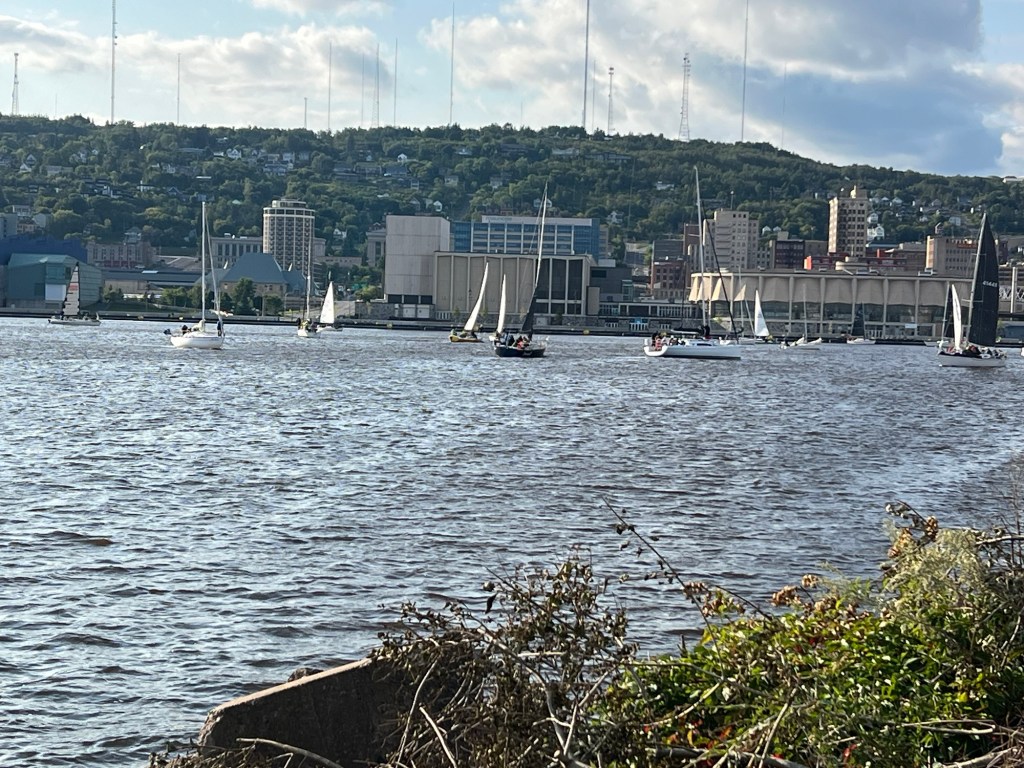
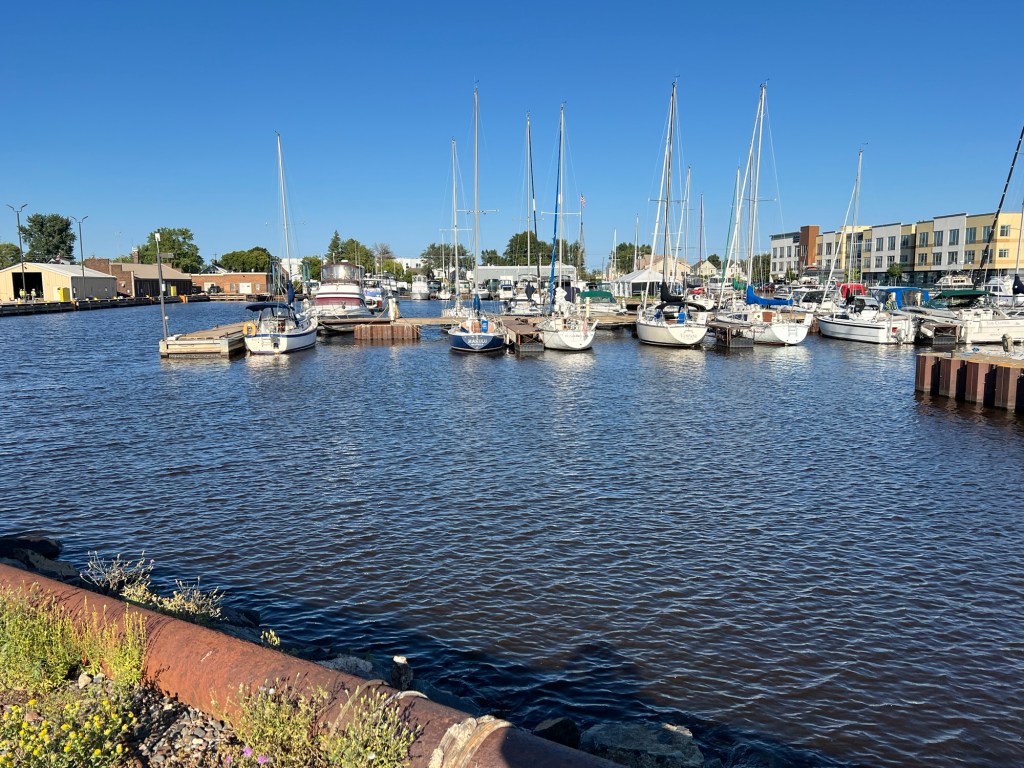
Then last evening a whole group of sailboats was gathered at our end of the harbor. A local told me it was race night. Suddenly they all headed towards the bridge and I realized the bridge was going to go up to let them into the lake.
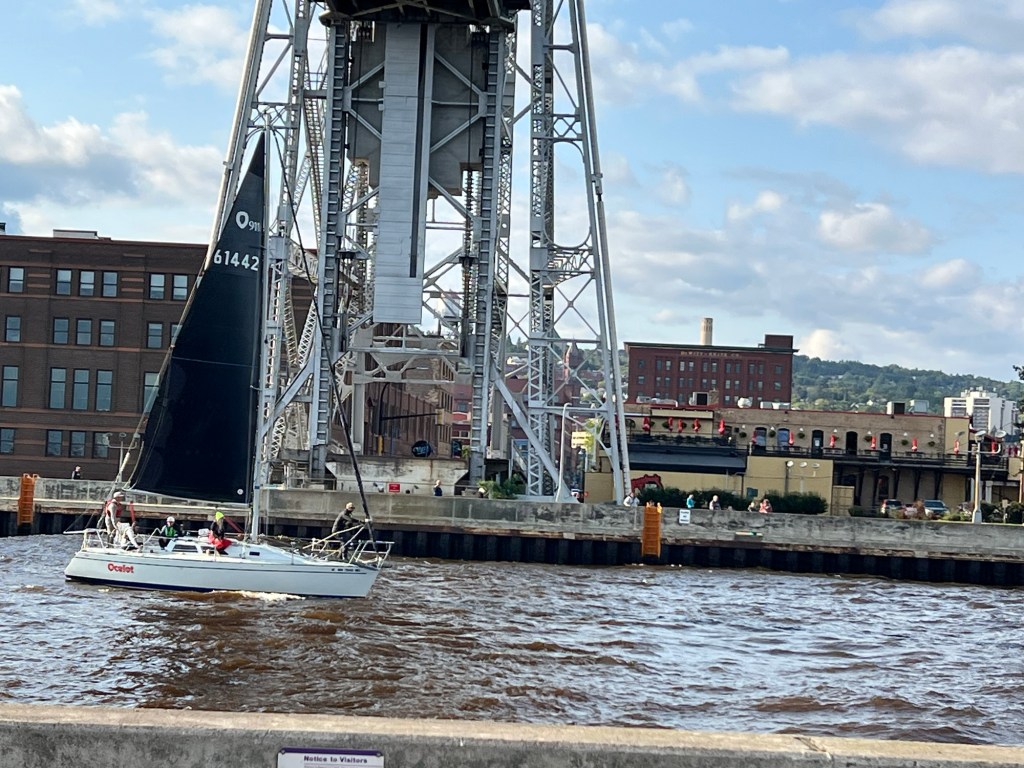
Matey and I made it just in time to see the last boat go under the bridge,
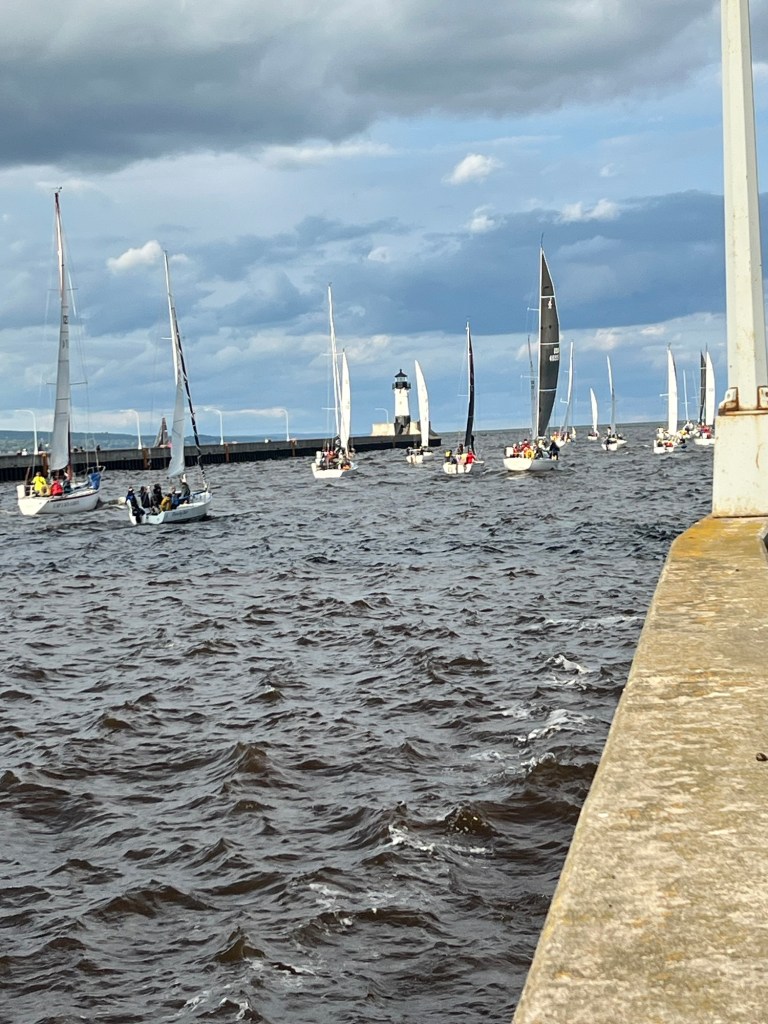
and the whole group go out between the piers.
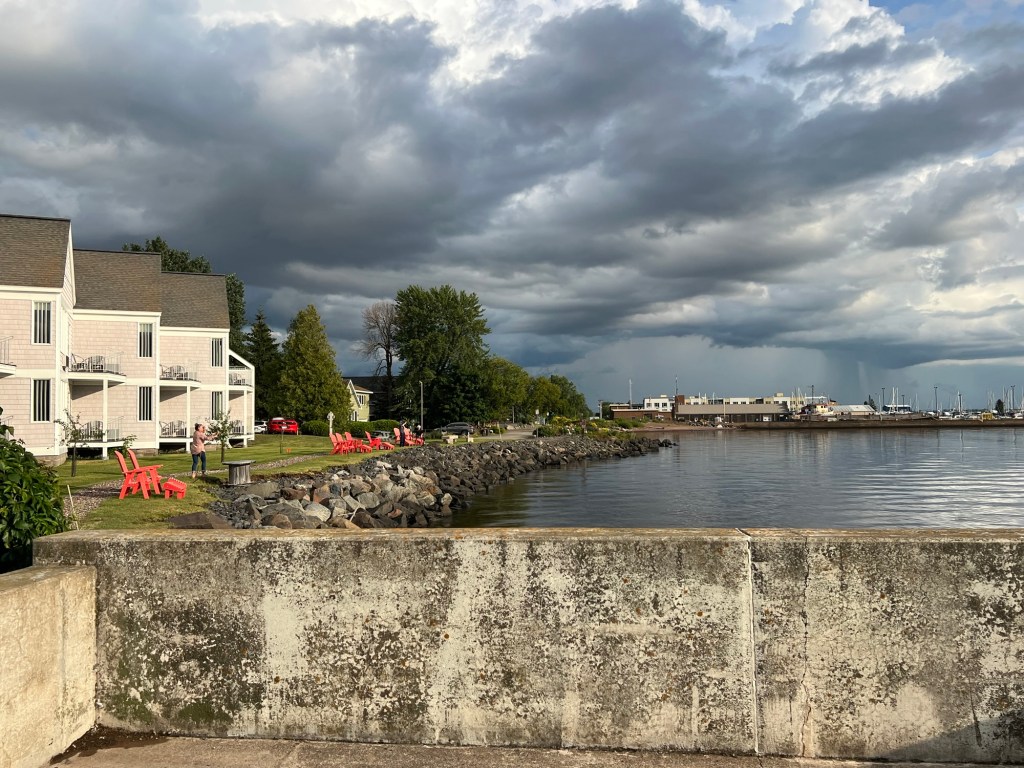
We may be in the city, but there’s a lot of interesting and beautiful things around us.
Urban Camping

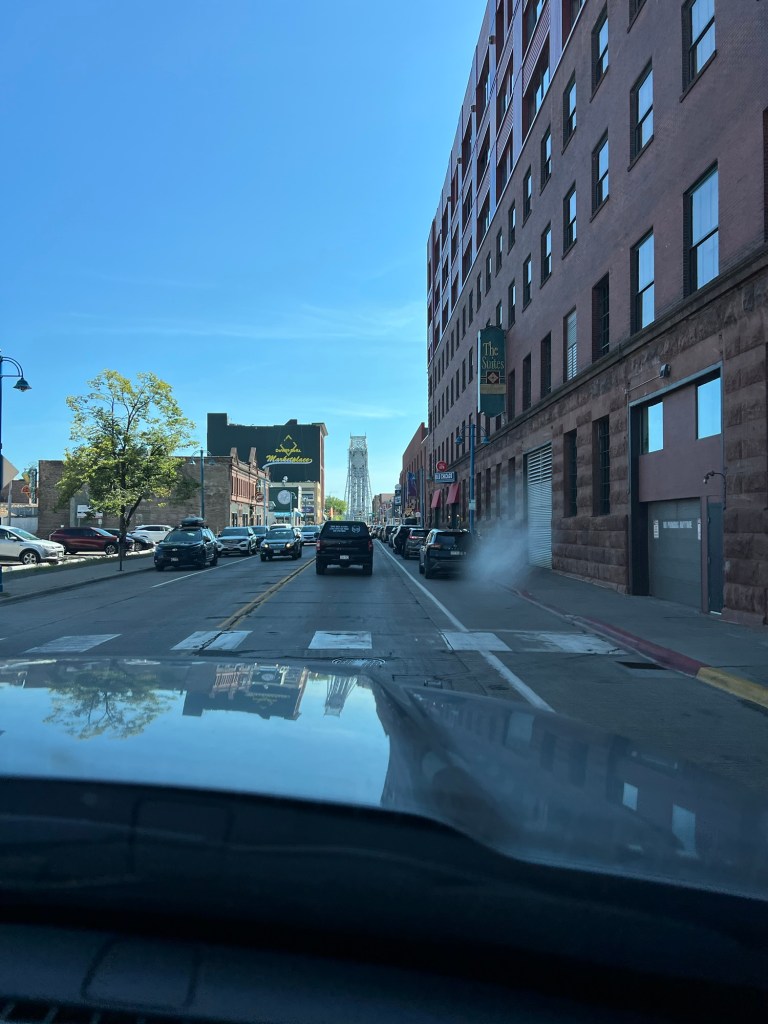
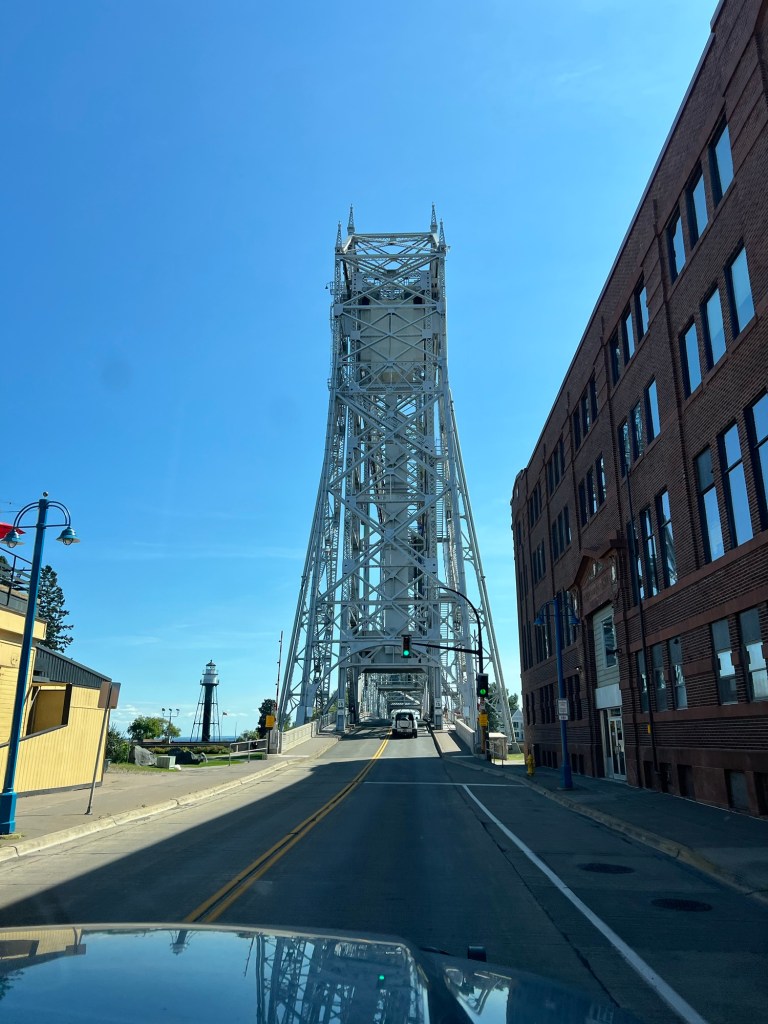
After we left the north shore of Lake Superior Bud drove us, towing the trailer, though downtown Duluth…

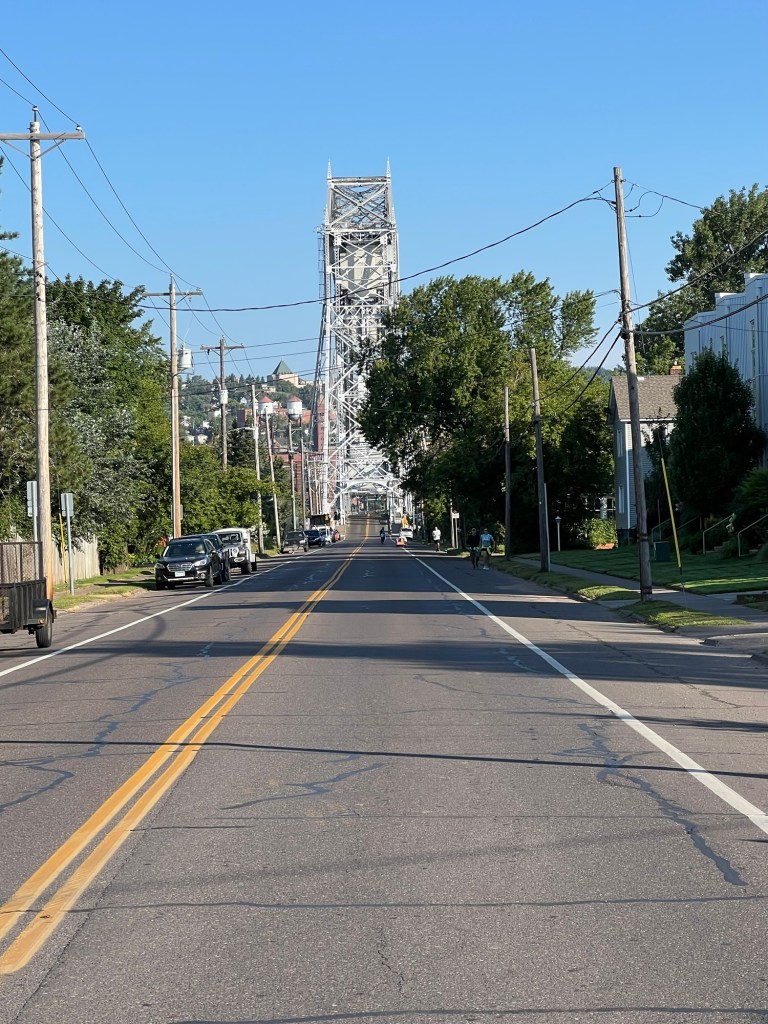
and across the famous Aerial Lift Bridge.

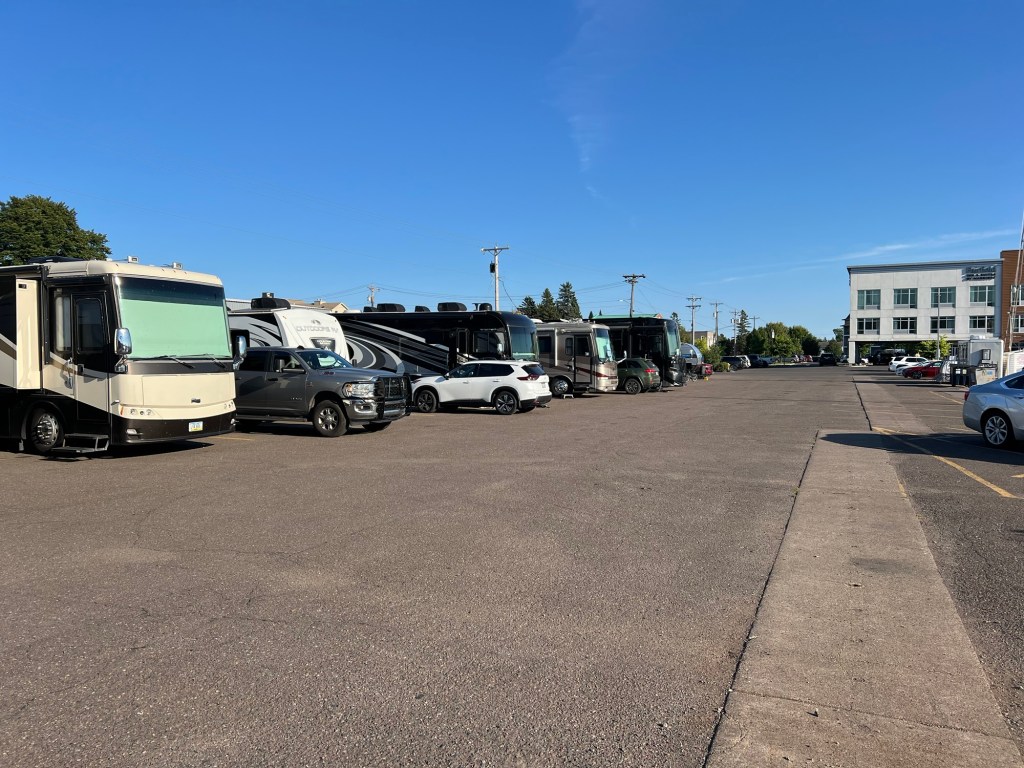
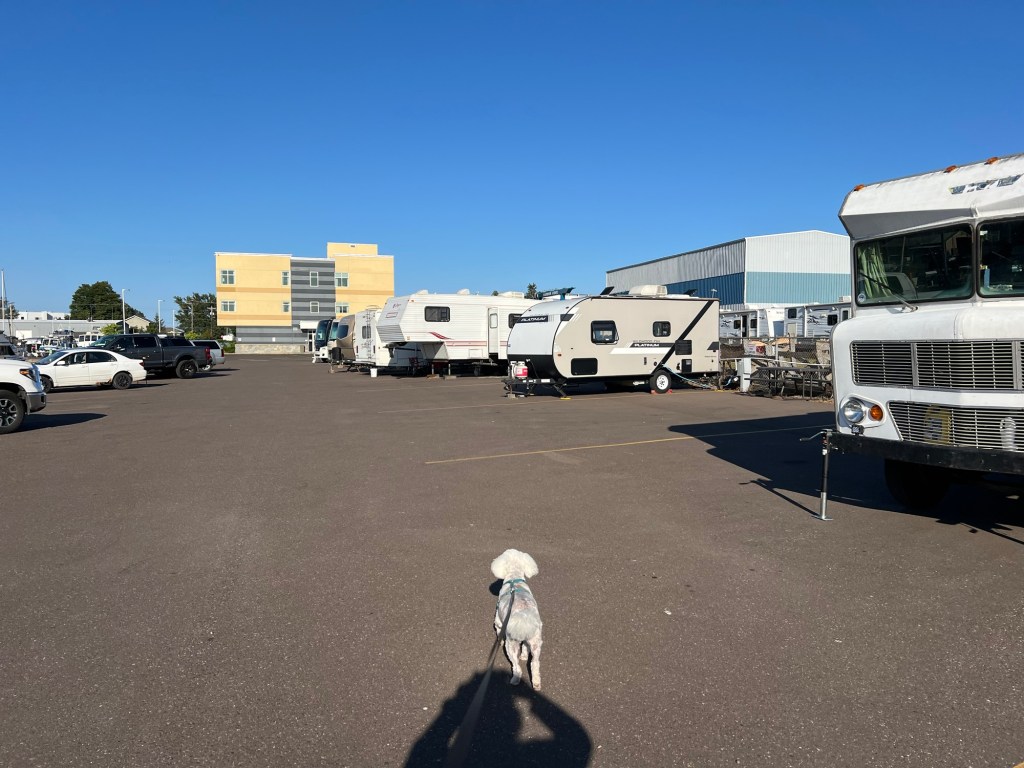
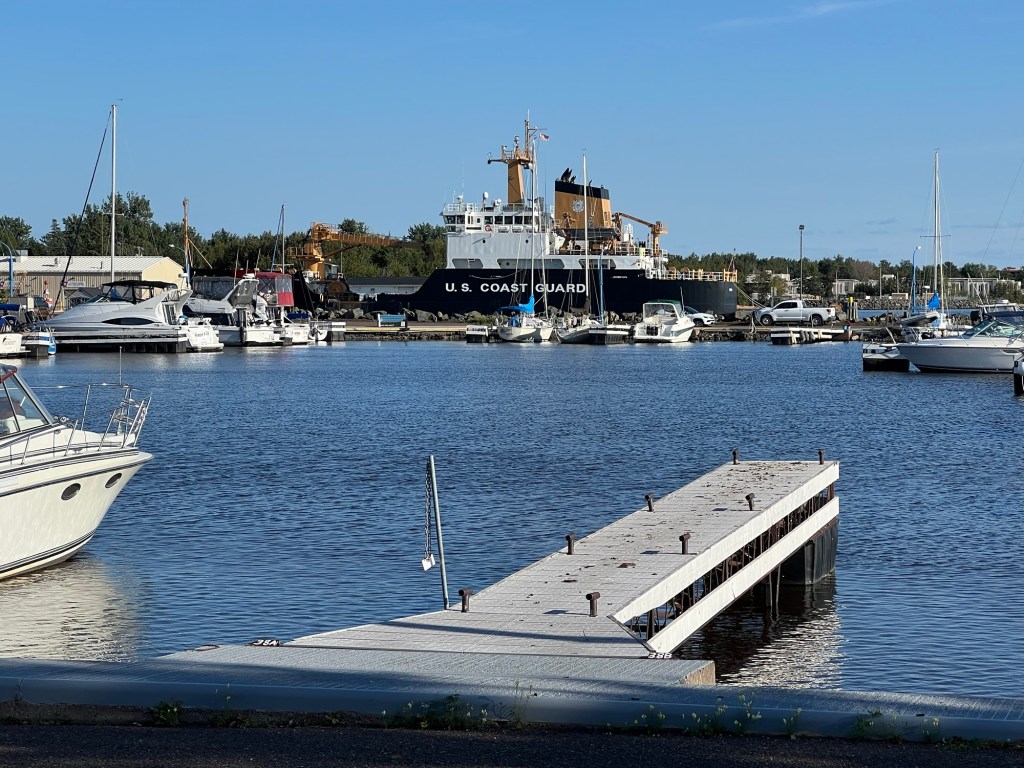
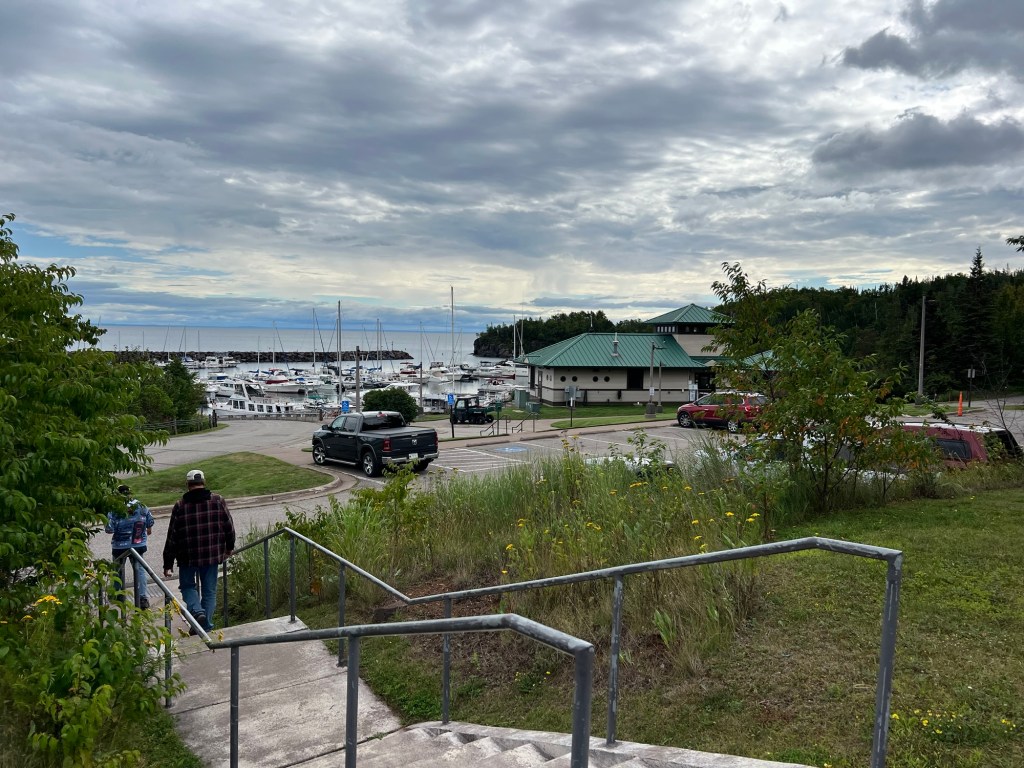
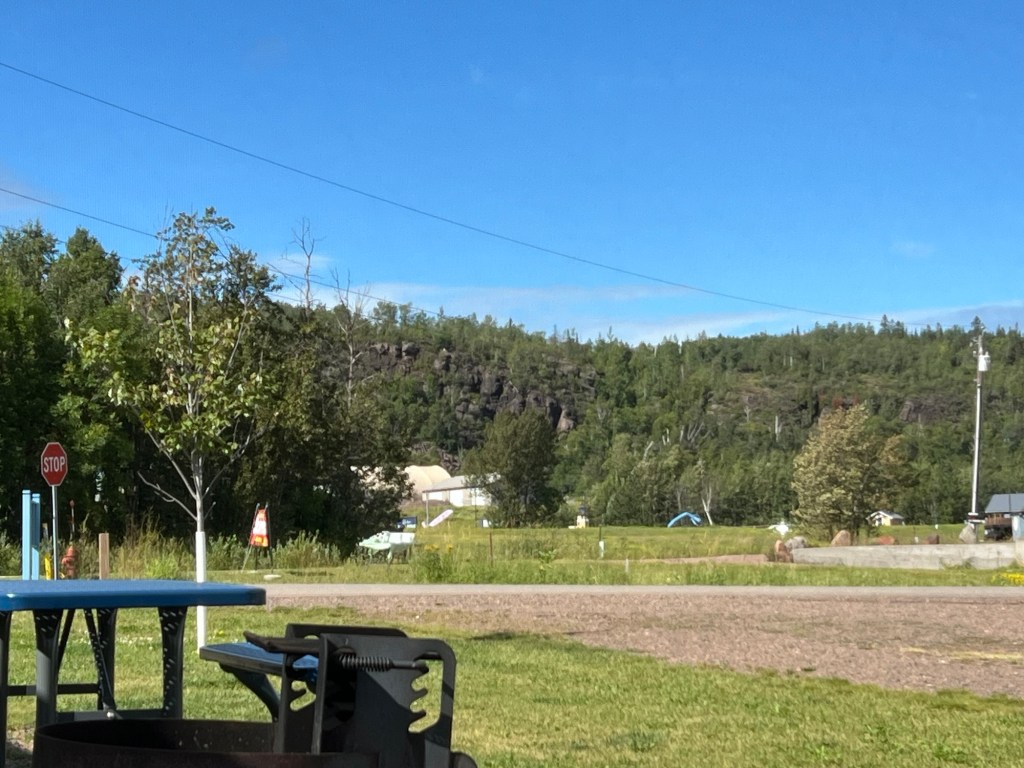
Our campsite is here, at the Lakehead Boat Basin, where we are slotted in a row in a parking lot that in winter is the boat storage area.

There is one more row of campers along the side of the marina. And it is also on a parking lot.

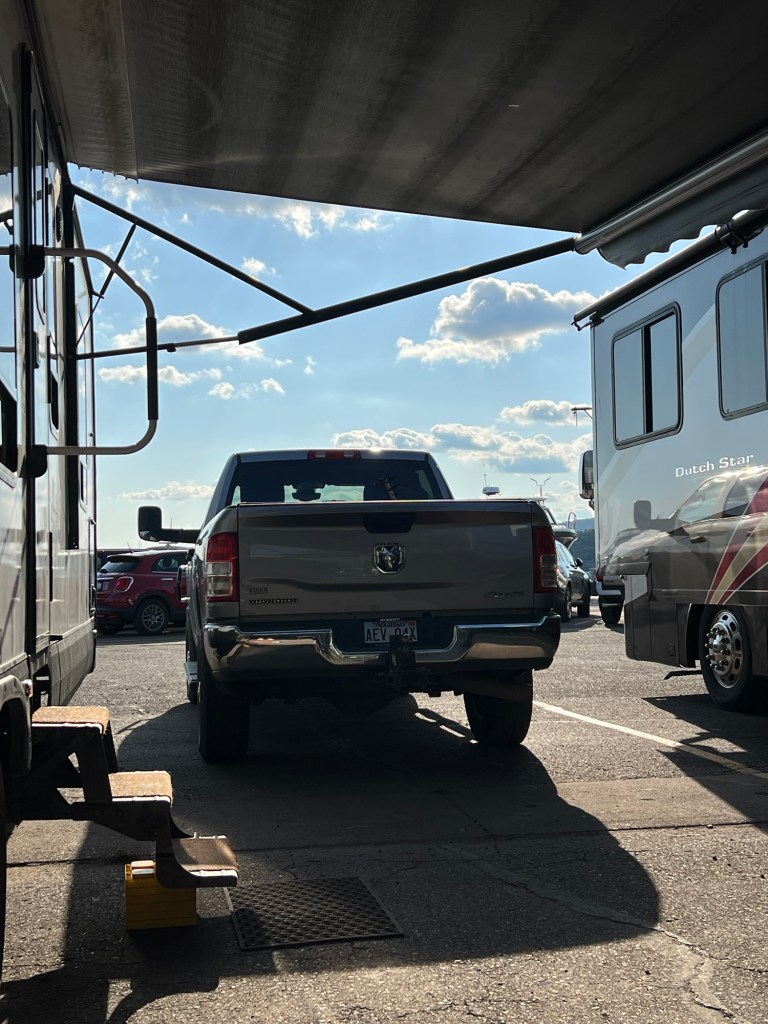
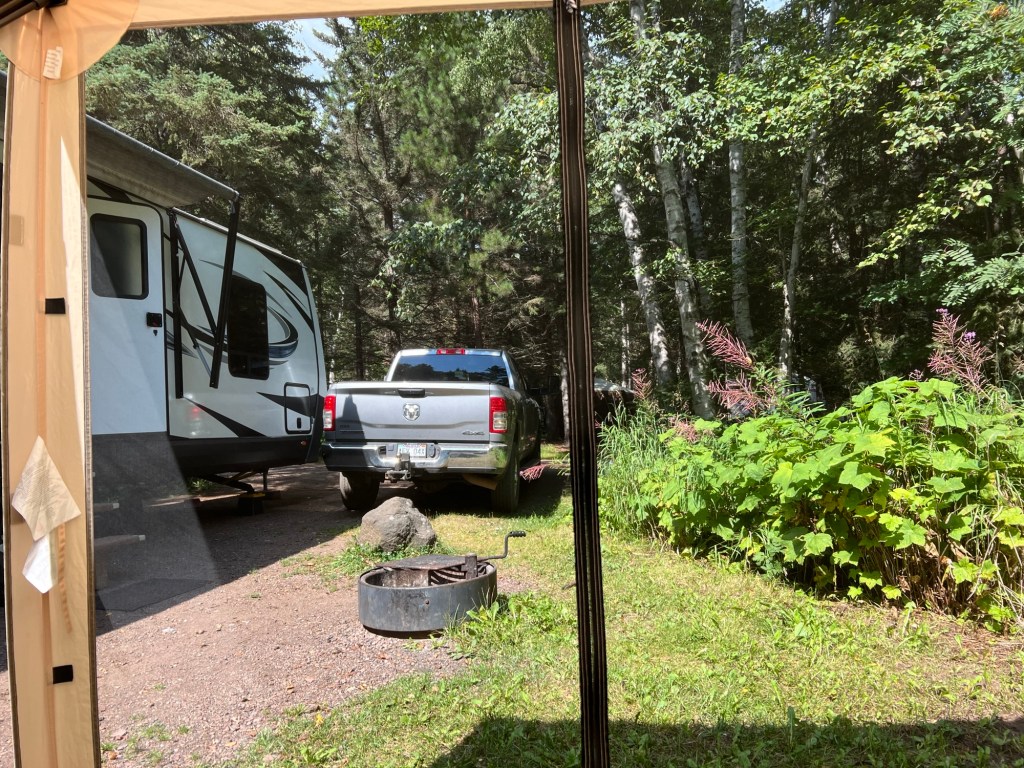
The only shade Matey and I can find is alongside the camper, and the truck pretty much blocks our view. But I like it here.

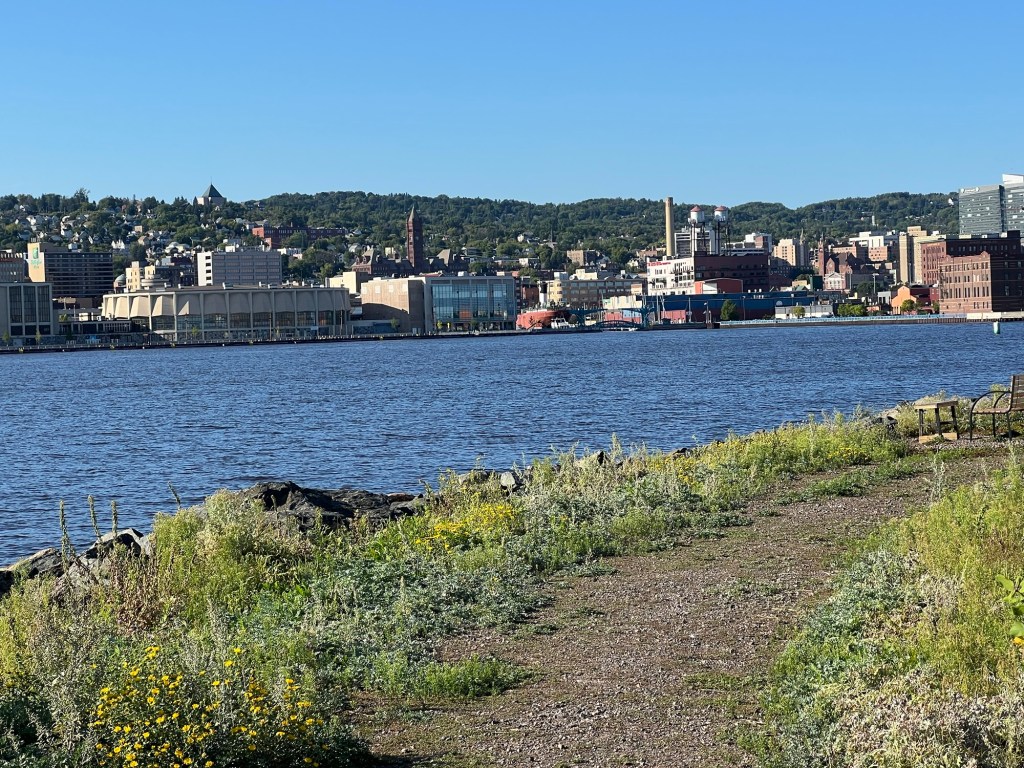
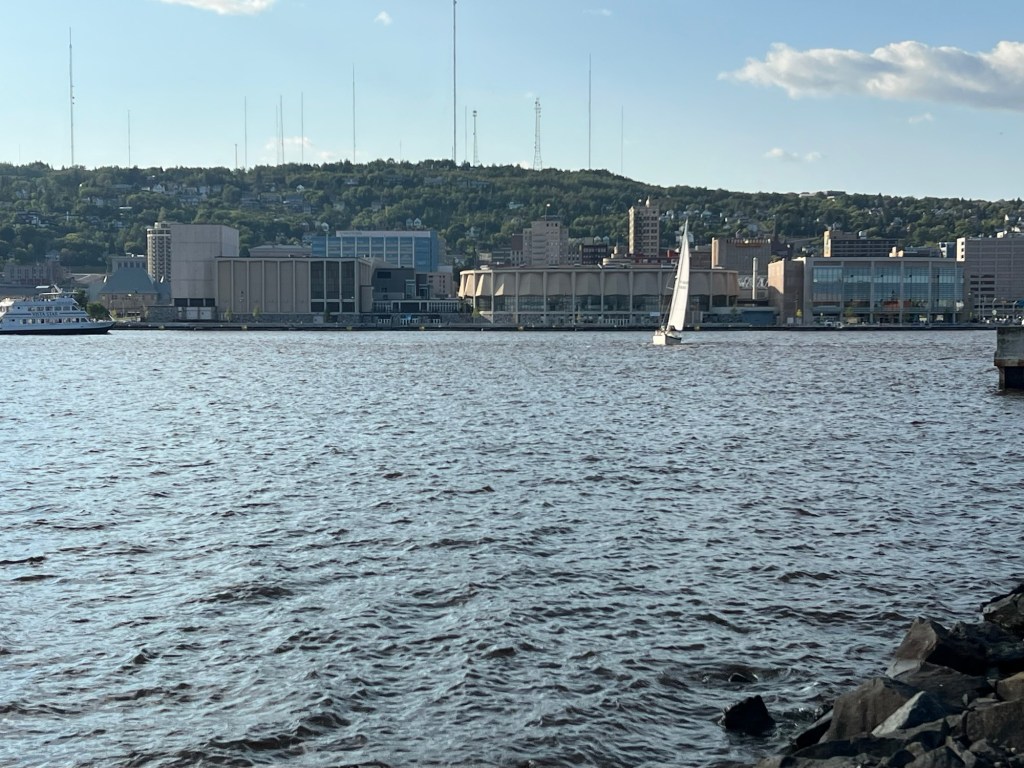
On the far side of the basin you can walk out along the jetty and get a great view of south Duluth.

I always like to be around boats.

There we are, just across the marina.

The spit of land we are on is called Park Point.

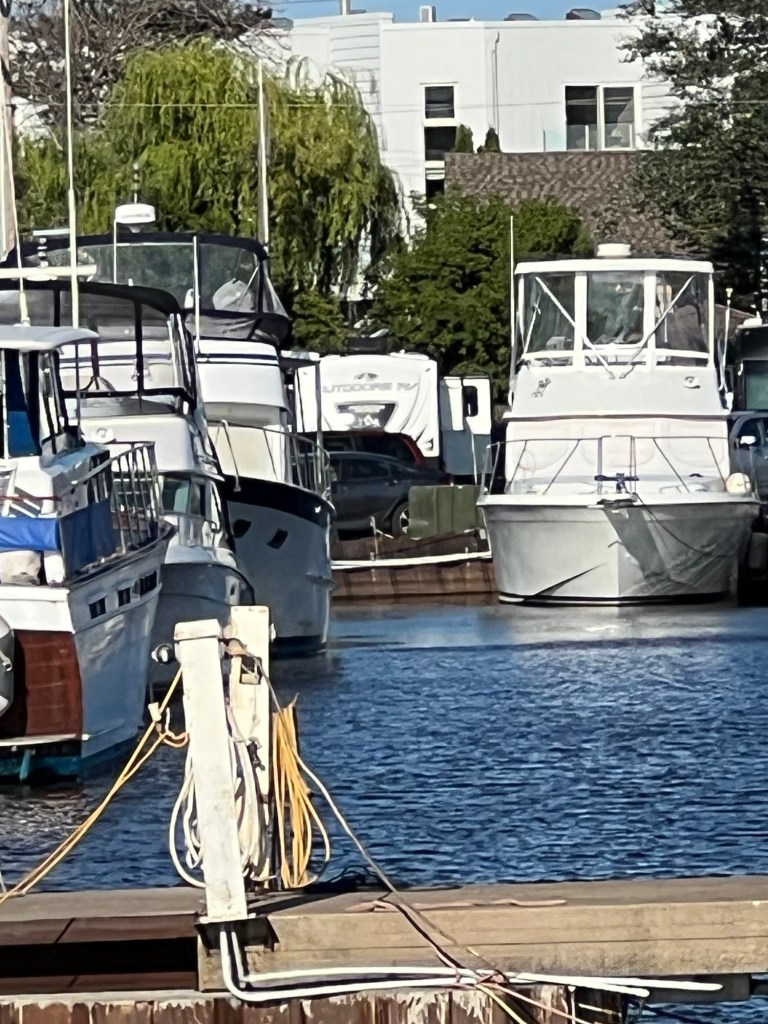
Walking on the harbor side there are always boats to see.

The streets are surprisingly residential, with the Aerial Bridge…

dominating views near us.

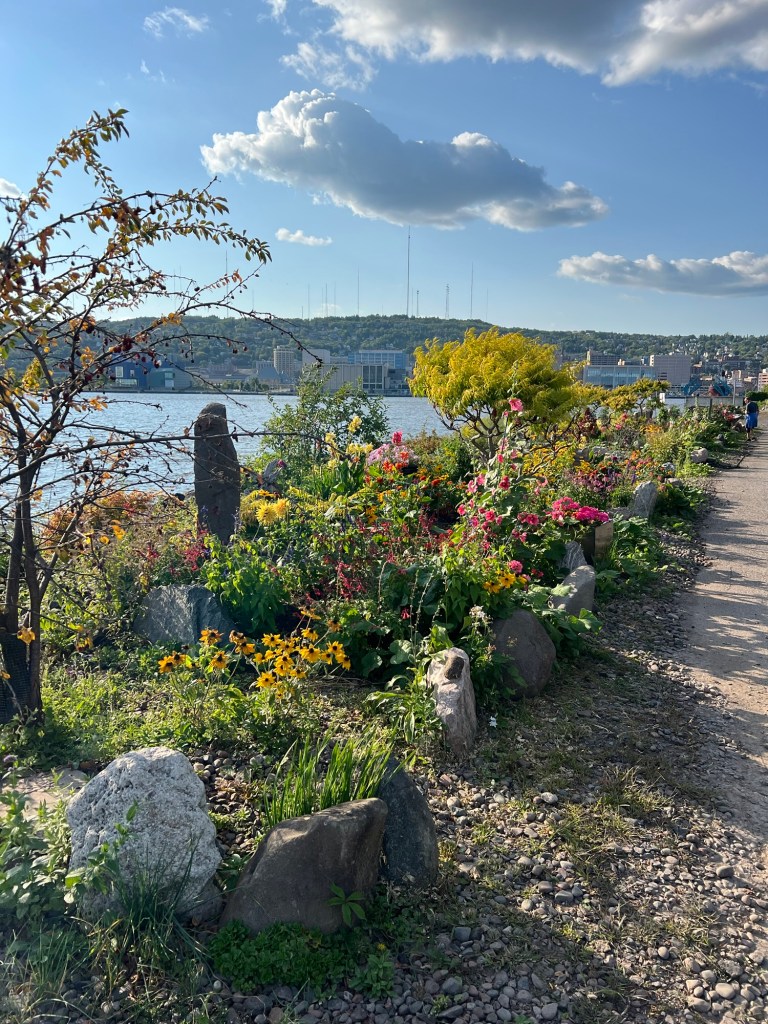
There are a lot of pretty gardens.

There are plenty of places to access the beach that runs the whole length of the lake side.

You can hardly tell there is a city around you,

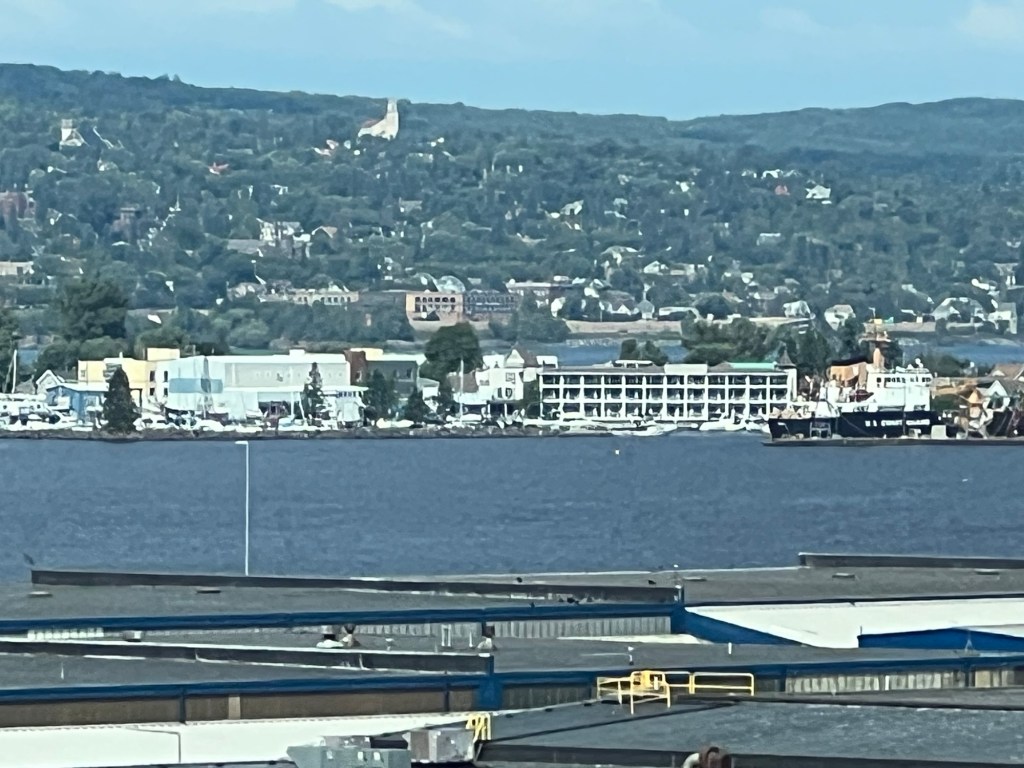
unless you look northwest, across the channel to the rest of Duluth.

It’s urban but there are plenty of interesting sights. I look forward to exploring the area from our asphalt base camp.

The Iron Range and the Last of the North Shore

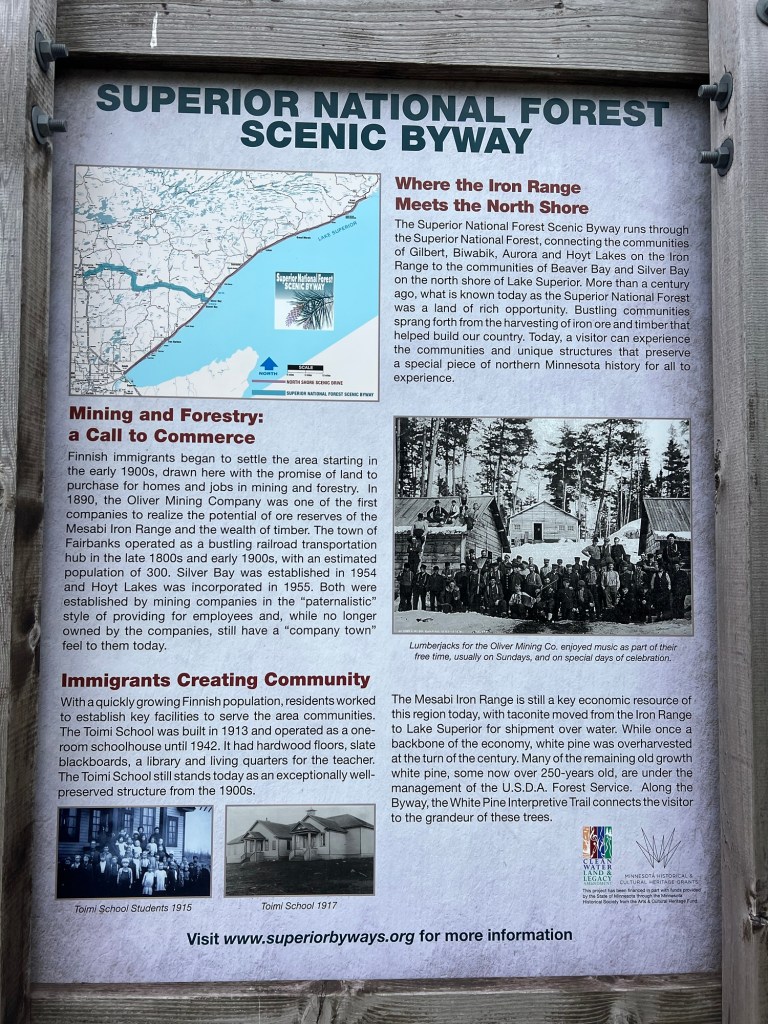
When we visited Beaver Bay and the Beaver River we saw this sign about the Superior National Forest Scenic Byway, so we thought we’d check it out. I had a bit of trouble finding information on places to see because the website referenced on the sign now gives information about the best online gambling apps. Huh?

Anyway, a lot of poking around gave me two possible sites.

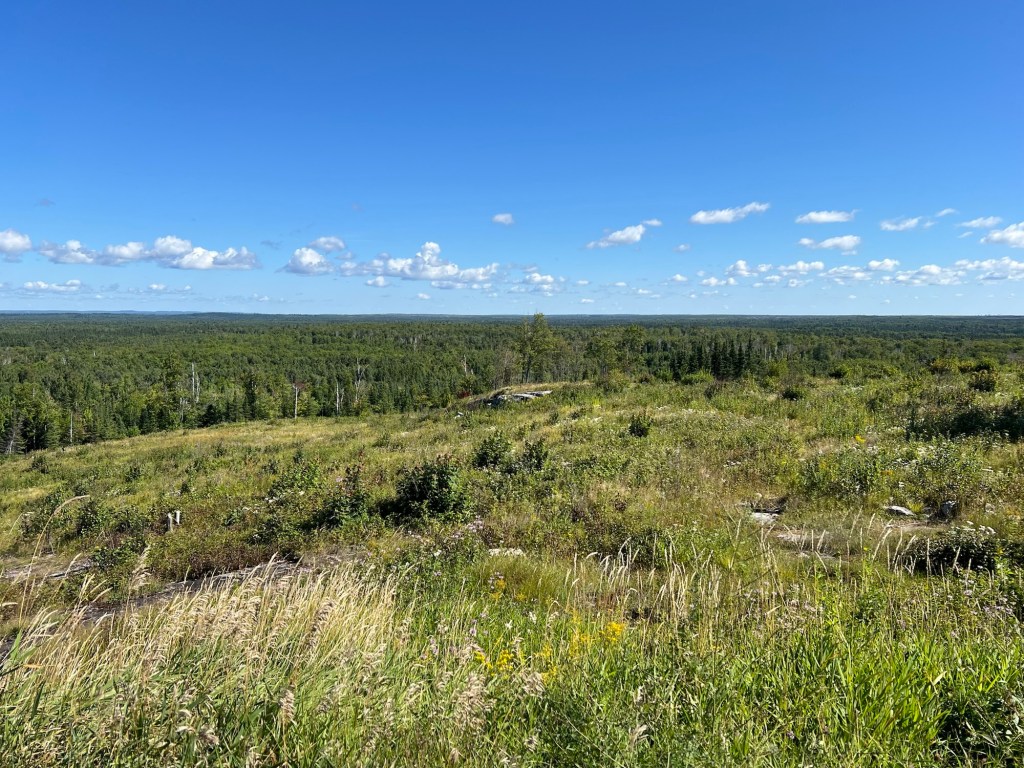
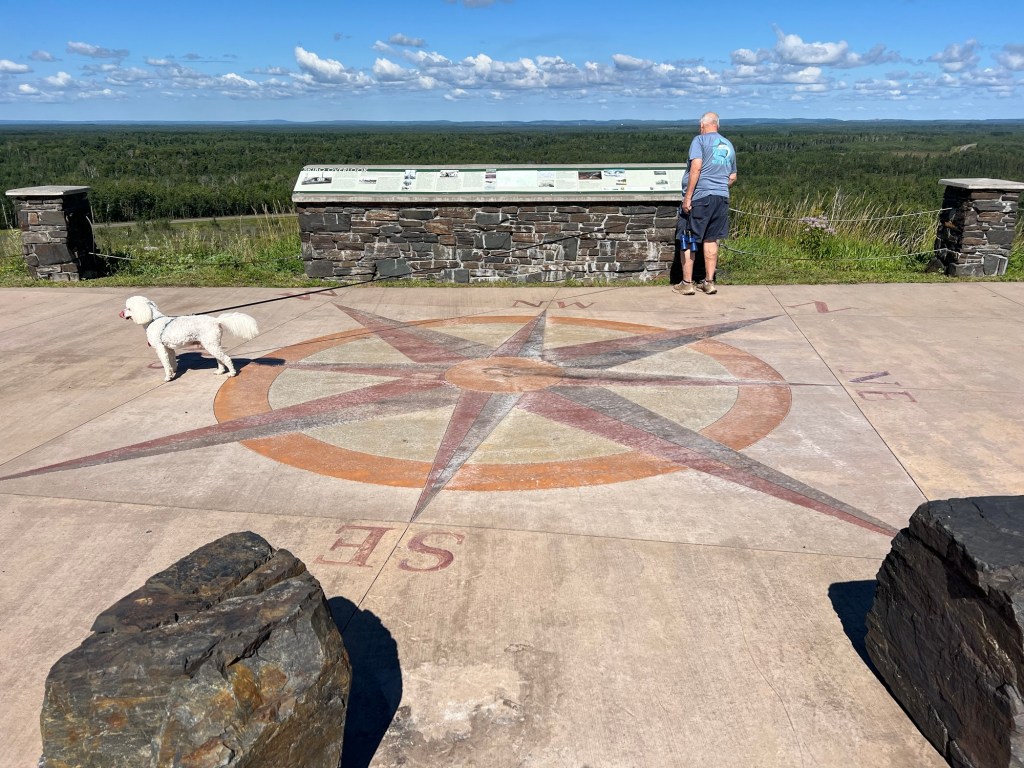
The first was the Skibo Overlook, and at 1802 feet it gave a pretty panoramic view out towards the Iron Range.

Between their compass rose on the concrete, their sign and our binoculars we identified a couple of the mining facilities out near the horizon.

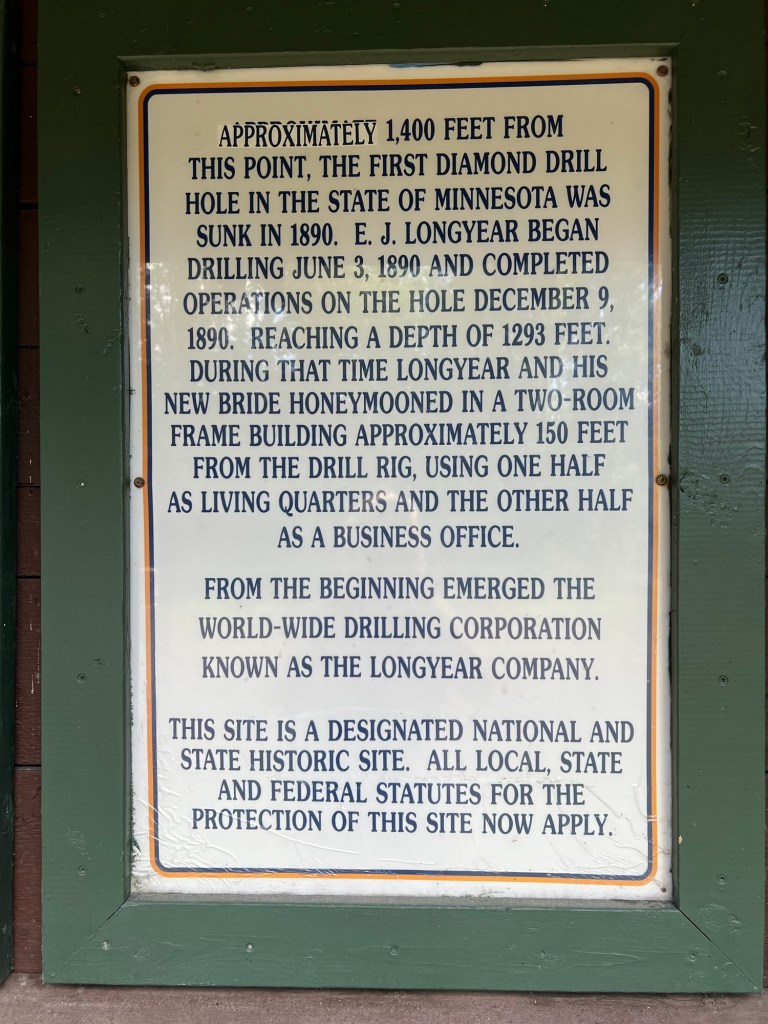
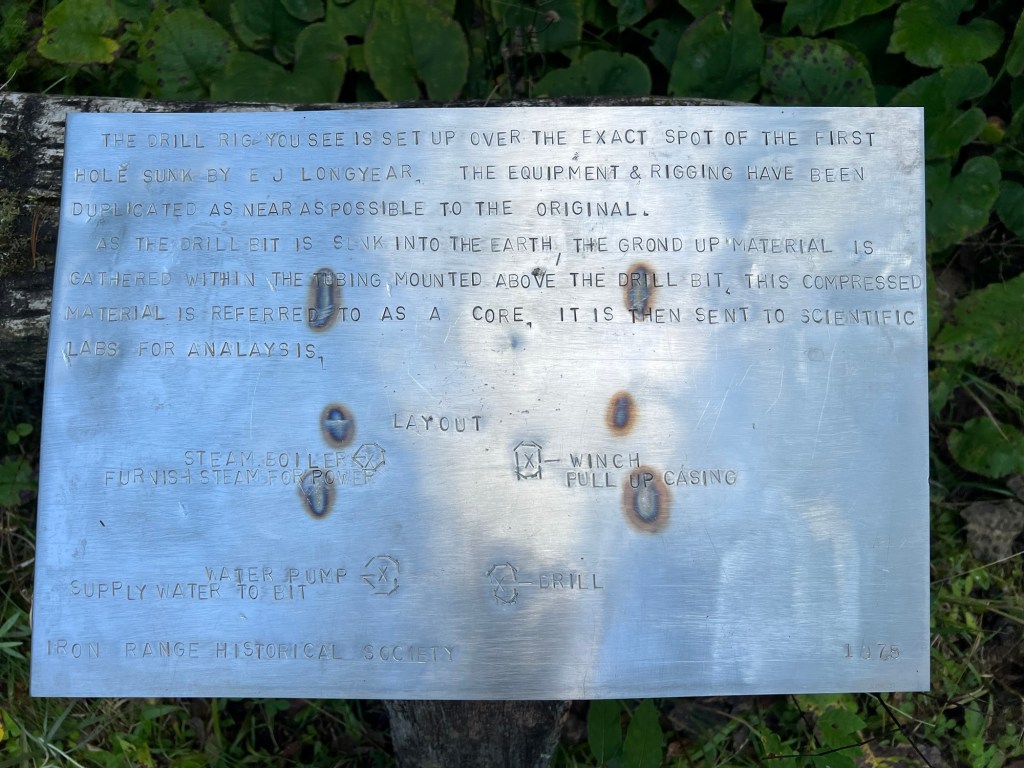
We then went on to try to find the Longyear Drill Site just outside of Hoyt Lakes. I found reference to it online, but it wasn’t a point on Apple Maps. I pinned the road from information on Google Maps. When we got to the road there was a dead end sign. We drove up and I checked Google Maps again, we were on the right road, but when you clicked on the site Google Maps listed it as permanently closed. We found a parking area and this sign.

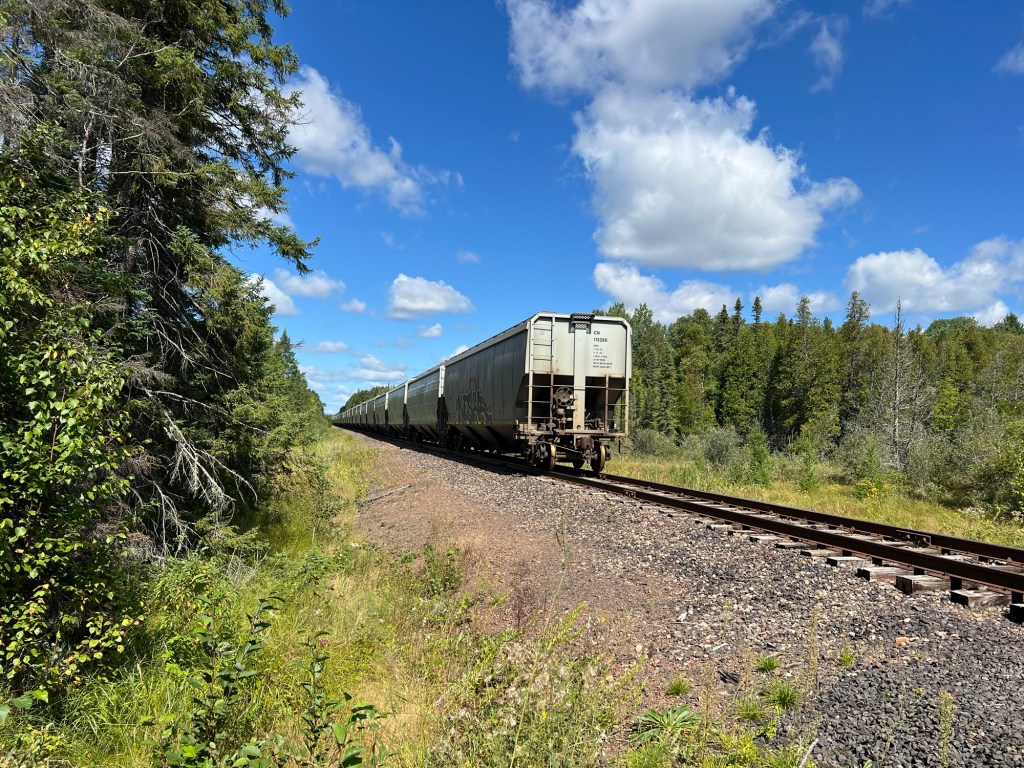
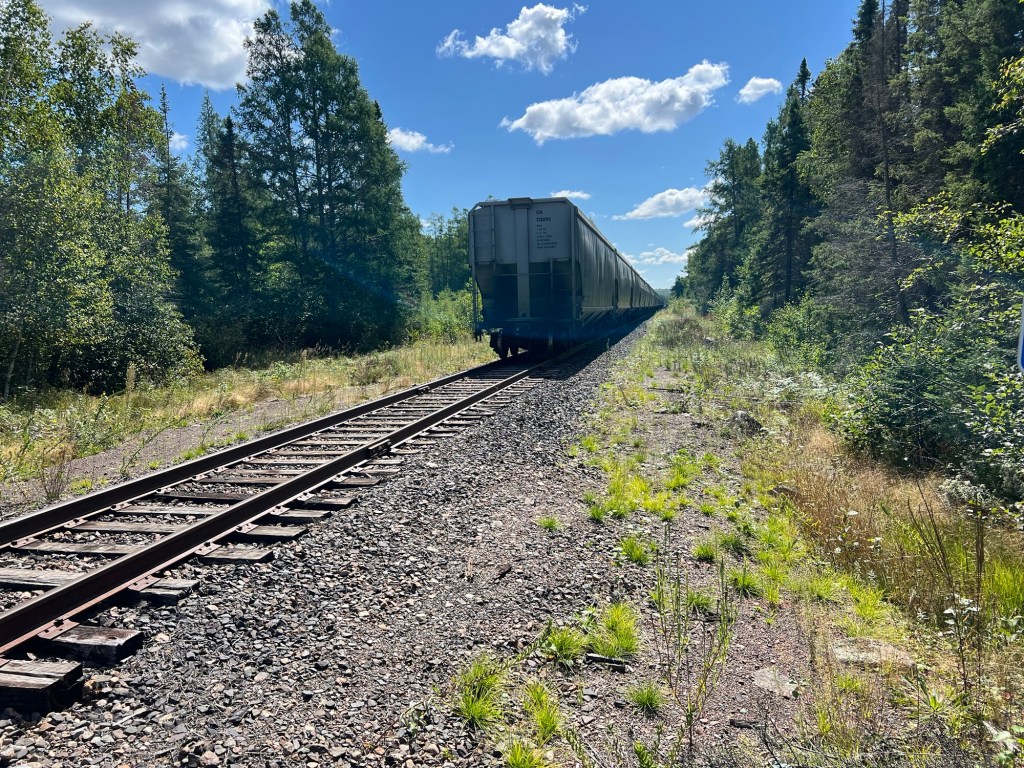
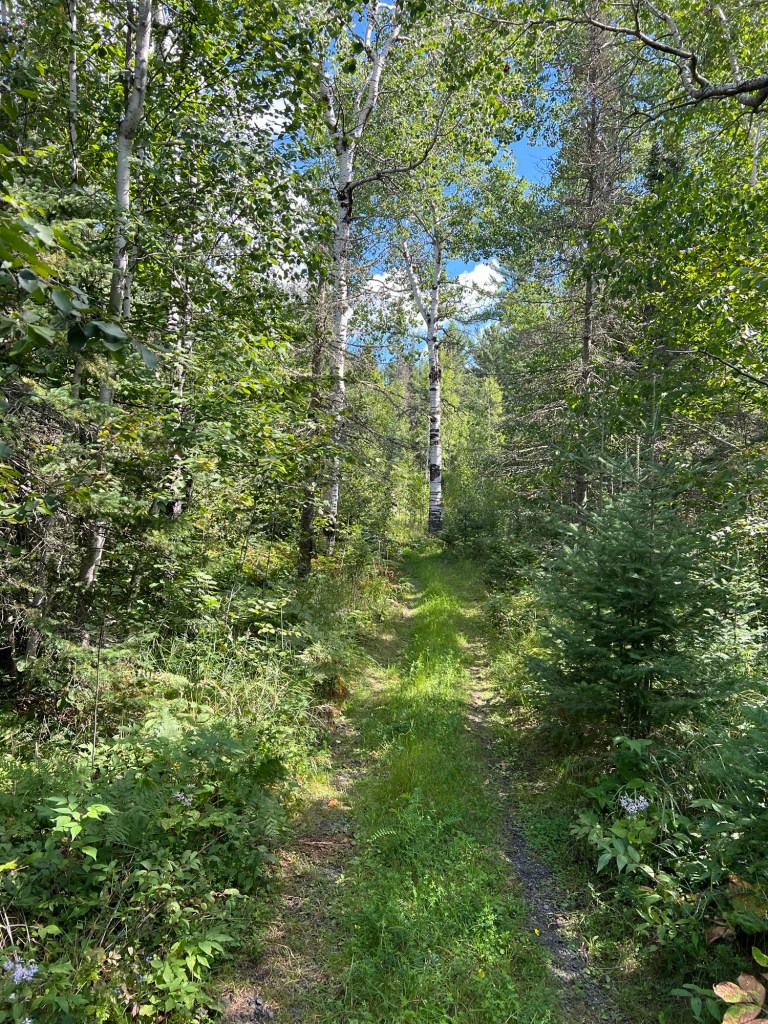
There was a dirt road leading back which soon crossed a section of railroad tracks.

In both directions there was a long string of cars. We thought these might be cars waiting to transport the taconite to Silver Bay for processing.

About a quarter mile back Bud lost faith and because he was being attacked by mosquitoes he turned back.

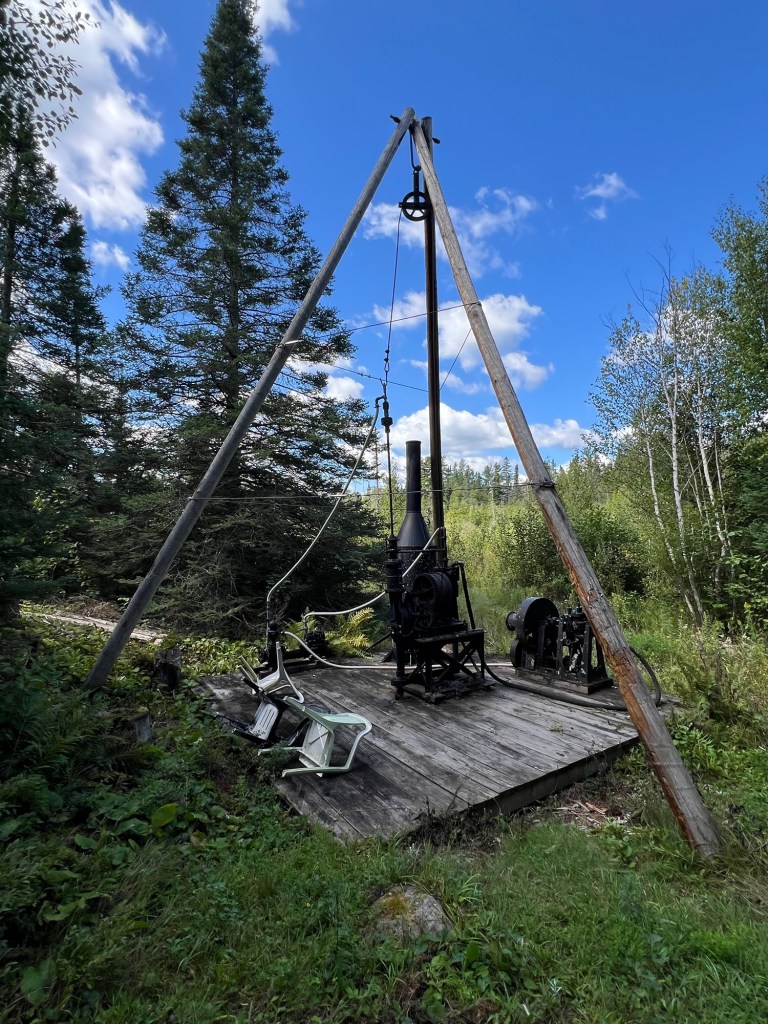
About a tenth mile further on Matey and I found the site.

Although the sign says the equipment and rigging have been duplicated as near as possible to the original, I don’t think they’re including the plastic lawn chairs. Anyway, since rock core sampling is so common now, to all kinds of research, it was interesting to come to the place where the first core was drilled.

On the way out we had seen a sign for the White Pine Picnic area in Superior National Forest, so we bought some food to go at Hoyt Lakes and came back here.

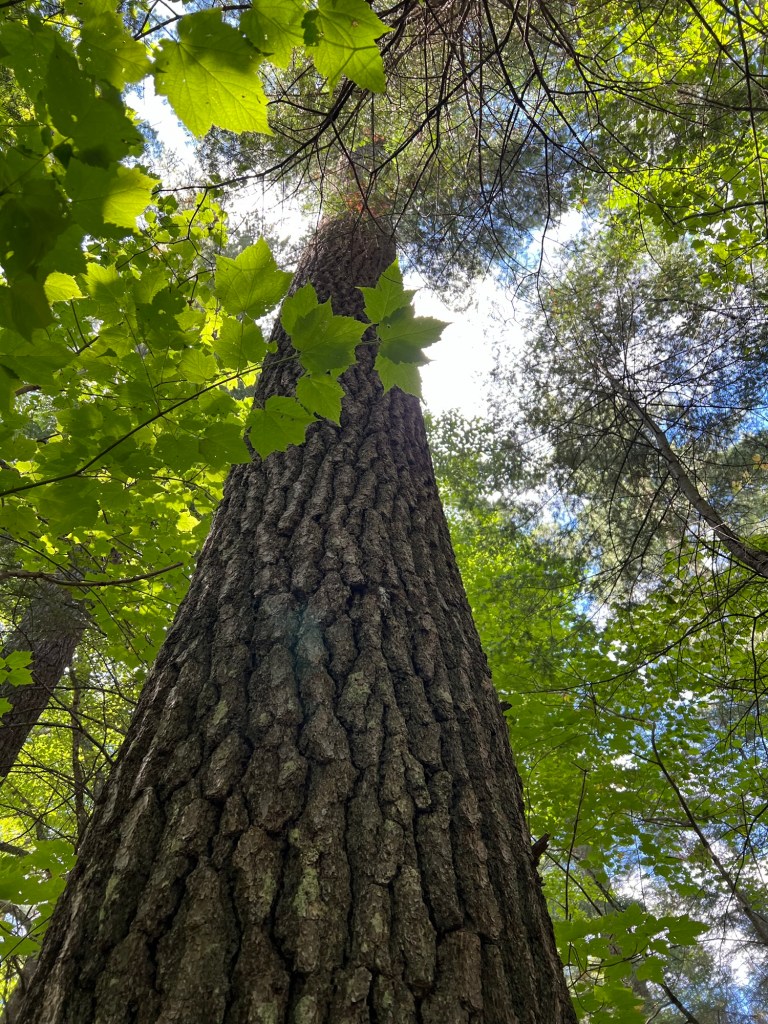
Too many mosquitoes here to eat outside but it was great to see these giants, some of which were 250 years old. Not many survived the intensive logging, but these grandparents did. It is one of my great sadnesses that we have almost wiped out the old growth forests, and I like to visit what’s left whenever I can.

That was almost our last exploring on the north shore of Superior. One of Bud’s incisors broke while he was eating that lunch (in the truck, away from the bugs) so he spent Wednesday and Thursday driving to Duluth to deal with that. Thankfully it doesn’t hurt and he did manage to get it looked at and impressions taken to start the process of getting an implant. The tooth will get pulled on September 9th. The final work can’t be done until four months later, but they will put some sort of placeholder in. He now lisps and looks like a hillbilly.

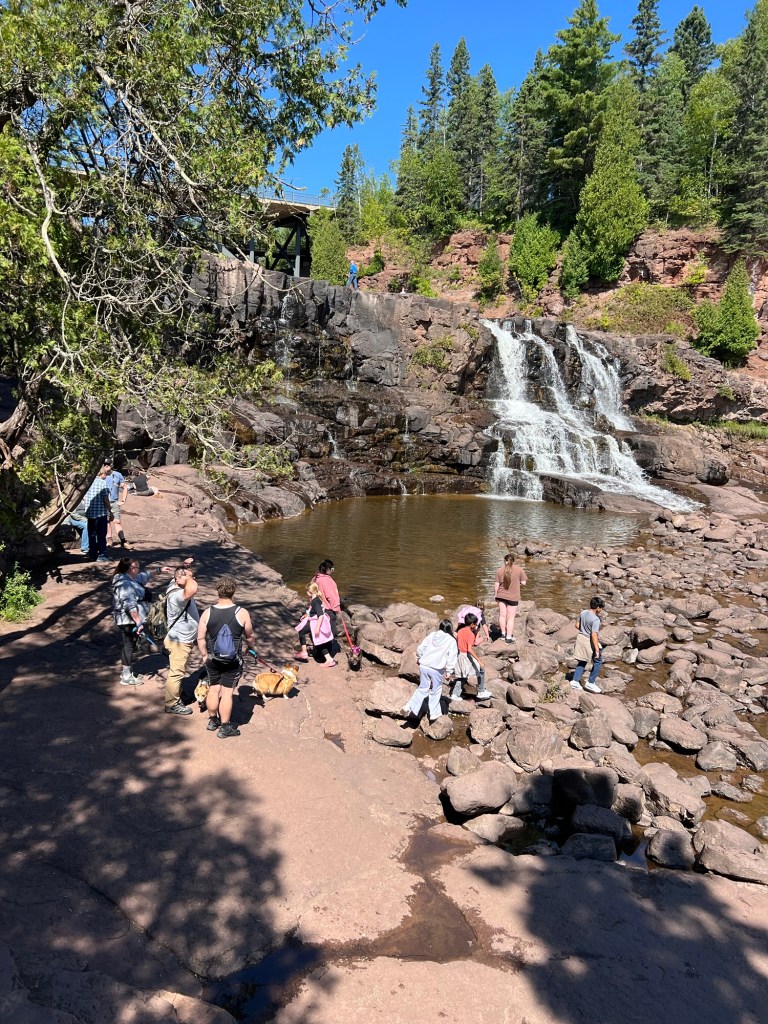
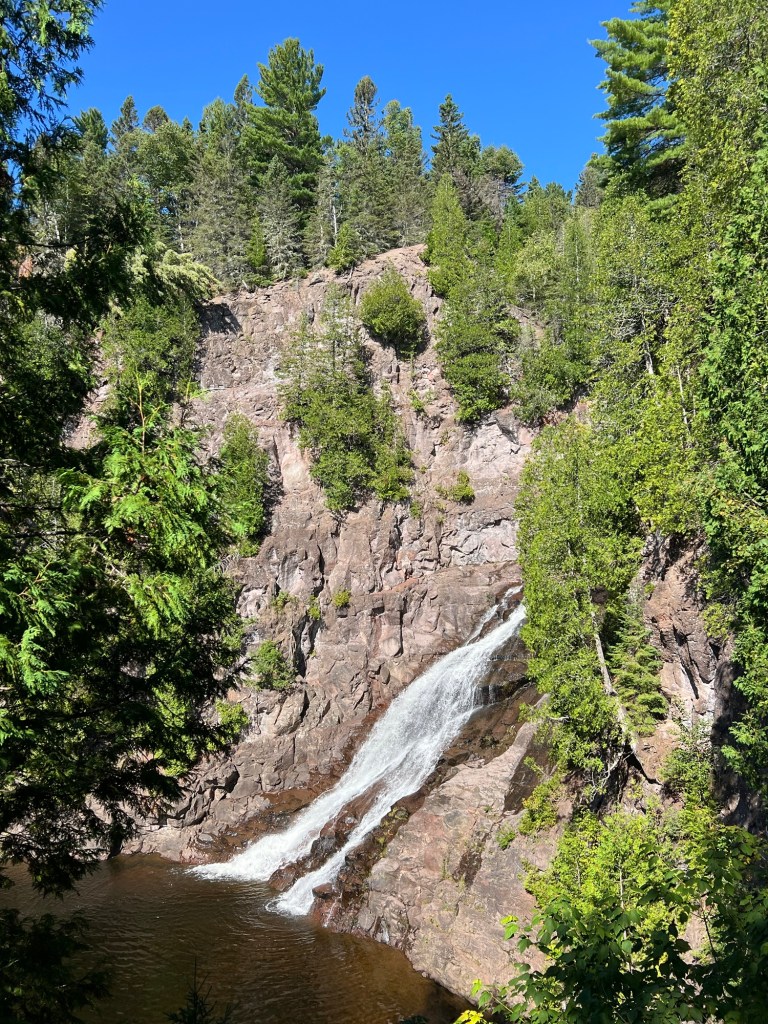
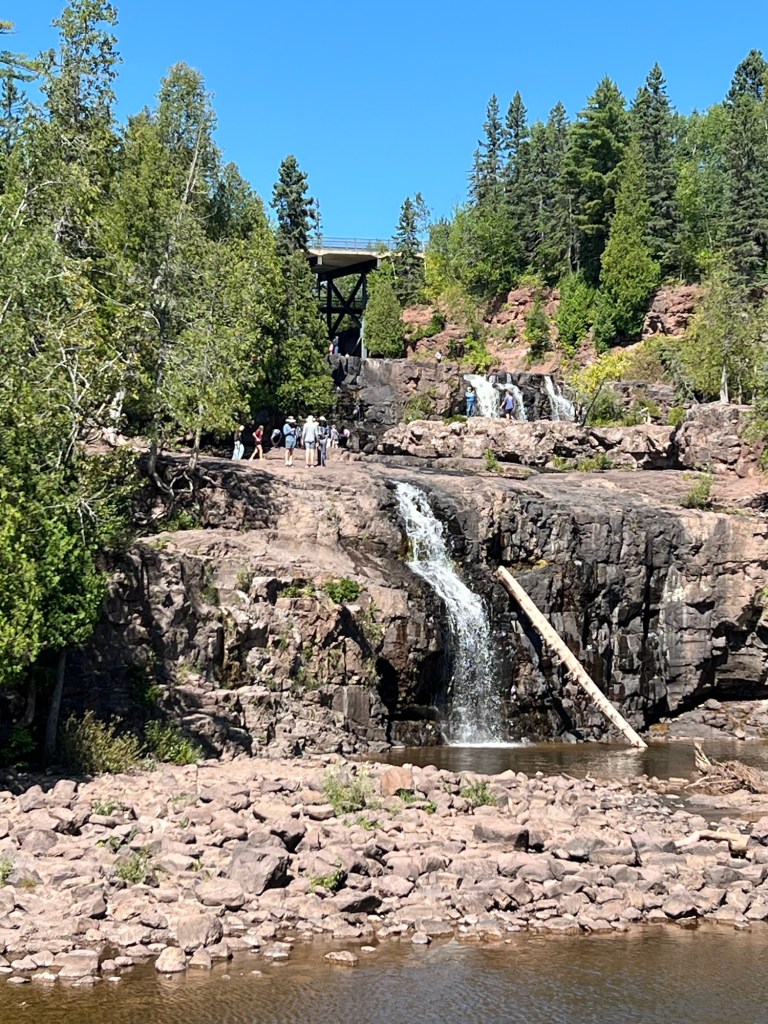
Friday we left Black Beach and Silver Bay, but we had extra time so we stopped at Gooseberry River State Park. This was another state park that charged no fee and had ample parking for campers. So we opened the camper and had lunch, then walked to the two lower falls.

There were a lot of people there, but it was very pretty.

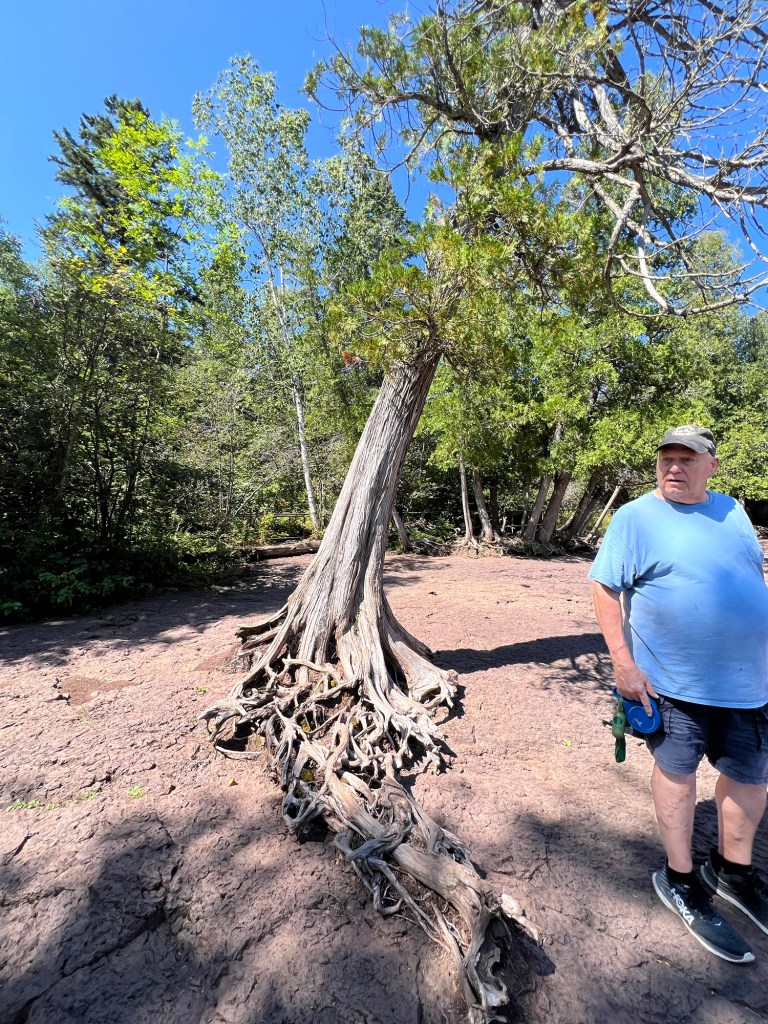
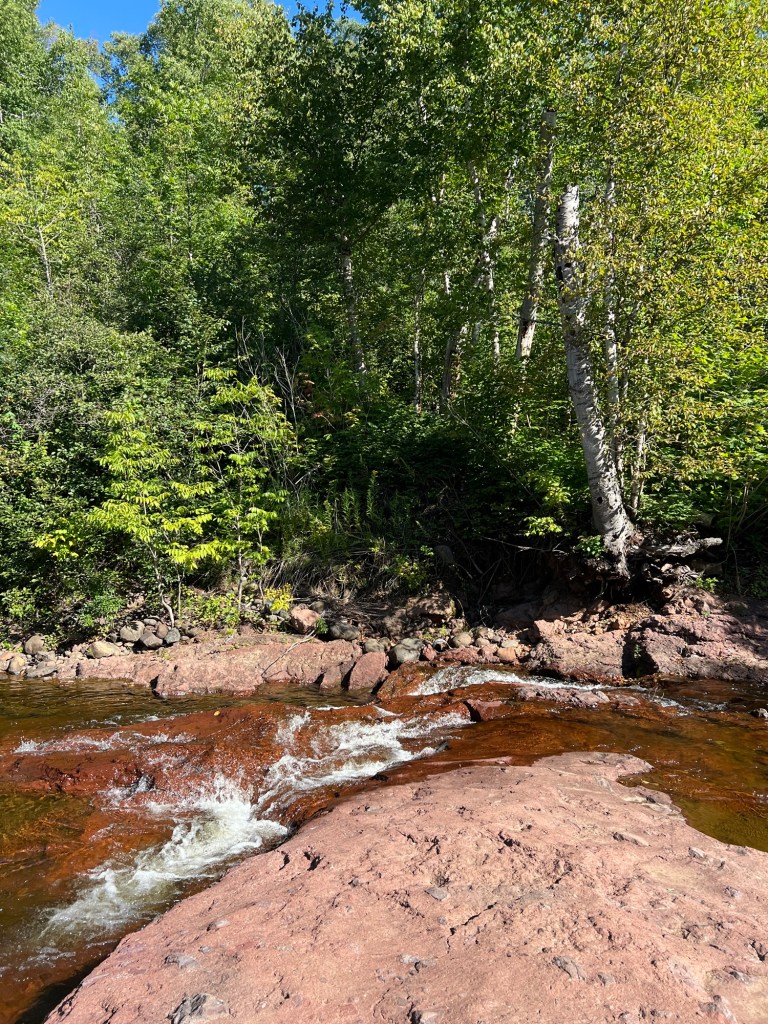
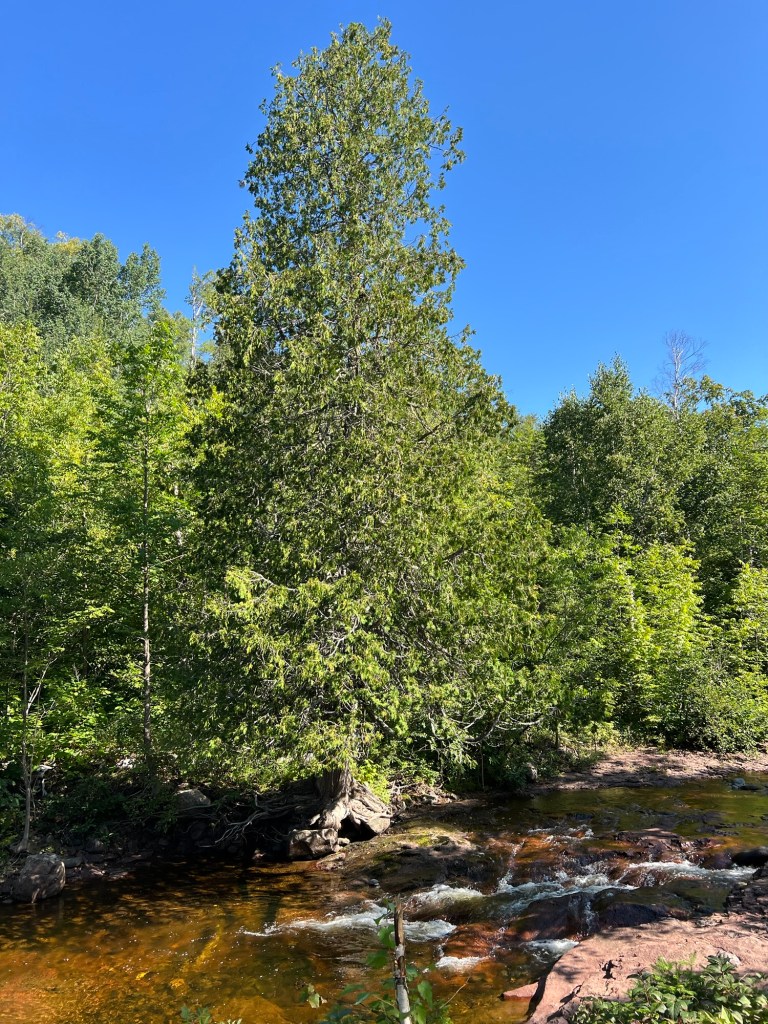
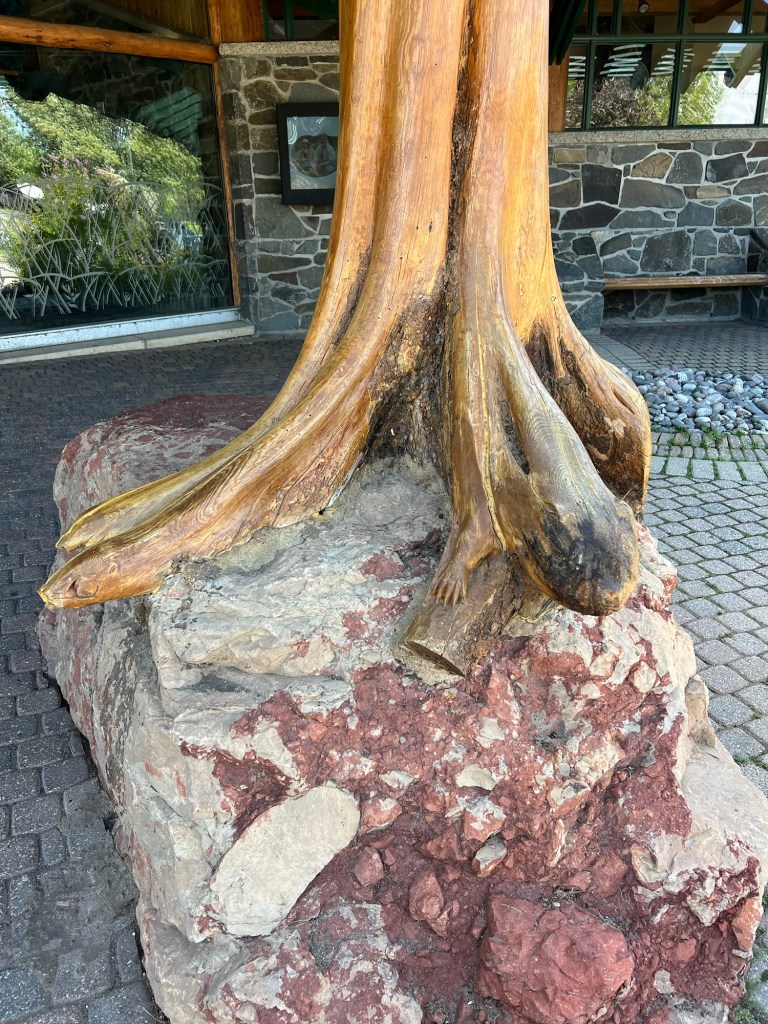
Of course I noticed the trees. This arborvitae was managing to live with its damaged roots clinging to bare rock. That is not dried red mud, it is red rock!

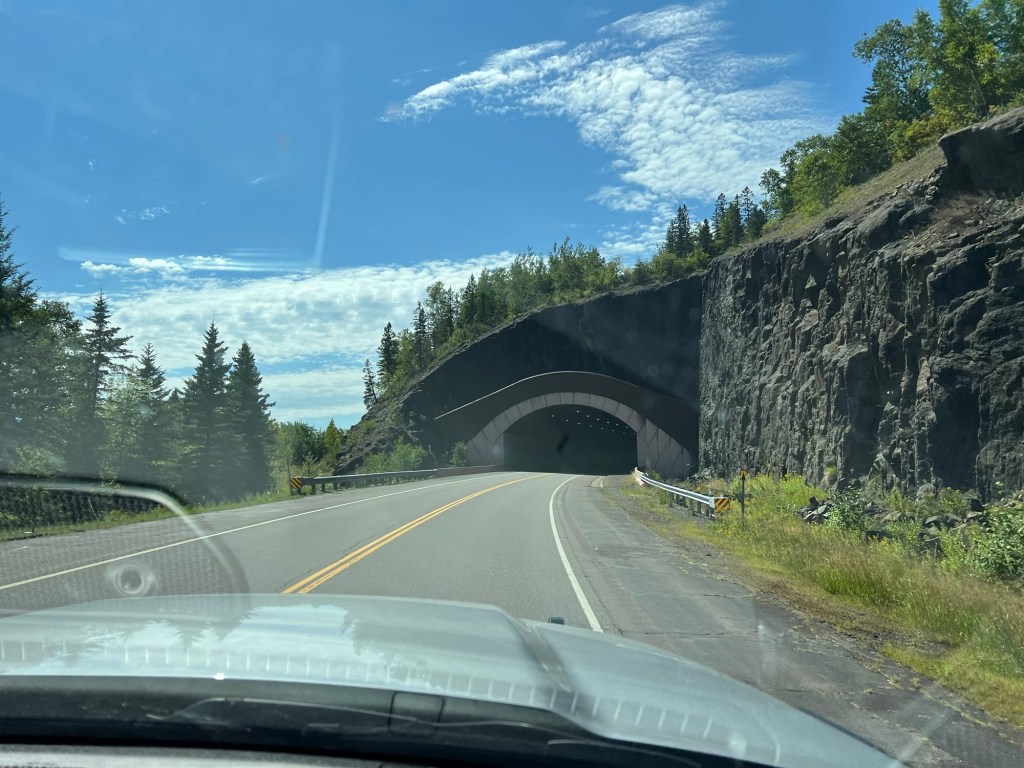
Then we headed on south on US 61 through the Lafayette Bluff Tunnel…

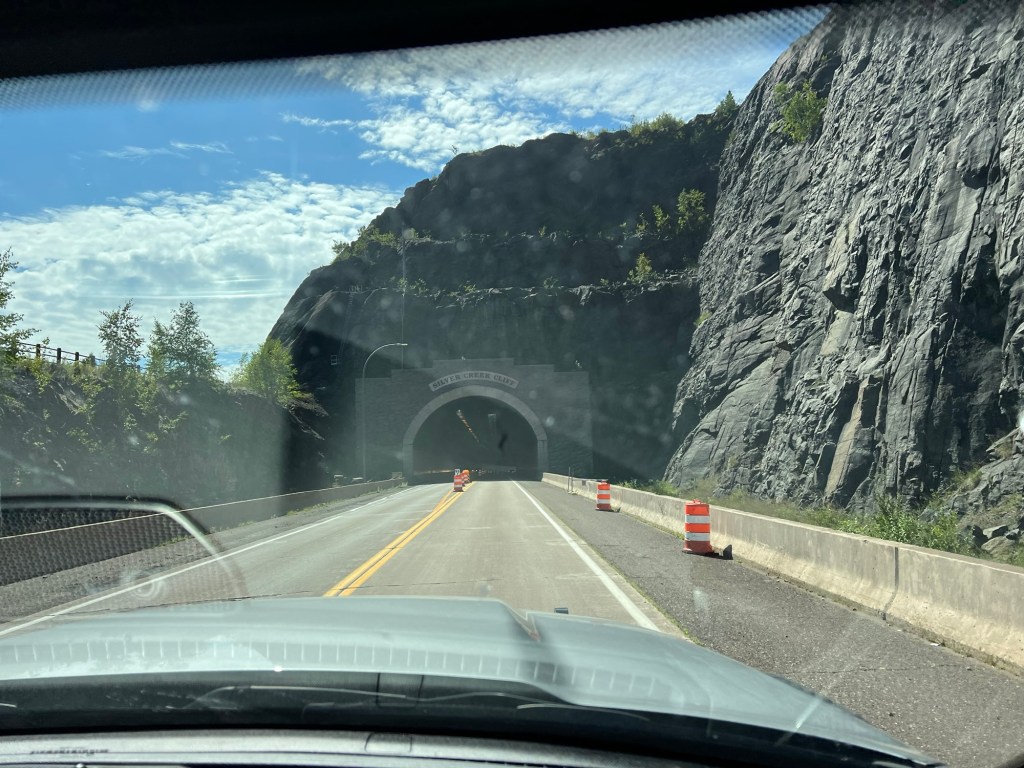
and the Silver Creek Cliff Tunnel and into Duluth, leaving the north shore behind.

Black Beach Campgound: Much Better, Not Perfect

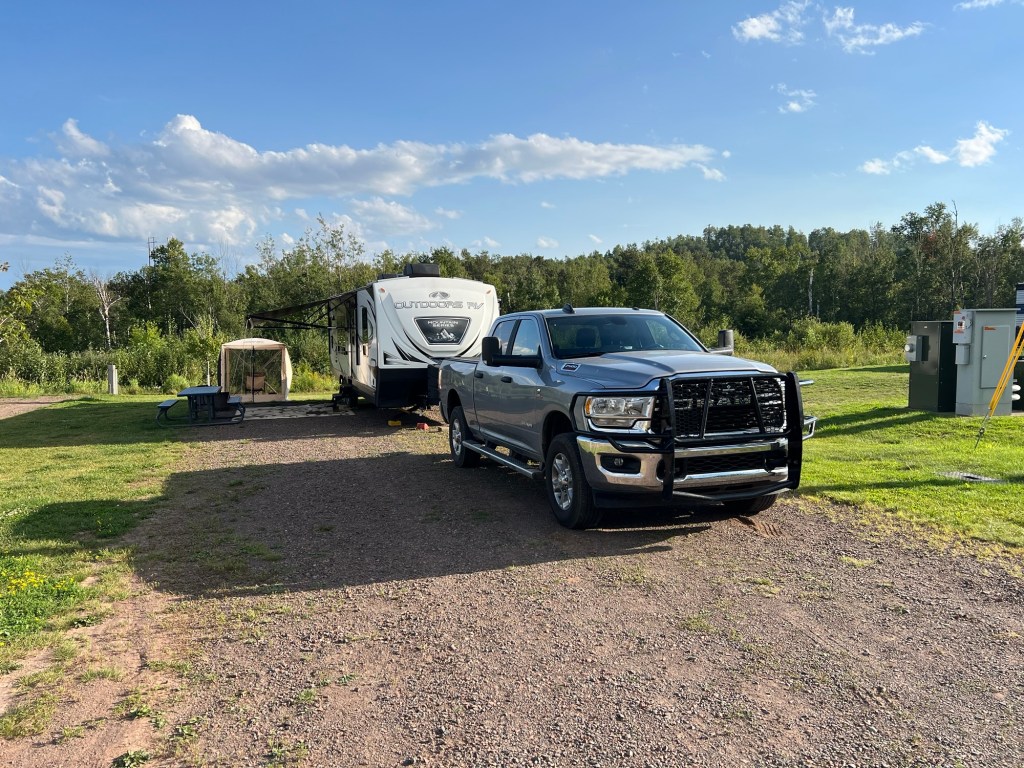
I’ve written before that there are trade-offs in campgrounds and that’s definitely the case here. No trees, not much privacy, but the sites are plenty big, there are full hookups and 50 Amp service. Our Starlink loves it so our internet is blazing fast and I dumped YouTube TV with their sign in requirements and we went with streaming DIRECTV, and had no problem opening an account in Minnesota with a billing address in Arkansas.

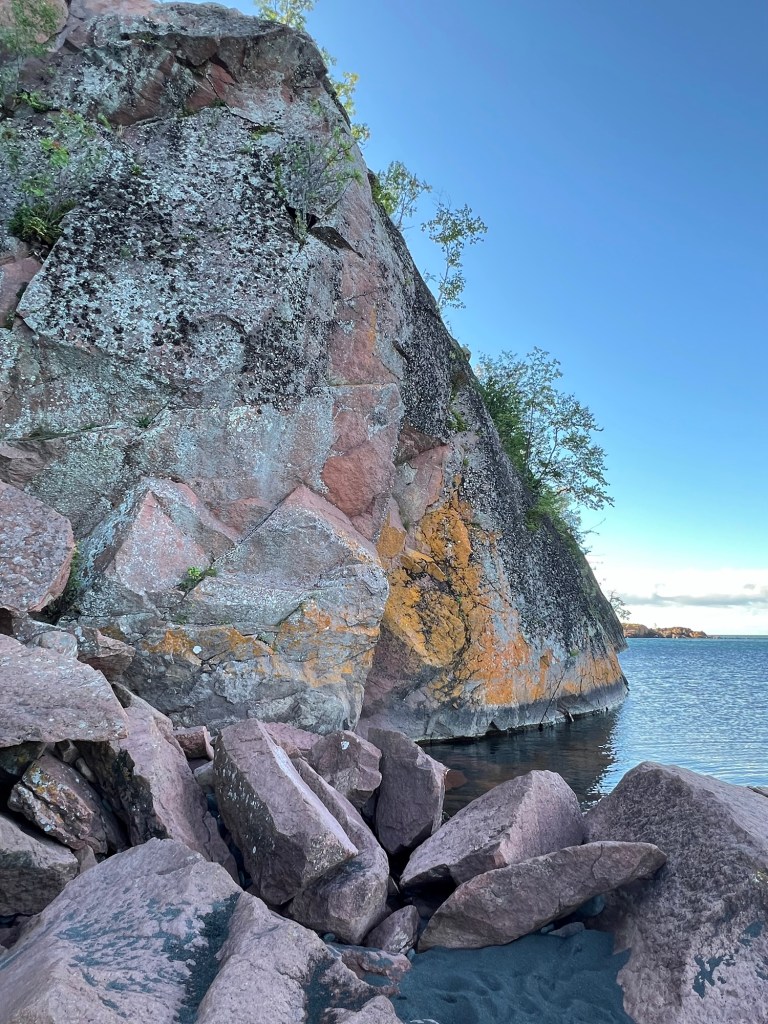
We are about a quarter mile from Agate Beach. Matey and I first approached it from here, and that’s about a 30 foot cliff down to the beach.

A short walk took us to a trail down.

A nice little cove,

picturesque, but rocky.

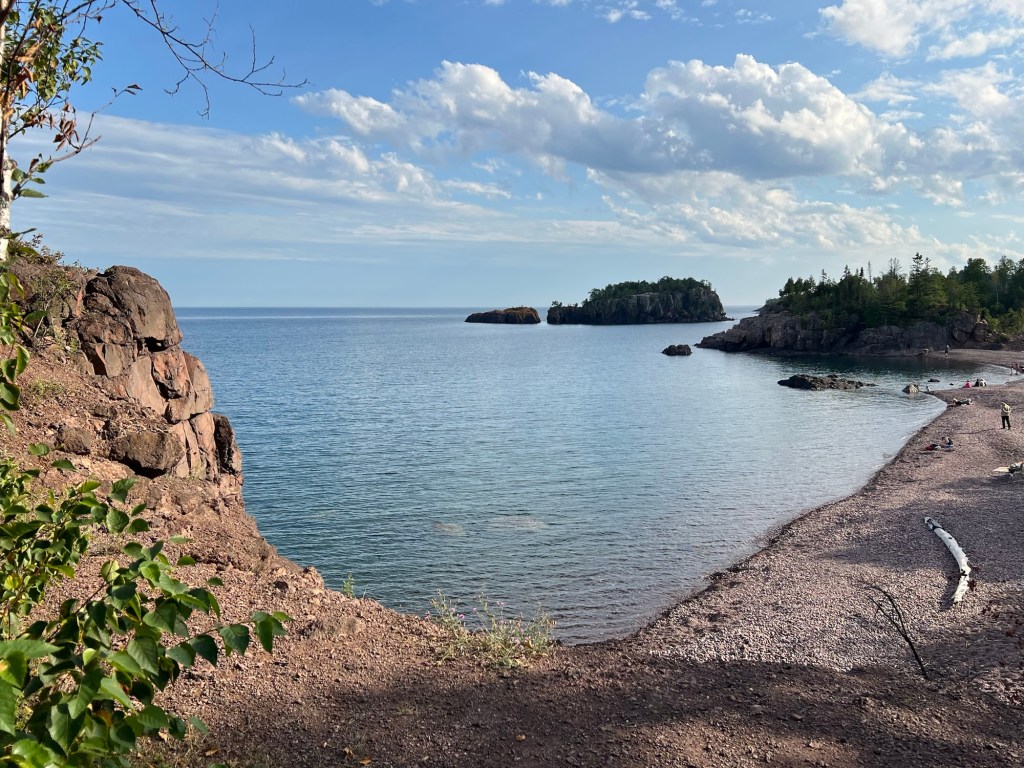
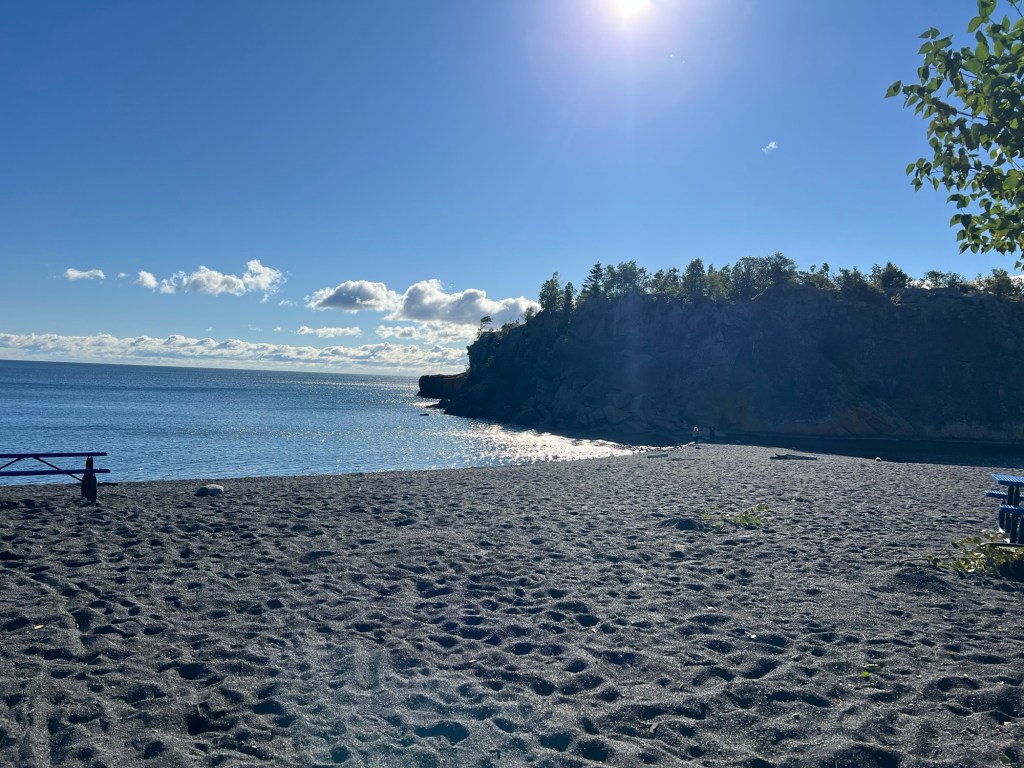
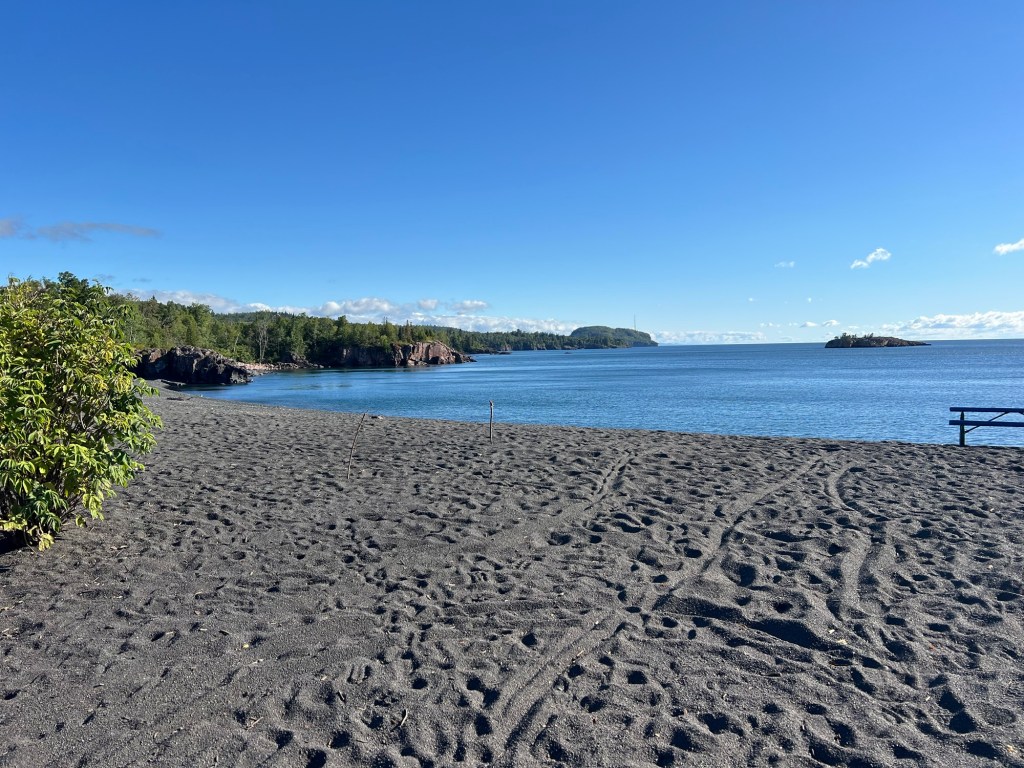
The next morning we drove about three-quarters of a mile to Black Beach, and that is black sand.

It, too, is in a lovely cove. The sand reaches right out to that island of rock and I thought perhaps we could walk there.

Nope. But it’s pretty.

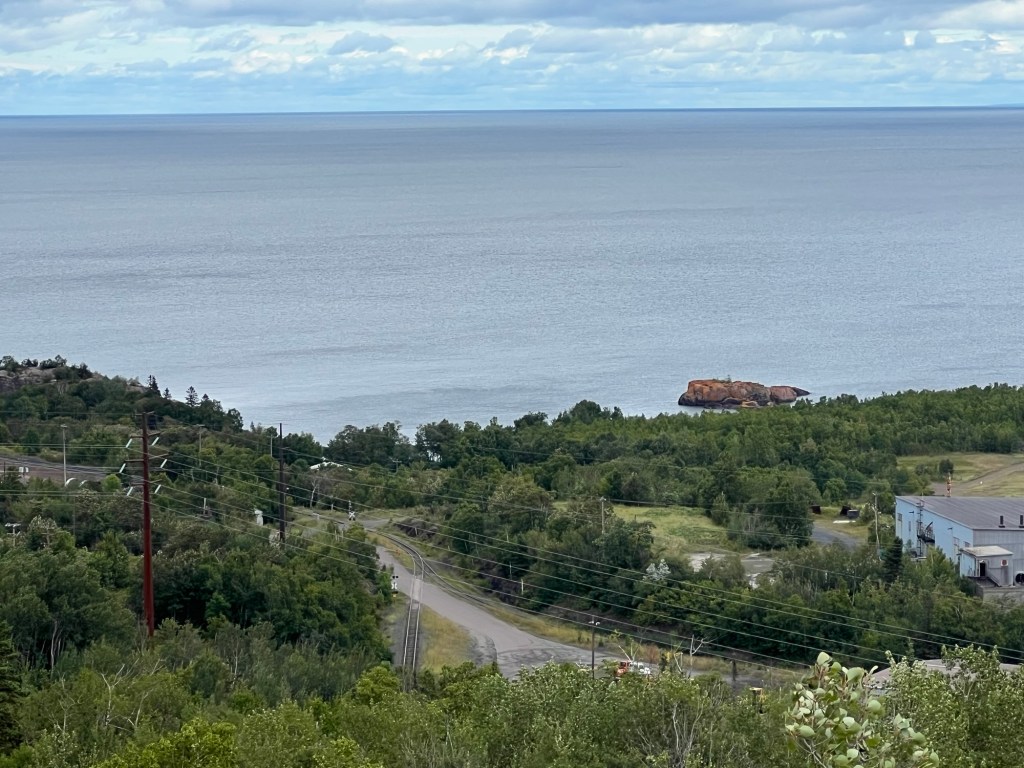
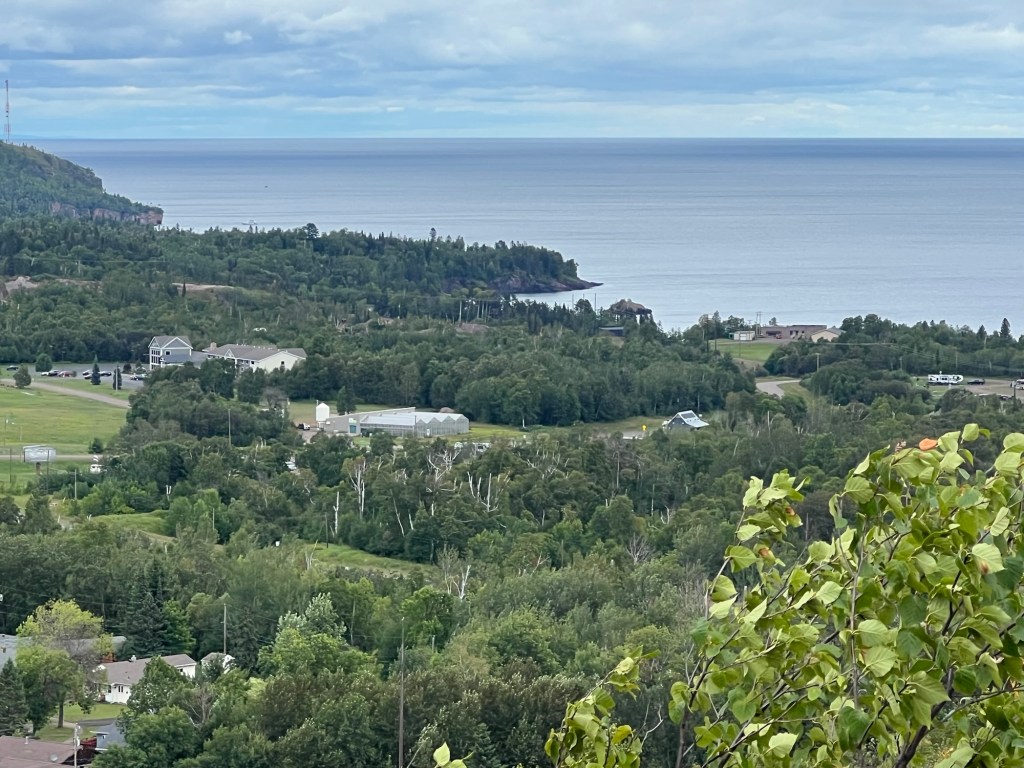
After lunch we drove around a bit. We went to 3 overlooks in the town of Silver Bay, which operates the campground. The first gave a view of Lake Superior north of town. Black Beach is in the cove to the left of that red rock island.

Our camper is just this side of the greenhouses, but the closer trees block the view.

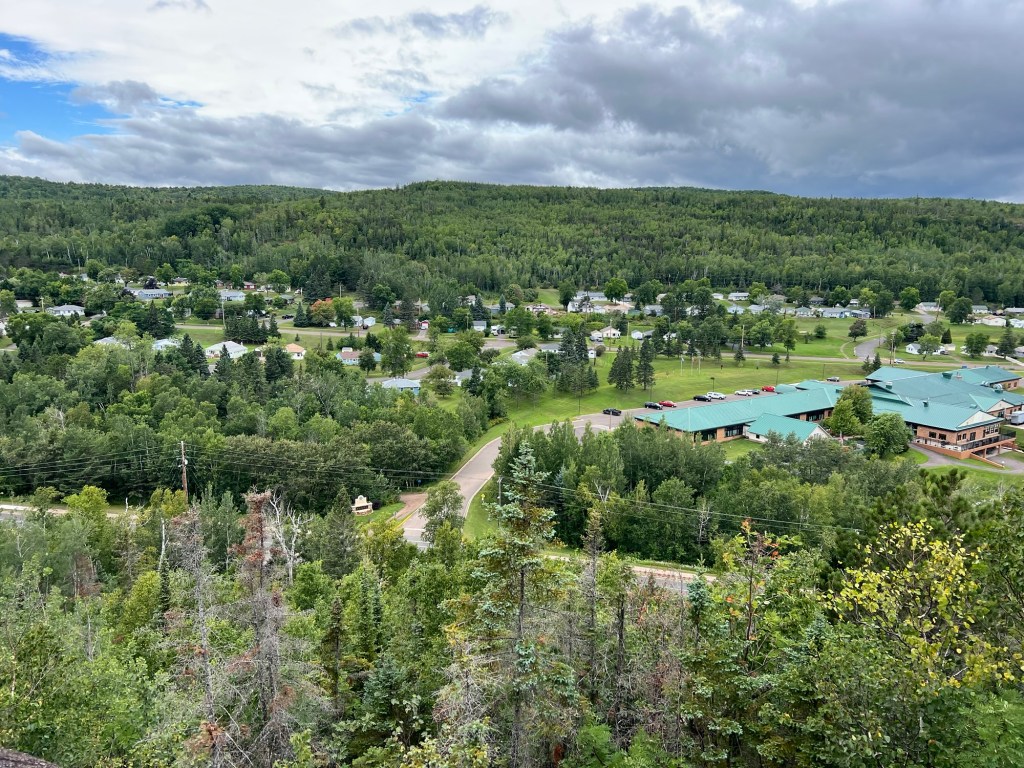
Another overlook gave a view looking west, to the town.

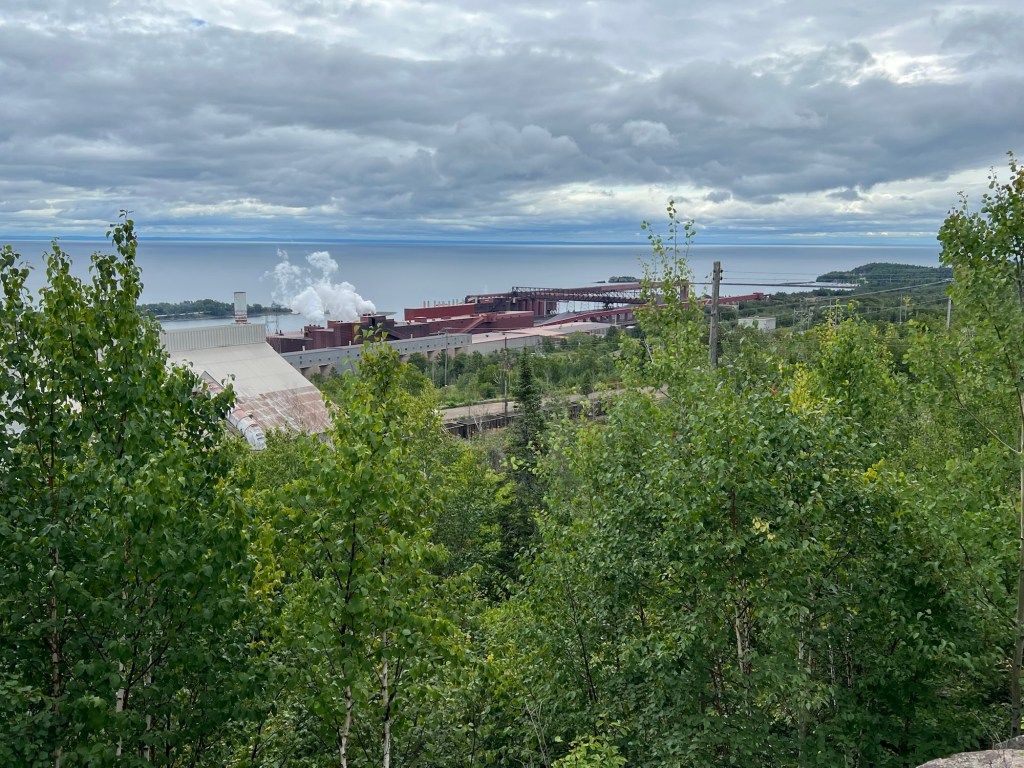
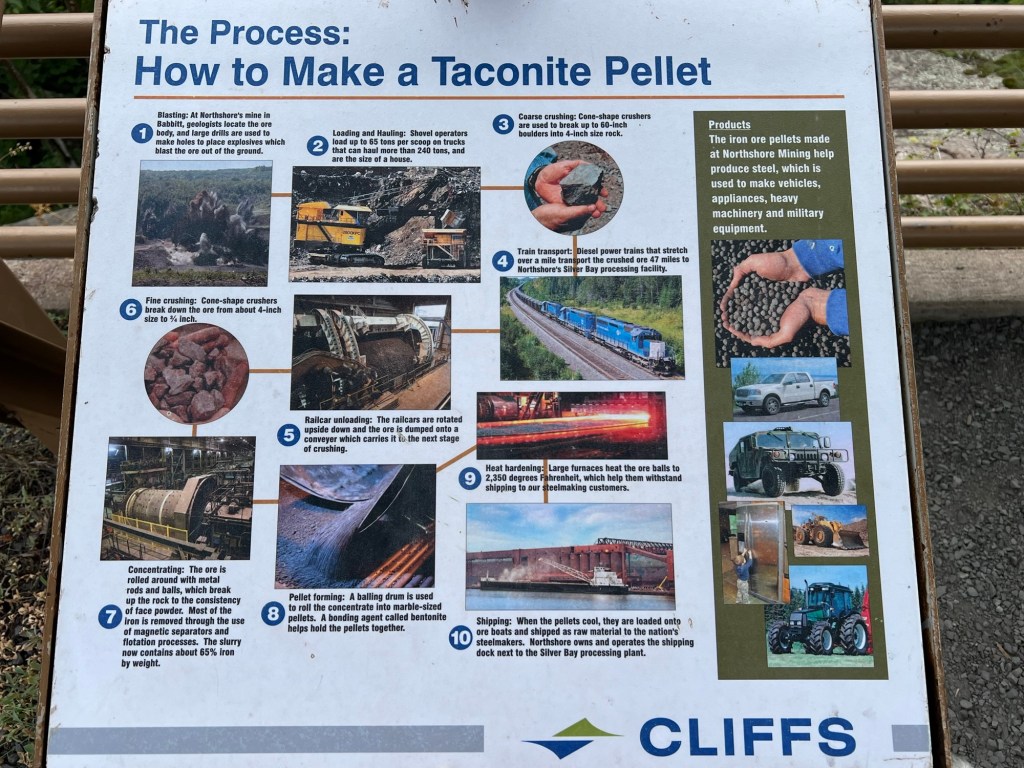
And a third gave a view more directly east, to the huge Taconite pellet facility and the lake beyond it.

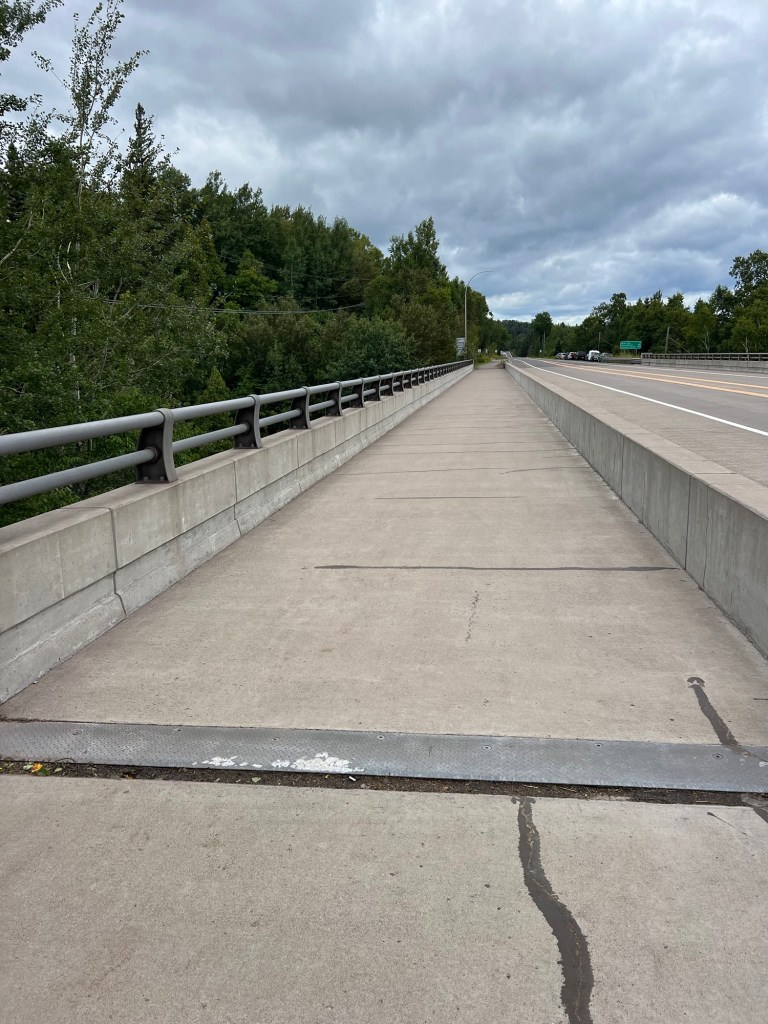
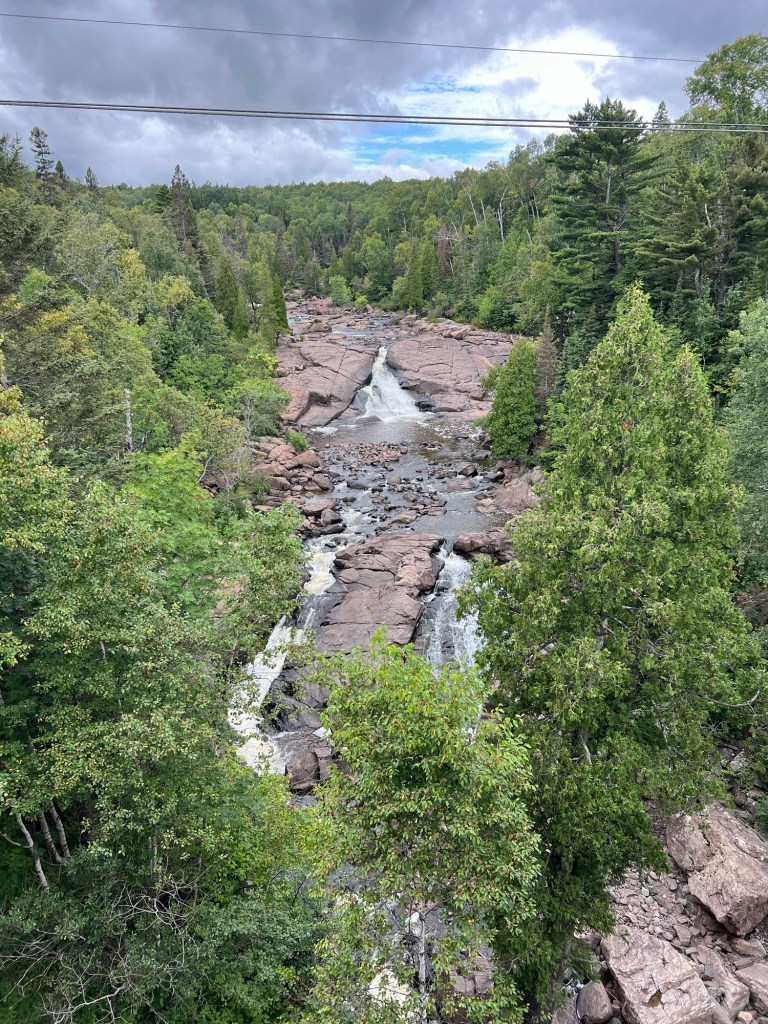
Next we went to the town of Beaver Bay where this walking/bike trail crosses the Beaver River alongside Route 61,

and gives a great view of the falls there.

On the way back we stopped at the Silver Bay Marina. It was very nicely done, with power at the docks and a nice building. We would have liked this one, back in our boating days.

The north shore of Superior in the US has high, rocky hills that run quite close to the shore. So as you drive along this northernmost part of US 61 (the route runs through the twin cities to the Mississippi River and all the way to New Orleans) there are lots of waterfalls.

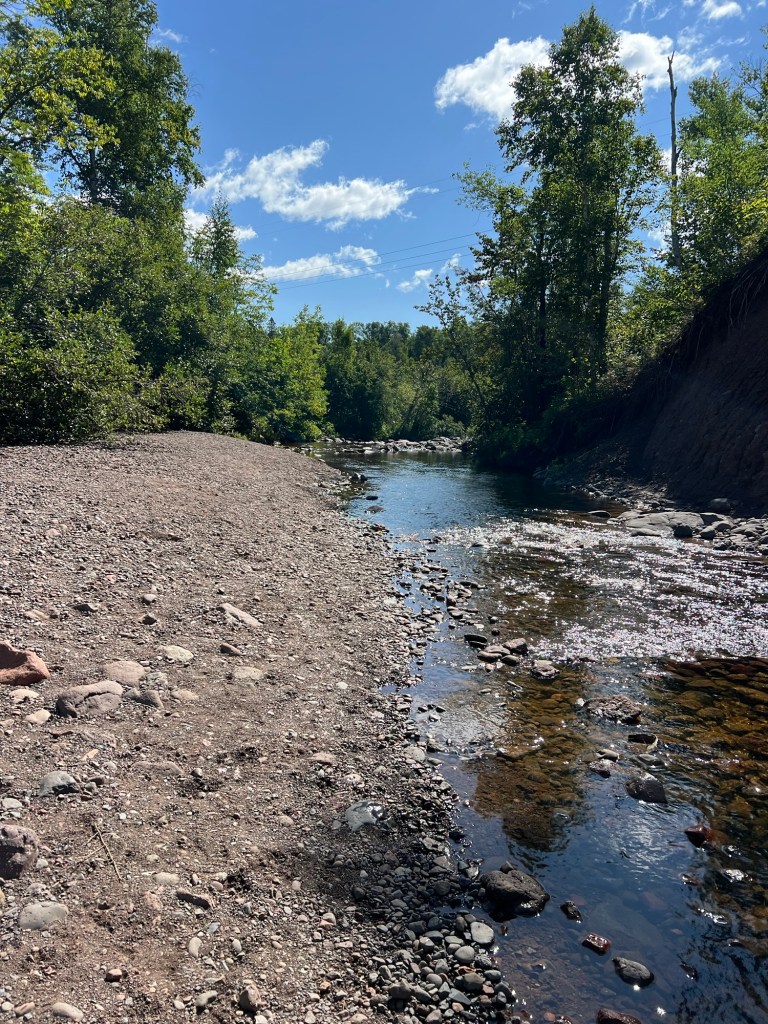
This morning we drove about 16 miles to another one on the Caribou River. The trail starts near the highway where the river is fairly flat.

Walking up the trail there are a few places you can get to the river’s edge.

I took the opportunity to take some pictures.

The trail gains some height…

until you are well above the little river.

Then you come out on some stairs where you get a nice view of Caribou Falls.

So even though the view at the campsite isn’t the greatest, there’s lots to see around us.
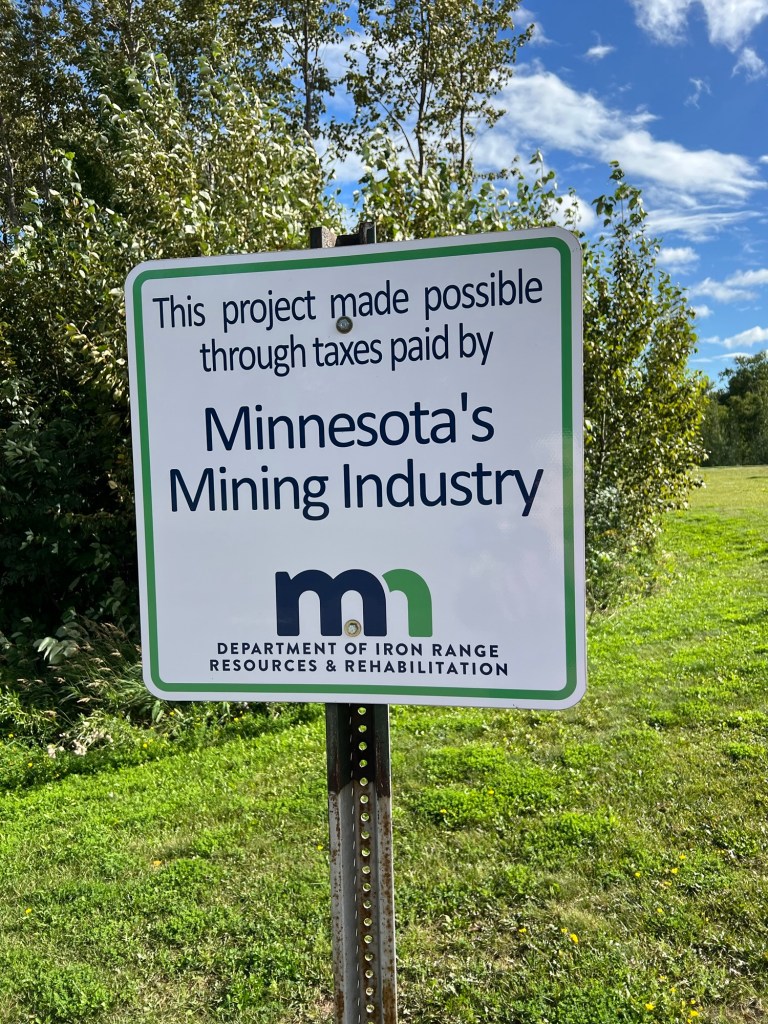
They want you to know that this nice campground is here because of the mining industry.

In all the information they give you at the overlook about the processing plant…

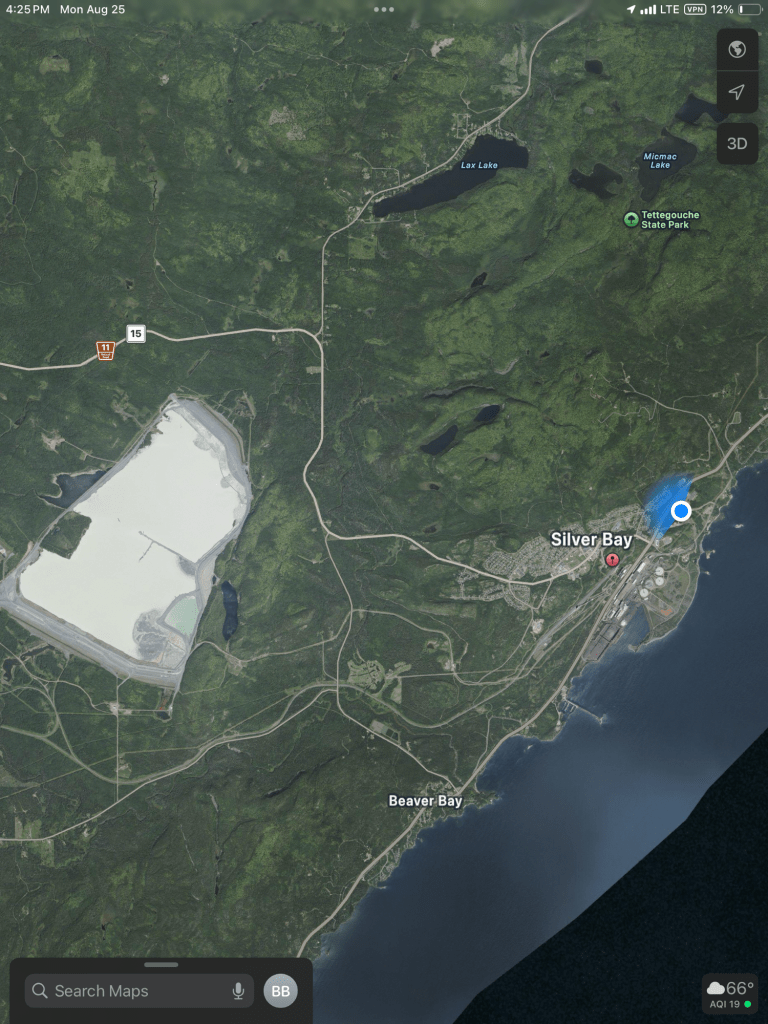
they don’t mention the 2,150 acre tailings “pond” that sits above Silver Bay and Beaver Bay. This is bigger than any natural lake along the 154 miles of shore from Duluth to the Canadian border. The company wants to increase its size by a third and environmental groups just won a court case to force them to file a new environmental impact assessment. They were saying the one done in 1973 when courts forced them to first build this and stop dumping their sludge directly into the lake were all they should need for the expansion. And the fun part is, this “pond” will need to be monitored for years after the company decides to shut this operation down. Hope those mining taxes have figured that in the bill.

So it’s nice here, we enjoy the good utilities, but it is far from perfect.

Cascade River State Park: a Mixed Review

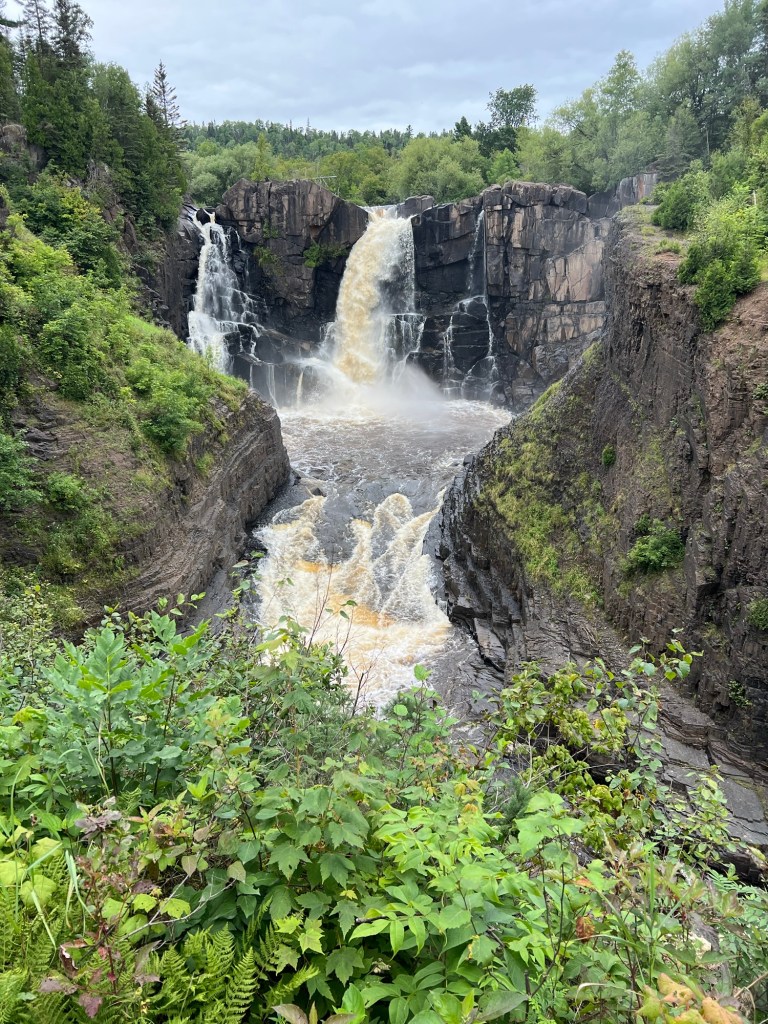
Monday we crossed back into the US, a total nonevent, and stopped at Grand Portage State Park, just as you enter Minnesota. This park was free, had RV and trailer parking and nice paved walkways up to High Falls on the Pigeon River, which forms the border here. Very nice.

We were stretching our legs and taking our time because we gained an hour crossing the border and check-in wasn’t until 4PM (now Central Time) at Cascade River State Park where we were headed.

We got here right at four, only to find that the office closed at four and the map on the wall didn’t show where the water fill station was. Another camper stopped behind us told us that.

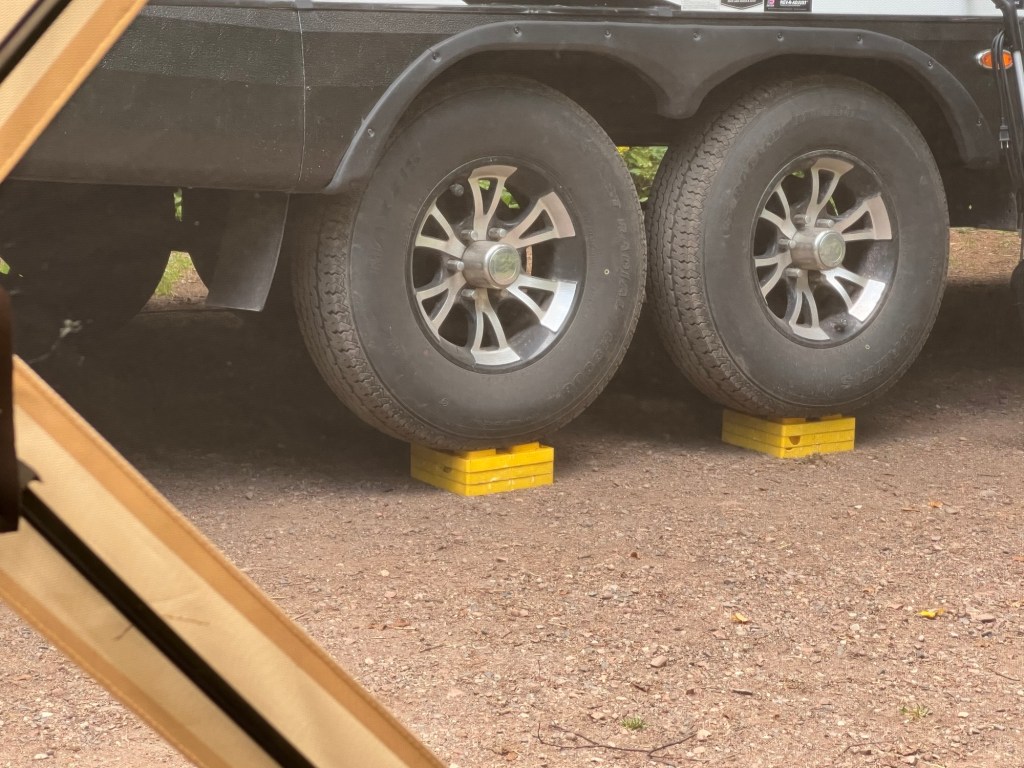
We found water and our site, but as you can see by our needing three blocks under both right side wheels, the site is not at all level.

It does have reasonable privacy and 50 Amp service, though. That’s nice, but despite having one of the most open sites in the campground, we have very little open sky and Starlink is struggling and we have inconsistent connectivity.

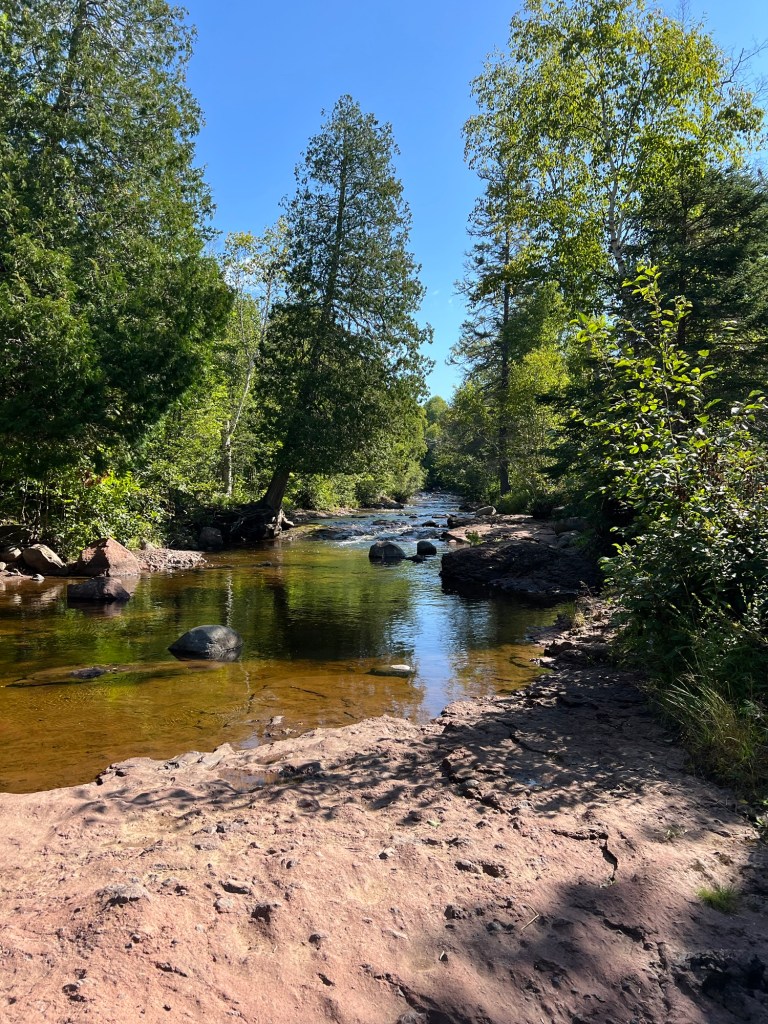
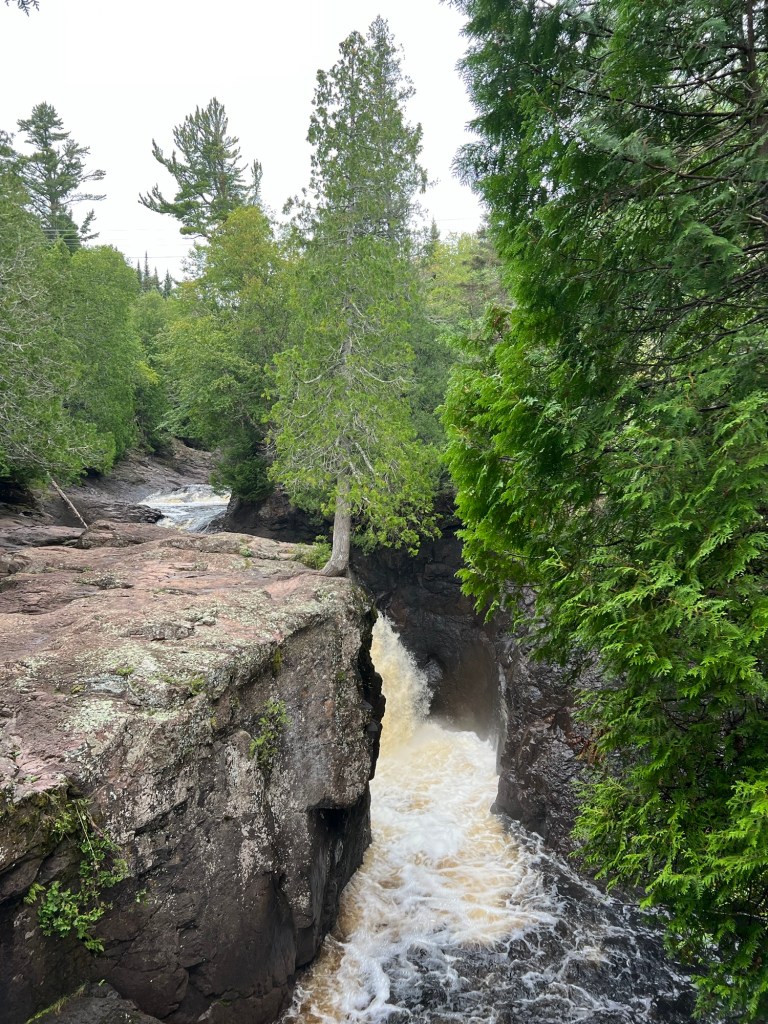
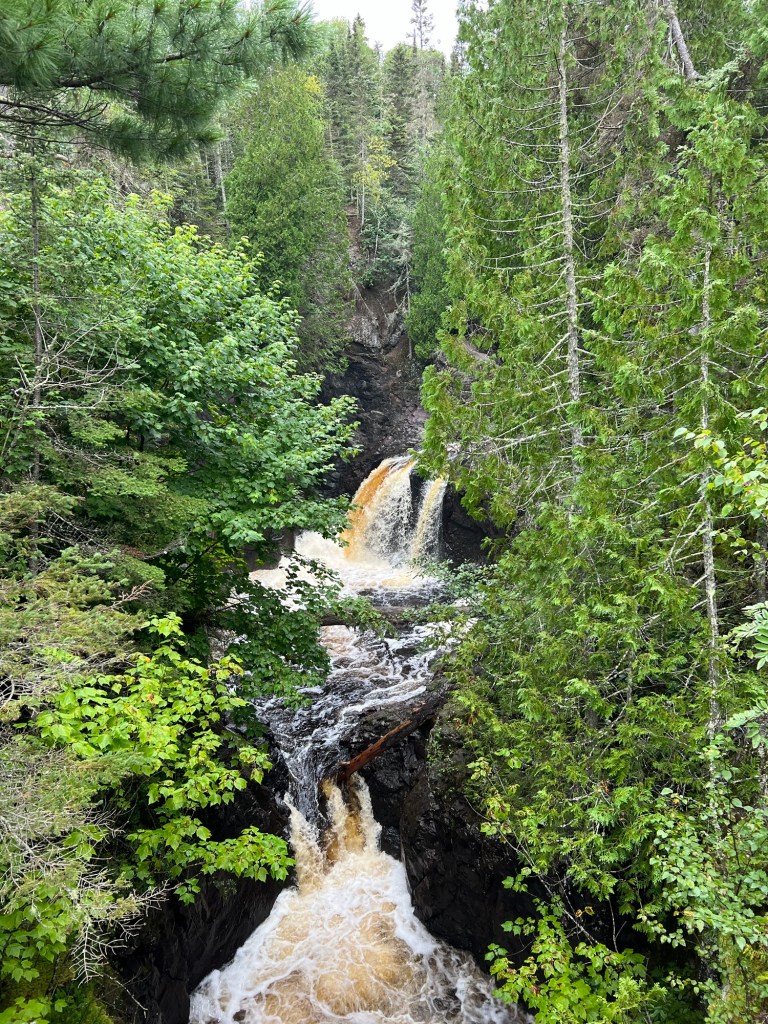
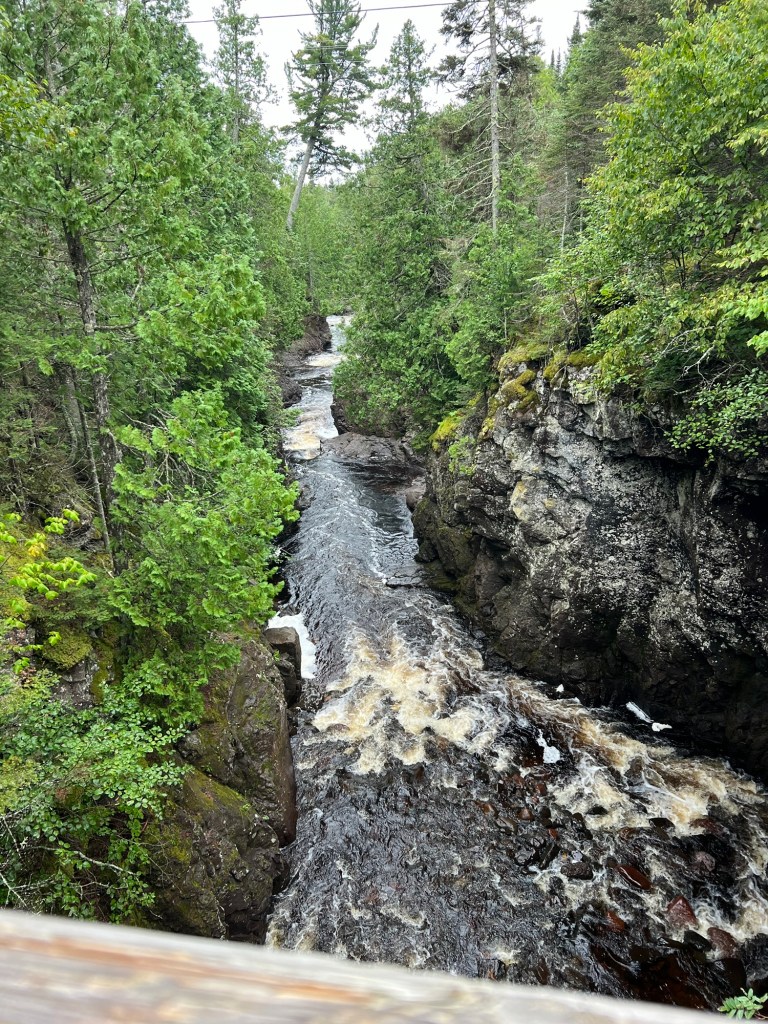
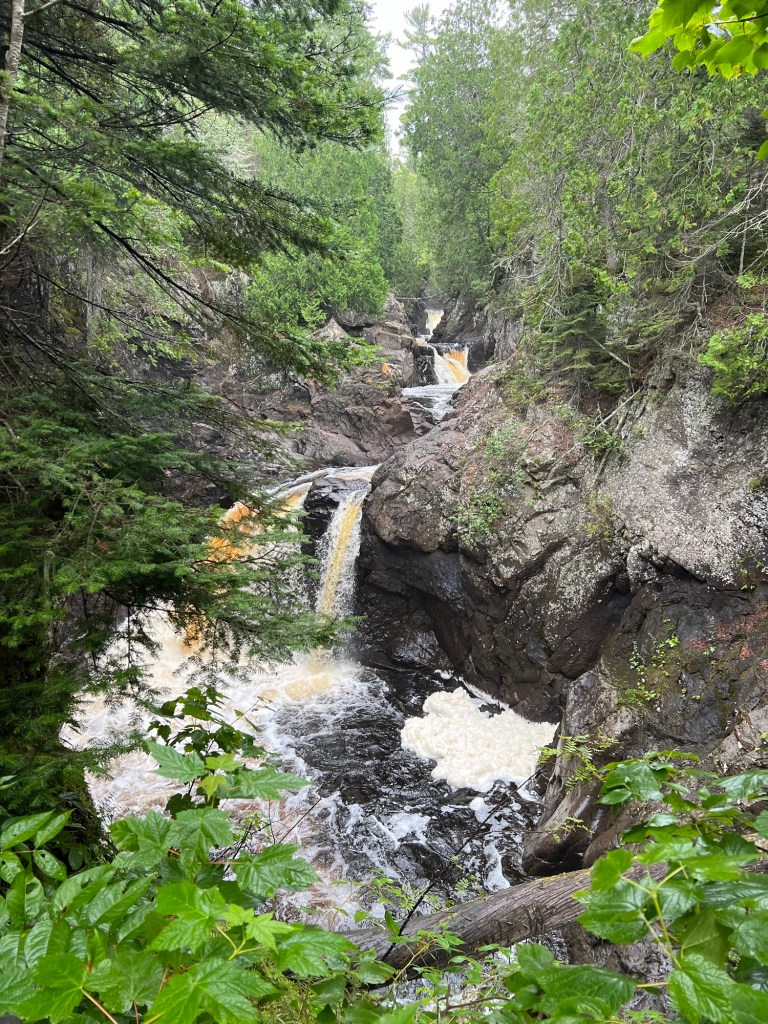
But then there is the river and the trails. This is the Cascade River. It is much smaller than the Pigeon River…

but just as pretty.

There are trails up one side, across a bridge,

and down the other, so you get plenty of opportunities to see the cascades that gave the river its name.

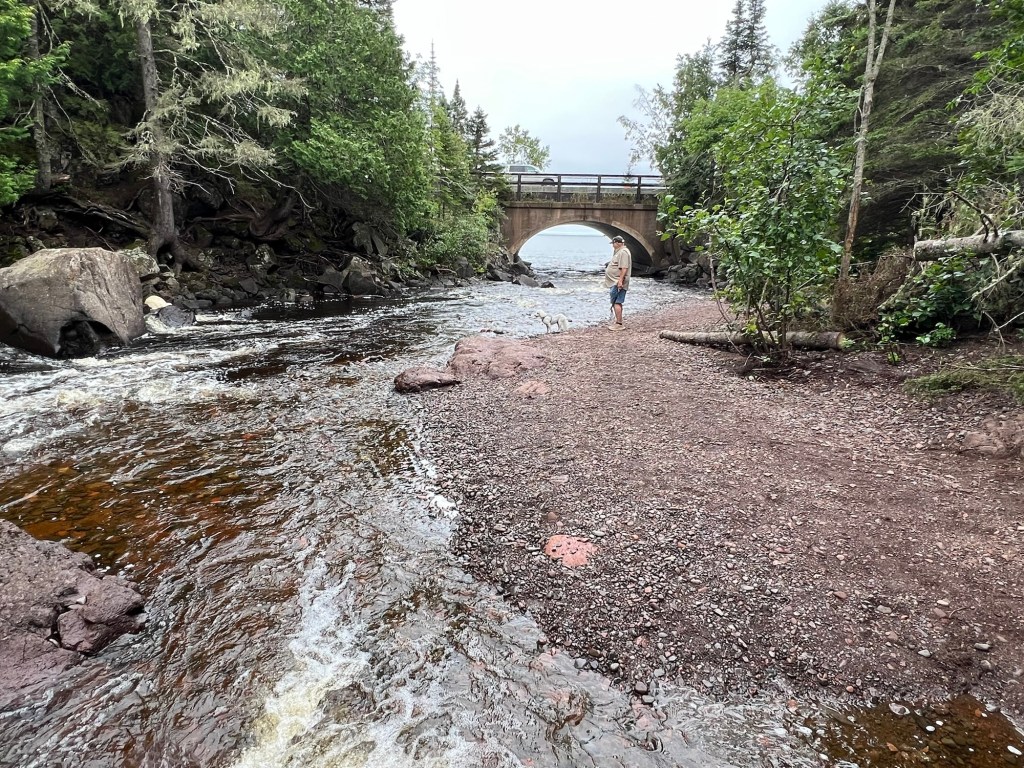
At the bottom the river flattens…

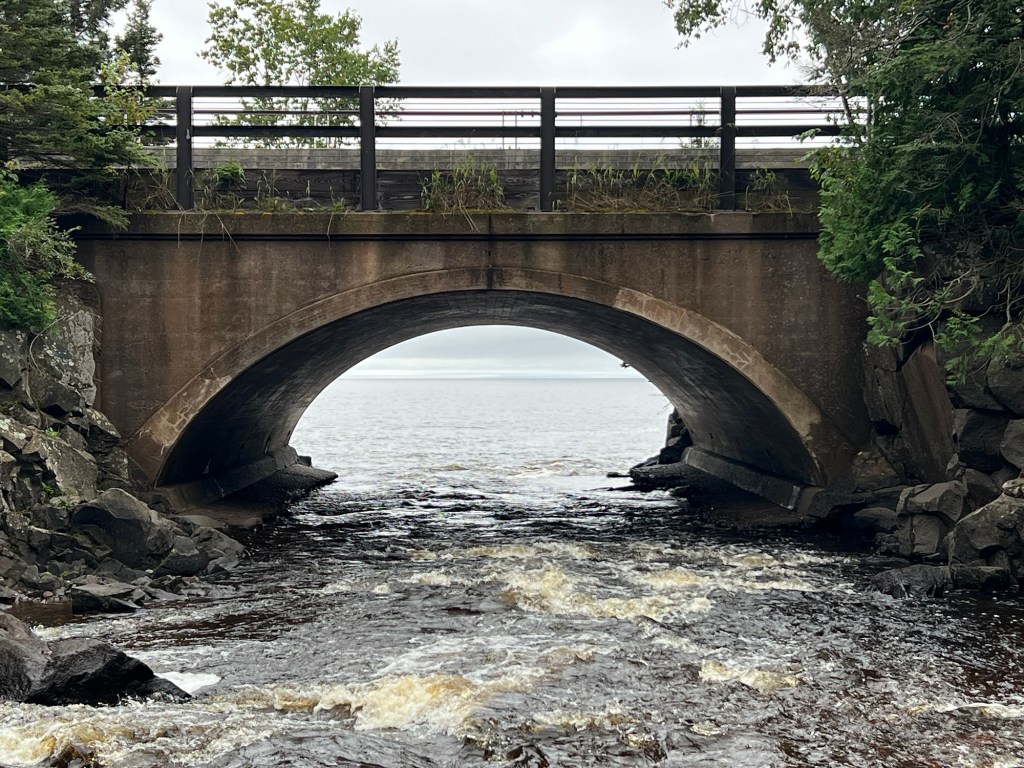
and just on the other side of the highway flows into Lake Superior.

This was our only view of the lake that day because there was construction at the lake access here.

Another day we found a different trail along Lake Superior. This is still the north shore, and though not as rugged as it is east of Nipigon, in Ontario, it’s still quite beautiful.

No beaches, but nice flat rocky places to walk.

Between the highway and the lake is a picnic area. It’s part of the park, but there is no fee for stopping here.

There’s a nice bit of trail…

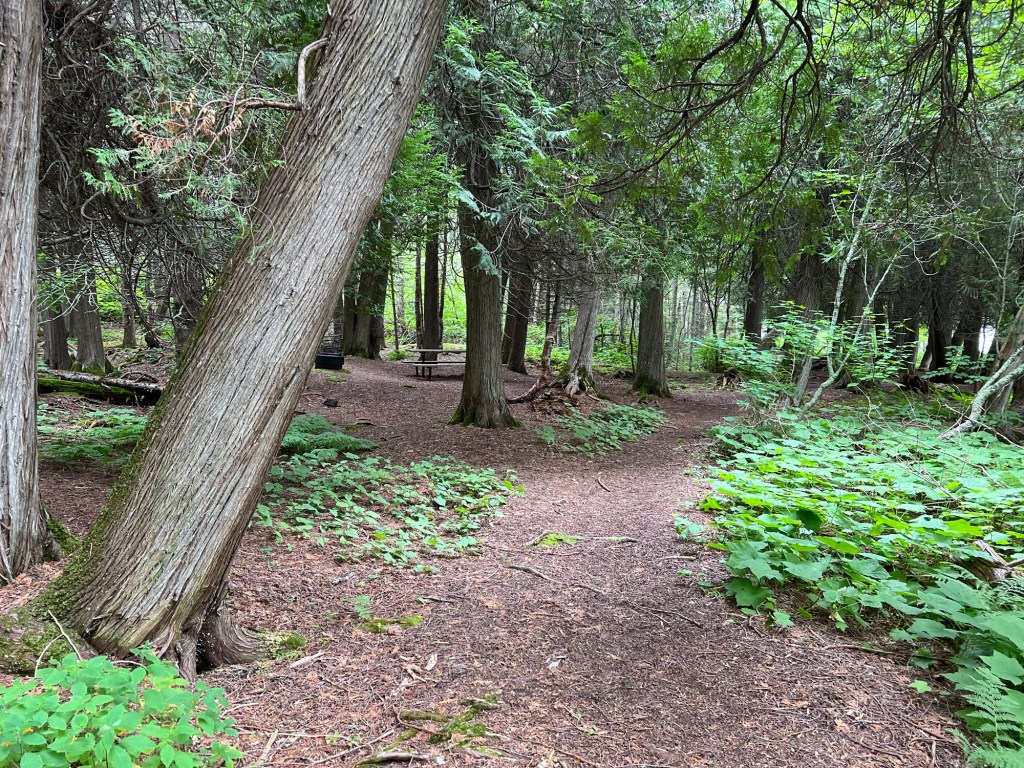
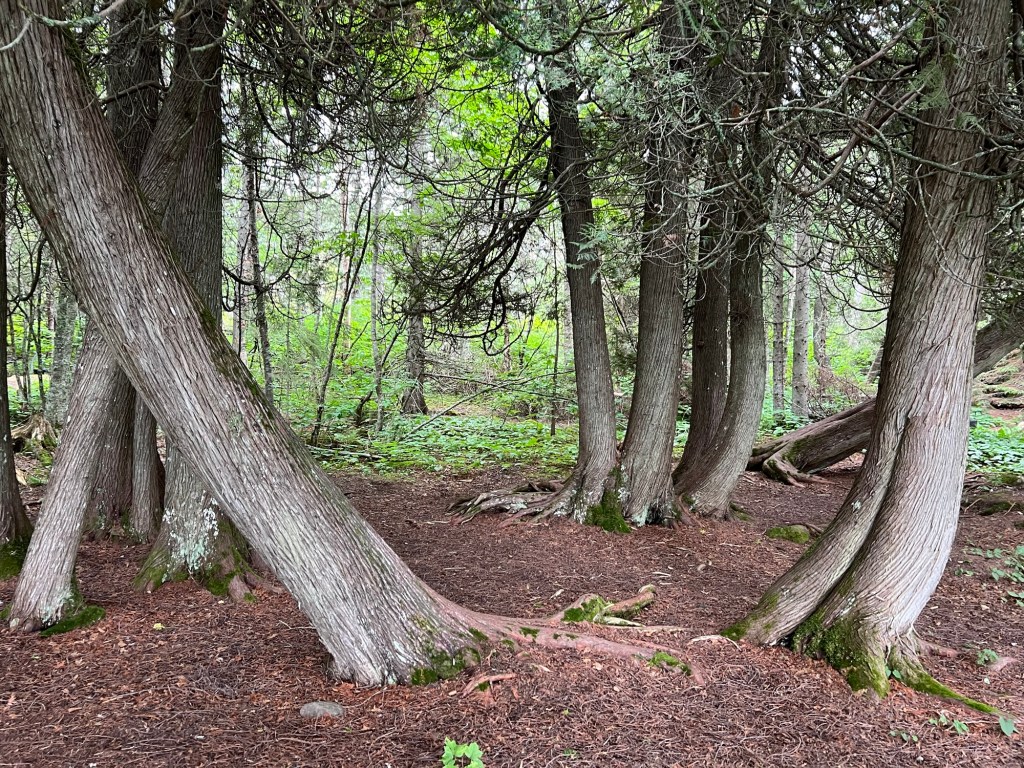
through some very old arborvitae.

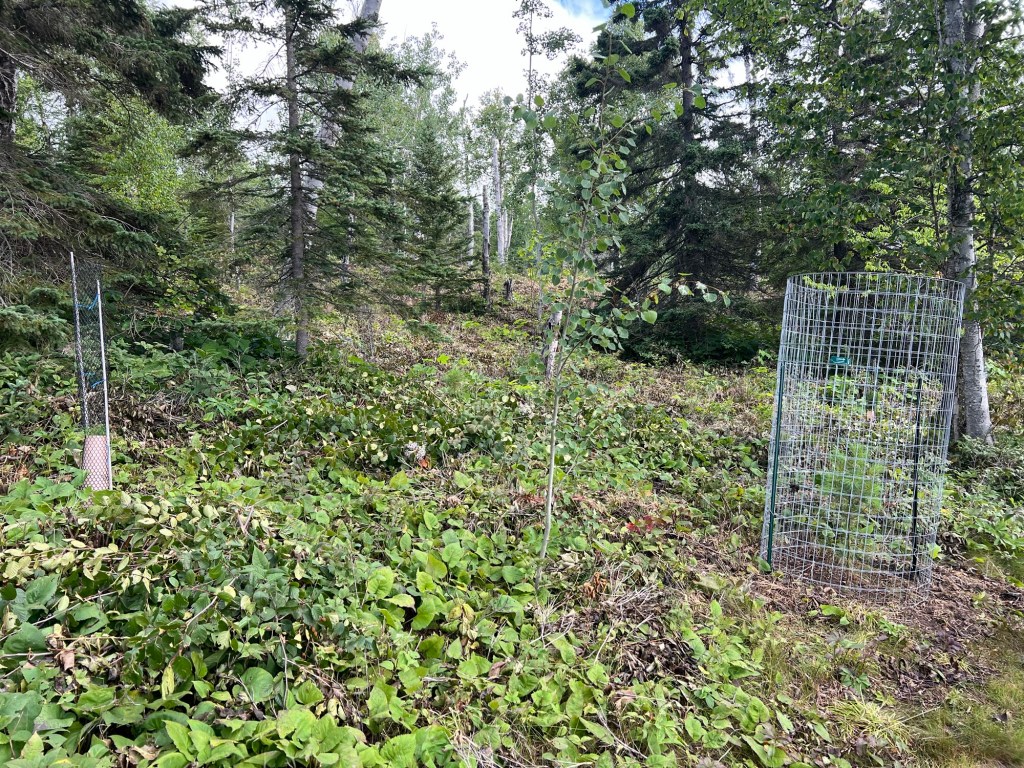
Looks like they are doing some reclamation work here, but unfortunately for us the trail disintegrated into two muddy ruts and we ended up bushwhacking a hundred feet up a thickly grown bank to get back to the highway and the campground entrance. Neither Bud nor Matey were impressed.

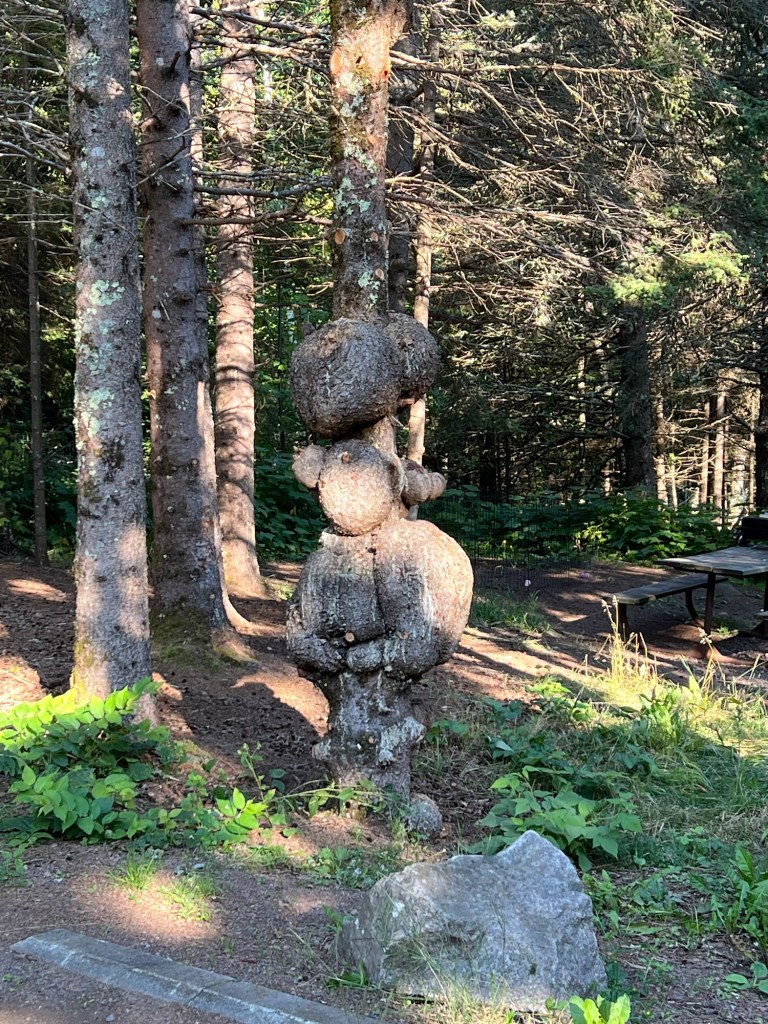
I’ve found a lot to like here, including this tree which might just be the gnarliest tree I’ve ever seen. But the check-in experience was not good and now we’ve found they’ve closed the trailer dump station, so we can’t drain our waste tanks when we leave. Add to that the inconsistent internet and the fact that YouTube TV just stopped working because it’s been too long since we’ve watched in our “home area”, and you can guess we’ll be happy enough to be on our way tomorrow.

Around Thunder Bay

We’ve been at Kakabeka Falls Provincial Park for a week. Besides the falls and the fort we’ve gone into the city of Thunder Bay. They have disc golf here. We’ve not been near a course since southern Ontario and we played three times here.

We played two different courses, but preferred this one at Birch Point Park.

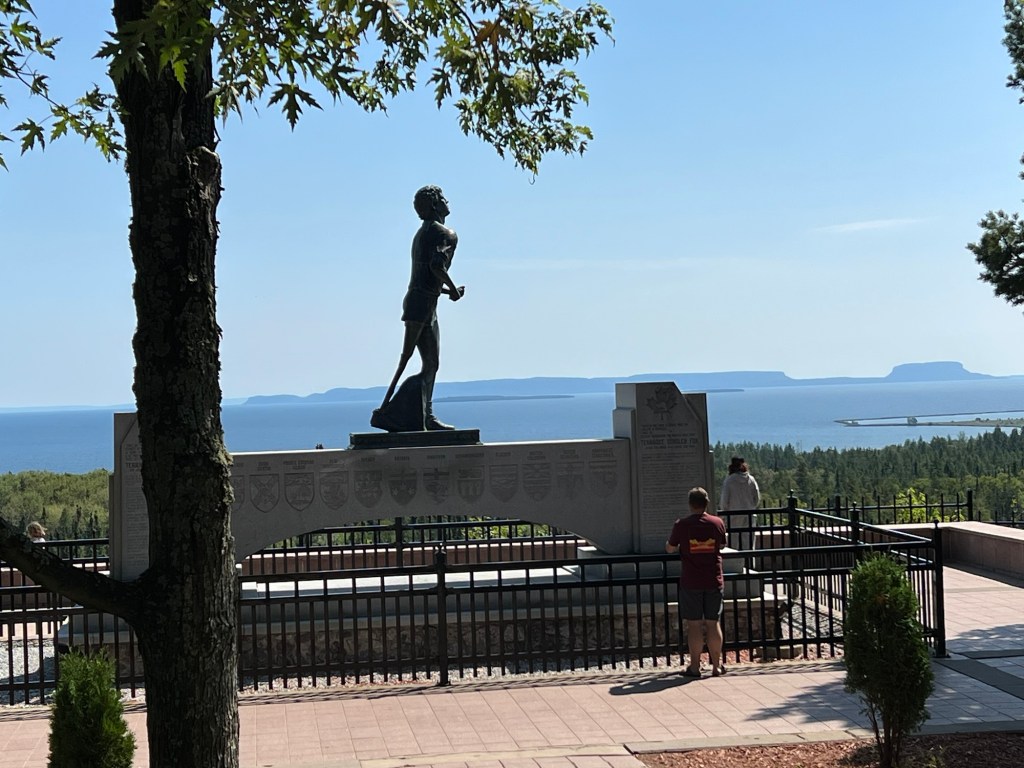
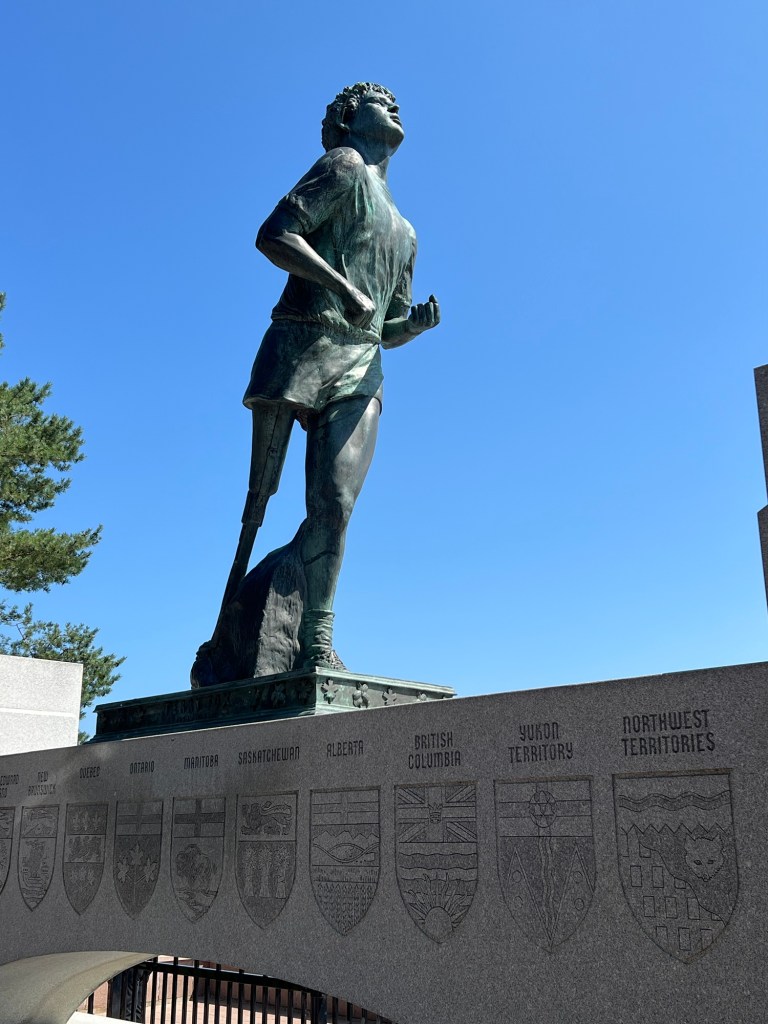
We’ve also gone to two overlooks. The first, on the northwest side is the Terry Fox Memorial. Terry was a young Canadian who lost his leg to cancer. In 1980, while in remission, he decided to raise awareness and money by running across Canada, he called it his Marathon of Hope.

He started in St. John’s, Newfoundland and ran almost a marathon a day for 143 days straight. His cancer returned and forced him to quit very near this spot. He’d run 3,339 miles and raised $24,000,000 for cancer research. All charity runs owe their origin to Terry Fox.

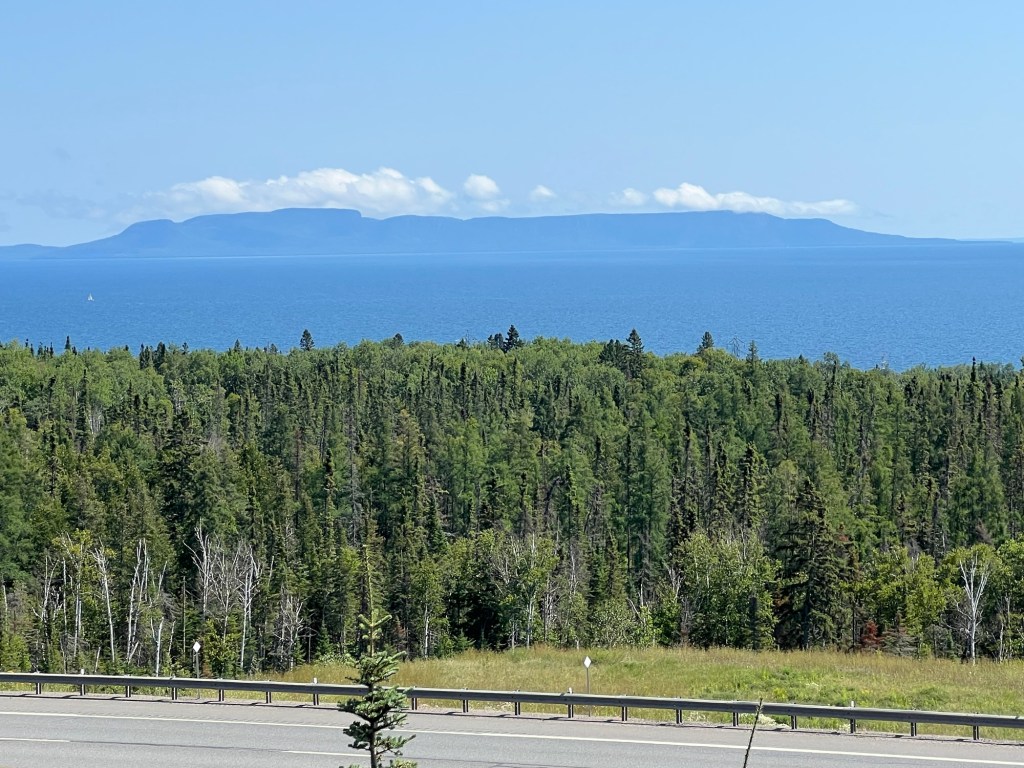
Looking from his memorial out across Thunder Bay you can see the Sleeping Giant.

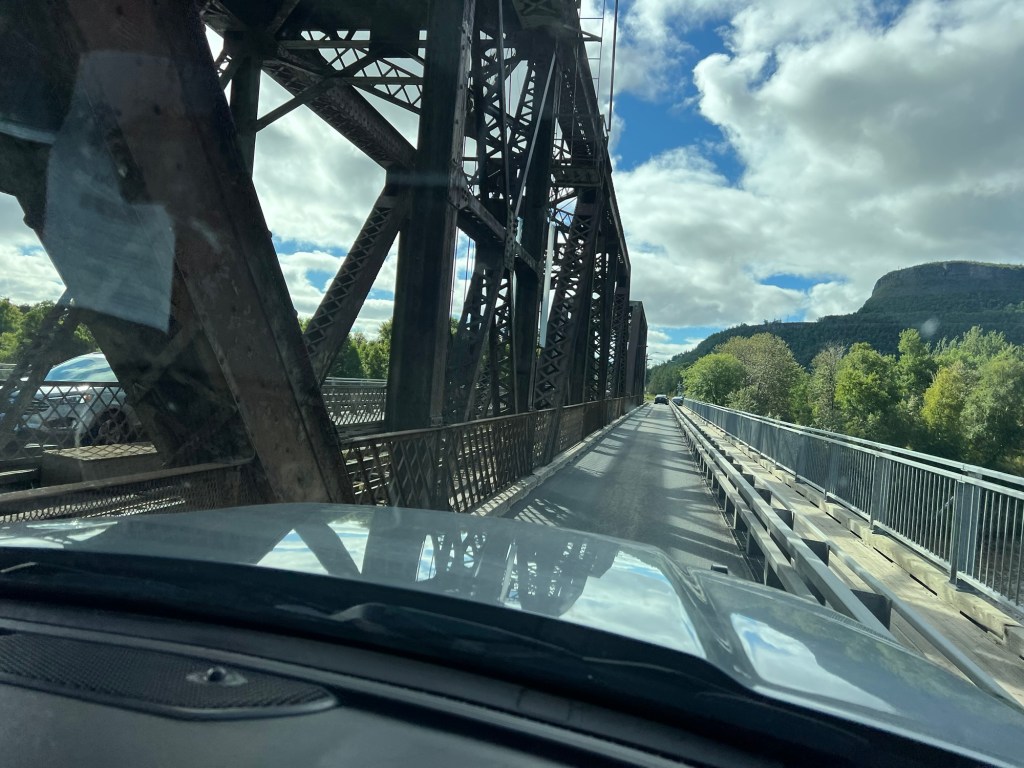
Today we drove across this very narrow bridge to the Fort William First Nation for fuel. No large trucks are allowed on this. Between the two narrow auto lanes is a railroad bridge. I don’t think I’d want to be crossing with a train!

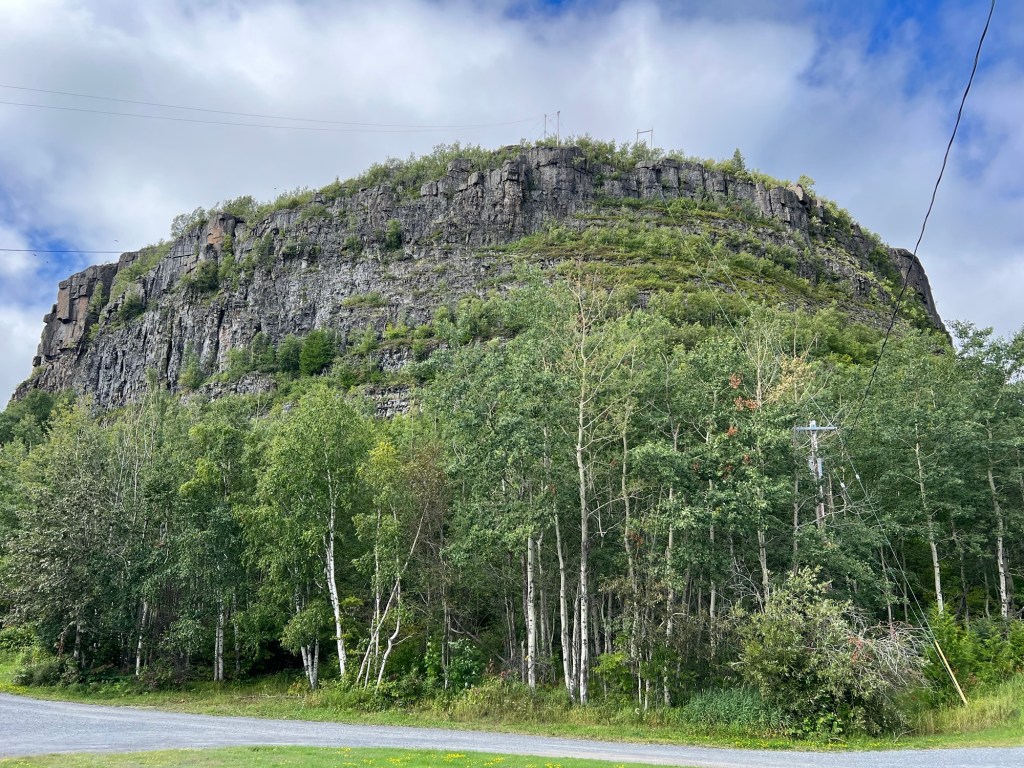
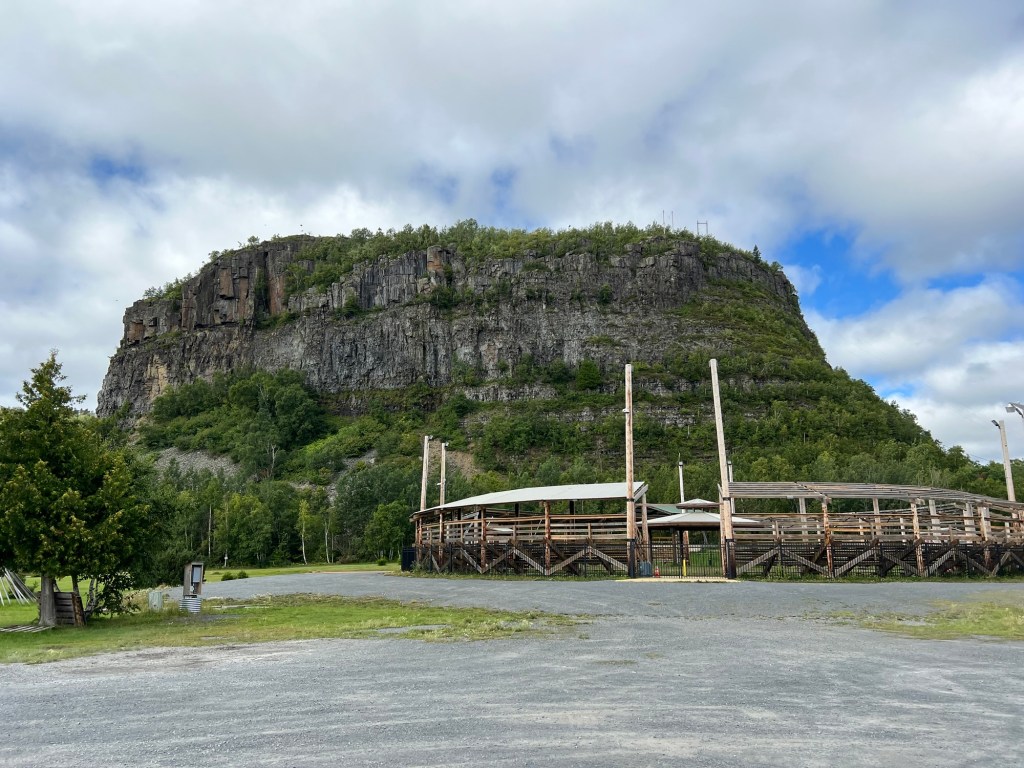
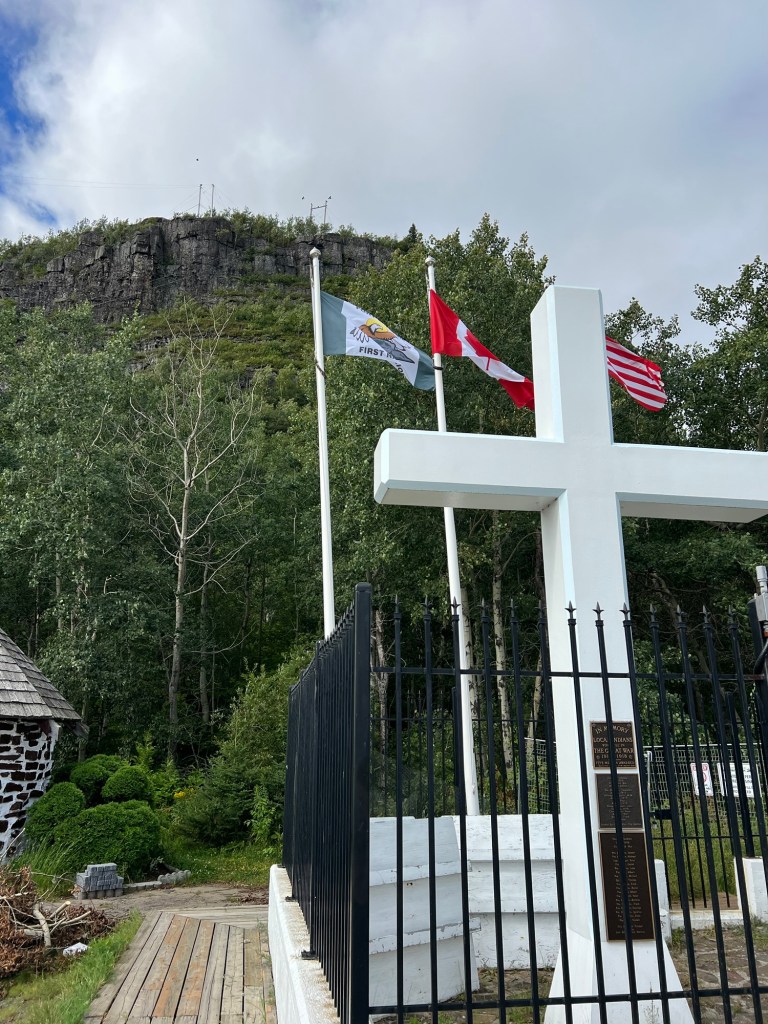
On their land is the Mount McKay Lookout, though their name for the mountain is Thunder Mountain.

This top hat of rock rises above the lookout. The lookout area also has this stadium for pow wows. I attended a public pow wow at Fort William so I know the central pagoda is where the drummer groups sit. The groups I saw were two to four people. They sat around a large drum that sat on a stand with feet. They each had one drumstick and they all beat the drum and sang. The dancers dance in the circle around them. I noticed that this stadium has four entrances placed in the four directions.

Also at the lookout were a war memorial for World War I…

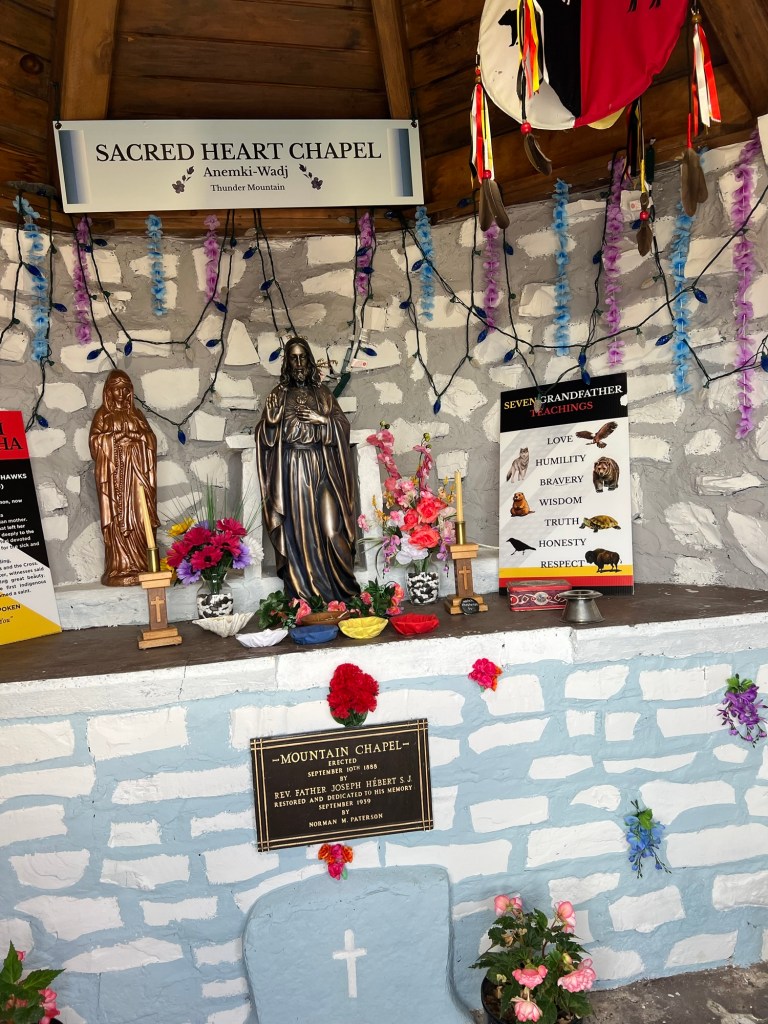
and this chapel.

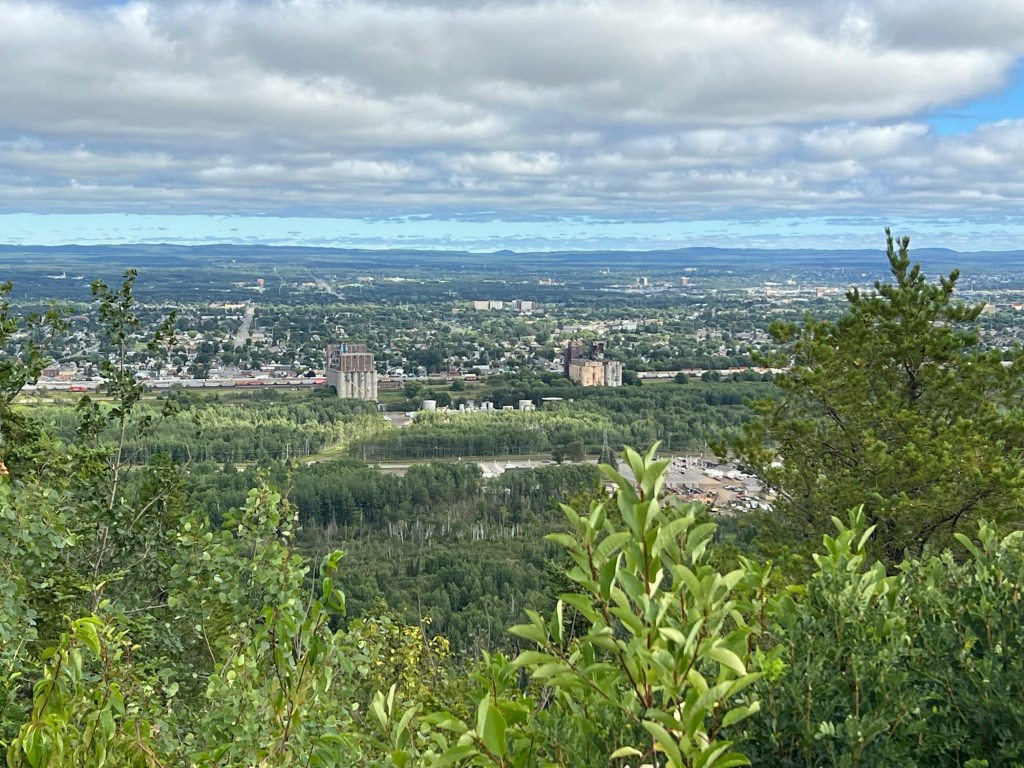
There was a great view of the city, this time from the south,

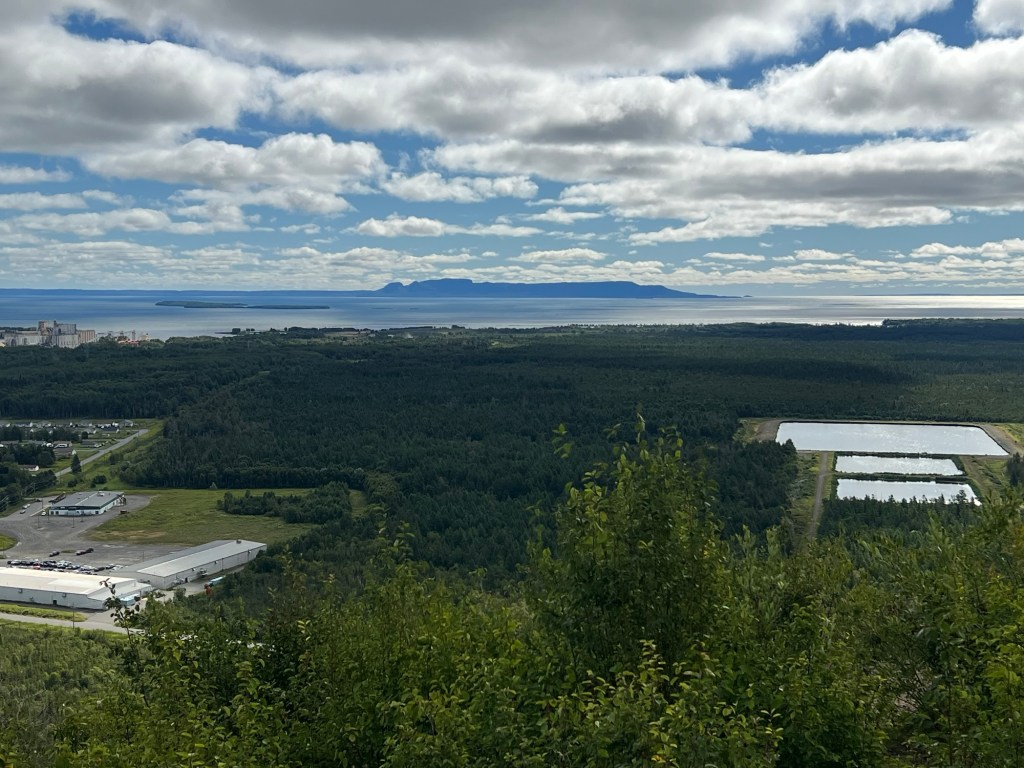
and out across the bay was the Sleeping Giant.

This afternoon I took a walk on a trail that went all around the campground here.

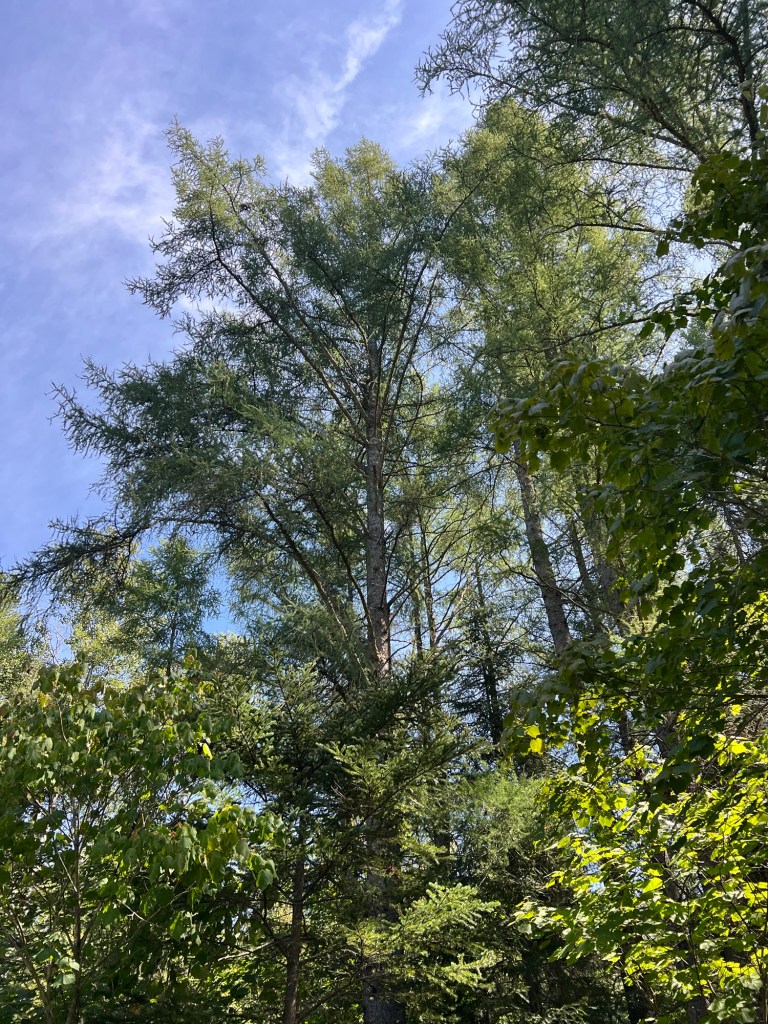
I passed some huge larches.

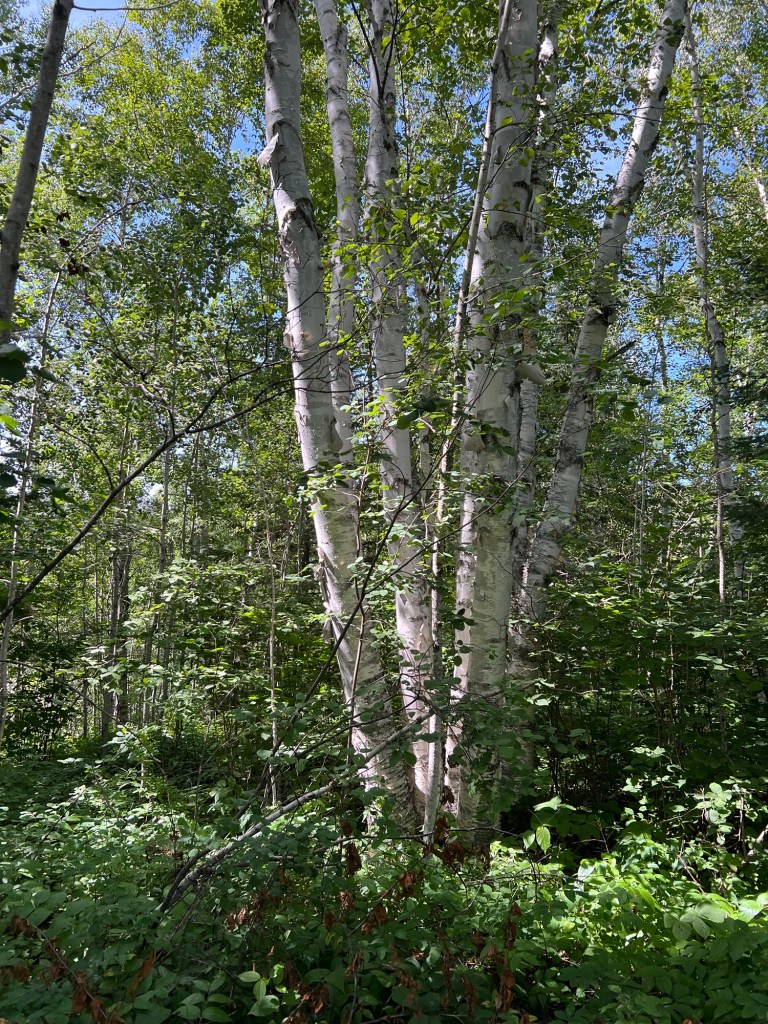
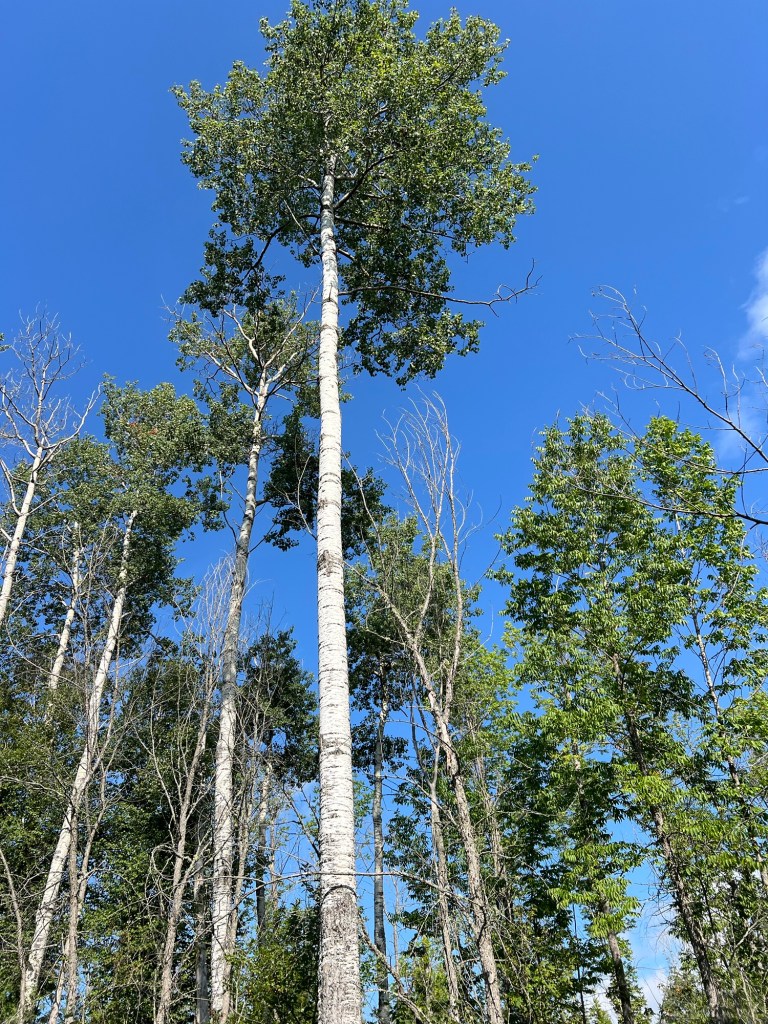
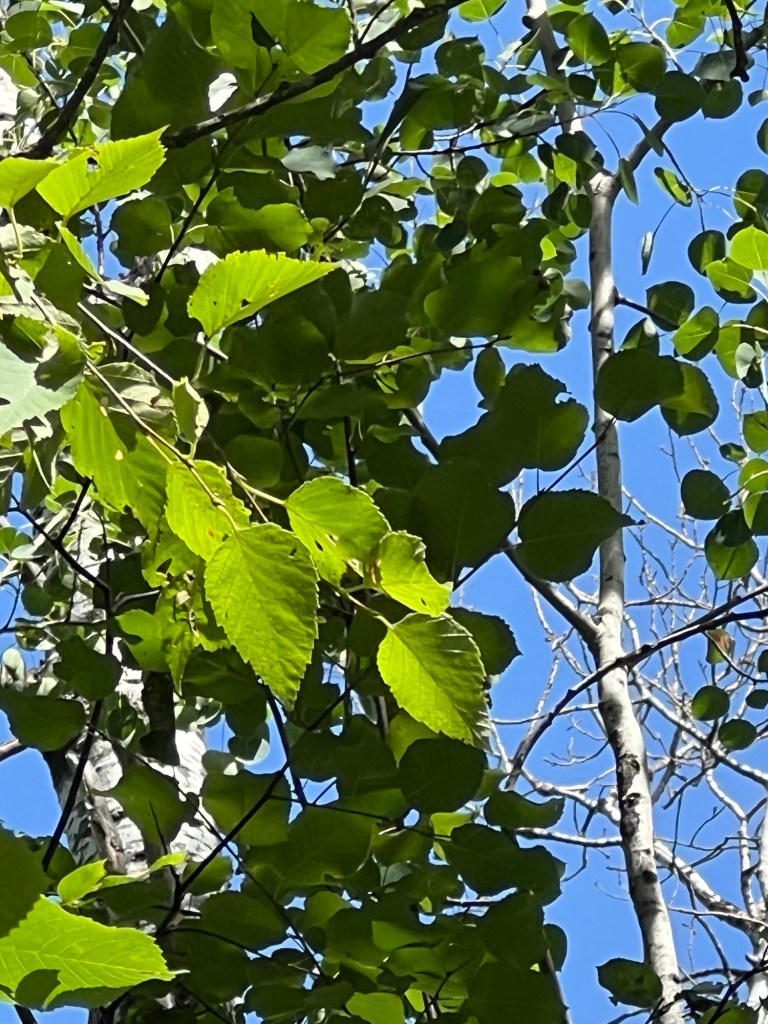
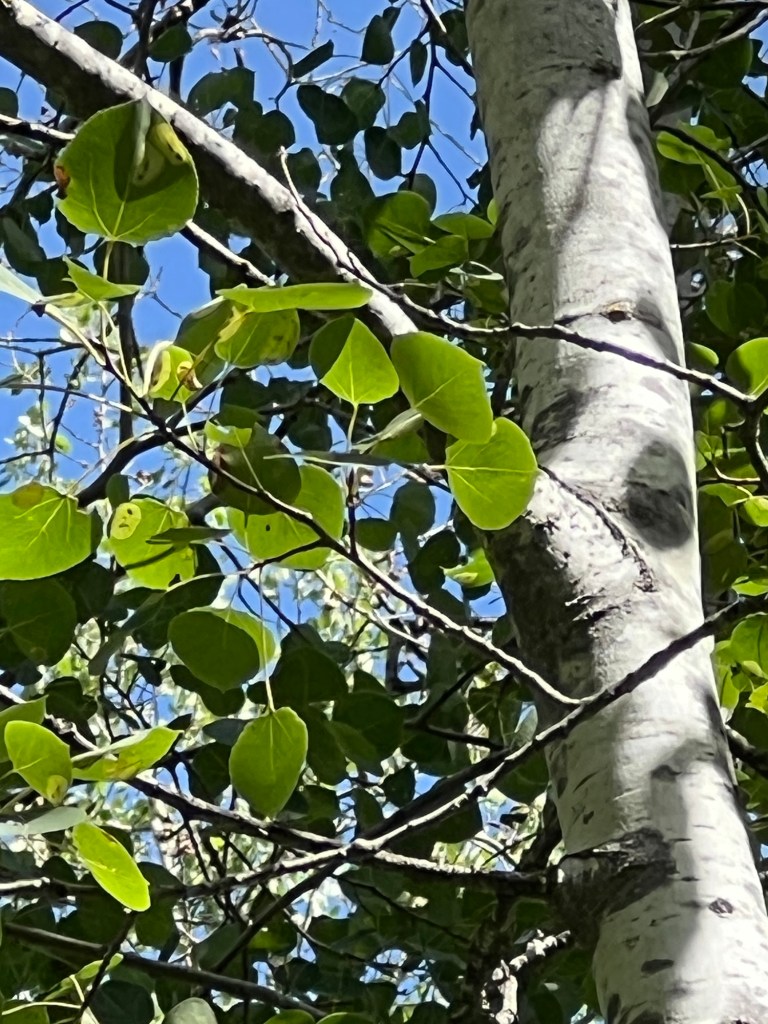
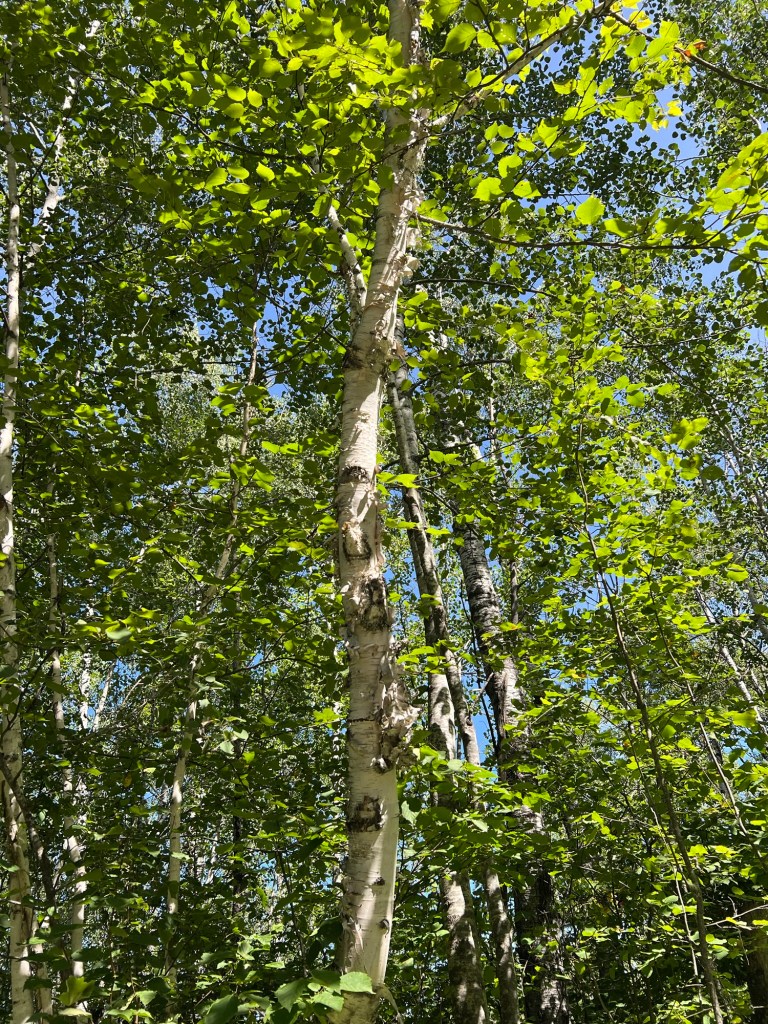
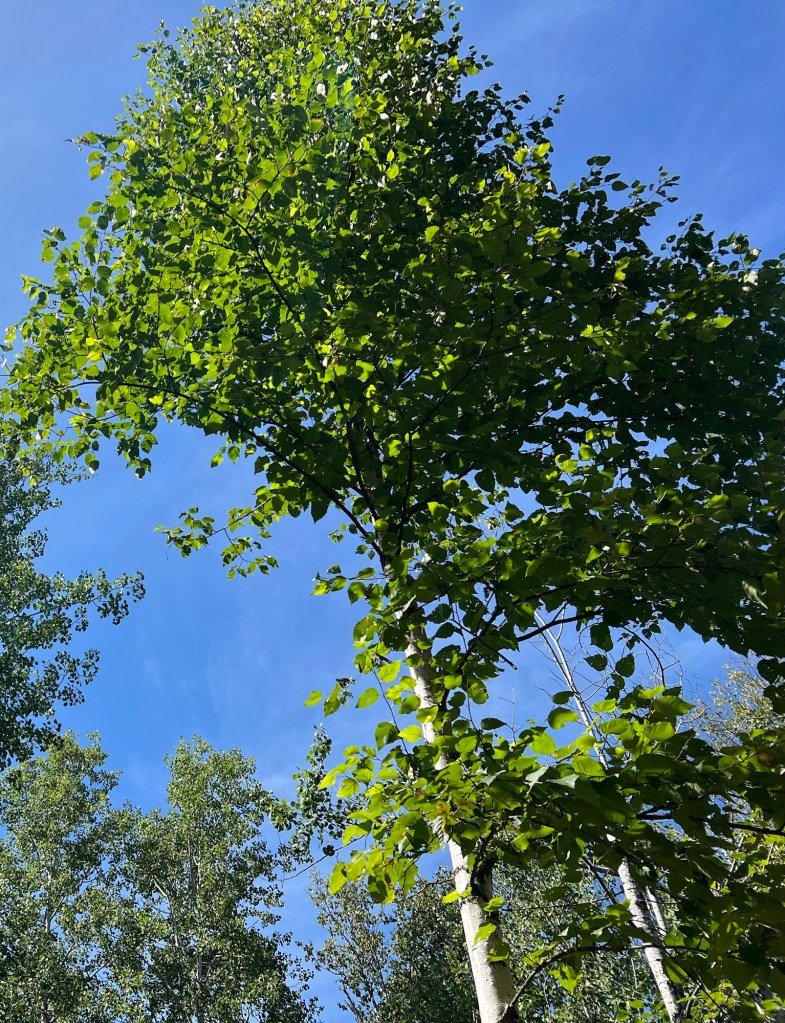
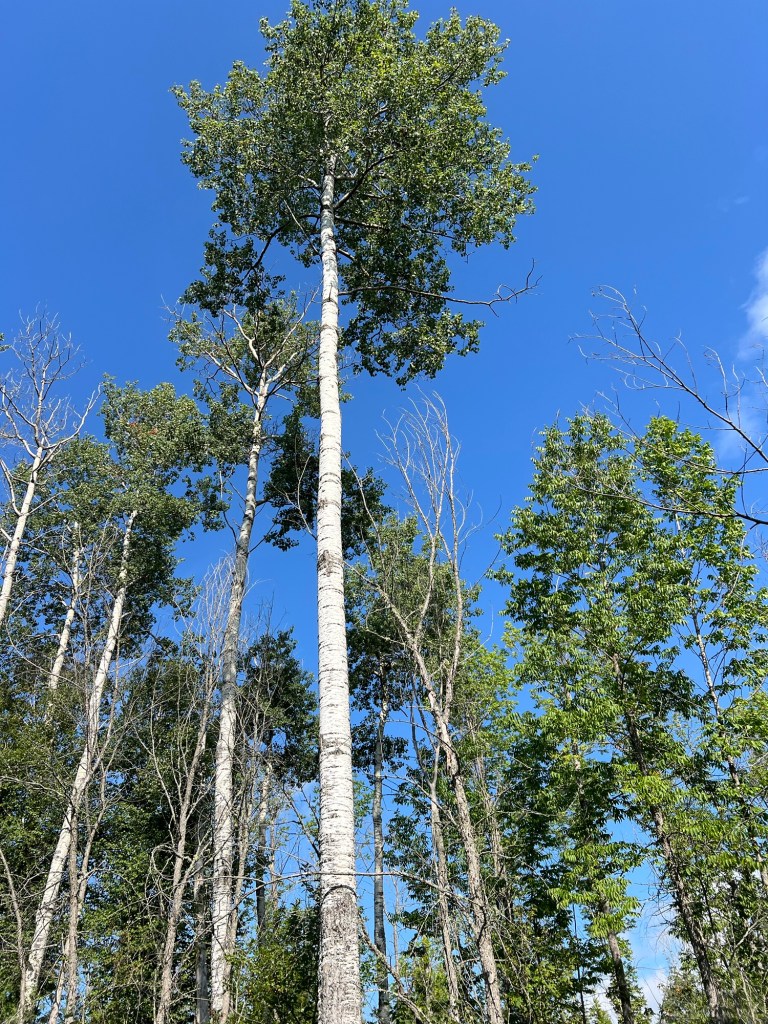
Then towards the end of the hike I finally came to some very large birches. And I realized that the very tall tree at Fort Davis…

was a poplar, not a birch. In my defense, it was very white and despite there being birch bark houses, canoes and baskets on display everywhere in the fort, I now realize that on the grounds, there were no birches.

Birch leaves.

Poplar leaves.

Birch trunk.

Poplar trunk.

Now I’ve got that straight, and just in time; tomorrow we leave this park and Canada.

Fort William Historical Park

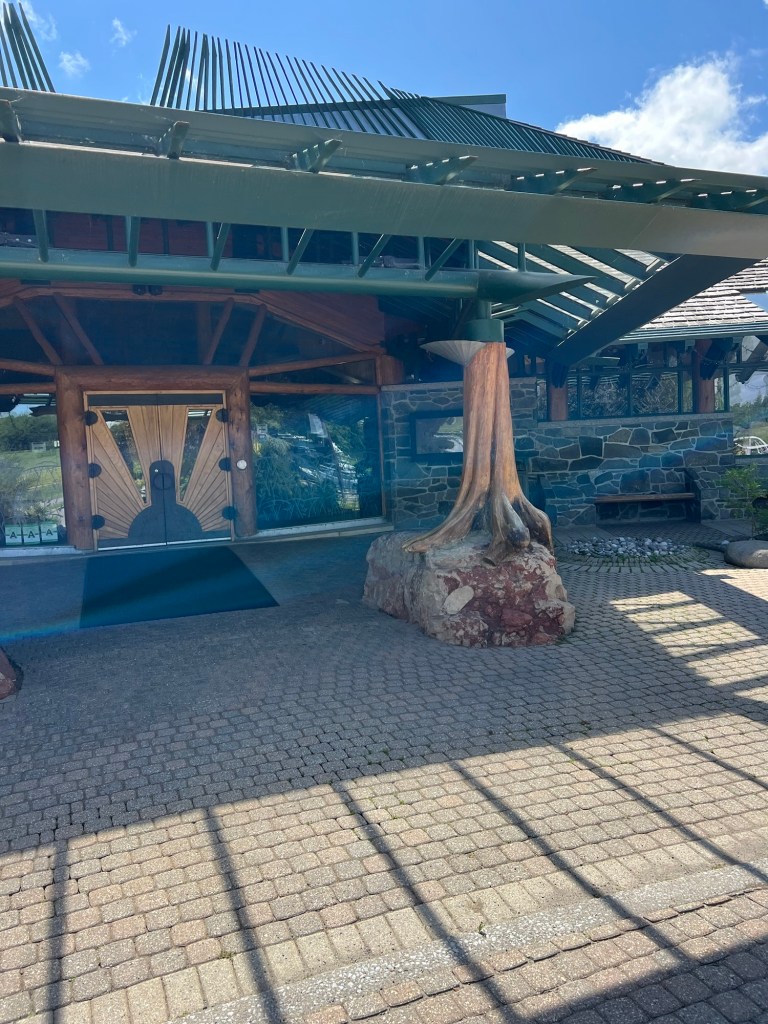
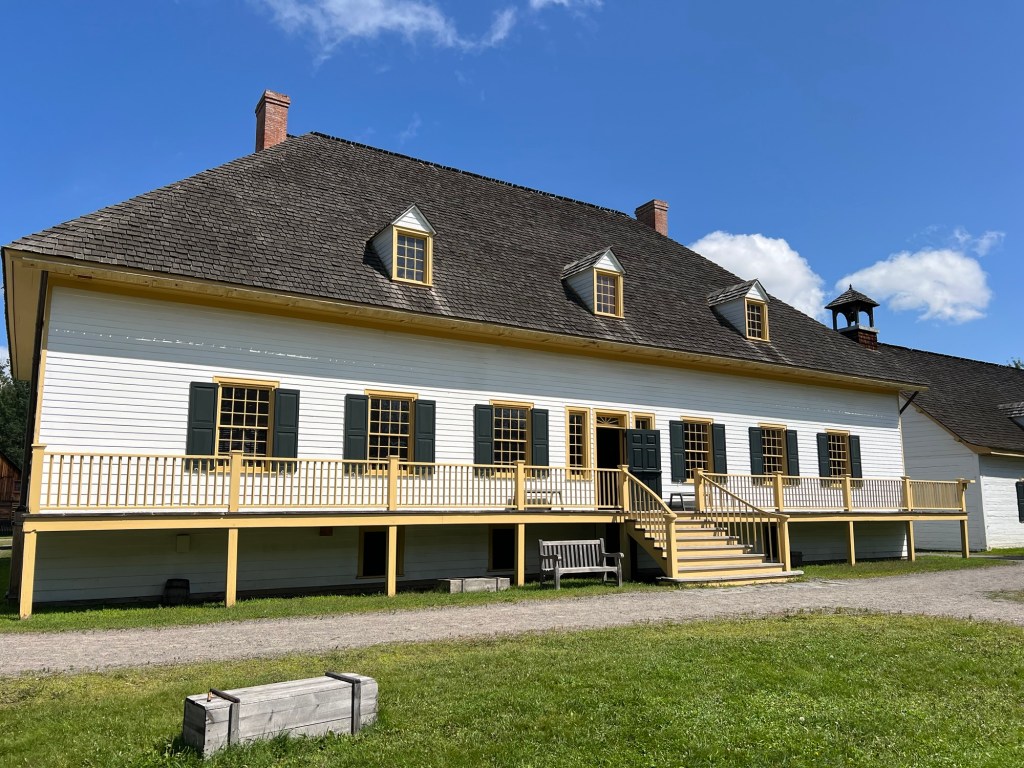
On the southern edge of Thunder Bay sits the Fort William Historical Park. The heart of the site is the reconstructed Fort William, which wasn’t a fort at all, but the inland headquarters of the North West Company. This is the entrance building, the Visitor Center.

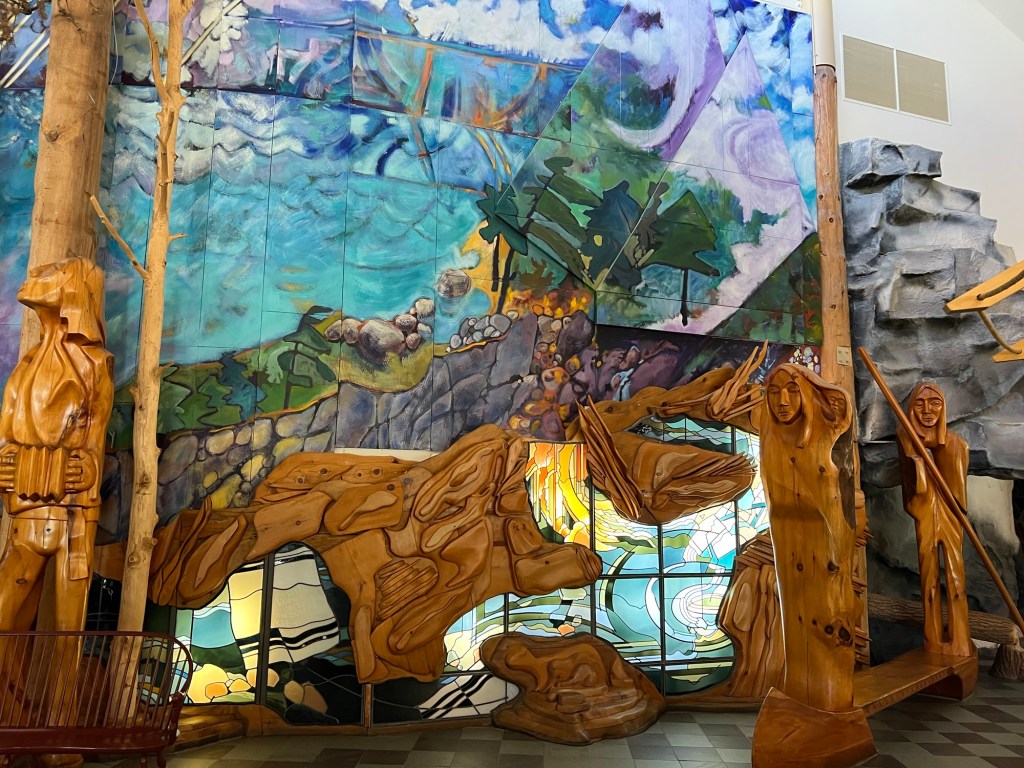
The carvings and details were amazing,

and beautiful.

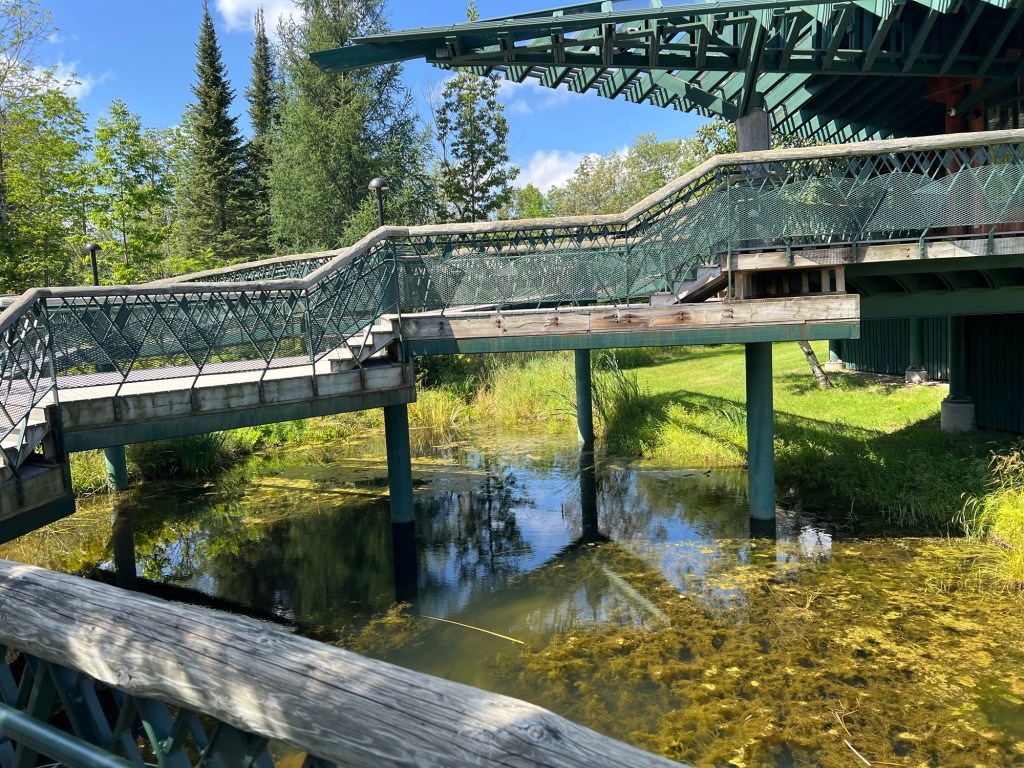
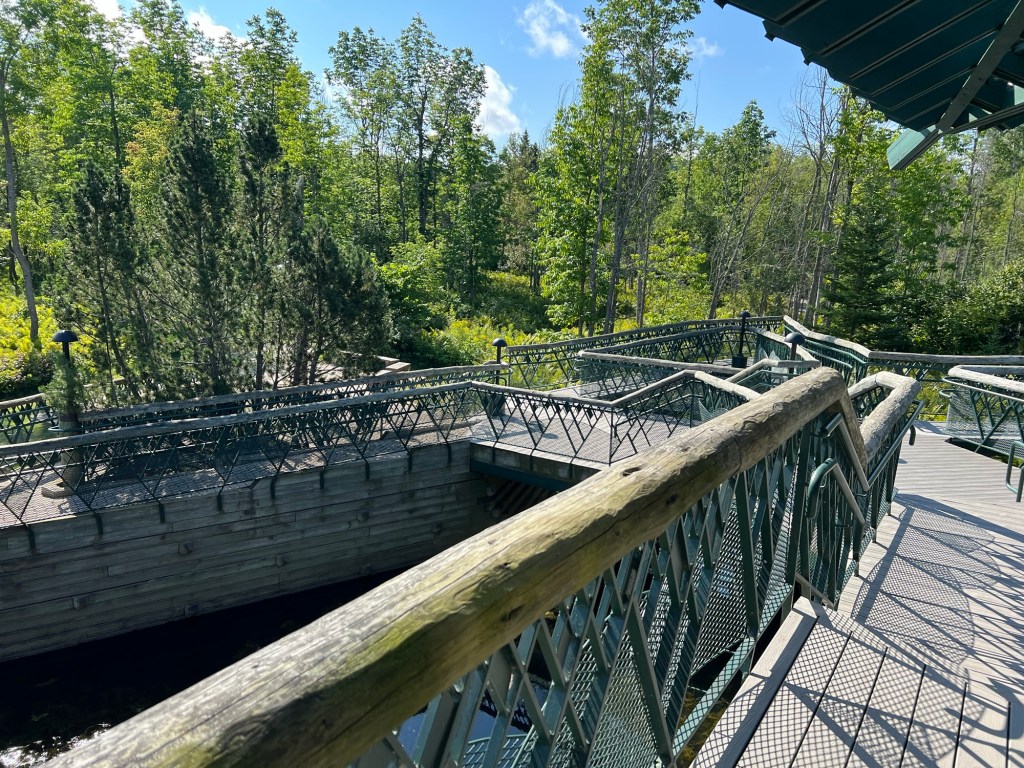
Out the back a series of steps and ramps…

took you to this broad trail that led…

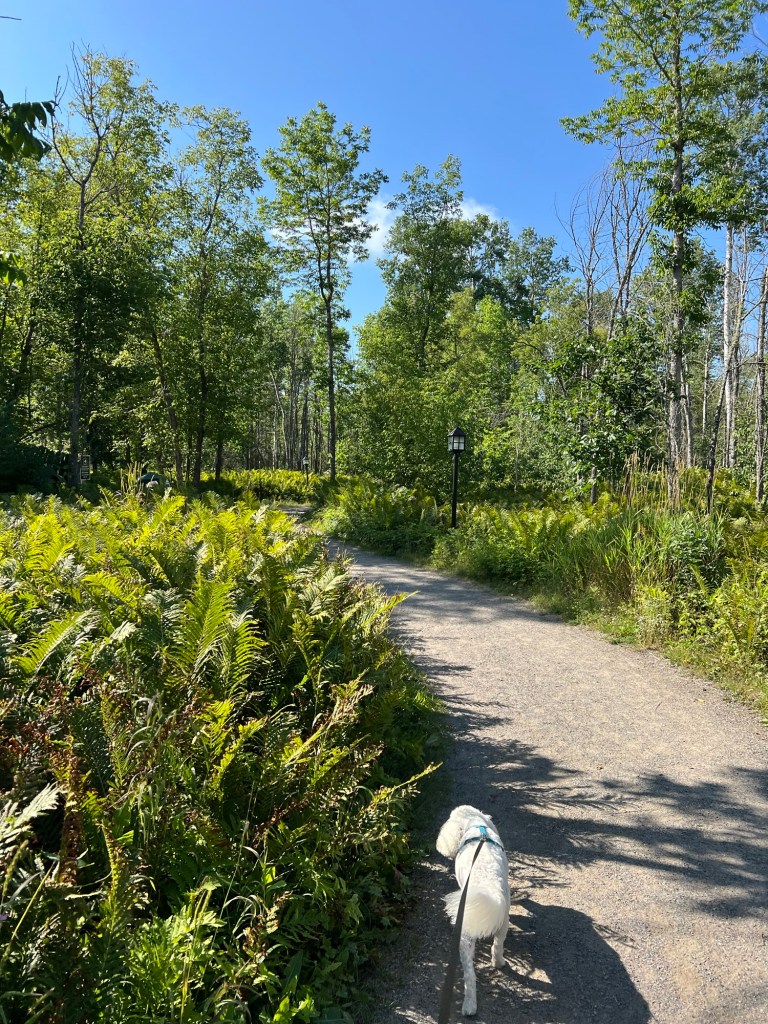
past astonishingly tall birches to the restored fort.

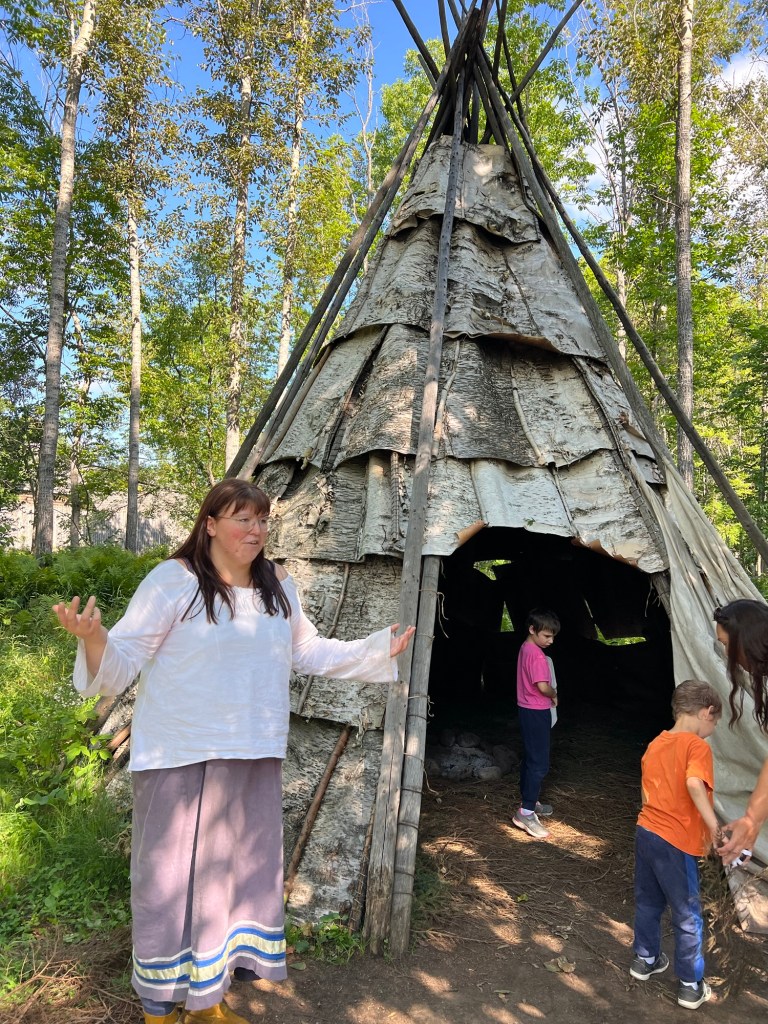
Throughout the site there were people enacting what life was like here in 1815. At the Anishinaabe encampment outside the gate the young woman explained that this wigwam would be used while the group of Anishinaabeg stayed here during rendezvous (July into August) doing day labor at the fort in exchange for trade goods. When they moved on they would leave the poles behind,

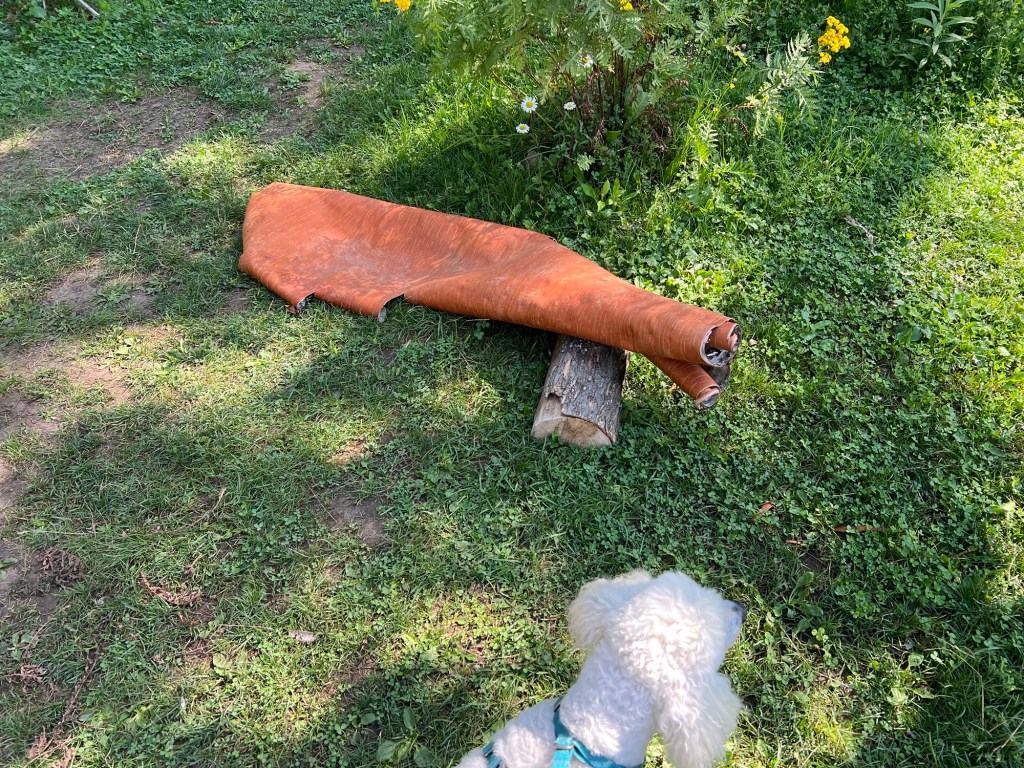
but the birch bark would be heated and rolled to be transported to their next encampment.

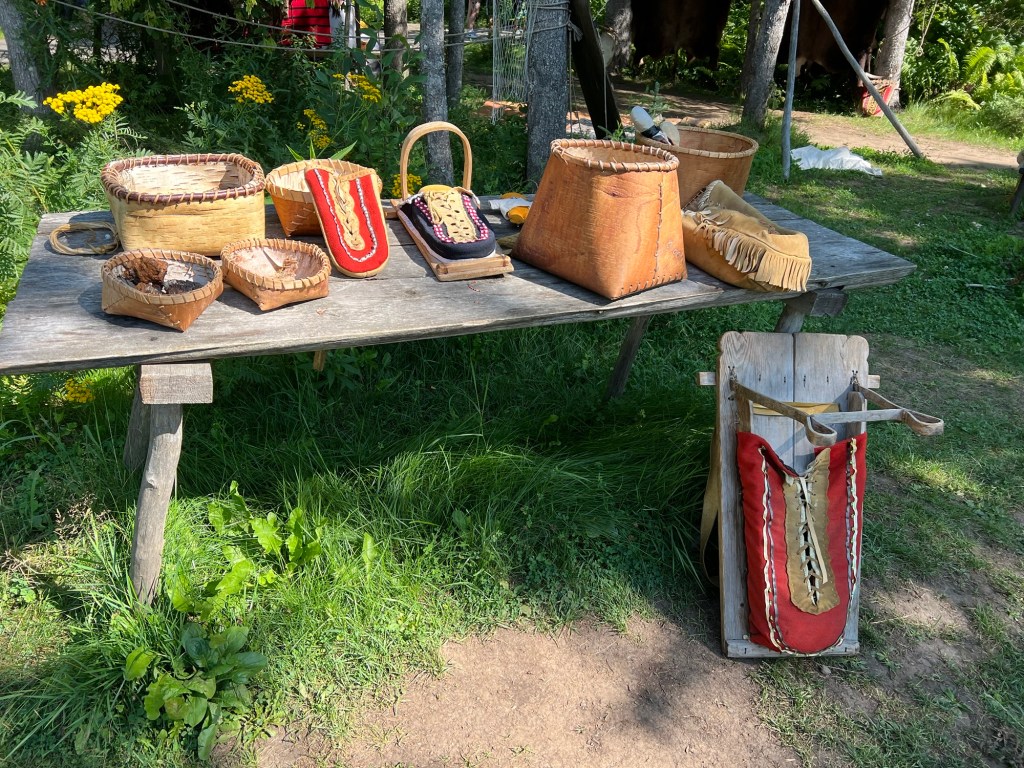
They had on display a number of things they had made.

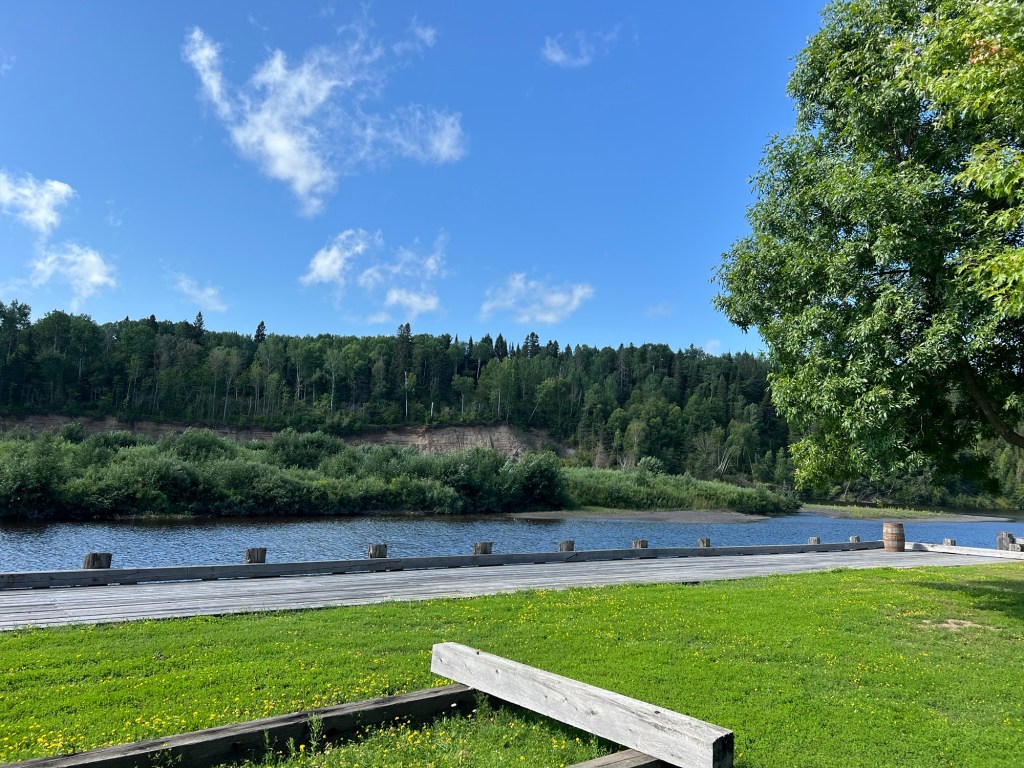
The fort is located on the Kaministiquia River, not far from its mouth on Lake Superior. This is the wharf.

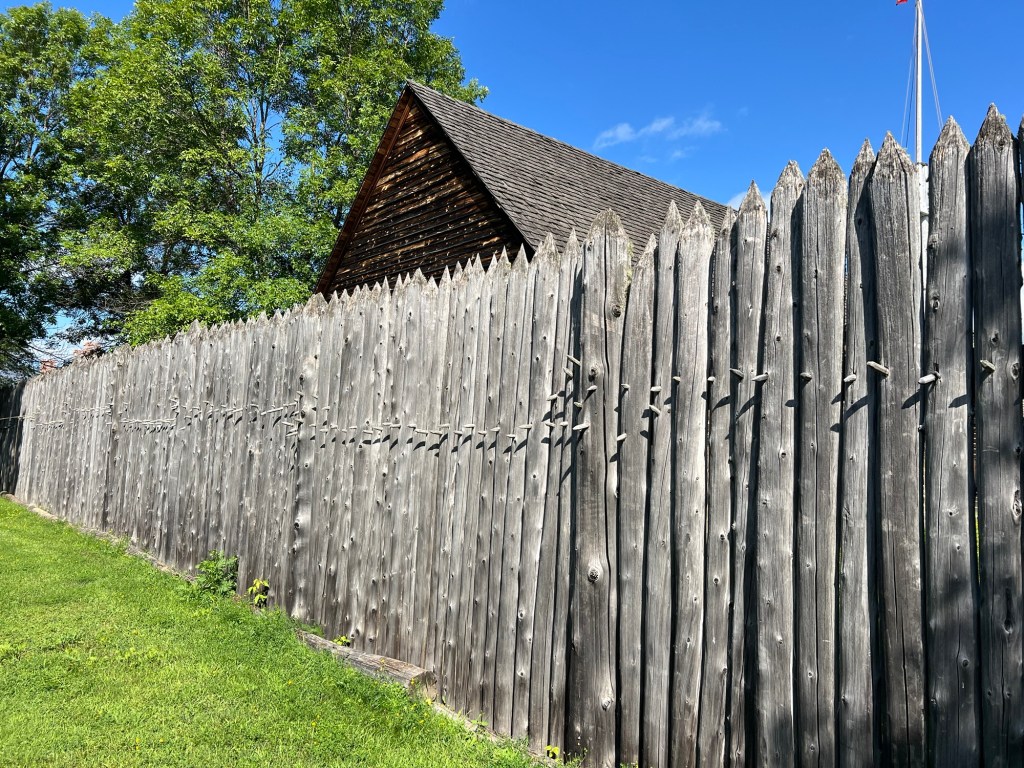
The company buildings were surrounded by this rather bristlely looking wall, but the pointed sticks are used in construction as they are cheaper than nails, and the pointed tops of the logs are to shed rain and snow. None of these were defensive.

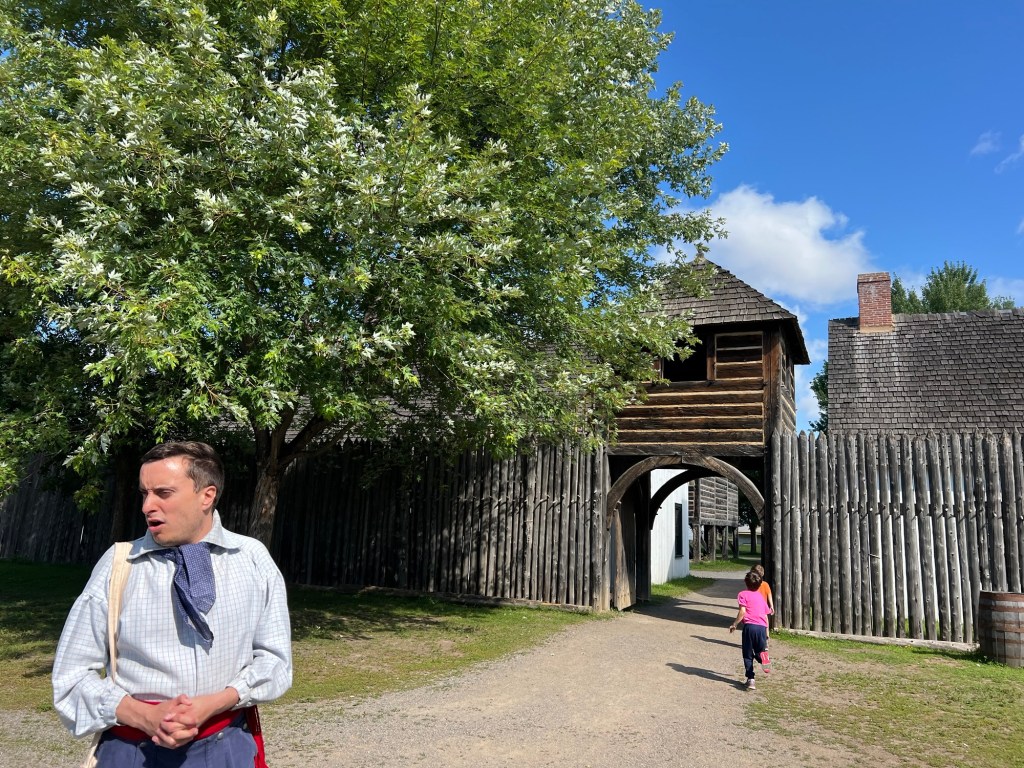
This is one of the tour guides. He is in character as a voyageur. They were the company employees that took canoes out to the trading posts scattered throughout the wilderness where the company had established trade with the natives. They carried the trade goods out and brought furs back. When they brought the furs to rendezvous they also brought back the clerks that worked in the trading posts. Voyageurs camped outside the walls, many slept under their canoes. After 10 years or so a voyageur might be promoted to be a guide or interpreter. These men no longer did the hard manual labor, and they got to bunk inside the fort during rendezvous.

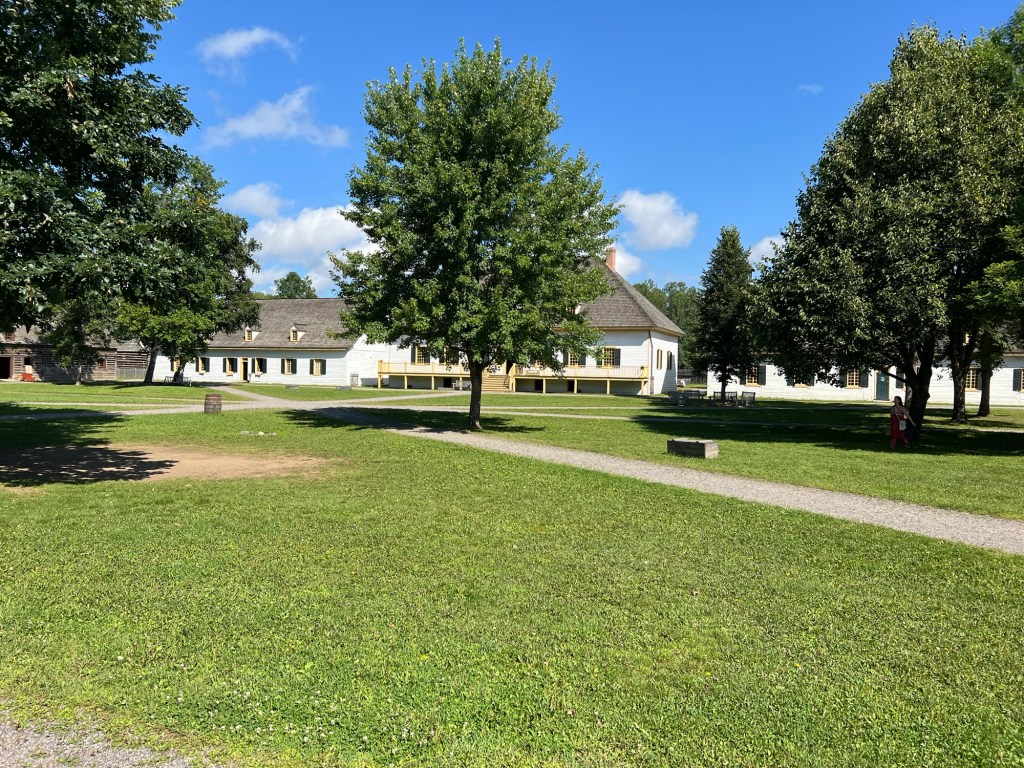
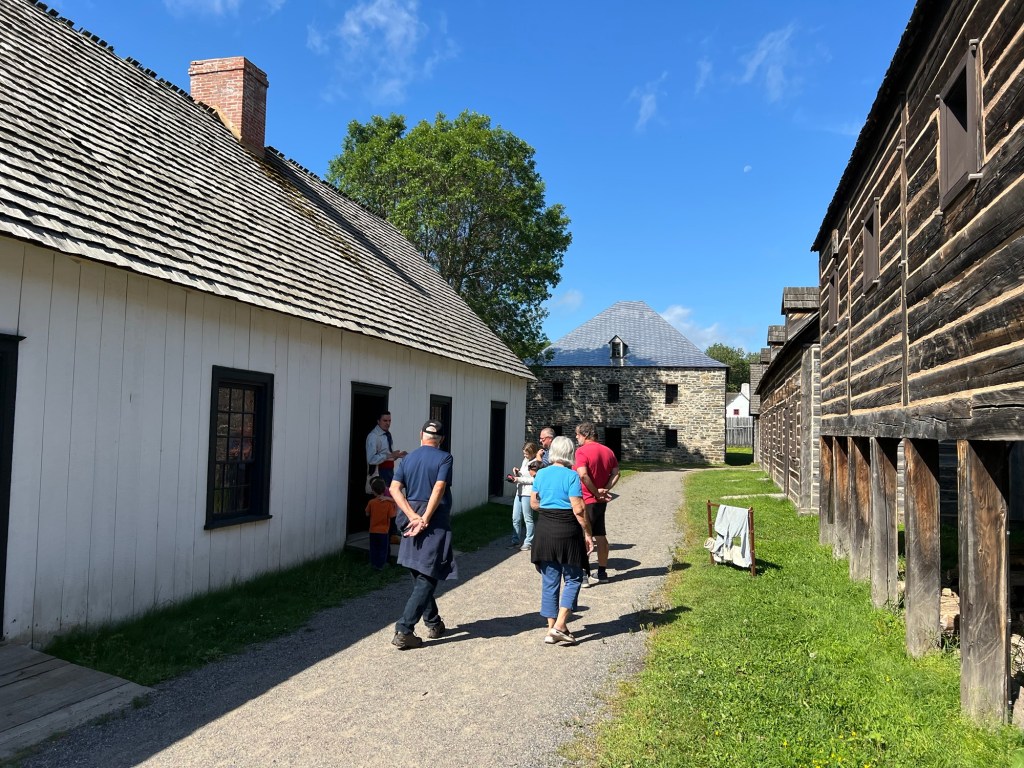
The walls enclosed over 30 buildings, as well as this large central square.

Most of the buildings were empty except during rendezvous but about 30 people stayed year round, including the wintering partner. The white building on the left is the wintering house.

It has low ceilings and raised floors for warmth.

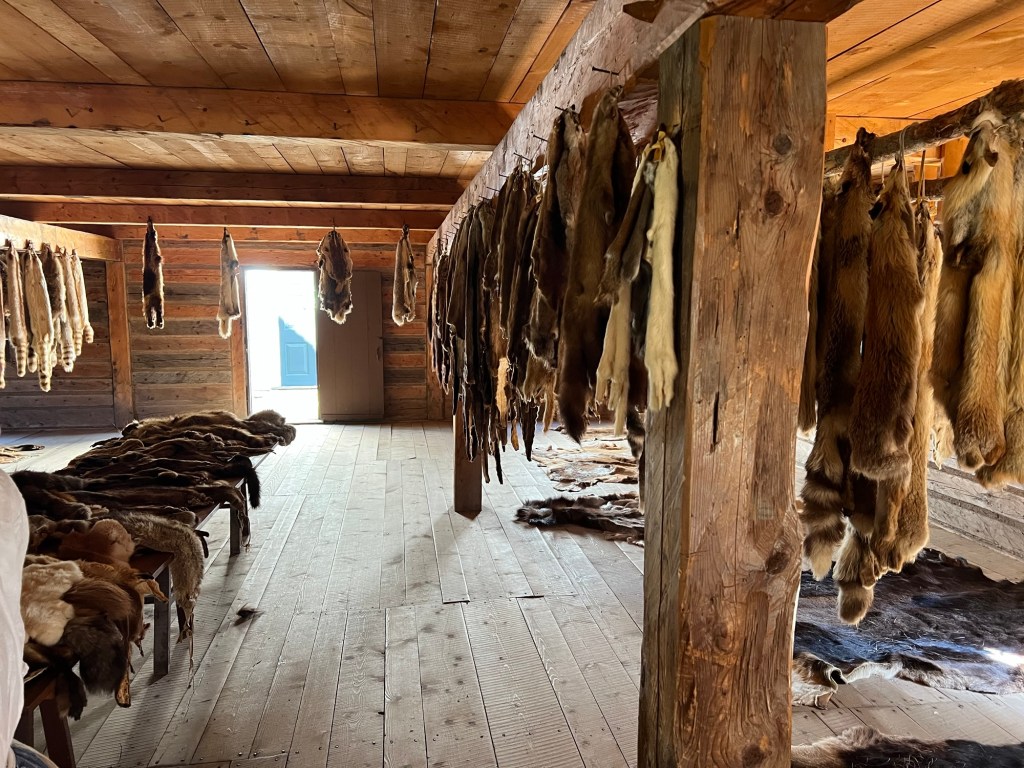
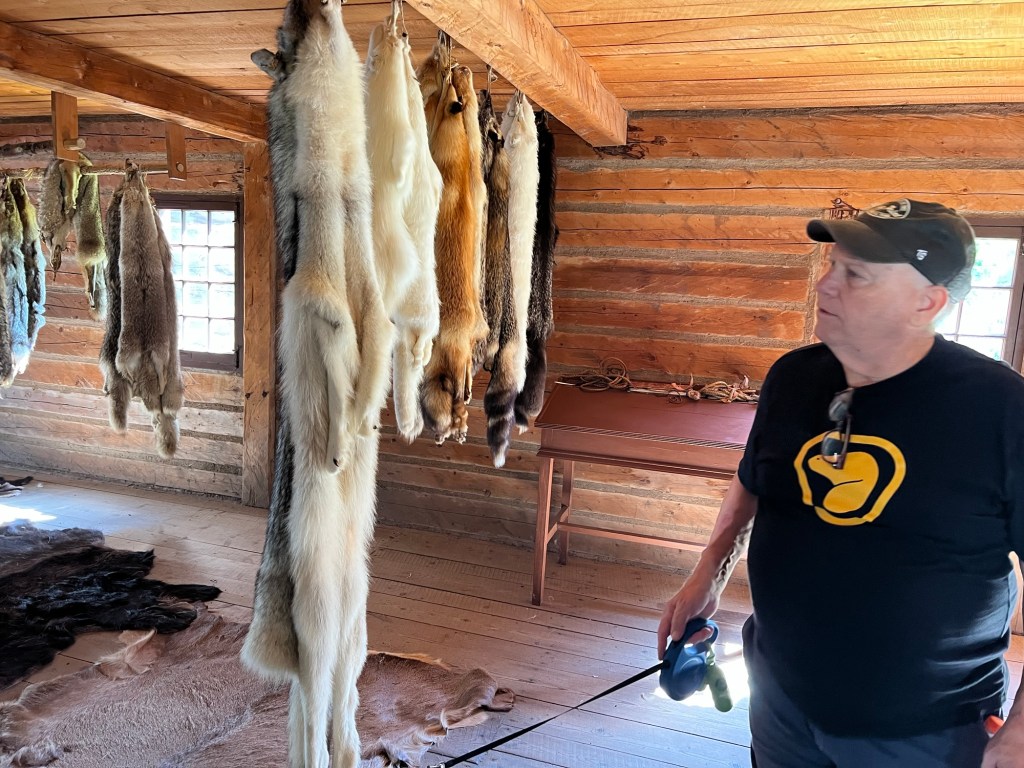
Matey’s favorite building was the Fur Stores.

He thought all those animal skins smelled great. (The park people told us these skins all came from animals trapped or hunted illegally, the pelts were confiscated and then given to the park.)

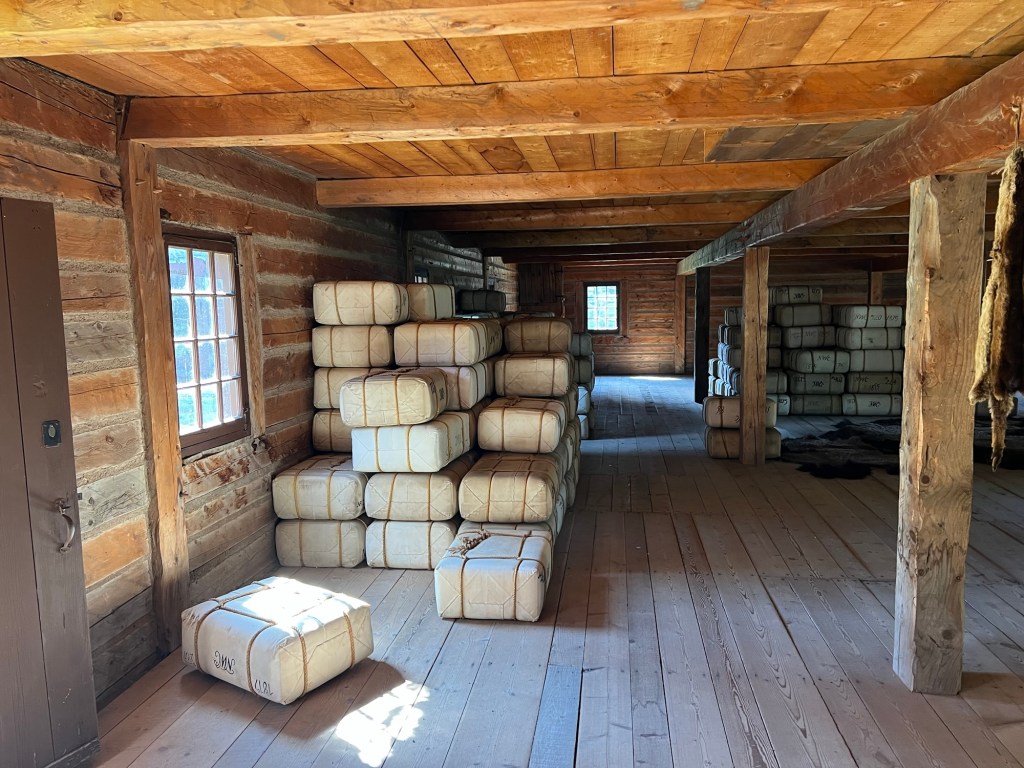
The furs were then compressed and wrapped and sewn into 90 pound bundles to be shipped east.

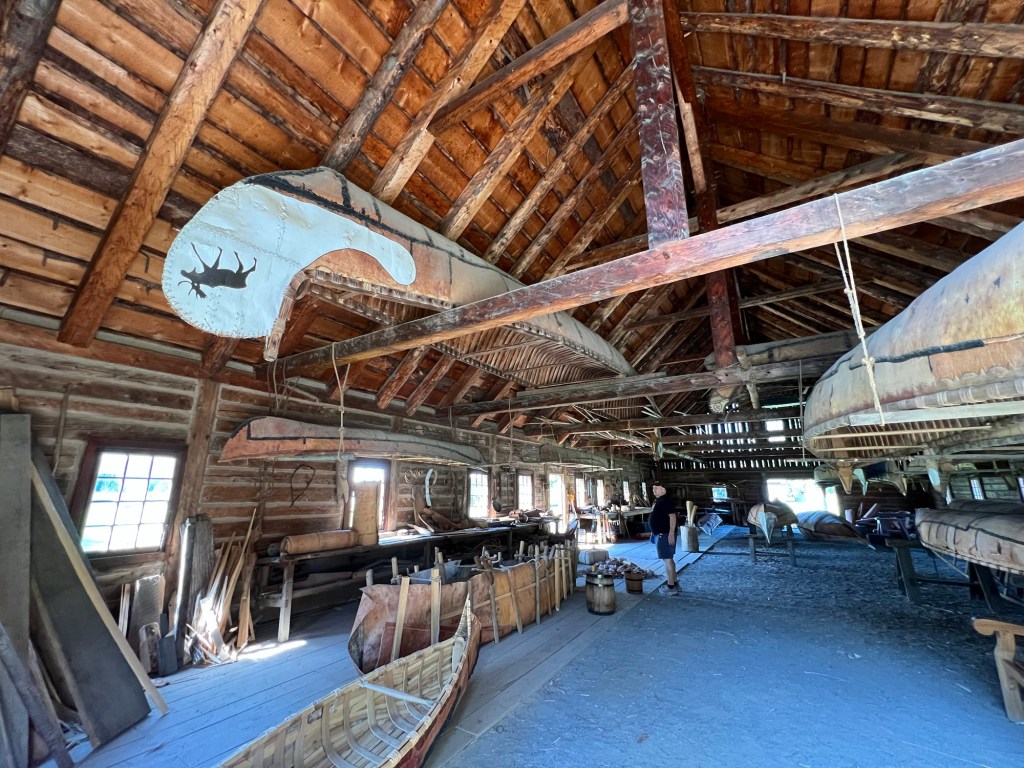
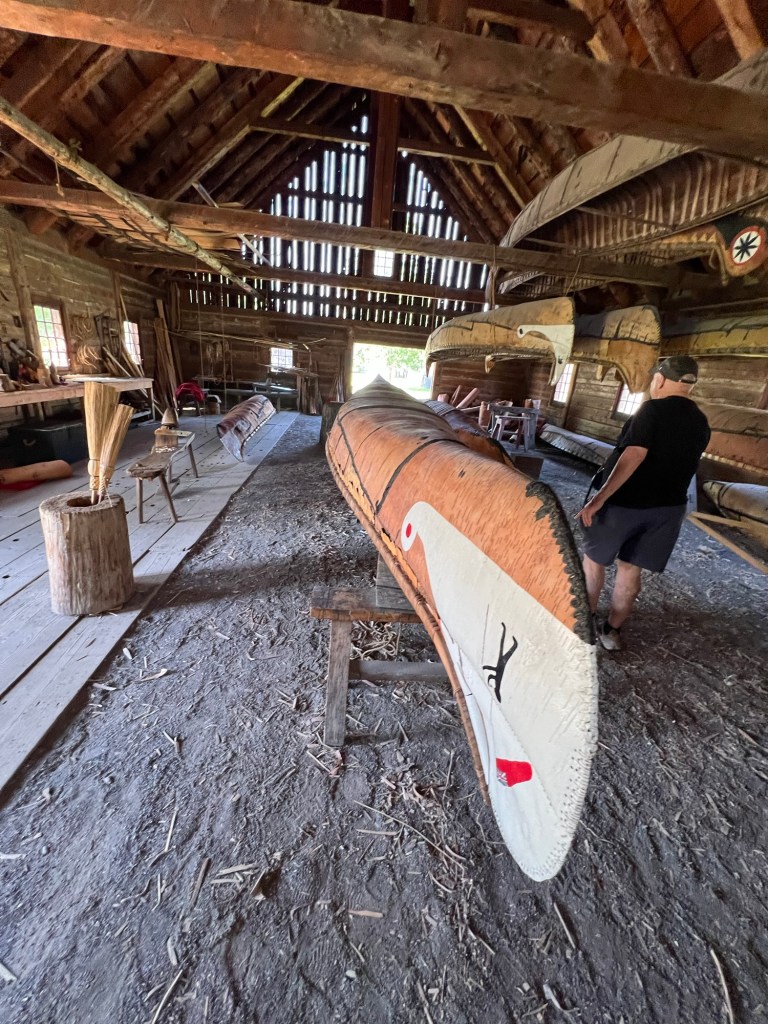
My favorite building was the canoe shed. All of these boats are made using the traditional methods and materials. The frames are ash and cedar and the skins are birch bark. Do you see how huge the one up on the beams is? That is Bud standing below it.

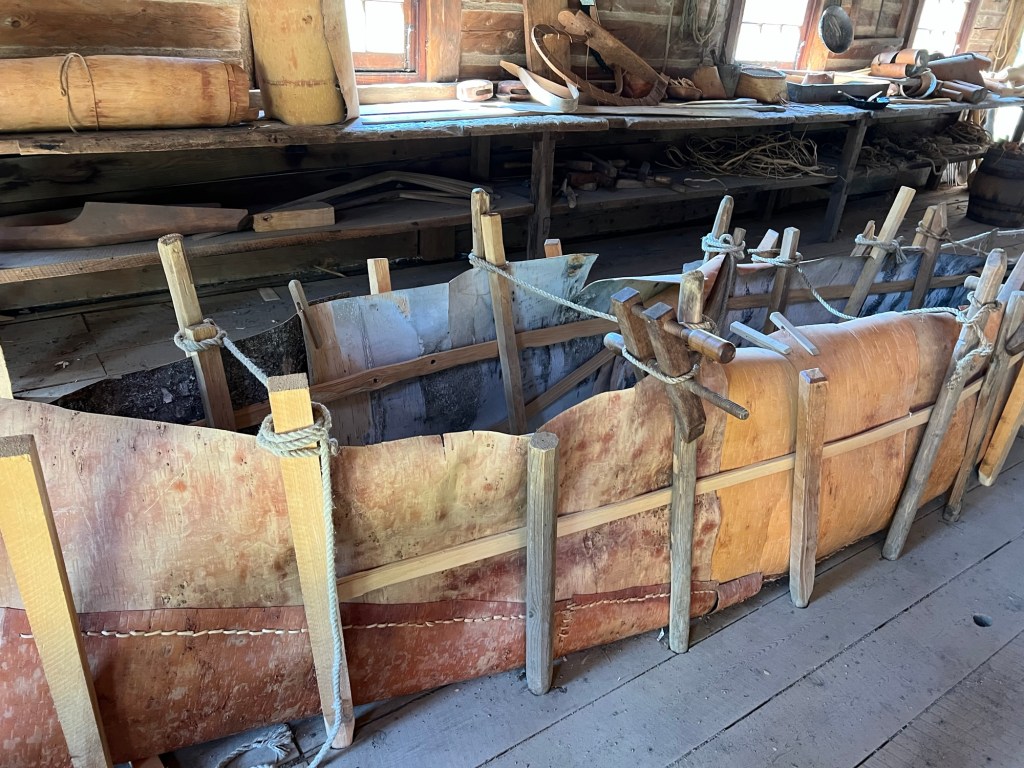
This is one under construction.

When they are finished the sewn seams are coated with spruce gum.

They also repaired the canoes here. All of the canoes belonged to the company.

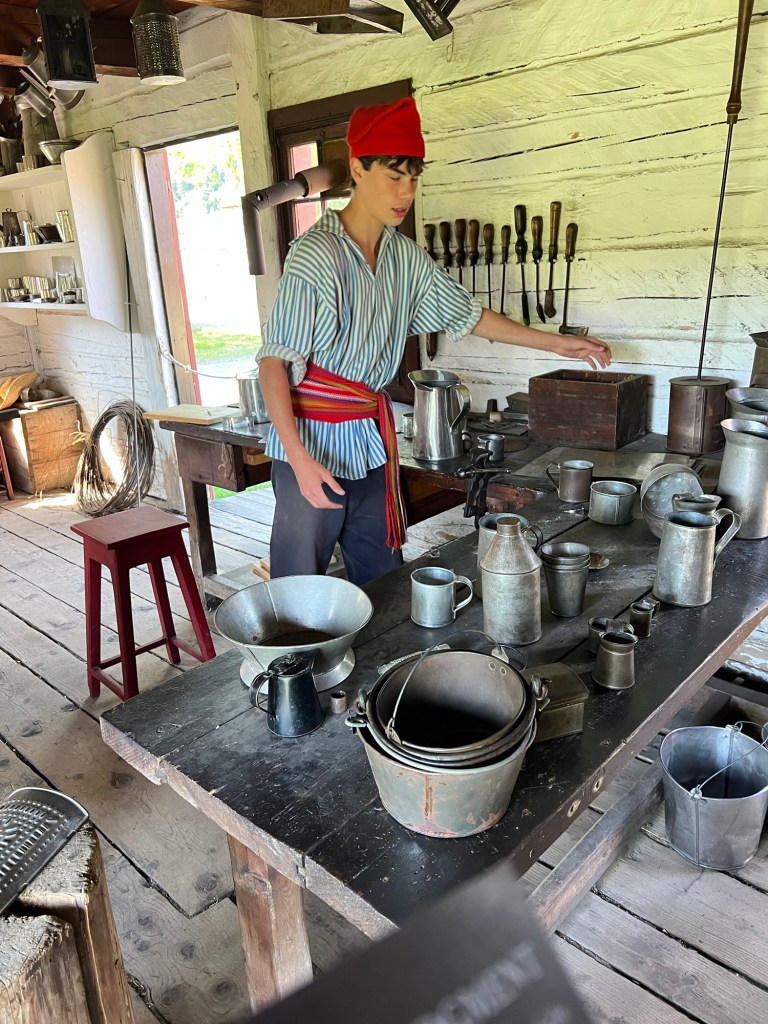
We also visited the tin smith, who finally broke character to tell me that he no longer uses lead in his solder, but silver. He does use pine rosin as flux.

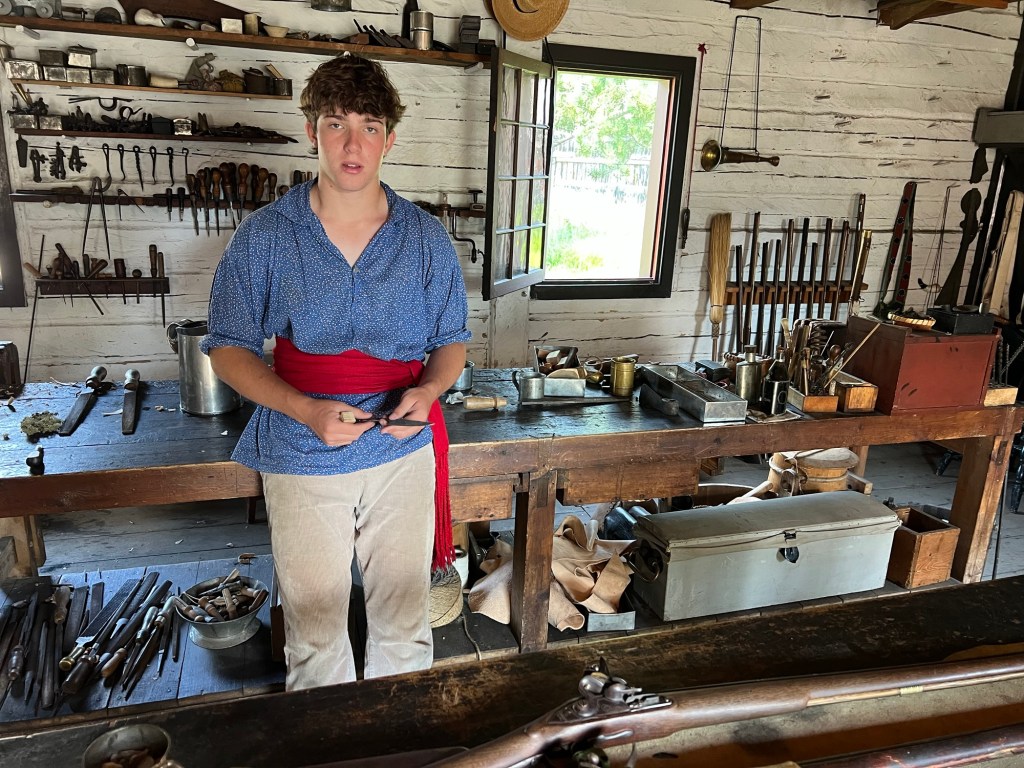
This is where they make and repair arms. The young man was working on a knife blade. He showed us how a flintlock gun worked. He said they made all the parts of the guns except the barrels. Those were bought and shipped here.

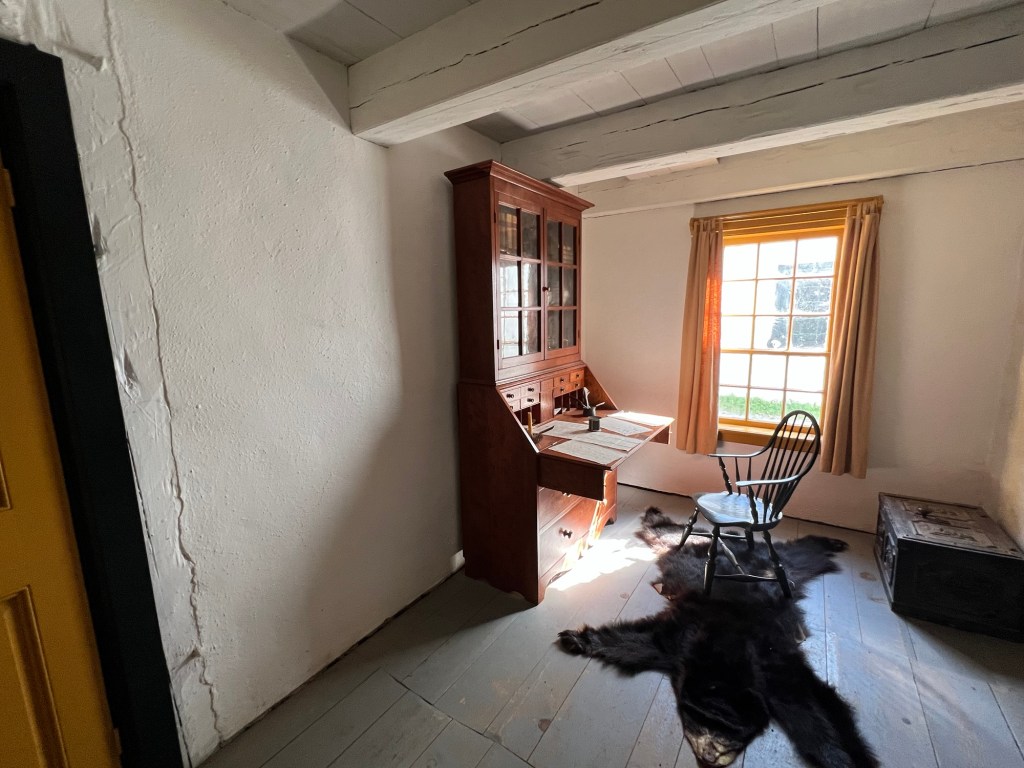
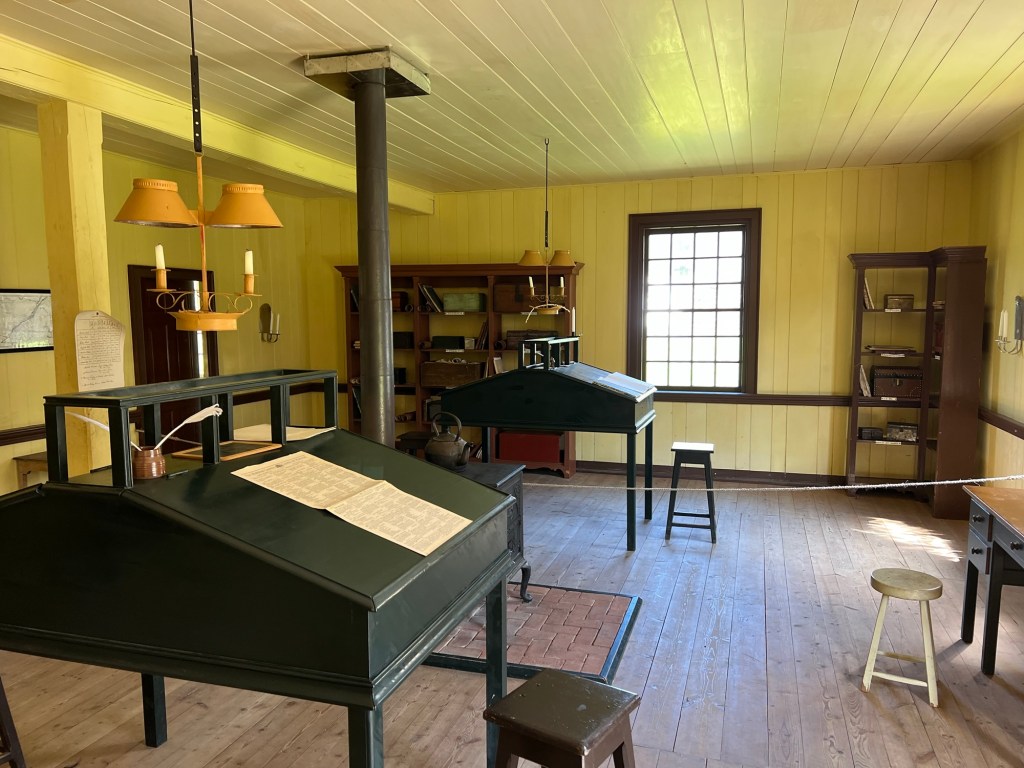
This is the counting house. When Bud walked in he said it looked like Scrooge’s place. There were lots of clerks. Every trading post had a ledger where all goods and furs were recorded. Every fur received at rendezvous was marked and recorded, the bales were numbered and the furs inside were noted.

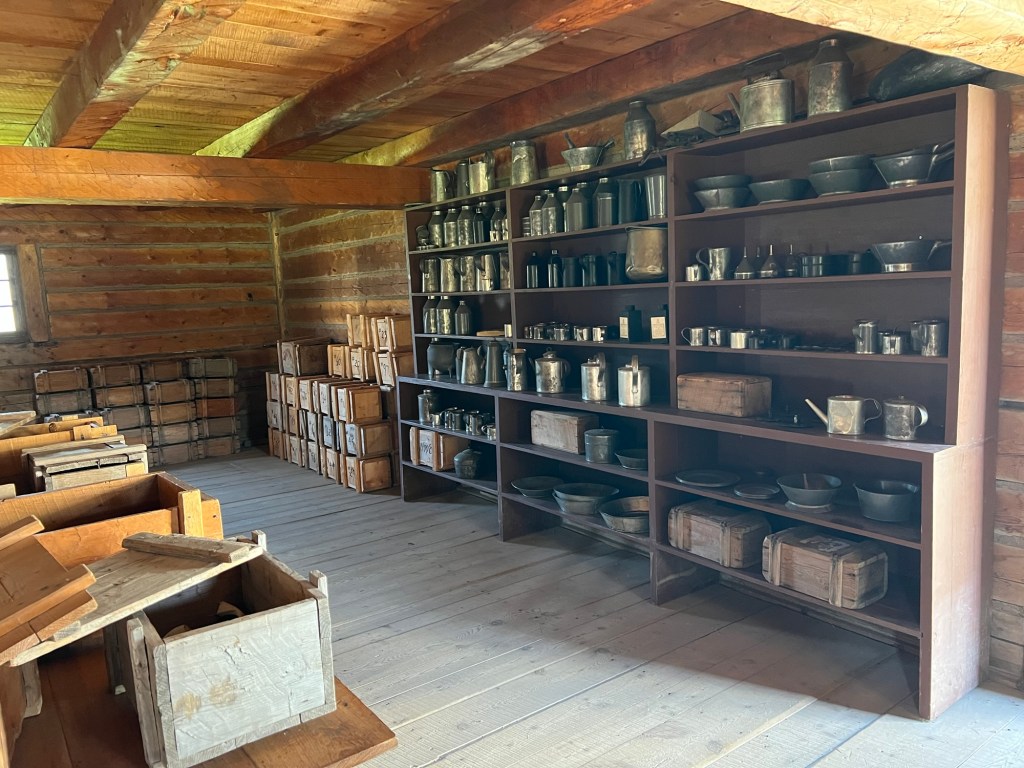
There was another building for the trade goods. Some, like the tinware were made on site.

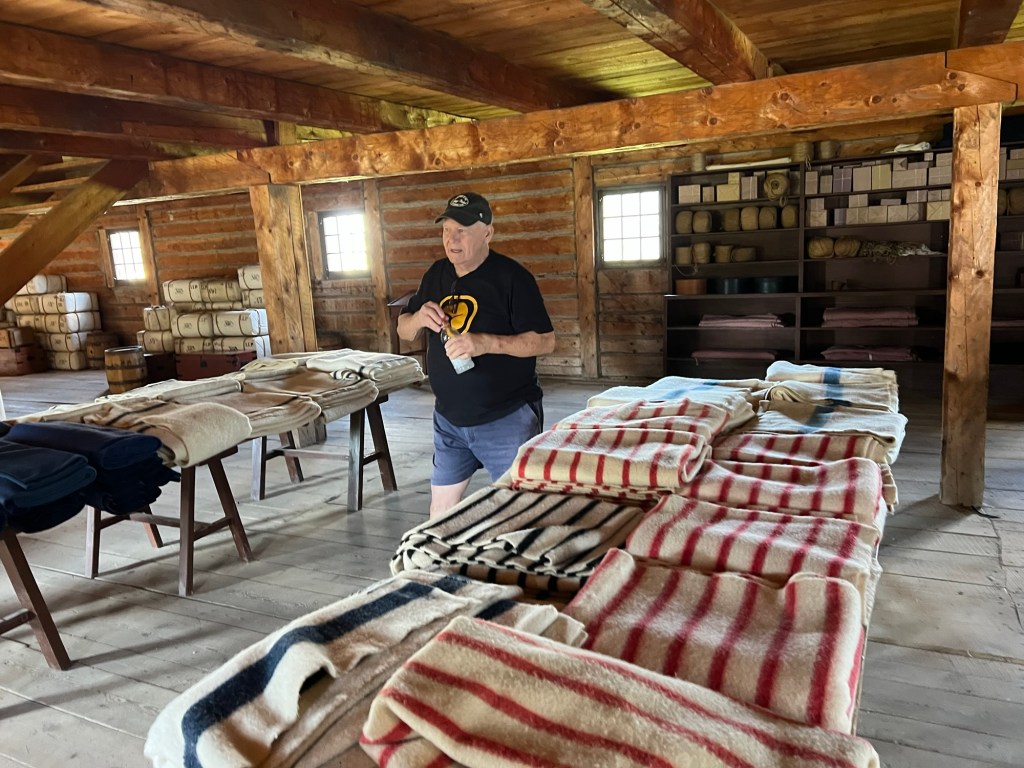
But many other things, like these blankets, were brought on the company schooner.

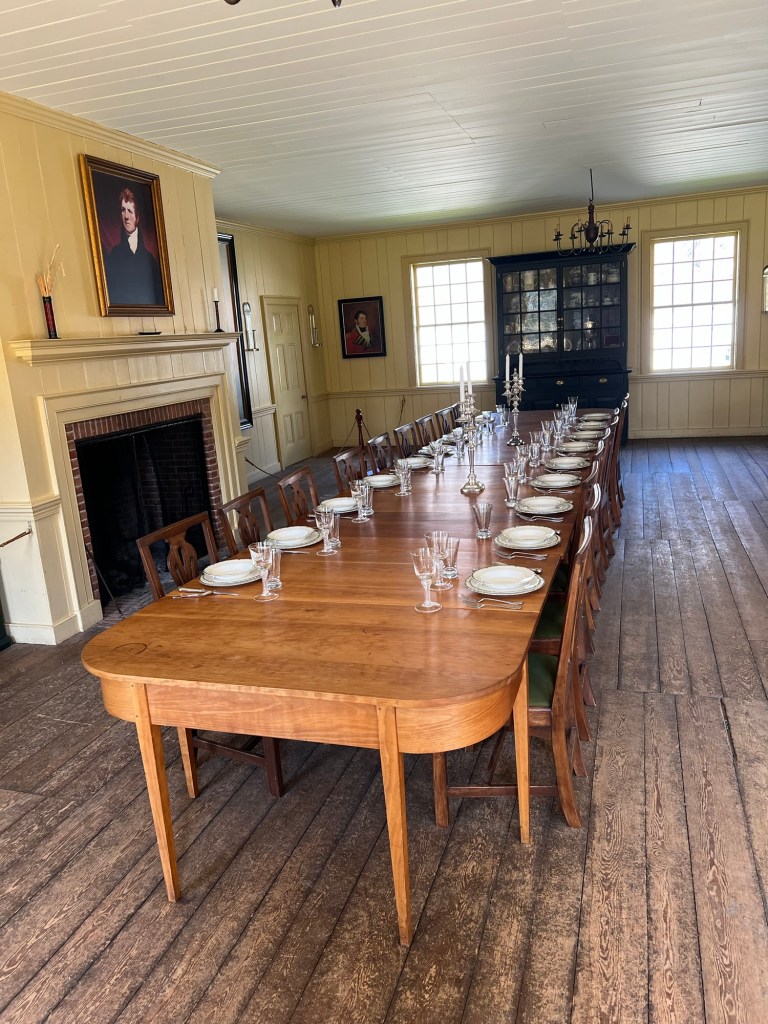
During rendezvous this great hall was used for dining, the rest of the year it sat idle.

This is where the partners sat. They would come west from Montreal for rendezvous. Next to them, in the middle of the hall, were the largest number of tables, these were for the clerks. At the far end were tables for the guides and interpreters. Of course the voyageurs were outside, in their own encampment.

I learned from the young woman in the Great Hall that the North West Company was formed by a number of independent Scottish traders who joined together to compete more effectively against the Hudson’s Bay Company. It was formed in the late 1790’s and by 1825 was forced to consolidate with the Hudson’s Bay Company. That company finally went bankrupt this year, 2025. But in 1815 the North West Company was the largest fur trader in the world.

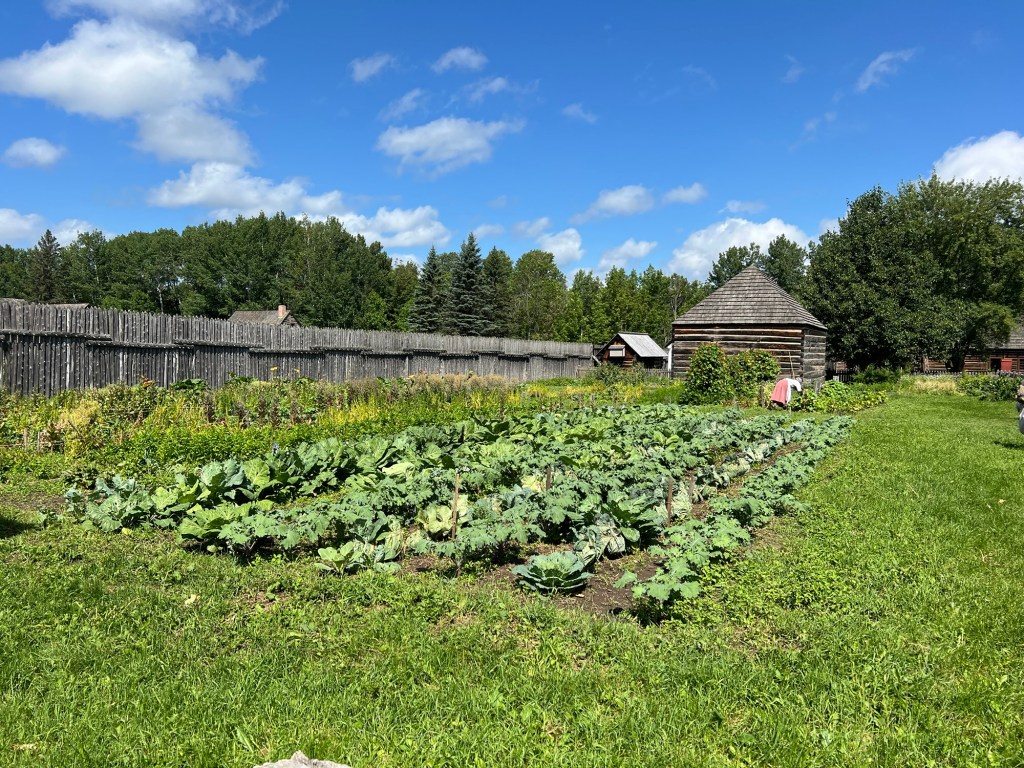
Fort William had its own garden…

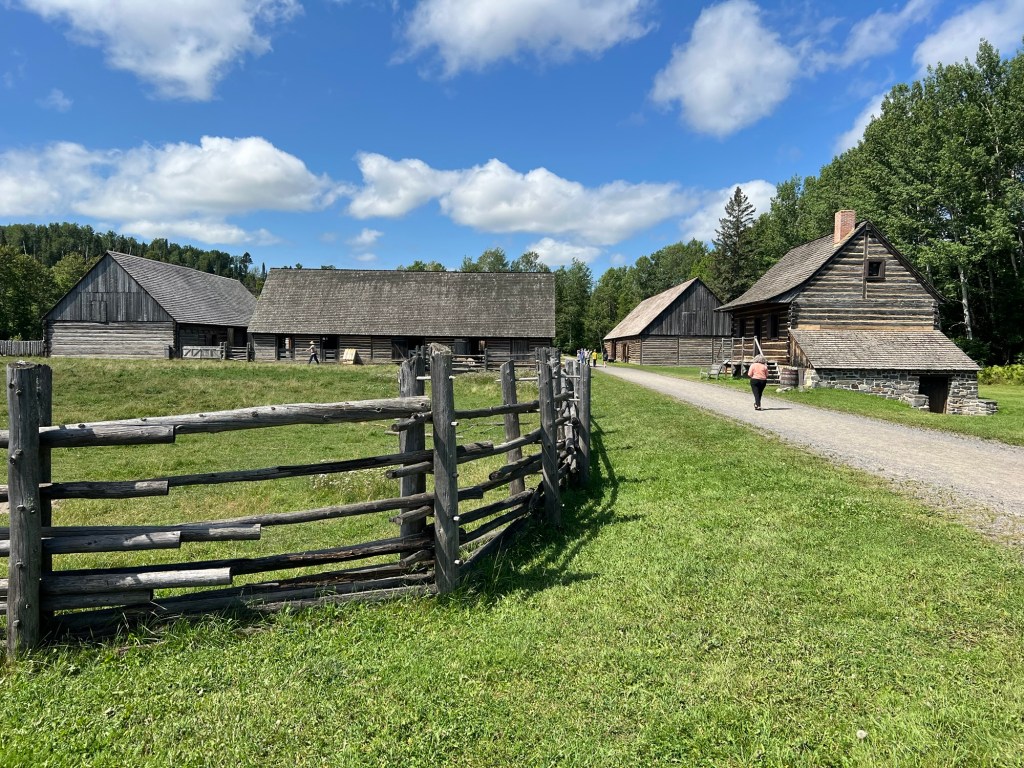
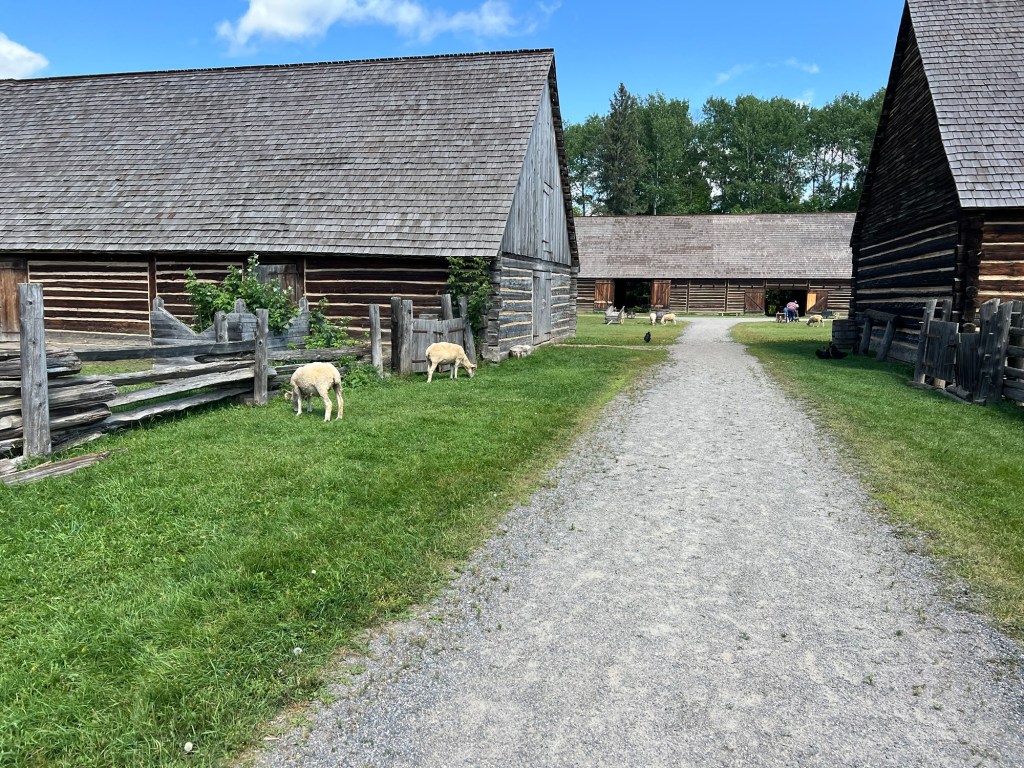
and farm.

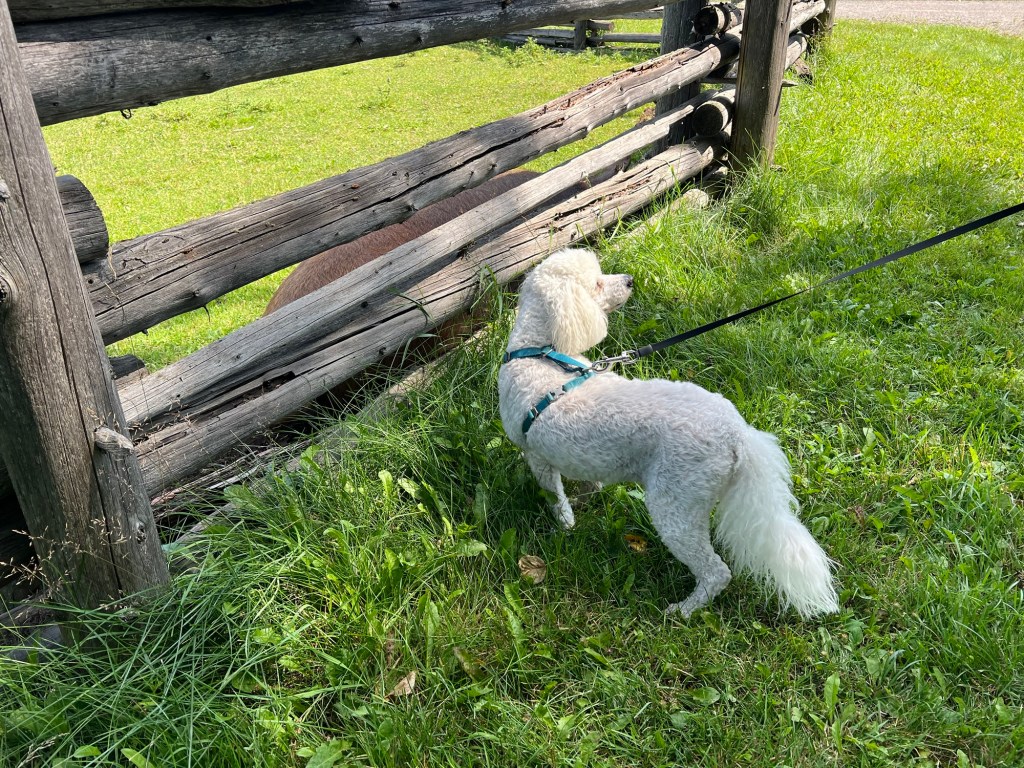
Matey was very curious about what was lying next to this fence.

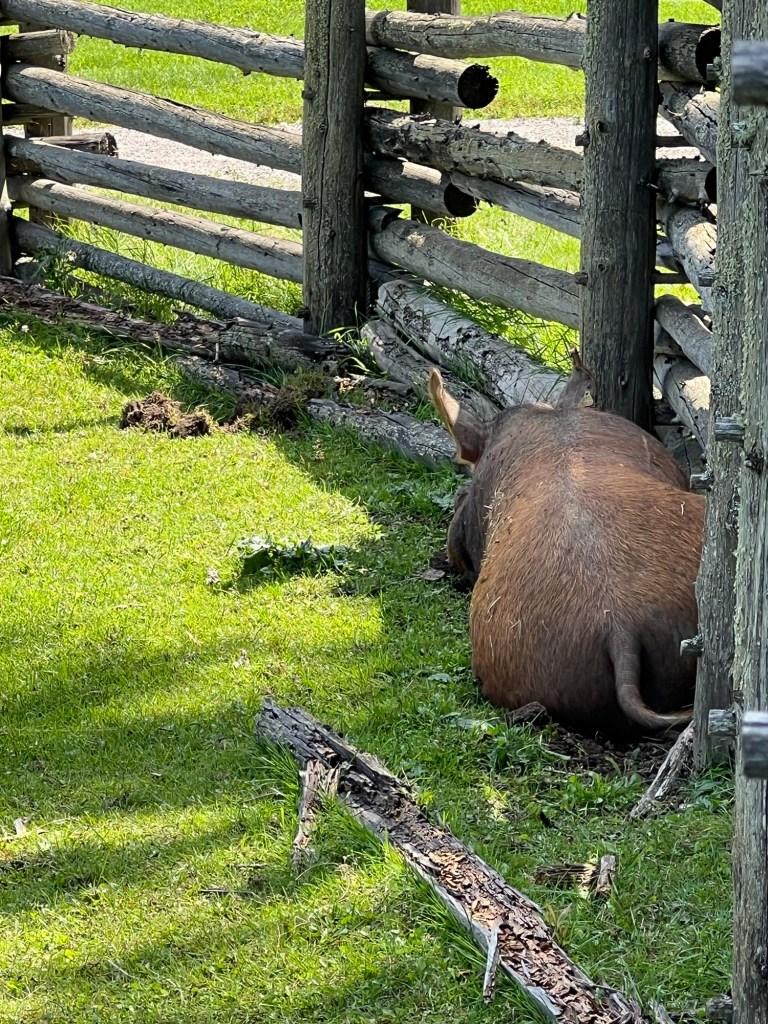
He finally figured out is was a live pig and barked at it. The pig was not fazed.

But Matey was now all excited so we decided not to try to walk him past the loose sheep and chickens.

We were all about worn out now, so took the rather long walk back through the Visitor Center and out.

This was a beautifully done site and there was more to see and do than we could manage.

Kakabeka Falls Provincial Park

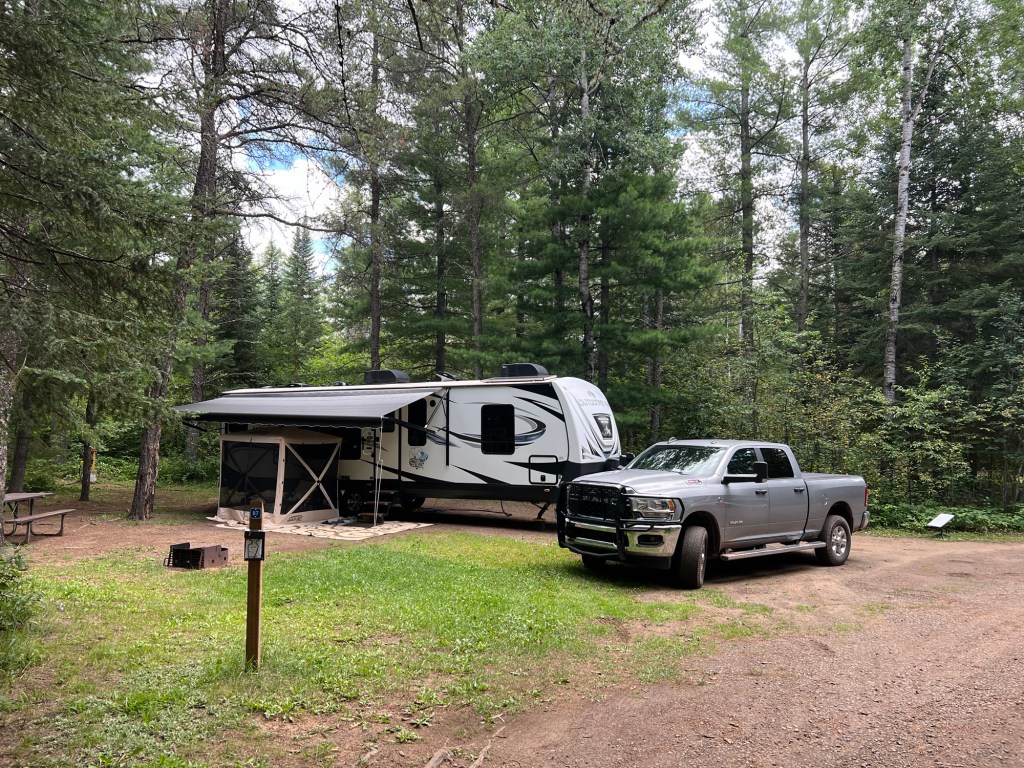
This is our seventh (and last) Ontario Provincial Park on this trip, and this may be our best campsite. It is huge, wider than it is deep, so we have privacy on both sides. And we’re on a short dead-end spur, so almost no one goes by in front of us. It’s also pretty level. But like all Ontario Provincial Parks, the only service is 30 Amp electrical, no water or sewer. We can manage.
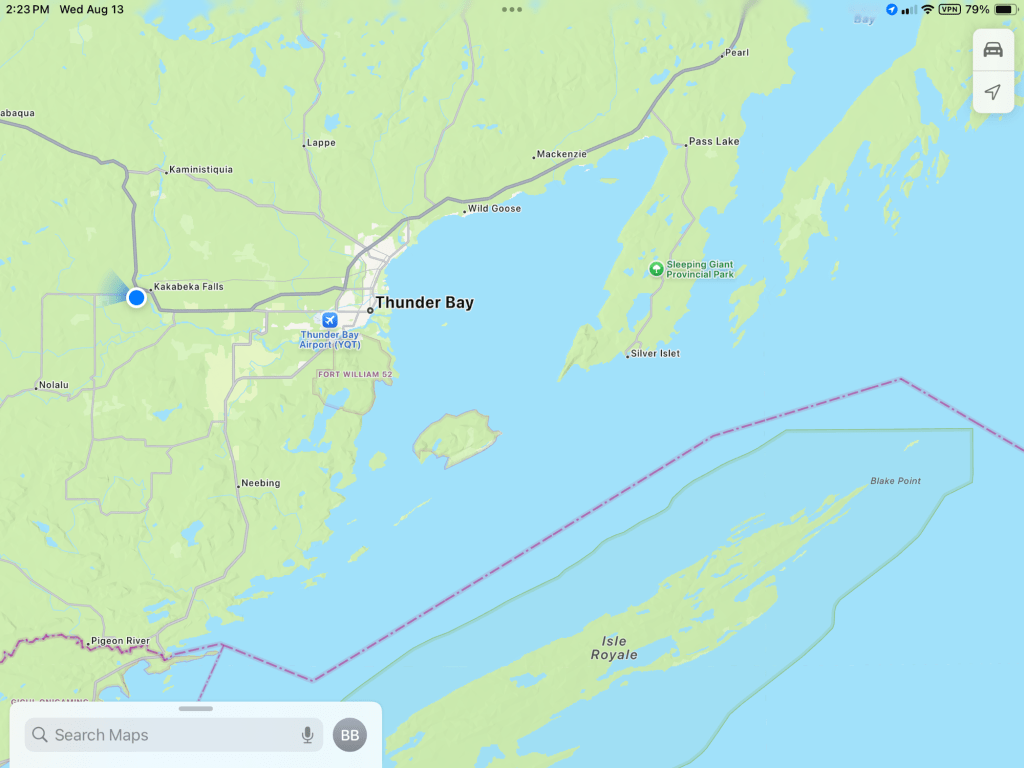
We are at the blue dot, less than 20 miles from Thunder Bay, Ontario. We are also not too far from the Minnesota border and not far, as the crow flies, from the Sibley Peninsula and Sleeping Giant Provincial Park. Also, since Isle Royale is part of Michigan, we’re quite close to that state, too.

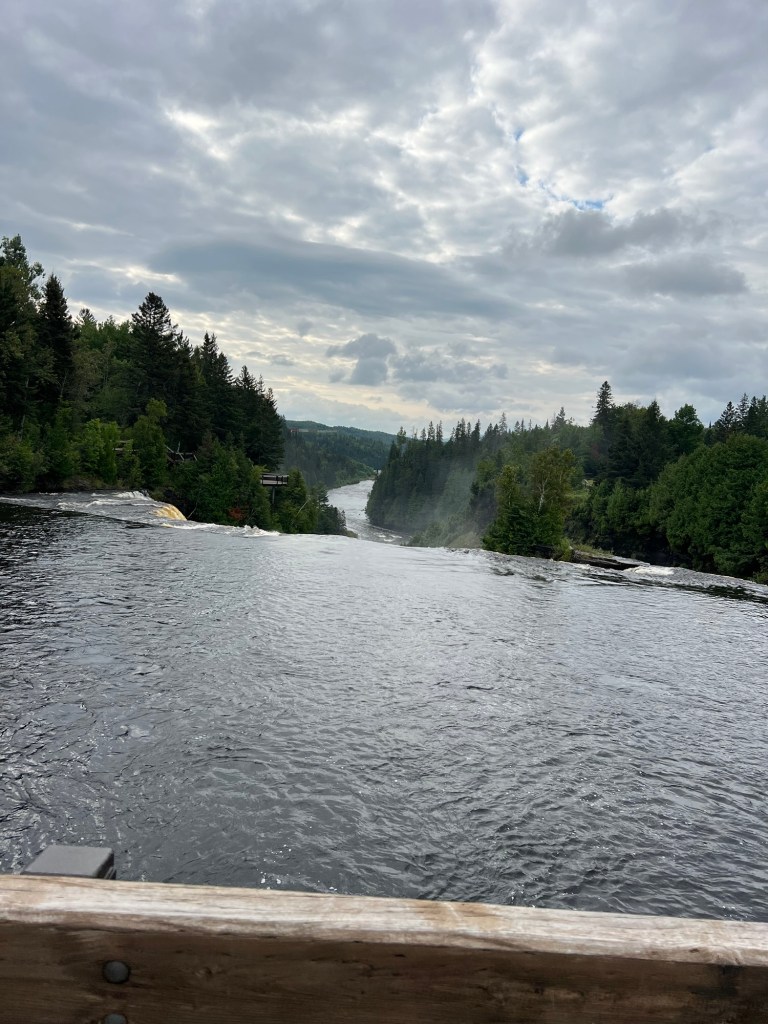
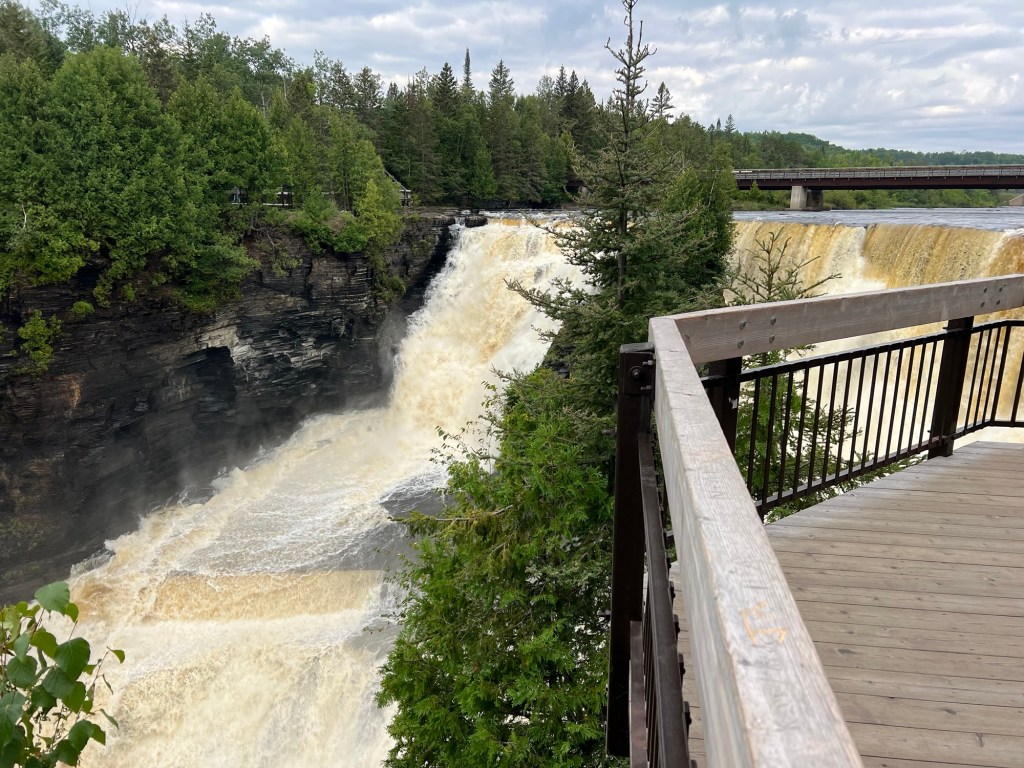
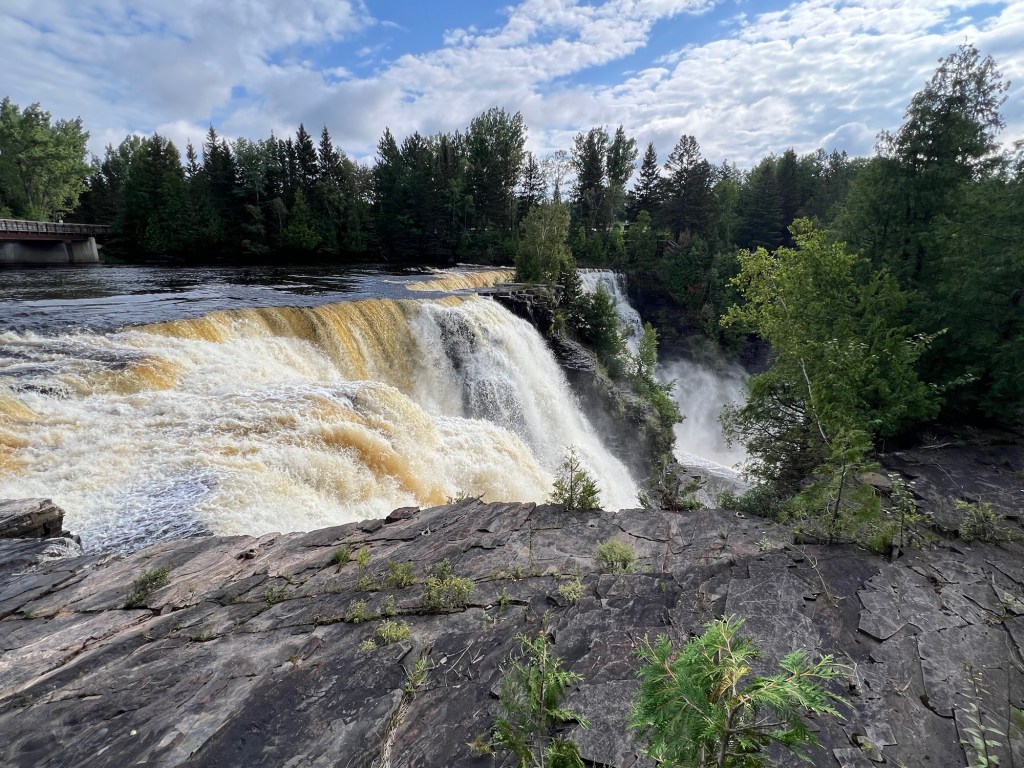
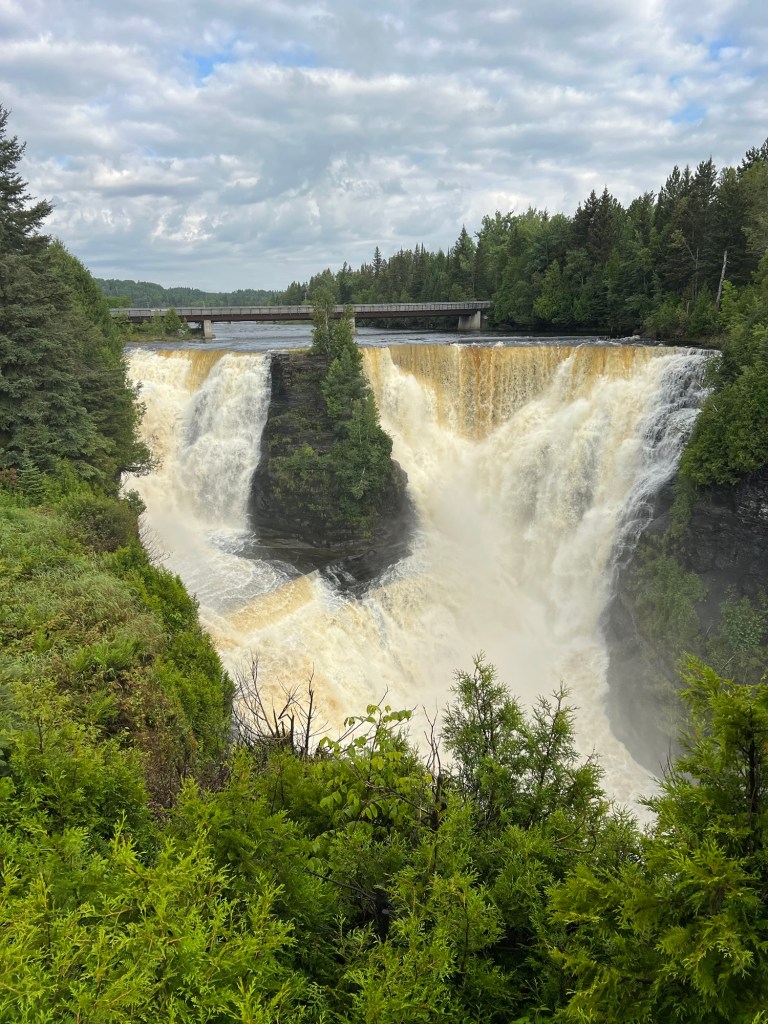
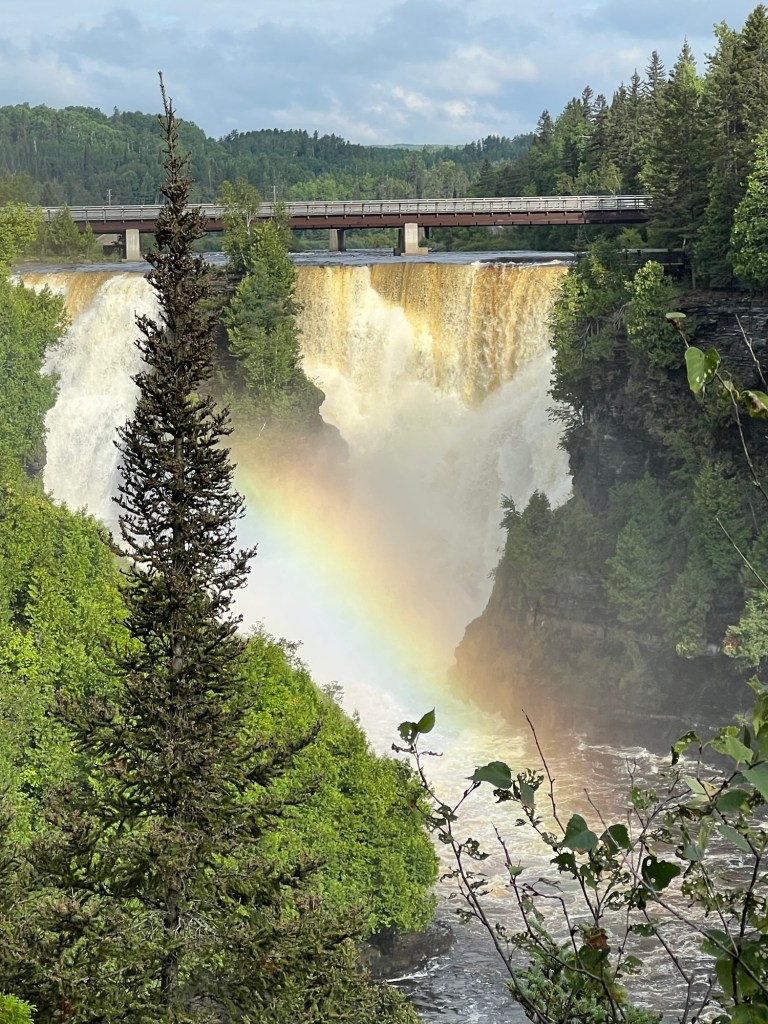
The star of this park is the falls and when you drive across the one lane bridge to the campgrounds, you are certainly aware there’s a falls there, but you really can’t see it. Kakabeka Falls, on the Kaministiquia River, is the second highest falls in Ontario at 40 meters (130 feet).

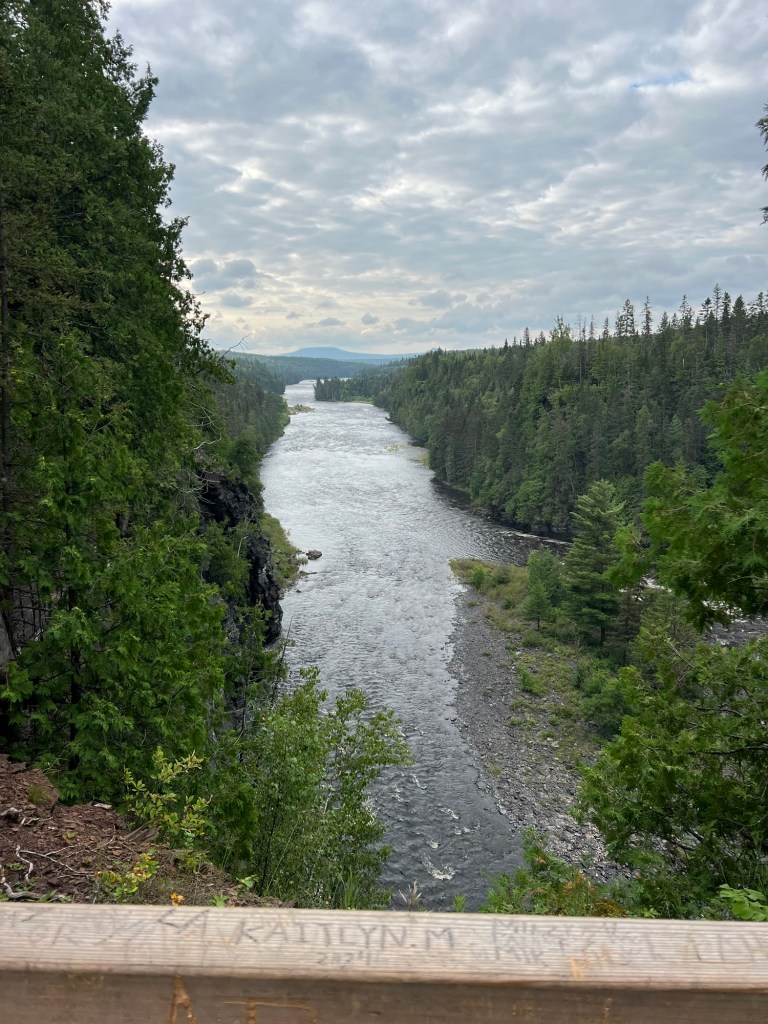
Today we walked the boardwalk and trails that let you view the falls from every which way. Starting on the north side of the river there’s a platform to view the gorge below the falls.

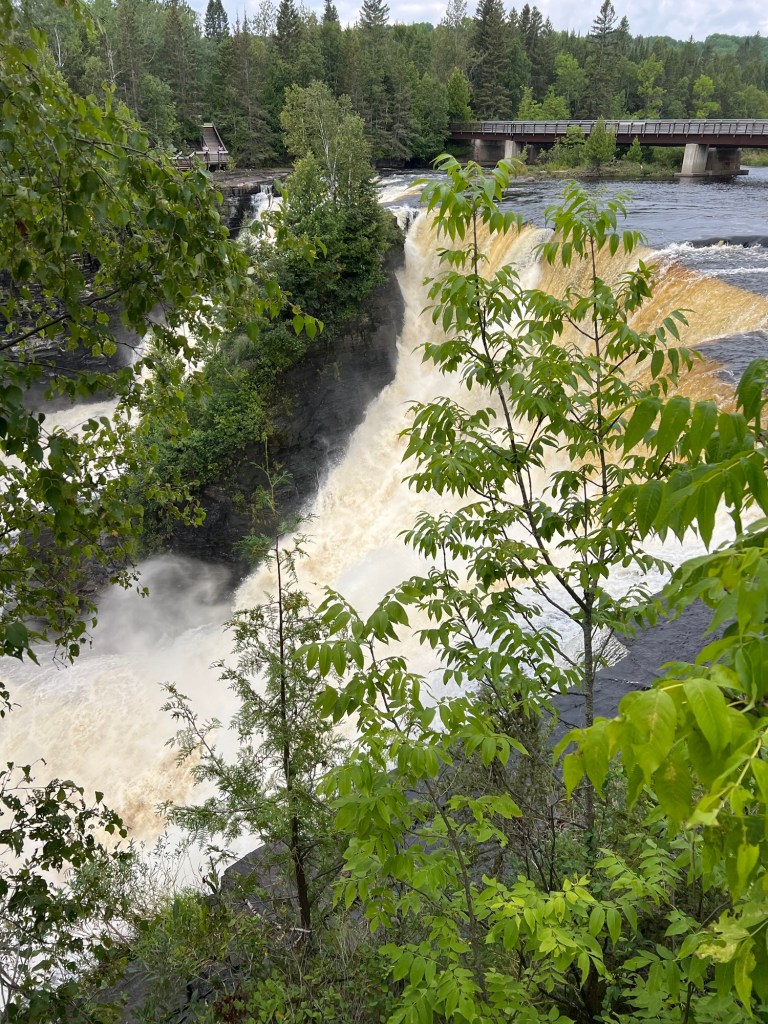
Then you can see the top part of the falls,

and get quite close.

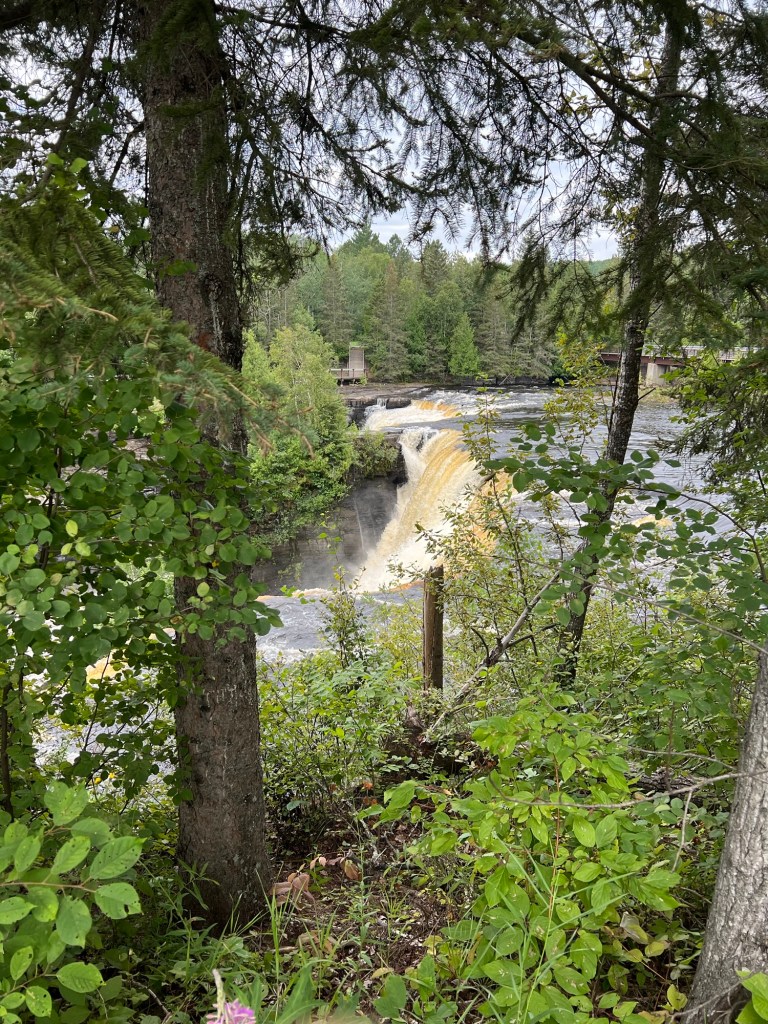
Another platform gets you to the brink on the north side.

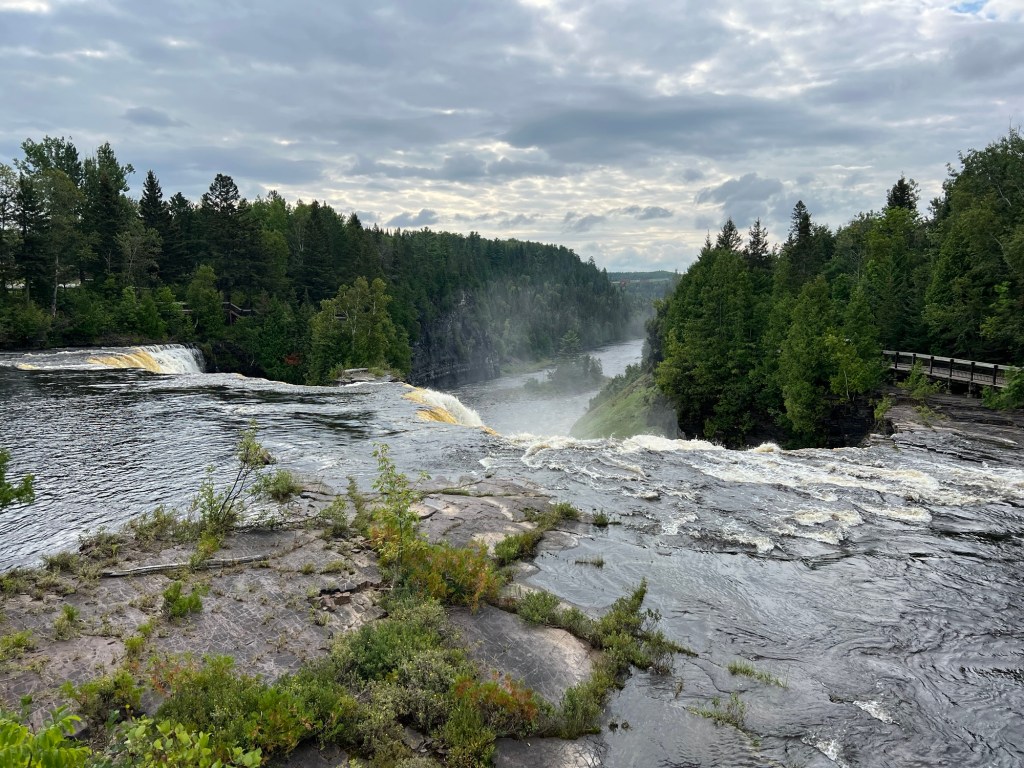
You can cross a pedestrian bridge that parallels the one-lane auto bridge and get a nice look from above the falls.

Then you come around to the south side of the river and see the brink of the falls from that side.

A bit past that is a platform for a pretty nice view of most of the falls from the south side.

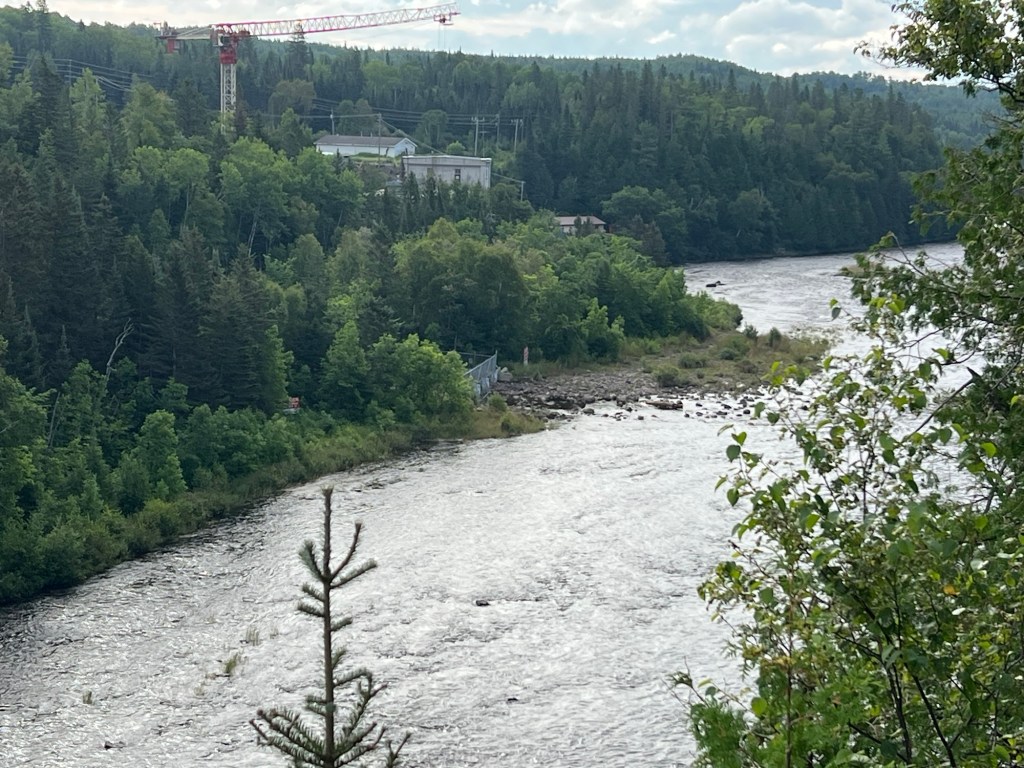
From there you take a short trail which follows down the route of the old “mountain portage” to the point where it descends steeply to the river. The voyageurs used to make that trek repeatedly with two 90 pound loads held by a three inch leather strap which went across their foreheads (just envisioning that gives me a headache). And they reportedly did this at a jog! The park path does not go down the steep portage trail, instead it cuts back to the upper bank for this view of the power plant. Like at Niagara Falls, water is diverted above the falls and brought to the plant, in this case in giant pipes. The crane you see is being used in a huge reconstruction project at the plant.

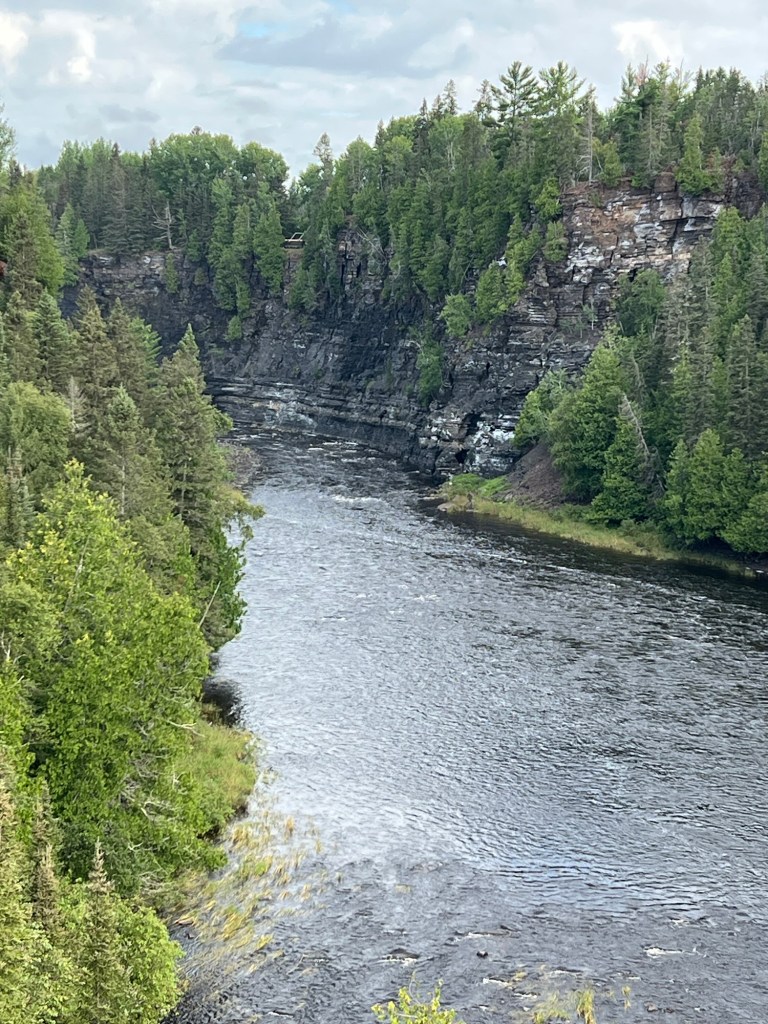
You now walk along the south side of the gorge going upstream…

where you can get a great view of the erosion in the shale under the chert caprock that forms the brink of the falls.

You end on a platform that I think gives you the very best view of the falls. A fitting finale to your short journey.

More Scenes from Sleeping Giant

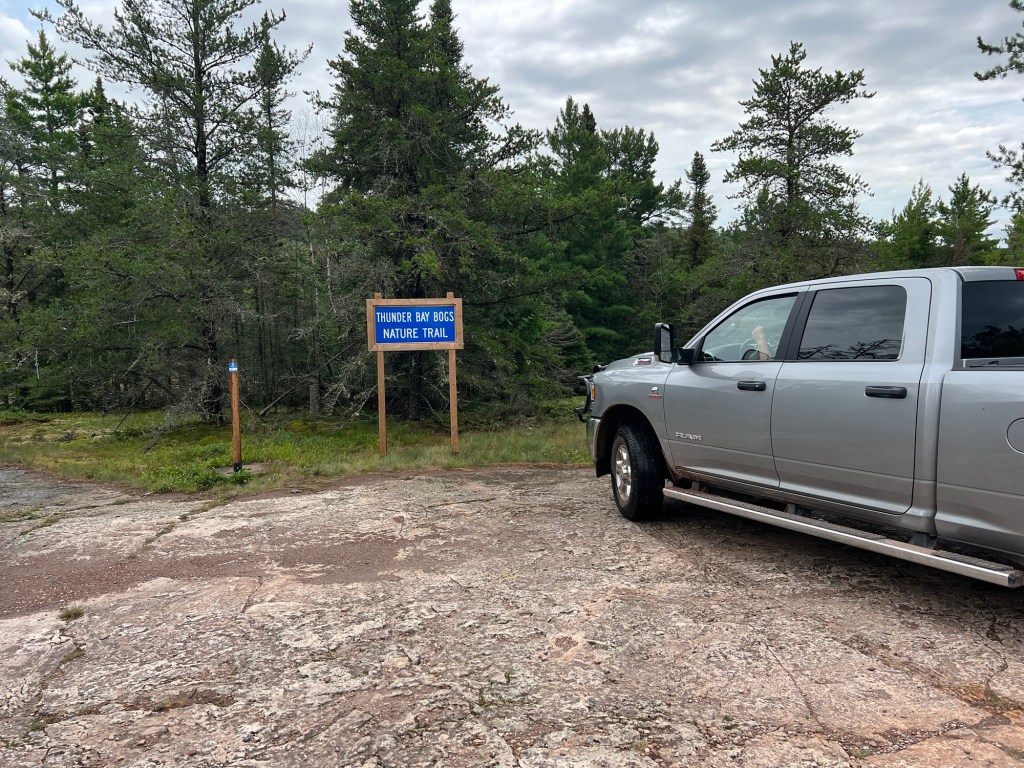
After we went out on the Thunder Bay Lookout we walked the short Thunder Bay Bogs Nature Trail.

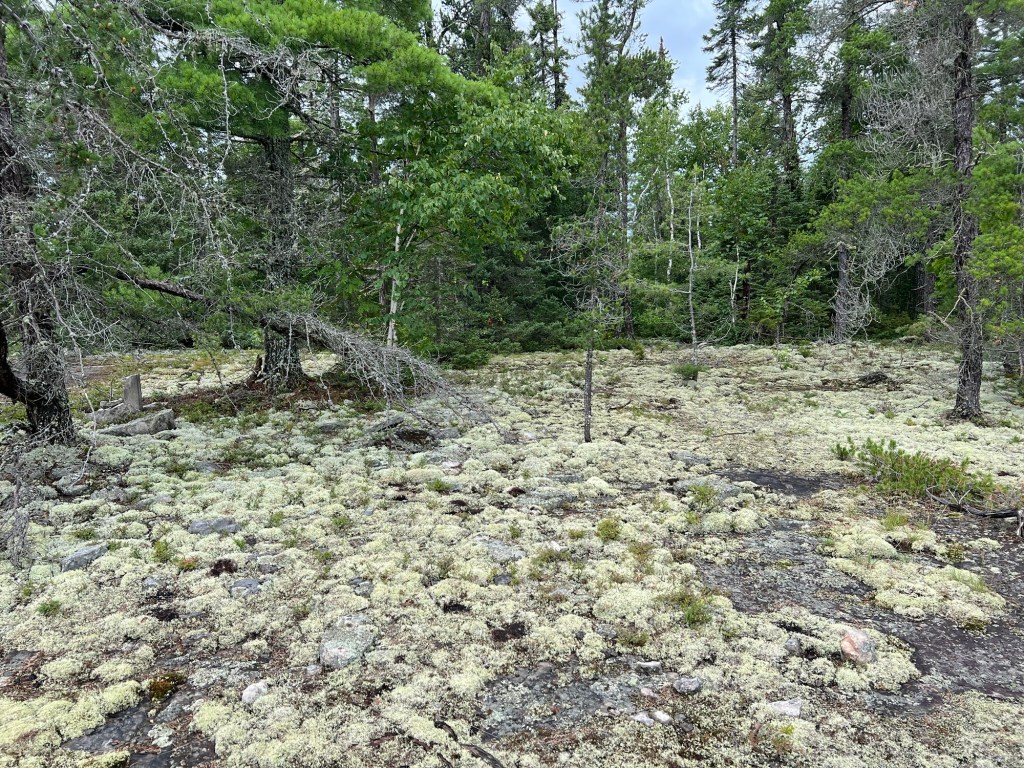
I was hoping to see some carnivorous plants but I didn’t. There was lots of lichen,

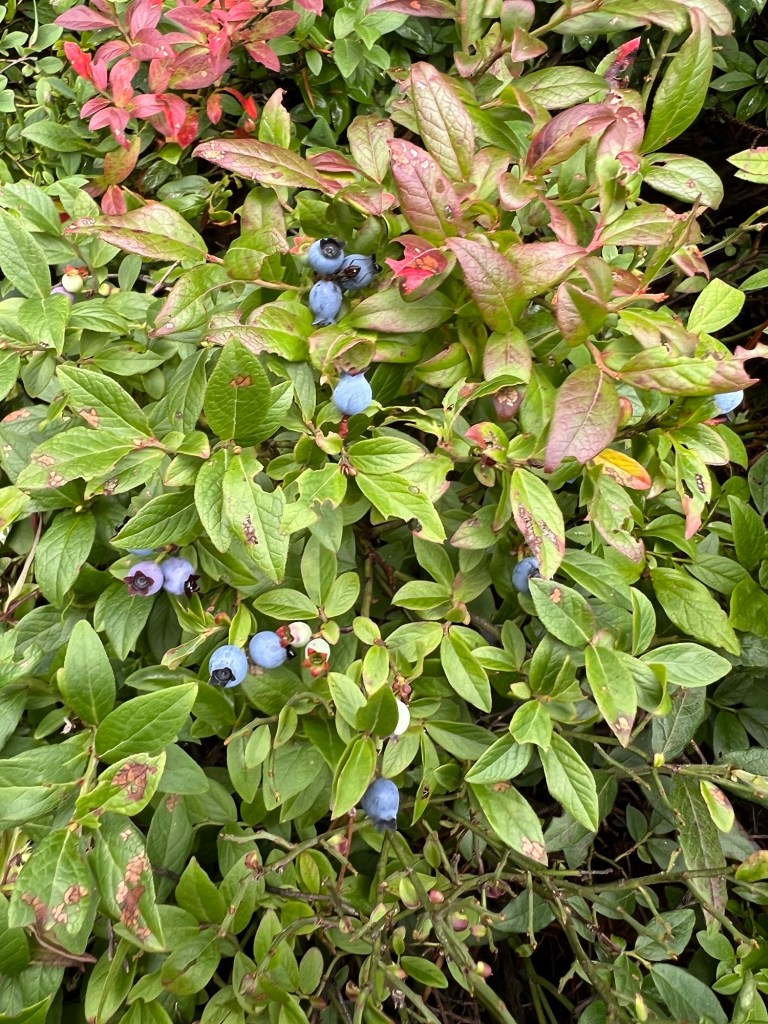
some lowbush blueberries,

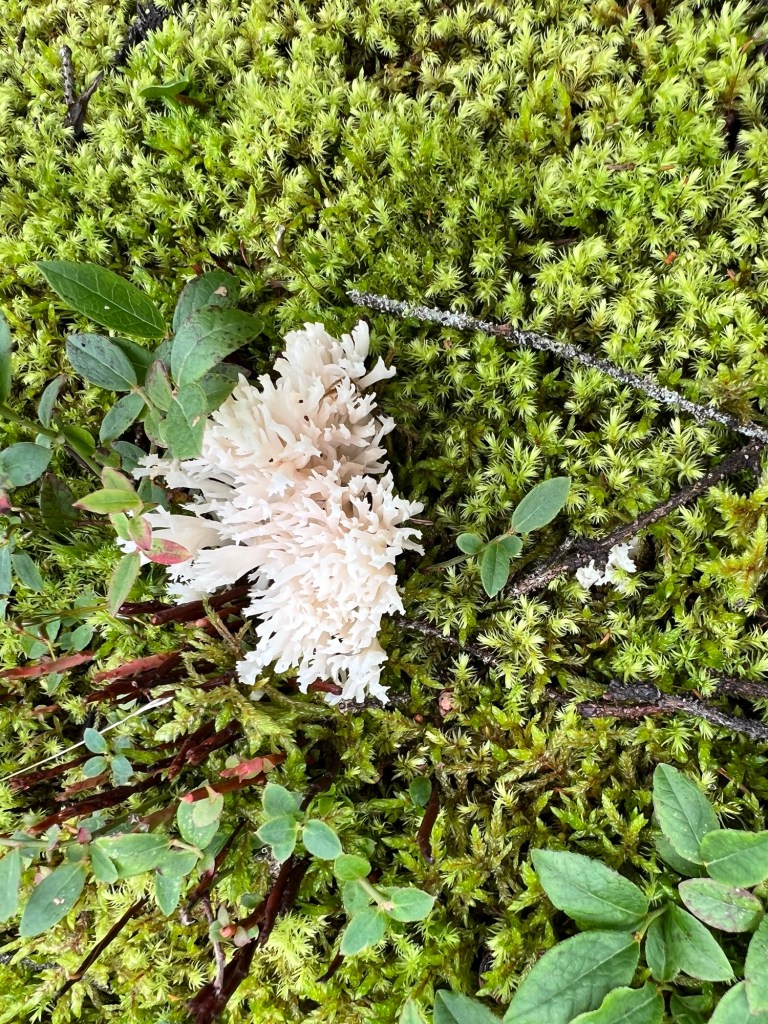
and this strange fungus.
It was a very moosey looking place, but still no moose.

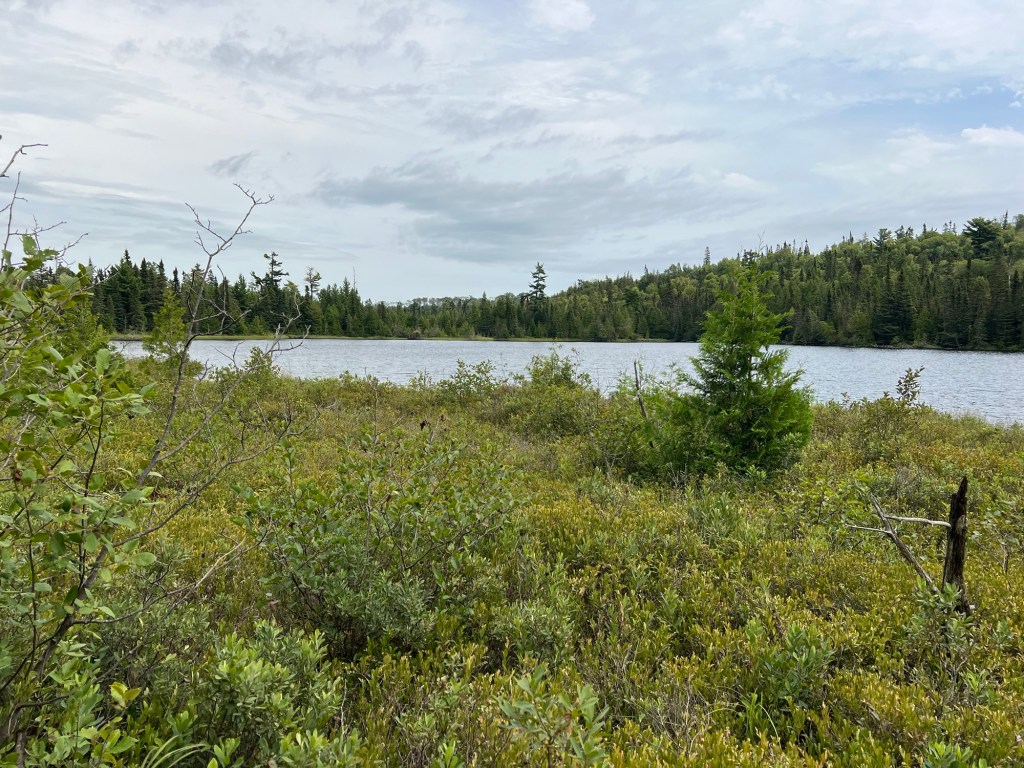
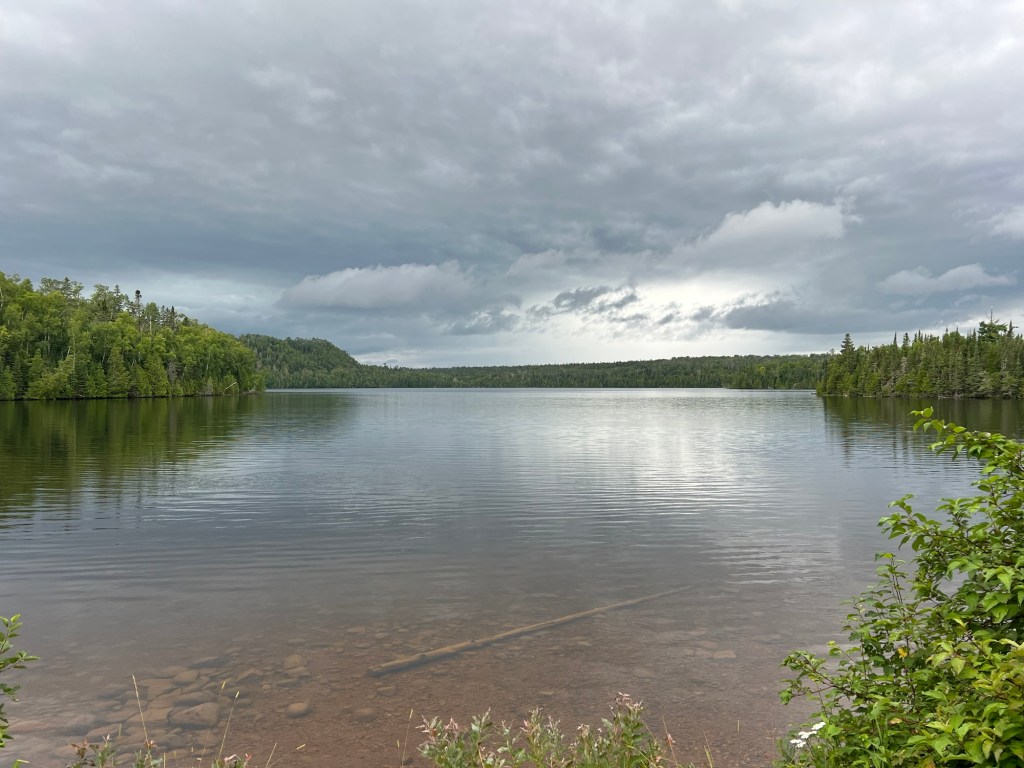
We stopped at two other pretty little lakes,

under increasing clouds,

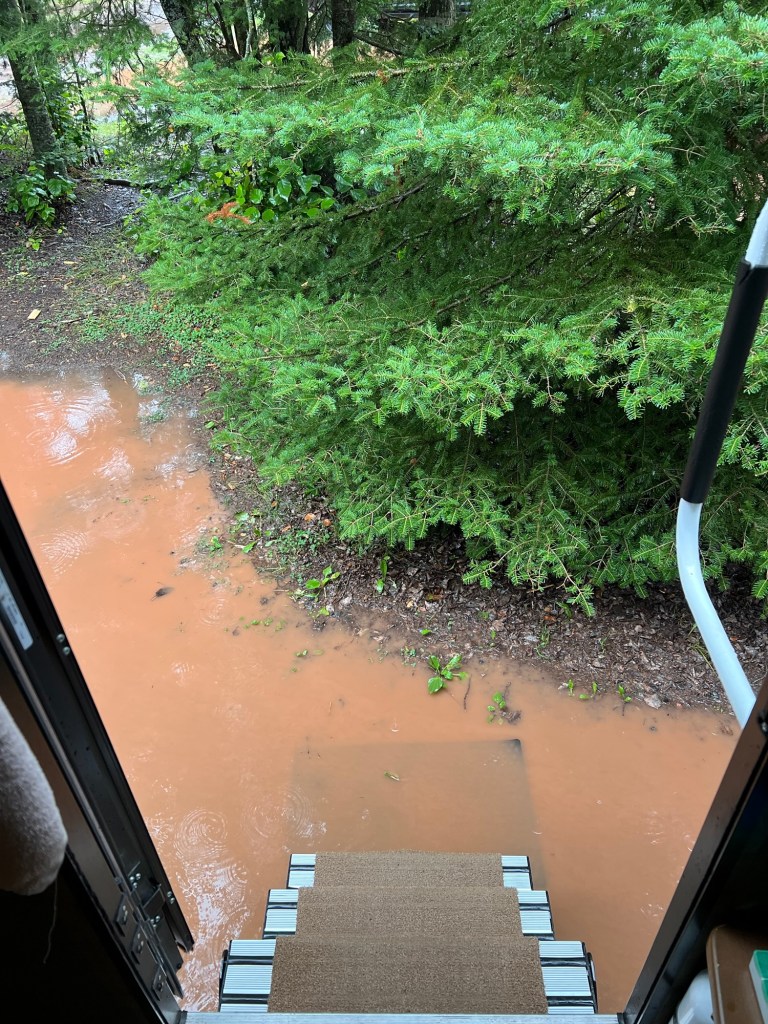
and returned in a downpour.

Our doorstep had become a tiny lake.

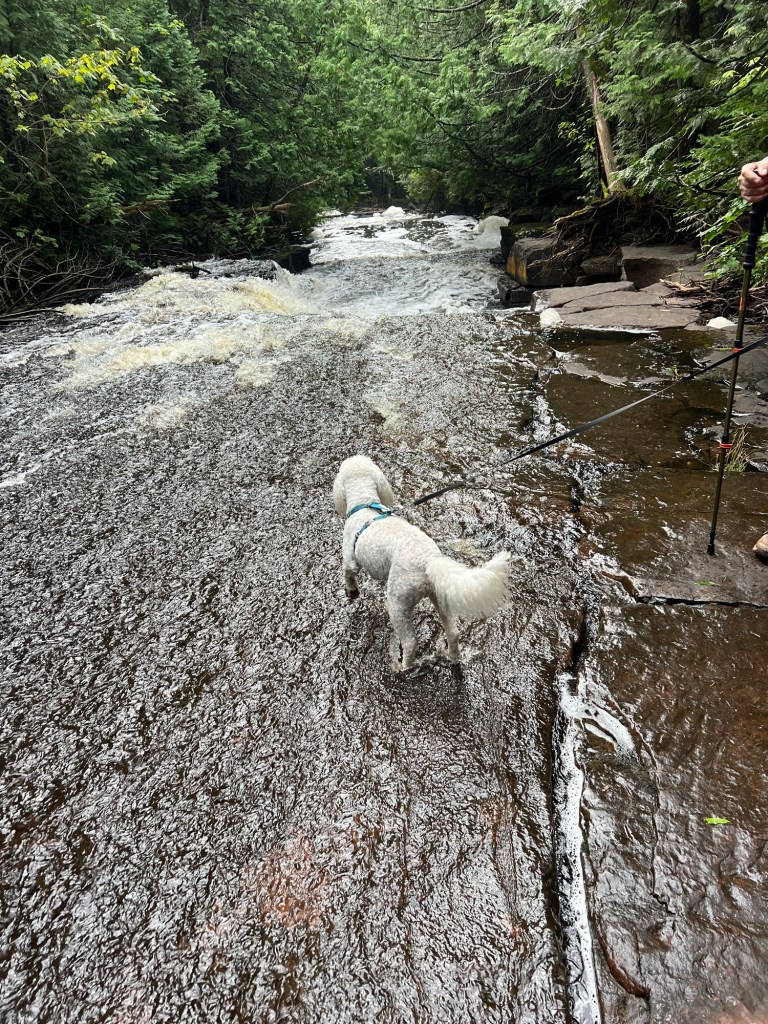
Yesterday we hiked along Joe Creek.

We went the short distance to Lake Superior…

although the trail all but disappeared before we got there.

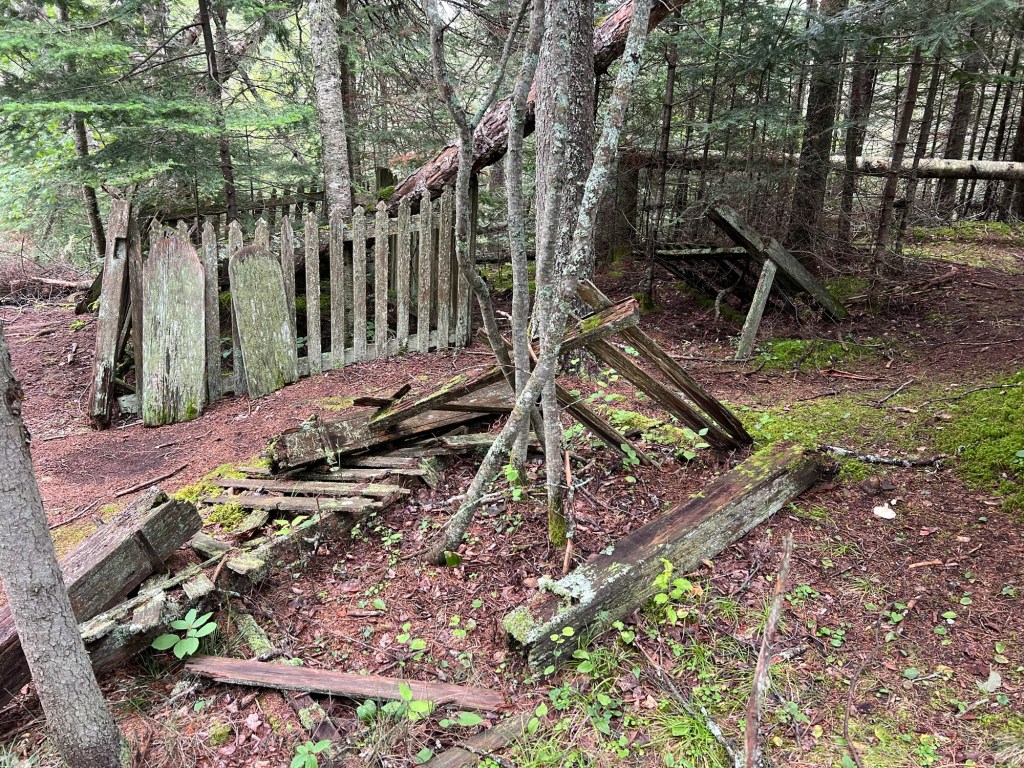
We drove back to the far end of the peninsula to hike Cemetery Trail. Most of the graves in the cemetery, which was used from 1868 to 1937, had wooden markers and wooden picket fences. There was not much left.
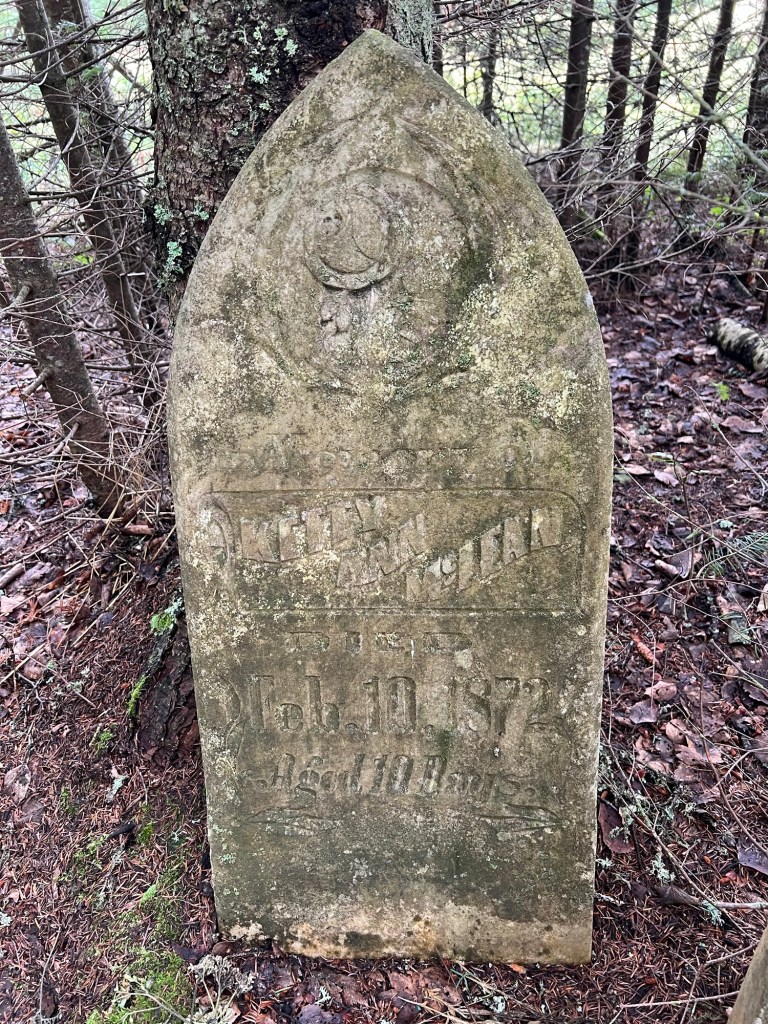
This is the only stone I saw. It says “Kelly Ann McLean, Feb 10, 1872, Aged 10 Days” How sad.

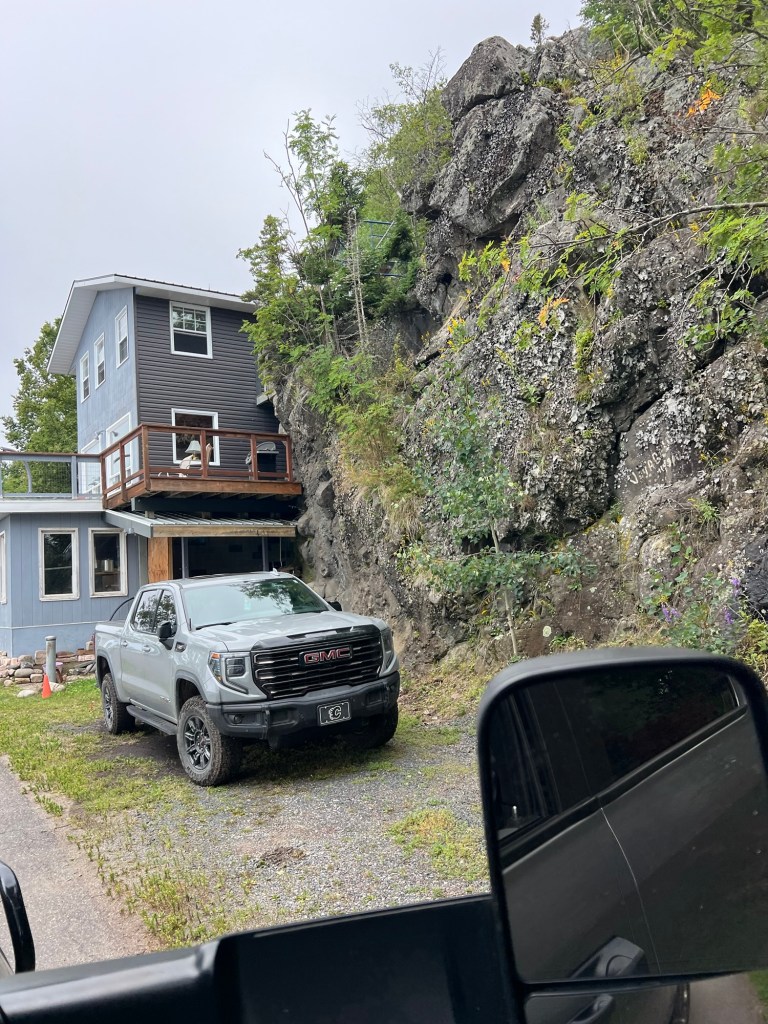
When we left the trail we drove a mile or so on to the little community of Silver Islet. This is all scrunched up between the rocks…

and the lake.

Although the road makes a loop here it is a two way road.

Lots of pretty little houses.
Lots of summer people and traffic.
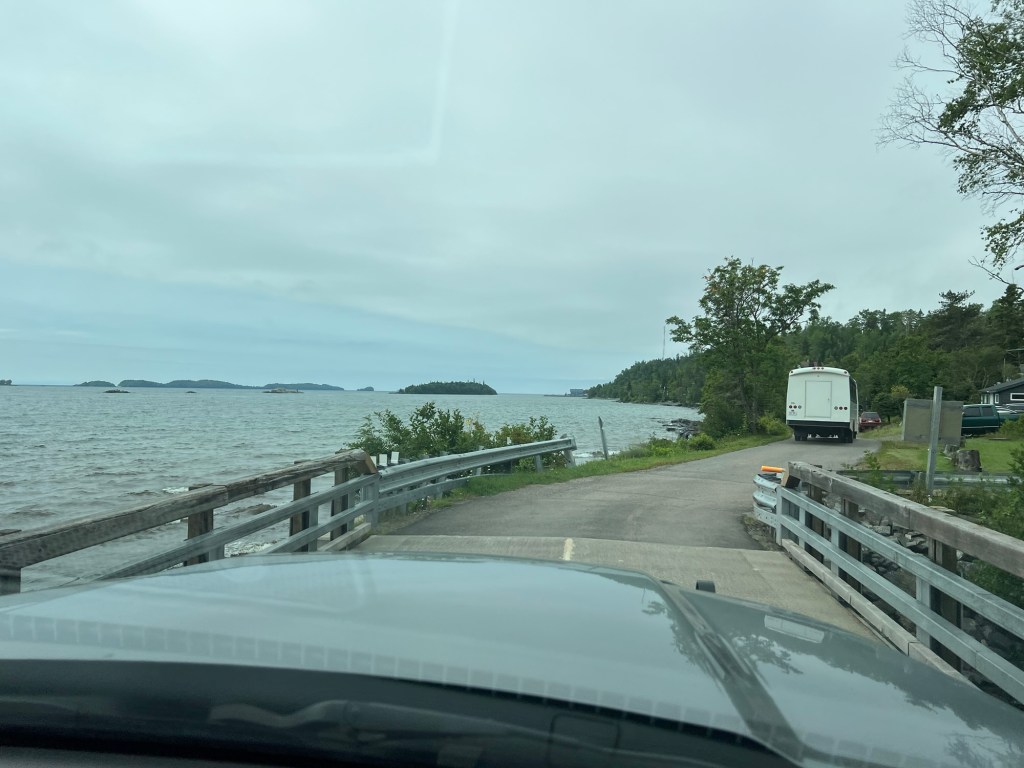
A very slow go through the little town.

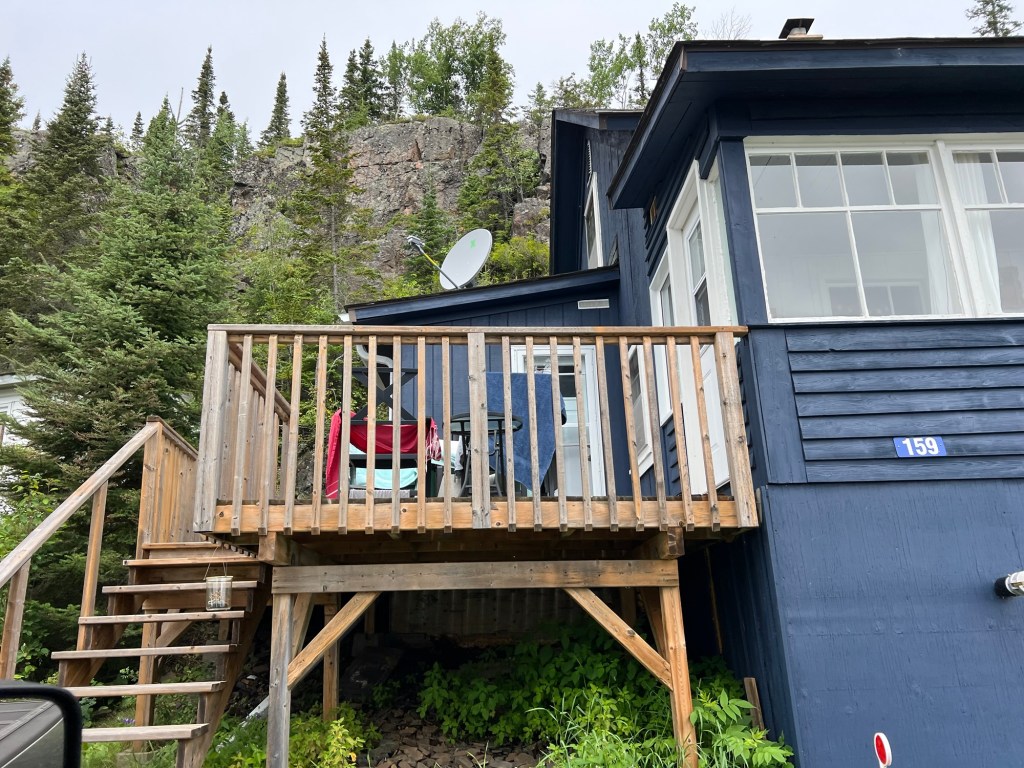
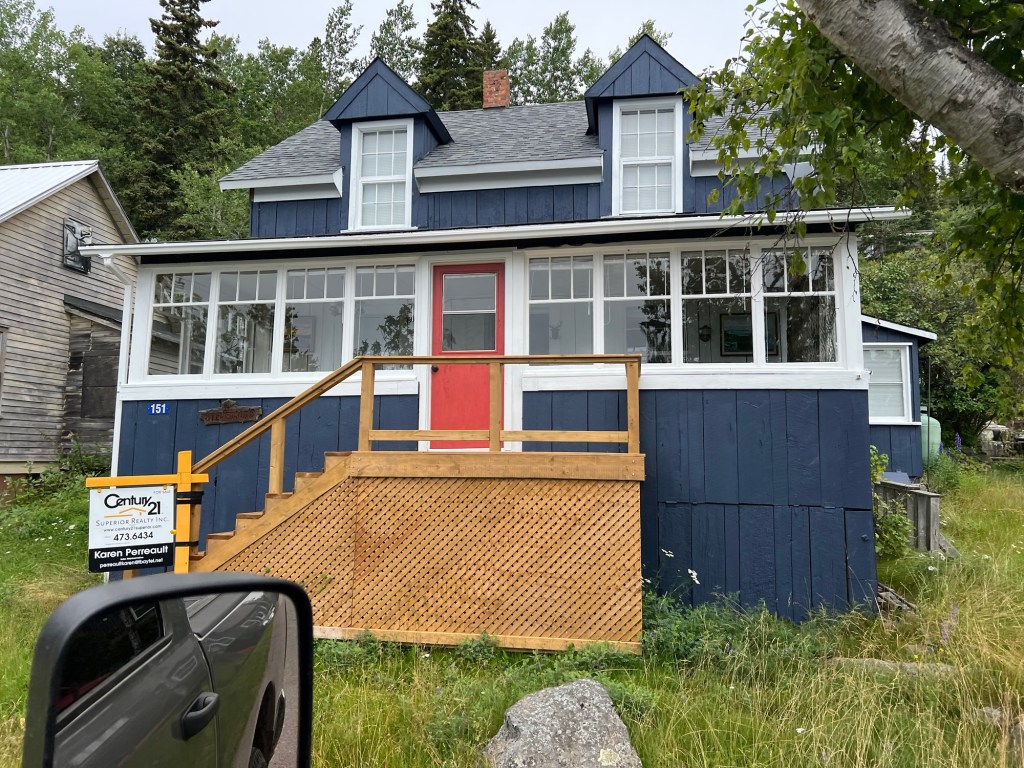
This place was for sale but it didn’t entice me. Interestingly I saw a house with McLean on the sign outside. Perhaps descendants of the family that lost little Kelly Ann.

Sleeping Giant is a lovely park…

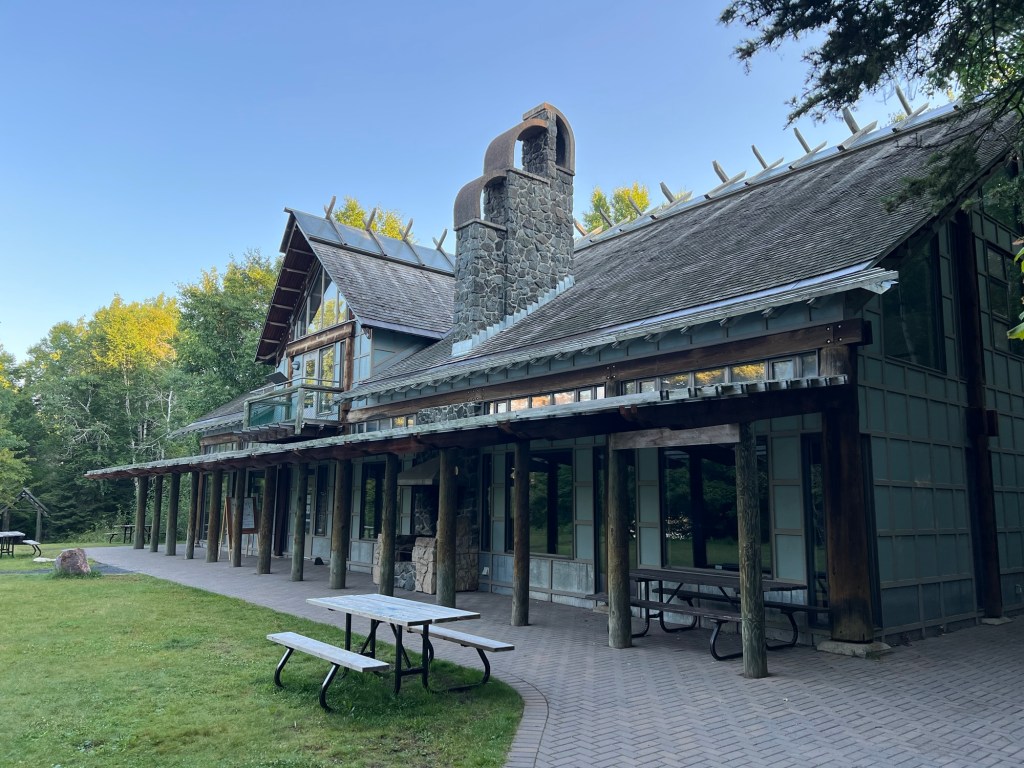
with a beautiful Visitors Center, but now it’s time to move along.

The Thunder Bay Lookout

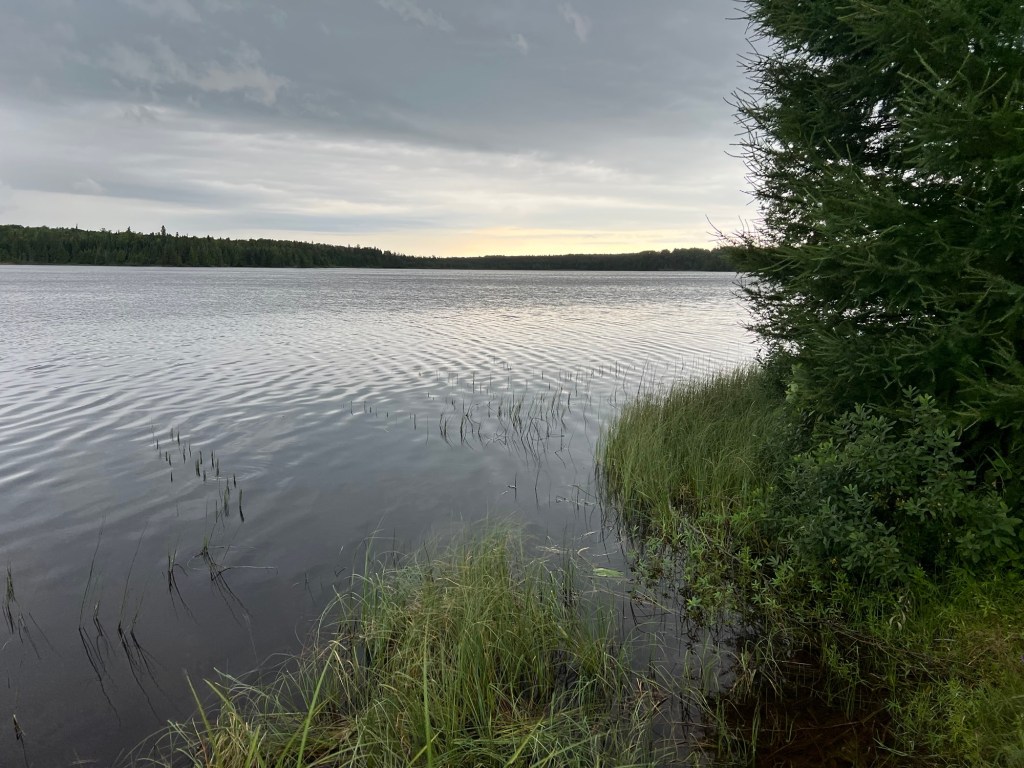
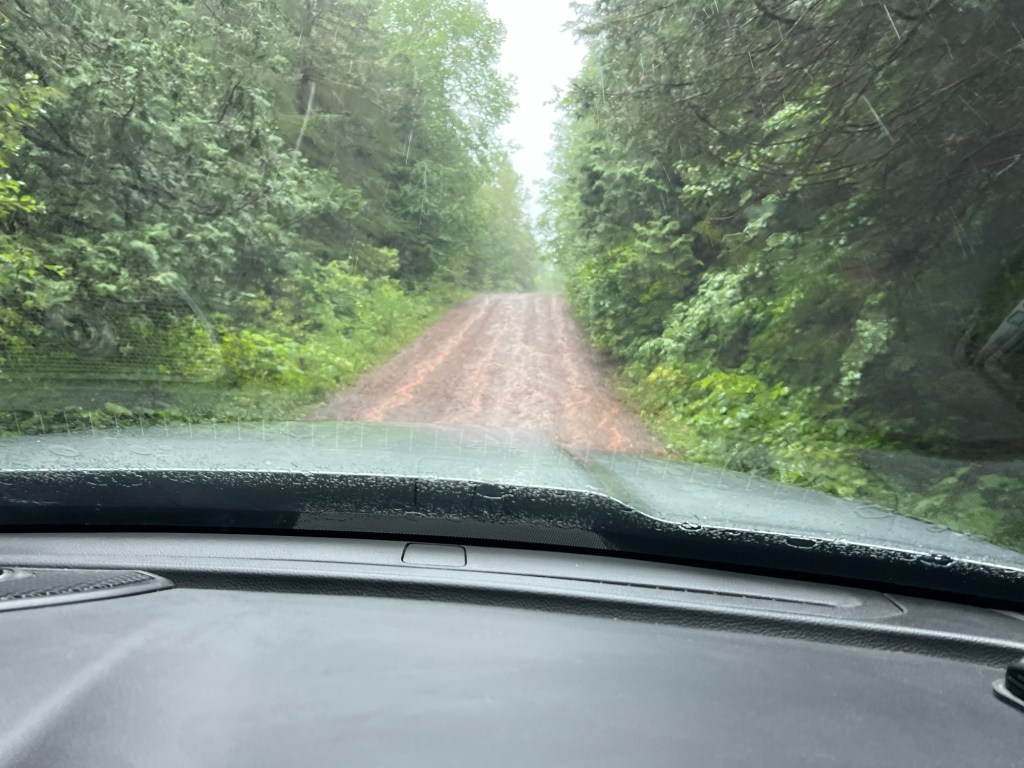
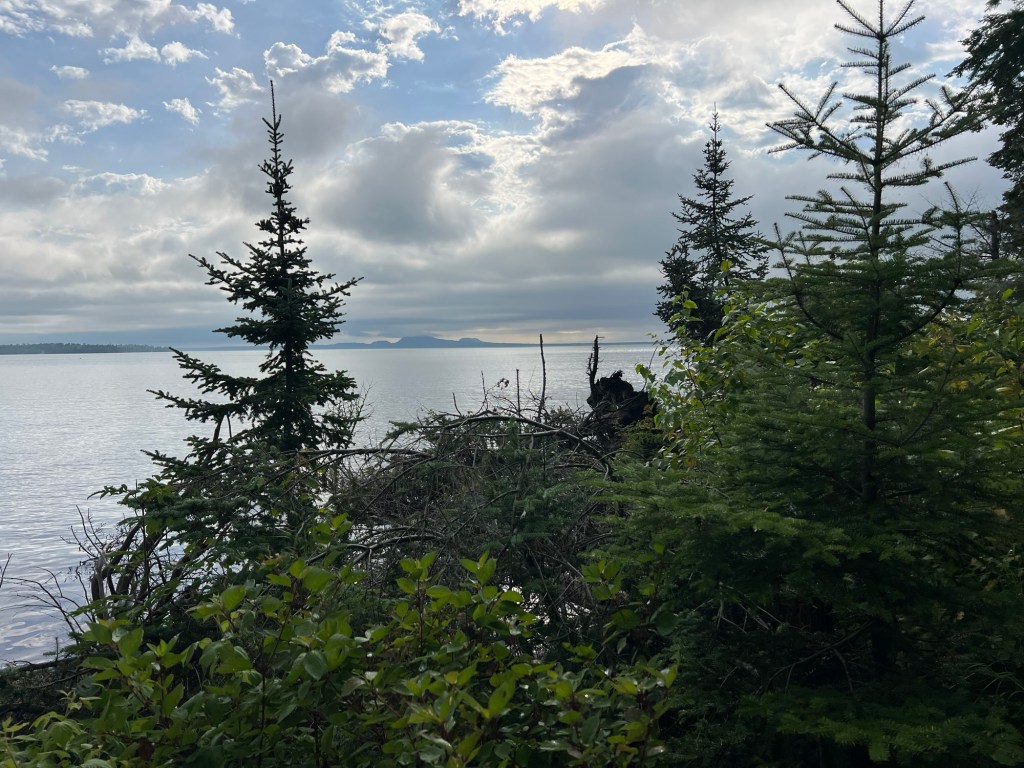
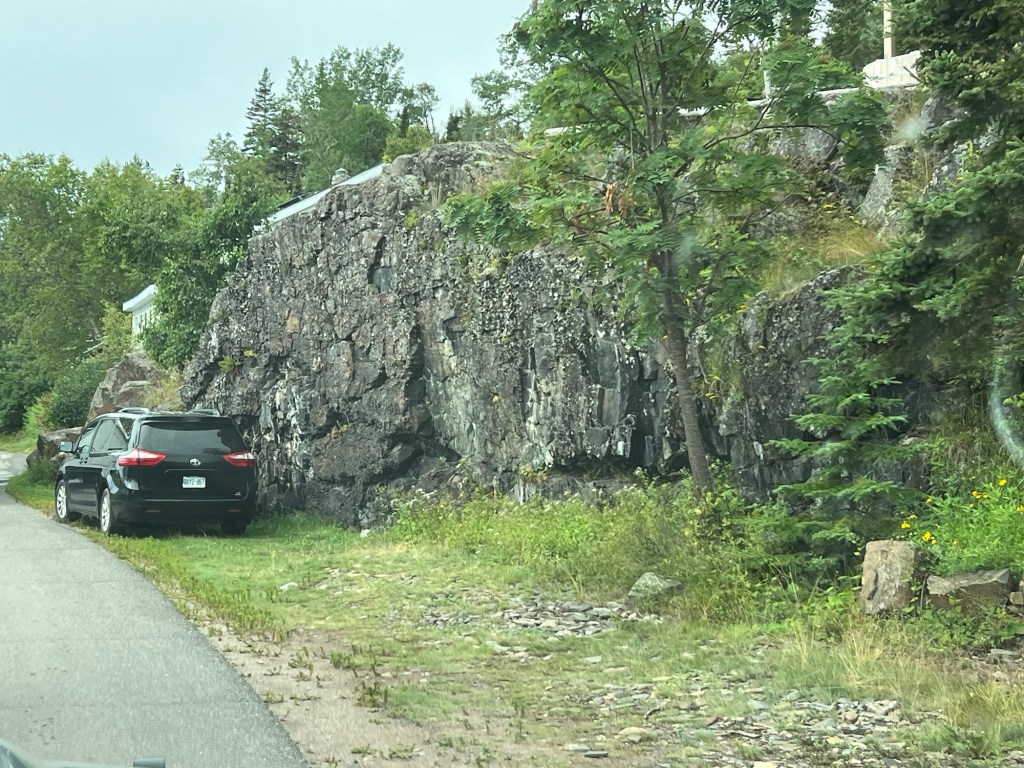
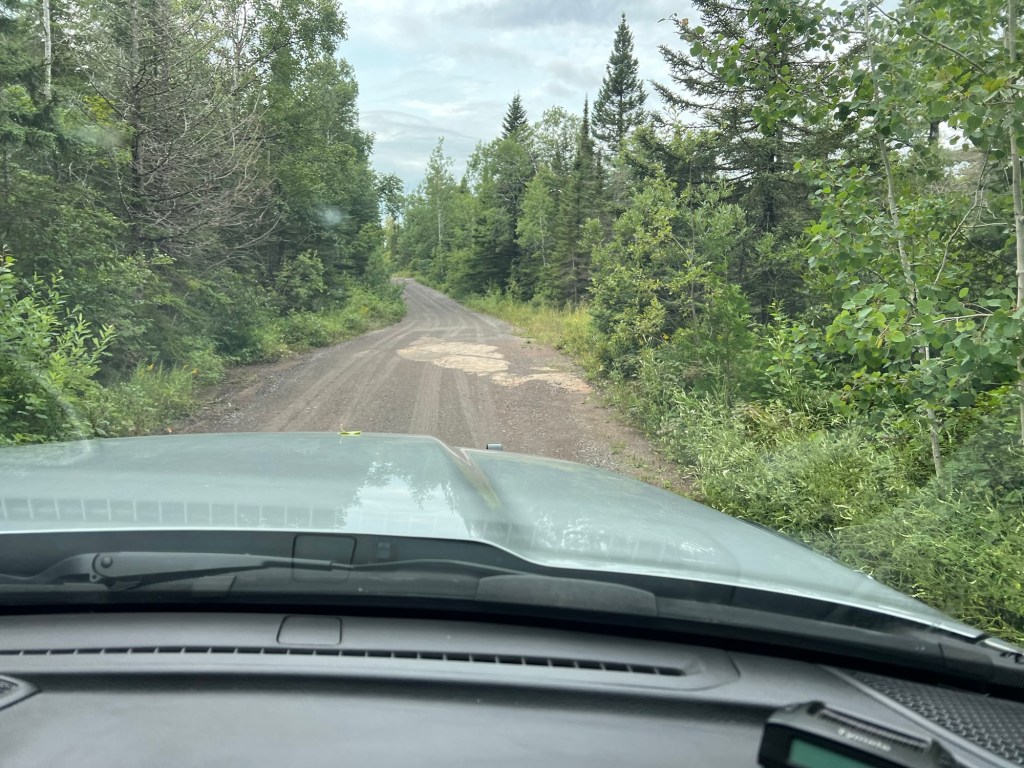
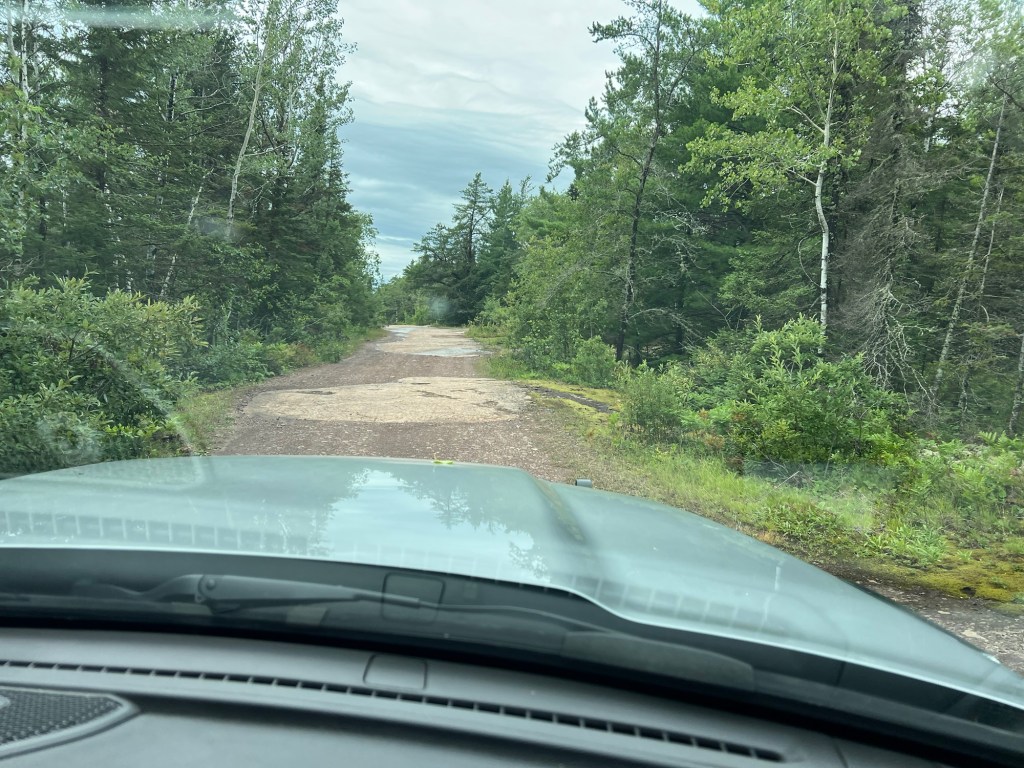
We drove 14 miles today to the Thunder Bay Lookout on the northwest side of the peninsula. The last 5 miles were down a gravel road. I started noticing patches of native rock showing up in the road.

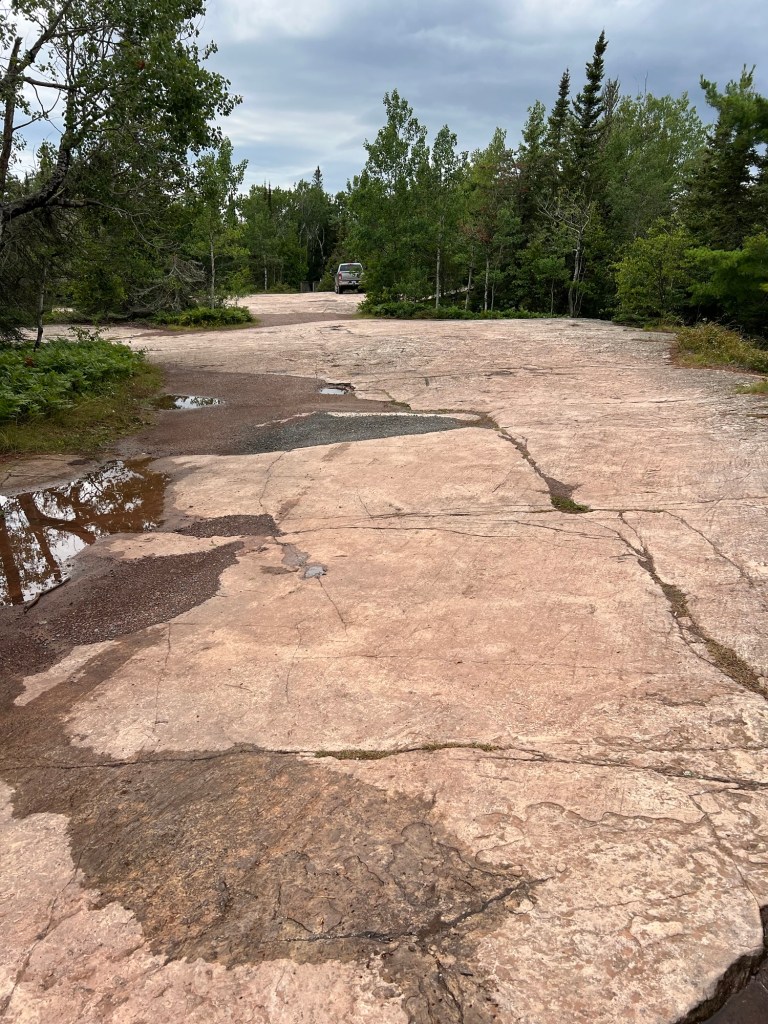
I was hoping I could catch a decent picture, I needn’t have worried.

The end of the road was one huge rock. We parked and were the only ones there.

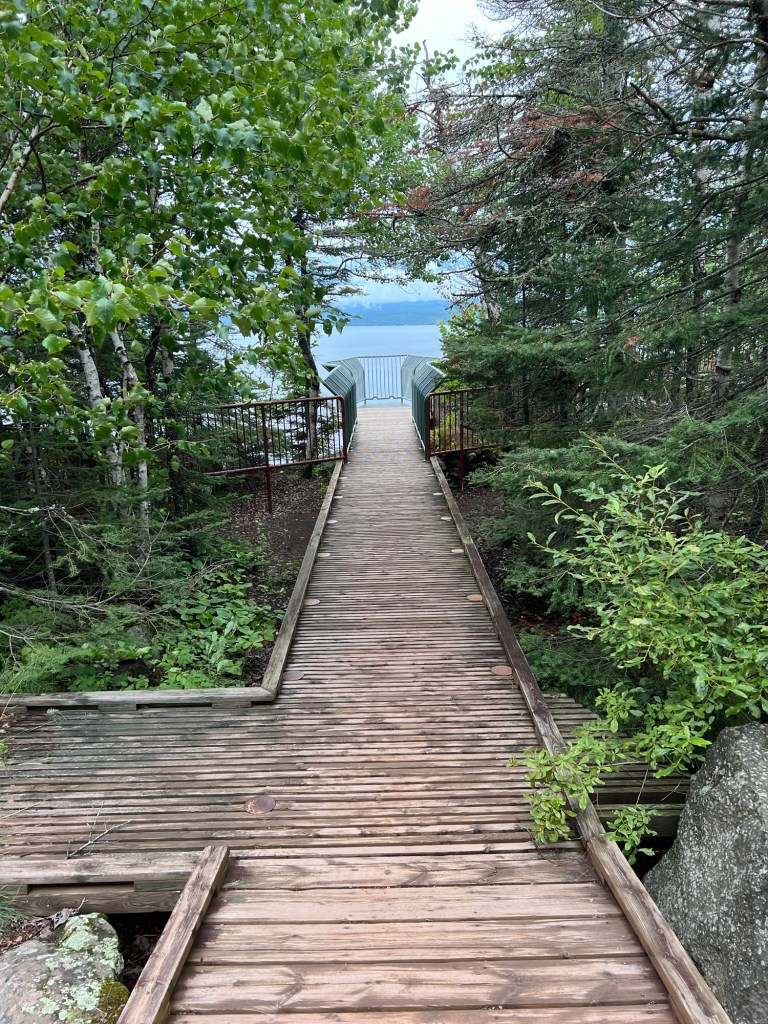
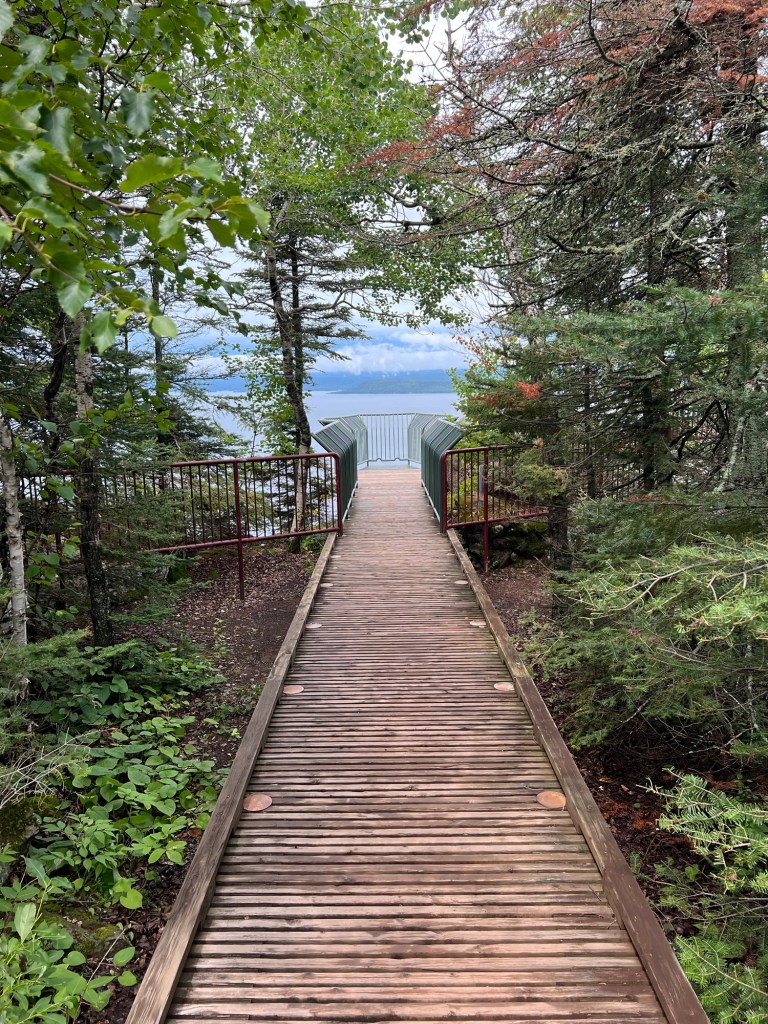
And then we looked for the Thunder Bay Lookout and got quite a surprise.

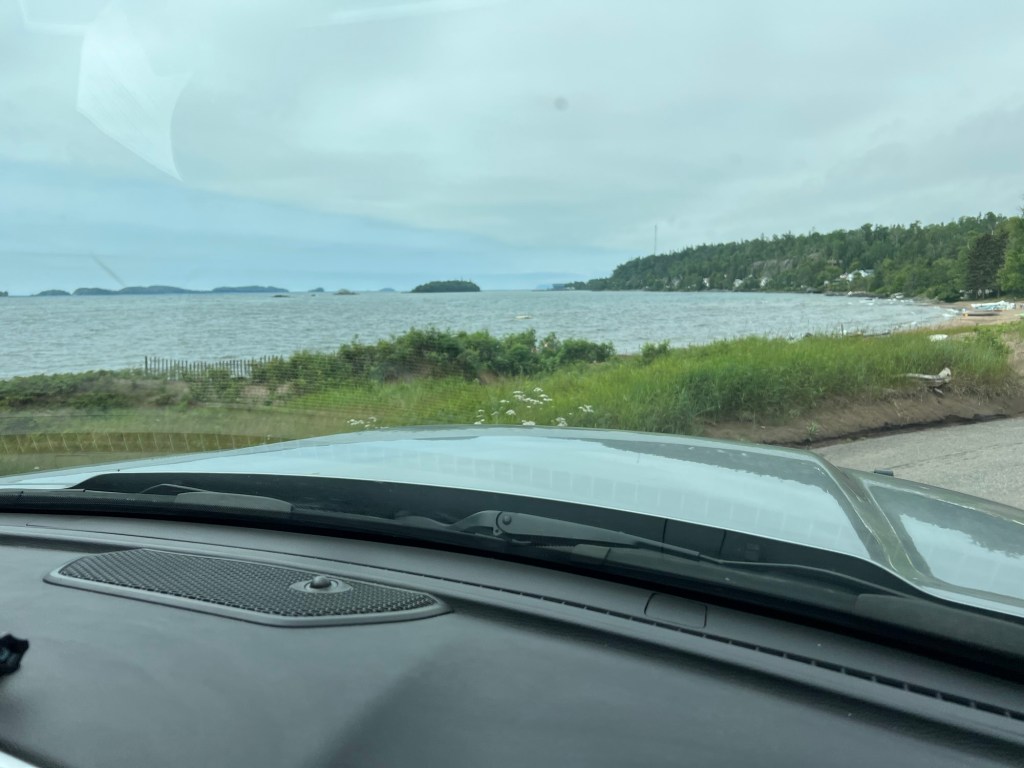
We walked out looking at the bay and its islands…

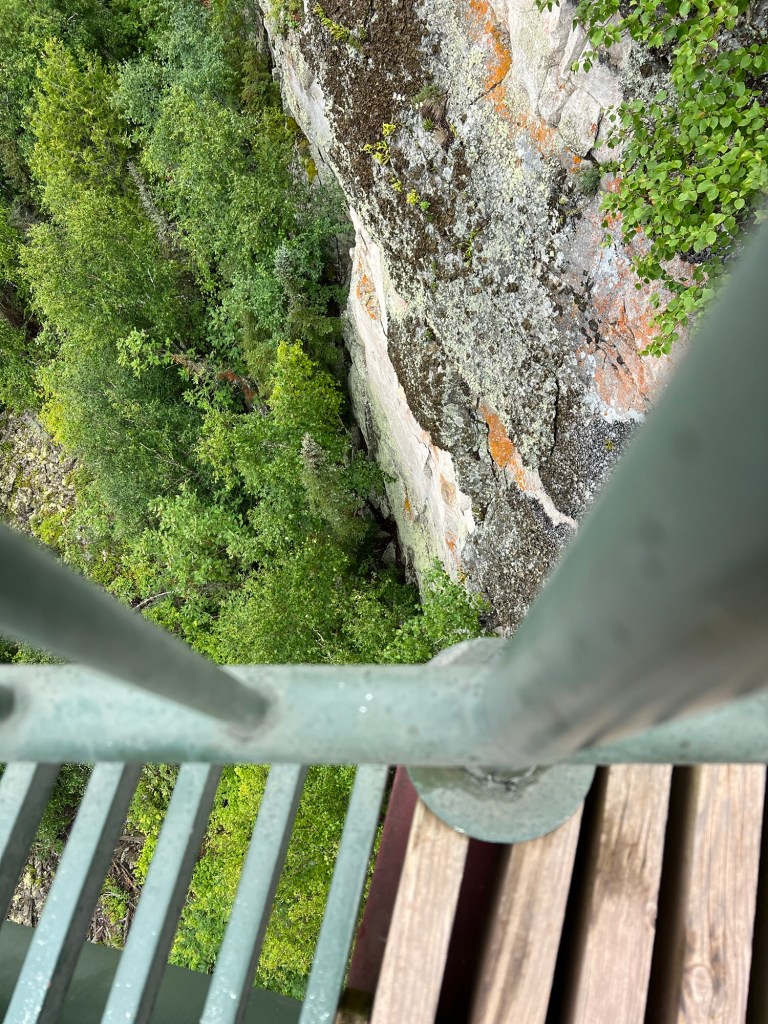
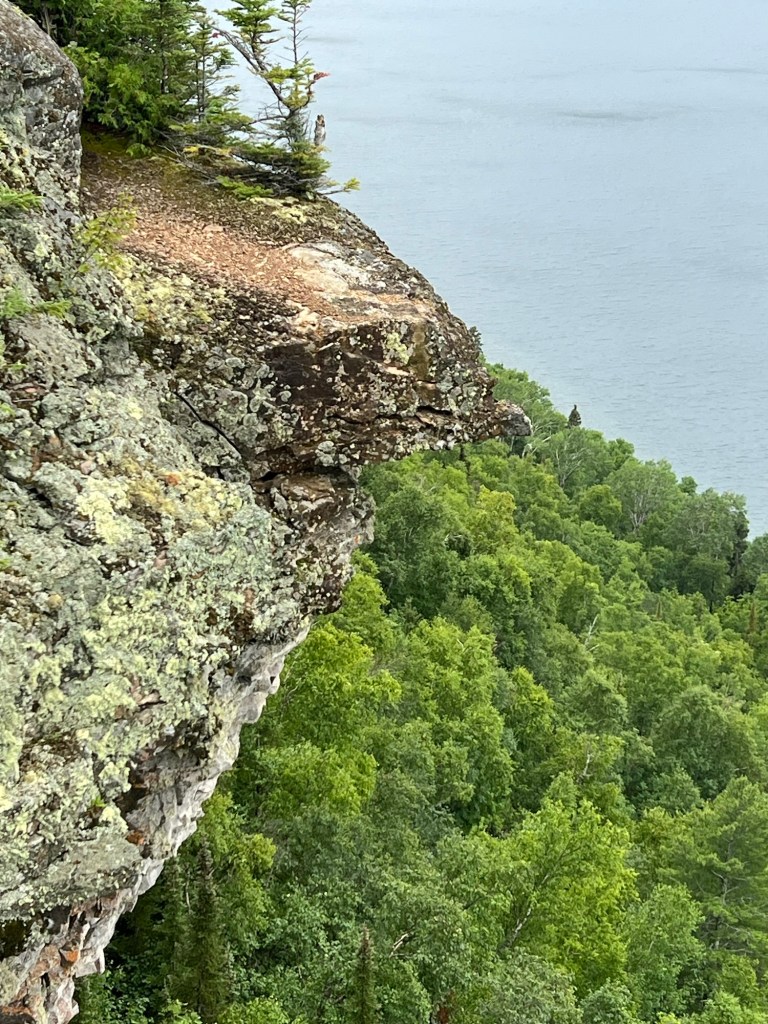
and suddenly found we had walked past the edge of the cliff.

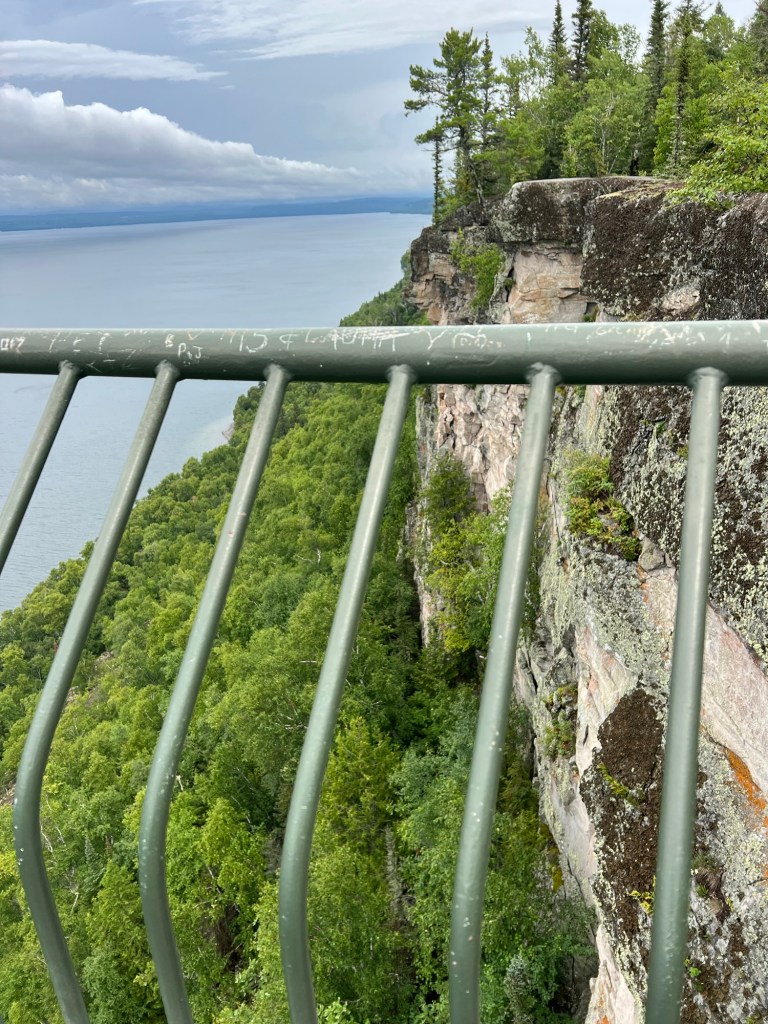
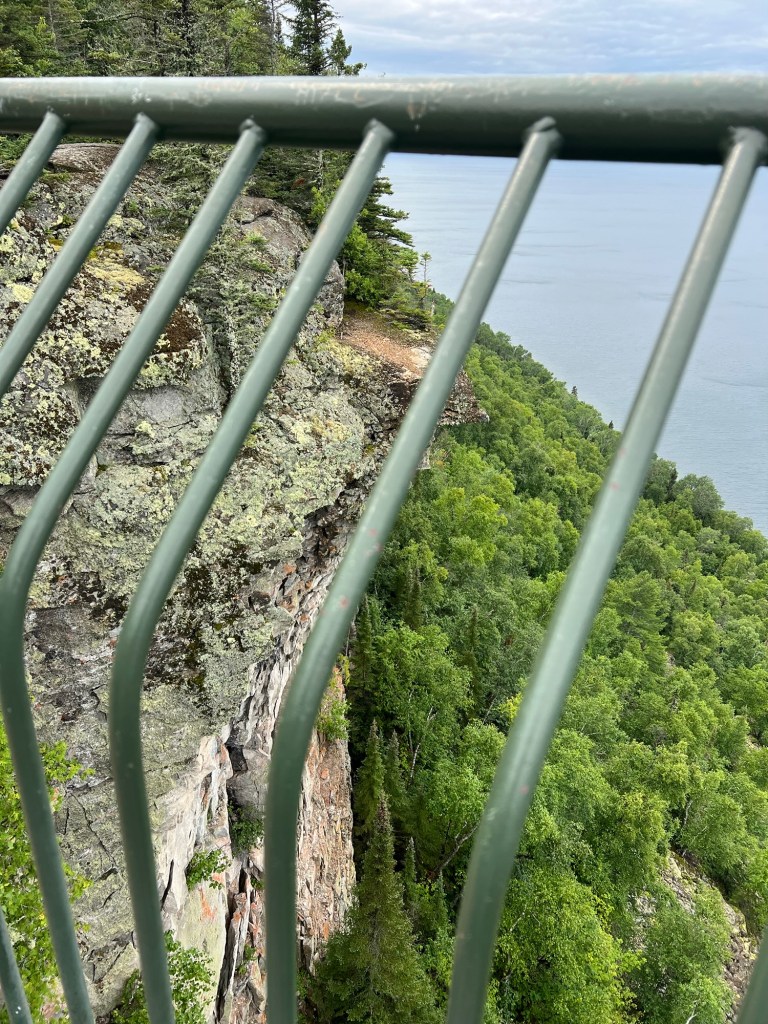
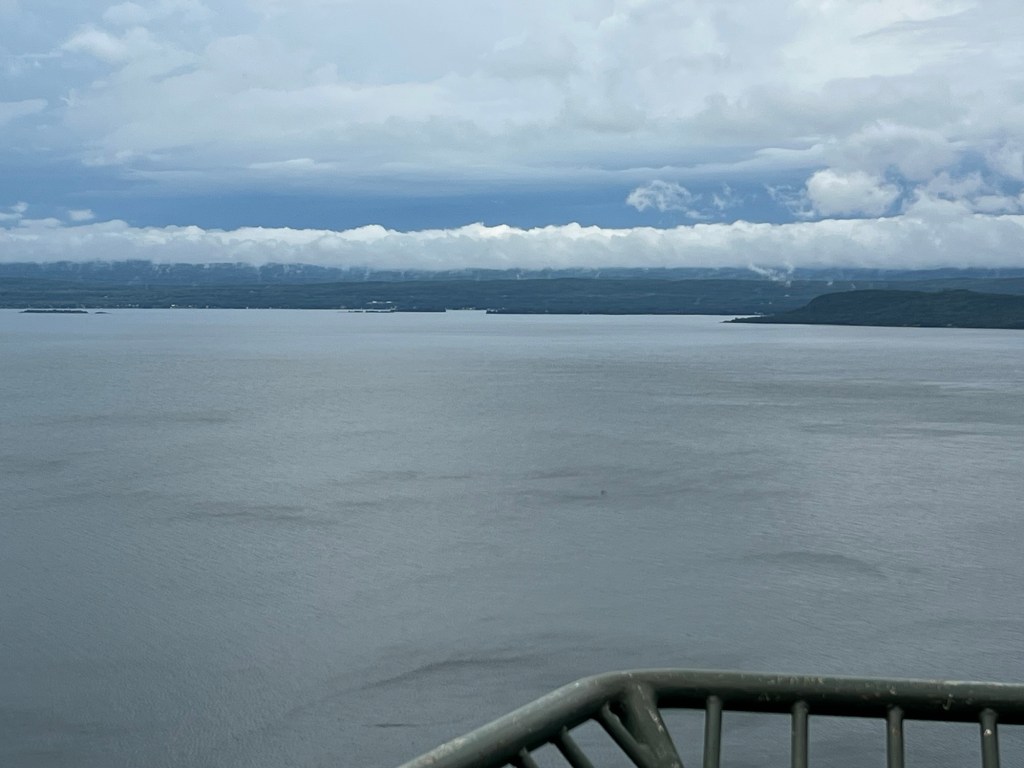
We were 100 meters above Lake Superior.

The view of the lake was beautiful.

But looking down took your breath away.

What a gorgeous place, and we had it all to ourselves! Perfect.