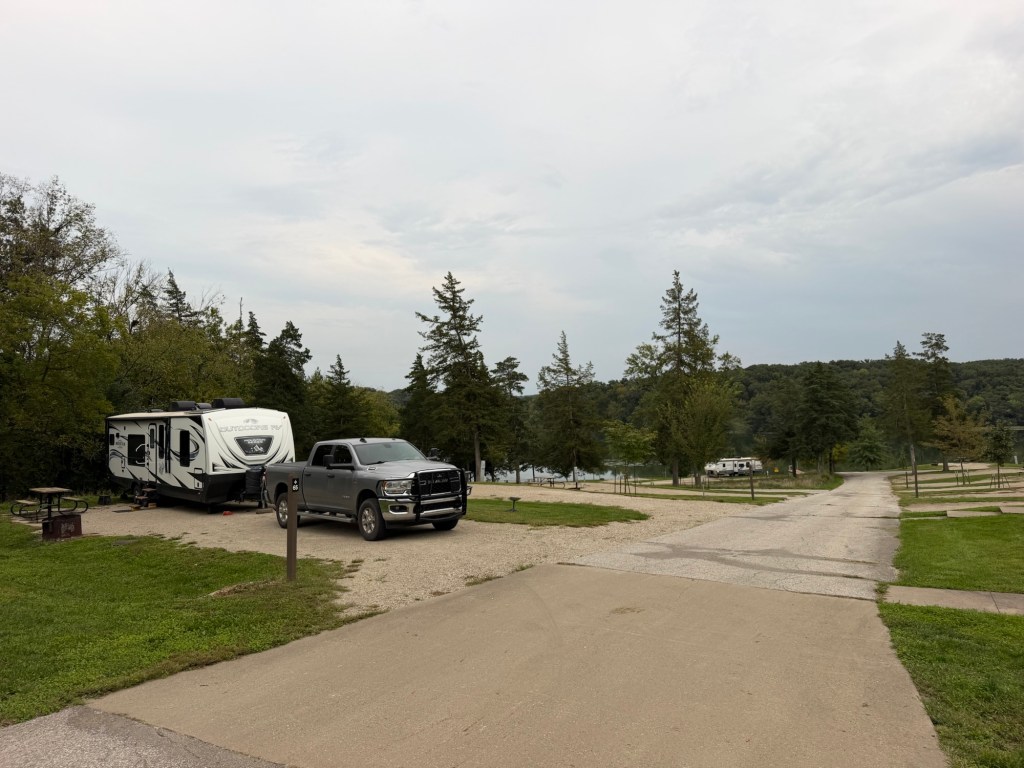
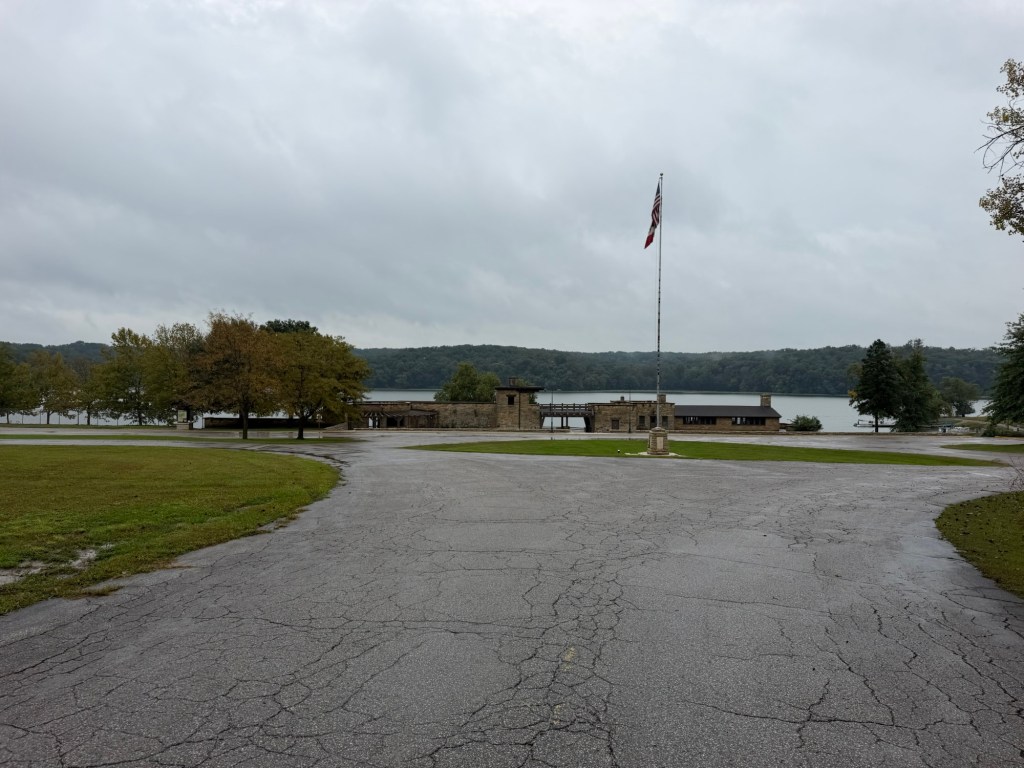
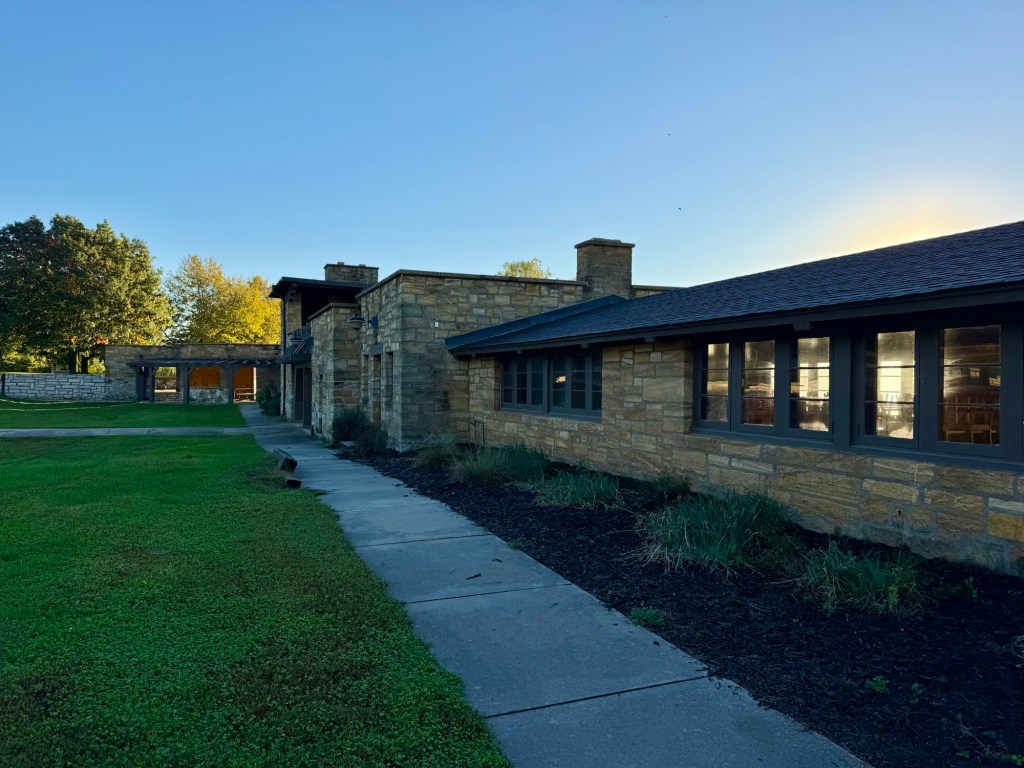
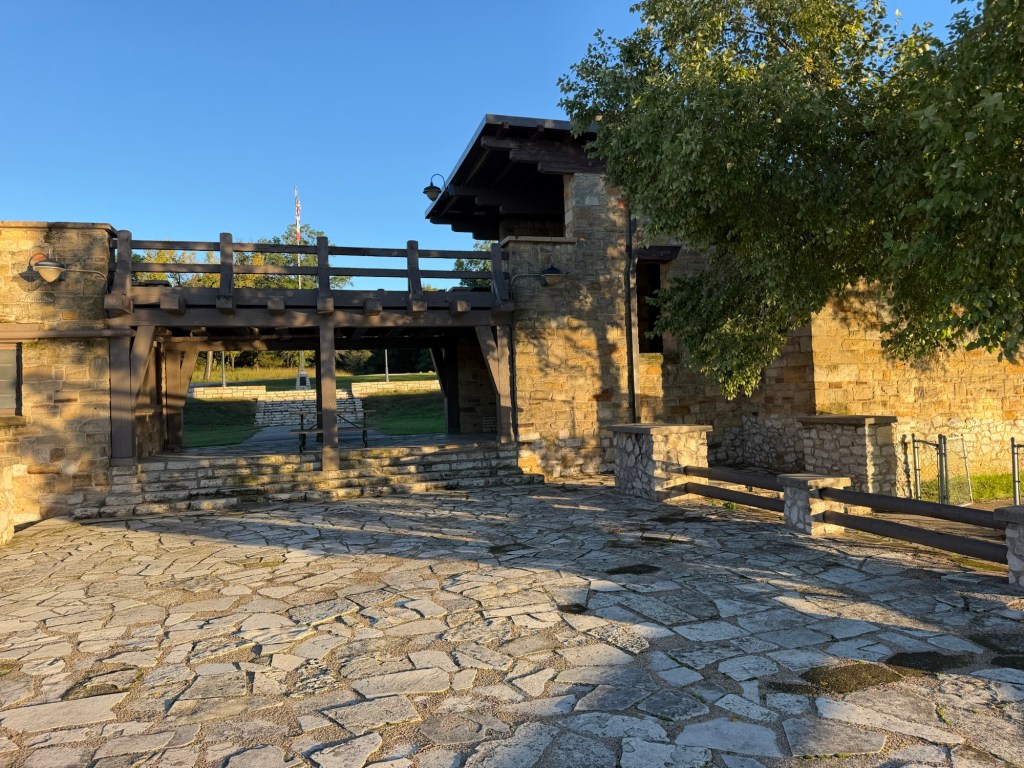
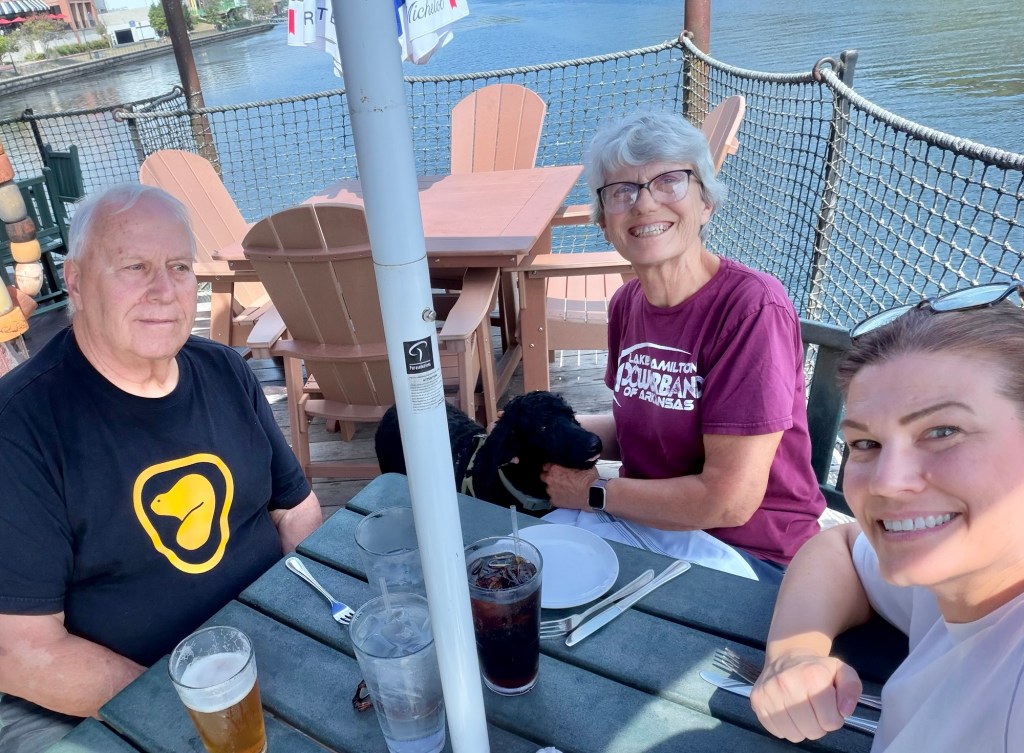
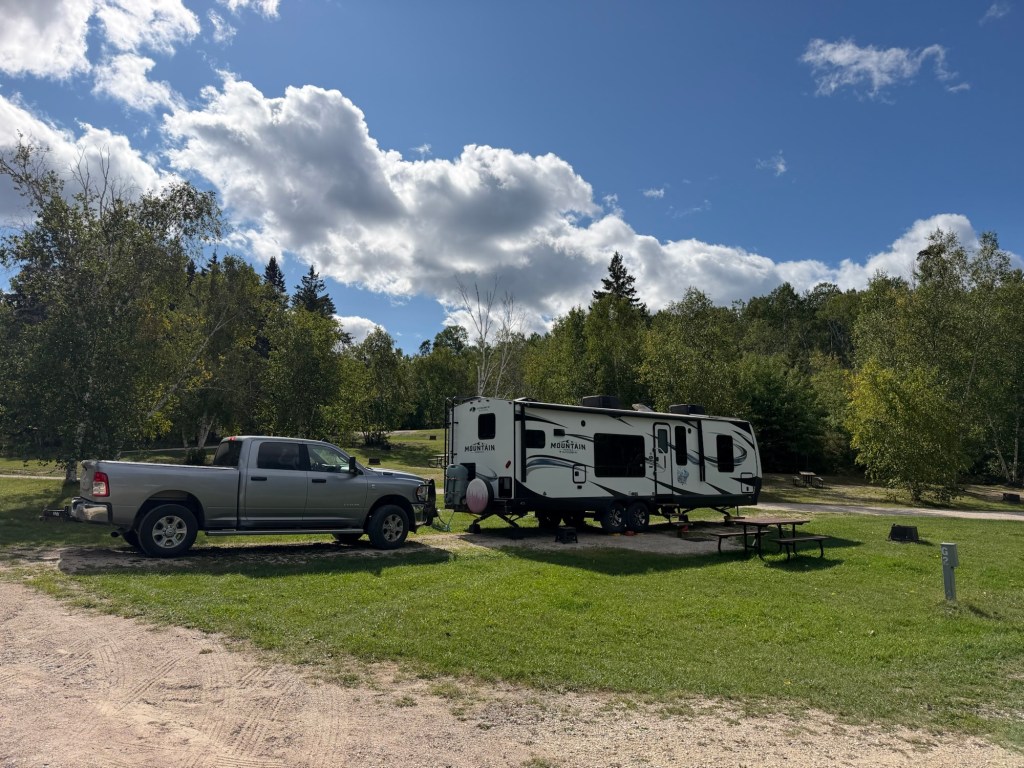
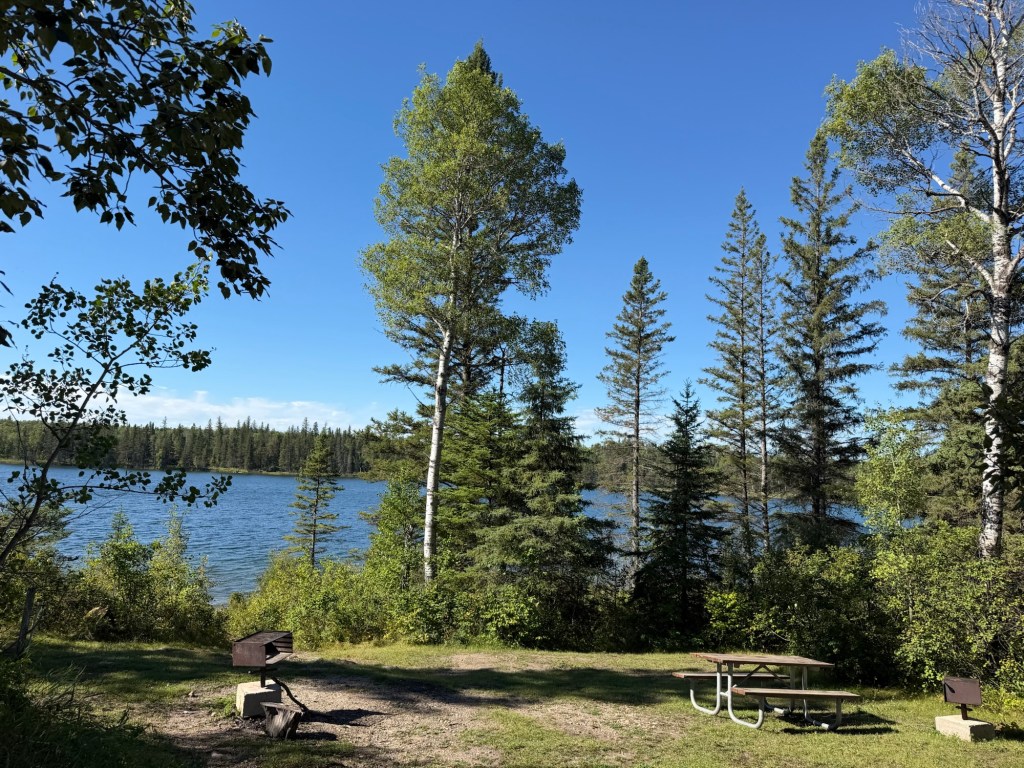
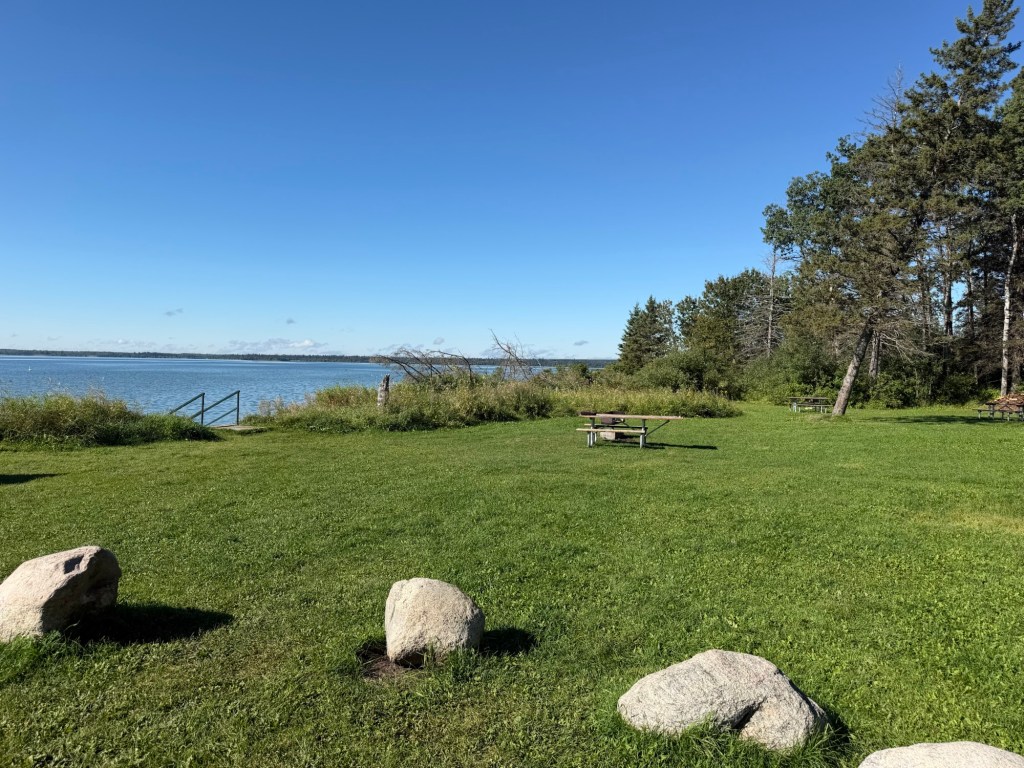
It’s not much of a campground but we have full hookups,
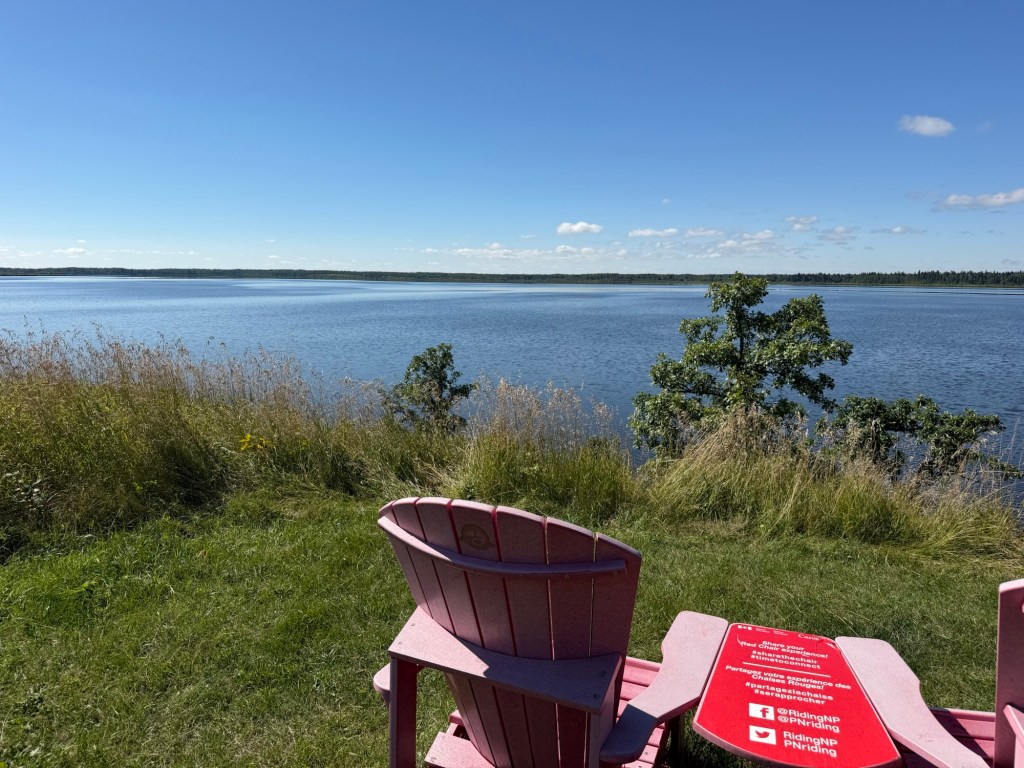
and if no one comes to the spaces next to us, a nice view of the lake and mountains on the other side. The pointed mountain is Artillery Peak.
This may be the most remote campgound we’ve been to in the U.S. It’s 41 miles out the only paved road to the nearest town, Wenden, AZ, which is so small it doesn’t even show on this map.
Across the lake from us…
you can just see some buildings. They are 2.2 miles from where I sit, according to Apple Maps.
But it is 117 miles to drive there. There are wilderness areas at either end of Alamo Lake and no roads. And the route shown includes primitive roads, which is why the average speed predicted is 35 mph.
There are several campgrounds and quite a few campers scattered around the park. Most people seem to come for the fishing. This is supposed to be the best bass fishing in Arizona; though if you think of Arizona you probably don’t think of bass fishing, so I’m not sure how good it is.
Bud is thinking of getting a temporary license and fishing from shore, so we may see.
A lot of campers are leaving today, so this place is going to be very quiet.
The only ones left making noise are these guys, the wild burros.
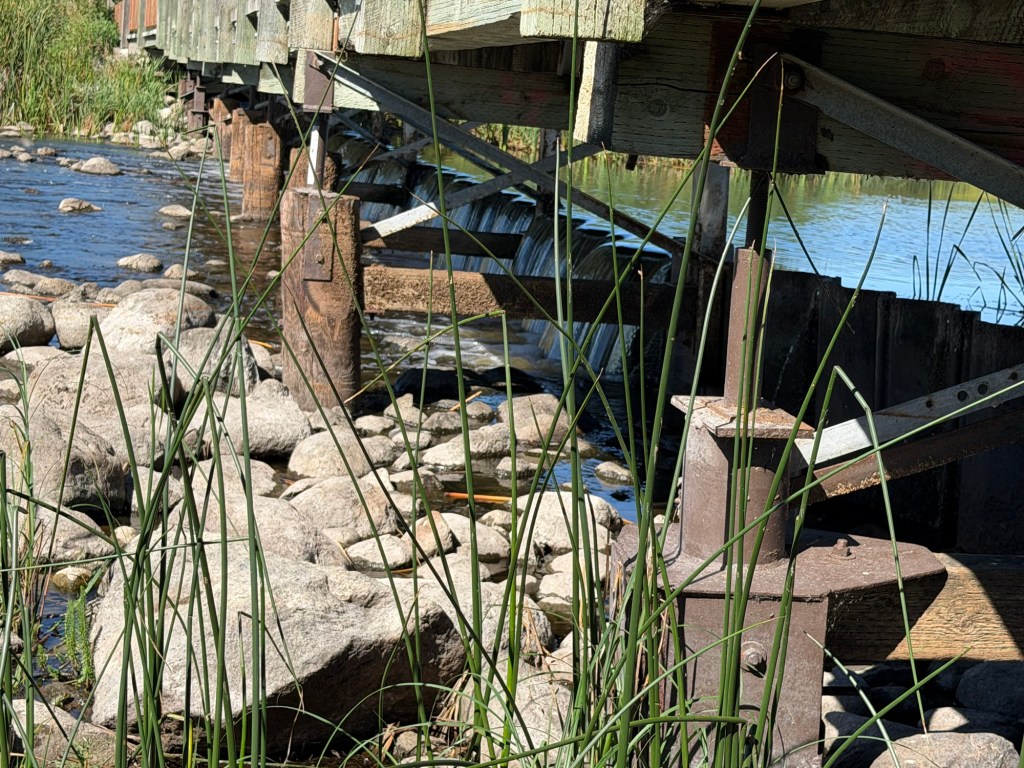
Alamo Lake was created when the Bill Williams River was dammed in 1968. Bill Williams was a trapper who trapped beaver here (it surprised me to learn that before the white people trapped them out there were beavers and their constructed wetlands in the southwest).
After the trappers came miners, and they brought burros to carry their equipment. That was at the turn of the previous century and the burros have been here ever since. Now there are enough of them that the herds have to be thinned from time to time. You can adopt one from the government if you want.
We aren’t leaving here until Friday, so meanwhile I’ll enjoy the human made trails,
We set up at site 79 in Lost Dutchman State Park, on the eastern outskirts of Phoenix.
I was hoping there would be saguaro cacti here, I’d seen some on our drive in. Not only did we have this stately specimen along with this ocotillo right next to our site,
we were situated (like everyone else) with the dramatic Superstition Mountains behind us, and…
we had a blooming buckthorn cholla right next to our water and power hookups!
I took a walk up to the gate and the Native Plant Trail and I found teddy bear cholla in bloom,
along with dark pink…
and salmon pink prickly pear cacti.
Foothill palo verdi is in bloom all over here. I learned that it is the state tree of Arizona and the most important nursery plant for sheltering young saguaro, which later can grow bigger than the foothill palo verde.
They can reach fifty feet tall and 10 tons. This huge specimen…
is providing a nesting spot for this starling. I guess the birds know how to avoid the thorns.
On other walks I found this strawberry hedgehog cactus,
this desert willow,
and this aloe in bloom.
Some of the saguaros have buds. In town today I almost gave Bud a heart attack when I spotted an open flower on one. He thought when I yelled he was about to pull in front of a car. Nope, just a flower. I hope there are saguaros at the next place we go and I can get a picture of one in bloom.
Those mountains look inviting…
and there are some trails going up there, but we didn’t get to do any hiking. We were only here 3 nights and on the two days here we had business.
Matey got groomed Wednesday morning. In the afternoon it was too hot to hike so we took a ride on the Apache Trail, Arizona 88.
It goes northeast past beautiful Canyon Lake.
The road crosses arms of the lake on two one lane bridges.
This isn’t mountainous, just very rugged.
There was a yellow bloom on a prickly pear cactus out past the lake.
Eventually the road turns to dirt.
That’s a place where a stone wall has been built to support the road.
We went as far as the Fish Creek Overlook.
There was a buckhorn cactus blooming there.
We decided not to go down the famous Fish Creek Hill; the gate was open but the road described as primitive. The overlook had a sign saying “last turn around”. Last until when?
This morning I had hoped to hike, but Bud made an appointment to have the oil changed in the truck and I didn’t want to leave Matey alone. He’s had a couple of bad days lately. He and I walked.
Later I took him in the stroller. I did a short trail over to the day use area and then we walked on all the park roads.
We have really enjoyed our stay. There are a lot of birds here, and the quails are quite used to campers.
And it has to be…
one of the most photogenic places…
we have ever stayed. We’d definitely come back here.
Sorry I haven’t posted the whole time we were at Roper Lake State Park, but sometimes it’s just hard for me to sit down and write. We are in eastern Arizona now and on Mountain Standard Time so the multiple time changes are getting confusing. We also crossed the continental divide coming here. Roper Lake exists because of the Pinoleno Mountains…
whose runoff feeds the lake.
You could still see some snow on top of the tallest peak, Mount Graham.
We had decent sites, though we were in site 8 for three nights and site 6 for the next two. We had decided to move from the 30 amp loop to the 50 amp loop a day before our stay because of the high temperatures; we wanted to be able to run both our air conditioners. We figured it was worth moving sites to keep cool.
It was cool enough in the mornings to explore the park.
There are fishhook barrel cactus here,
and velvet mesquite,
and blue Palo verde which have green photosynthetic trunks and branches and yellow flowers full of bumblebees.
It’s a pretty little lake with a nice day use area. Someone planted a couple of palms there a long time ago.
Another morning we went over and walked at Dankworth Pond State Park, which is just about three miles down the road and is managed as part of Roper Lake.
We took the stroller. We were trying to visit the reconstructed Indian village.
But because I misjudged the direction the arrow was pointing we missed it.
I put Matey in the stroller and walked back through the sandy part of the trail,
only to find it was three quarters of a mile, first up these steps then around the village and back down. It was too far for Matey to walk (he’d already walked a mile) and too hard for me to push the stroller, so we didn’t go.
Instead I pushed him back through the sandy part and back around the pond to the truck. At least I got some good exercise.
On the hottest afternoon we decided to drive up to the mountains. It had been windy for a while so the valley had a haze of dust. The road starts out straight as an arrow.
But you are soon warned that it won’t stay that way.
And they aren’t kidding.
There were steep hills, sharp turns and no guardrails.
We stopped at a trailhead here. We were right off the end of a switchback.
We were quite a ways up…
where tall pines grew. I’m pretty sure this was a ponderosa pine, its bark smelled faintly sweet, like vanilla, though it wasn’t as strong as others I’ve encountered.
We kept going…
to where the pavement ended and the road was closed. It’s closed from October 15 to April 15. We were now at 9,144 feet above sea level. We’d come 11 miles as the crow flies, 25 miles by road and over 6,000 feet up. It was also about 20 degrees cooler up here.
Bud suggested we stop at a recreation area we’d passed to walk in the cool. I put it into the navigation system so we wouldn’t miss it on the way down.
This wasn’t a road you could stop and turn around on.
You can see from the navigation why the road takes 25 miles to cover 11 straight miles.
We’re back at City of Rocks State Park in New Mexico.
We found this place on a day trip two years ago. We drove up from Deming, about 30 miles south of here.
Although not as picturesque as the unserviced sites tucked among the rocks, they have 9 sites with electric and water, six of which are reservable. We came and stayed last year. Bud stayed a week, but this is where we were when my mom had her stroke, so I flew back to Buffalo after four days. We’re back for another three days this year.
Our site is pretty nice, being at the end of the row.
Unfortunately, we’re in the middle of a heat wave and the open area is on the south side of the trailer, so those windows have the shades drawn and foil insulation between the shade and the window. We have thermal pane windows, but we’ve found when the temperature gets above the low 80’s the desert sun shining in the windows is too much for the air conditioner. We just got the foil on Sunday and it really helps; ugly, though.
It’s still beautiful outside.
Matey and I went out at sunset…
and were treated to this display.
A bird swooped by and landed on a huge rock. I used maximum zoom in that low light and was pleased to see that I got a pretty good image. It was a great horned owl!
This morning Bud, Matey and I took a walk through the rocks.
These rocks are made of volcanic ash and pumice that was still hot enough to weld together and formed a continuous layer. As it cooled it fractured.
Over the next 34.9 million years the fractures eroded forming columns…
and streets. We wandered through the rocks for about a mile.
Then I took my pack and walking stick and set out for Table Mountain. The connecting trail leads out from next to site 16 in the Pegasus Campground, a small loop on the north end of the main loop road.
That’s where I was heading. It’s almost a six mile out and back with 500 feet of elevation gain.
When I got to the wash where the trail turned north along the flank of the mountain I wished I had stuck another bottle of drink in my pack. I’d had a drink before I left, but only had one bottle with me, and that was already opened. I probably had about 17 ounces left.
But this was a steady uphill on a fairly rough trail. Also, I hadn’t started until after 10, so it was getting warm. It was only 70 degrees when I left, but the sun is intense. Jack has inspired me to get out on my own and hike, but he would have told me to take an extra bottle of drink.
This is the switchback where the trail stops its northeast trend.
I took a picture of the north slope and beyond.
On this part of the trail there were pockets of shade and the breeze was in my face.
I tried to remember to only stop and take pictures when I was in the shade. The campground lies to the southwest of Table Mountain and I was coming around to where I could see it again. That’s the Pegasus Loop just right of the rock and some of the main loop road left of it.
There was a bench in the shade and I stopped for a drink. I was rationing my fluid. I knew I would be fine, but the walk would have been more pleasant if I wasn’t worrying about how much I had to drink. Lesson learned, take more than you think you’ll need.
I drank that much, next drink at the summit.
I got back to the wash, but now I was above the first prominent layer of rocks.
I had just the steep section of trail to the summit left.
Now I could see the whole campground.
It does look like a city of rocks.
I zoomed in on the main campground. The campers in the serviced sites are lined up in the front just left of center.
A few more minutes…
and I came to the bench at the summit.
Time to look around.
There’s quite a drop off here.
Down there is the shade structure at the observation point that you can drive to. Matey and I walked back from there last year. You can see another group of the volcanic rocks below it.
I took this rather long video to show the view and to show how very isolated this place is. That’s one of the reasons we like it.
There we are.
I drank half my remaining PowerAde and took off back down.
I was happy to see our campsites. I was out of drink and it was over 80.
That is not Jack in the Arctic. Friday we had only an hour and a half trip from Oliver Lee State Park to Leasburg Dam State Park so we decided to stop off for a picnic at White Sands National Park along the way.
Park literature said there was bus and RV parking at the Roadrunner Picnic Area, and there was.
That’s Jack’s Casita in front of a picnic shade structure and our Outdoors RV behind it.
White sands is a different kind of National Park. It’s very popular, there was a line at the gate.
There is one road in, it’s paved for a while and then you are driving on hard packed gypsum, which is the stuff of the dunes.
It looks like they must plow the sand off both the asphalt…
and the gypsum.
This is the largest area of gypsum dunes in the world. The gypsum all came from the shells of ancient sea creatures. The San Andres mountains to the west contain gypsum which has dissolved in rain, run down here and recrystalized as fine sand grains.
The sand is surprisingly hard and cool.
We all took the opportunity to walk the dunes.
Even Matey was allowed.
Coming here is a cross between a beach without water and a sledding hill without snow and cold.
With our trailers we couldn’t stop at any of the trailheads, so our visit was brief, but it was an interesting place to experience.
From there we drove through a pass in the San Andres Mountains, through Las Cruces and a short distance north…
to Leasburg Dam State Park. Unfortunately this whole day use area…
is temporarily closed due to construction on the park road into it.
Jack and I went out at 7AM…
to explore the trails we could.
That’s because, although not long after sunrise,
at 7:30, it was still cold enough that I was wearing a sweatshirt, jacket and gloves,
by mid afternoon it hit 97. Notice the low and high for temperature yesterday, 44 and 97; while humidity went from 21% in the cold to a whopping 1% in the heat!
This park has yucca in bloom,
crimson hedgehog cactus,
and a mountain in the background. But Jack and I agreed that it pales in comparison to Oliver Lee Memorial. In a short time we walked almost all of the available trails, less than 2 miles.
In the afternoon we went to Hatch, New Mexico, the chili pepper capital of the world. Jack wanted to get powdered chilies for Sharon. He also got some canned chilies and Bud got a variety of dried chilies he’d been looking for. Then we went for a late lunch at the only restaurant in town open on Saturday afternoon, Sparky’s. Bud had a green pepper cheeseburger,
Jack had a chicken sandwich, because he’s not much for spicy food, and I had green chili pork tacos, which were really good. Hatch also seems to go in heavy for antiques, which were all over town.
This morning, before dawn, Jack was out hooking up his trailer by the light of a headlamp.
At six AM he was ready to take off. After spending three weeks on the road with us he is heading home. Jack, we will miss you!
I started out early this morning because I wanted to explore this park before it got hot.
There are two trails and I wanted to climb the beginning of Dog Canyon Trail by myself. Later Matey and I walked the short Riparian Nature Trail.
Dog Canyon Trail is steep, and in less than 10 minutes I was well above the campground. Looking west the sun was just hitting the San Andres Mountains.
That’s us, in the middle in site 1.
My mind was kept from the steep, difficult trail by the flowers I started to see. This is Utah penstemon.
This is featherplume.
And there it was, my first cactus in bloom for the season, scarlet hedgehog cactus.
The trail was steep, and tilted in places,
and sometimes pretty rough.
More scarlet hedgehog cactus.
I was gaining height steadily, and the lightening sky made the shadows I walked in more pronounced.
To the east the sun started to kiss the highest cliffs.
With all this beauty around me perhaps it’s understandable…
That when I found myself on a narrow, dwindling trail and turned back I found I’d missed a switchback.
Ah, that’s better. I was now crossing from state park land to national forest land.
Well, yes, I meant to stay on the trail. Going off-trail here would not be possible for more than a few feet, after that you be skidding or rolling down the slope.
Here’s a good view of the whole campground.
The sun was moving across the valley. This photo was taken just before 8 AM. I like the shadow of the mountains out on the plain.
The new leaves of this little mesquite juxtaposed with this yucca stopped me in my tracks.
After less than a mile I came to the first plateau. I would have liked to walk further, but I needed to get back to walk Matey.
I’d climbed 510 feet.
The campground was now well below me.
The sun was coming closer, it was time to leave this beauty behind.
At 8:30 I was almost down and the sun had reached our trailer…
and was illuminating the upper part of the canyon.
I got Matey and headed back…
to the Riparian Nature Trail, which was still in shade.
There were cottonwoods…
and trickling water…
along this easy, well made trail.
We headed back from the shade…
to the sun downstream.
We were going to look at the partially reconstructed cabin of “Frenchy” Rochas, who lived here from 1886 to 1894, but first we came across this section of dry stone wall he built.
He only lived here eight years, but in that short time he built his cabin, rock walls to confine his cattle and protect his plants, constructed an irrigation system and had an orchard and a vineyard. Poor Frenchy was found shot in the chest in 1894.
This afternoon Bud and I walked up to the Visitors’ Center where there is a small museum. Besides artifacts excavated from Frenchy’s cabin, and items donated by the family of Oliver Lee who collaborated with Frenchy on the irrigation and ranched here for many years, they had items from the Jornada-Mogollon people, including these shell pendants, which caught my eye.
Walking back from the museum I passed a Chihuahuan Desert Garden, funded and constructed by the New Mexico and Otero County Native Plant Societies. Here was scarlet hedgehog cactus blooming beneath a honey mesquite tree.
And looking across the valley I saw that the dust from the weekend’s winds had finally settled and you could see White Sands in the distance.
This is definitely a park I’d be happy to visit again.
Sorry for the long title, but I haven’t had the chance to explore Oliver Lee Memorial SP yet, so I can really just speak to the campsite. I took this photo while coming back from the laundromat today because I wanted to show how the campground sits at the base of the Sacramento Mountains below the outlet of Dog Canyon. It’s not the best photo, but I was driving; the campground is the scattering of white dots (RV’s) in the green area just below the mountains.
I didn’t take a photo coming in, but I did take pictures of our passage down this side of the mountains. Here we are approaching a tunnel in the midst of a long downhill on US 82 west of Cloudcroft, NM.
I noticed that the tunnel walls changed from carved rock to concrete. It was also unusual in that the tunnel was going downhill.
At this point we had been going steeply downhill for 9 miles, but we were still pretty high.
I did want to talk about the campsite because it’s stellar. That’s Dog Canyon behind us.
That blooming yucca is right next to us.
The whole hillside here is covered with yuccas in bloom.
This has to be one of the nicest views we’ve ever had out our dinette window.
Looking west you look across the Tularosa Valley to the San Andres Mountains. Somewhere over there is White Sands National Monument, which we plan to stop at on our way to our next campsite.
Meanwhile, yesterday the high was only about 71, so it was a good day to go exploring. We drove up to Valley of Fires Recreation Area. This is a giant lava flow,
with an island of desert in it.
There’s a small campground on the island…
and a paved trail out into the lava.
This is the satellite image of the Carrizozo Malpais (malpais is bad land or country in Spanish) from Apple Maps, one of the youngest and longest lava fields in the continental United States. It is about 42 miles long.
We drove about an hour and a half north to US 380 to get to the recreation area.
The lava is cracked and fissured.
Soil and water both accumulate in the cracks and allow a surprising amount of plant growth. The flow is now dated at about 5,000 years ago.
There are still plenty of huge blocks of solid lava.
And there are caves where lava tubes have broken open.
This juniper has been growing here for about 500 years.
After walking the three quarters of a mile through the lava, we took a new trail alongside the flow. The dirt here isn’t red because of iron. It’s from limestone that was altered by the intense heat of the lava.
From an overlook on a small hill you could see Little Black Mountain, probably the last source of lava in the three decade period in which the lava oozed forth, and the only source that resembled an eruption. That RV is most likely at the Carrizozo Malpais Wilderness Study Area, west along 380, though we didn’t drive there.
Instead, we drove back towards our campground, but along the way stopped at the Three Rivers Petroglyph Site. We had to take turns walking the trail because Matey wasn’t allowed near the petroglyphs. The truck stayed cool with all the windows open and Matey was content to sleep.
I walked quite a ways up, past the first basaltic ridge.
There were petroglyphs starting less than a tenth of a mile from the trailhead.
These petroglyphs were made by the Jonada Mogolon people between about 200-1450 CE. They are made by using stone tools to remove the dark patina on the rocks.
This face is carved on the curved surface of the rock, so it almost looks like the rock is alive.
I liked this face, with earrings.
It was a pleasant hike even without the petroglyphs…
with views of the Sacramento Mountains,
and a nice shade structure.
But the stars of the show on these rugged ridges…
are the 21,000 petroglyphs.
This was among my favorites.
Both of the sites we visited were run by the Bureau of Land Management. And both had small campgrounds. The Three Rivers Petroglyph Site has just two serviced RV sites and a few unserviced sites. Either would make a great stop in the future.
Today it’s 84 degrees, so after going to the laundromat this morning, I’m just chasing the shade around the camper as I write this, which isn’t so bad, at all.
Bud and I had visited Carlsbad Caverns in January of 2020, but Jack had never been so today we went. The National Park is less than an hour from our campsite at Brantley Lake. You can enter the caverns through the natural entrance, seen here, or you can take an elevator down.
Since Jack hadn’t been here before we went in through the natural entrance, which is the best way to experience the immensity of the caves.
You do quite a bit of walking and go down a ways before you even get past the entry.
This time the entry was alive with birds. I tried to capture them flitting about. You could hear them as you descended even after you could no longer see them.
There were some formations near the entrance.
We had been walking for about 10 minutes when we passed below the entrance and through the last of the sunlight.
Now there was just the dim lighting and things were really starting to look like a cavern.
But we were still walking down…
and down.
Formations were getting more extensive…
and larger,
but we weren’t down yet.
In fact, if you walk in the natural entrance you walk 1.2 miles before you get to the “Big Room”. There are benches (stone, of course) where you can take a break, and we did, here. We had been walking steadily downhill for about 40 minutes at this point.
But we weren’t down yet.
Finally, nearly an hour after we started into the cavern we reached the Big Room. Once there you have another 1.2 miles of walkway around its perimeter.
If you look at the people and the railings you can get a sense of the size of these formations.
Wonder…
after wonder.
We were constantly gazing all around.
This formation, named the Lion’s Tail, hung right over our heads.
Here are more of what we passed.
There were huge holes above, too.
See that rope? In 1985 a small team of cavers used helium balloons to lift a rope to the ceiling where they eventually were able to snag a stalagmite. Amazingly they then ascended the rope and found another large passage above the Big Room which they named Spirit World. Then in 2014 another group of cavers found a room above that. They named it Halloween Hall.
There are also further rooms below the level of the Big Room. This fence wire and stick ladder made by Jim White, an early explorer was used by Dr. Willis T. Lee in a 1924 photo expedition for National Geographic. Lee had done an expedition in 1923 that led to the establishment of Carlsbad Cave National Monument in 1923.
The bravery of the people who explore these caves with ropes and ladders and lanterns humbles me.
Meanwhile we continued to walk through this surreal landscape they had made accessible.
We came around to a vantage point on the other side of this end of the Big Room. There was the rope, dangling through it.
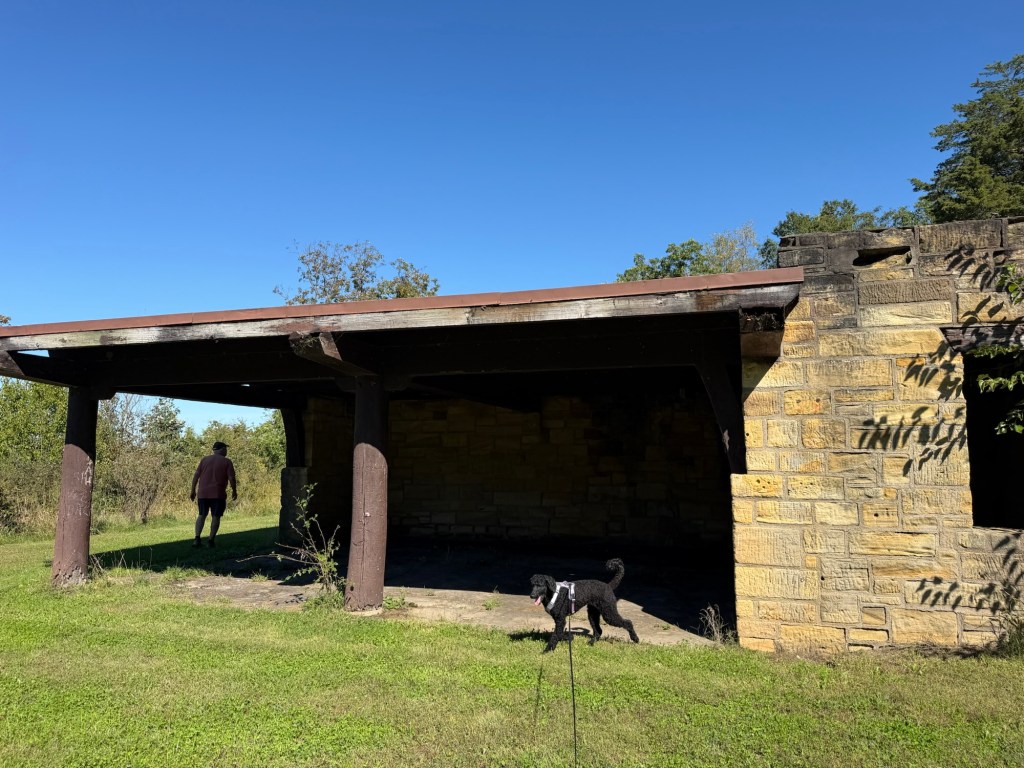
We passed ornate stalactites,
and colossal stalagmites.
This is the largest formation here that is still growing. I had thought all this part of the cavern was “dead”, with no seeping water adding minerals to the formations. But there is some water still here and in fact I had a drop hit me when I was stopped to take a picture.
Imagine walking more than a mile
through such splendor.
It’s almost sensory overload.
These platelike structures that formed on the surface of long gone pools are some of my favorites.
After walking…
and looking…
for about two hours…
we took the elevator 750 feet up to the surface.
The vast, sunny desert was a bit of a shock.
And so was this.
A dust storm,
coming right at us.
We drove out through a dusty desert, all part of the experience of this part of the country.
We left Texas yesterday and came to Brantley Lake State Park in New Mexico.
We also crossed into Mountain Daylight Time. So four days after we set our clocks forward an hour for daylight savings, we set them back for Mountain Time. This can all get a bit confusing.
We drove here via Guadeloupe Mountains National Park where Jack stayed while we were at Balmorhea. That’s El Capitan that you see as you approach the park from the south. The park has only small, primitive sites, so we didn’t stay there.
We had intended to park at the visitor center and take a short, paved trail that allows dogs. We had plenty of time as we were gaining an hour and New Mexico State Parks have a four o’clock check-in time. But we found that not only would we not fit in their campsites, their parking lot was all but full and we couldn’t fit there either. So we pulled off on a bit of a siding. Behind us you see El Capitan and to the right of it Guadeloupe Peak; at 8,750 feet it is the highest point in Texas. Jack climbed that for the second time on his visit. We just had a bite to eat and drove on.
Happily, there was no one at the gate at Brantley Lake and no one at our site, so we came in early and set up. I spent some of the afternoon relaxing in the shade of our nice shelter.
This morning Jack went with us to Sitting Bull Falls. This is a place he and Sharon found five years ago. It was about an hour’s drive down a secondary and then a tertiary road through miles of open desert.
It was a bit surprising to find this nicely developed National Forest site at the end of the road.
It was bright, but cool, when we set out up the short paved path to the falls.
Matey got to come on this one.
We went past the last of the picnic shelters and arrived at a viewing platform,
where we could see the 150 foot spring fed waterfalls…
and the pools below.
There was a rough trail to the top of the falls that ascended this ridge. I took this shot of the crescent moon…
while Jack
and Bud went up.
Matey and I walked around the shelters,
I took a photo looking downstream,
and then we waited in one of the nice, stone shelters.
There were pretty pleasant views all around.
Eventually I saw Bud headed down,
and I was relieved as it was…
a long way up.
Then Bud stayed with Matey and it was my turn.
At one point I could see the viewing platform, but not the falls.
There is one place on the trail where you could just see the brink of the falls,
but you were not allowed to walk out there.
Instead the trail took you above the falls,
where you could look down on the pools the spring makes before the falls. The water runs over in the grassy area in the middle of the photo, but you wouldn’t want to walk there. As you can see, people do go in the pools.
Jack was waiting at the top and he took this picture.
He also showed me a path where we could walk over and look down into the parking lot and the road in.
It had warmed up by the time we hiked back down…
and we were now in shirt sleeves.
This afternoon Matey and I are content to just rest in the shade. It’s about 87 with a breeze. We’ll do more exploring when it cools.
This morning Bud and I walked over without Matey to see the San Solomon Spring.
It took two pictures to capture the main pool of the 3.5 million gallon swimming pool.
There are two wings off the main pool. One is 3 to 5 feet deep and includes this platform and lift to lower disabled people to the pool. It’s not every swimming pool that has a warning to not feed or catch the wildlife!
The depth quickly increases in the main pool.
Most of it is 25 feet deep.
There are areas where the bottom is left natural and the depth varies.
I wanted to look for the wildlife, but the wind was making it hard.
There was an area of relatively flat water by the diving board in the main pool. We saw some of the little fish there…
and I managed to get a picture of one.
The other arm seemed to have a more natural bottom than the shallow arm, I think it was the original channel. It was deeper and had ducks on the water.
And we saw a Texas spiny soft shelled turtle swimming along. I took several distorted pictures through the wavy water. In this one , I think I caught an endangered Comanche Springs pupfish, now found only in the spring fed waters near Balmorhea.
I also thought I saw some headwaters catfish, similar to a channel catfish but a separate species. Since the water mostly looked like this, pretty but very distorting, I wasn’t positive and got no image.
The best way to see these creatures is to get in the water and go snorkeling. We didn’t, we no longer have snorkeling gear and though the water is constantly in the low seventies, the air was only in the upper sixties and the wind was blowing. The thought of getting out of the water into that wind was enough to deter me.
Here Bud is looking at the gates at the outlet to the pool.
I took this video to show how fast the water is moving. There are three openings that allow the water to pass out of the pool area. The spring flows at a rate of 15 million gallons a day.
It flows through a series of small canals. Some is bled off to the quiet cienagas to support the native wildlife.
Some flows into and past the little town of Balmorhea. it is used to irrigate crops, and apparently pine trees.
And much of it flows into Balmorhea Lake, about four miles away, where it is held in reserve.
We took a ride out to Balmorhea Lake to hopefully walk Matey and look at wildlife. We had to pay $7 each for a permit.
There wasn’t much scenery. (Those are our permits taped in the windshield, one for the state park and one for the lake).
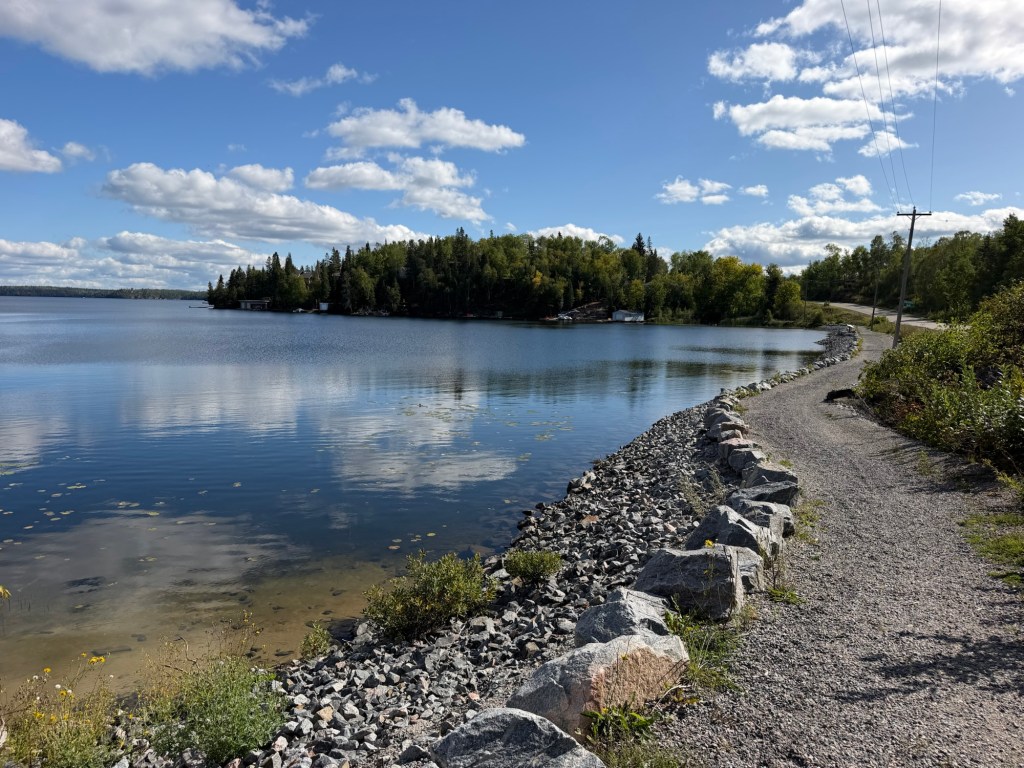
And the only animals we saw were some cattle grazing in the very lush grass…
at the lower side of the dam.
But at least we got to see where the water goes.
And we got to see the sometimes funky,
but mostly rundown lake houses folks have out there.
And so my opinion remains. It was nice to see the spring, but two nights and one day is plenty of time to spend in this place.