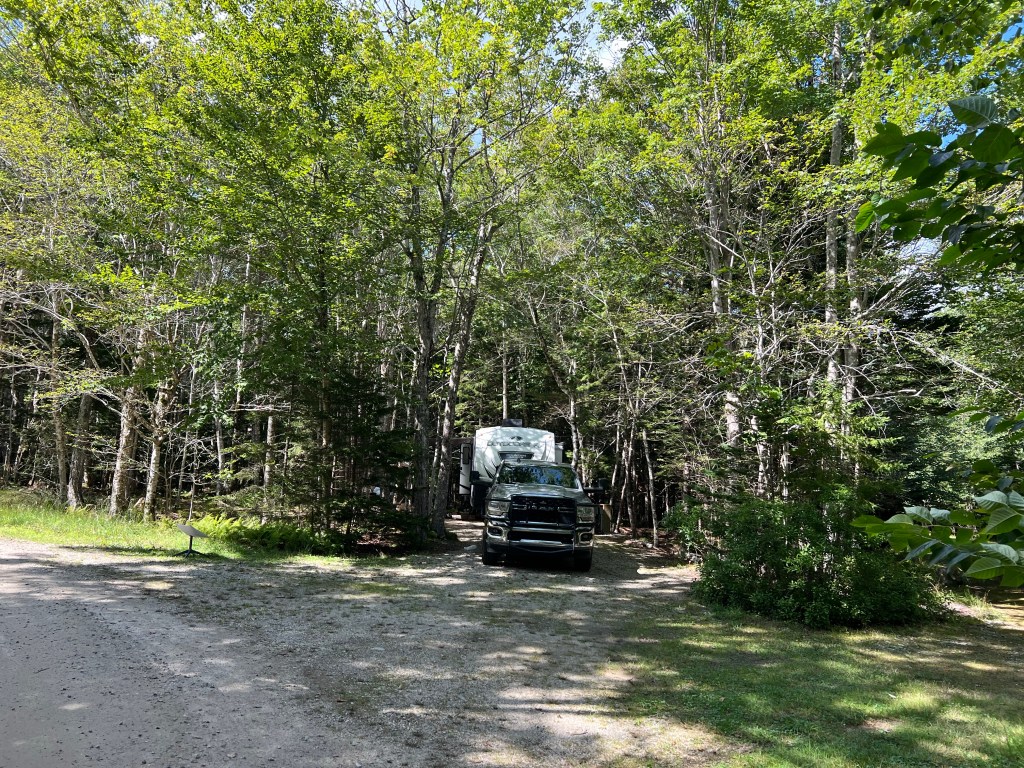
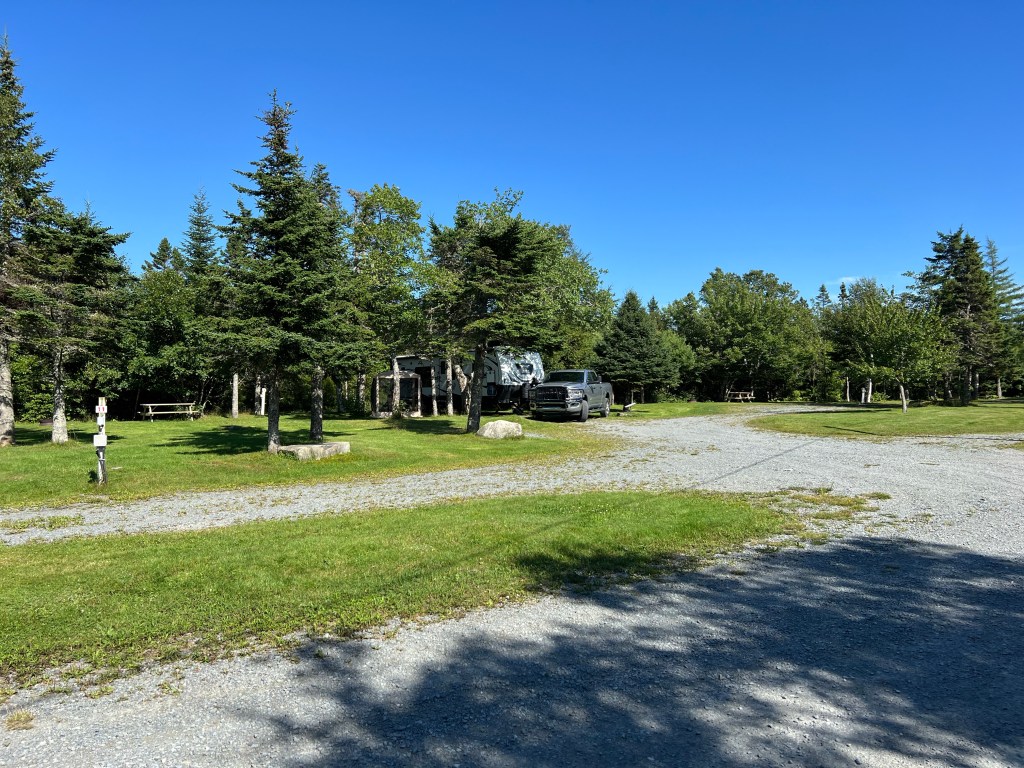
Yesterday we came here to Ellenwood Lake Provincial Park. This park is more our style. It has only 20 serviced sites (electric and water, in this case). So it’s quiet. And our site is quite private.
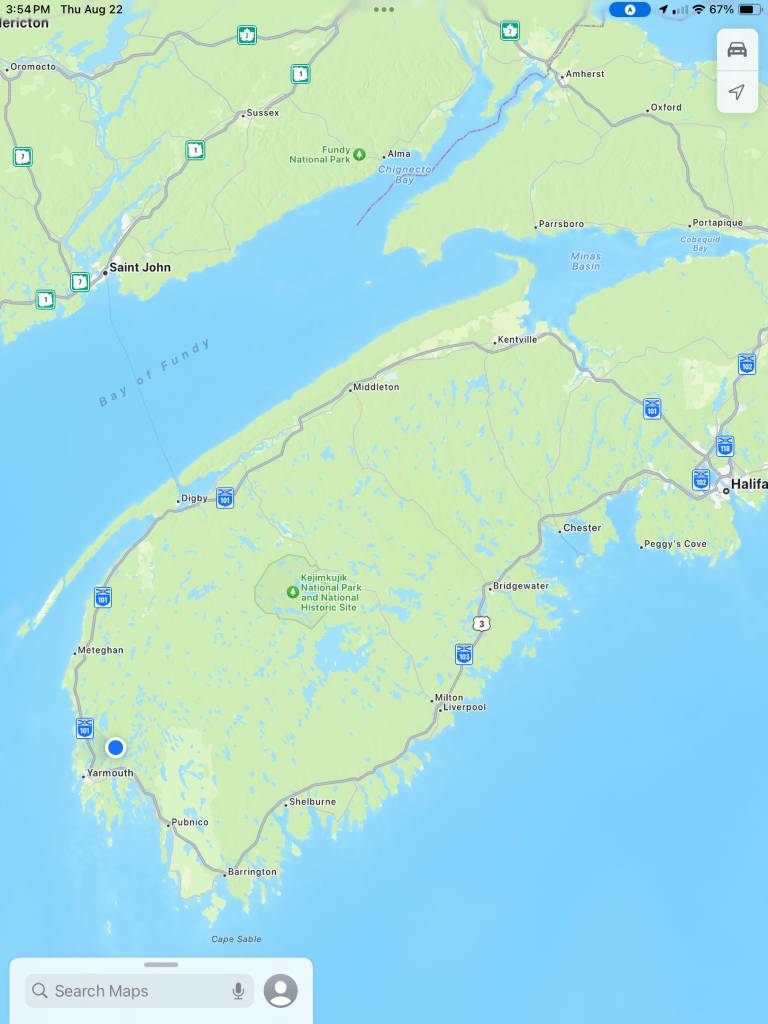
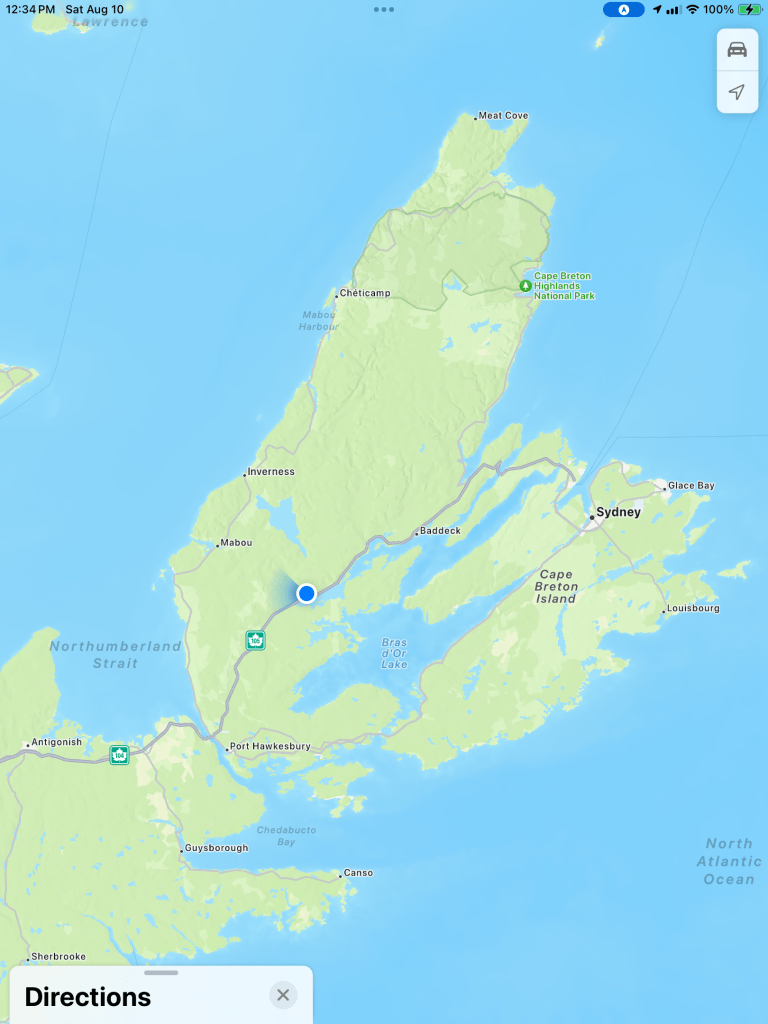
Just to orient you, we’re the blue dot towards the lower left near Yarmouth, Nova Scotia. We came from Kejimkujik National Park and National Historic Site, which is that green dot with a white tree right in the middle of this part of Nova Scotia.
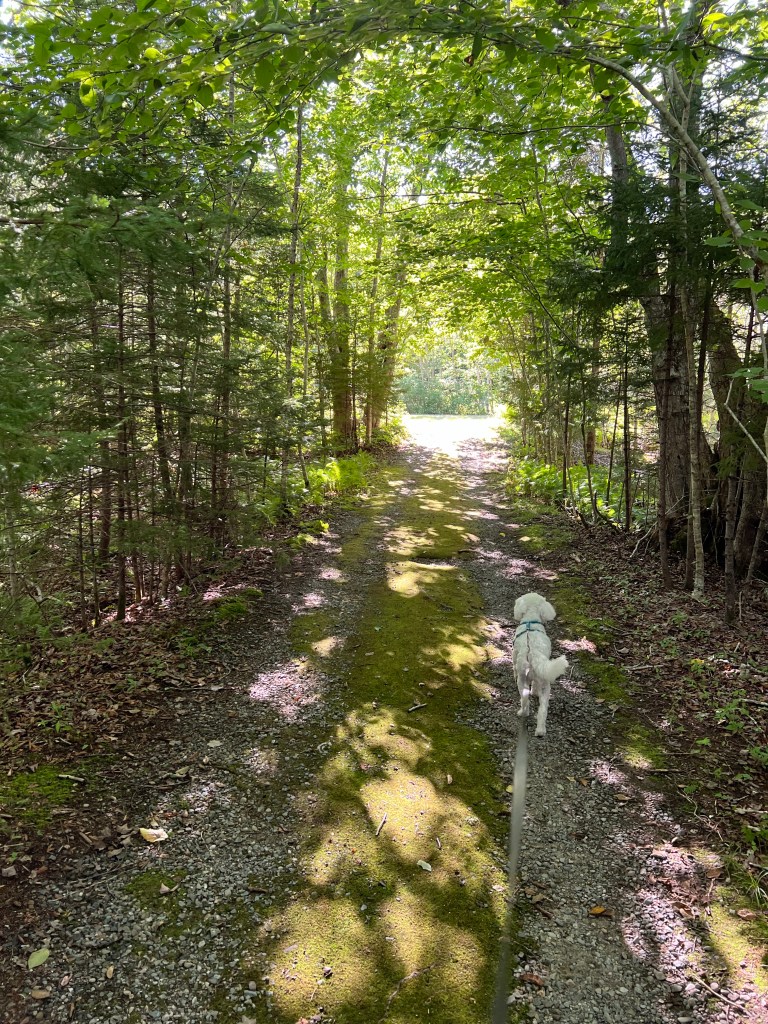
Matey and I walked around the campground this morning, then we all went and played a short game of disc golf.
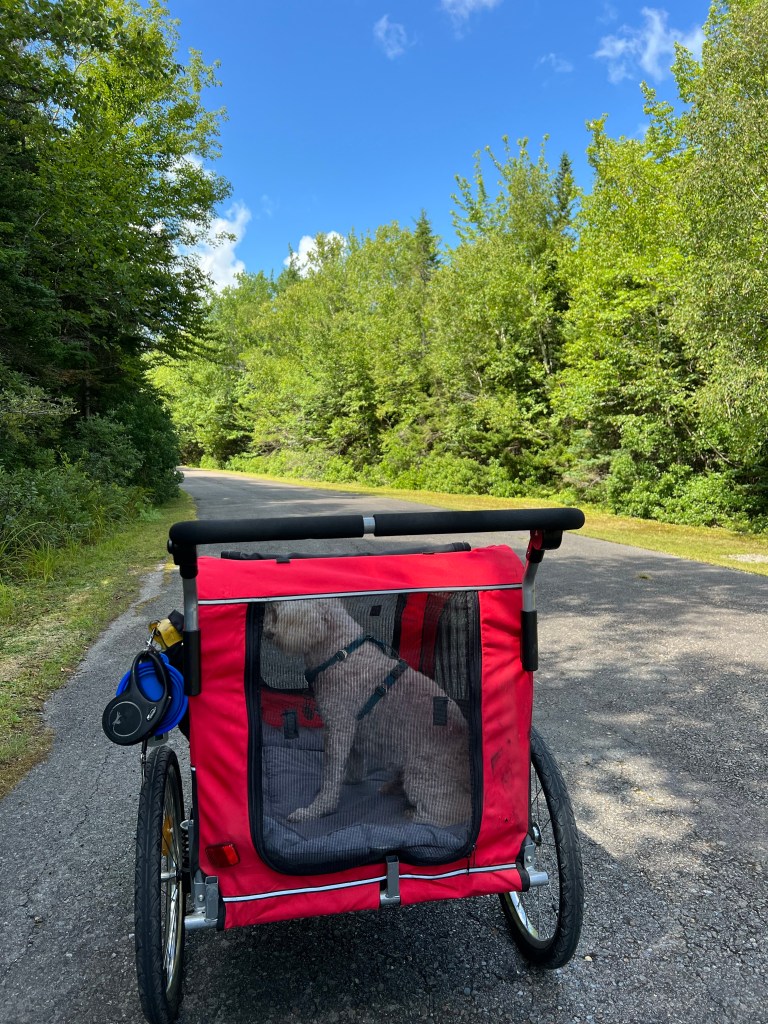
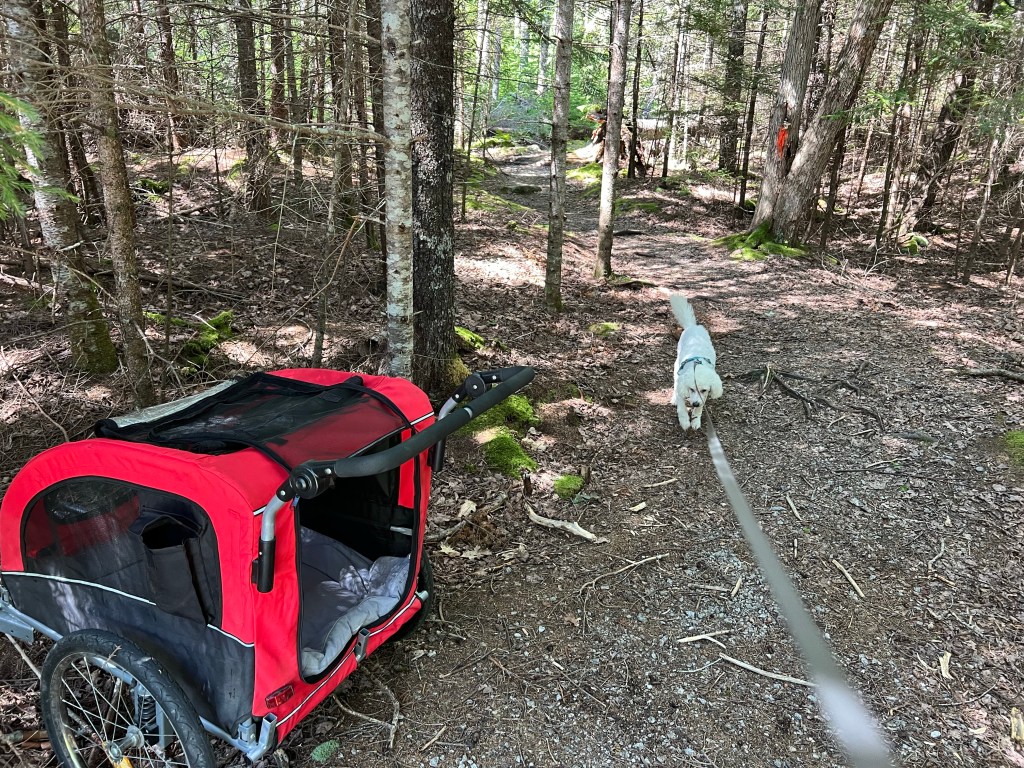
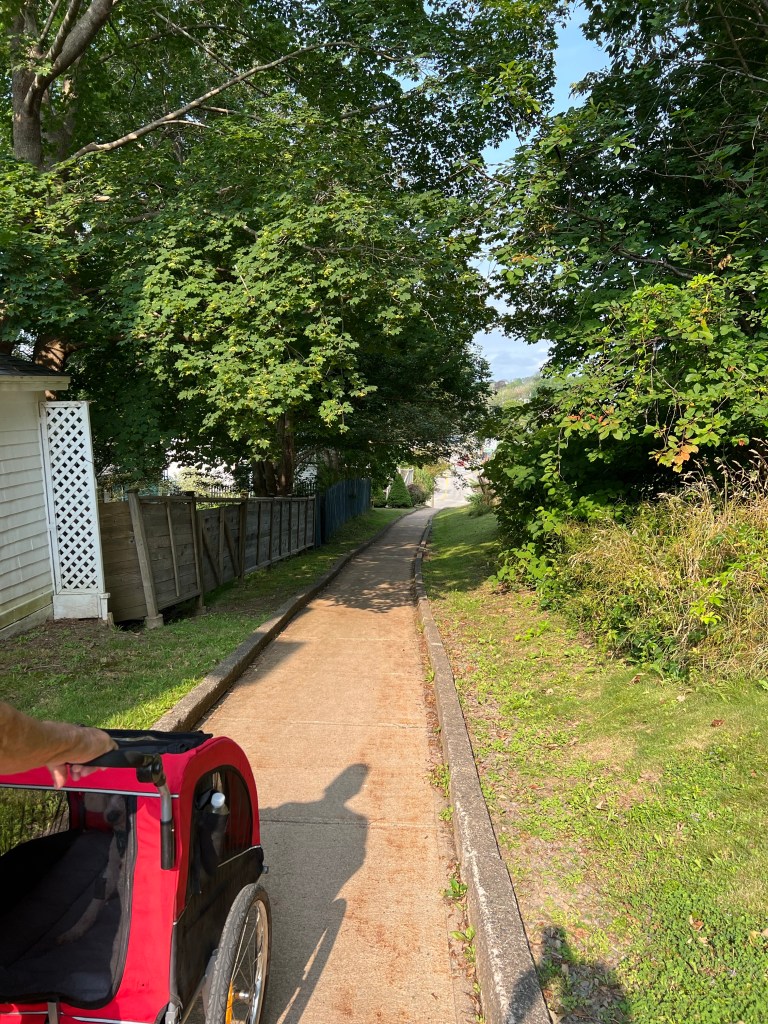
So this afternoon was the perfect time to take a walk using the stroller.
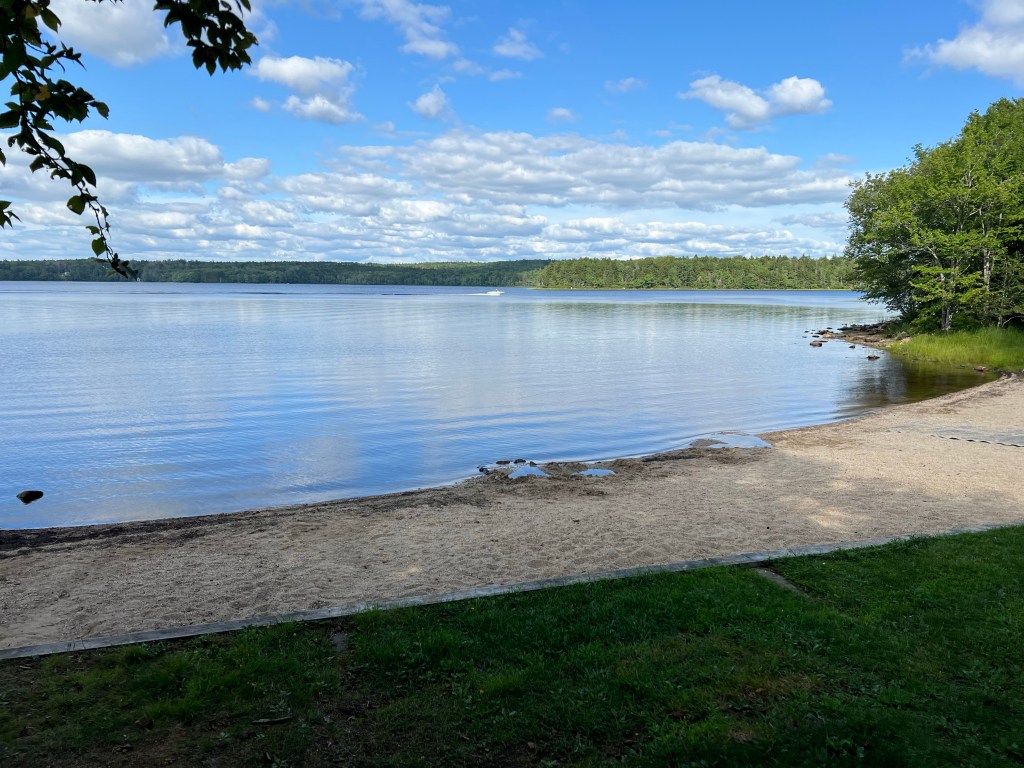
We walked past the campers’ beach at Ellenwood Lake, then down an old park road now closed to vehicle traffic.
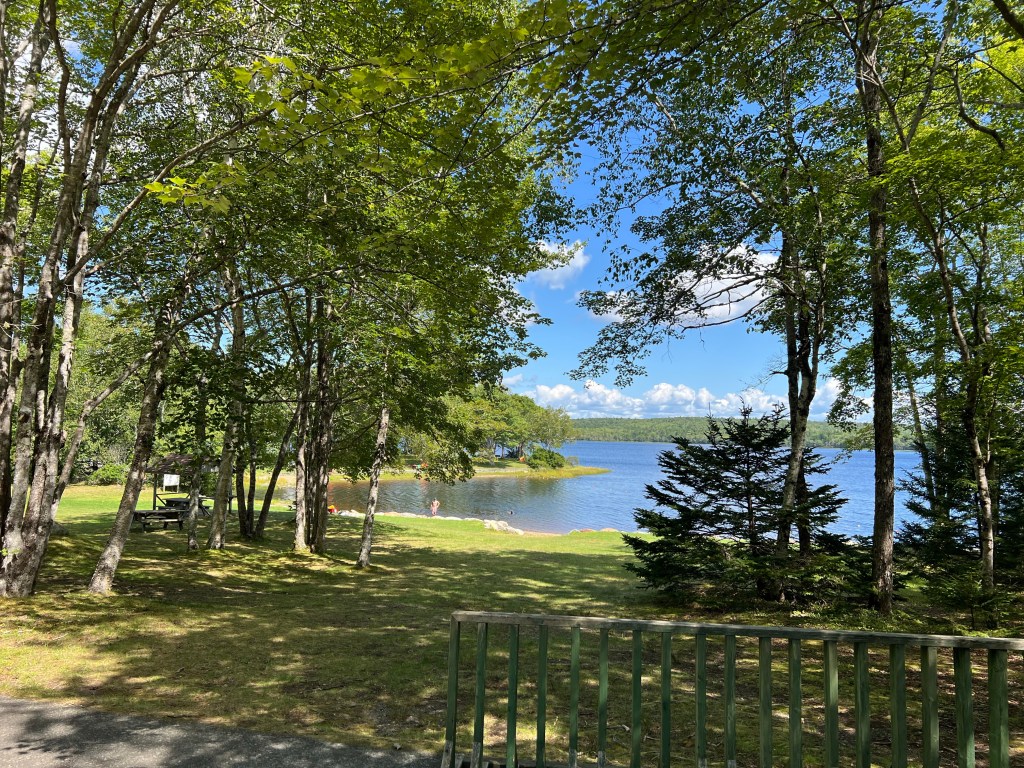
We passed the very pretty day use area…
and came to the hiking trail. I’d walked three quarters of a mile at that point. I parked the stroller and Matey got out.
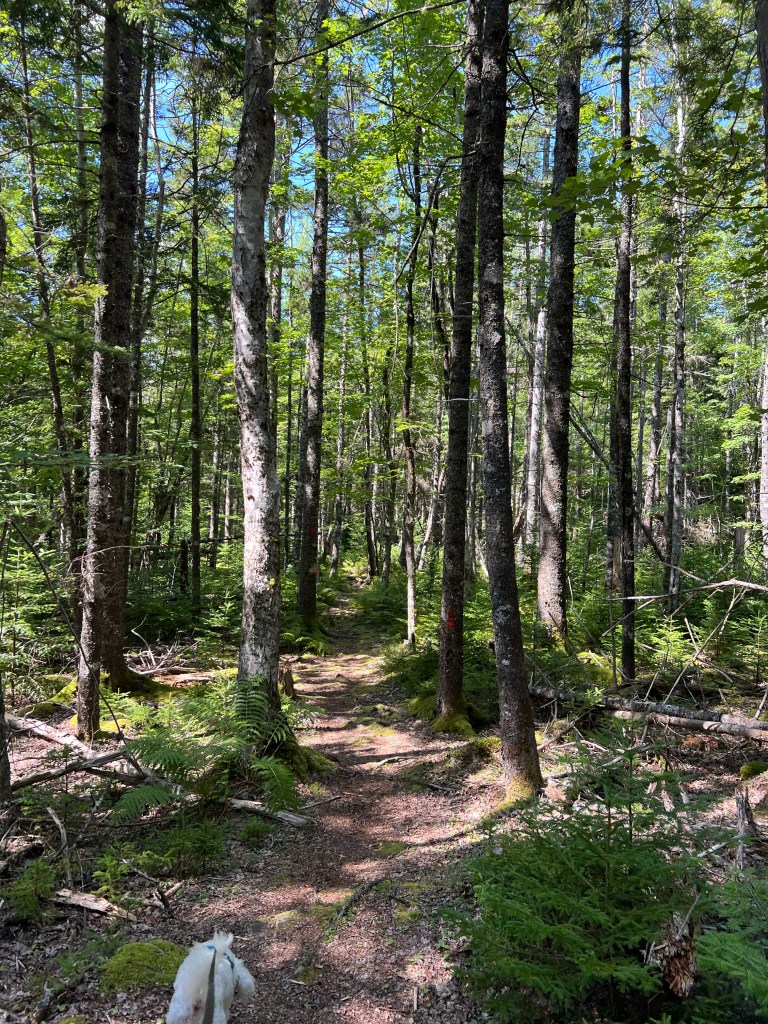
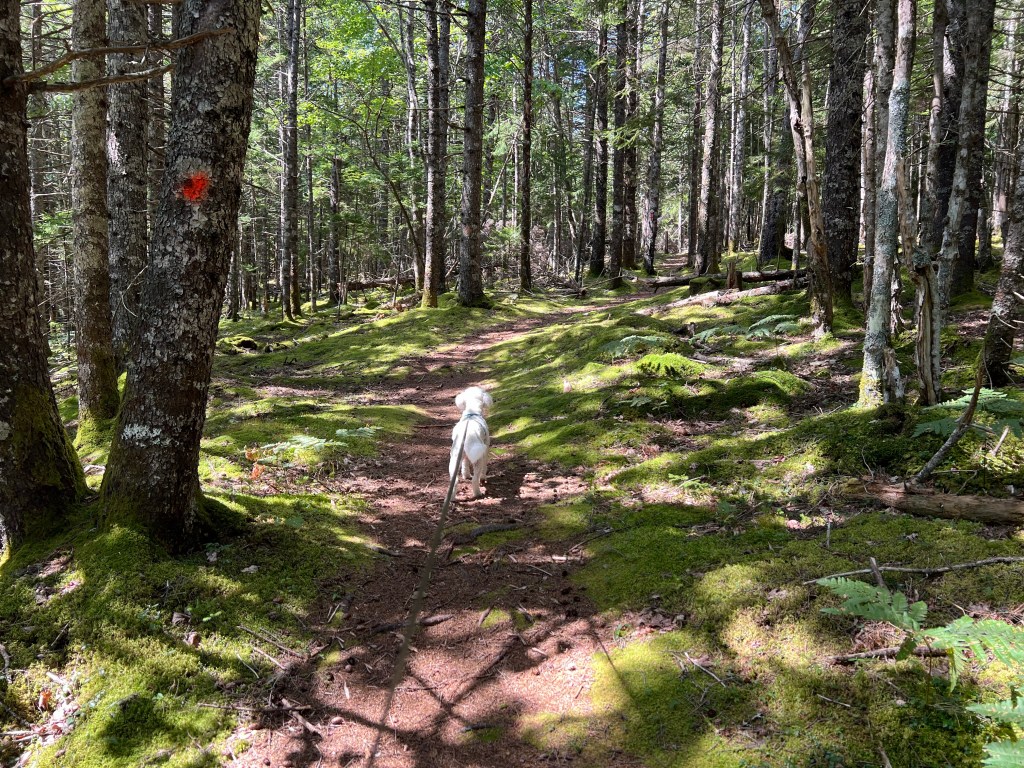
He and I then walked the trail.
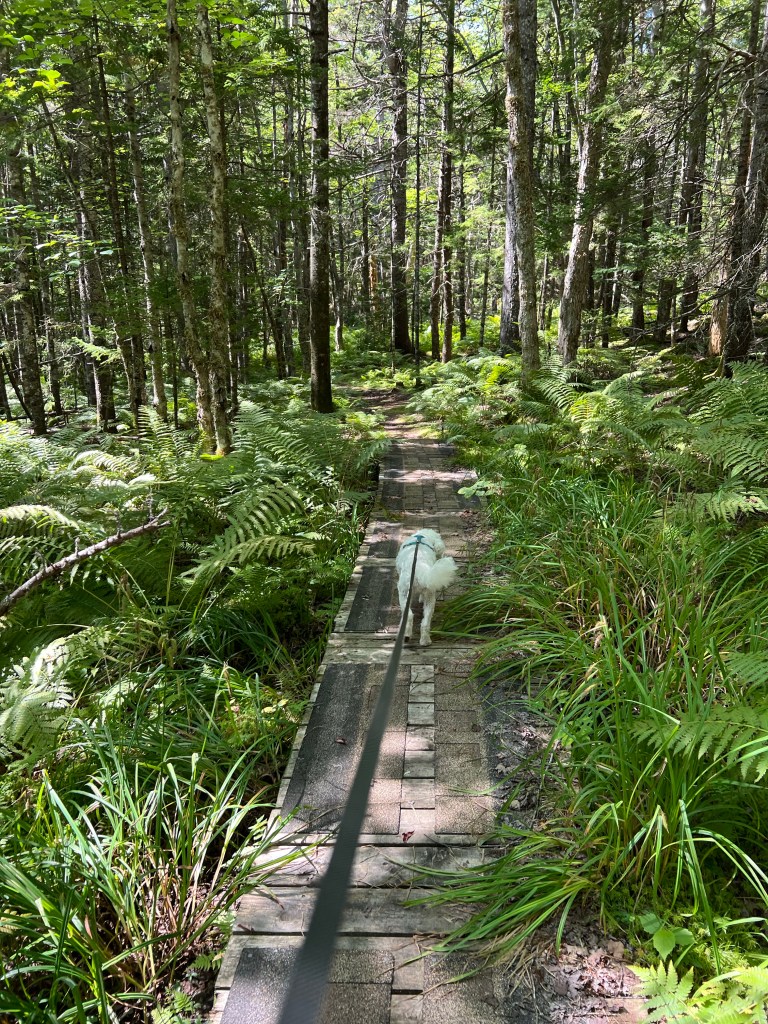
It was a pretty nice trail with some structure in the really wet spots.
The loop was 1.2 miles long and Matey did fine. Then I loaded him in the stroller for the walk back. Perfect.
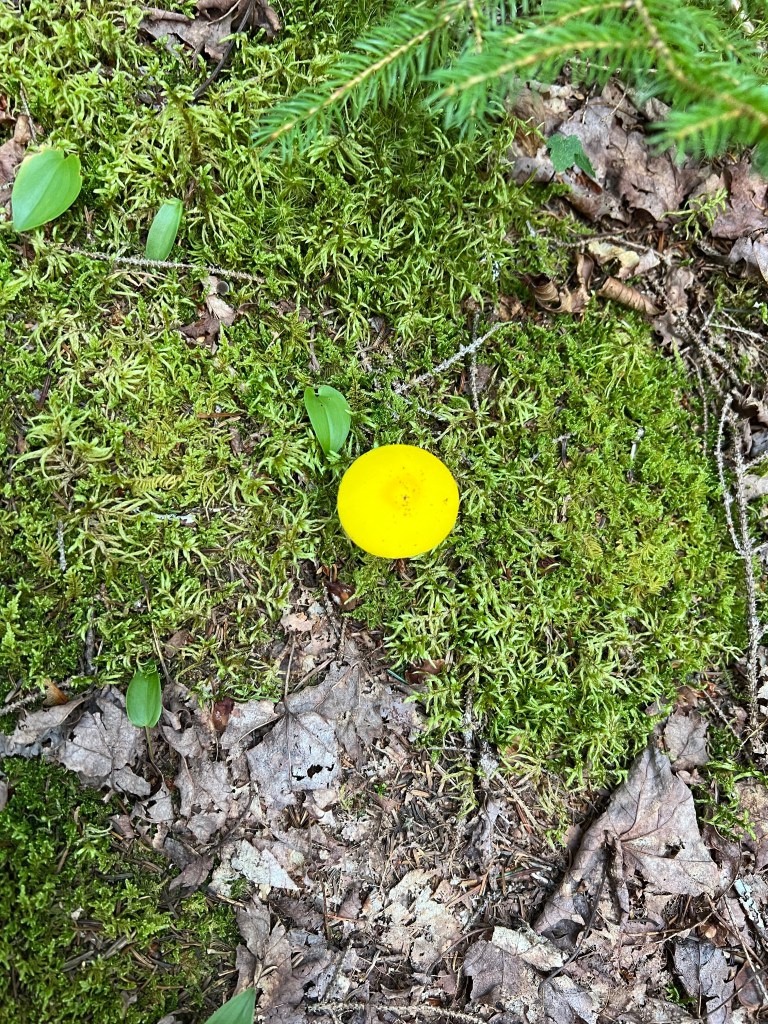
And here’s my fungus of the day, a small lemon yellow mushroom. (Actually this is not the fungus, which is underground, but just its fruiting body.)
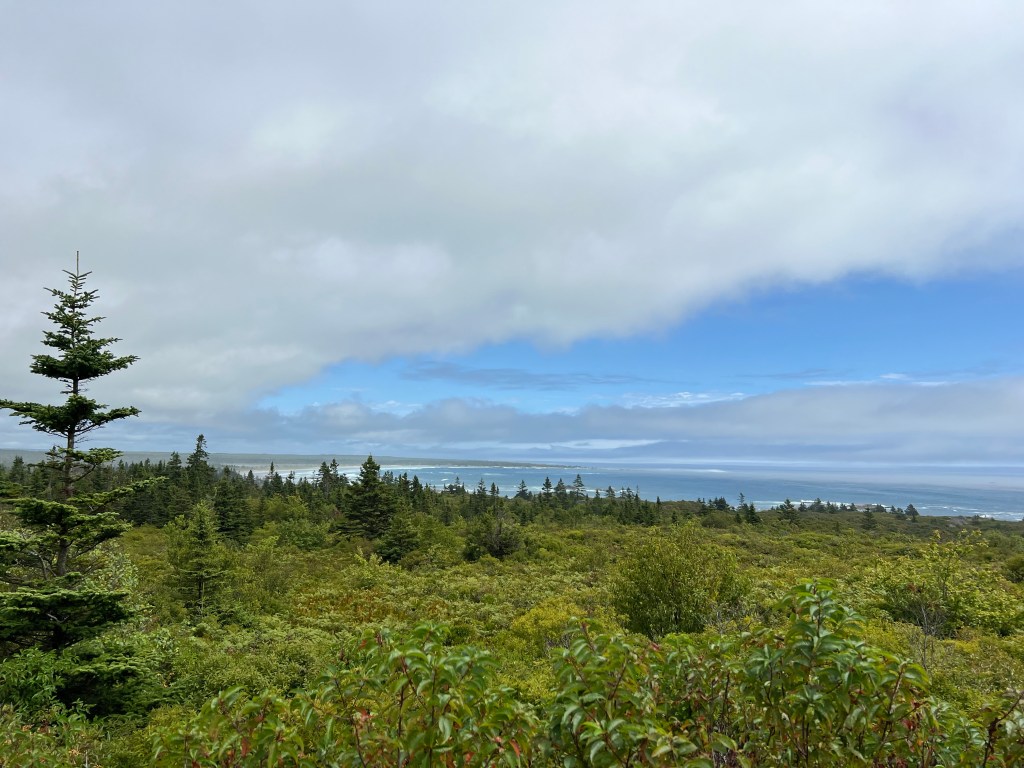
Sixty miles away from where we’re staying is the Seaside Adjunct of this park. I’m not sure how the two are related except the seaside part is not too far from the mouth of the Mersey River, which flows through the park and was an important route for the Mi’kmaq people who lived here. In any case, since Hurricane Ernesto had just cruised by well offshore, Monday we decided to drive over there to see the waves. It turns out it was a long walk to the shore. As we crossed the open area approaching the shore we noticed the curved bands of clouds, the outer bands of the hurricane.
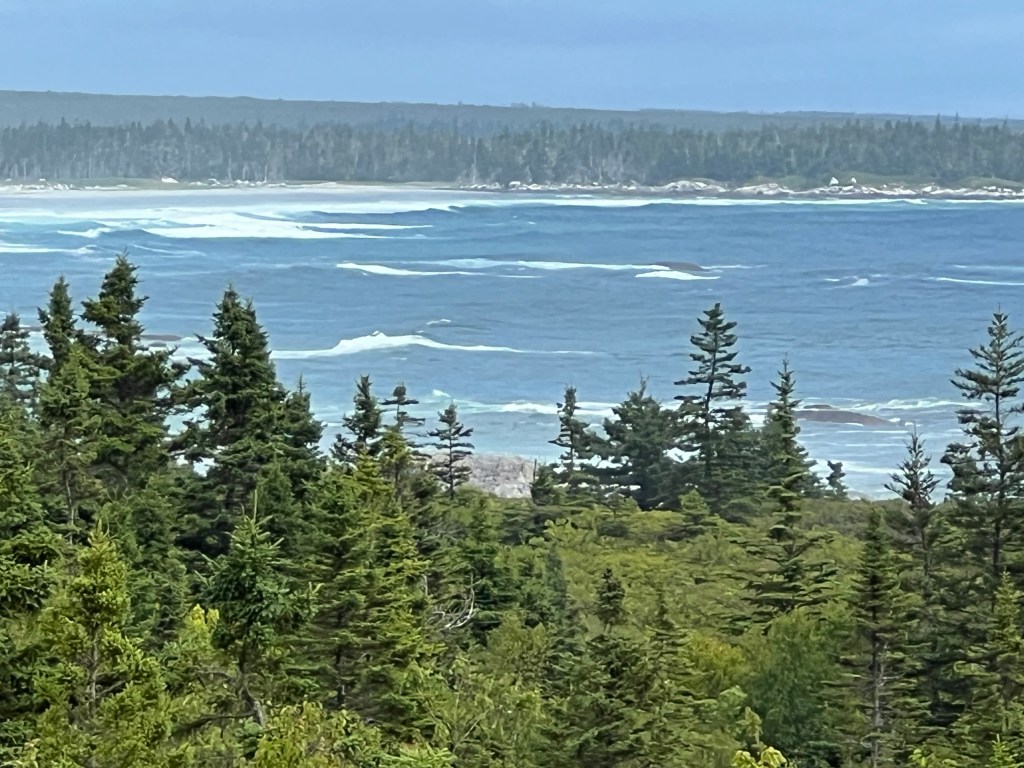
We only made it as far as the first overlook, but I did manage to get a picture.
We are at least a half mile from the shore and the swells are big enough to show up, even at this distance.
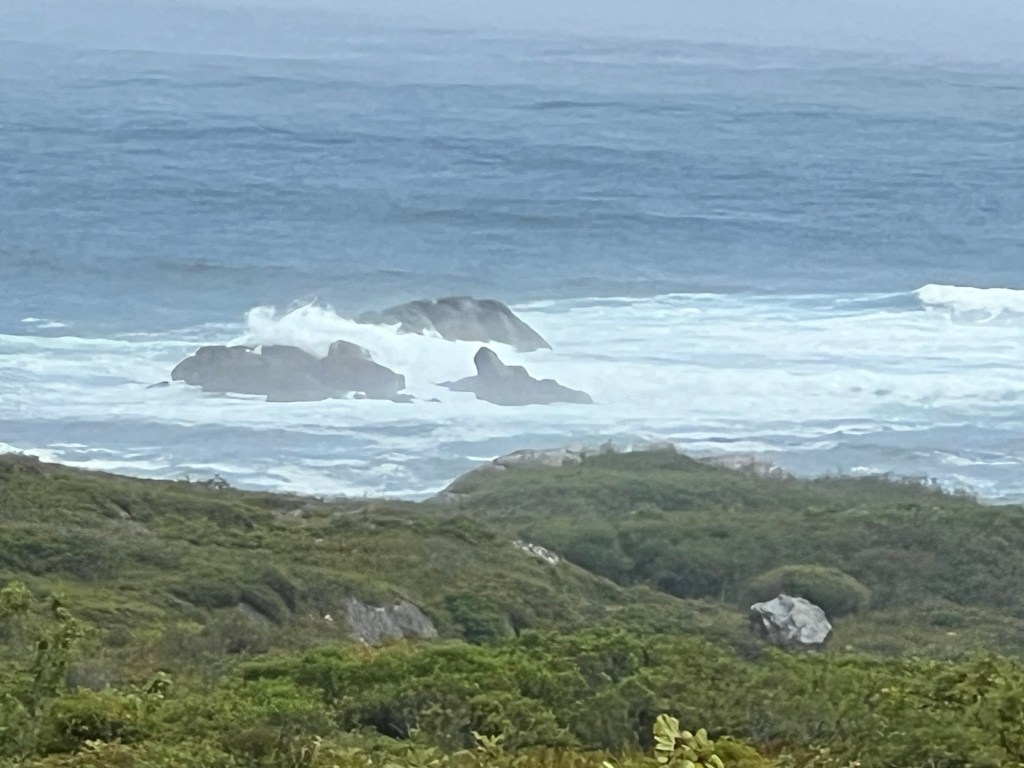
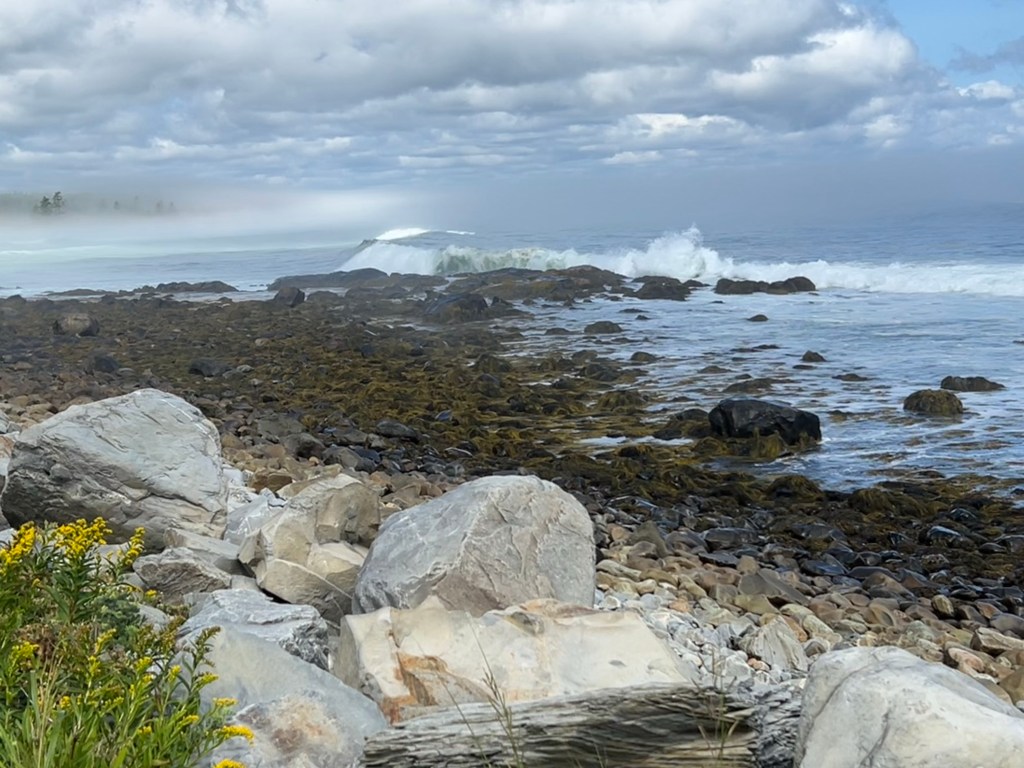
Since Matey wasn’t up for walking all the way to the shore we left there and drove to a lighthouse where I took this video. It’s still hard to see the size of these waves, especially since there was fog blowing in with the waves.
I got the best shot along the road as we were driving out.
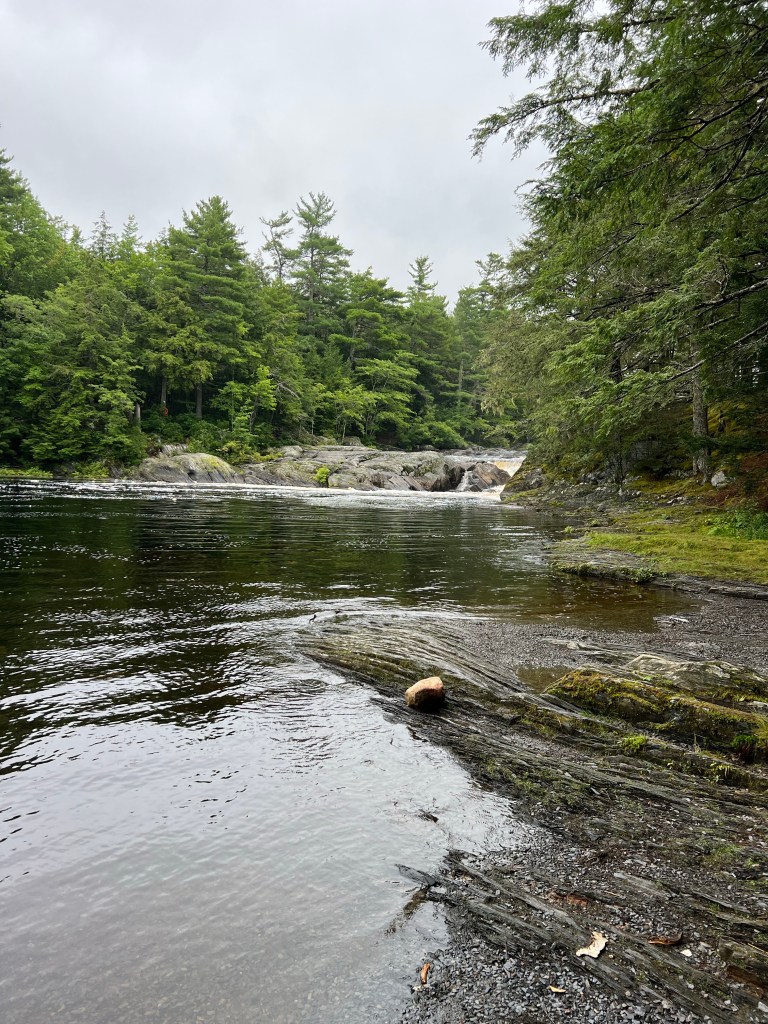
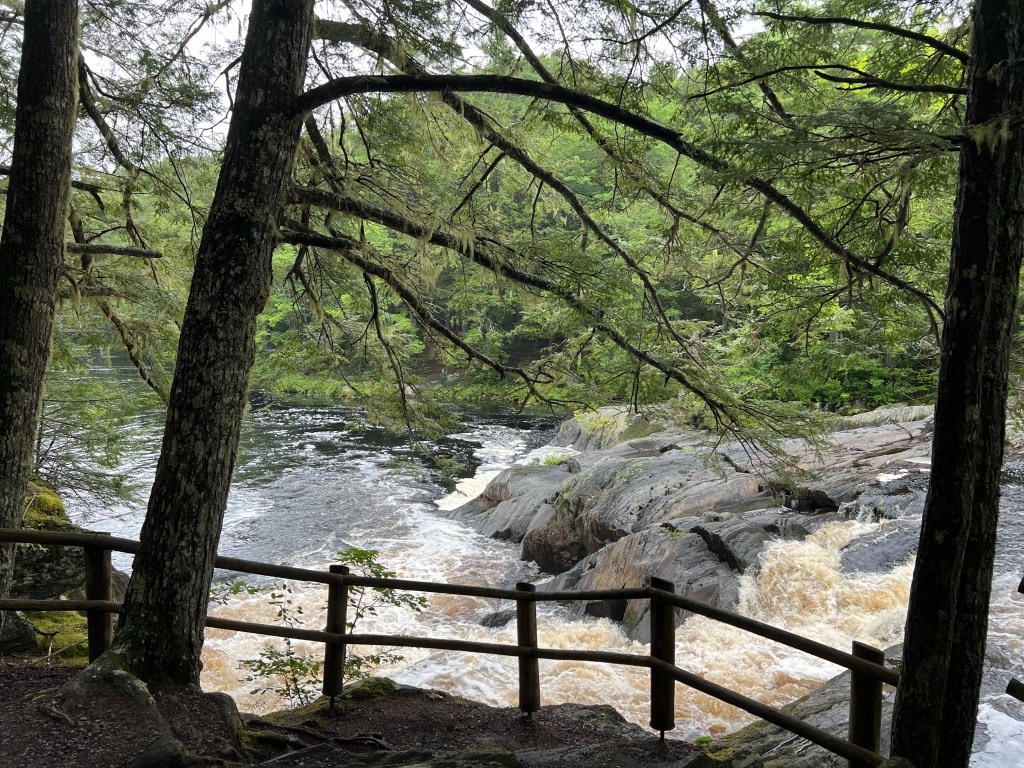
Tuesday we decided to explore more inside the park along the river. This is the Mersey River before it flows into Kejimkujik Lake.
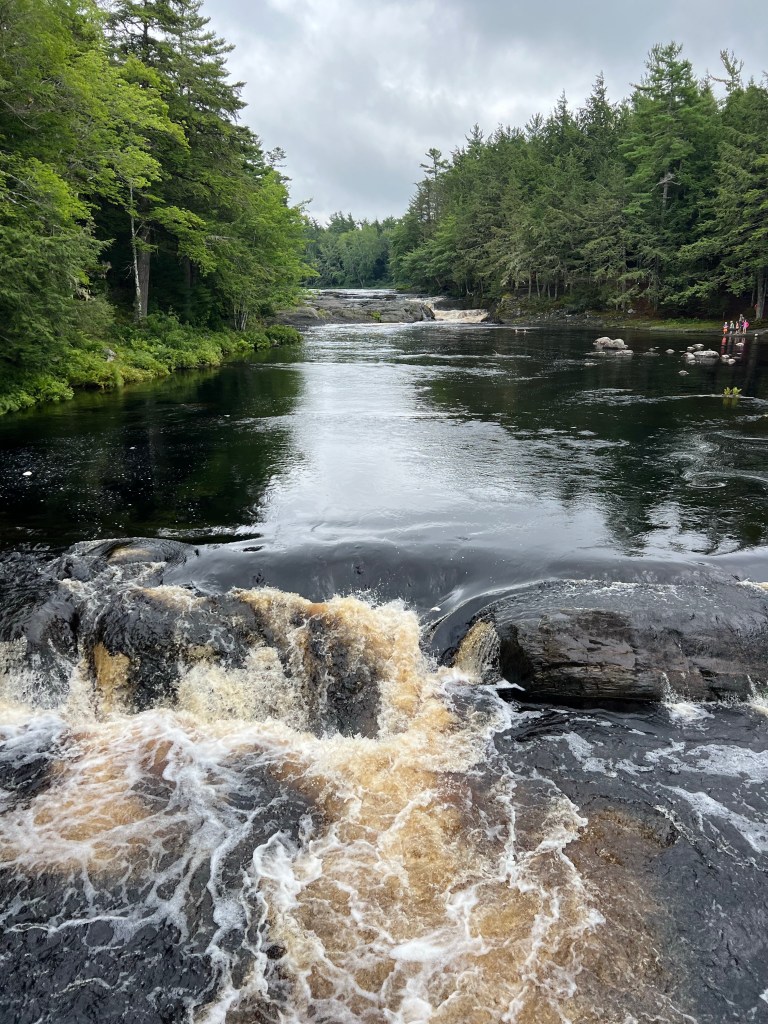
This is Mills Falls on the Mersey.
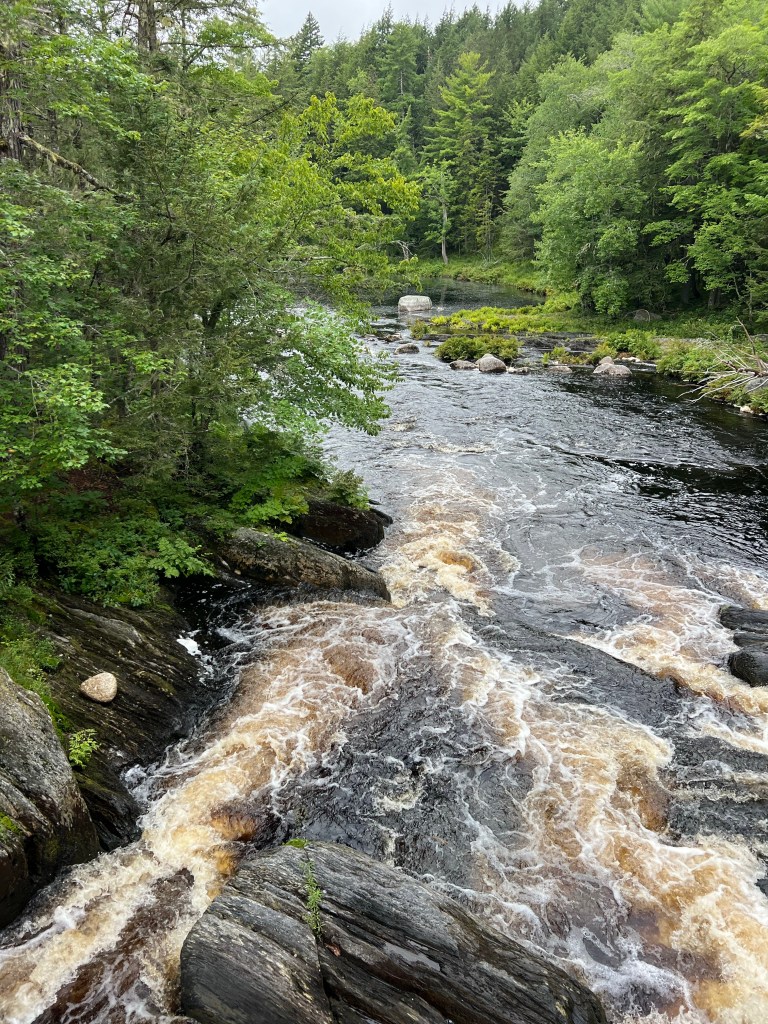
There’s another rapid right under a pedestrian bridge. Bud and I were trying to figure the route a kayak could take.
It would definitely be a tricky run.
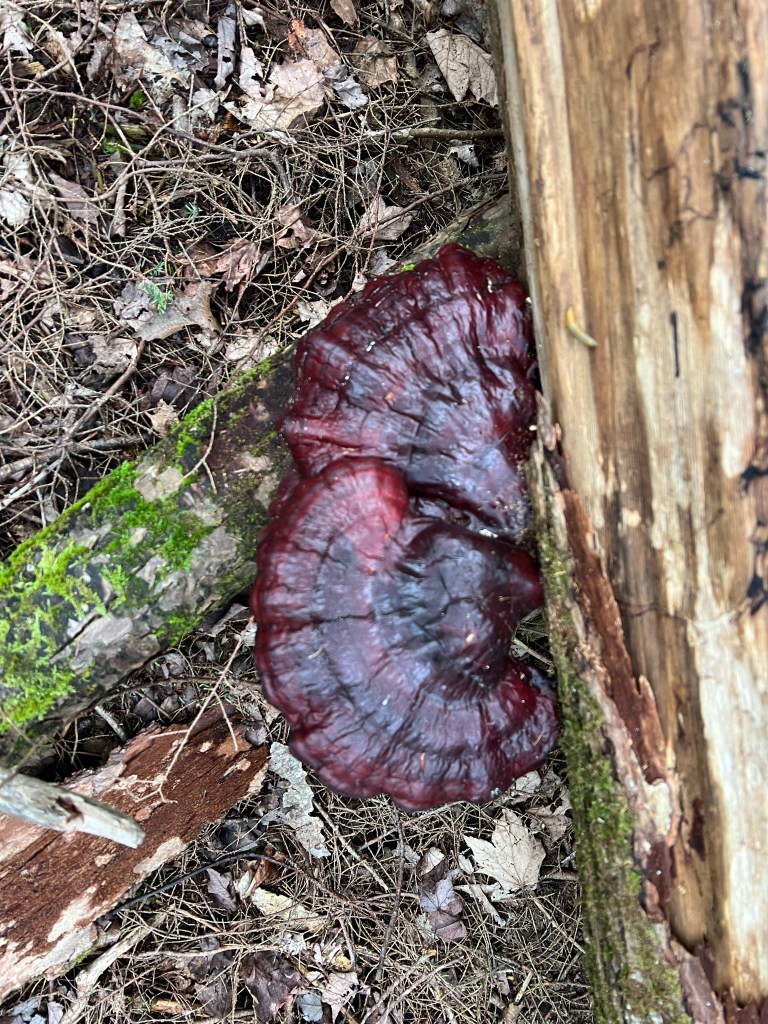
This morning we left this beautiful and busy National Park, but it had one last treat for us. As we were breaking camp Bud noticed this stunning maroon shelf fungus. I’ve never seen one this color before.
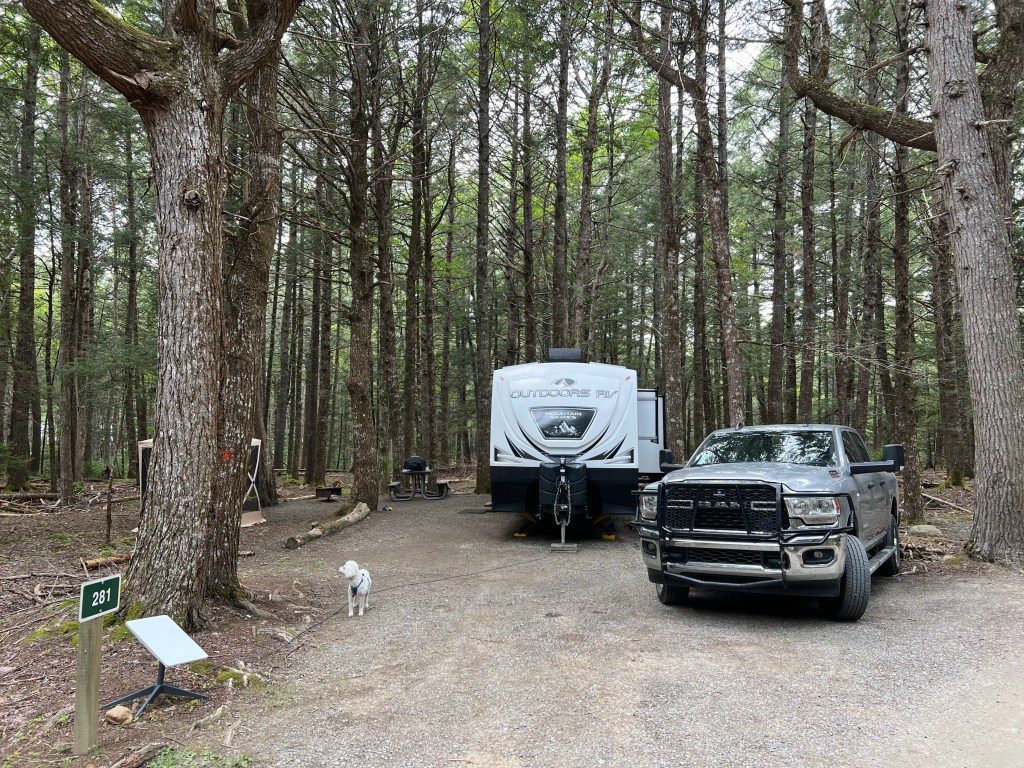
We’re staying at Kejimkujik National Park in central Nova Scotia. The campground is huge but the sites are spaced apart.
Although there are 360 campsites in the area, what you mostly see are trees.
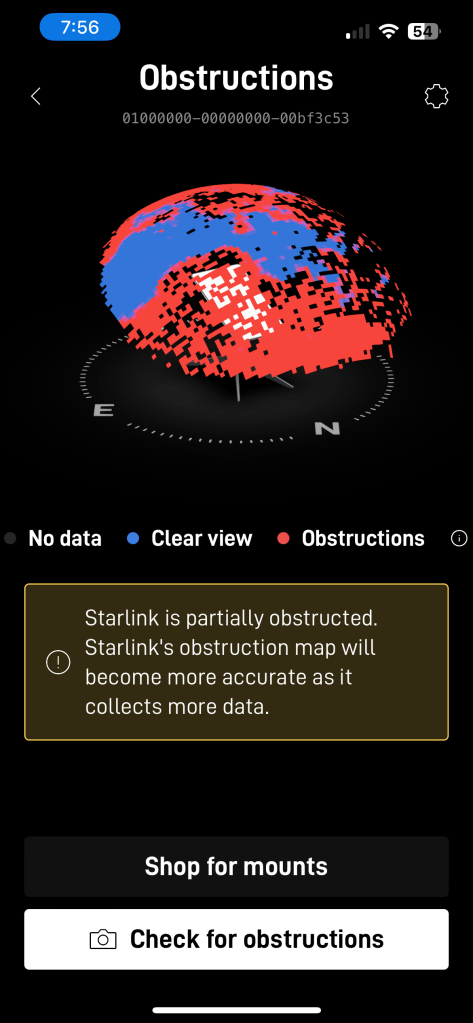
Our Starlink is sitting at the front of the site trying to find satellites in the bit of sky over the park road. It’s doing well considering how obstructed the view is, so hopefully this will get posted.
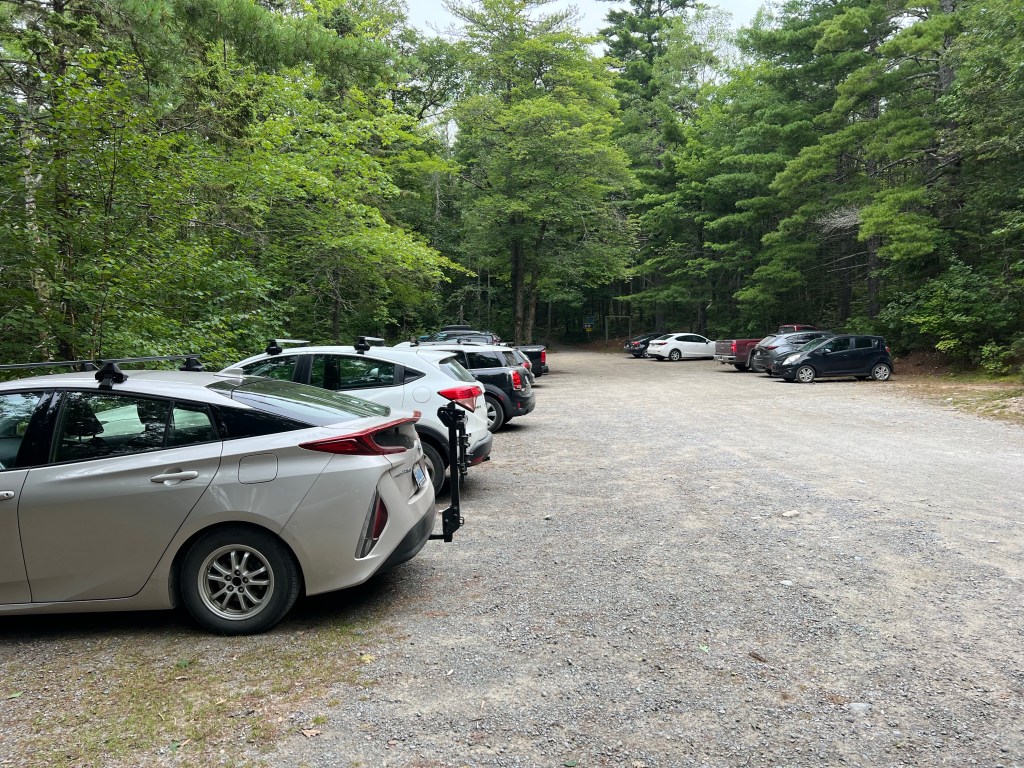
Today may be the only day we’re here when it’s not raining. I wanted to try to walk the Hemlocks and Hardwoods Trail so we did that this morning. This time I hoped to see some old growth trees. We were taken aback by another full parking lot but people might have been canoeing. We met only two other couples and those when we were almost done with the loop.
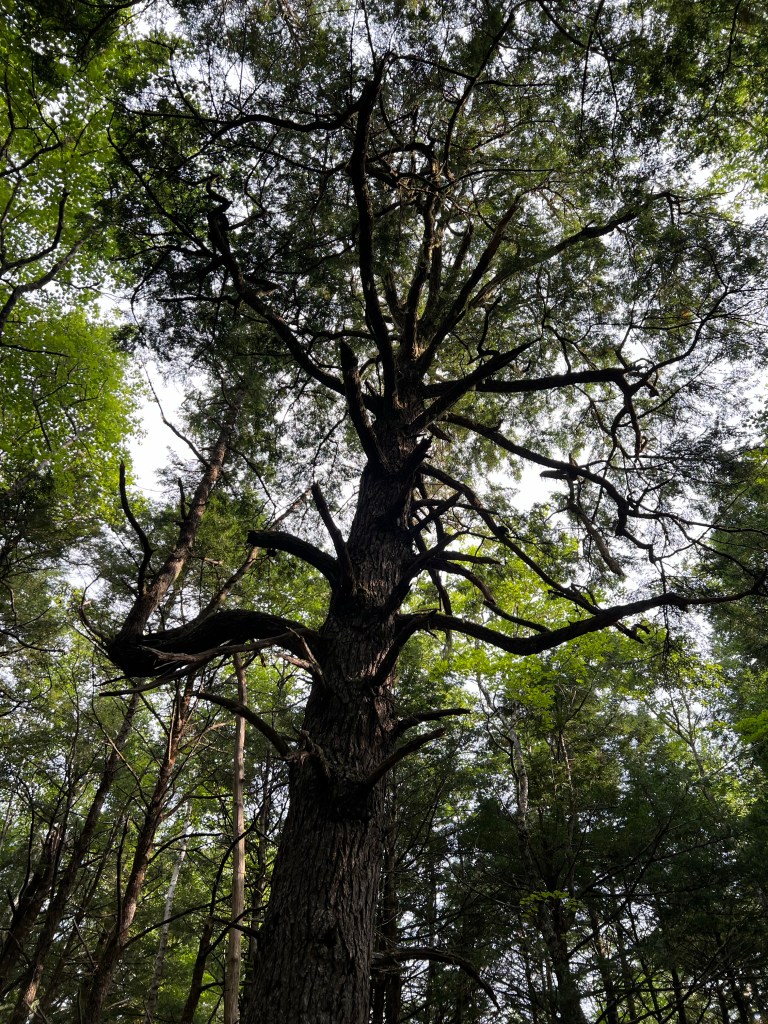
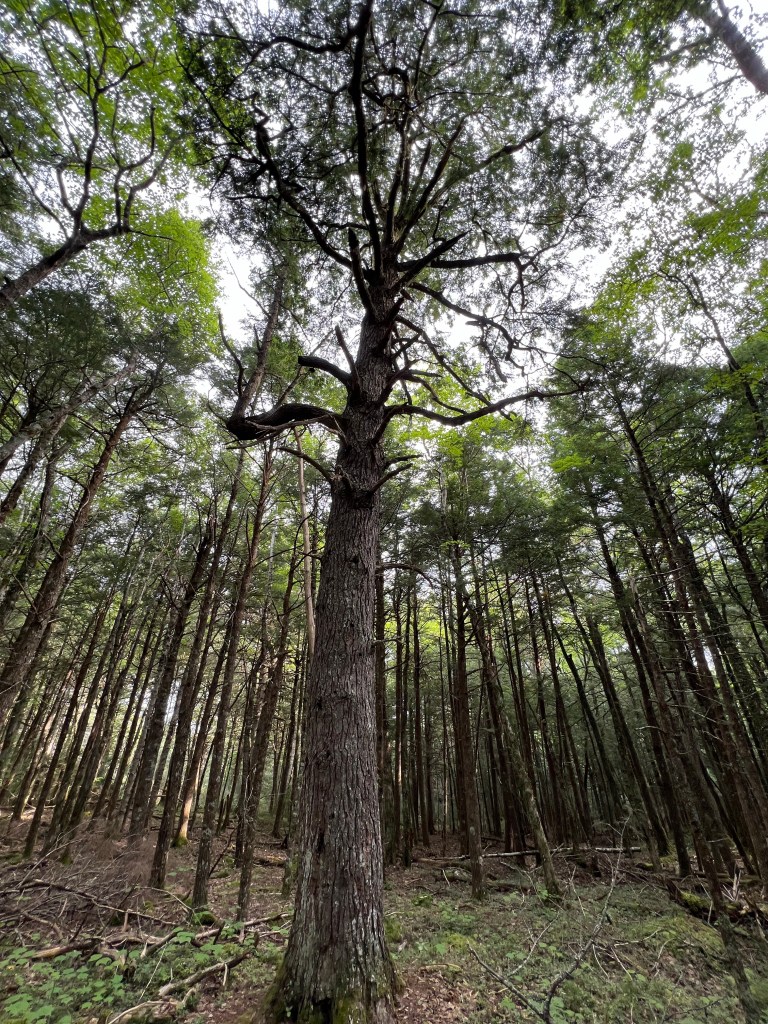
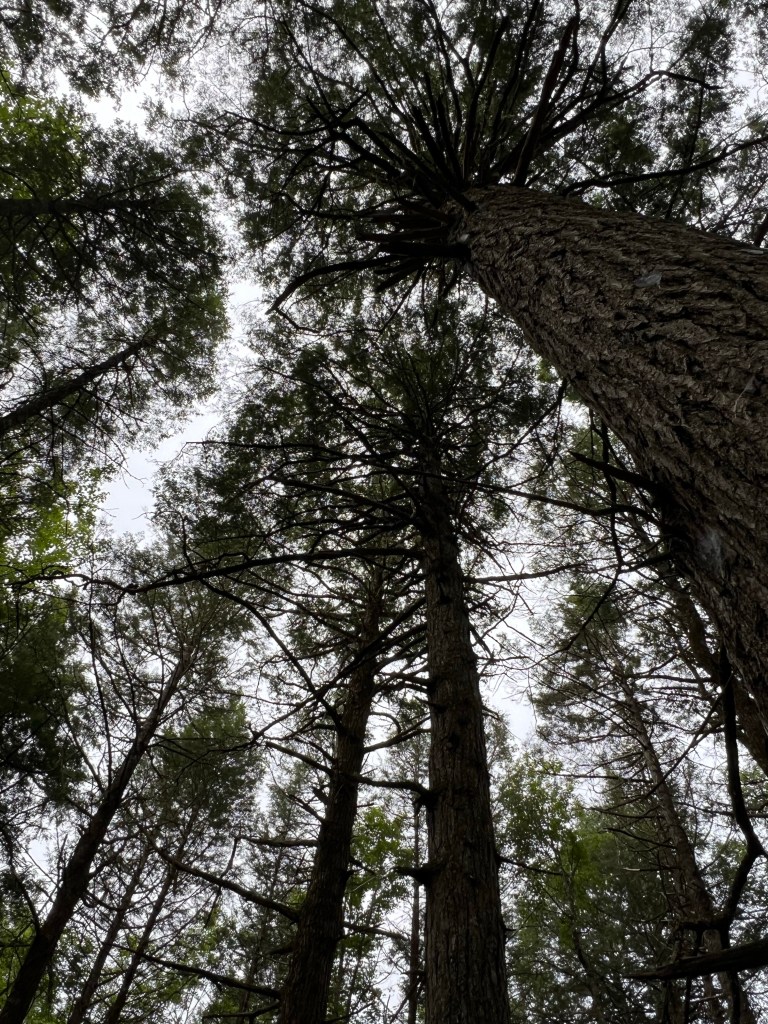
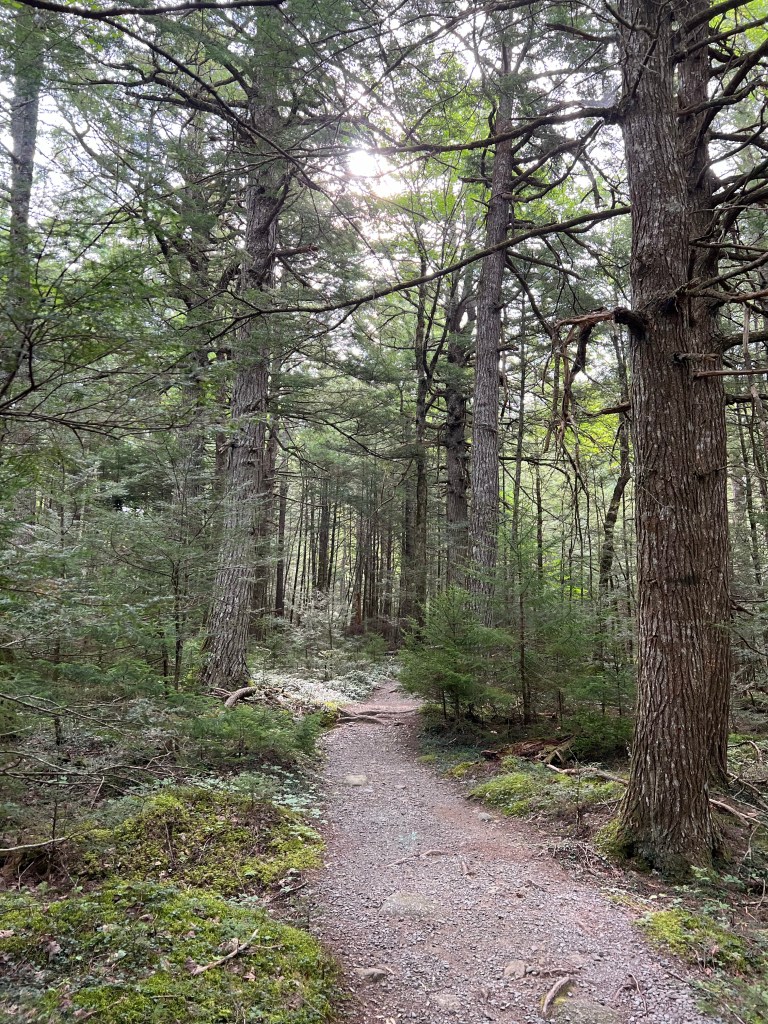
We got to see the old growth hemlocks; this is the oldest, about 400 years old.
I used a wide angle lens to try to capture the whole tree, but still couldn’t quite make it.
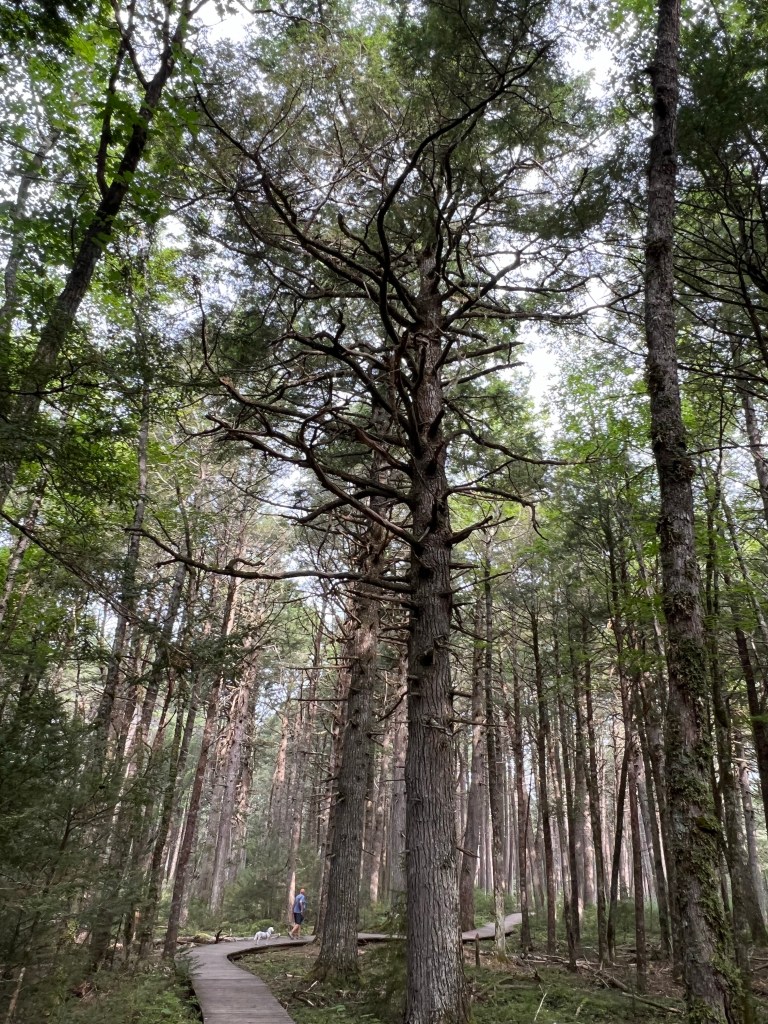
There was a large grove of them; the trail here was a boardwalk to protect their roots. Notice how small Bud and Matey are compared to these giants.
It was a wonderful place.
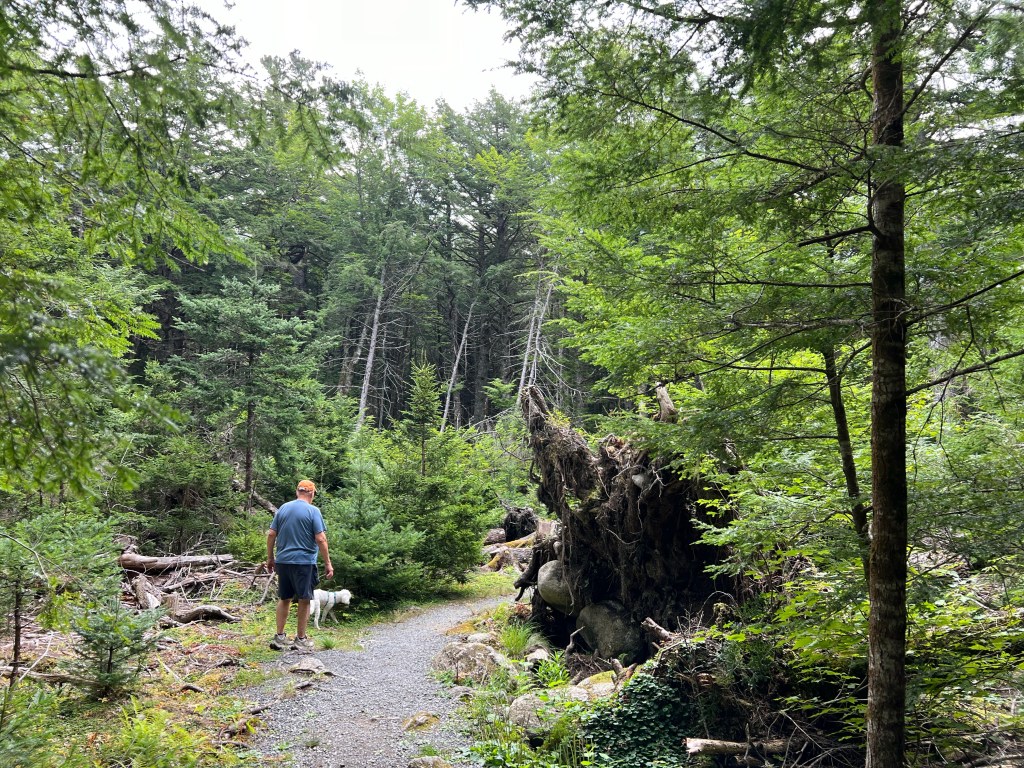
A huge old hemlock went down here creating this clearing in the woods. That’s its root ball just to the right of Bud.
It was a great trail. Matey made the whole three mile loop.
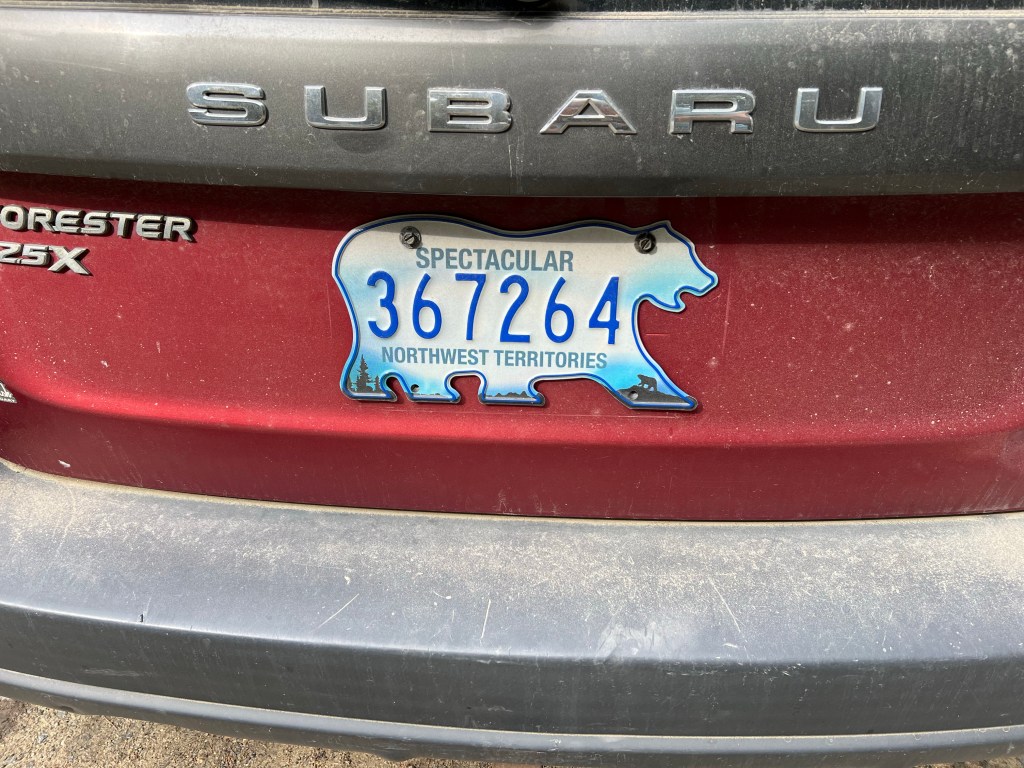
And in the parking lot on the way out I saw my first ever license plate from the Northwest Territories.
Even if it rains and with intermittent internet I am liking my time on the edge of Kejimkujik Lake in the woods.
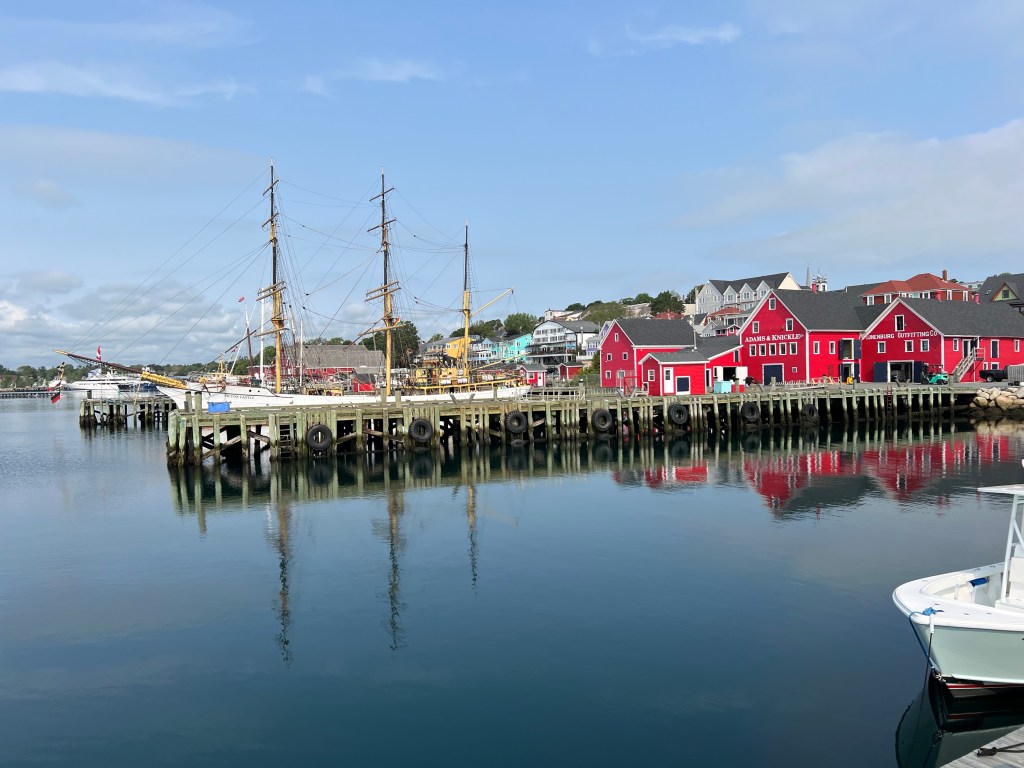
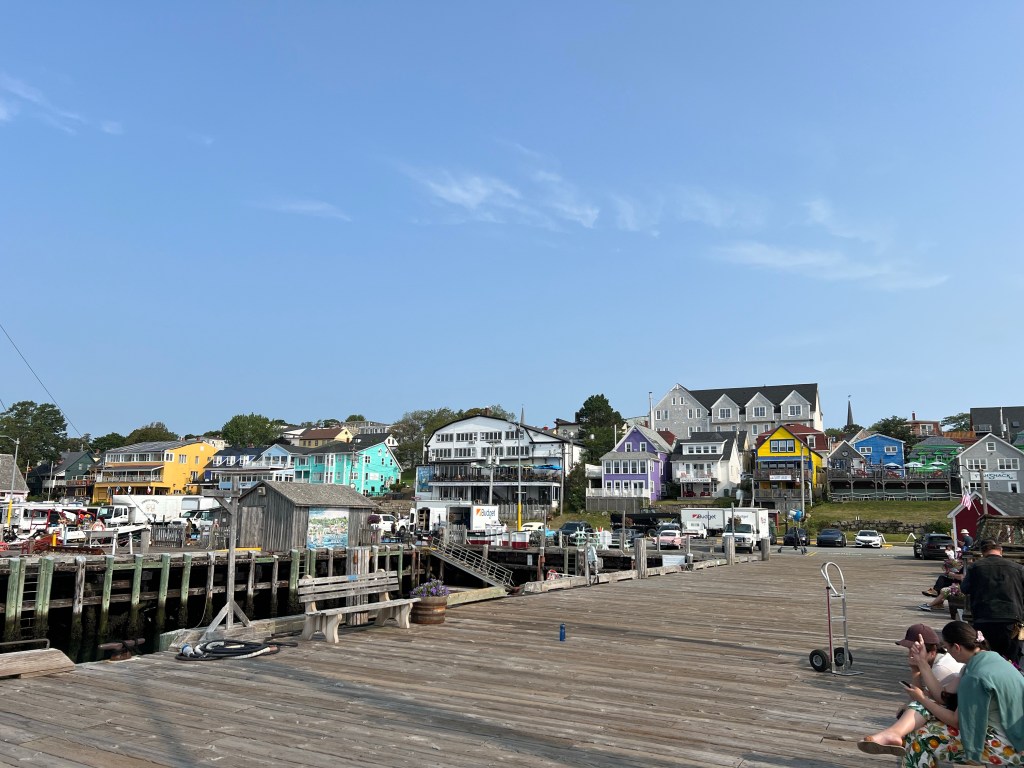
Lunenburg, Nova Scotia is a World Heritage Site and although we visited last year we couldn’t come down this coast and not visit again.
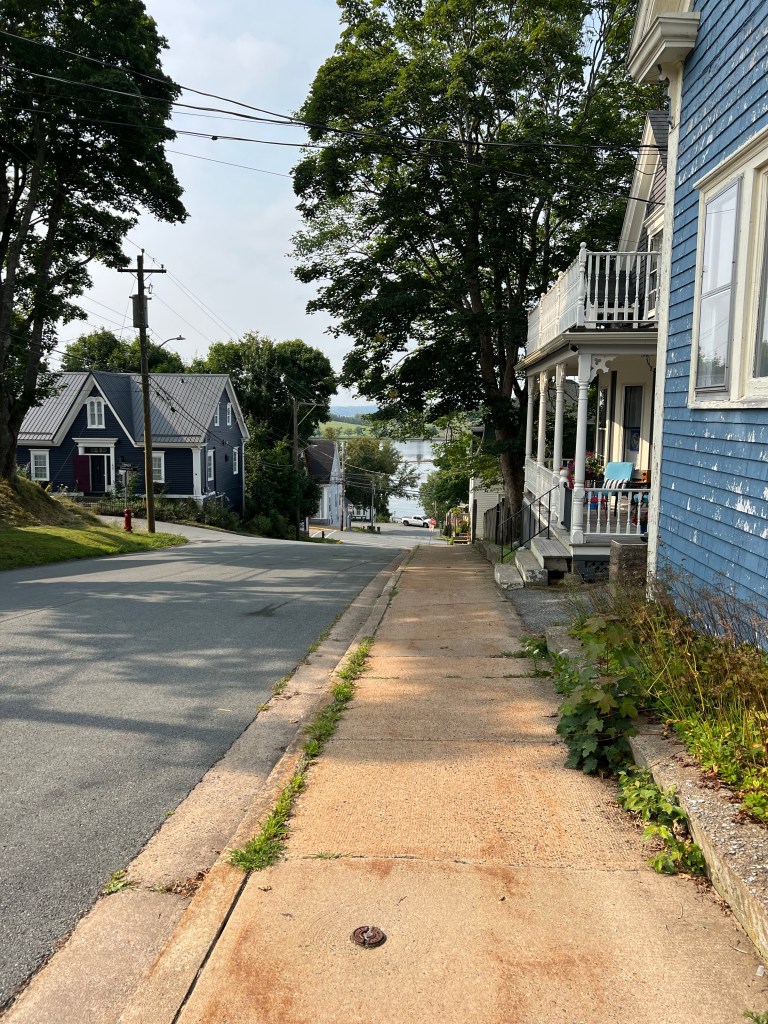
Everything above the harbor is a hill.
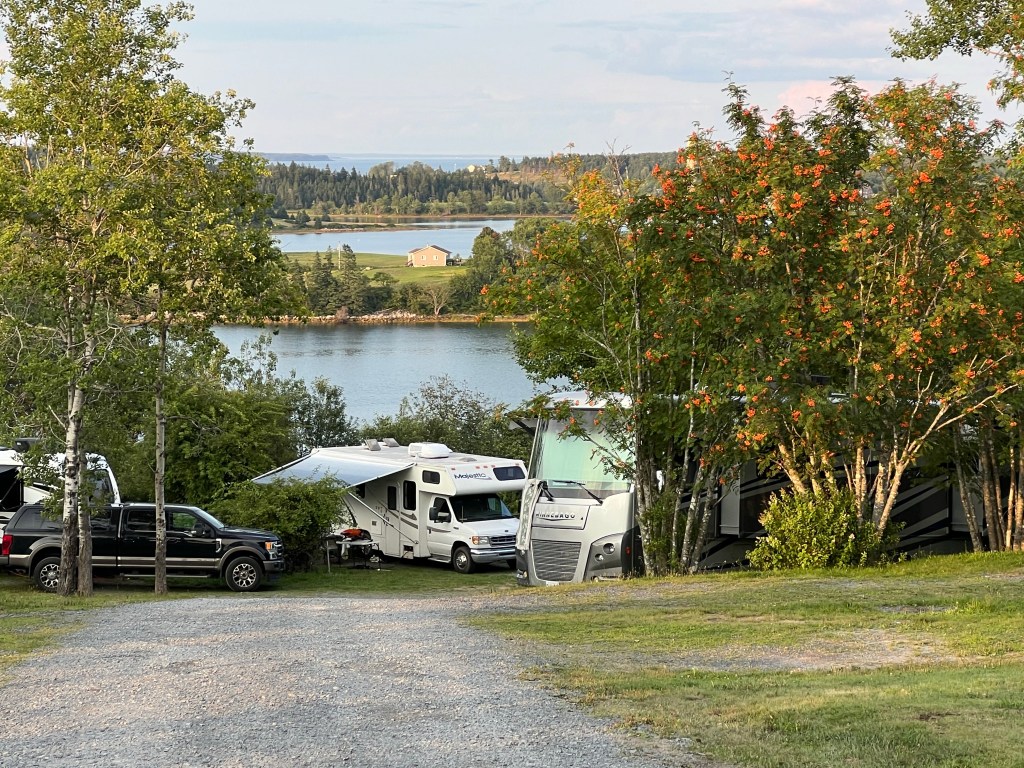
The campground sits on the top or side of a hill between the back bay…
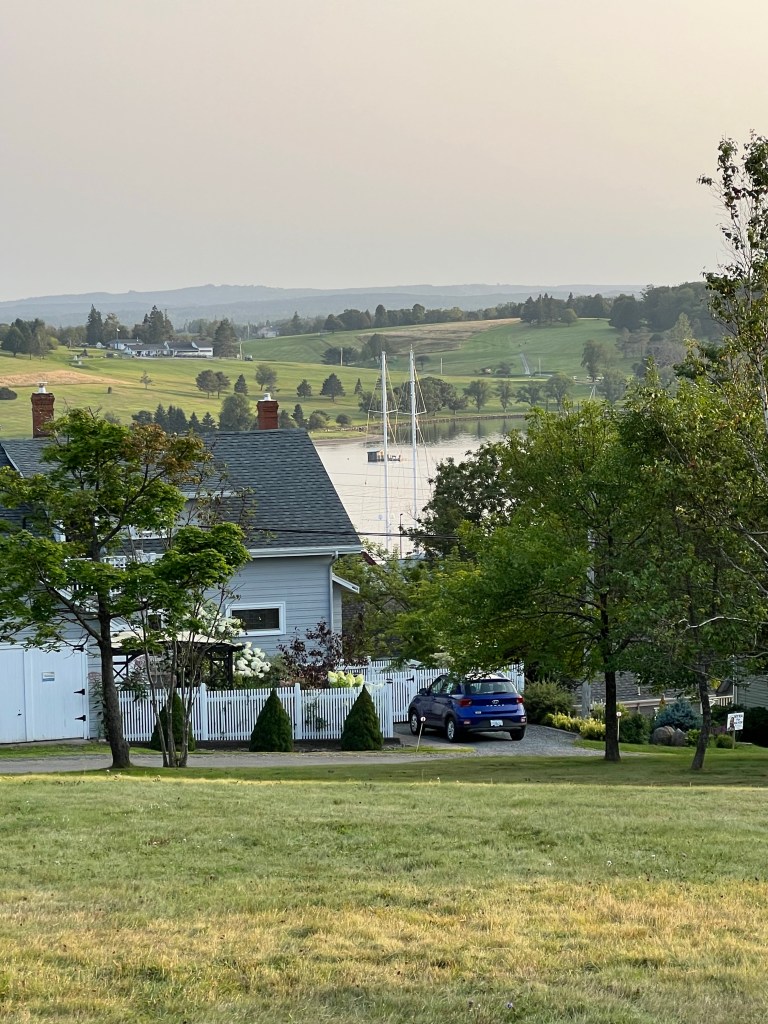
and the harbor.
This year we did try to do some new things. We played disc golf in this pretty park nearby.
We drove east out to this extremely narrow road past Blue Rocks.
We tried the Blue Rocks Common hiking trail.
It led across those blue rocks…
which were in places quite striking.
It had some pretty views.
We went as far as Matey would go.
But the real attraction here remains the town itself.
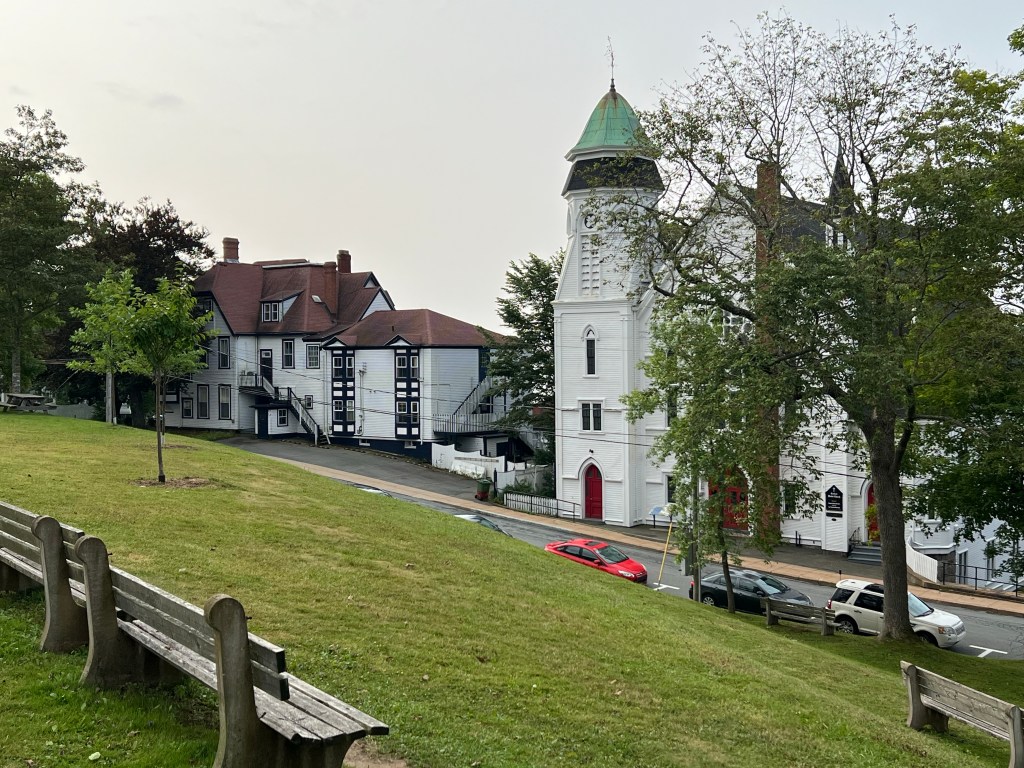
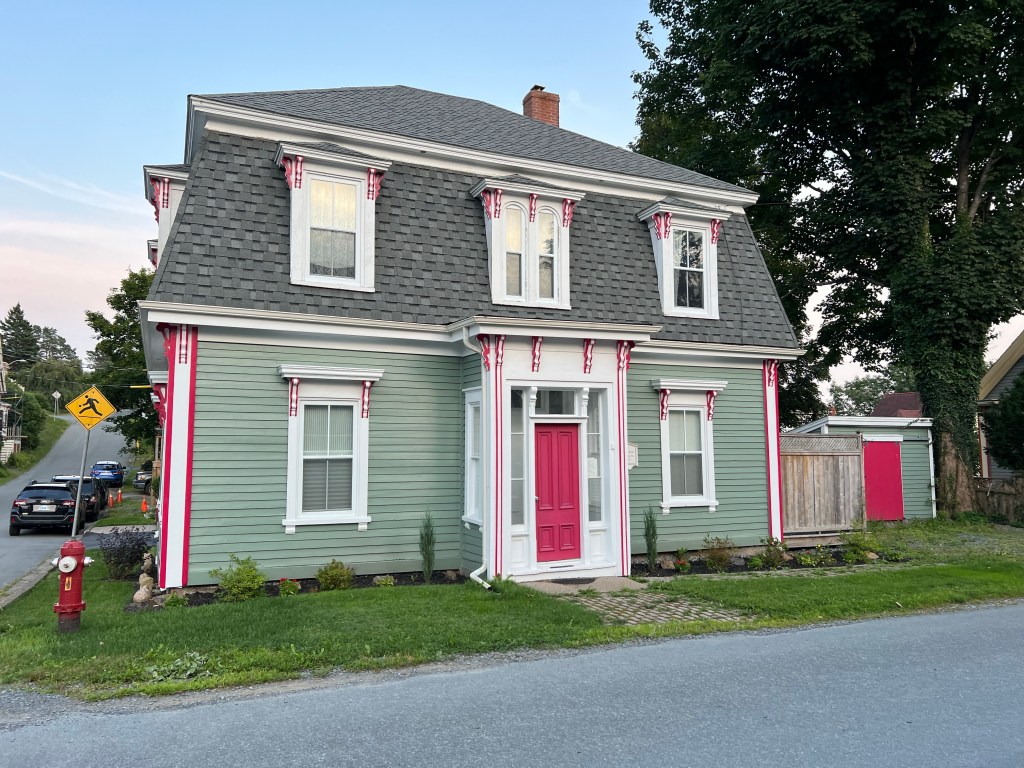
It’s lovely old houses, many with “bump out” rooms above the doors.
The way everything has to fit on the hills.
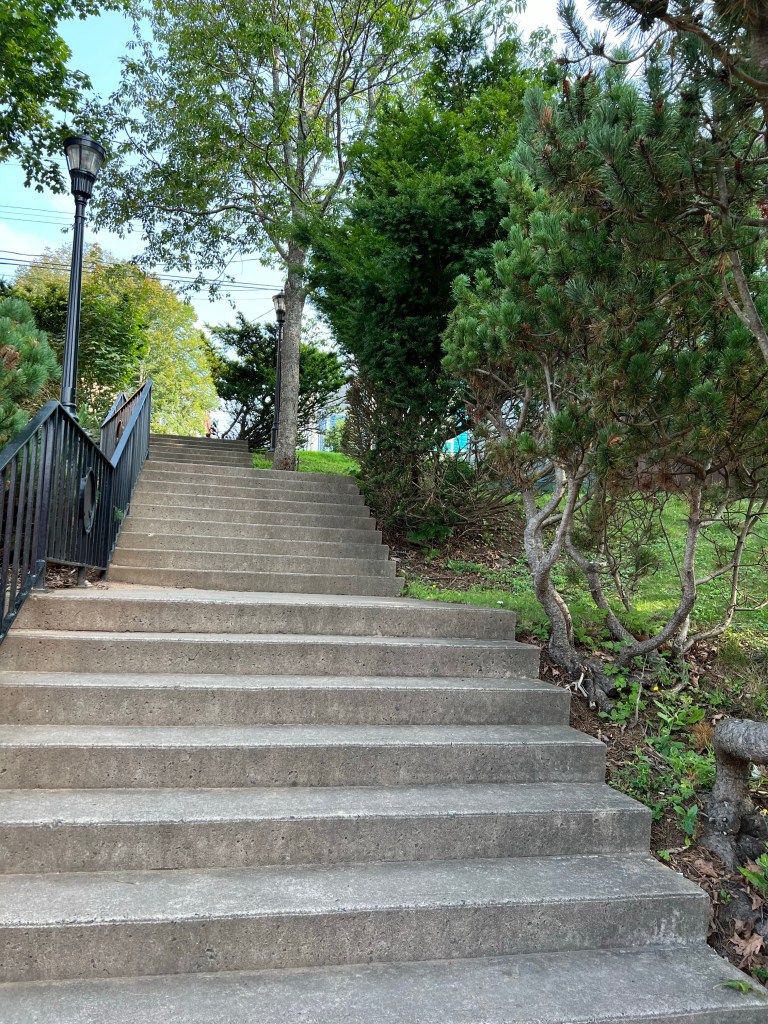
Come on in, if you don’t mind the climb. The stairs are just off to the left.
The central square lends itself to vistas,
but not to lawn bowling.
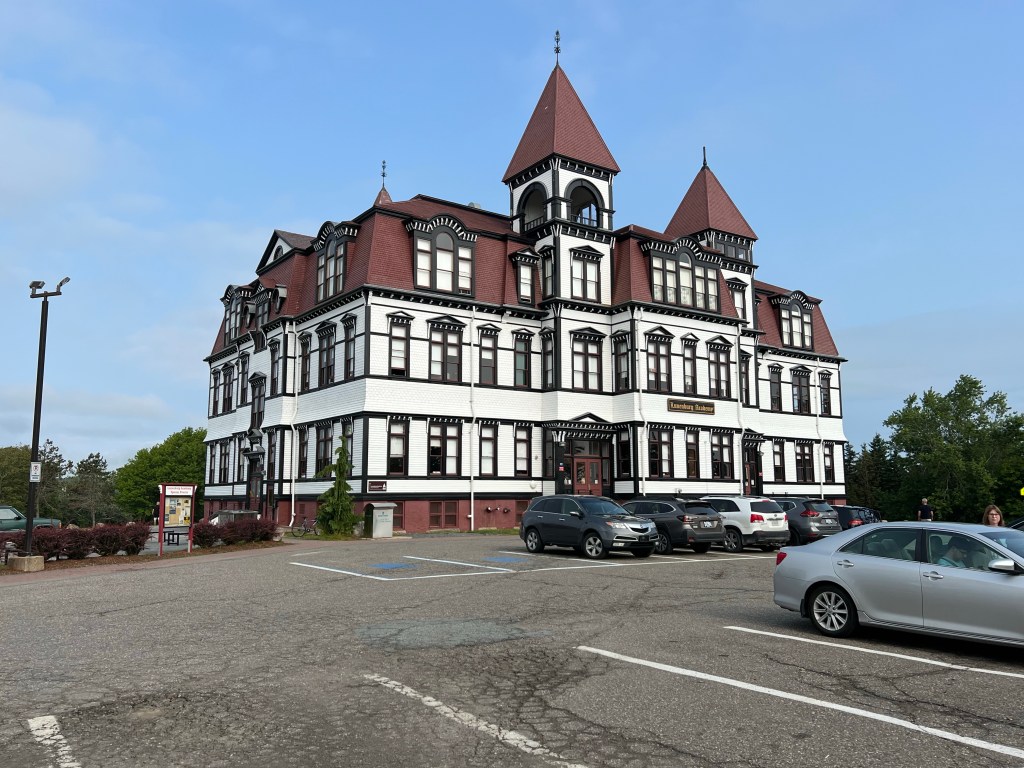
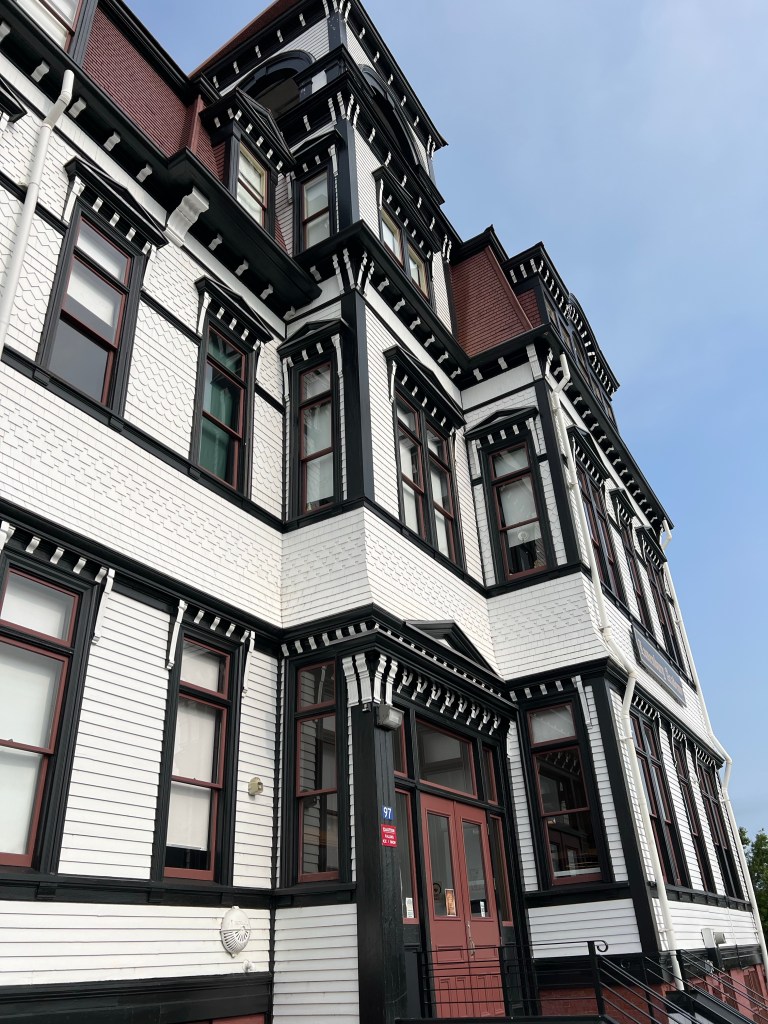
On the opposite hill from the campground sits the Lunenburg Academy. It is now the campus for a private English academy, a Music academy and a private primary school, but for many years it was the K-12 school for the town.
It got too expensive to maintain, you can imagine why.
We’re headed south along the east coast of Nova Scotia. I booked us into a quick 2 night stop at Spry Bay Campground and Cabins. The front part of the campground is for transients, like us, and it was pretty empty.
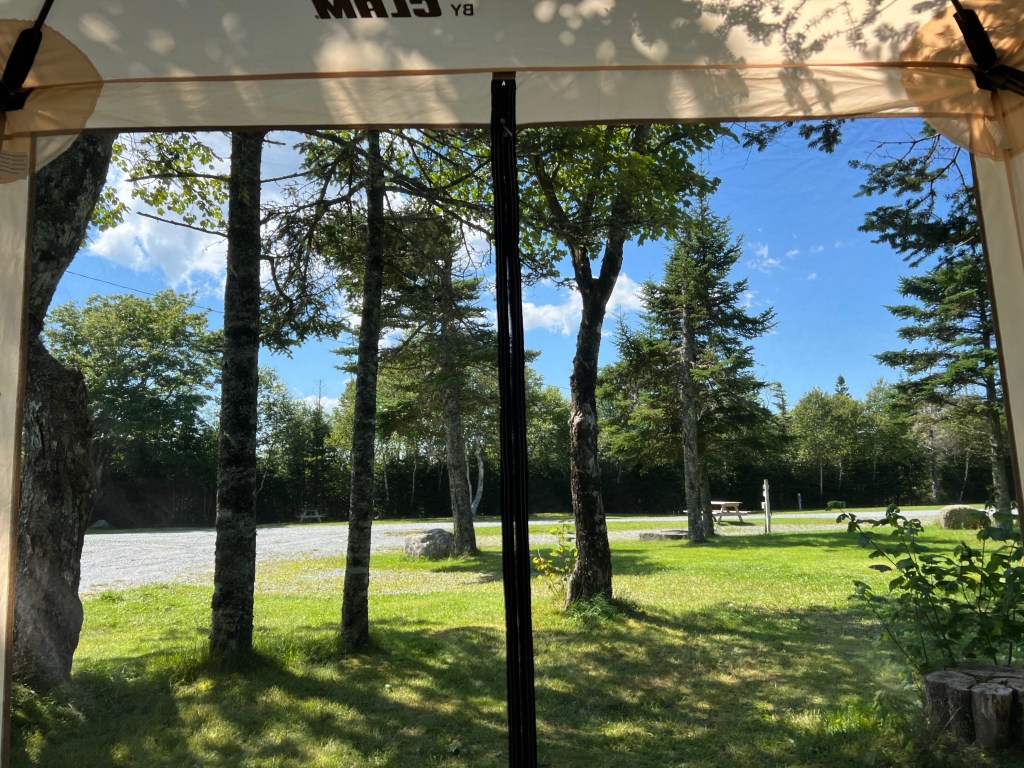
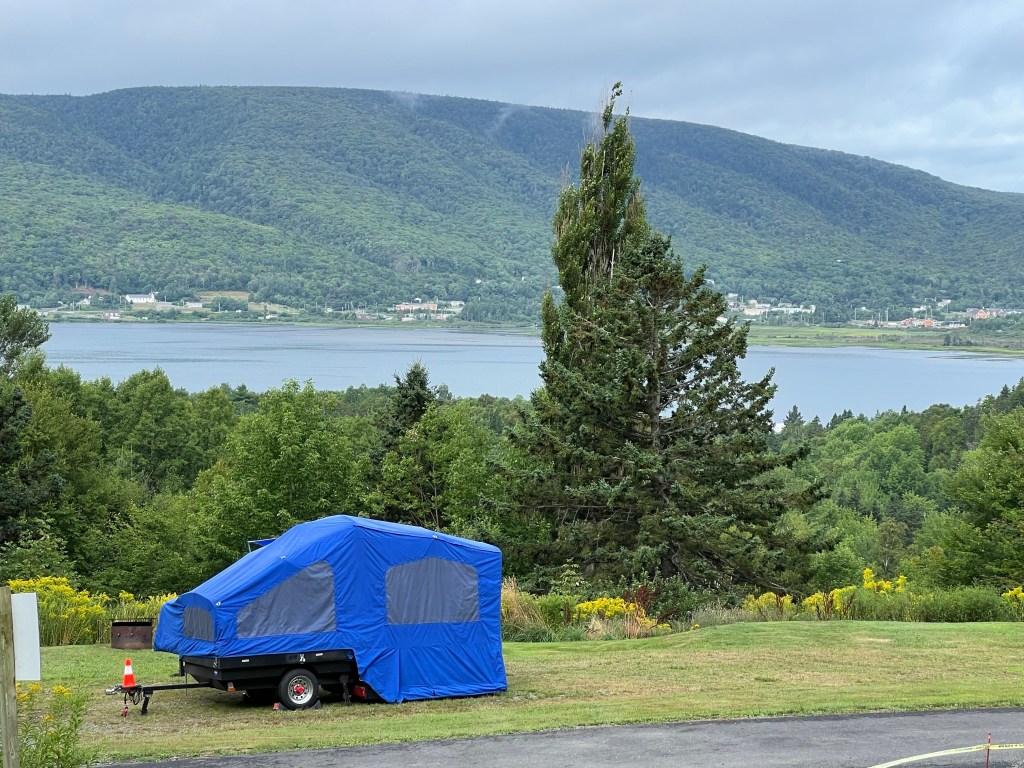
Matey and I had a nice view from the screen house.
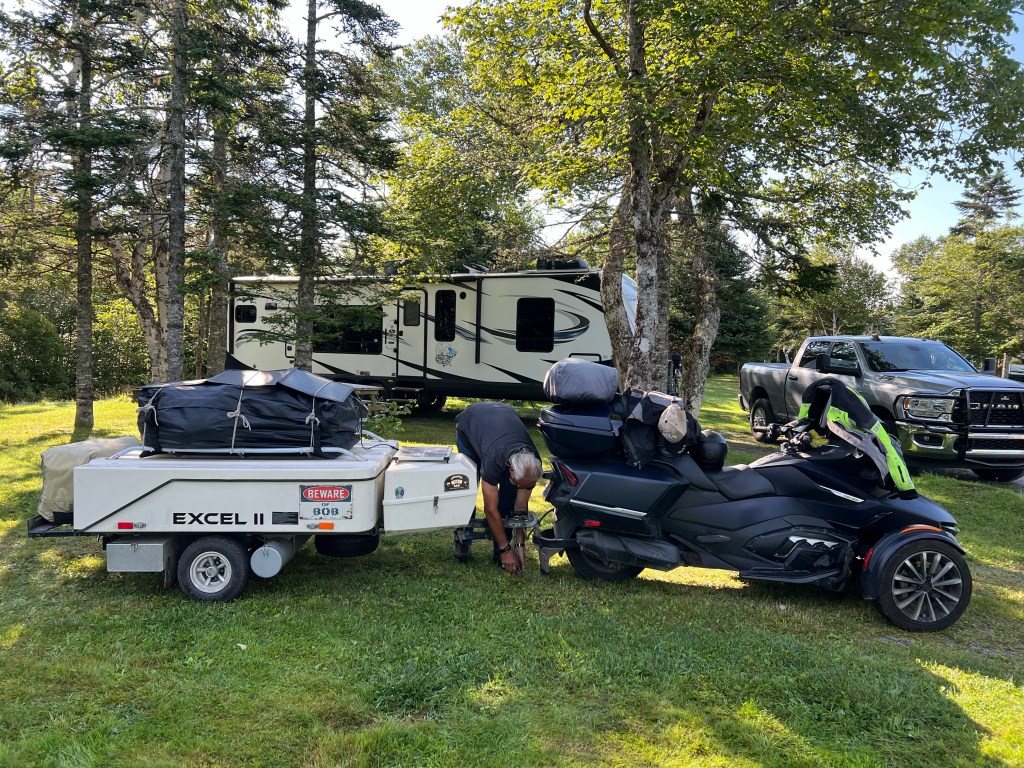
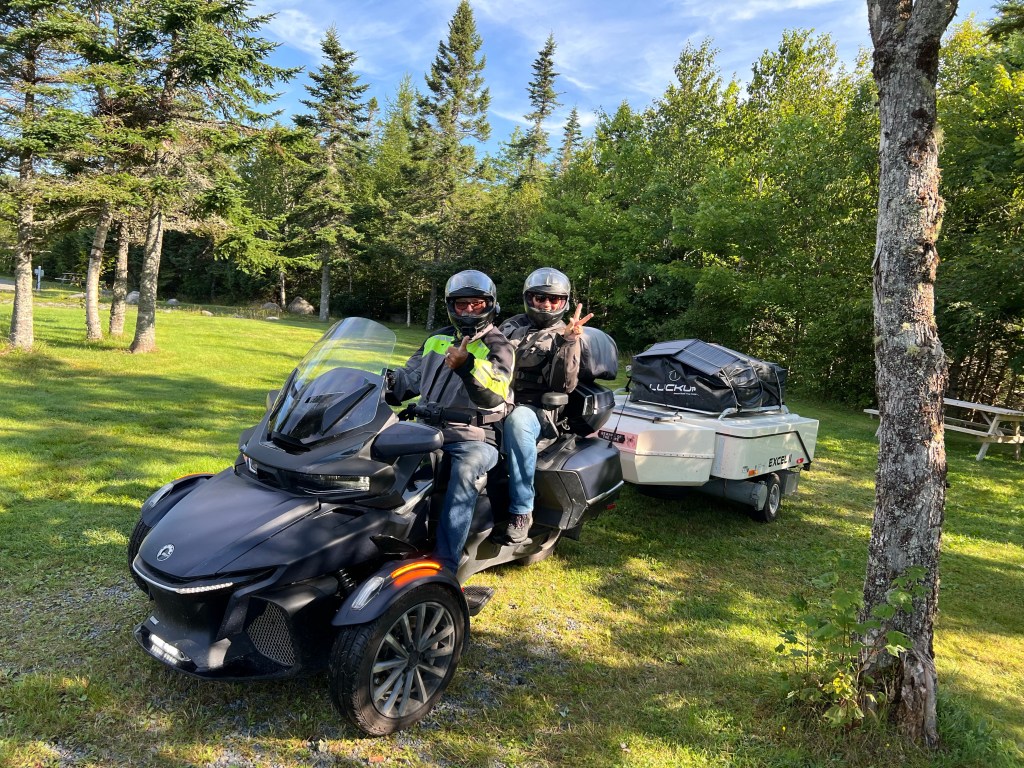
When we got back from our reconnaissance walk we found we had neighbors, Bob and Jodie, a really nice couple from Vancouver Island, British Columbia.
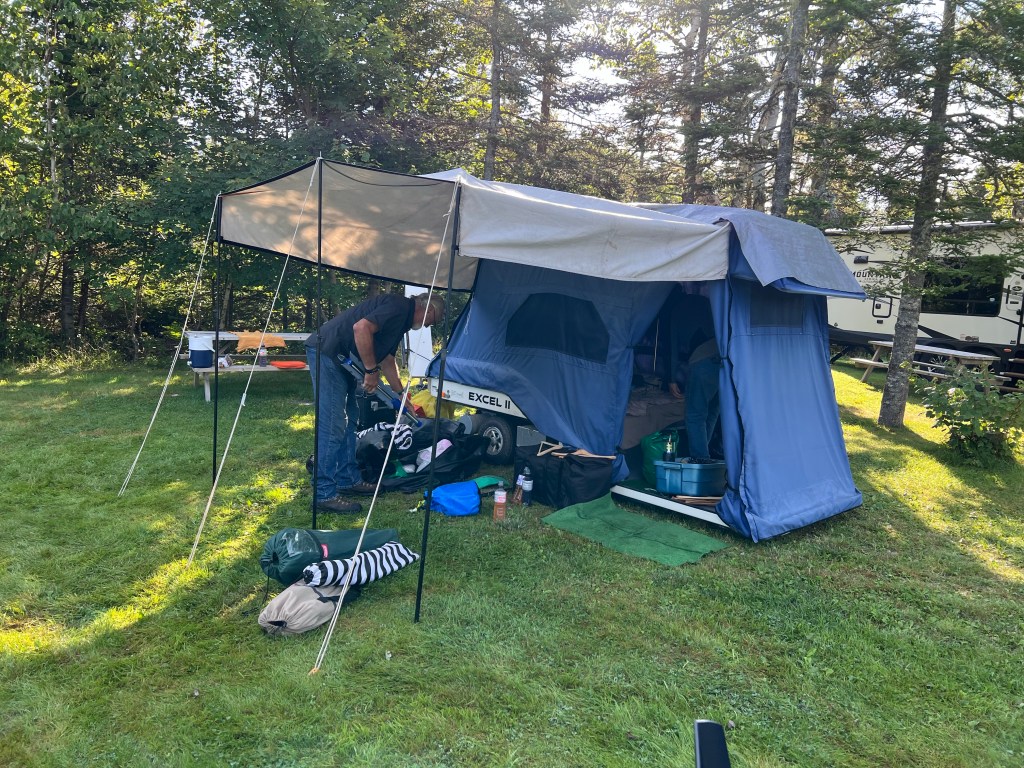
They were only here overnight and in the morning they packed up all their stuff, including a little refrigerator, a little generator, solar panels, camping equipment and a screen room into this tidy package…
and away they went on their Spyder. I was impressed.
I followed them out because I needed to do wash today and had found out that the laundromat here was out of service. The woman told me the closest one was 33 miles away in Head of Jeddore. So off I went to Danny’s Cafe and Laundromat. But when I got there it was Michelle’s Cafe and Laundromat and there was no laundry equipment. The nice young ladies assured me it would be in by September first. The next laundromat was another 23 miles.
But just before I got to Head of Jeddore I had passed the campground we stayed at in this area last year. I called them and for a dollar day use pass I could go in and use their laundry, so that’s what I did.
By time I got back and we put the laundry away and I had lunch it was three o’clock. I asked Bud if he would come walking with Matey and me at nearby Taylor’s Head Provincial Park. We were somewhat dismayed by the parking lot full of cars…probably 20 or so. We took off on a path through the woods…
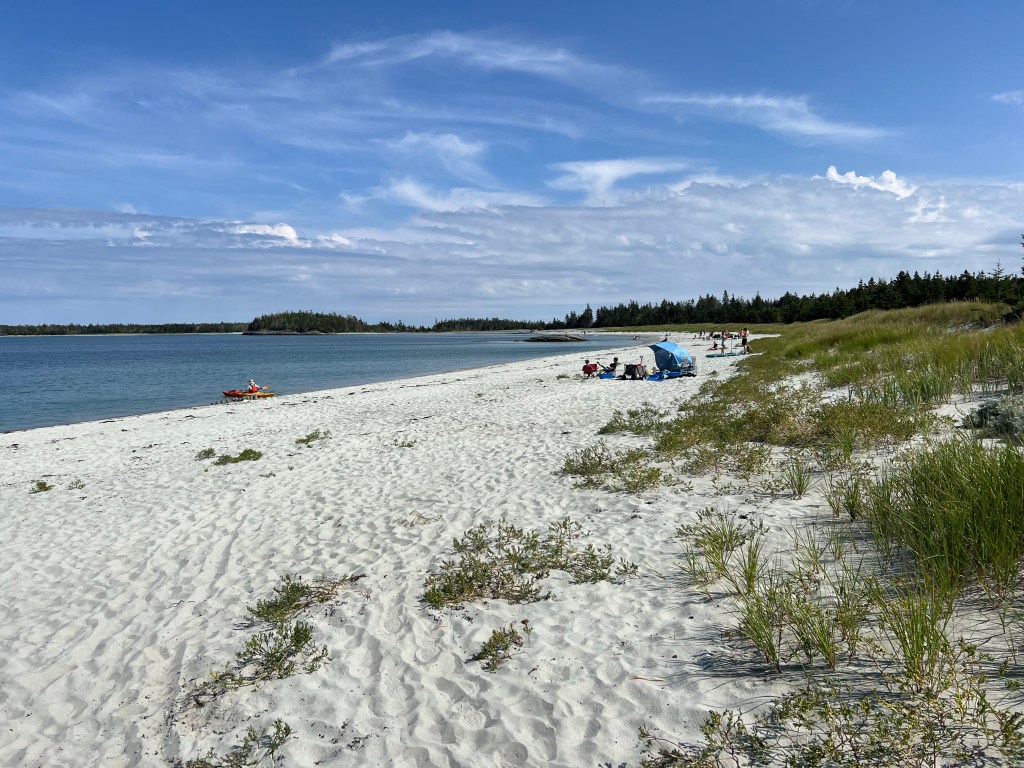
but it soon dumped us out on the crowded beach.
Well, yes, this seems crowded to us.
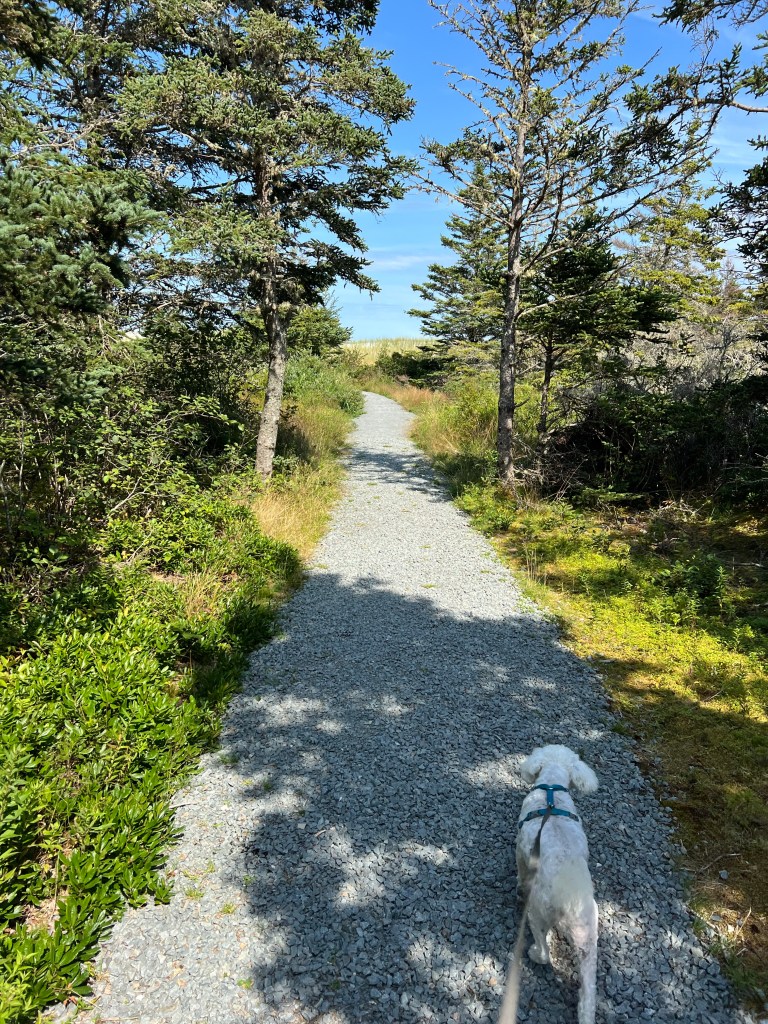
Anyway, we went back and found more trail through the woods.
That ended at this big rock and we had to walk out on the beach.
Matey doesn’t like walking in the sun, but wading in the ocean cooled him off when needed (it was about 72 degrees).
We walked down to this rocky place…
and I took a couple of pictures before we headed back.
On the way off the beach Bud spotted this whale vertebrae that someone had found and put up on a rock. I think that’s seaweed growing on it.
So on the whole it was a good day. Now that we’re back in the camper it’s clouding over and may rain. Nice timing.
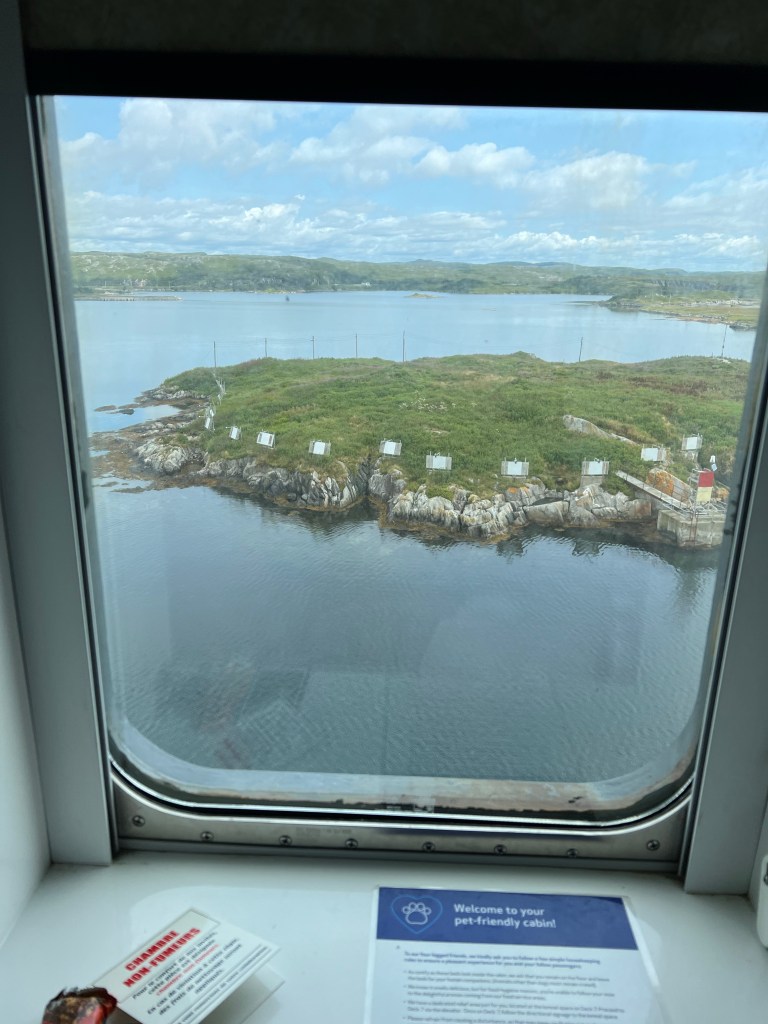
Yesterday we took the ferry back to Nova Scotia. The channel out of Channel-Port aux Basques is not any too wide. That little rocky island is well marked!
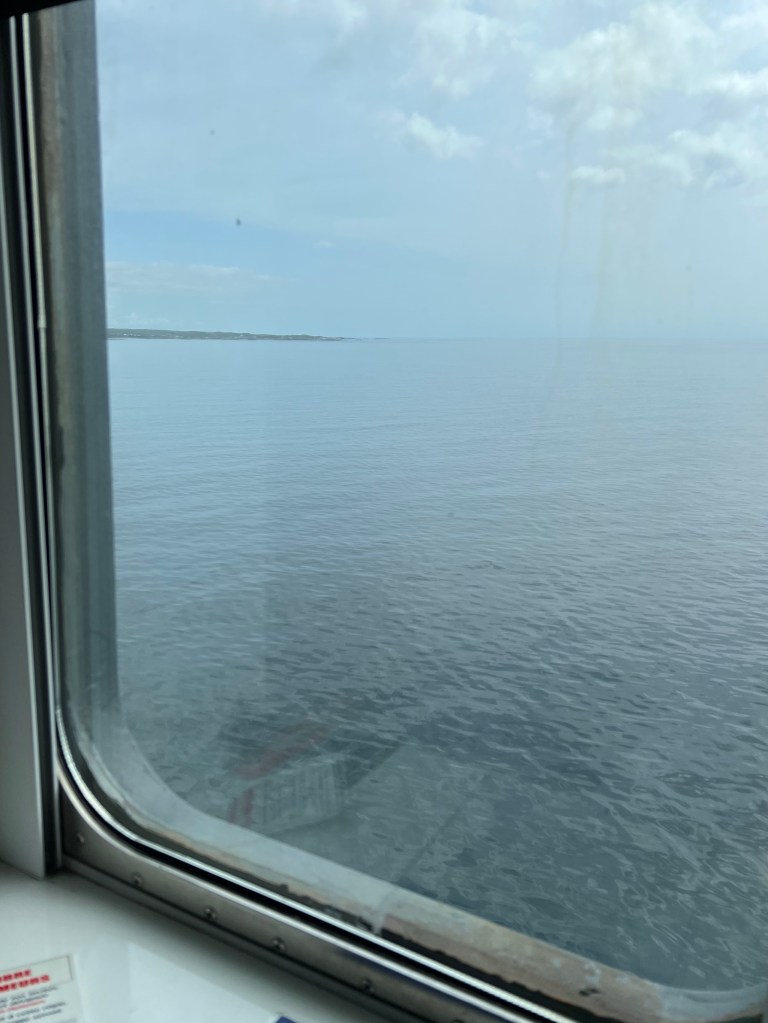
This was my last glimpse of Newfoundland.
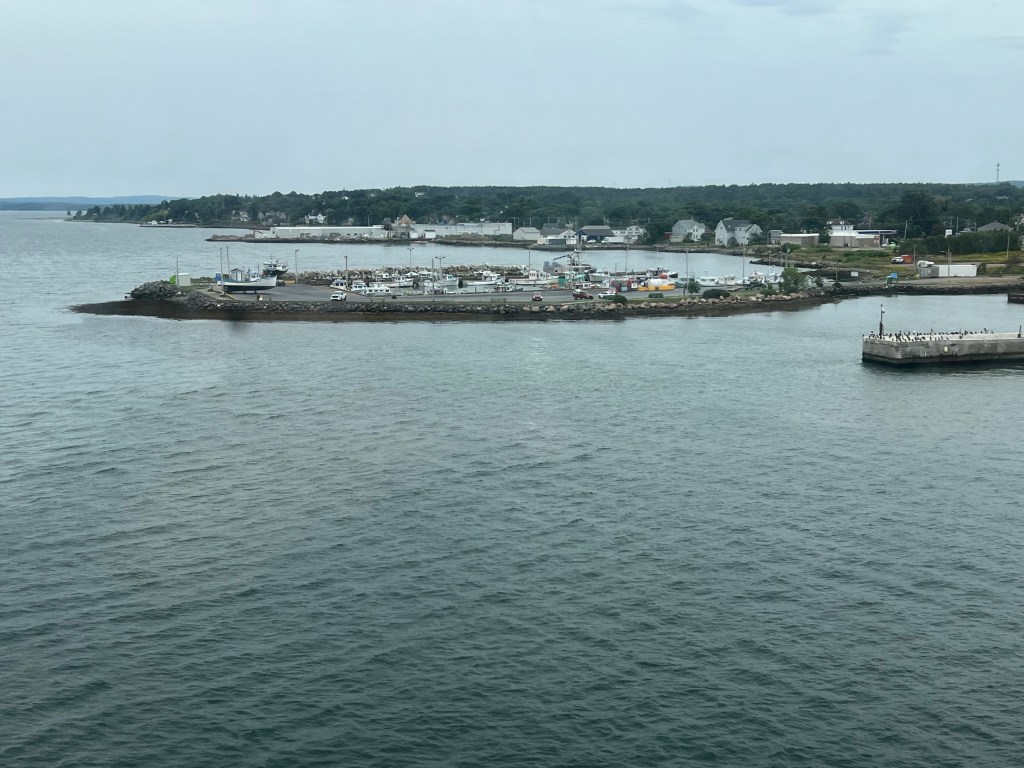
About six and a half hours later we finished the 110 mile trip to North Sydney, Nova Scotia.
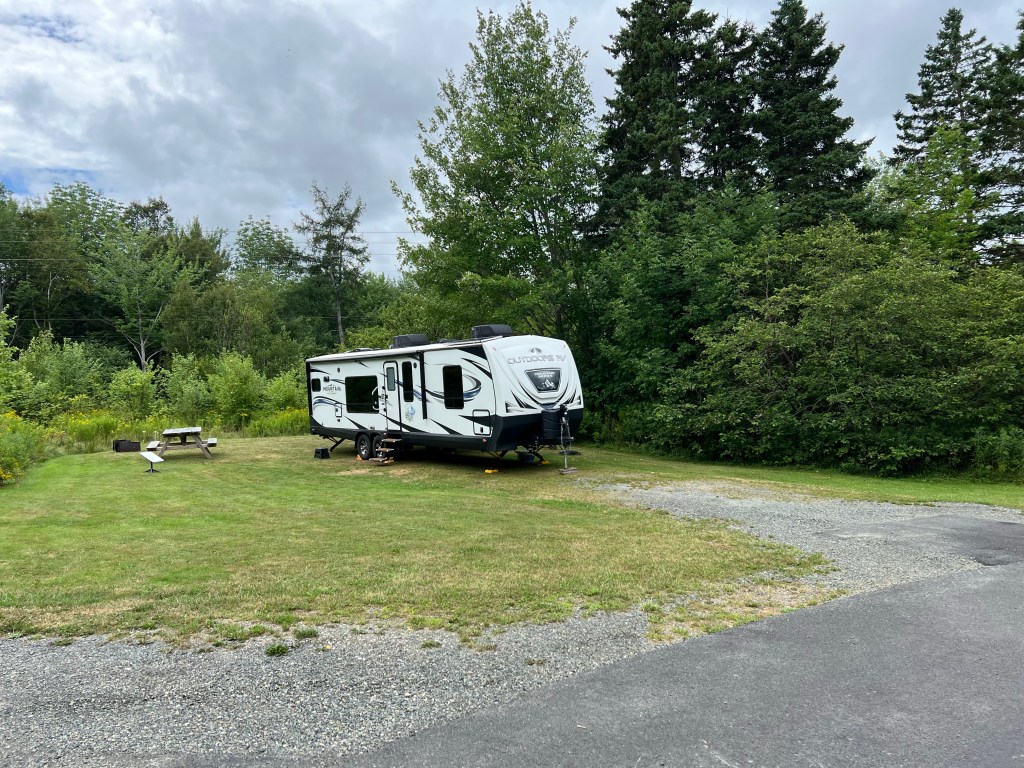
An hour’s additional drive brought us to this large, private campsite at Whycocomagh Provincial Park.
We are not far from the center of Cape Breton Island on an extension of the Bras d’Or Lake (Arm of Gold Lake), which isn’t a lake at all but is, as advertised, Canada’s inland sea.
This morning Matey and I took a walk on one of the park trails and it was immediately obvious that we were not in Newfoundland anymore.
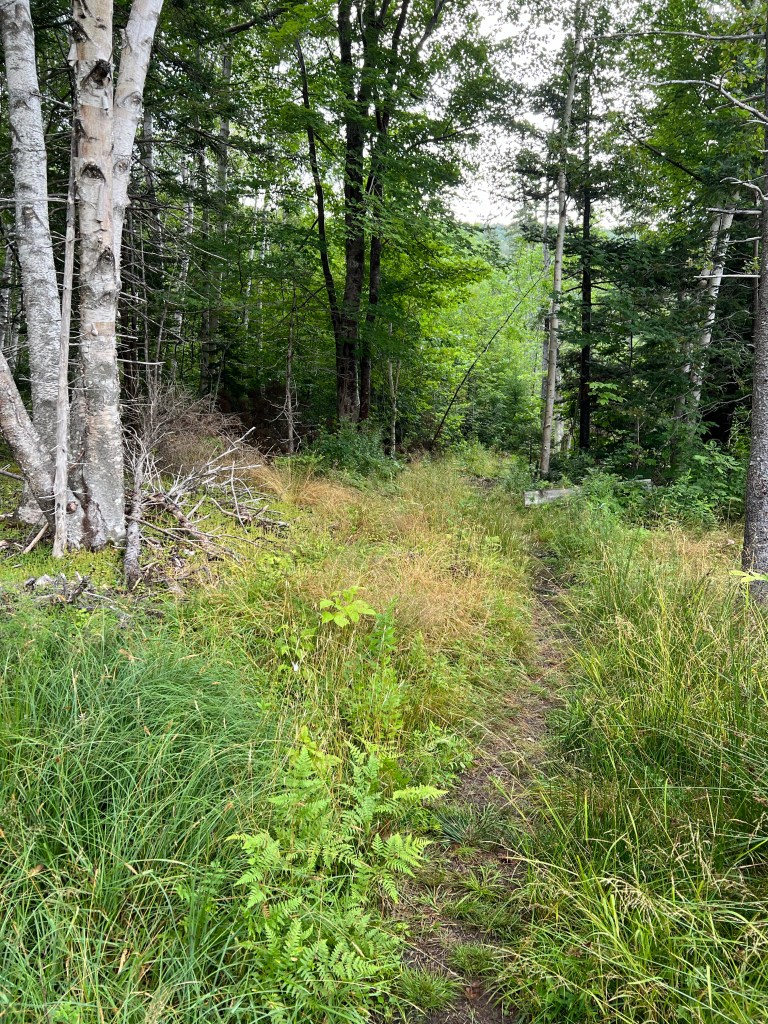
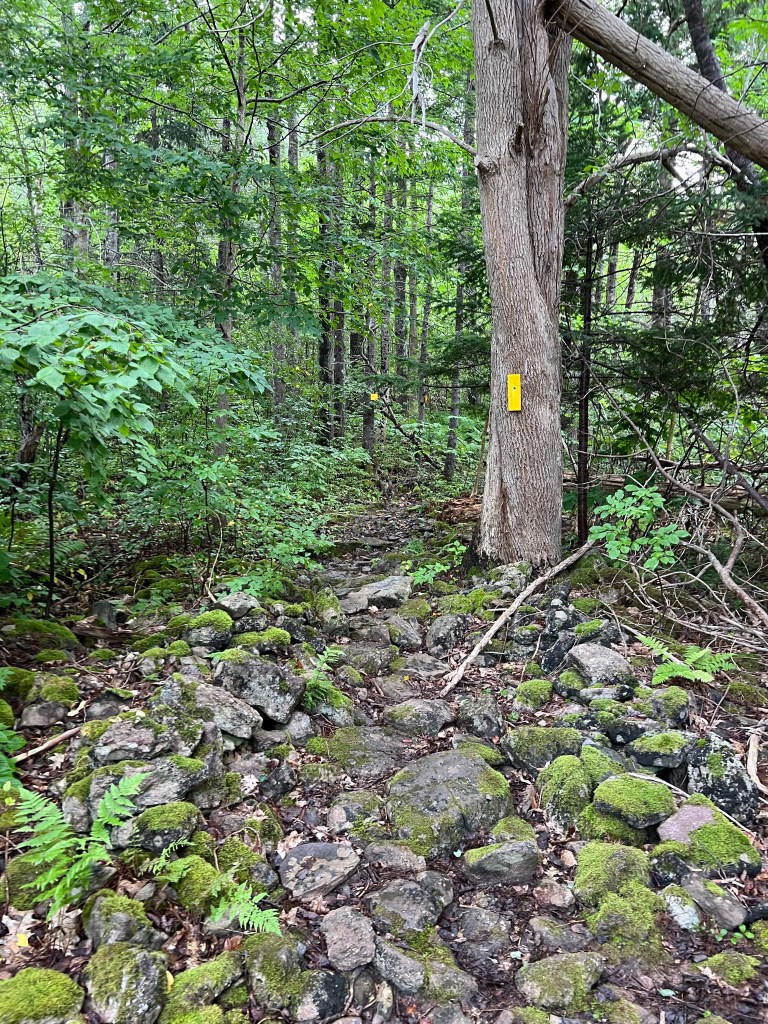
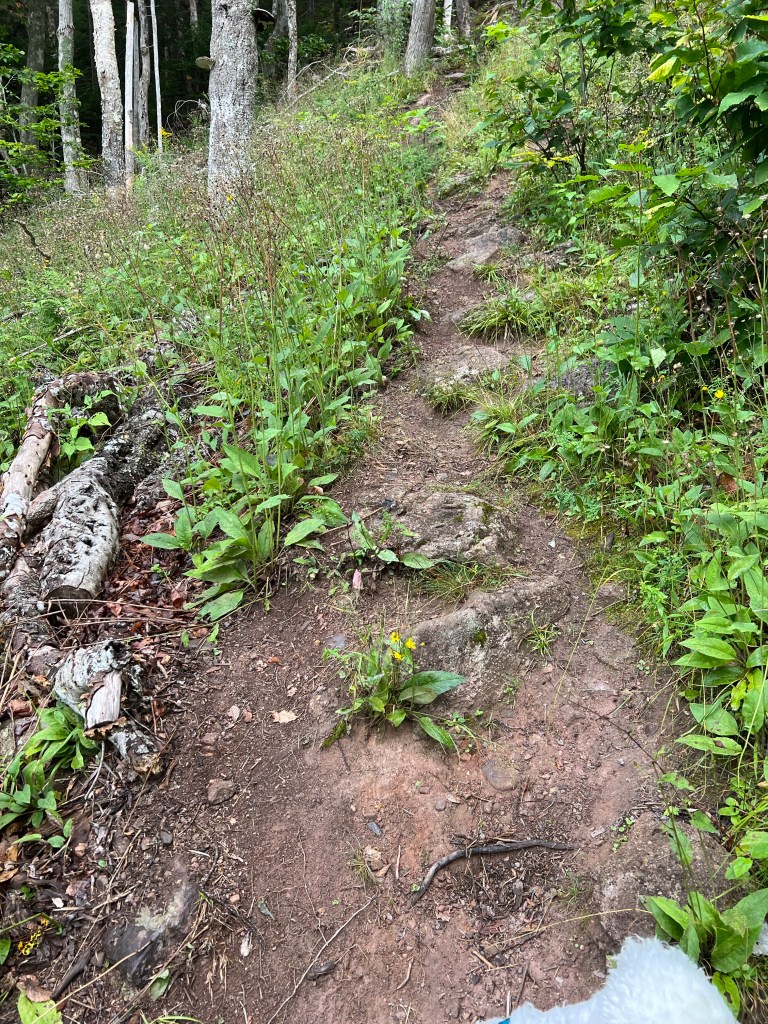
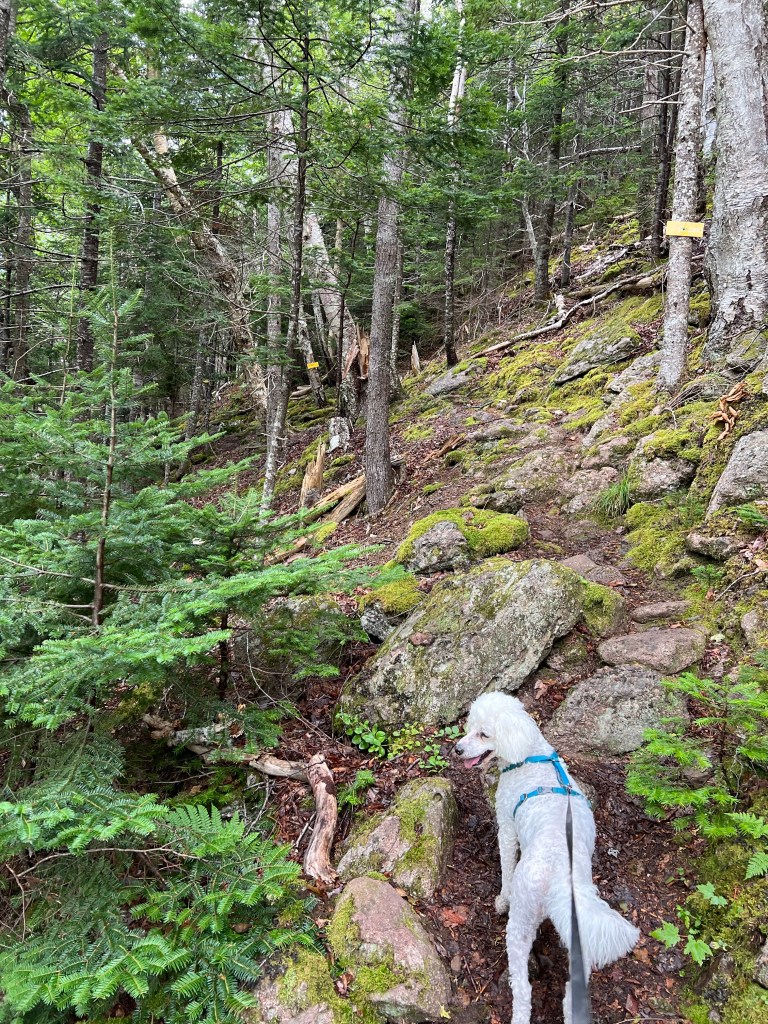
The trail was well marked…
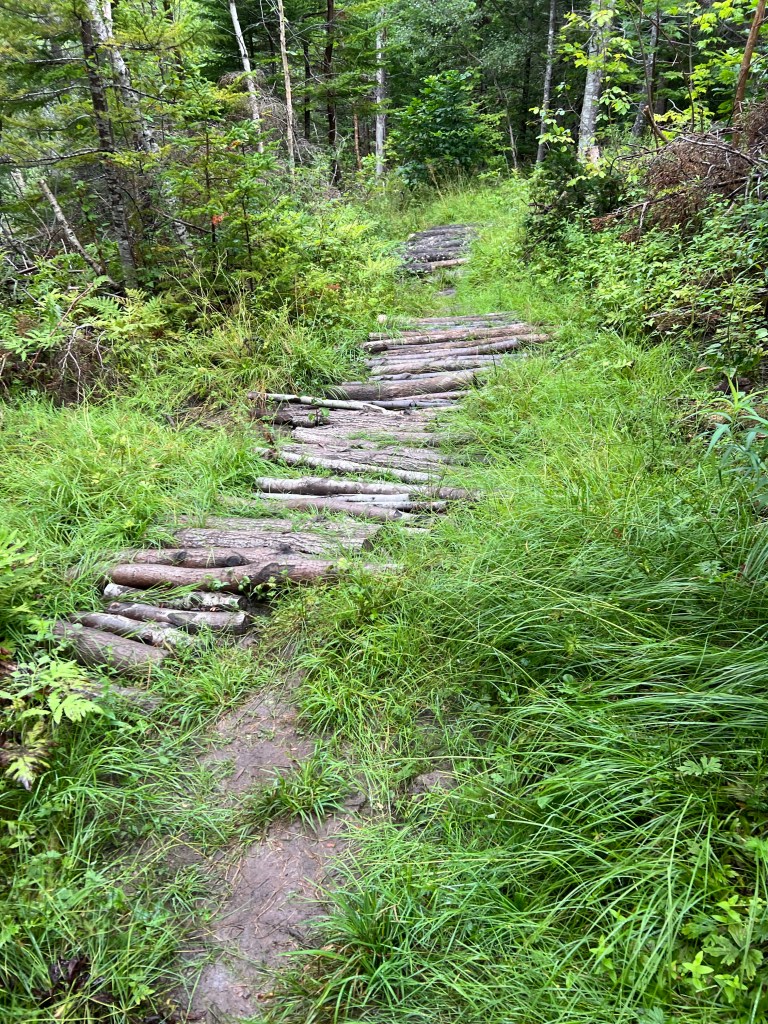
but the construction for wet areas…
or steep hills was lacking.
There were times I wondered if a 74 year old woman and her 14 year old dog should be out here alone. I had to place every step.
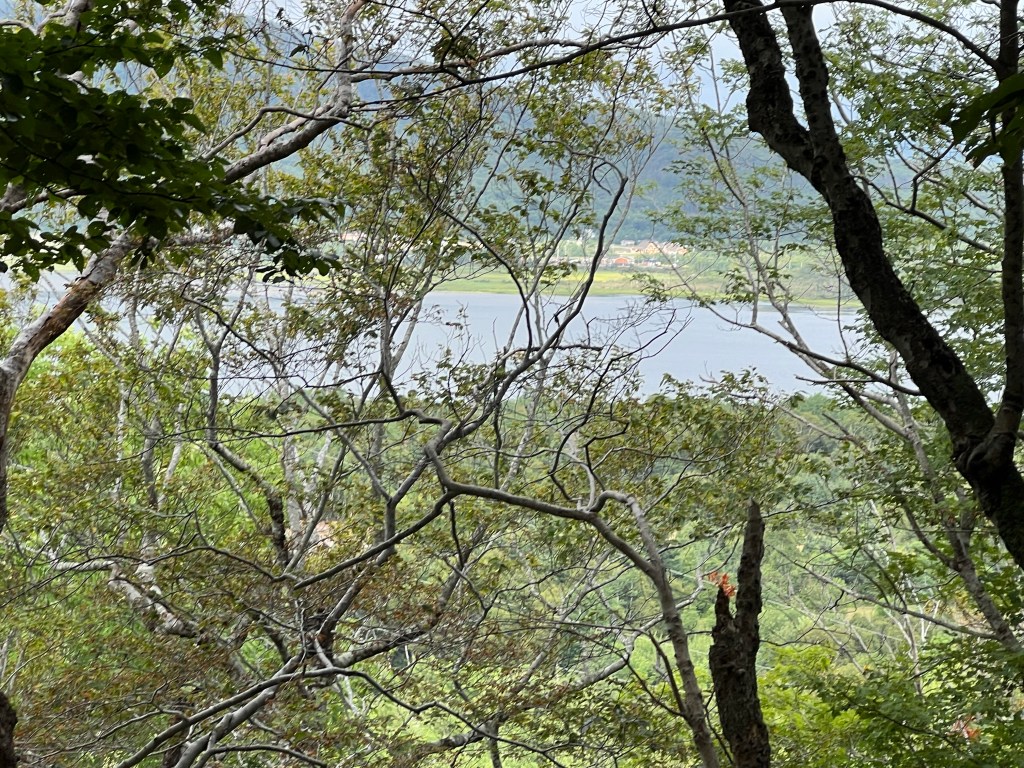
But we made it and were rewarded with glimpses of the Bras D’Or Lake. There are overlooks on another trail but that trail is labeled difficult whereas this one was moderate, so we may not get to those.
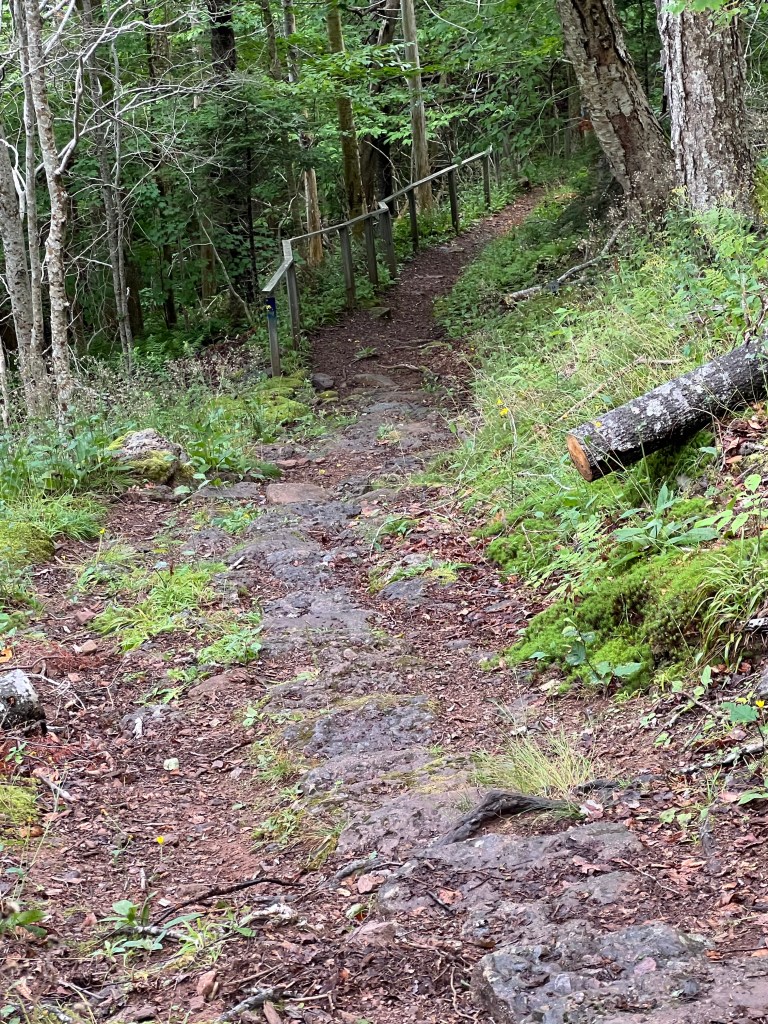
We walked back on a bit of that trail and it seemed to be more used and a bit better constructed; those are stone steps down this pretty steep slope.
We got our best view of the water from the upper sites in the campground.
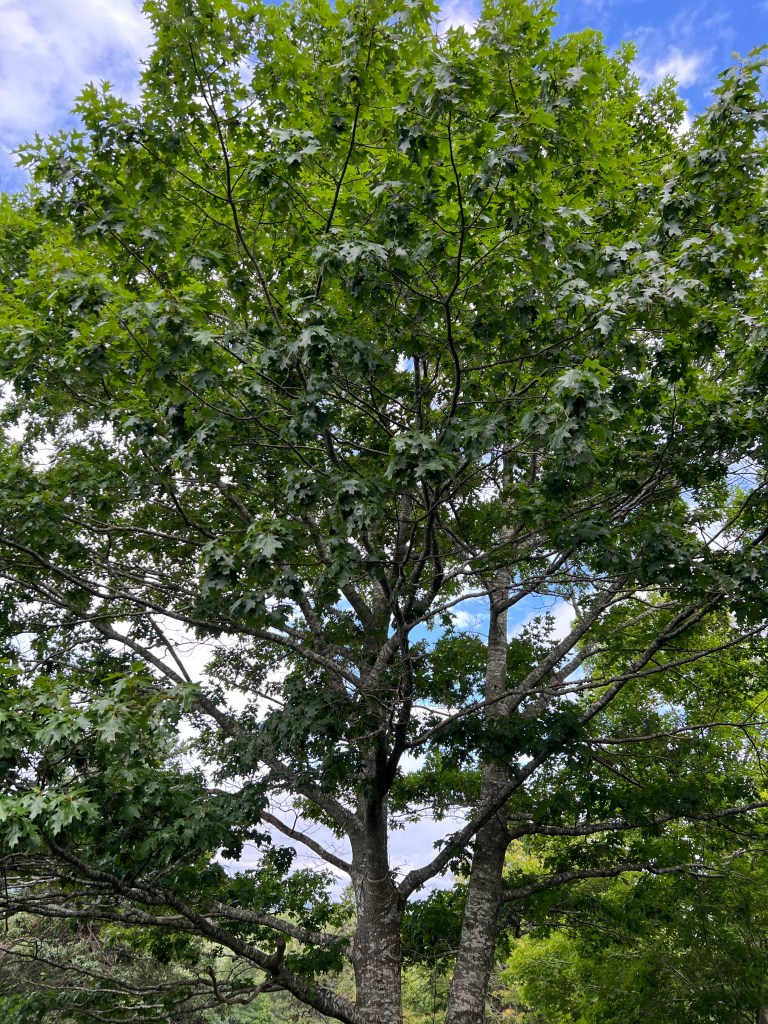
Even though I miss the trails of Newfoundland, Nova Scotia has huge oaks…
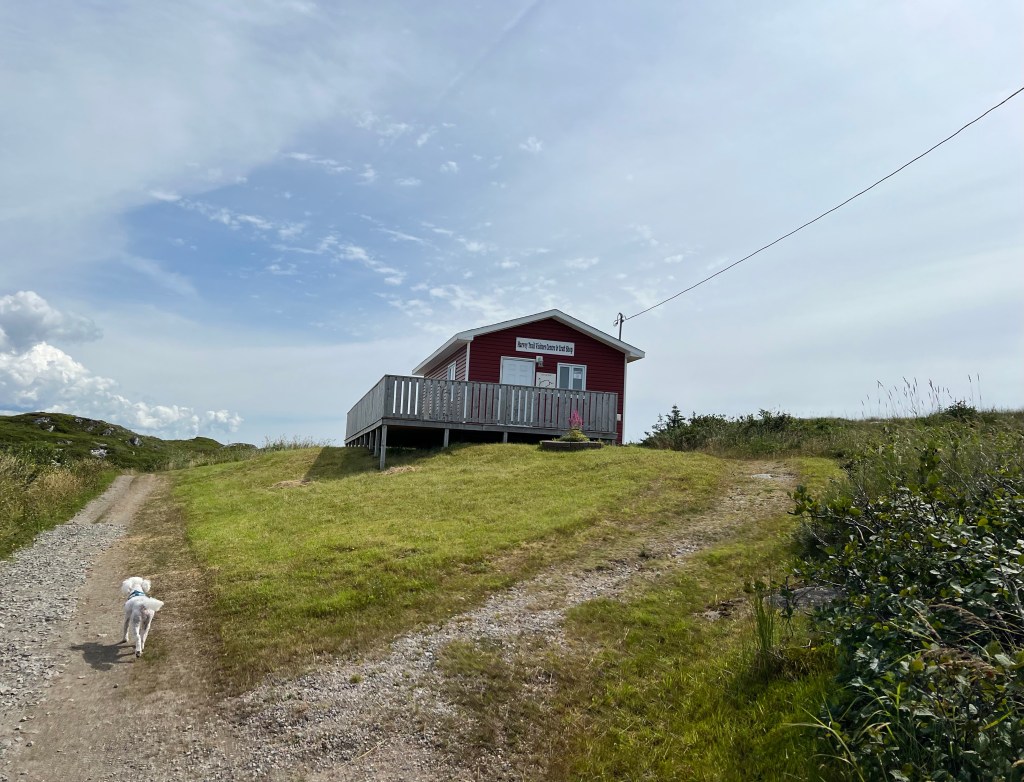
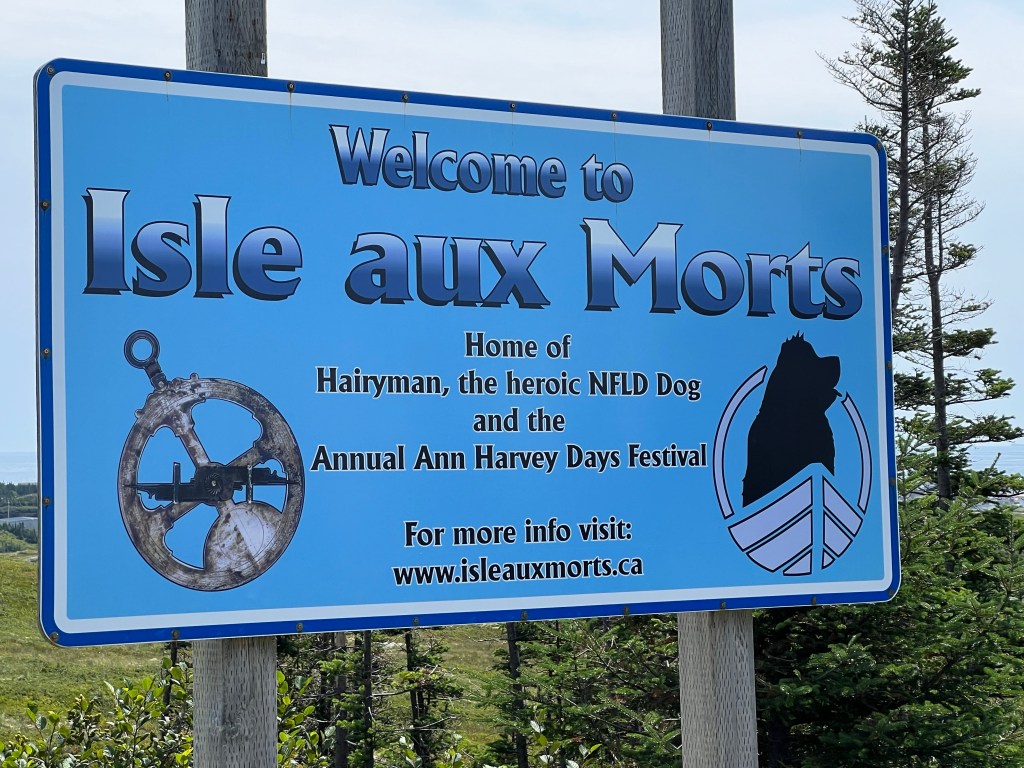
These are our last days in Newfoundland and we are back at Grand Codroy RV and Tent Campground to wait for our ferry out on Friday. Today it stopped raining so we drove to the south coast to a trail we hadn’t been on yet. This was the Harvey Trail in Isle aux Morts.
We had a lot of trouble finding it, some of the signs were missing. When we got there the information center and gift shop were closed and there was a sign saying the trail was washed out.
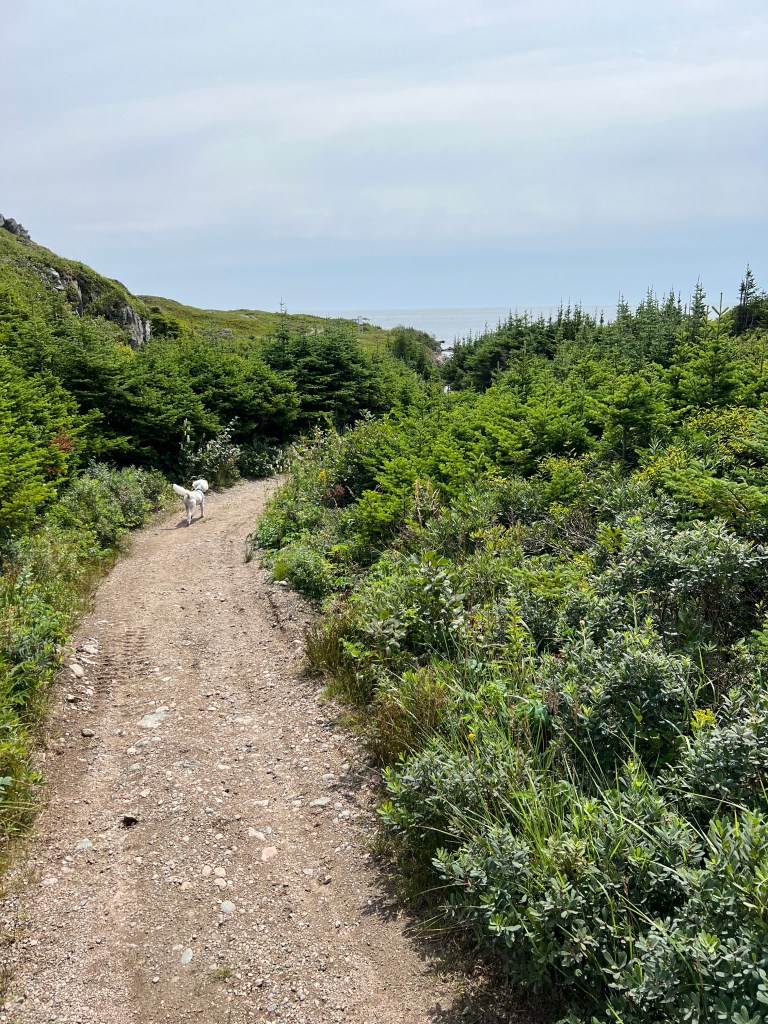
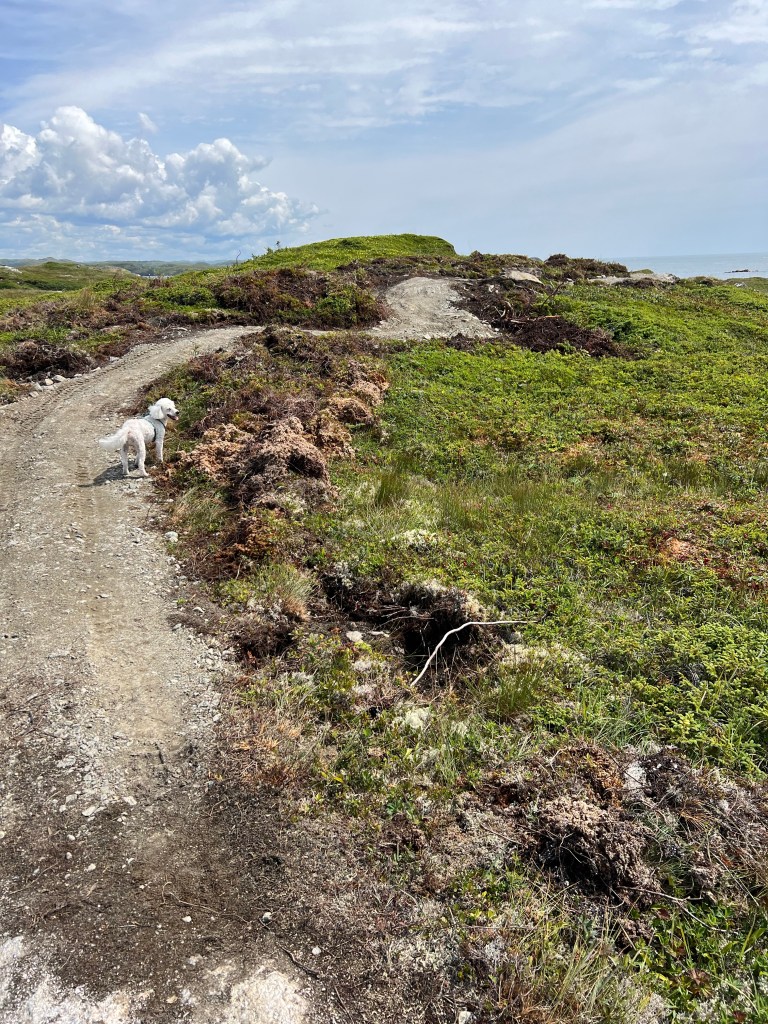
It looked okay here so we decided to take it as far as we could.
Along the way there were signs about George Harvey and his family who lived alone on the Isle aux Morts in the early 1800’s.
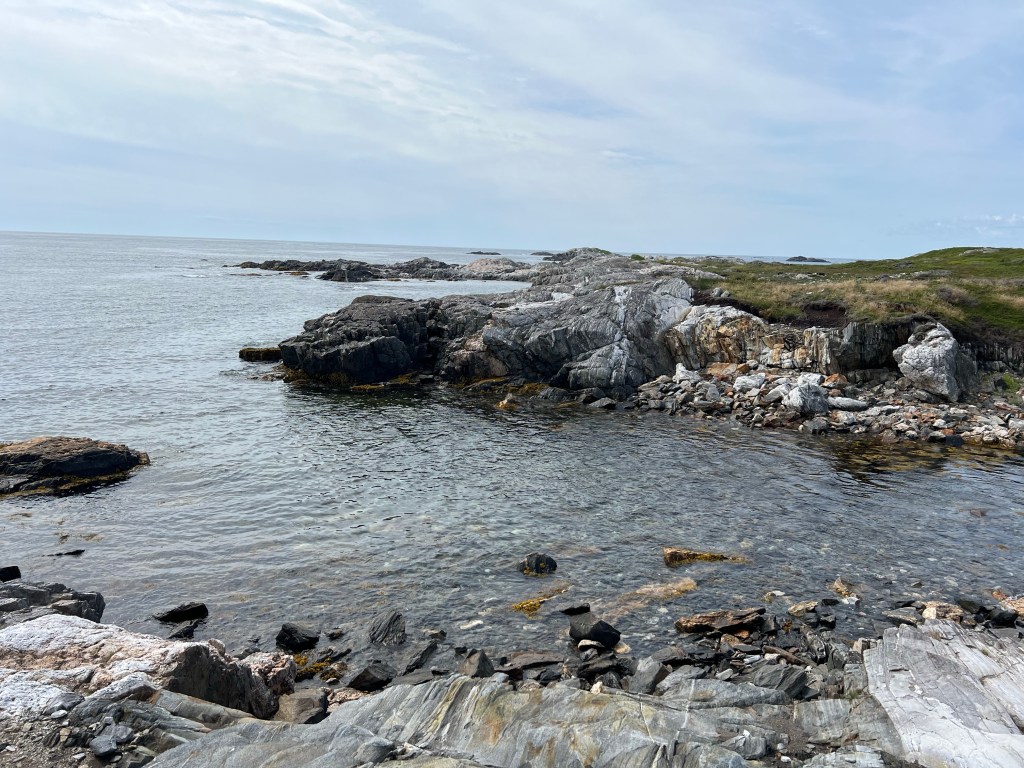
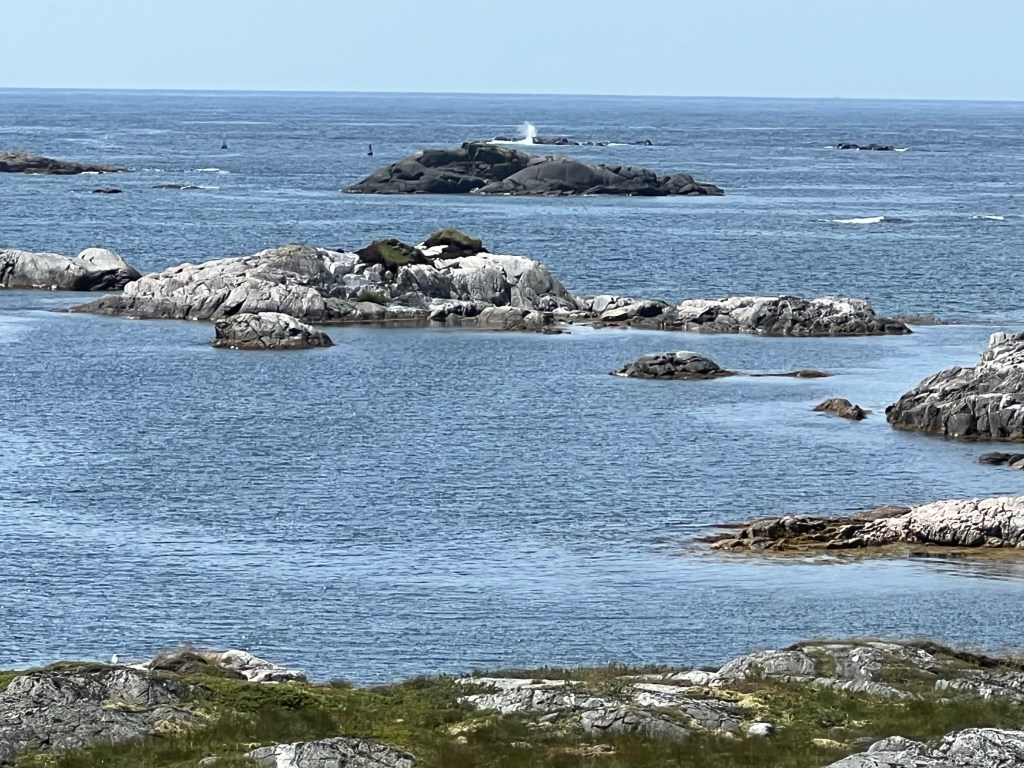
This is a very rocky granite coast and unlike other places the water stays shallow. There are many “sunkers”, which I take to mean rocks that are just under the surface. Even with the two navigation buoys you can see here, this would be a hard channel to enter. There have been at least 3,000 shipwrecks along the southwest coast of Newfoundland and Isle aux Morts has seen more than its share.
George Harvey and his family rescued about 200 people from two wrecks. I saw signage for the wreck of the Despatch in July of 1828. The seas and winds were terrific and the ship could not keep off shore. Seeing the nearby lighthouse at Rose Blanche the captain thought it was the Cape Ray light and ordered the ship run to shore.
Instead of coming up on the sandy shores of the Codroy Valley you see ahead of us in this photo, he came up on the granite shores and the ship hit hard on Wreck Rock.
George Harvey, his oldest two children, Ann and Thomas (teenagers) and their Newfoundland dog, Hairyman, set out as soon as they could rowing their 12 foot punt. It was still too rough to approach the ship but Hairyman swam to them with a line tied to him. Those on the ship pulled him aboard and then sent him back with a second line from the ship. The Harveys managed to row ashore and somehow find a place to secure the line from the ship. Then using breeches buoys set up by the crew they were able to haul all of the passengers and crew to shore, the last of the crew just as the ship was breaking up and sinking. Then the Harvey’s took in these 163 people and somehow gave them food and shelter until the weather calmed and another ship could come for them.
All this happened almost 200 years ago, but it’s still remembered and honored by the people of Isle aux Morts, many of whom are no doubt descendants of the Harvey’s (there were nine kids).
And if any of you know the story of the planes that were diverted to Gander when the US closed its airspace after 9/11, you know that the tradition of open-handed hospitality still thrives here.
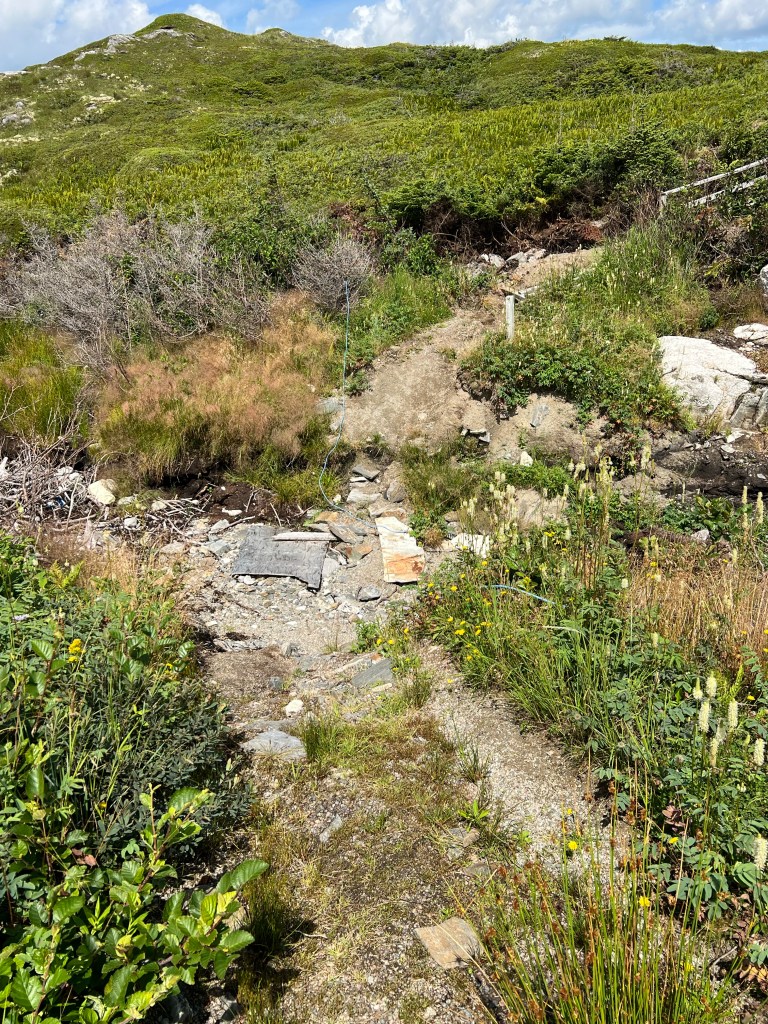
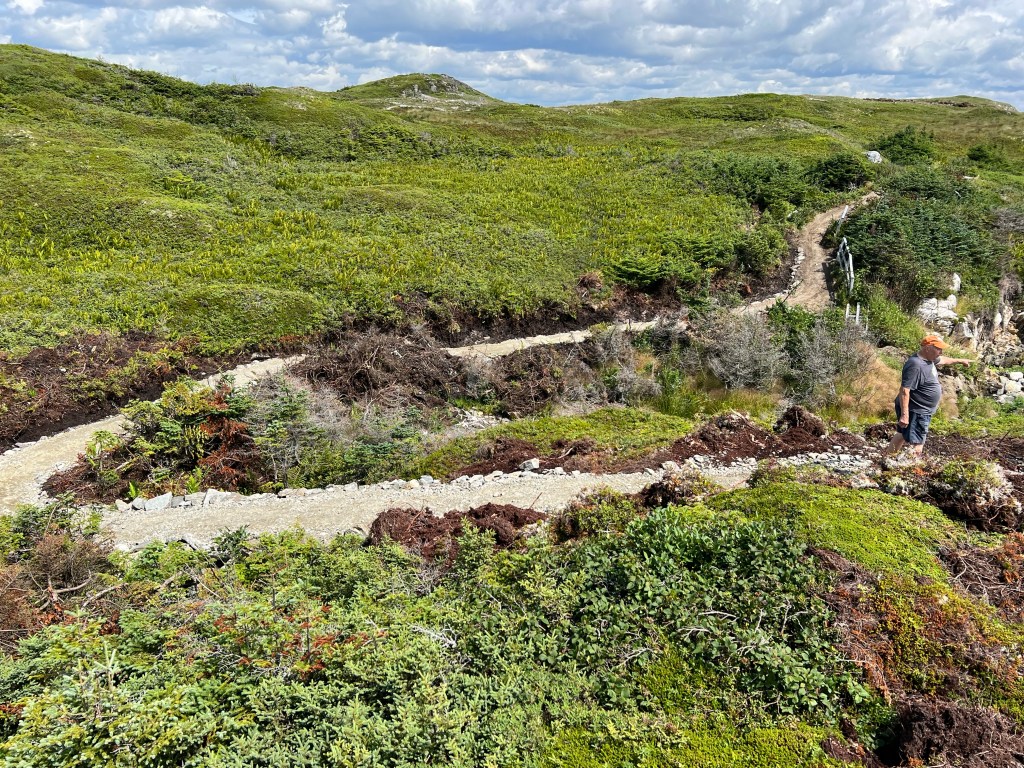
Meanwhile, we continued on the trail and this was obviously a newly constructed section.
We found out parts of the trail had been destroyed by Hurricane Fiona in 2022.
Whole new sections were being built.
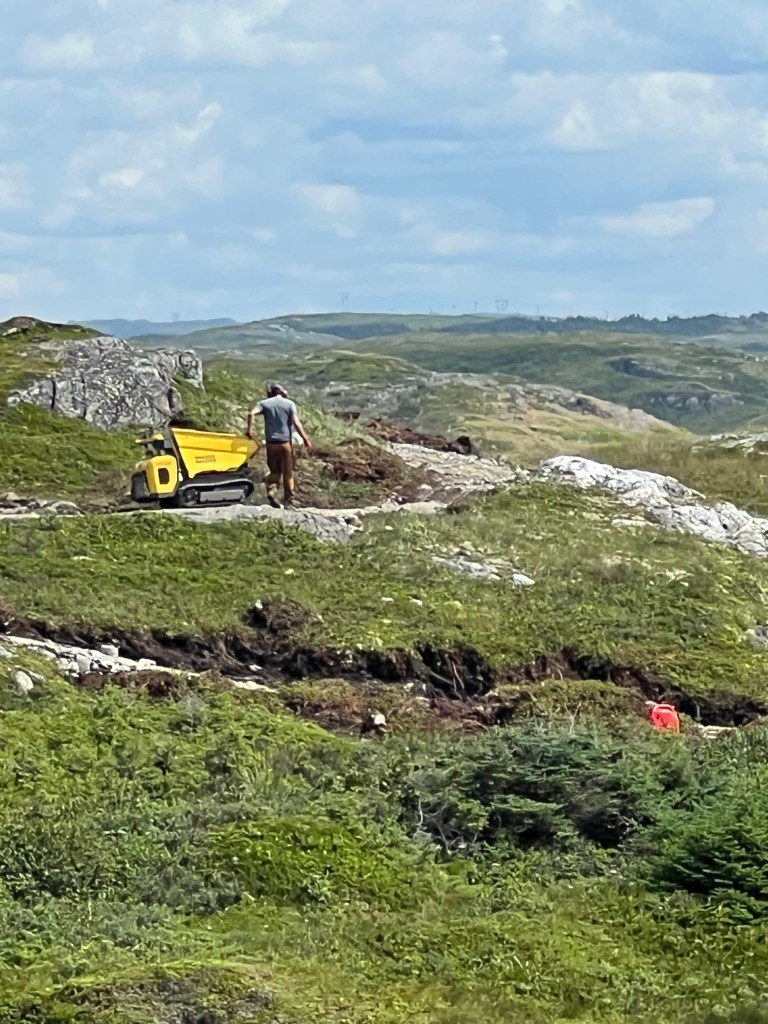
This guy was still working on it using this motorized wheelbarrow.
And all this is being done by the folks from this very pretty and very tiny town.
Heritage, beauty and kind people who work to share their stories and places with you. That’s why I love Newfoundland.
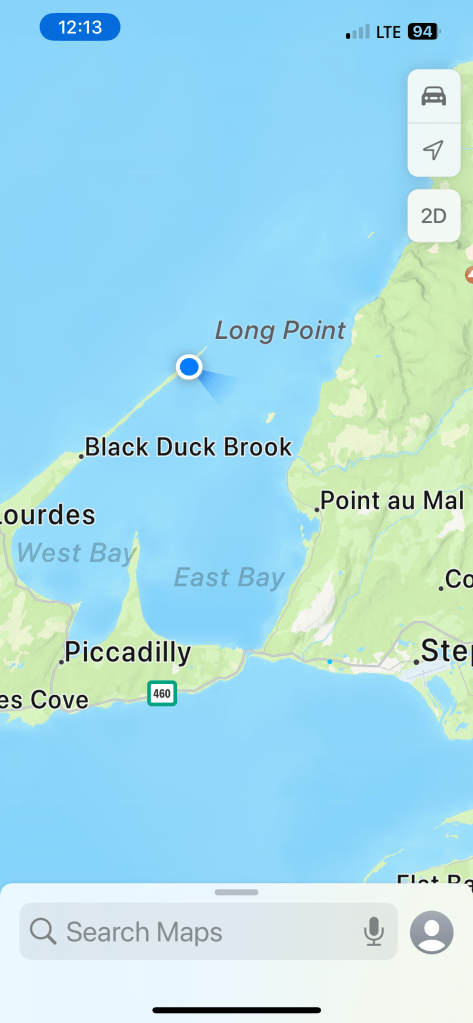
Bud didn’t want to drive all the way out on the peninsula again just to see Long Point, but I persuaded him. You never know what you might find. (On the way out we stopped at Gravels Pond and I checked the water, brackish, figures.)
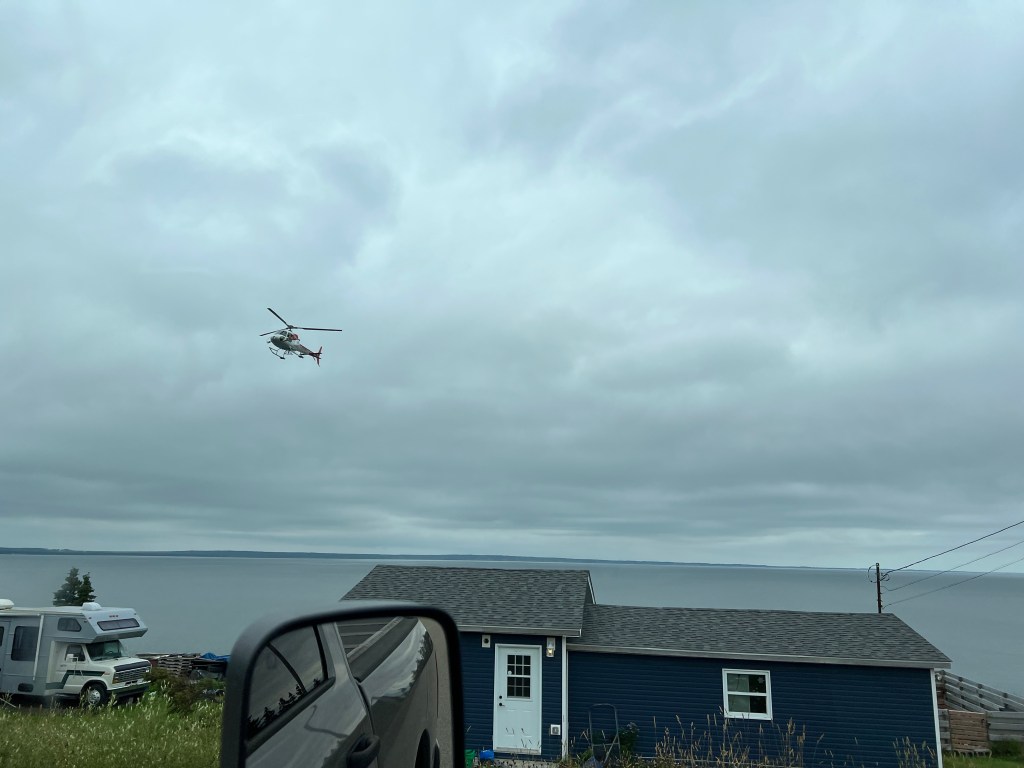
The first thing we found was this hovering helicopter. It was just hanging offshore at a tiny town. There were other pieces of search and rescue equipment parked around, but it looked more like an event than a rescue operation. Maybe a fundraiser.
A disclaimer here, the next pictures I took on the way out, so the orientation is wrong. On the way down the peninsula the open ocean was on the left. I am presenting them to you in the order we saw them on the way in, even though I waited to take pictures until we were leaving.
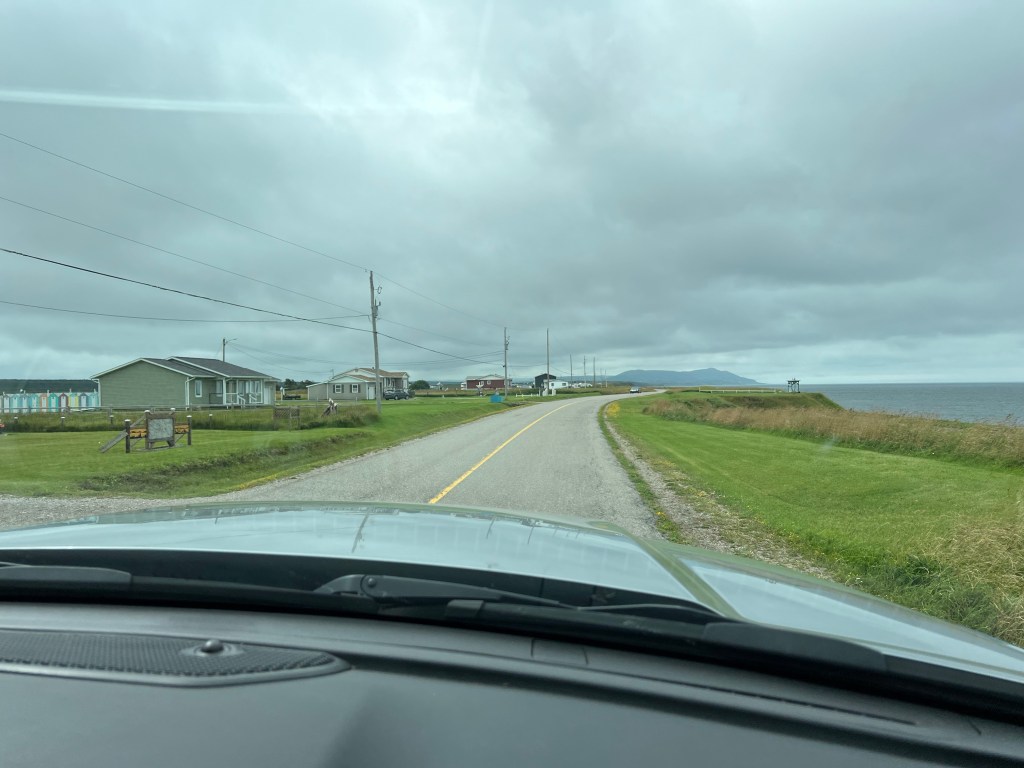
So, we turned right to go northeast on route 464. The map program said it was 14 miles to Blue Beach, at the end of the road. First we came to the town of Winter Houses (Maisons d’Hiver). It turns out that’s exactly what these were in the late 1800’s. Families who lived and fished in Black Duck Brook decided to build houses here, which used to be forested, to get away from the winter winds. The forest is gone but the houses and the name remain.
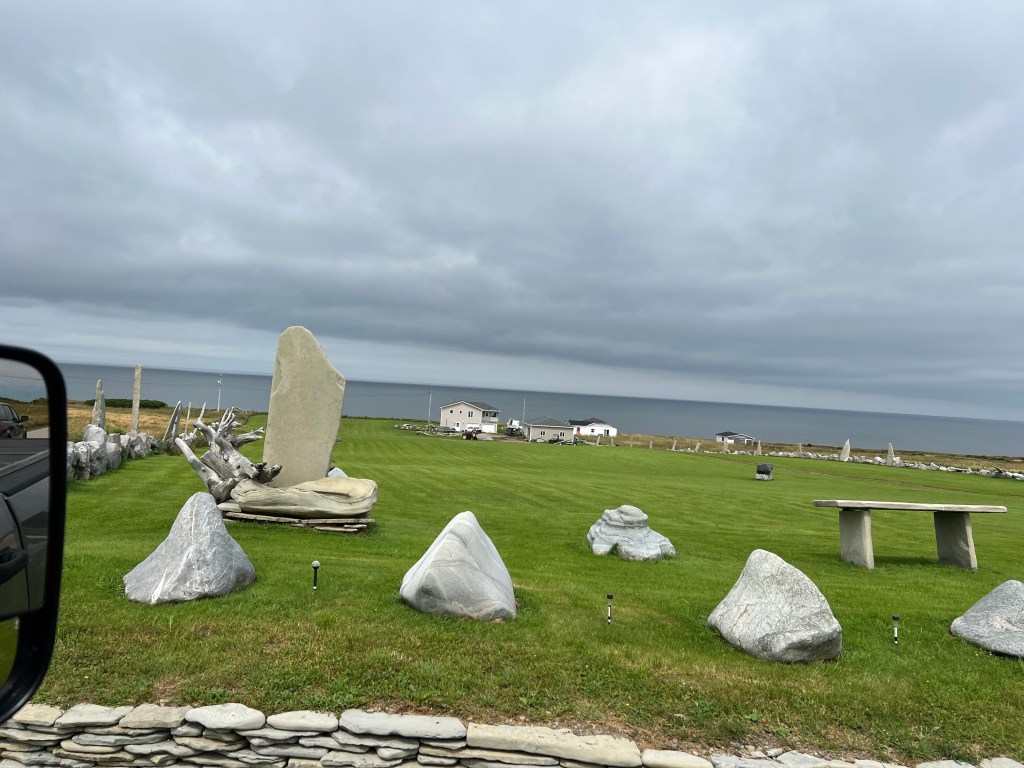
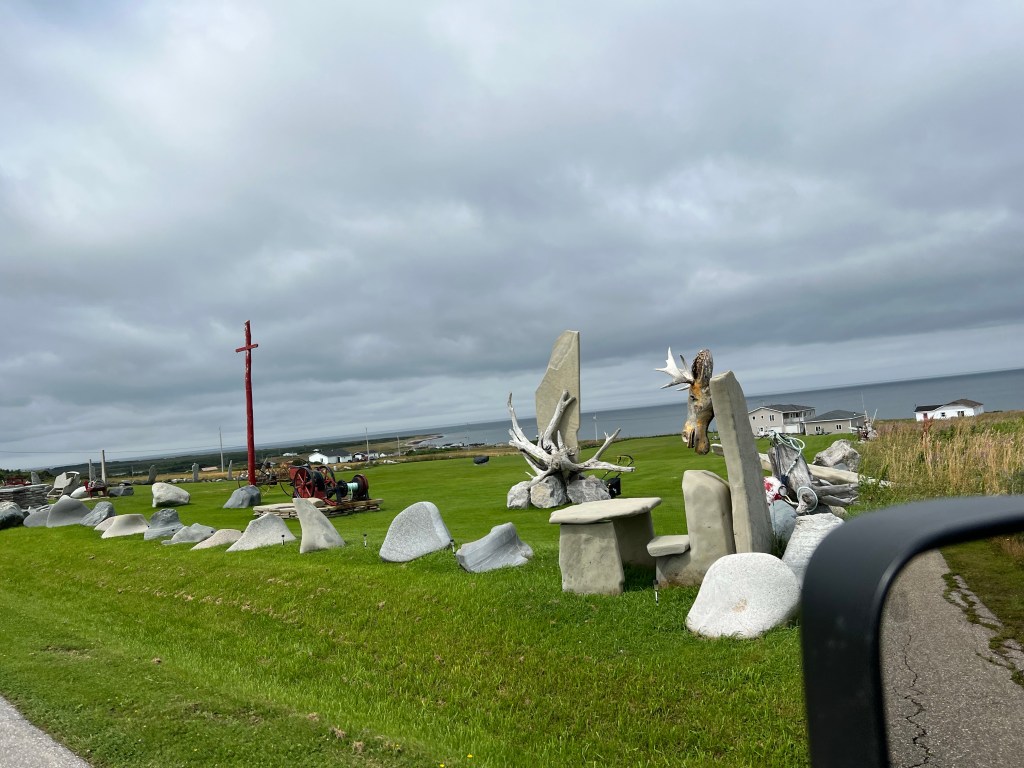
Next we came to a house with a huge yard enclosed and decorated with stones.
We still don’t know what this is about, but we loved the moose.
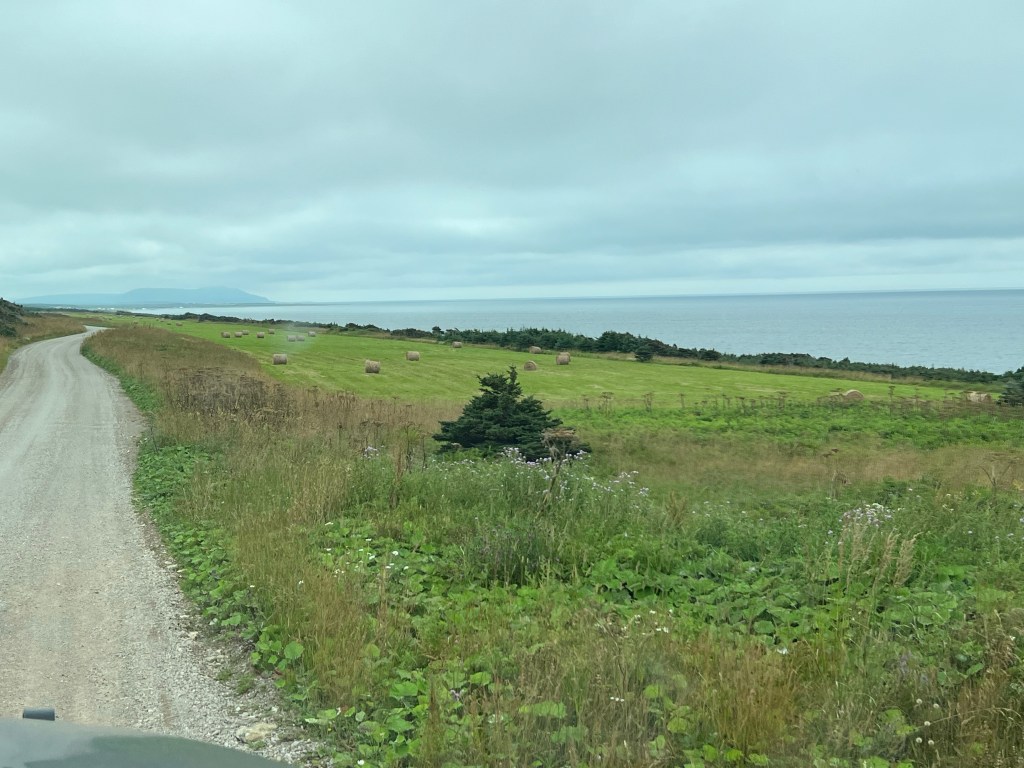
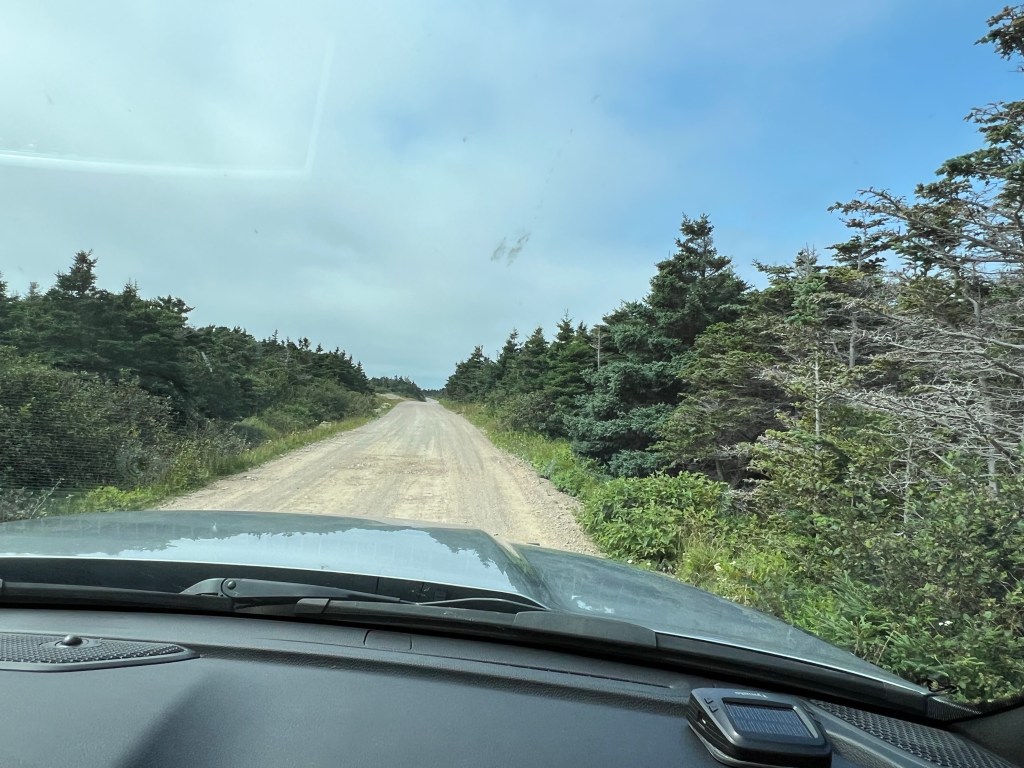
After about seven miles the road turned to gravel and the power poles stopped. Not too far along here we came to several fields where they had cut and baled hay. Not what we expected out on a peninsula that was less than two fields wide.
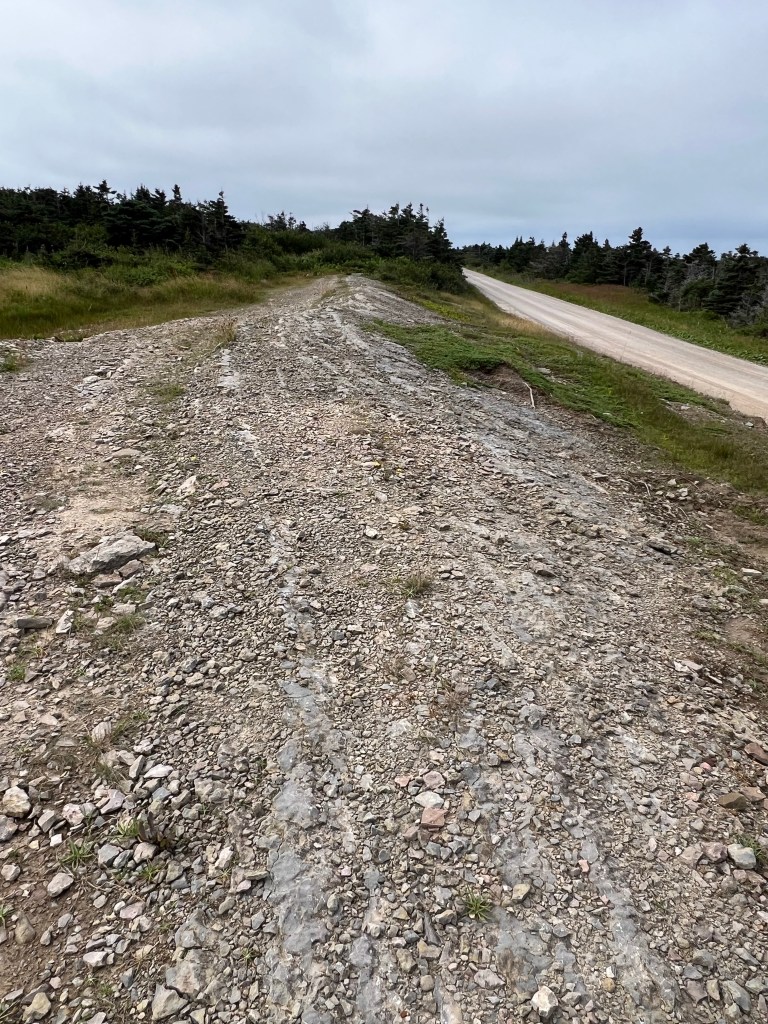
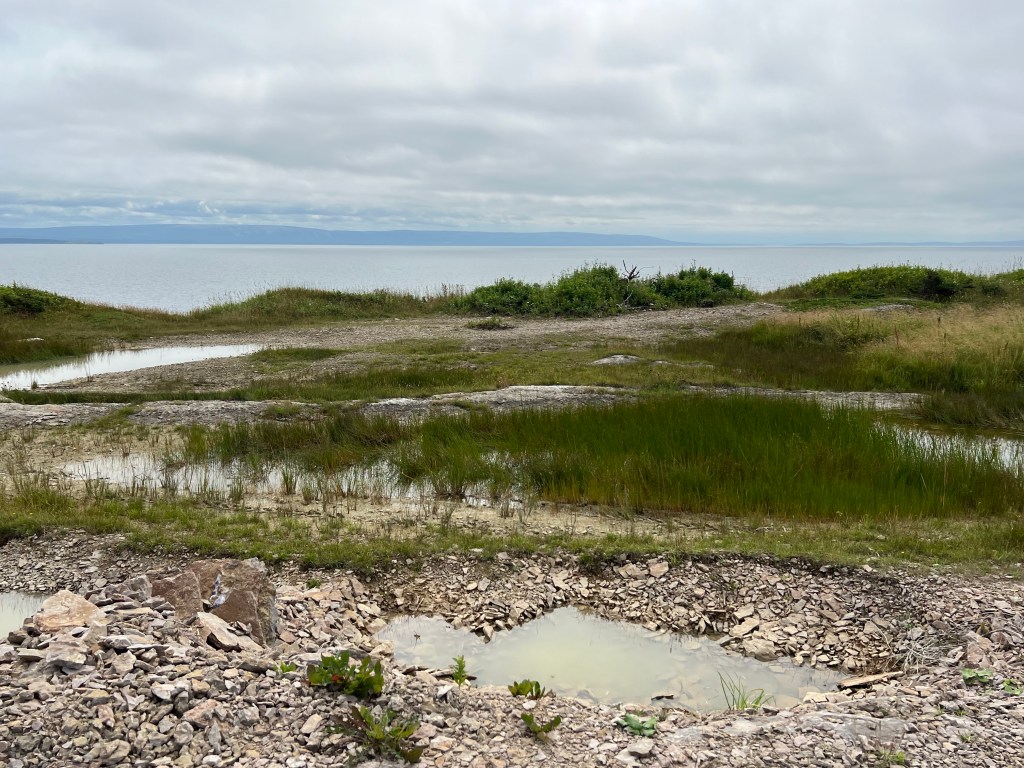
On the way back we stopped at this rocky place. This is a worn ridge of rocks, the “backbone” of the peninsula.
From on top of it you could look across the road to the Gulf of St. Lawrence.
Turning the other way you could see the Port au Port Bay. That was the width of the peninsula at that point.
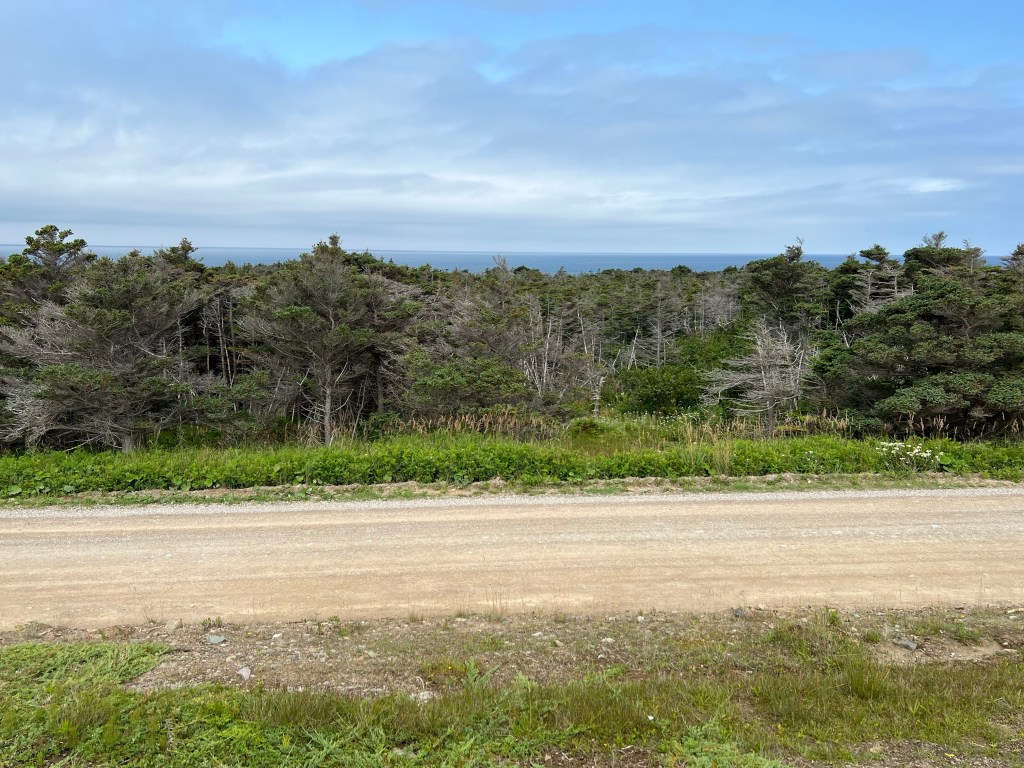
We drove on through the wind-trimmed trees…
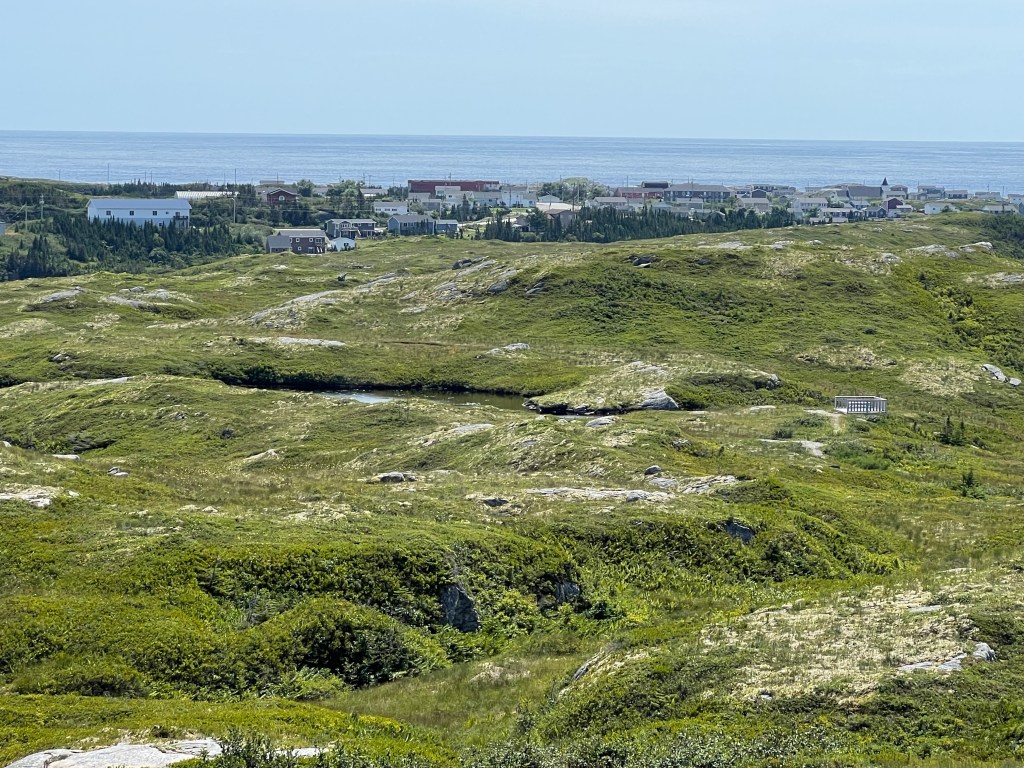
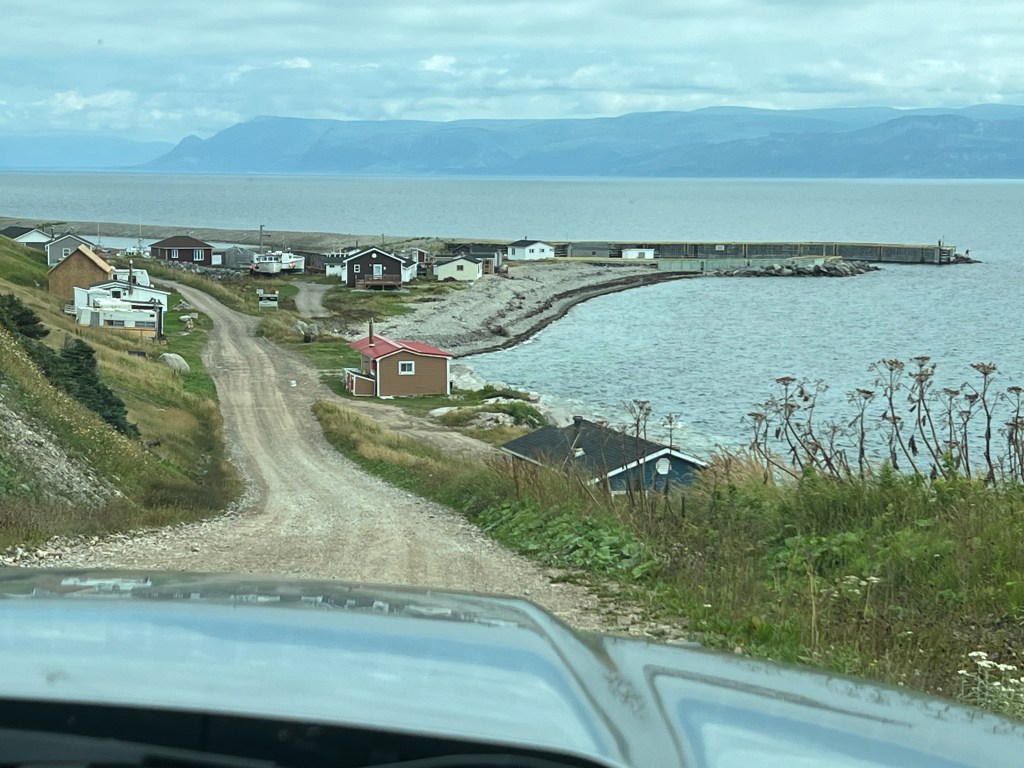
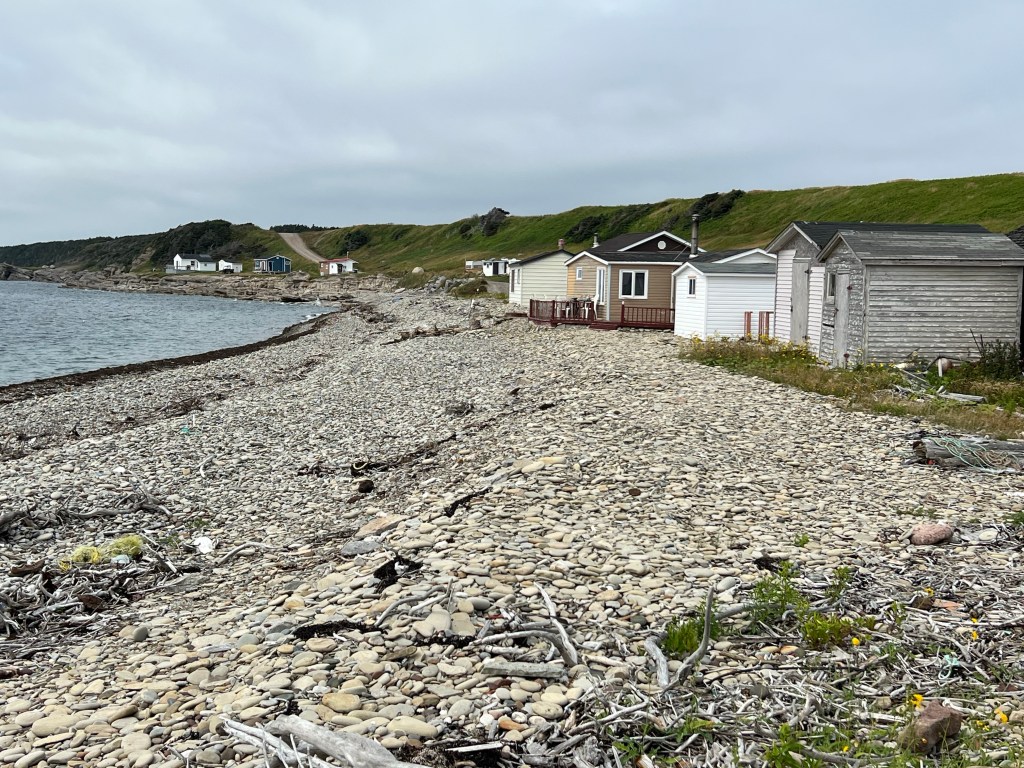
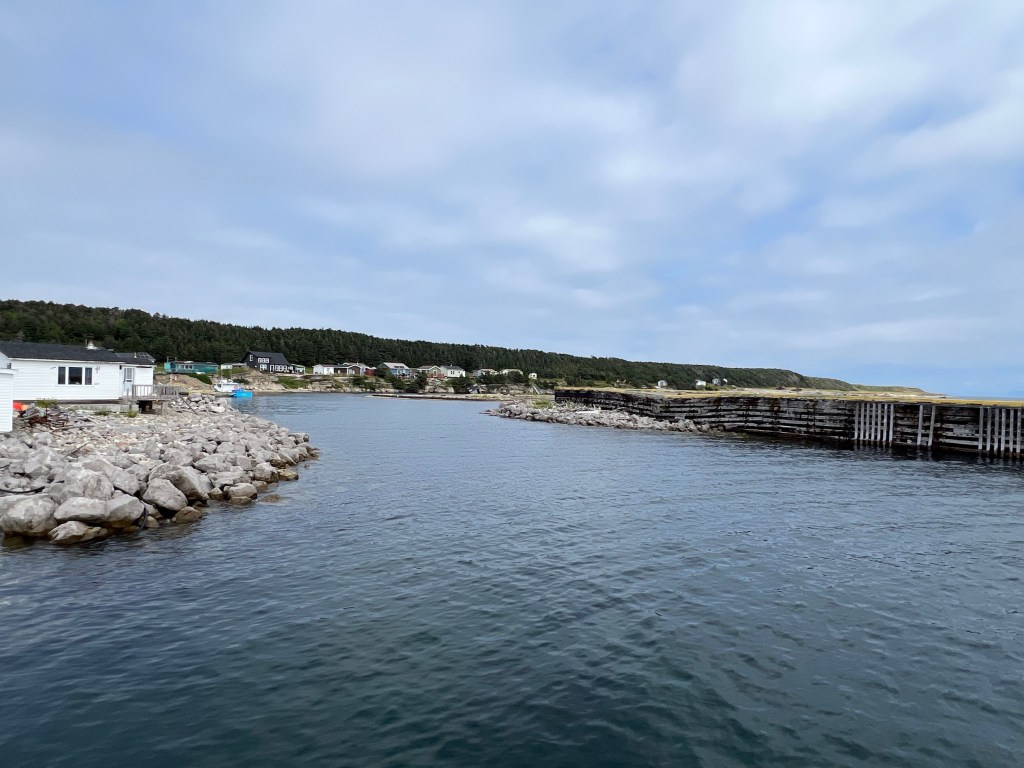
until we suddenly drove down a little hill into Blue Beach.
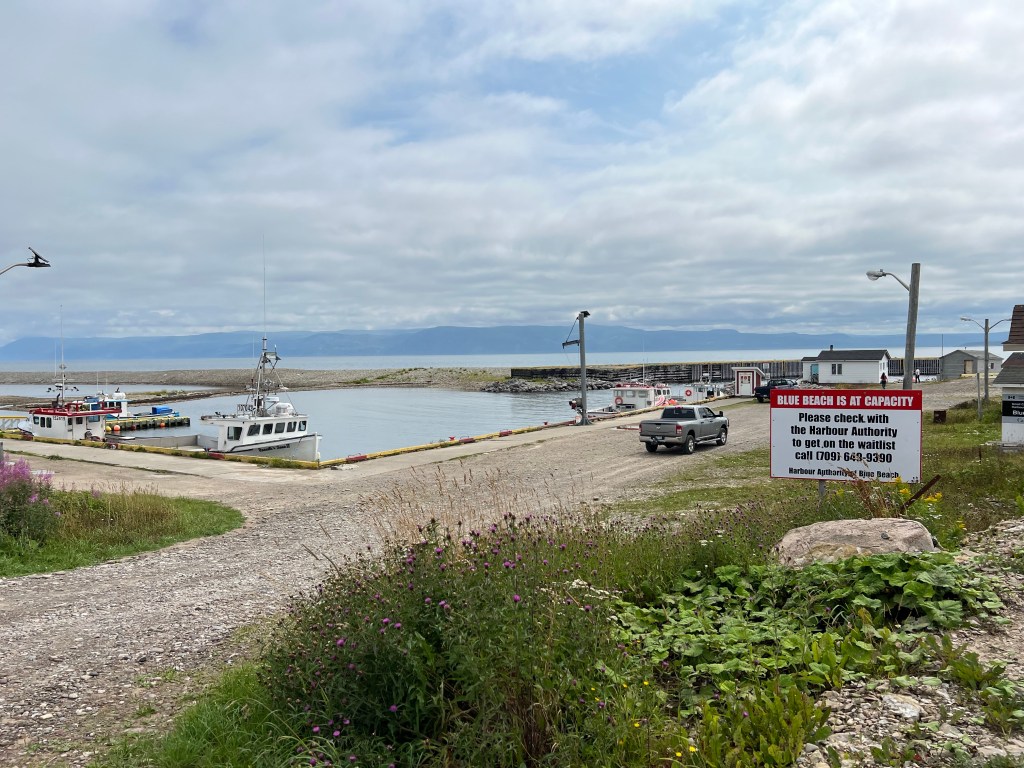
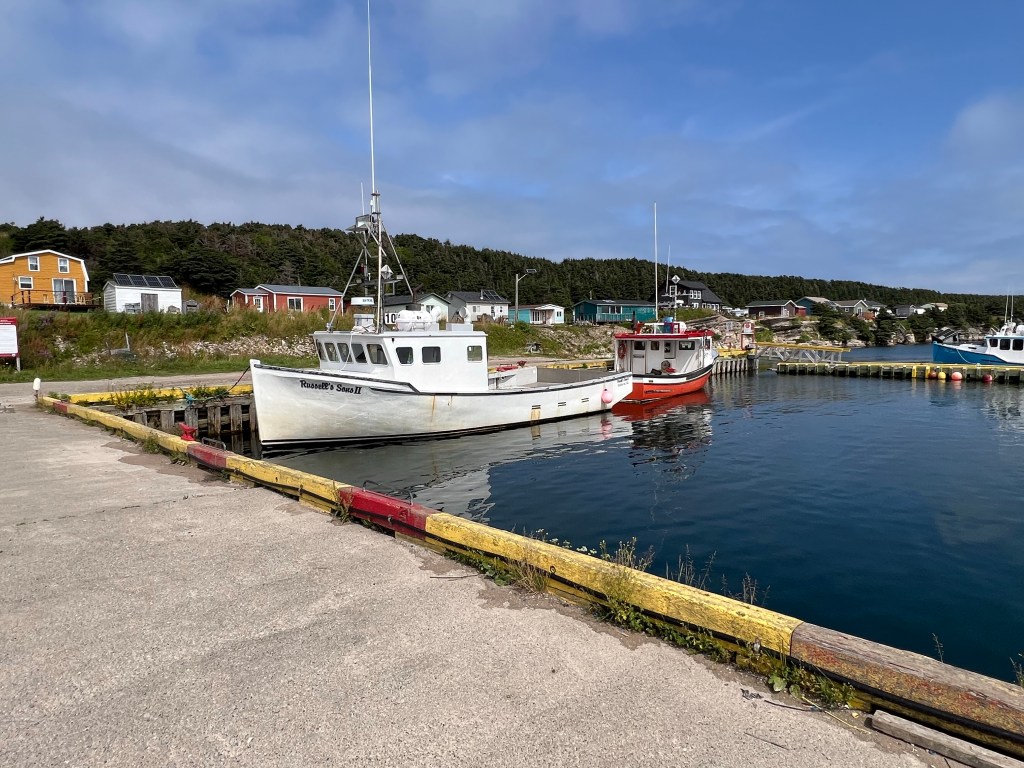
We certainly didn’t expect this tidy little harbor. And if you look at the sign you’ll see they have no vacant berths, there’s a waiting list!
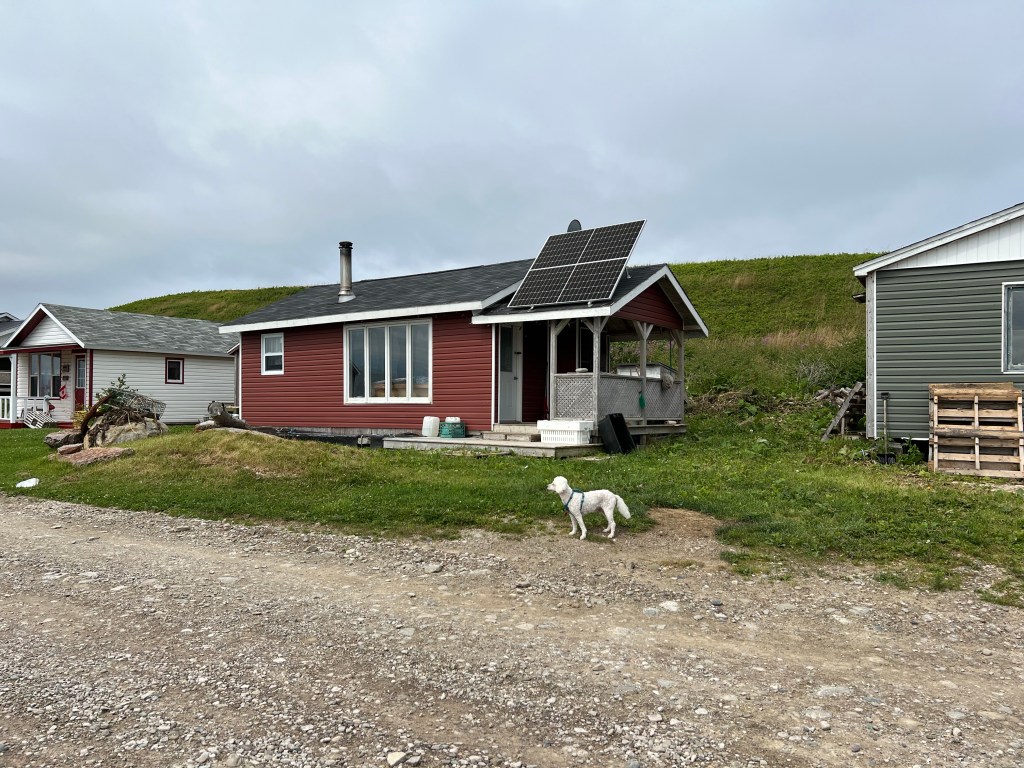
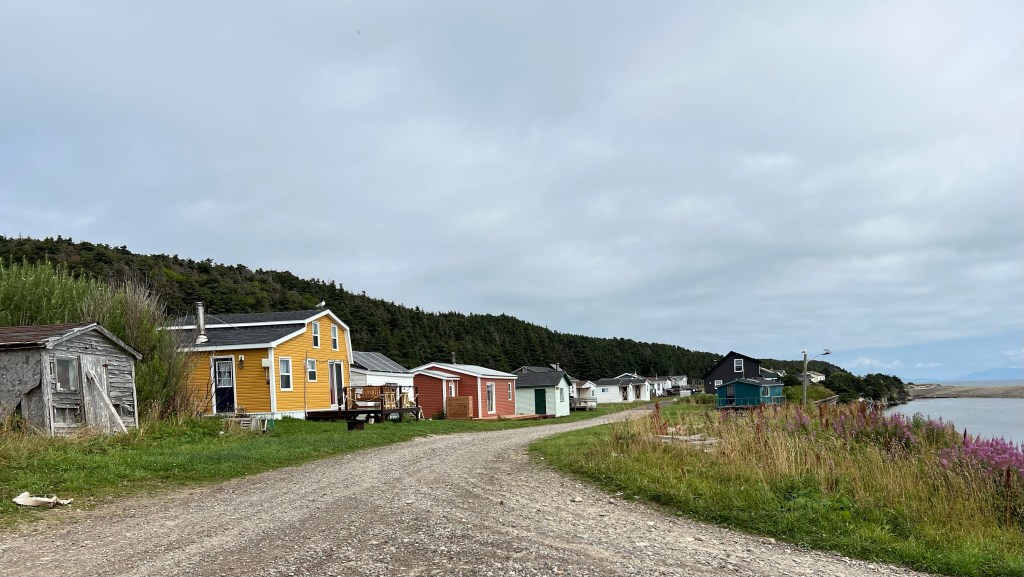
There are no services for these little cottages,
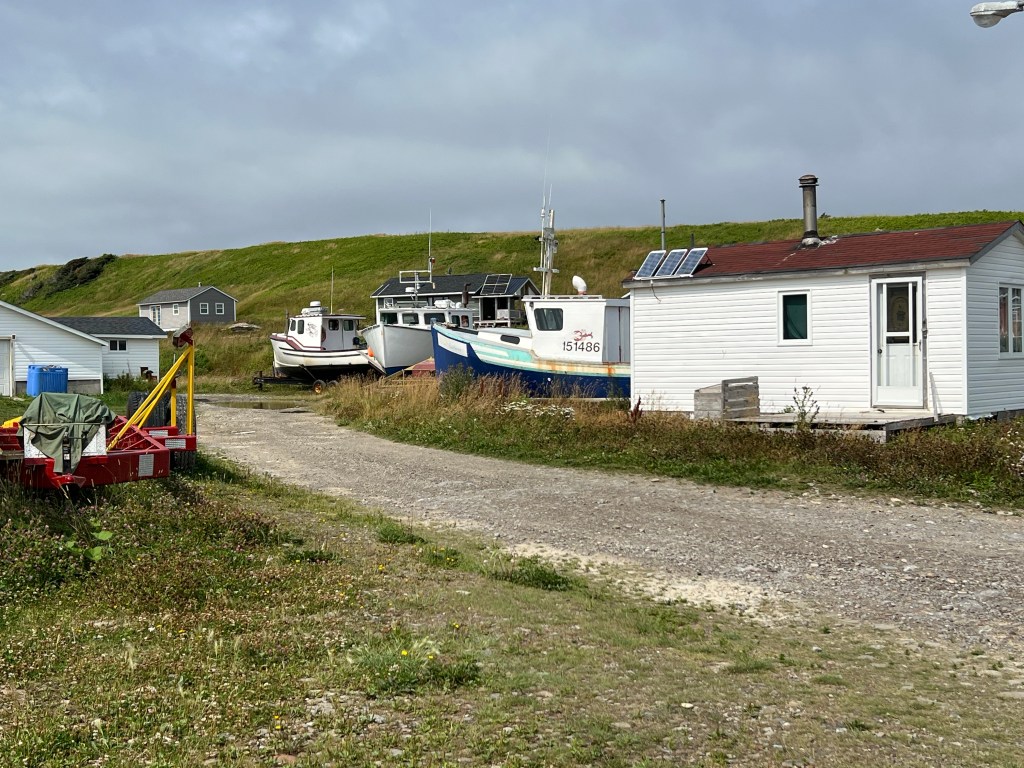
but a number of them had solar panels.
It’s a deep and well protected harbor and obviously popular.
It didn’t look overly full to me…
but there were also some boats up on the hard.
What a cute little place.
You never know what you’re going to find at the end of the road!
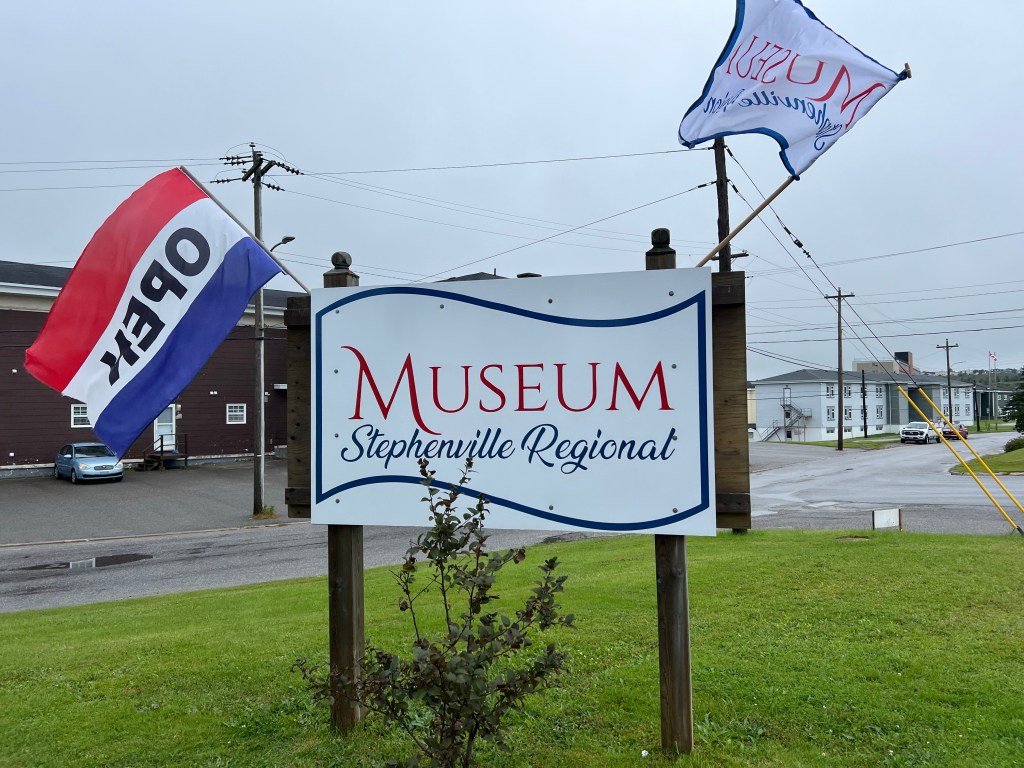
While Matey was getting groomed yesterday Bud and I went to the Stephenville Regional Museum.
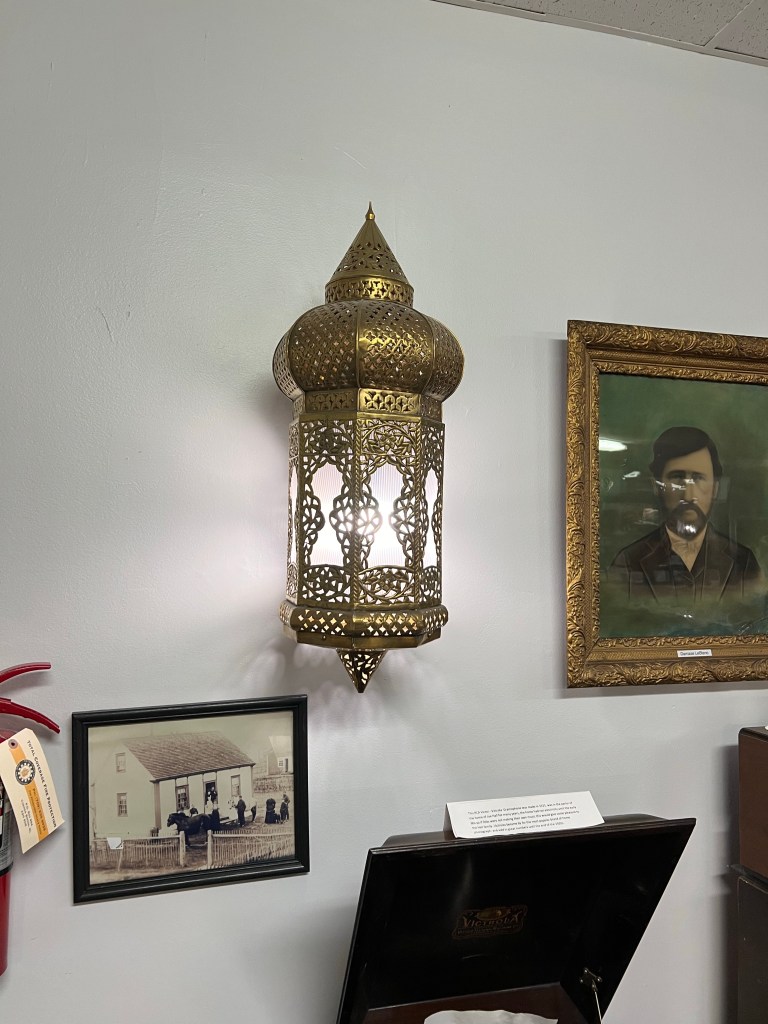
This is the only picture I took of the displays; this is a Moroccan brass sconce, one of several lighting the room, which had once been the officers club at the U.S Air Force base. More on that later.
The reason I didn’t take more pictures is that we spent our hour plus at the museum talking to the two young men working as docents. Both were from Stephenville and both were in college.
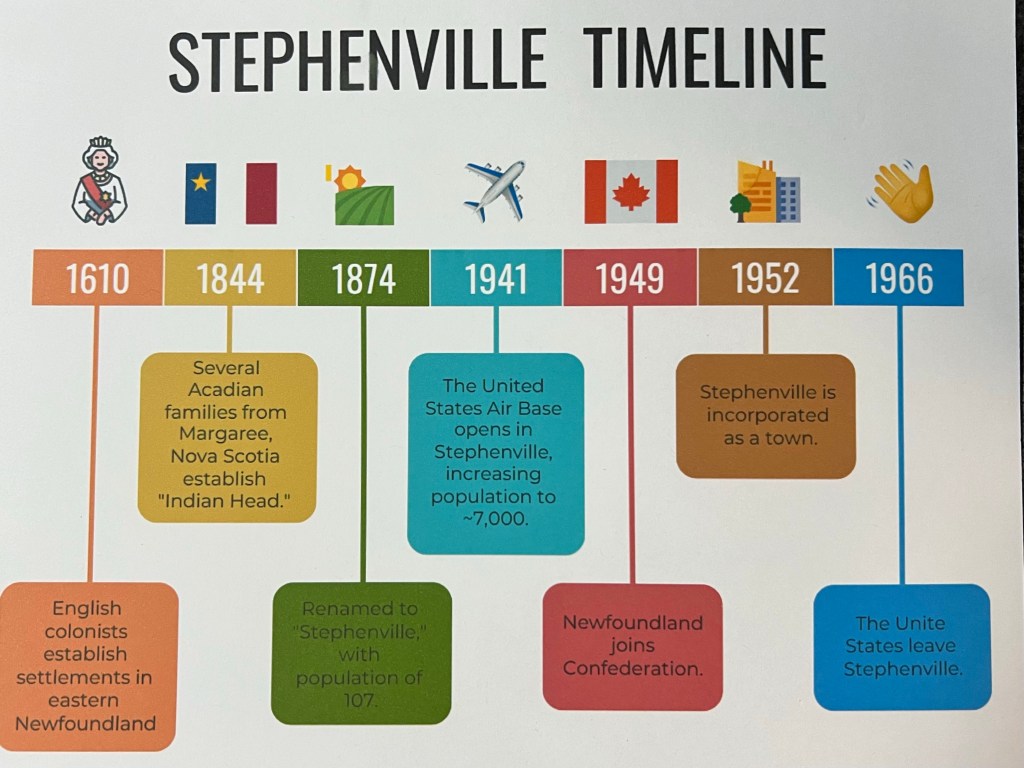
They had this timeline prepared, and I took a picture of that. I asked about the French ancestry, turns out they are both part or mostly French (and both had indigenous ancestors, too). The name Stephenville was in honor of the first son born to a French settler here, Stephen Gallant. One of the young men was a descendant of the Gallants. Pretty much all the information that follows came from our conversation.
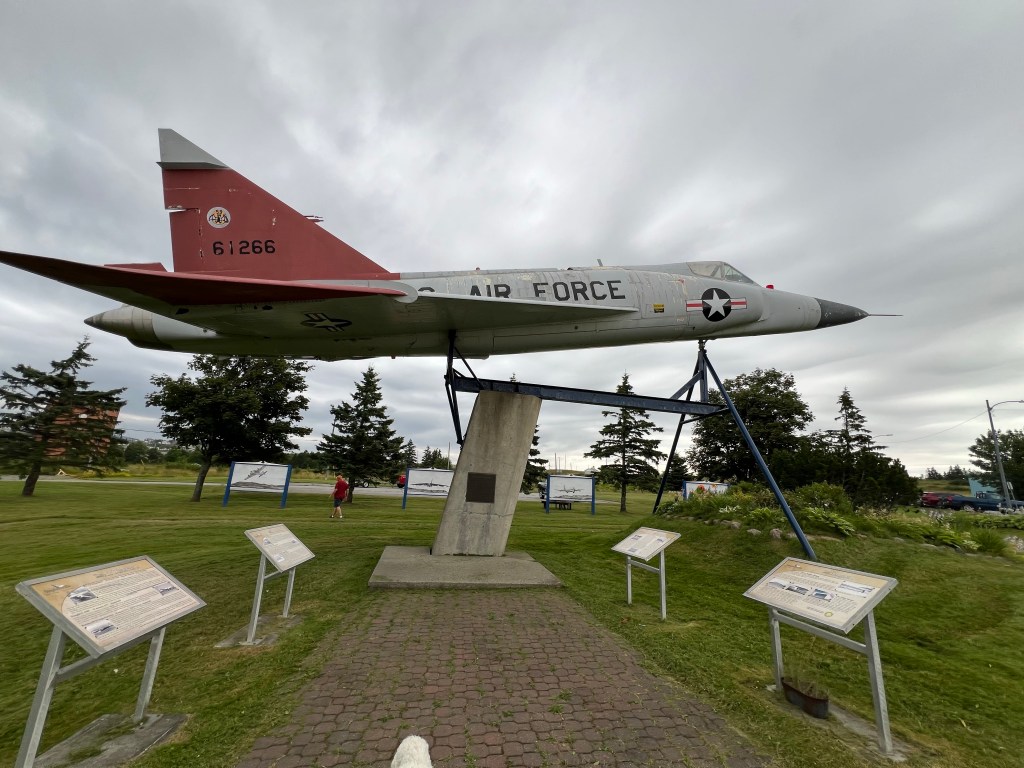
The US Air Force Base that was here from 1941 until 1966 had a profound influence on the town. There are reminders all over town, including this jet. In 1941 Britain desperately needed ships to protect her borders and shipping lanes. The US provided 11 destroyers in exchange for the use of land in Commonwealth countries for military bases. There were actually four bases established in Newfoundland because of its proximity to Europe. The airbase here, one in Gander, a Naval base in Argentia and an army air and coastal defense base in St. John’s.
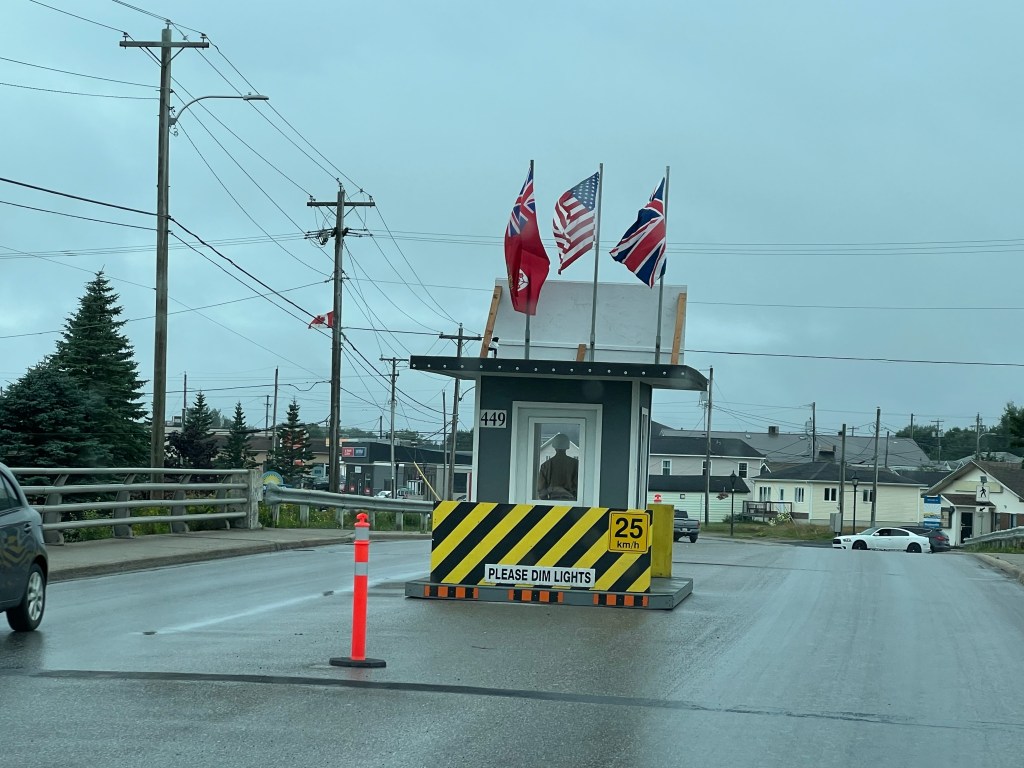
This gave us pause the first time we passed it; yes it’s the gate to the base, but that’s just a mannequin inside.
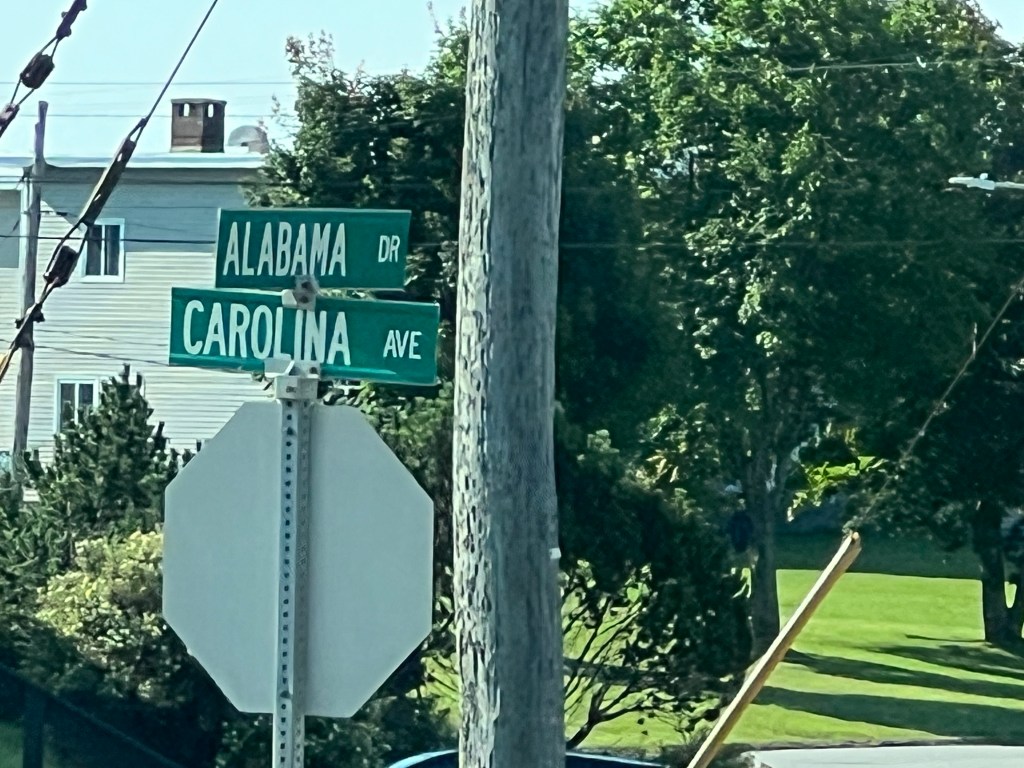
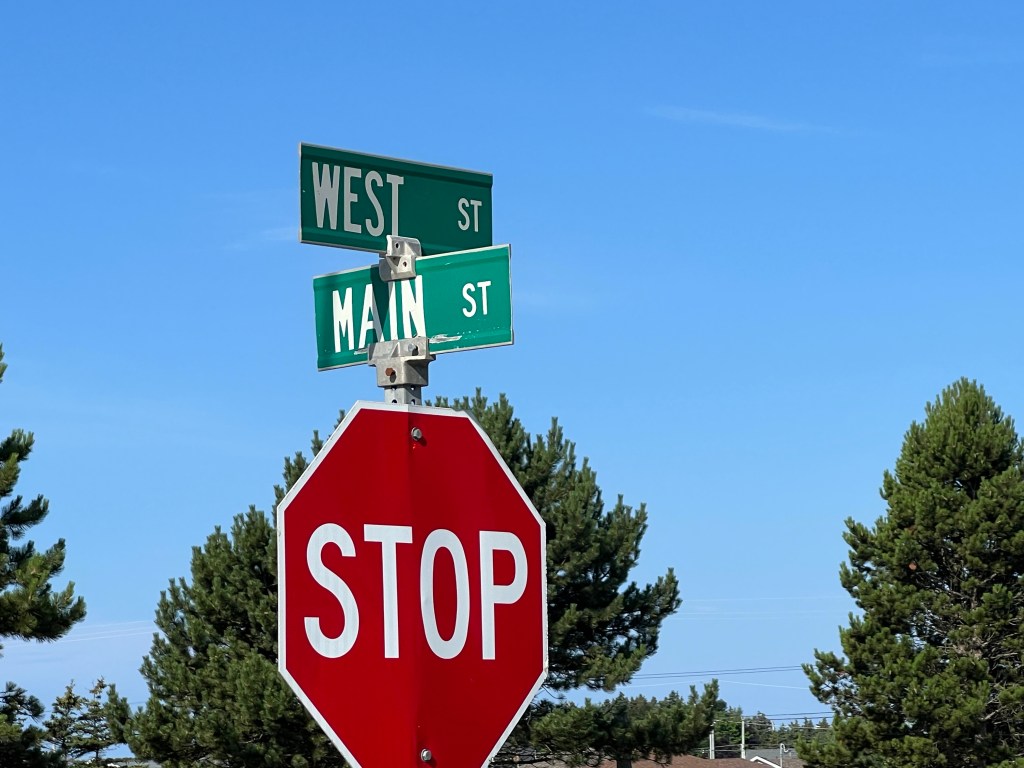
Inside the 8,159 acres of the base (the largest under the lend-lease agreement) all the streets were, and still are, named for states.
Main Street becomes Carolina Avenue once you pass the old gate.
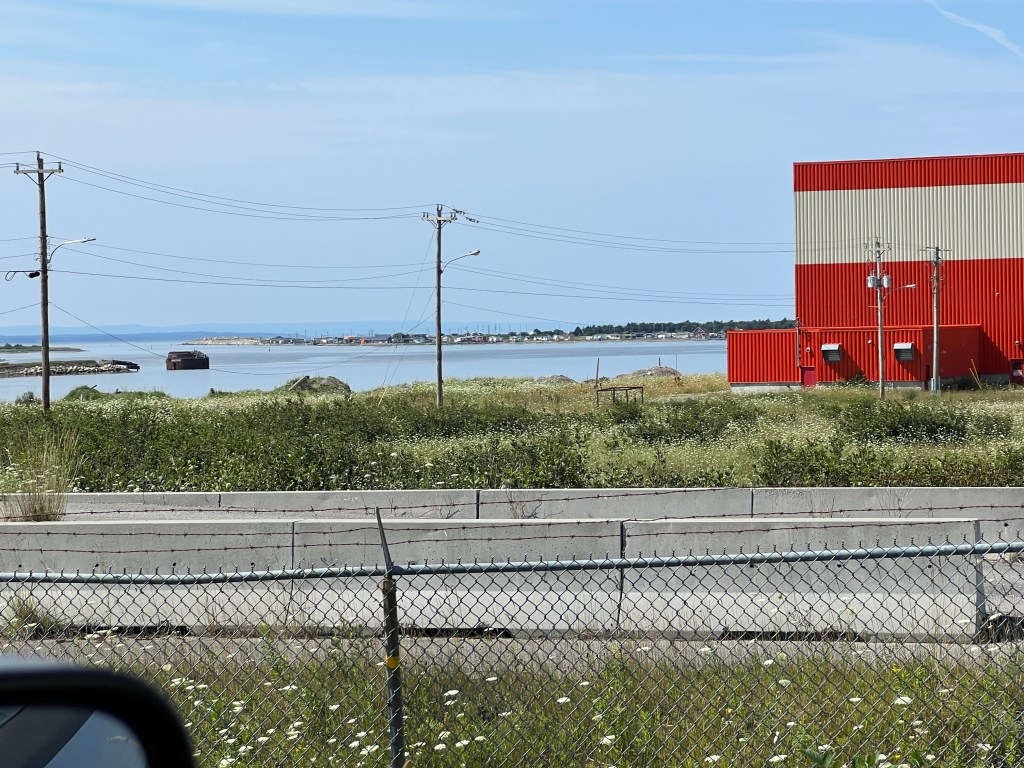
The body of water here was a freshwater pond. It was dredged for material to build up the airfield and the base. Then an opening was blasted to create a deep water port, Port Harmon.
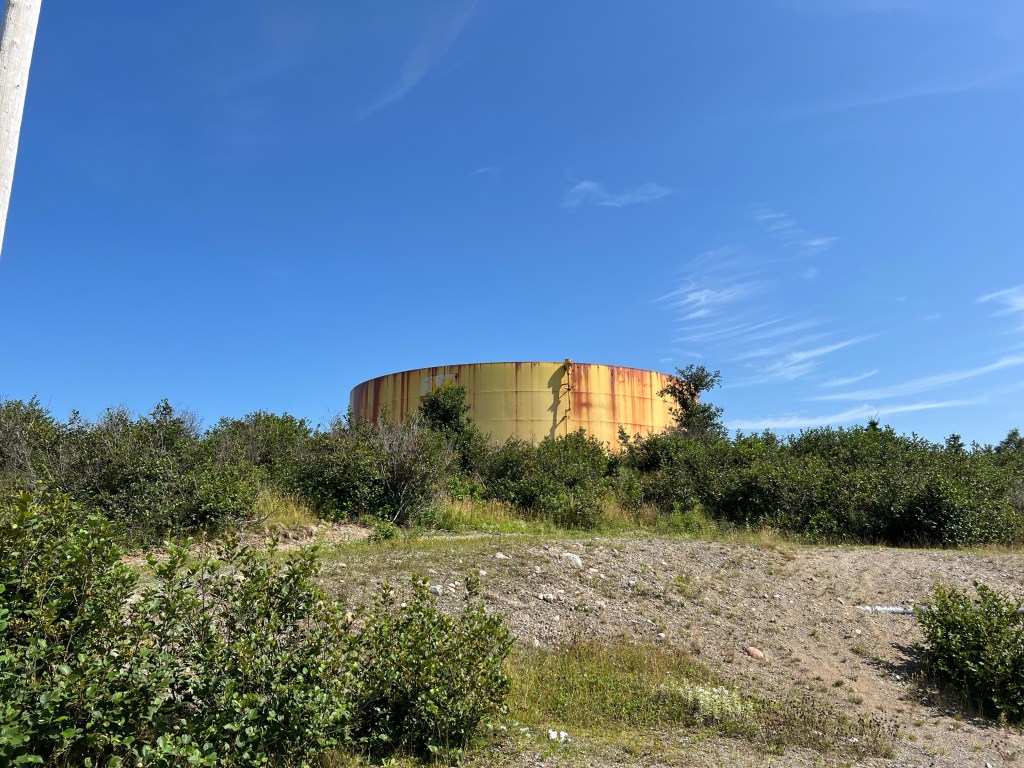
Because of its location and excellent flying conditions this became a stopover and a refueling site. The port allowed mass importation of jet fuel. Tanks like this are scattered around the port.
At its peak there were over 4,000 troops stationed here,
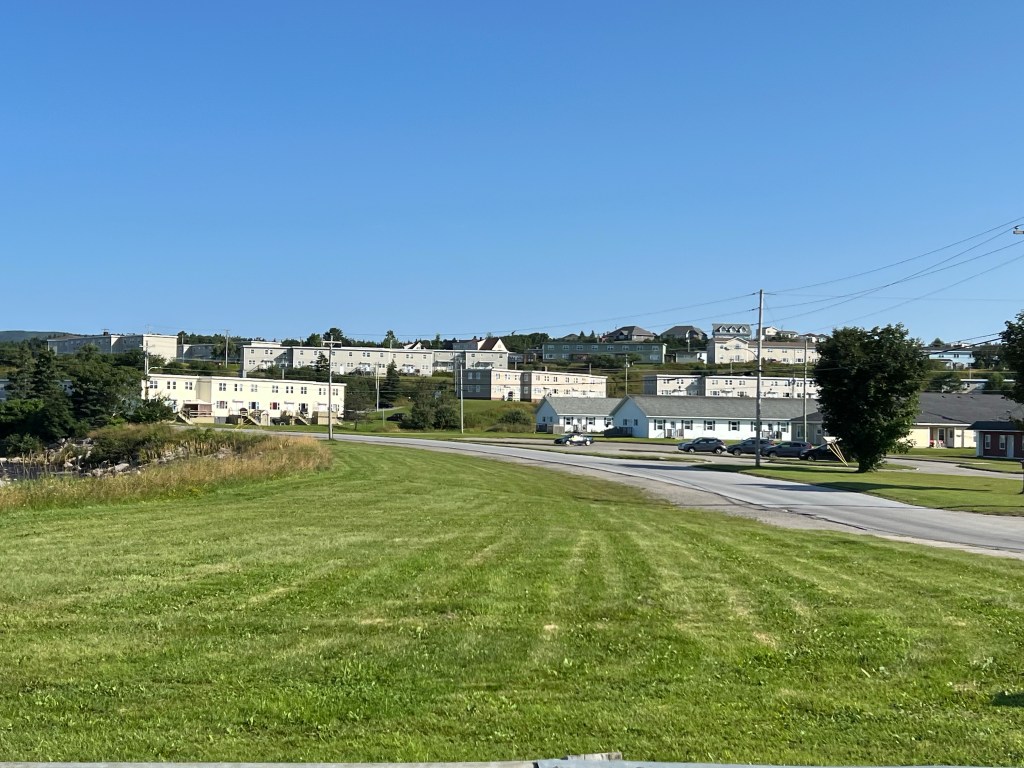
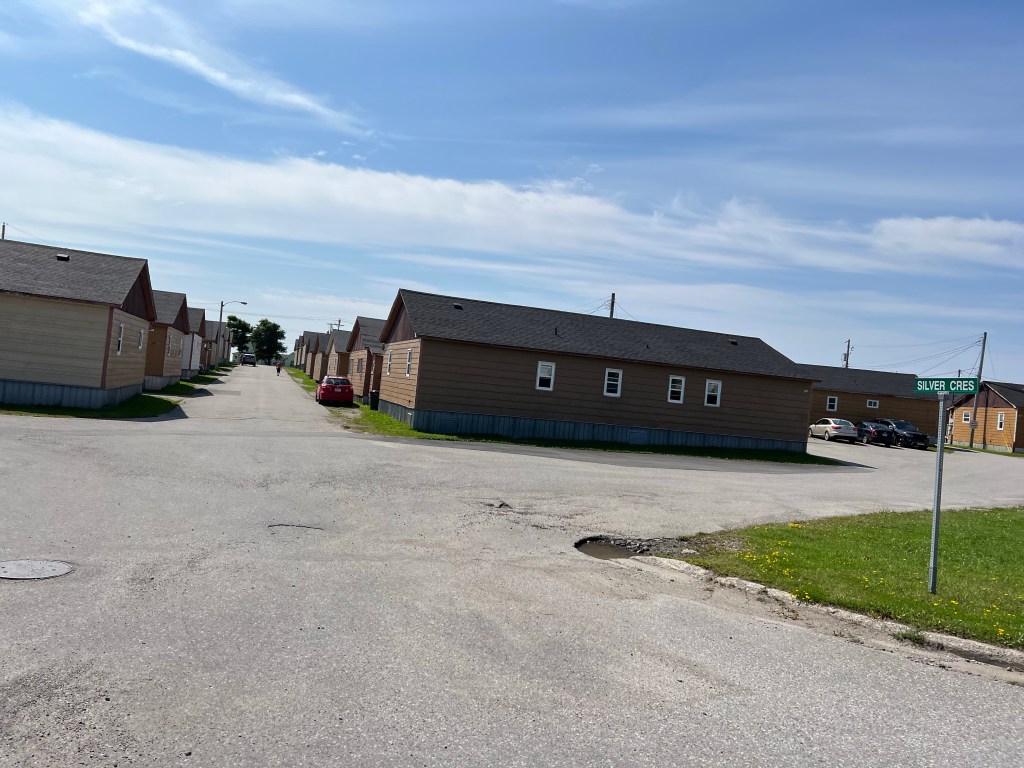
and barracks still dot the landscape.
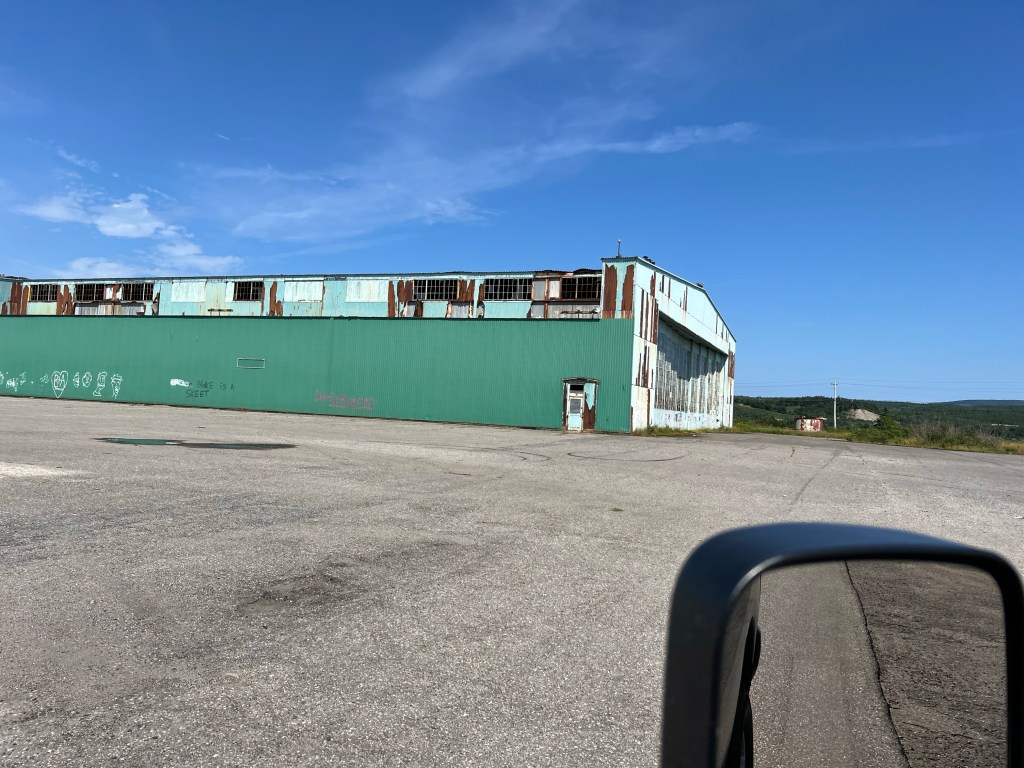
Some of the old hangars sit abandoned,
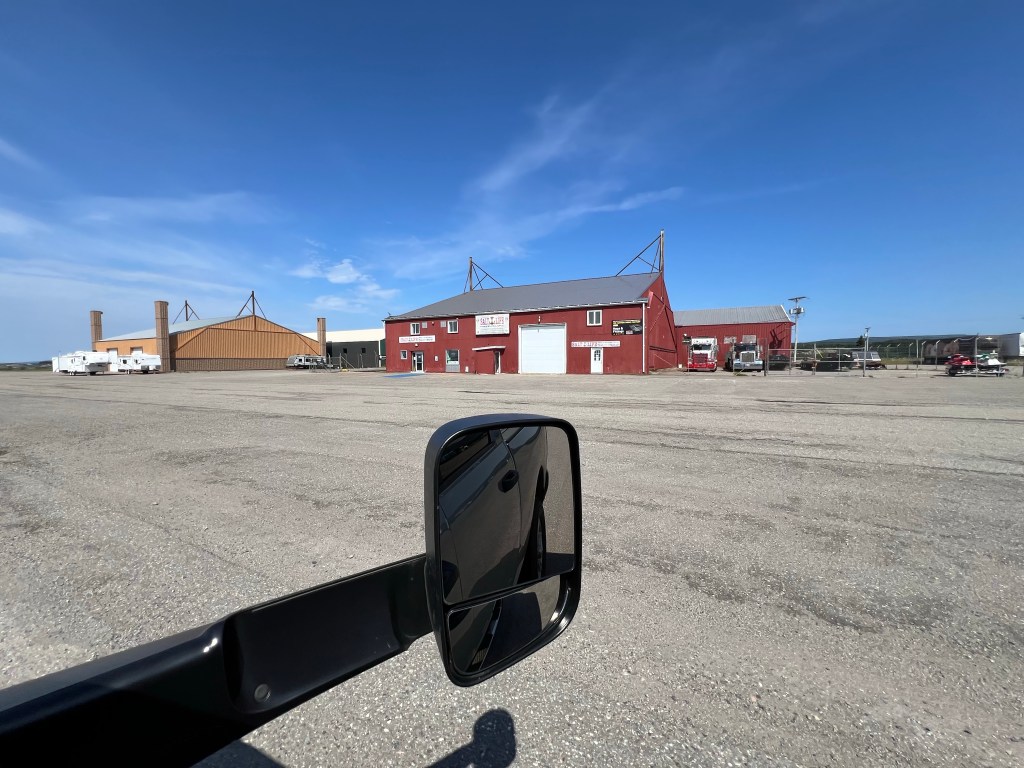
but many of them are still in use.
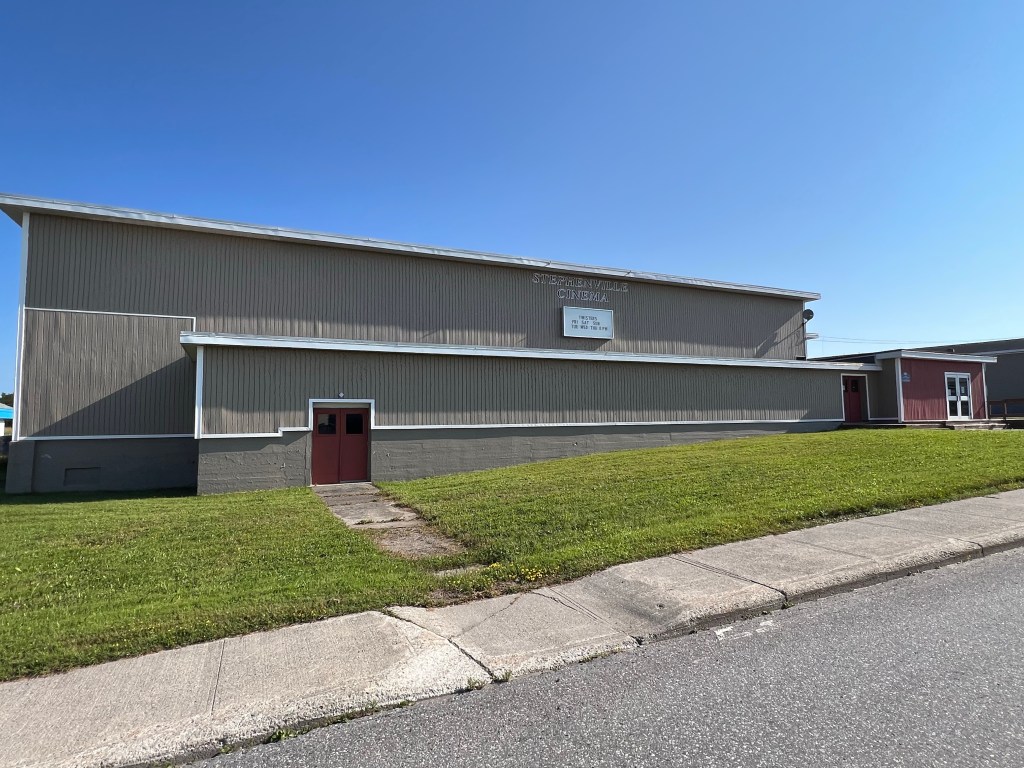
Even the base theater is still the town’s cinema.
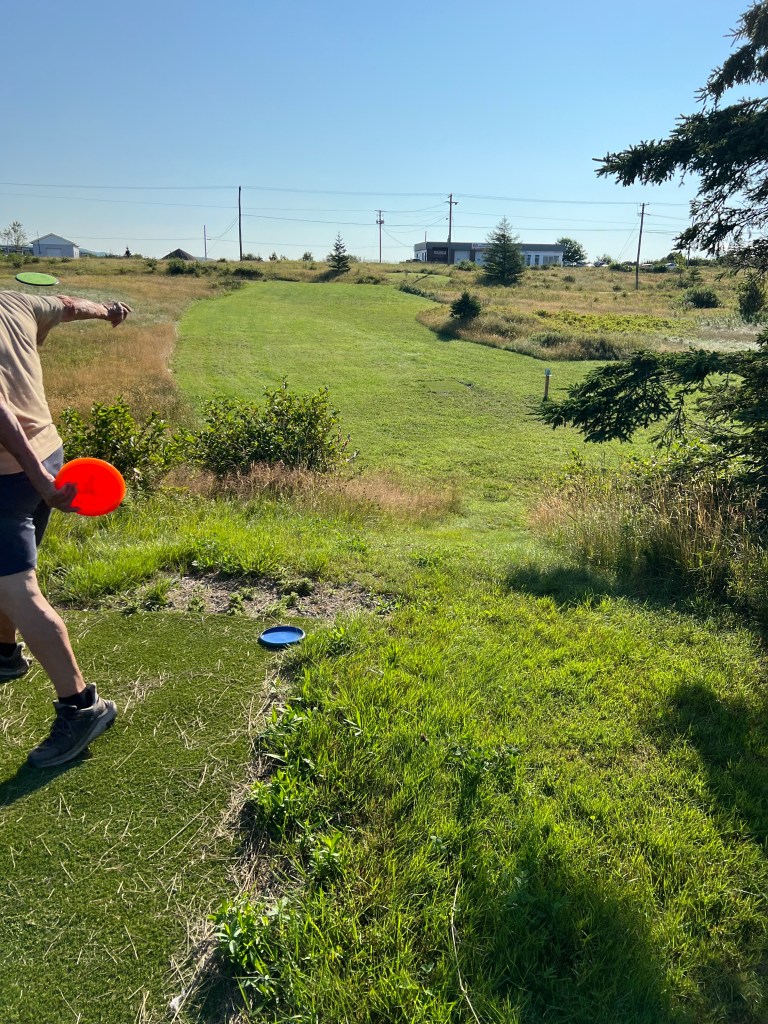
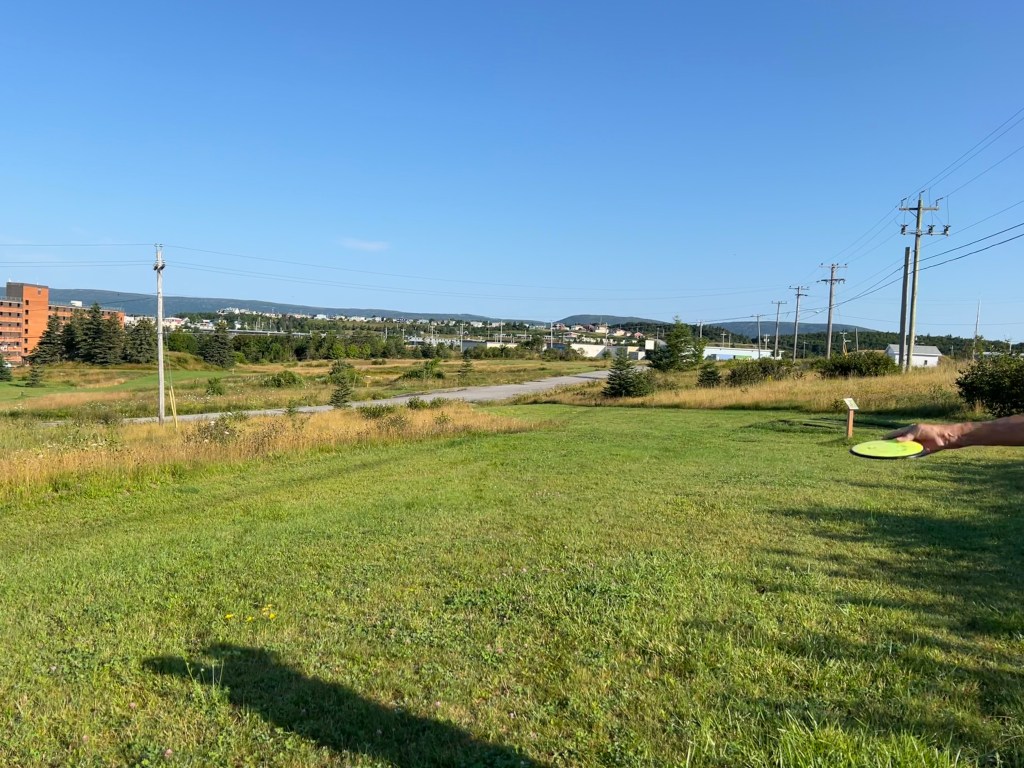
Our favorite disc golf course is made on the old base.
The road that crosses this fairway is no longer used.
After the base closed a paper mill came to repurpose the port and facilities. Unfortunately, they made newsprint and when the demand for that plummeted they closed.
We asked what the current industry was. Our docents looked at each other and said, “None.”
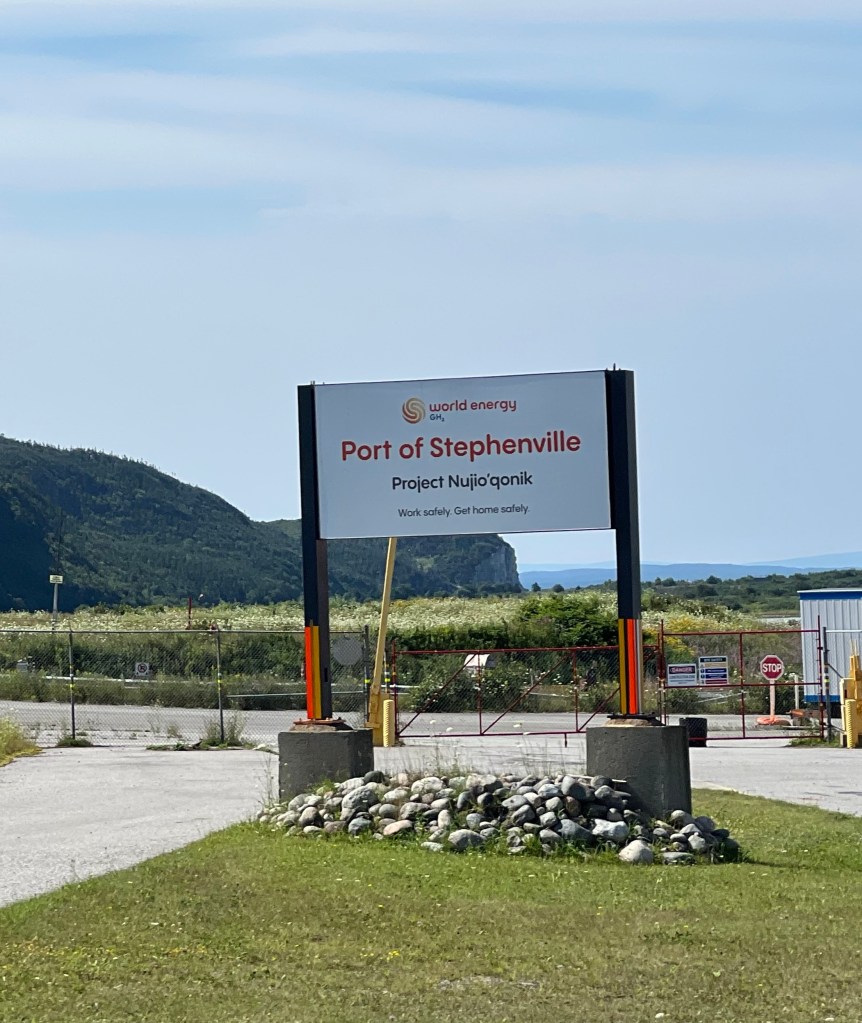
But they were quick to point out a project that has begun to put wind turbines out on Port au Port Peninsula and use that power to make hydrogen and ammonia. They will build their plants on the brown fields left by the paper mill and use Port Harmon to ship their product worldwide.
Our docents were optimistic about a future built on green energy with the input and consideration of the locals, including the indigenous community.
One of our docents was working on a degree in chemistry and math, the other had a master’s in philosophy, but was now taking accounting. They seemed to have the new project in mind.
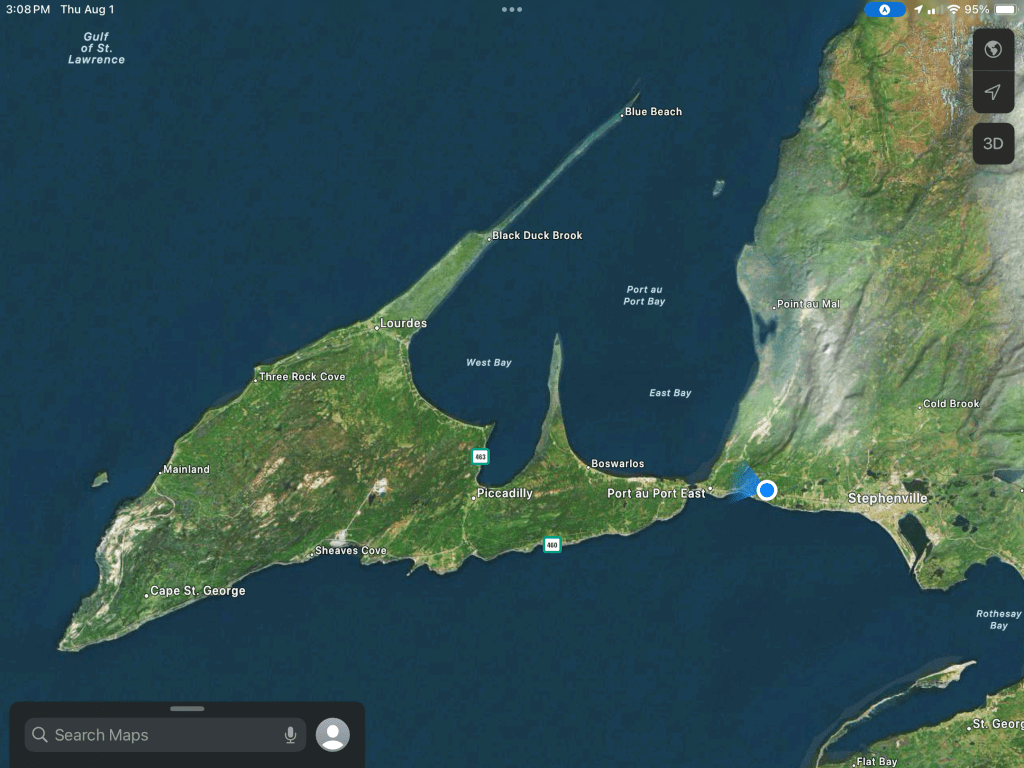
Another reason I wanted to stay where we are was to explore this arrow shaped peninsula, Port au Port Peninsula. There’s basically one road around the coastline with a spur going out the long, narrow point heading northeast. Today we took a drive out there.
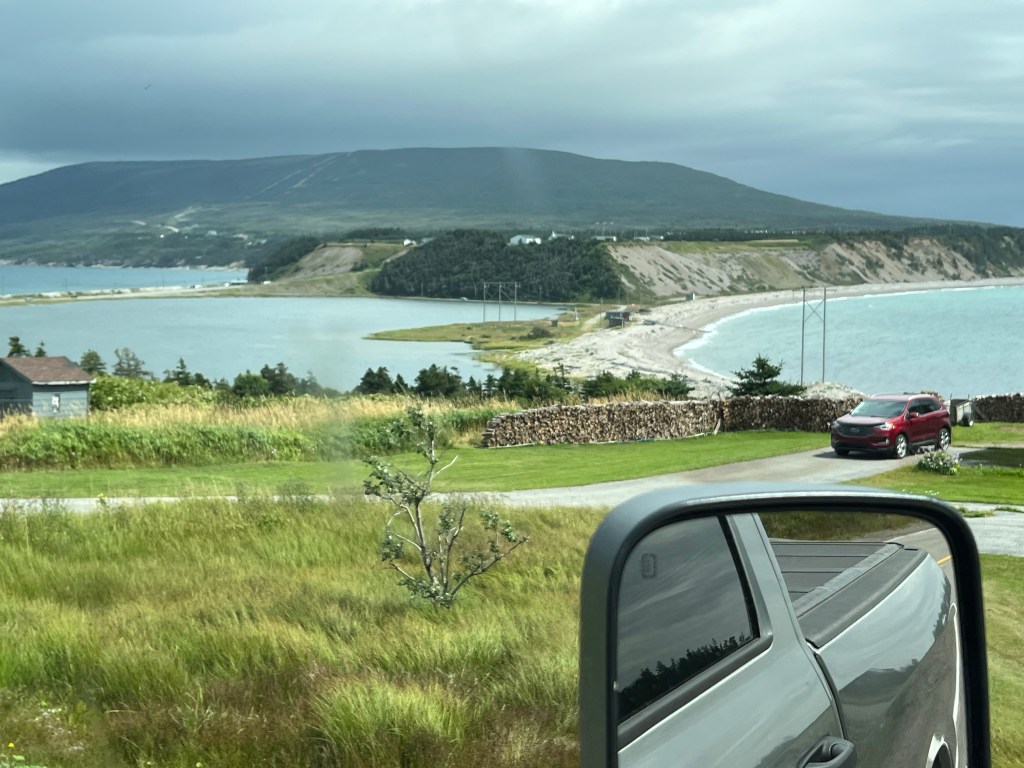
On the way back I was able to get a good shot of the very tenuous link between the peninsula and the rest of Newfoundland. The road crosses the causeway to the left. The water body between the land links is Gravels Pond. We didn’t stop to check if it was fresh or salt water. Hopefully we’ll get back there and I can see.
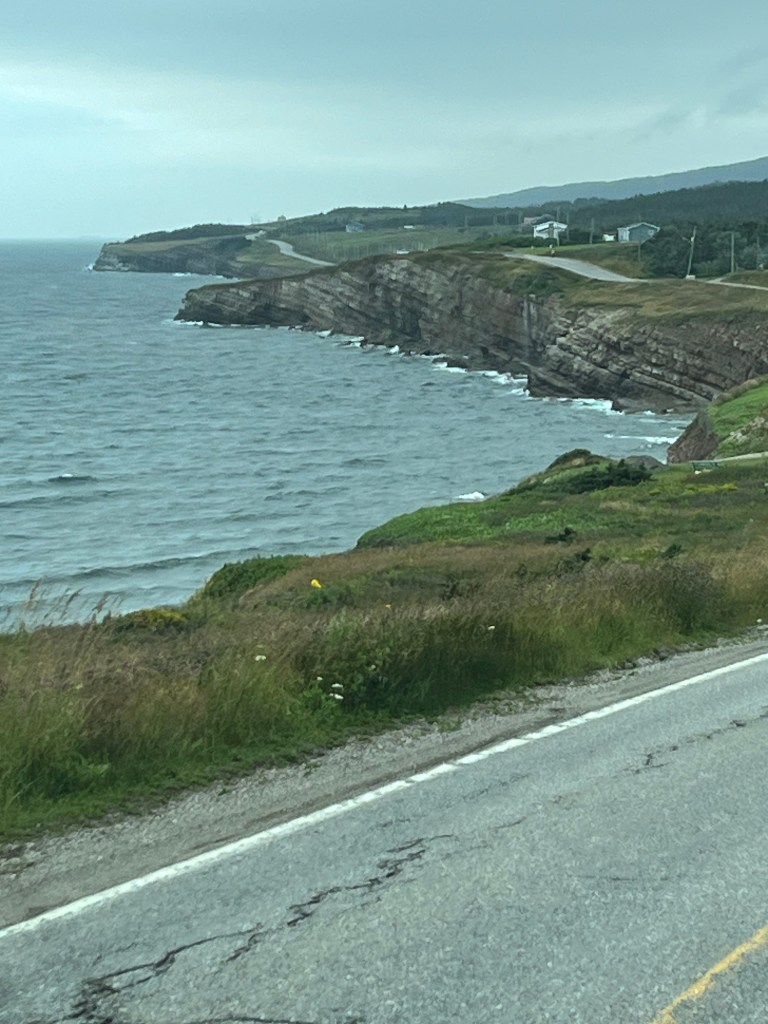
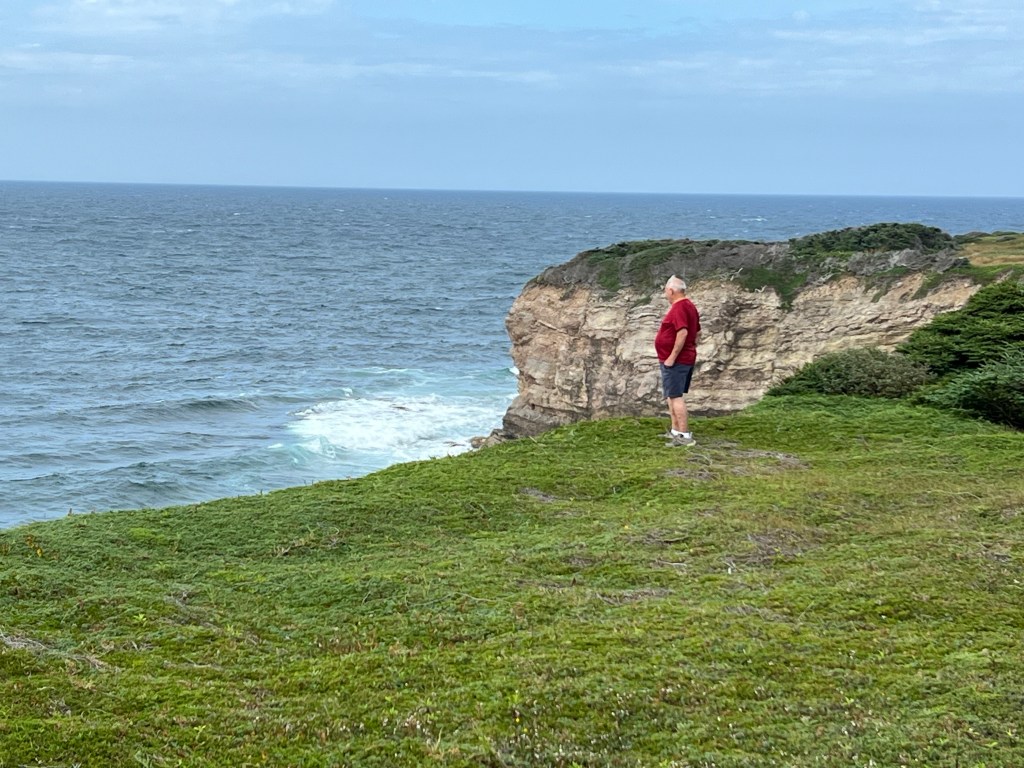
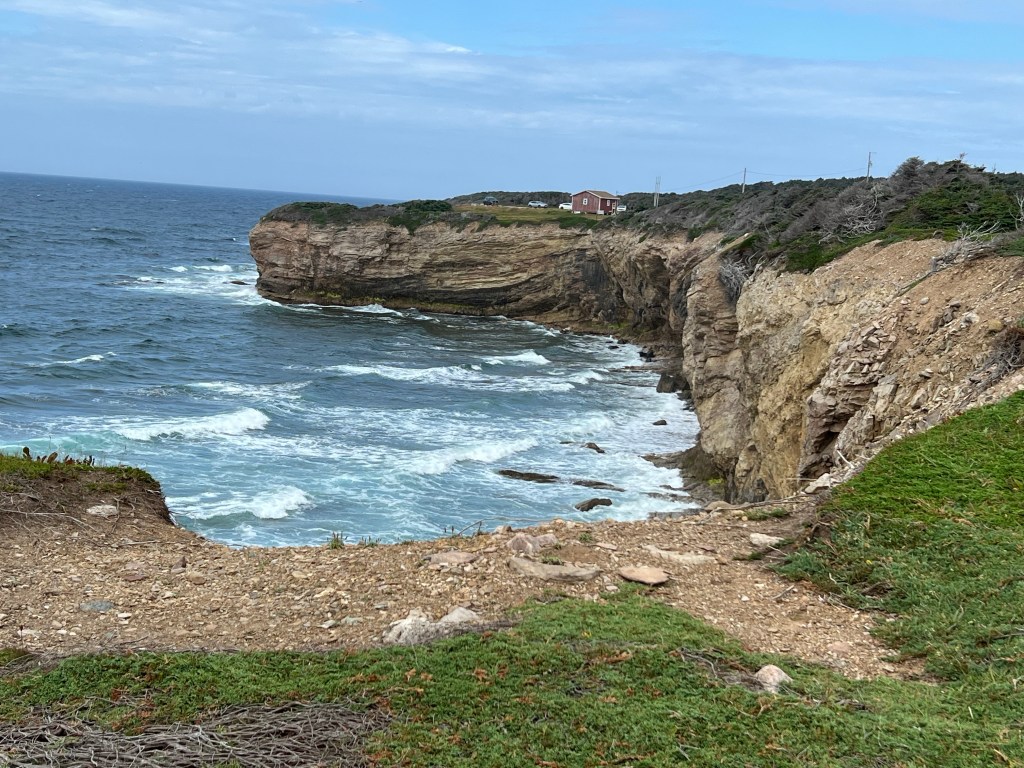
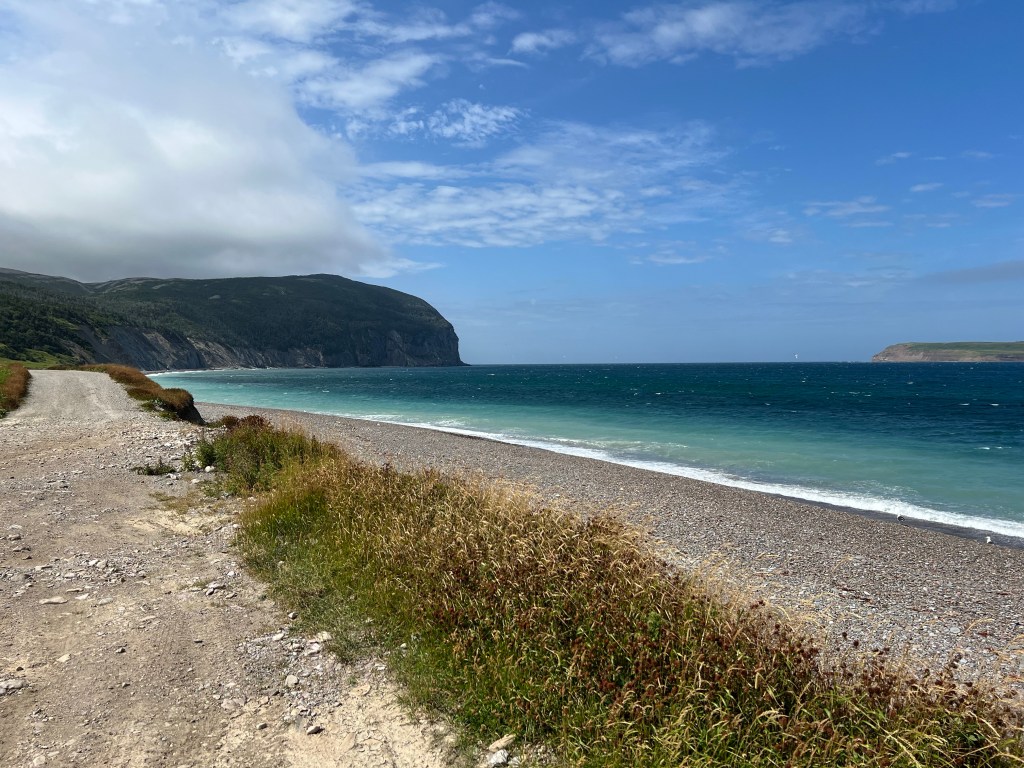
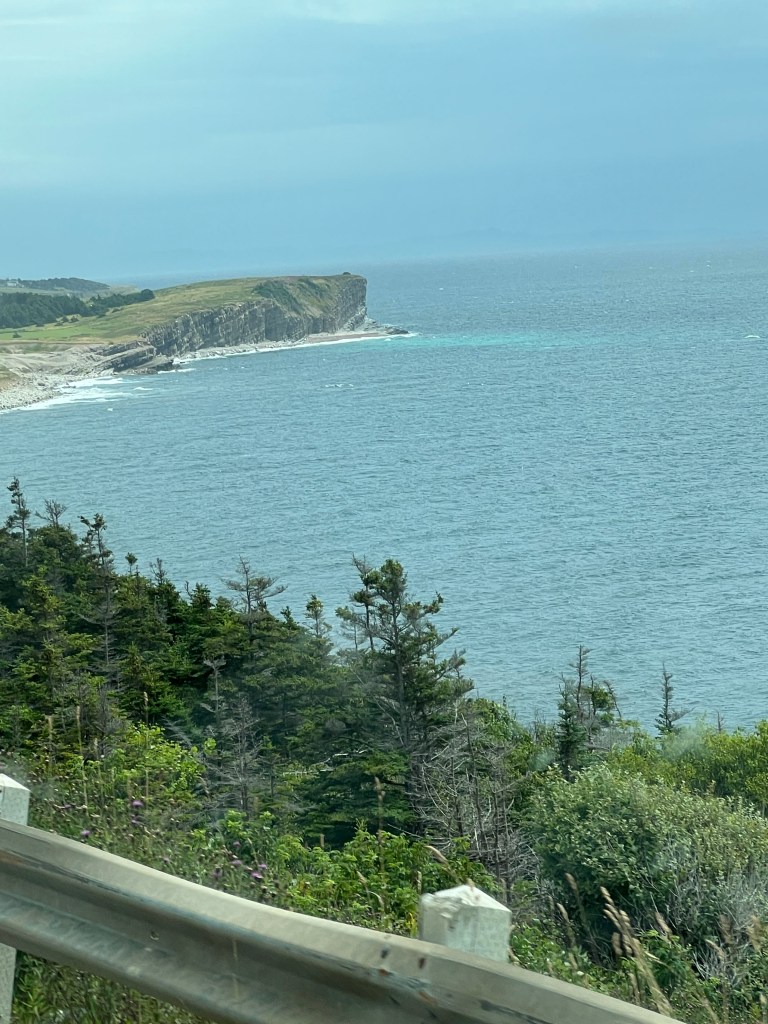
We drove out to Cape St. George along the south shore. There are cliffs here.
In fact, the shoreline is almost all cliffs with no real harbors.
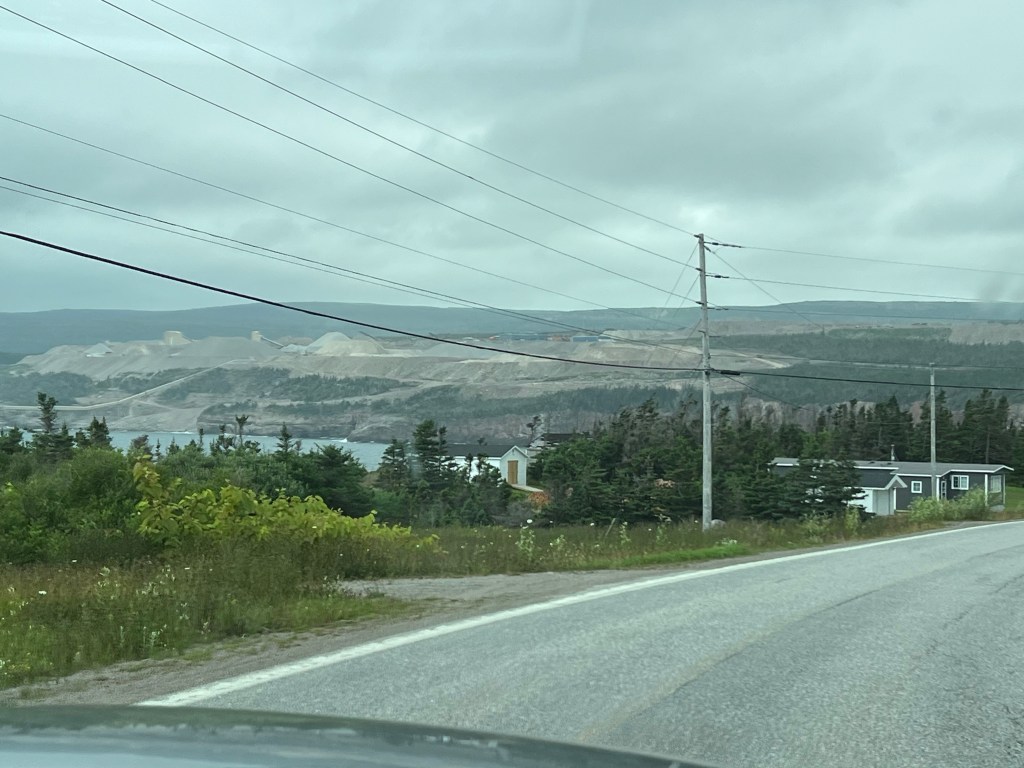
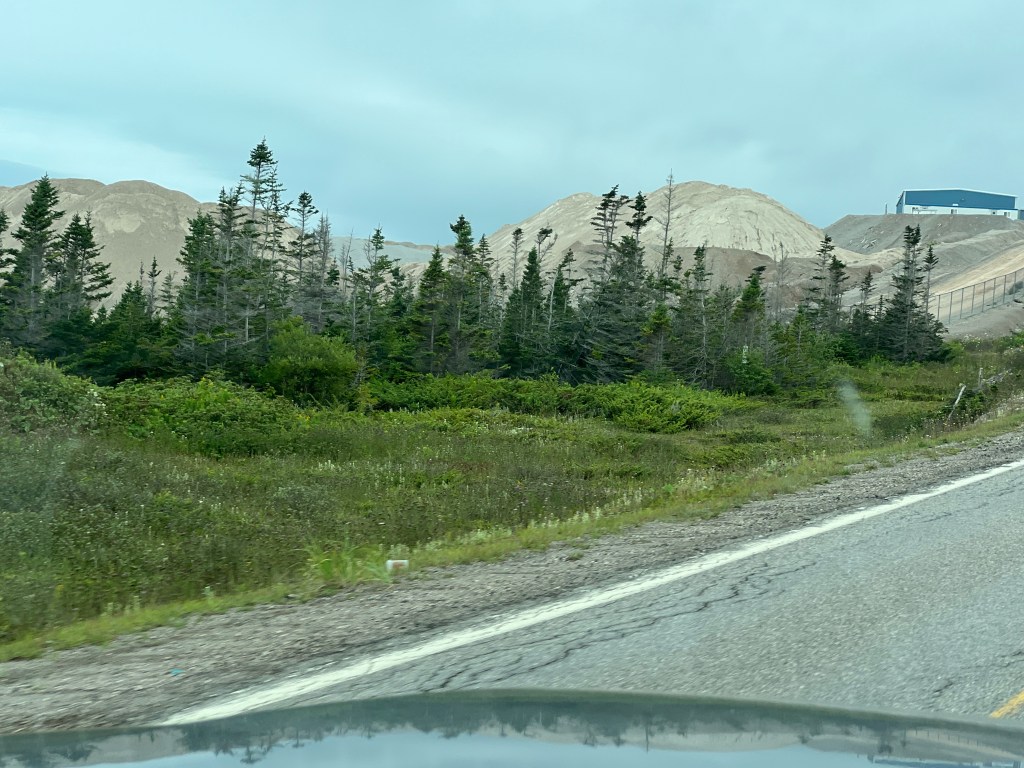
As we drove we saw this huge area of excavation with huge piles of sand and gravel.
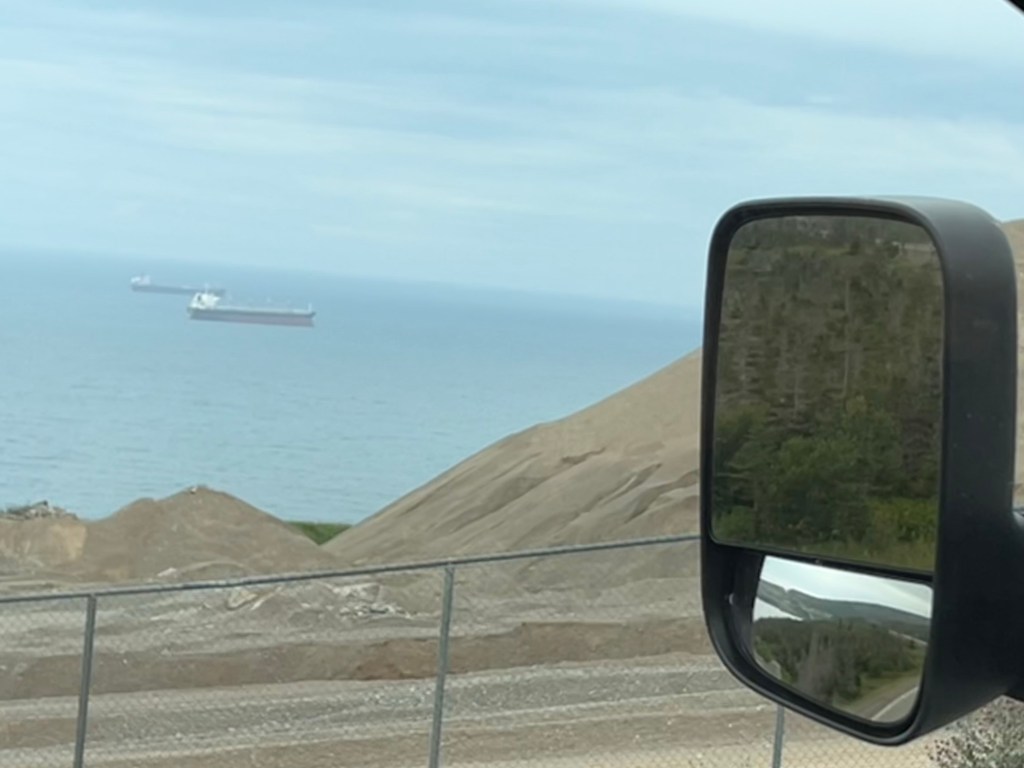
This is the Lower Cove Quarry of CEMEX, an international building materials company that started as a cement plant in northern Mexico in 1906.
I never got a good angle to show the loading facility that extends into St. George’s Bay. These ships are probably at anchor waiting to load the sand, gravel or aggregates quarried here. The bay is completely exposed to the southwest, so I’m guessing weather plays a big role in their operations.
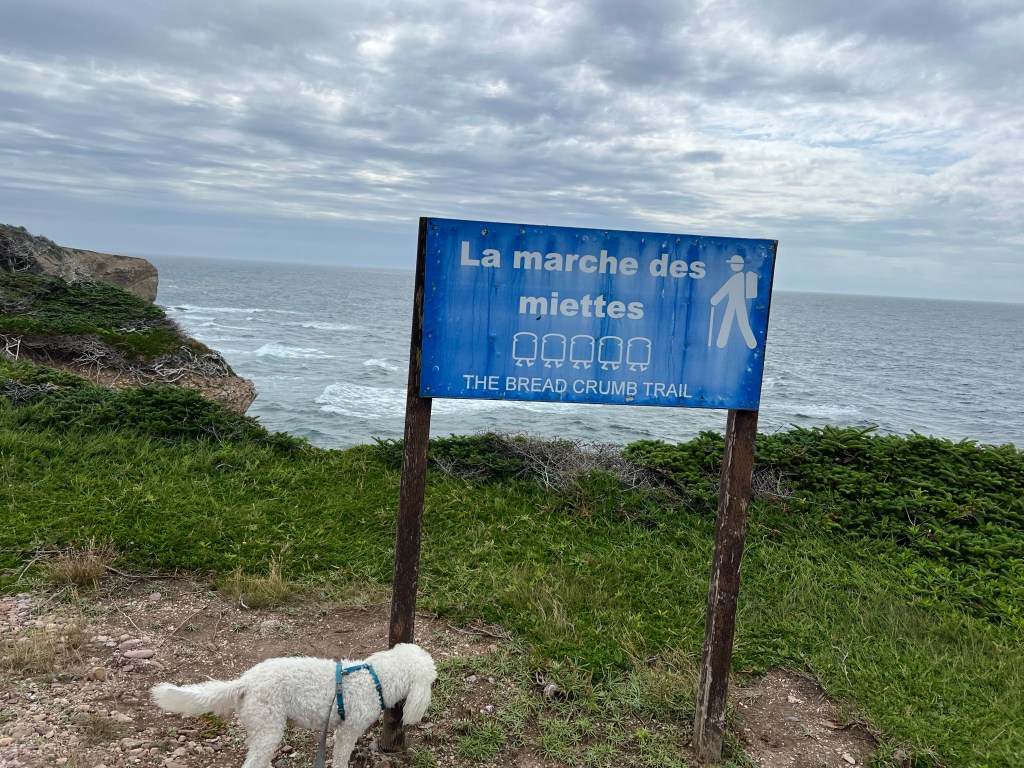
We stopped at Boutte du Cap Park in Cape St. George and poked about The Breadcrumb Trail. There’s an outdoor French Bread Oven here but we were too early for the baking. This peninsula has a lot of French ancestry people. People from both France and England fished Newfoundland and had some settlements. When the English won the Seven Years War (called the French and Indian War here), they took over French Canada (except for the tiny islands of Saint-Pierre and Miquelon) but let the French continue to fish off Newfoundland. When the Acadians were expelled from the Maritime Provinces some of them came here and joined the other French settlers who stayed here. So the peninsula has a lot of French names, Catholic Churches and schools and even a French speaking school.
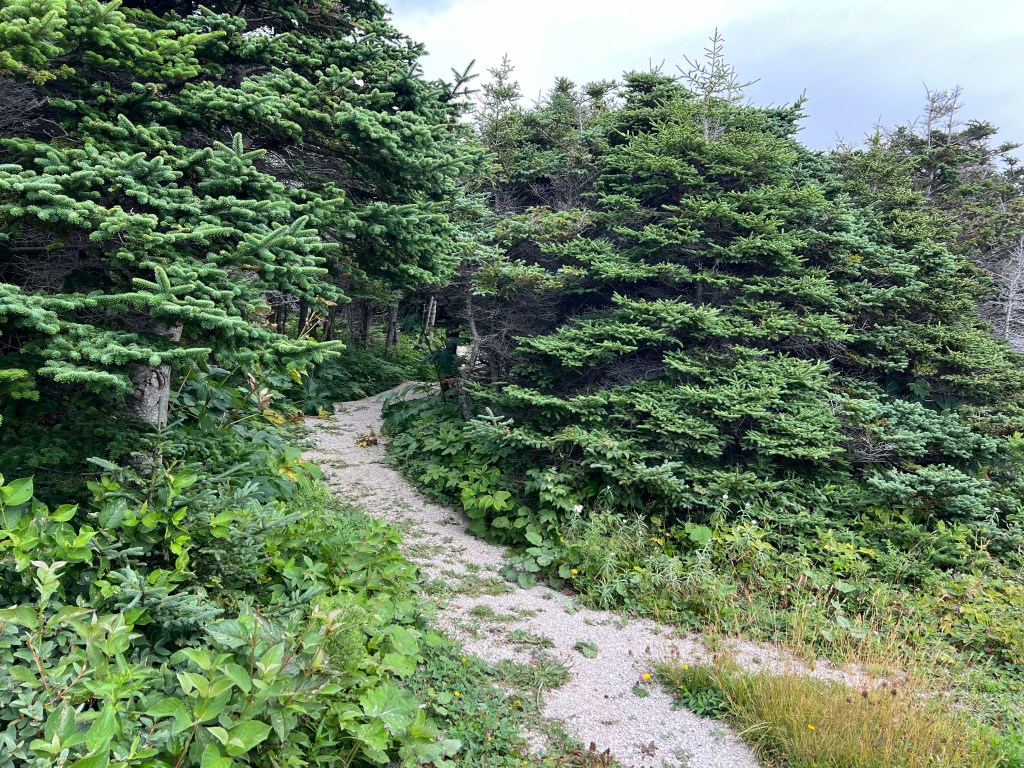
The trail went through a patch of dwarf woods…
and then out on the open heath.
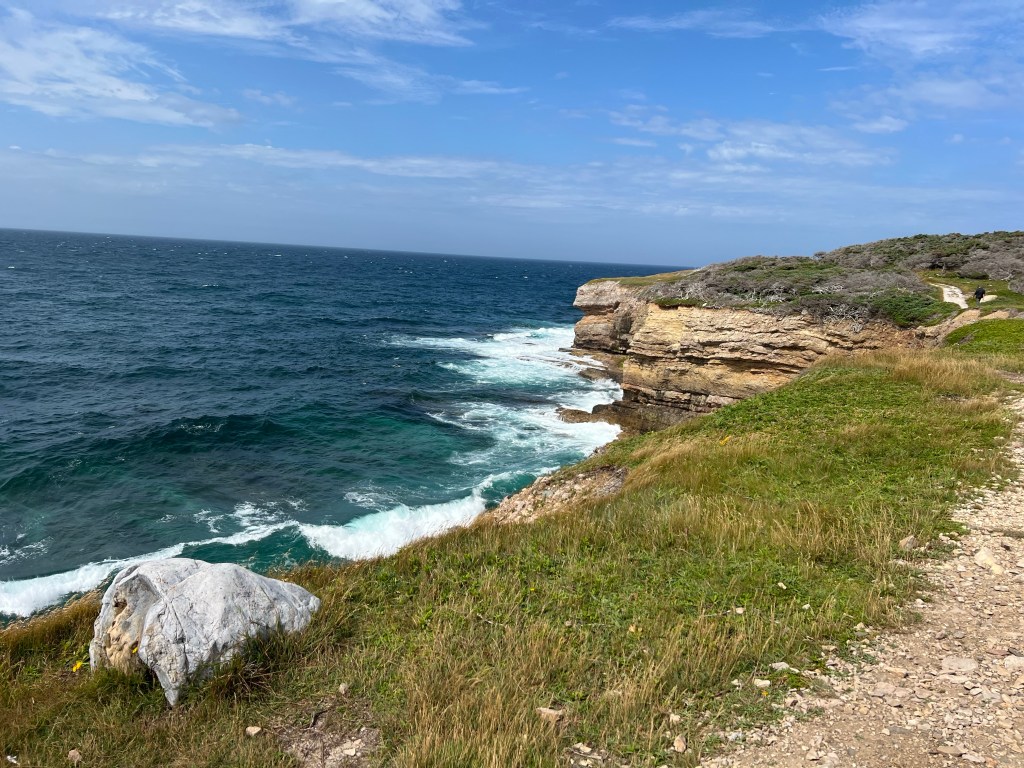
The sun was peaking out and I got a couple of shots of the cliffs.
Another beautiful shoreline.
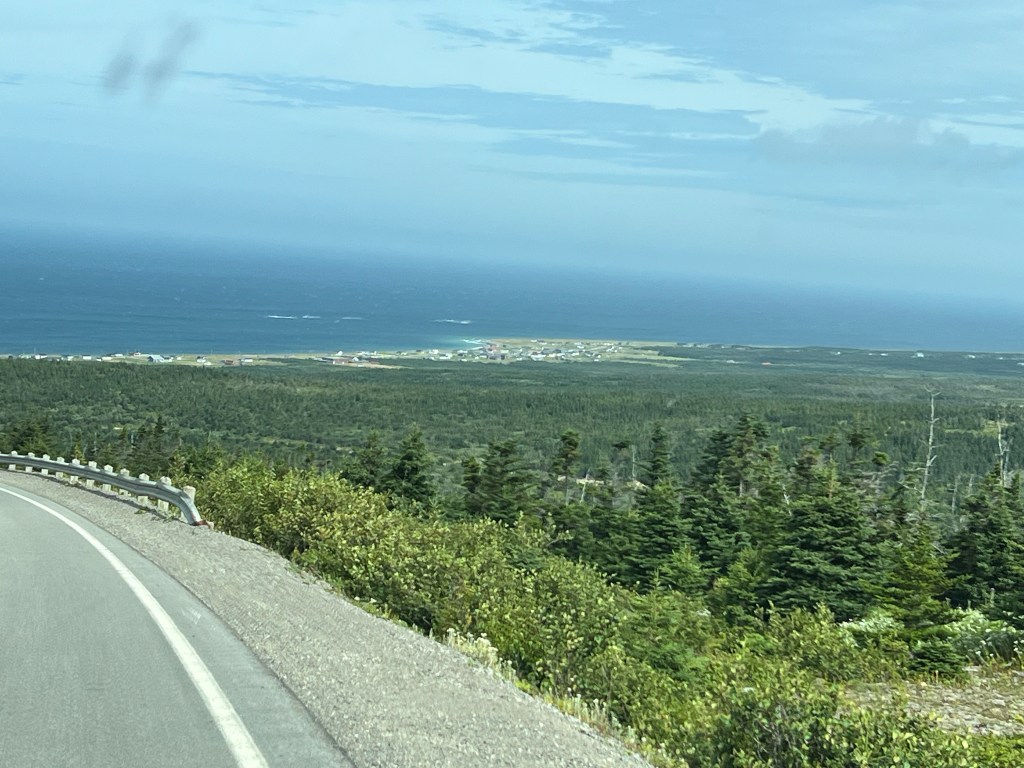
The road back went across a highland until it swept down to the town of Mainland along the northwest shore.
We stopped there so I could get a shot of the headland we’d just crossed, and Red Island offshore.
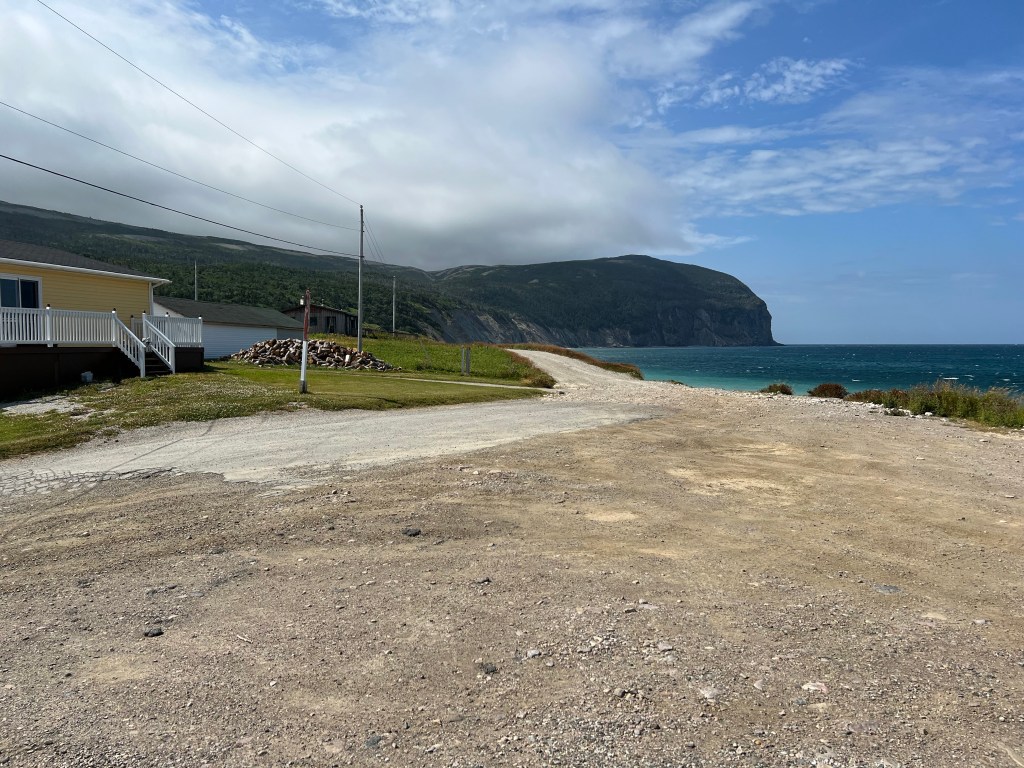
There were a couple of houses here. What a view they had!
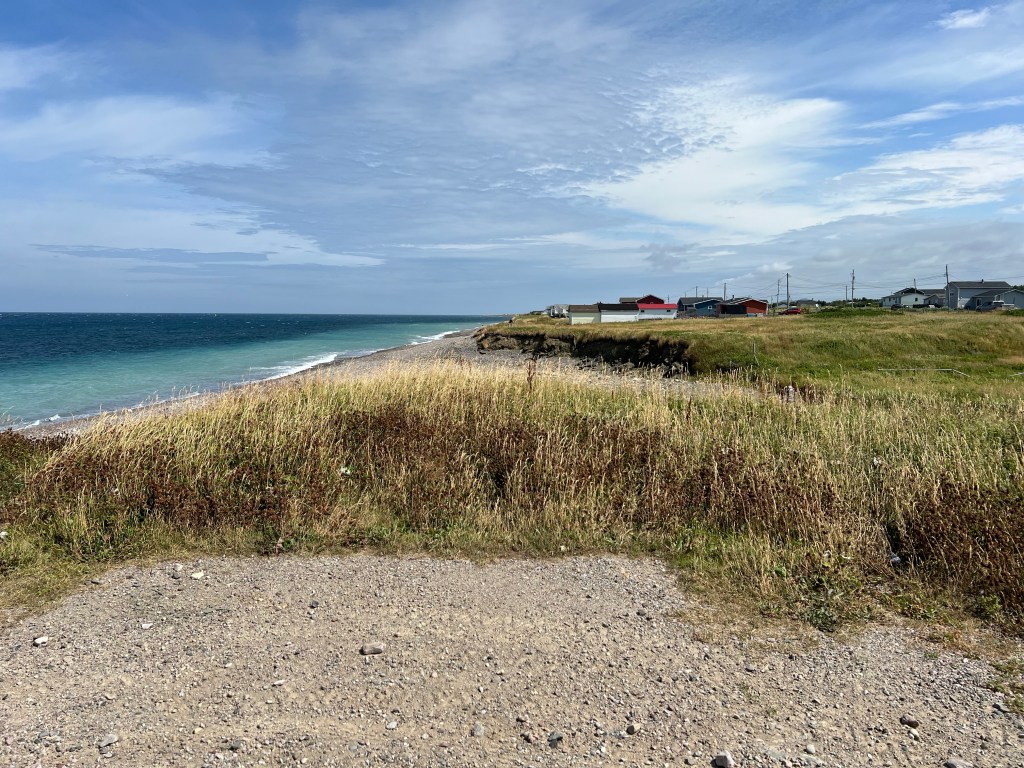
The town stretched along a gravel beach.
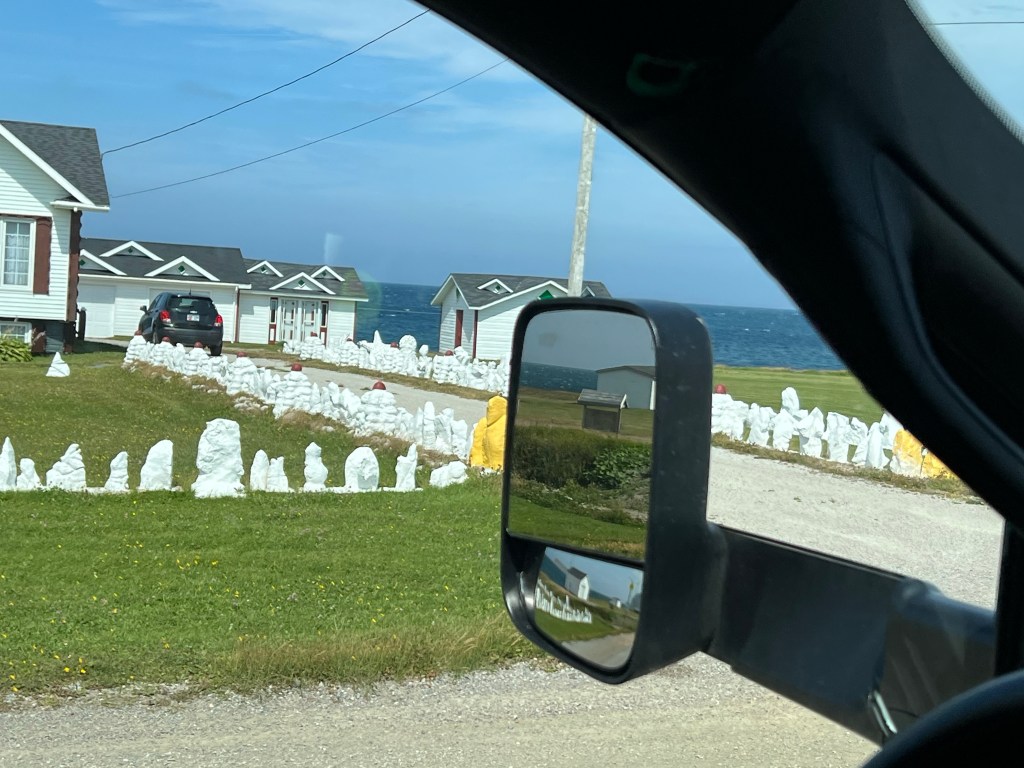
There were several houses in town that had arrays of white painted rocks in their lawns. Don’t know what that was about.
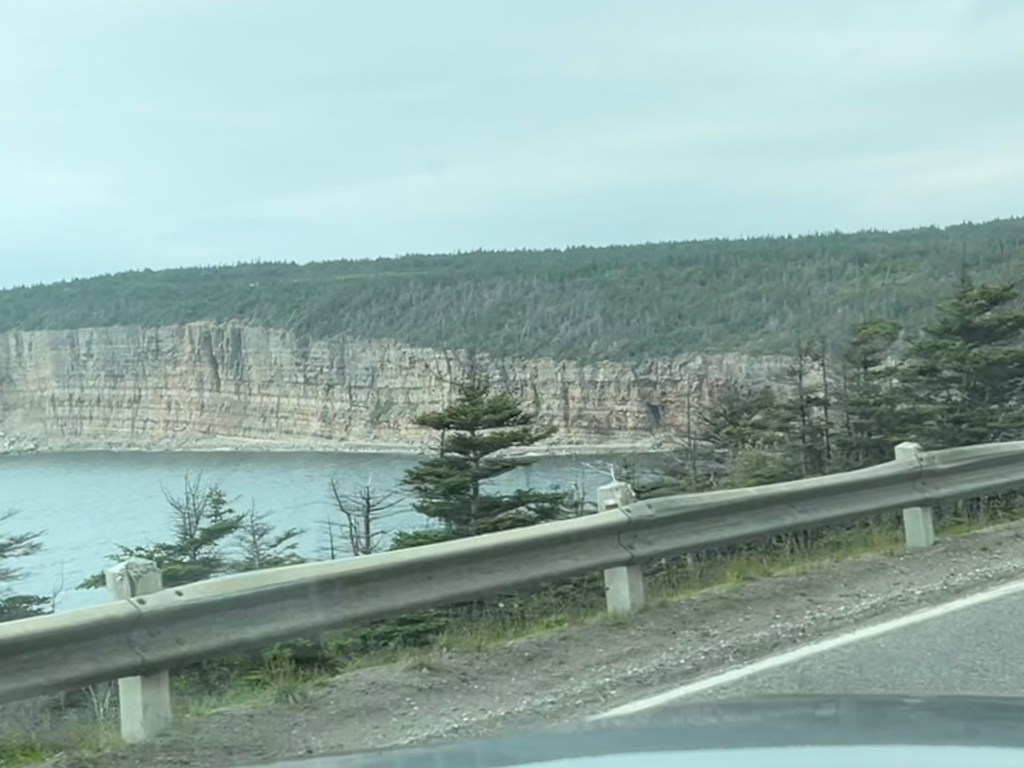
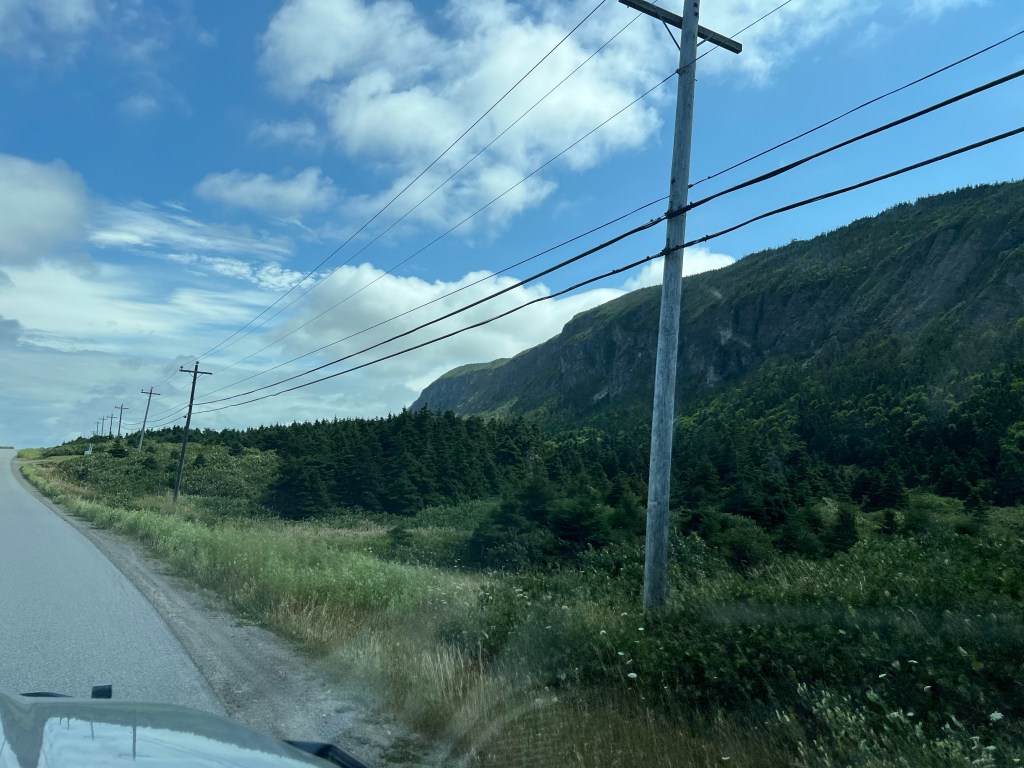
For this part of the drive there was a smaller cliff sea side and then a large cliff inland.
We finished our loop without going out to Long Point because our truck was not liking the low speed driving. It has a particle filter to clean the exhaust and you need to drive at highway speed for the engine to generate enough heat to burn that clean. Evidently 60kph (37mph) doesn’t do it. We were afraid the smaller road out the point would be even slower. Hopefully we can do that another day, the filter was about 80% clean when we got back.
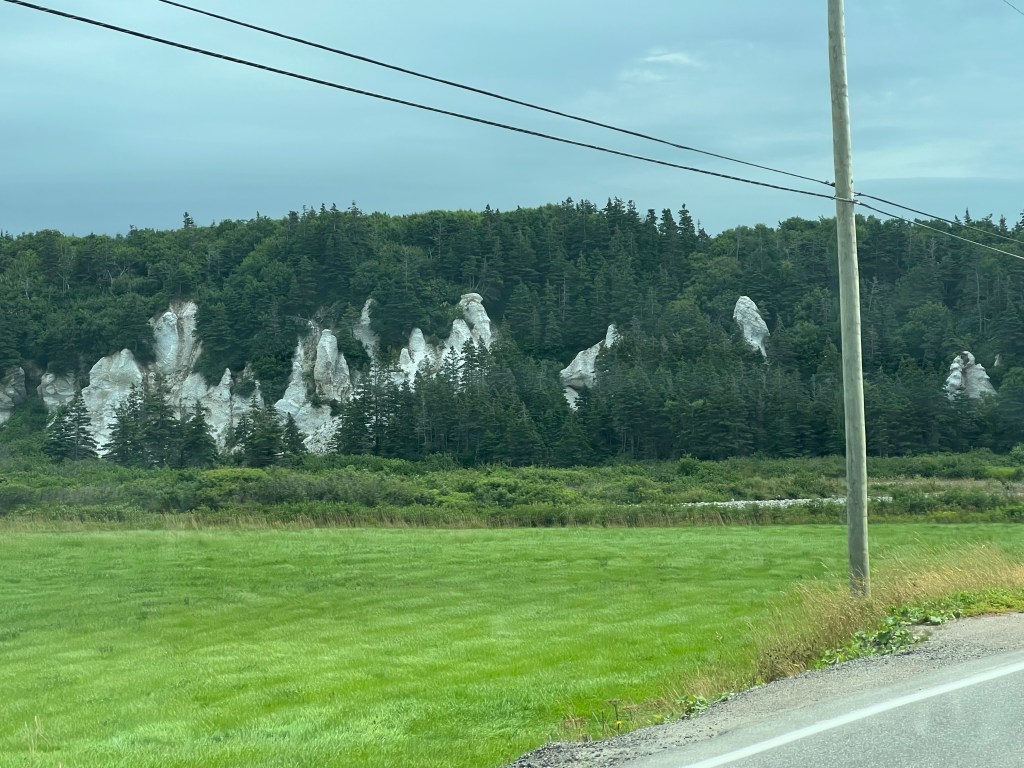
As a bonus we saw these white hoodoo structures on the bank of Romaines Brook less than a mile from the campground. Something else to explore if I can get Matey to walk there.
 On the Roam Again