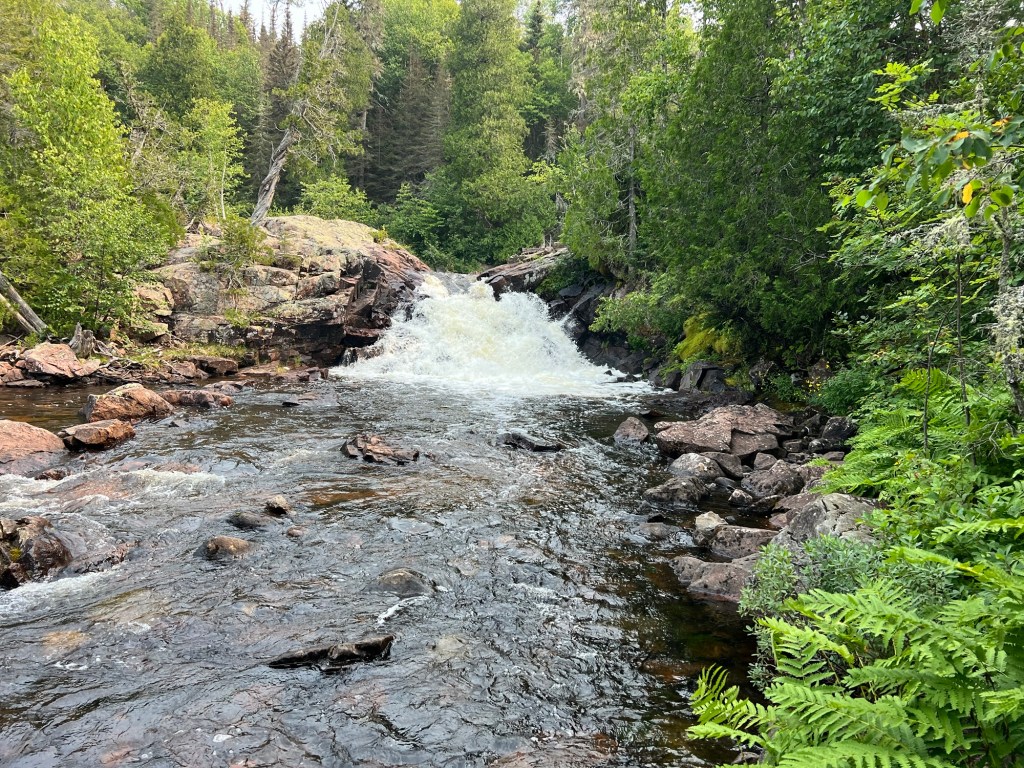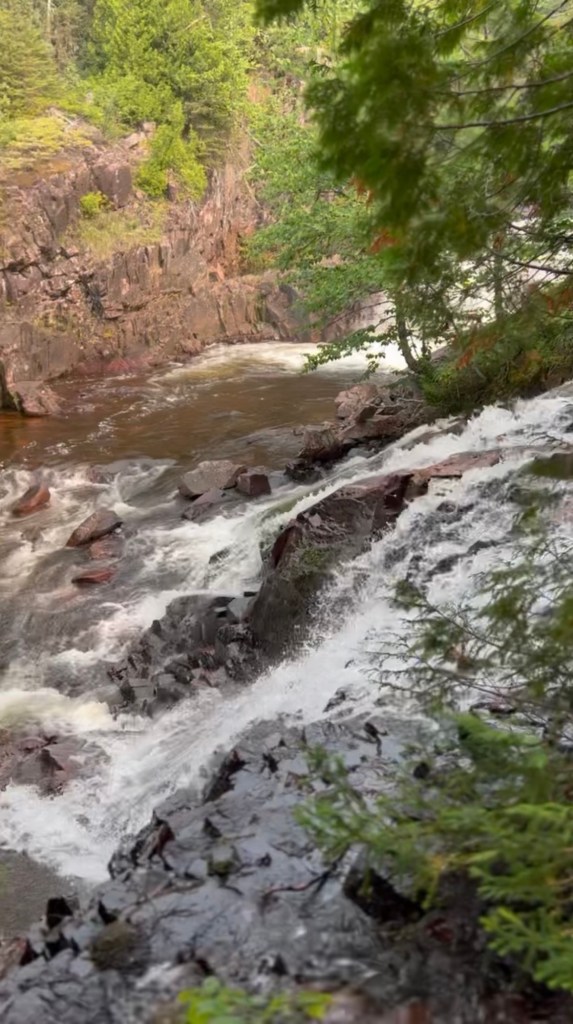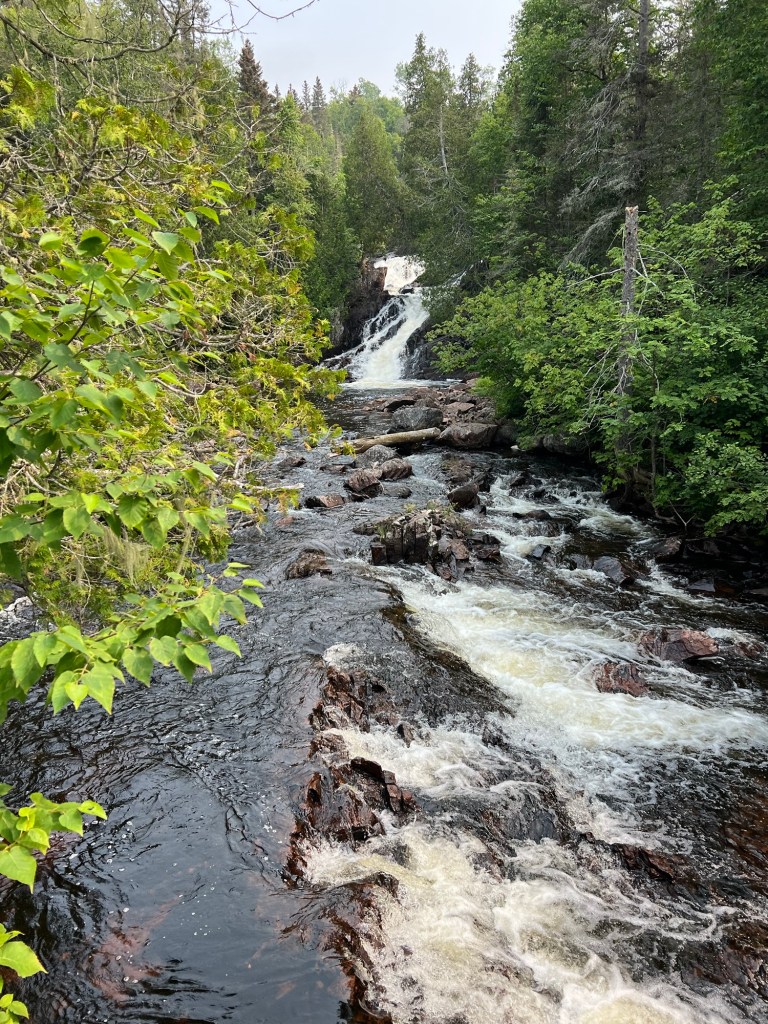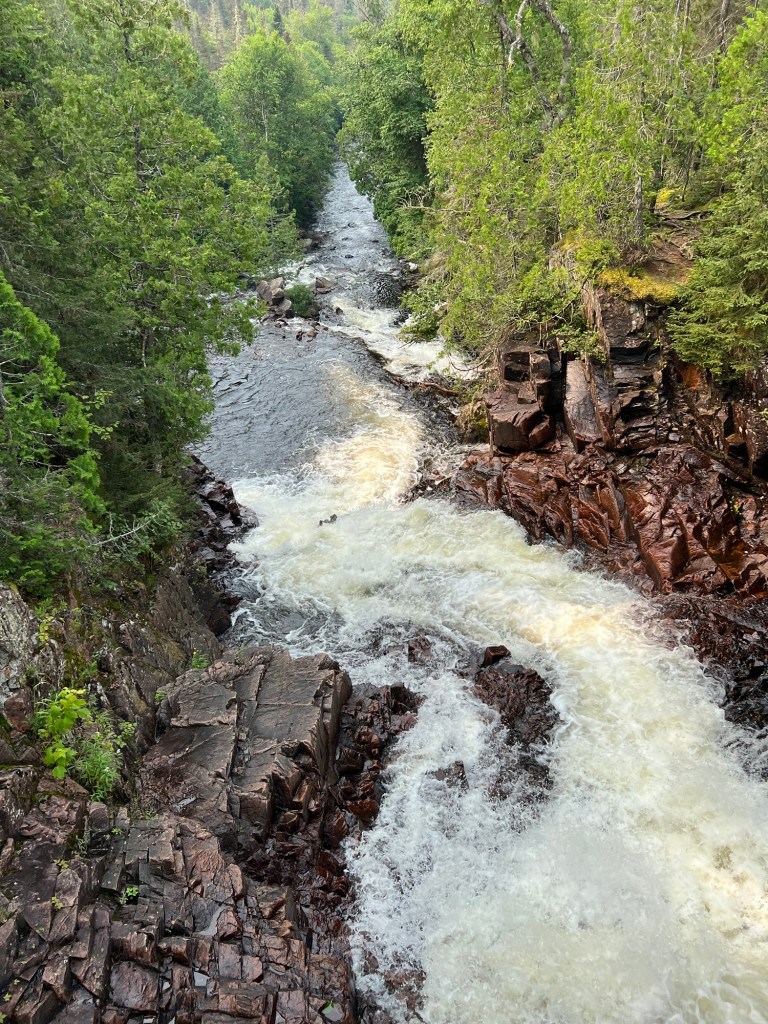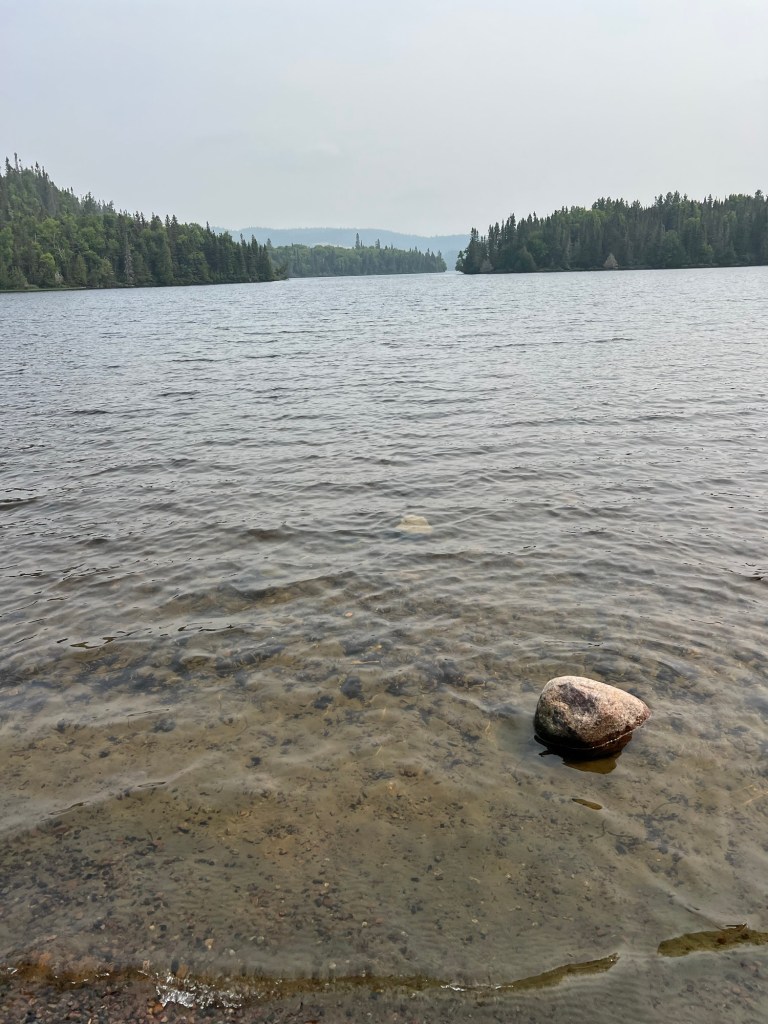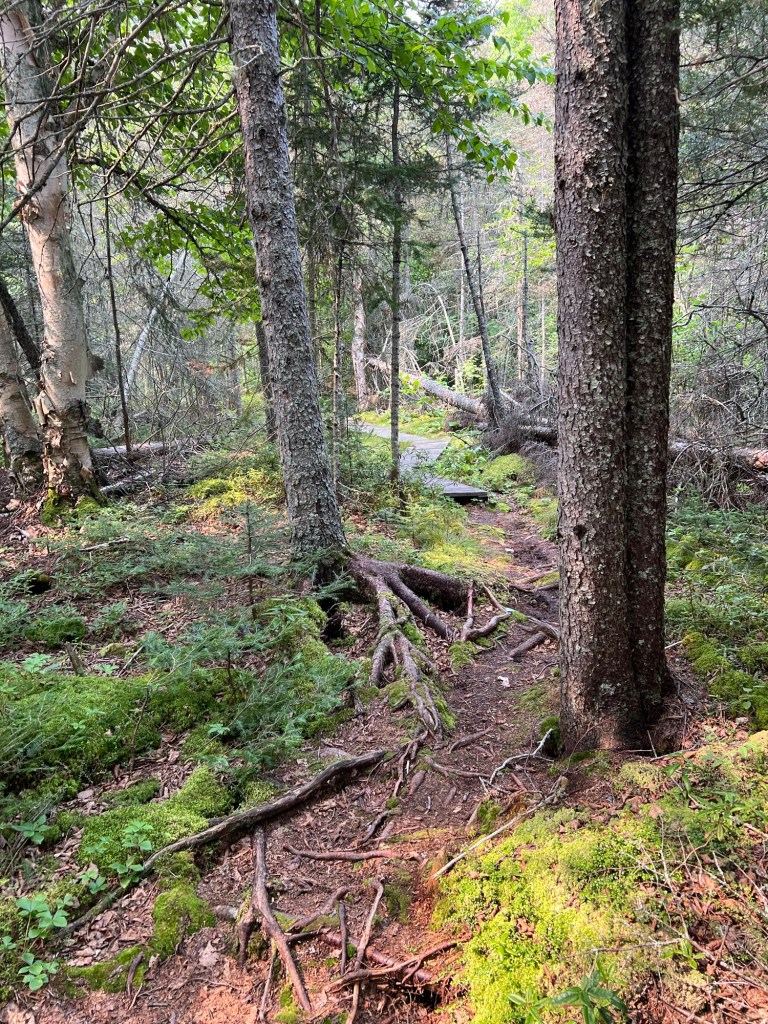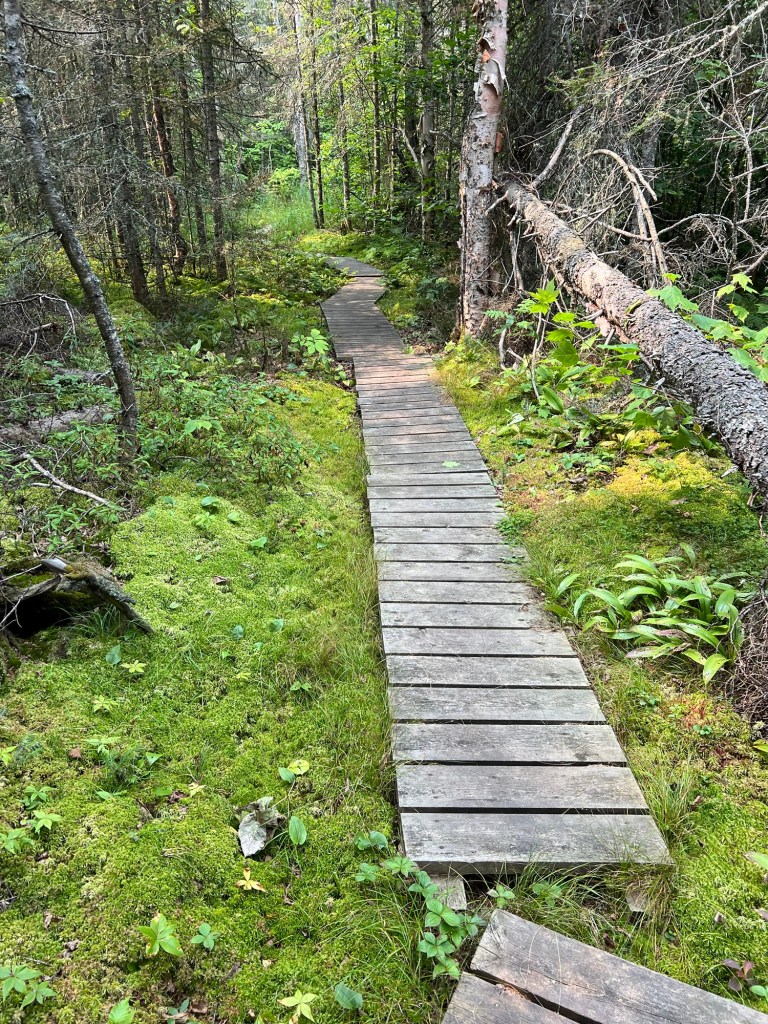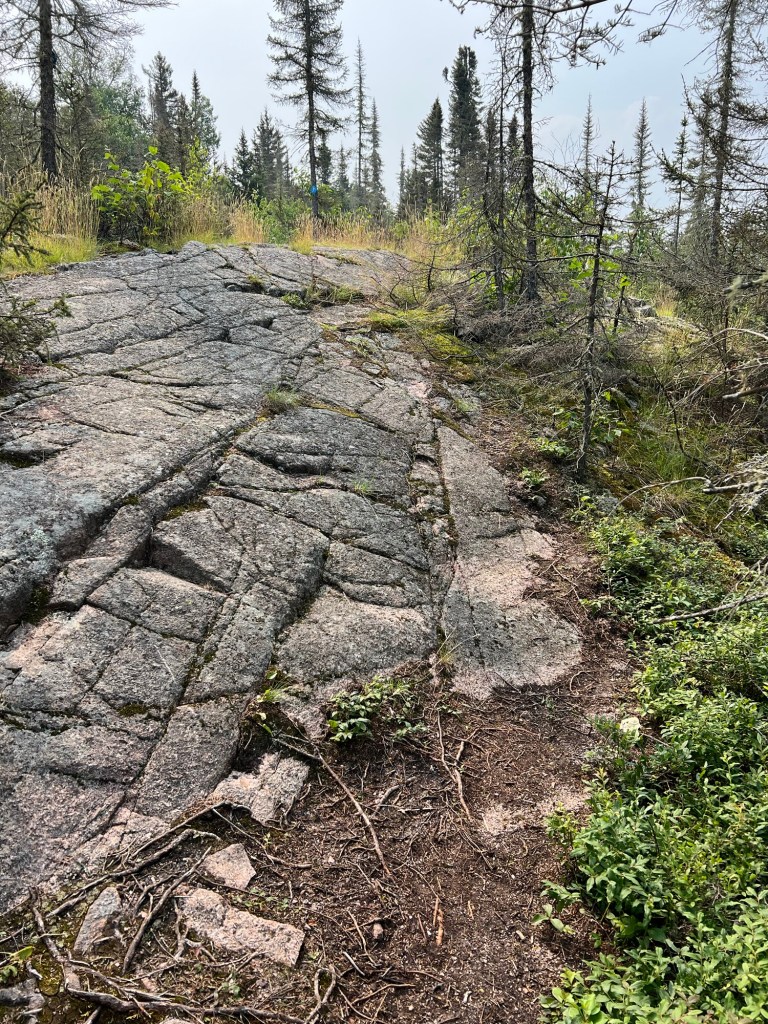
Around Thunder Bay

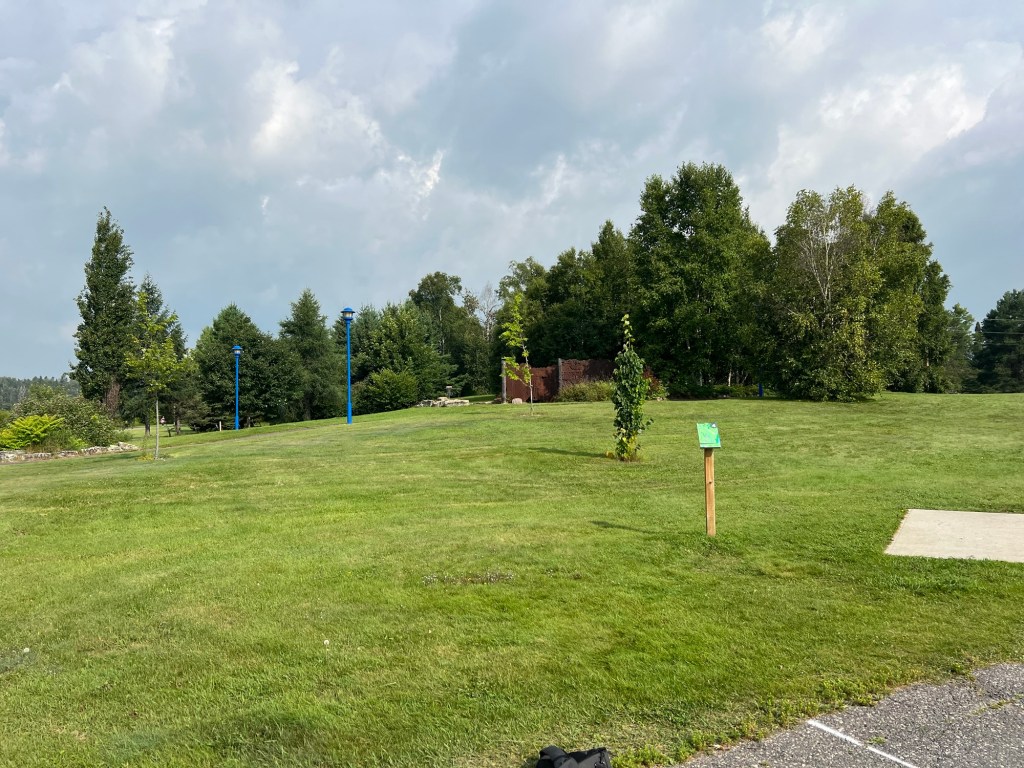
We’ve been at Kakabeka Falls Provincial Park for a week. Besides the falls and the fort we’ve gone into the city of Thunder Bay. They have disc golf here. We’ve not been near a course since southern Ontario and we played three times here.
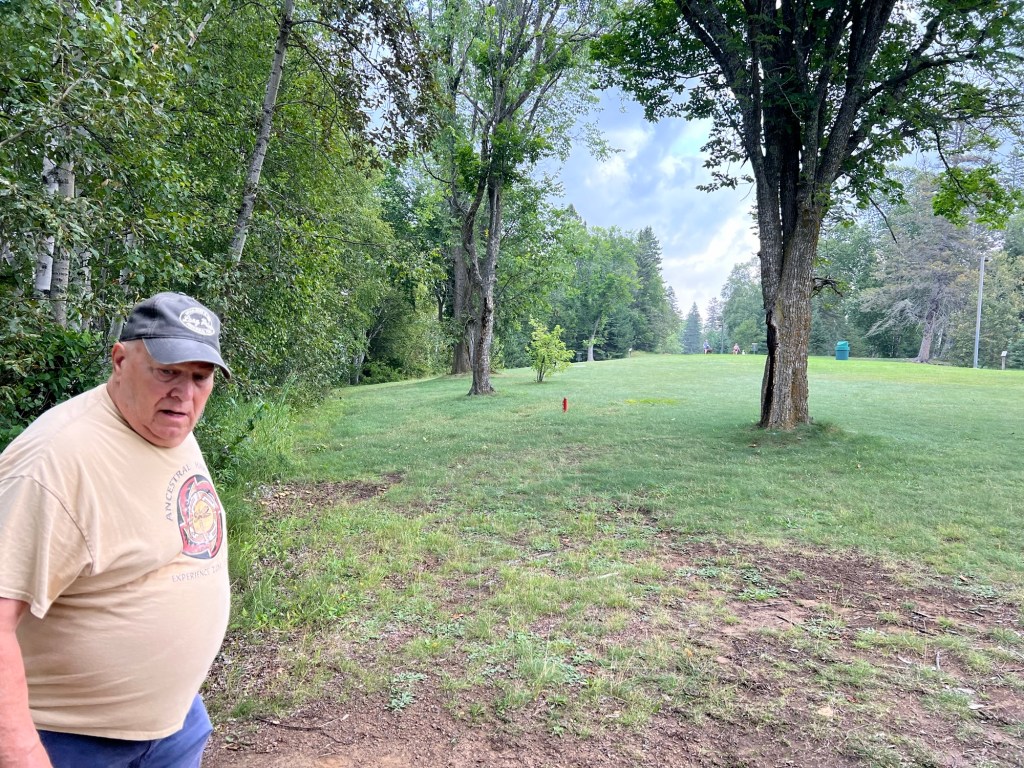
We played two different courses, but preferred this one at Birch Point Park.
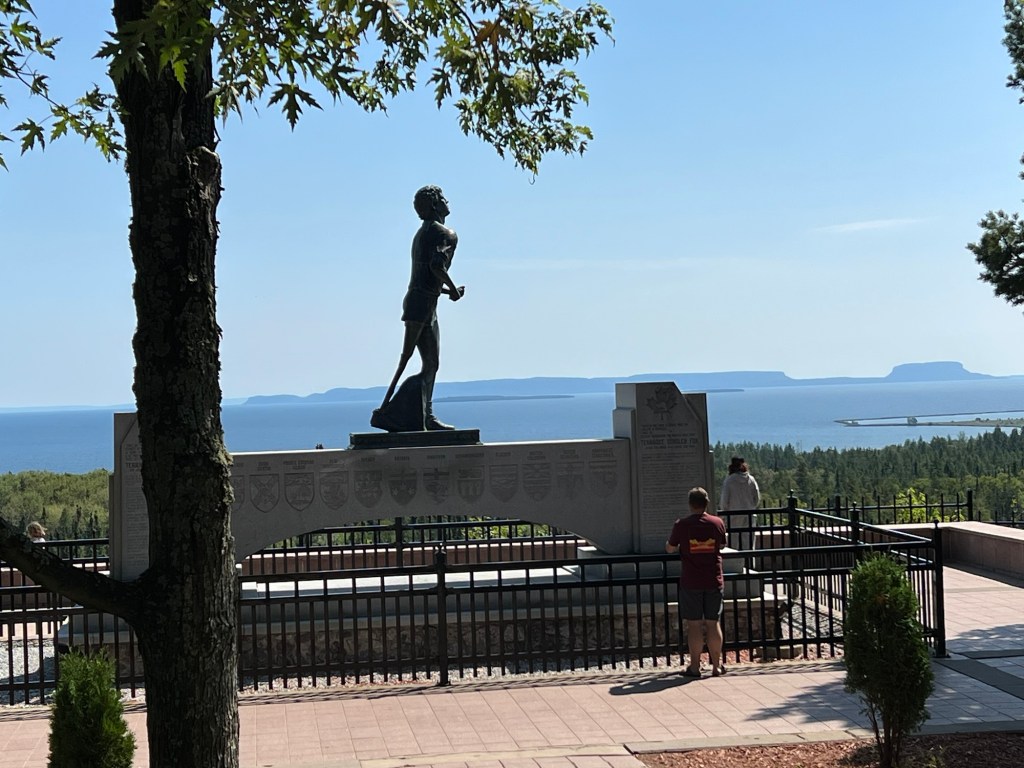
We’ve also gone to two overlooks. The first, on the northwest side is the Terry Fox Memorial. Terry was a young Canadian who lost his leg to cancer. In 1980, while in remission, he decided to raise awareness and money by running across Canada, he called it his Marathon of Hope.
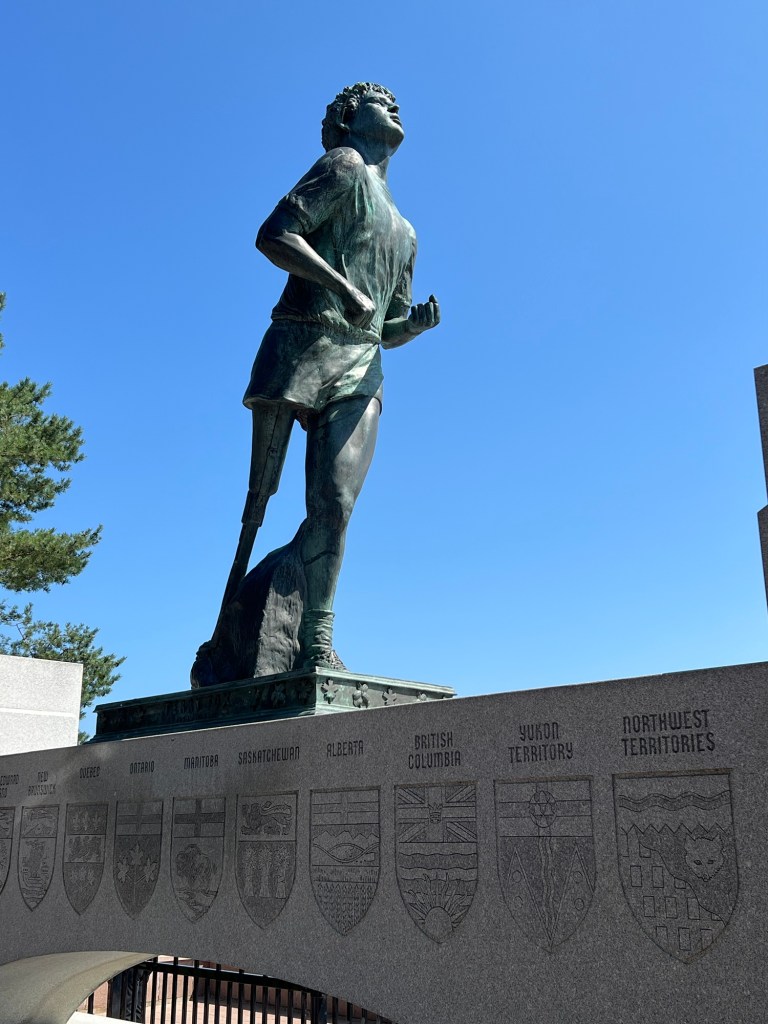
He started in St. John’s, Newfoundland and ran almost a marathon a day for 143 days straight. His cancer returned and forced him to quit very near this spot. He’d run 3,339 miles and raised $24,000,000 for cancer research. All charity runs owe their origin to Terry Fox.
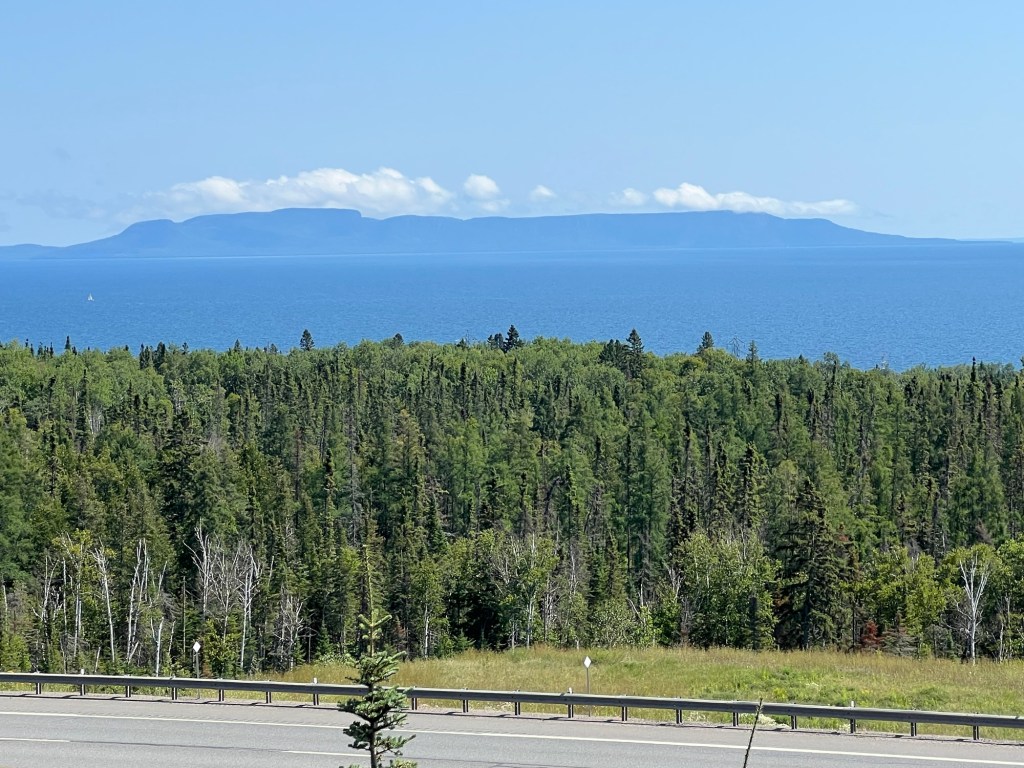
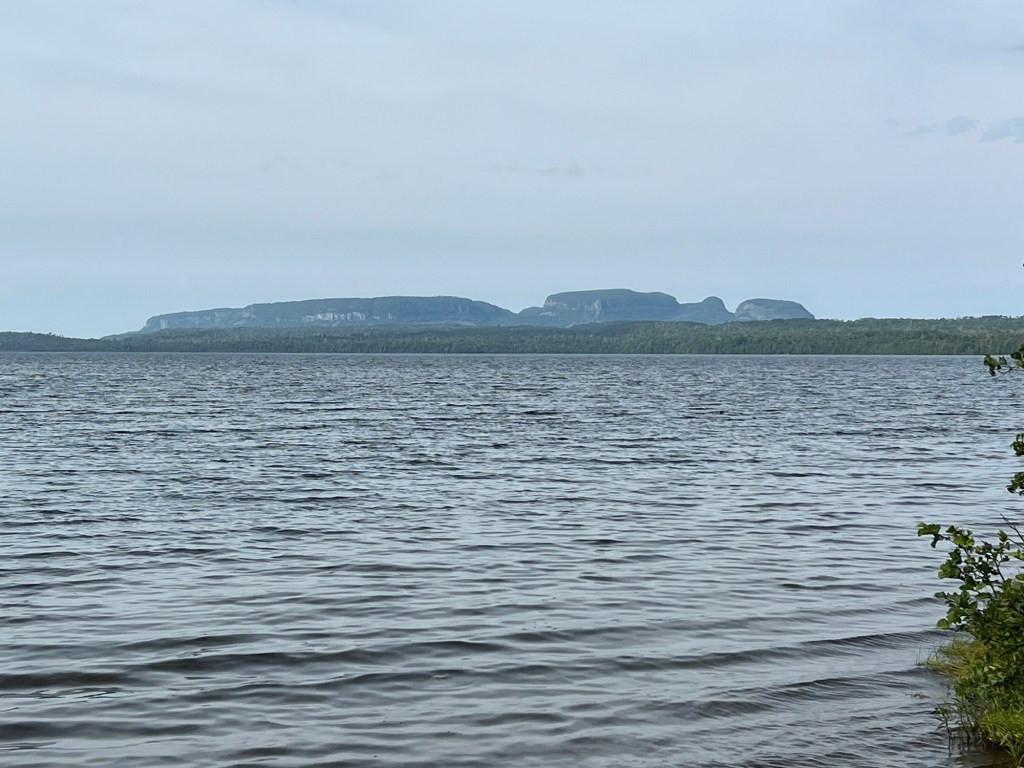
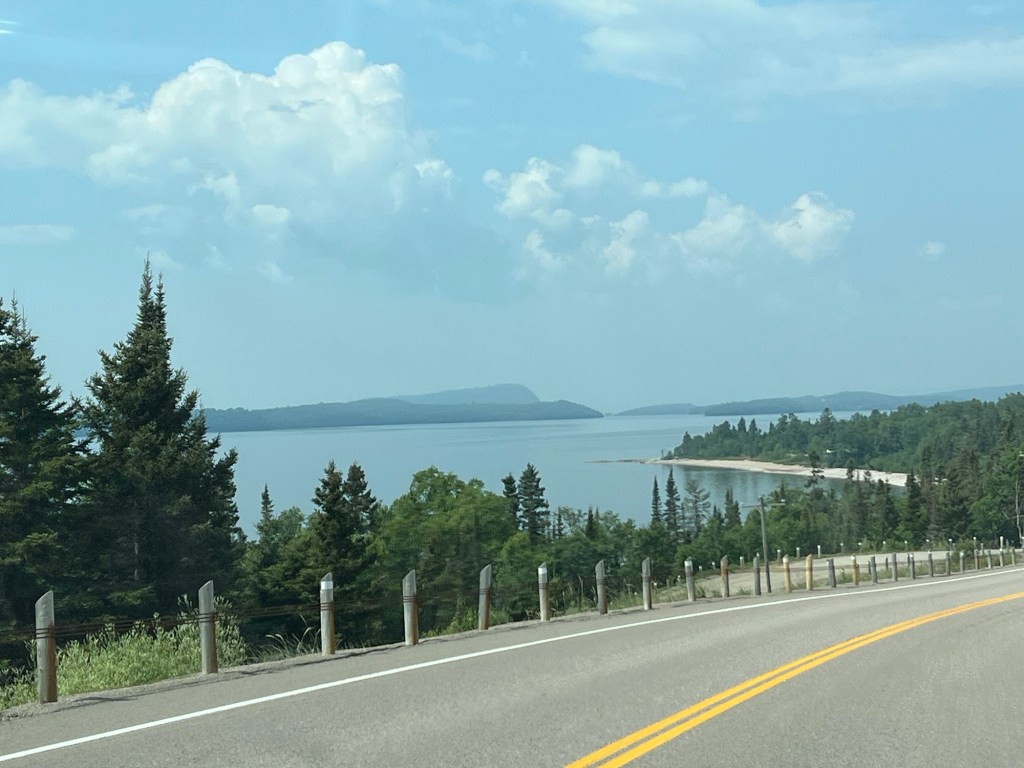
Looking from his memorial out across Thunder Bay you can see the Sleeping Giant.
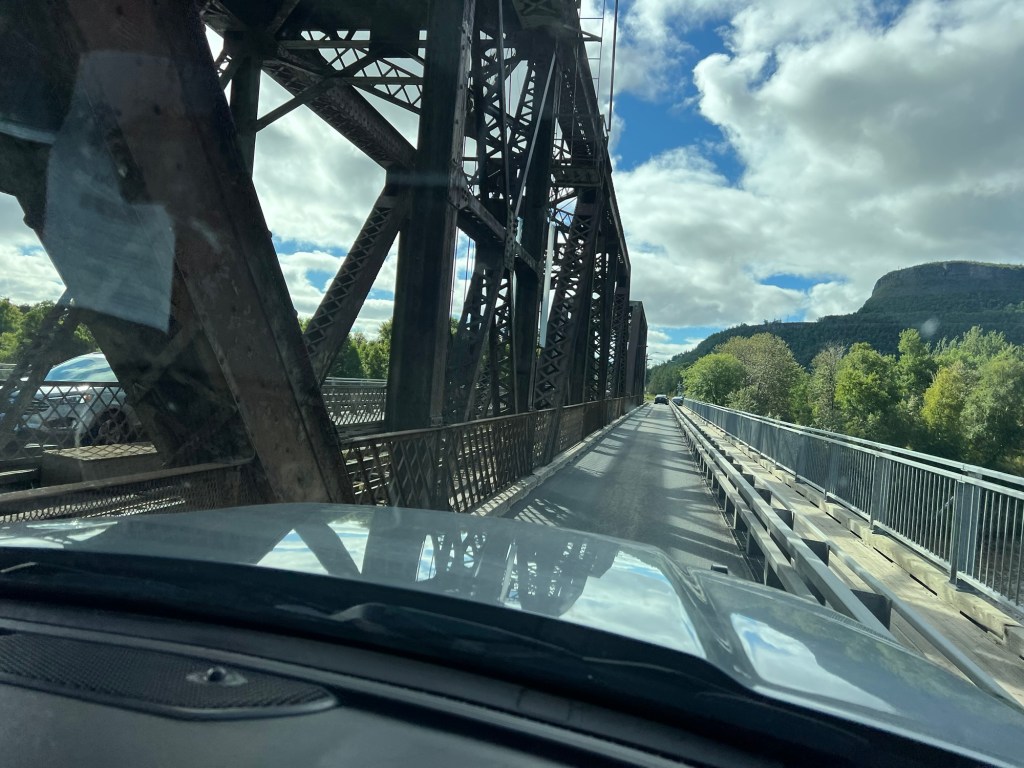
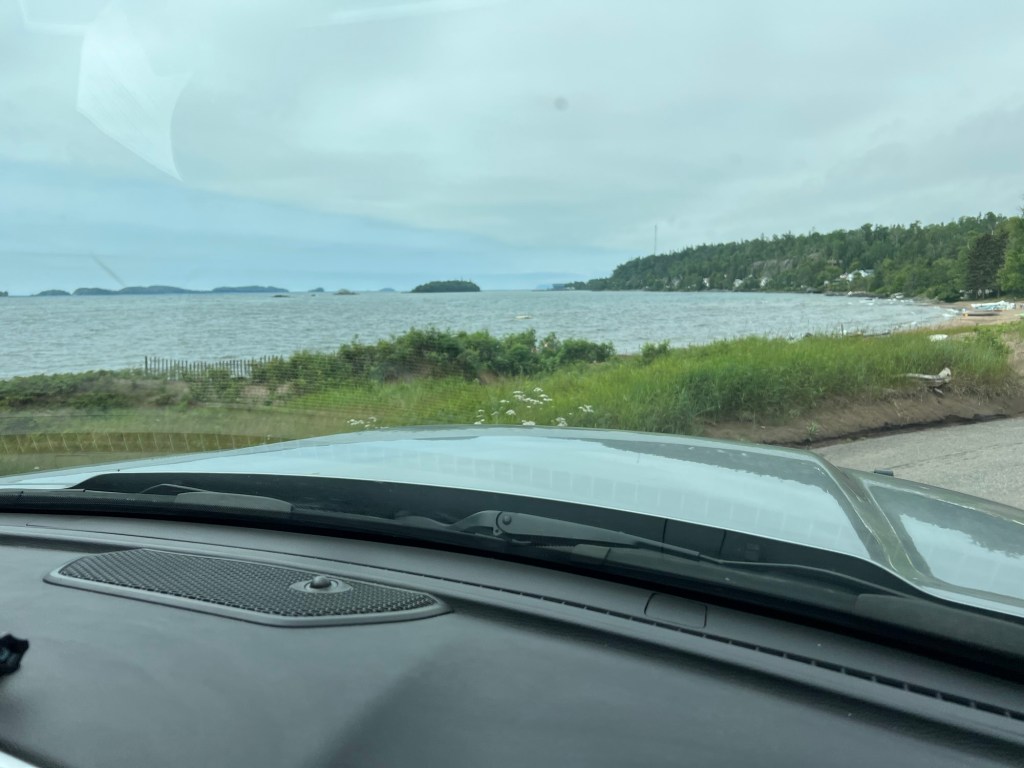
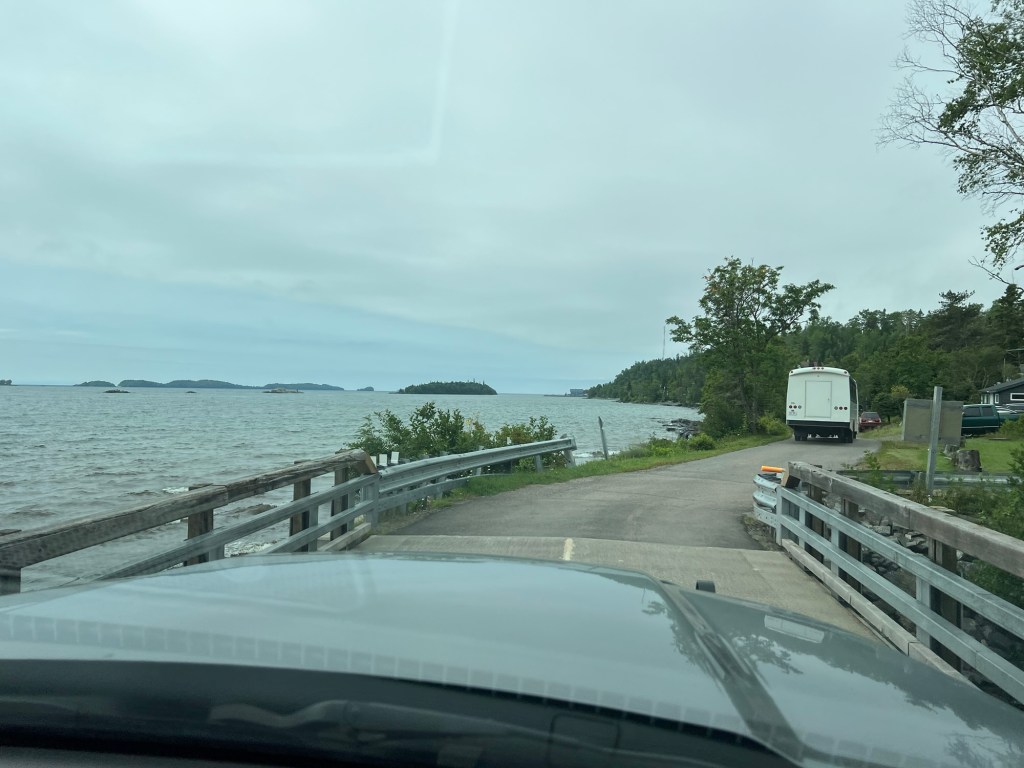
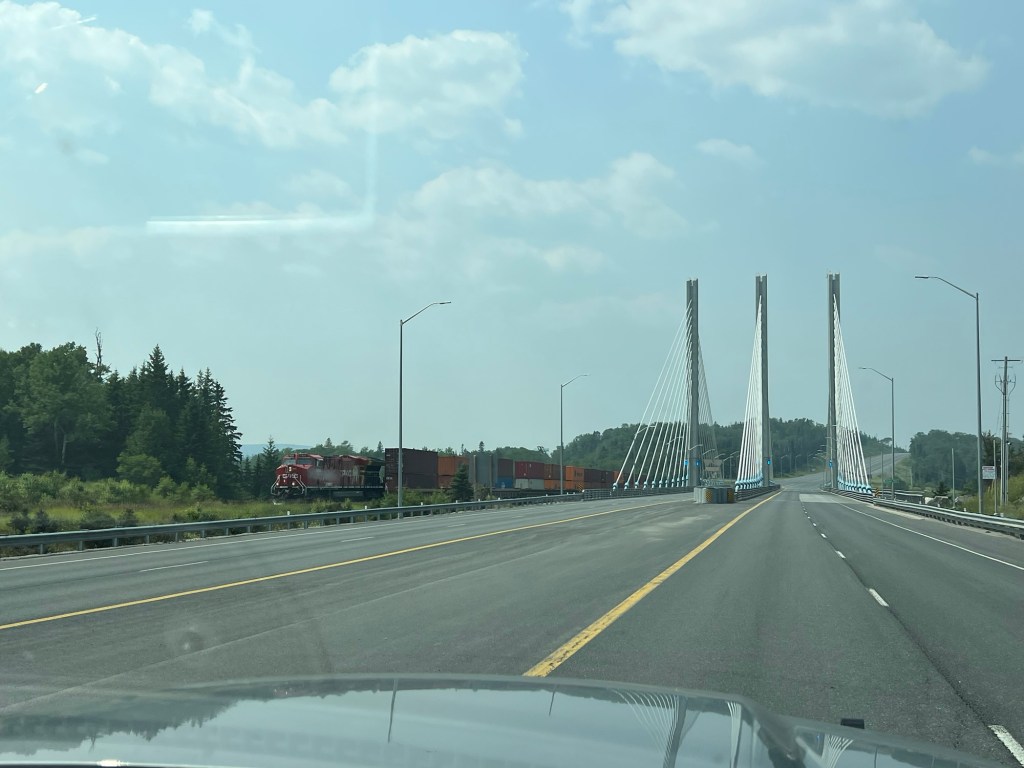
Today we drove across this very narrow bridge to the Fort William First Nation for fuel. No large trucks are allowed on this. Between the two narrow auto lanes is a railroad bridge. I don’t think I’d want to be crossing with a train!
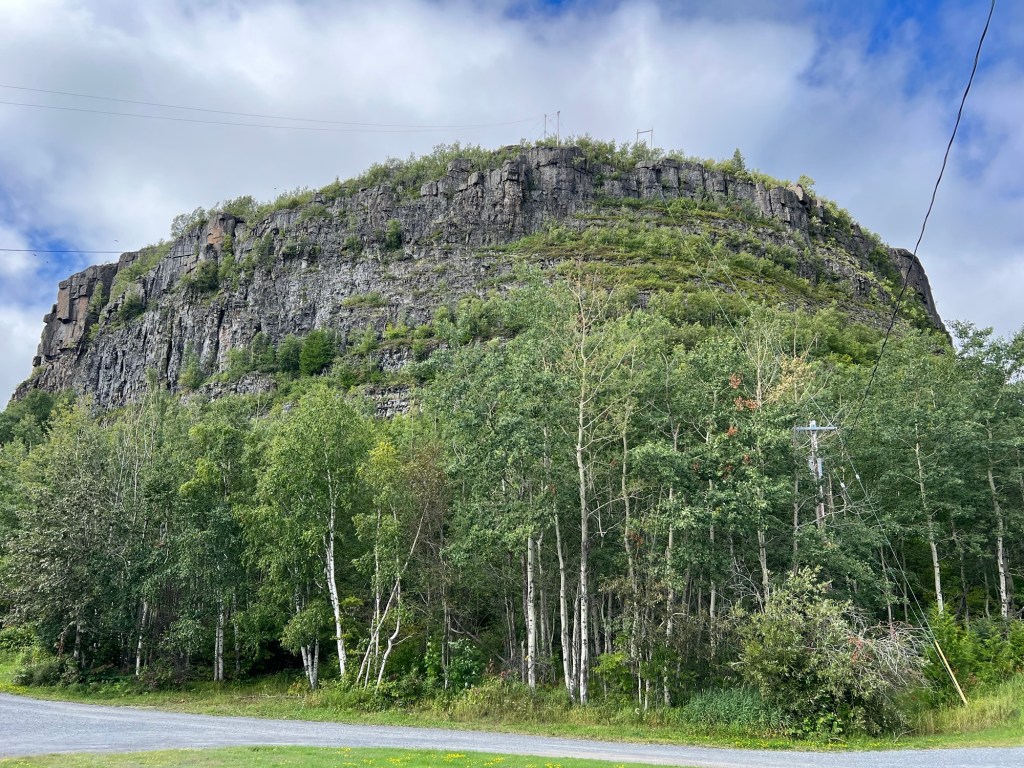
On their land is the Mount McKay Lookout, though their name for the mountain is Thunder Mountain.
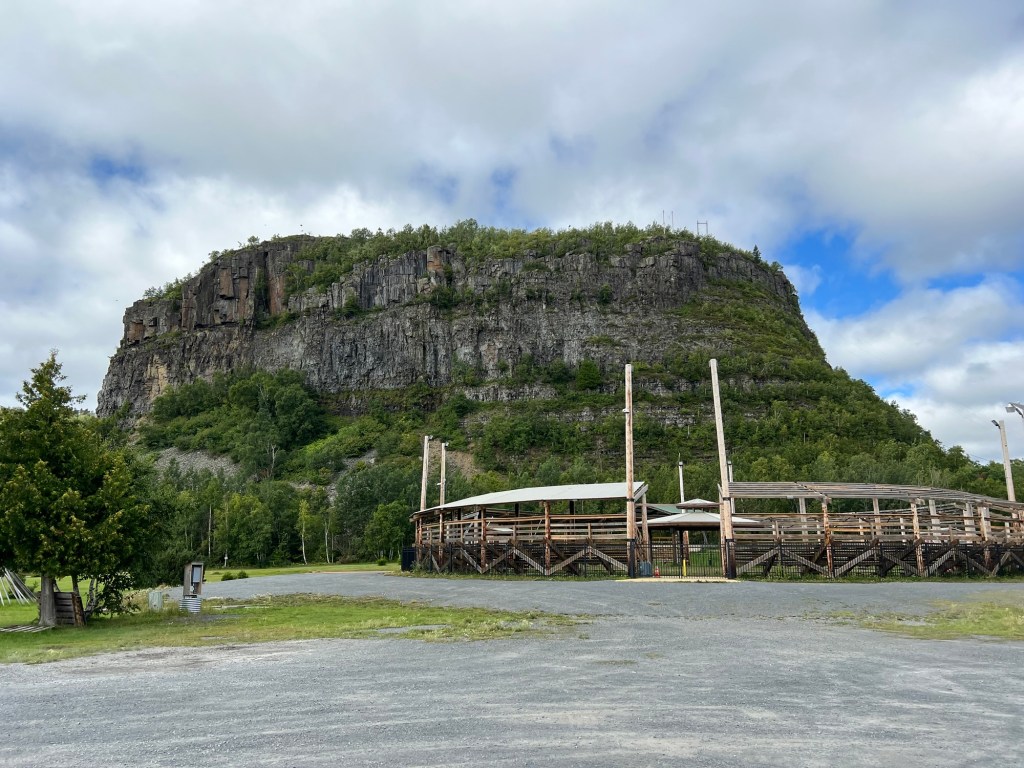
This top hat of rock rises above the lookout. The lookout area also has this stadium for pow wows. I attended a public pow wow at Fort William so I know the central pagoda is where the drummer groups sit. The groups I saw were two to four people. They sat around a large drum that sat on a stand with feet. They each had one drumstick and they all beat the drum and sang. The dancers dance in the circle around them. I noticed that this stadium has four entrances placed in the four directions.
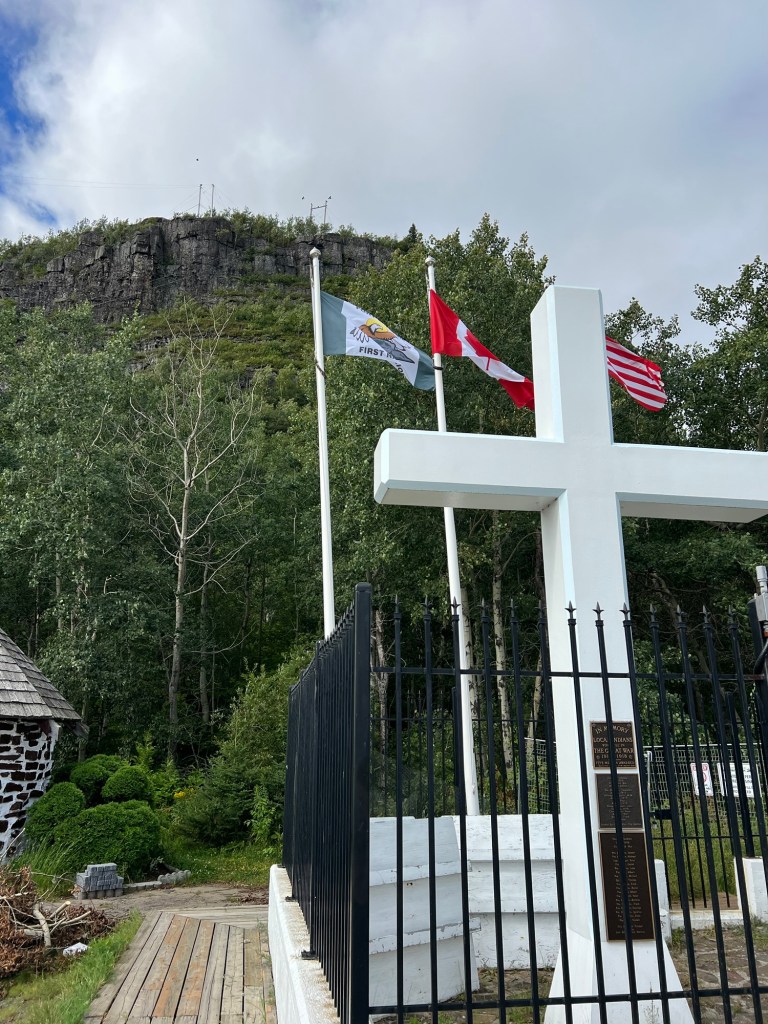
Also at the lookout were a war memorial for World War I…
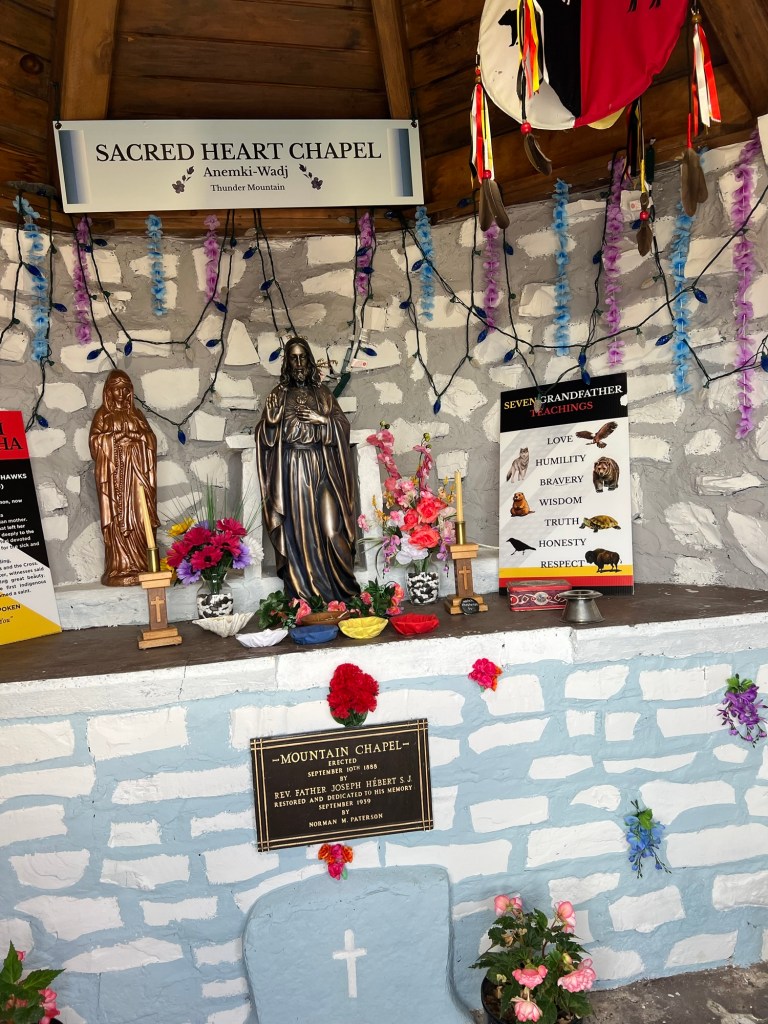
and this chapel.
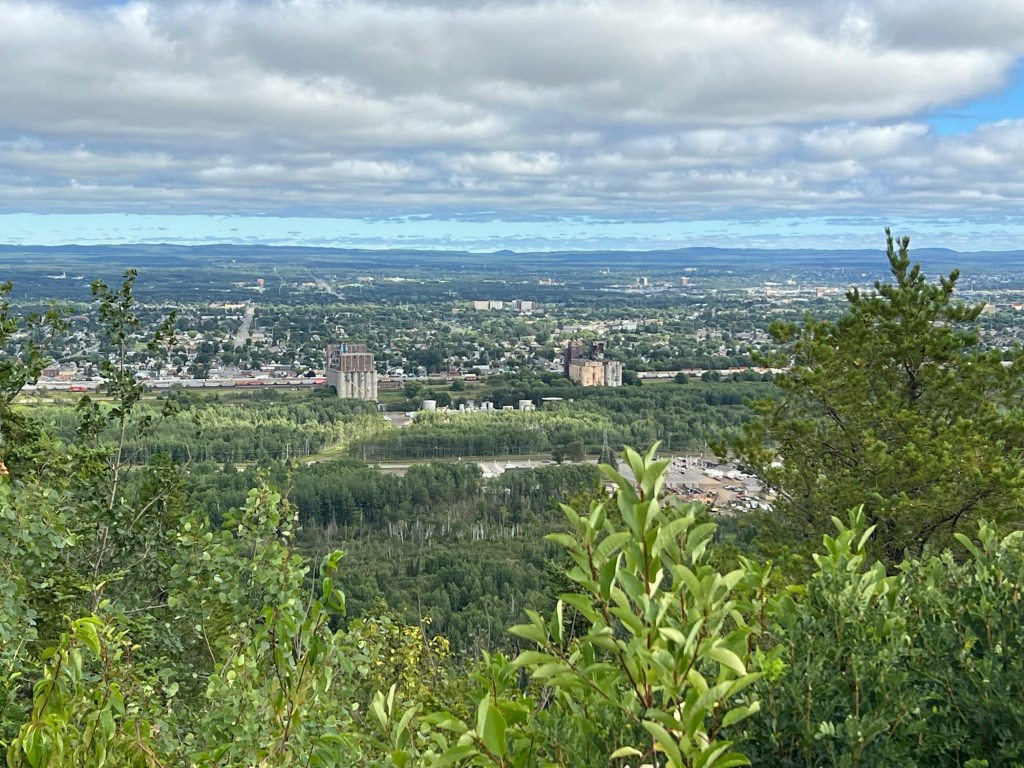
There was a great view of the city, this time from the south,
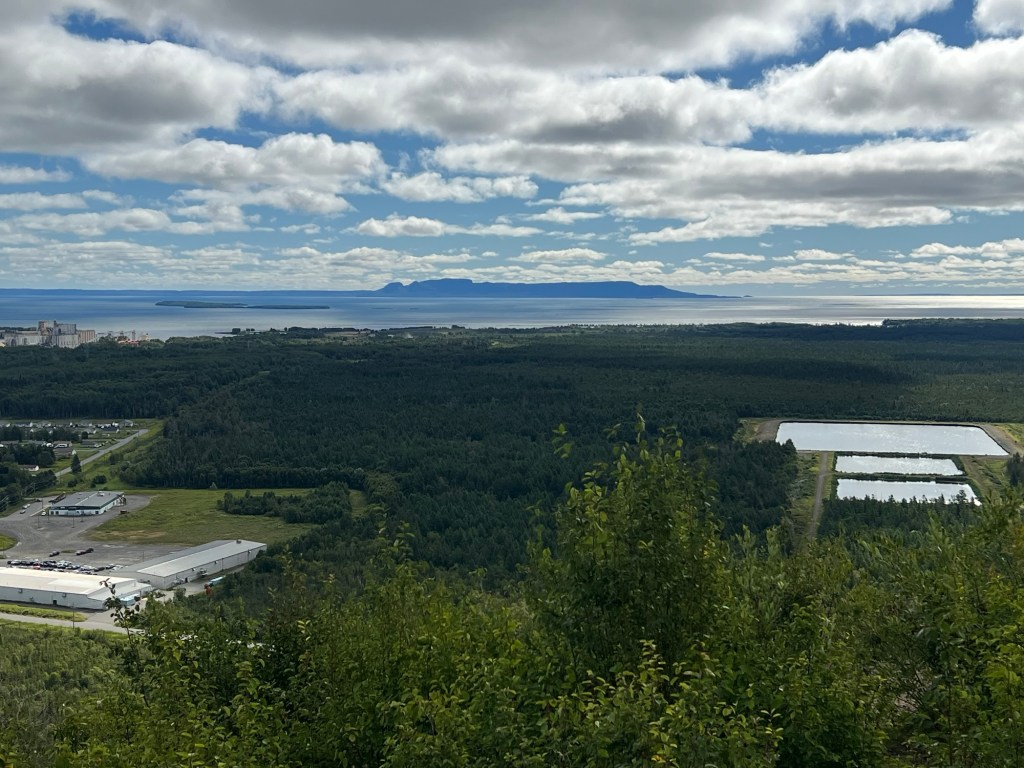
and out across the bay was the Sleeping Giant.
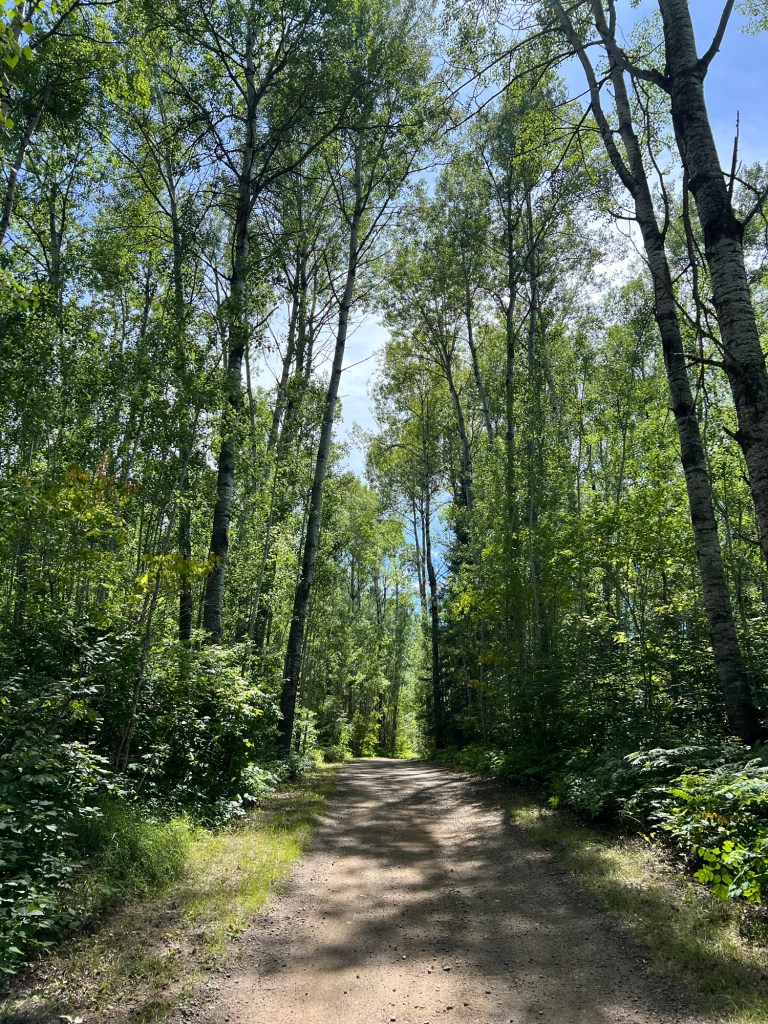
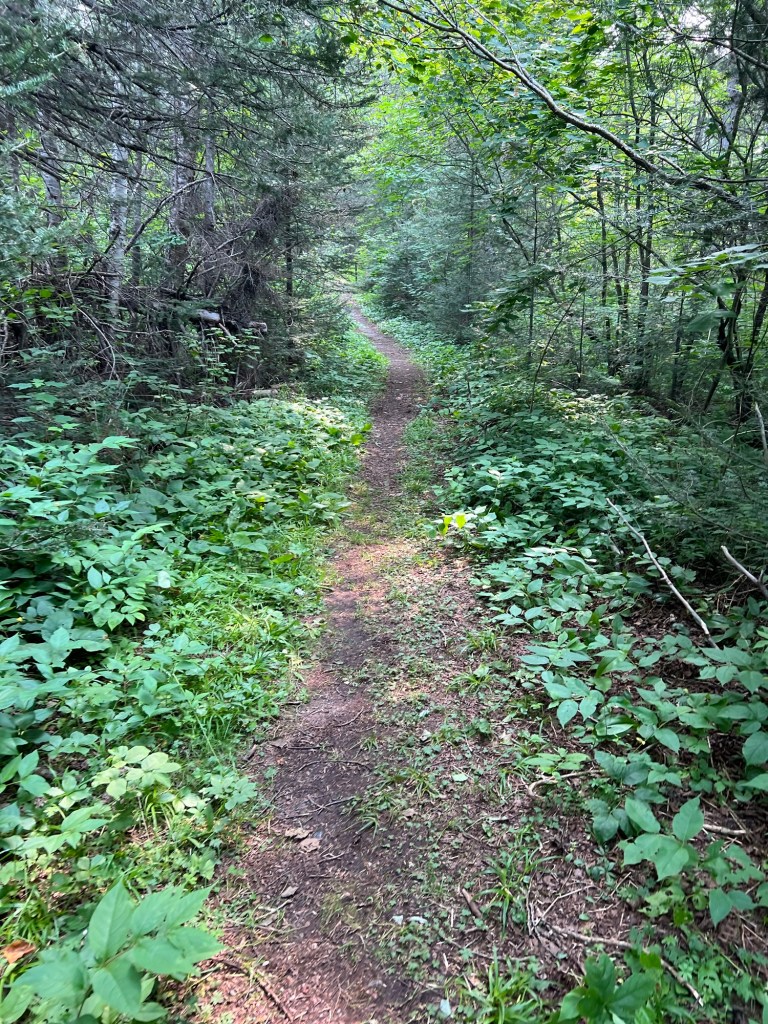
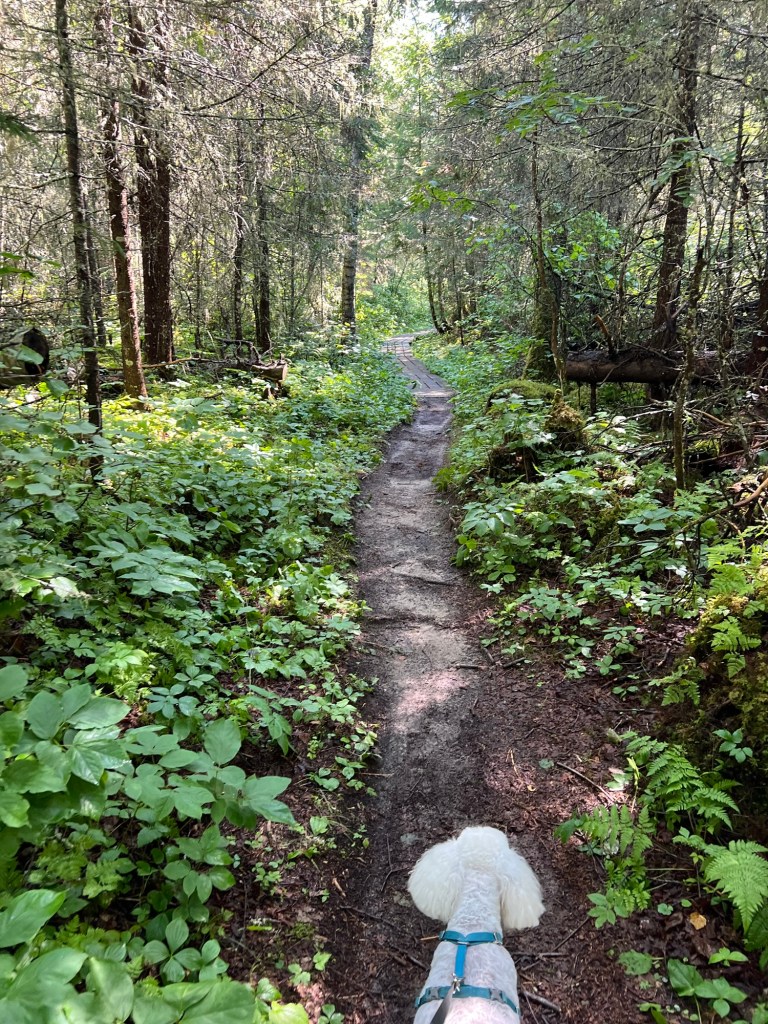
This afternoon I took a walk on a trail that went all around the campground here.
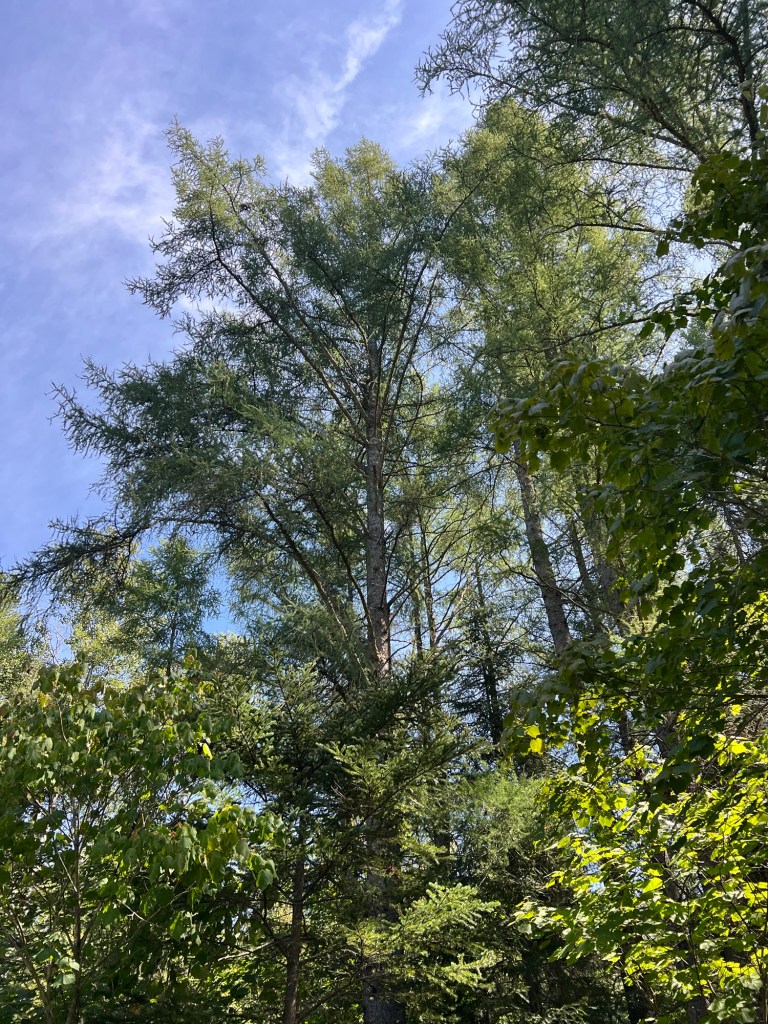
I passed some huge larches.
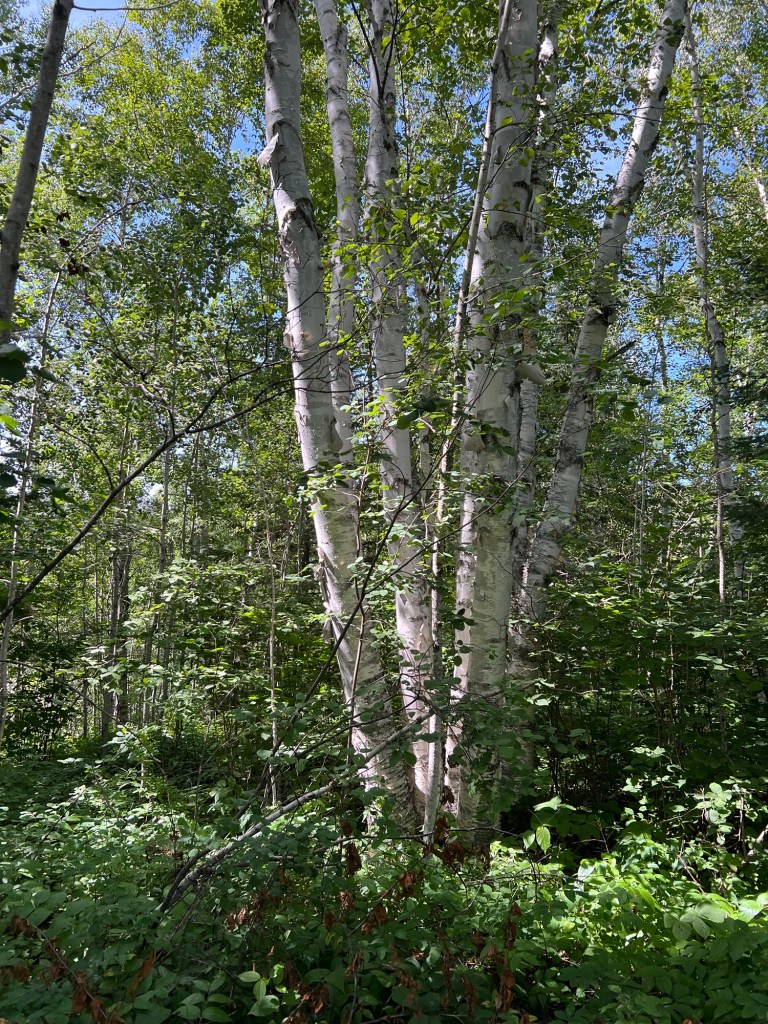
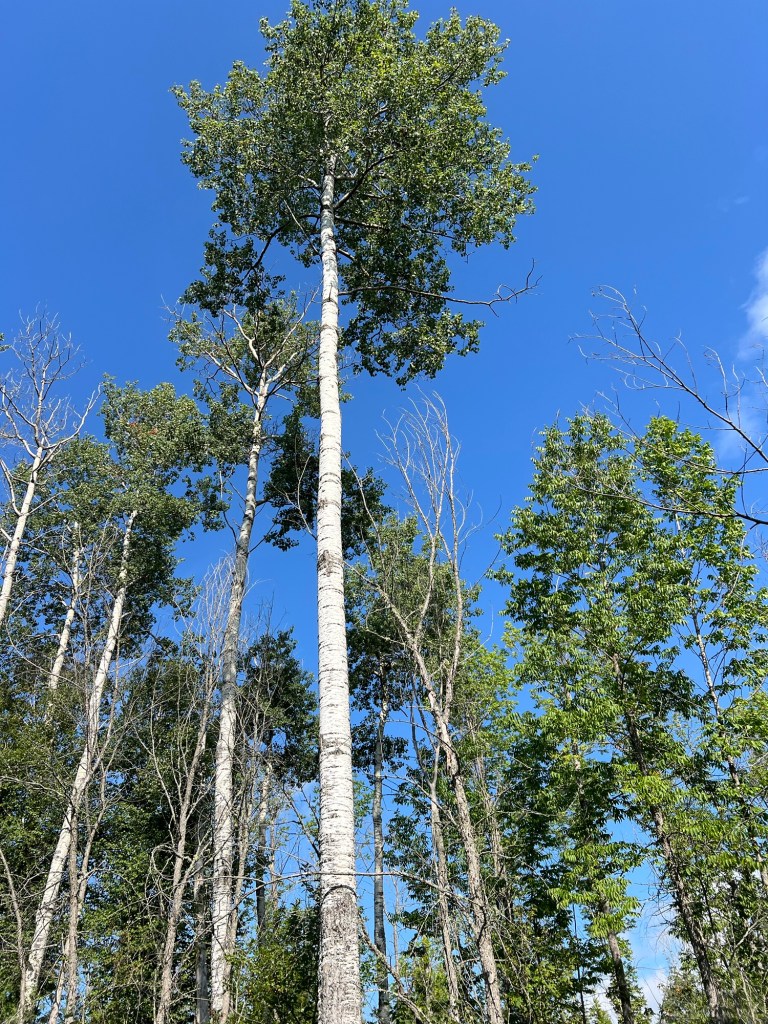
Then towards the end of the hike I finally came to some very large birches. And I realized that the very tall tree at Fort Davis…
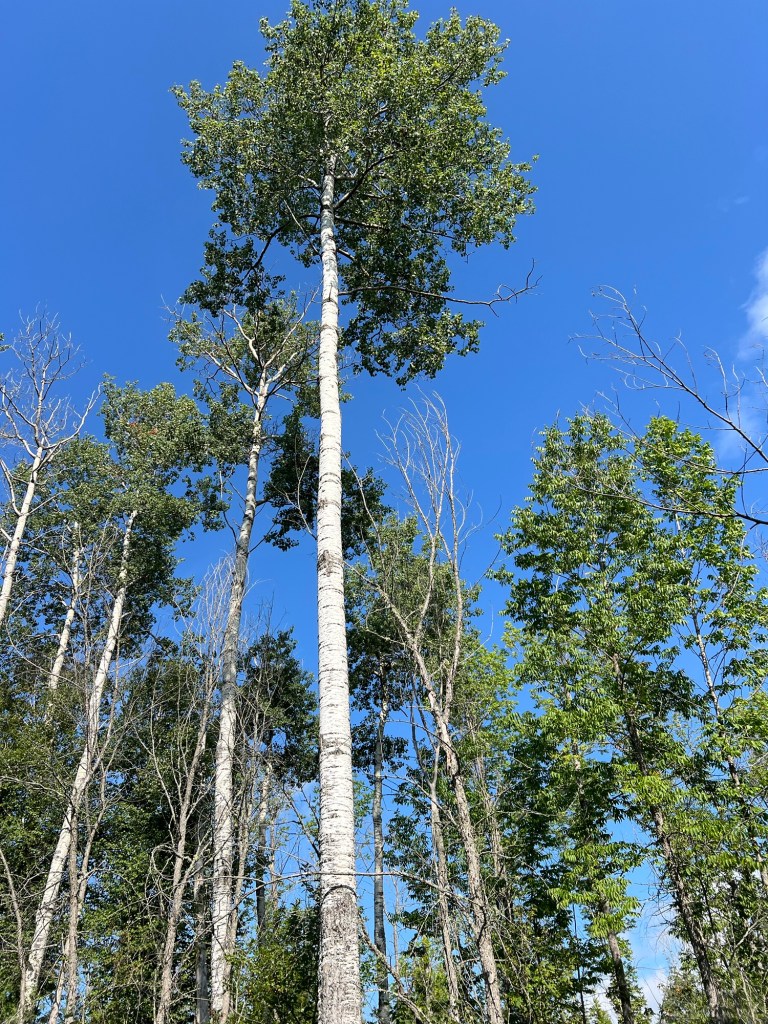
was a poplar, not a birch. In my defense, it was very white and despite there being birch bark houses, canoes and baskets on display everywhere in the fort, I now realize that on the grounds, there were no birches.
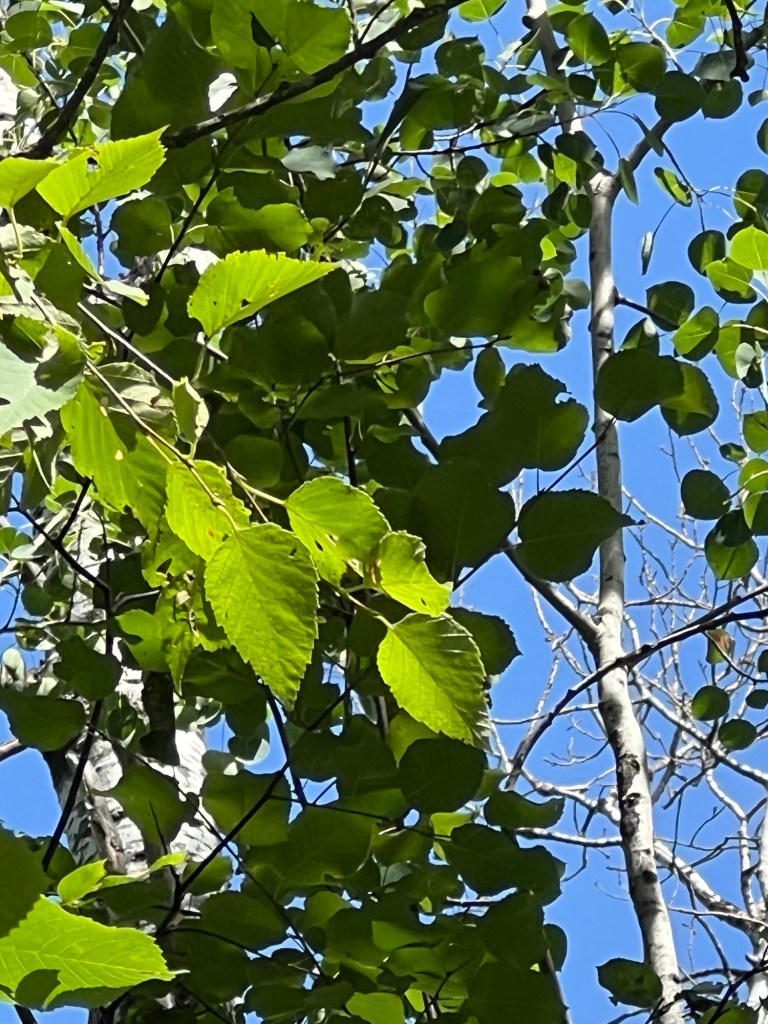
Birch leaves.
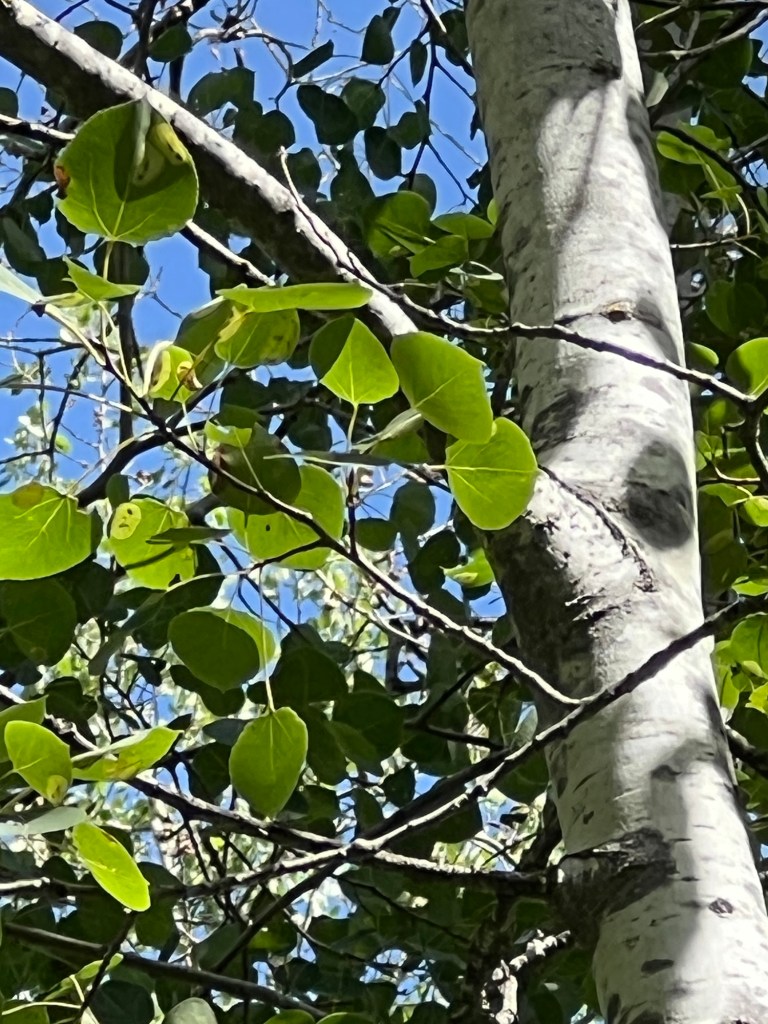
Poplar leaves.
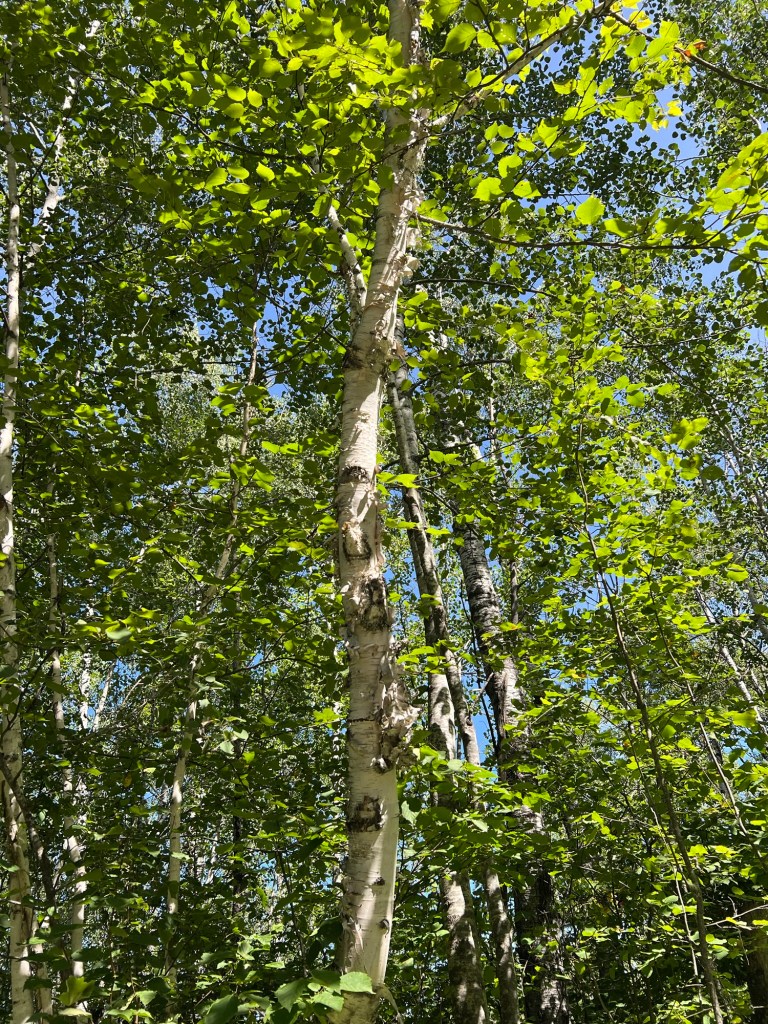
Birch trunk.
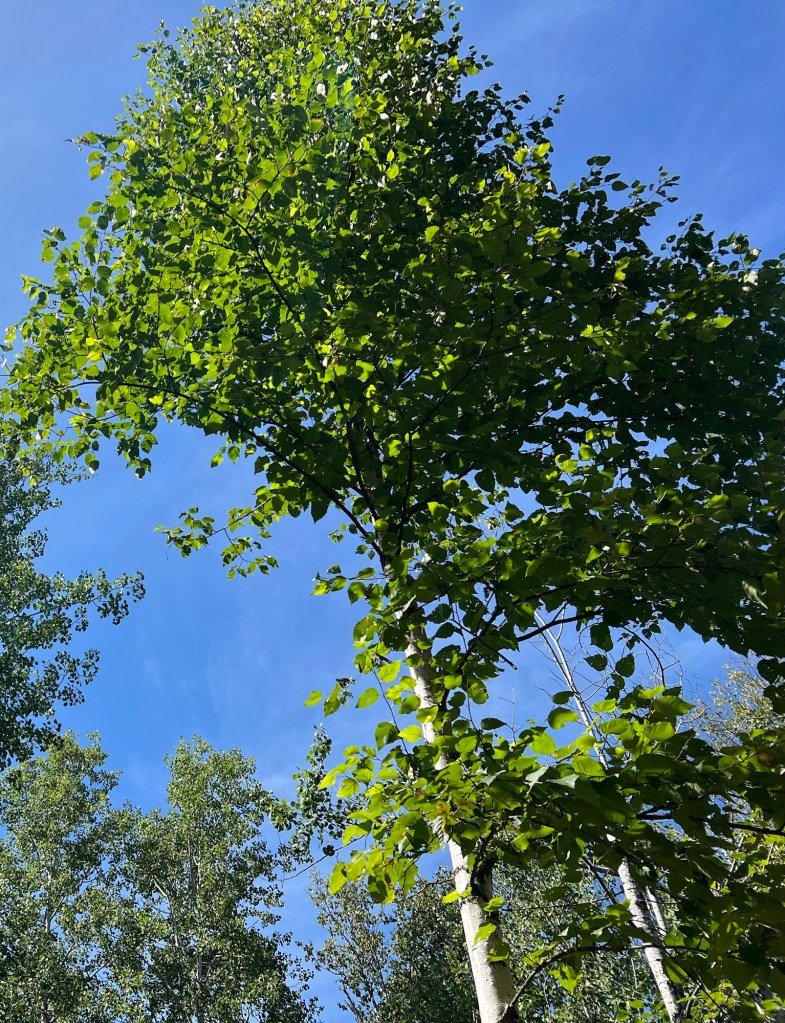
Poplar trunk.

Now I’ve got that straight, and just in time; tomorrow we leave this park and Canada.
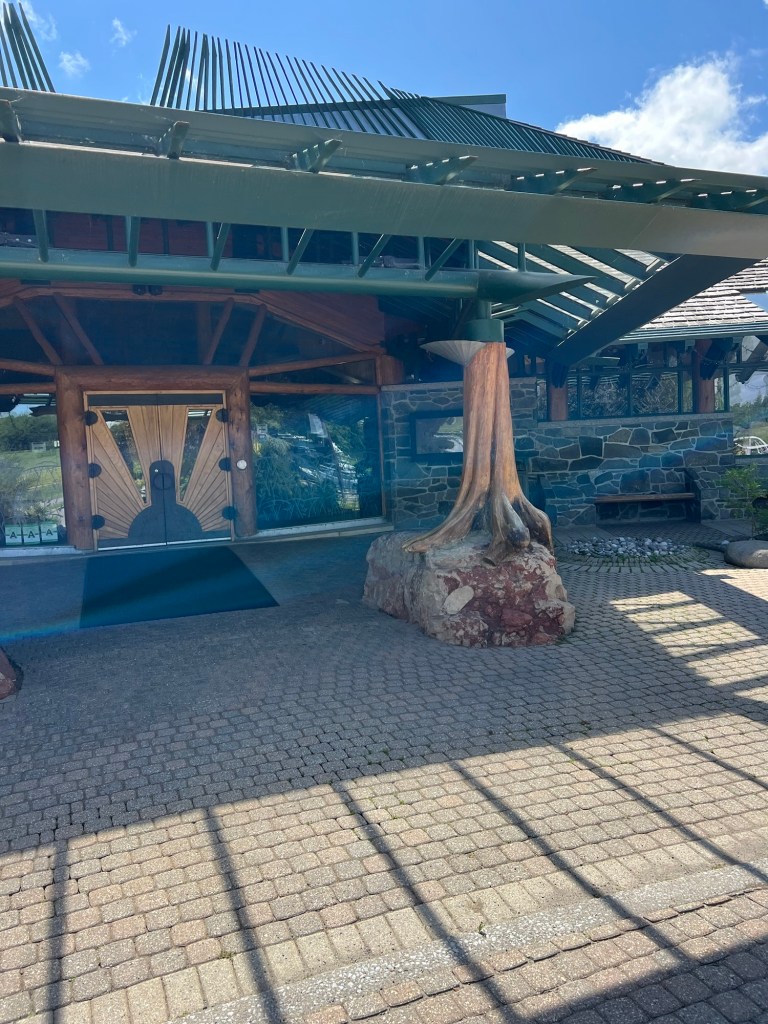
Fort William Historical Park

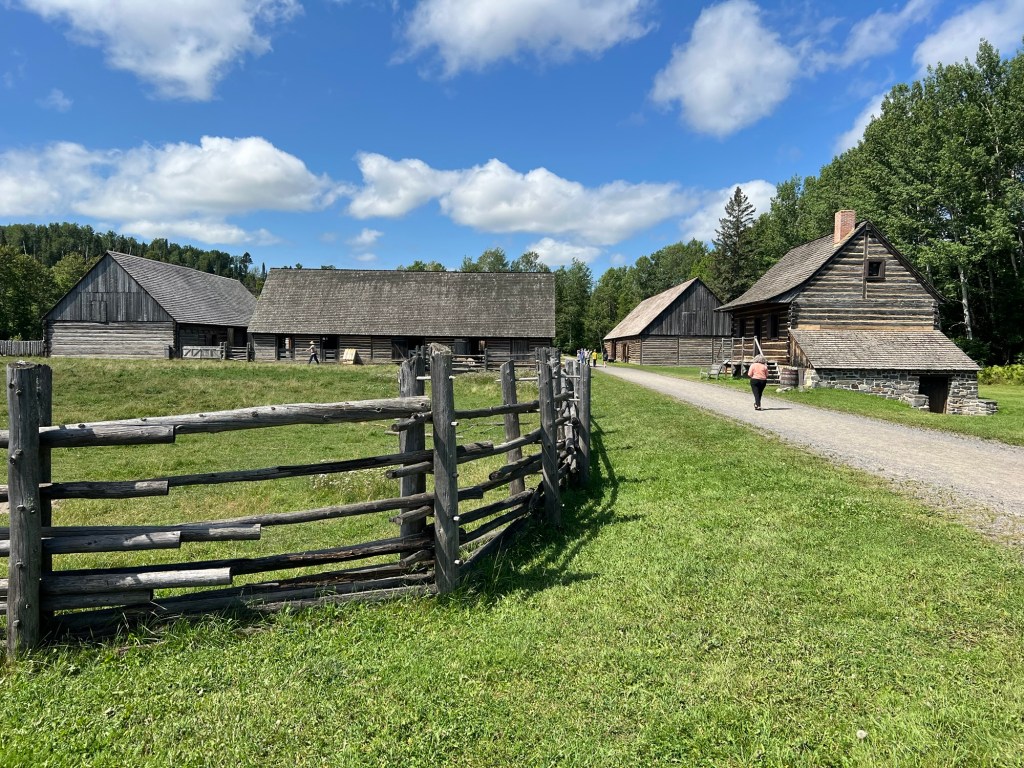
On the southern edge of Thunder Bay sits the Fort William Historical Park. The heart of the site is the reconstructed Fort William, which wasn’t a fort at all, but the inland headquarters of the North West Company. This is the entrance building, the Visitor Center.

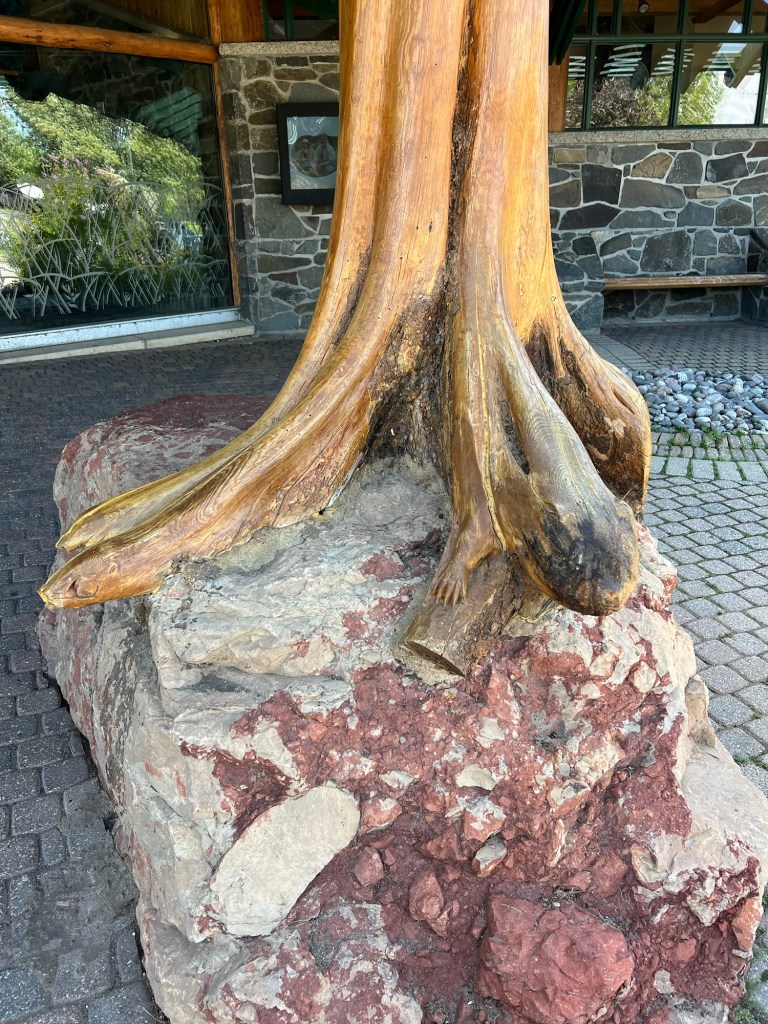
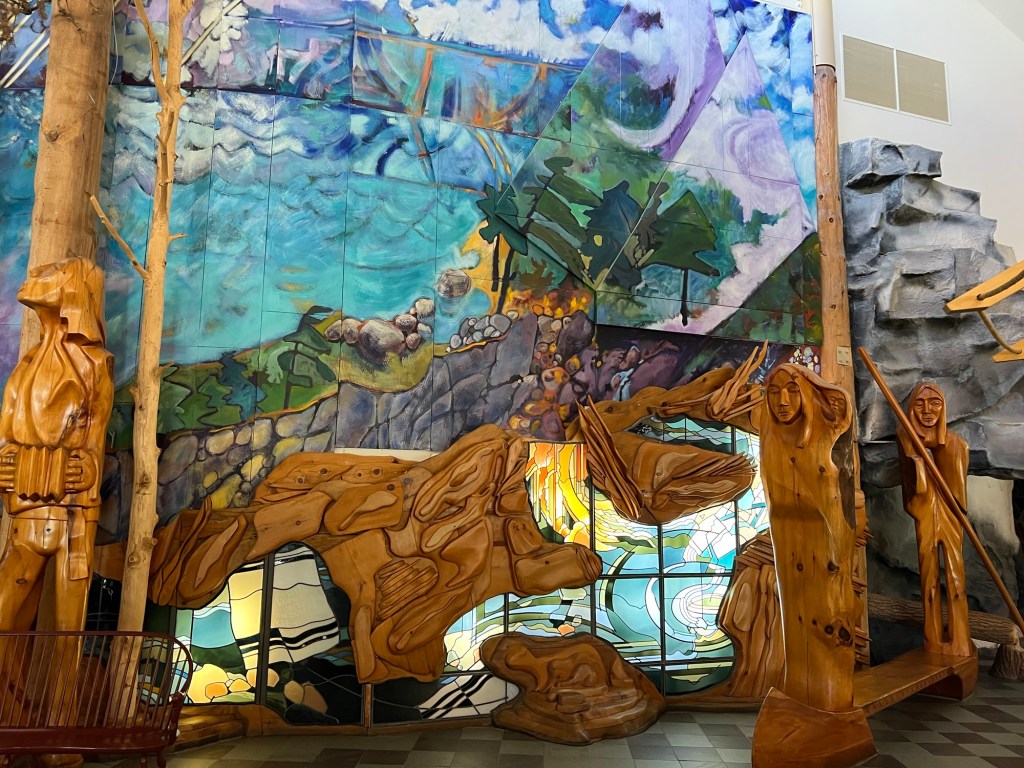
The carvings and details were amazing,

and beautiful.

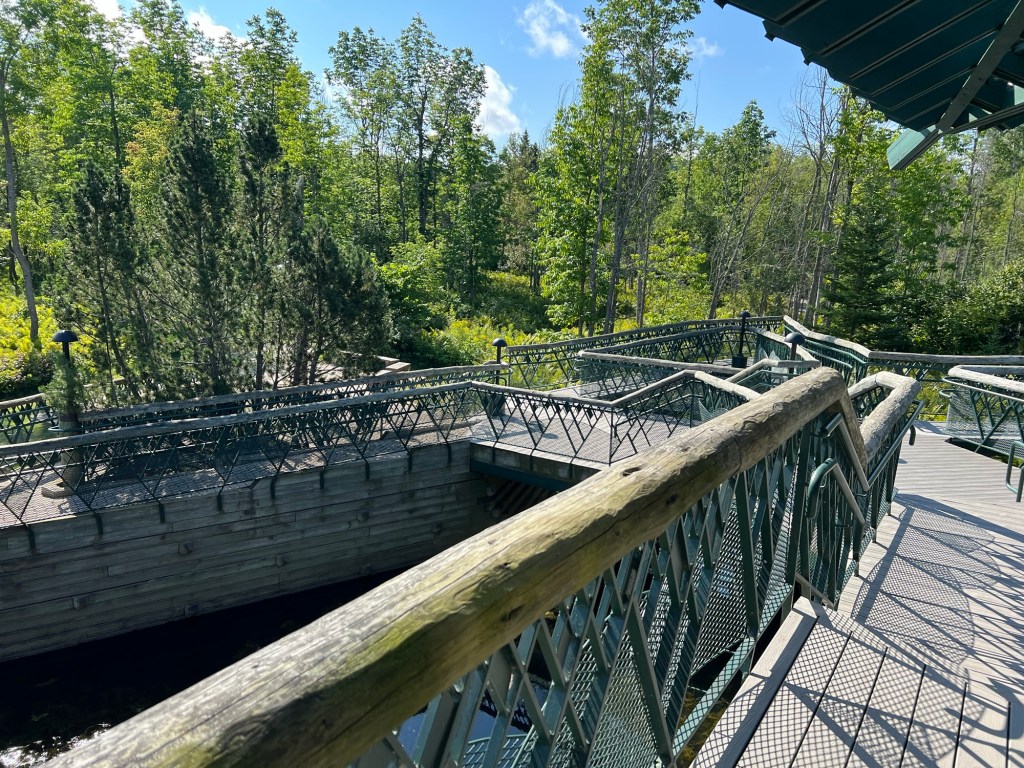
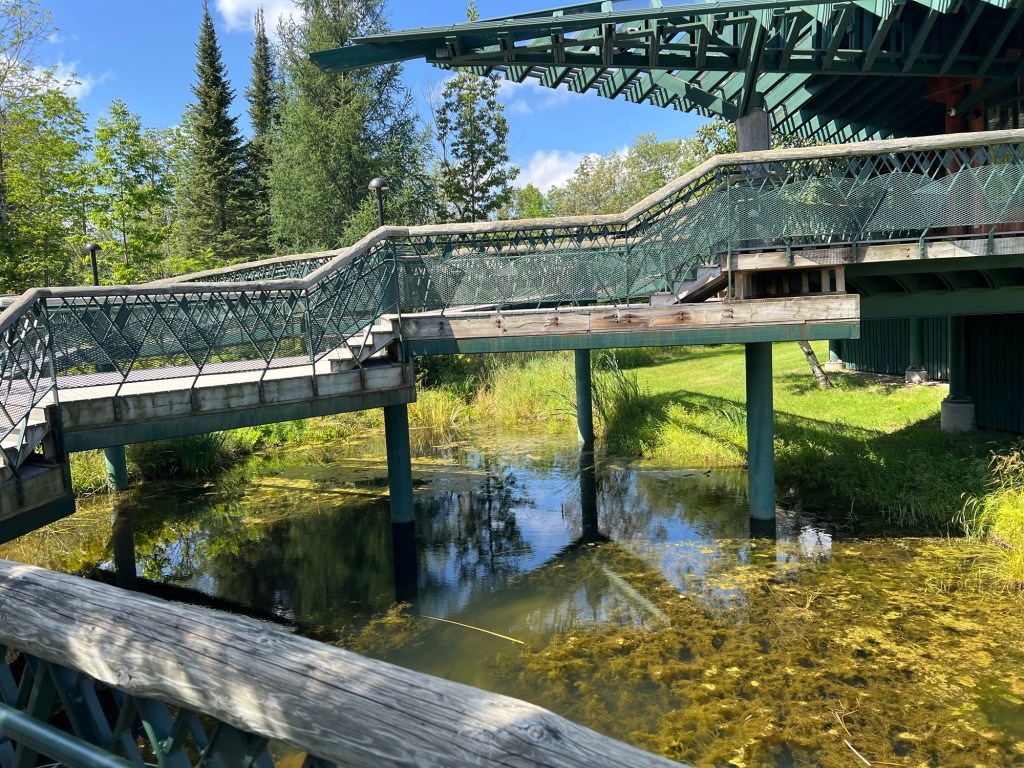
Out the back a series of steps and ramps…

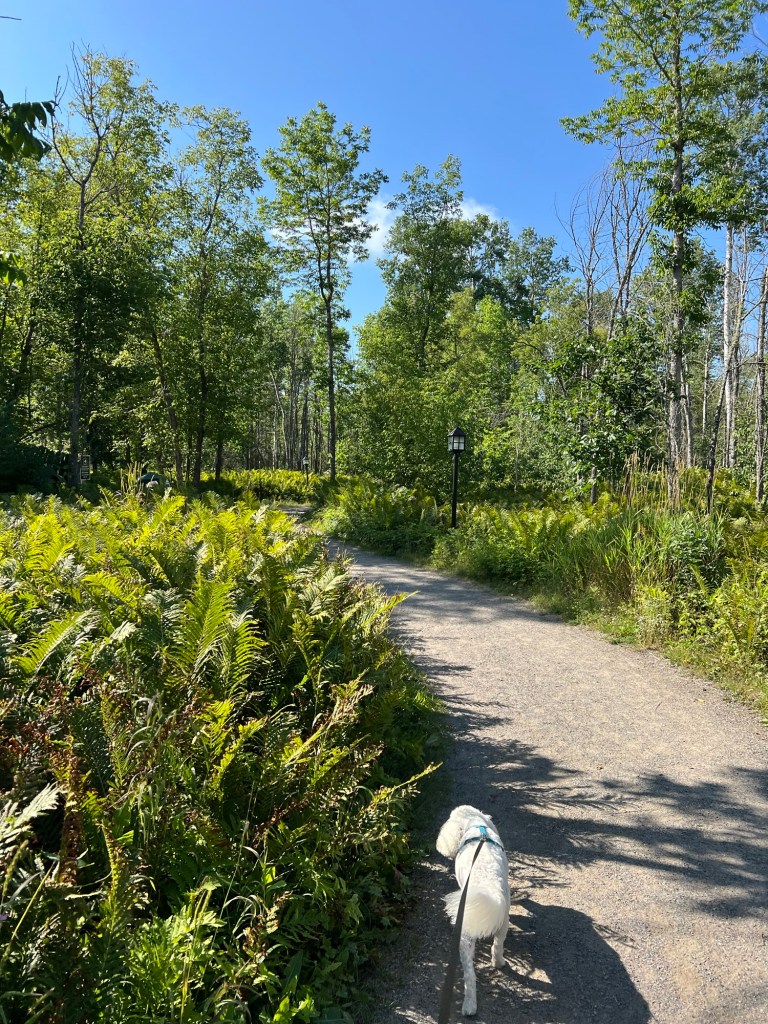
took you to this broad trail that led…

past astonishingly tall birches to the restored fort.

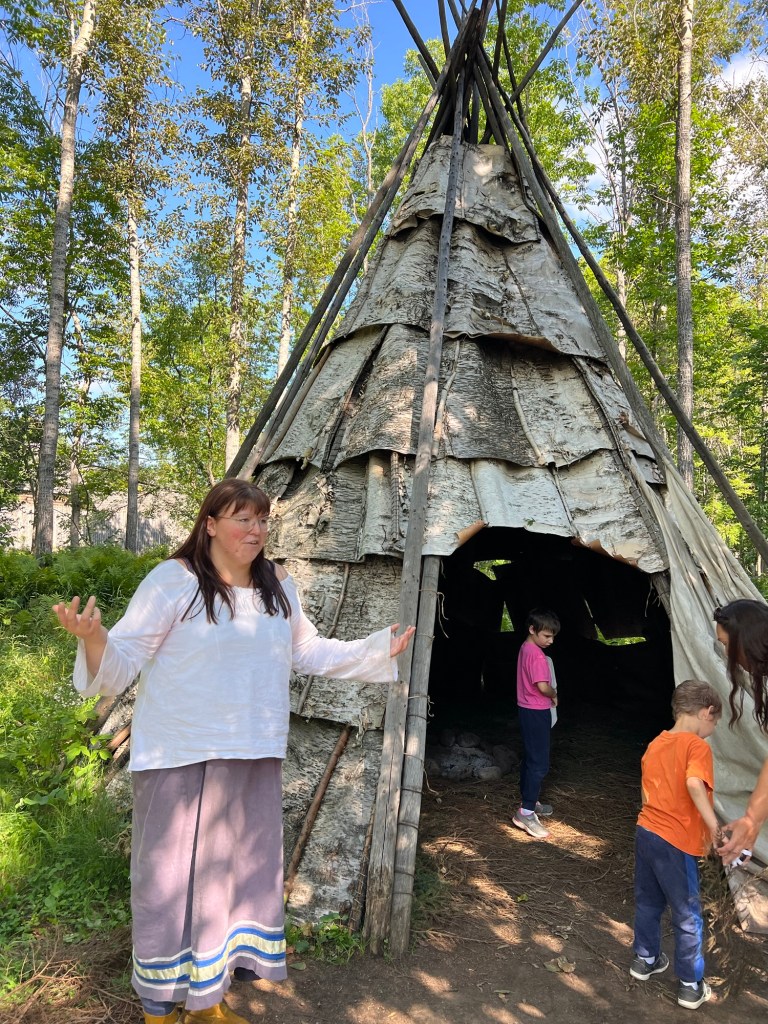
Throughout the site there were people enacting what life was like here in 1815. At the Anishinaabe encampment outside the gate the young woman explained that this wigwam would be used while the group of Anishinaabeg stayed here during rendezvous (July into August) doing day labor at the fort in exchange for trade goods. When they moved on they would leave the poles behind,

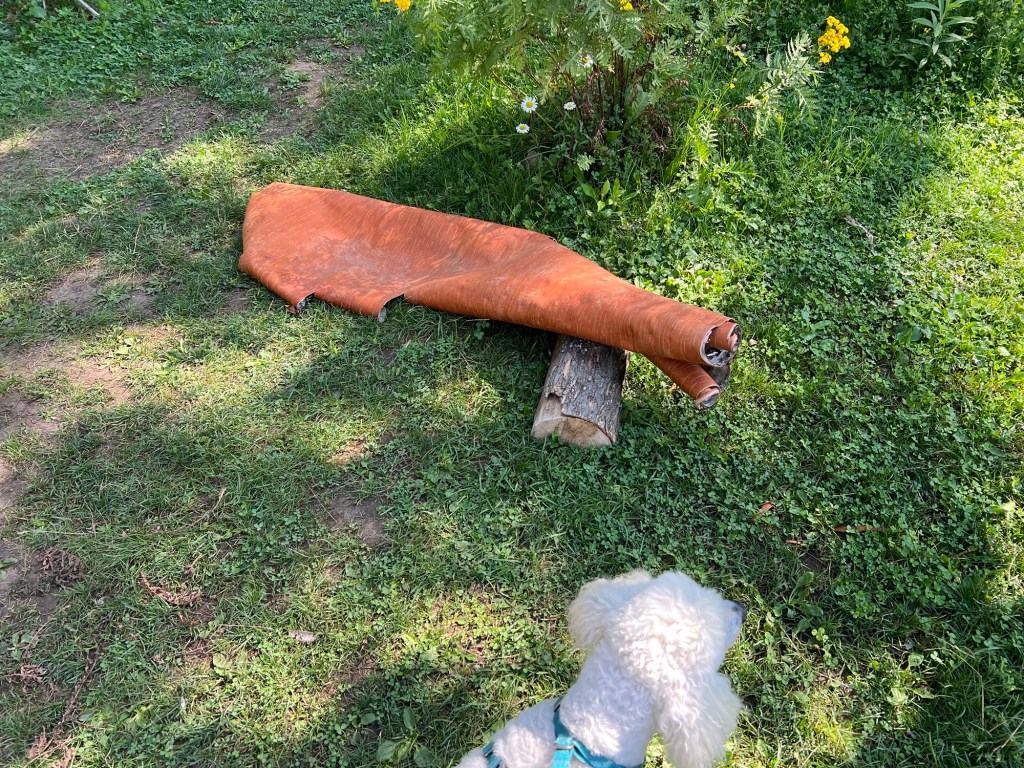
but the birch bark would be heated and rolled to be transported to their next encampment.

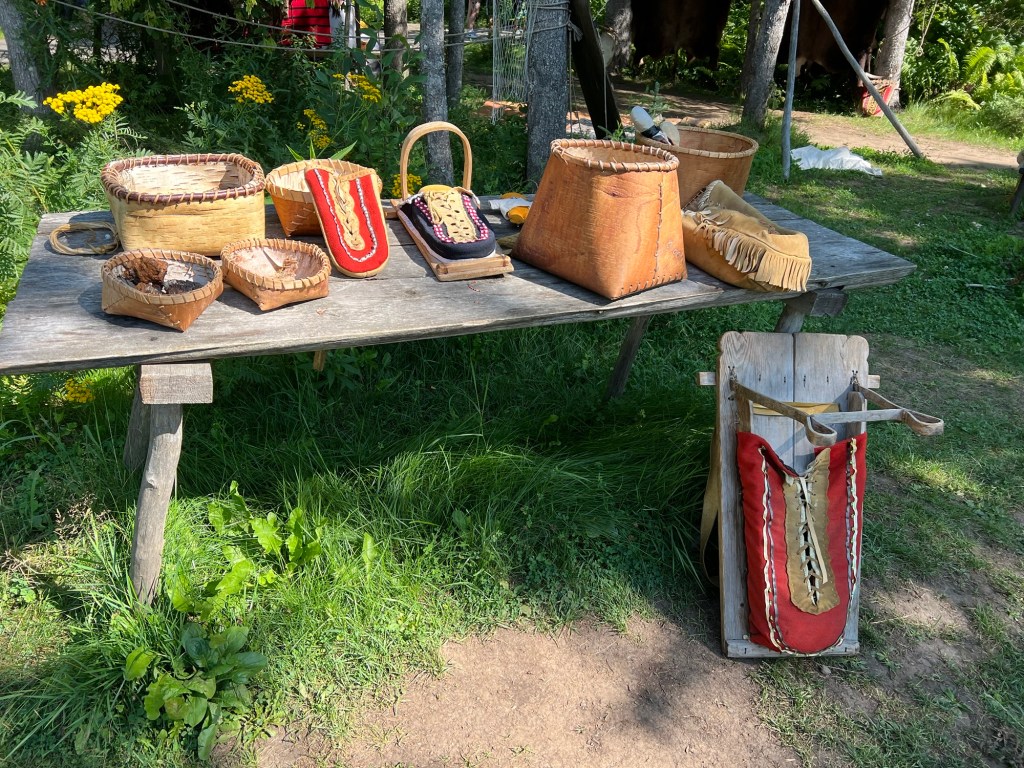
They had on display a number of things they had made.

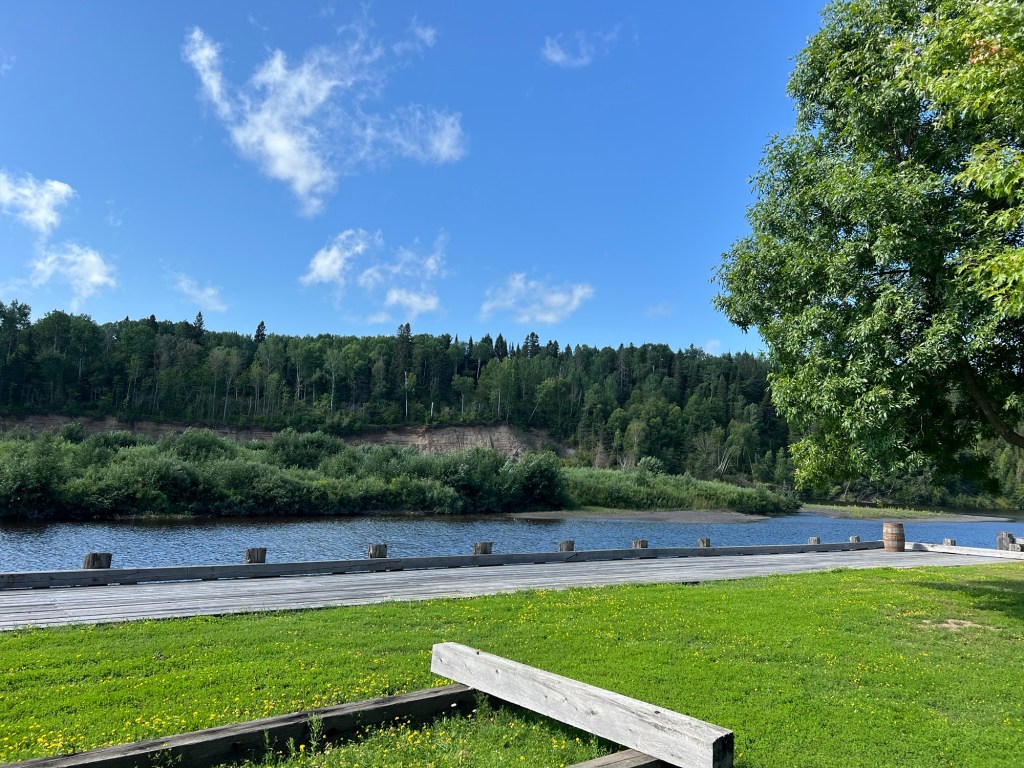
The fort is located on the Kaministiquia River, not far from its mouth on Lake Superior. This is the wharf.

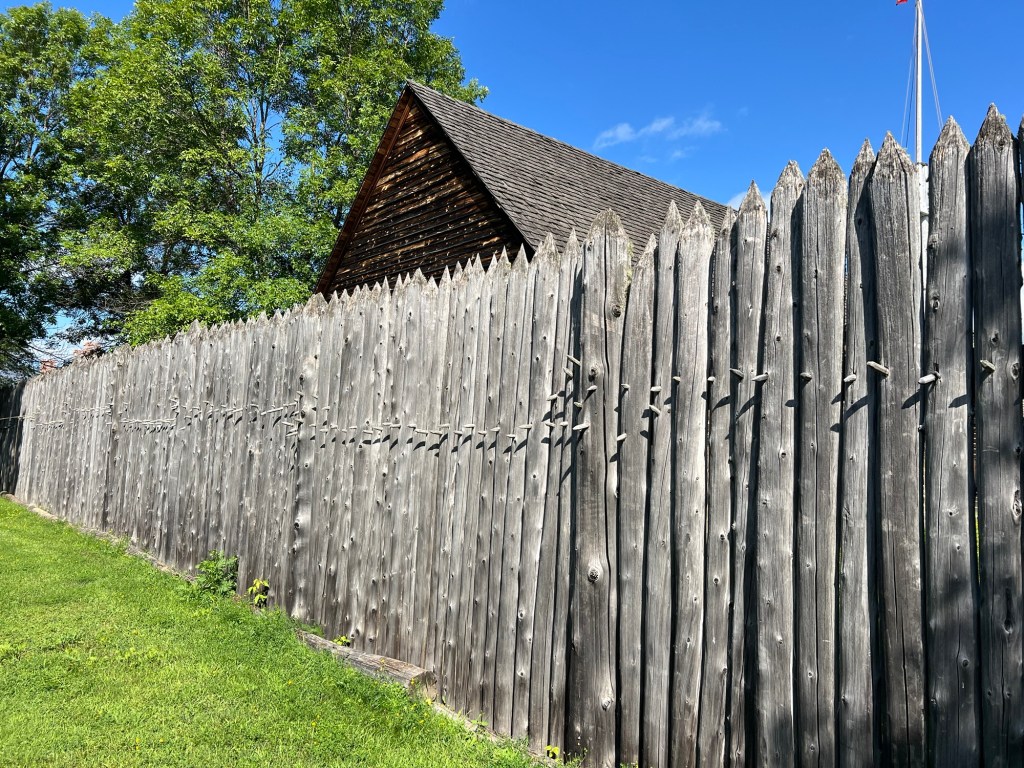
The company buildings were surrounded by this rather bristlely looking wall, but the pointed sticks are used in construction as they are cheaper than nails, and the pointed tops of the logs are to shed rain and snow. None of these were defensive.

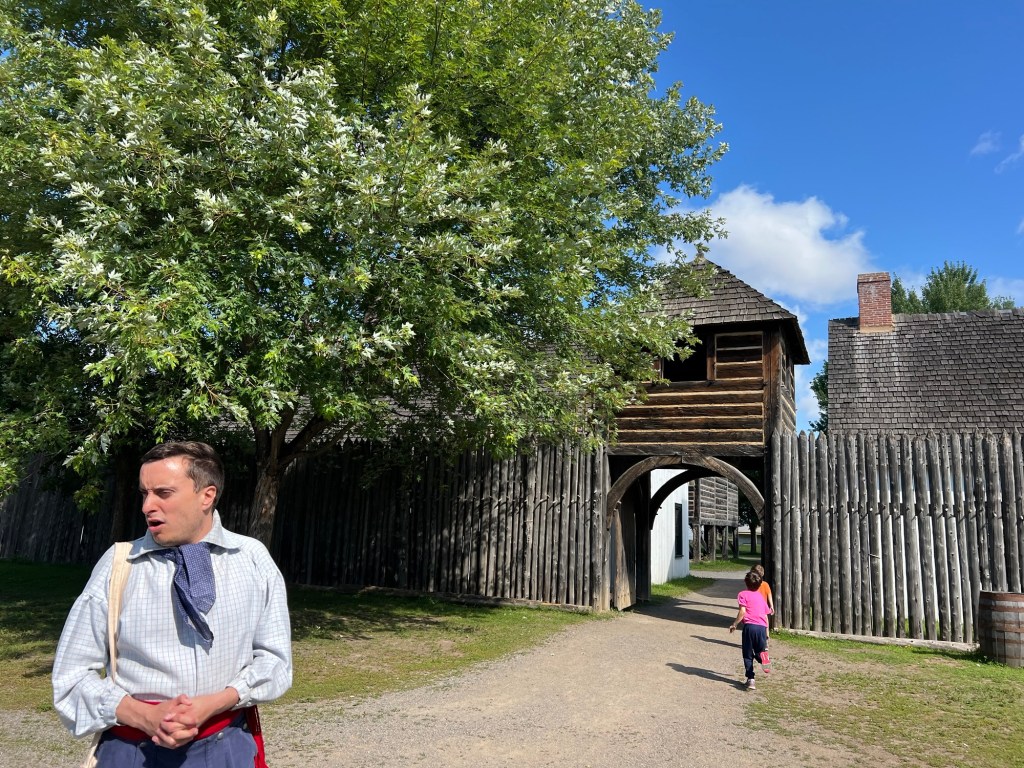
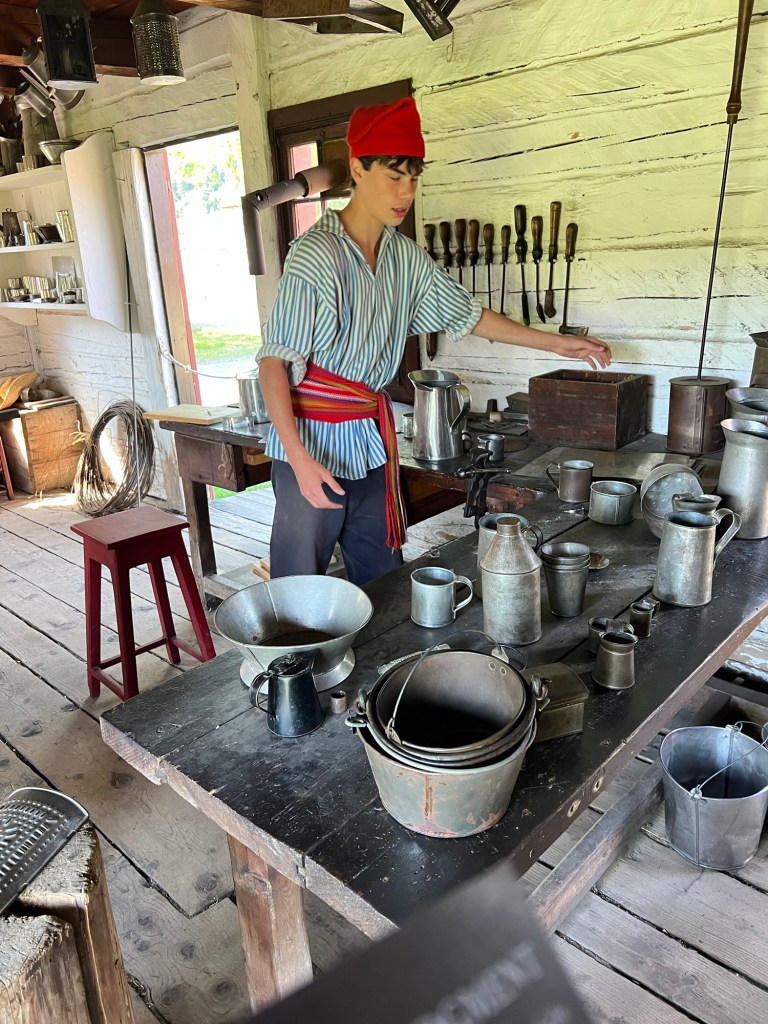
This is one of the tour guides. He is in character as a voyageur. They were the company employees that took canoes out to the trading posts scattered throughout the wilderness where the company had established trade with the natives. They carried the trade goods out and brought furs back. When they brought the furs to rendezvous they also brought back the clerks that worked in the trading posts. Voyageurs camped outside the walls, many slept under their canoes. After 10 years or so a voyageur might be promoted to be a guide or interpreter. These men no longer did the hard manual labor, and they got to bunk inside the fort during rendezvous.

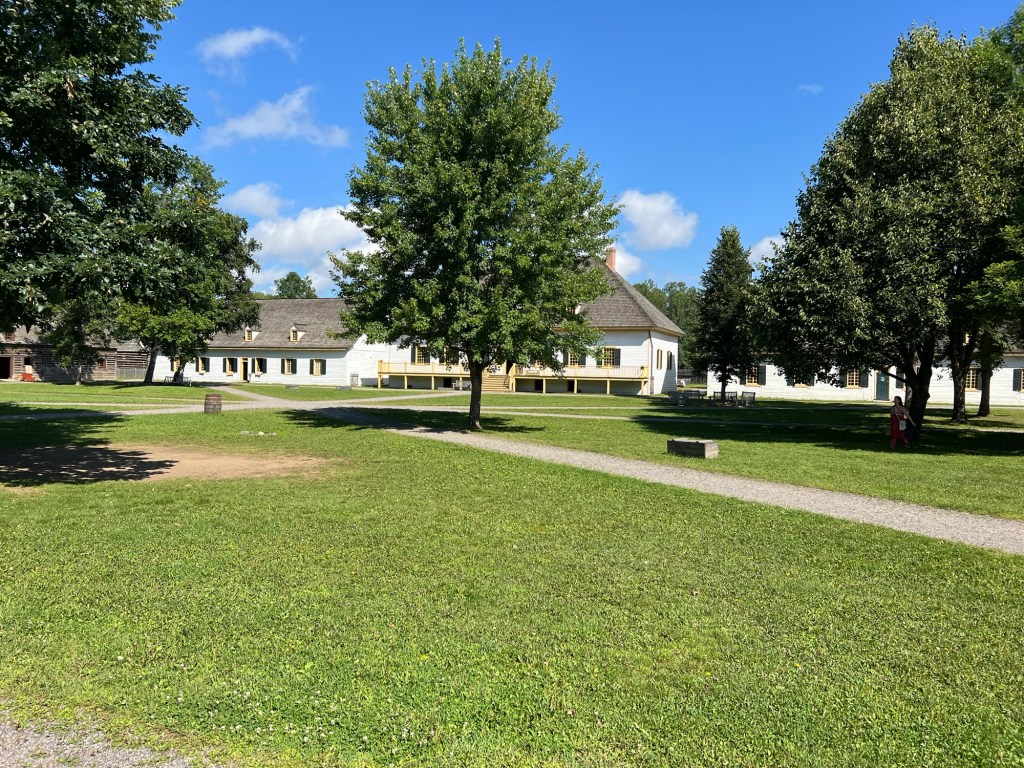
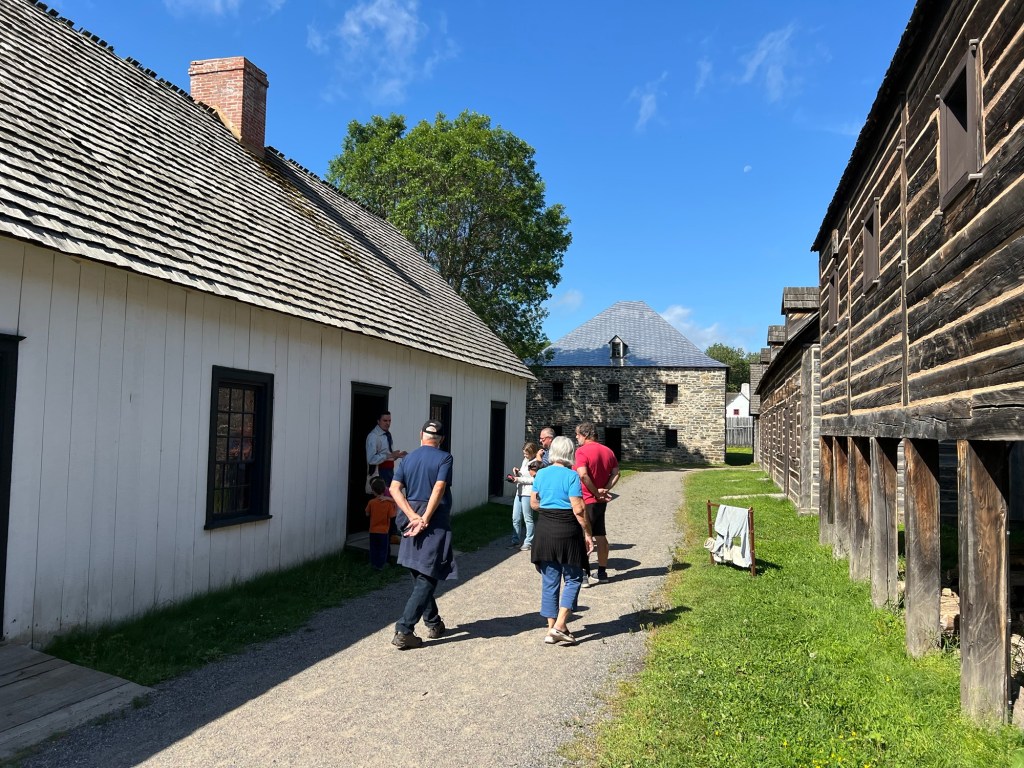
The walls enclosed over 30 buildings, as well as this large central square.

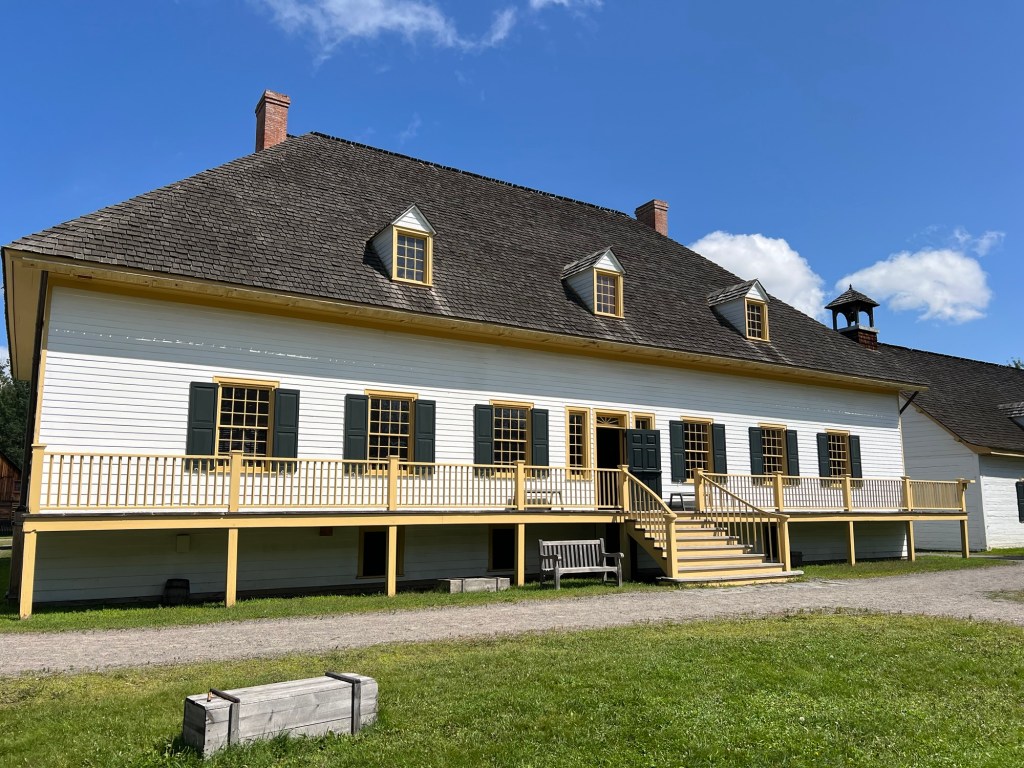
Most of the buildings were empty except during rendezvous but about 30 people stayed year round, including the wintering partner. The white building on the left is the wintering house.

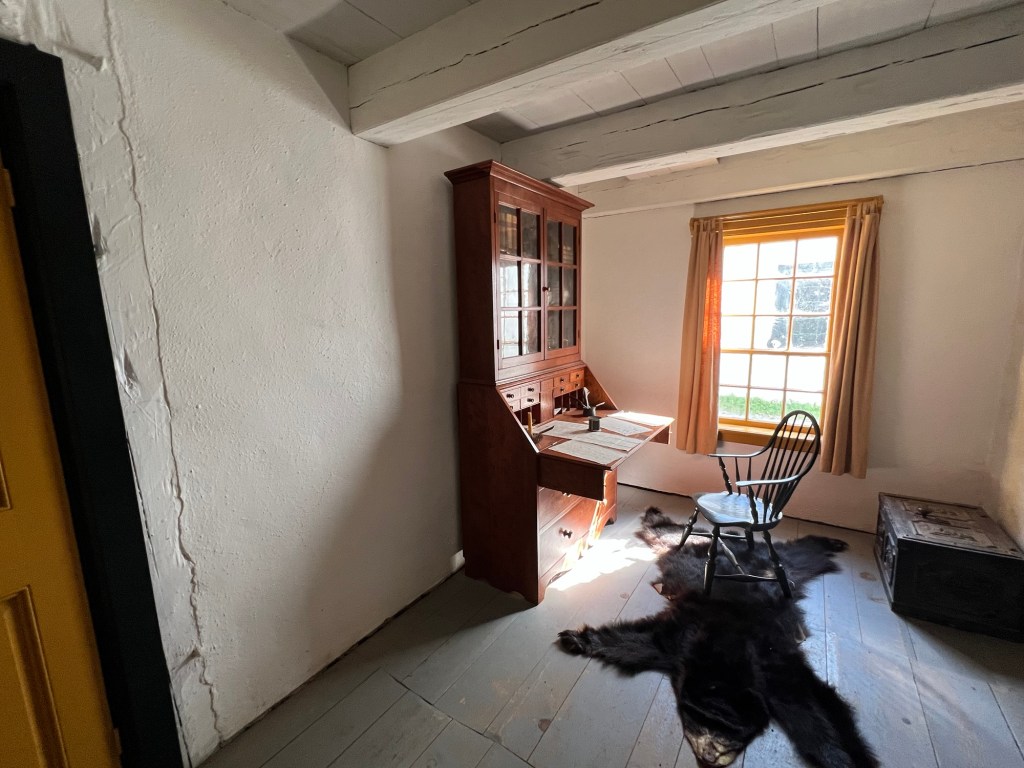
It has low ceilings and raised floors for warmth.

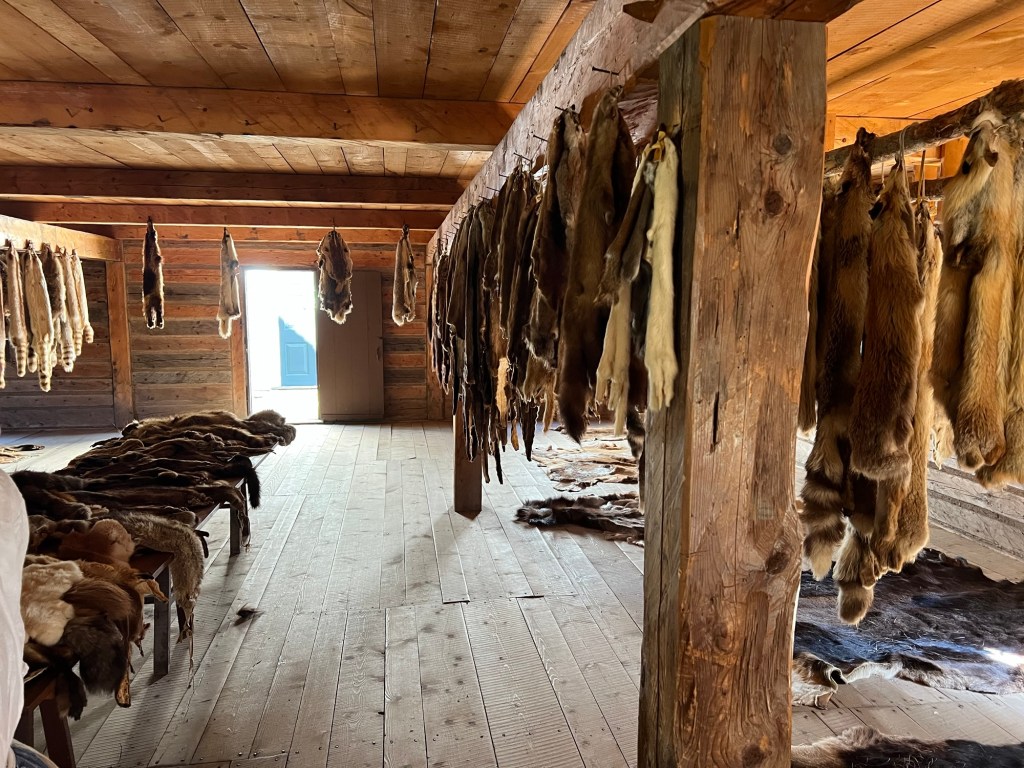
Matey’s favorite building was the Fur Stores.

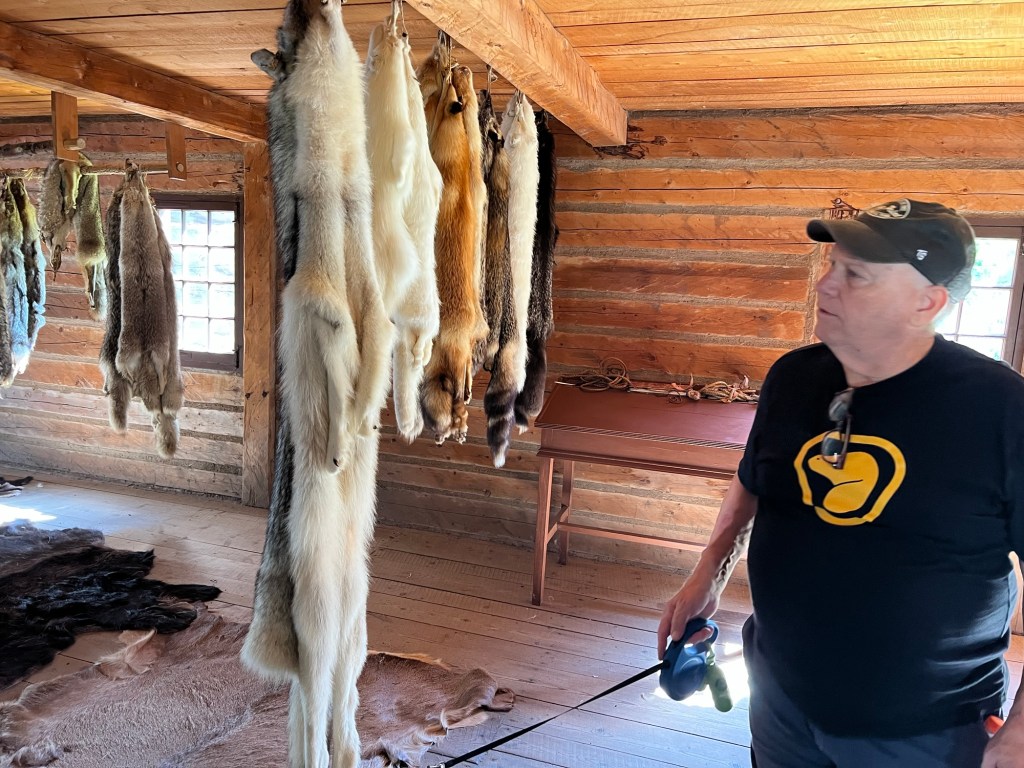
He thought all those animal skins smelled great. (The park people told us these skins all came from animals trapped or hunted illegally, the pelts were confiscated and then given to the park.)

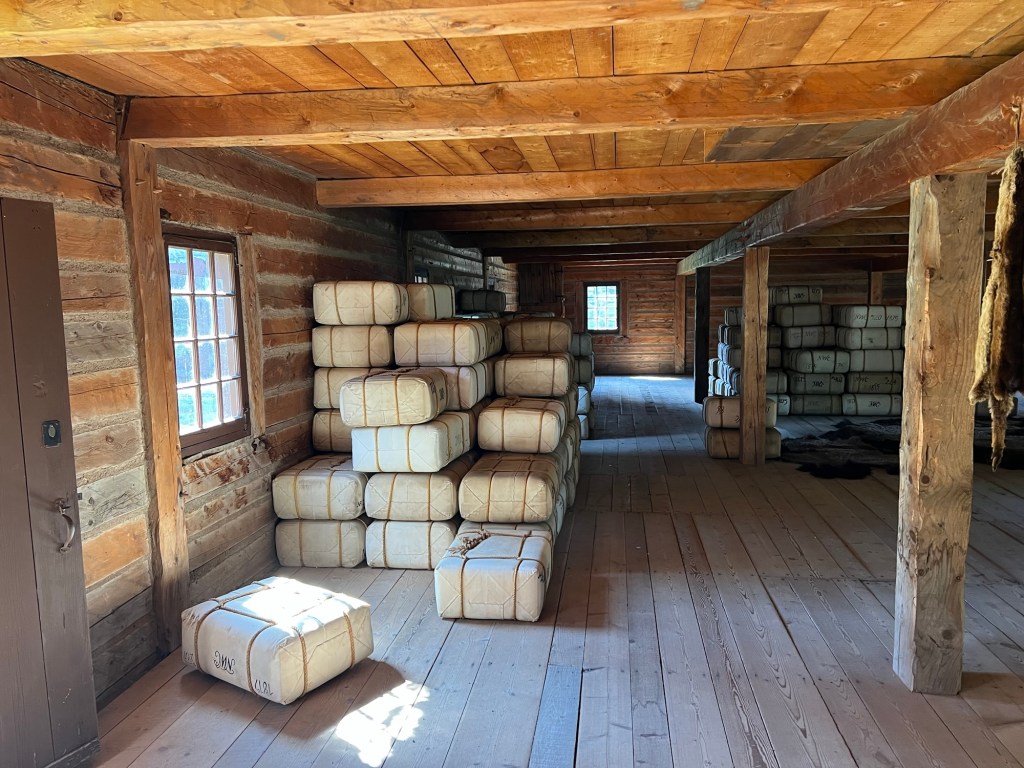
The furs were then compressed and wrapped and sewn into 90 pound bundles to be shipped east.

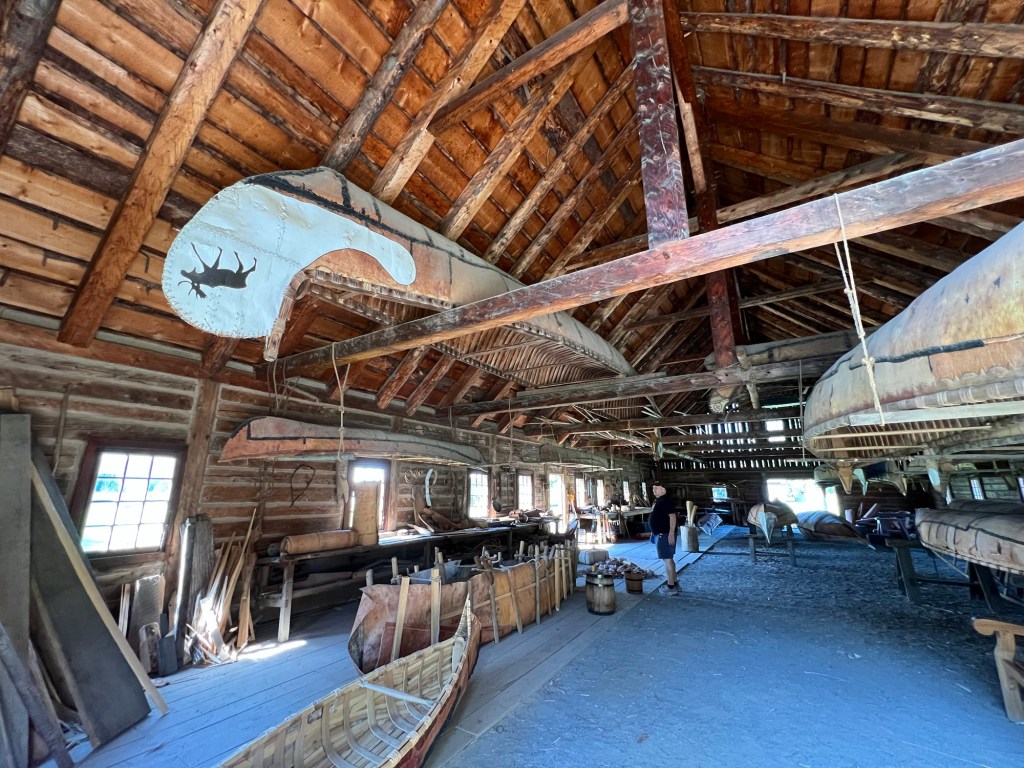
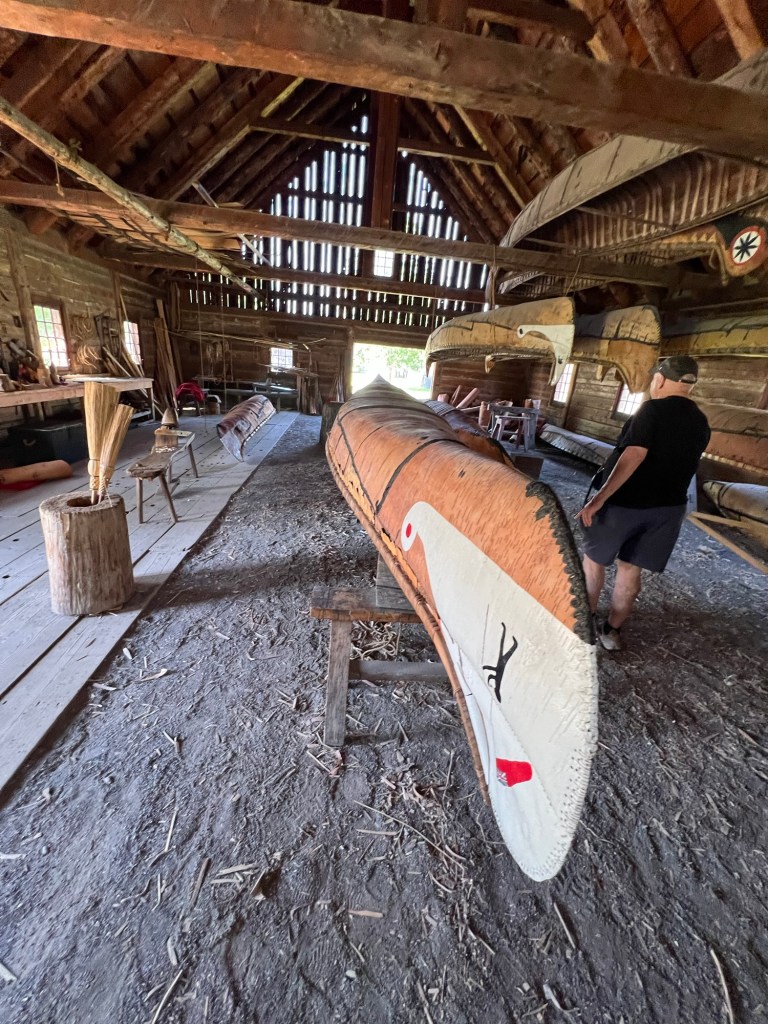
My favorite building was the canoe shed. All of these boats are made using the traditional methods and materials. The frames are ash and cedar and the skins are birch bark. Do you see how huge the one up on the beams is? That is Bud standing below it.

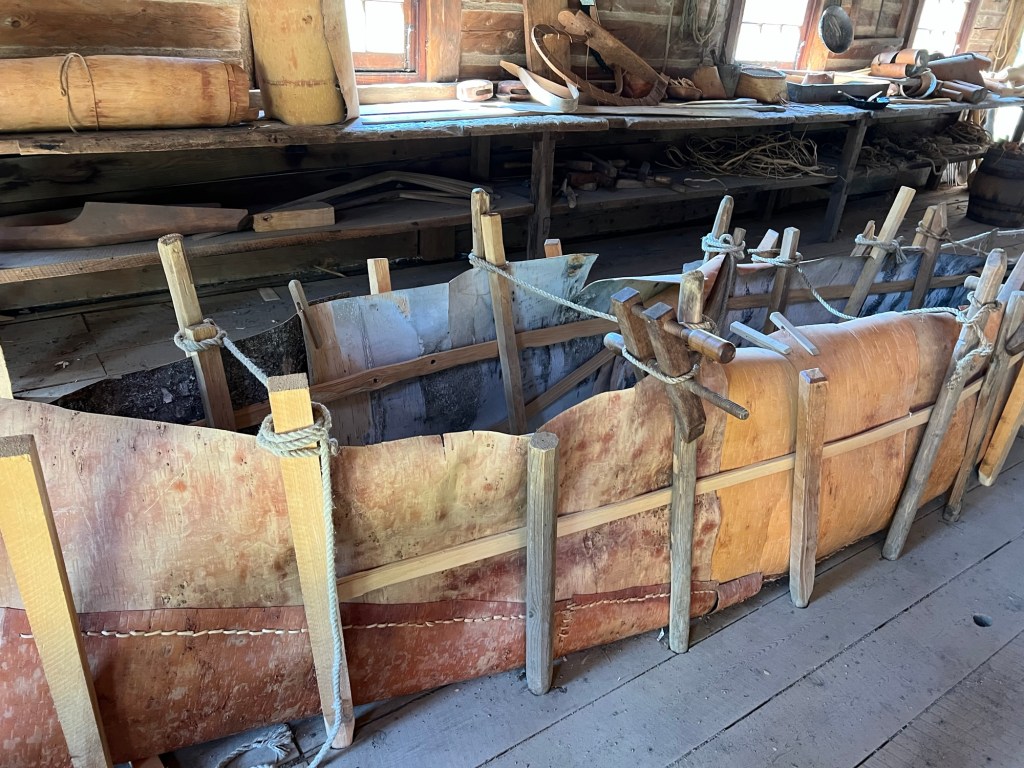
This is one under construction.

When they are finished the sewn seams are coated with spruce gum.

They also repaired the canoes here. All of the canoes belonged to the company.

We also visited the tin smith, who finally broke character to tell me that he no longer uses lead in his solder, but silver. He does use pine rosin as flux.

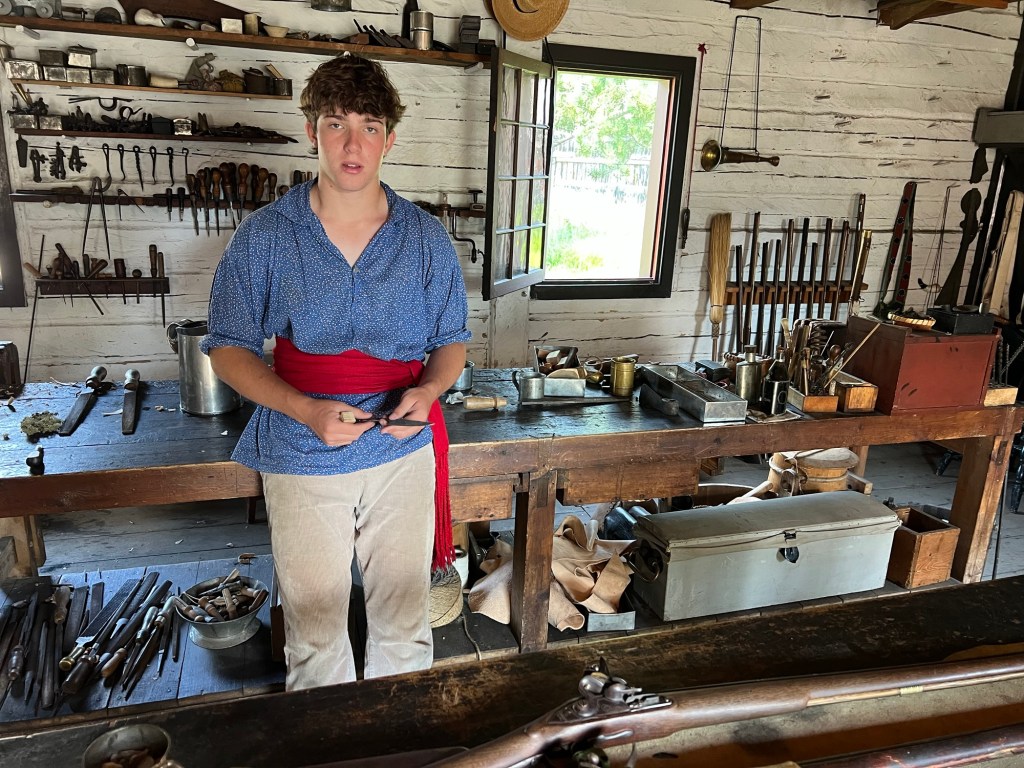
This is where they make and repair arms. The young man was working on a knife blade. He showed us how a flintlock gun worked. He said they made all the parts of the guns except the barrels. Those were bought and shipped here.

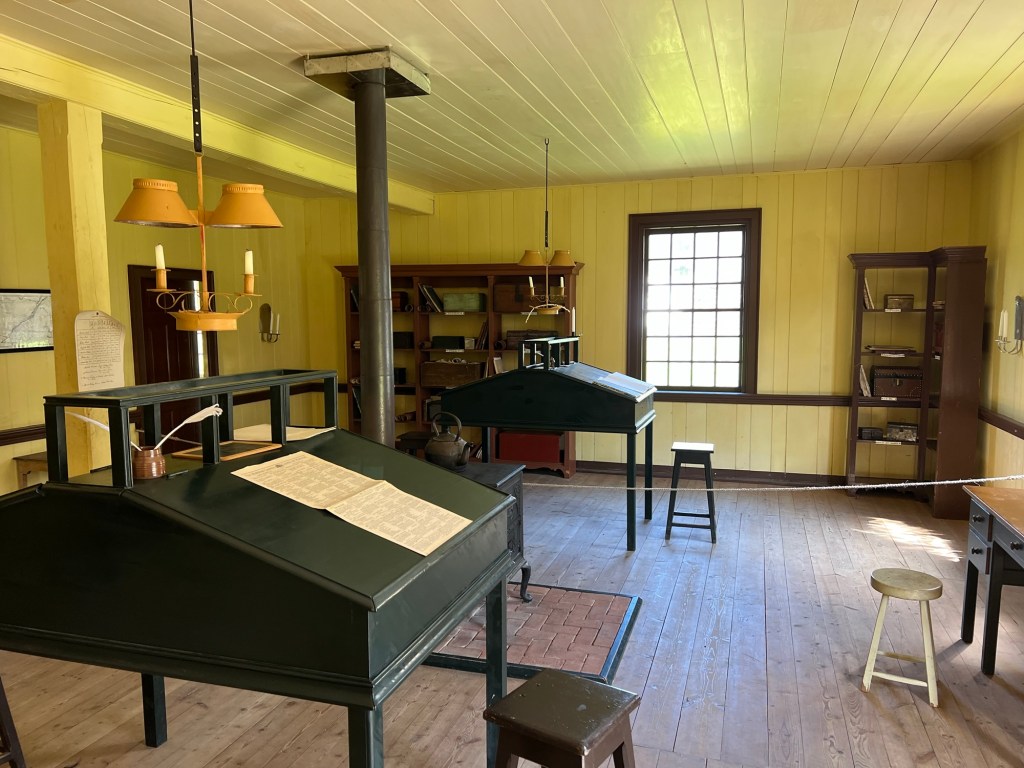
This is the counting house. When Bud walked in he said it looked like Scrooge’s place. There were lots of clerks. Every trading post had a ledger where all goods and furs were recorded. Every fur received at rendezvous was marked and recorded, the bales were numbered and the furs inside were noted.

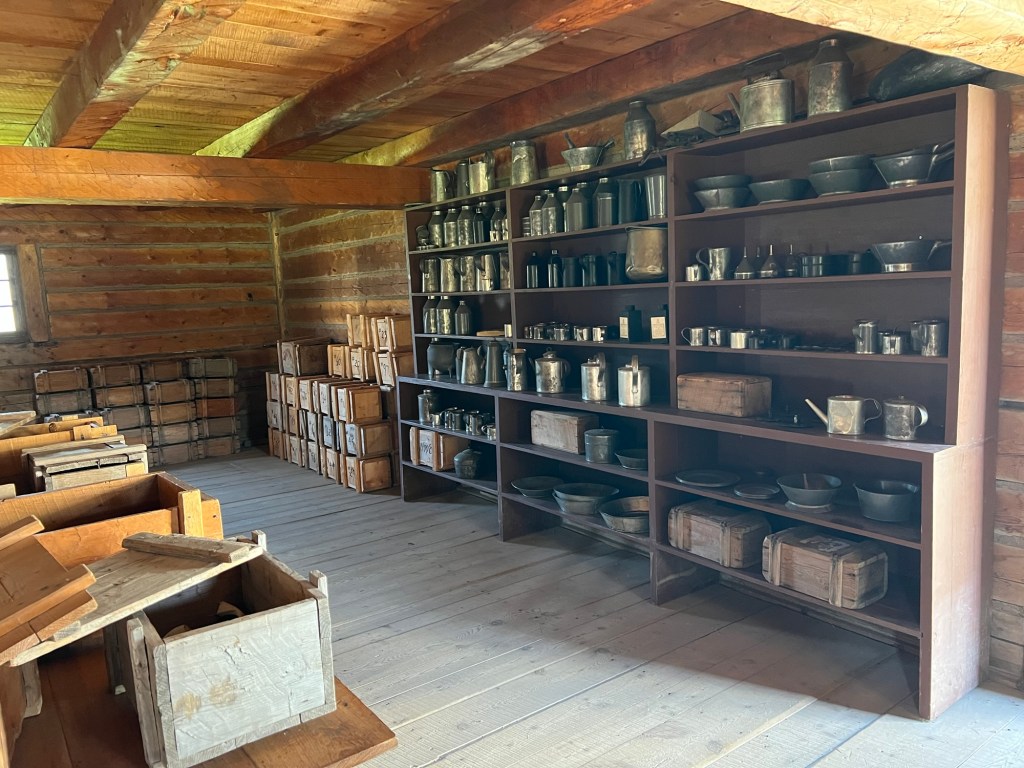
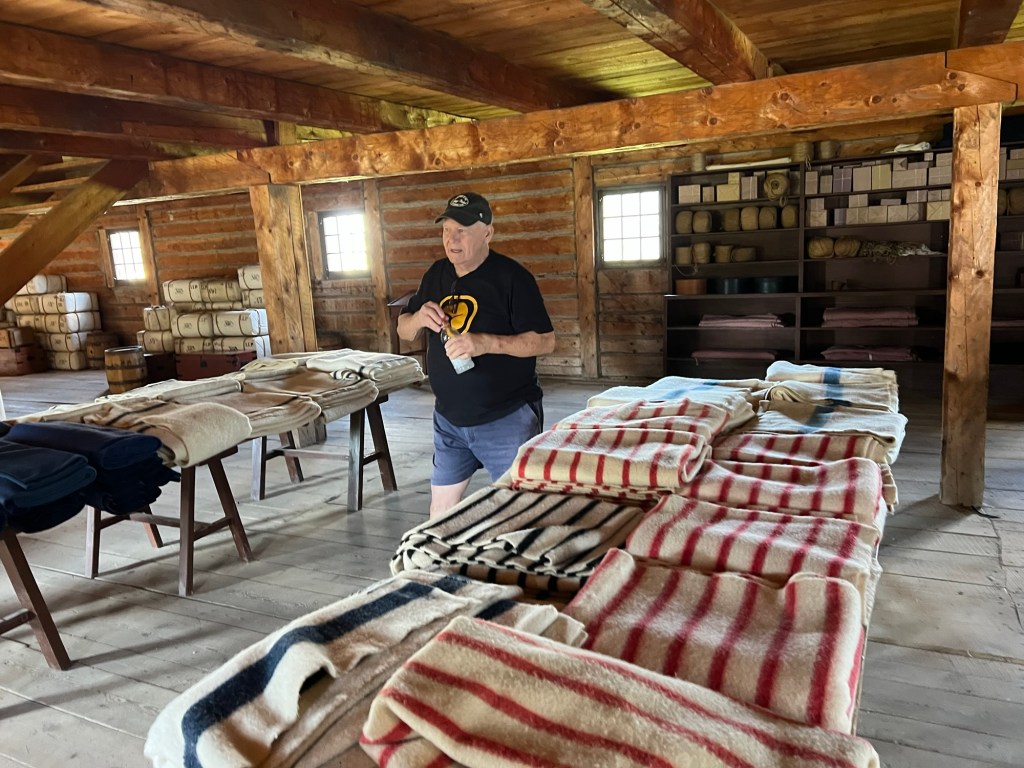
There was another building for the trade goods. Some, like the tinware were made on site.

But many other things, like these blankets, were brought on the company schooner.

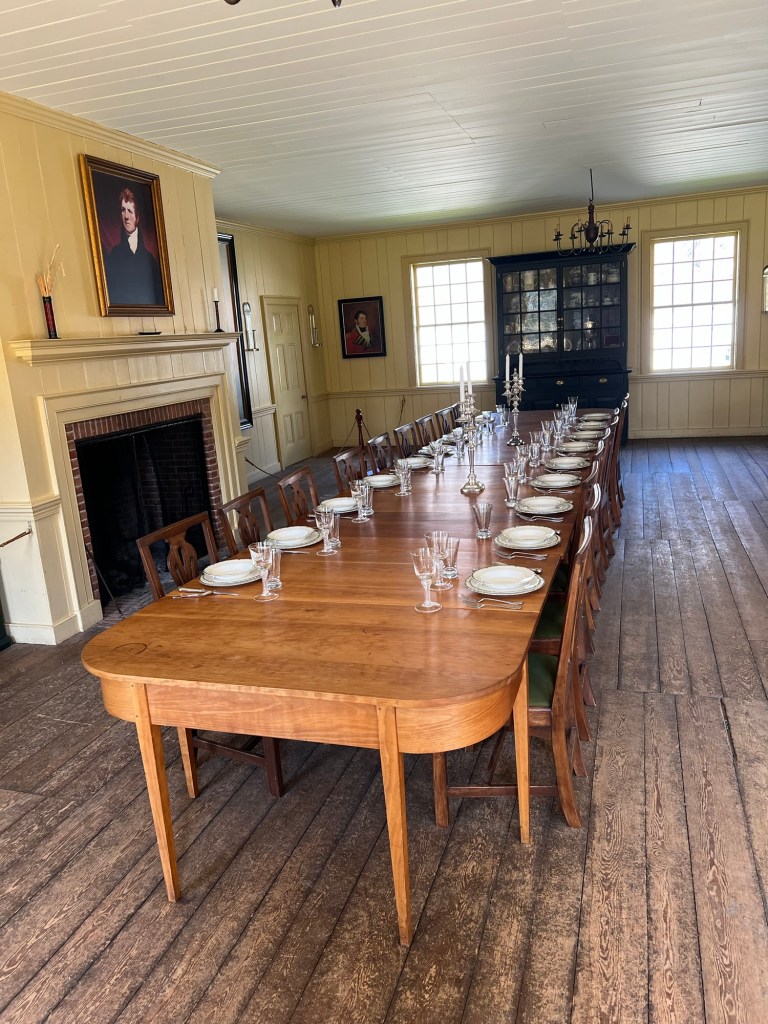
During rendezvous this great hall was used for dining, the rest of the year it sat idle.

This is where the partners sat. They would come west from Montreal for rendezvous. Next to them, in the middle of the hall, were the largest number of tables, these were for the clerks. At the far end were tables for the guides and interpreters. Of course the voyageurs were outside, in their own encampment.

I learned from the young woman in the Great Hall that the North West Company was formed by a number of independent Scottish traders who joined together to compete more effectively against the Hudson’s Bay Company. It was formed in the late 1790’s and by 1825 was forced to consolidate with the Hudson’s Bay Company. That company finally went bankrupt this year, 2025. But in 1815 the North West Company was the largest fur trader in the world.

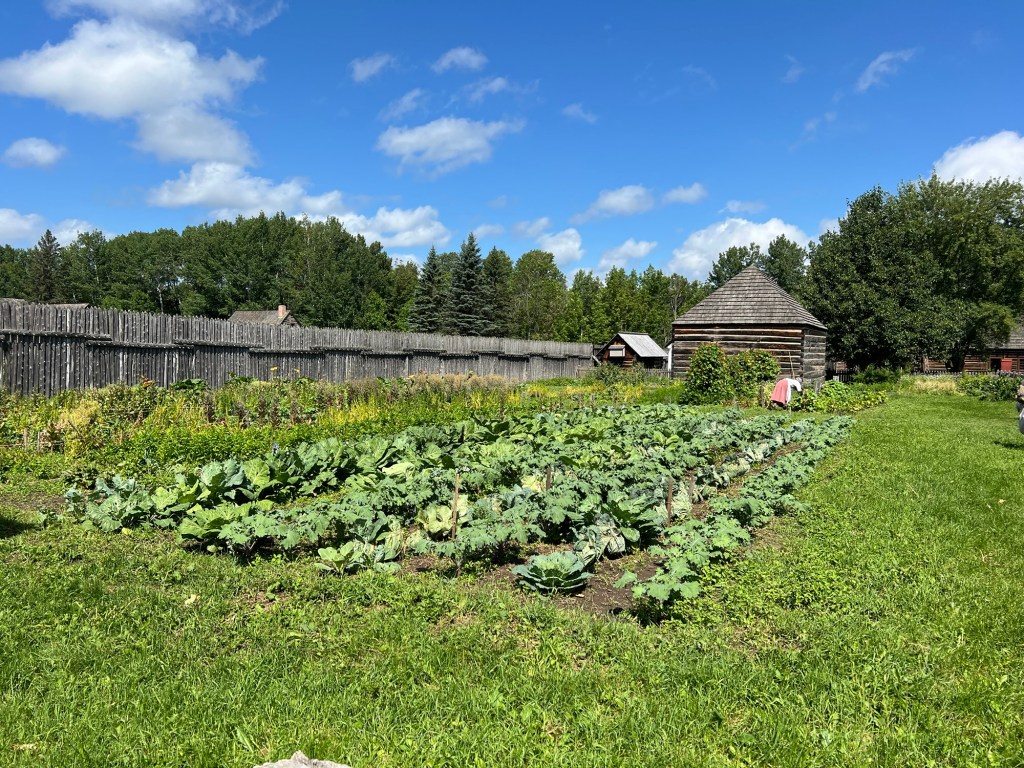
Fort William had its own garden…

and farm.

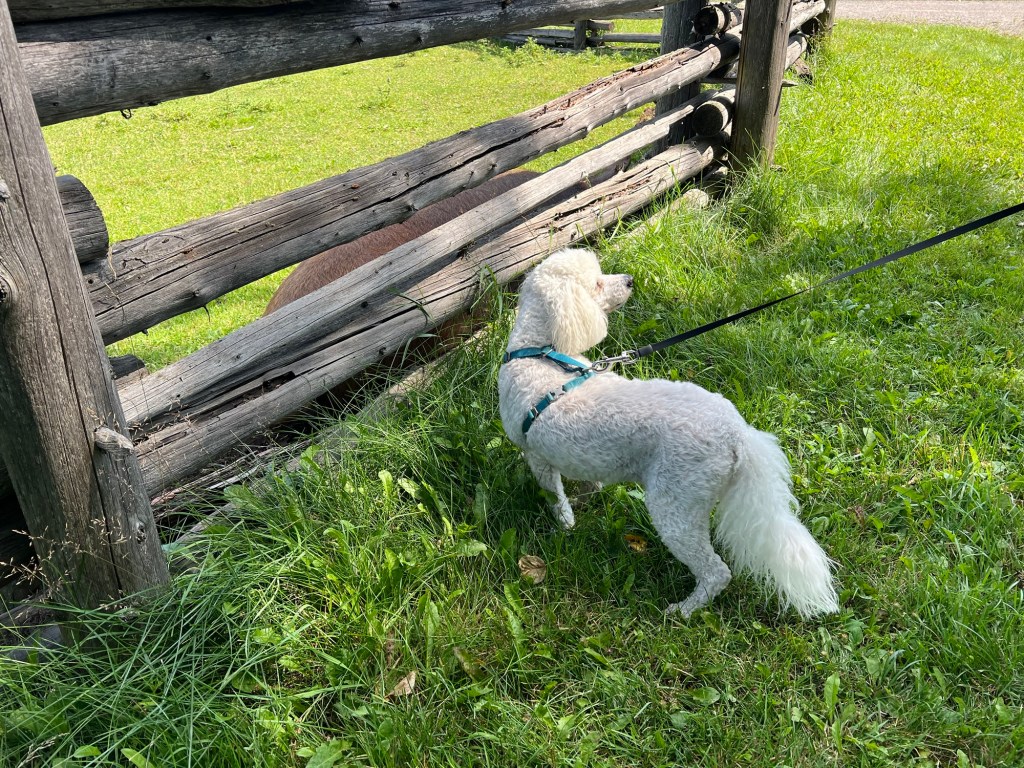
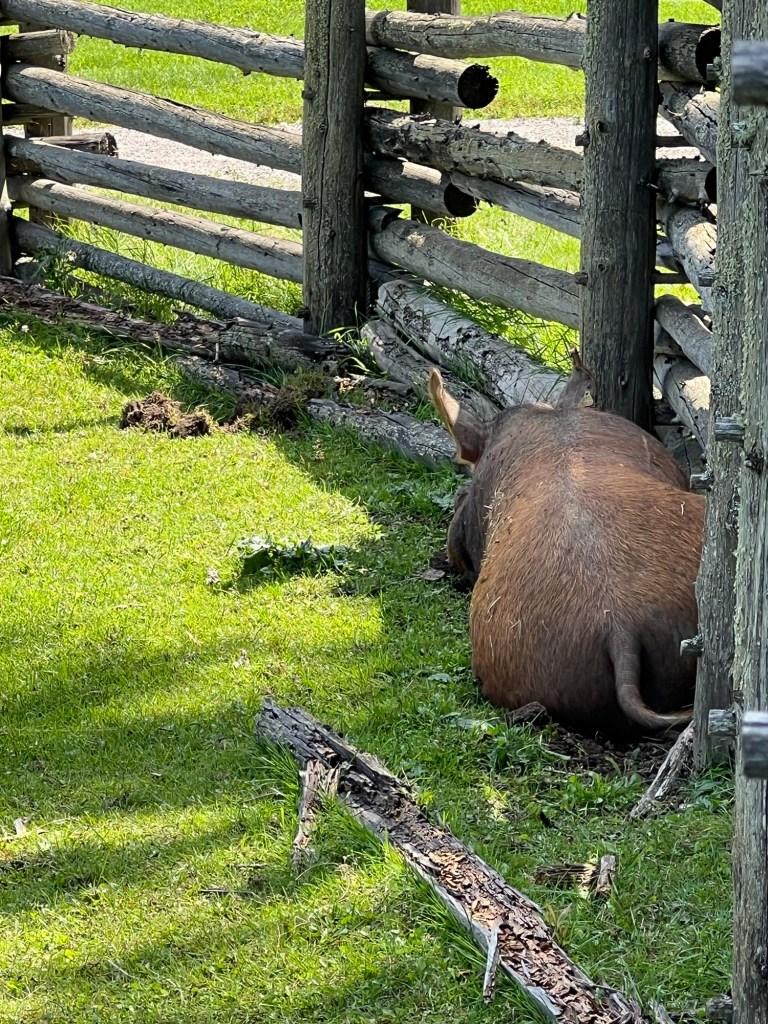
Matey was very curious about what was lying next to this fence.

He finally figured out is was a live pig and barked at it. The pig was not fazed.

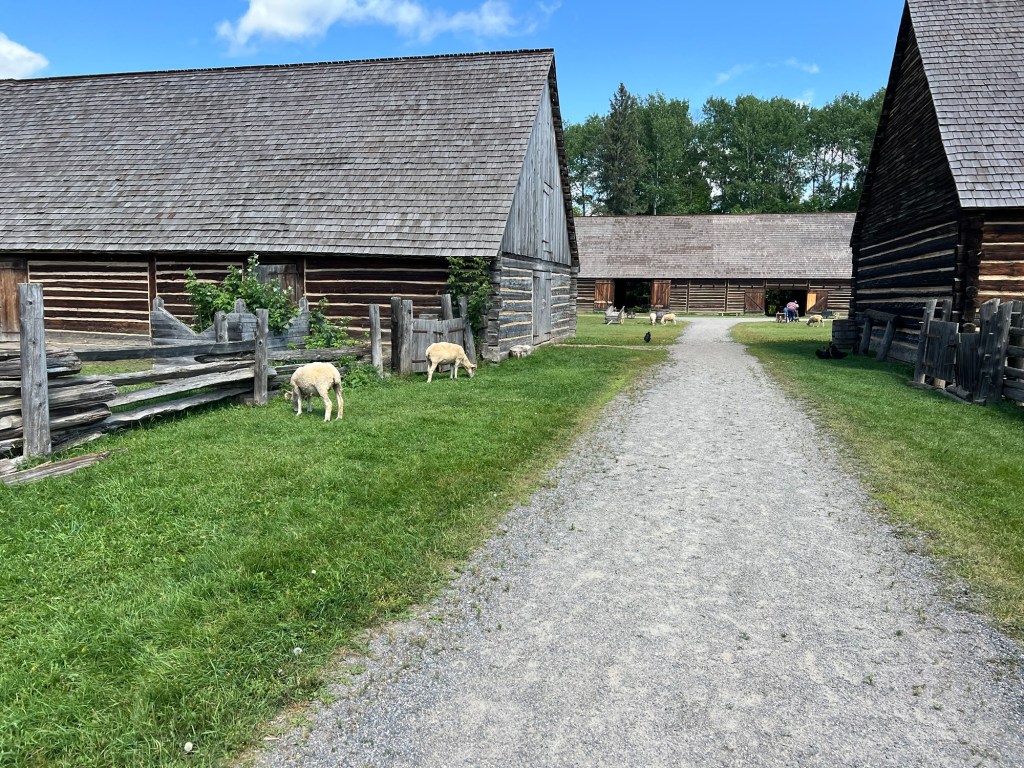
But Matey was now all excited so we decided not to try to walk him past the loose sheep and chickens.

We were all about worn out now, so took the rather long walk back through the Visitor Center and out.

This was a beautifully done site and there was more to see and do than we could manage.

Kakabeka Falls Provincial Park

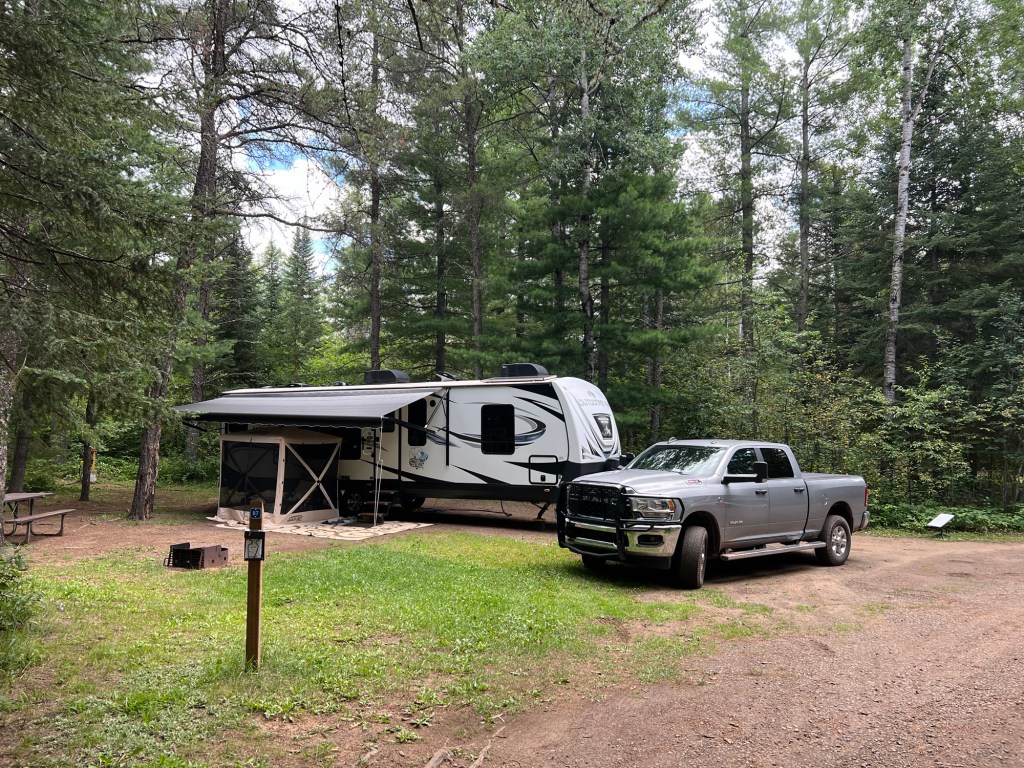
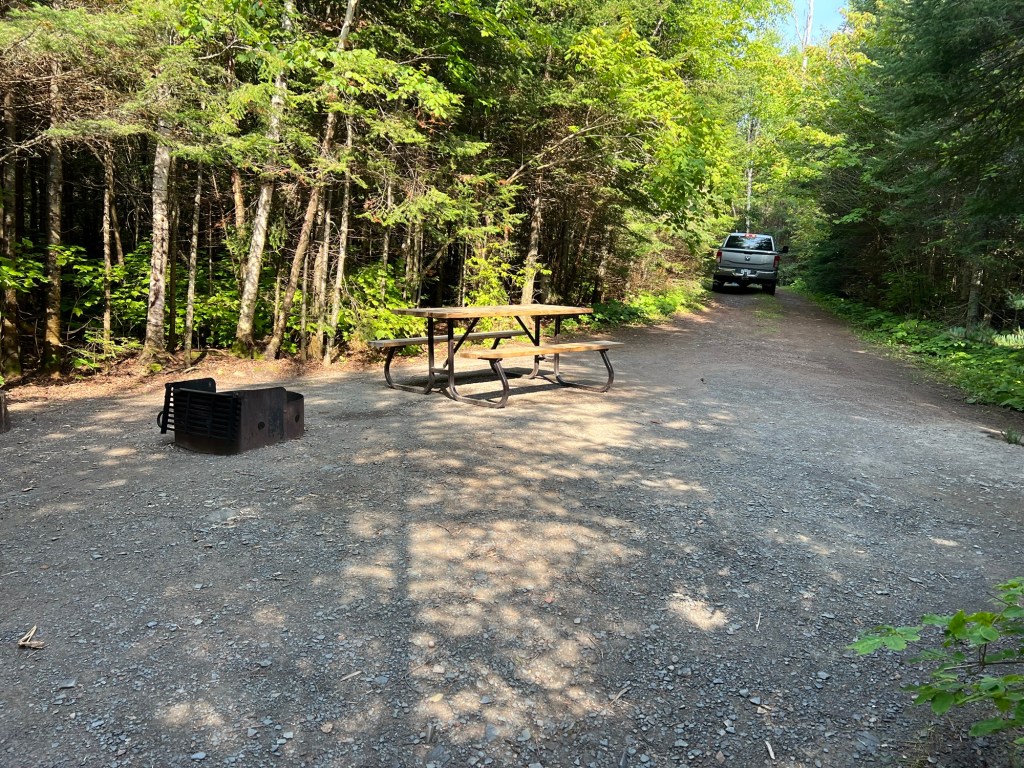
This is our seventh (and last) Ontario Provincial Park on this trip, and this may be our best campsite. It is huge, wider than it is deep, so we have privacy on both sides. And we’re on a short dead-end spur, so almost no one goes by in front of us. It’s also pretty level. But like all Ontario Provincial Parks, the only service is 30 Amp electrical, no water or sewer. We can manage.

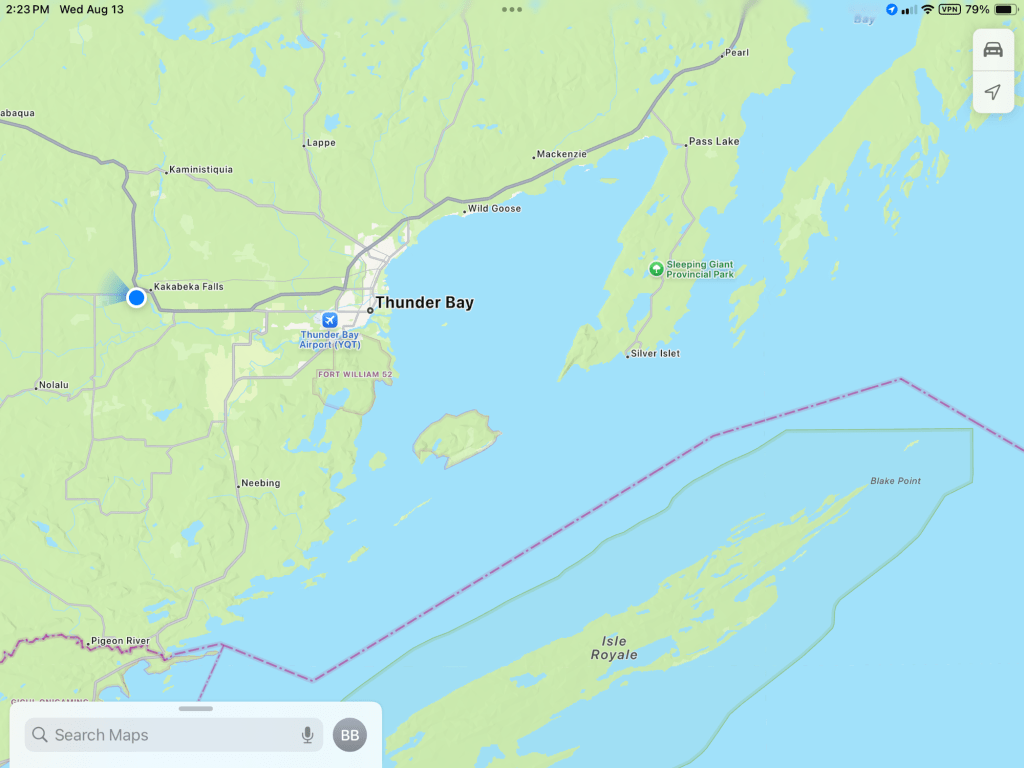
We are at the blue dot, less than 20 miles from Thunder Bay, Ontario. We are also not too far from the Minnesota border and not far, as the crow flies, from the Sibley Peninsula and Sleeping Giant Provincial Park. Also, since Isle Royale is part of Michigan, we’re quite close to that state, too.

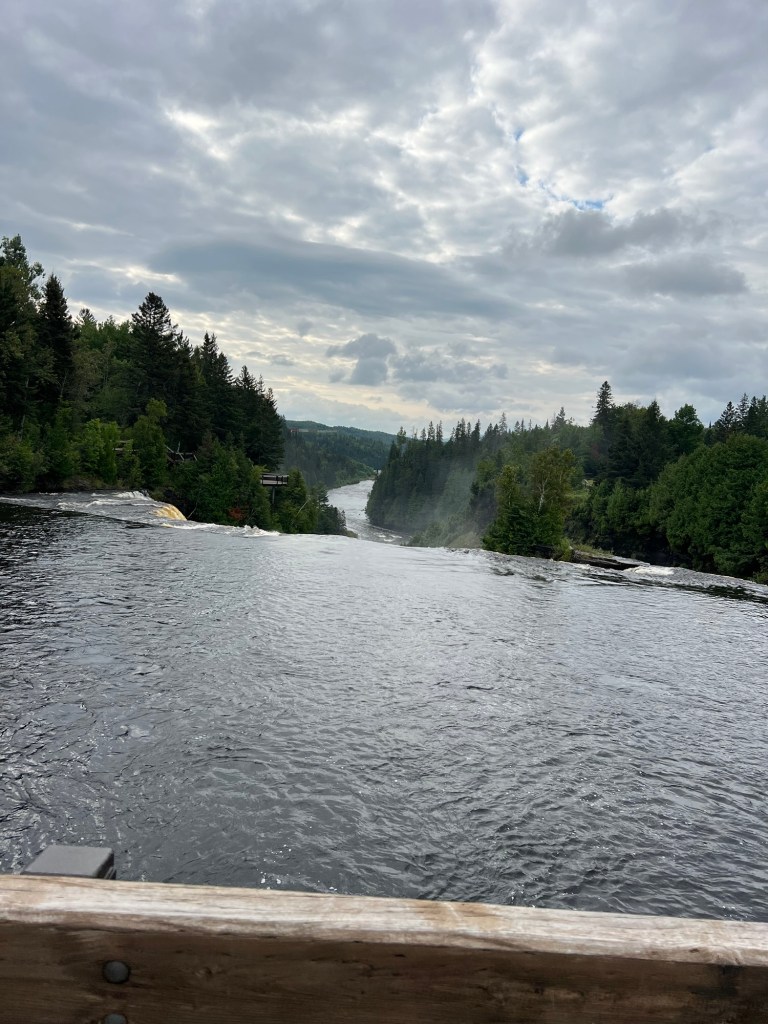
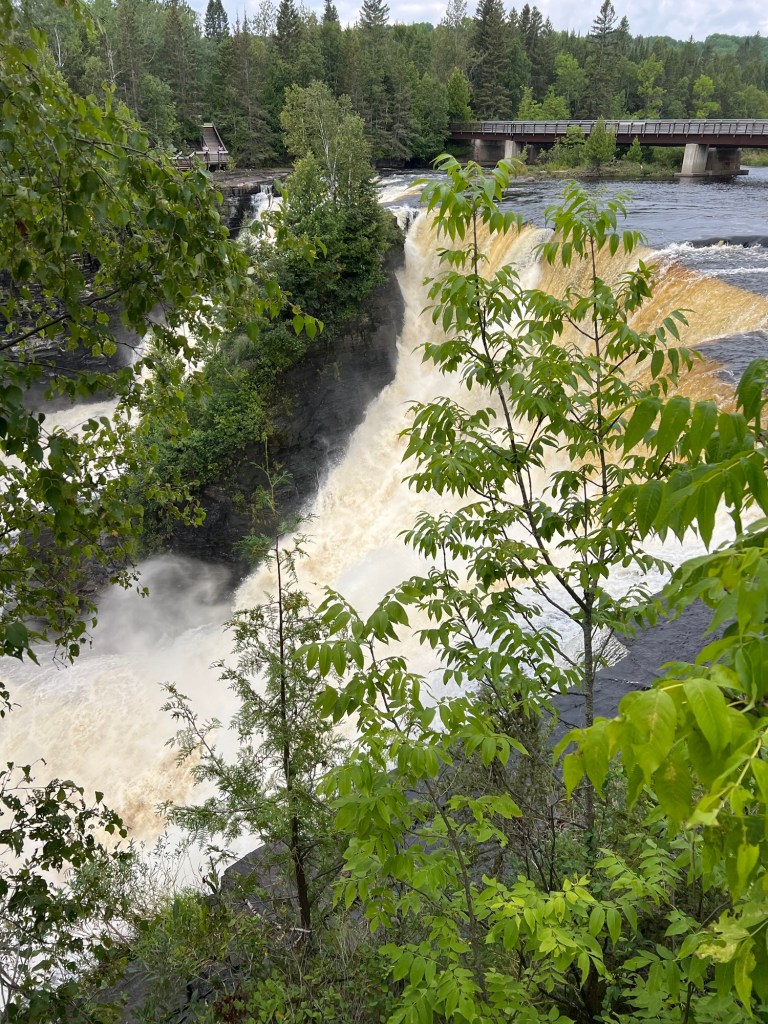
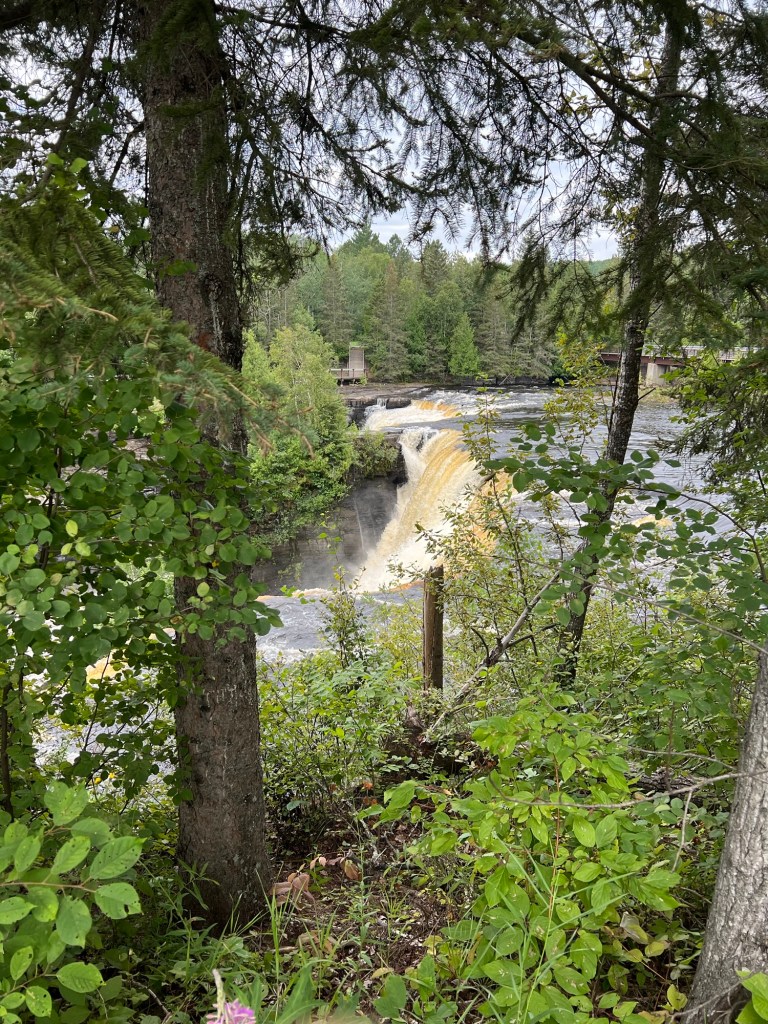
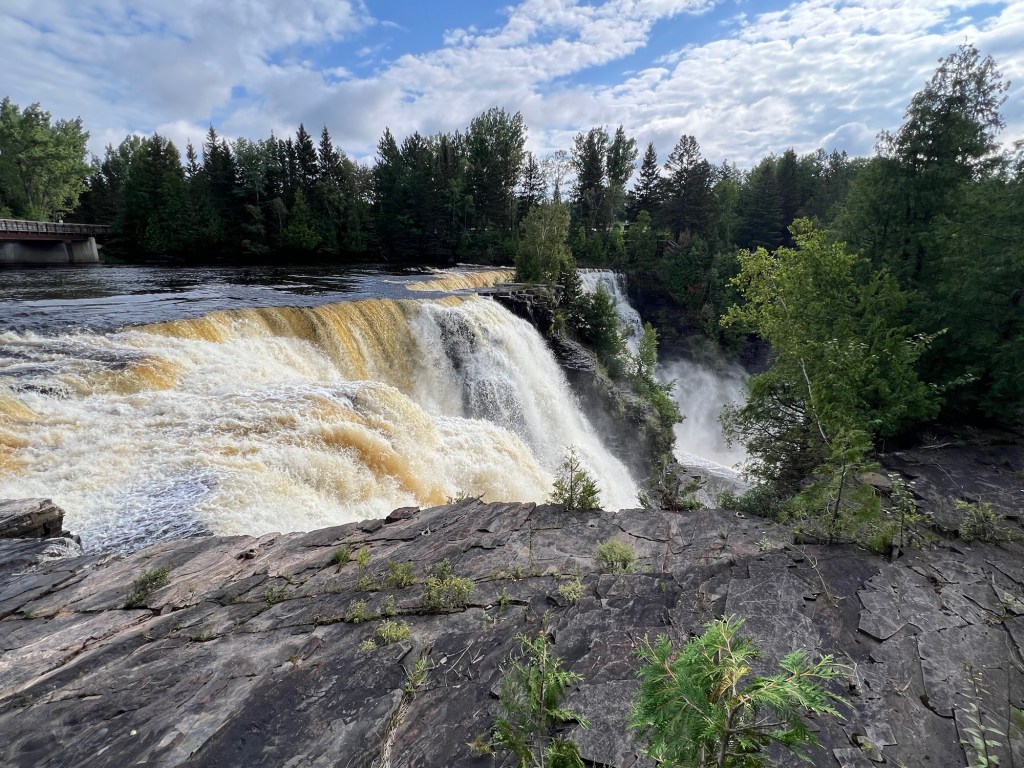
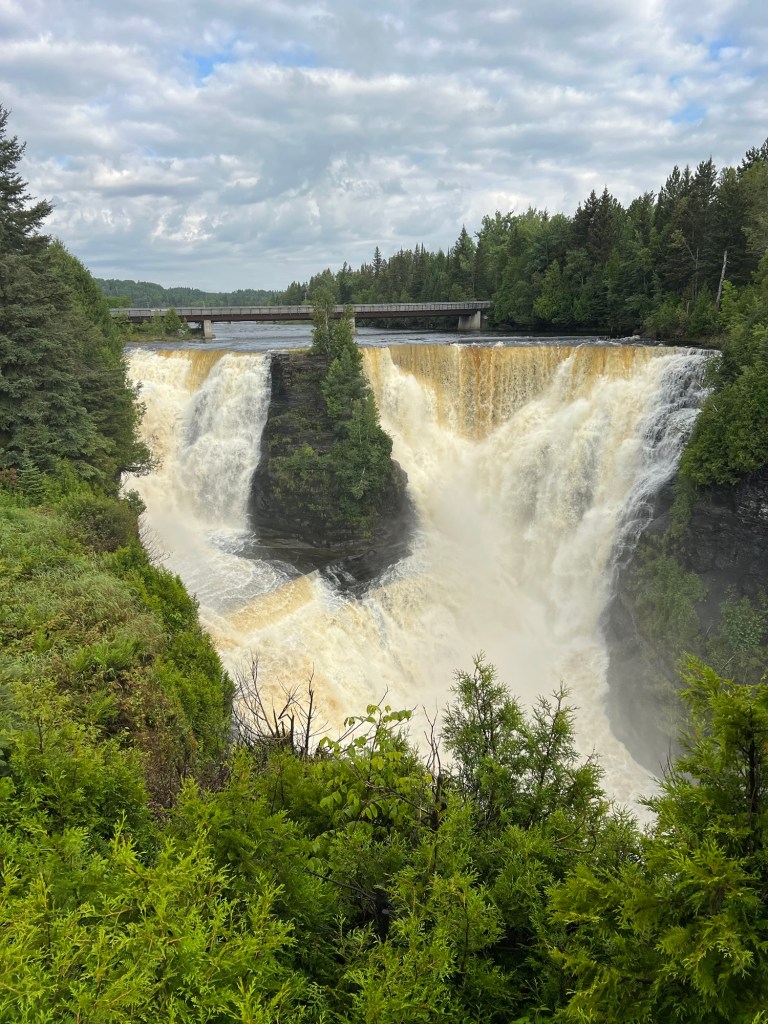
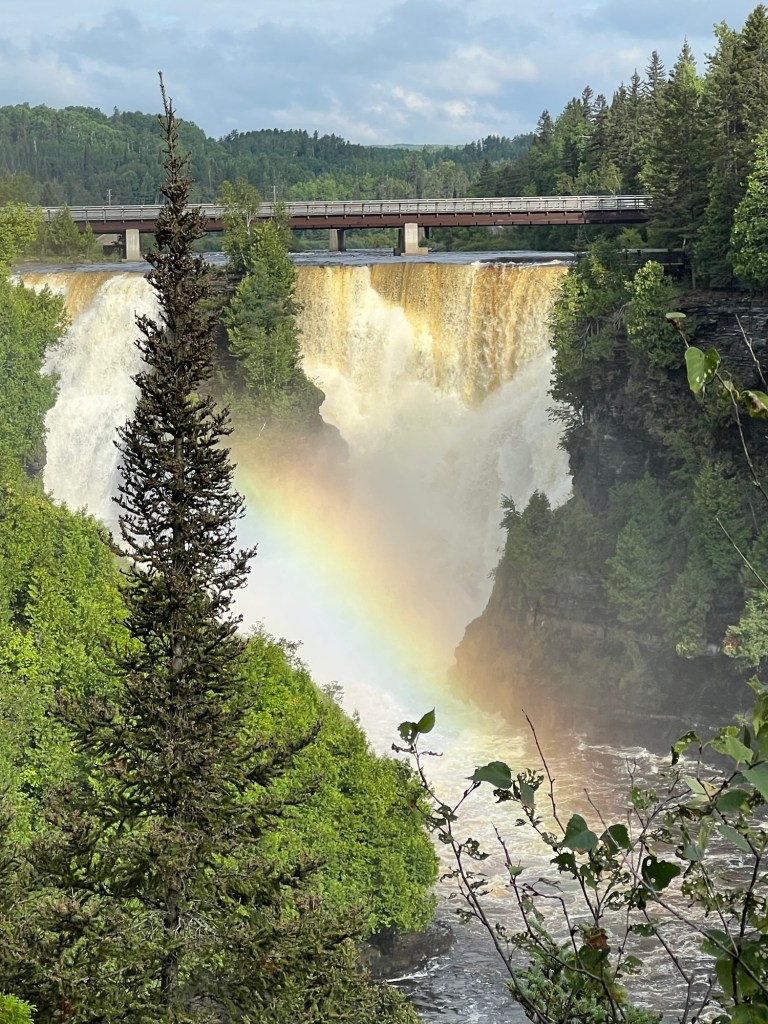
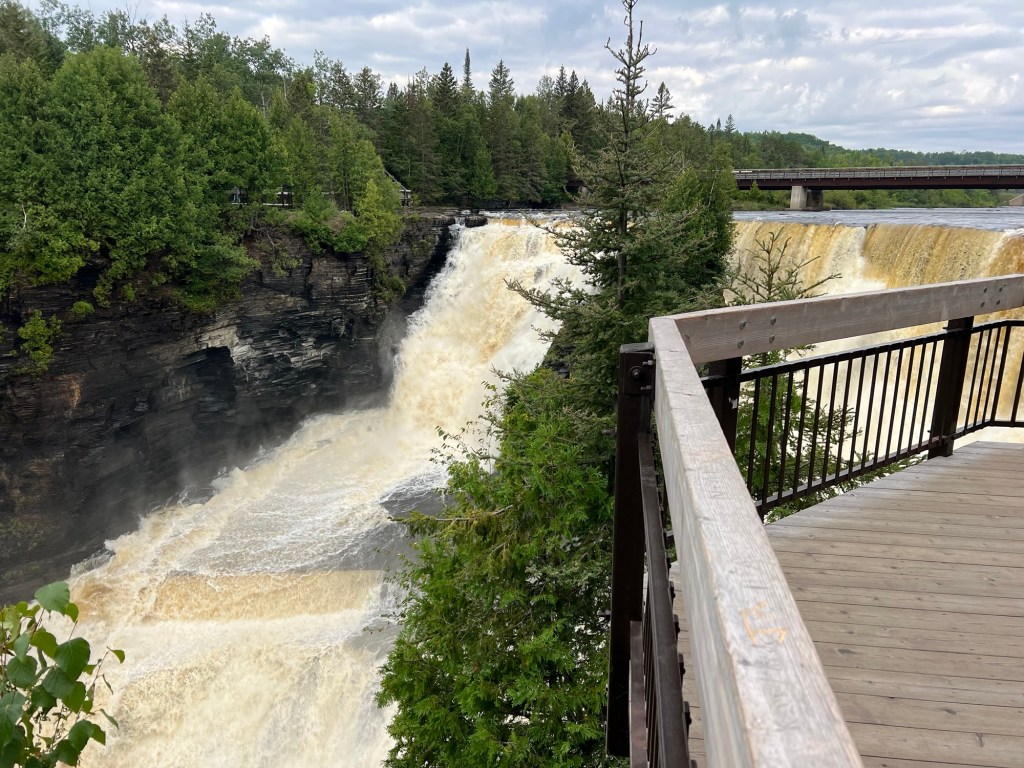
The star of this park is the falls and when you drive across the one lane bridge to the campgrounds, you are certainly aware there’s a falls there, but you really can’t see it. Kakabeka Falls, on the Kaministiquia River, is the second highest falls in Ontario at 40 meters (130 feet).

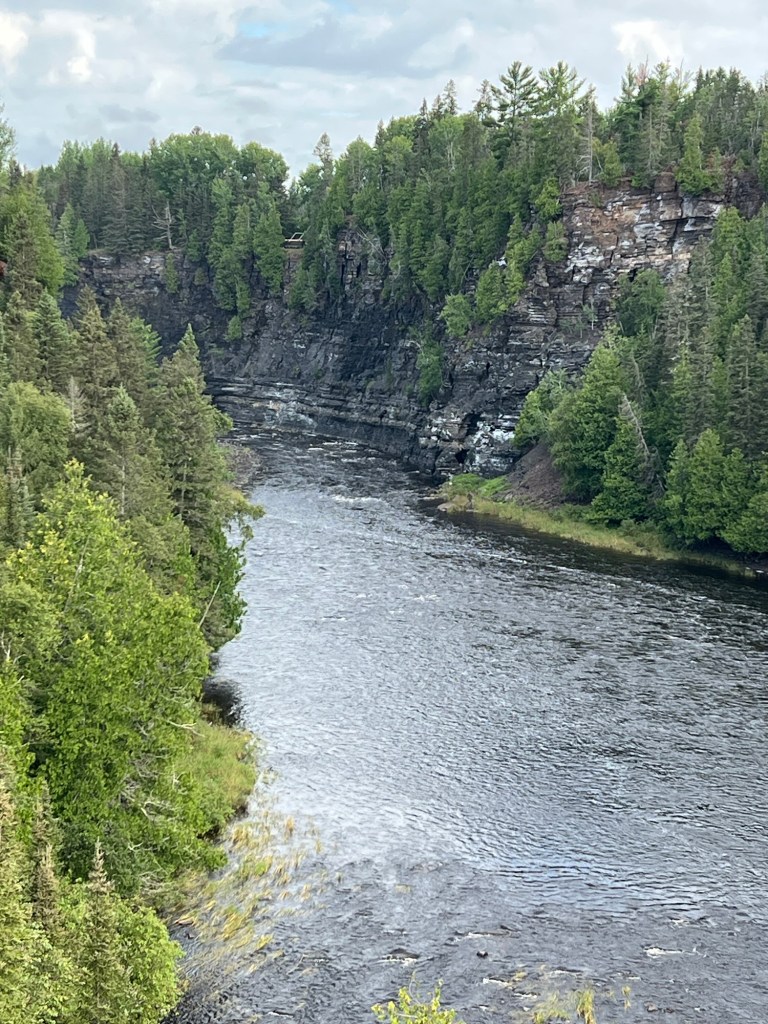
Today we walked the boardwalk and trails that let you view the falls from every which way. Starting on the north side of the river there’s a platform to view the gorge below the falls.

Then you can see the top part of the falls,

and get quite close.

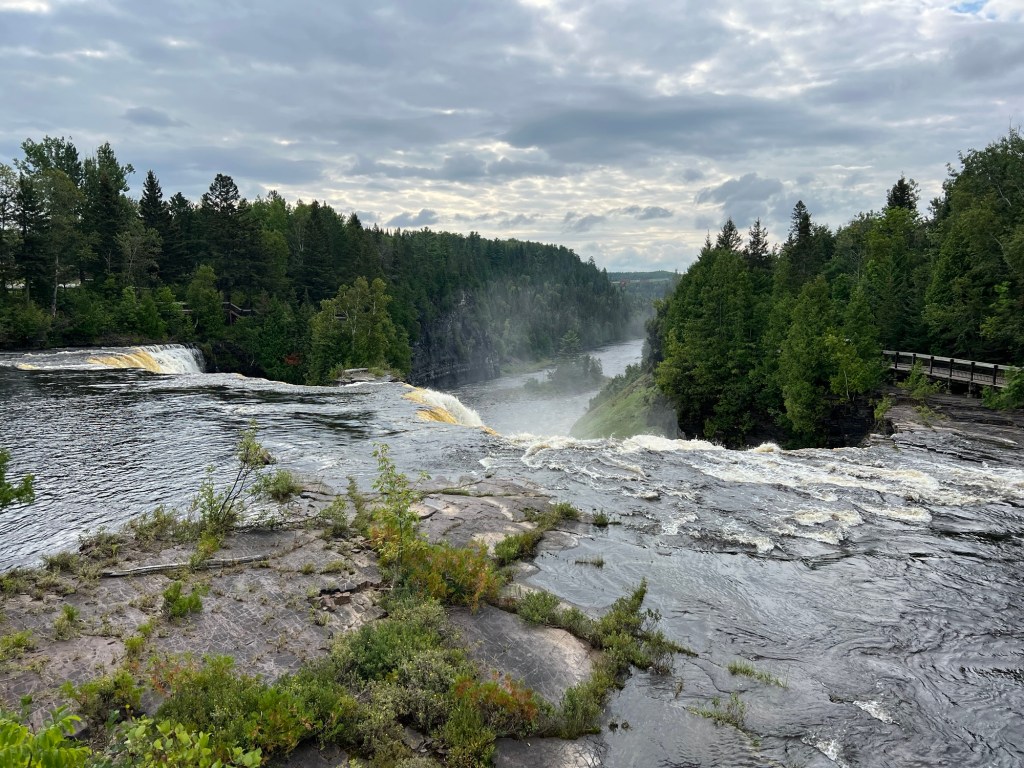
Another platform gets you to the brink on the north side.

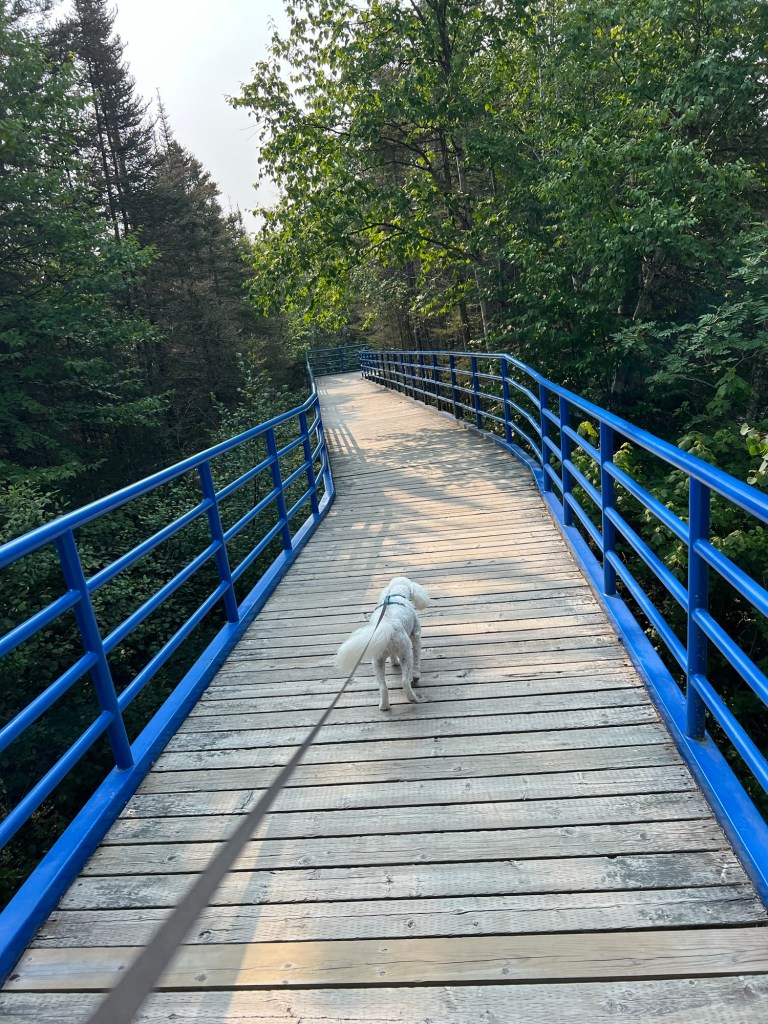
You can cross a pedestrian bridge that parallels the one-lane auto bridge and get a nice look from above the falls.

Then you come around to the south side of the river and see the brink of the falls from that side.

A bit past that is a platform for a pretty nice view of most of the falls from the south side.

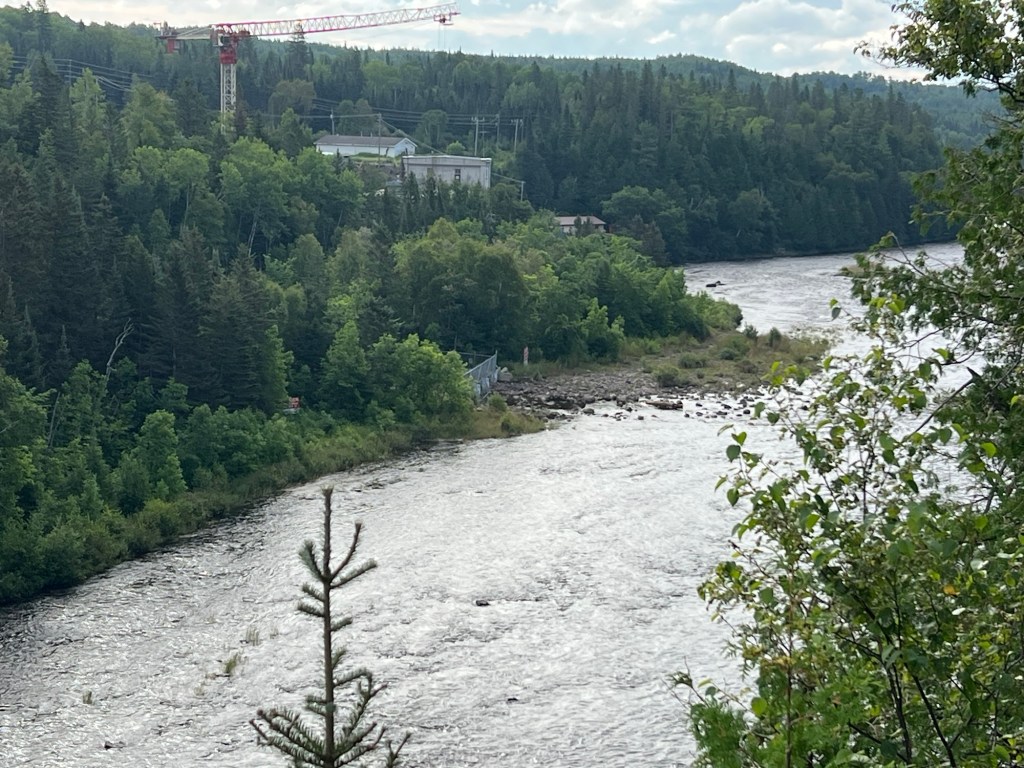
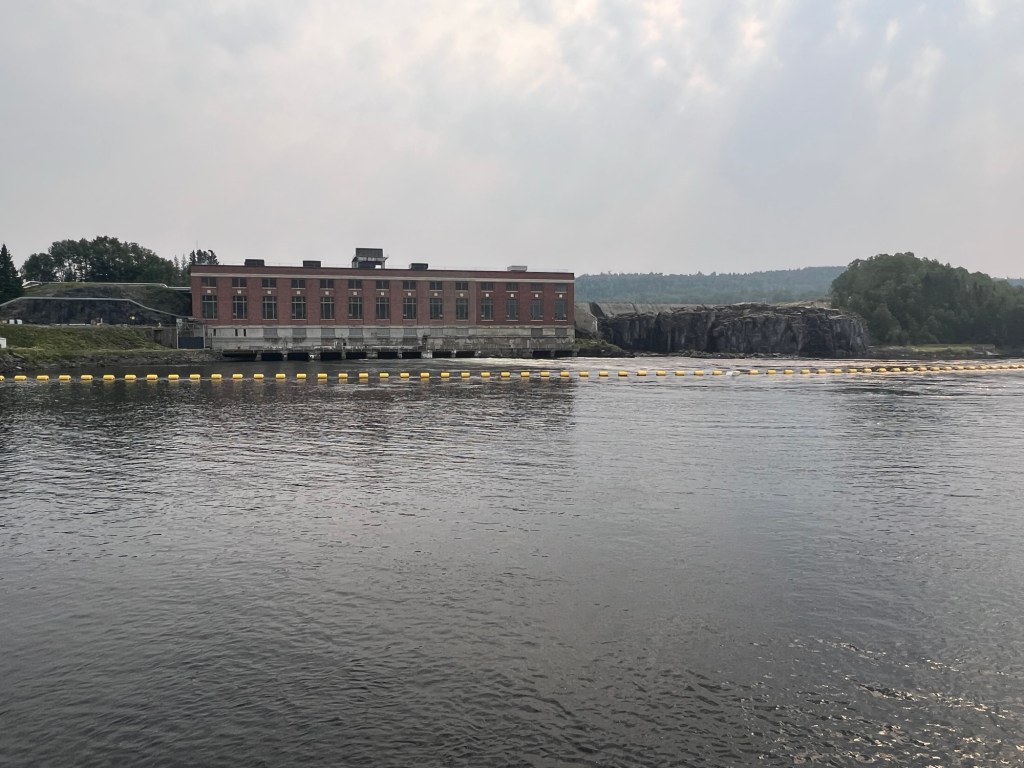
From there you take a short trail which follows down the route of the old “mountain portage” to the point where it descends steeply to the river. The voyageurs used to make that trek repeatedly with two 90 pound loads held by a three inch leather strap which went across their foreheads (just envisioning that gives me a headache). And they reportedly did this at a jog! The park path does not go down the steep portage trail, instead it cuts back to the upper bank for this view of the power plant. Like at Niagara Falls, water is diverted above the falls and brought to the plant, in this case in giant pipes. The crane you see is being used in a huge reconstruction project at the plant.

You now walk along the south side of the gorge going upstream…

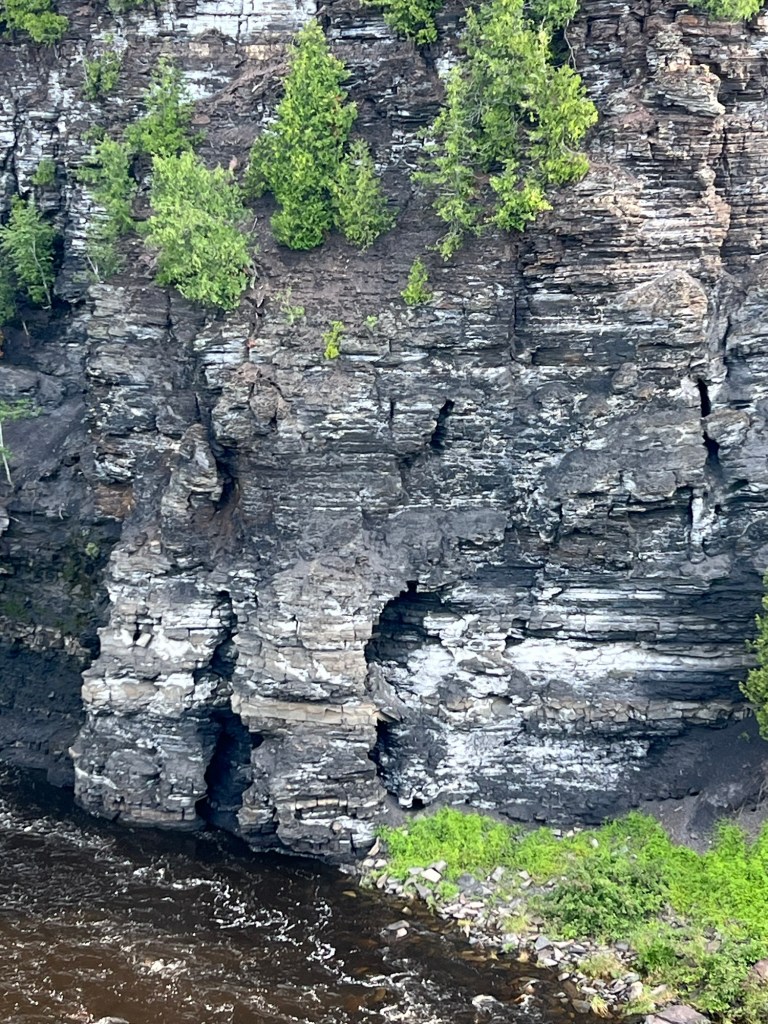
where you can get a great view of the erosion in the shale under the chert caprock that forms the brink of the falls.

You end on a platform that I think gives you the very best view of the falls. A fitting finale to your short journey.

More Scenes from Sleeping Giant

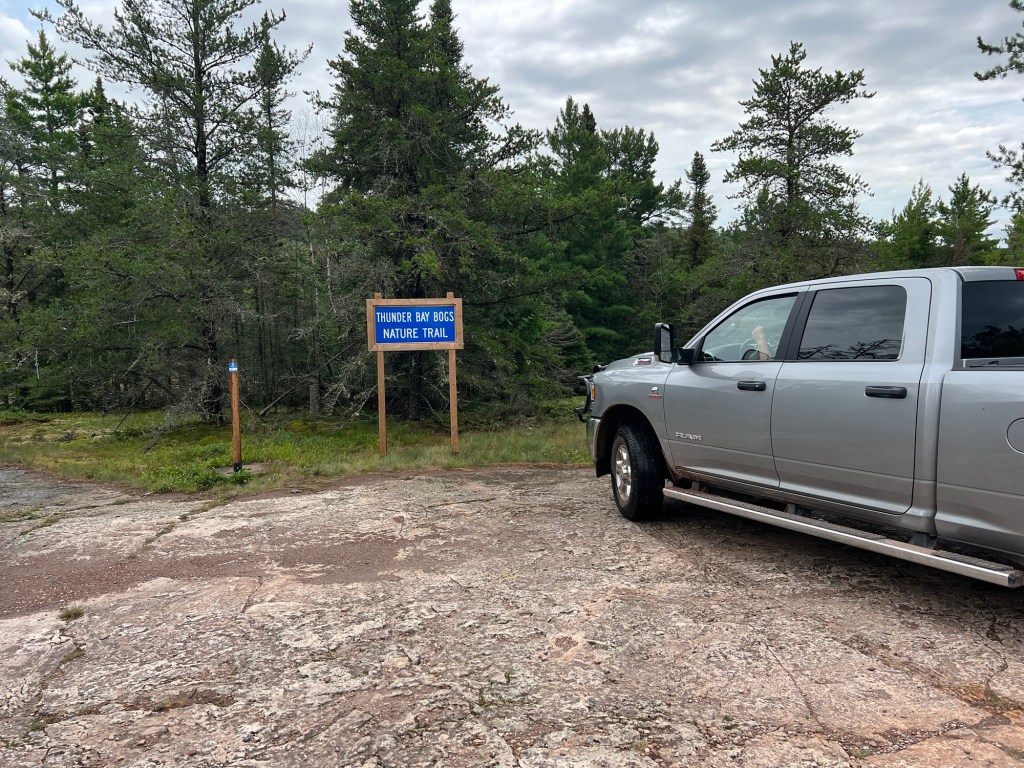
After we went out on the Thunder Bay Lookout we walked the short Thunder Bay Bogs Nature Trail.

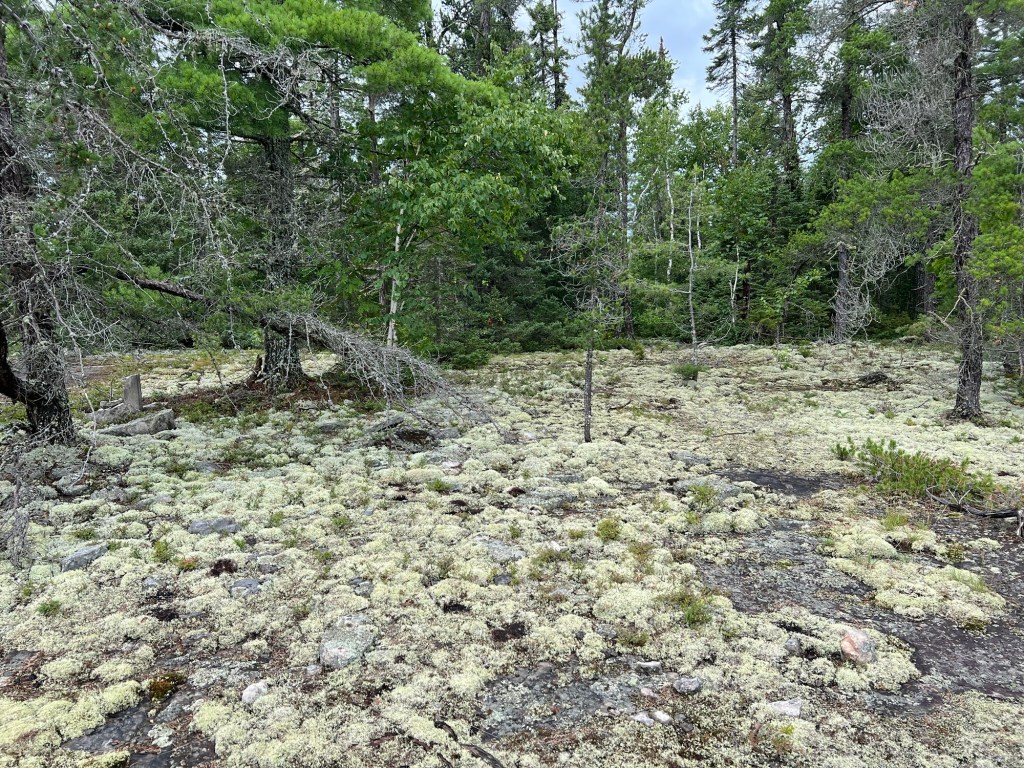
I was hoping to see some carnivorous plants but I didn’t. There was lots of lichen,

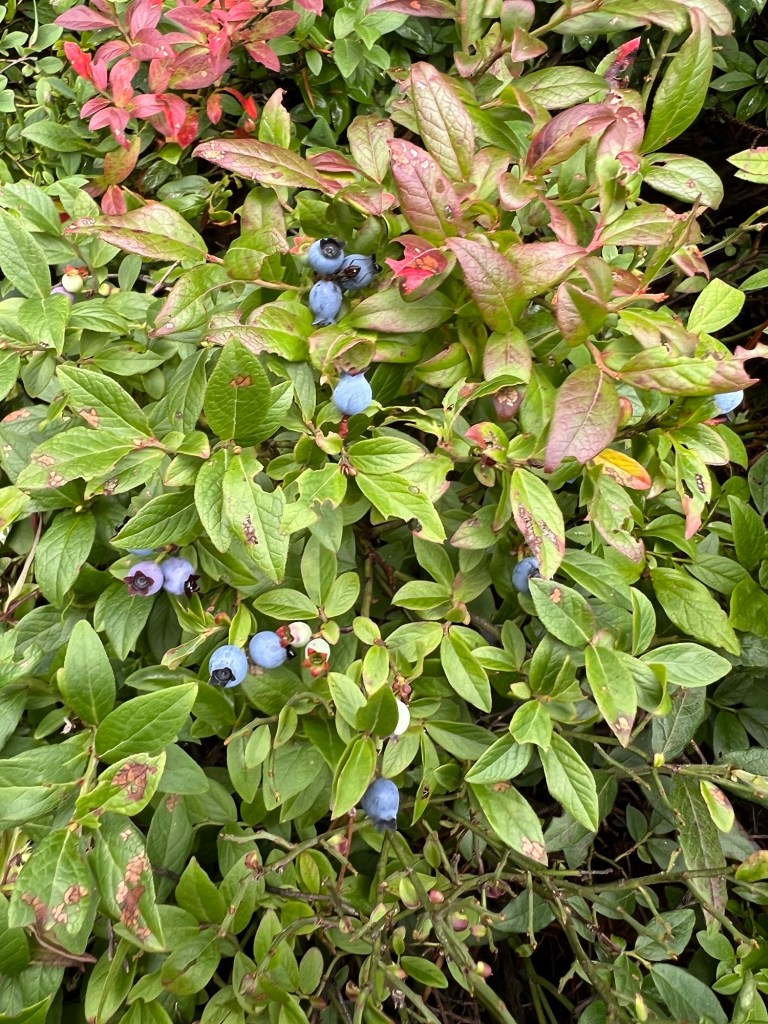
some lowbush blueberries,

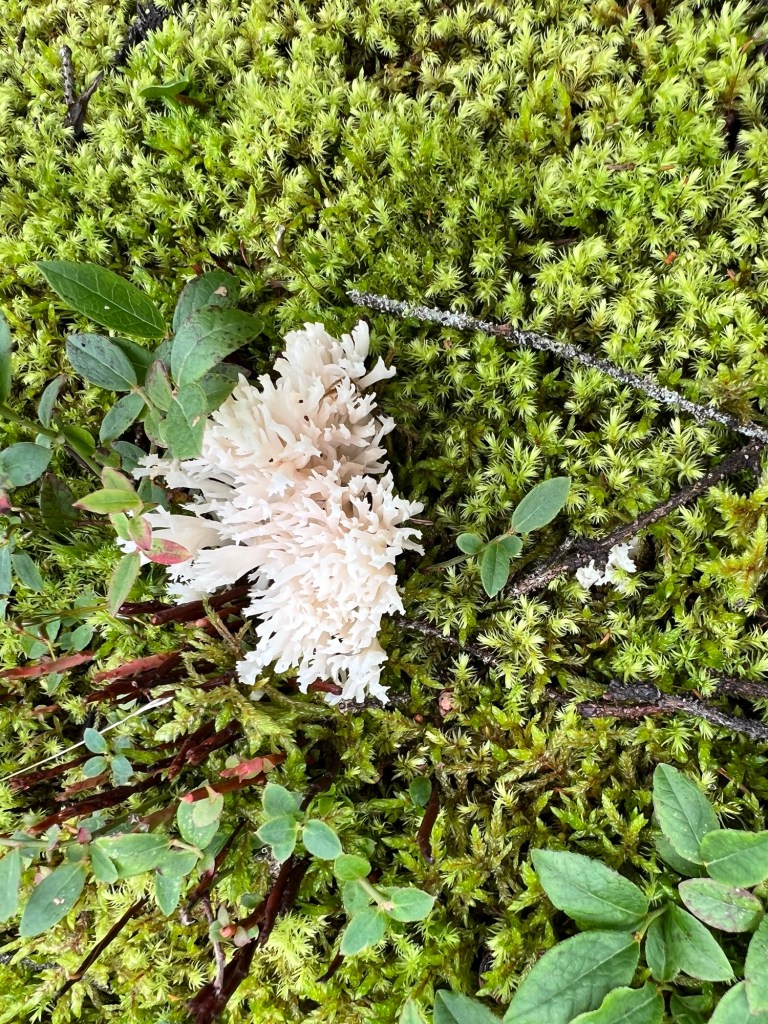
and this strange fungus.

It was a very moosey looking place, but still no moose.

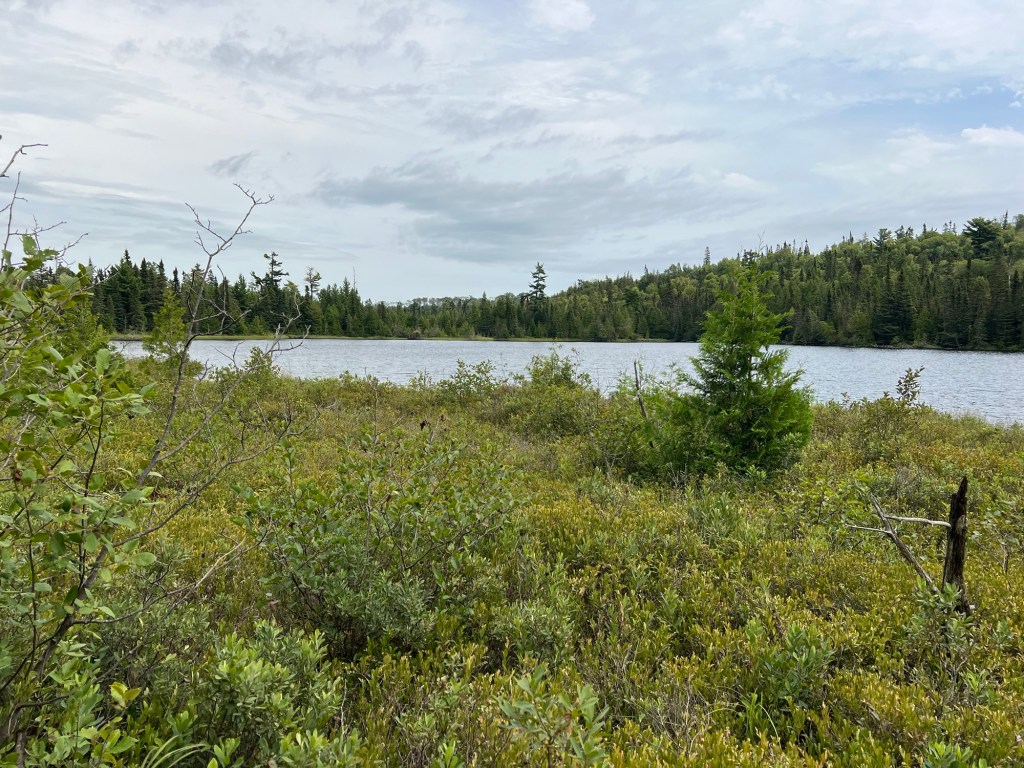
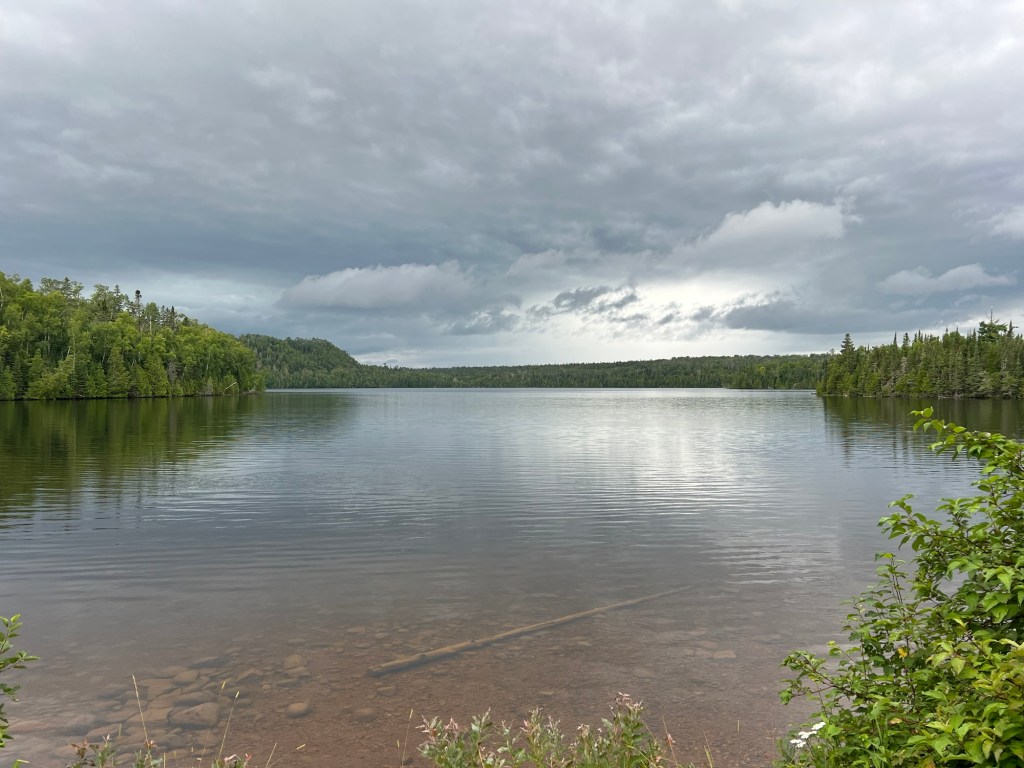
We stopped at two other pretty little lakes,

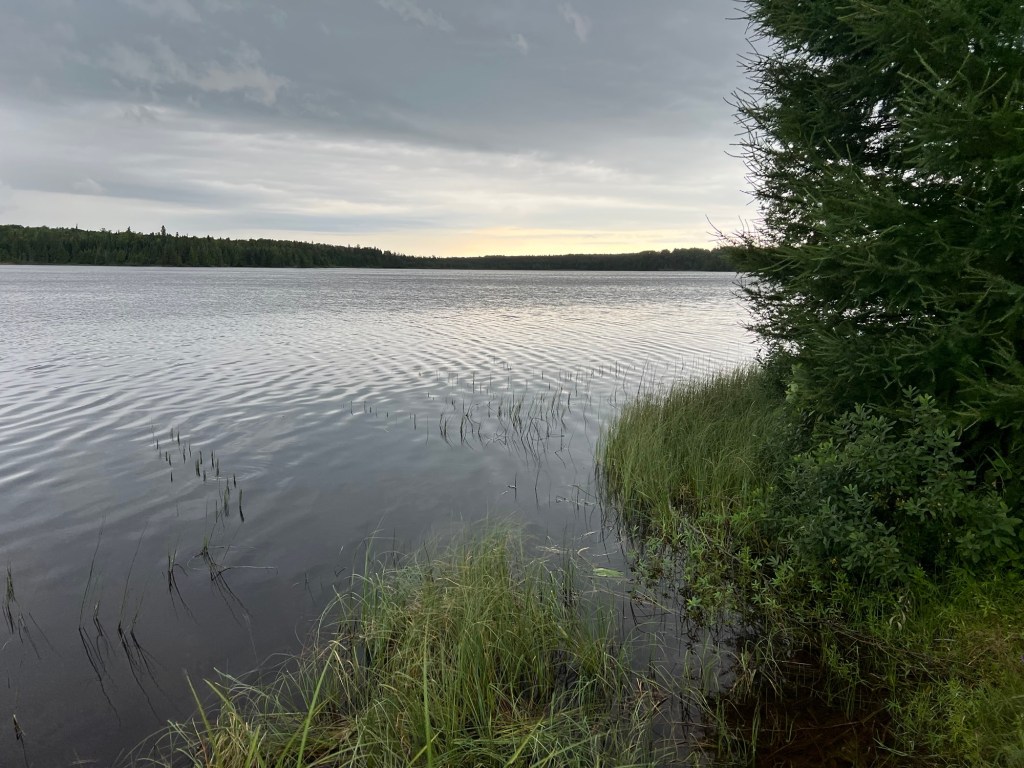
under increasing clouds,

and returned in a downpour.

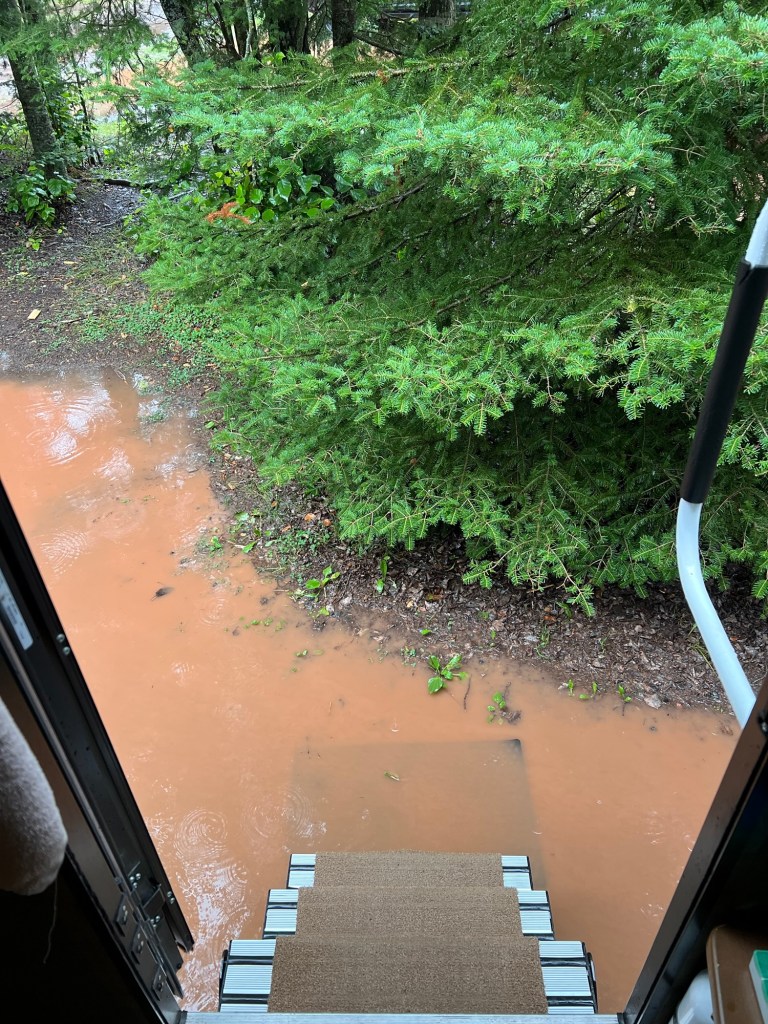
Our doorstep had become a tiny lake.

Yesterday we hiked along Joe Creek.

We went the short distance to Lake Superior…

although the trail all but disappeared before we got there.

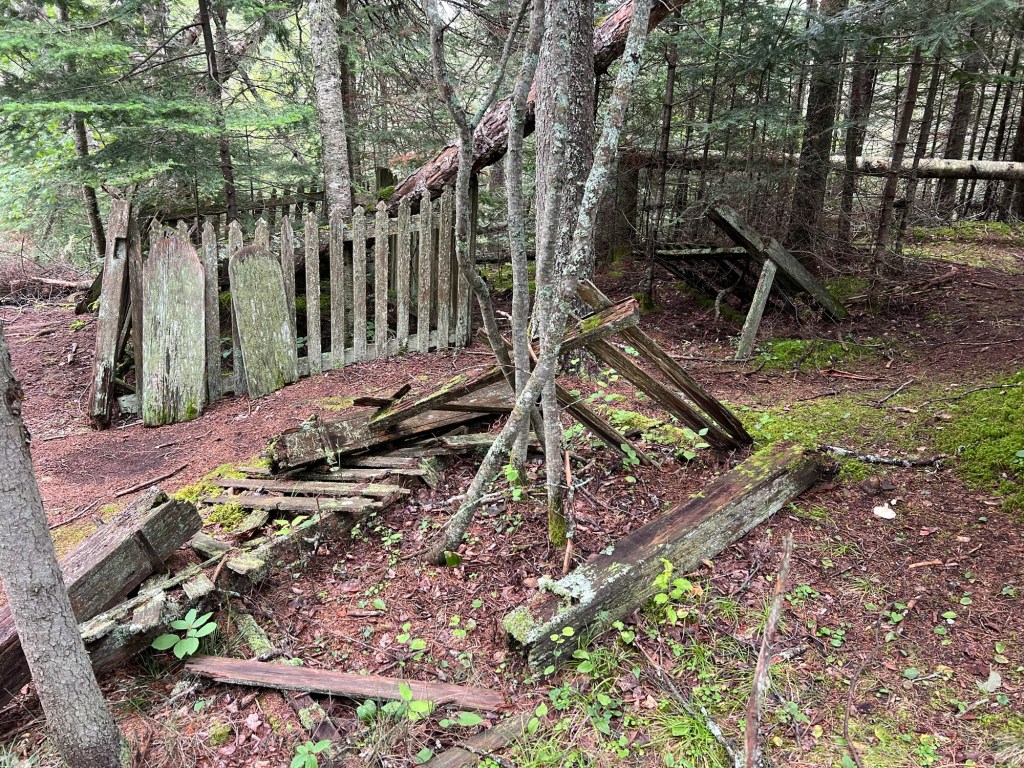
We drove back to the far end of the peninsula to hike Cemetery Trail. Most of the graves in the cemetery, which was used from 1868 to 1937, had wooden markers and wooden picket fences. There was not much left.

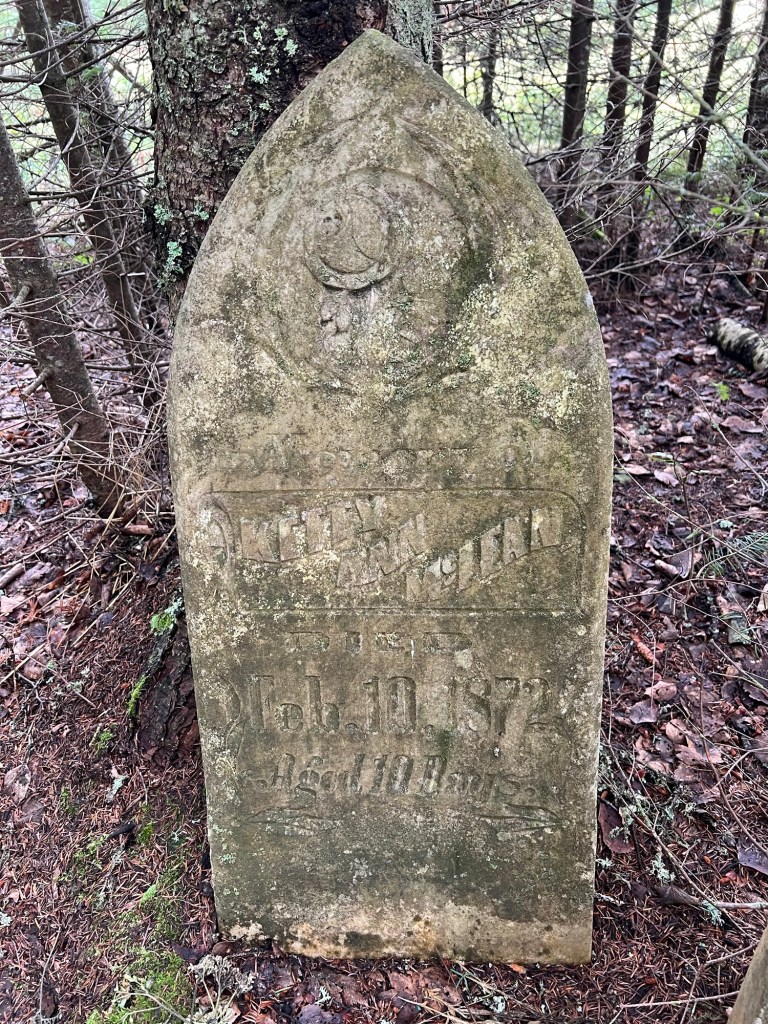
This is the only stone I saw. It says “Kelly Ann McLean, Feb 10, 1872, Aged 10 Days” How sad.

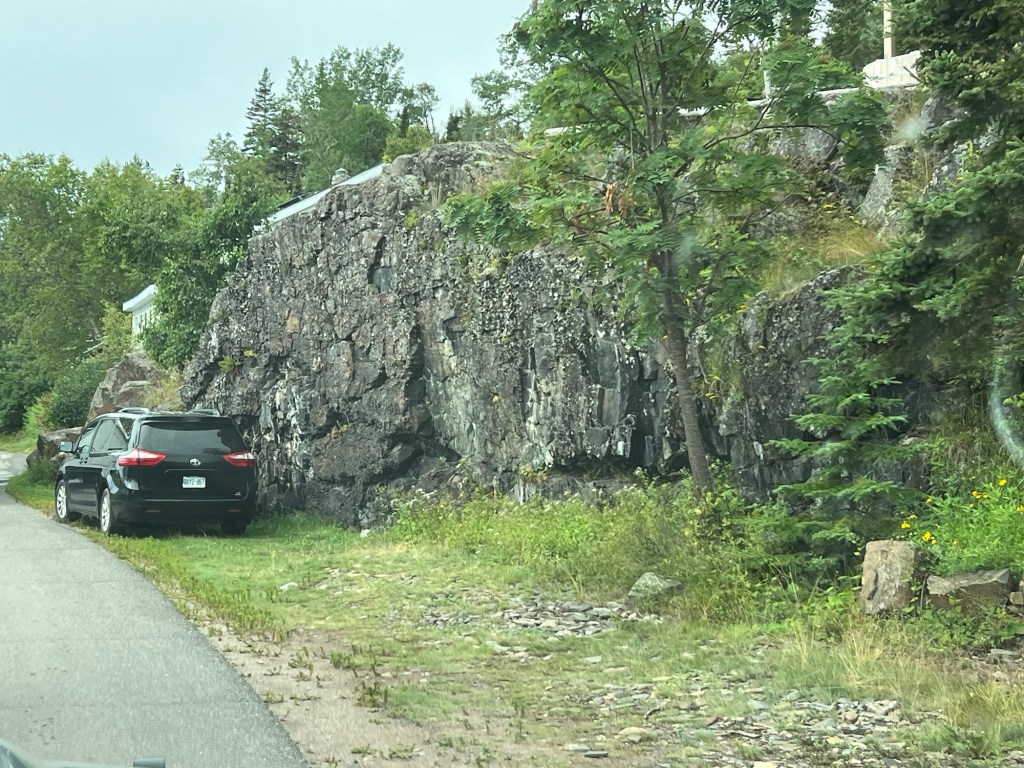
When we left the trail we drove a mile or so on to the little community of Silver Islet. This is all scrunched up between the rocks…

and the lake.

Although the road makes a loop here it is a two way road.

Lots of pretty little houses.

Lots of summer people and traffic.

A very slow go through the little town.

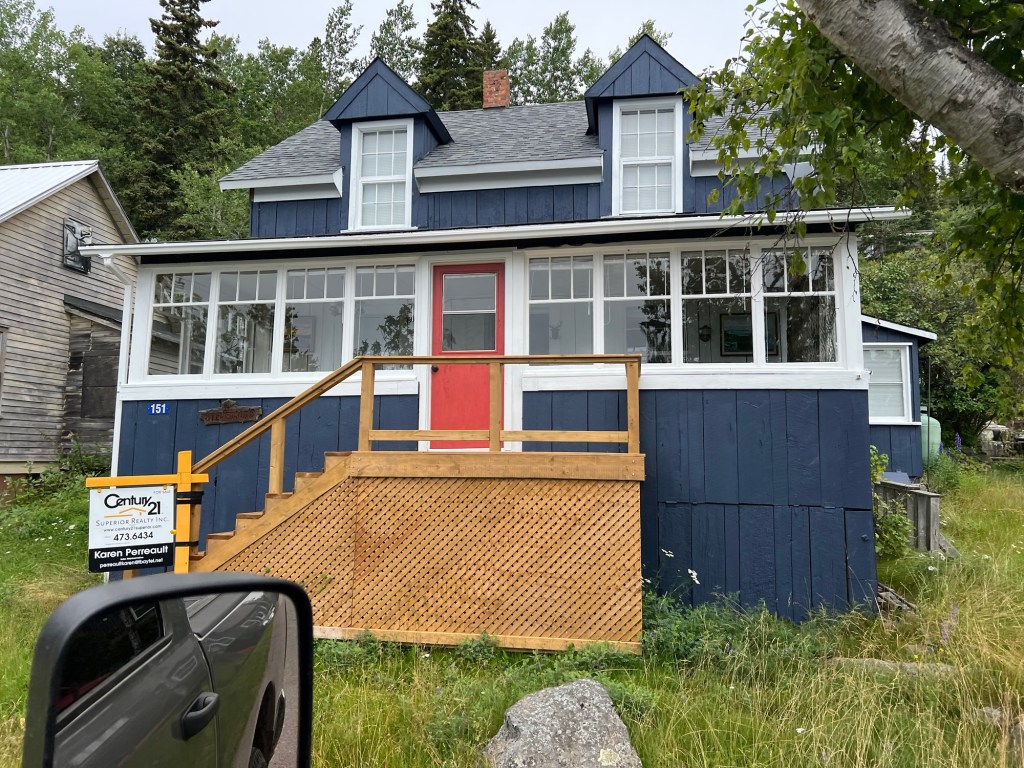
This place was for sale but it didn’t entice me. Interestingly I saw a house with McLean on the sign outside. Perhaps descendants of the family that lost little Kelly Ann.

Sleeping Giant is a lovely park…

with a beautiful Visitors Center, but now it’s time to move along.

The Thunder Bay Lookout

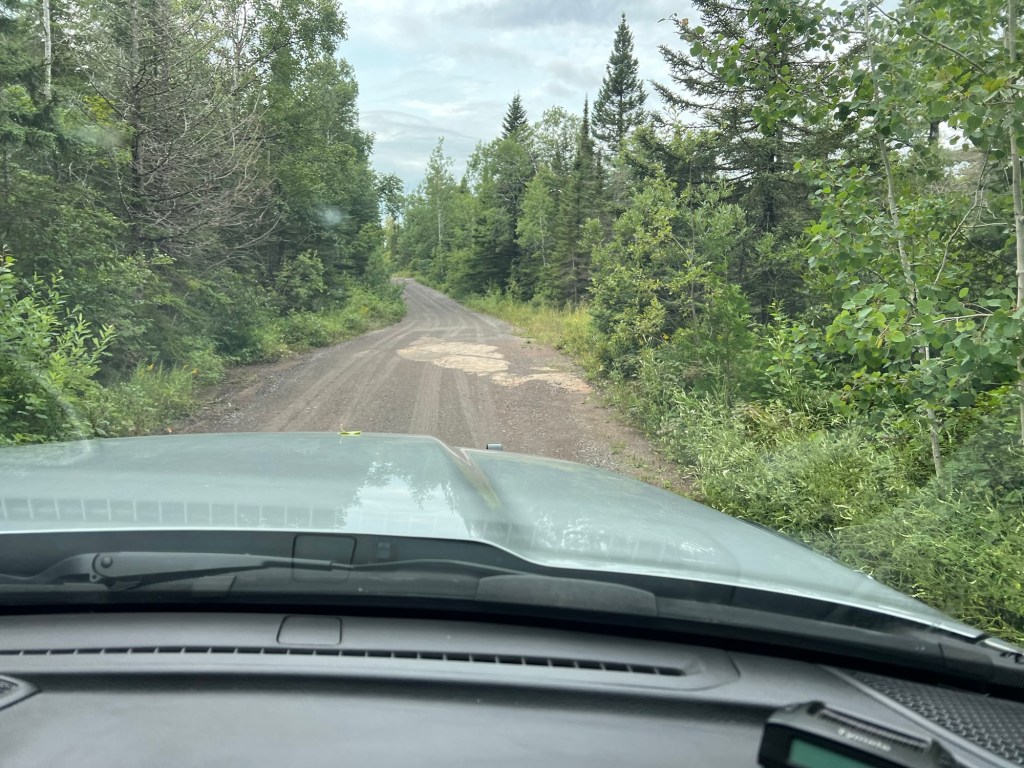
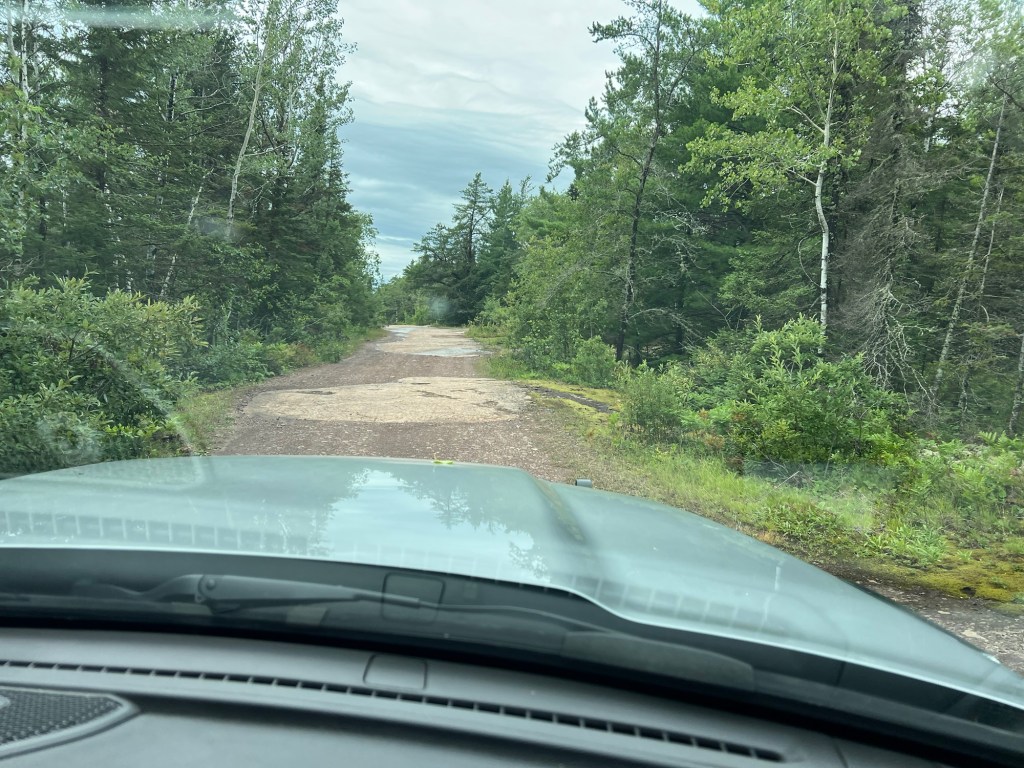
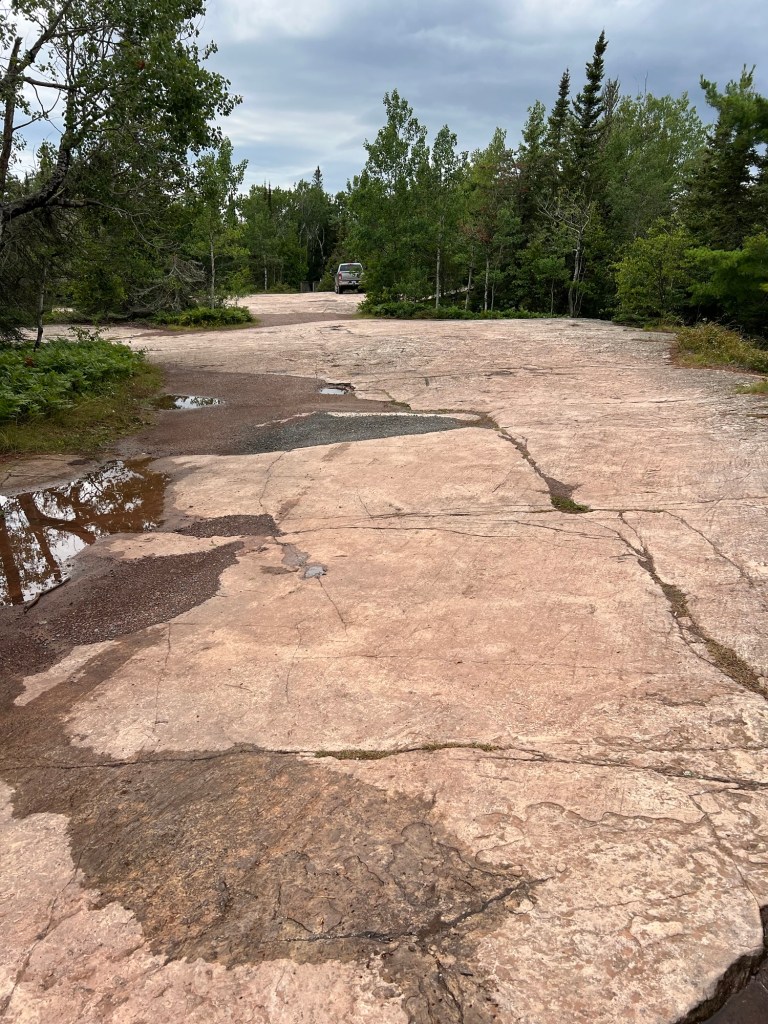
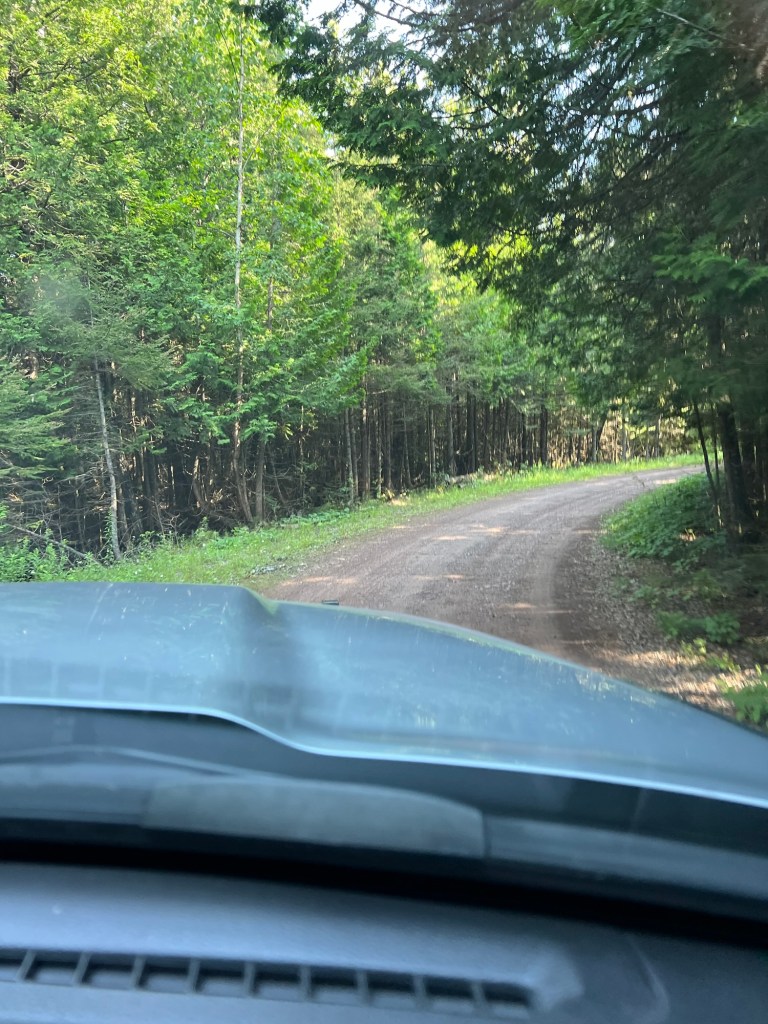
We drove 14 miles today to the Thunder Bay Lookout on the northwest side of the peninsula. The last 5 miles were down a gravel road. I started noticing patches of native rock showing up in the road.
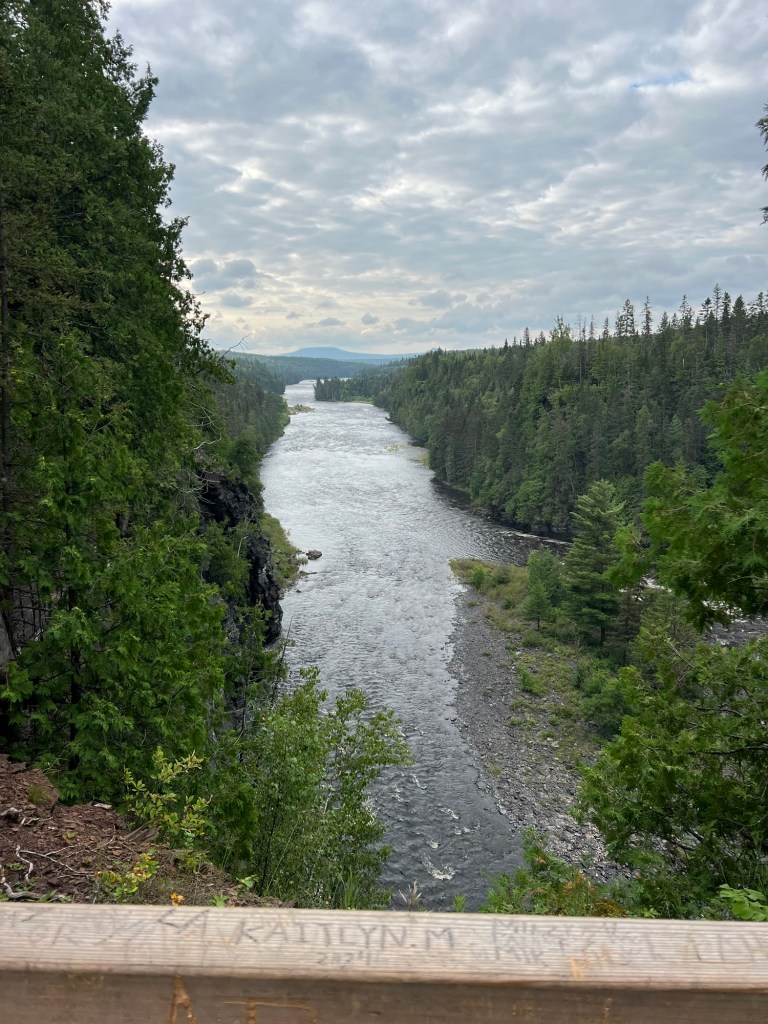
I was hoping I could catch a decent picture, I needn’t have worried.

The end of the road was one huge rock. We parked and were the only ones there.

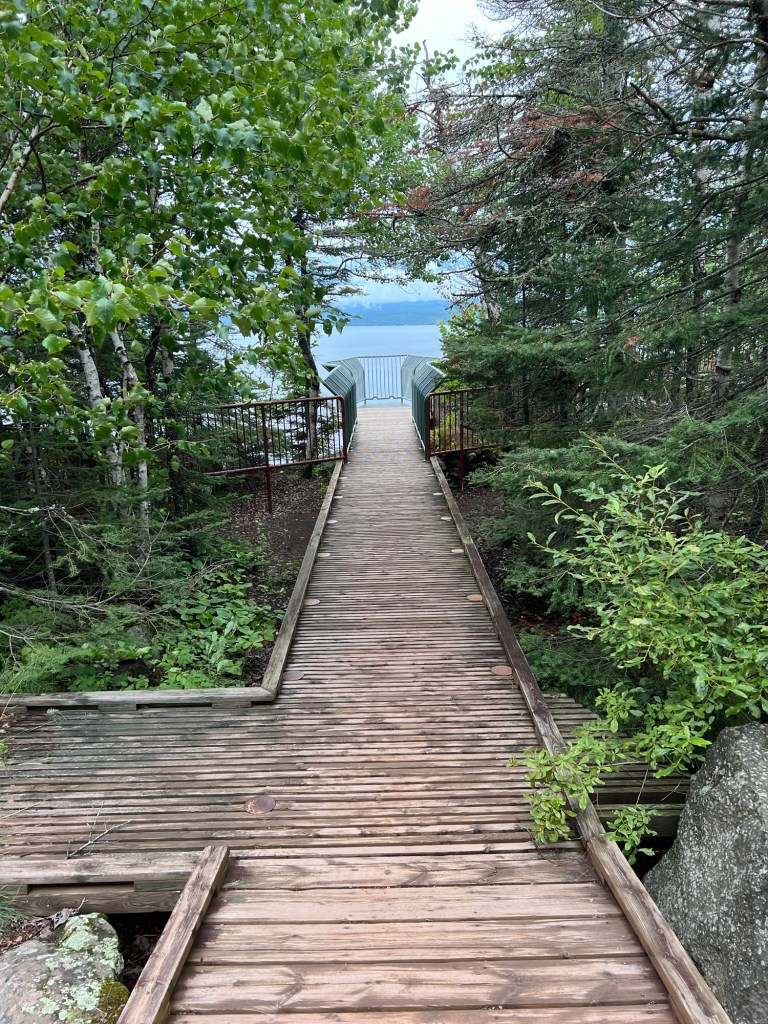
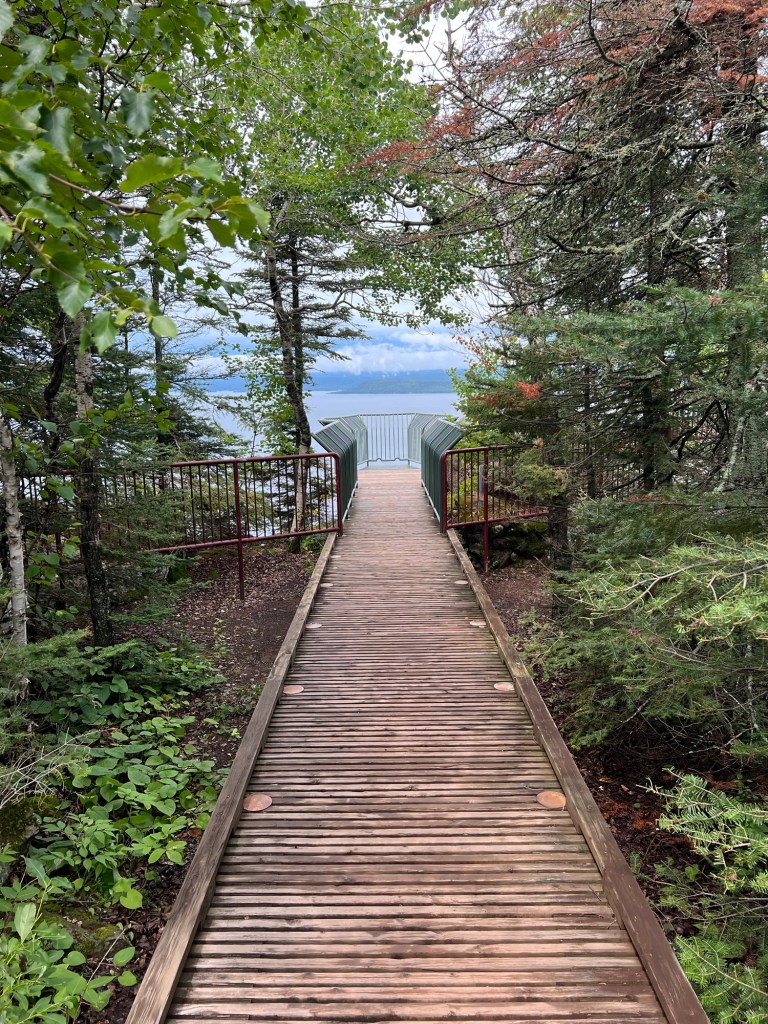
And then we looked for the Thunder Bay Lookout and got quite a surprise.

We walked out looking at the bay and its islands…

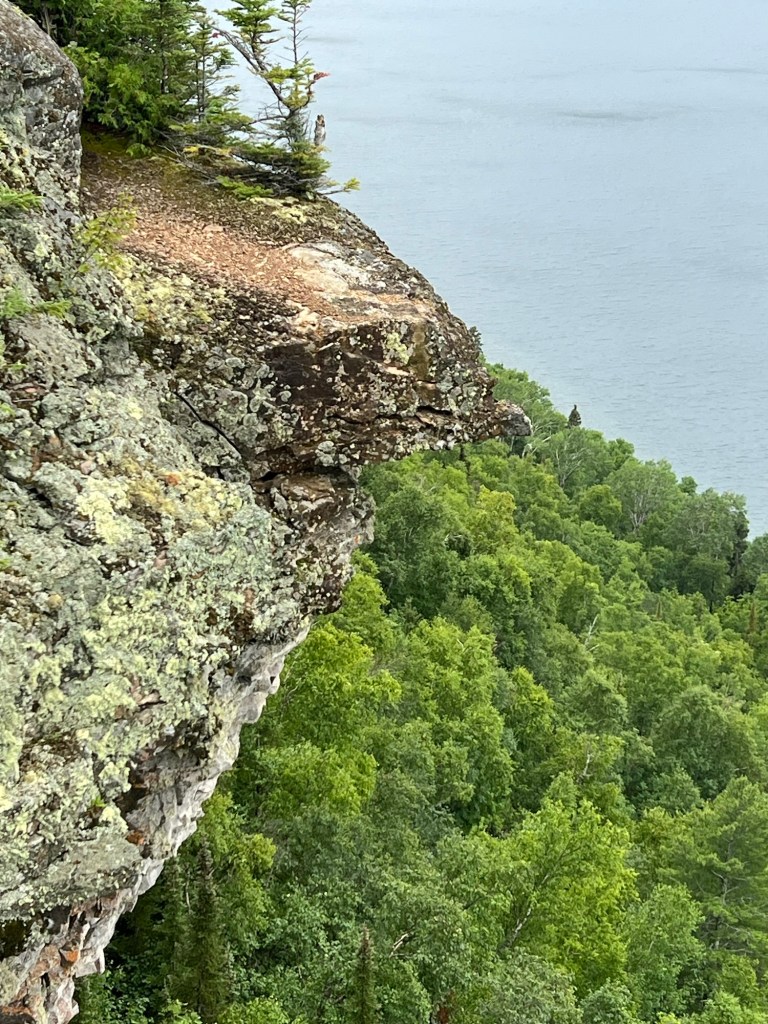
and suddenly found we had walked past the edge of the cliff.

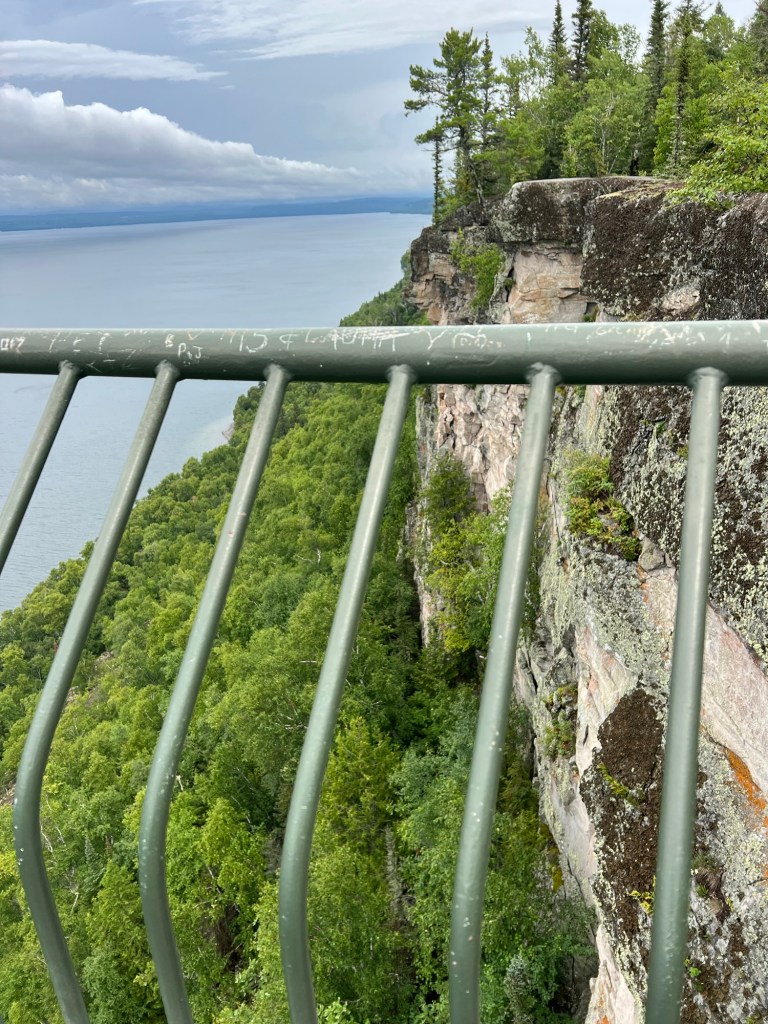
We were 100 meters above Lake Superior.

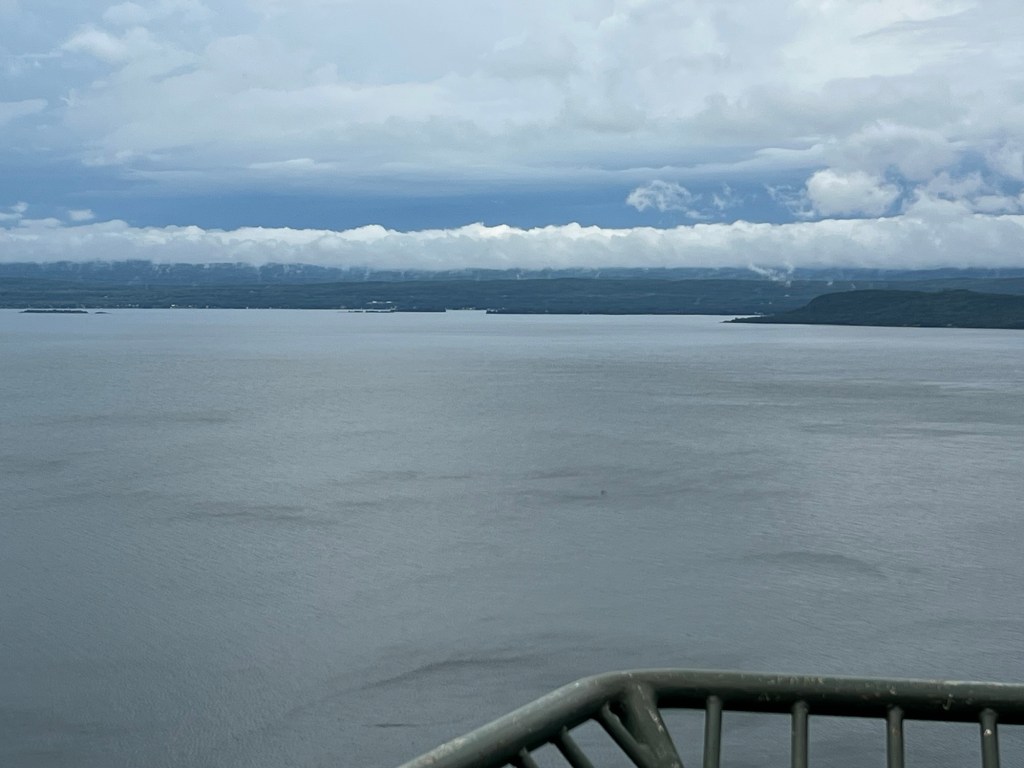
The view of the lake was beautiful.

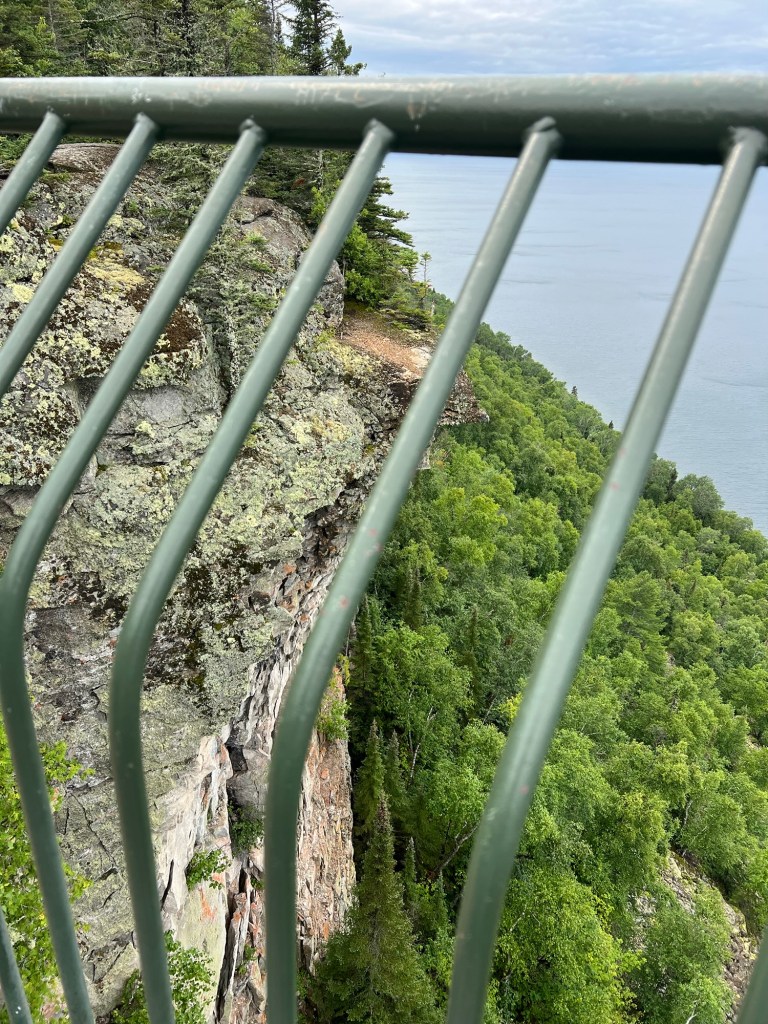
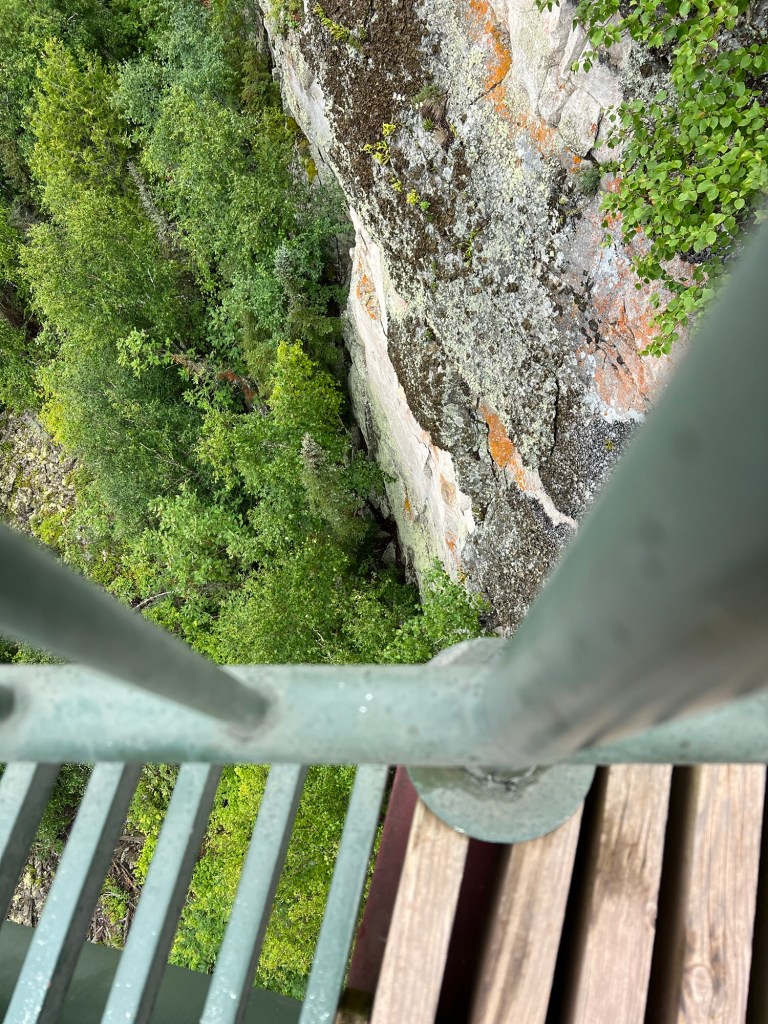
But looking down took your breath away.

What a gorgeous place, and we had it all to ourselves! Perfect.

Sleeping Giant Provincial Park

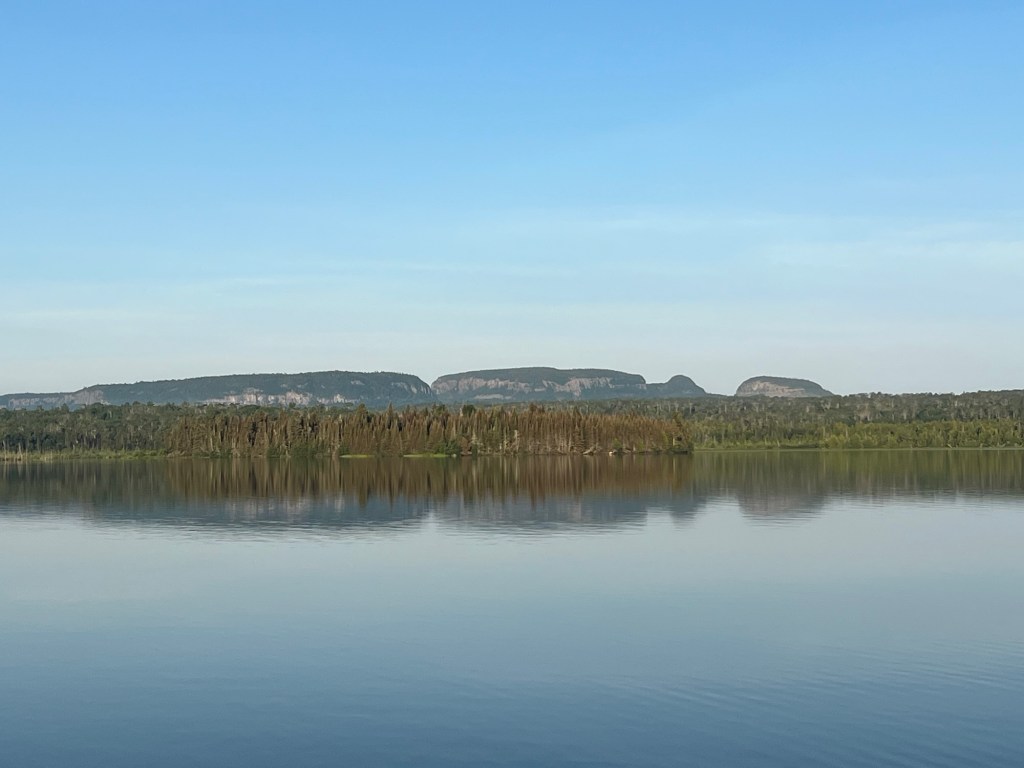
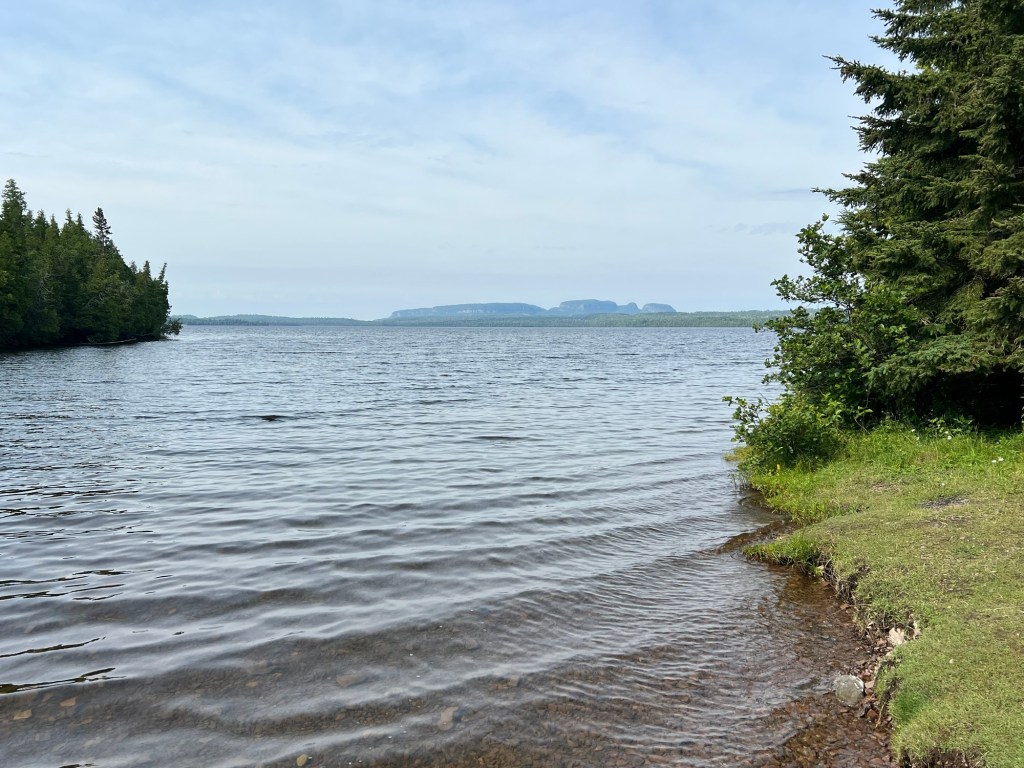
We are now at Sleeping Giant Provincial Park and that is the Sleeping Giant as viewed from the boat ramp at the main campground on Marie Louise Lake.

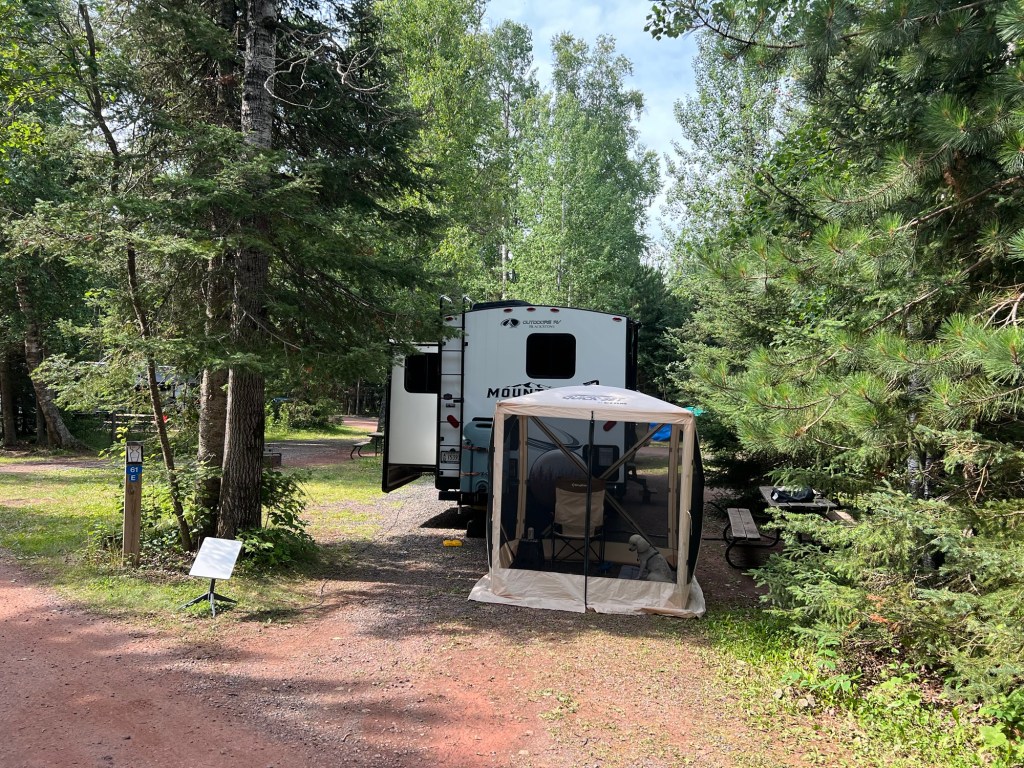
Our site is another fairly narrow pull through, like at Rainbow Falls, although this site is tighter than that one with less vegetation to screen us. It was nice with the folks in the next slot gone, but about an hour after they left another camper pulled in, so now the driveway you can see on our left has a trailer in it.

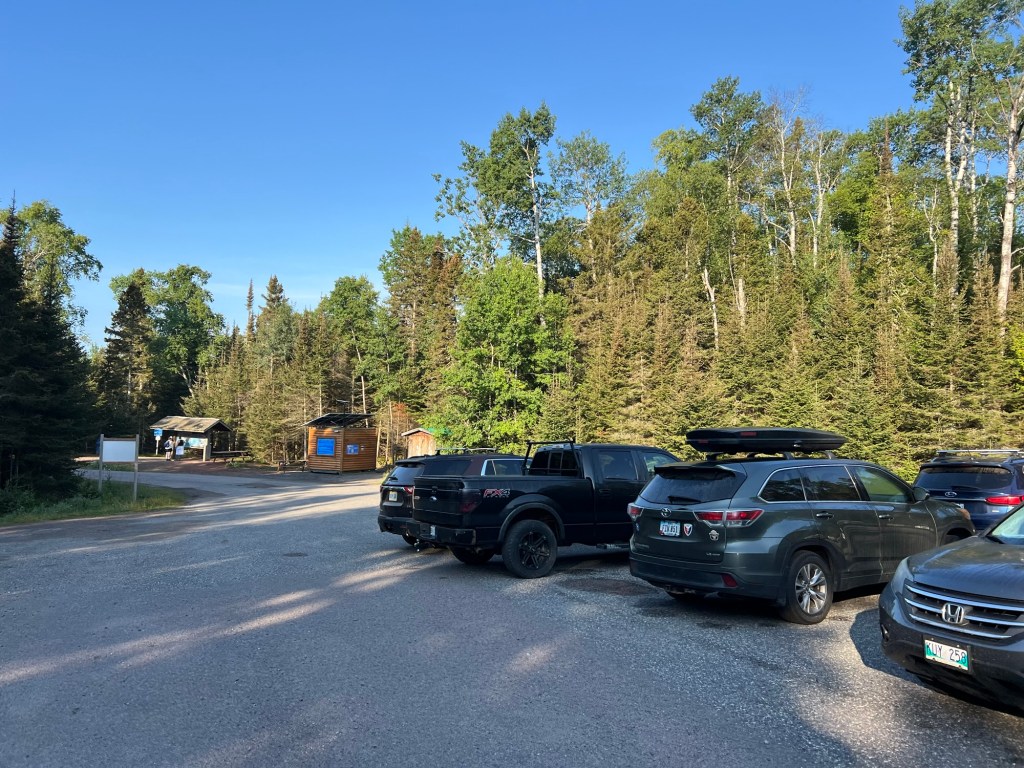
This is a huge park. This morning we set out early to hike a short trail. We were a bit dismayed to find the parking lot fairly full at the trailhead. However, there are several trails here and on the spur trail we took we only saw one other hiker.

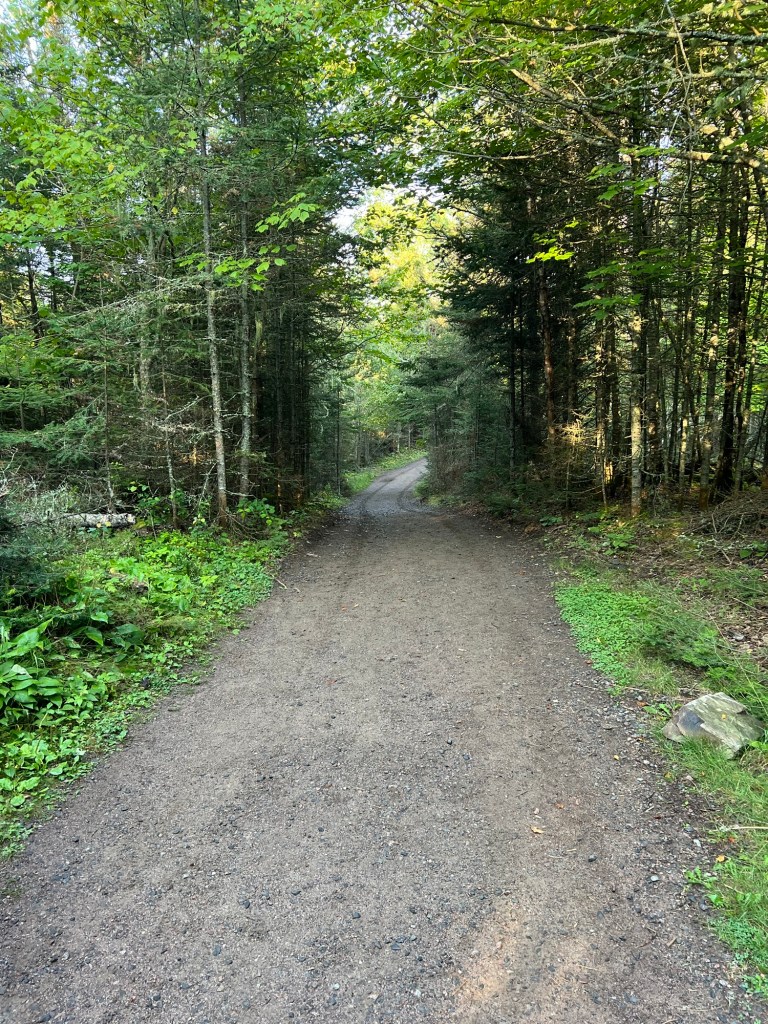
The main trail was quite wide. This is the south end of Kabeyun Trail which runs 23 miles around the south end of Sibley Peninsula and then along the west side to a point about 2/3 up the peninsula. The park takes up almost the whole peninsula.
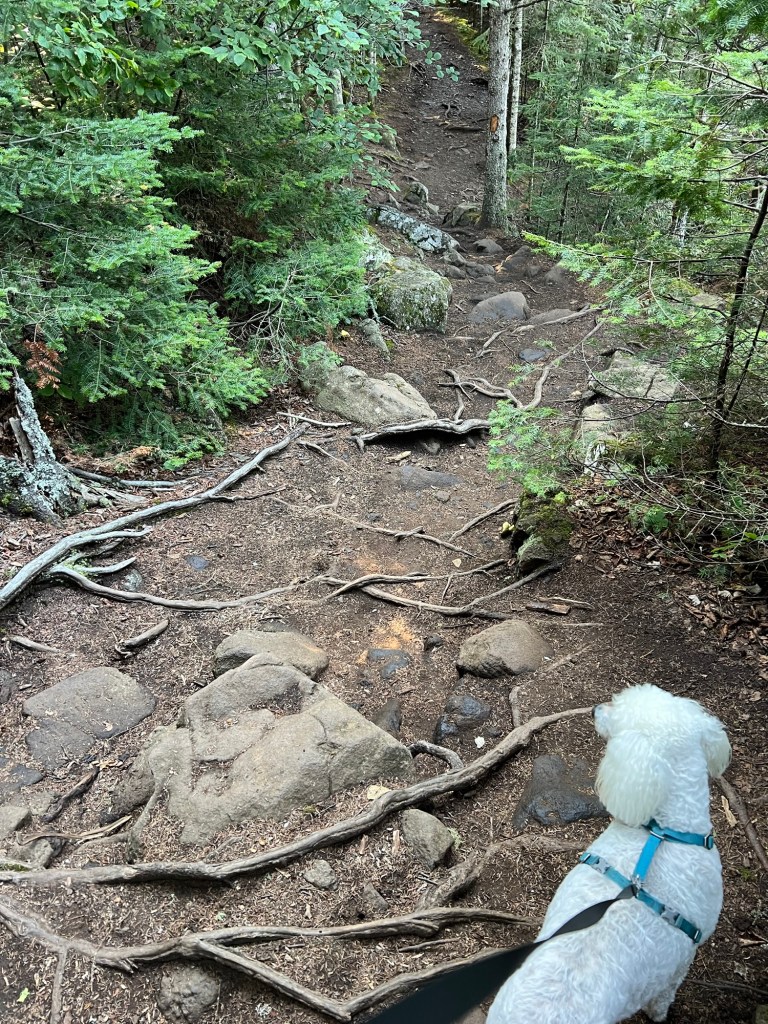
Just about a half mile down the main trail we turned off on the more rugged and narrow Sea Lion Trail.

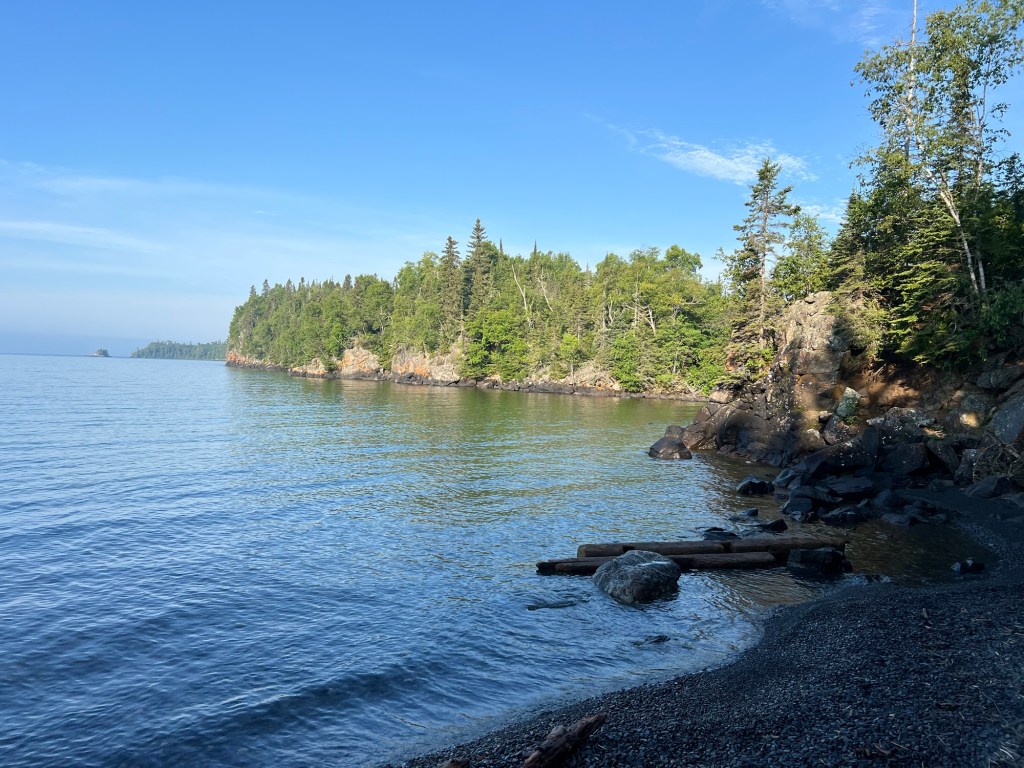
It led just a short way past this lovely little cove on Lake Superior…

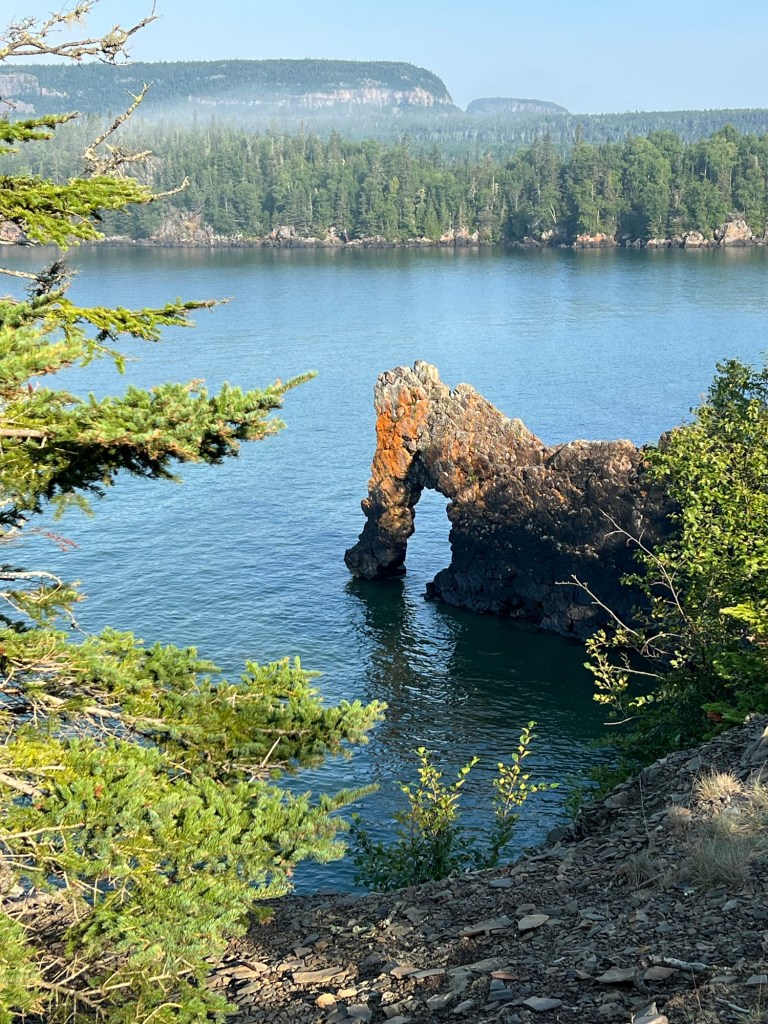
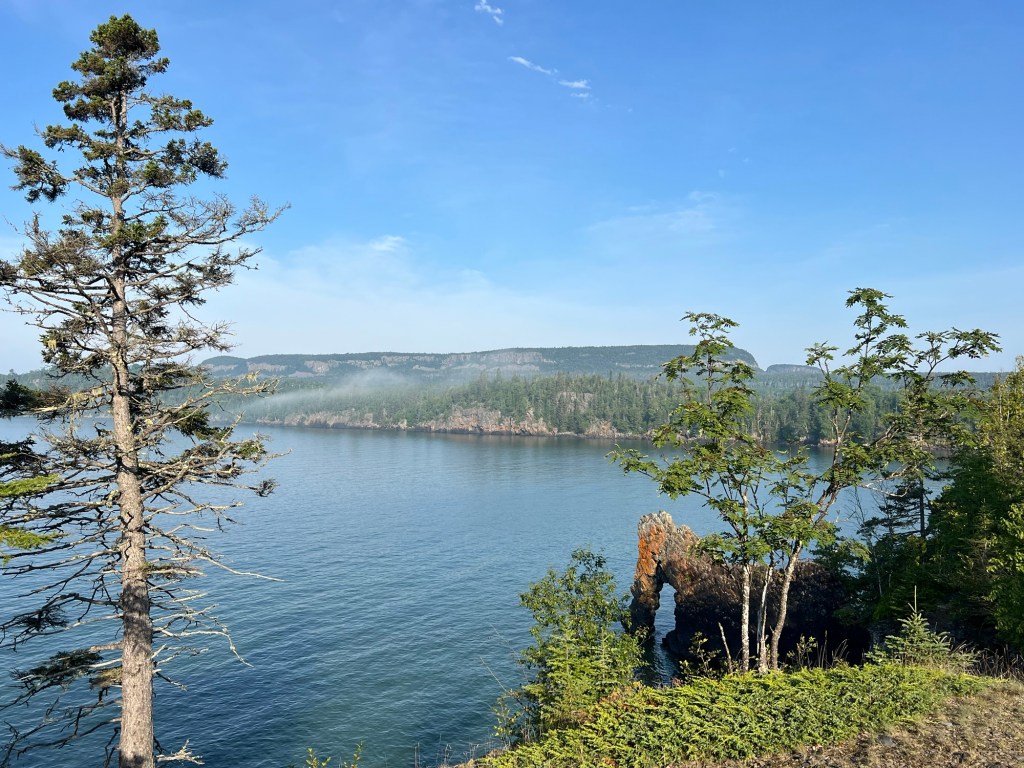
to this natural arch called the Sea Lion. The formation, which is made of crystallized magma called diabase, used to have more rock that made its head. The head fell many years ago but the name stuck.

And in the background is the Sleeping Giant.

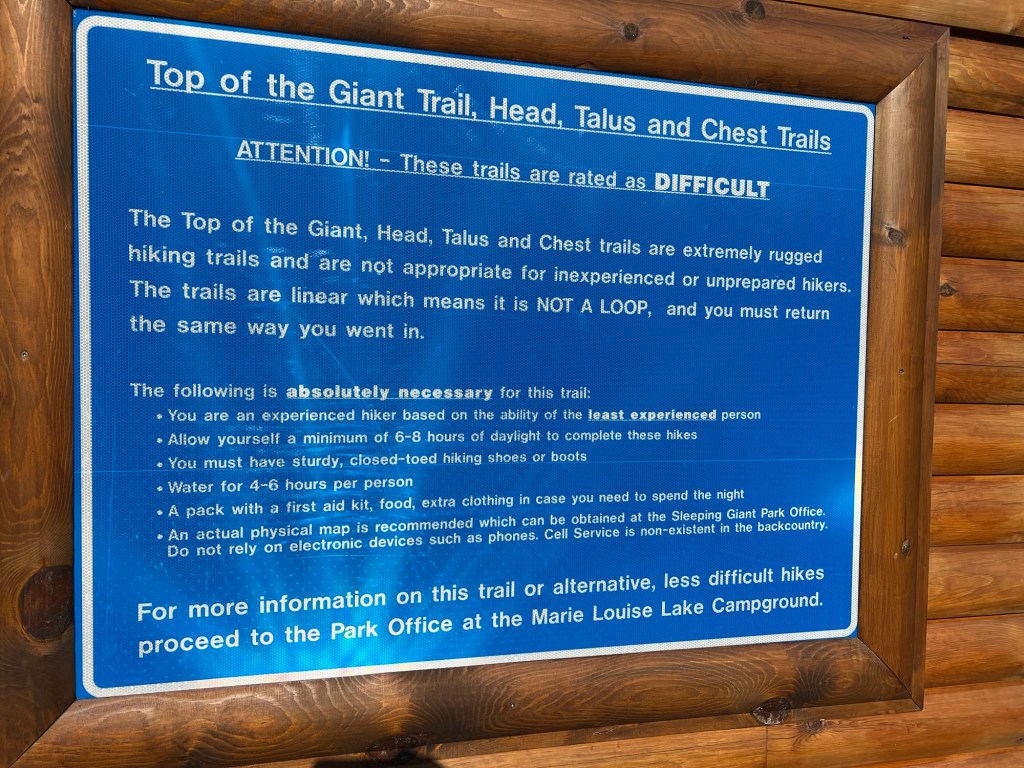
From pictures I’ve seen there are some stunning views in this park. Unfortunately the best are from these trails, the shortest of which is 10 miles, so we won’t be seeing those.

Instead, after our short hike we drove along Marie Louise Drive, a one way, dirt road along the far side of Marie Louise Lake.

There are a few very nice tent sites back here,

each with its own lake access.

Further down the road a porcupine crossed in front of us. Although he went slowly, he blended so well with the forest floor I could not get a good picture.

Back on the main road we pulled into a picnic site with a view of Marie Louise Lake…

and the Sleeping Giant.

You soon understand how the park got its name.

Exploring: A Road to Nowhere, Schreiber and Terrace Bay

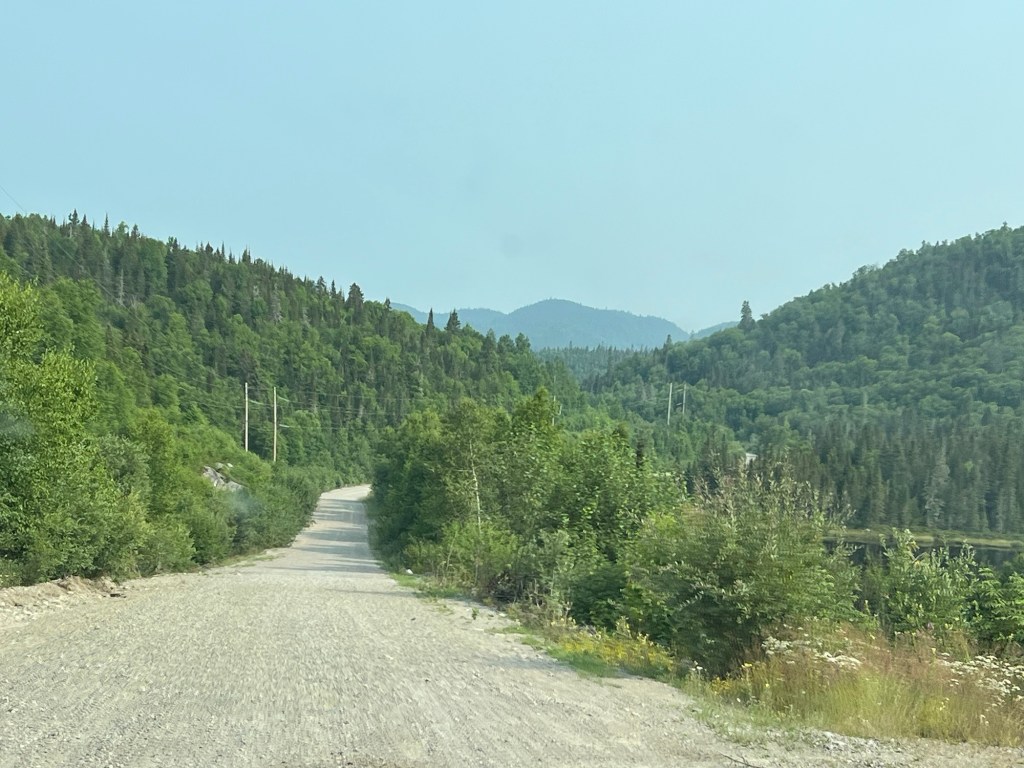
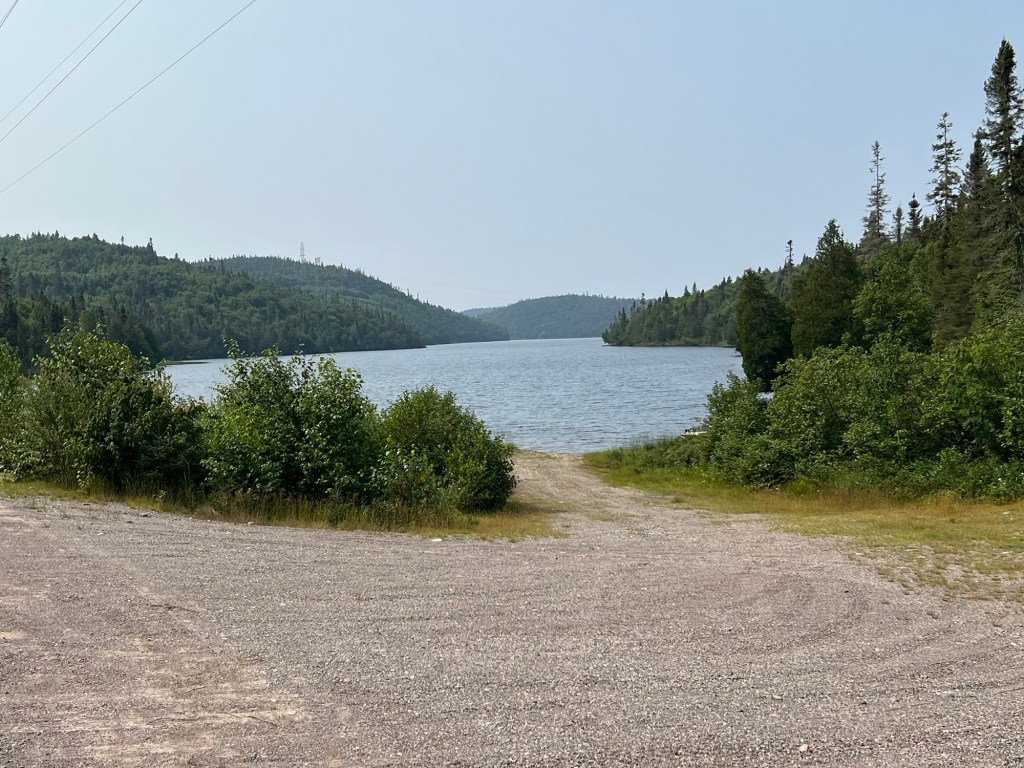
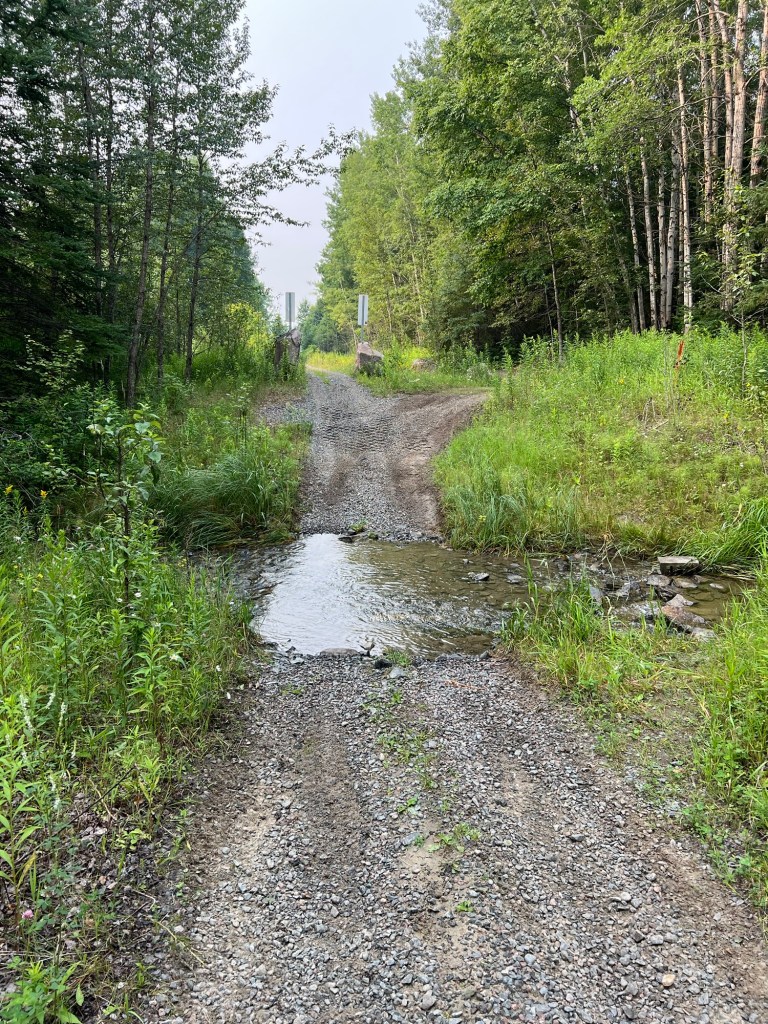
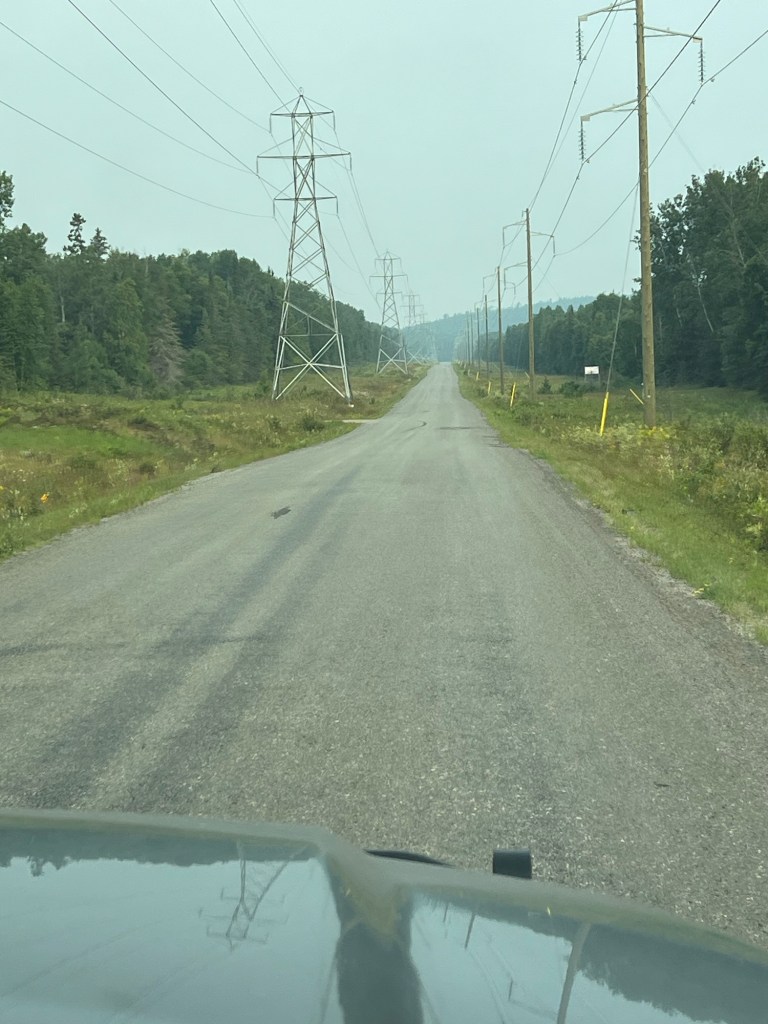
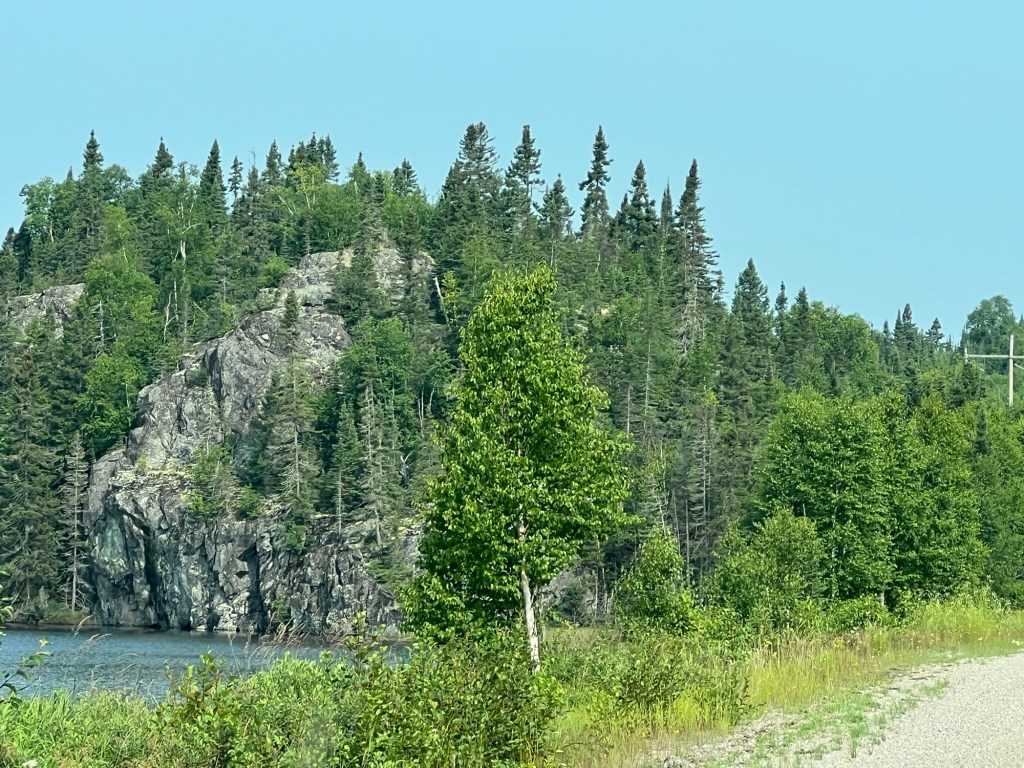
I was looking for something for us to do that didn’t involve a hike when I noticed a road on the map that led well inland. This is very unusual here, so I suggested we check it out. It was a paved road for a bit, but in less than a mile it turned to gravel. It led back through the hills and lakes here and had a set of power lines running along it.

The paved part ran along the other side of Whitesand Lake from the park and had some houses, cottages and campers along it.

This is all very rugged and very pretty country.

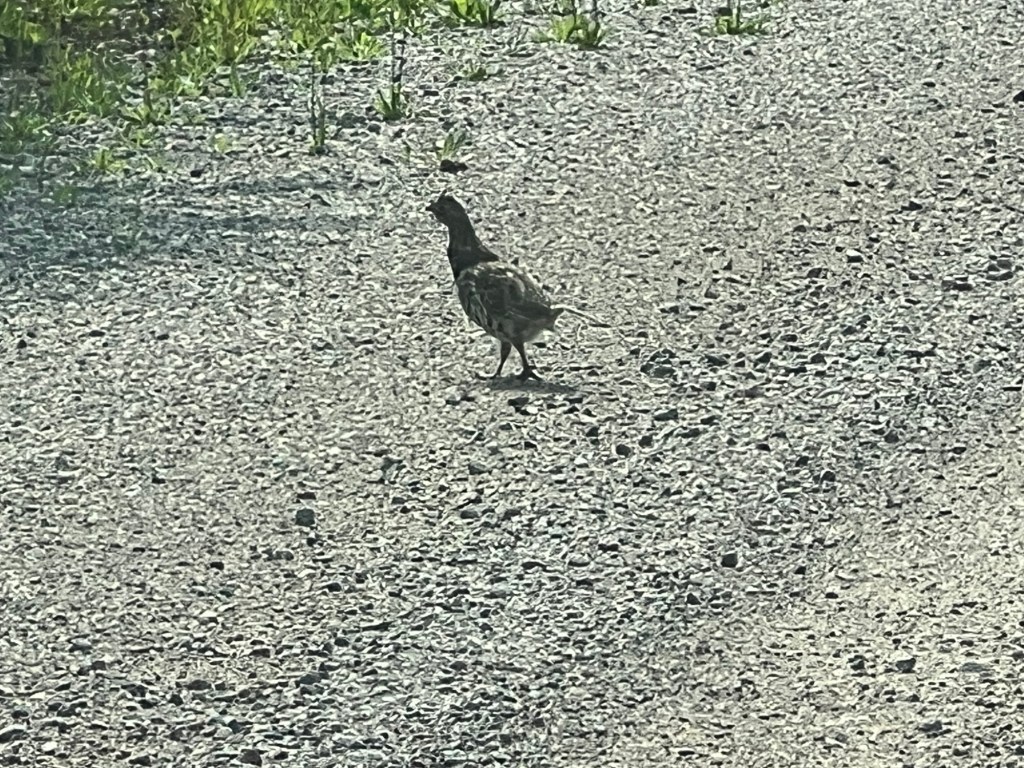
We kept checking the lakes and marshes for moose or beaver and although we saw beaver dams and lodges the only wildlife we saw was this grouse.

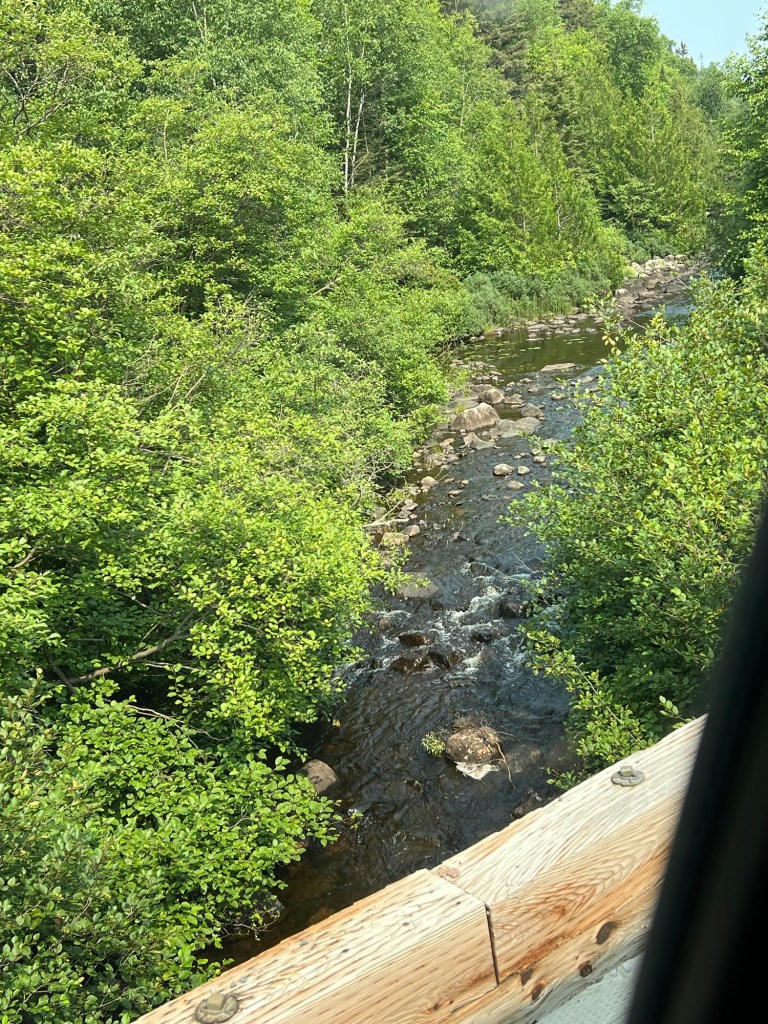
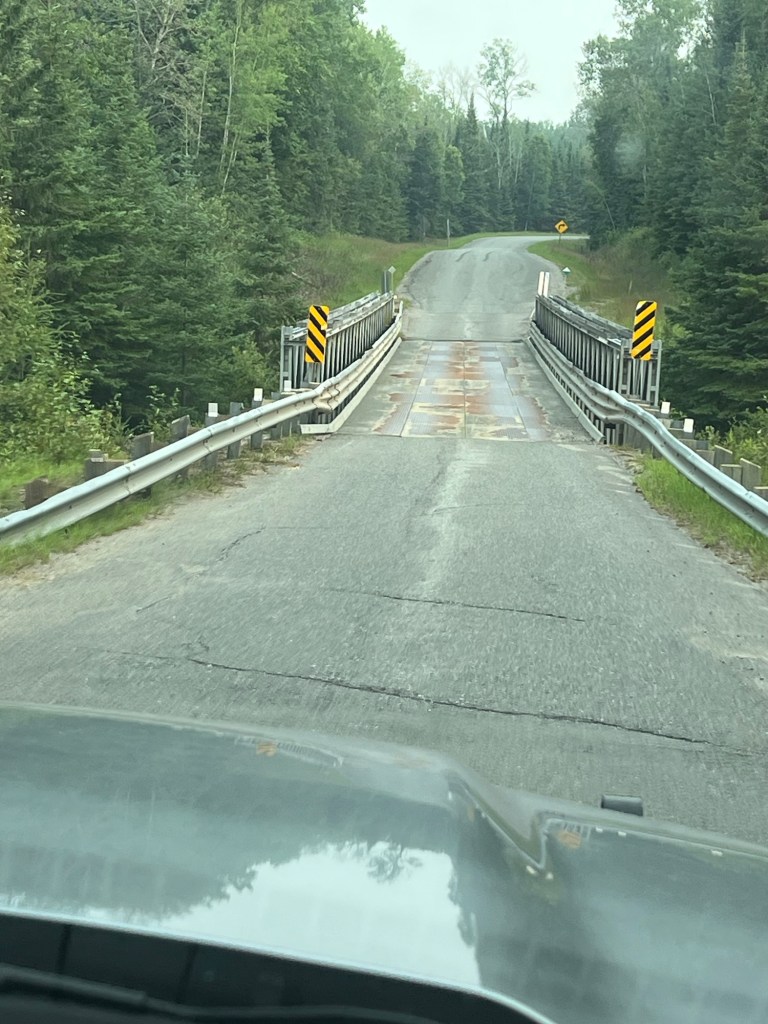
The road got smaller and at one point crossed this one-lane bridge. We were also going generally uphill, although gradually.

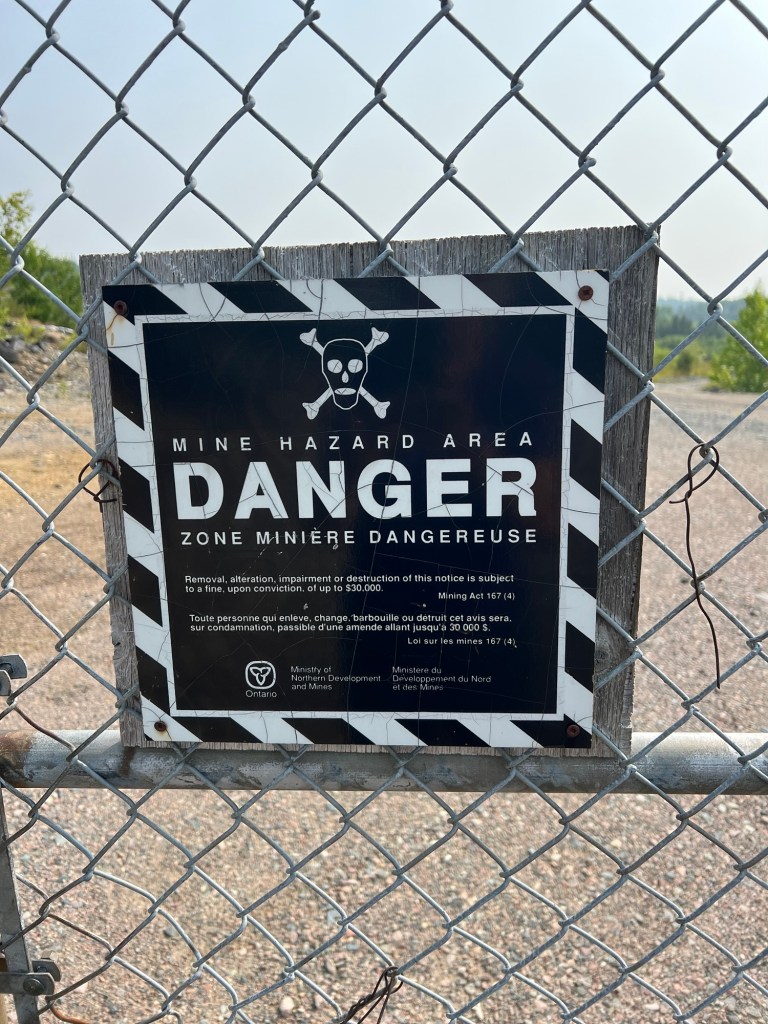
After 13 miles and 500 feet the road ended here. I assume the power lines were for the mining operation, probably now defunct, but they disappeared from sight beyond the fence.

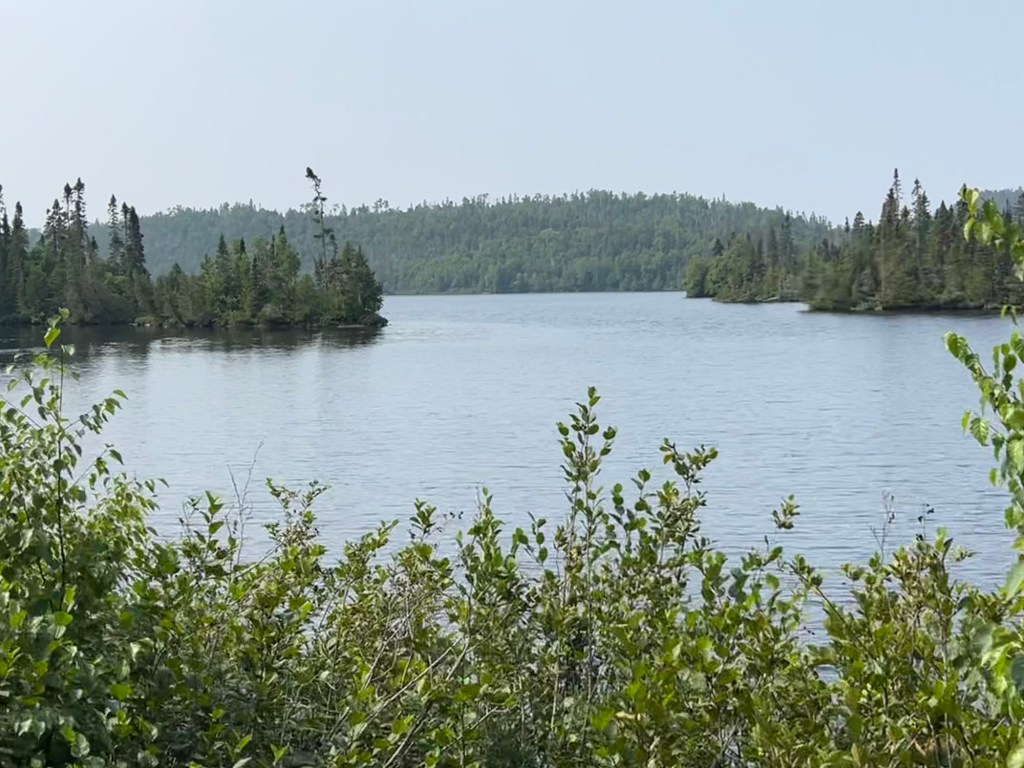
Oh well, we saw some pretty lakes.

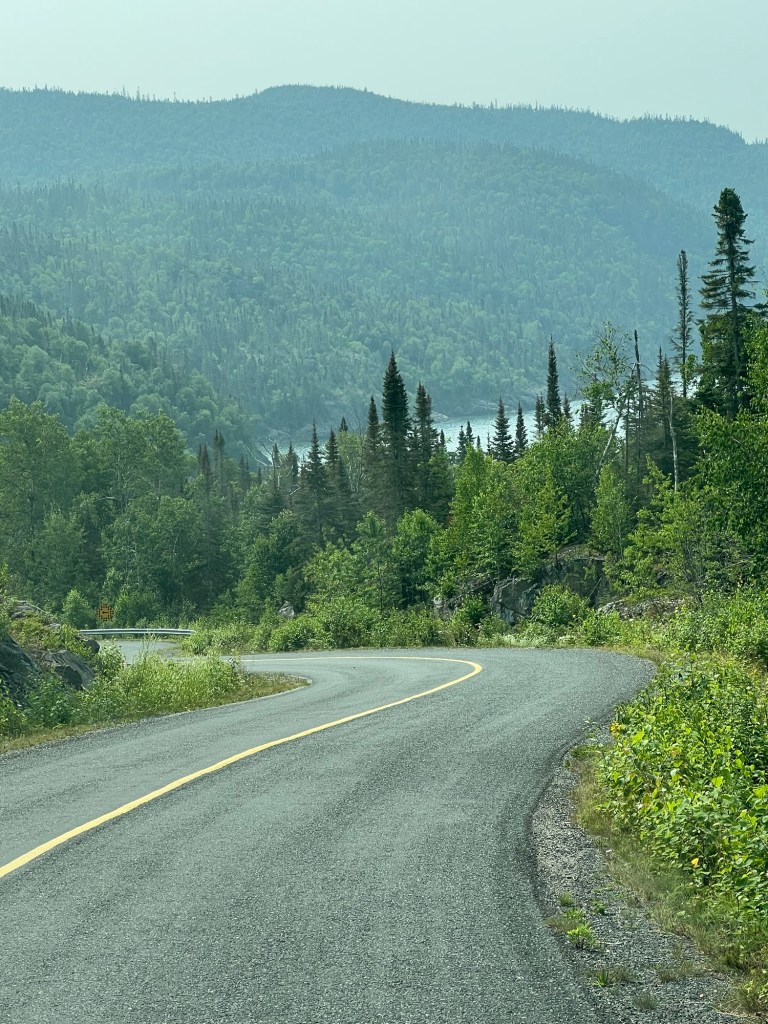
Since we were out and about we decided to drive the few miles further to the little town of Schreiber and check out their beach. The road to the beach was dramatic.

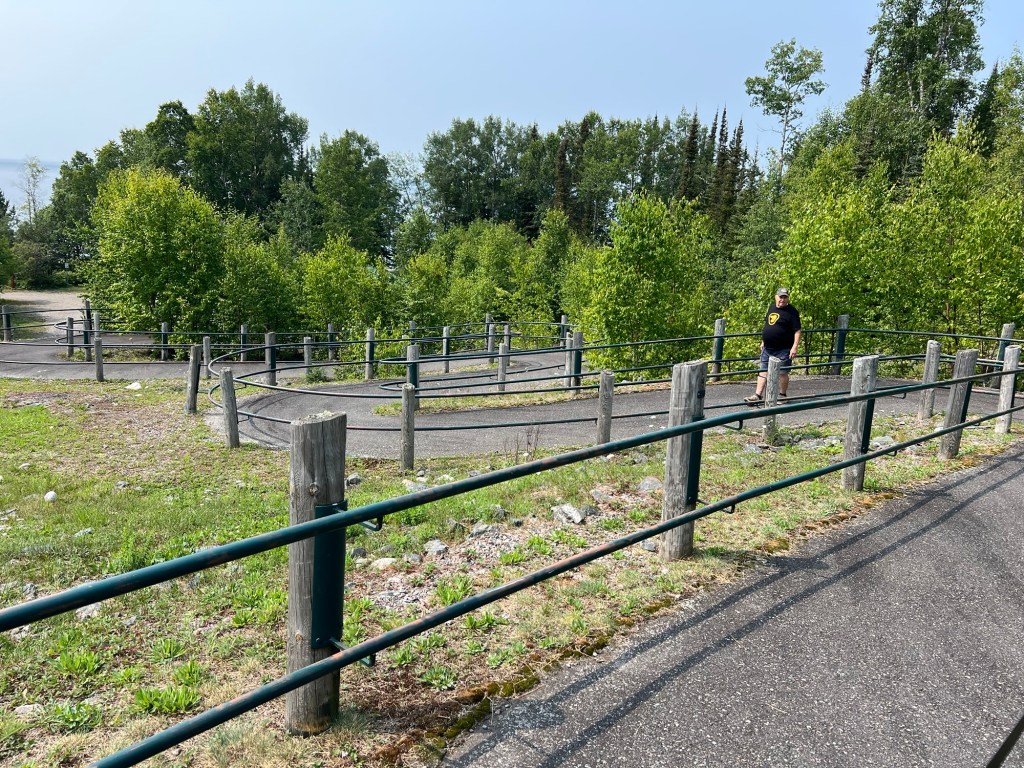
The lake shore on the north side of Superior is usually steep, and the hill continued from the parking lot down to the beach.

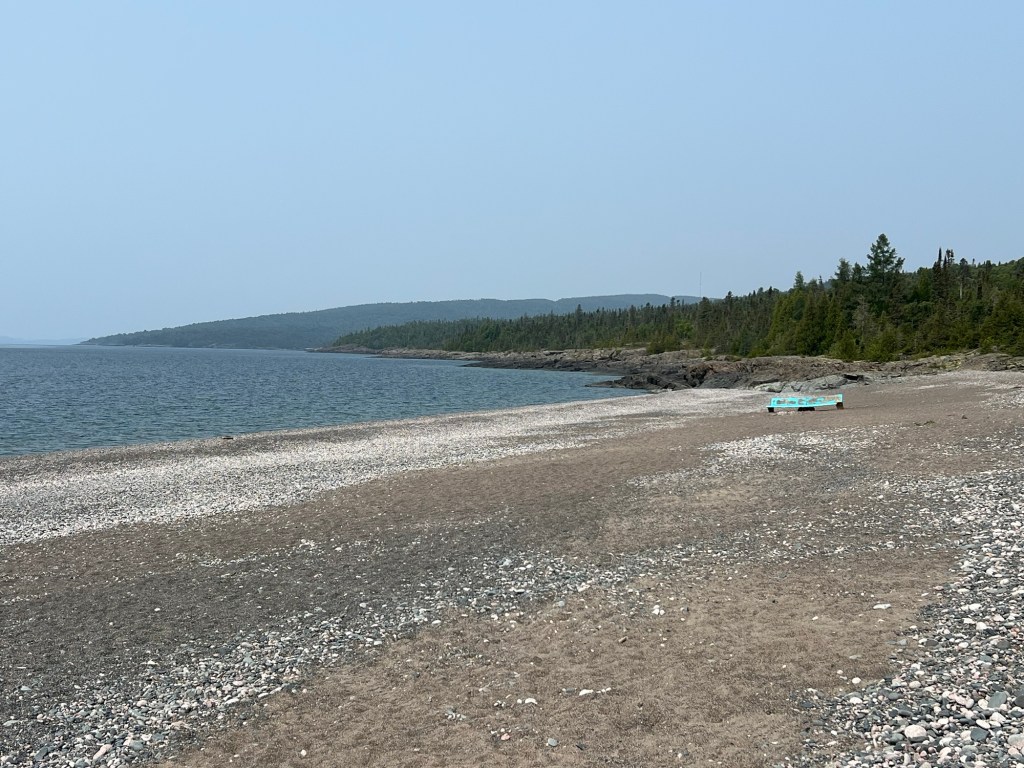
It was a nice little beach.

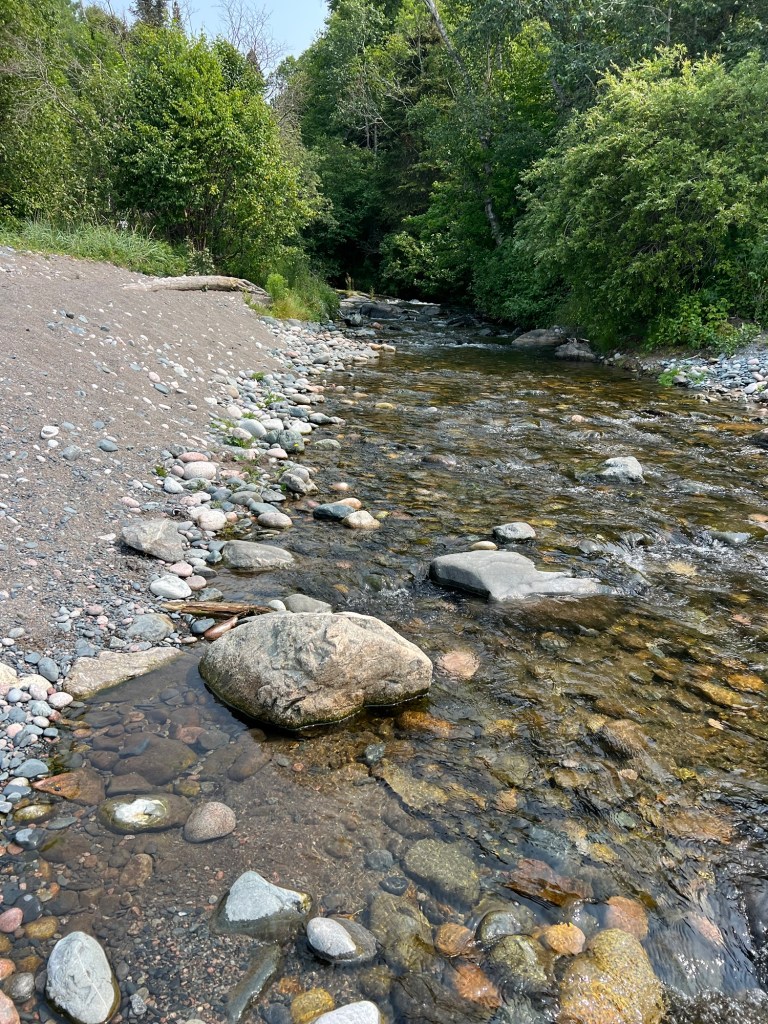
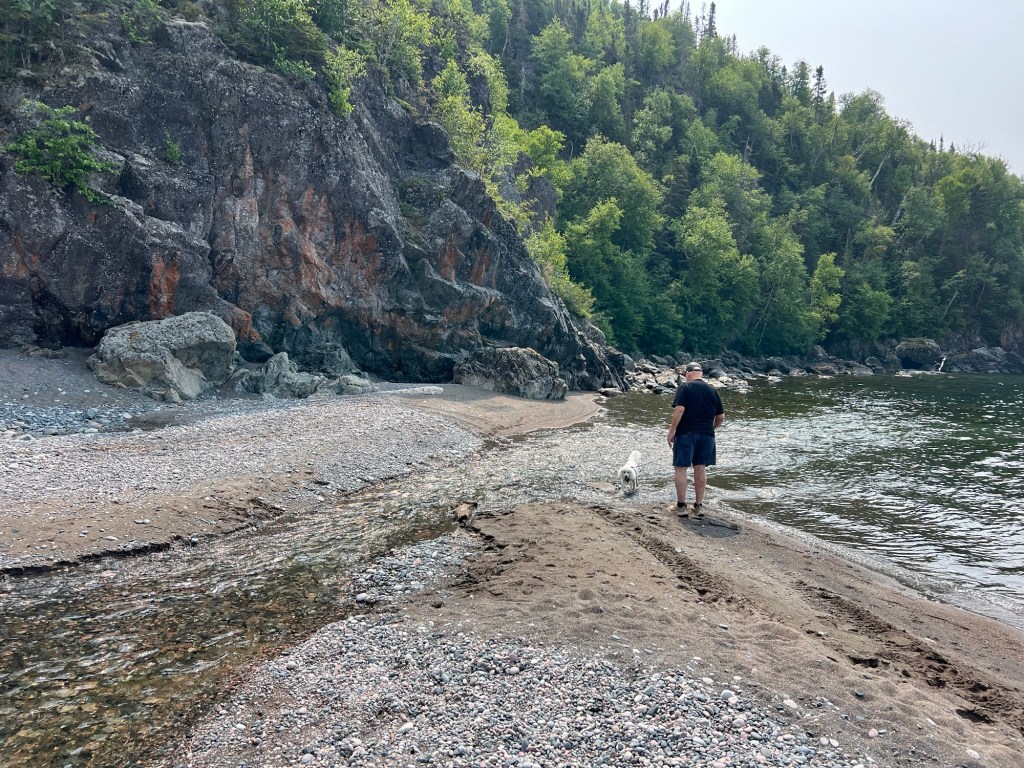
We walked down to where a little creek ran into the lake…

and Matey went wading.

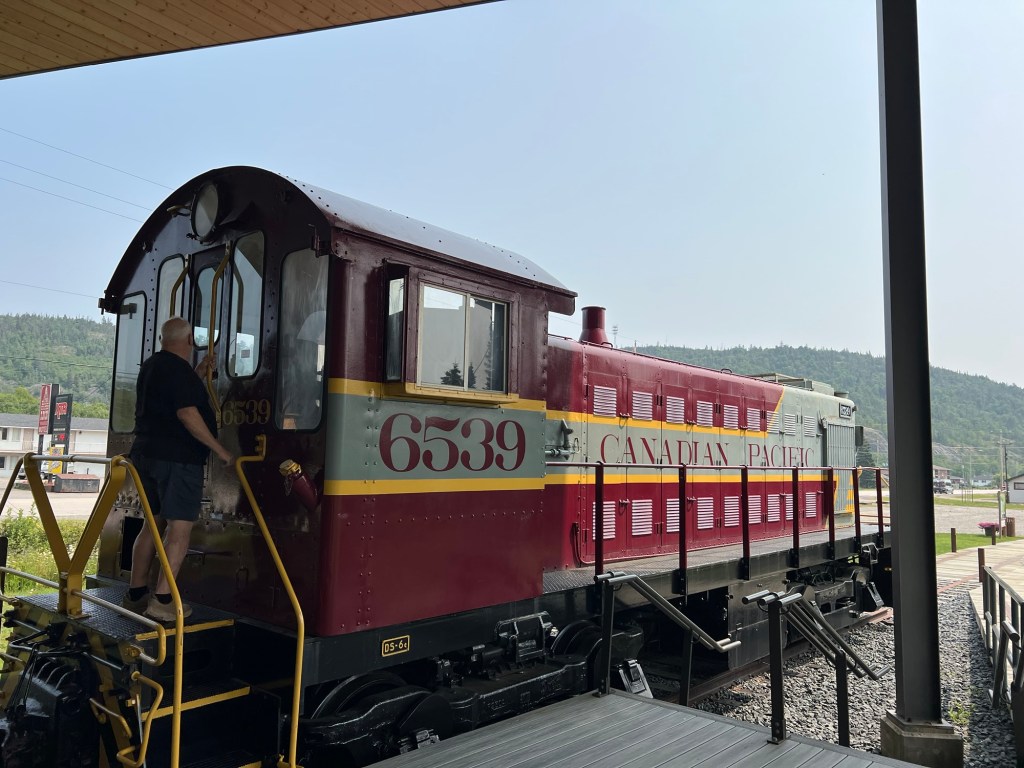
On the way out of town we stopped at their Welcome Center and railroad museum. Unfortunately you couldn’t go inside the engine.

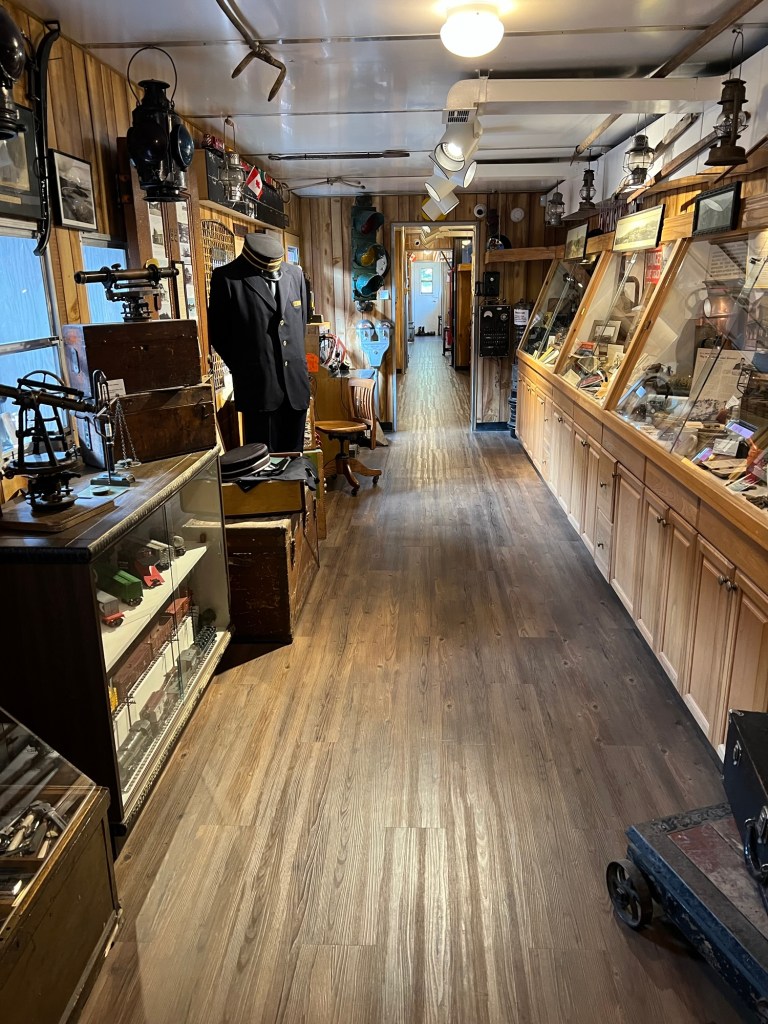
They did have an old passenger car converted to showcase museum items. That was interesting.

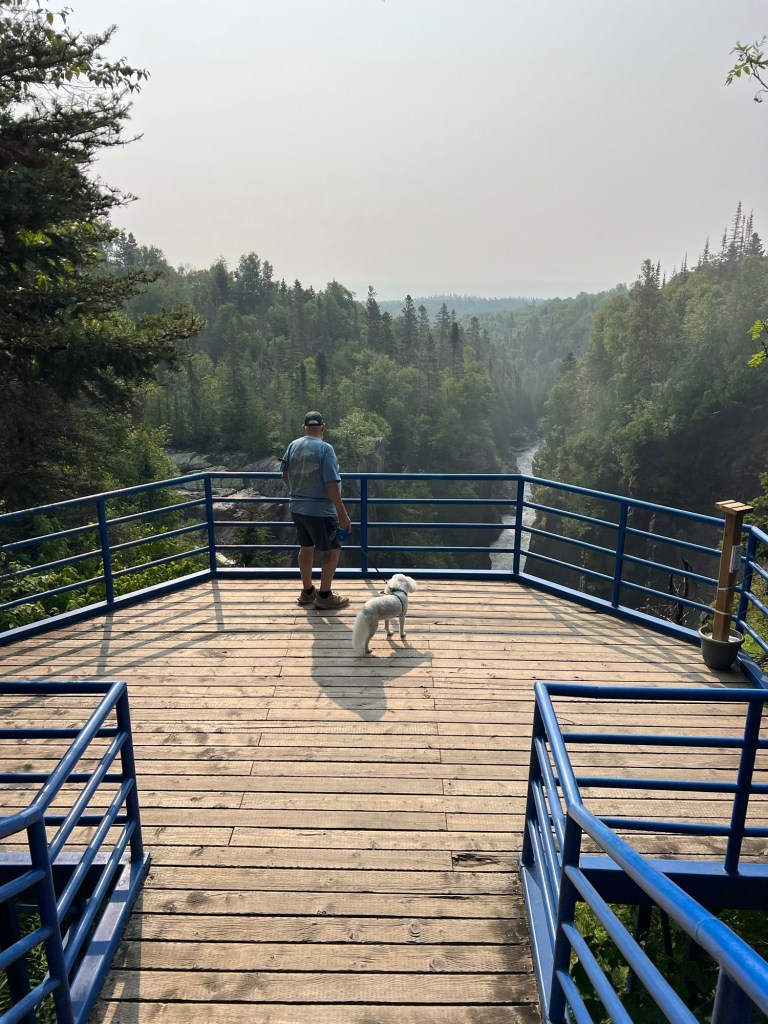
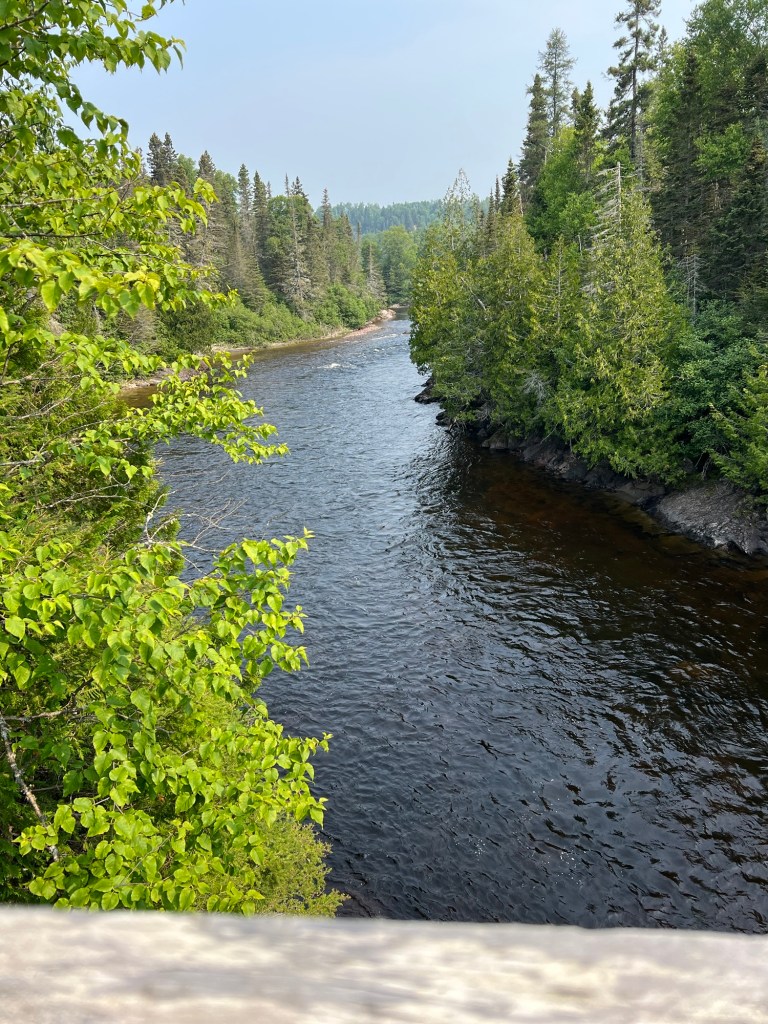
The highlight of our two days of exploring came today. I had seen Aguasabon Falls, just outside of Terrace Bay, advertised in the brochure we picked up on “The Lake Superior Circle Tour”. I checked and it was just fifteen miles away, so we decided to drive there this morning. This is the walkway we found leading to the falls.

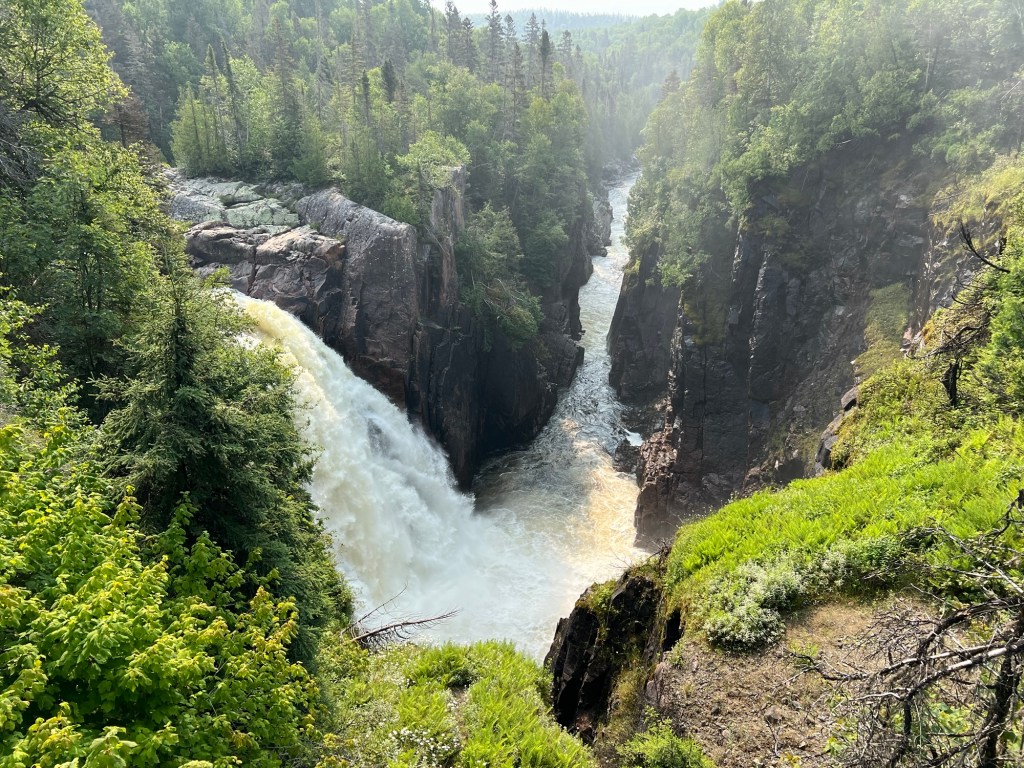
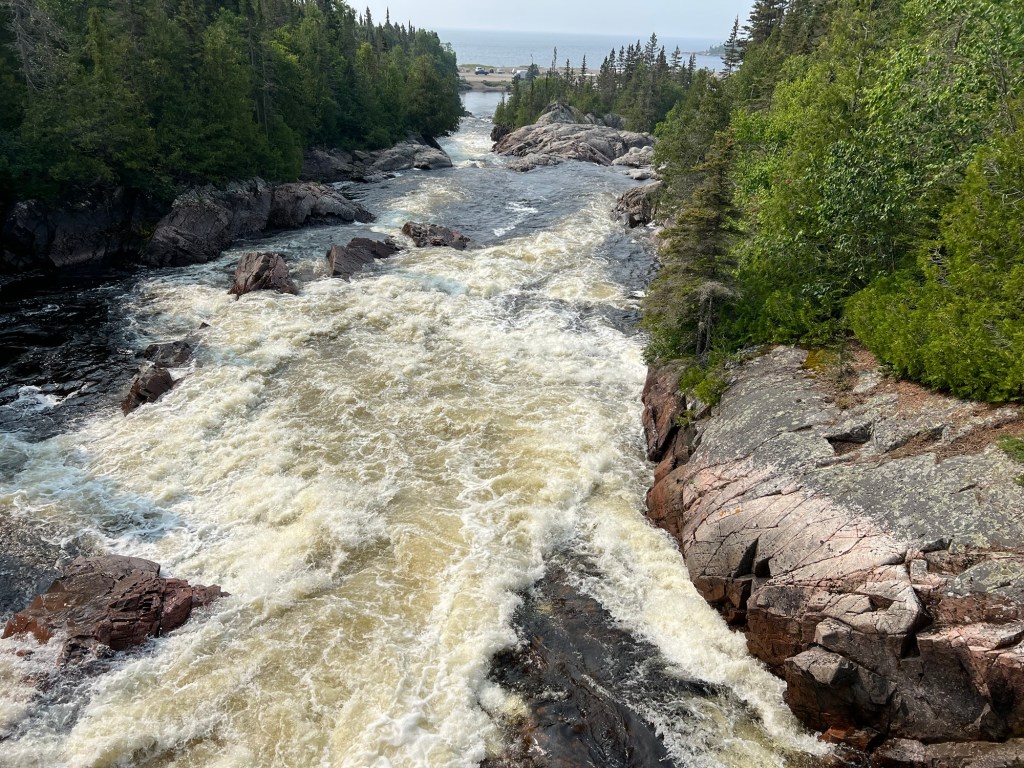
And this is the falls and the gorge.

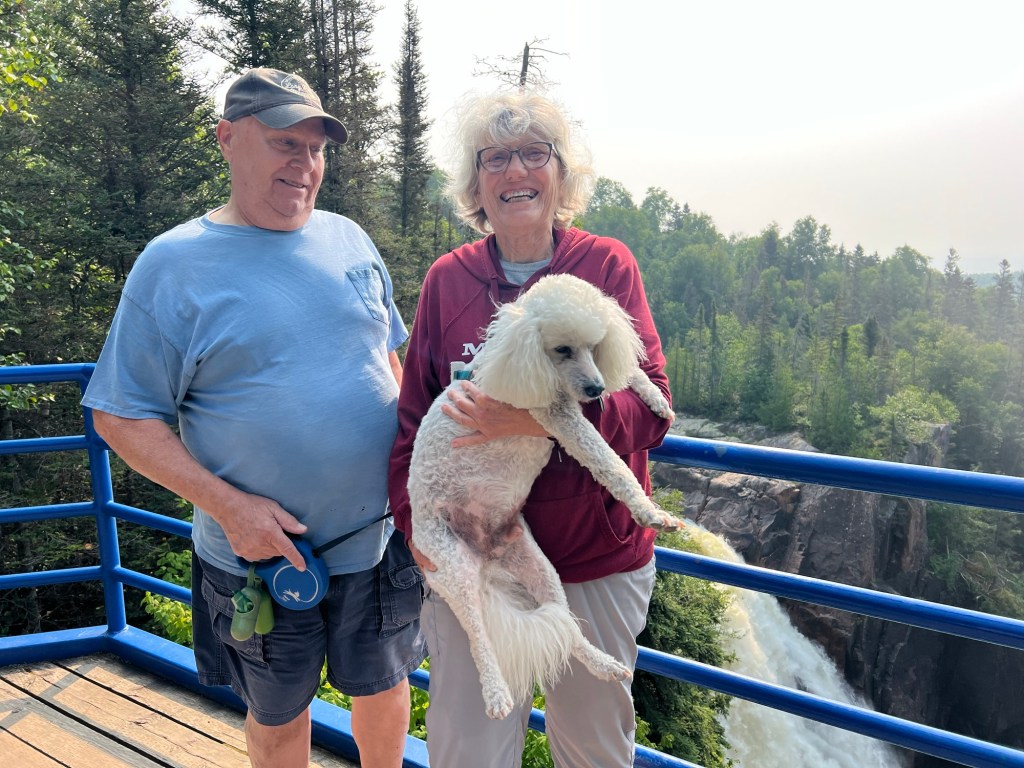
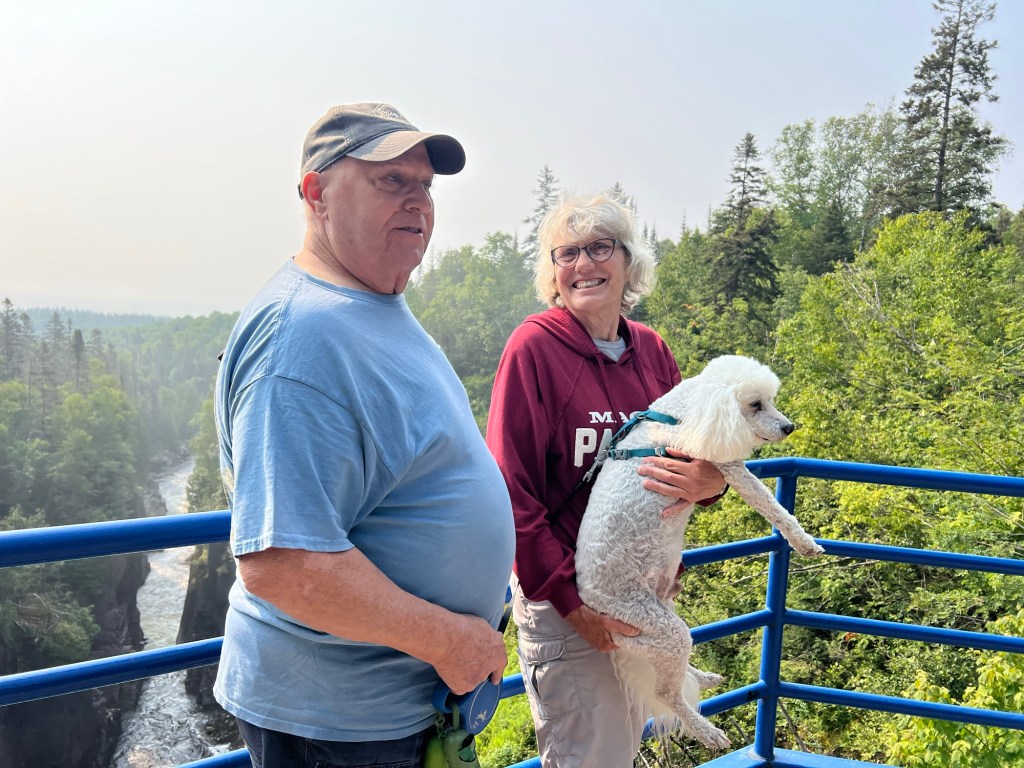
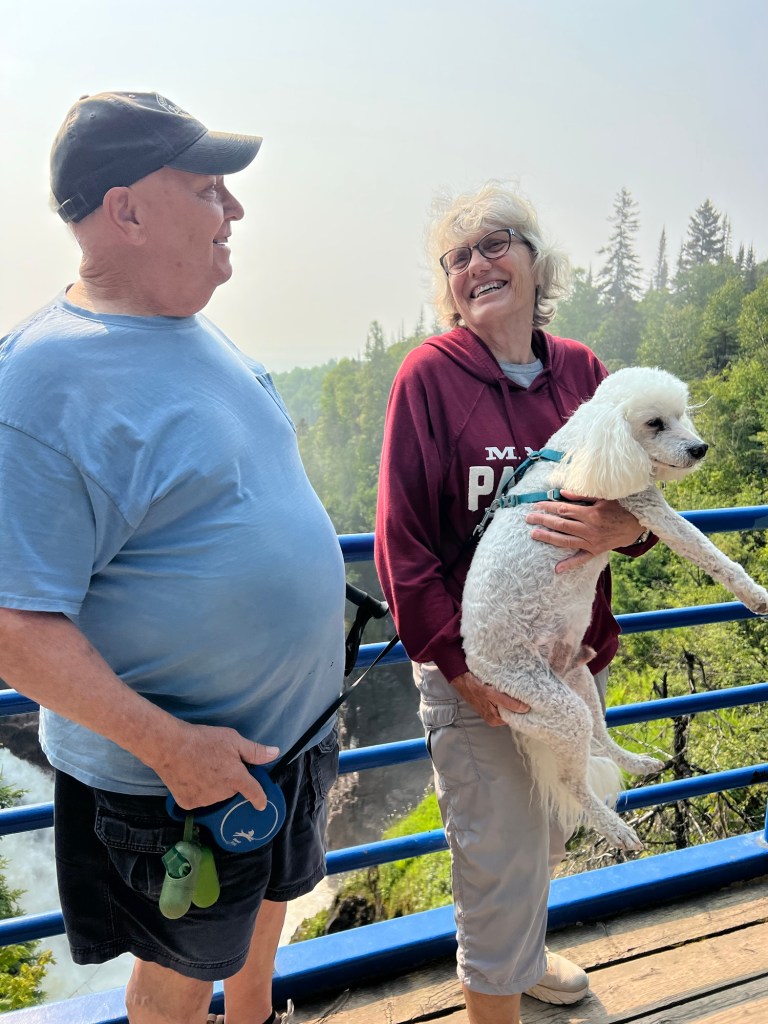
I stepped back to capture how close the viewing platform was to the river. A man offered to take a picture of us with the falls in the background.

So here we are with the falls…

and the gorge. I was trying to get Bud to look at the camera,

but he never did. Of course Matey didn’t either.

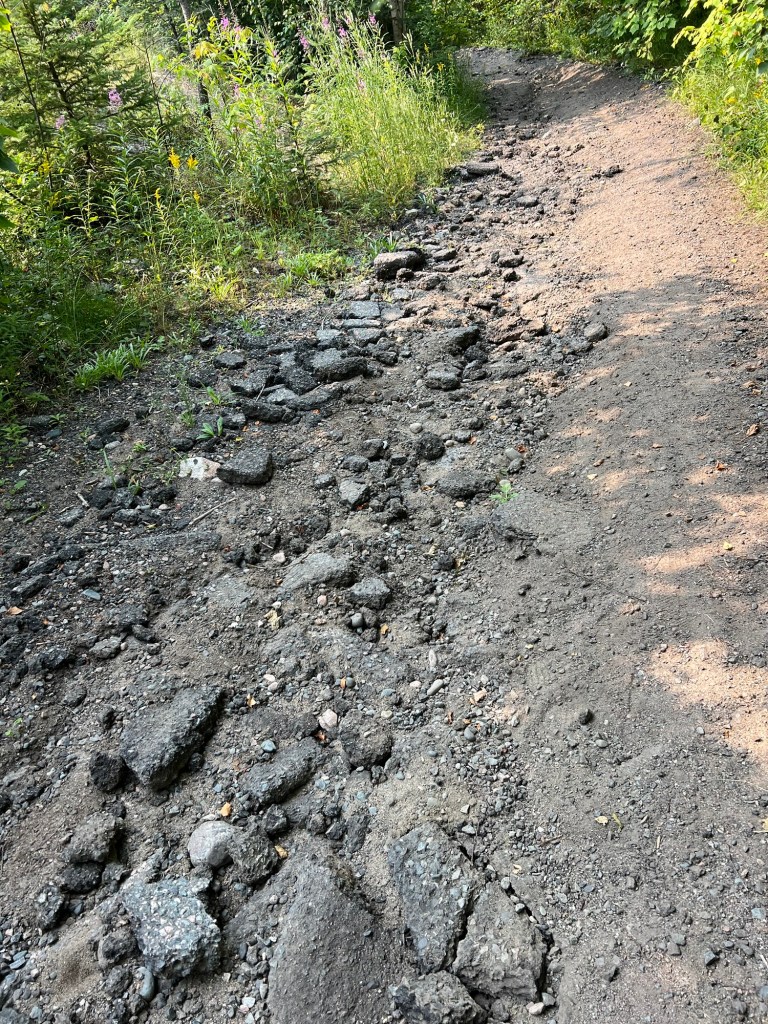
There was a trail that went from the falls down to the beach a bit over a mile away. Bud said he’d pick Matey and me up at the bottom, but Matey had already walked a mile that morning and refused to go down the trail, so he rode with Bud. The top of the trail had a lot of busted up asphalt and looked like it had once been paved.

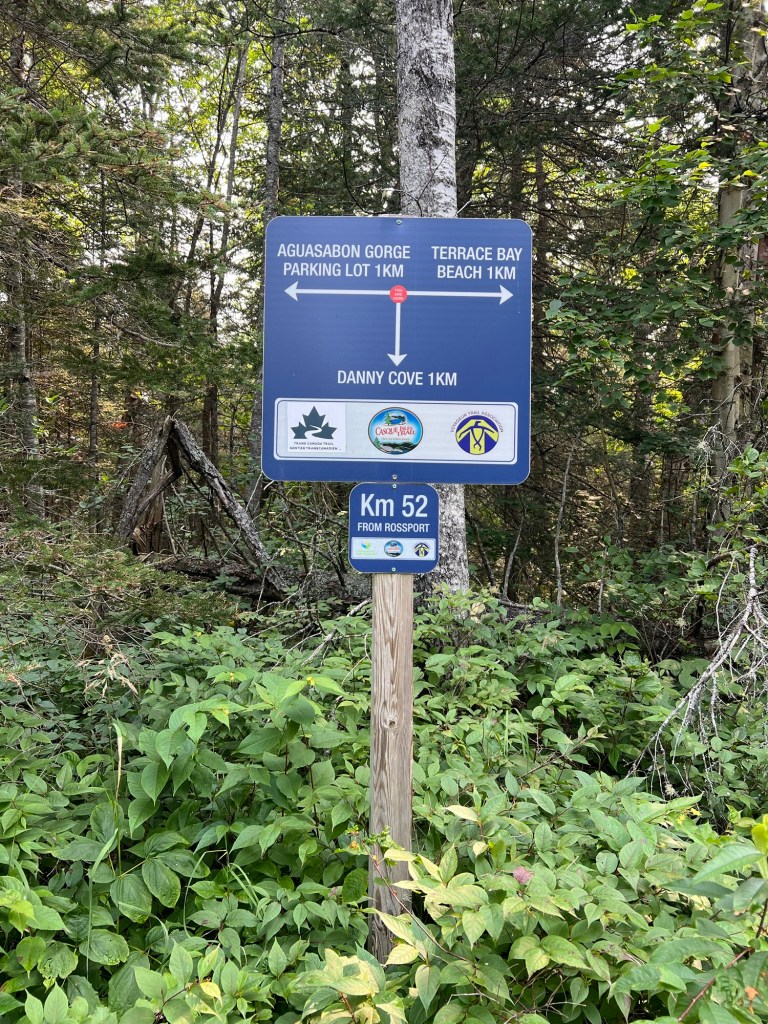
Here’s the junction where the Casque Isles Trail went to Danny Cove and then beyond. I walked on down to the Terrace Bay Beach.

The trail soon crossed a footbridge where you could see the river coming down from the falls…

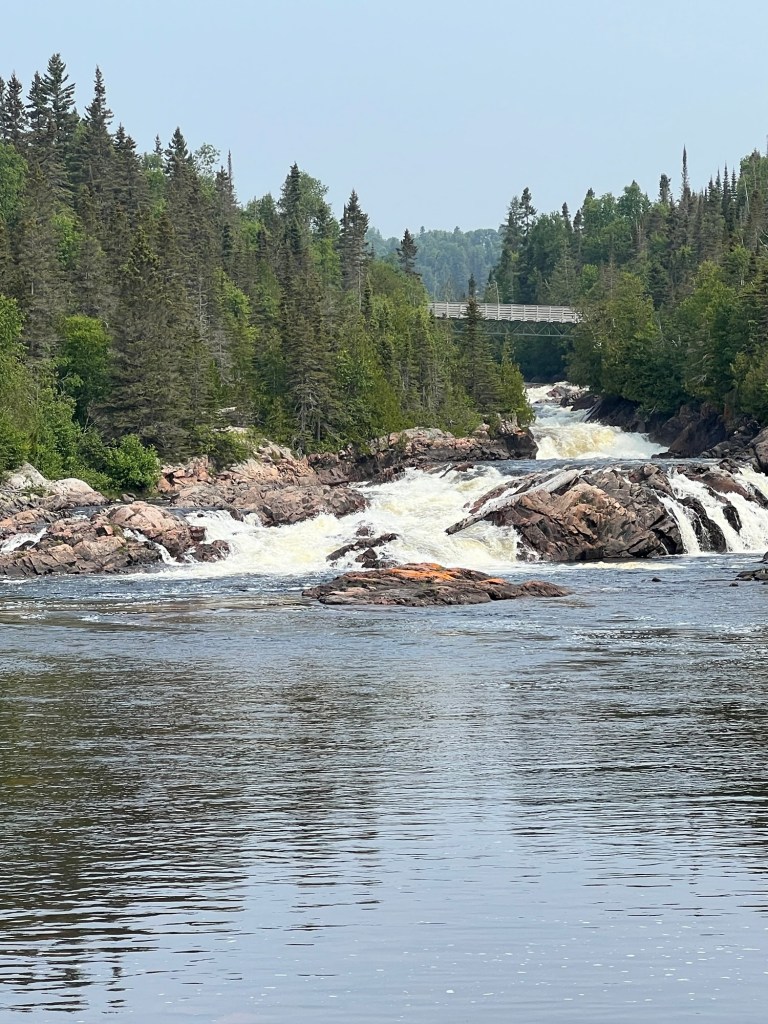
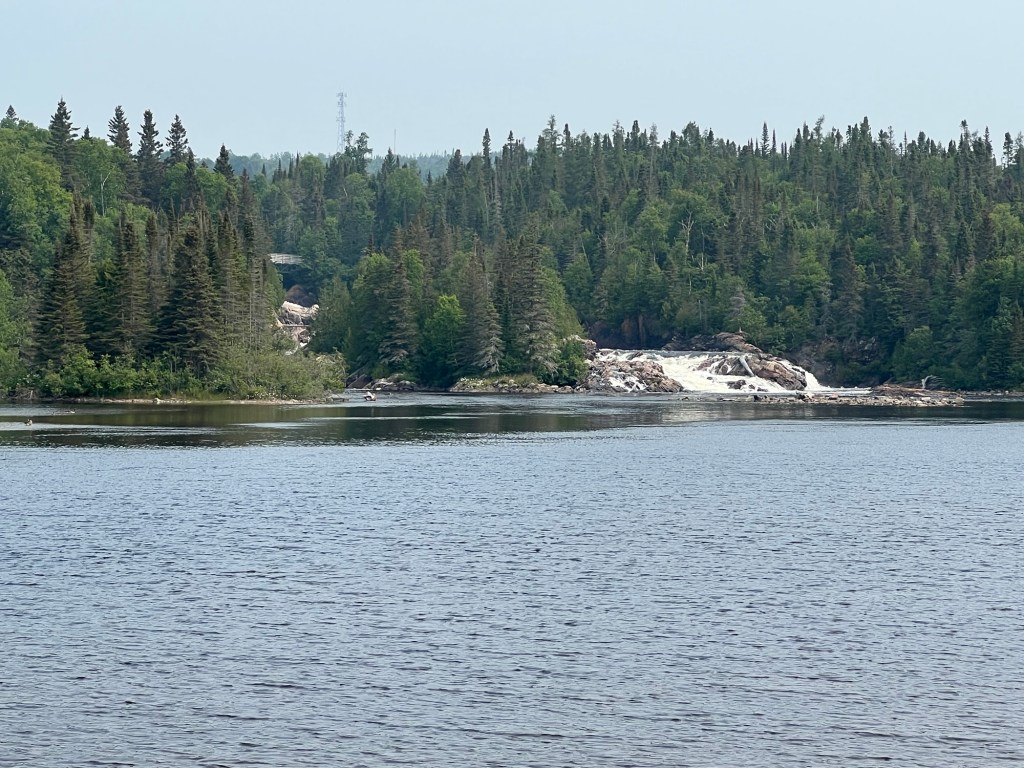
and continuing down through some steep rapids to Lake Superior.

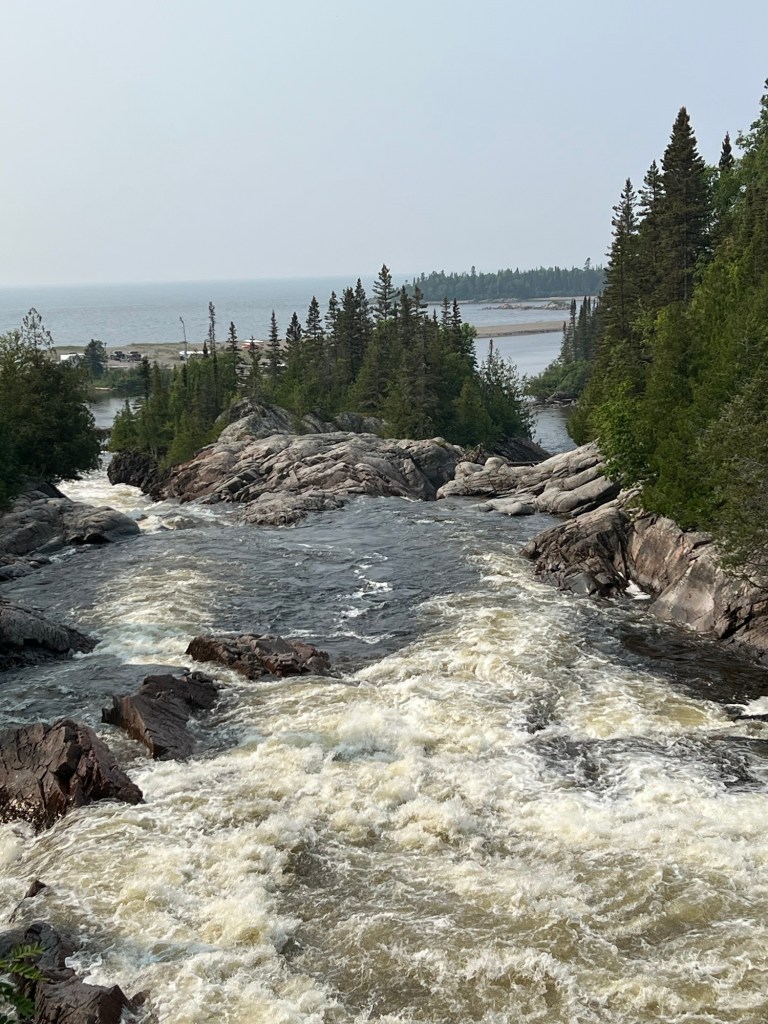
The river split around a rocky island just as it tumbled into the inlet on the lake.

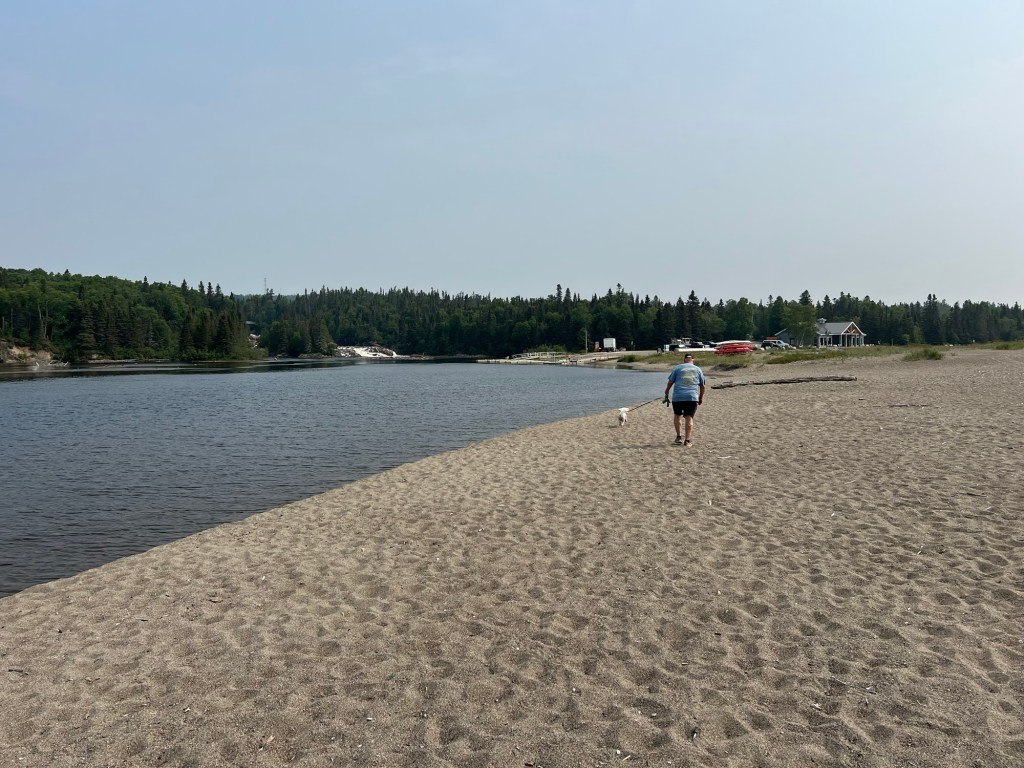
Bud and Matey were waiting at the beach and we walked out the sandy spit.

There’s the footbridge I crossed on the trail.

You had to be a long way out on the spit to see the little island with the bit of river on the far side.

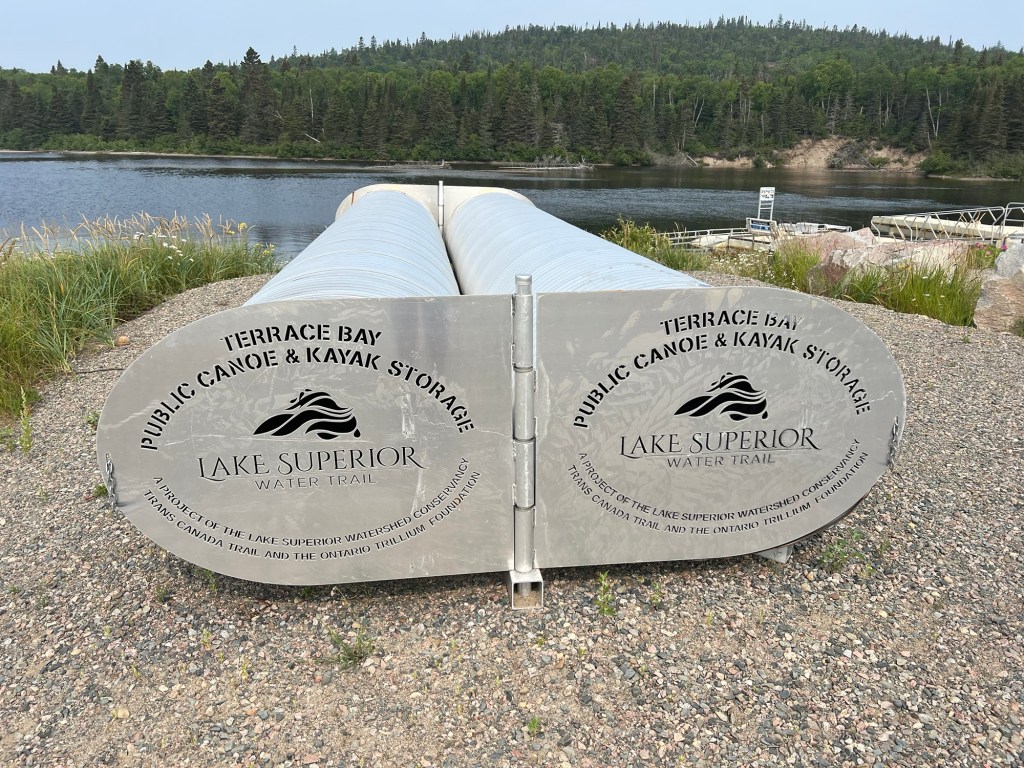
We passed these corrugated aluminum tubes and were trying to figure out what they were. Bud noticed the incised inscription “Public Canoe and Kayak Storage”. Oh.

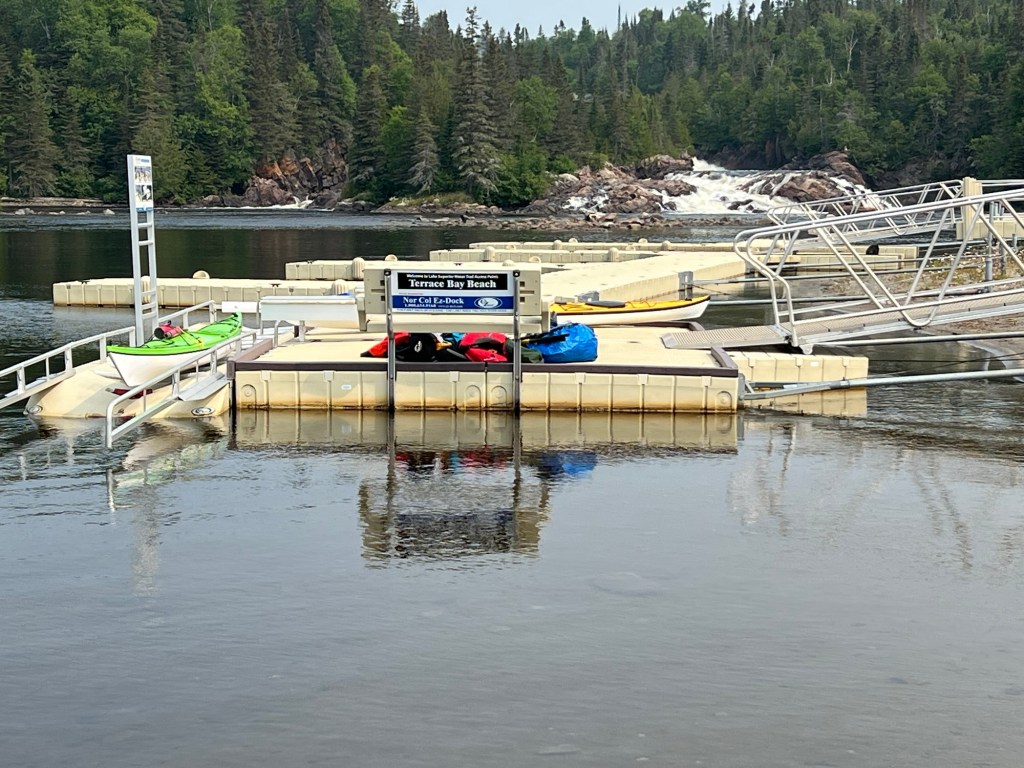
There are canoe and kayak routes all along this shore. I noticed the dock was labeled for paddlers coming from afar. There is a canoe and kayak route circumnavigating the whole lake, a far more daunting journey than the highway Circle Tour.

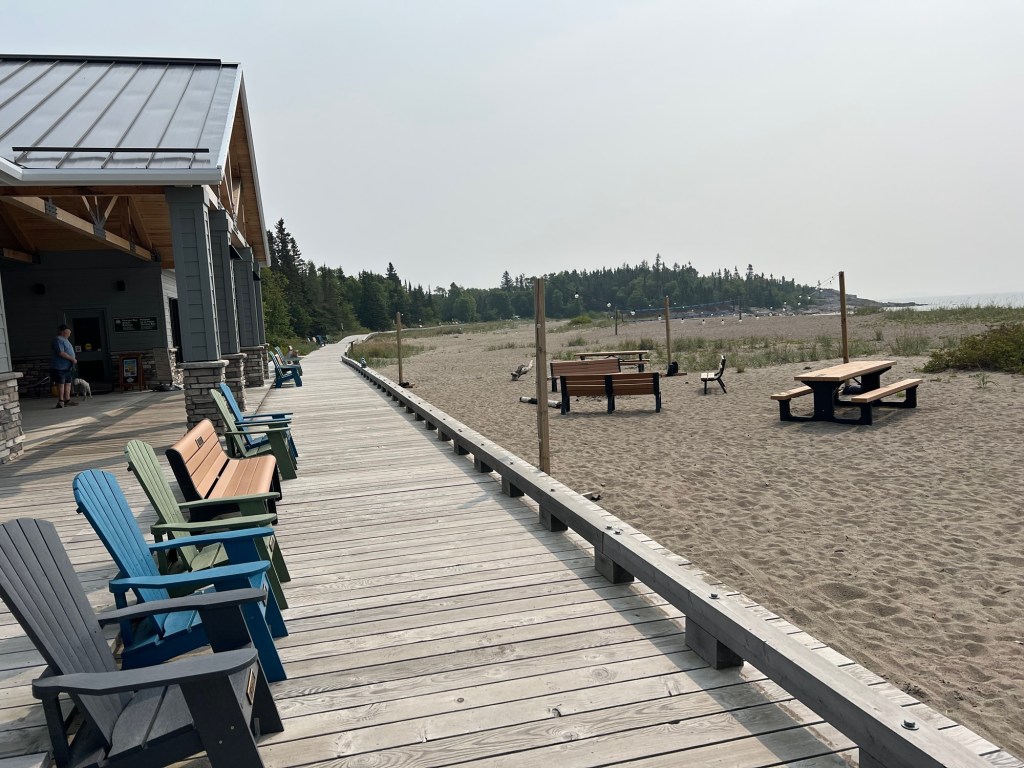
This is a much bigger and more developed beach than the one at Schreiber.

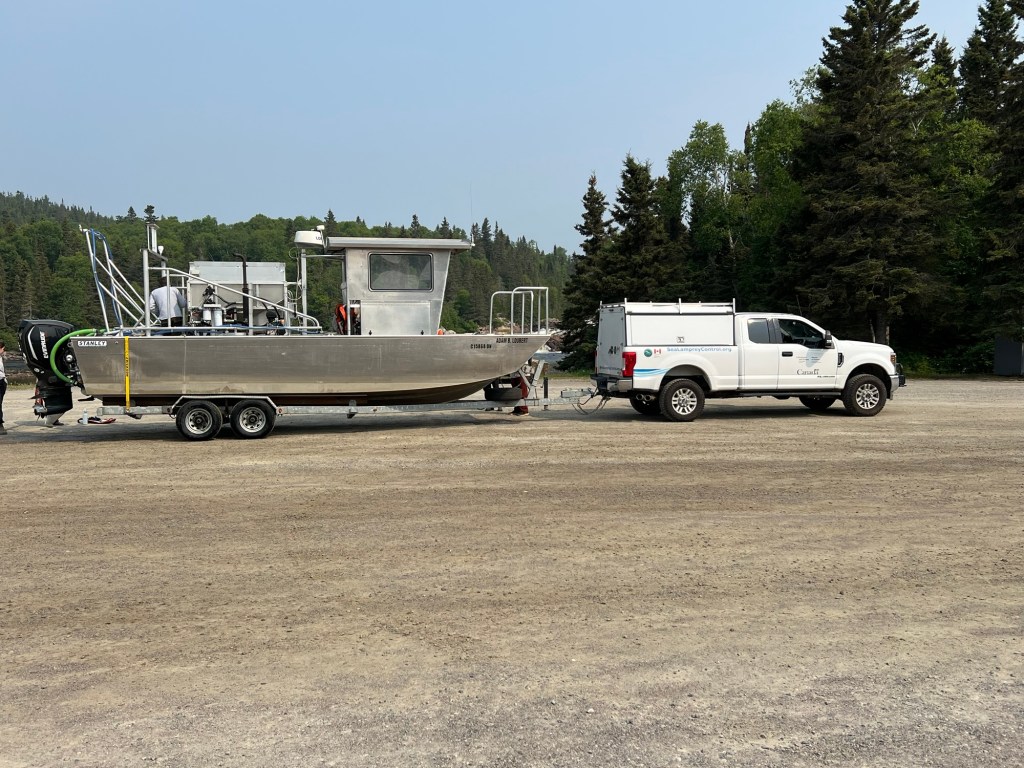
While we were at the beach a crew had pulled this boat out at the boat ramp. If you look closely at the truck you can see that these folks are from sea lamprey control. We talked to a young woman on the crew and she explained they put lampreycide in the water at a concentration that kills the lampreys but not the other species. They came here because the lampreys spawn in this inlet. She said the control is quite effective, much more so than for many other invasive species. The US and Canada cooperate in this venture. Canada covers Lake Ontario and during COVID they couldn’t travel there to carry out their work. Lamprey numbers shot up; but the population is coming back under control now that the work has been resumed.

Seeing new places, meeting new people and learning new things are what make this lifestyle rewarding for me.

Rainbow Falls Provincial Park

I’m writing this in my tent, now at our campsite at Rainbow Falls Provincial Park, about 50 miles back east from Nipigon. This is not a very level site, it has only electric, no water or sewer, and only 30 Amp service, and we love it. We’re away from the highway, with some woods around us and a reasonable distance to our neighbors.

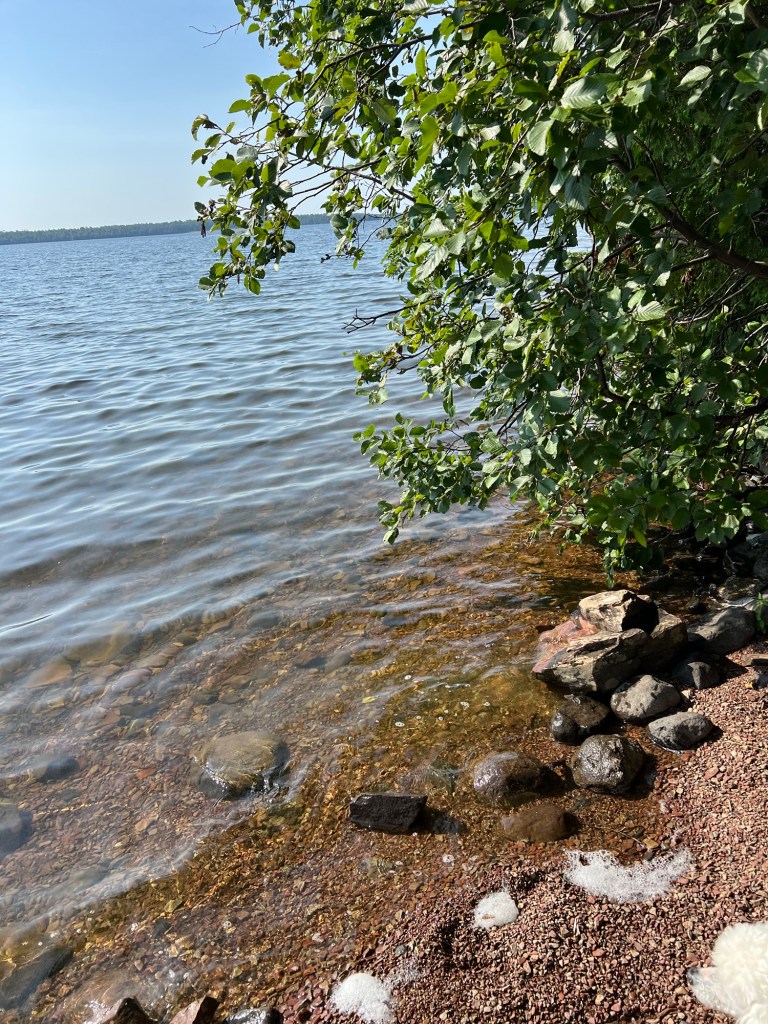
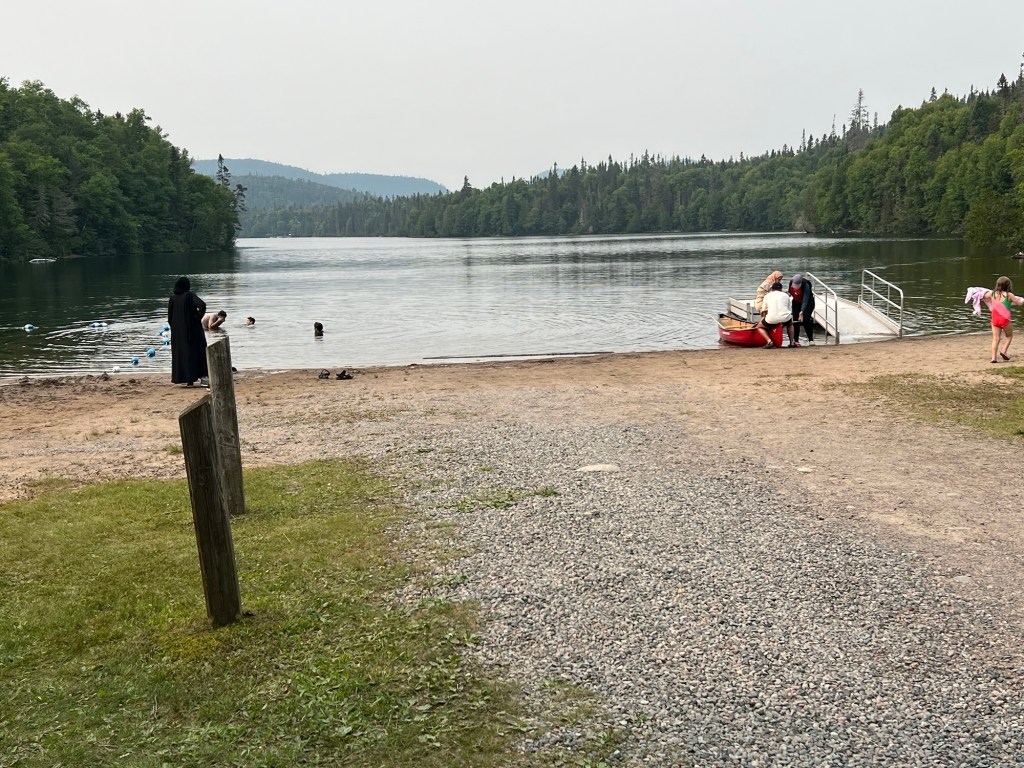
We’re staying at the Whitesand Campground and this is one little beach near us on Whitesand Lake.

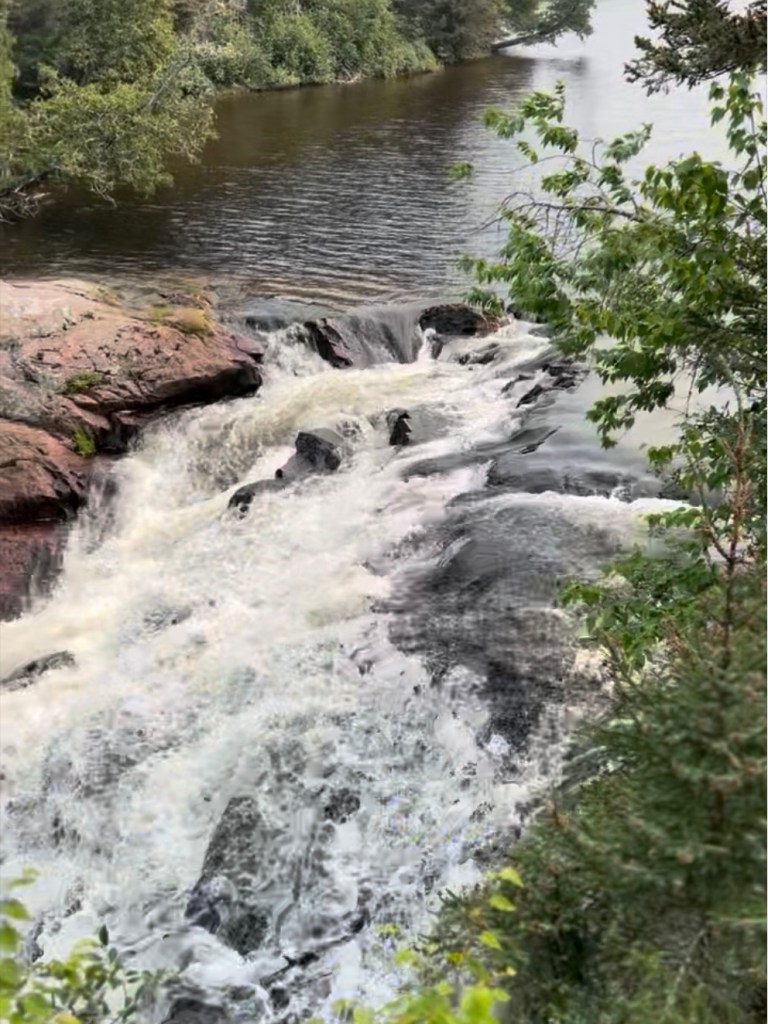
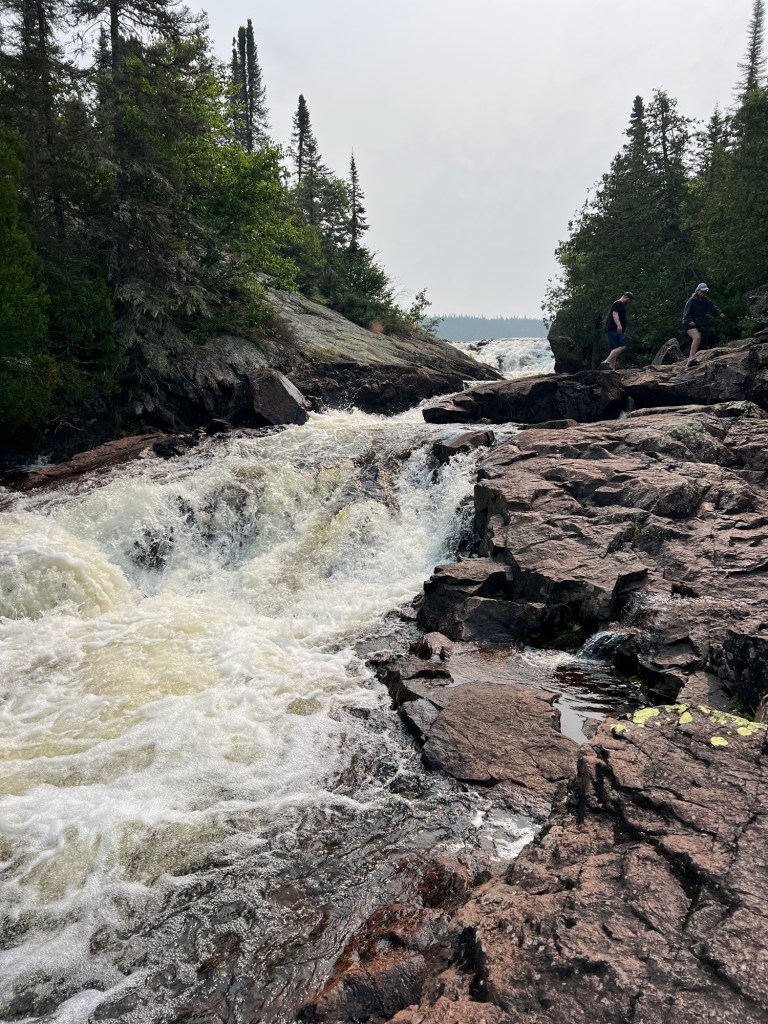
This morning we went to the trail to Rainbow Falls, on the Hewiston River. Just a short way and a few steps down a wooden walkway was a viewing platform where you could see the top of the falls, which is the outflow of the natural dam forming Whitesand Lake.

The little river continued down and there were stairs going down along it. Bud opted to stay with Matey at the top.

I continued down,

and down,

and down,

and down until I arrived at a footbridge that gave views upstream…

and downstream. Altogether there were 165 steps, and the river tumbled down the whole way.

Back at the top, we took Matey to a bit of a dog beach where he waded in this very pretty lake.

I was going to walk back via another trail, but a few steps down the trail I realized I didn’t have the air horn and besides bears there was a warning sign about an “active lynx” in the campground. So I retreated and flagged Bud down before he left. He offered to take me back to the camper for the air horn and I decided I would do that. The knee Bud had replaced 20 years ago has been hurting him when he walks down steep hills or stairs. We won’t know what’s going on until we’re back in Hot Springs in November. Meanwhile, if I want to walk any distance over rough terrain I will have to do it alone, so I might as well get used to it.

So armed with the air horn I went back down Superior Trail.

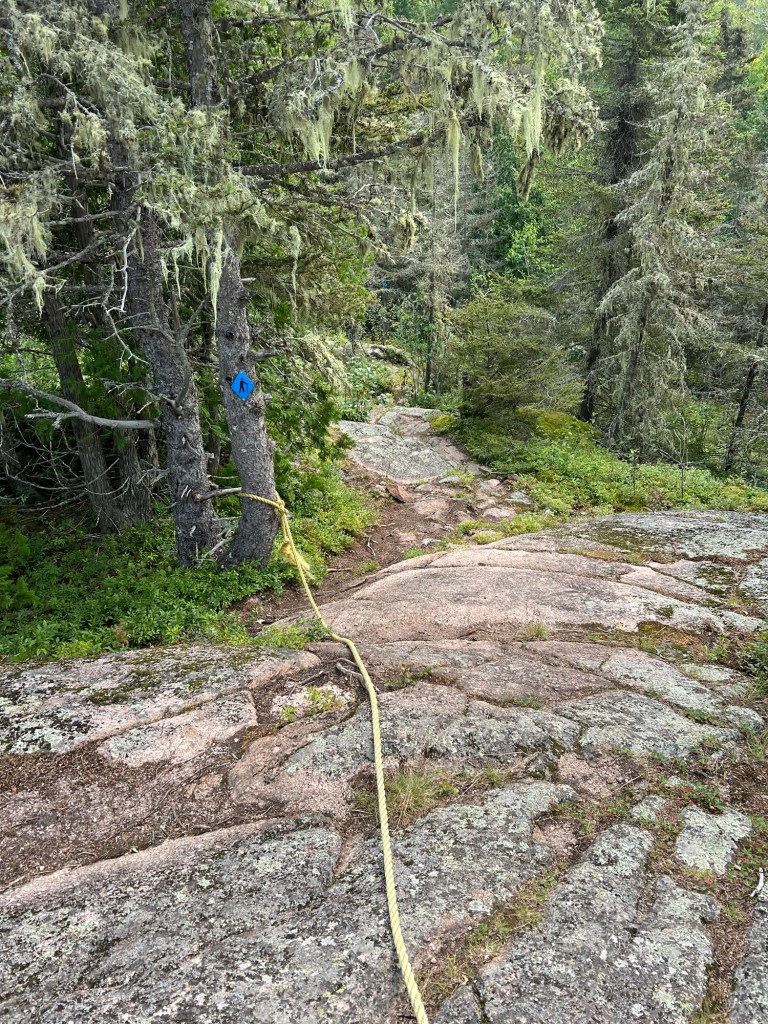
It soon led out of the woods and up onto a rocky ridge.

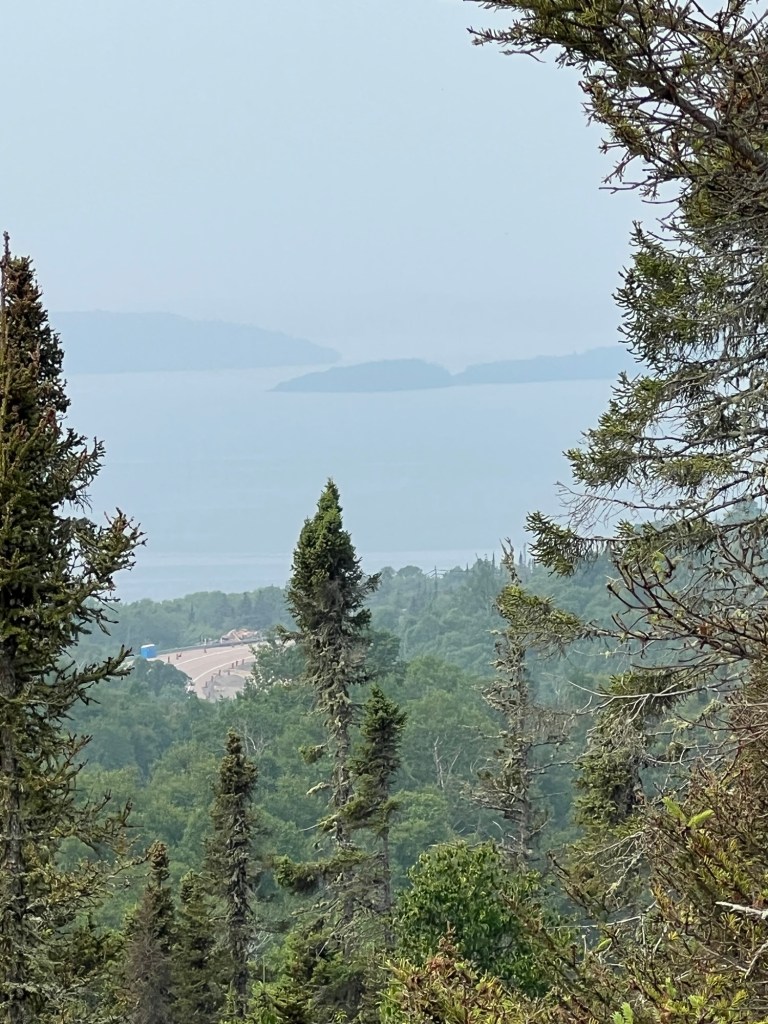
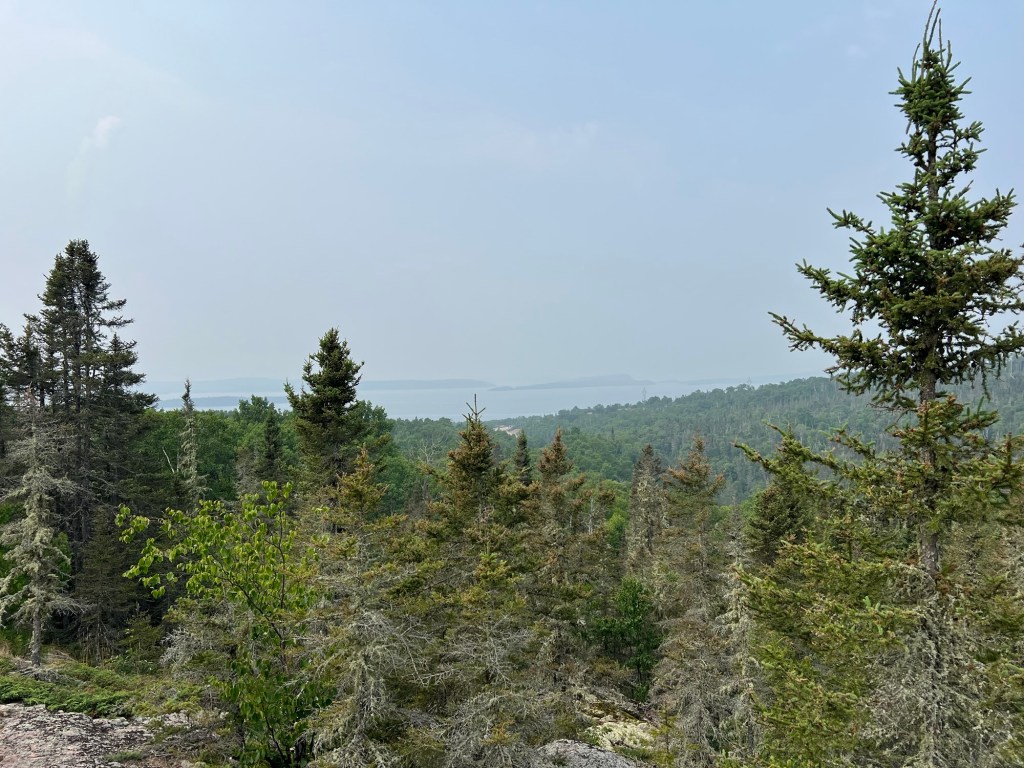
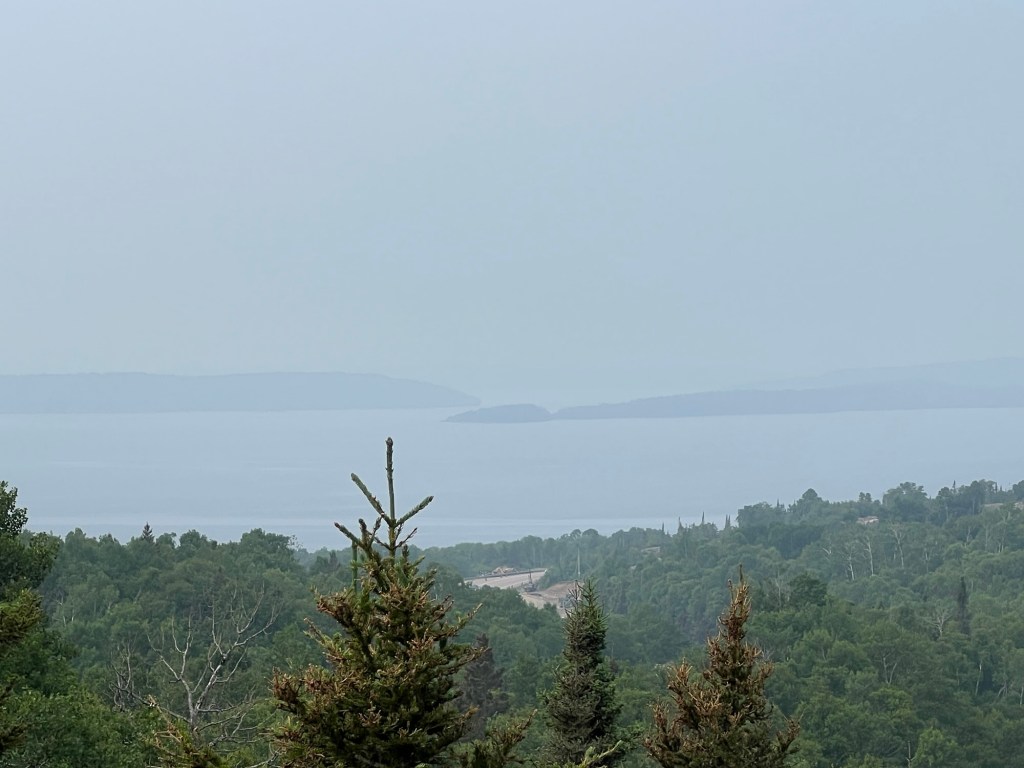
The ridge rose until you had a view over the highway to Lake Superior. Again there is smoke. It isn’t bothering my eyes today, but it ruined the view.

The vantage here would be gorgeous without the smoke,

and if we get a clear day I’ll come back for more pictures.

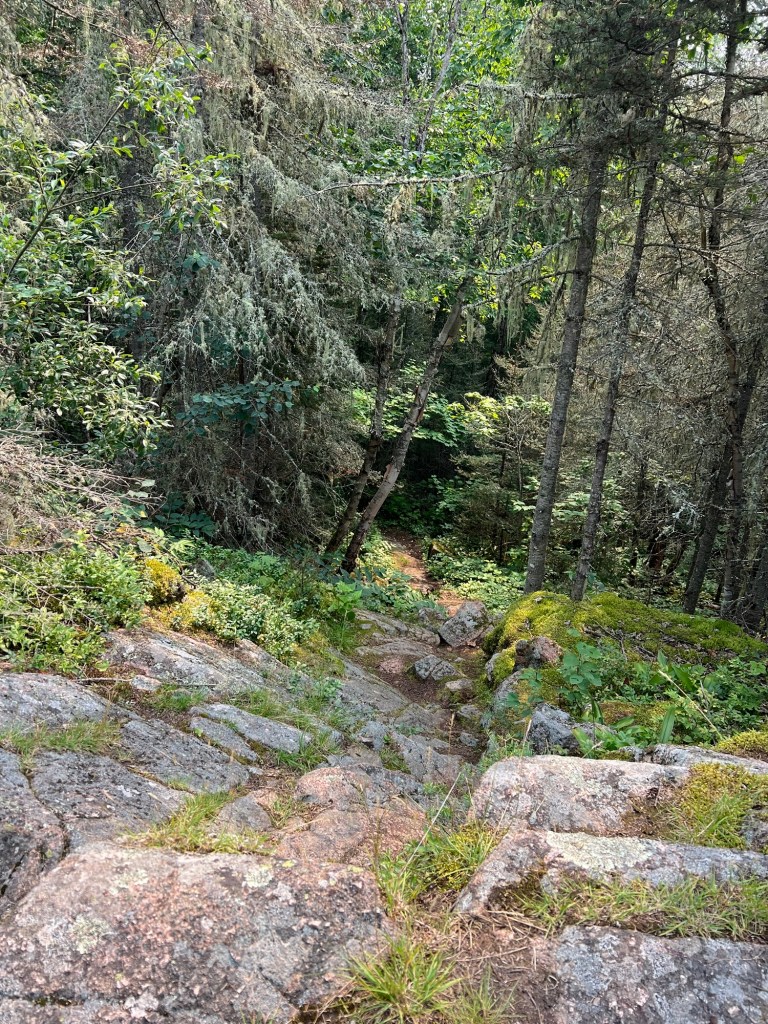
The trail then descended steeply over large rocks…

and down natural steps to the woods below.

A short easy path took me back to the park road. I then cut on another path through more campsites so I didn’t have to walk down the road back to our campsite. Altogether it was only about eight tenths of a mile.

I’m glad I took the walk and happy to be back in a park!

Two Days in Nipigon

Thursday we drove along the shore of Lake Superior and came to Nipigon.

Canada 11 joins Canada 17 just east of this bridge over the Nipigon River. From here to Thunder Bay there is only one east-west road in Canada, and this is it.

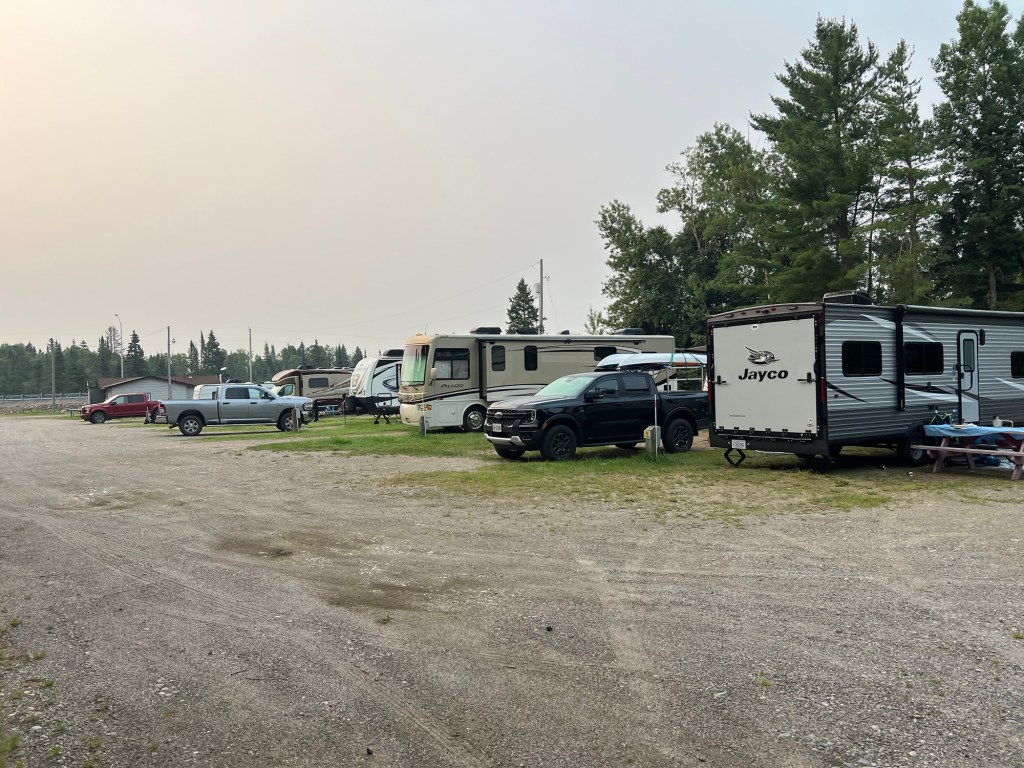
Unfortunately, the little commercial campgound I found is basically a gravel parking lot just off the highway.

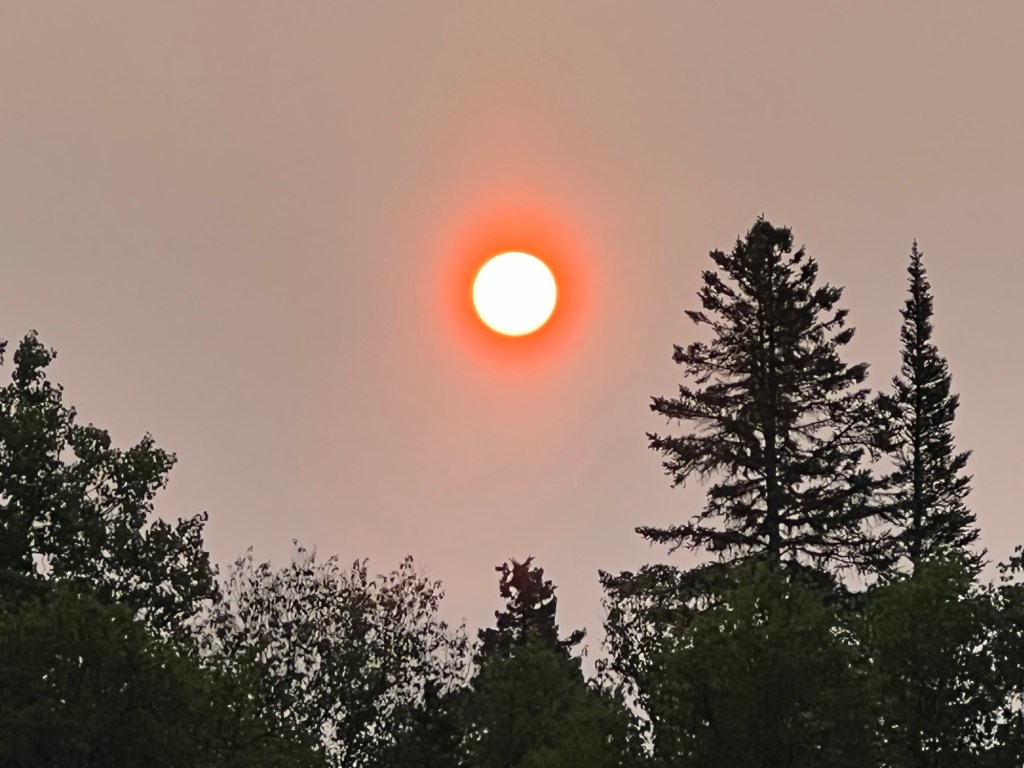
And we have been plagued by smoke. This is the sun in an otherwise clear sky just before 8 AM this morning. So a three night, two day stay is enough.

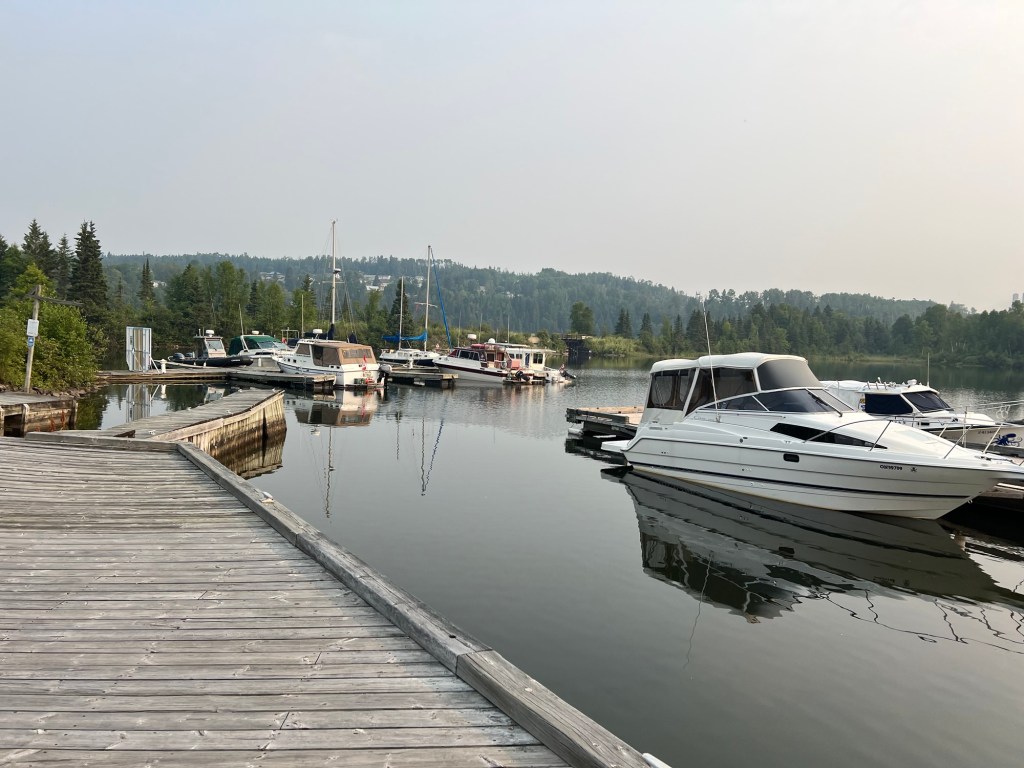
We made the most of it. Friday we drove into the little town and down to their nice marina on The Lagoon, an area just off the Nipigon River.

We walked down a trail…

until we couldn’t.

We drove north on a side route,

across several of these Bailey bridges,

to a lookout at the Alexander Power Generating Station. There are three power plants on the Nipigon River between Lake Nipigon and Lake Superior.

We then came back to the TransCanada Highway (11 and 17), went a few miles west and turned south to Red Rock, which sits where the Nipigon River flows into Nipigon Bay, a bay on Lake Superior. All the distant views were obscured by smoke.

It was a pretty little place with a nice marina backed by an impressive cliff. That rock didn’t look particularly red to me, but maybe it would without the smoke.

Today we decided to head north on Route 11, the northern branch of the TranCanada Highway through central Ontario. This is Helen Lake, one of a series of lakes formed by the Nipigon River.

Our goal was Lake Nipigon, but about halfway up we stopped at Pijtawabik Palisades to walk back to Cascade Falls.

The palisades were beautiful.

There wasn’t much of a trail back towards the falls.

And you could hear water running, but could barely see it. I guess other times of the year it’s impressive, but it wasn’t today.

It was a pretty area, though.

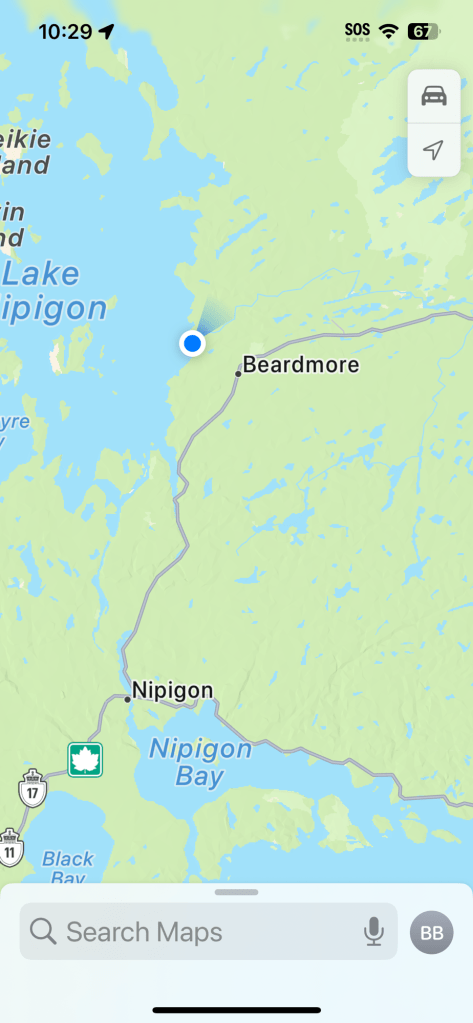
We drove on route 580 over to Poplar Lodge Park on Lake Nipigon. We followed the road until it turned into a two track, single lane dirt road. That’s as far north as we’re going to get this year, so I took a screen shot of our position.

Poplar Lodge was a campground with mostly seasonal people.

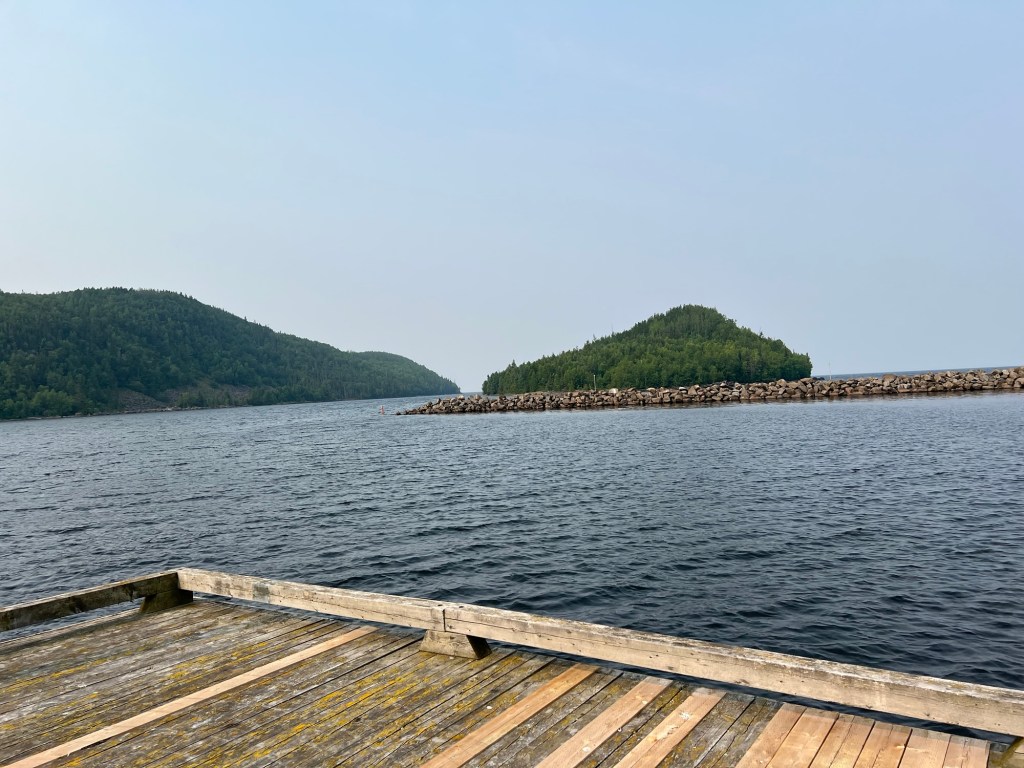
Lake Nipigon was pretty, but there was nothing for anyone who wasn’t camping.

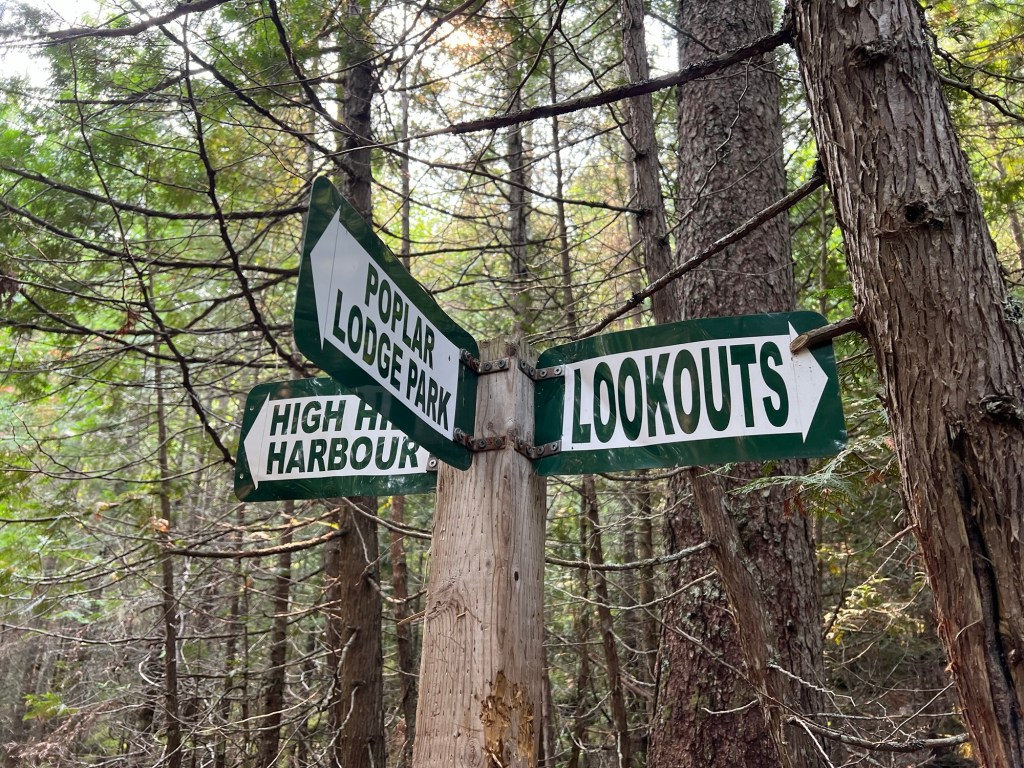
We had passed a sign for High Hill Harbour, so we headed down that road.

Three miles later we came out here.

This was really quite a nice spot. Besides the boat docks it had a few campsites. There were only a couple of campers here, more our kind of place.

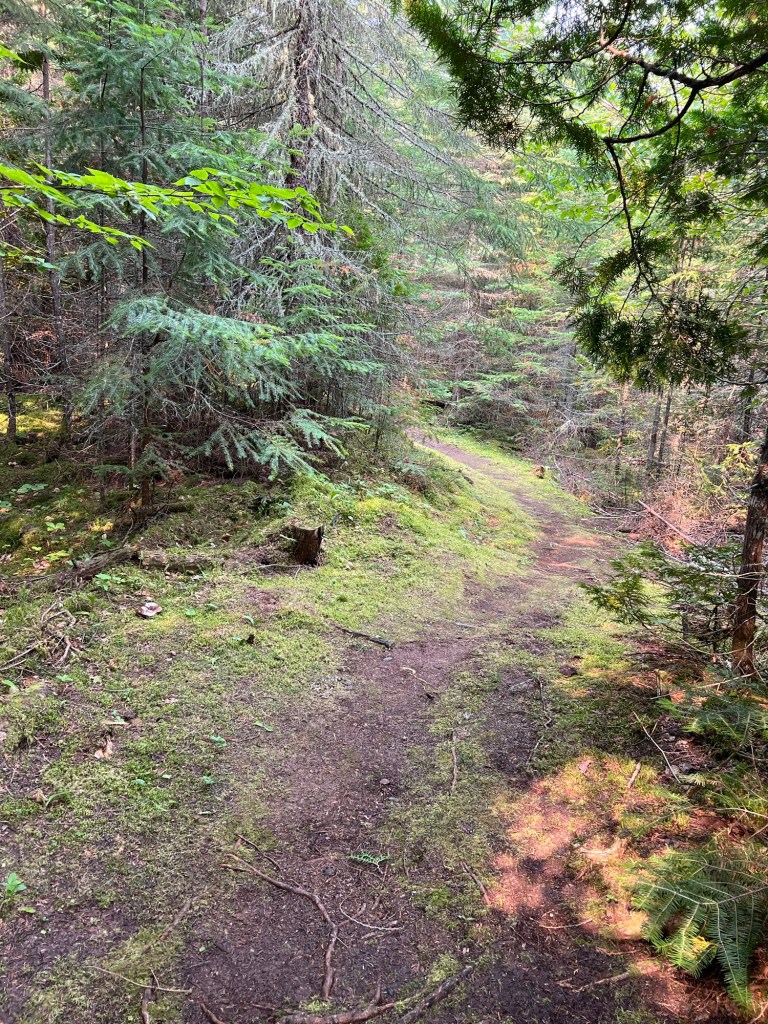
We went back a few hundred yards to where we’d seen a sign for the Lake Nipigon Shore Trail. Now this was a very nice trail.

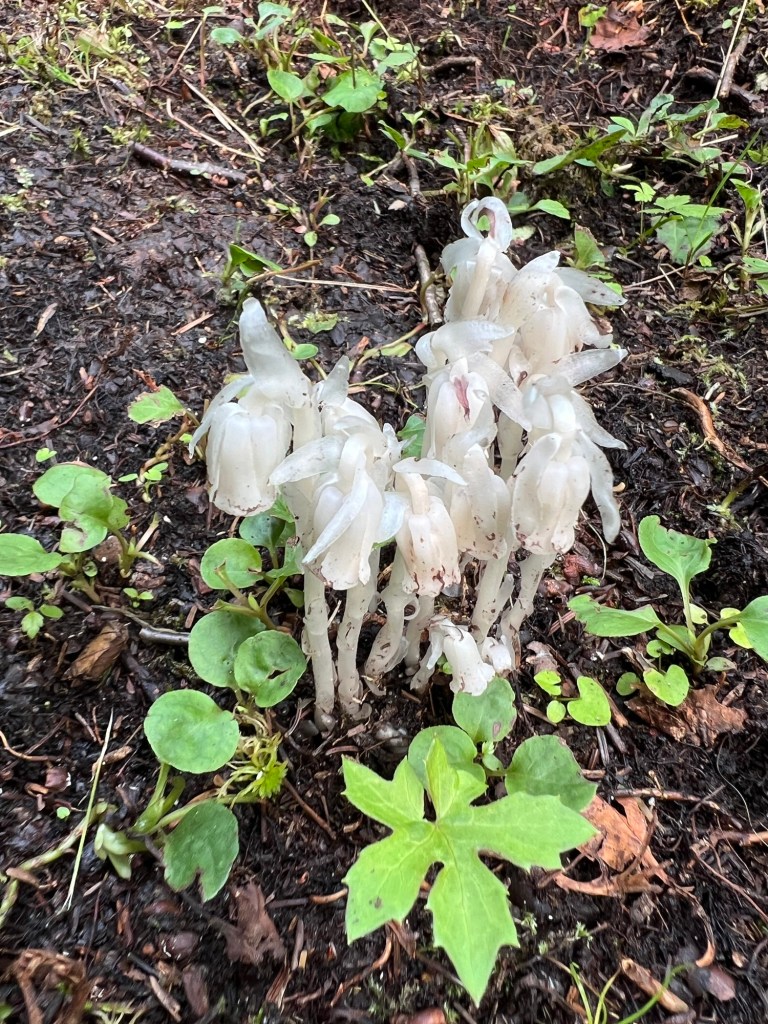
Bud spotted these ghost plants along the trail.

It was not long until we came to the turn off to go up to the lookouts.

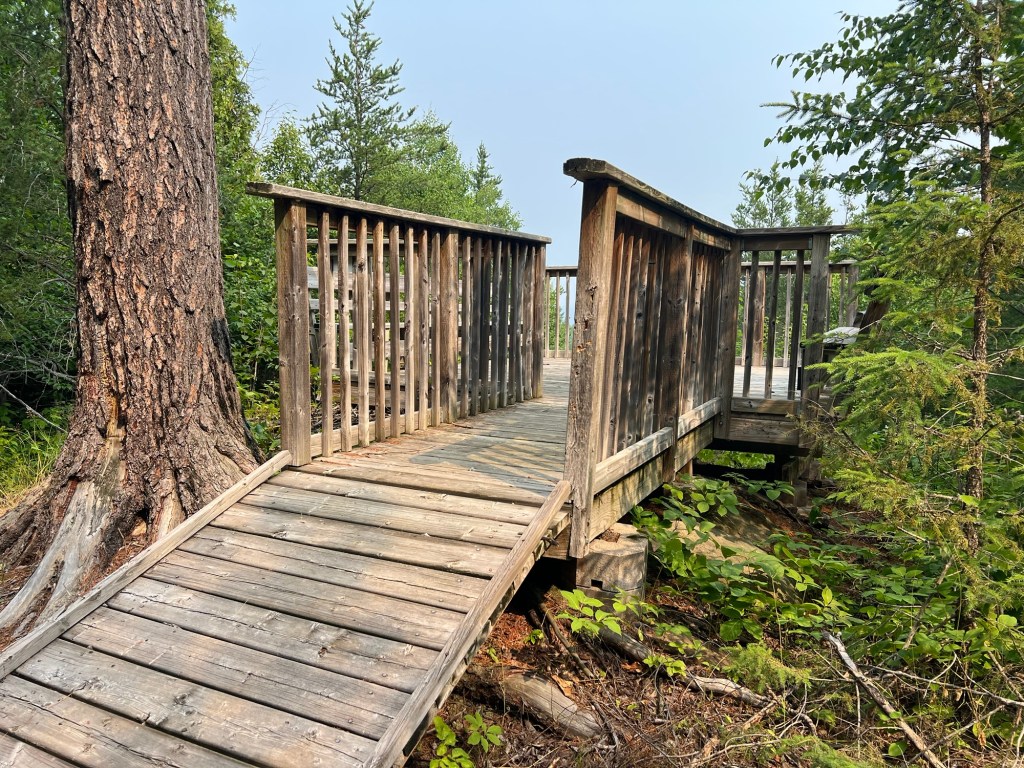
There were two well made lookouts about 0.3 mile apart.

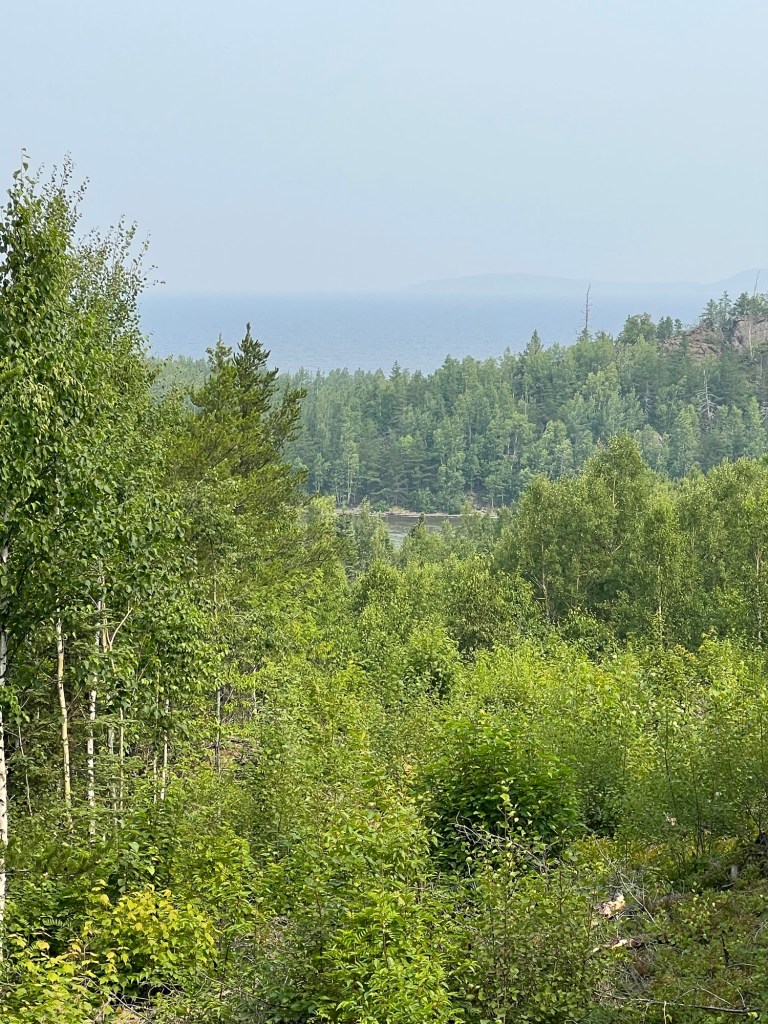
The view from the first wasn’t too good, especially with the smoke.

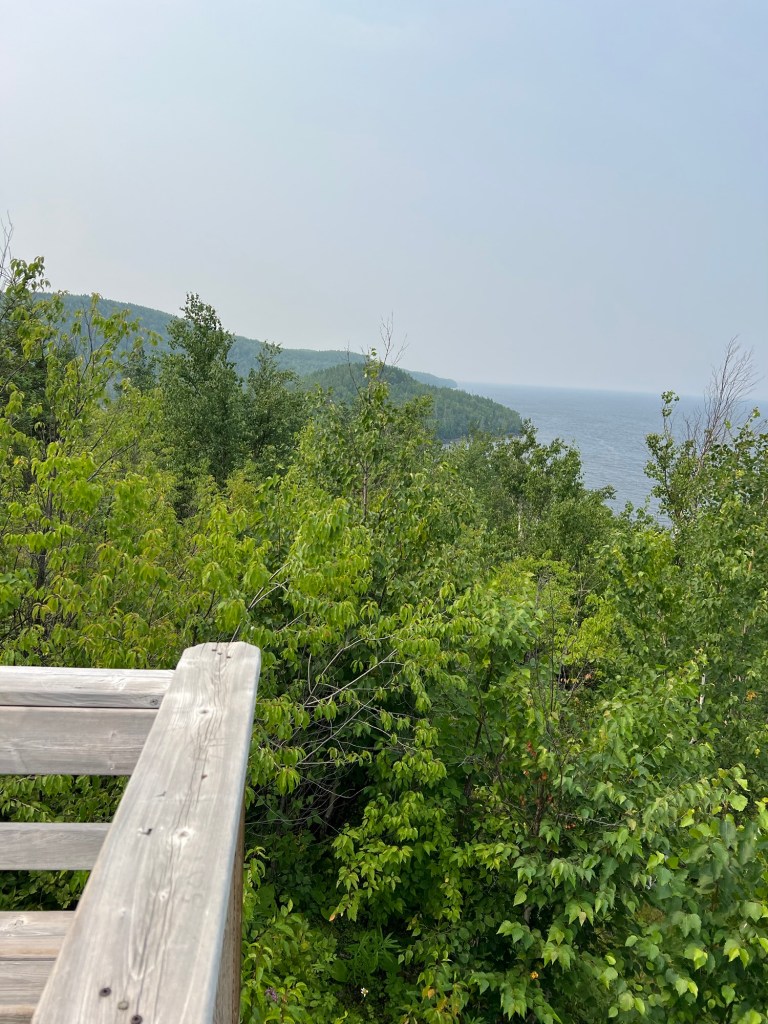
The second lookout had nice views of the shoreline…

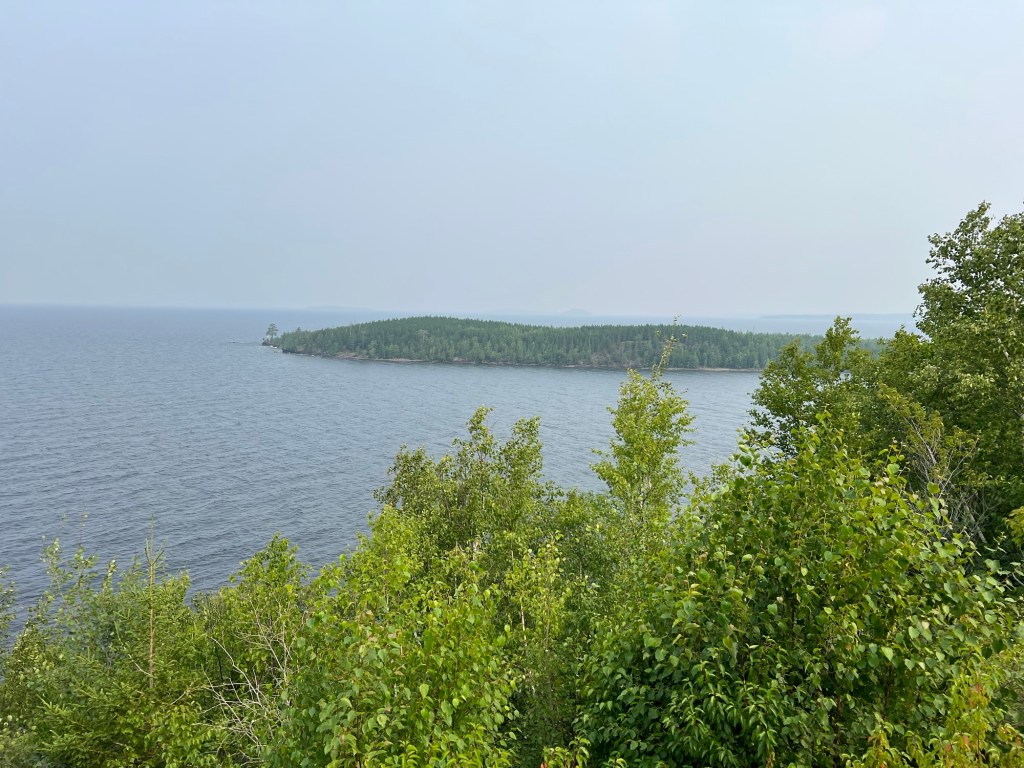
and an island. I think that’s the far shore visible, but hard to see with the smoke. Still, it was a pretty nice day.

All in all a decent stop but we’ll be glad to get back to a Provincial Park tomorrow.

Of Bears and Beaches, Smoke and Fog

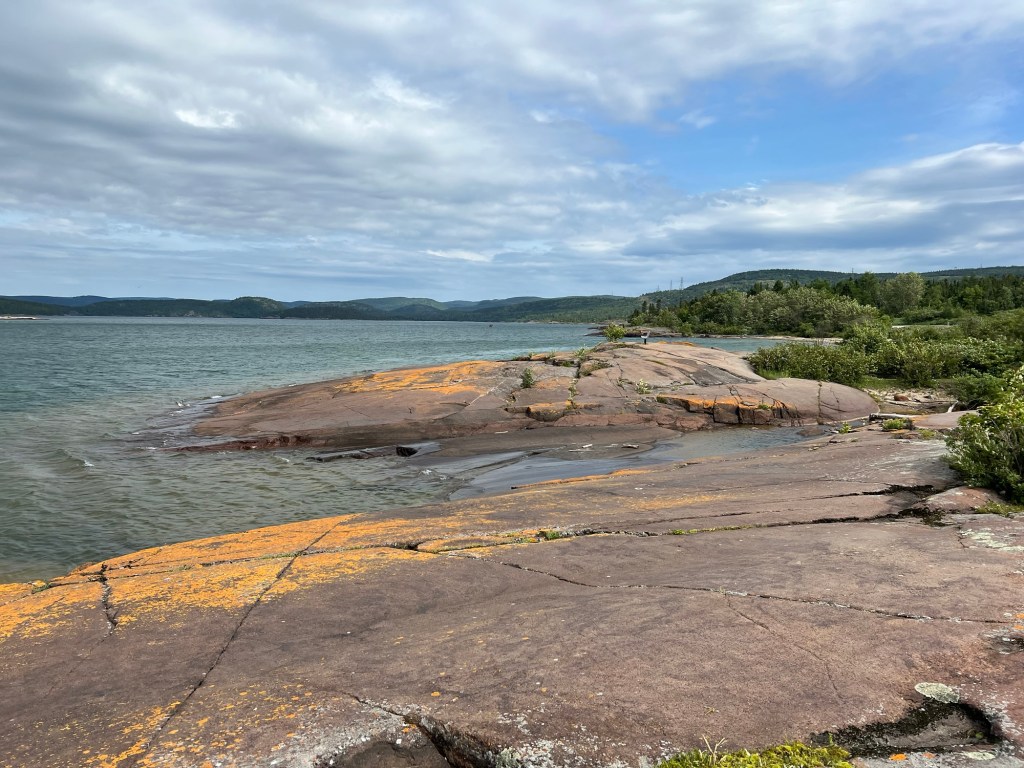
We are still at Penn Lake Park Campground in Marathon, Ontario. The other day we were exploring the streets and found our way here, near the boat ramp. This isn’t a beach, it’s more like a rock swimming pool.

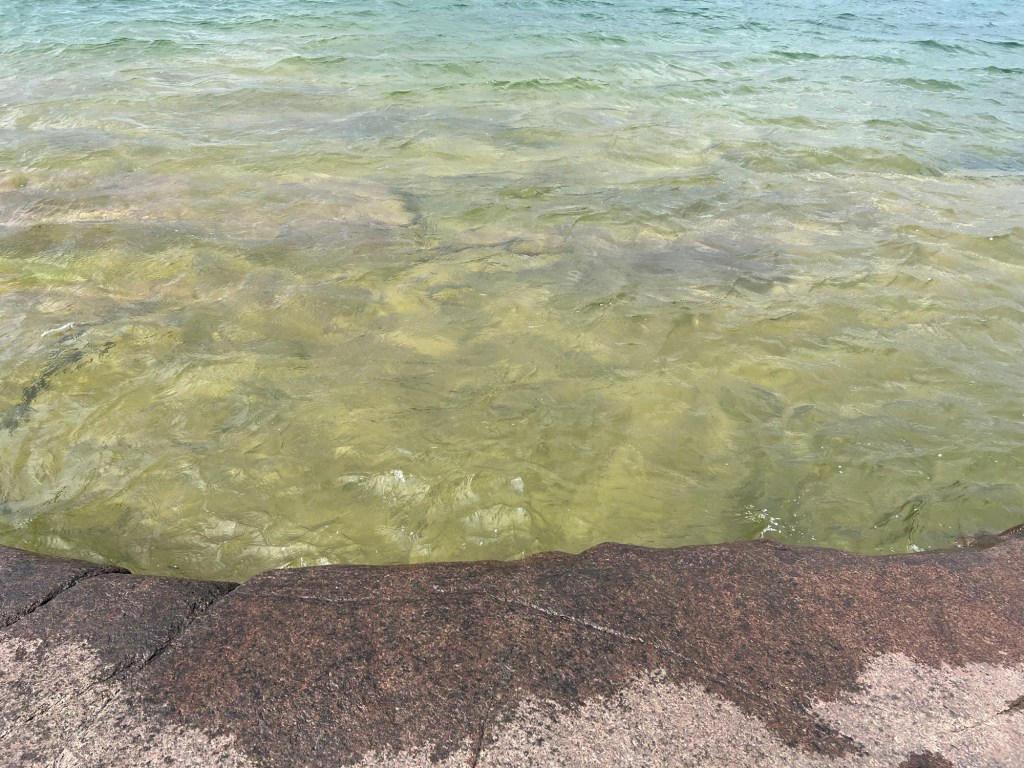
Here you could sit on the edge of the rock ledge and slip to another smooth rock surface about three feet down.

While driving around we came upon a large sign with a map of trails and roads in town. From that I discovered Carden Cove just west of town down a dead end gravel road.

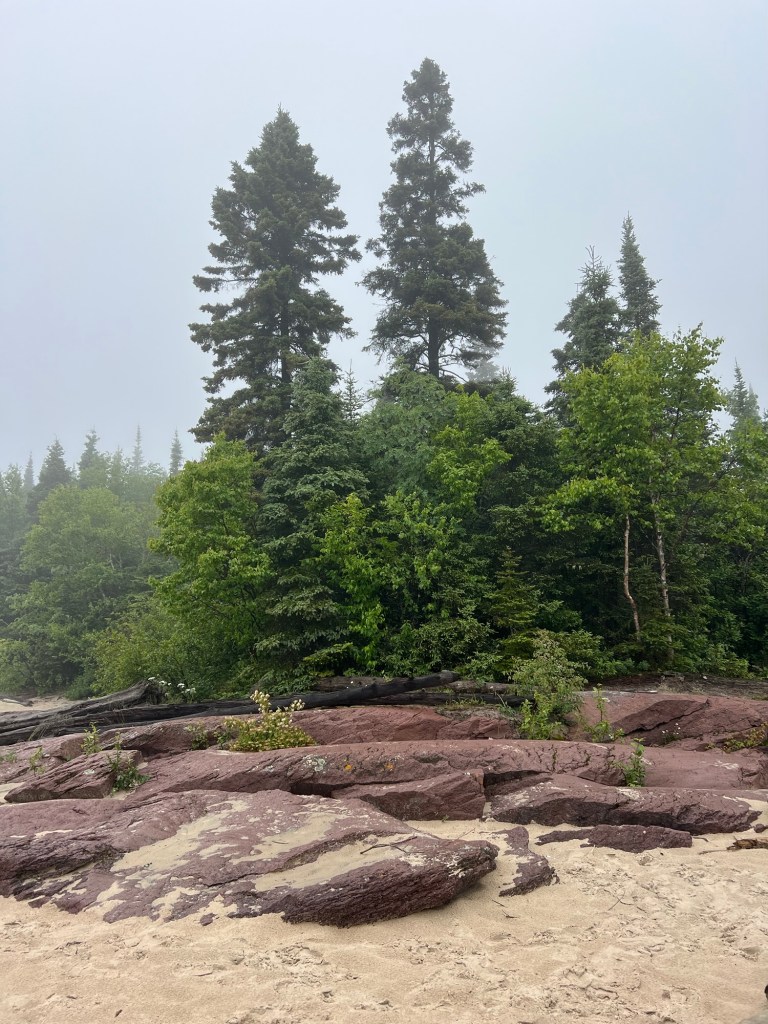
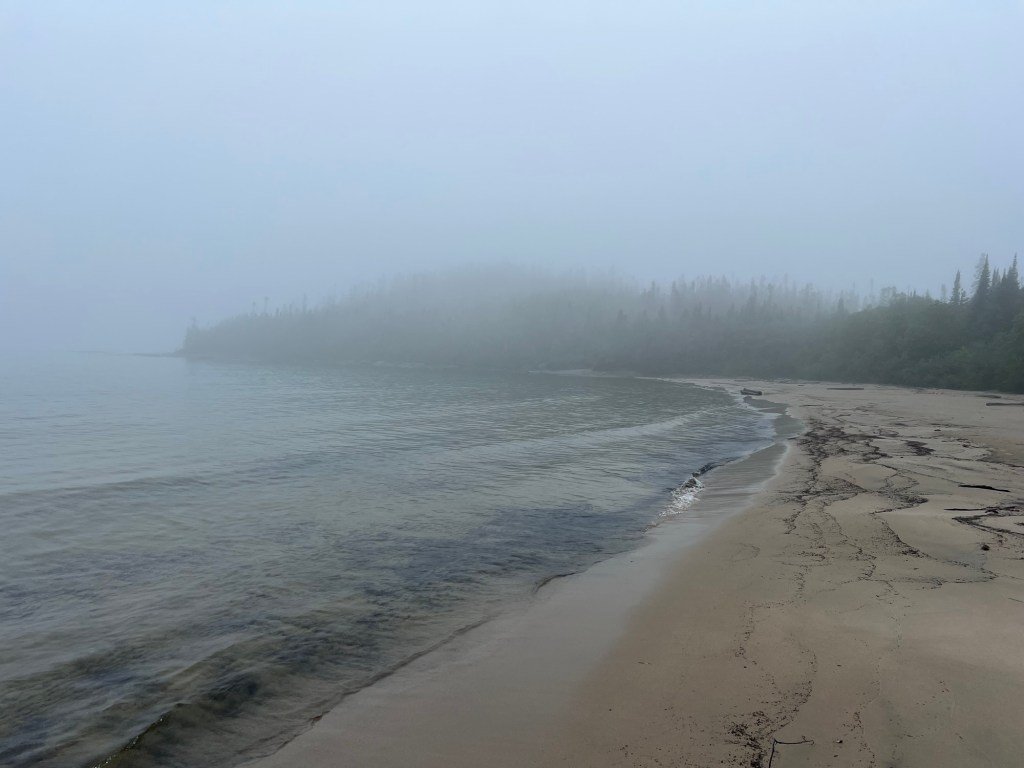
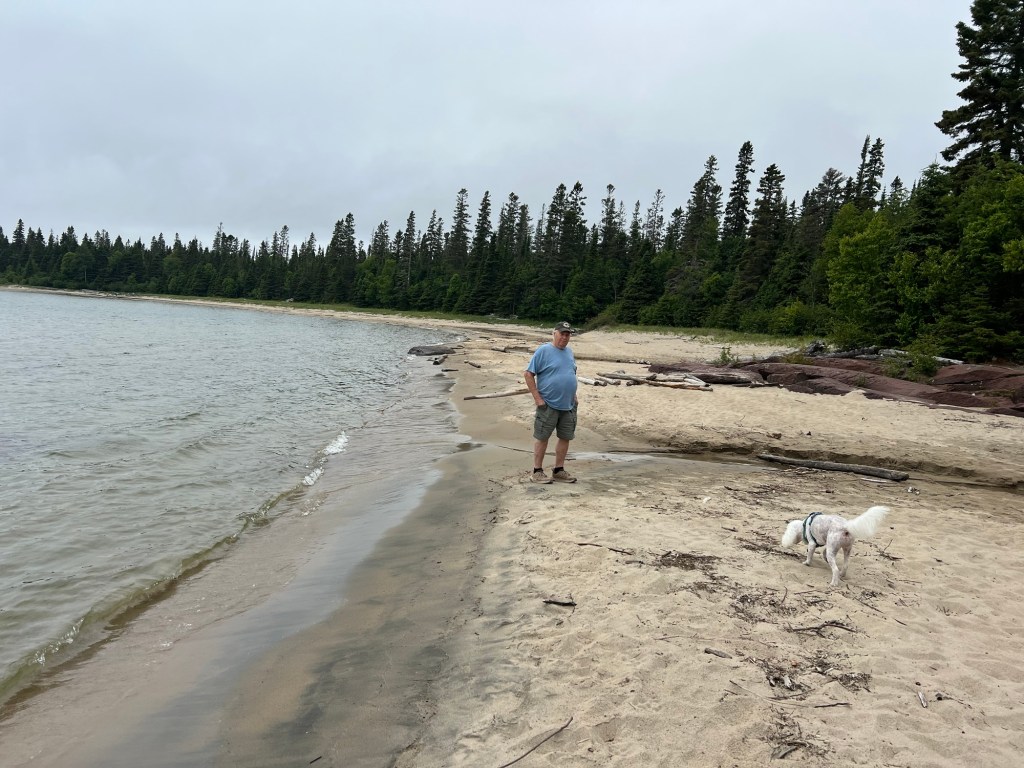
It has a pretty nice beach, but the first day we visited you couldn’t see much because of the fog.

We went back another day, and although overcast, the fog was gone.

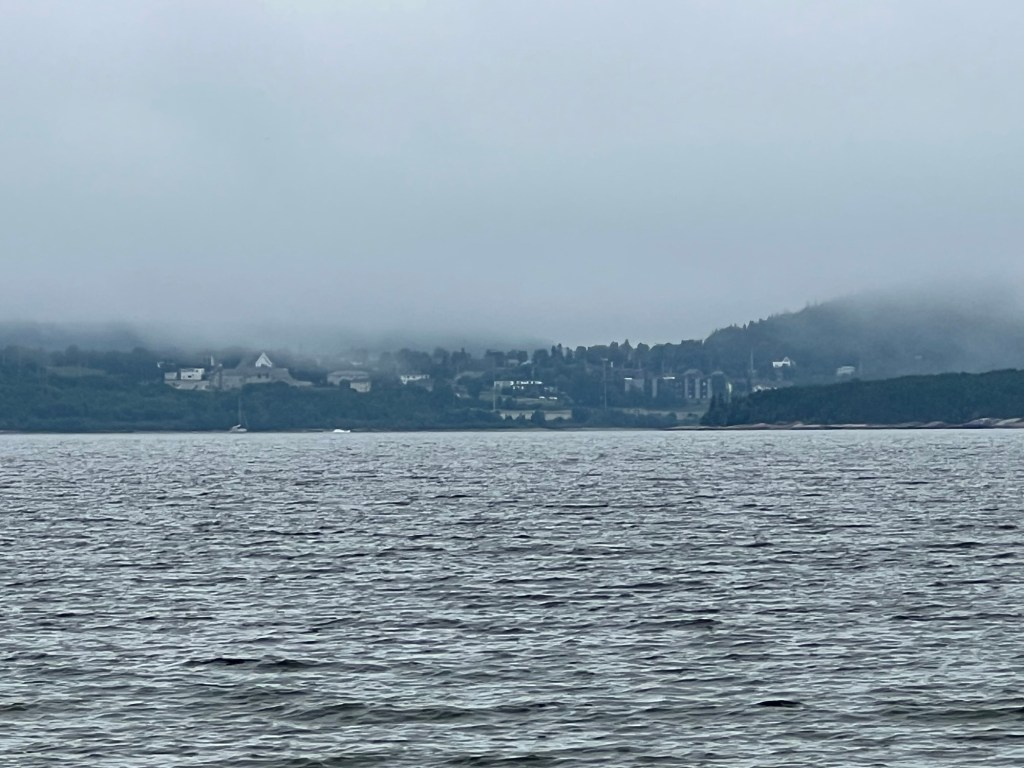
You could even get a glimpse of Marathon across the cove.

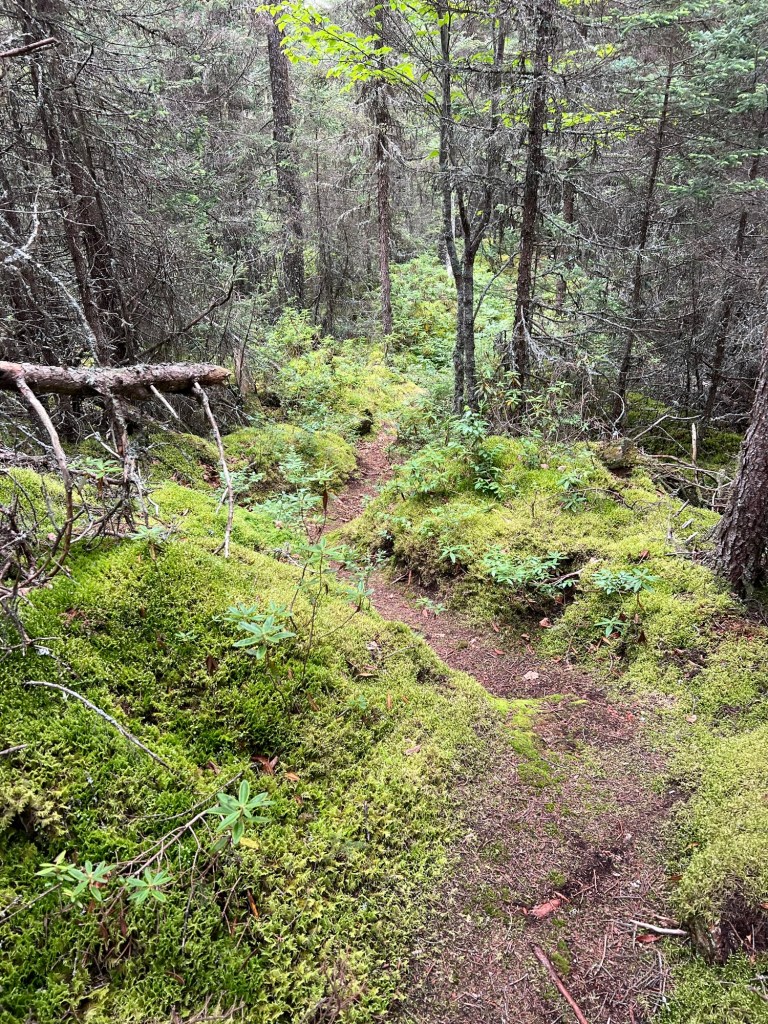
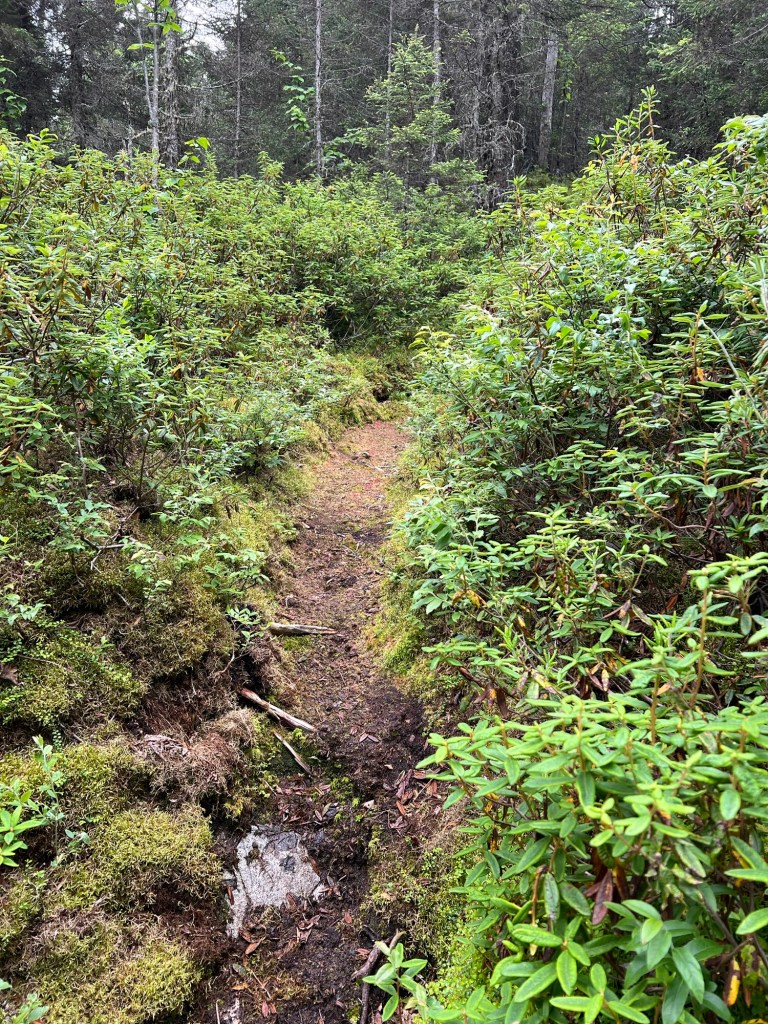
That day we decided to walk a trail to the next cove. The trail was worn deep into the sphagnum.

We were worried about bears. There are signs advising to be “bear aware” at every campgound and trailhead.

The trees and brush are so dense that it would be easy to come upon a bear unawares. That day we cut our walk short.

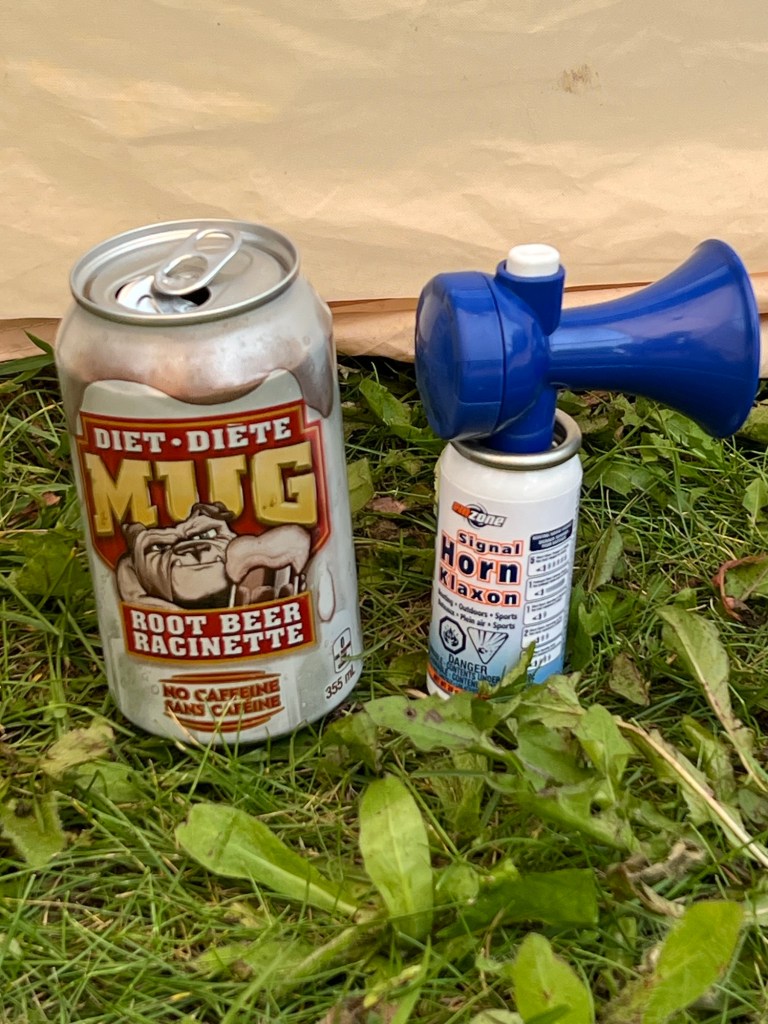
We have bear spray, but really don’t want to get close enough to use it. So we went to Canadian Tire and bought this really small air horn. All the online references said that bear bells don’t work, but bear spray and air horns do.

Armed with our new air horn we went back to the trail and this time headed for a side trail to the beach on the next cove.

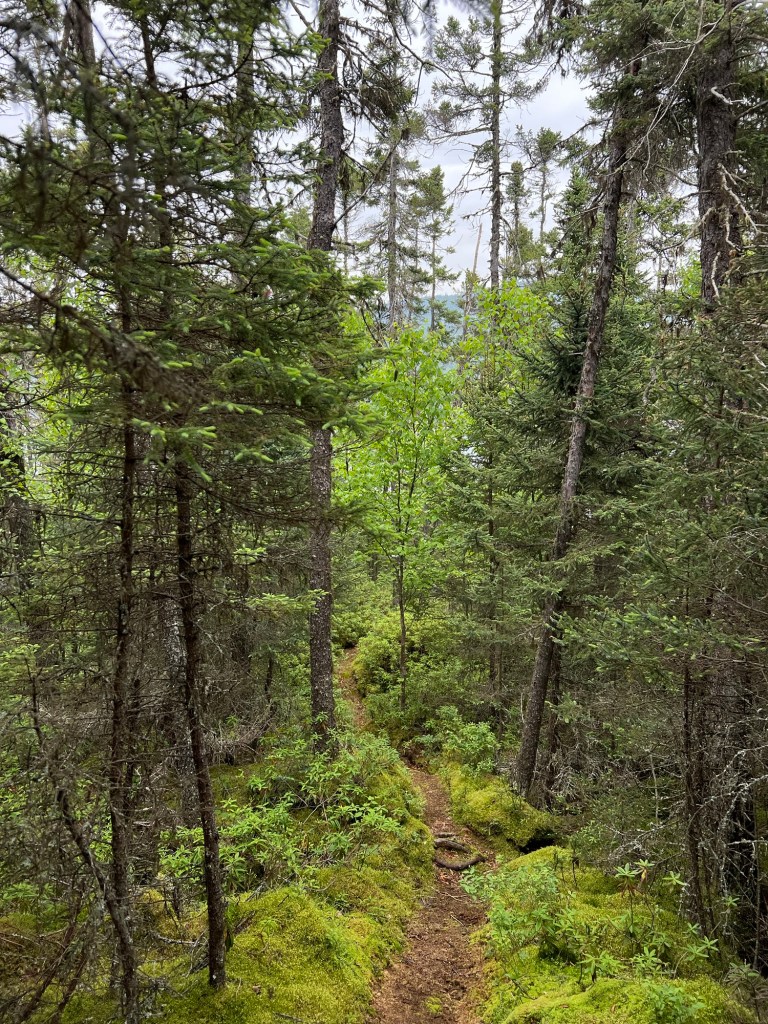
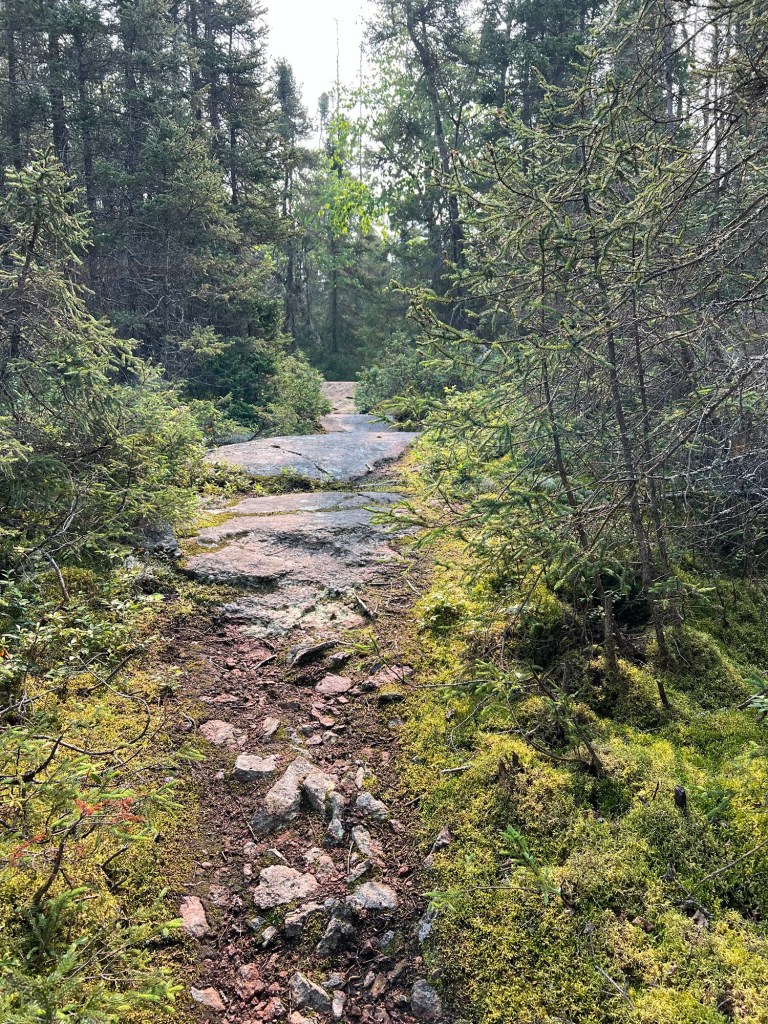
The main trail was a bit more open and rocky,

though there were still plenty of trees and sphagnum.

We walked until we found an overlook of Beatty Cove. This time the haze was smoke from the wildfires (mostly in Manitoba).

There wasn’t much of a beach, there was a lovely island. The hill across the cove is Picnic Table Hill and I would have loved to tackle that hike but my two walking partners (Bud and Matey) were not up for that.

At least we got a nice walk in the woods and didn’t worry about meeting a bear.

And Matey, even if he’s having a wobbly day, always enjoys trotting on the beach.

I was searching for other places to take Matey and came across a Facebook entry about the mouth of the Pic River. We decided to try that. When we got partway down the gravel road there was a big sign saying No Trespassing and advising people that this was private property owned by the Pic River Ojibway and permission was needed for entry. We turned around, but on our way back stopped at a tribal gas station for diesel. Not only did we save a lot of money, when he paid Bud asked about going to the land at the mouth of the river. “Oh, that’s fine,” they said. “No one will say anything if you go there.”

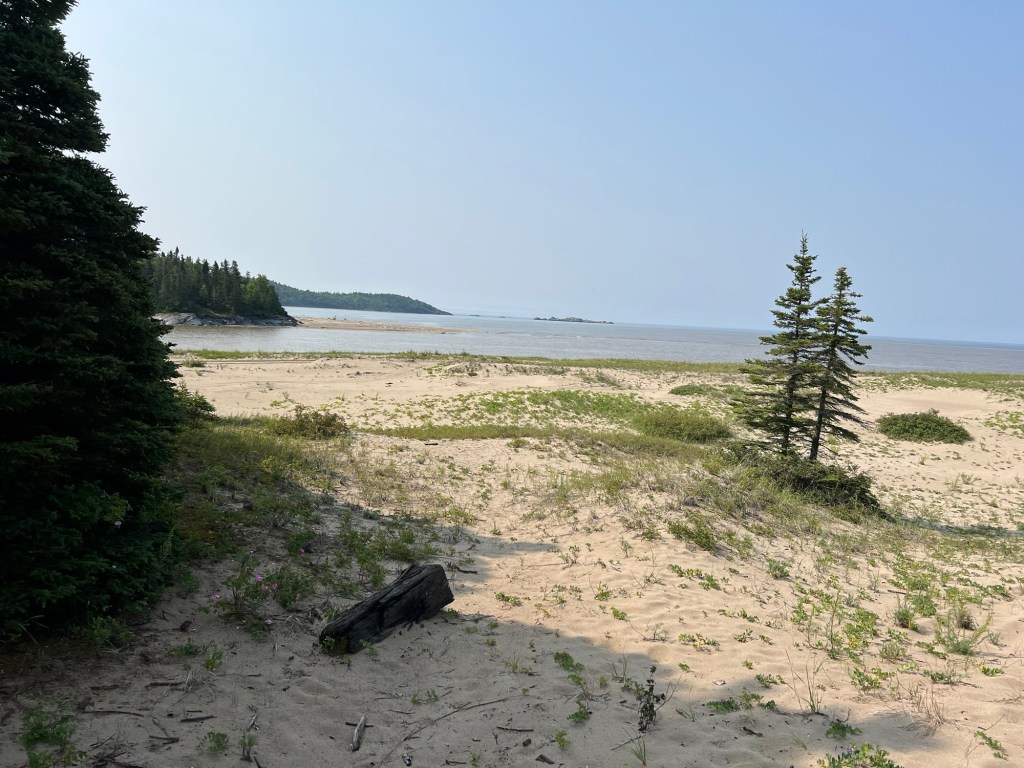
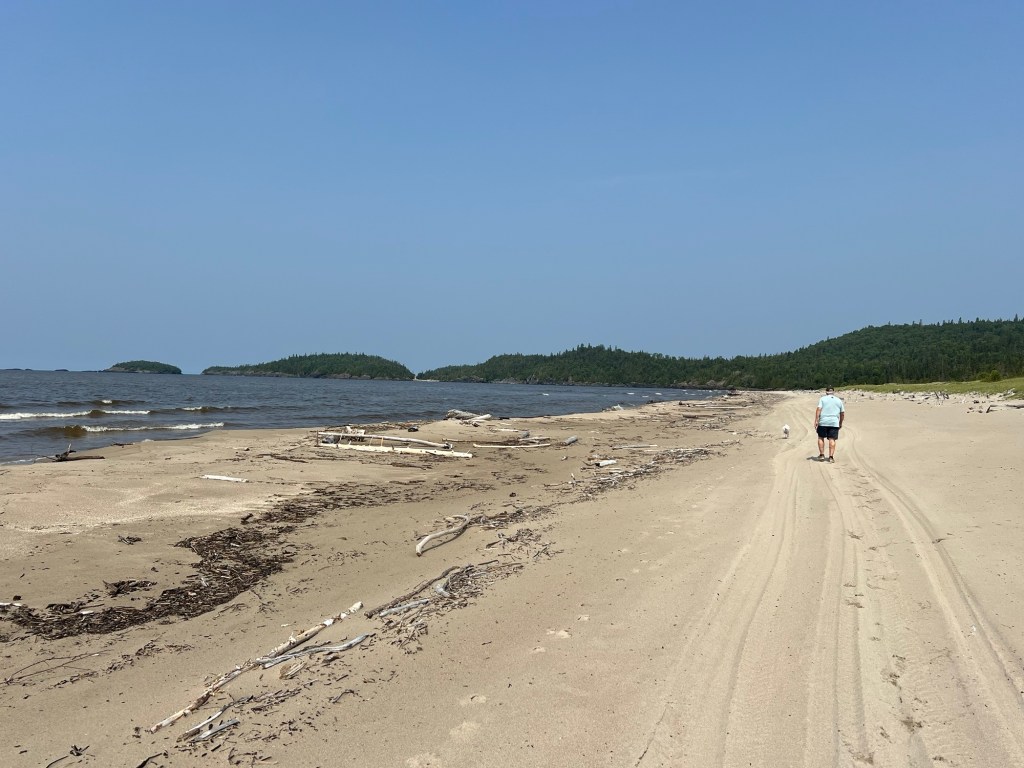
So we went, and it is a spectacular place.

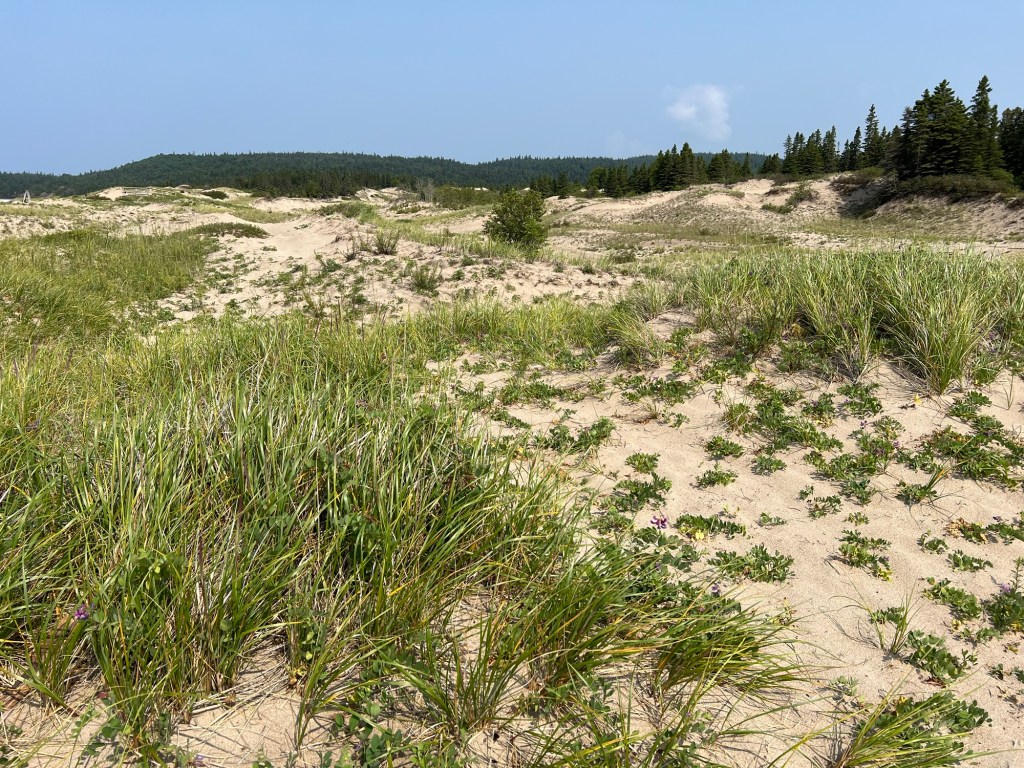
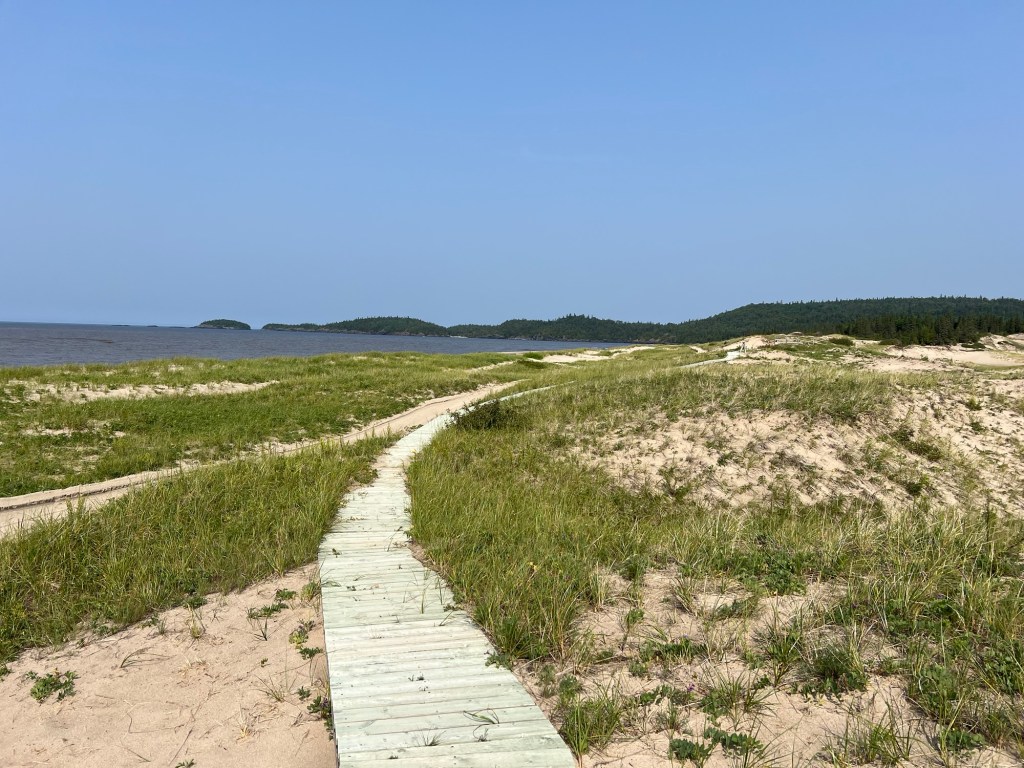
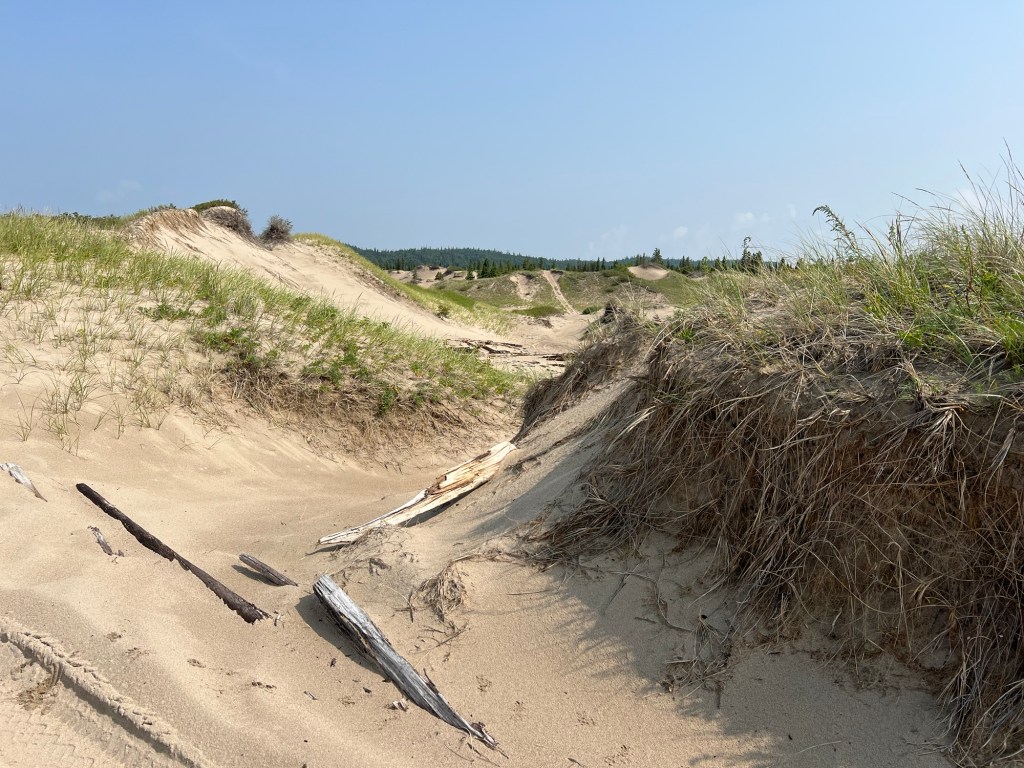
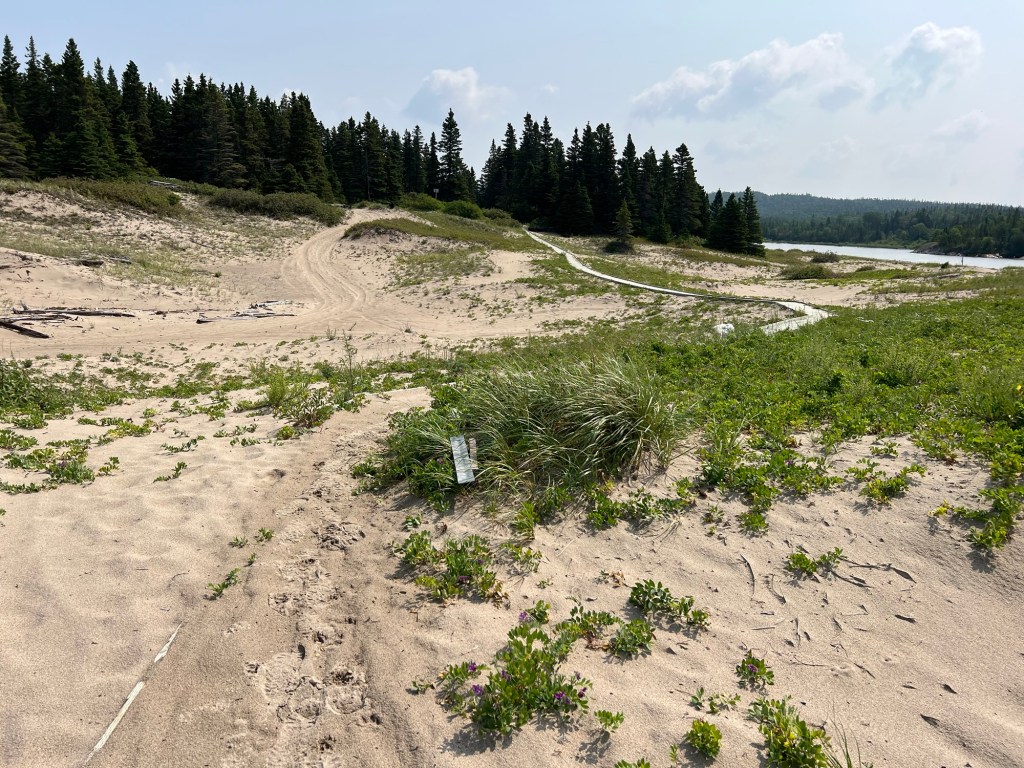
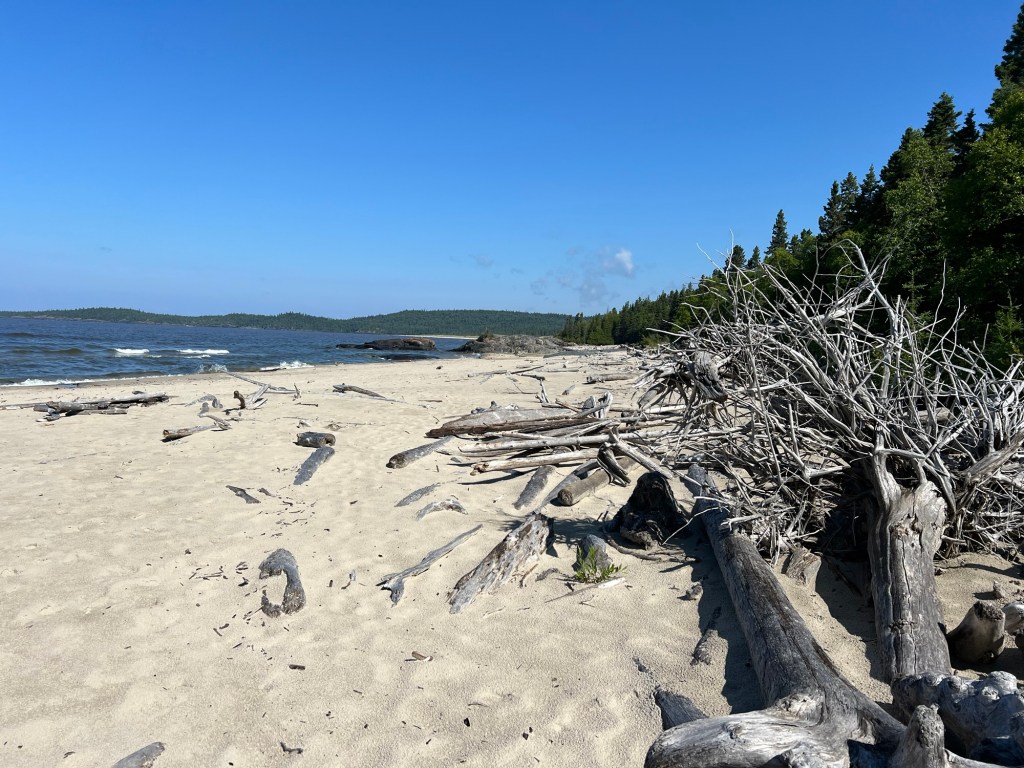
There is a huge area of sand with dunes reaching back at least a quarter mile.

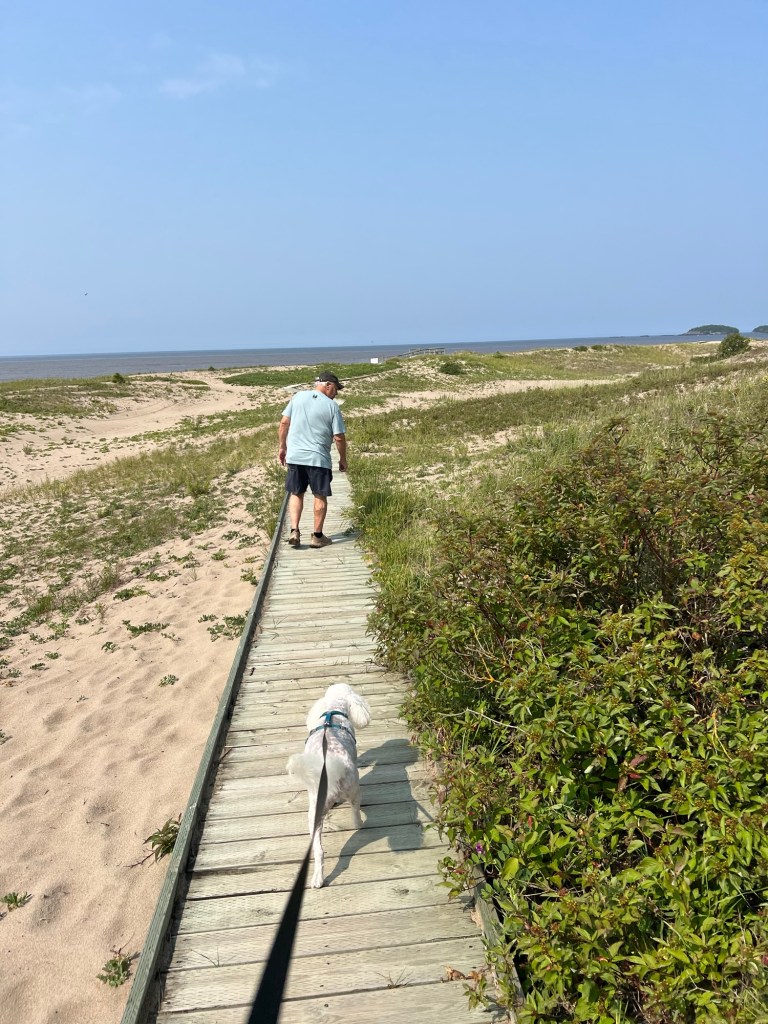
There was a boardwalk built out towards the edge of the lake.

It continued along the edge of the beach but parts were damaged, probably by winter storms. We walked the sandy track next to it.

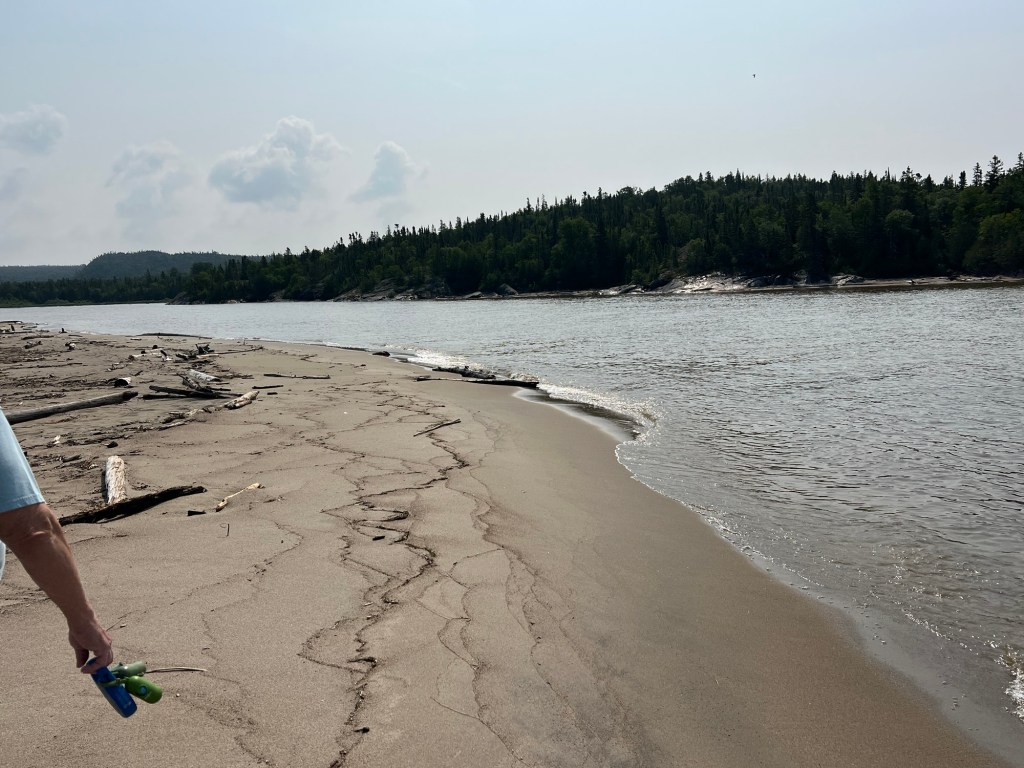
This is the mouth of the Pic River. I was facing southeast here, and the sky was white with smoke.

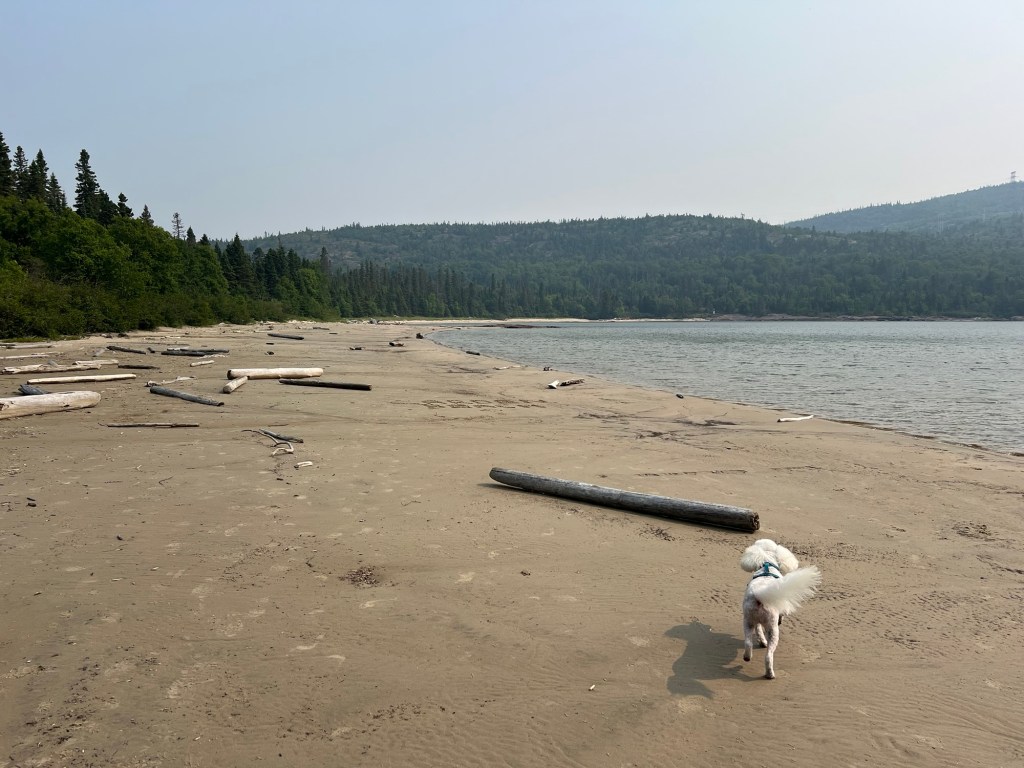
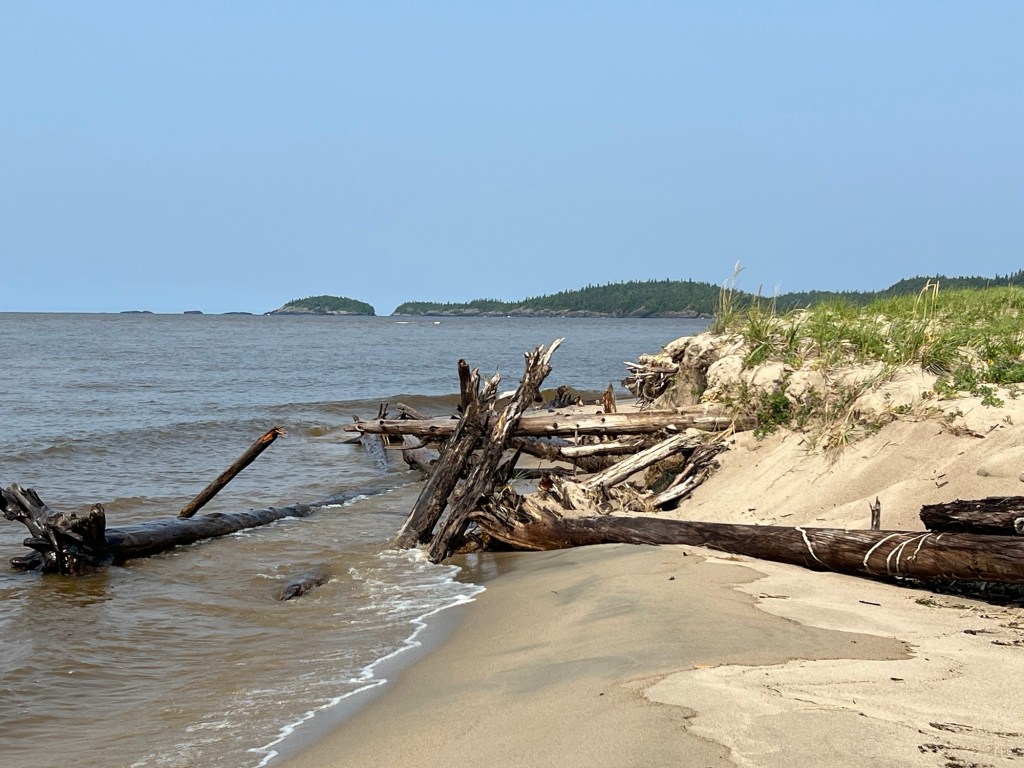
Heading away from the river the sand was eroded and choked with logs. And facing northwest the sky was clear.

The top of that was smooth, like a snow drift, and the sand curled over like drifted snow.

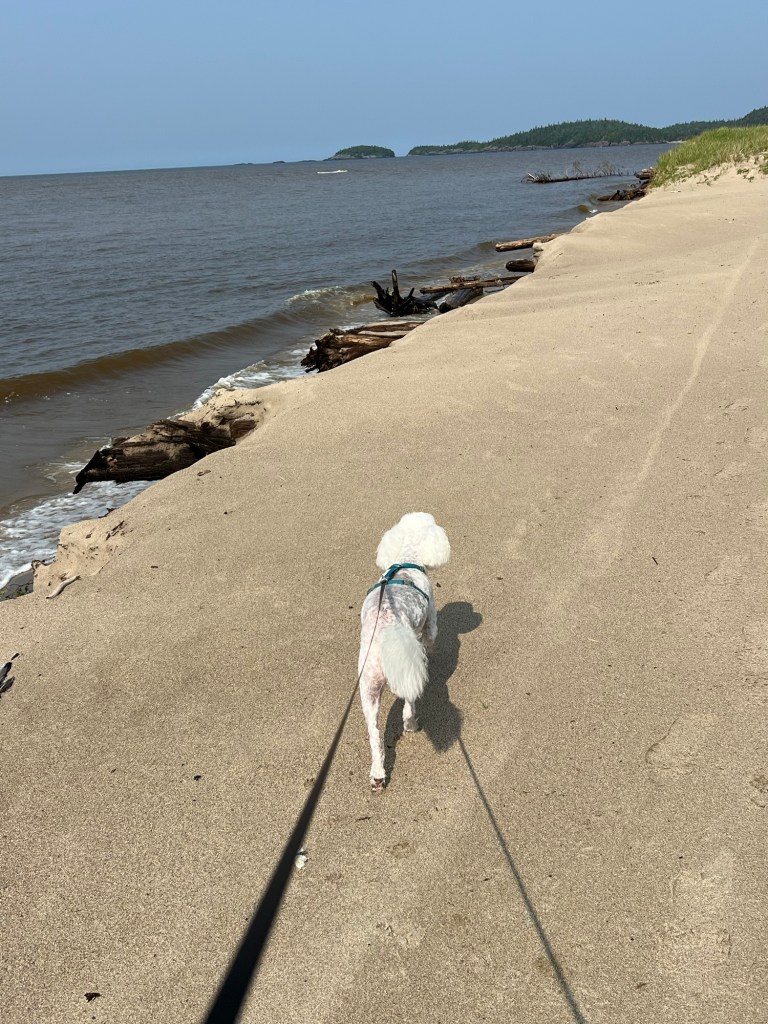
Further along there was plenty of beach.

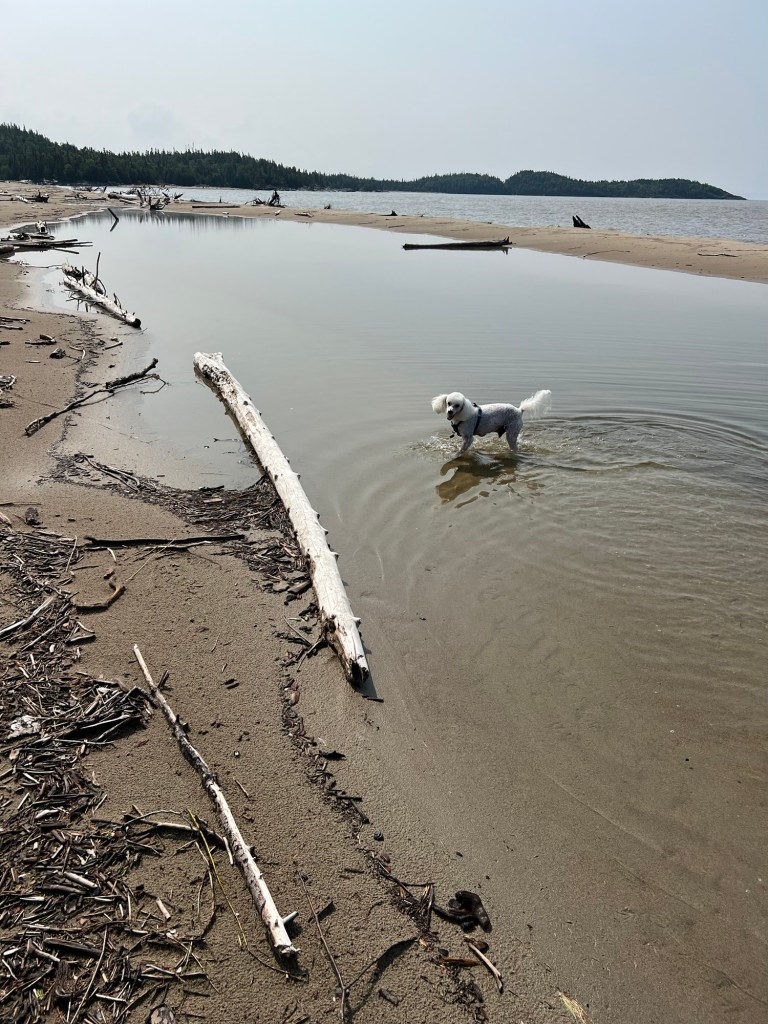
Matey waded in the quiet water trapped behind a sand bar.

Inland were the big dunes.

It was beautiful and I’m so glad we went there.

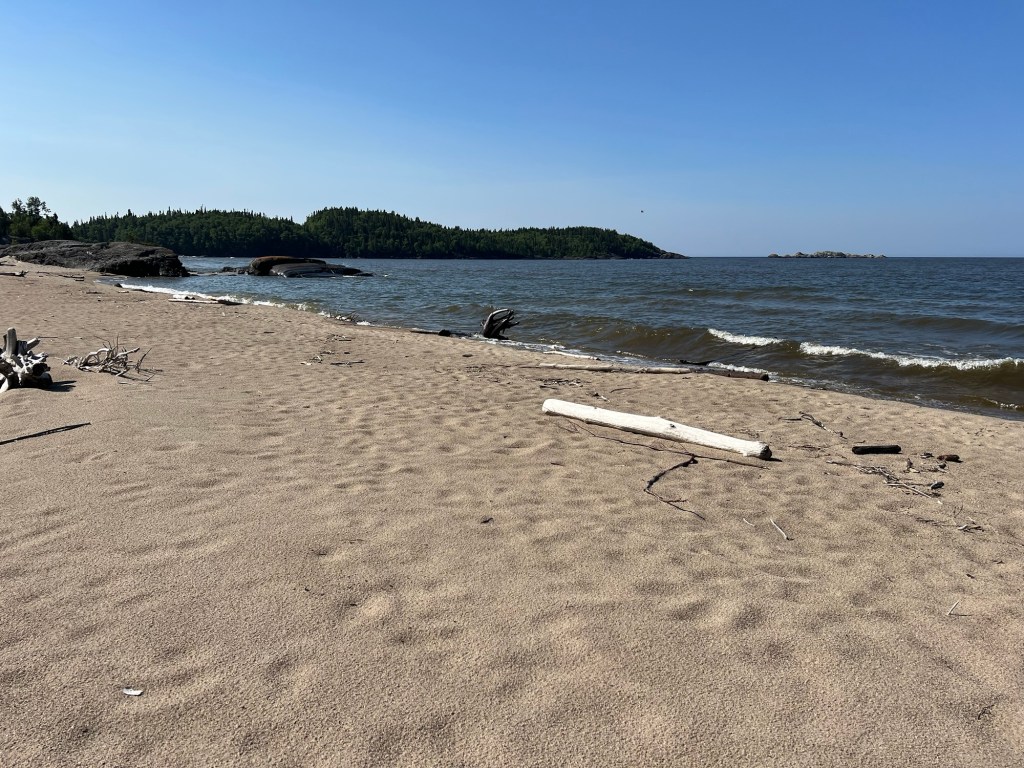
We went to one other beach. We went back to Pukaskwa National Park and hiked a short, easy trail…

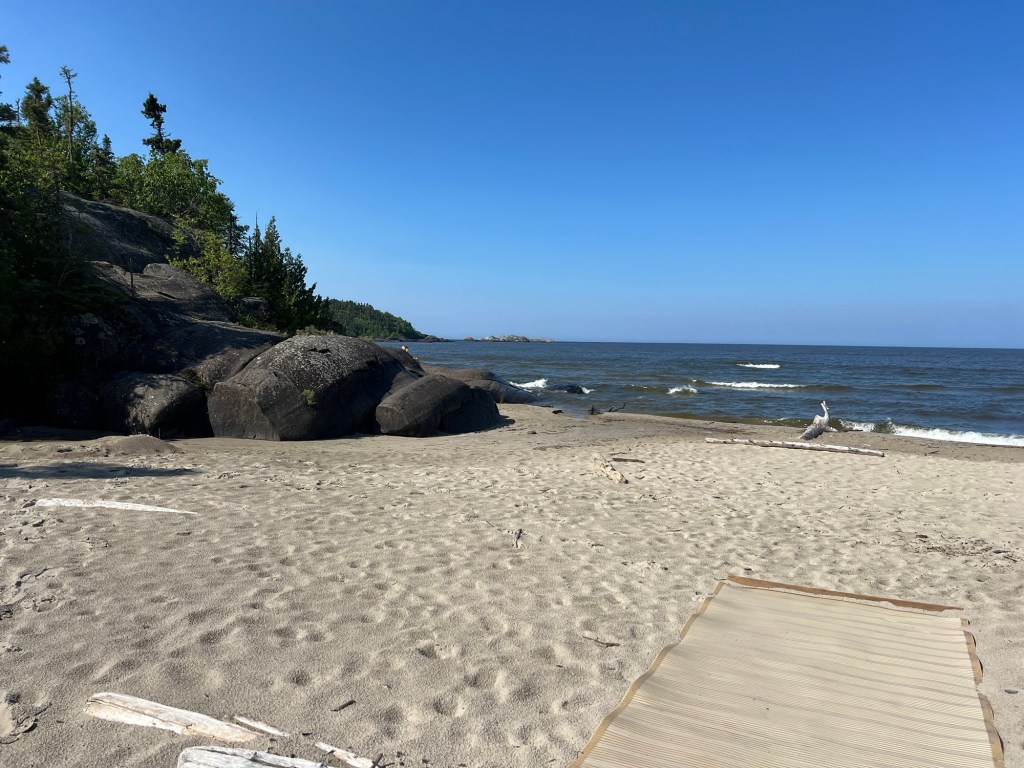
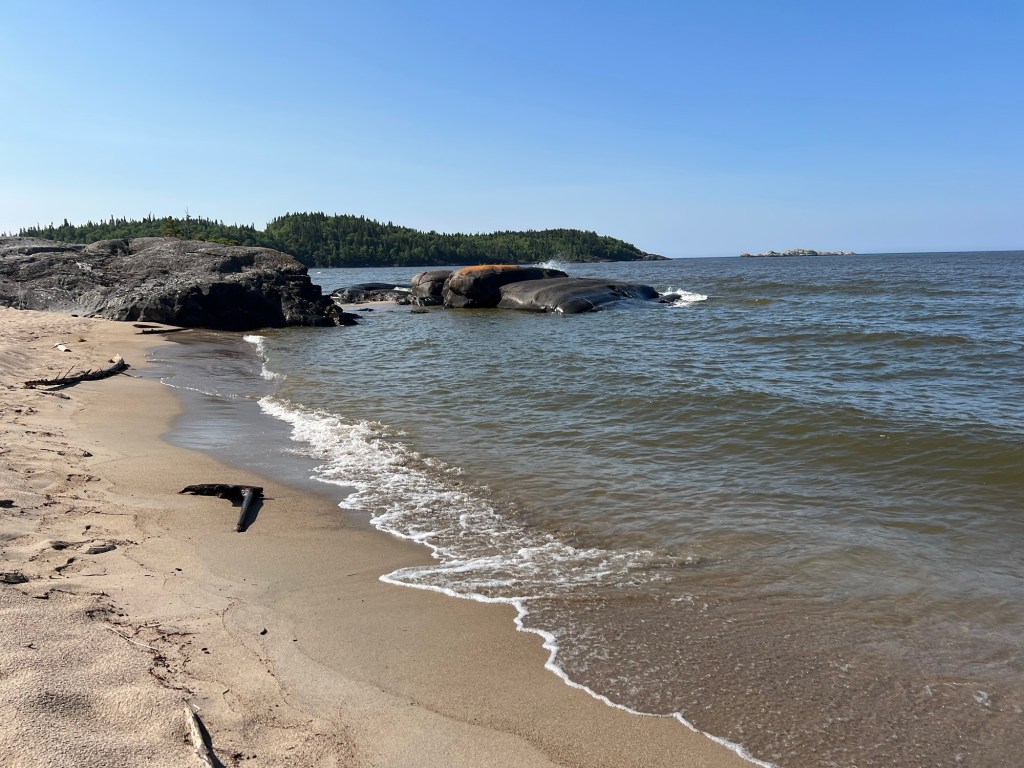
out to North Beach.

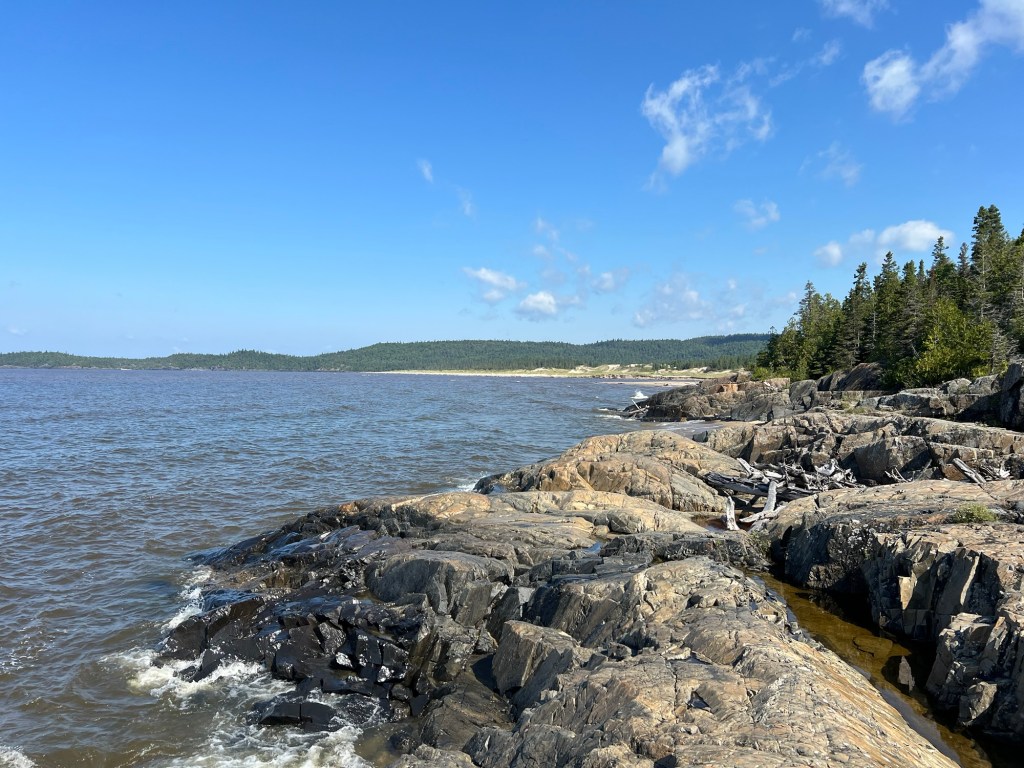
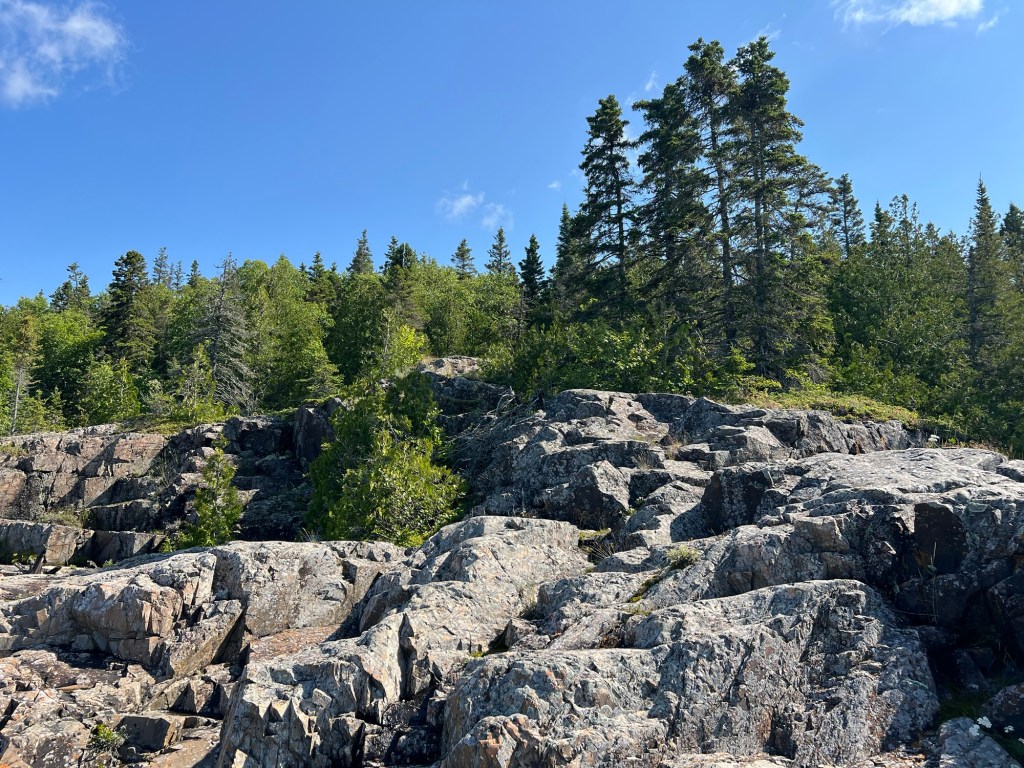
No fog or smoke that day, just the spectacular rocks, trees and sand of the north shore of Lake Superior.

We walked to the end of the beach. From the rocks there you could see across to the dunes we went to on the other side of the mouth of the Pic River.

To the southeast are the rocky points we hiked in the park.

There were no quiet pools for Matey here, but there were also no other people or dogs, so he got to be leash free for a while.

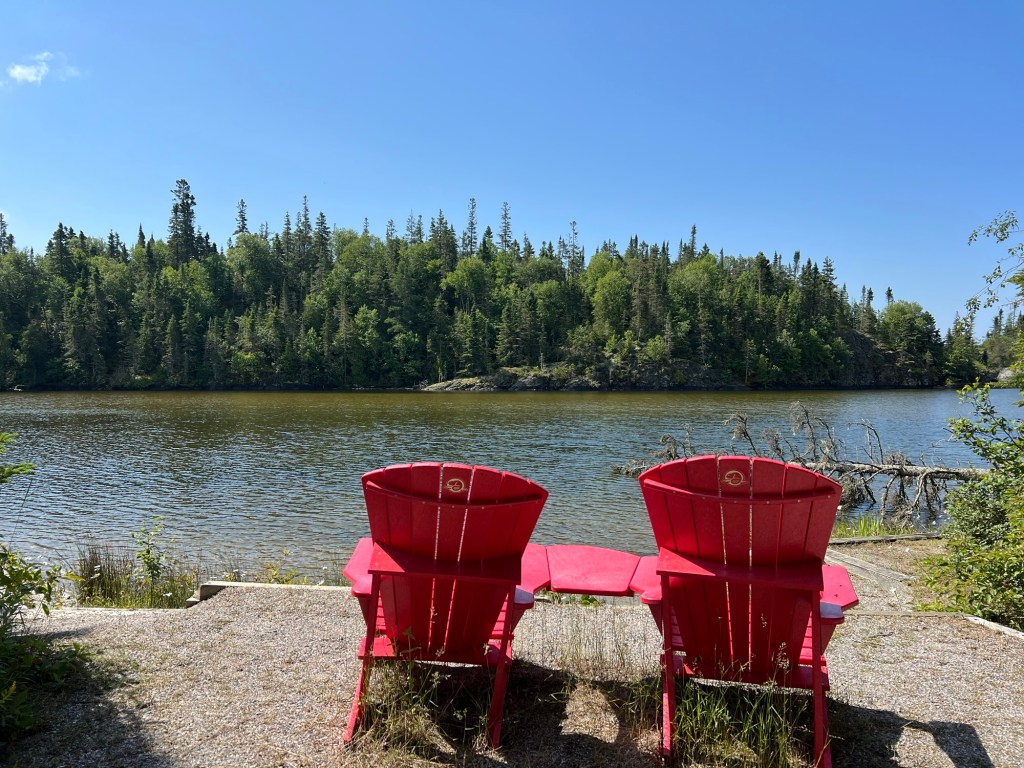
When we came back from our walk we looked around near the Visitor Center. We found one set of Red Adirondack Chairs (every Canadian National Park has them).

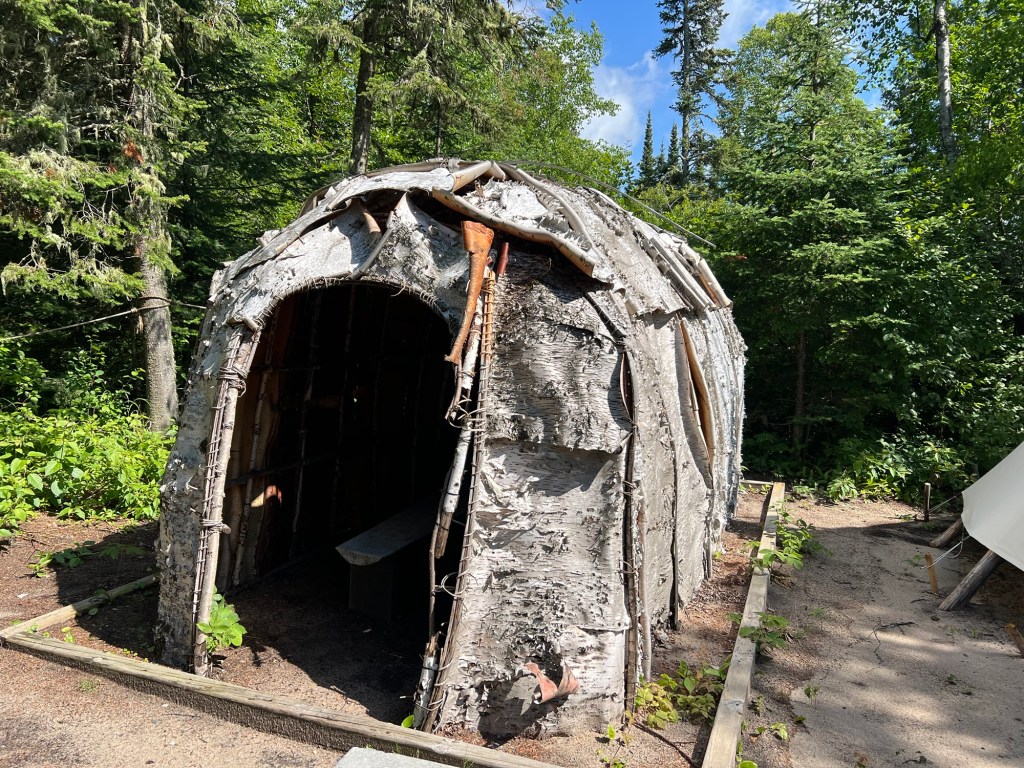
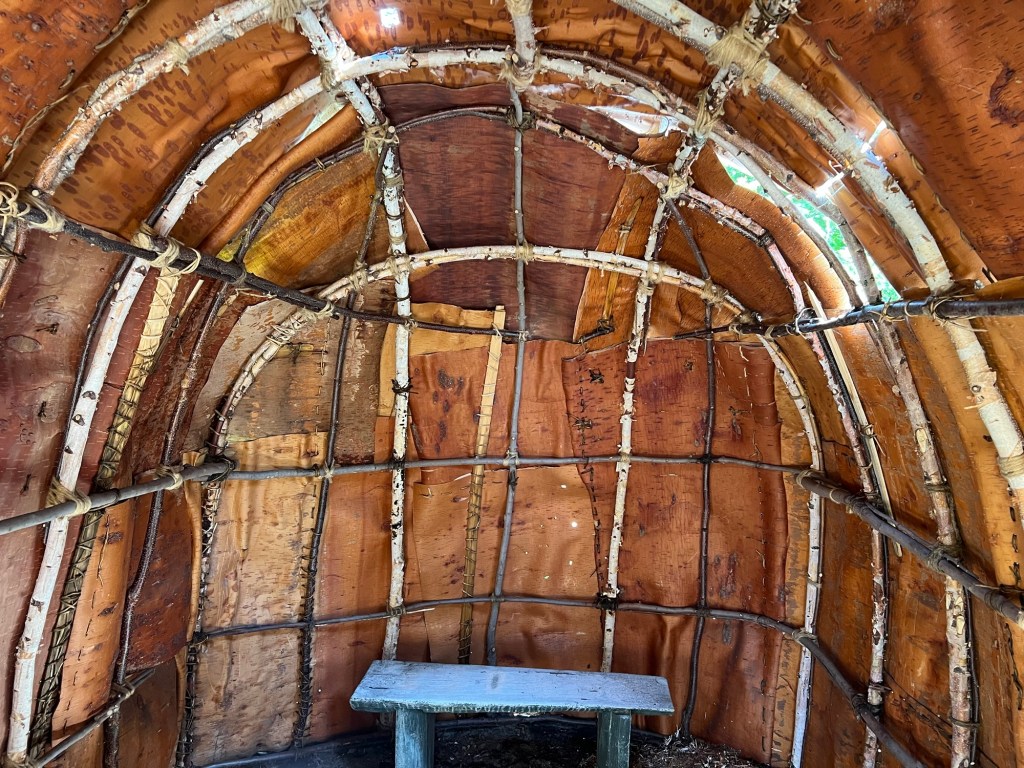
We also found where Anishinaabe (Ojibway) knowledge keepers had built a shelter using traditional techniques.

Although in need of repairs, it was beautiful and calming inside.

In spite of fog, smoke and bears we have loved our time here and would be happy to come back.