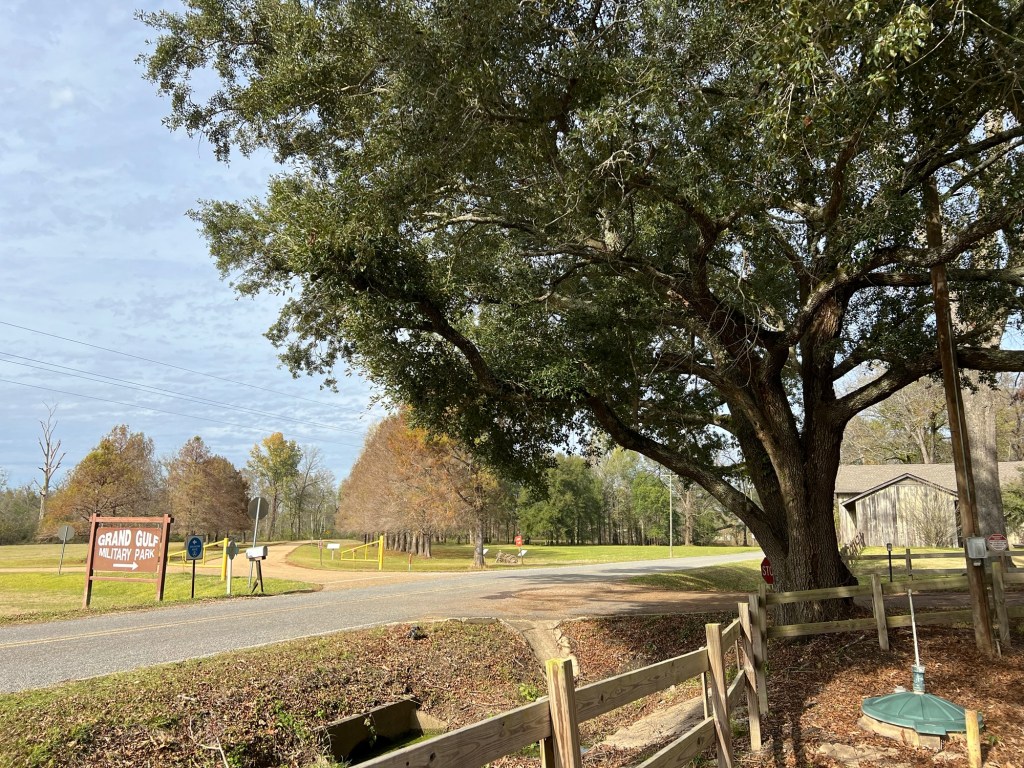
I love finding interesting, out of the way places and Grand Gulf Military Park qualifies.
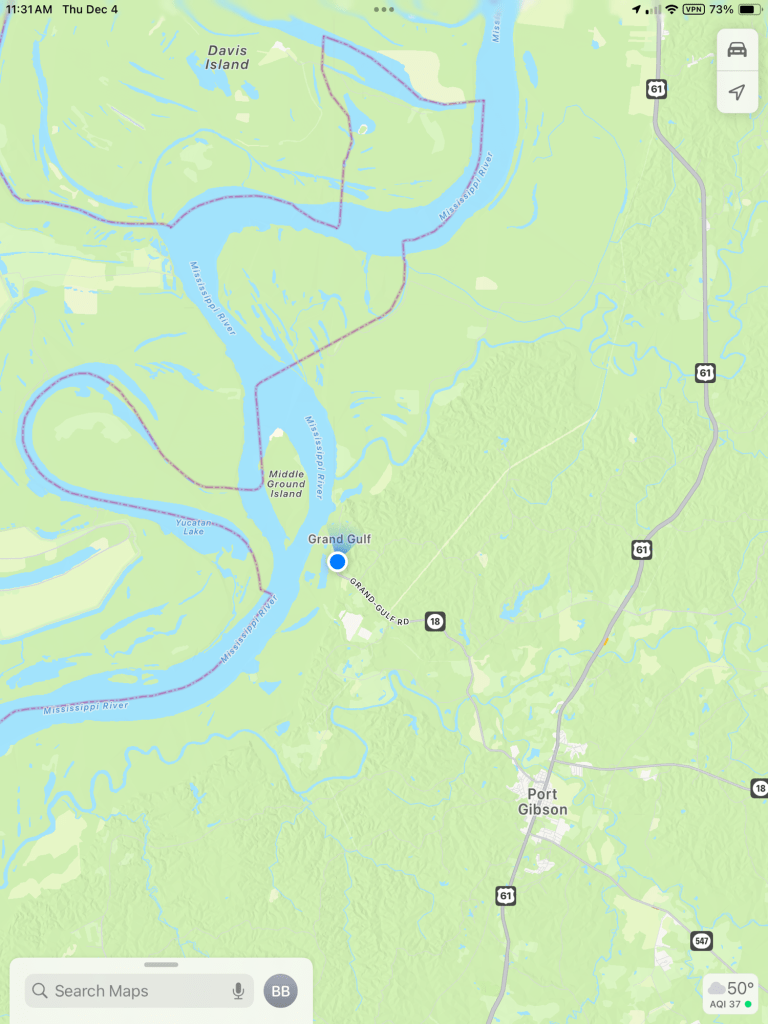
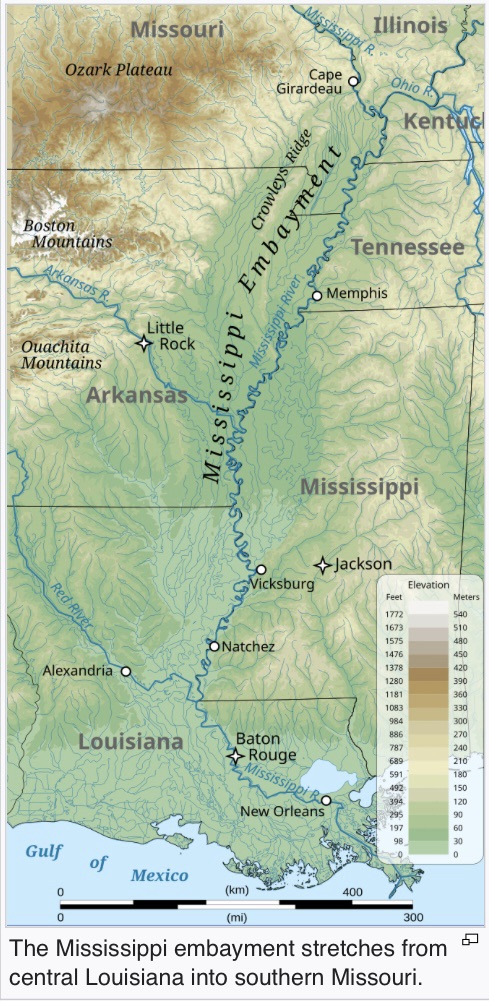
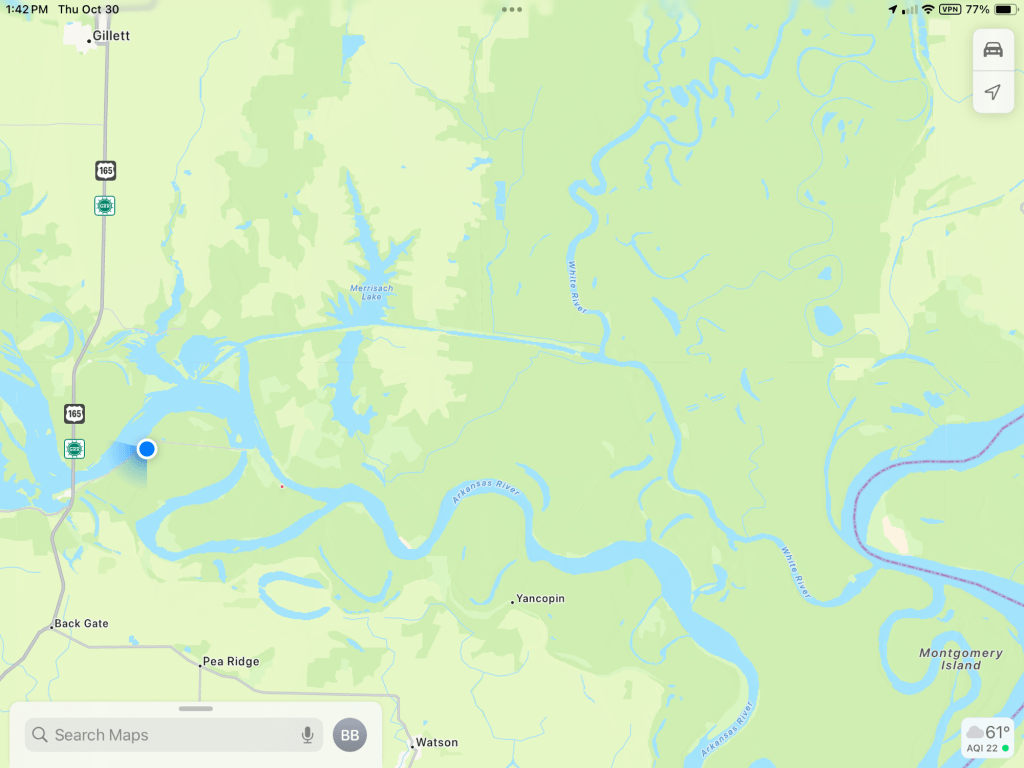
It’s at the end of Mississippi route 18 along the Mississippi River between Vicksburg and Natchez. The closest town is Port Gibson, the county seat, with a population of just around 1,200 people. As for Grand Gulf, it doesn’t exist as a town anymore.
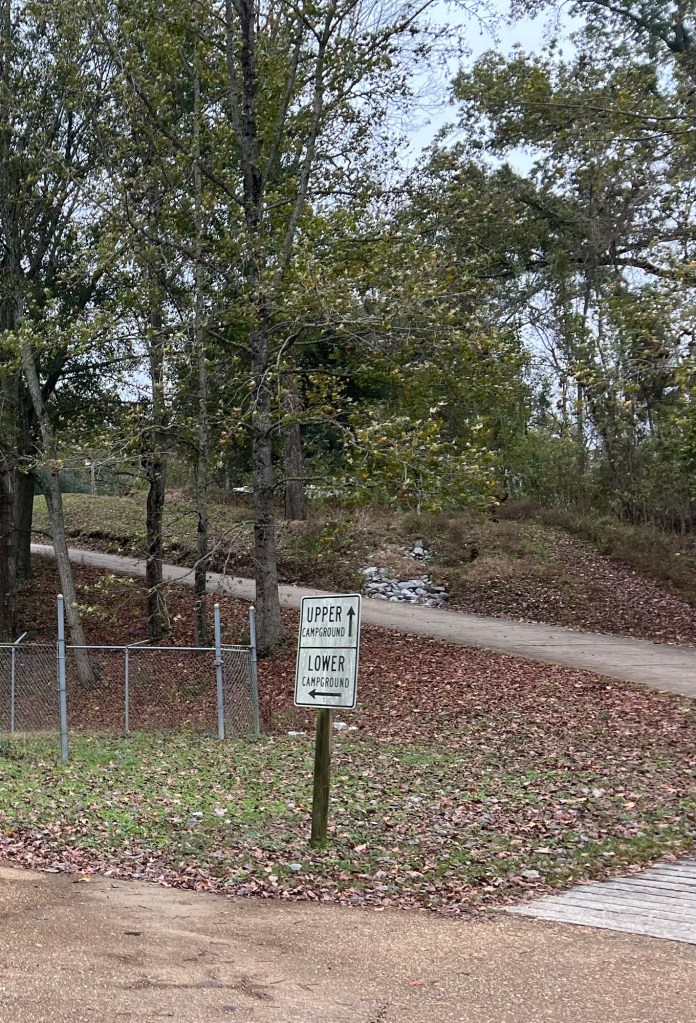
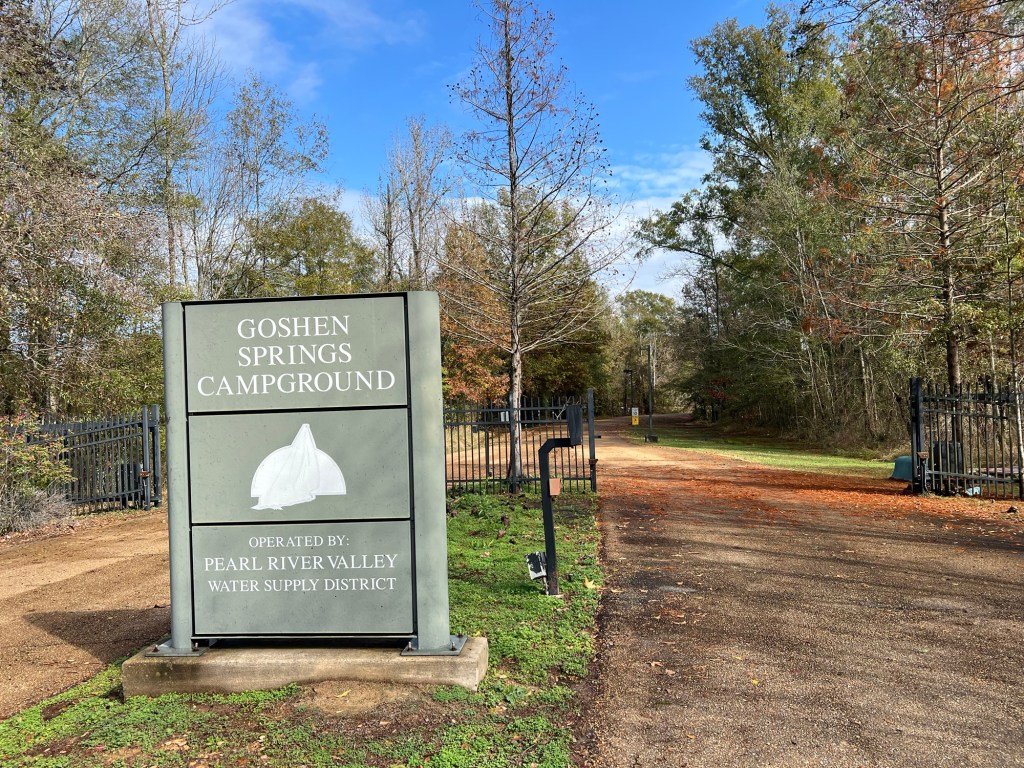
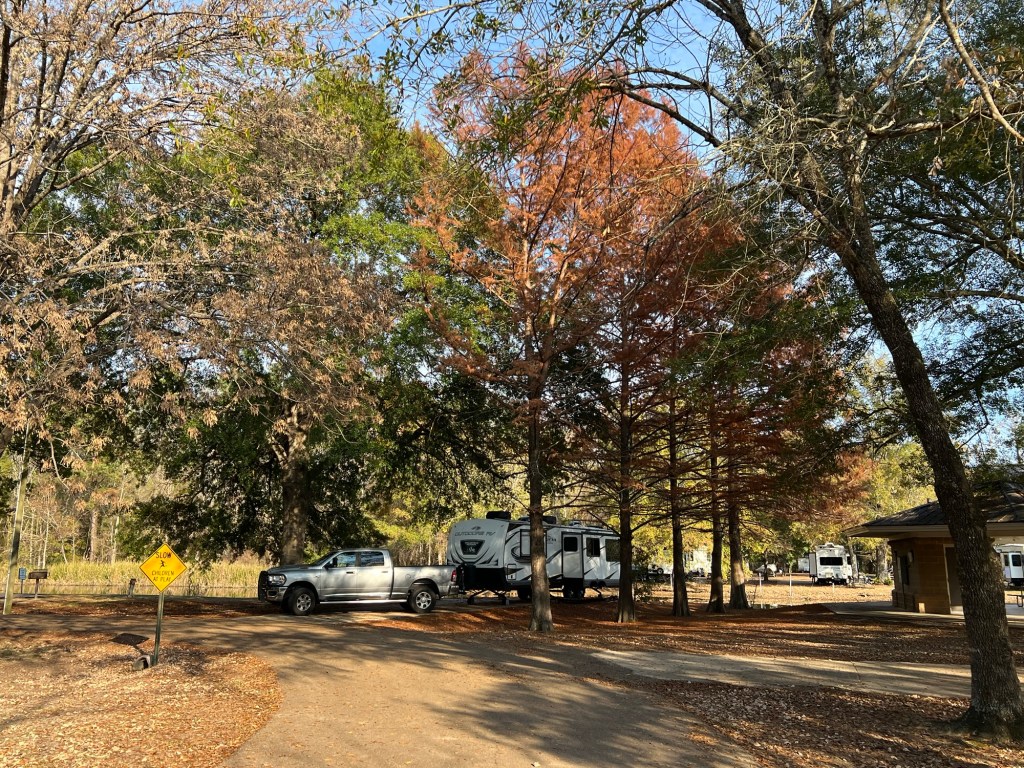
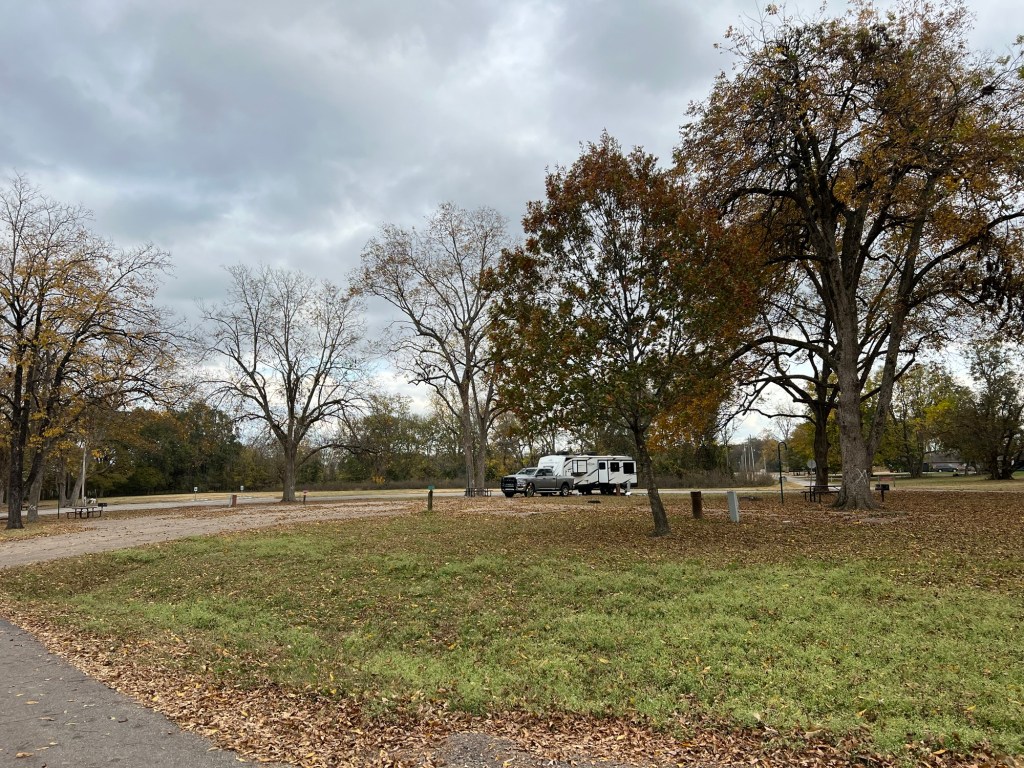
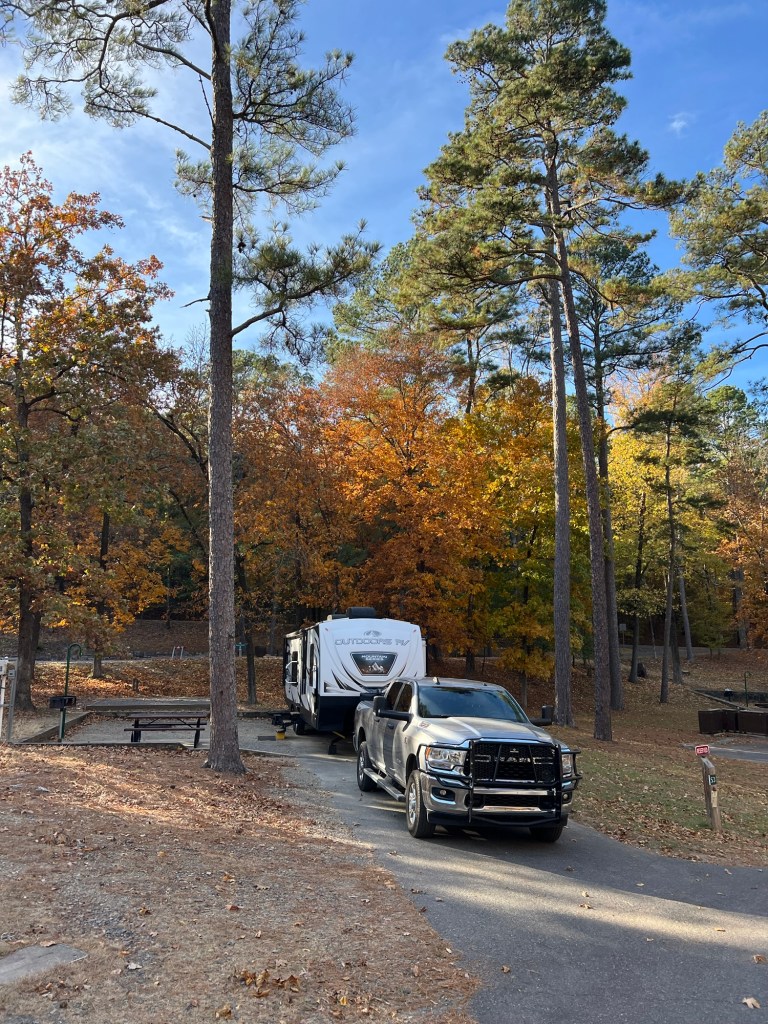
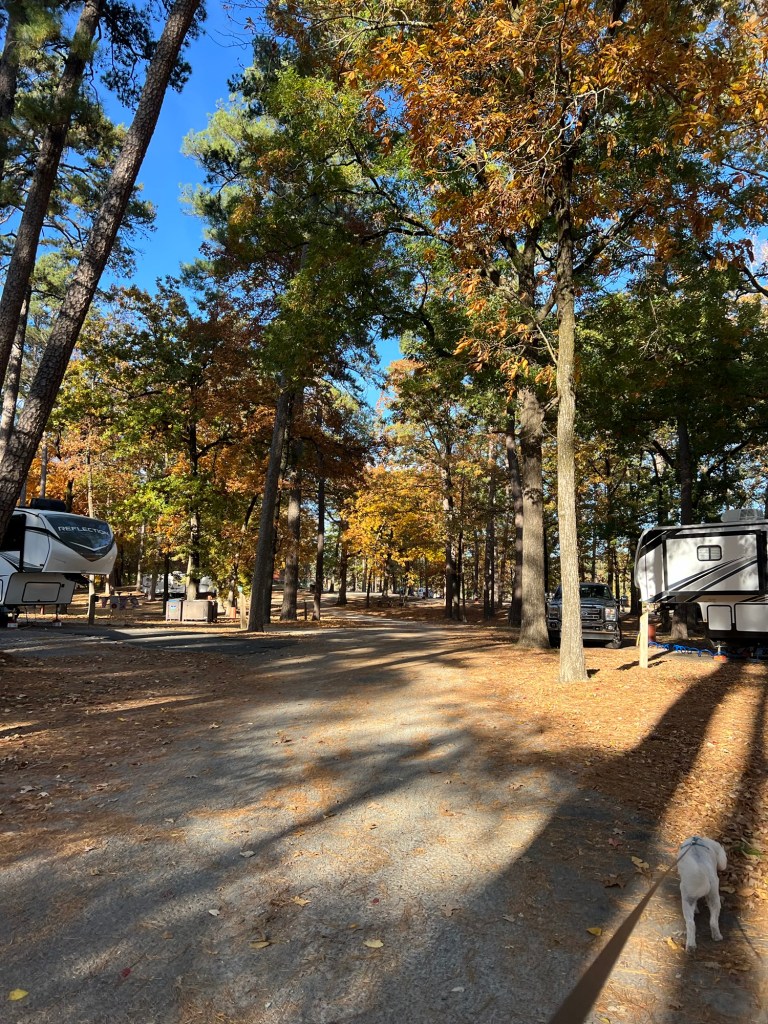
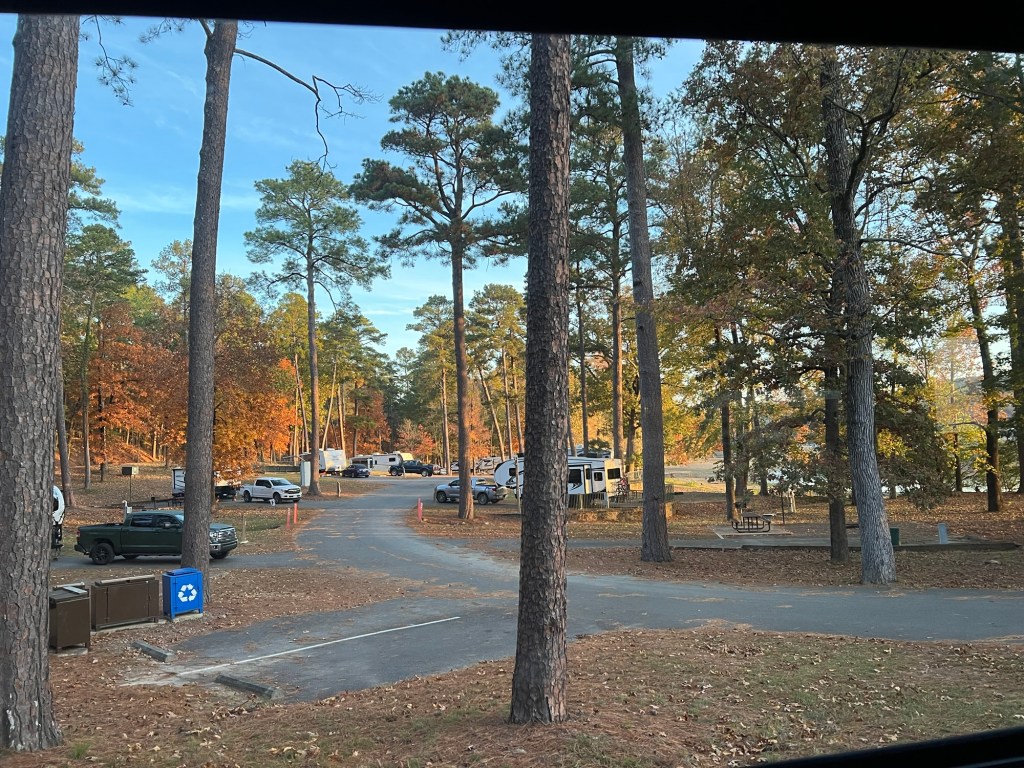
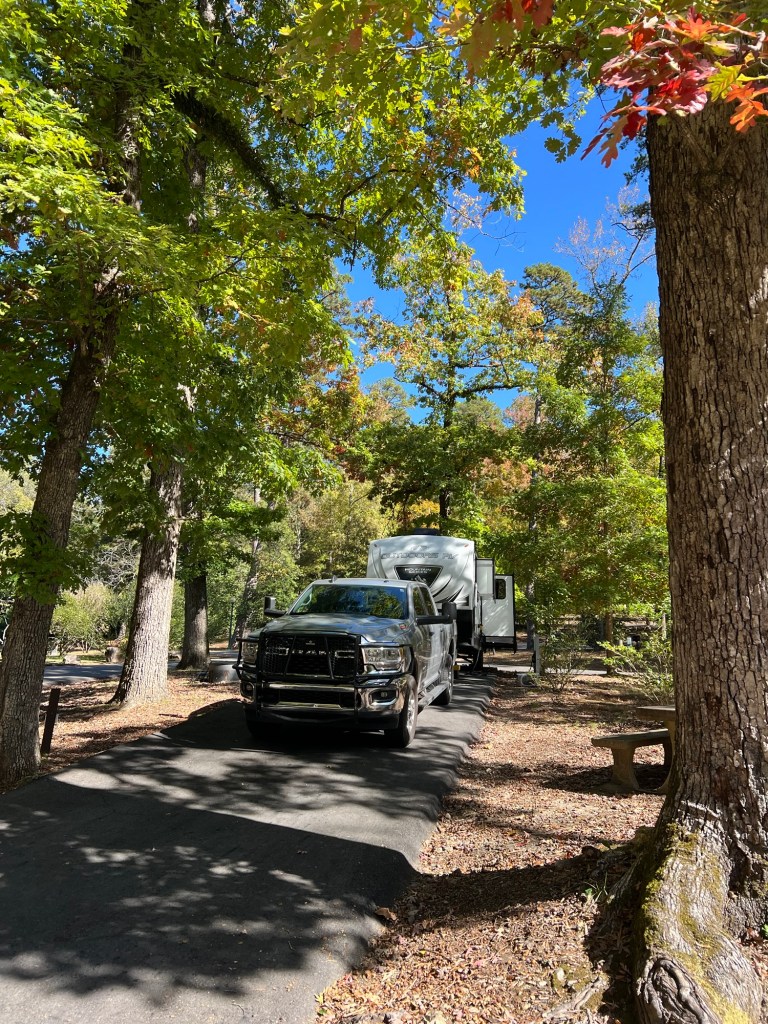
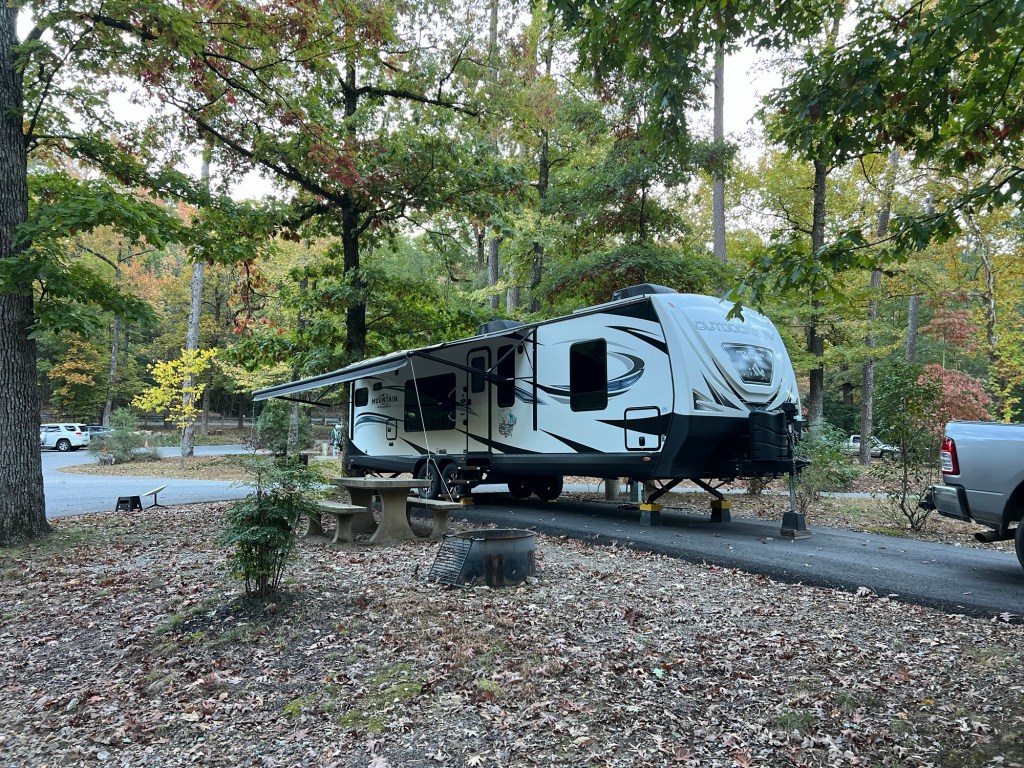
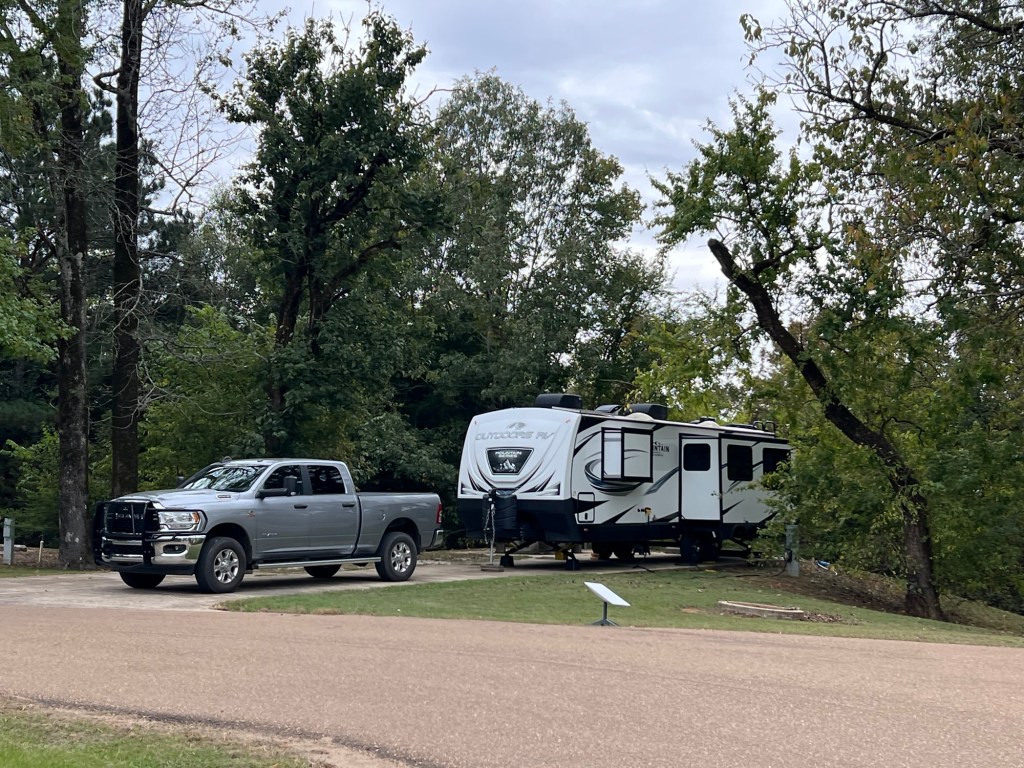
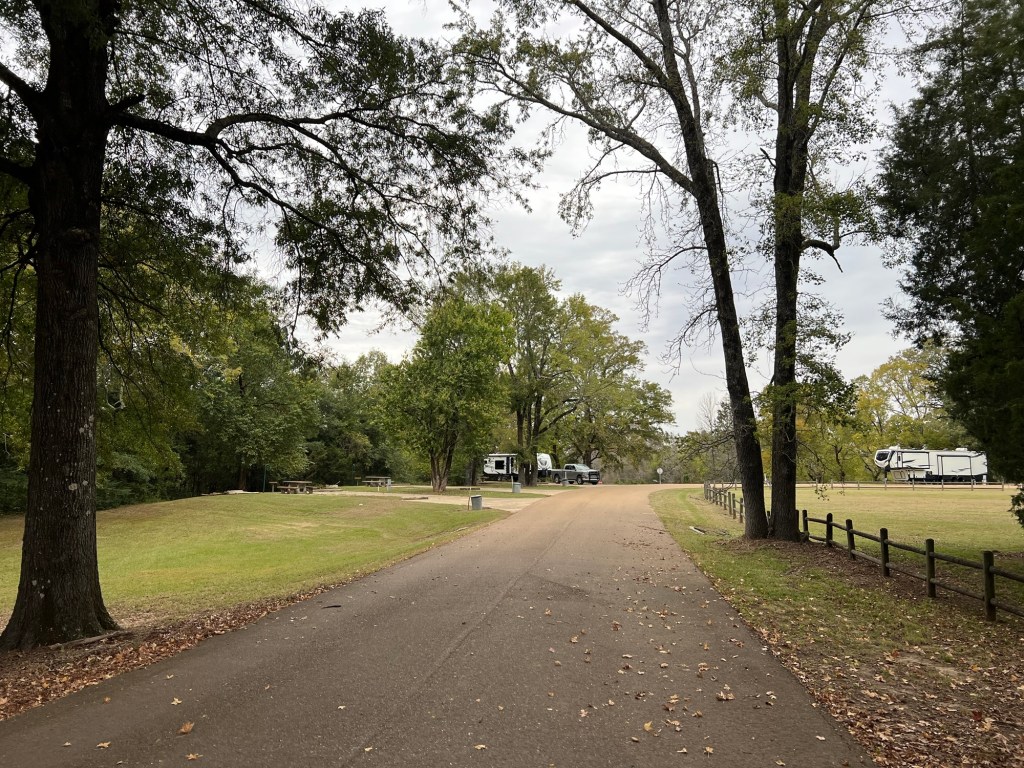
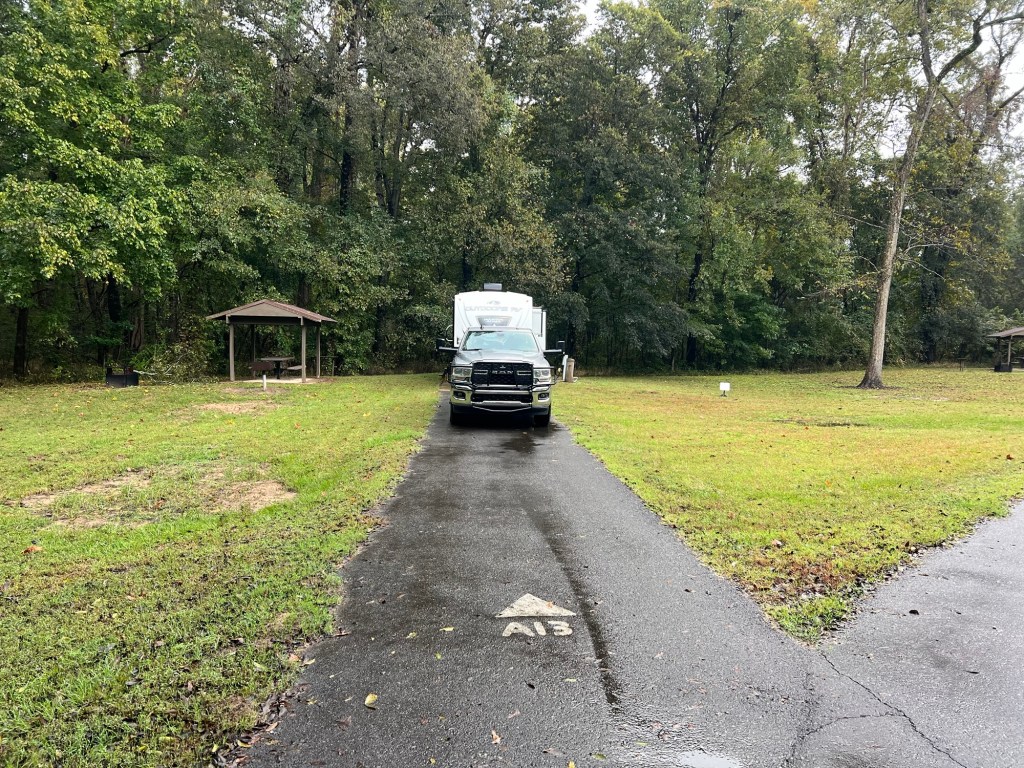
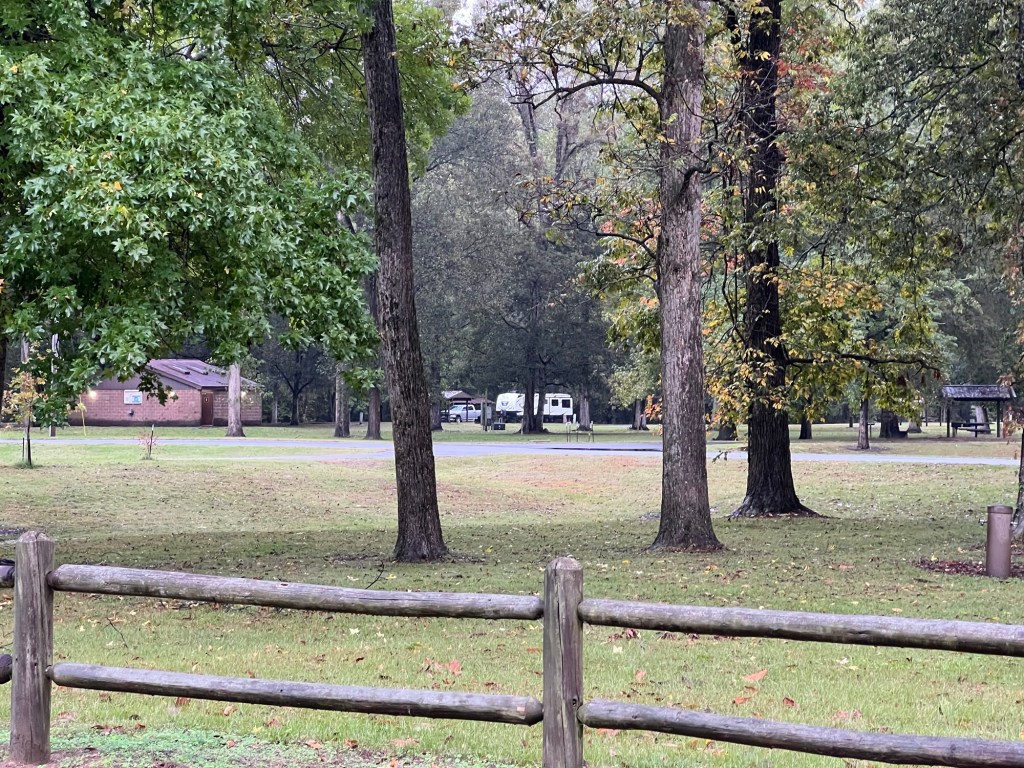
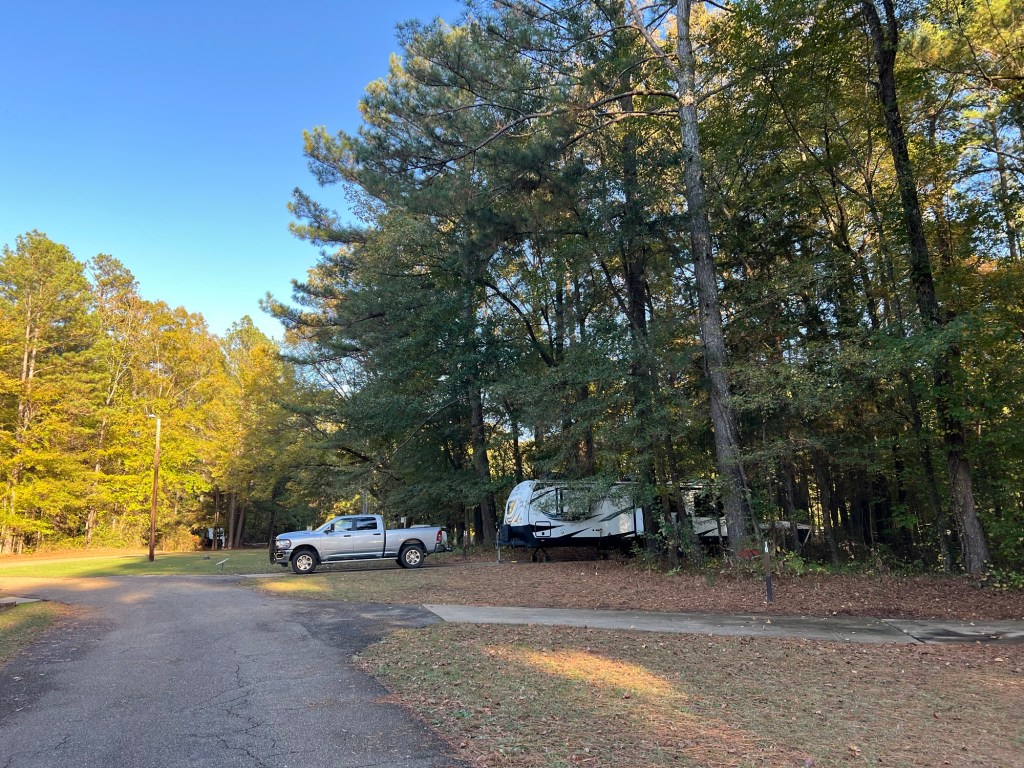
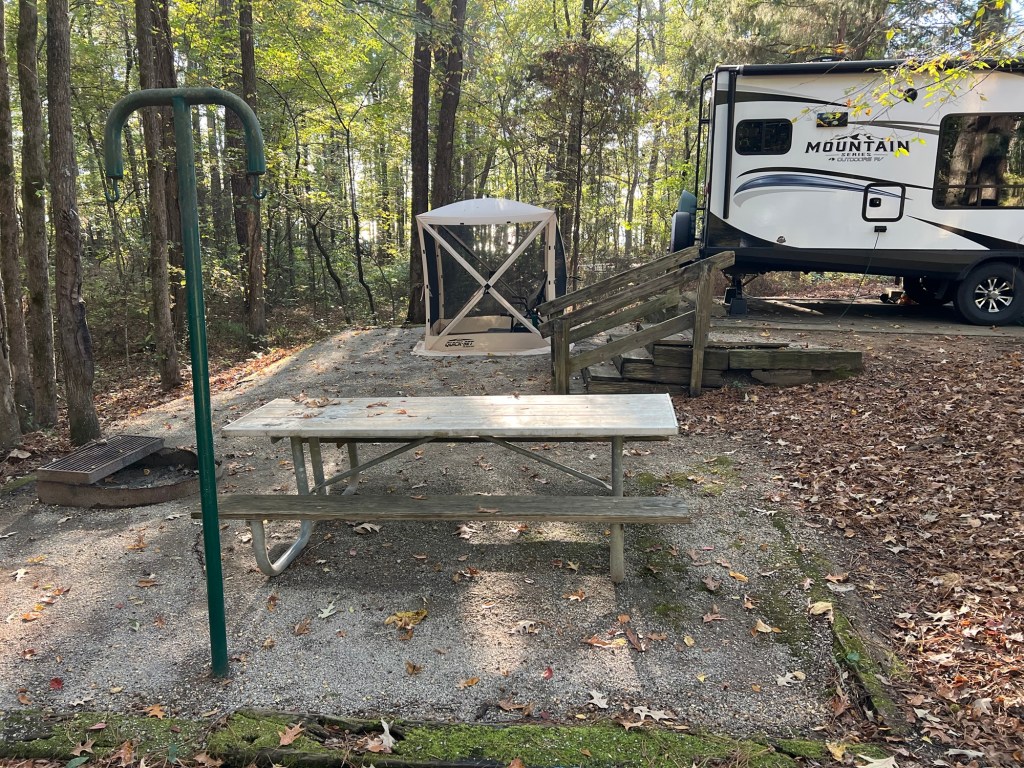
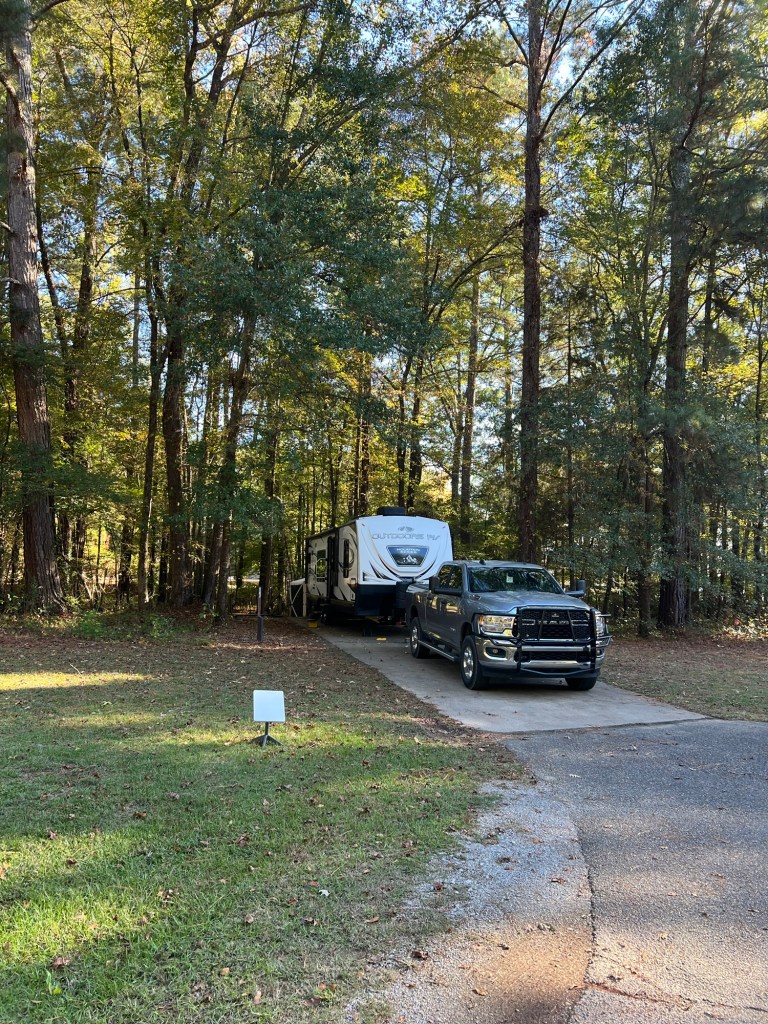
There’s the park, with its two campground loops. The woman at check-in told us we could take any open site, they all had water, sewer and 30 and 50 amp electrical service and they all would fit our trailer.
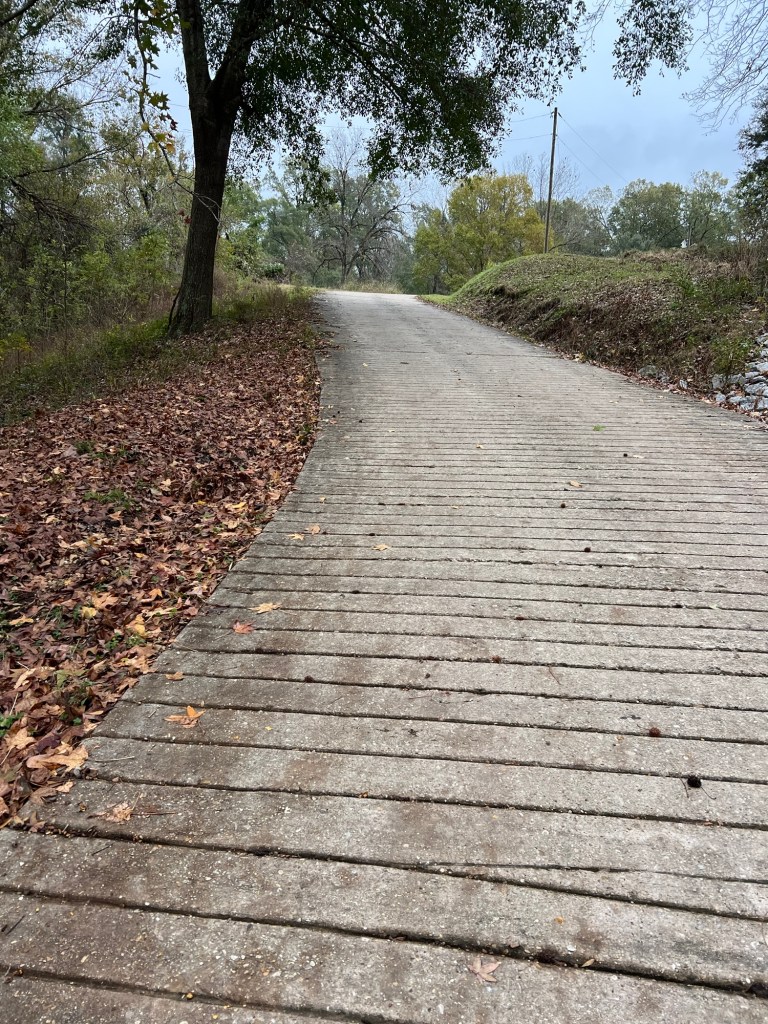
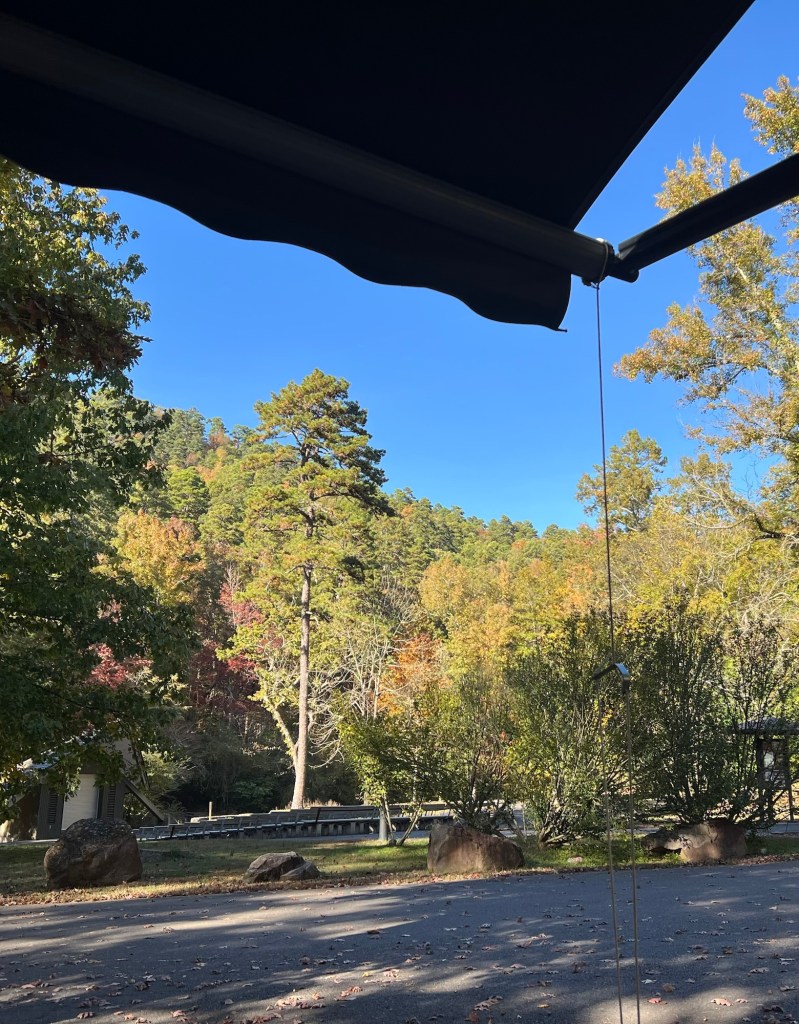
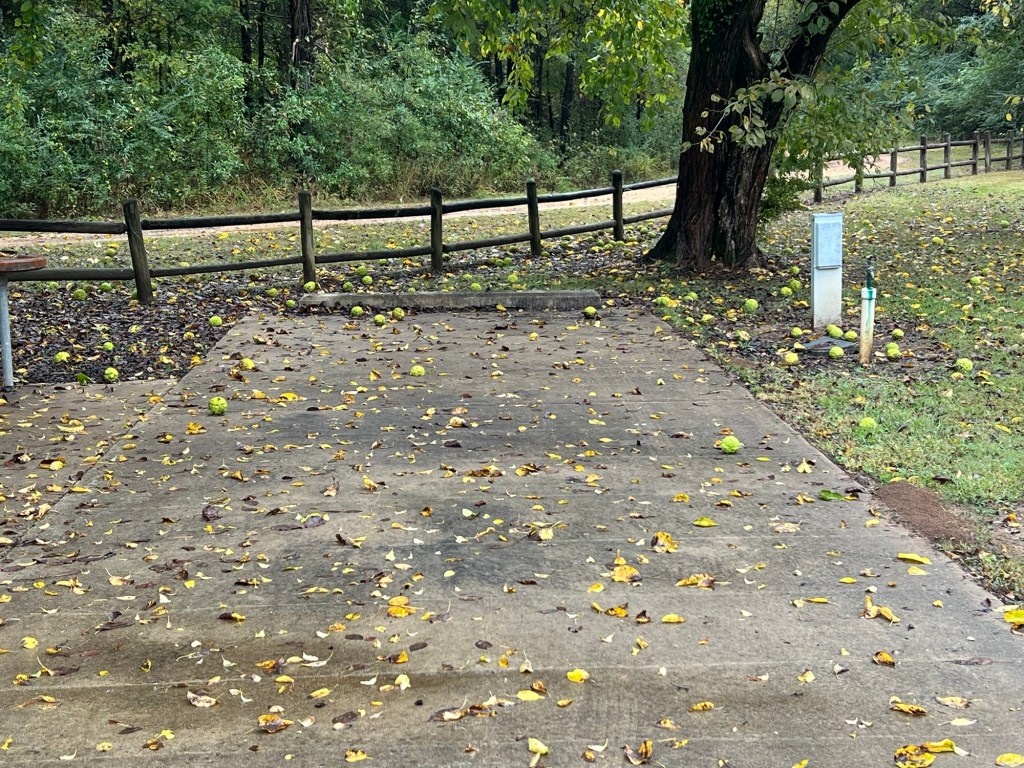
We chose the upper loop; the hill was steep enough to warrant traction grooves in the concrete pavement.
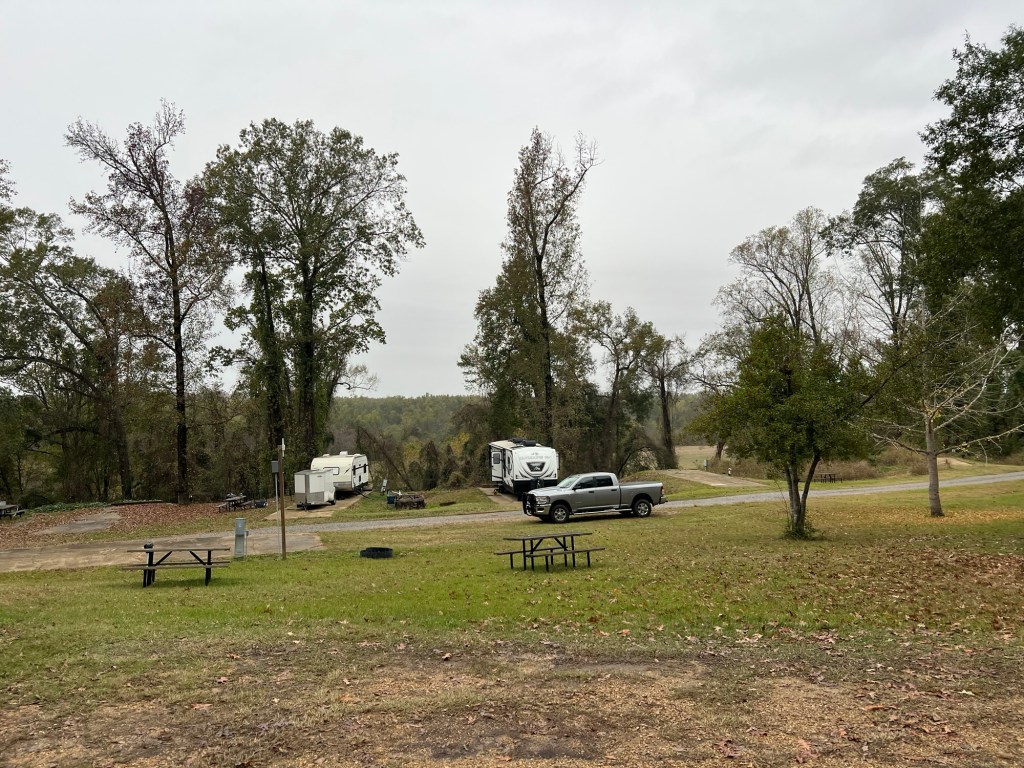
The sites are old but level and the services all work, and it costs just $30 per night for seniors.
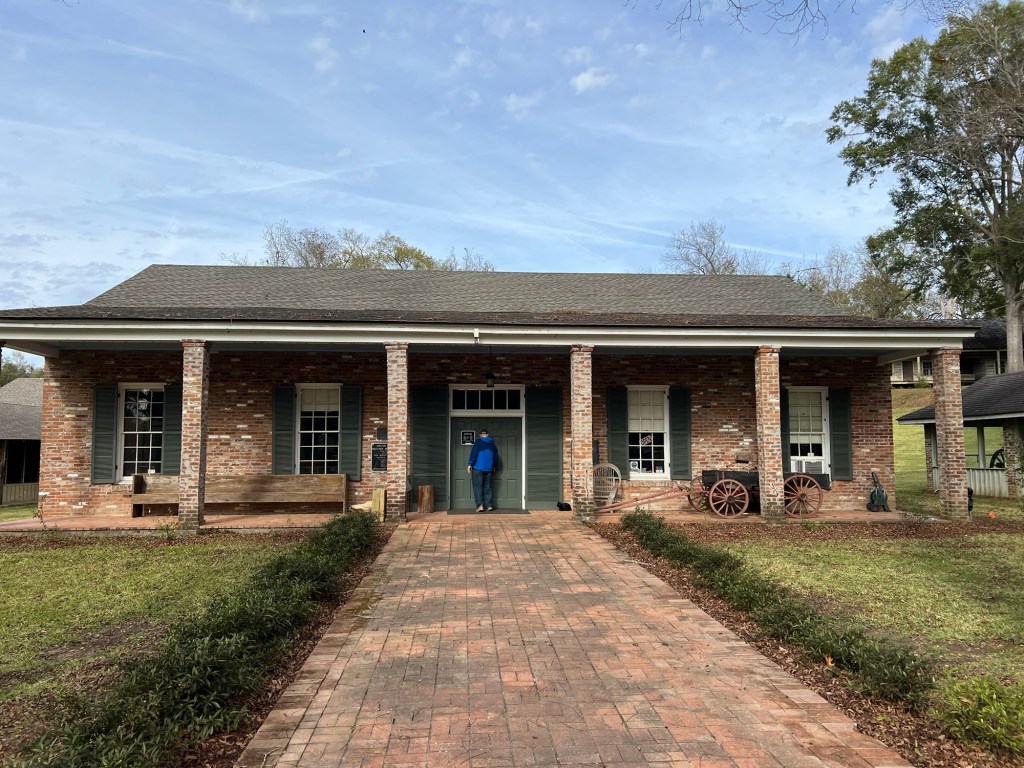
The main part of the park is a historic site with a museum and a number of buildings. We found out our camping fee includes admission to the museum and the rest of the site.
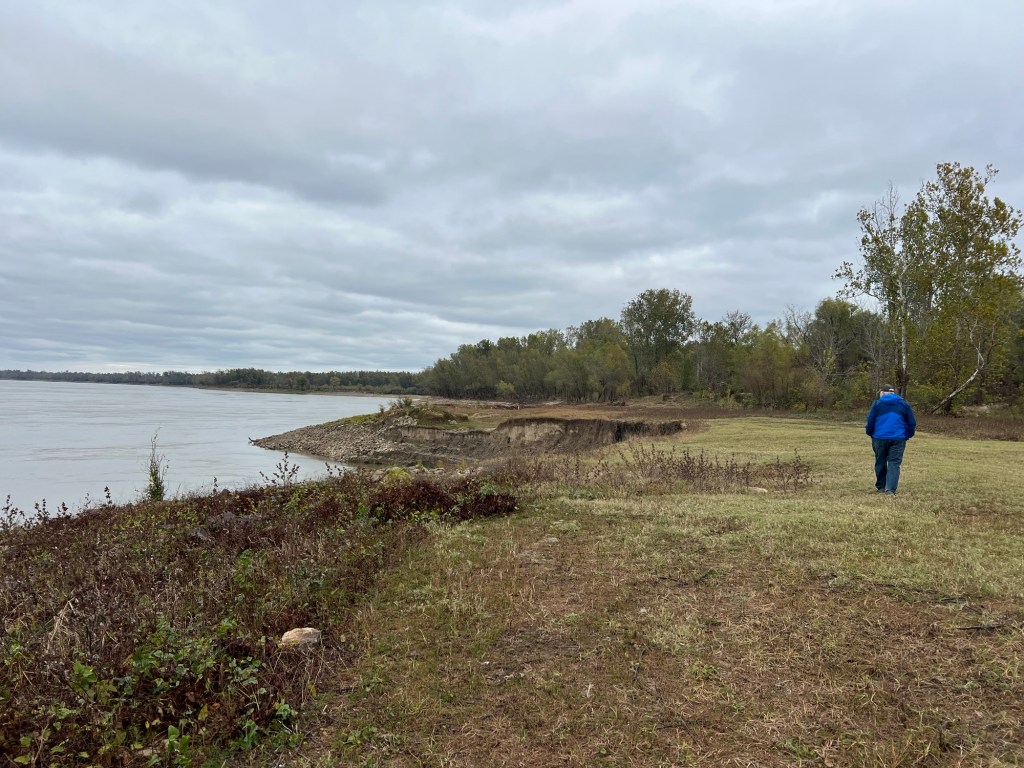
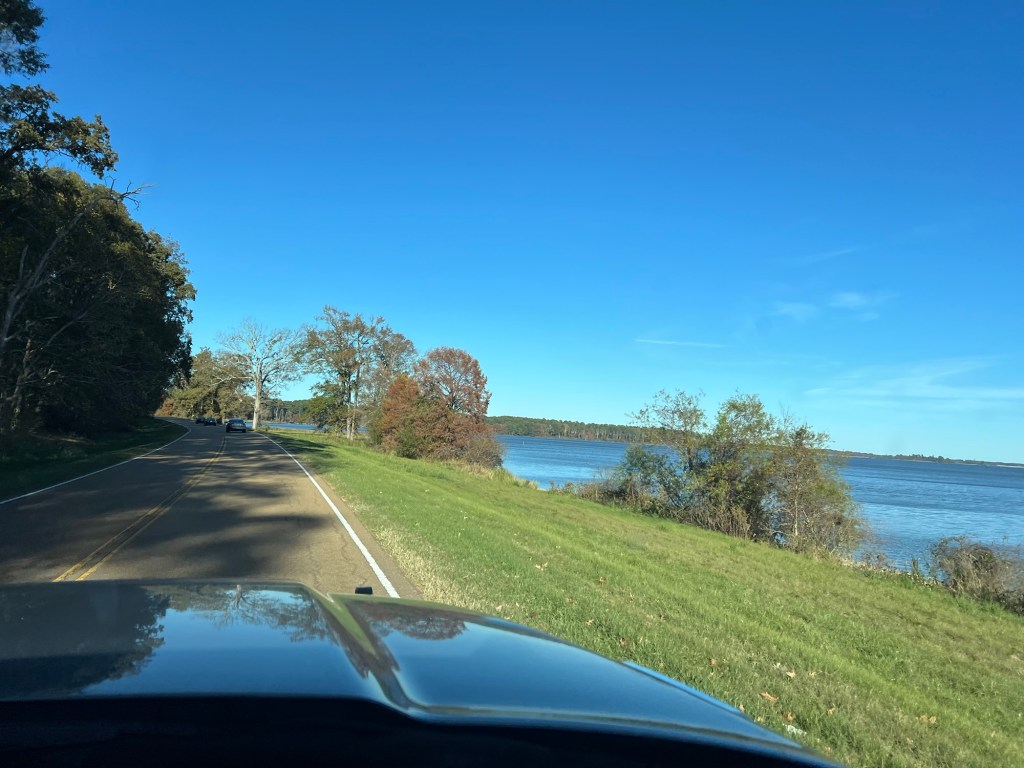
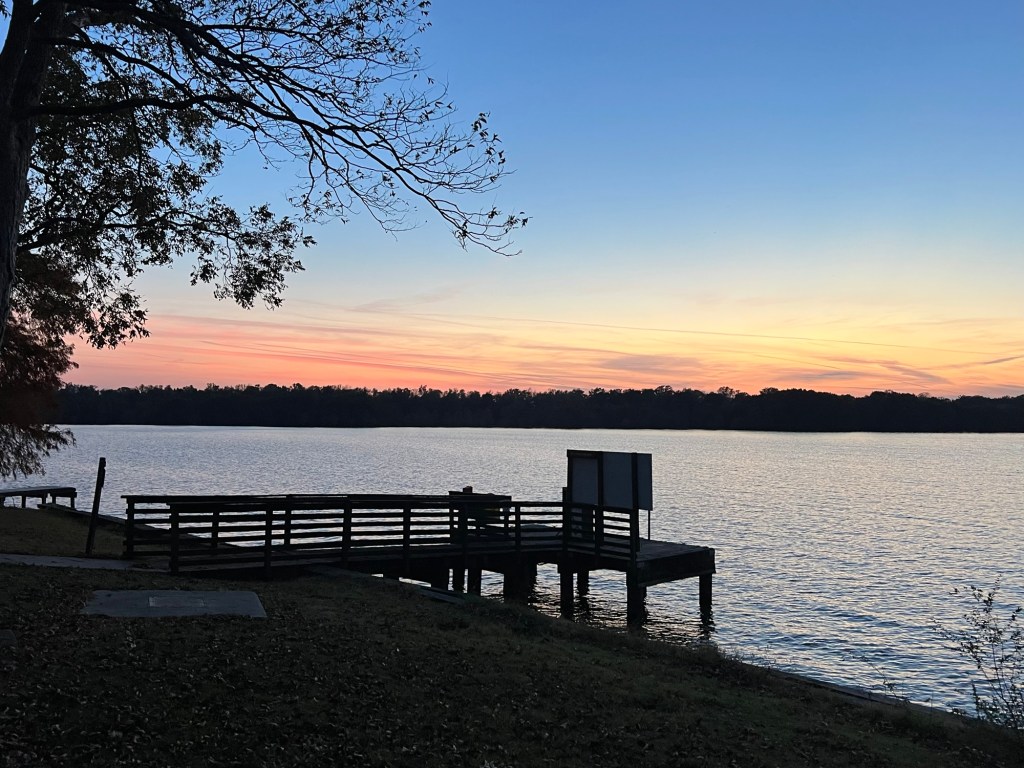
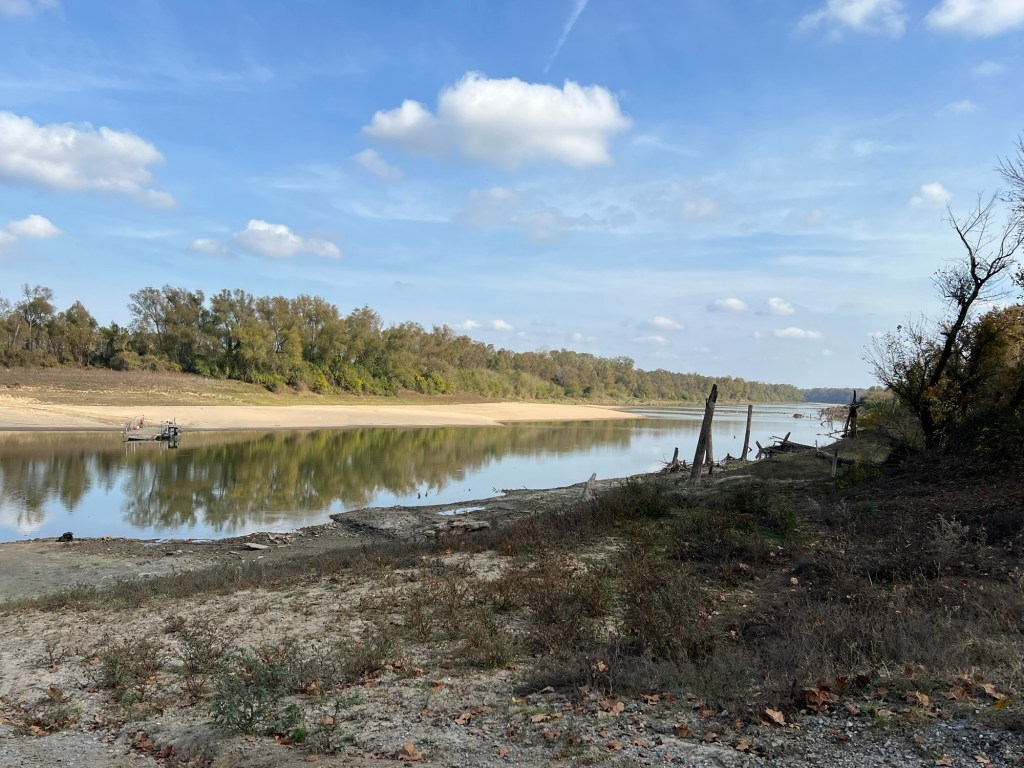
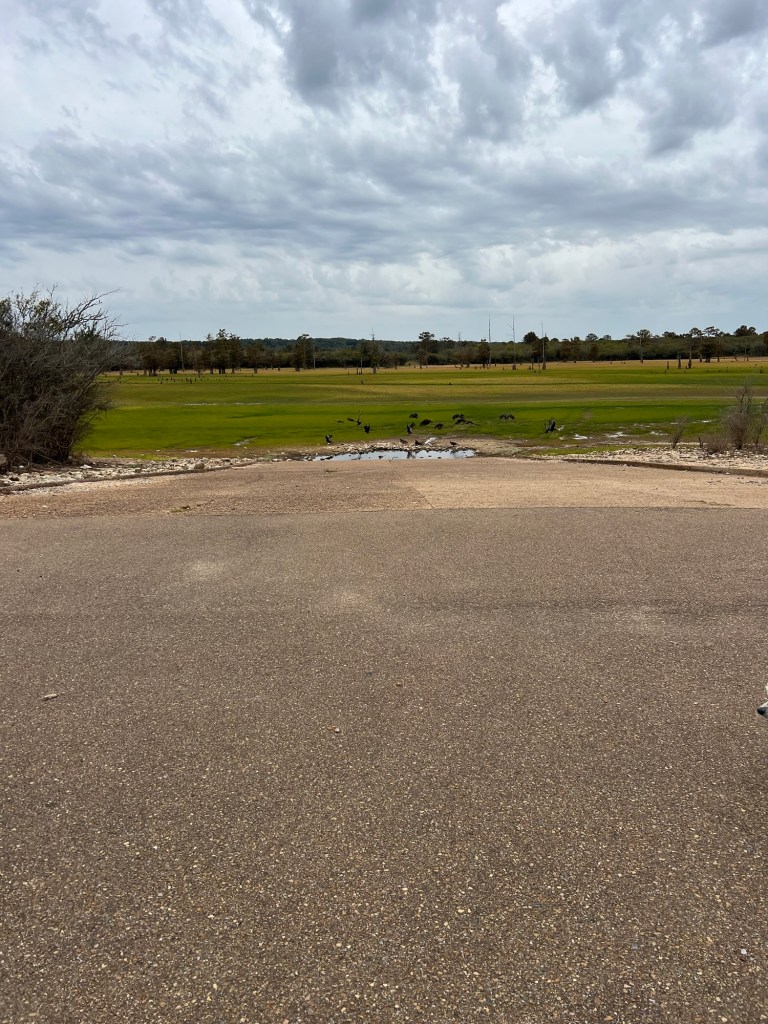
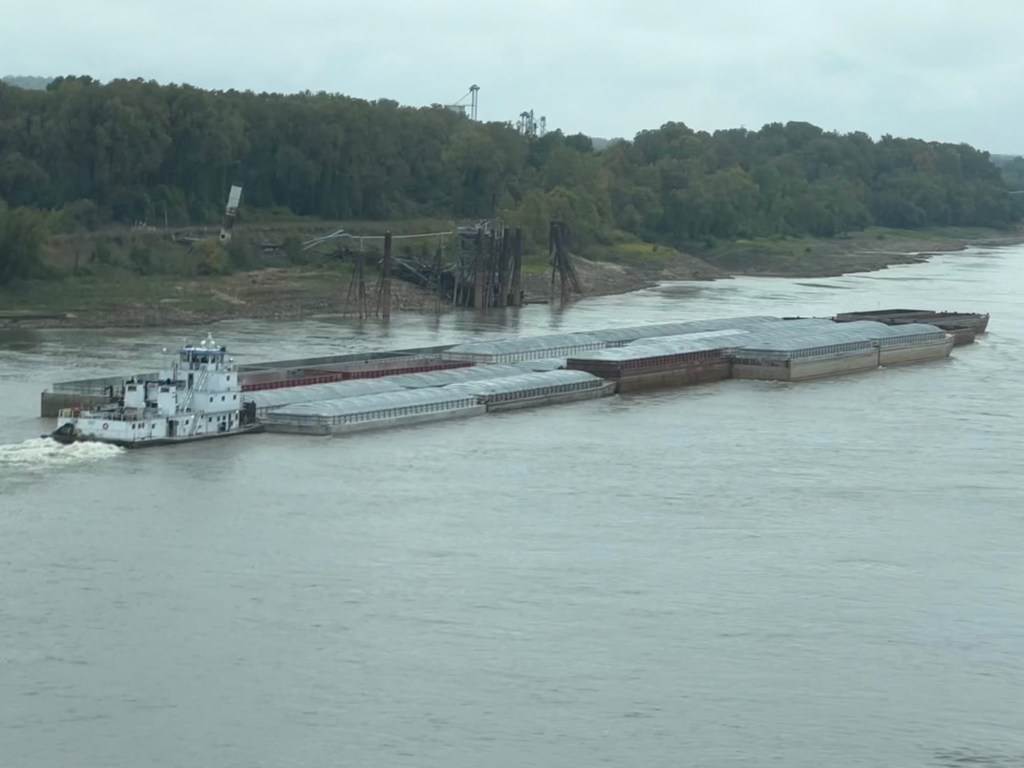
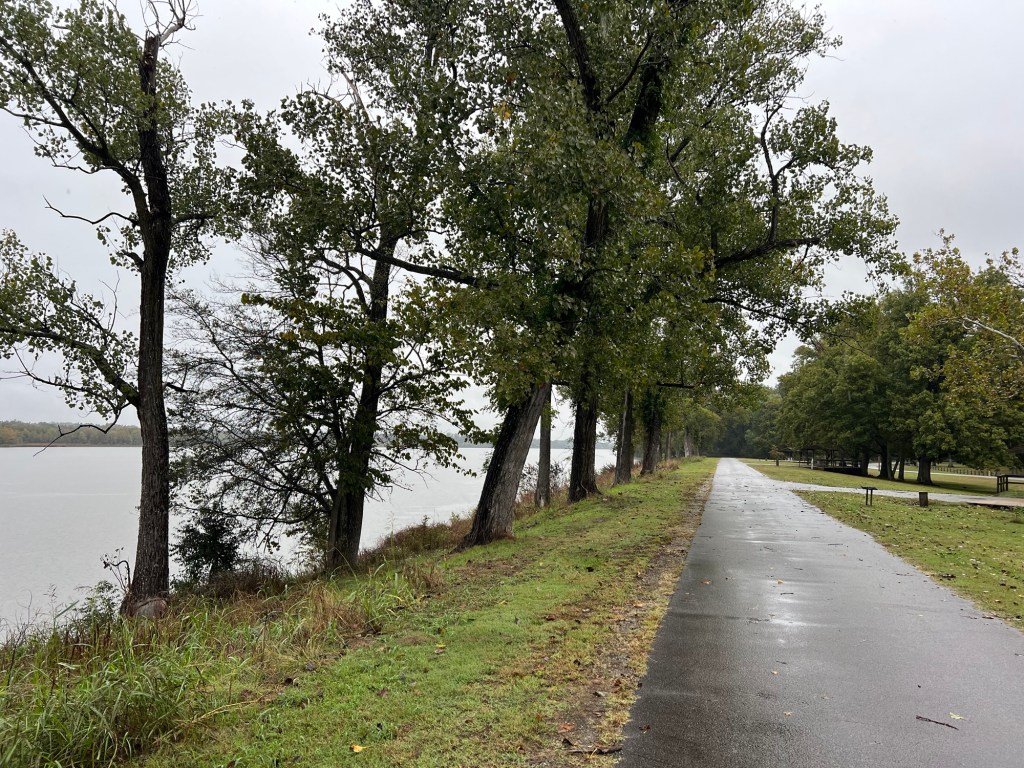
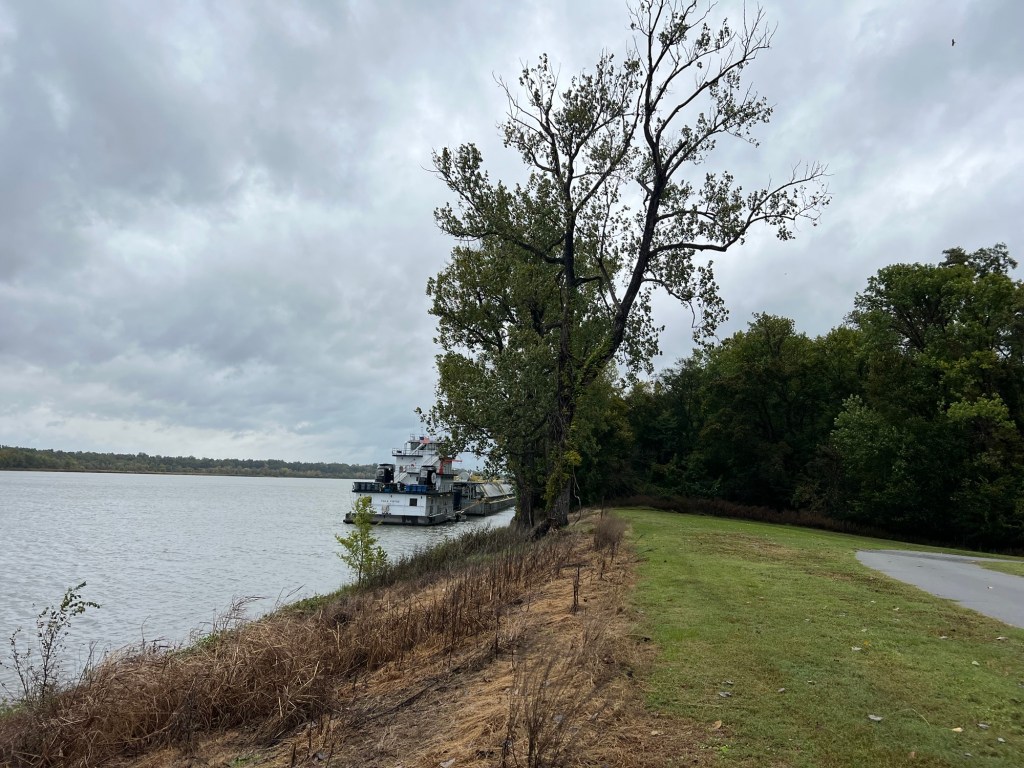
The first day we were here it was too cold to explore the grounds on foot, so we took a bit of a drive. We took a short dead end road to the Mississippi River. It turns out this wandering river, which is the reason the town was built, is a major part of the reason the town no longer exists. By 1840 the town had about 1,000 people, two newspapers, a hospital, numerous businesses and several churches and was shipping thousands of bales of cotton. Then in 1843 there was an epidemic of yellow fever. Added to that there was a devastating tornado less than 10 years later. But the river dealt the fatal blow. Between 1855 and 1860 the river changed course and ate away 55 city blocks. By 1860 there were only 132 people left. Now the river has moved west, leaving the remnants of the town about a half mile from shore.
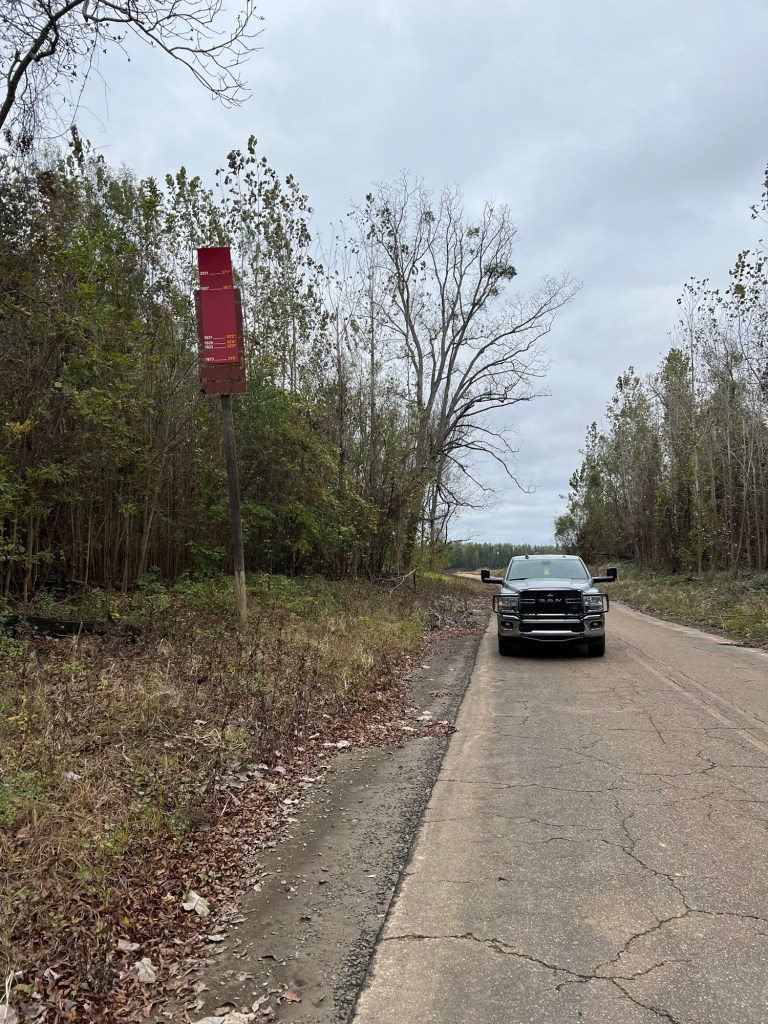
But the river isn’t done messing with Grand Gulf. This sign is along the road to the river, more than a tenth of a mile from the shore.
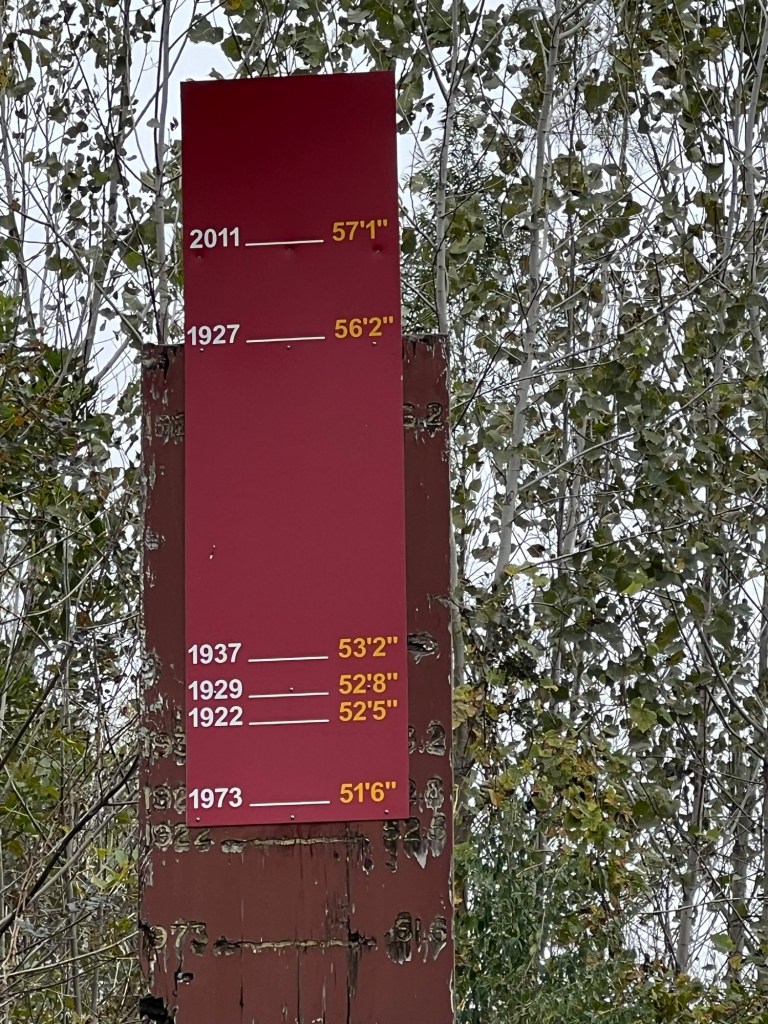
The sign shows flood heights from 1922 until today. The worst flood was in 2011, when the waters rose 57’ 1” above flood level.
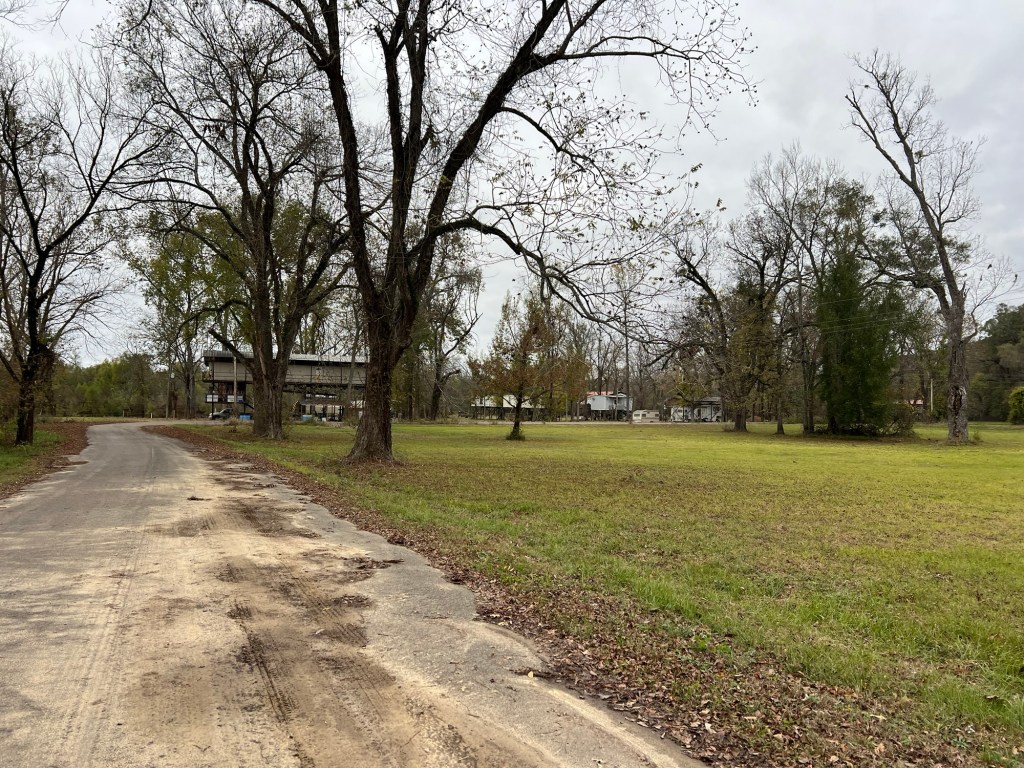
Any permanent building on the old town square is up on stilts – high up on stilts.
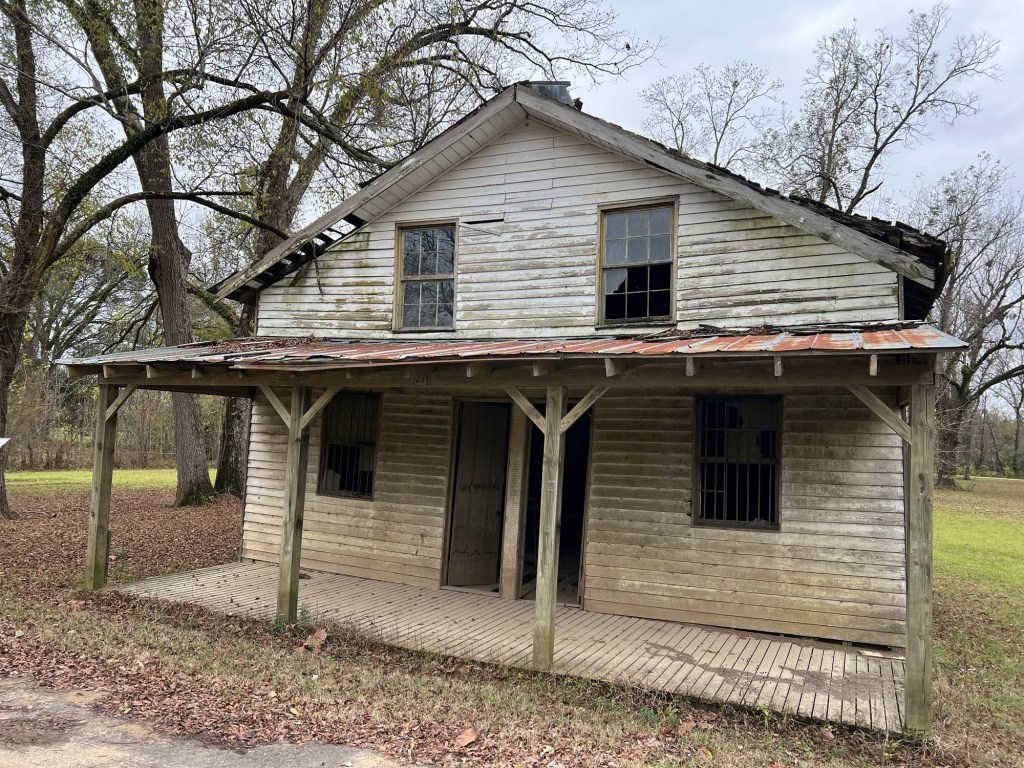
This is the only building at ground level and it has been abandoned for years. It had to have been built after the Civil War because the Union burned the few remaining buildings during that war.
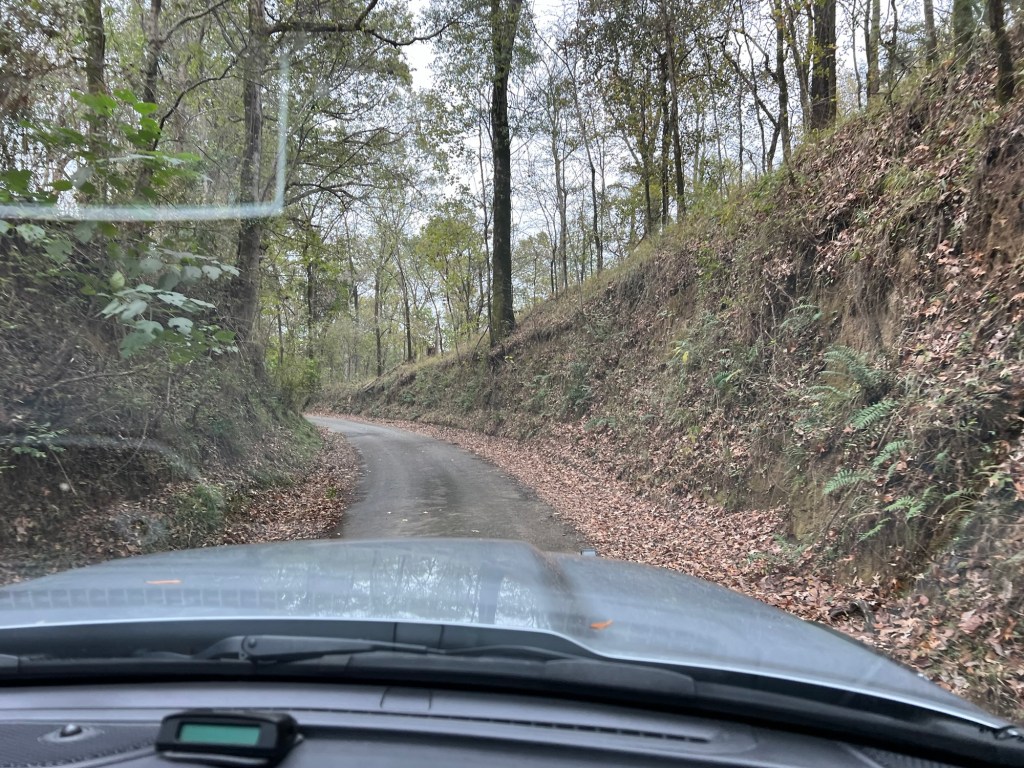
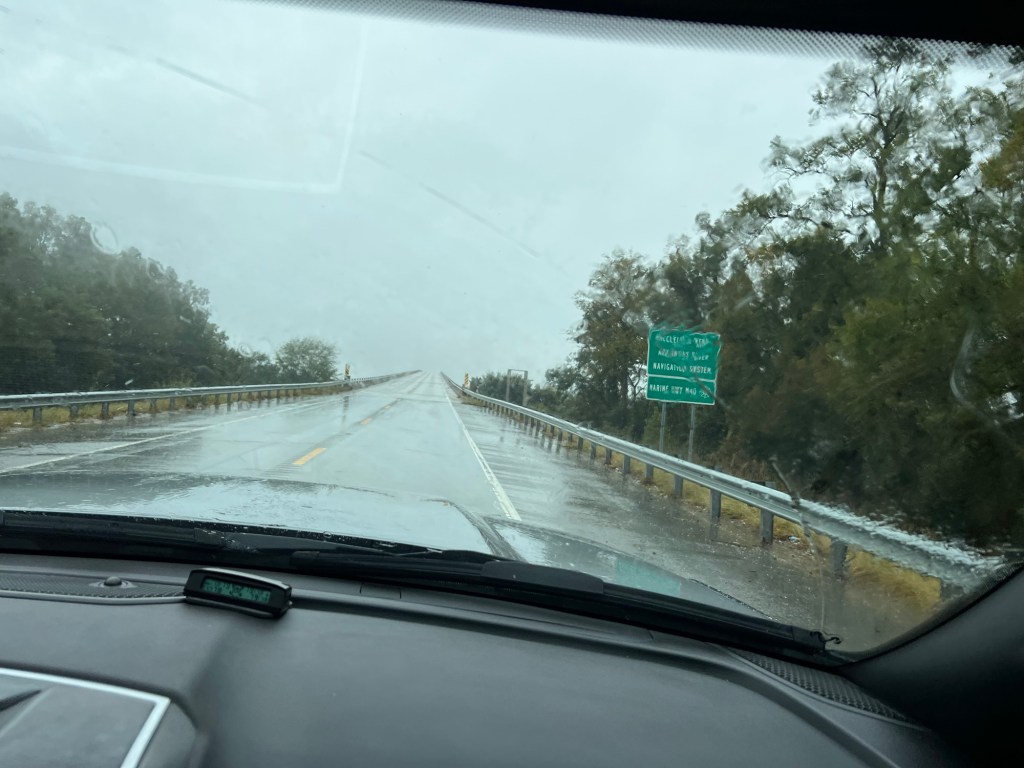
We drove out of town on Back Grand Gulf Road, and it is, indeed, a back road. Parts are down in narrow gullies…
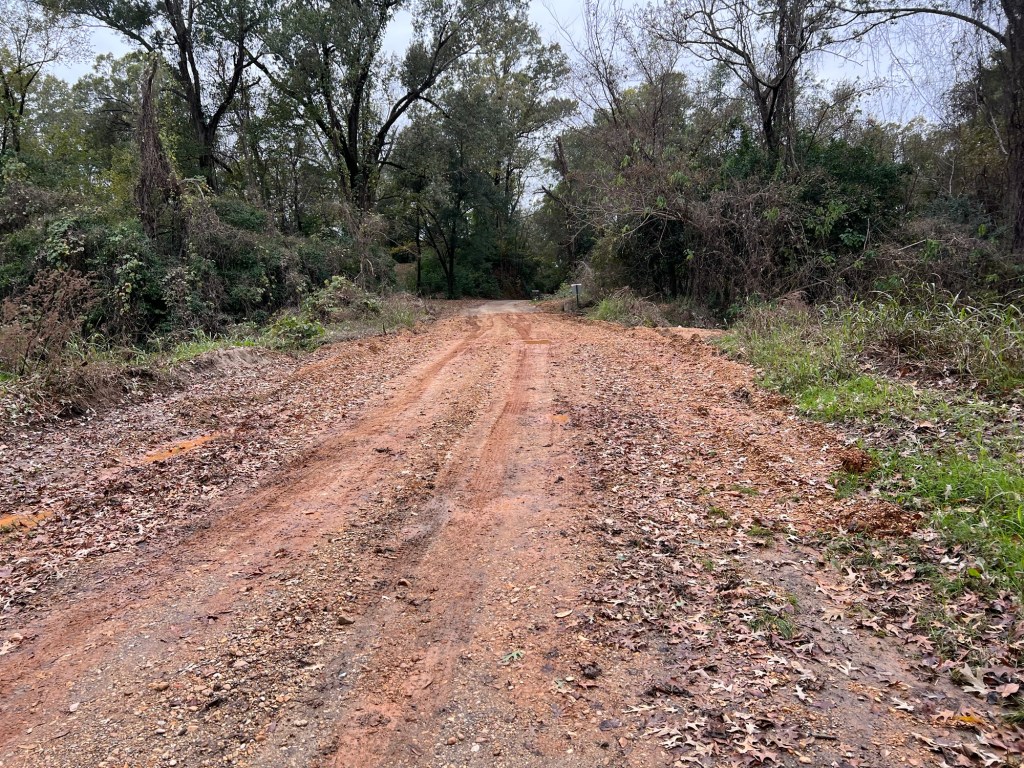
and parts are on ridges between even deeper gullies. This part was obviously repaired after it eroded.
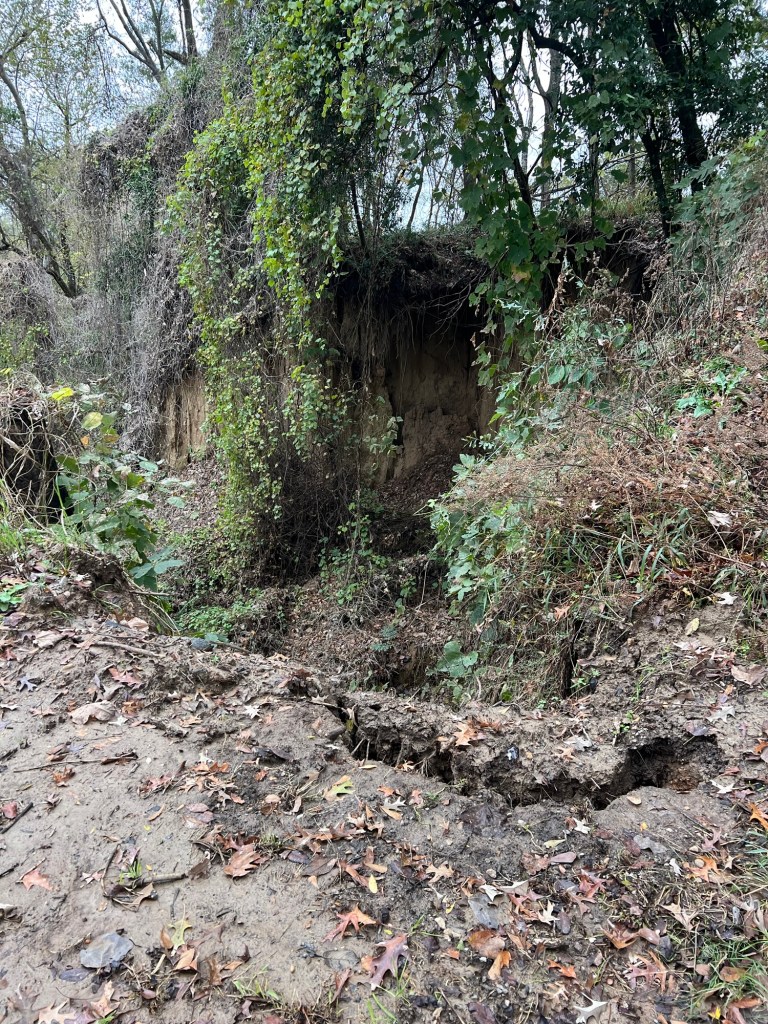
The land at the edge of the repair is still breaking away.
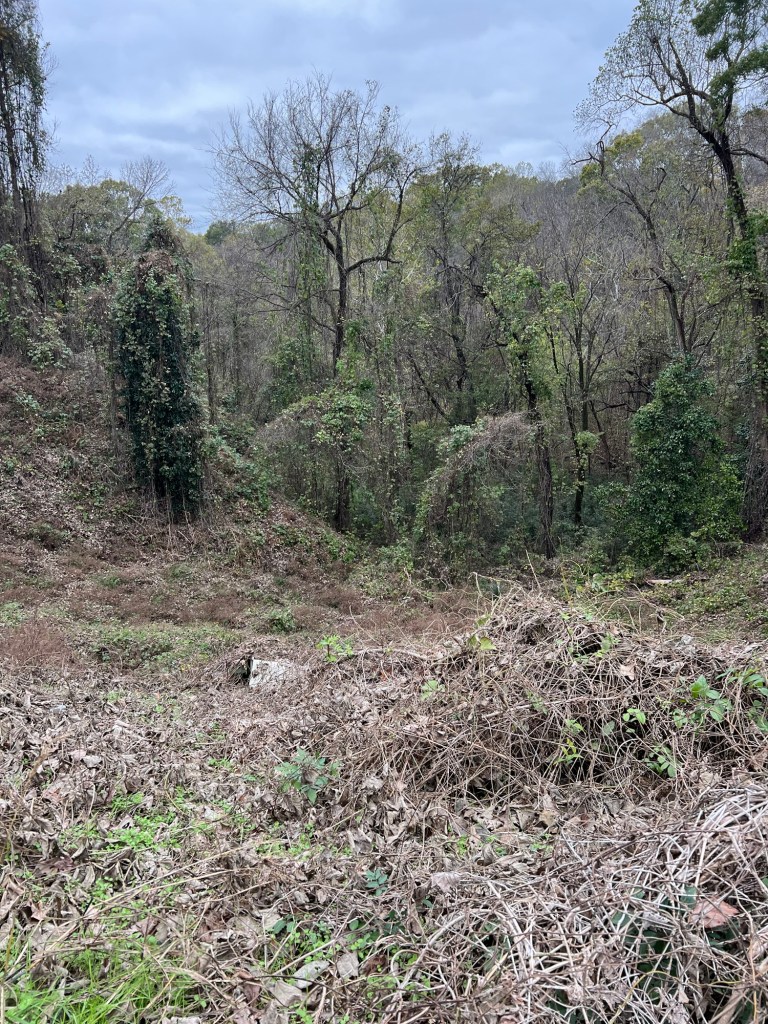
All the land here is crumbling hills and steep eroding gullies. Much is covered with Kudzu, but the Kudzu smothers the trees and the erosion continues.
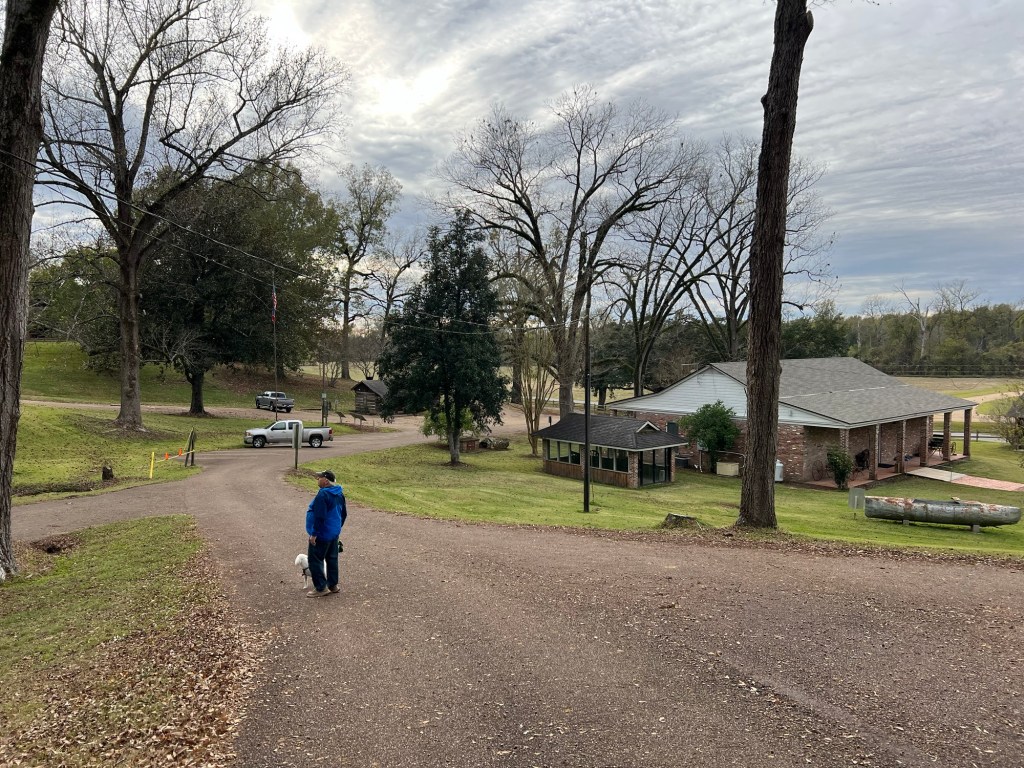
Although it was only in the lower 50’s and still mostly cloudy, yesterday may well have been our best weather day for our week long stay. We decided to tour the site. There was a lot to see.
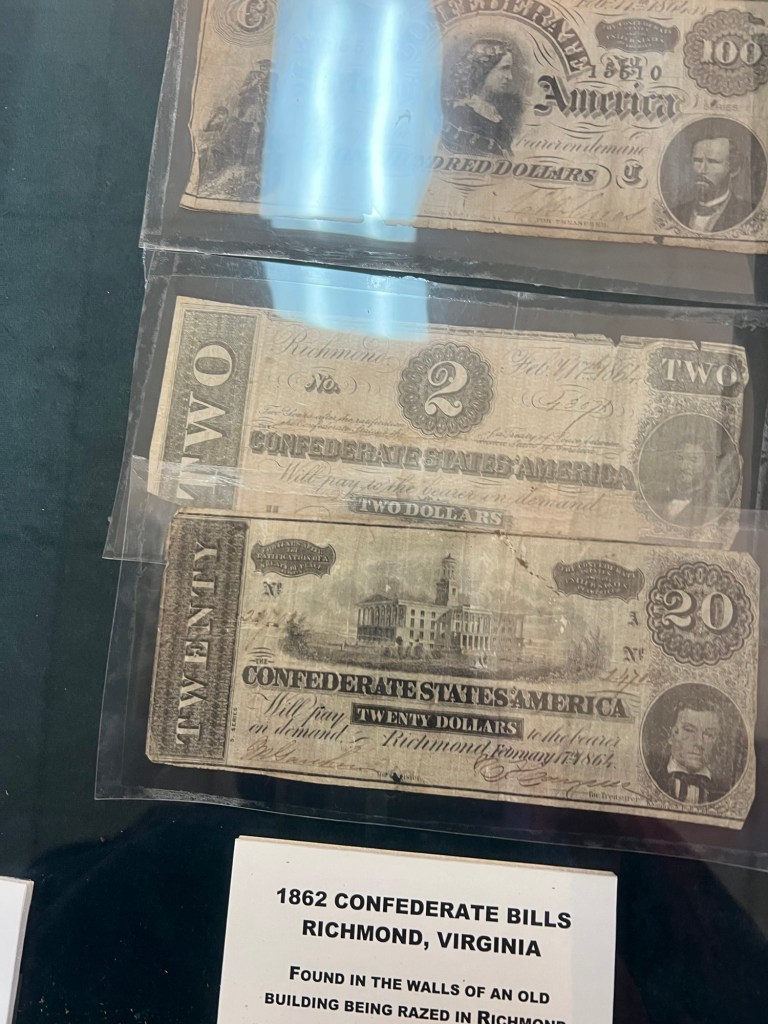
The museum is mostly filled with old Civil War paraphernalia.
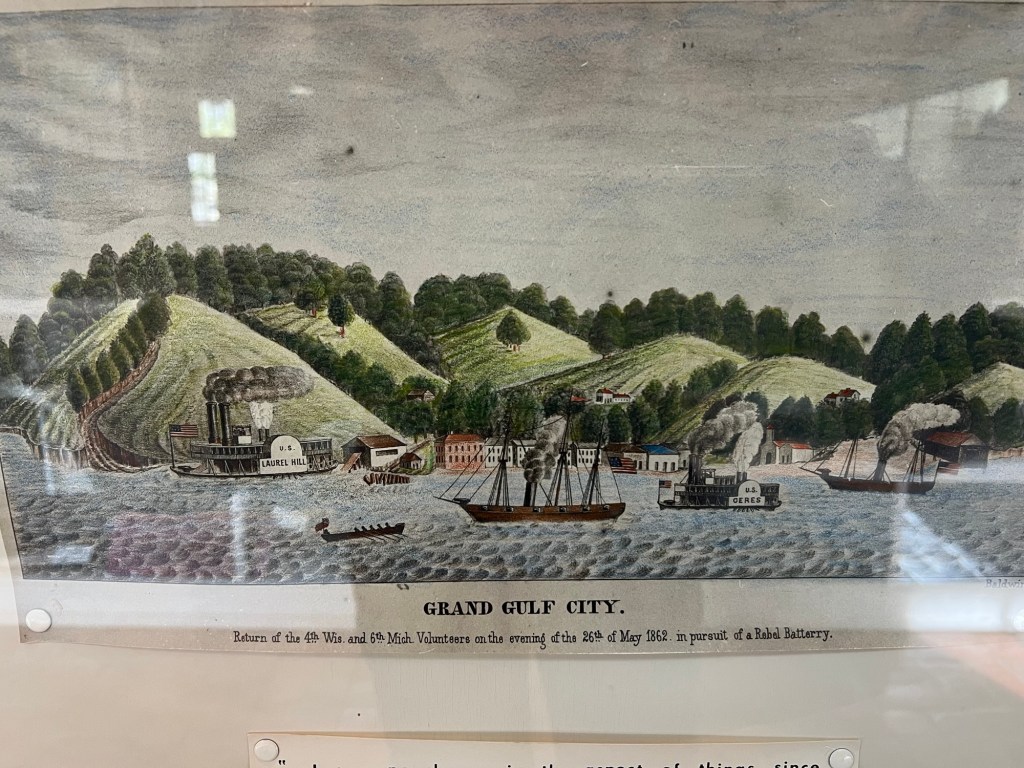
The city might have been mostly gone but it was still a good landing spot. Grant wanted to land here to march north and attack Vicksburg from land. Vicksburg was the only remaining city on the Mississippi not yet taken by the Union and the key to splitting the South. The bluffs behind Grand Gulf proved as good a defense as the bluffs at Vicksburg and the Union gunboats were repulsed. But Grant just went further south, crossed at an unfortified place, marched overland and took Port Gibson cutting the Confederates off. Grand Gulf fell and was used by the Union as a staging place for the siege of Vicksburg. The remaining buildings were burnt and that was pretty much the end of the town.
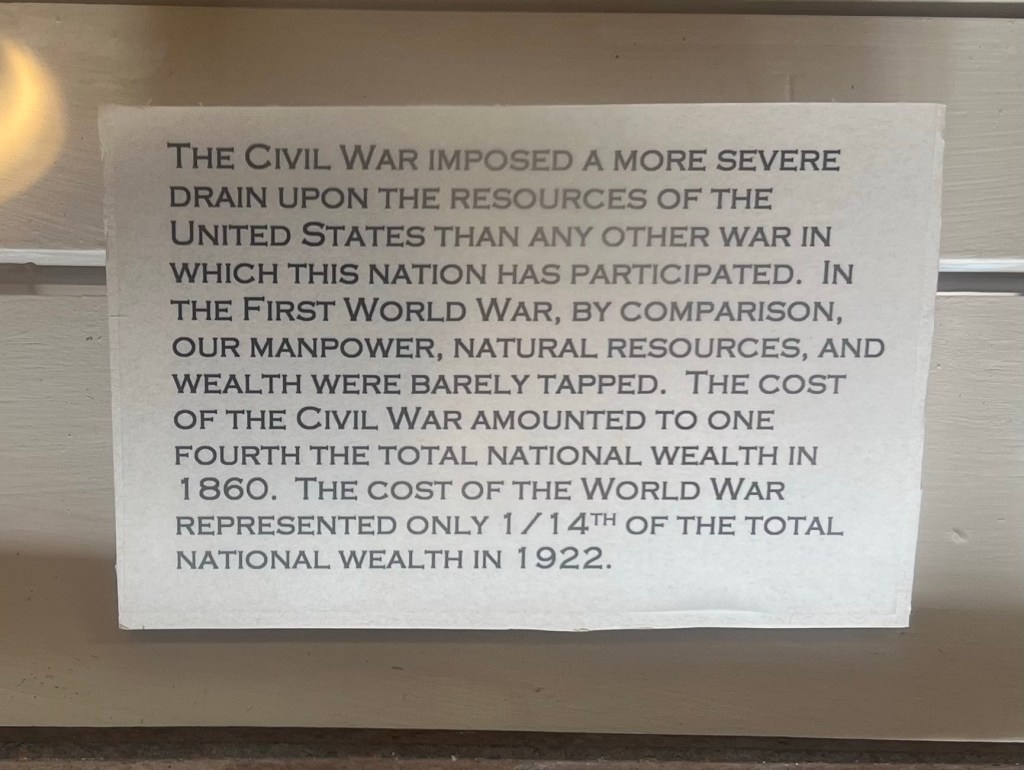
I was stunned by this sign. One fourth of the total wealth of the country went to the cost of the Civil War in 1860. It’s hard to imagine what that would have been like to live through.
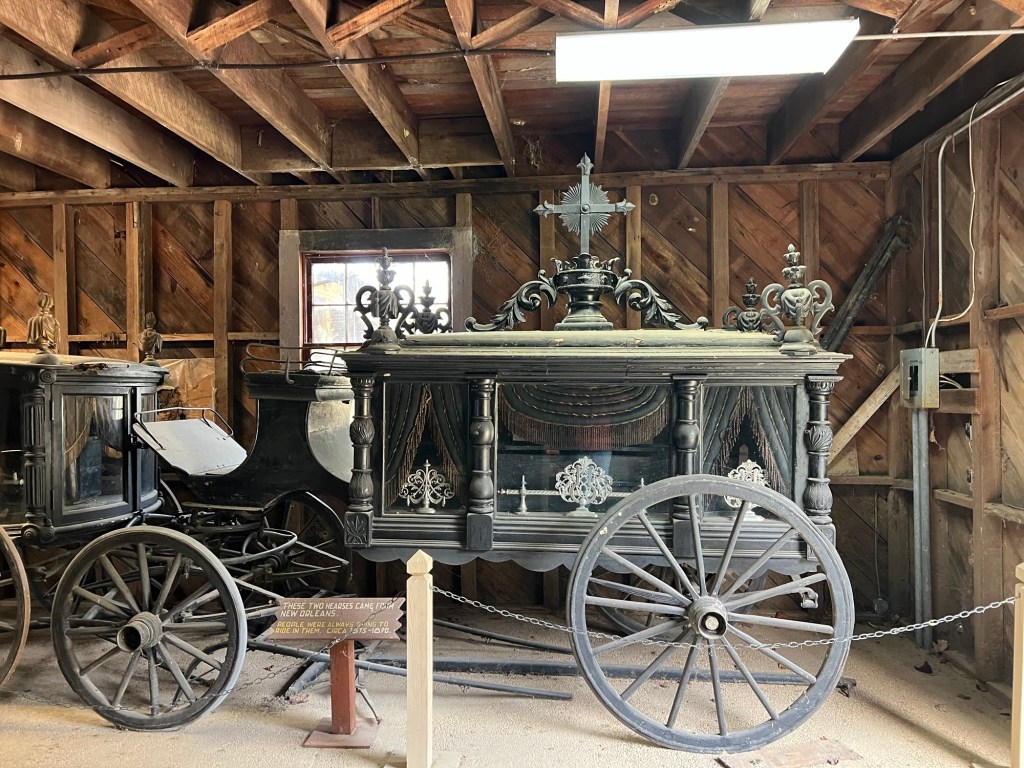
Outside there are a number of buildings. The old carriage house has two horse drawn hearses from New Orleans.
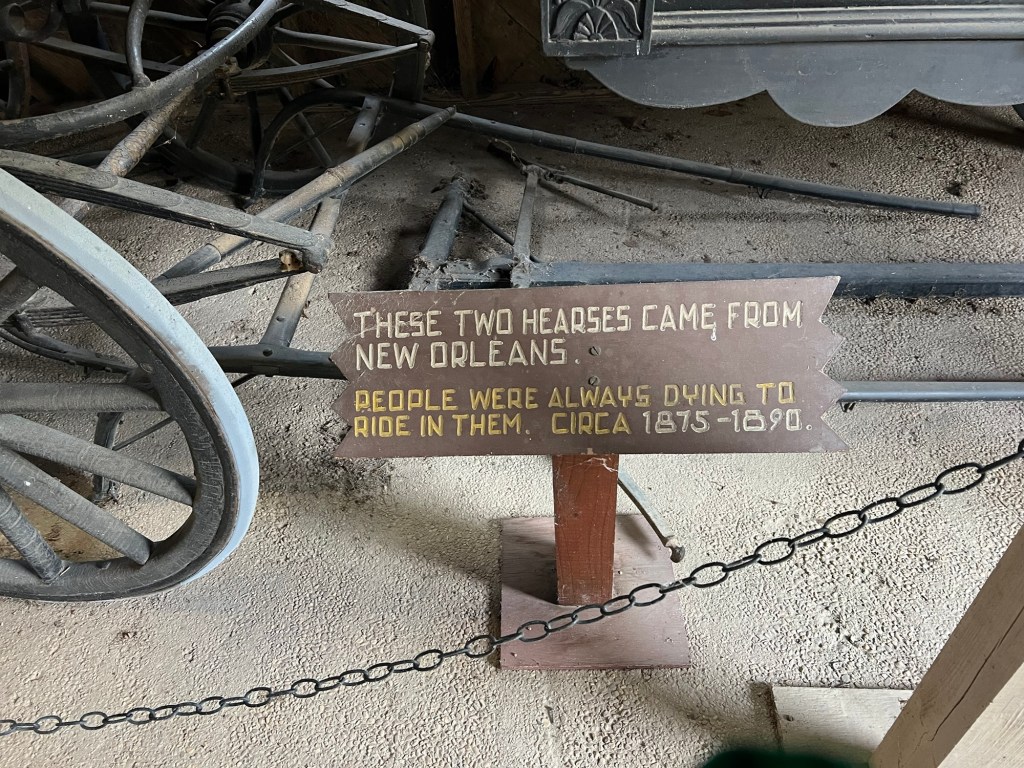
I liked the sense of humor of those who made this sign.
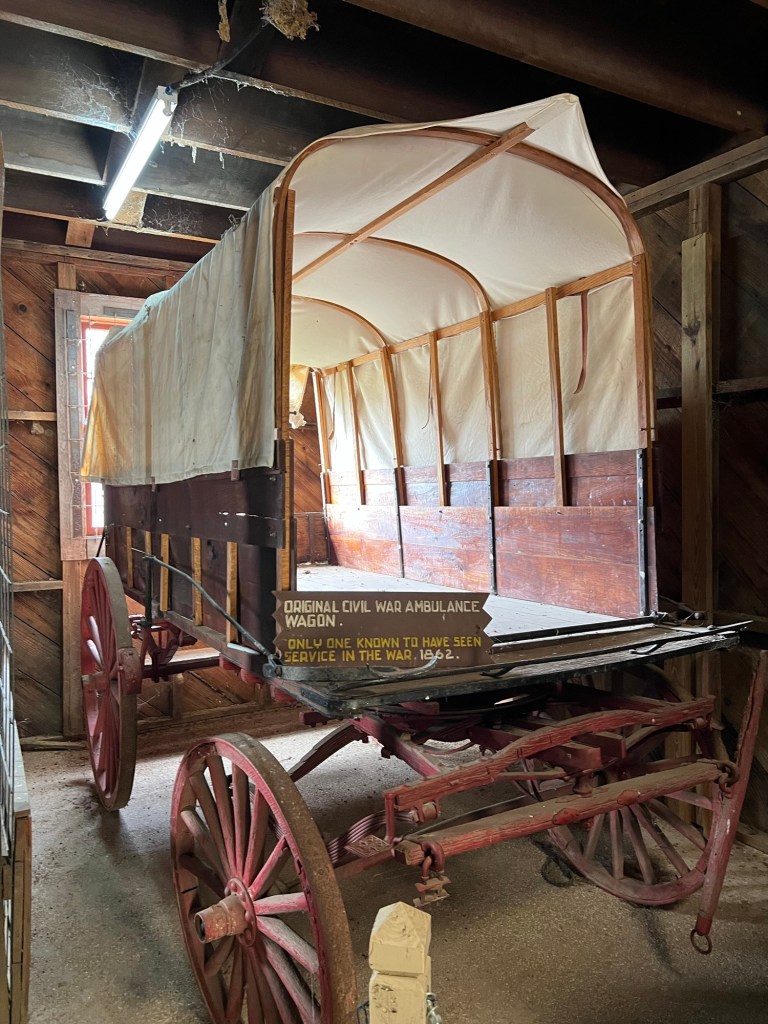
They also have the only known surviving ambulance from the civil war.
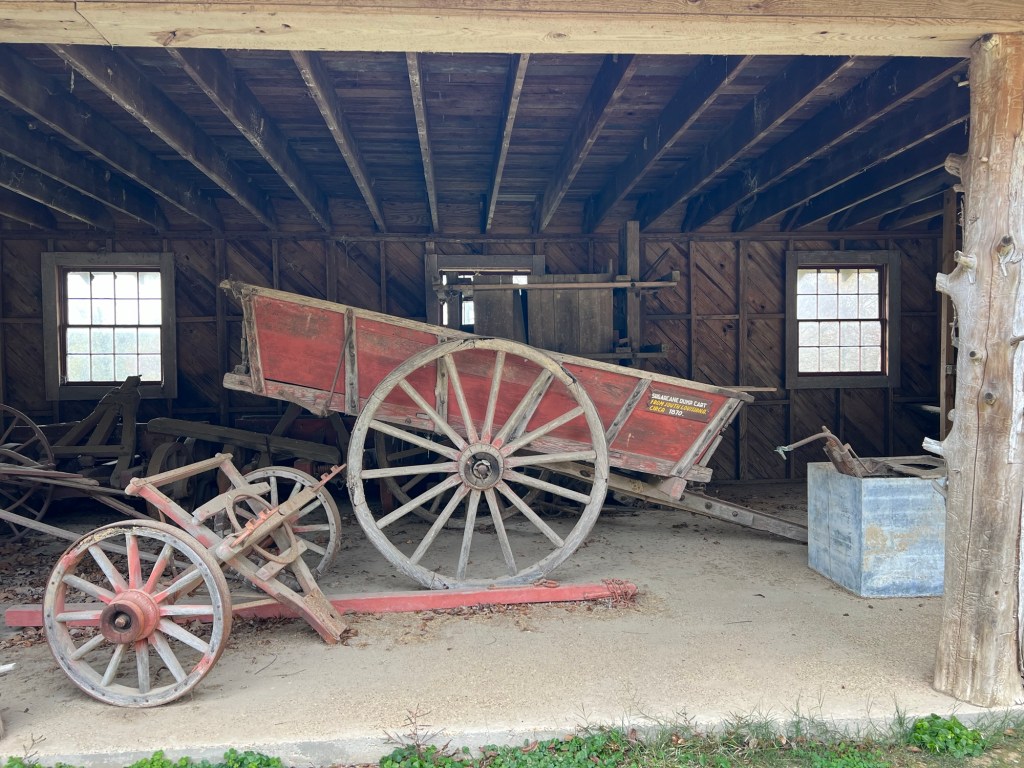
There is a sugar cane dump cart from 1870,
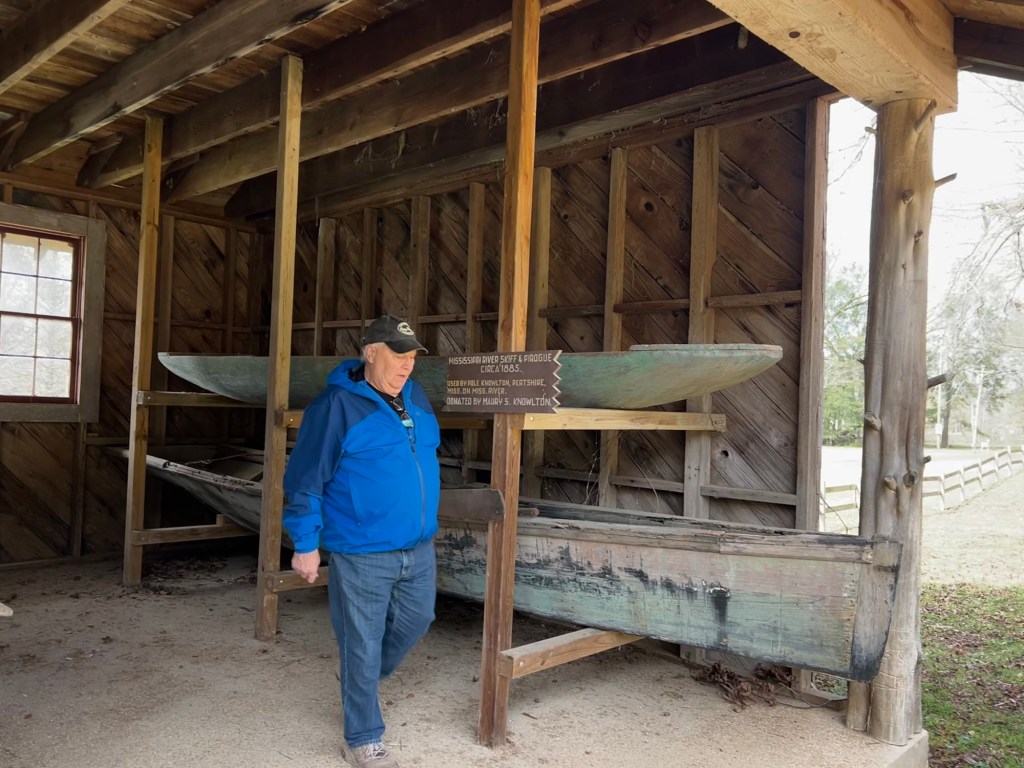
a skiff and a pirogue from 1885,
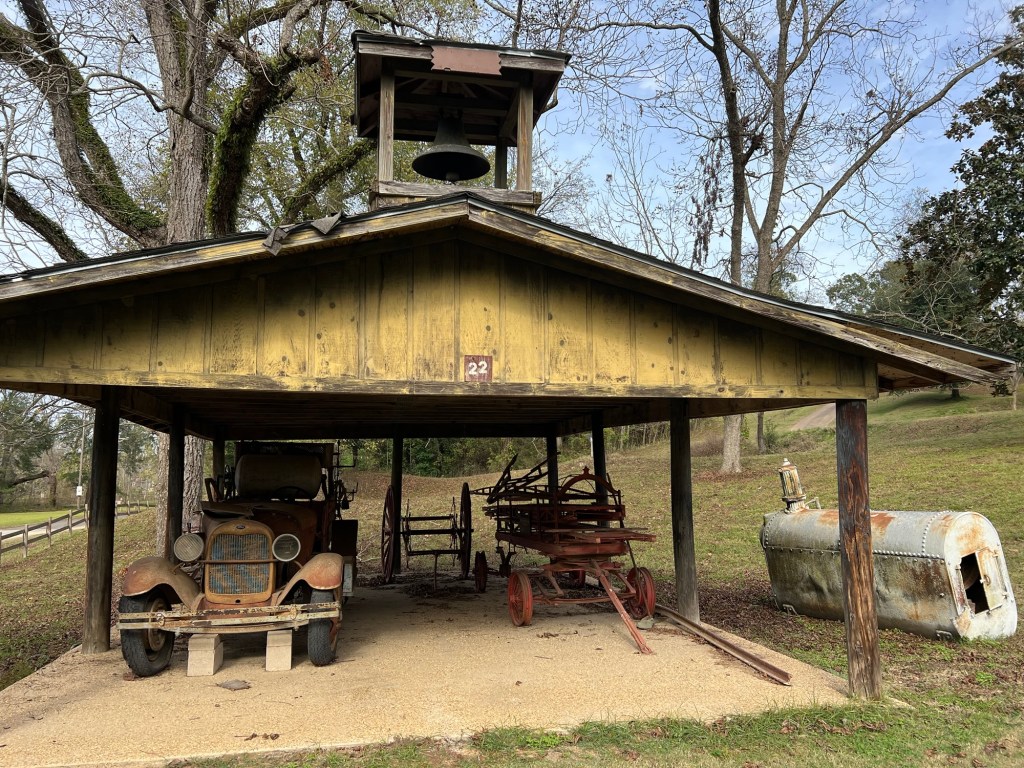
and a shed with a 1923 fire truck and an 1890 hand hauled ladder wagon from Port Gibson.
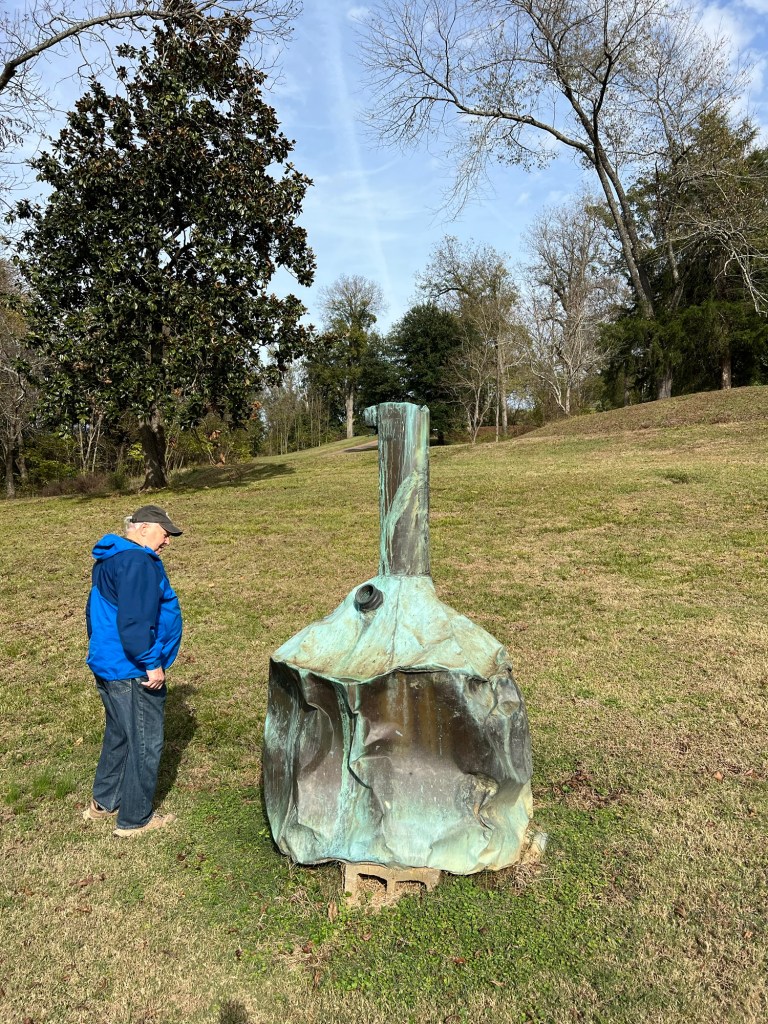
This old still has no sign. We wondered if the damage was from “revenuers”.
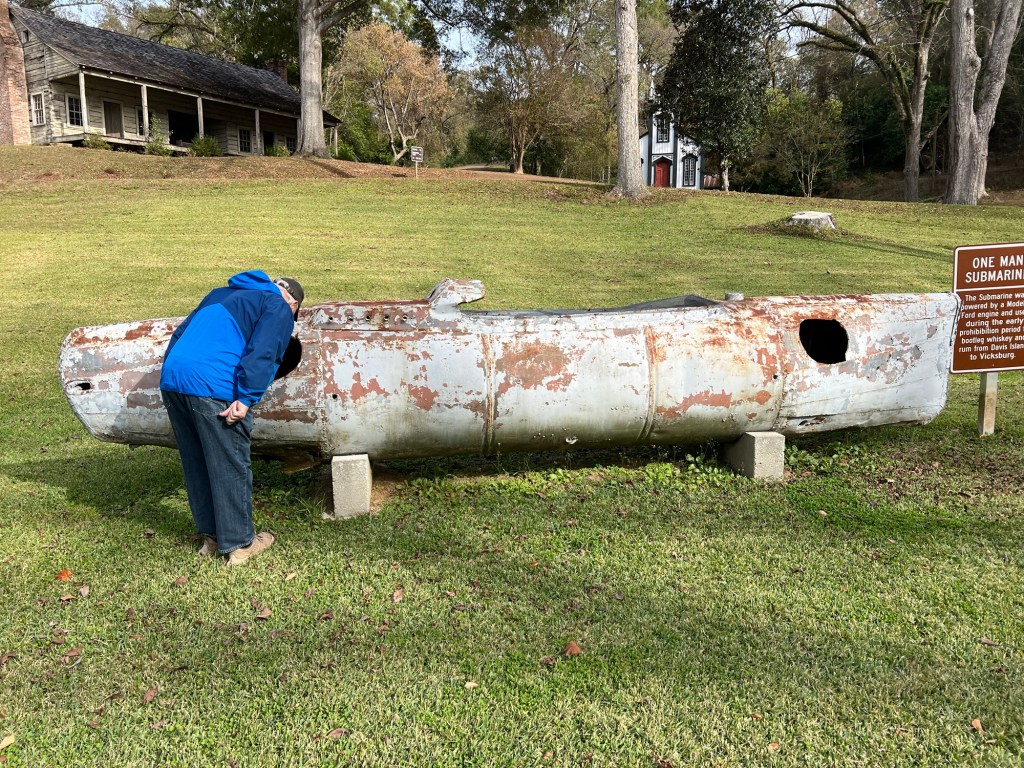
Continuing the same theme is this one man sub that was powered by a Model T engine and used to bring bootlegged liquor from Davis Island to Vicksburg during prohibition.
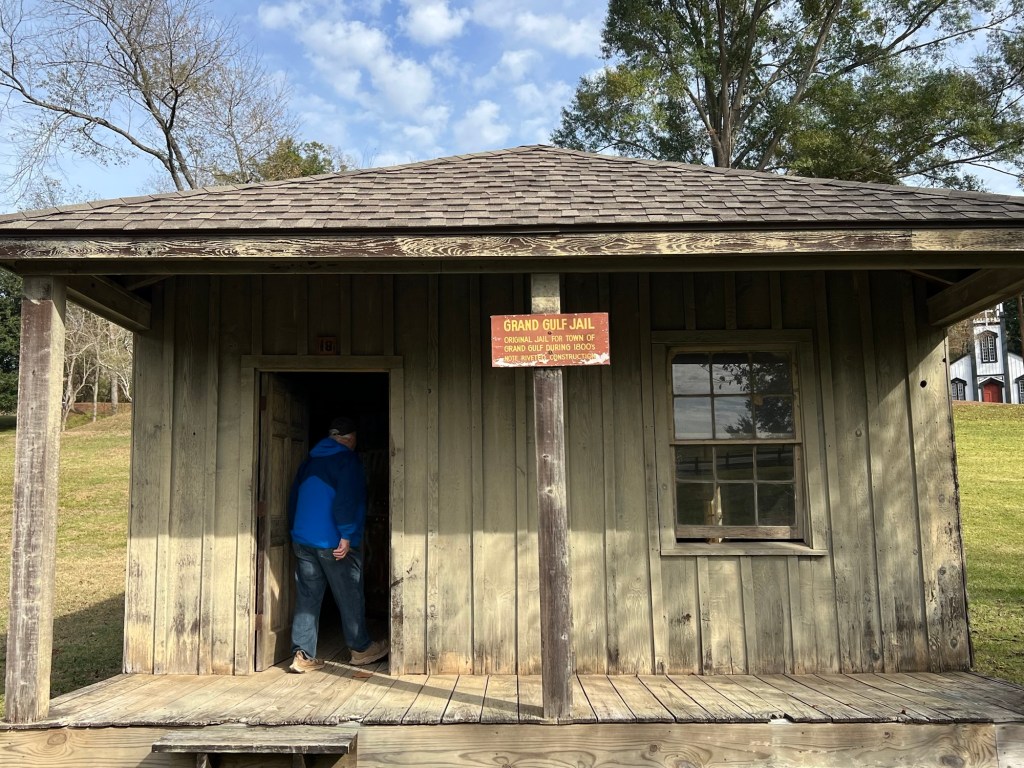
And then there is the old Grand Gulf jail…
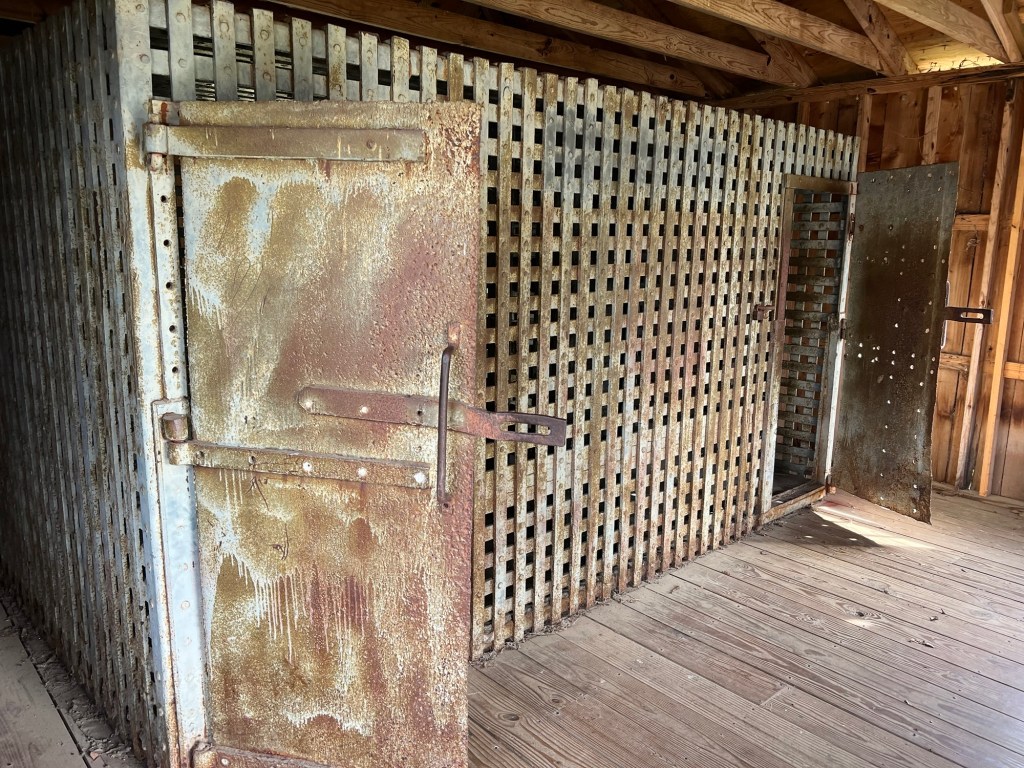
with its riveted cells.
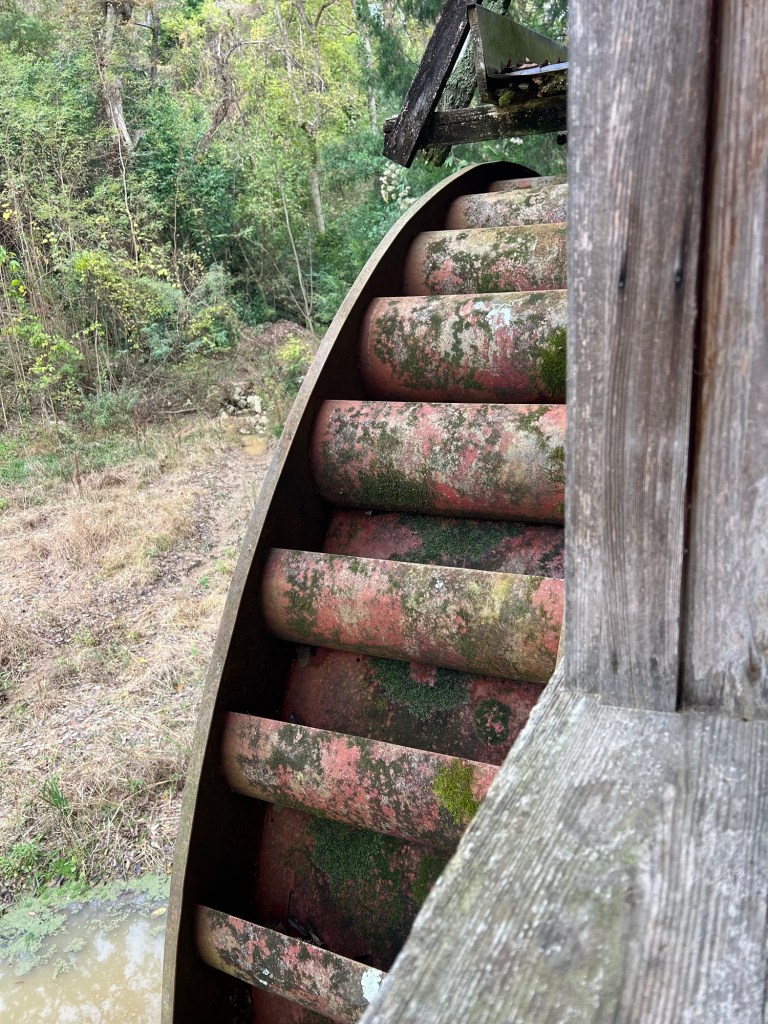
There is an old water wheel,
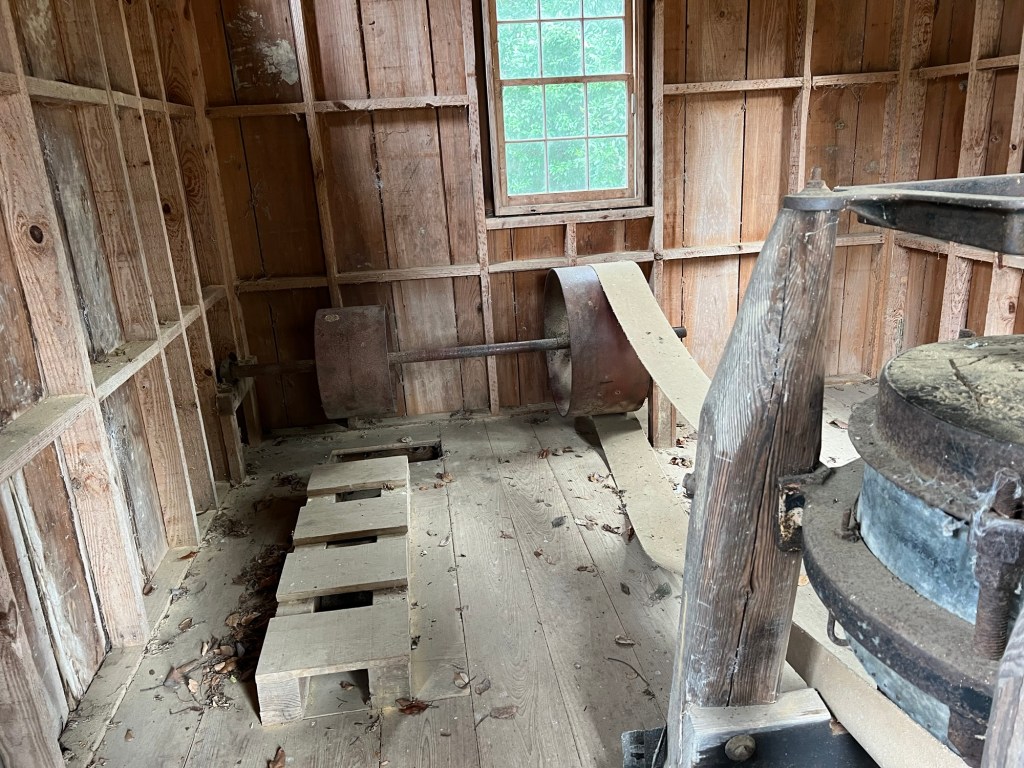
which surprisingly, had been built to generate electricity in 1948.
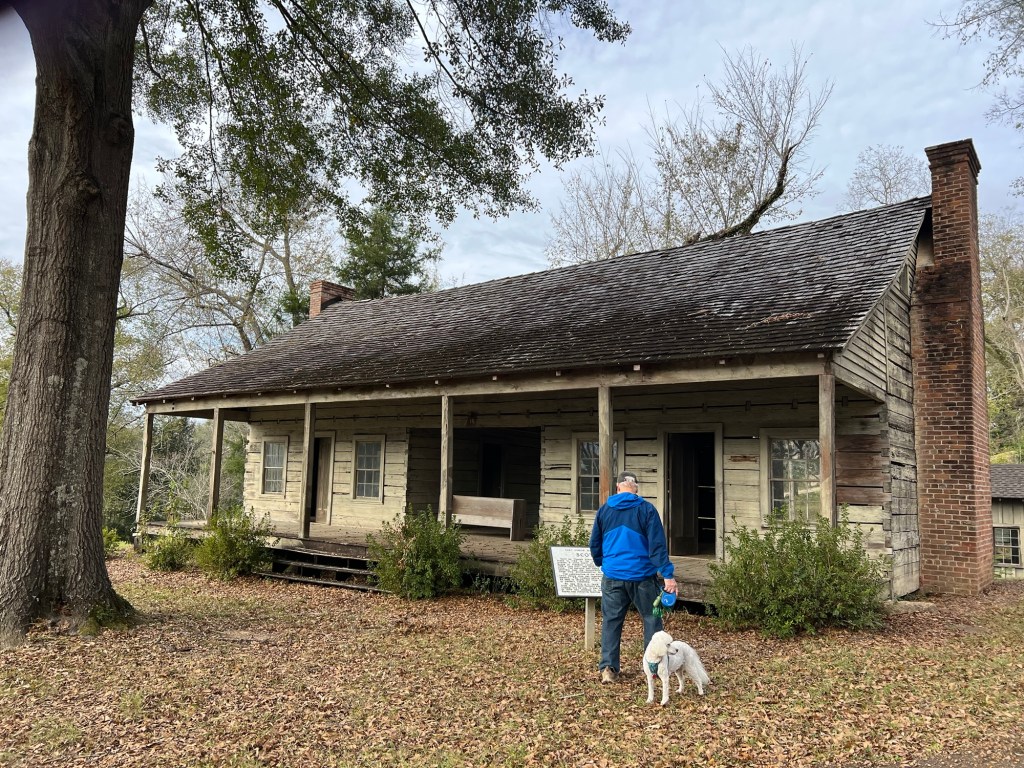
There are two houses on the grounds. This dog trot house was moved from the extinct town of Scotia. It was built in 1768 by Thomas Foster.
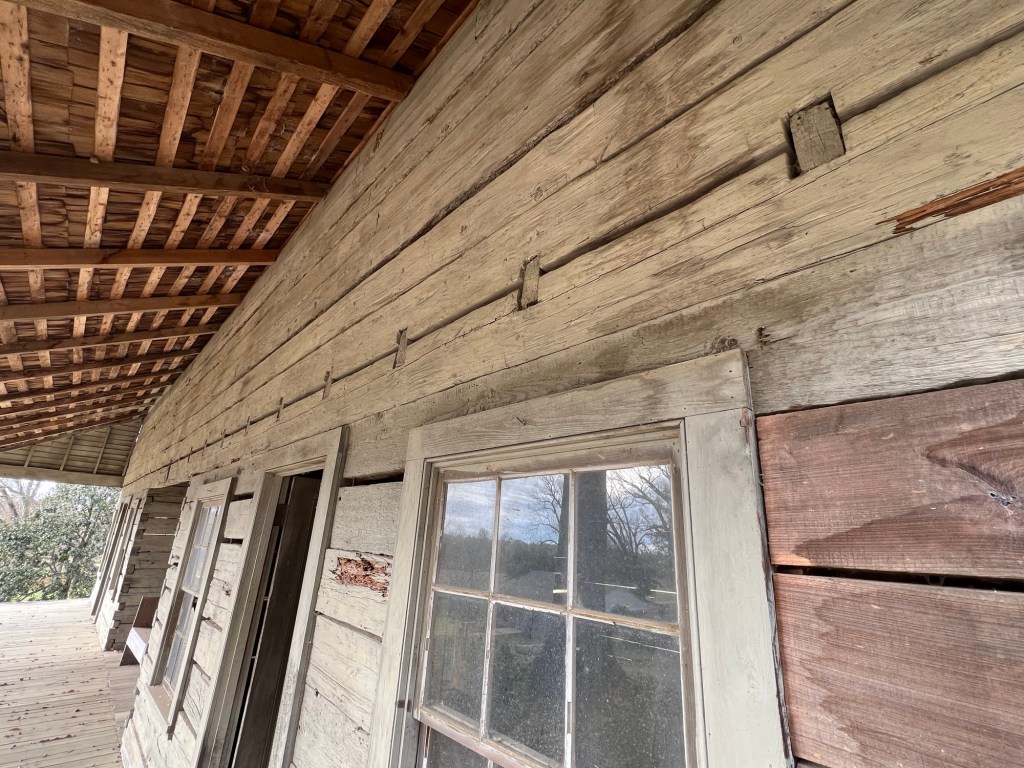
The heart pine logs above the doors are single logs 52 feet long and still sound 250 years later.
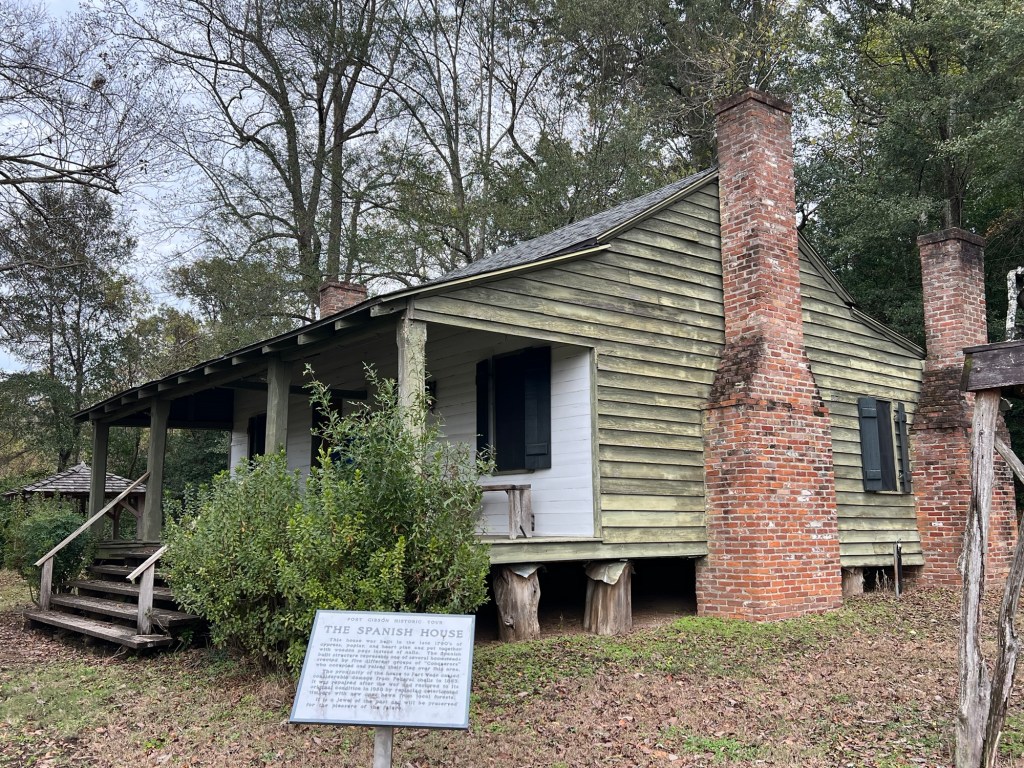
The only building on its original site is the Spanish House, built in 1790. It was damaged in 1863 during battles fought here, but has been restored with local wood.
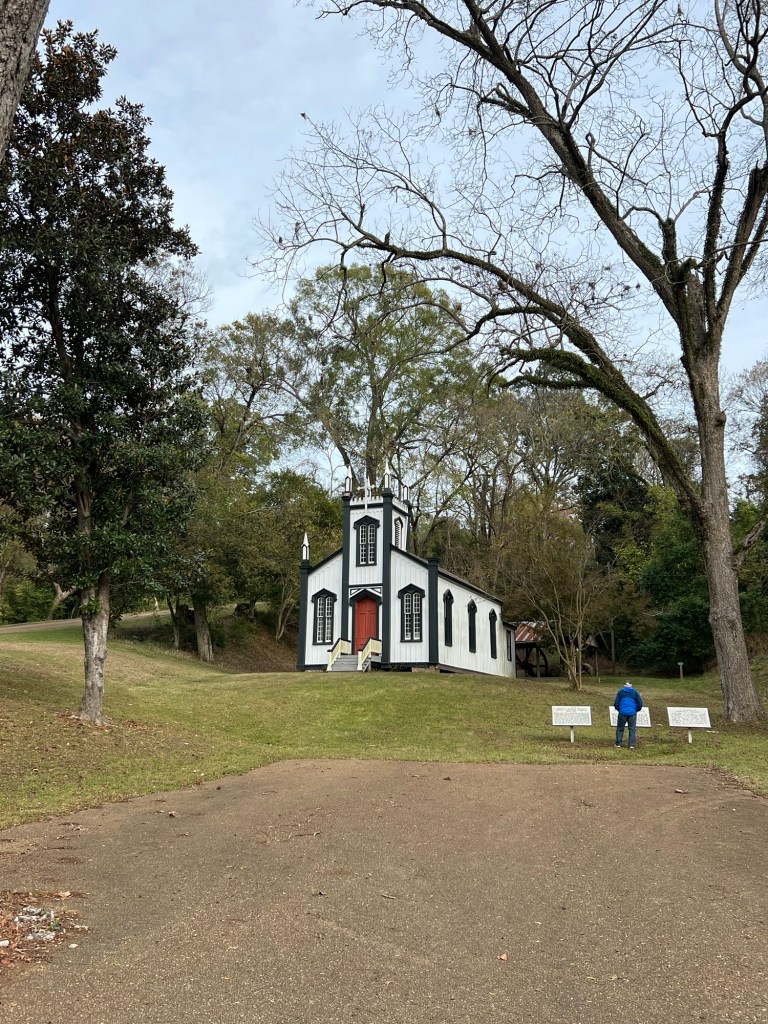
The prettiest building on the site is this old Catholic Church built in 1868 in the town of Rodney.
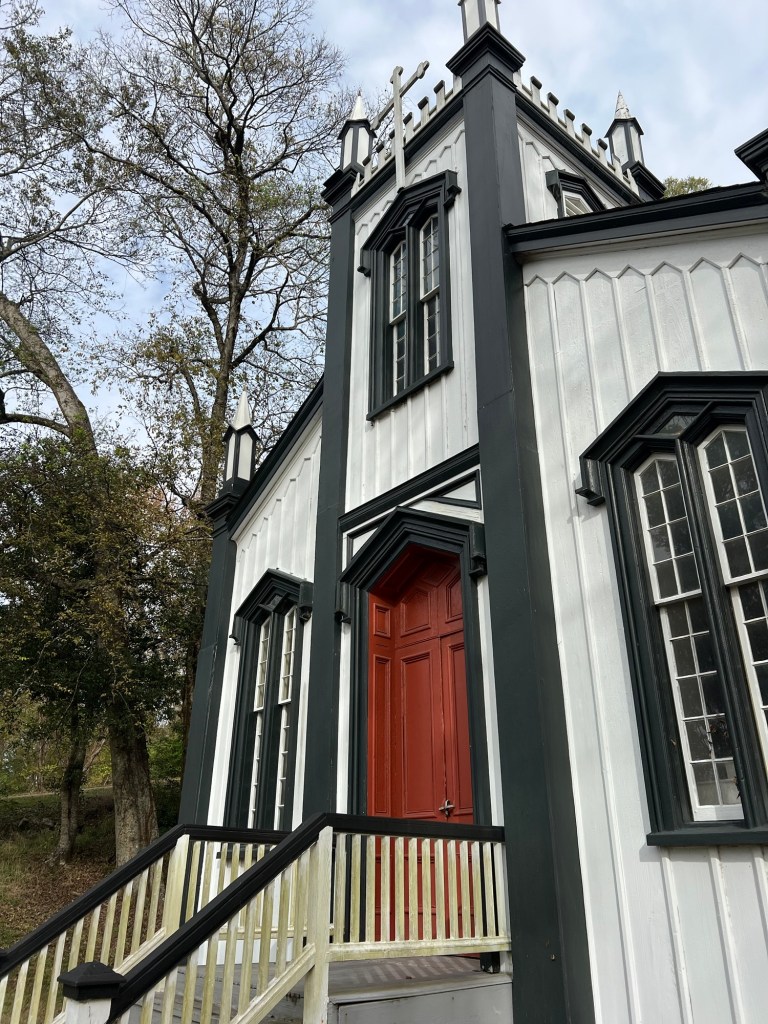
Rodney is another river town that no longer exists. The church was brought here to preserve this excellent example of carpenter gothic architecture.
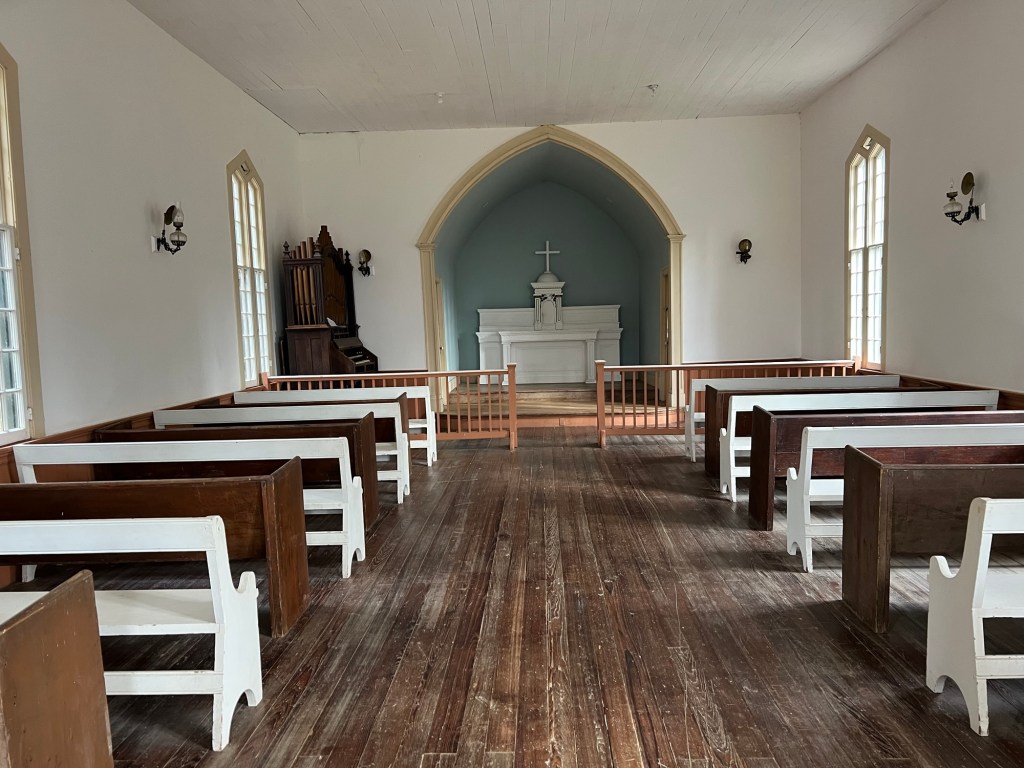
It is still used for some services today.
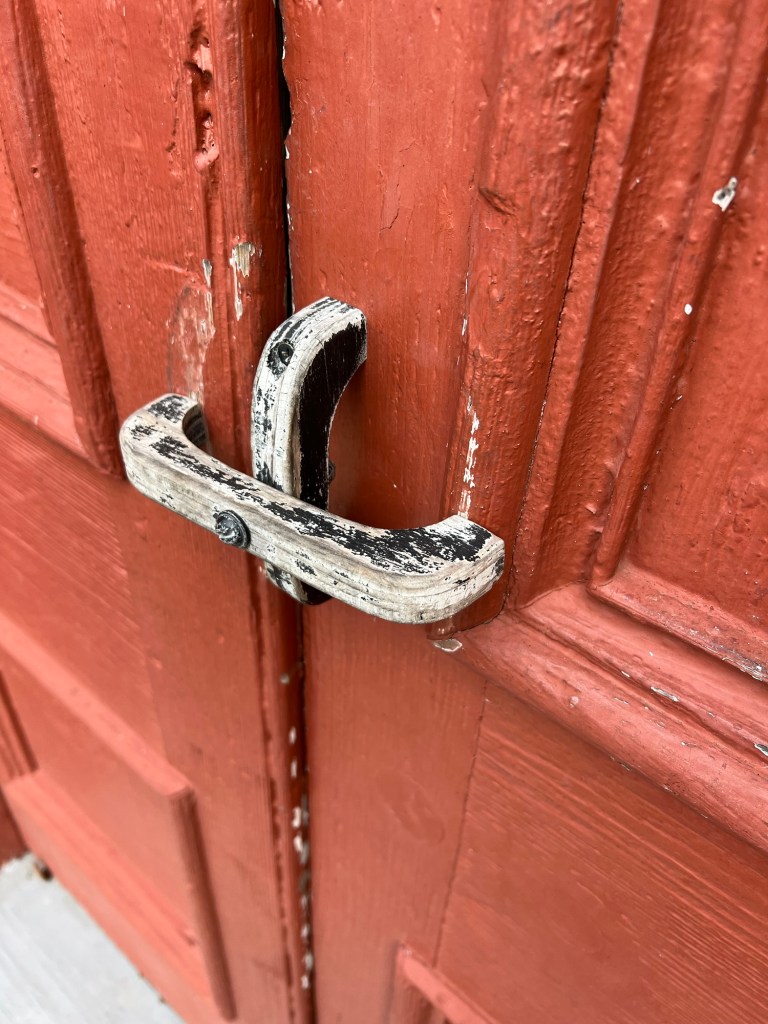
I have never seen a door “knob” like this.
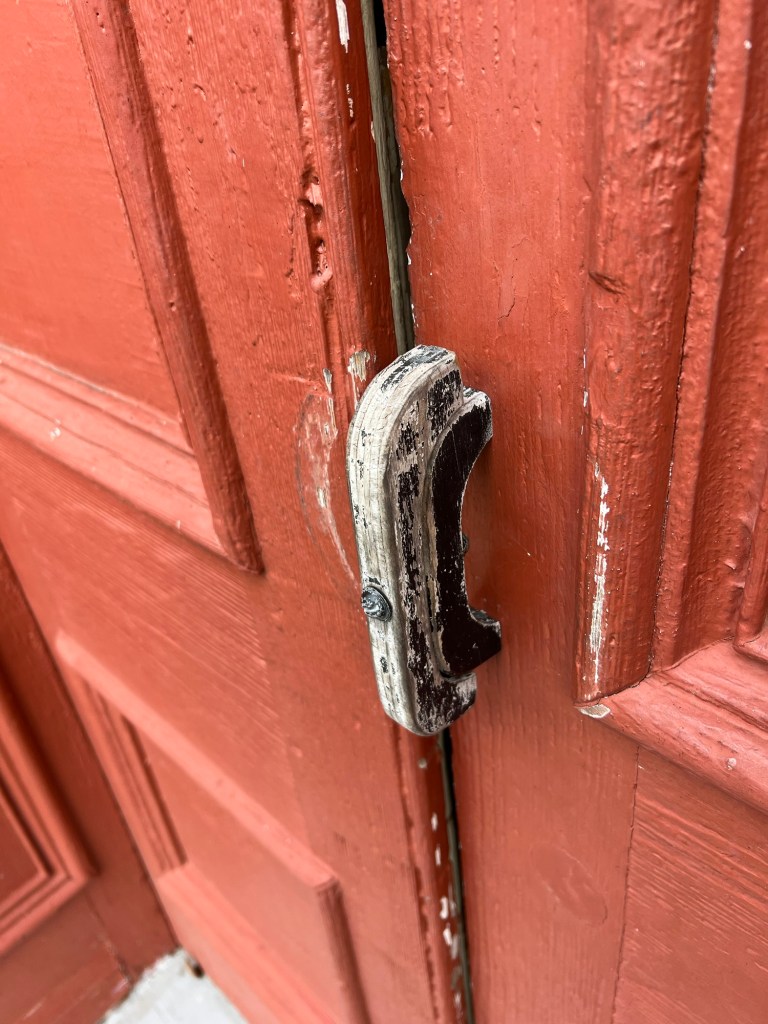
Turn the top piece of wood parallel to the bottom piece to open the door.
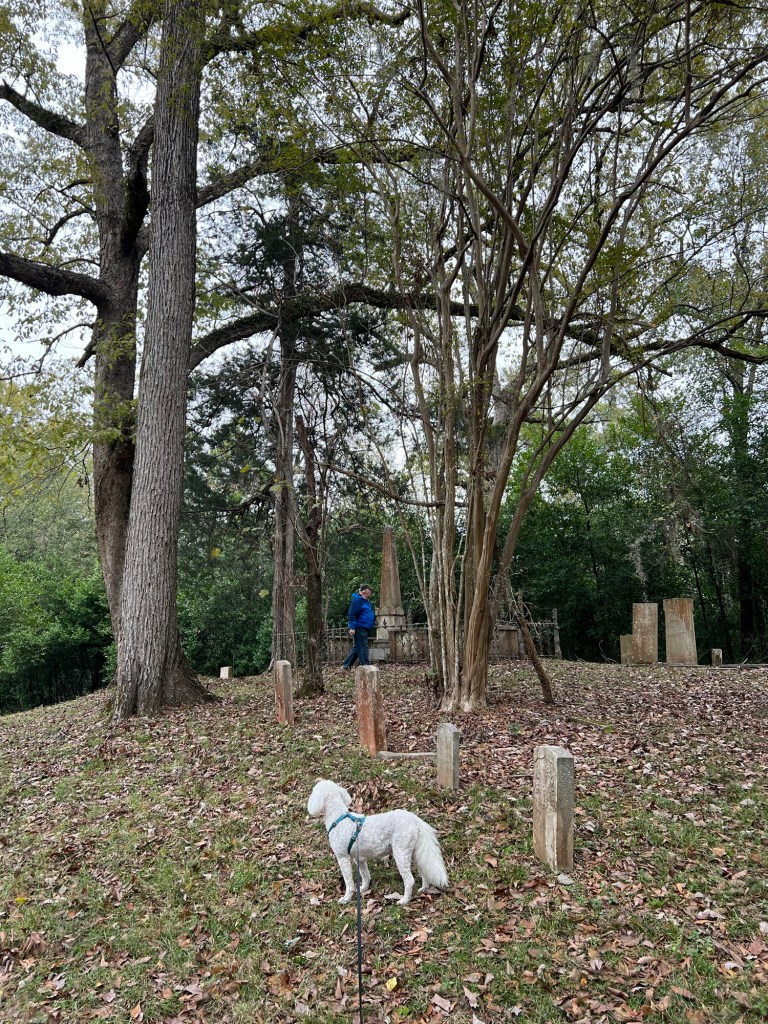
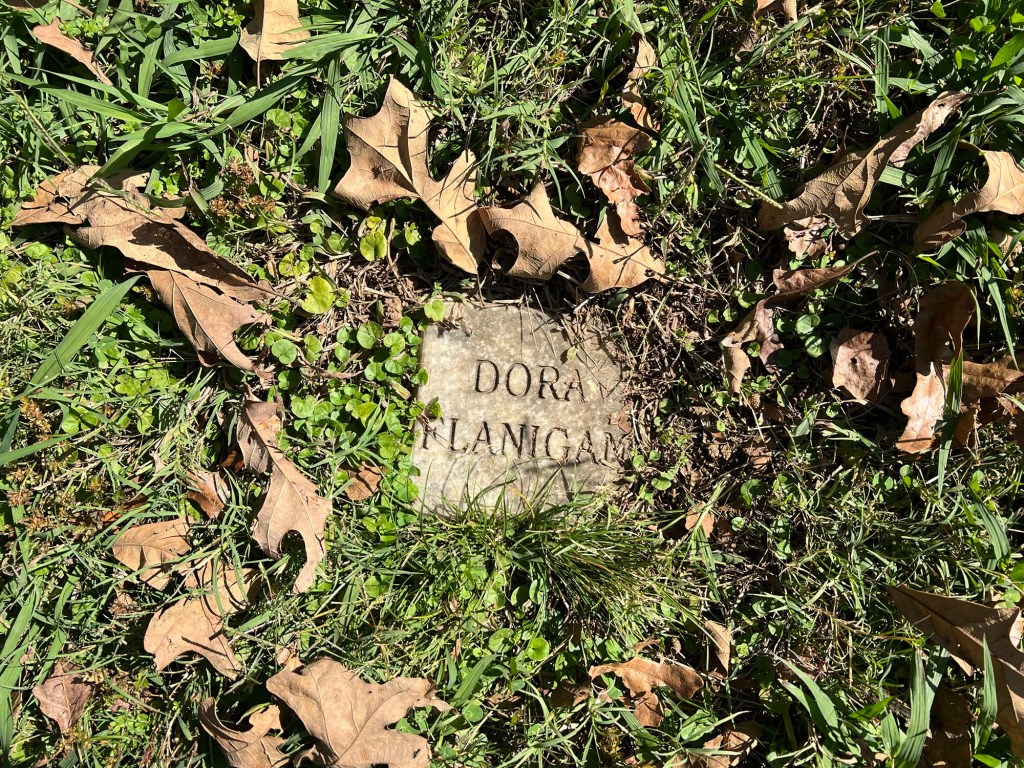
We then drove up to the top of a hill to the old cemetery.
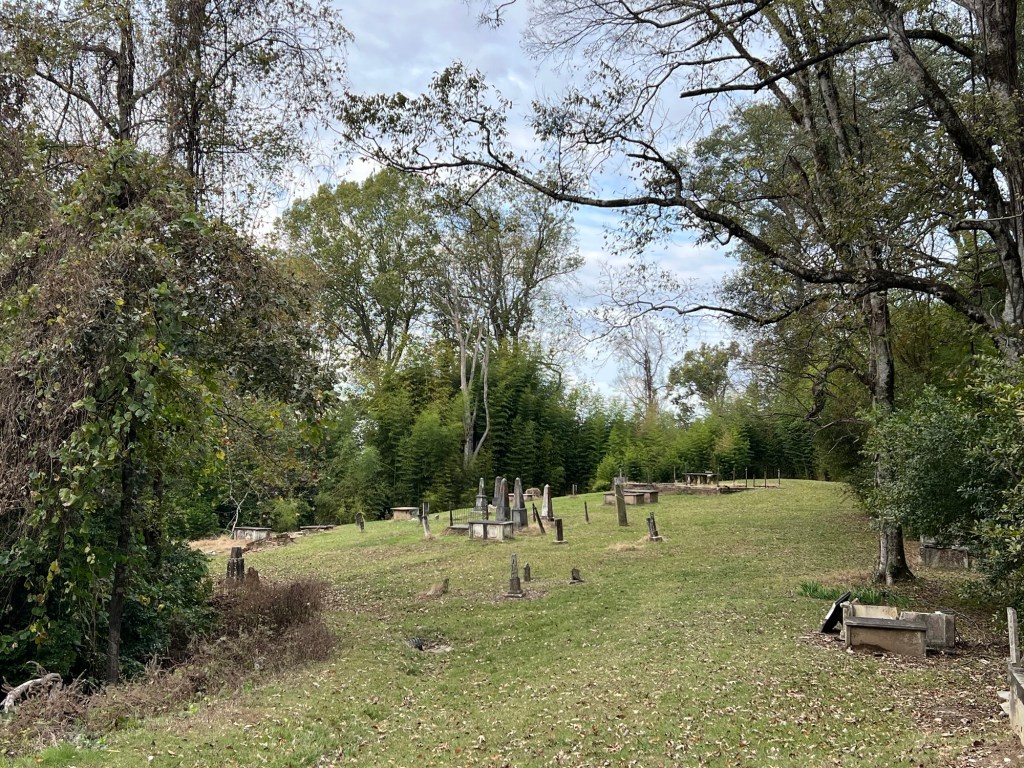
It stretches quite a long ways along the top of the ridge. I’m almost certain some graves have been lost to erosion.
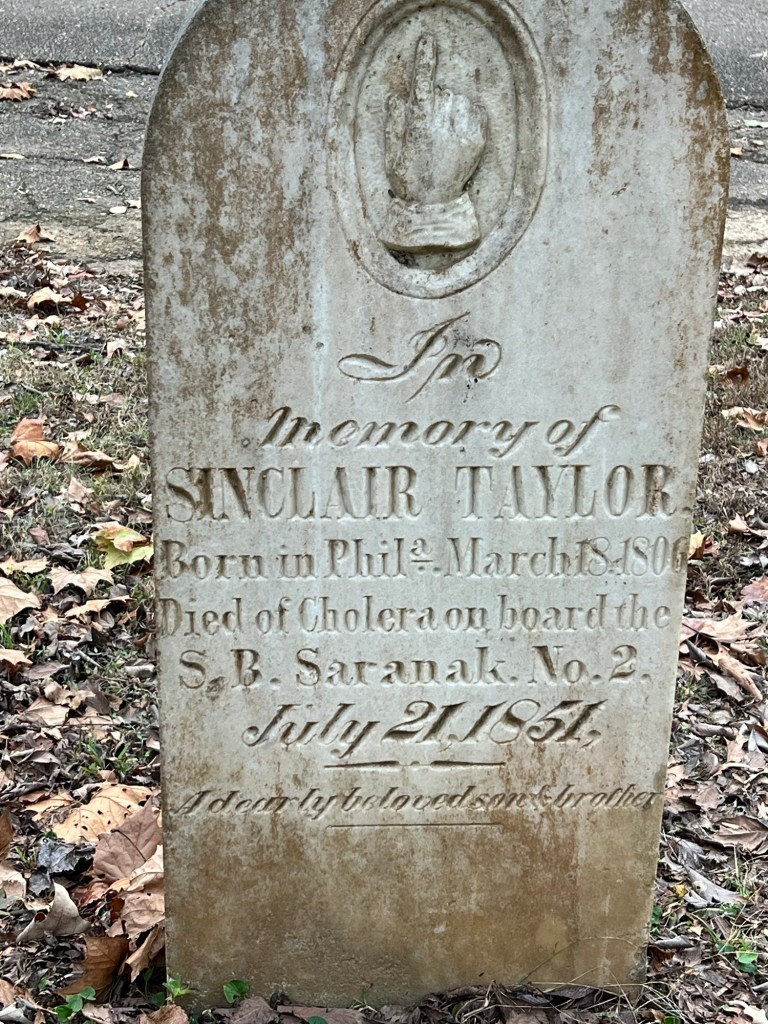
Cemeteries are filled with sadness…
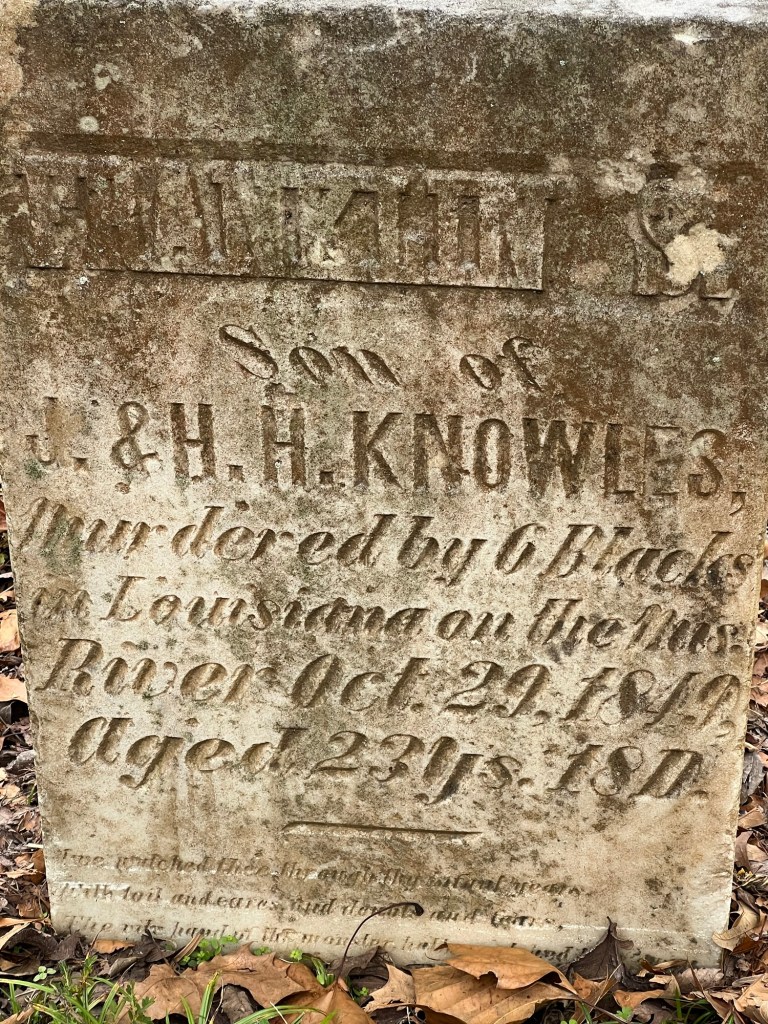
and drama. To be murdered by blacks in the south in 1849 I think this young man had to have been a bad actor.
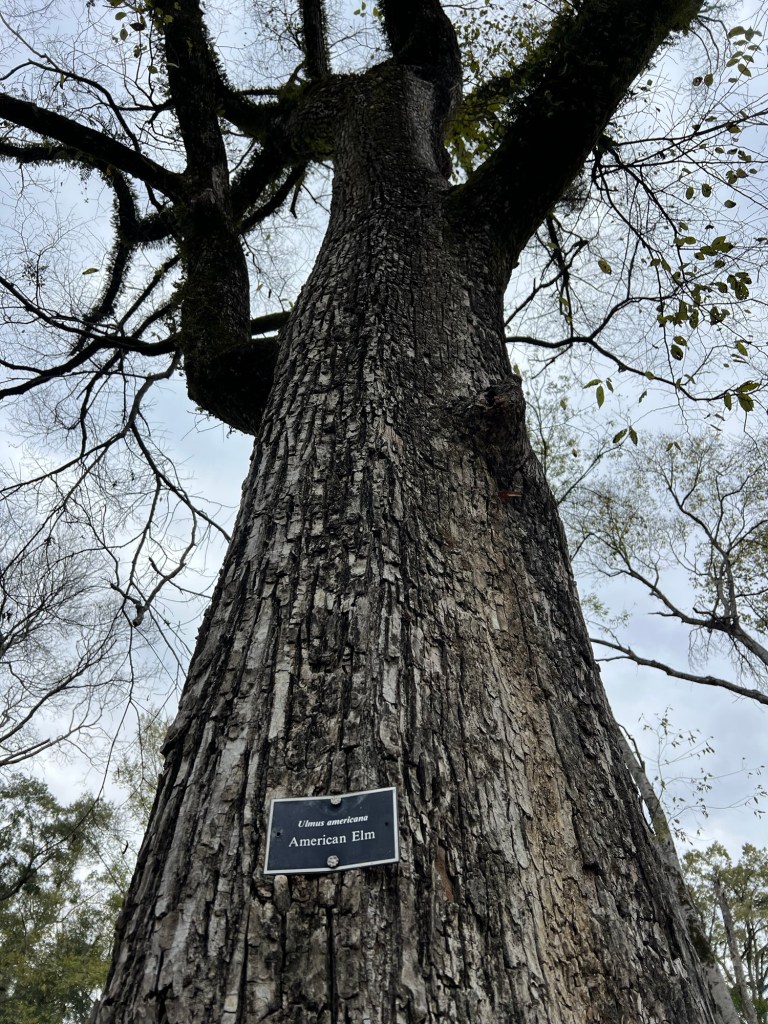
A happier sight was this gigantic American Elm, still thriving.
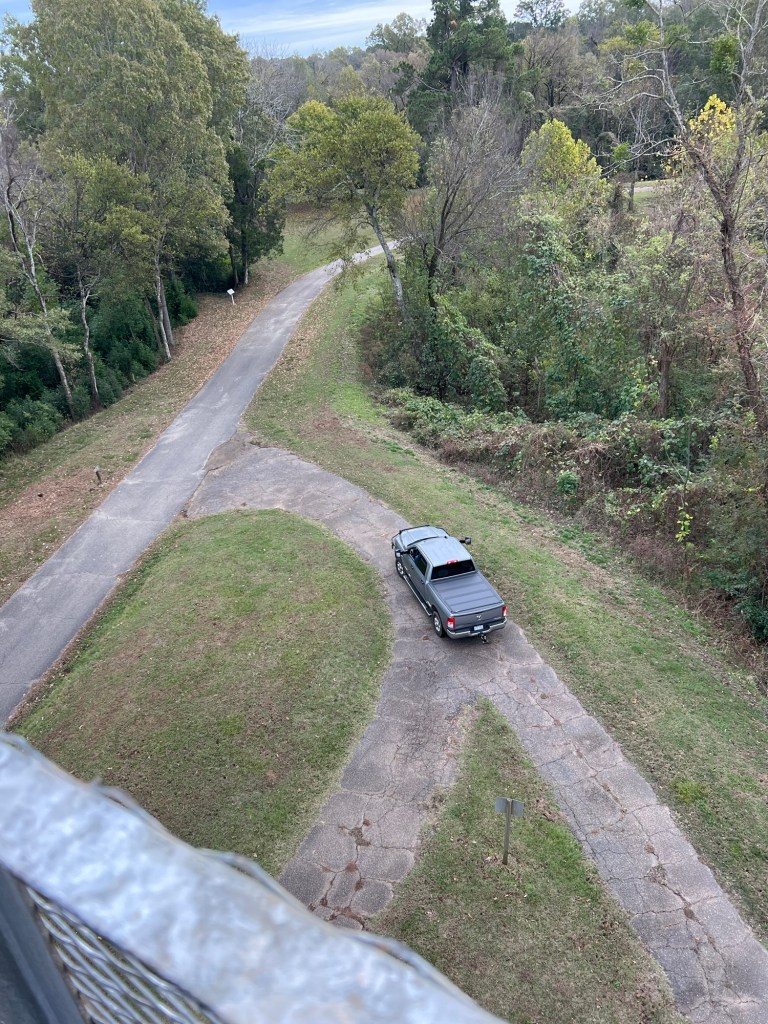
At the very top of the hill is an observation tower. I climbed it.
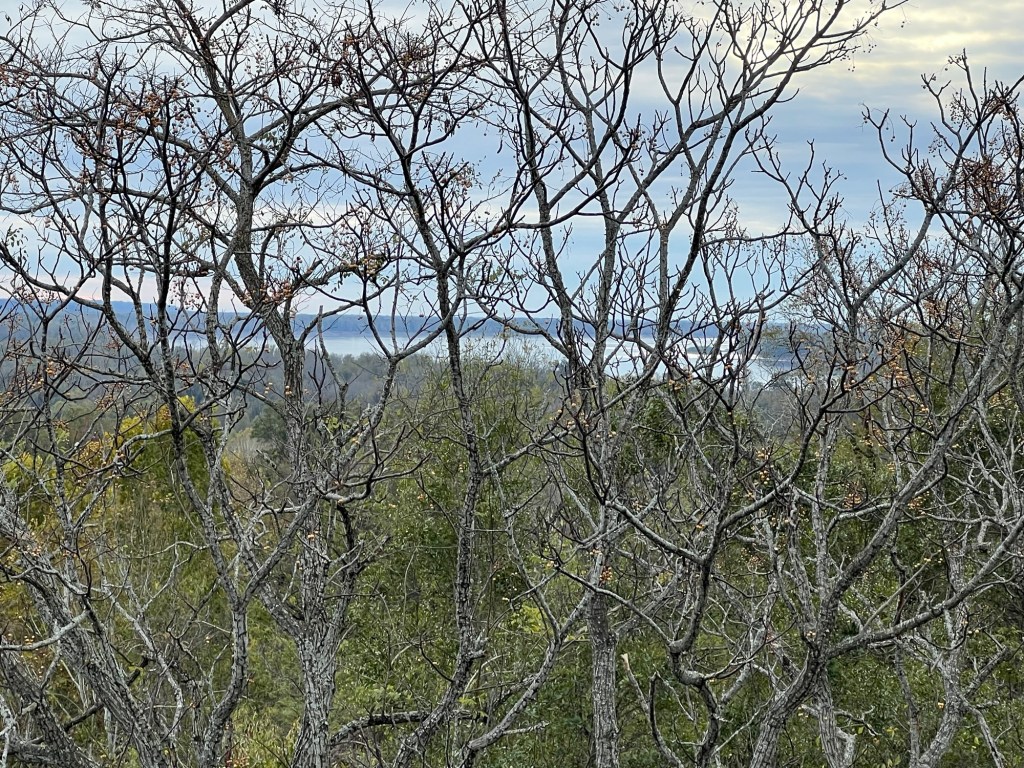
Trees had grown up, but I could still see the river…
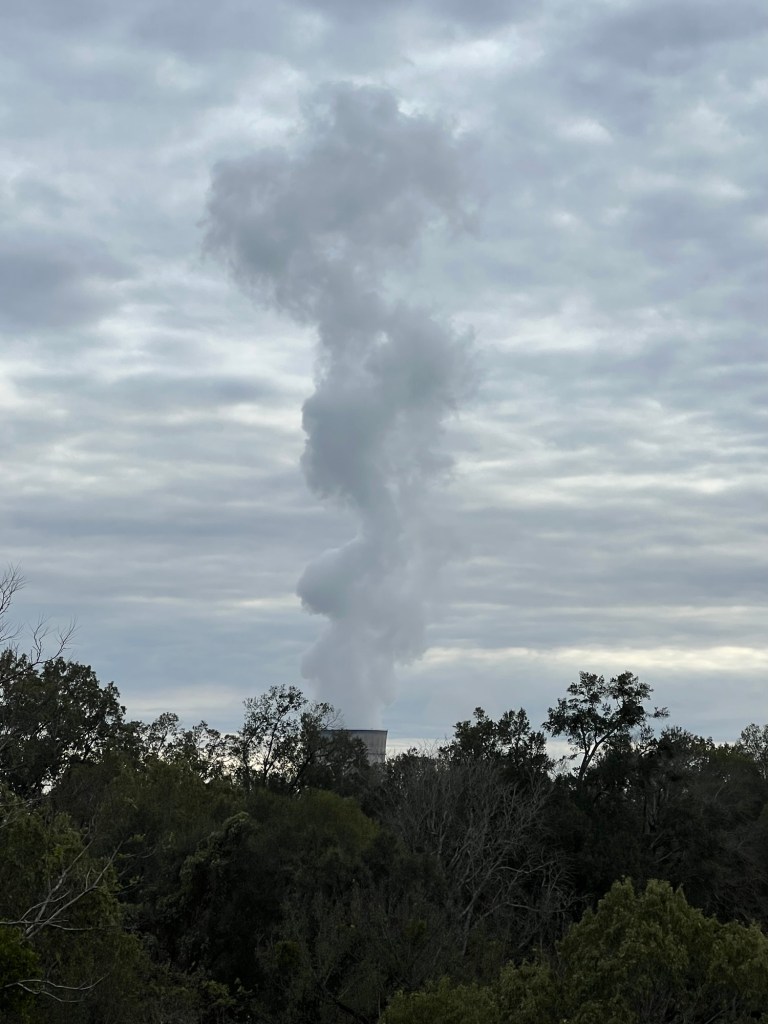
and the nearby Grand Gulf Nuclear Power Plant. You can’t see that from the ground because of the terrain, but we knew it was there. There are probably a dozen campers here that are temporary workers here to service the plant. Our neighbor came for that and ended up taking a full time position there. He and his wife and two dogs are all living in a pretty small trailer while they relocate from Chattanooga. He said they were preparing to refuel the plant in January.
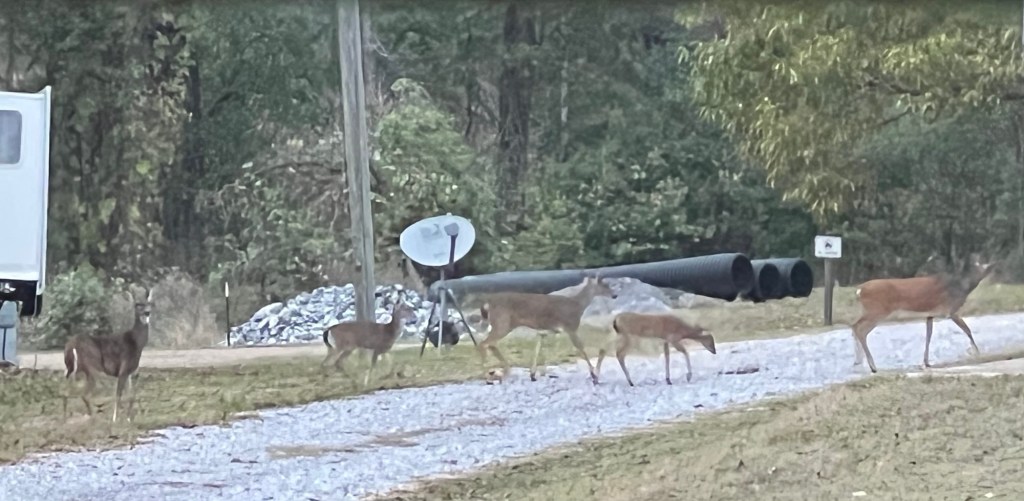
Except for the deer and the temporary workers,
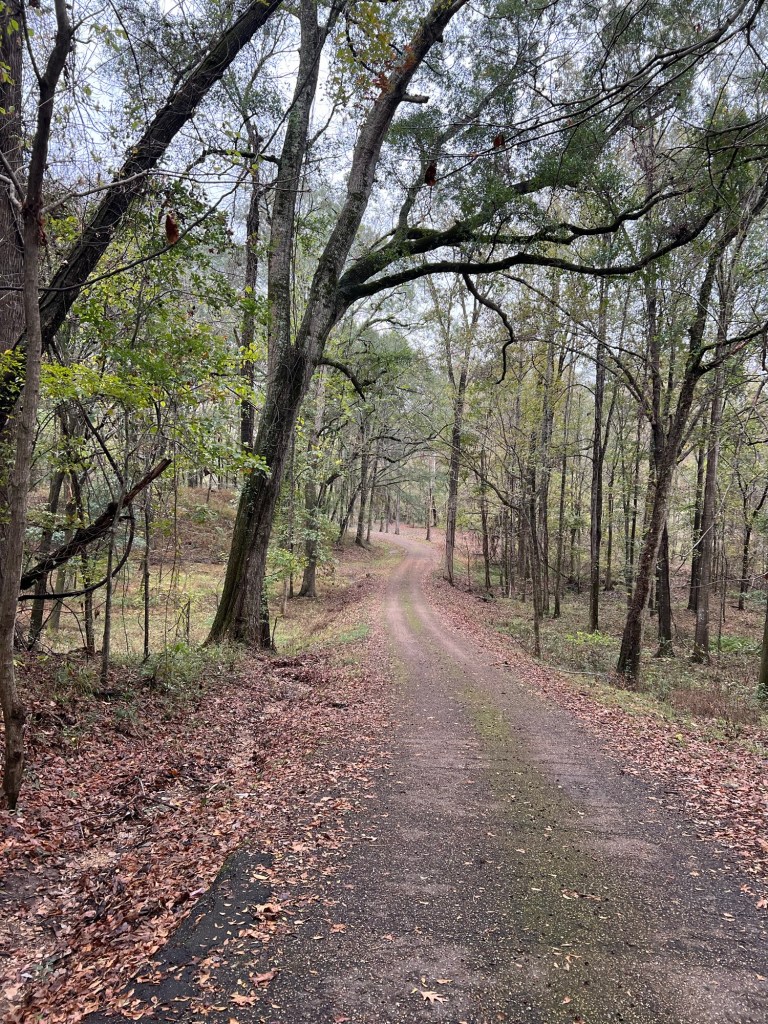
we have this lovely place to ourselves. What a great discovery.
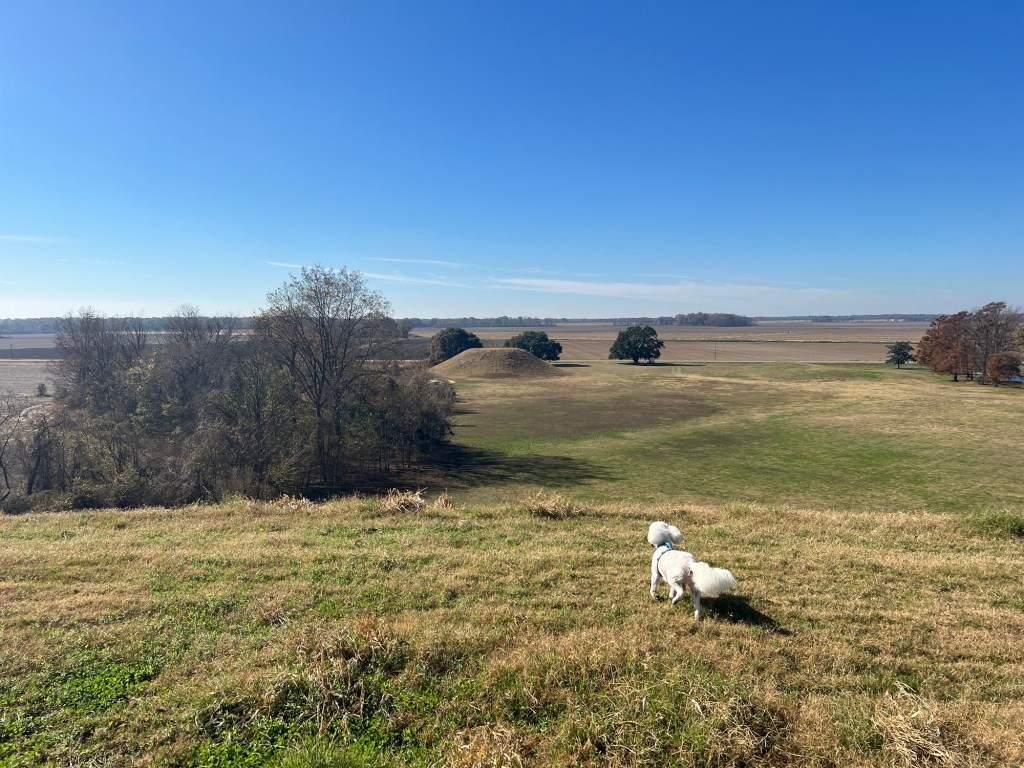
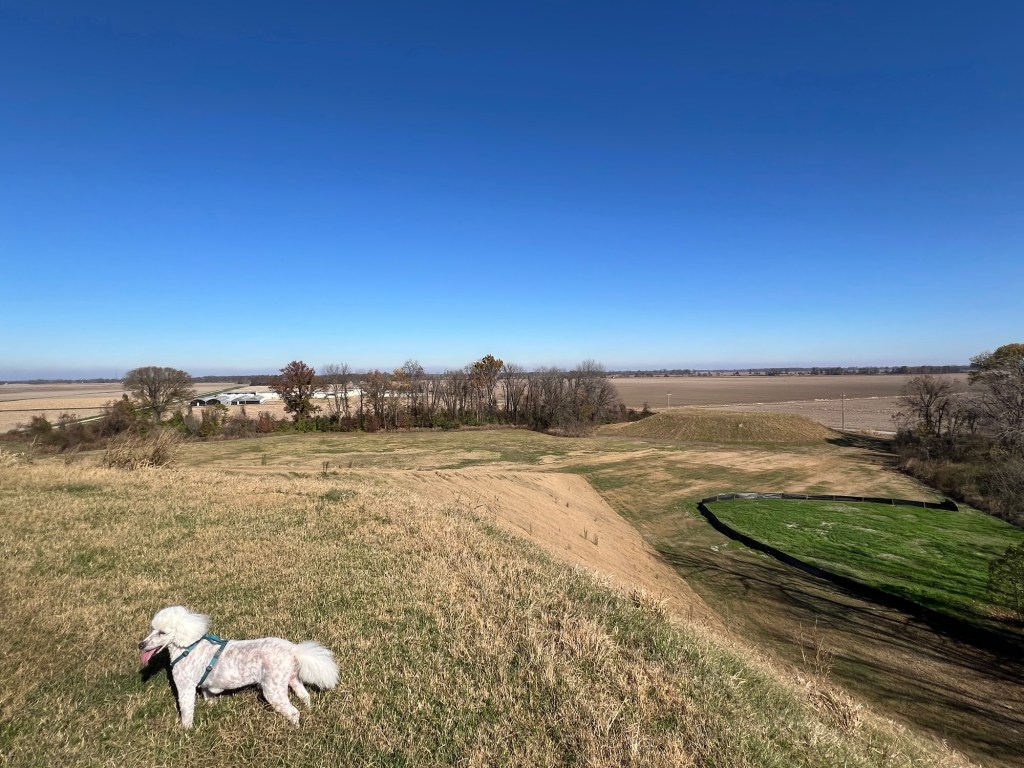
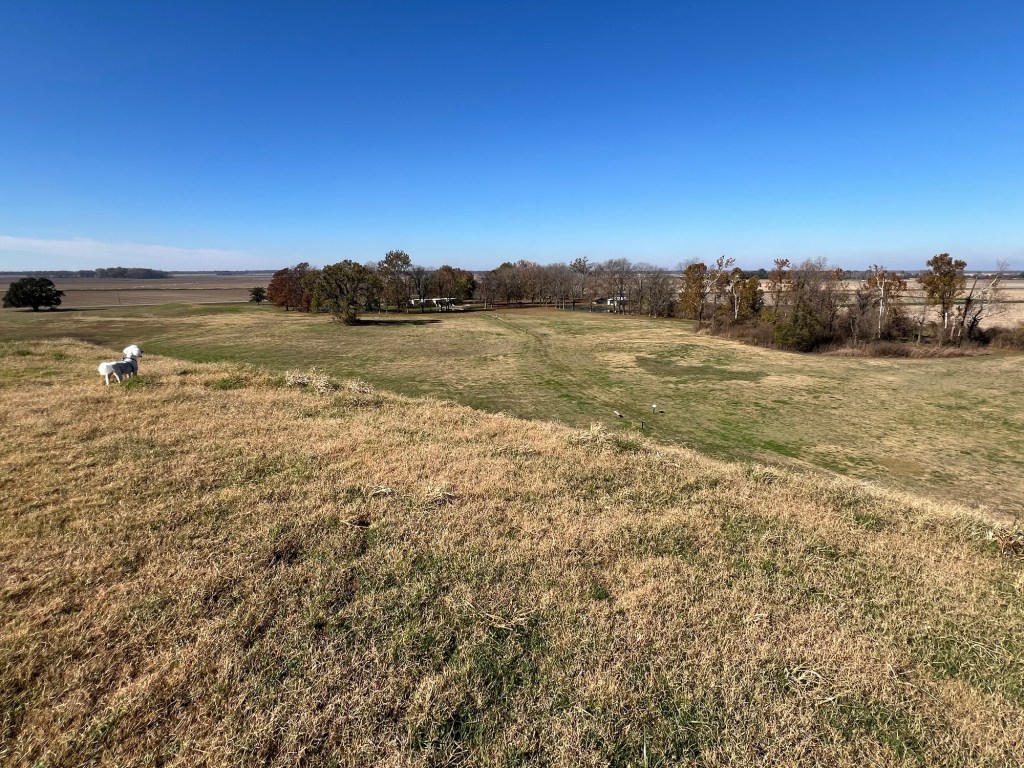
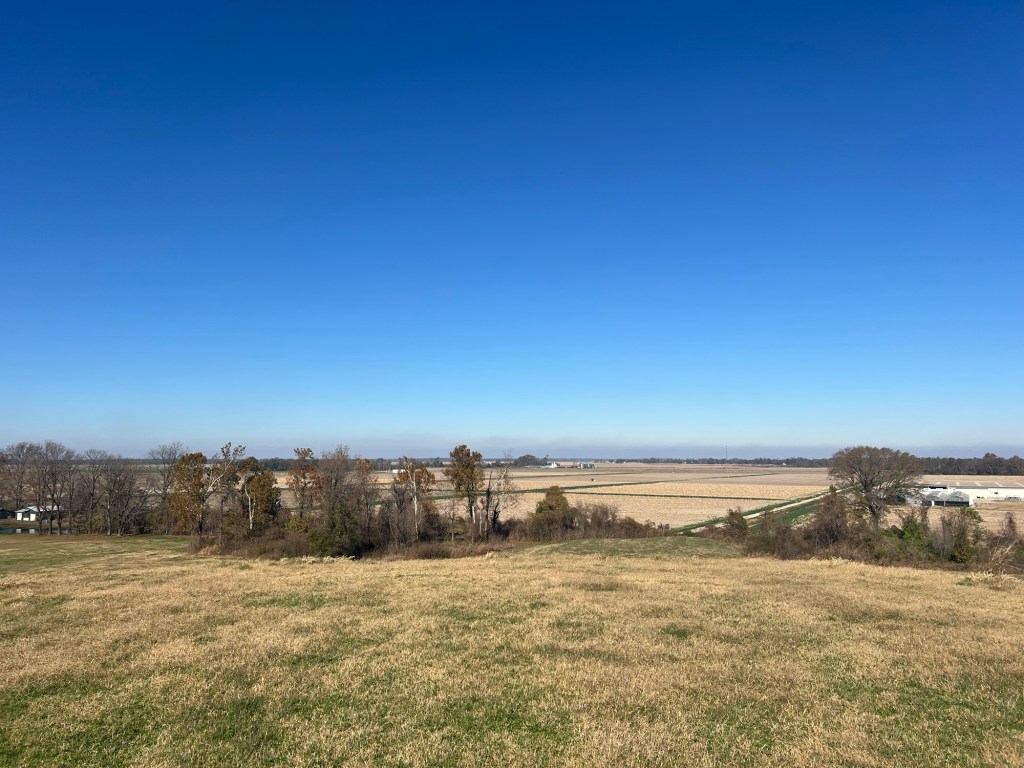

 On the Roam Again