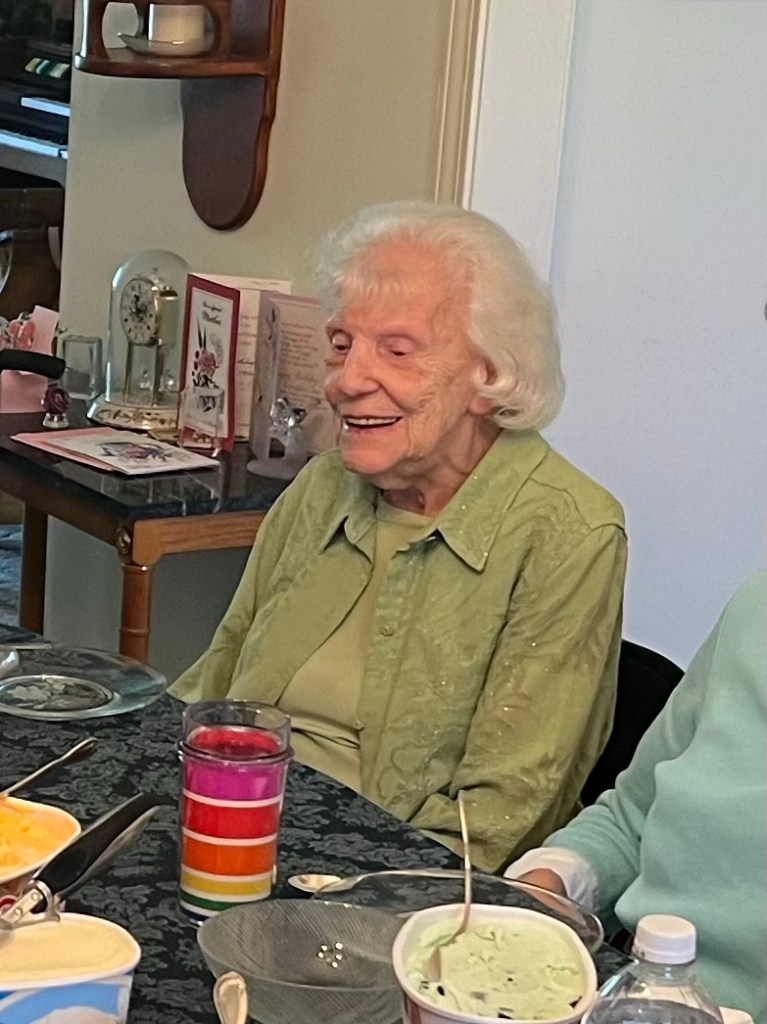
My mom, Marion K. Bebee, known to friends and grandkids as Marni, died last Wednesday, February 19th. This is a picture from the last time I saw her well, last May. Here we are celebrating her 105th birthday.
She even blew out her birthday candles. She was a remarkable woman, both for the length of her life and the quality of her caring. My cousin, Susan, told me she had just received a birthday card from Mom for her birthday February 12th.
Happily, Mom was pretty well until the last. I called her every day. On Saturday afternoon we had a nice talk and she assured me she was fine being by herself in her apartment. She could take care of her own needs, she said, and had just finished doing up her dishes.
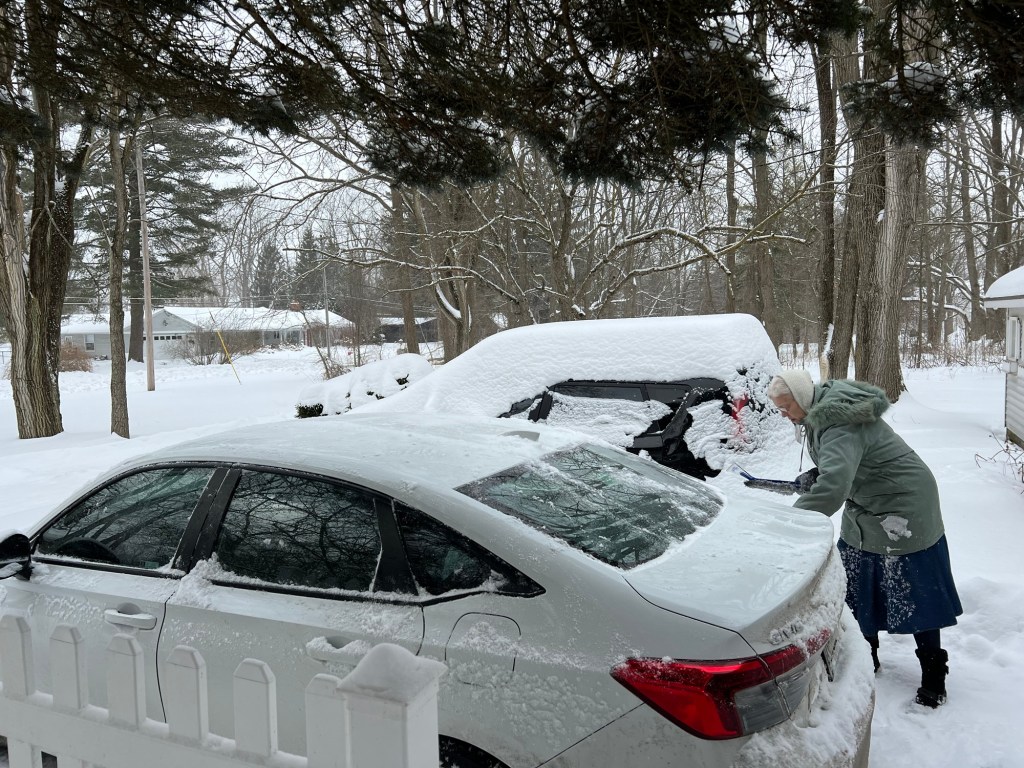
Unhappily, she died in February. I was able to fly up to be with my sister, Joan. I got here in time to be with Mom at the end, but I let Joan do the driving. I’m not used to this stuff!
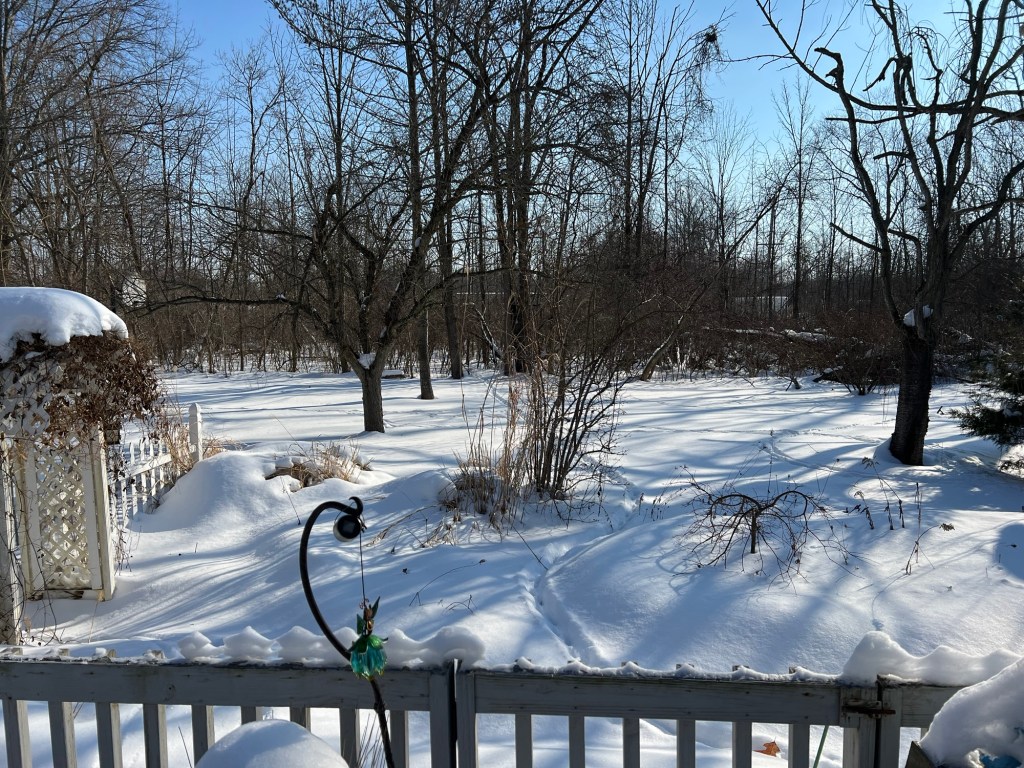
There is beauty in everything. There is beauty in a peaceful death after a long life lived well. There is beauty in the sun on the snow. But I would much rather have visited in May for Mom’s 106th birthday as planned. We’ll be up here again, then, but it won’t be the same.
After 37 days and seven great parks we have left Texas behind. We spent last night at Leasburg Dam State Park in New Mexico.
It was just a one night stay as I added this park halfway between Hueco Tanks and City of Rocks State Park when I learned that Hueco Tanks limited stays to three days. Oops. But it worked out, we didn’t have to unhitch on the level concrete pad at Leasburg Dam and woke up to this lovely sunrise.
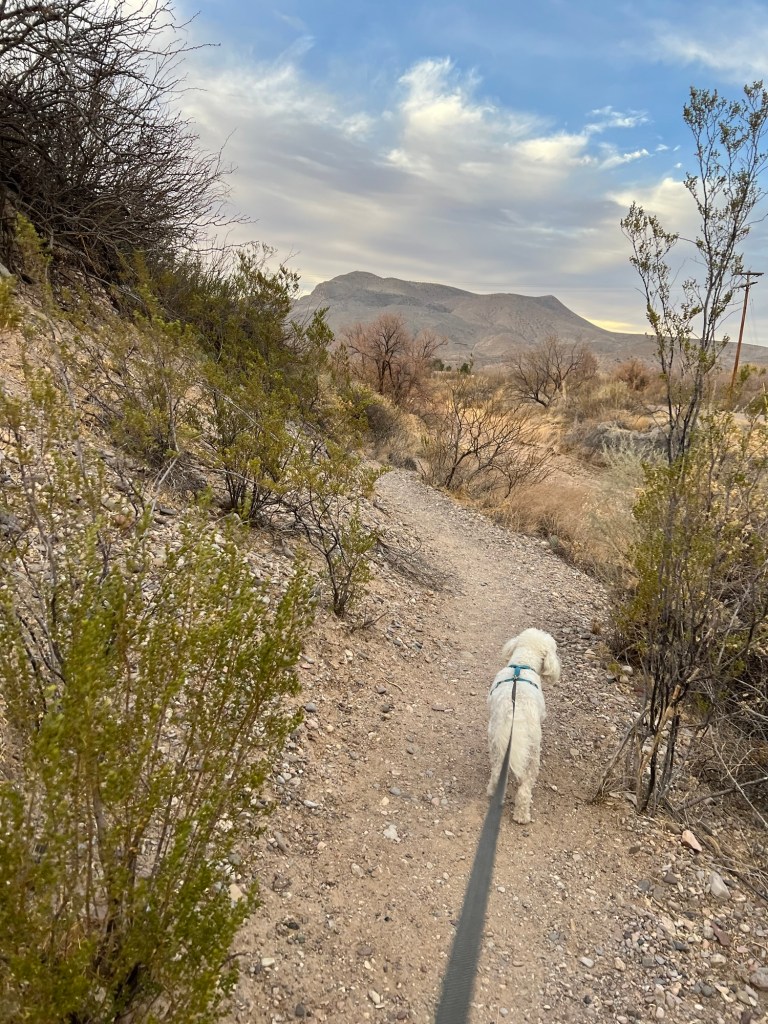
Matey and I had a nice walk on a loop trail this morning…
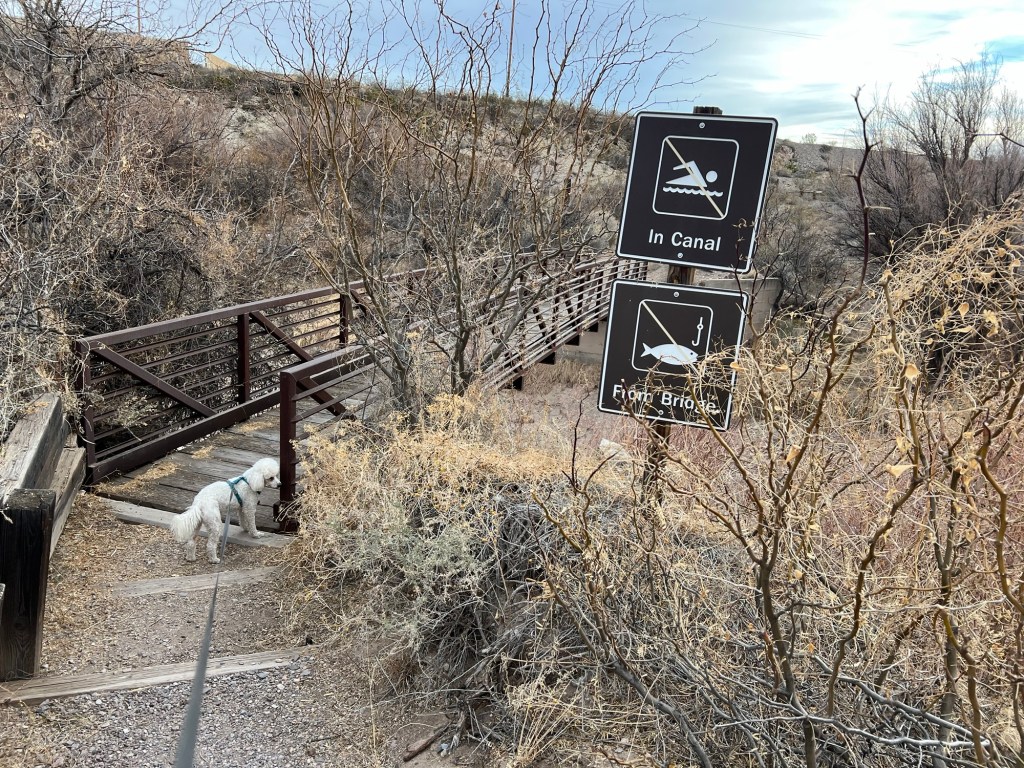
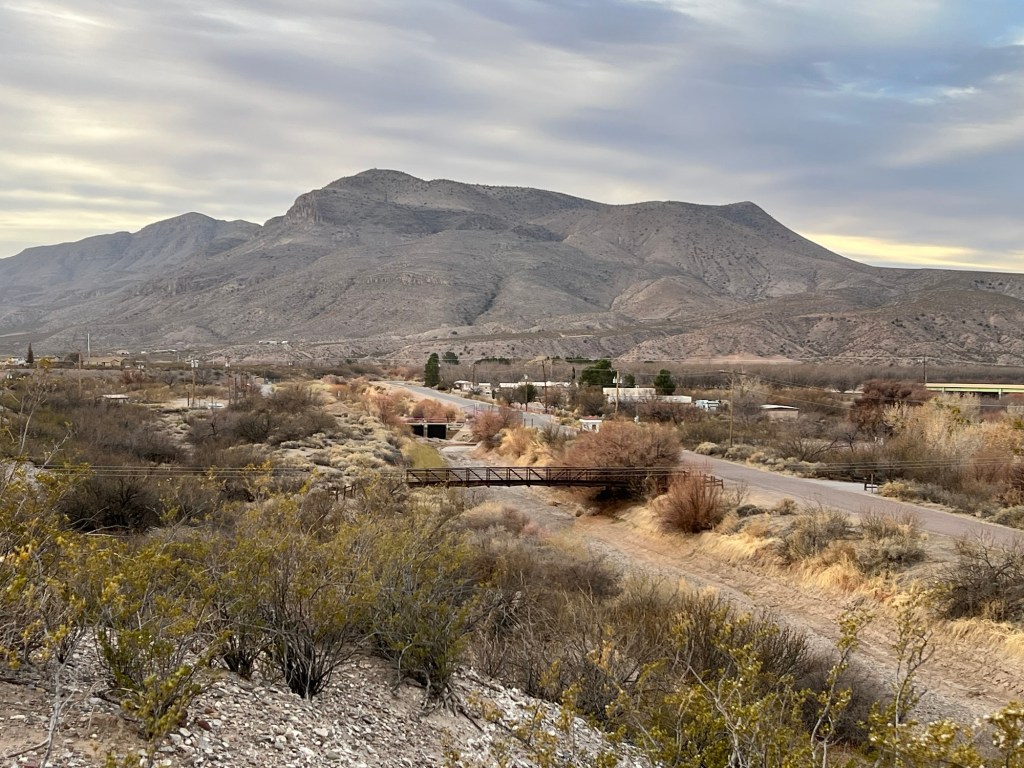
that took us across this bridge over a canal paralleling the Rio Grande. The warning signs weren’t needed now, the canal is perfectly dry.
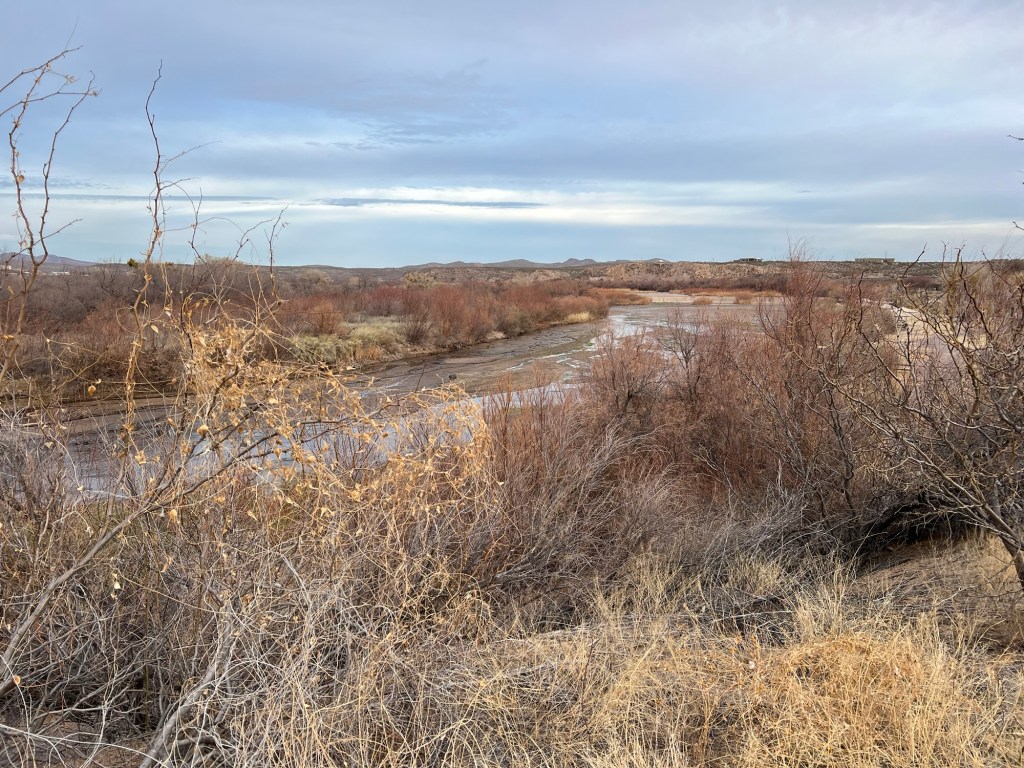
In fact, there wasn’t much water in the river…
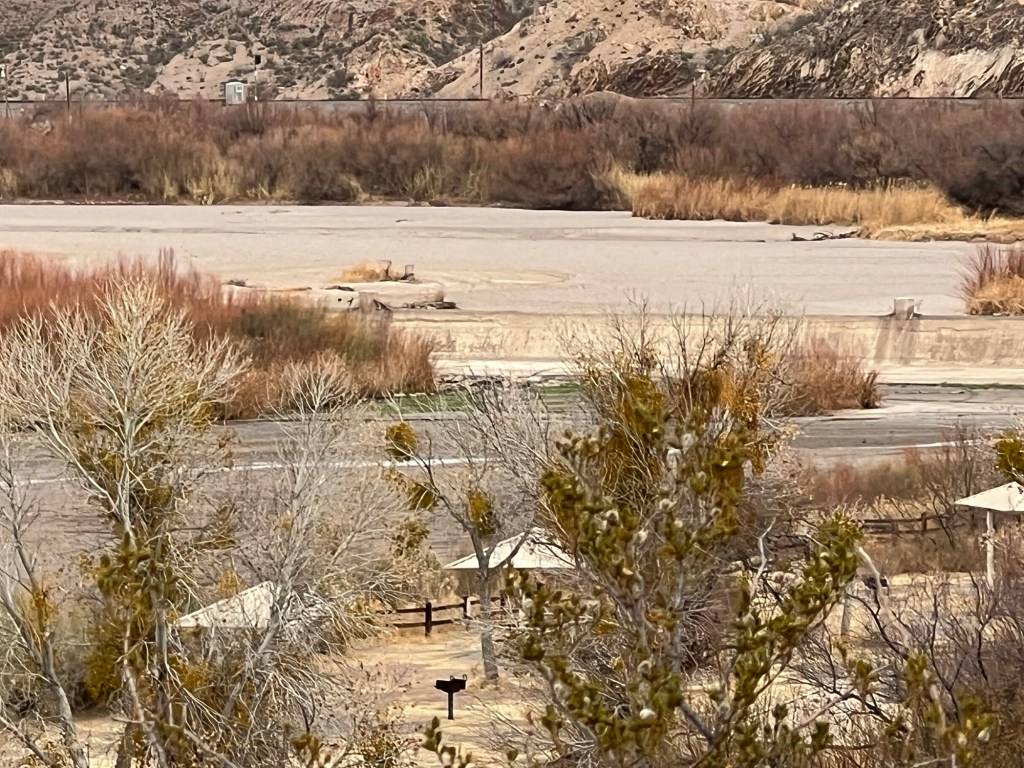
and the dam seemed to be holding back gravel.
But it was scenic…
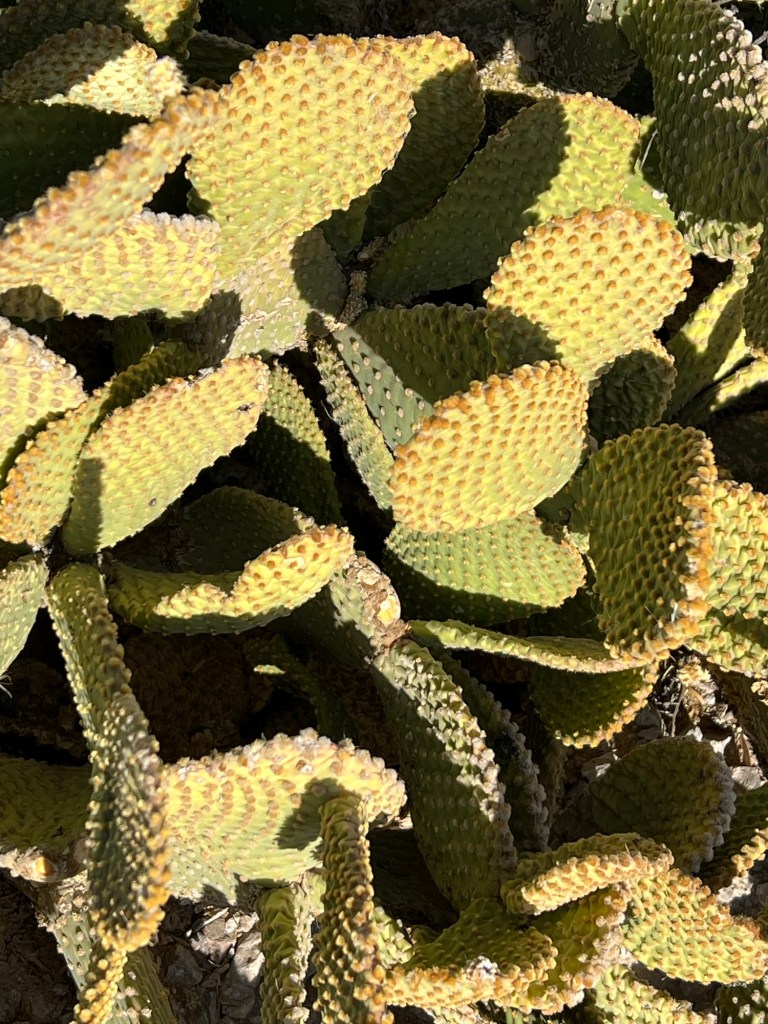
and we found this species of prickly pear cactus that I remember from past trips but hadn’t seen this year. I love its reddish polka dots, but those are very tiny but very penetrating spines, so I was careful not to brush against it.
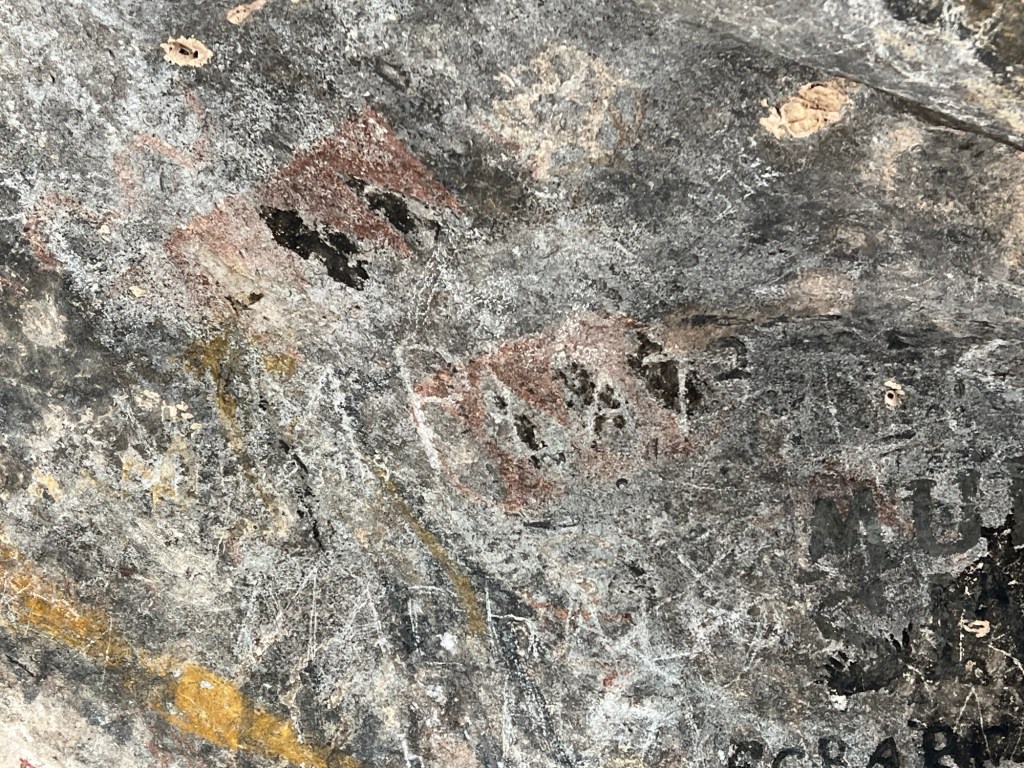
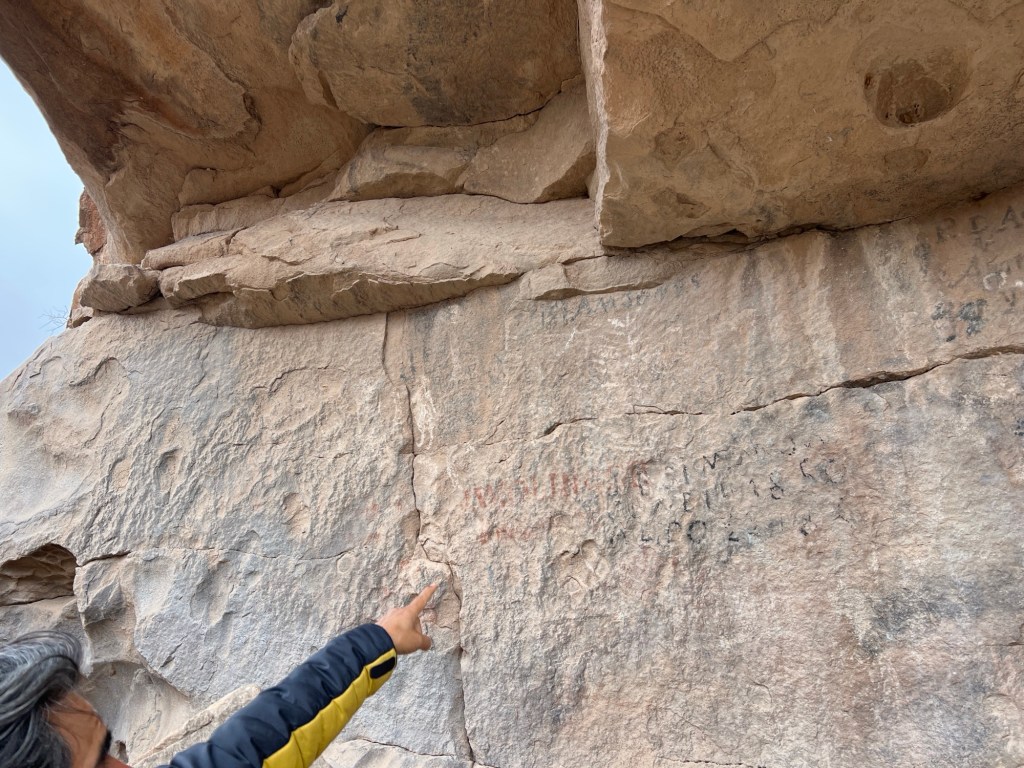
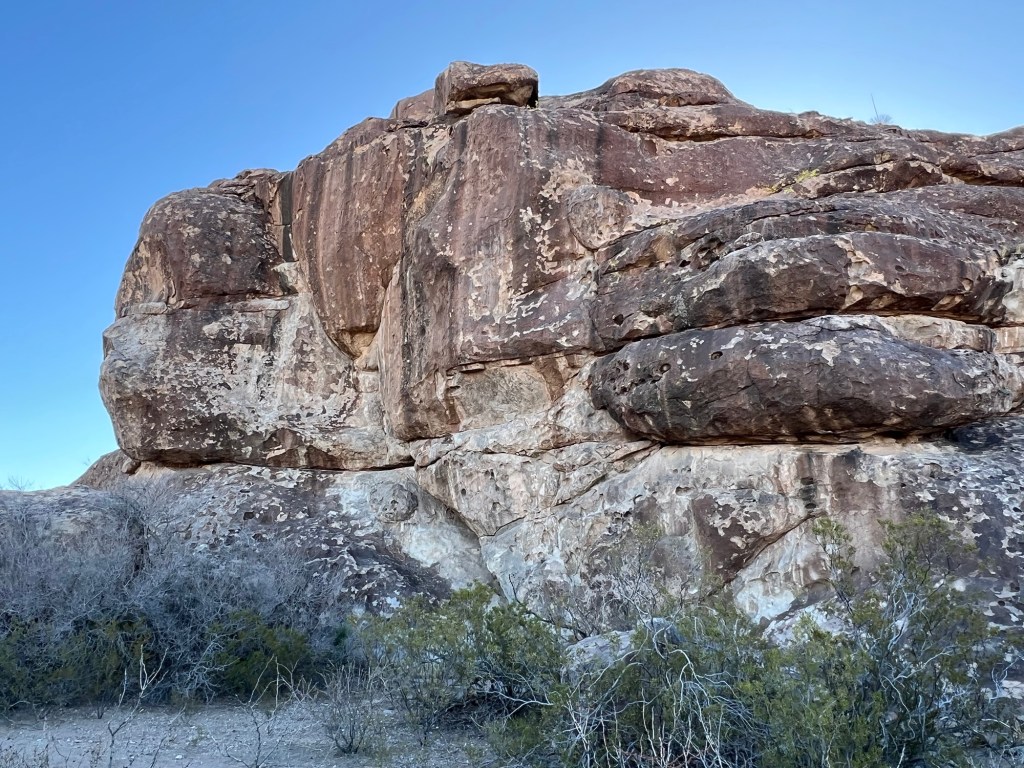
The main draw of Hueco Tanks are the incredible pictographs that have been painted here over thousands of years. The earliest ones are from over 6,000 years ago. Yesterday I went on a guided tour to see them. This was the first wall we stopped at. Although it looks like all that is here is writing from the historical era (late 1800’s) there are ancient pictographs underneath.
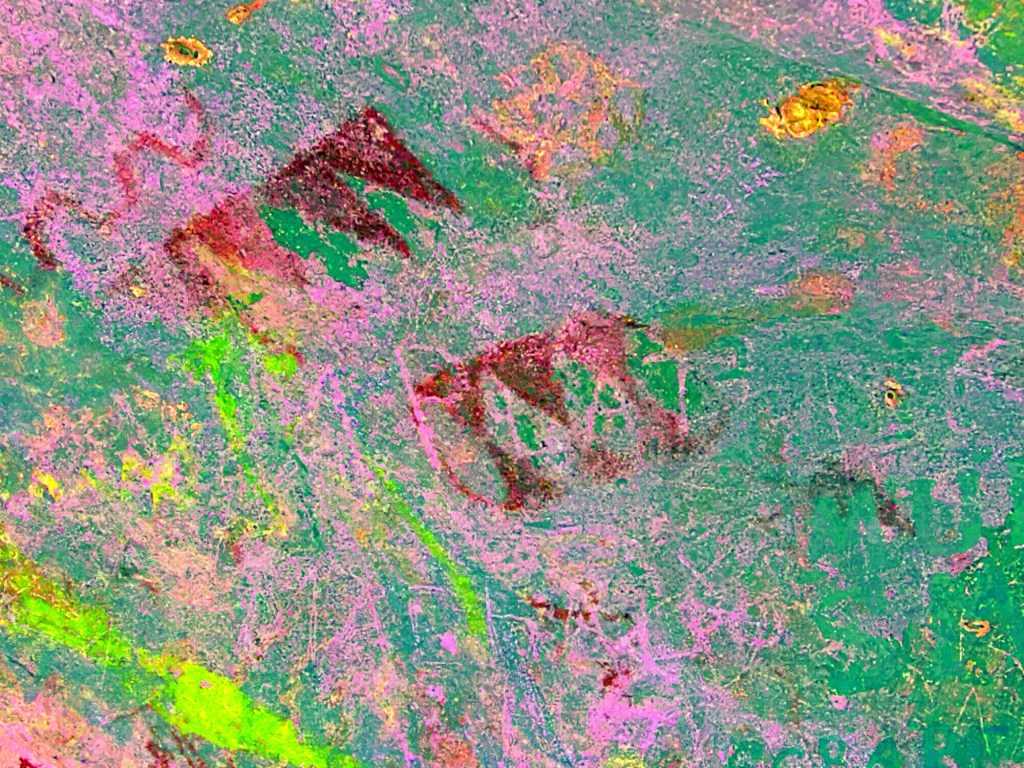
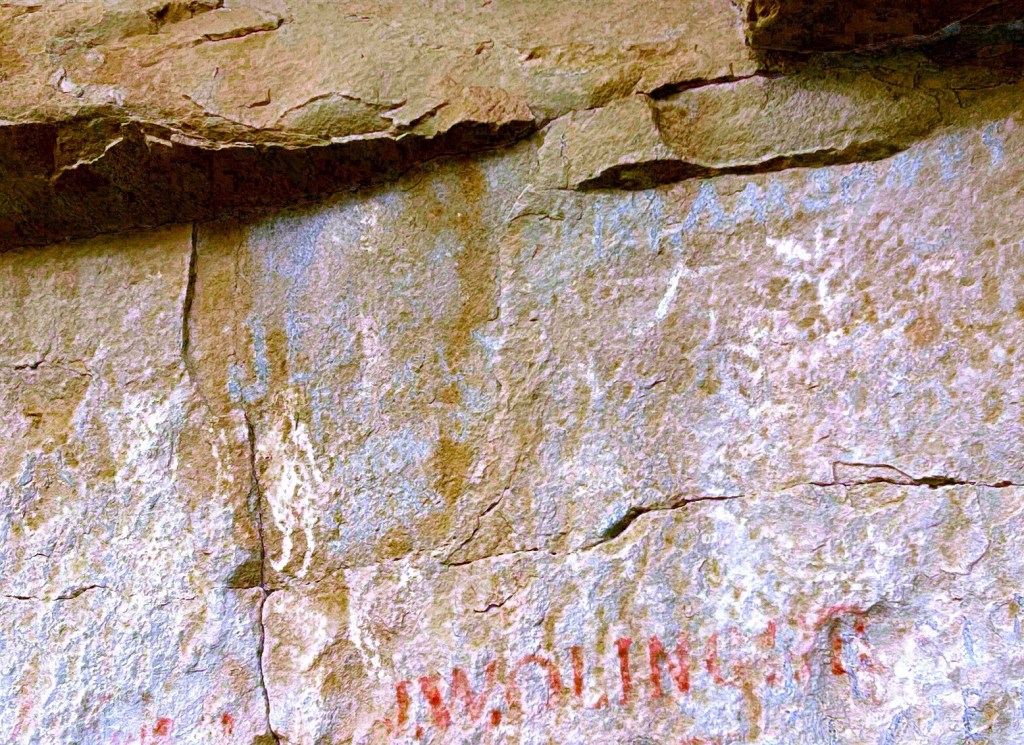
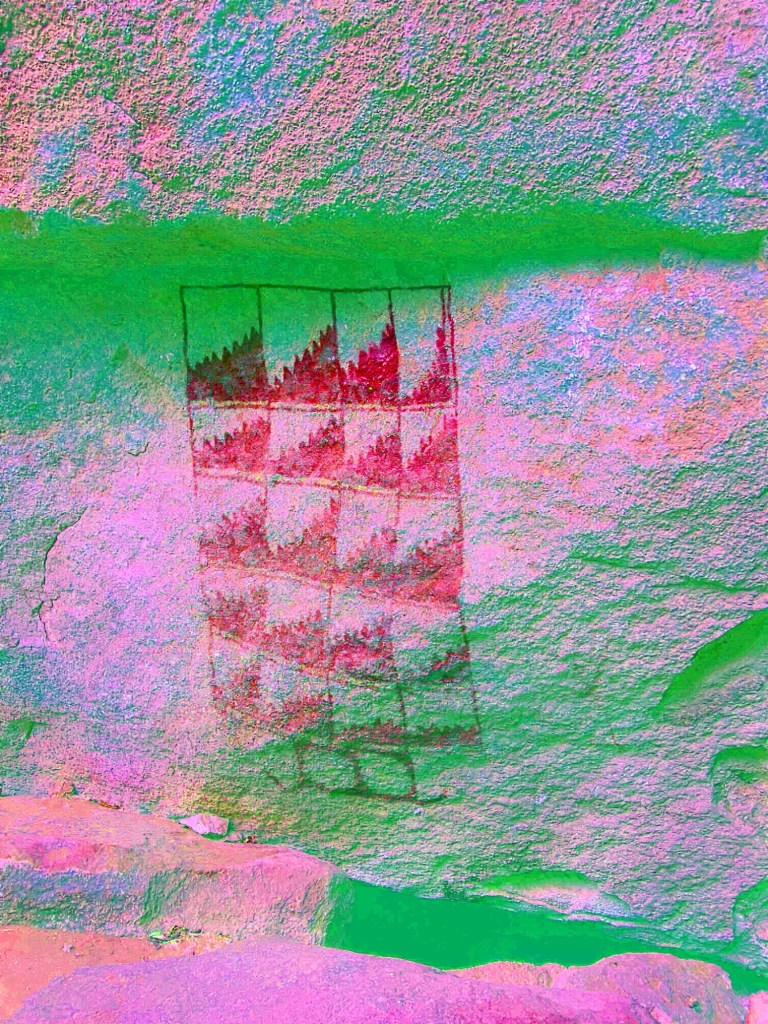
I have an app called iDStretch that lets you look at your picture with different colors and can bring out the pictographs. This is the same photo, but now you can barely see the more recent writing while the 6,000 year old pictographs stand out.
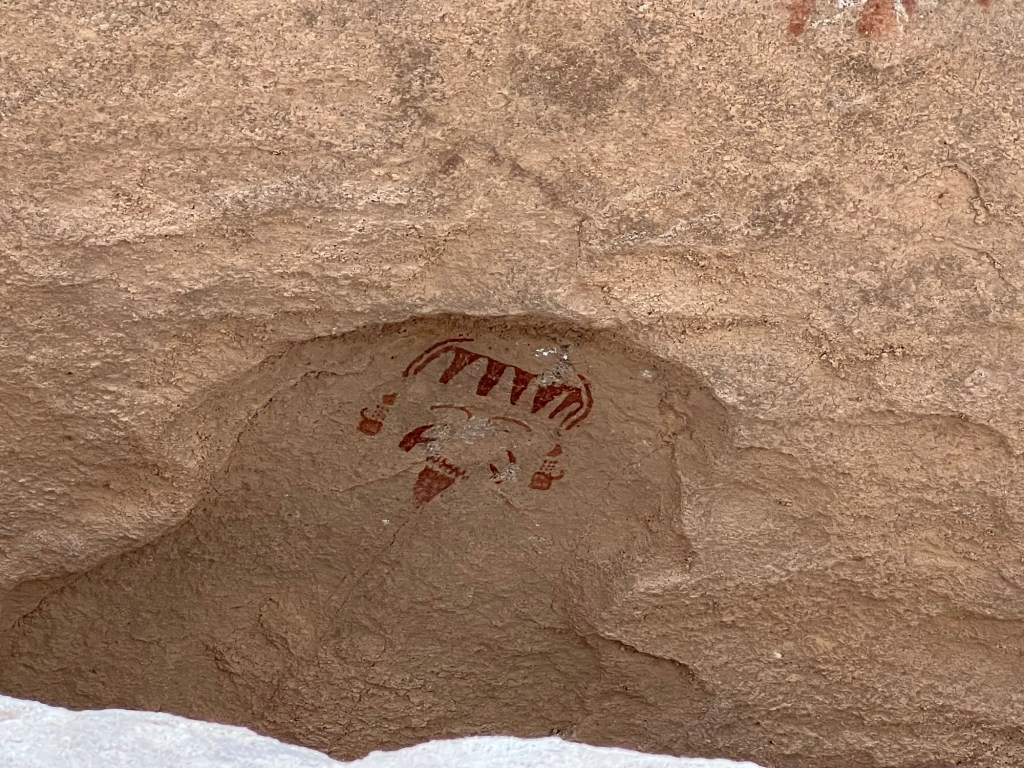
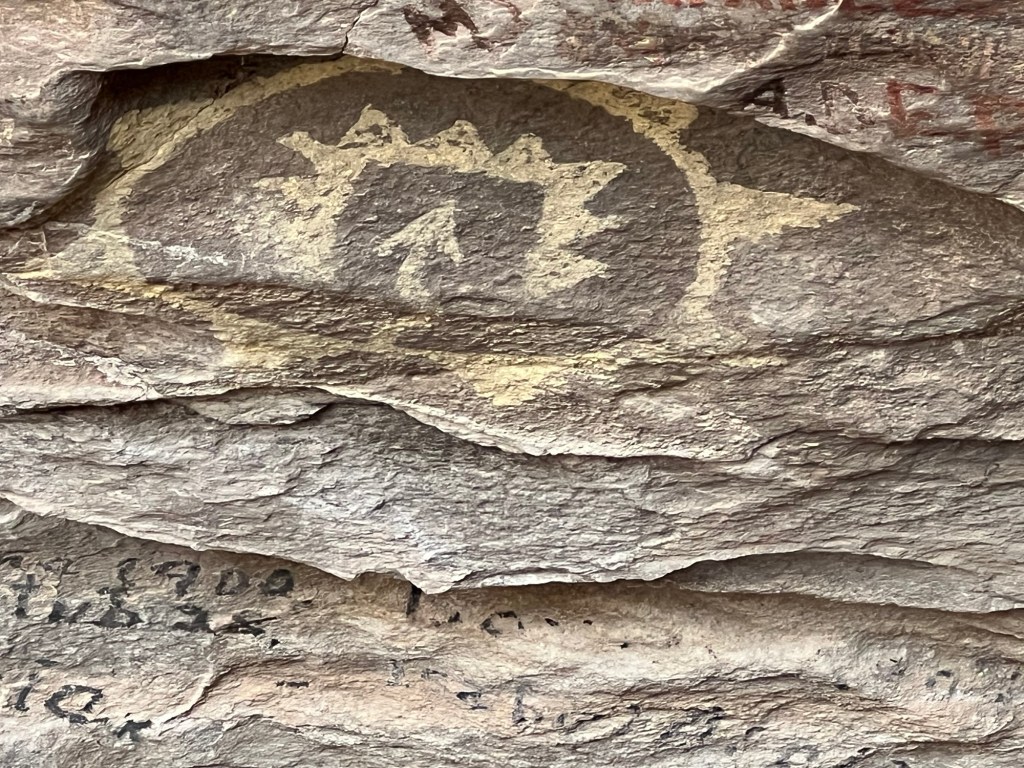
A number of these images have been dated and our guide told us the oldest ones were mostly geometric designs like those in that first picture. My favorites are the masks like this one that are about a thousand years old.
Here, our guide Chris is pointing out part of a story pictograph. The white tree that shows quite faintly is part of what is in essence a story mural. These were done in the more recent past.
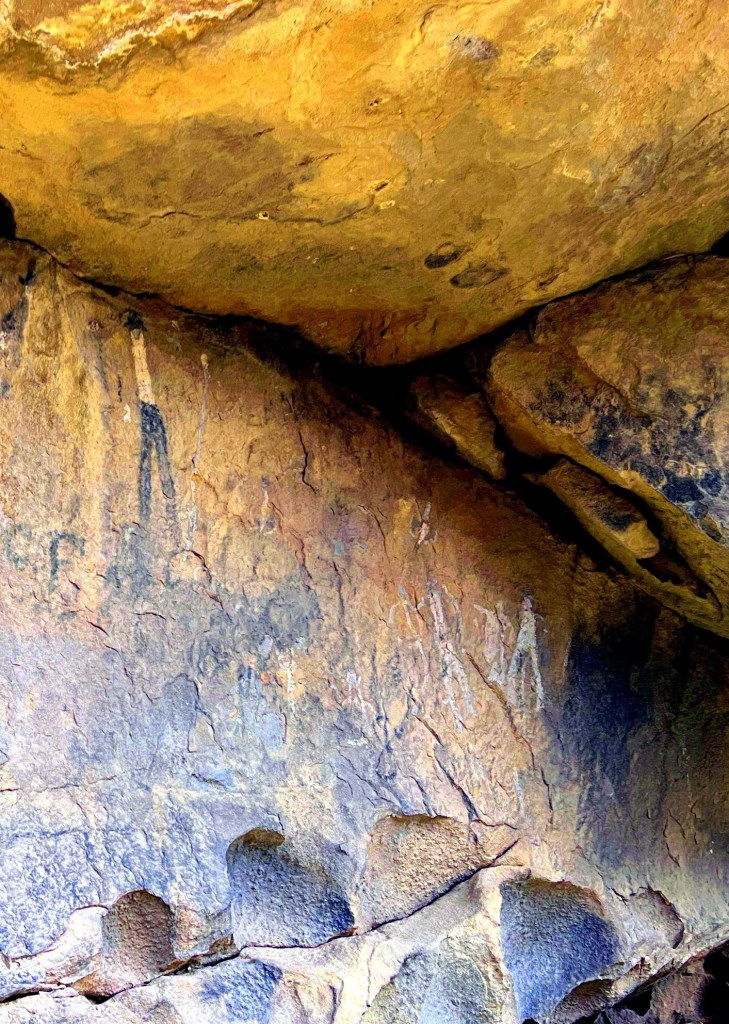
Using the enhanced images you can see a few white figures to the left and the tree to the right.
The other side of this drawing shows more figures, including a man who appears to be wearing pants and a hat. The Kiowa say this is the story of a small band of Kiowa who were trapped in a nearby canyon by enemies, including Spaniards. The legend is that after some time holed up in this cave at the end of a box canyon the Kiowa climbed up through the cave and over the canyon wall at night and escaped.
Chris then took us into the canyon…
and up to the cave.
Three climbers went up a ways to see what it was like. Chris has done the climb, and it was very scary and dark in the daytime with modern equipment. Those Kiowa were pretty desperate to do it at night with no equipment at all.
We scrambled around and saw some other neat pictographs.
They are quite startling when you enhance them.
Some more recent ones need no enhancement at all.
It was a fun hike and we went places that I wouldn’t have gone on my own, and not just because it’s not allowed. There was a lot of climbing, but I didn’t get pictures of the steep parts, I was too busy trying to stay on my feet and keep up.
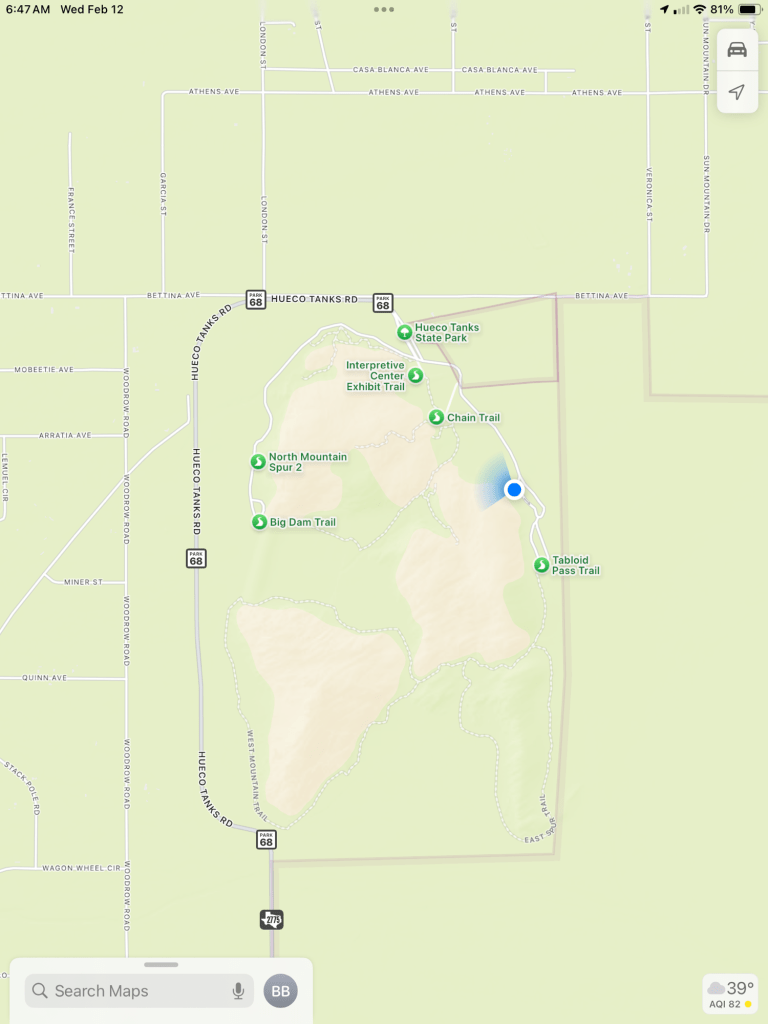
We came to this state park on our first journey west as full-timers. We liked the campsites then and we like them now.
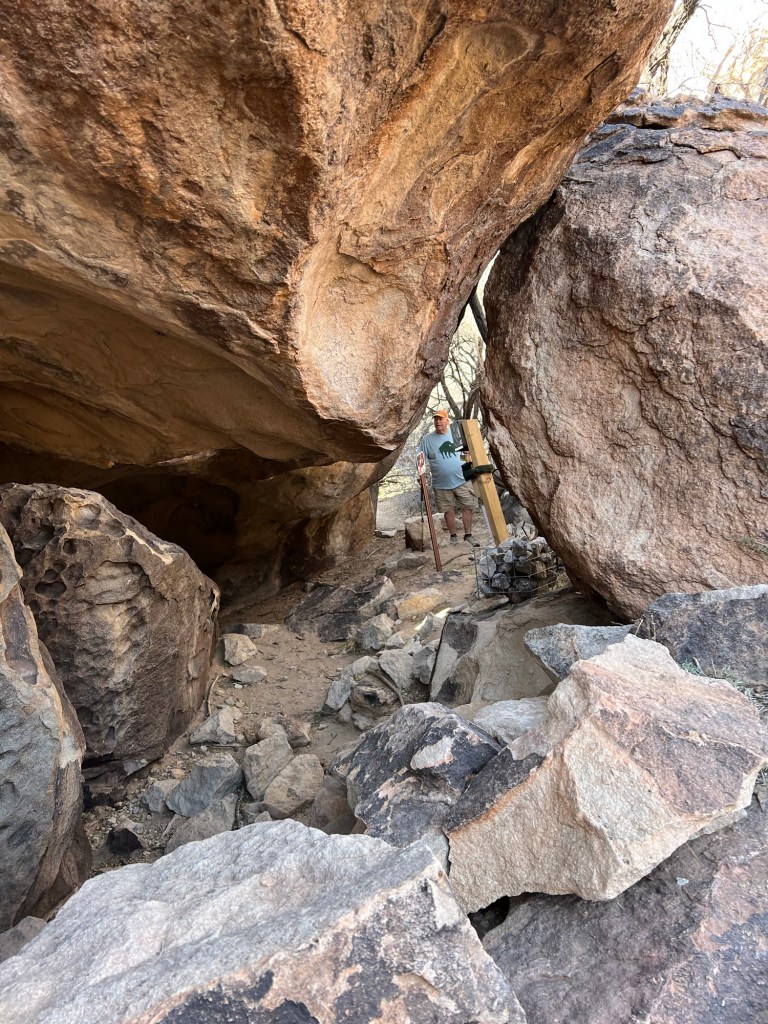
The state is very protective of this area, the hills of rock here are impermeable to water so collect water in their depressions, making this a place that has been visited by humans for millennia. Pets are only allowed in areas outside the rocks and without a guide visitors can only visit the North Mountain. A permit is required for that.
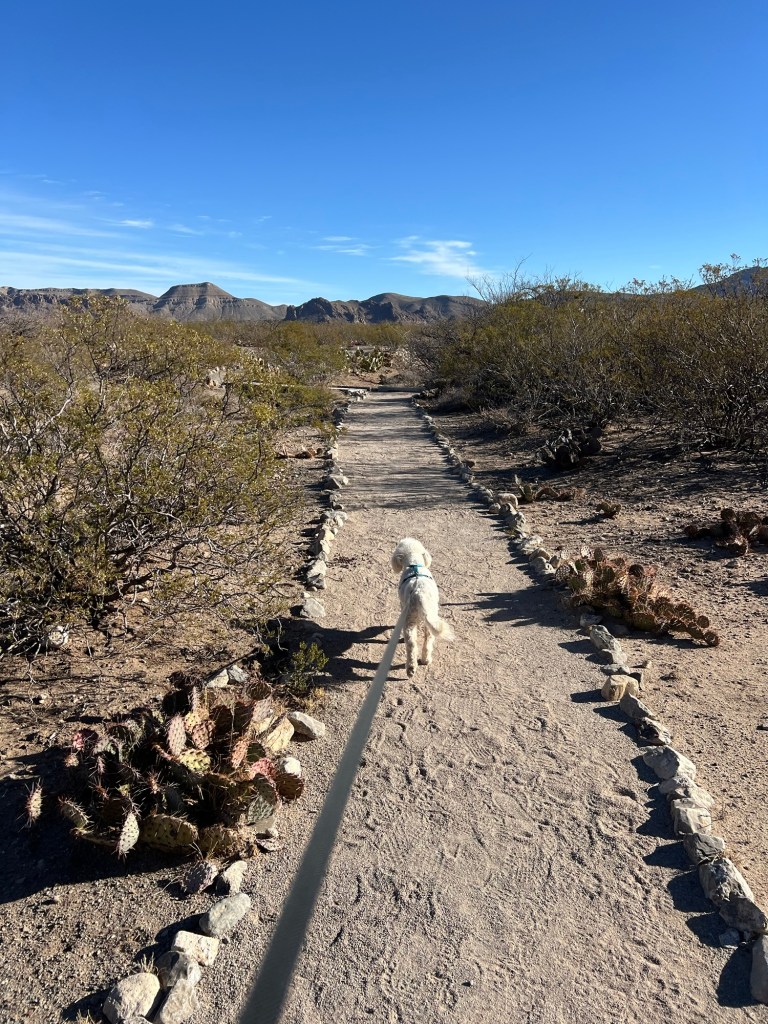
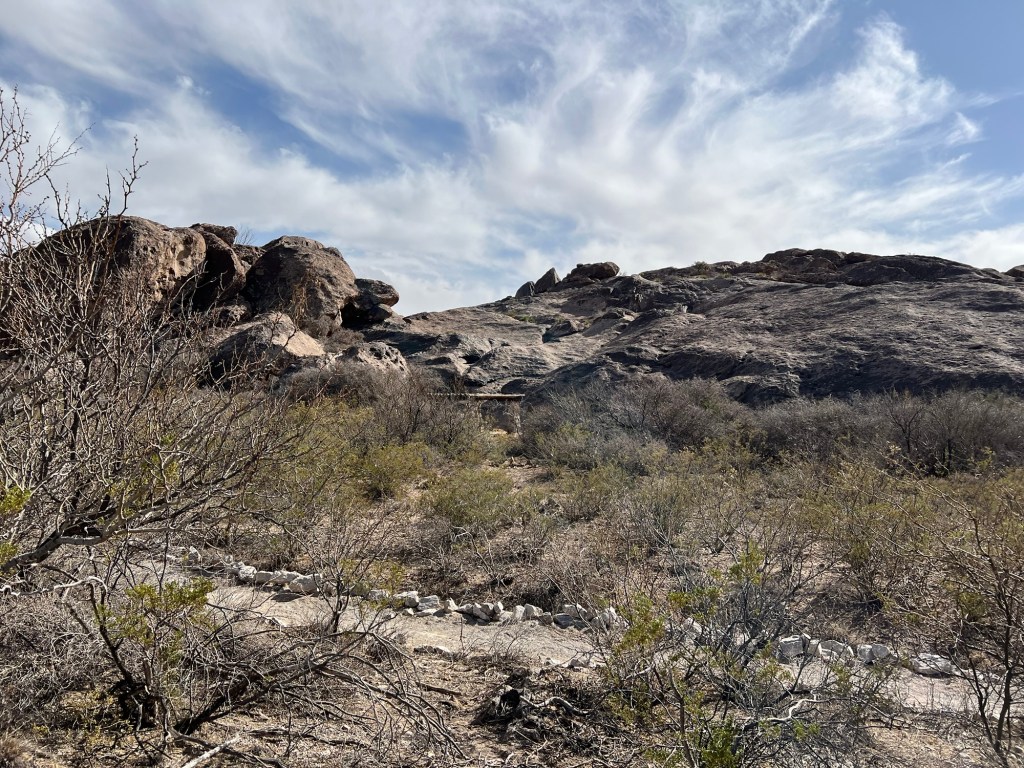
That works fine for us. There are plenty of trails around the mountains.
They afford nice walks…
and beautiful views.
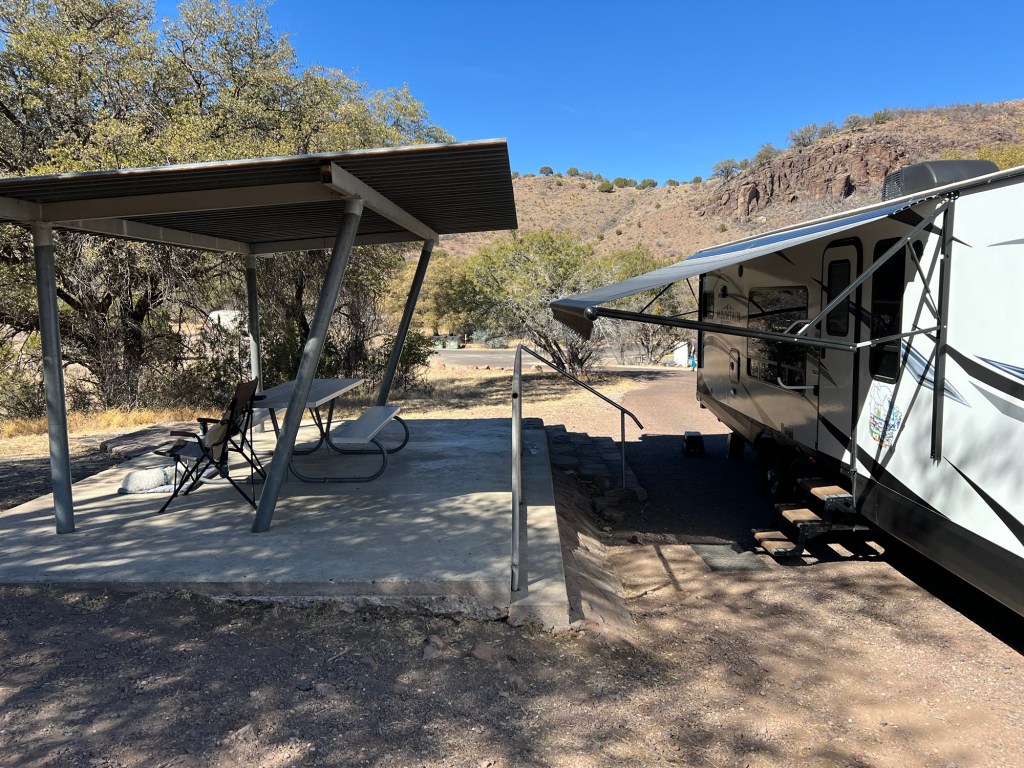
The campsite is a lovely place to sit.
Our cabana is tucked up under the rocks.
It too gives nice views.
On Tuesday Bud and I got a permit to hike the North Mountain. We wanted to climb to Kiva Cave, but the wind was so strong that Bud thought we might be blown off the rock ramp that was our first ascent. Instead we walked the Laguna Trail to the interior of the “mountain”.
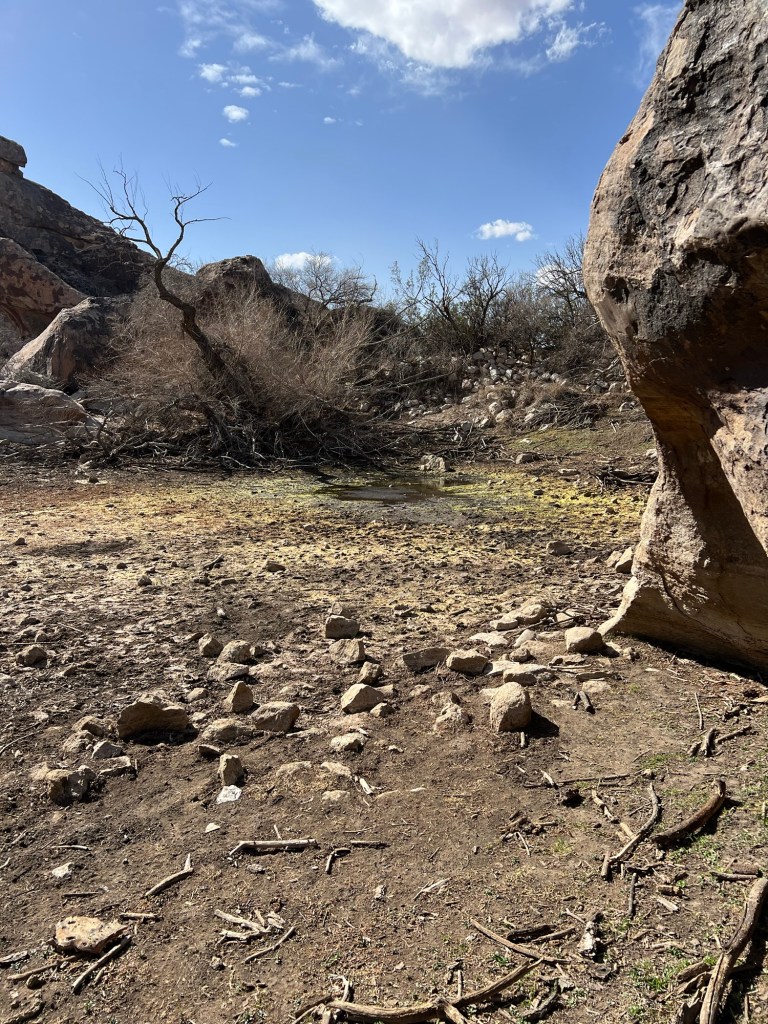
That led to an area that almost always holds water…
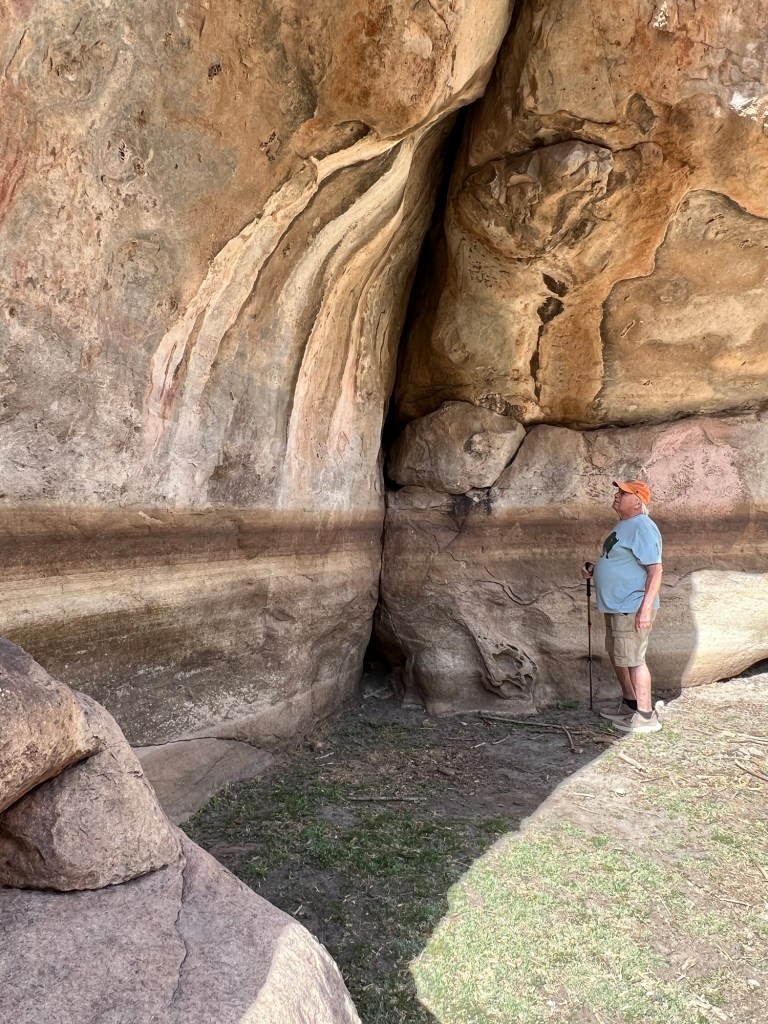
and to a rock alcove next to it. Notice the water lines on the rock walls.
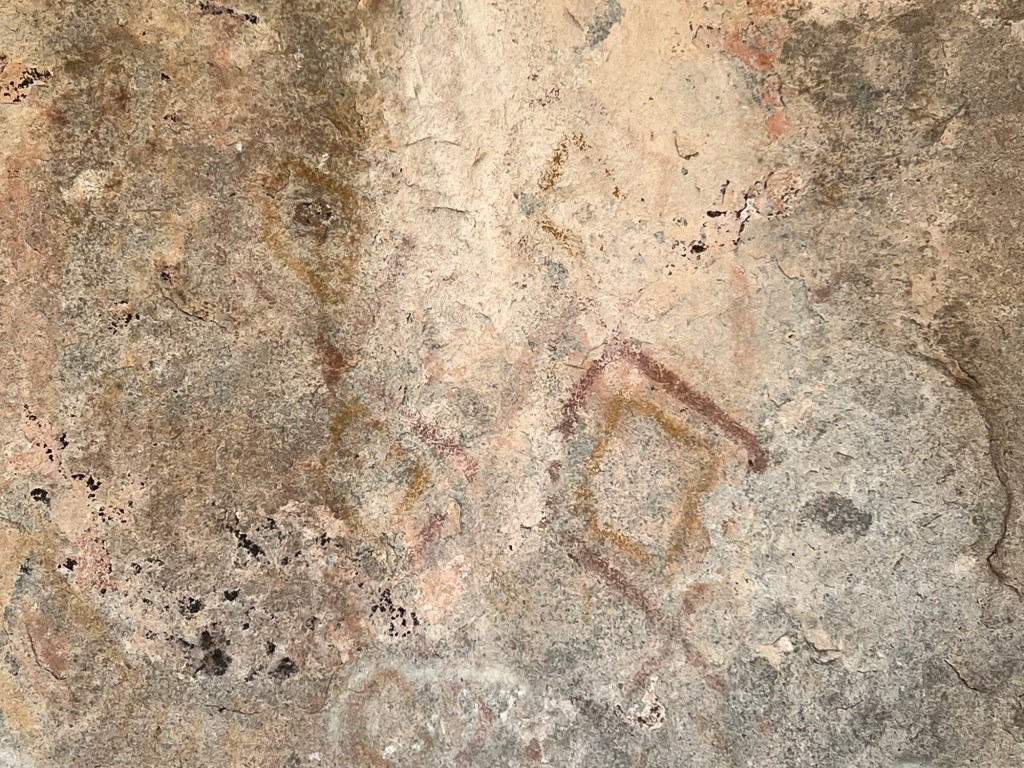
There were also pictographs here, though fairly faded.
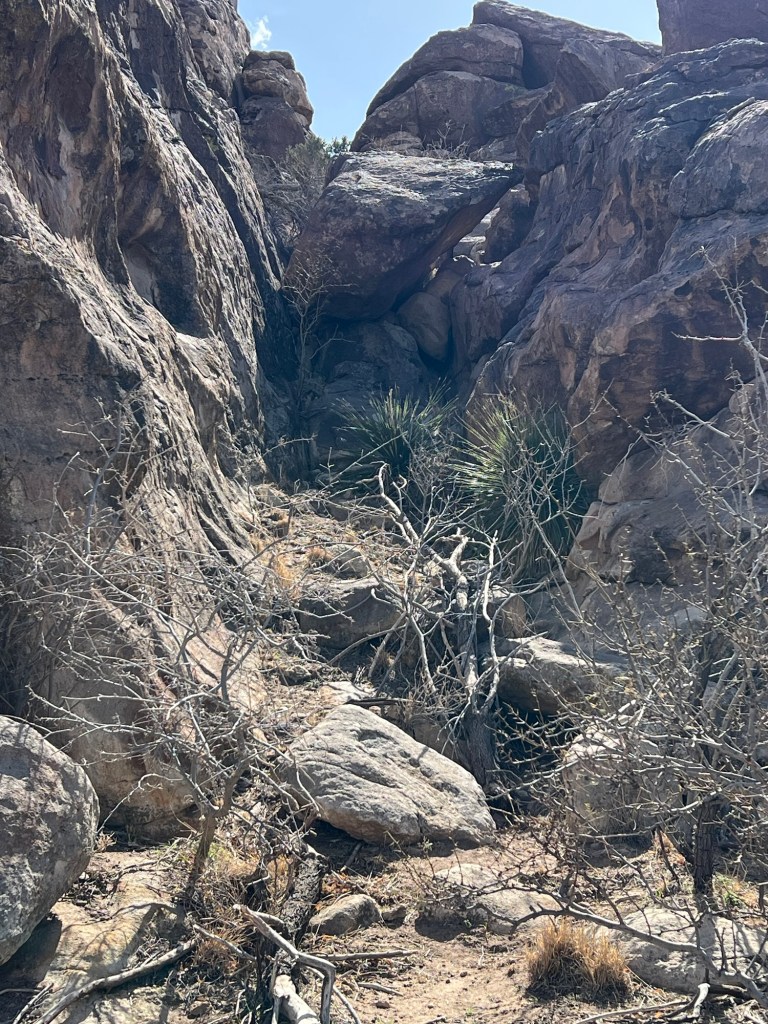
We found a protected ravine and decided to climb up there.
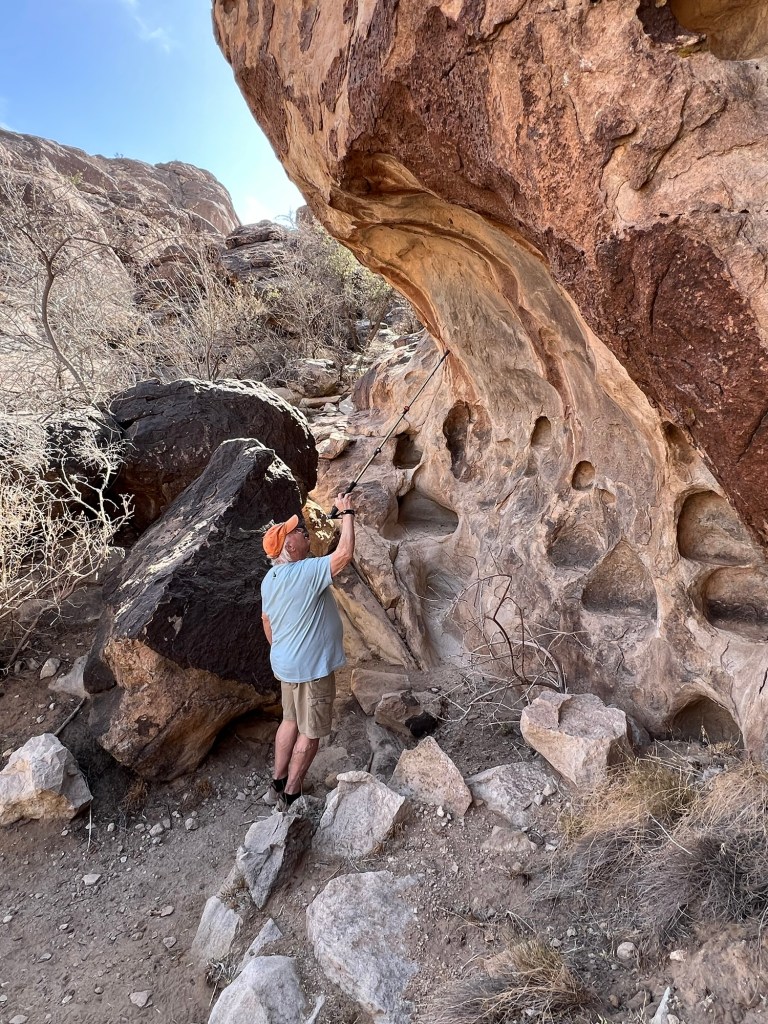
This appears to be a water sculpted boulder. Bud is pointing to what we thought might be a faint pictograph of an animal.
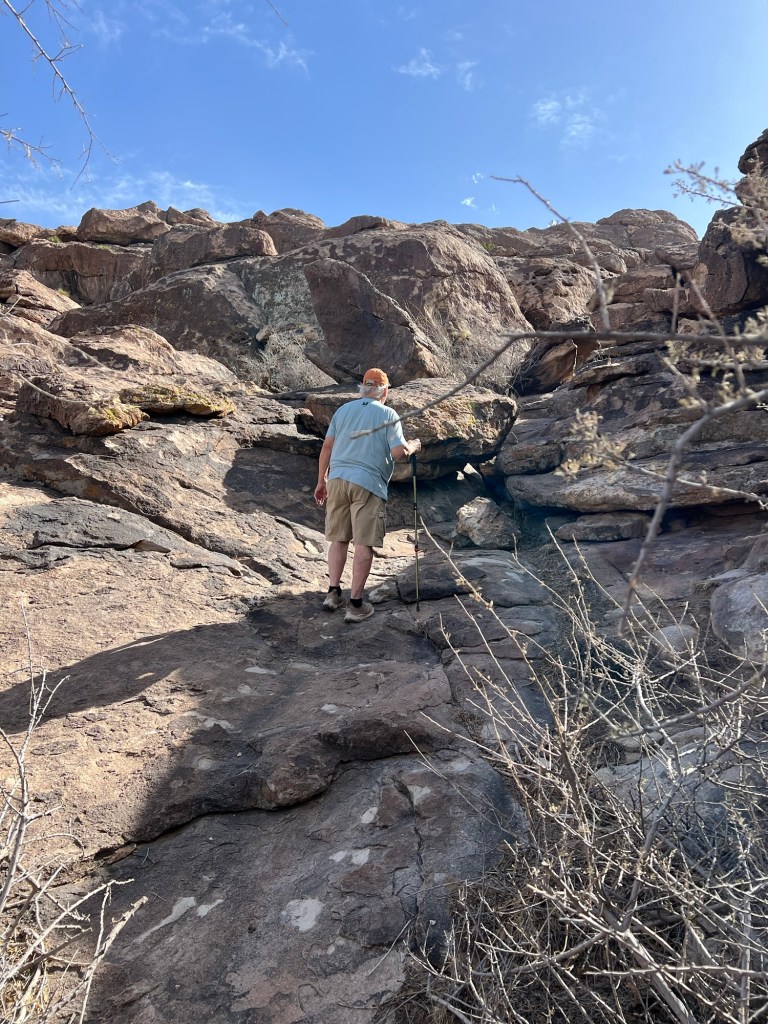
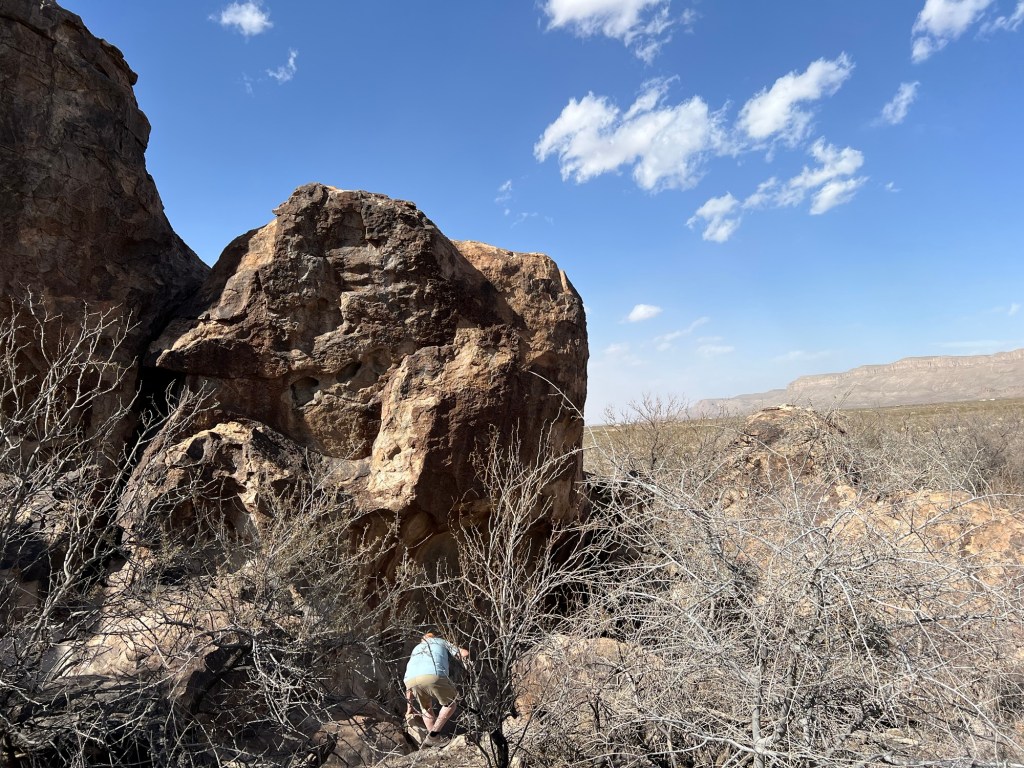
It was a bit of a scramble,
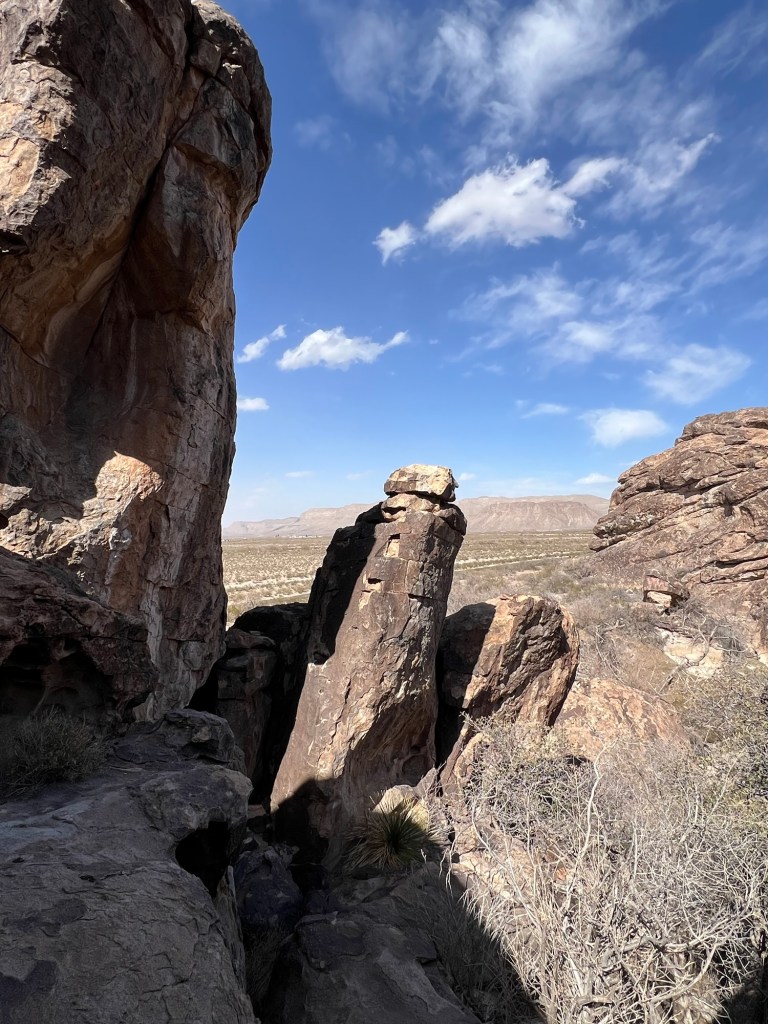
but we managed to get high enough for some great views.
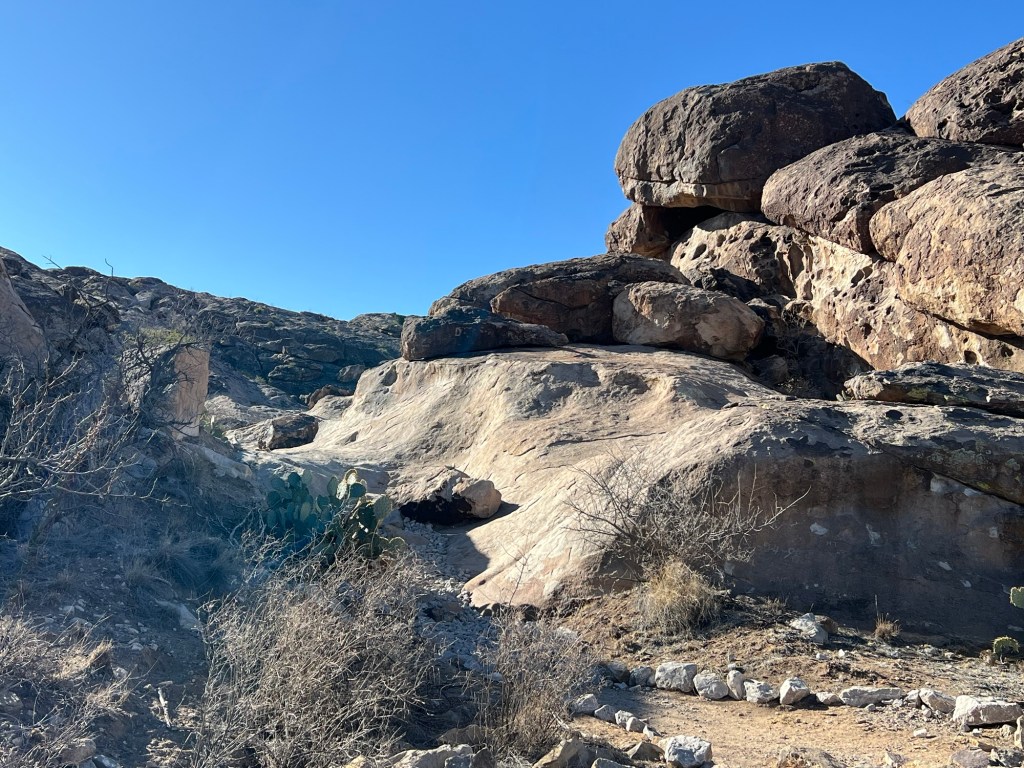
These rocks rise pretty abruptly from the flat desert around them.
We had a fun hike, even though we didn’t get up to the Cave Kiva.
The scenery is beautiful…
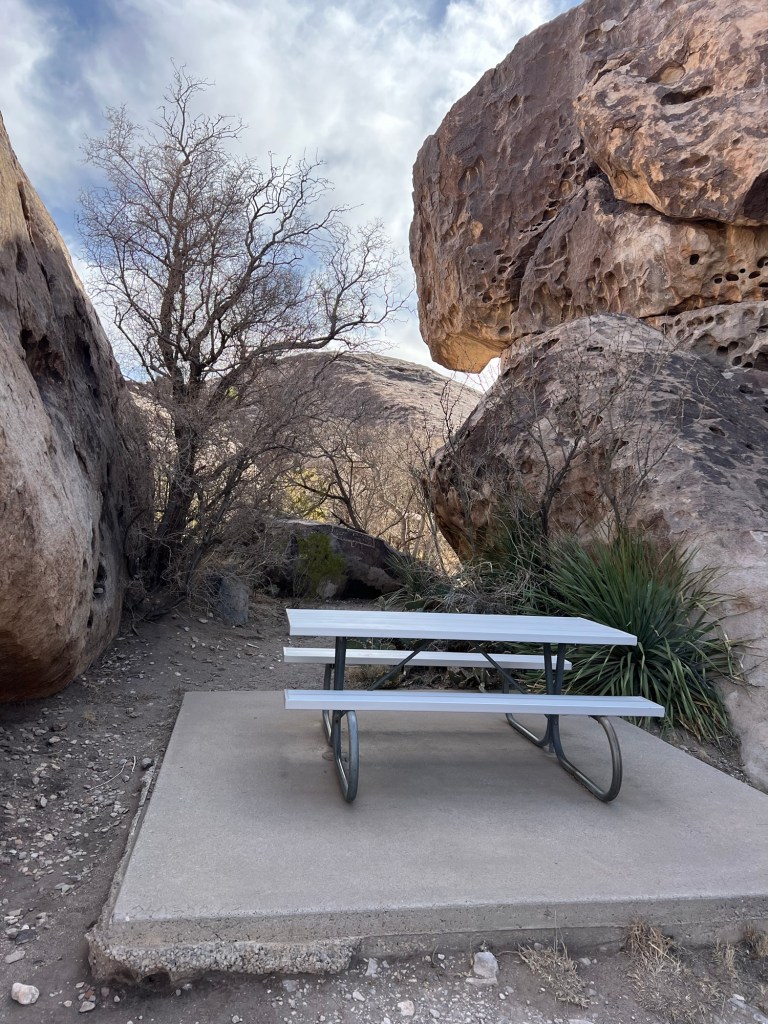
and the rocks make for a dramatic setting for picnics as well as camping.
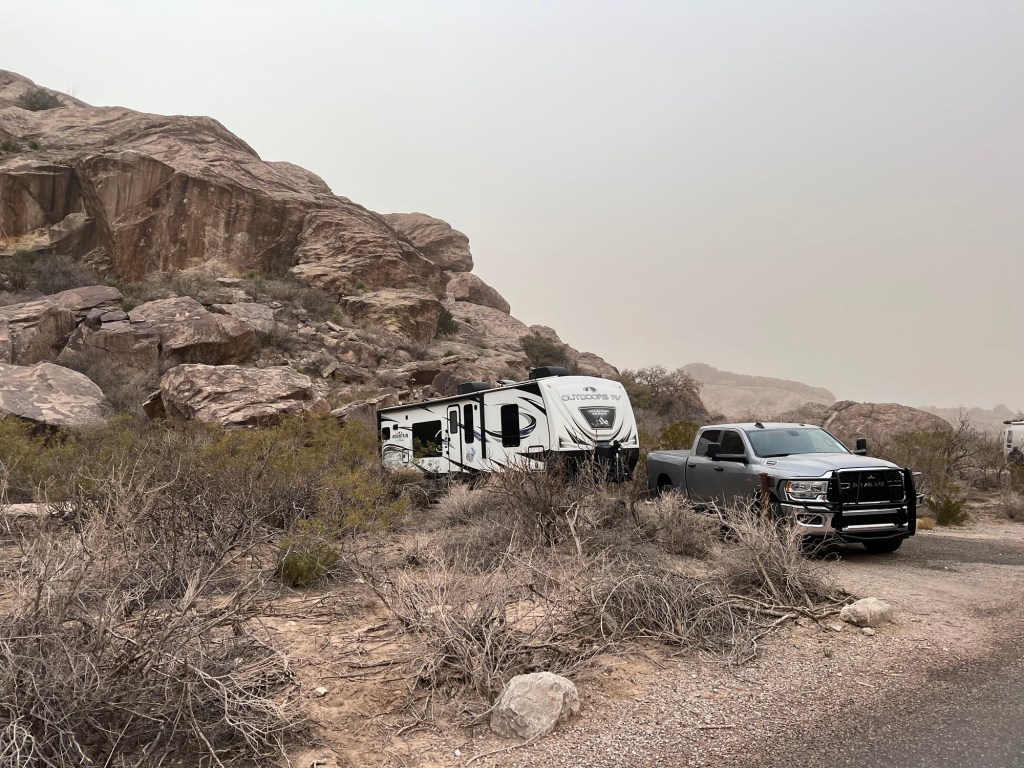
That wind kicked up the dust and later in the day we lost our clear blue sky to the grey-orange dust. Luckily we had already had our fun.
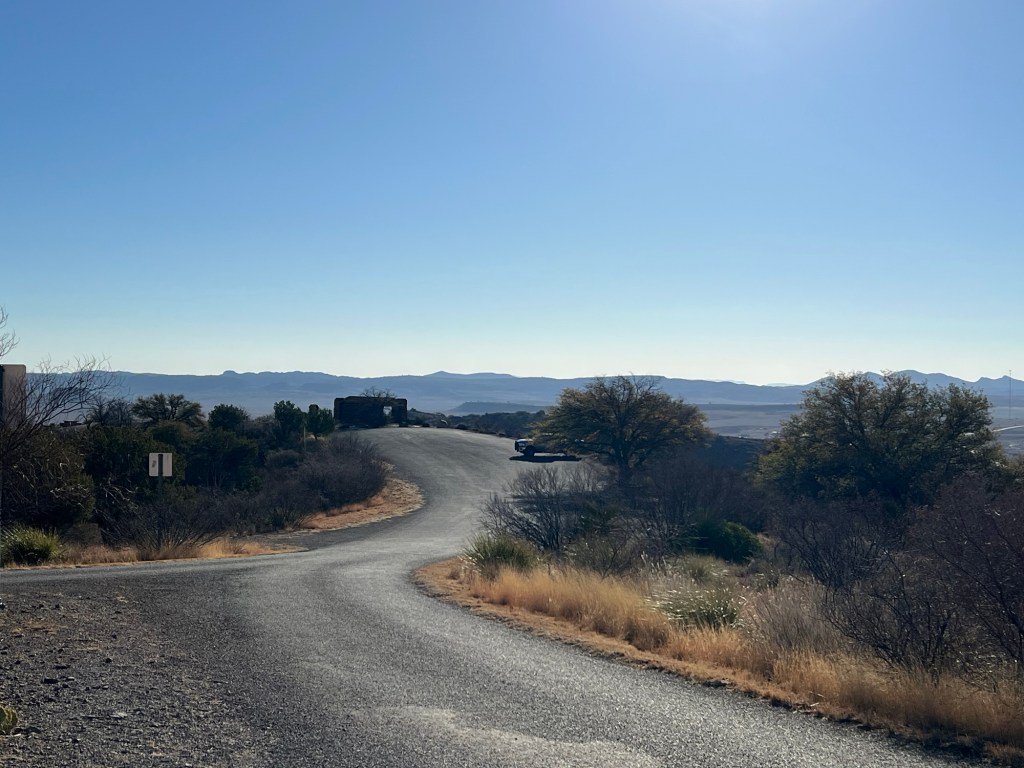
This morning I decided to take Matey to the top of Skyline Drive for our walk. It wasn’t yet forty degrees out, but that sun was so intense I just needed a lightweight jacket. We started at the CCC lookout where the guided walk had started. But we went down along the other side of the ridge, on the top part of the Old CCC Trail.
As we started down the trail we passed below an observation tower built by the CCC.
We walked about three-quarters of a mile to the connecting trail I had started on the other day. We went up that trail.
I was going to walk along the top portion of the Skyline trail, but we’d already walked over a mile so I turned back along the park road. That brought us to the observation tower.
Of course we had to go up. I took this 360 degree video standing in the center of the top of the observation tower. There is a lot of open land here, and we were the only ones up here enjoying it.
We walked back to the truck.
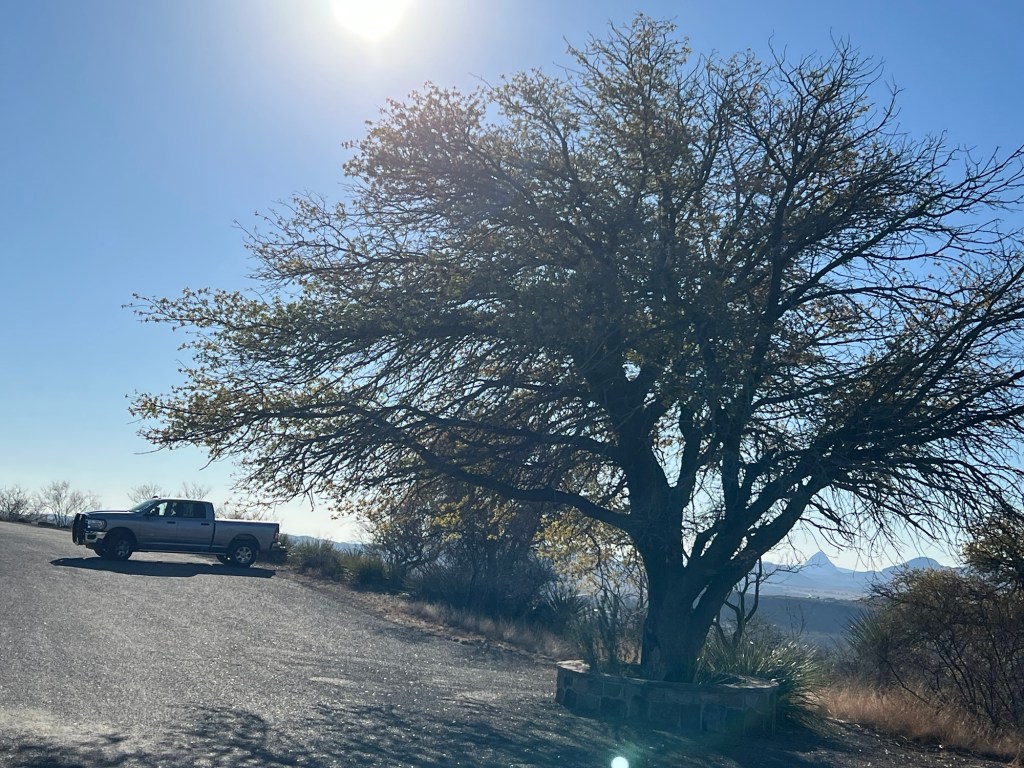
As we got close I noticed the little wall built around this Emory oak. Since the wall was probably built by the CCC, it and the parking lot don’t seem to be hurting the tree.
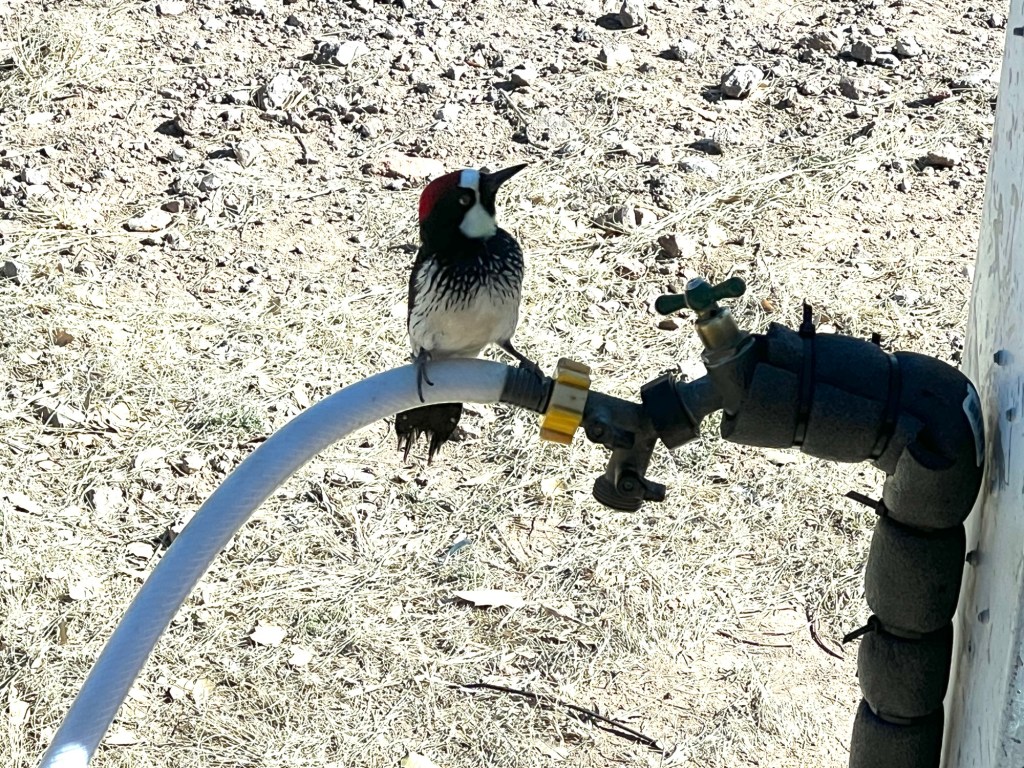
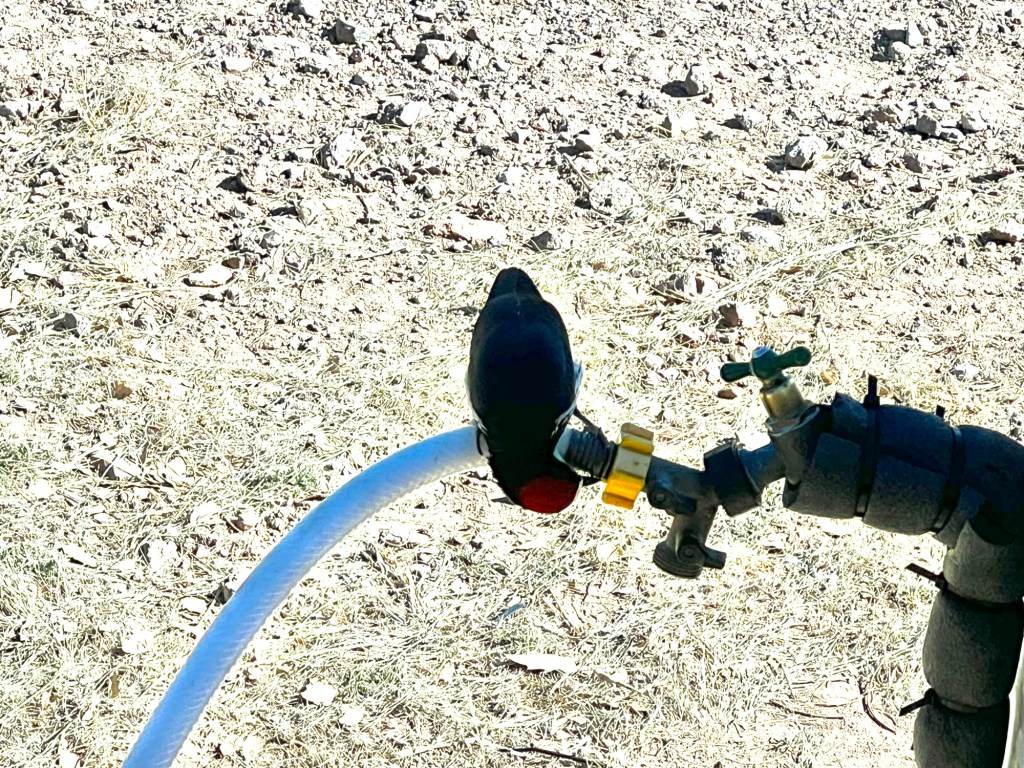
Back at the campsite we had acorn woodpeckers visit again. They are vividly black, white and red, but unfortunately our faucet was in the shade.
They come and get water from our hose. The hose is dripping about 10 drops a minute. Normally I would tighten it to stop the drip, but I don’t want to deprive the birds.
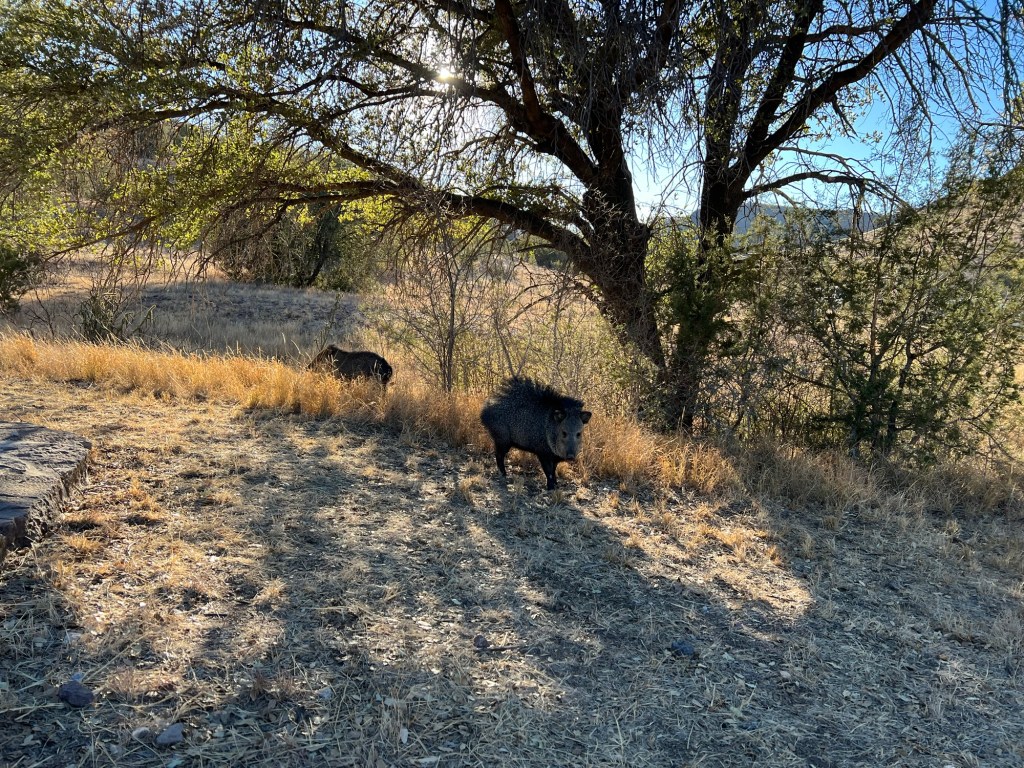
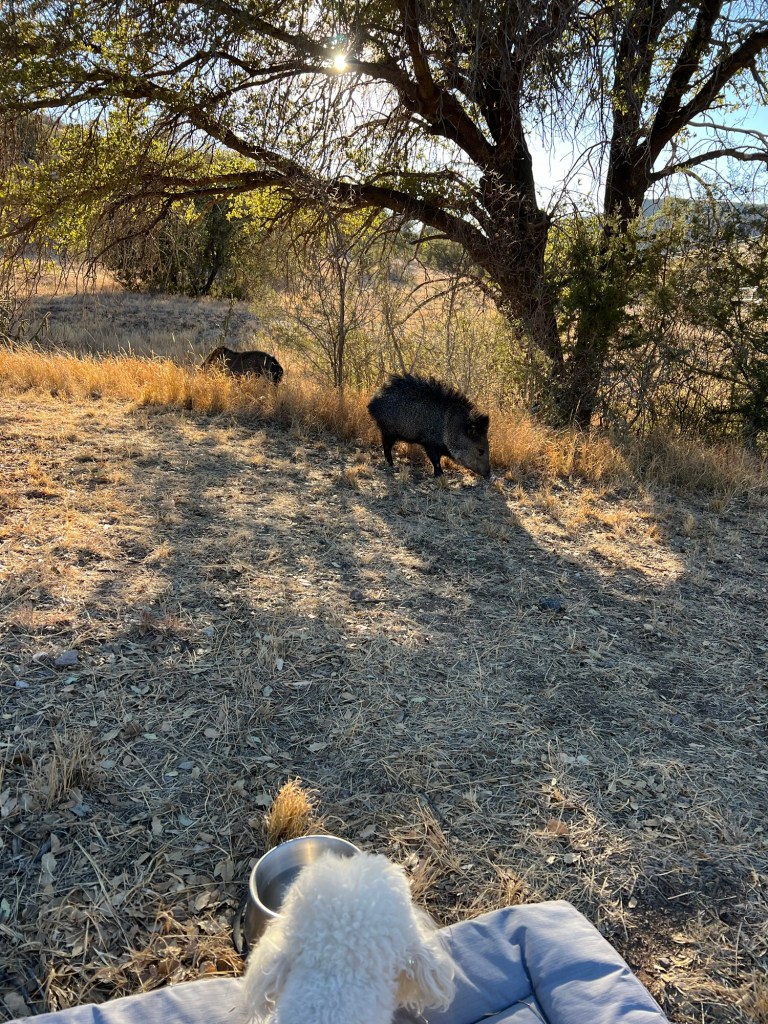
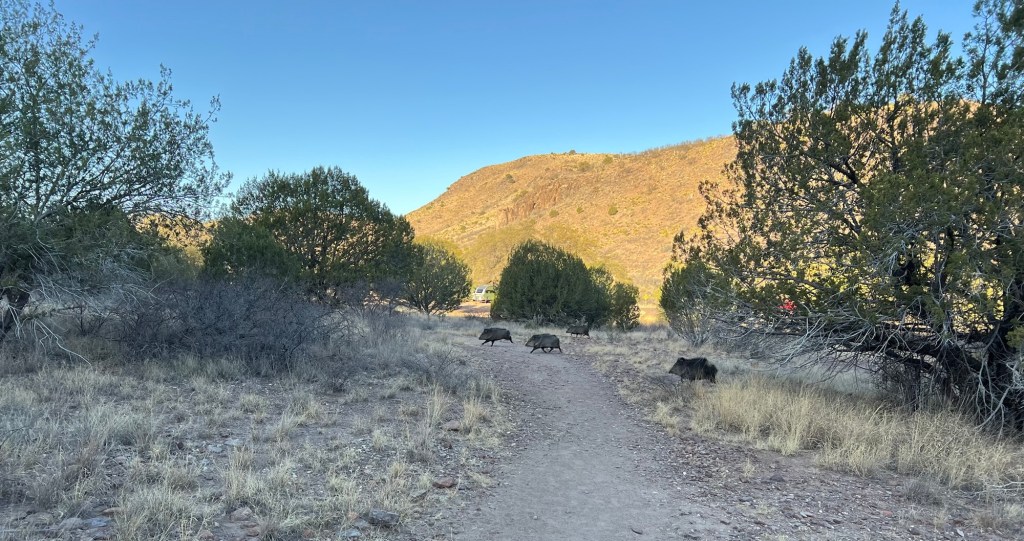
Yesterday afternoon we had three Javelinas visit.
There is plenty of grass around on these hills, so I wondered what brought them so close.
Perhaps it was Matey’s water. Bud reminded me that Javelinas attack dogs. Just then Matey lunged and barked. Happily the three retreated a couple of hundred feet. That was the end of our Javelina watching. I didn’t bring Matey’s water out today but our neighbors just told me they had one licking the grill on their fire pit. Matey will not be out unattended!
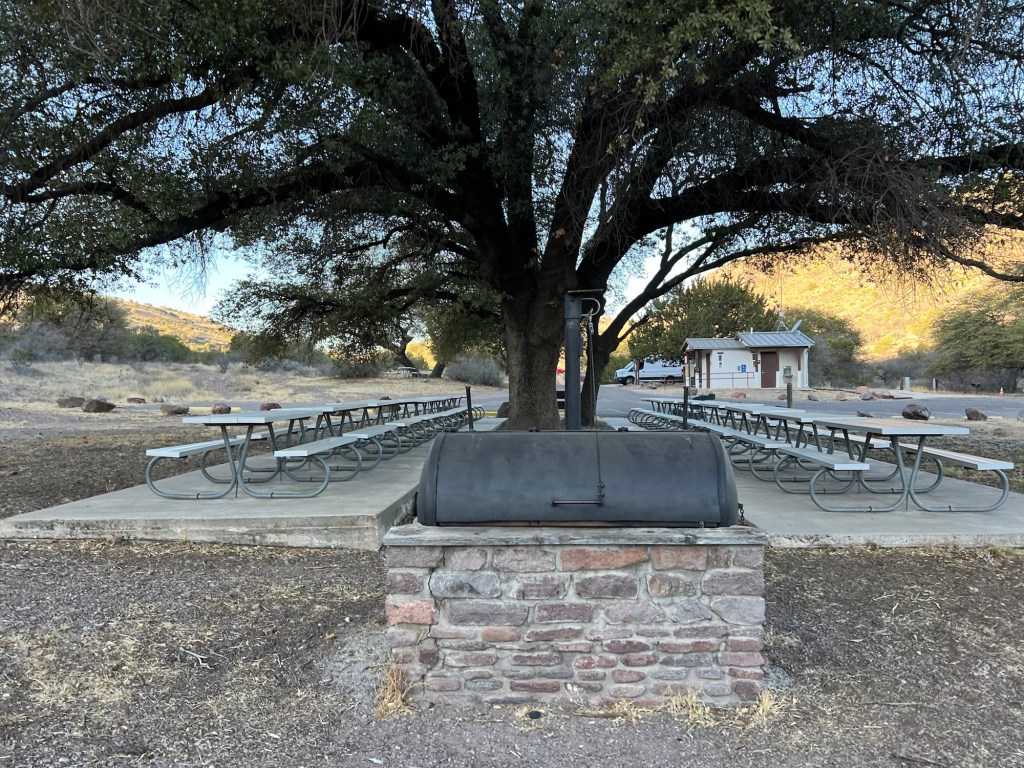
This morning Matey and I walked through the group picnic area. That’s a huge barbecue in front. They take barbecue seriously in Texas.
We looped up to the very end of the Old CCC Trail and then we saw these four javelinas. What fun. Matey and I were both excited.
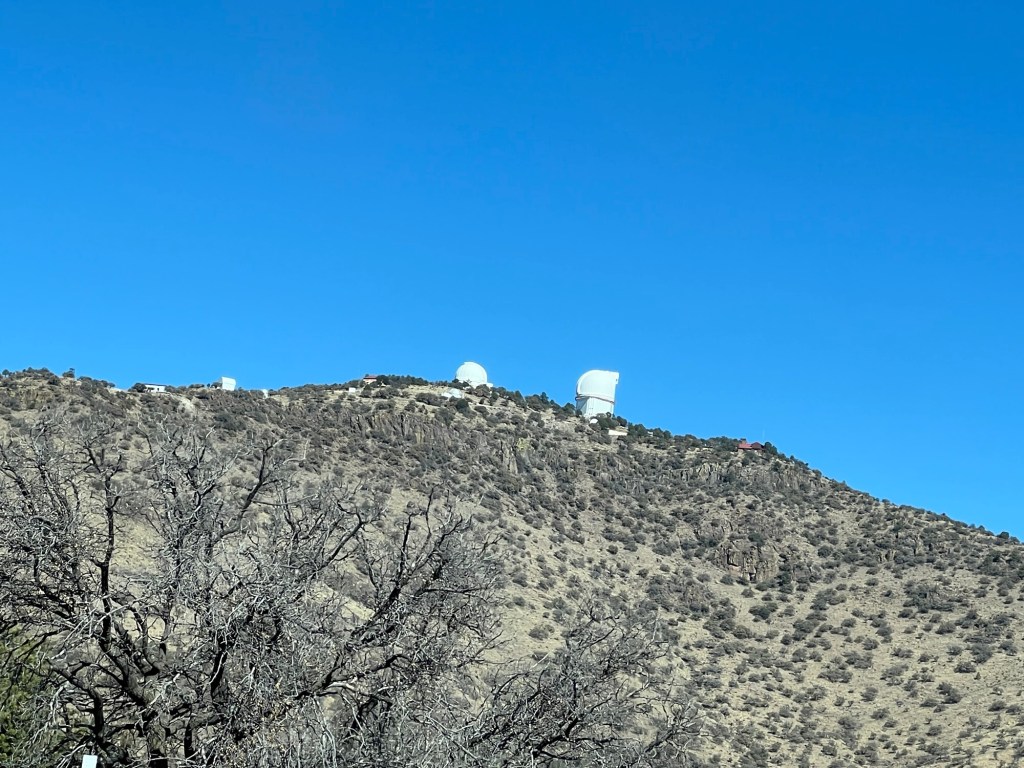
Yesterday the Master Naturalist recommended a drive through the Davis Mountains on Route 118, circling back around the south side of the mountains on Route 166, a distance of about 70 miles. Bud and I decided to try it, so we packed up a lunch and Matey and headed out. Unfortunately for the blog I got so absorbed in the scenery I forgot to take pictures for a while. I did take this shot of a couple of the telescopes at the McDonald Observatory.
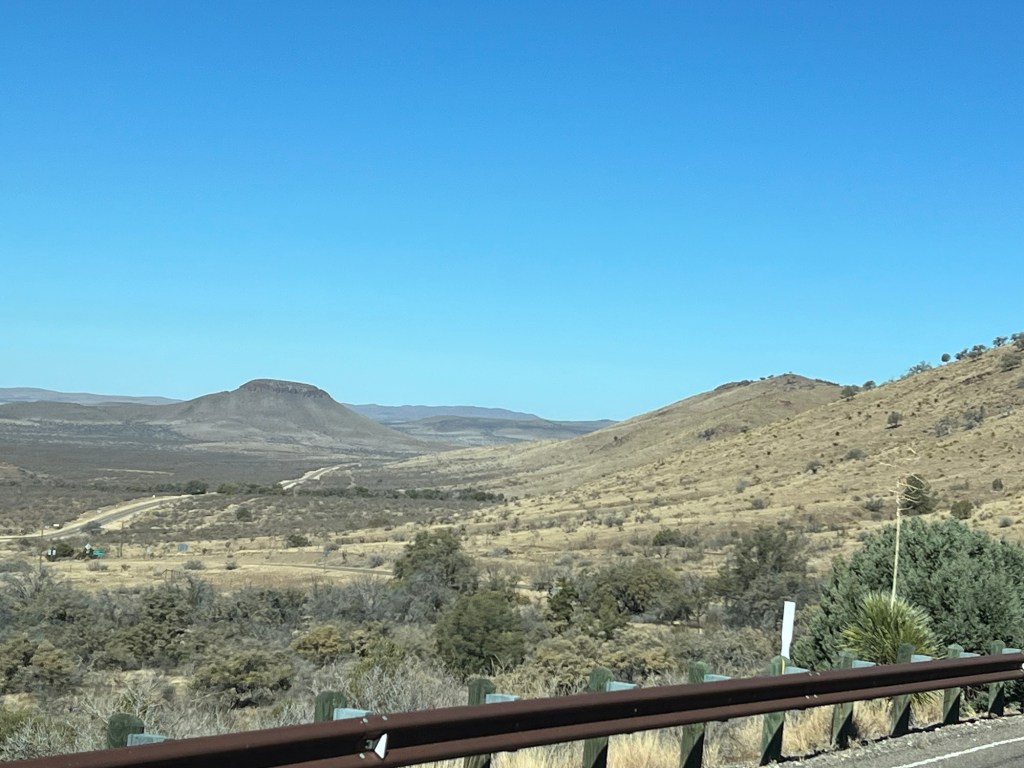
This is coming to the west side of the mountains where Route 118 meets Route 166.
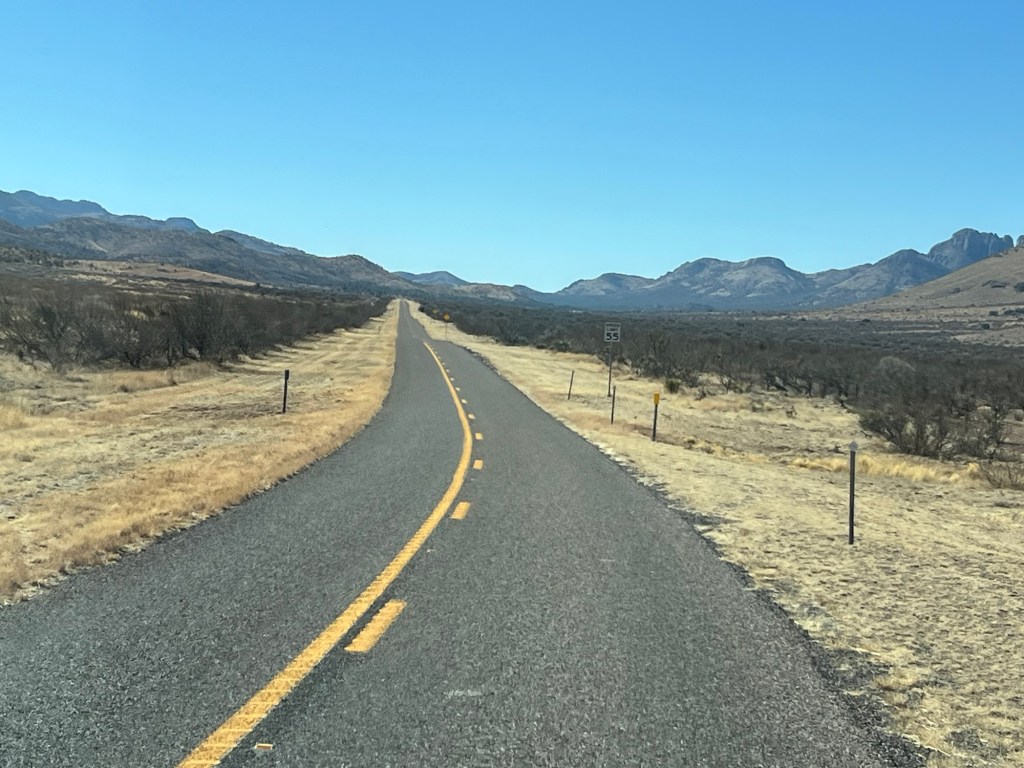
Since it skirted around the south side of the Davis Mountains I thought Route 166 wouldn’t be very pretty. I was wrong.
There were some dramatic peaks there,
and still some winding road,
as well as desert vistas.
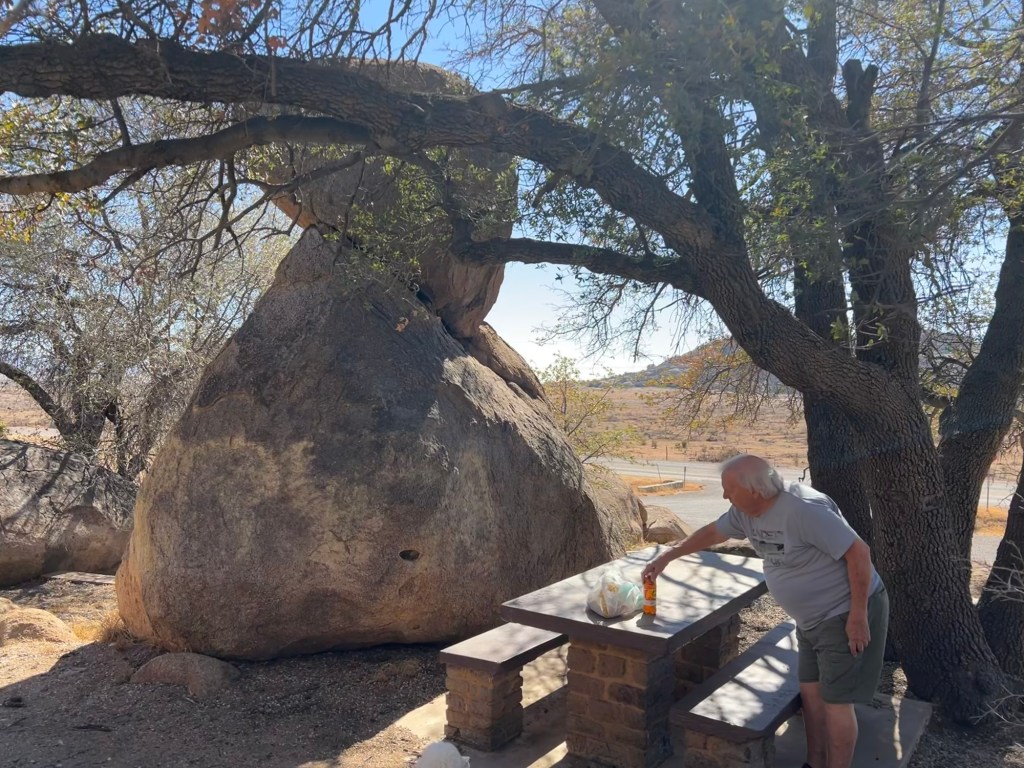
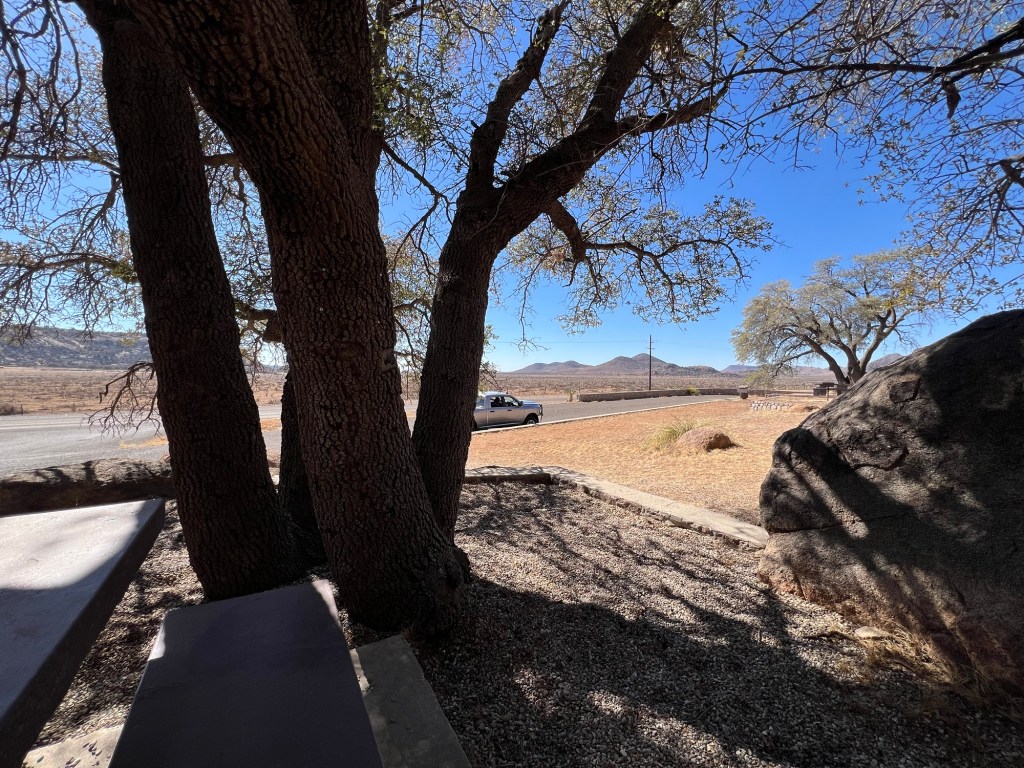
We lucked out and found a nice picnic area to stop for lunch.
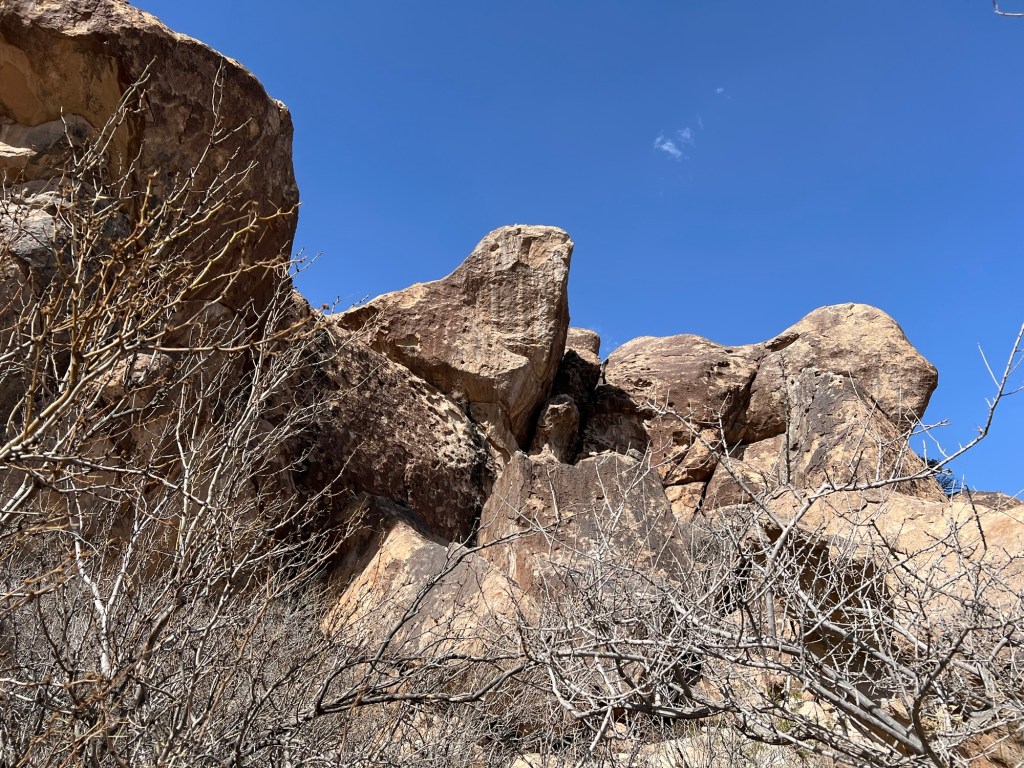
It was under the end of a rocky ridge.
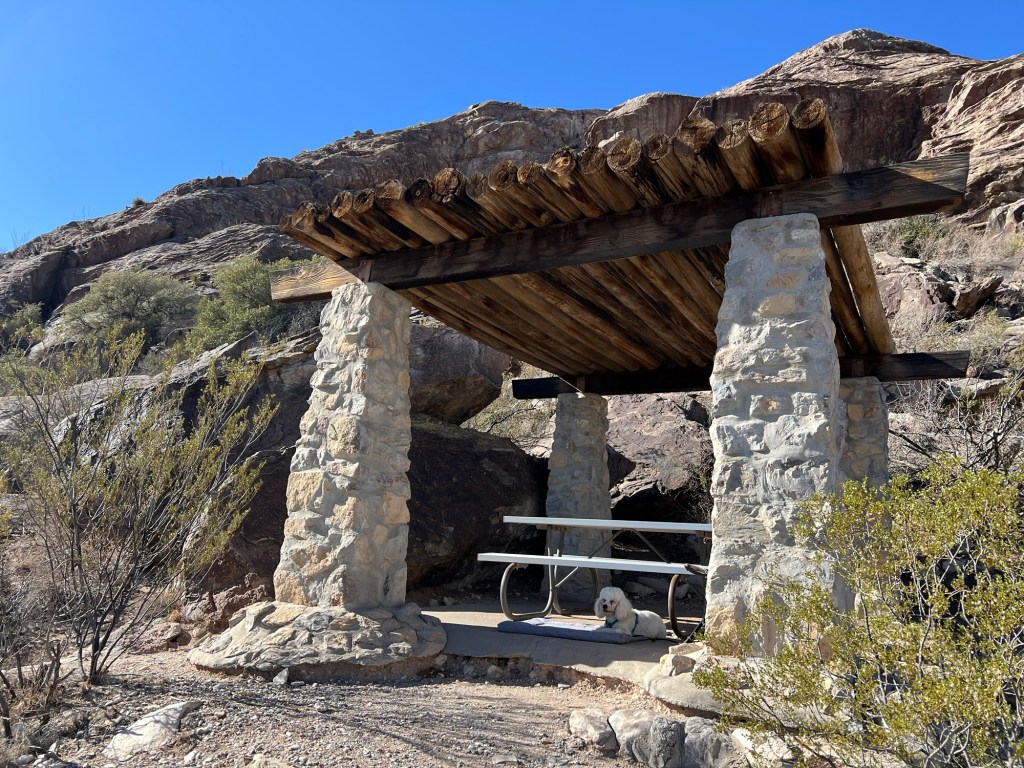
We chose this shady table as our lunch spot.
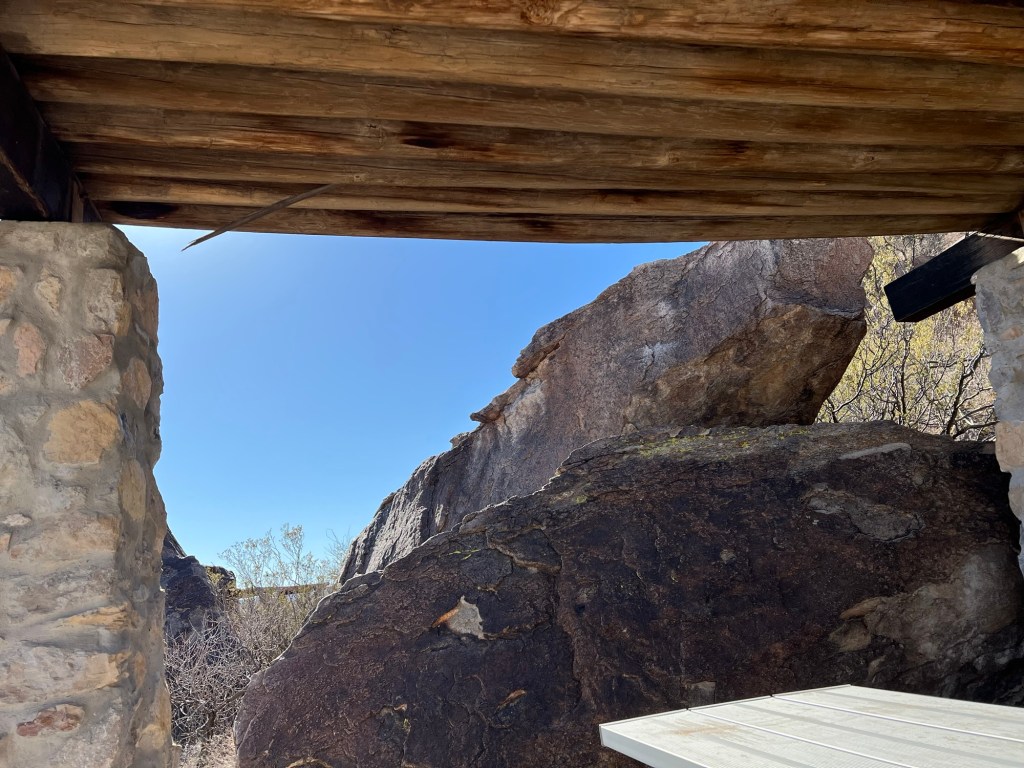
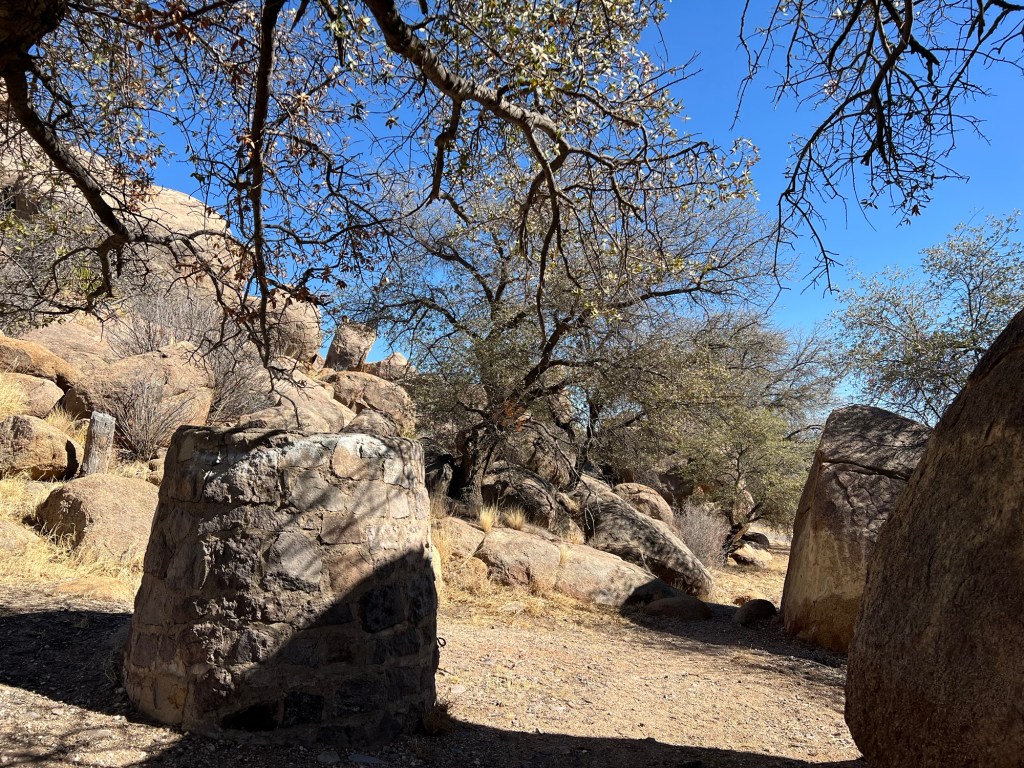
The sites had these stone structures. They looked like huge stone grills, but they were cemented shut.
So no grills, but nice surroundings.
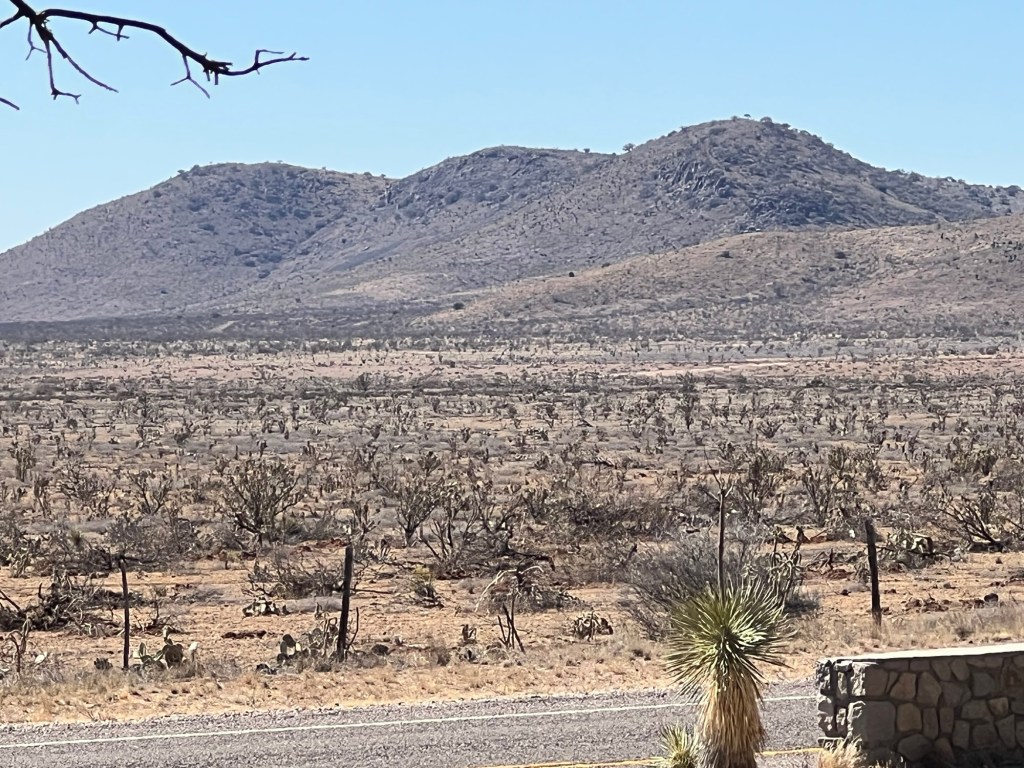
As I sat in that lovely spot and looked out at the harsh desert I realized again that people didn’t live out there,
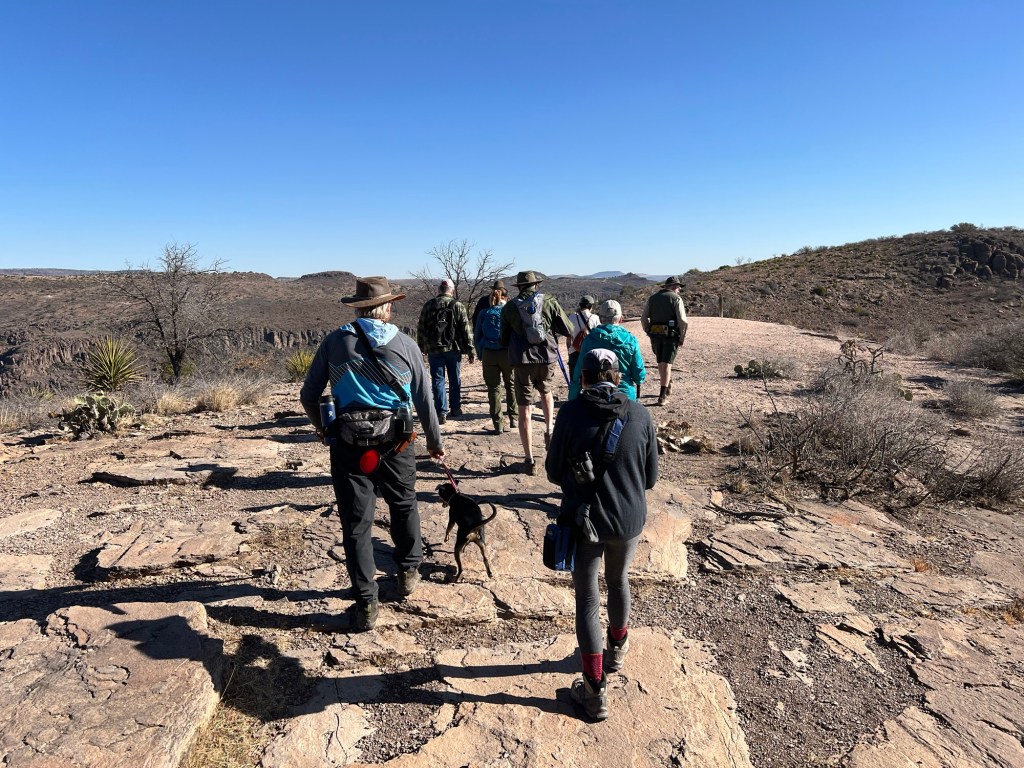
I saw a flyer for a hike with a Master Naturalist. Bud doesn’t like group things but said he’d be happy to take me to the top of Skyline Drive where we were to meet. I decided if the Old CCC Trail was open (it was being repaired the last time we were here) I would be able to walk back down it to the campground. It was open, so at a bit after 10 AM I took off with the group and Bud and Matey returned to the camper.
There’s a nice view to the east from our starting point.
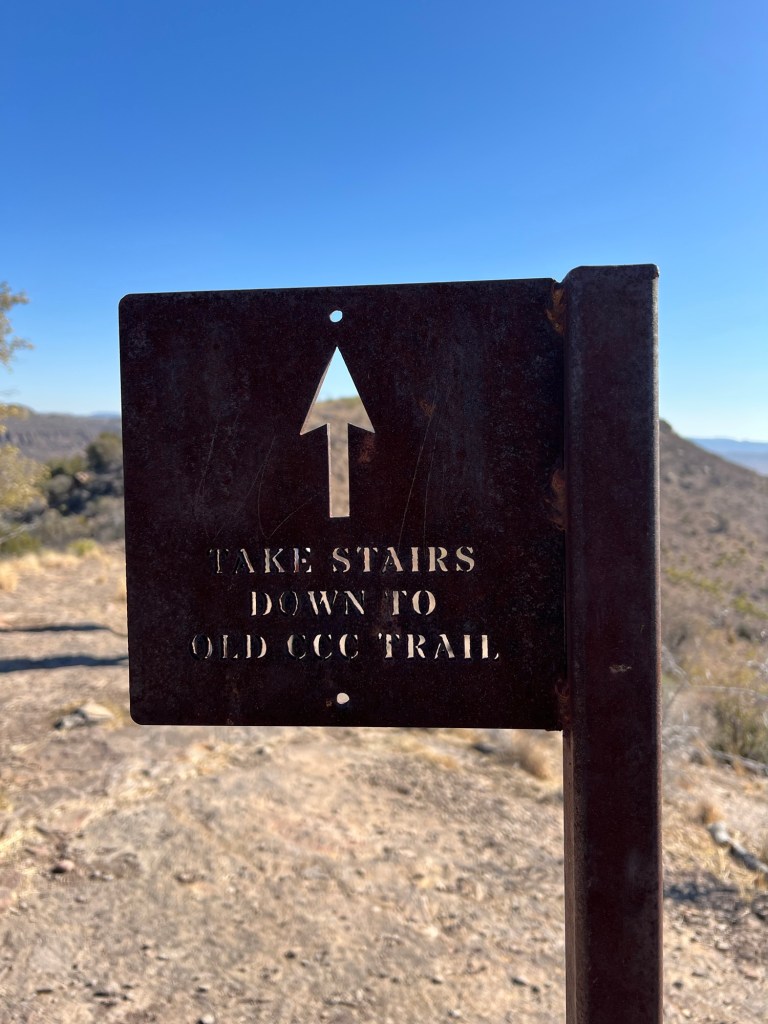
The first thing we encountered were these stairs.
The CCC must have cut them into the rock.
The Old CCC trail goes that way…
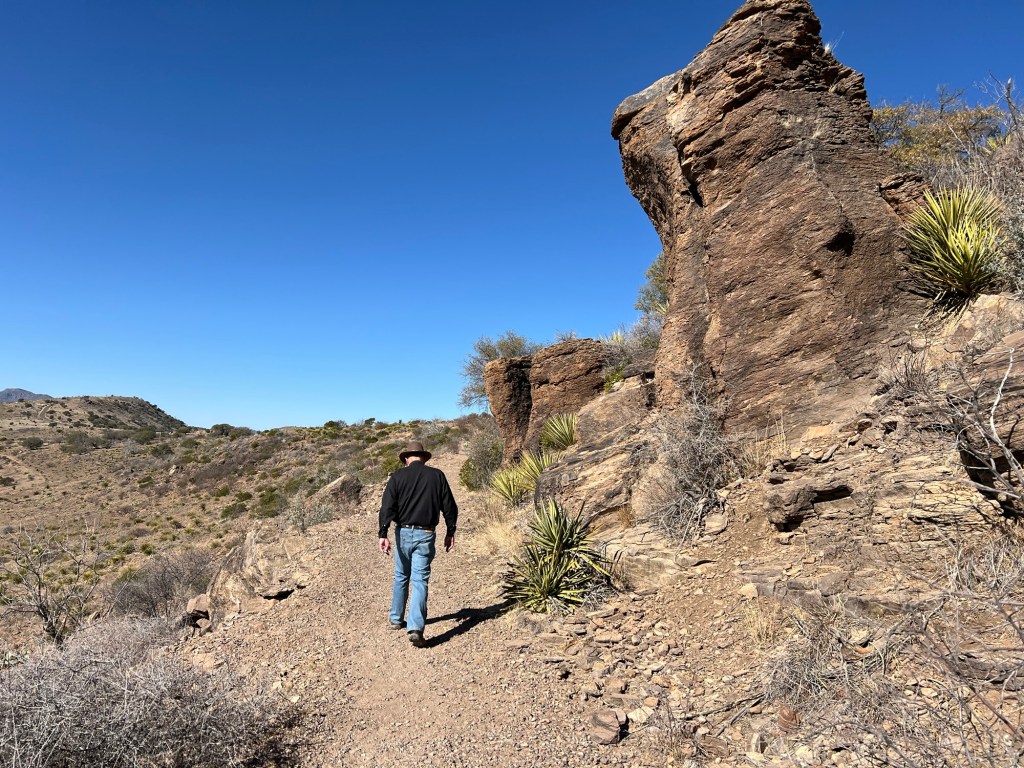
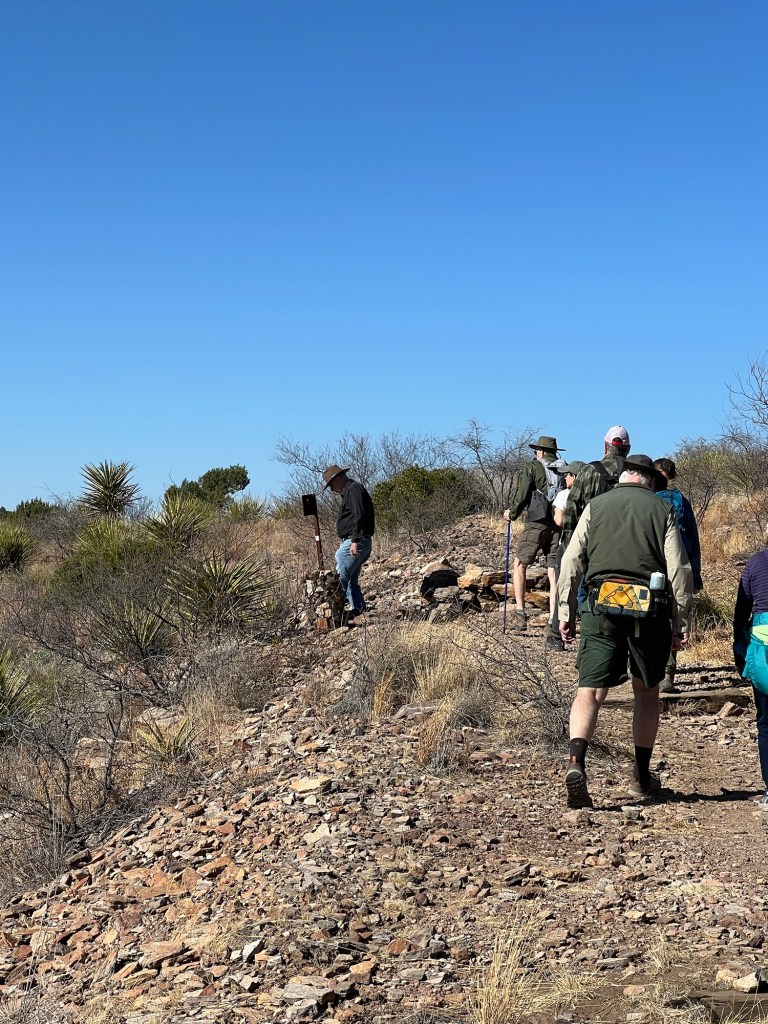
but we were heading down the other side of the ridge on the Skyline Trail. We walked slowly, with plenty of time to learn about the geology and ecology of the area.
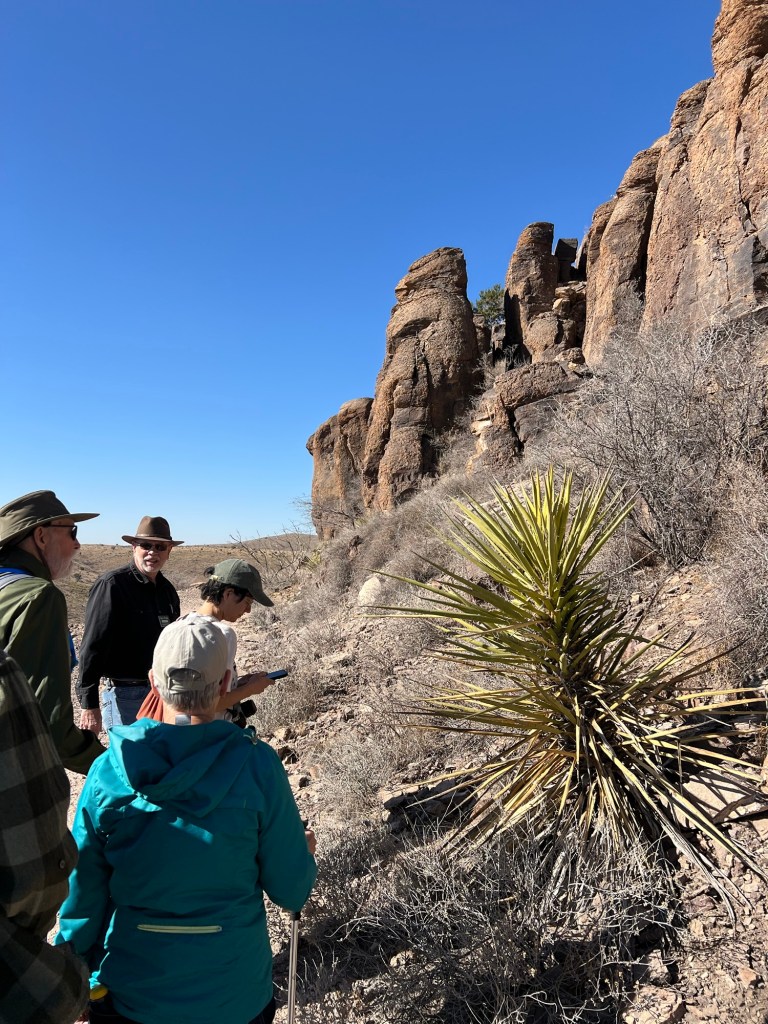
These mountains, like many of the ranges in this part of the country, resulted from volcanic activity because the Pacific tectonic plate is moving under another plate here. A fault let the magma explode upward millions of years ago. The magma here cooled quickly and formed rhyolite, a very fine grained, very hard rock. Granite is also an igneous rock composed of cooled magma, but granite cooled slowly beneath a covering of crust, and is courser grained and easy to work. You don’t find rhyolite countertops!
Yucca, which we are looking at here, also grows on the desert floor, but like the Chisos Mountains in Big Bend, the Davis Mountains have a cooler, wetter, climate than the desert below and support grasses.
There used to be bighorn sheep here but they died out. In the 1950’s aoudads, or Barbary sheep were introduced in West Texas and have done very well. They tried to reintroduce the bighorn sheep but the aoudads are twice their size, so the bighorns couldn’t make it. We saw a herd of aoudads but they were too far away for me to get a picture, so you get to see another nice rock.
Altogether we walked and talked about a mile and a quarter.
Then they were going to return along the park road to the parking lot.
I chose to take this connecting trail down to the old CCC trail.
That’s the Old CCC Trail coming down from the edge of the ridge where we started.
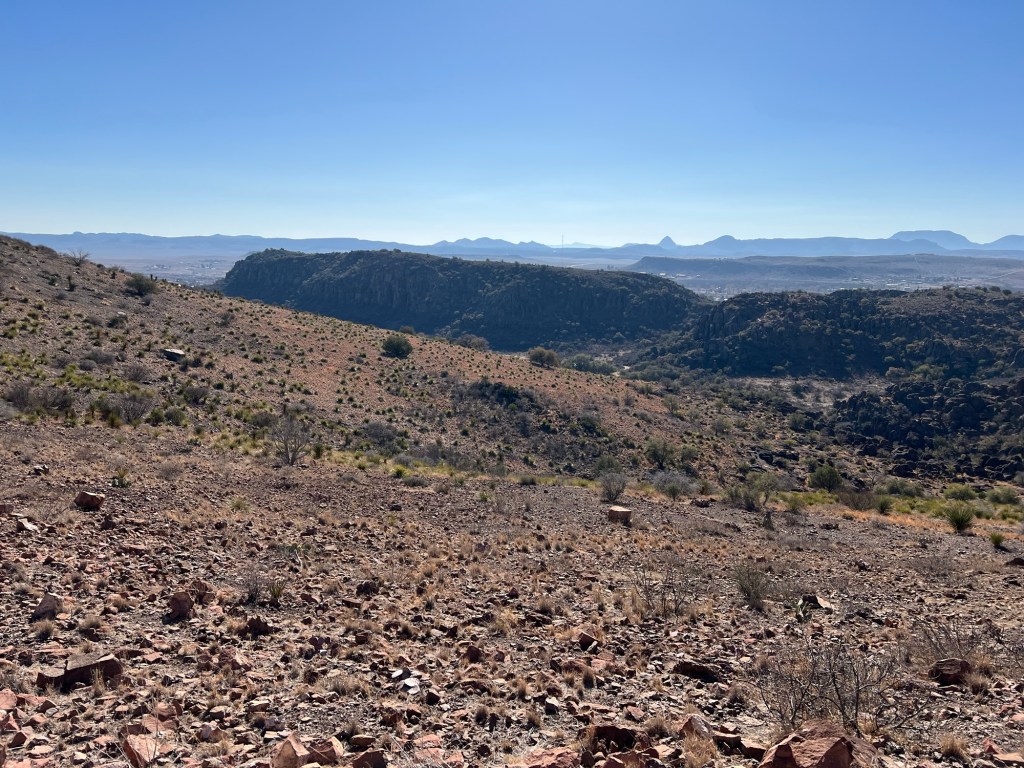
When I got to where I could see to the west I saw just how far I had to go. The piece of road you can see going up the hillside in the distance is the park entrance. I needed to go a ways past that.
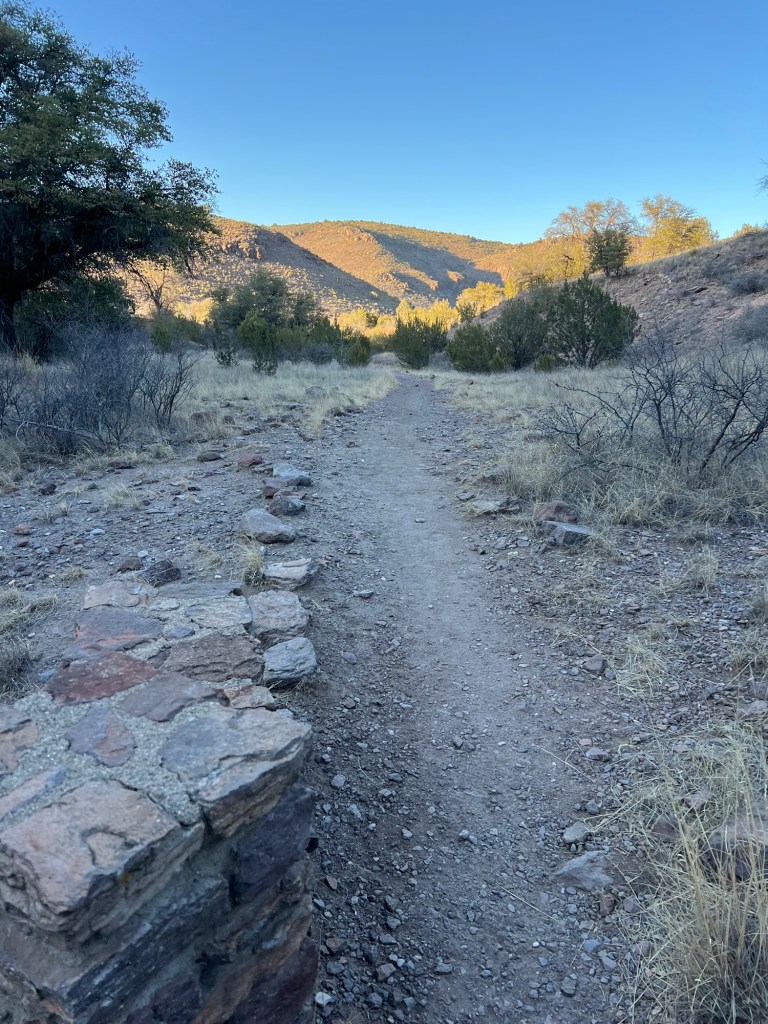
The walking got easier when I joined the Old CCC Trail.
Now I was walking on an old road bed slanting gently down towards Limpia Creek, below. It’s still lined with cottonwoods, here leafless in winter, but it no longer flows above ground year round as it once did. Our guide said that was most likely because there are enough wells to have lowered the water table. Now there’s water but it’s most often underground.
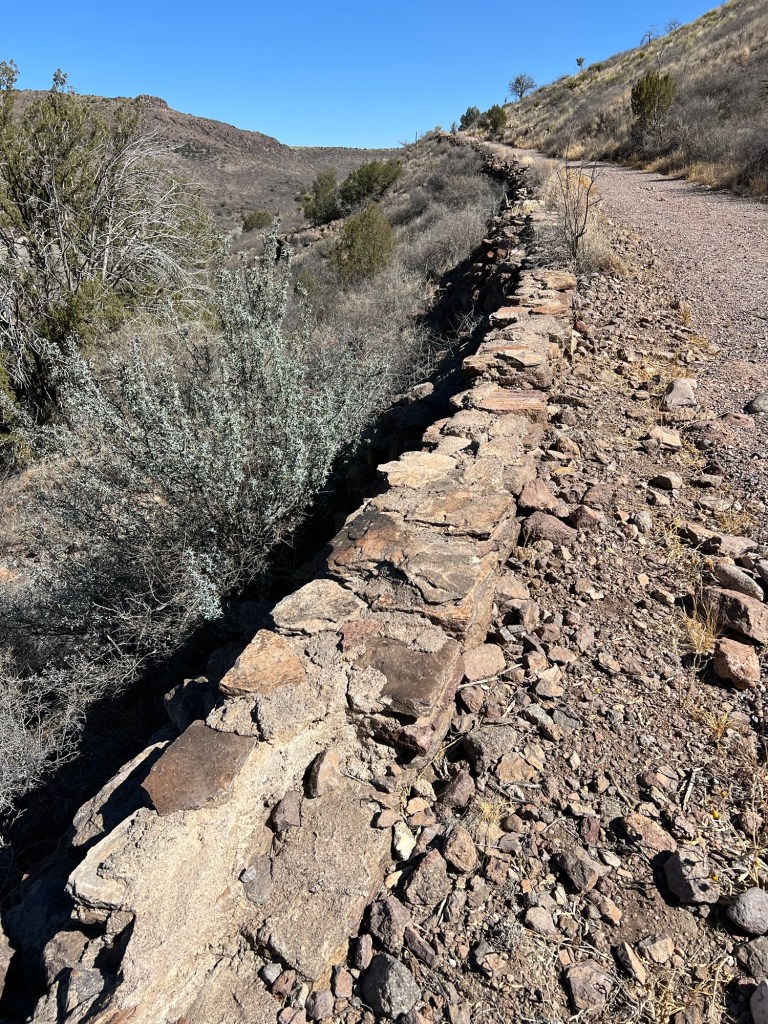
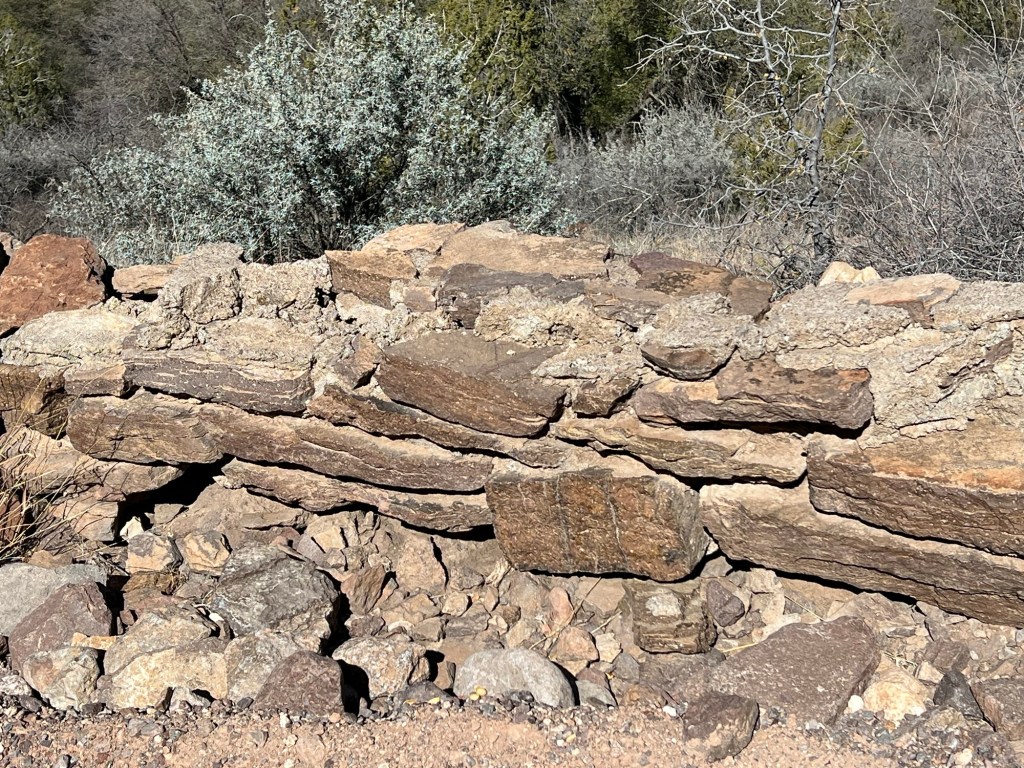
You can tell this was CCC work by the stone walls.
Our guide told us we’d notice that the structures here had a lot of mortar. That’s because they were built with rhyolite and it can’t be cut to fit like other stone.
The other park ranger that was walking with us advised me to keep to the left on the foot trail and not take the old roadbed all the way down to the highway.
Not much chance of missing that.
I thought my return trip would be a steady downhill from the ridge top. Silly me; first I hiked down the old roadbed, then back up this far and then down again. It’s steeper than it looks, especially the uphill parts!
It was beautiful, though.
When I got to this point I could look up along the valley where the campgrounds are to the beautiful Indian Lodge at the far end. Unfortunately the lodge is being repaired and won’t open again for a couple of months.
But I can still sit out in the shade, today facing a different direction and taking in another piece of beauty.
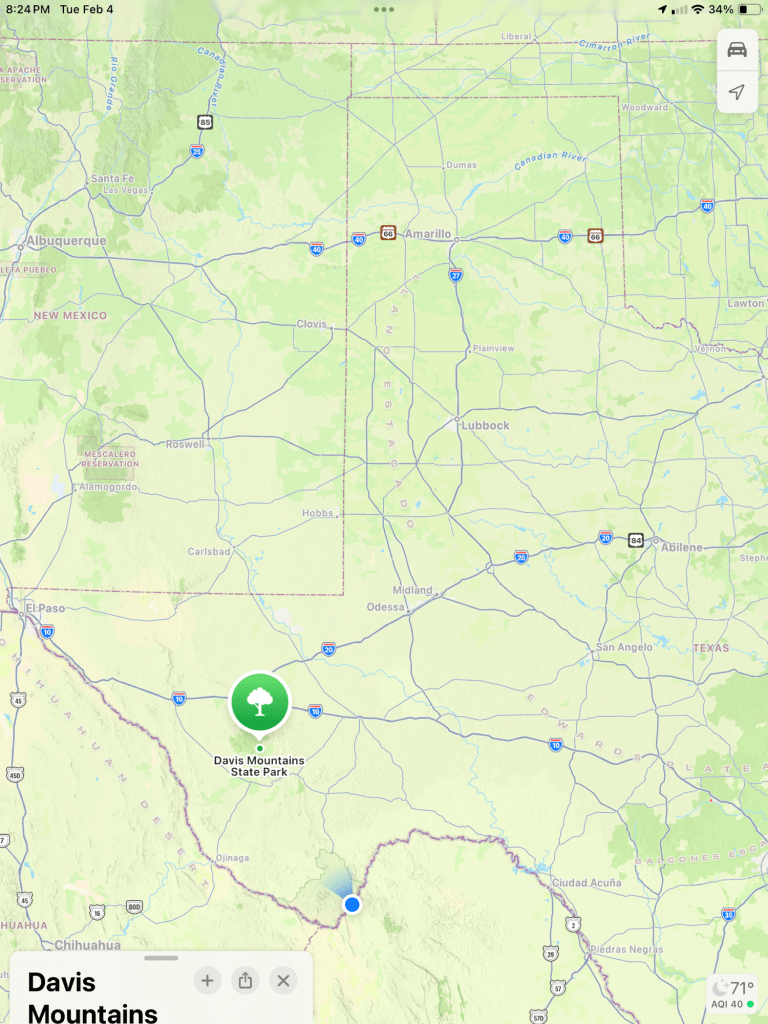
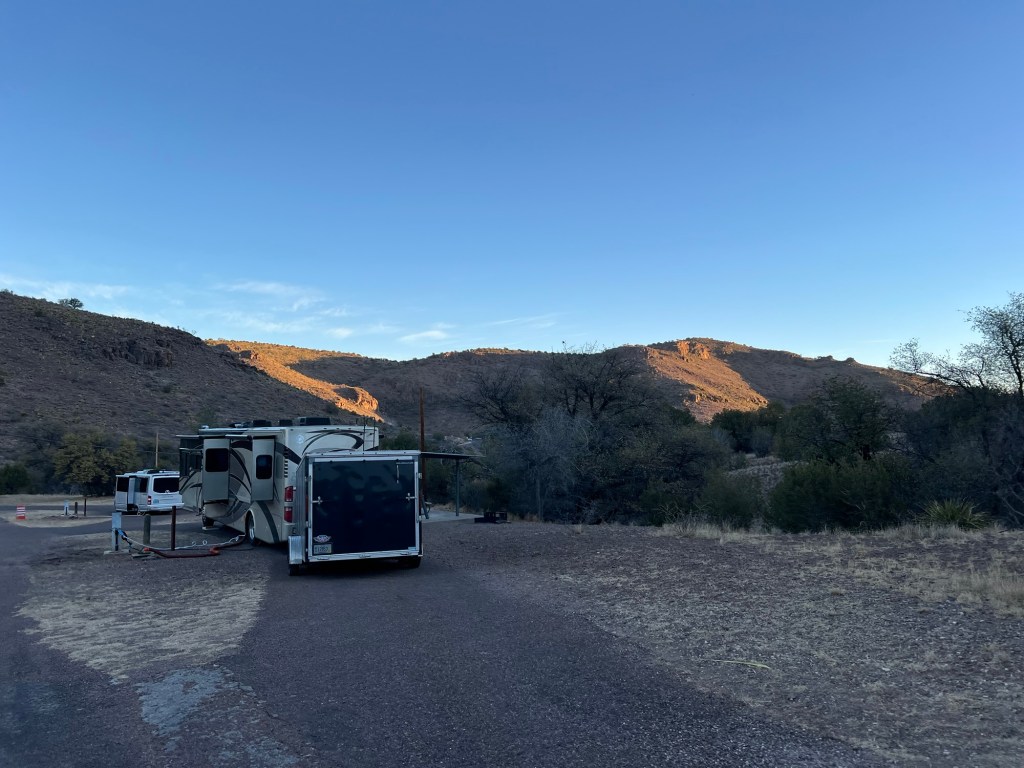
We moved yesterday to Davis Mountains State Park in Fort Davis, Texas.
This is West Texas. Yes, we’re still in Texas. The blue dot is where we were at Big Bend National Park; we’ve moved, but my iPad hasn’t found us yet.
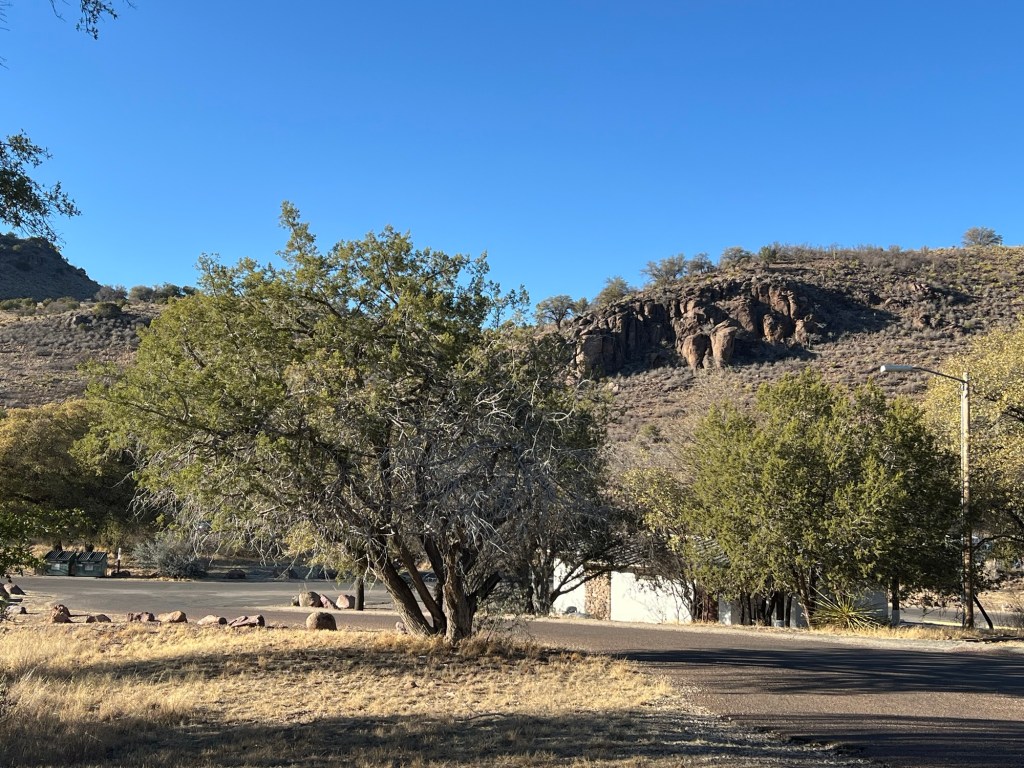
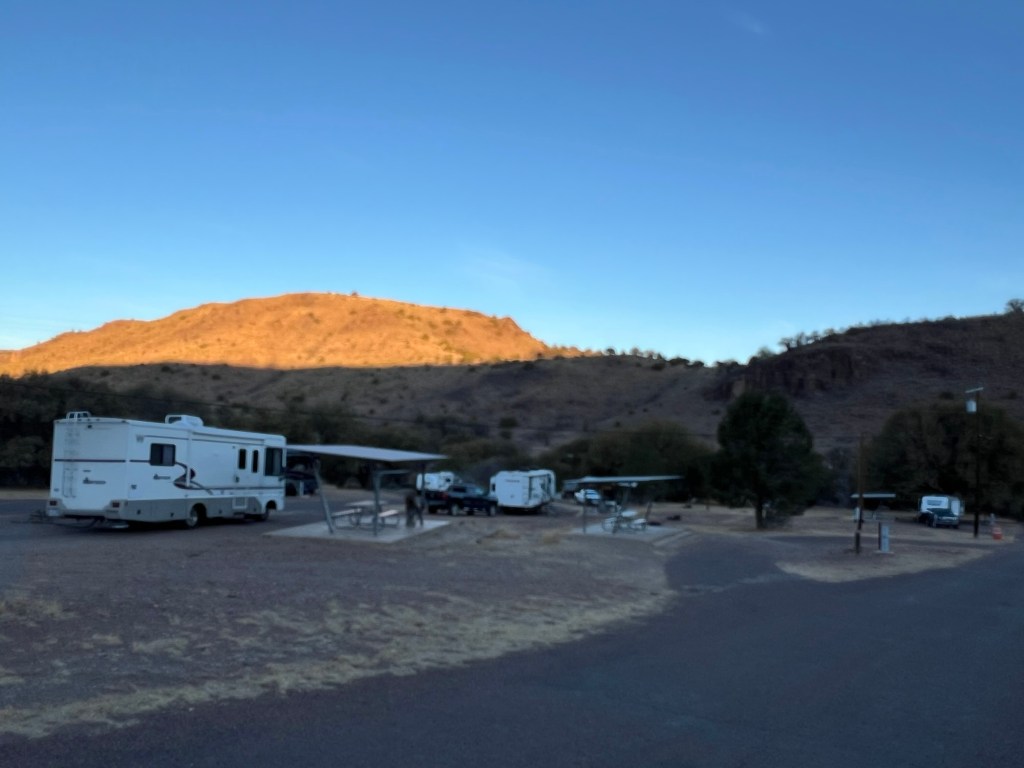
As I walked Matey this morning I caught the sun lighting the hills across the park.
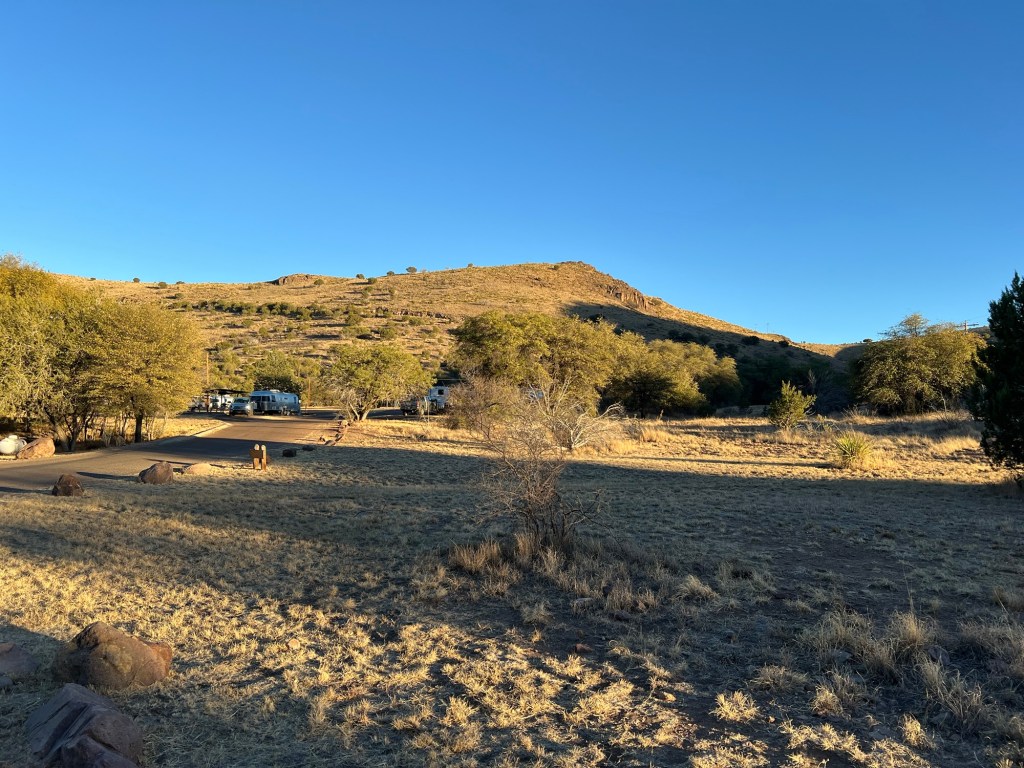
Our campground was still in the shadows.
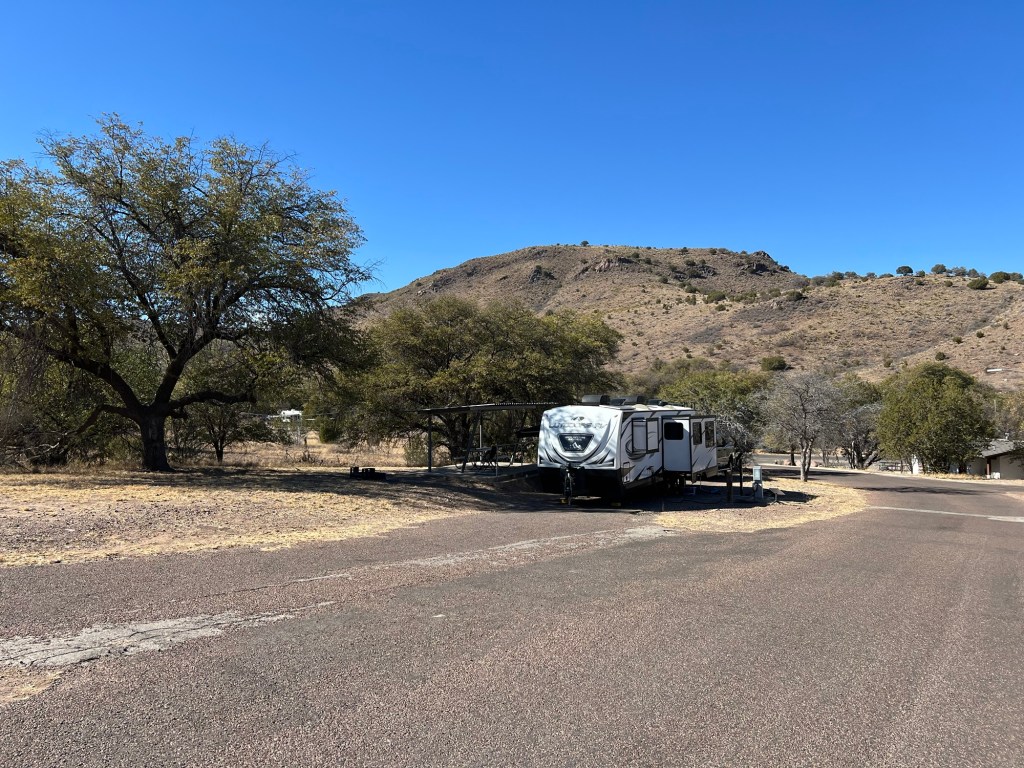
This afternoon Matey and I sat out in the shade.
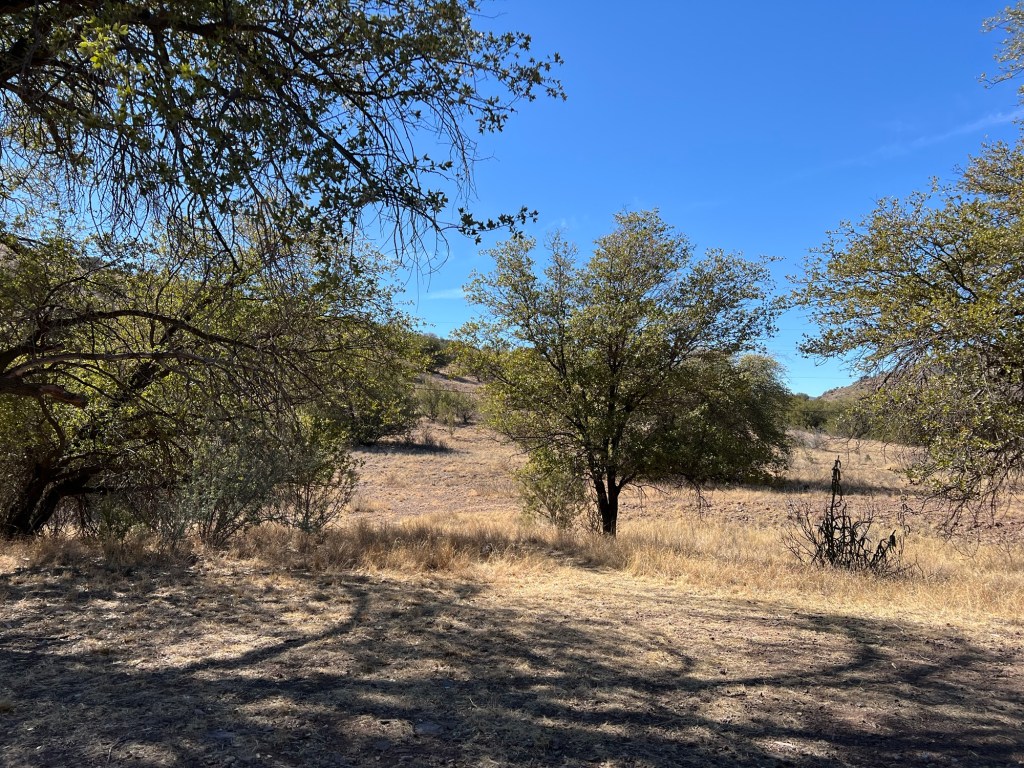
We had a lovely view.
Late afternoon we walked again and the shadows were coming back. This is a really pretty campground in the mountains of West Texas. Even though we did nothing but errands so far, I’ve enjoyed being here.
Sharon Gaskill gave me a book to read; “Beneath the Window, Early Ranch Life in the Big Bend Country” by Patricia Wilson Clothier. I read it while we were here, so of course I wanted to check out the two ranches that figured most prominently in her book.
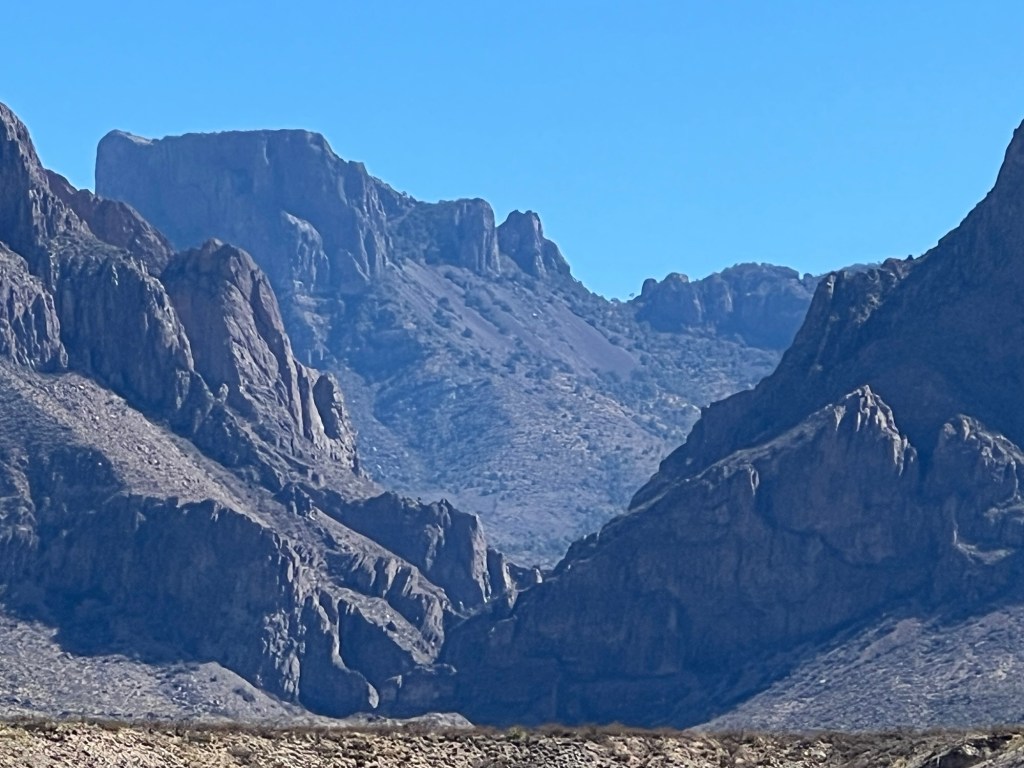
She was born and lived for 14 years in a Sears Roebuck mail order house about two miles towards that notch in the Chisos Mountains, The Window. That notch may look low but it’s still 4600 feet above sea level and high above the surrounding desert.
At nearly a mile above the desert floor, the Chisos Mountains are cooler and wetter than the surrounding desert. Patricia’s father, Homer Wilson, ranched land in the western foothills of the mountains, taking advantage of the water from the mountains. Unfortunately, the old house on Oak Creek was bulldozed when the National Park took over the land.
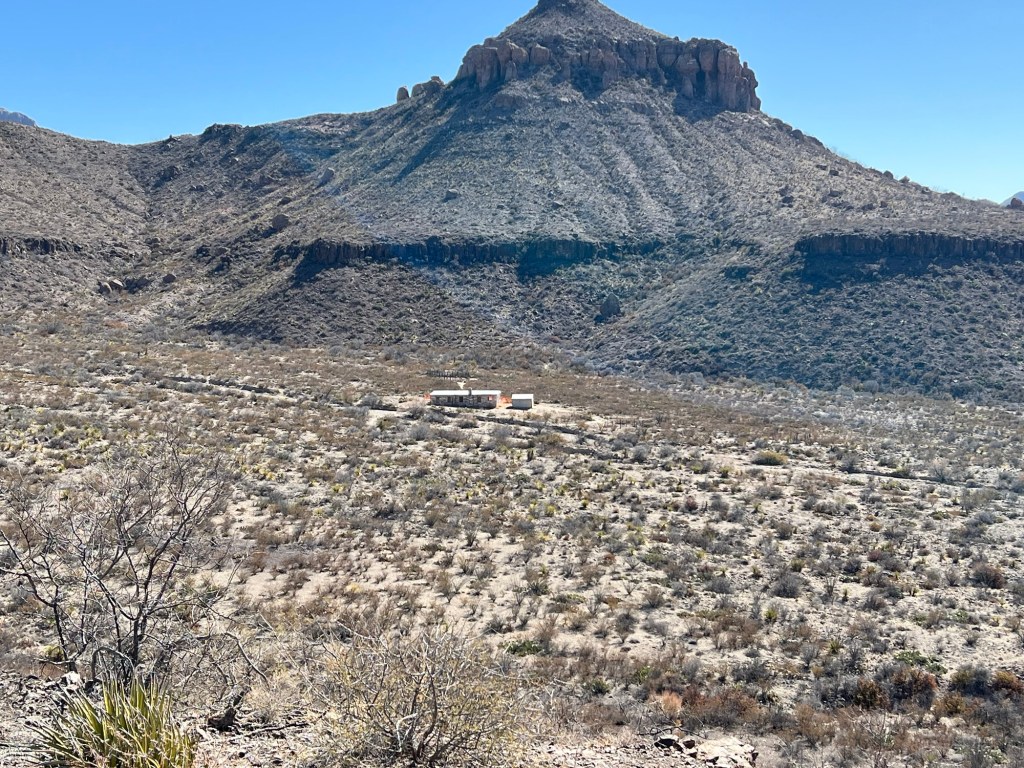
The ranch headquarters on Blue Creek still has some buildings standing.
Water came down from the mountains, much of it underground, and was pumped up to high tanks to serve the needs of the ranch. At Oak Creek there was water for vegetable gardens, orchard trees and even a flower garden. I wish there was a trail to that area.
This is Signal Hill and I was a bit astonished when I realized this was the hill Patricia and a friend climbed as kids. They went all the way to that flat top.
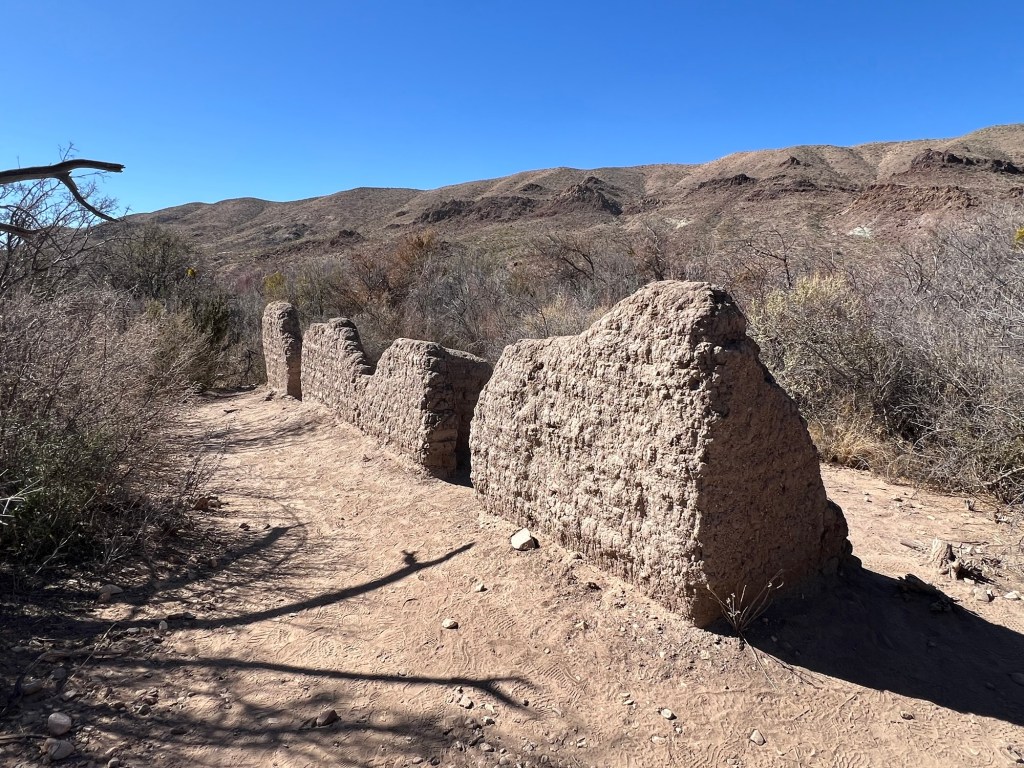
I got a much better sense of the past at the Sam Nail Ranch, their nearest neighbors.
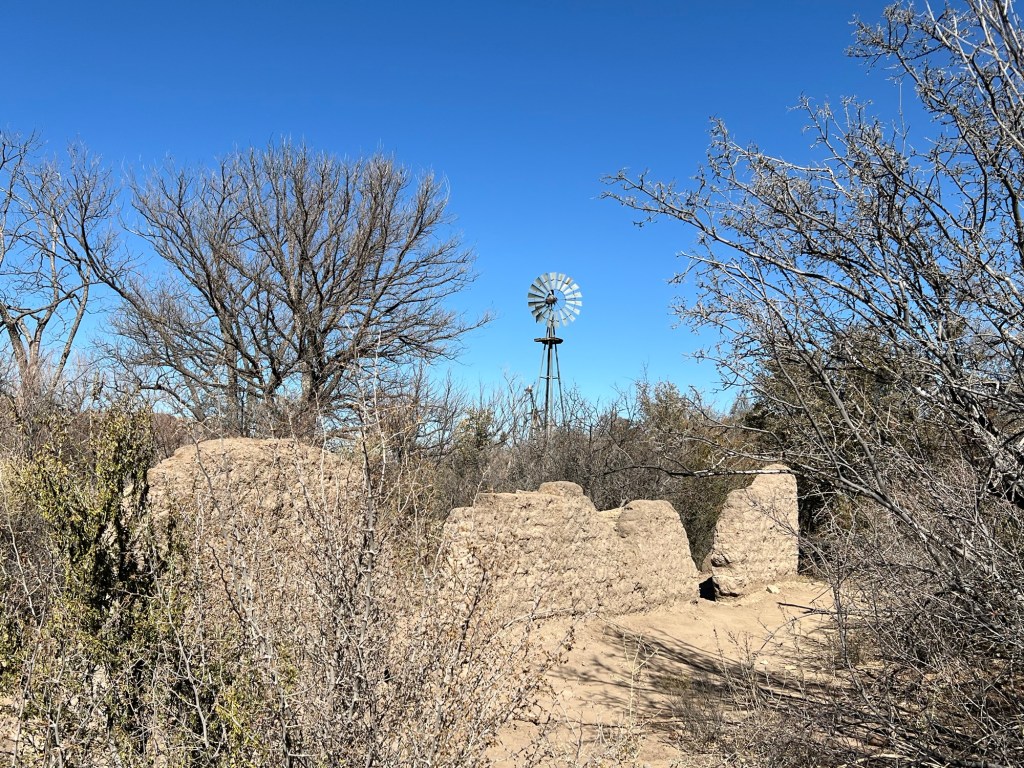
The adobe walls of the house have not yet disappeared.
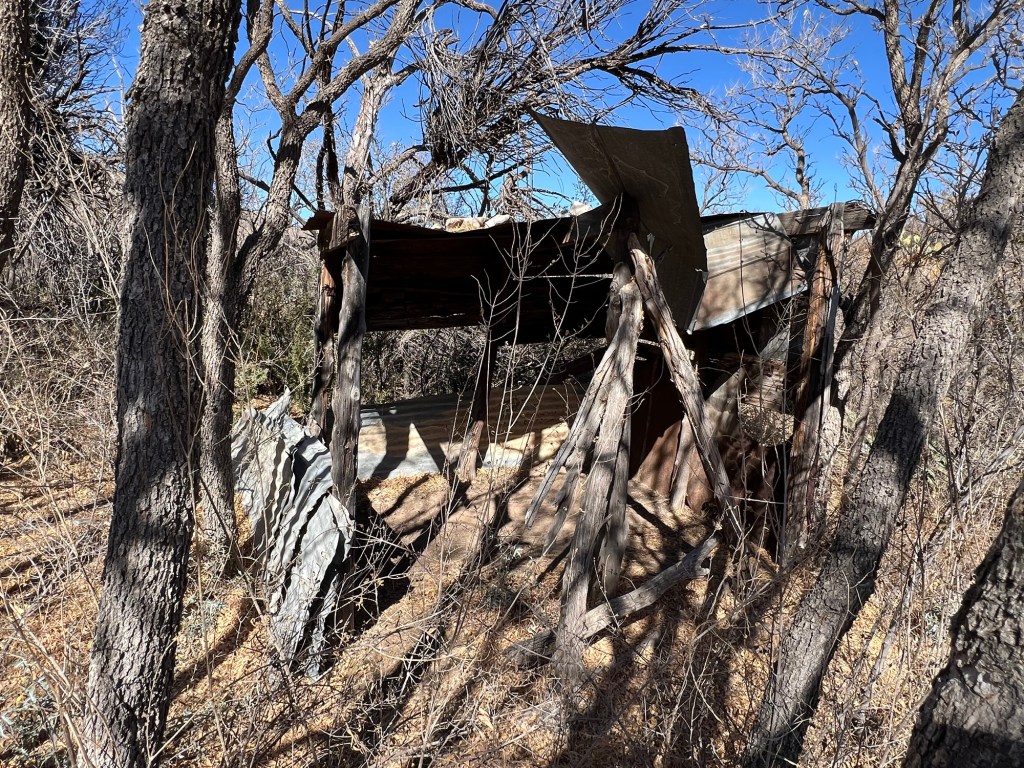
That’s the old chicken coop,
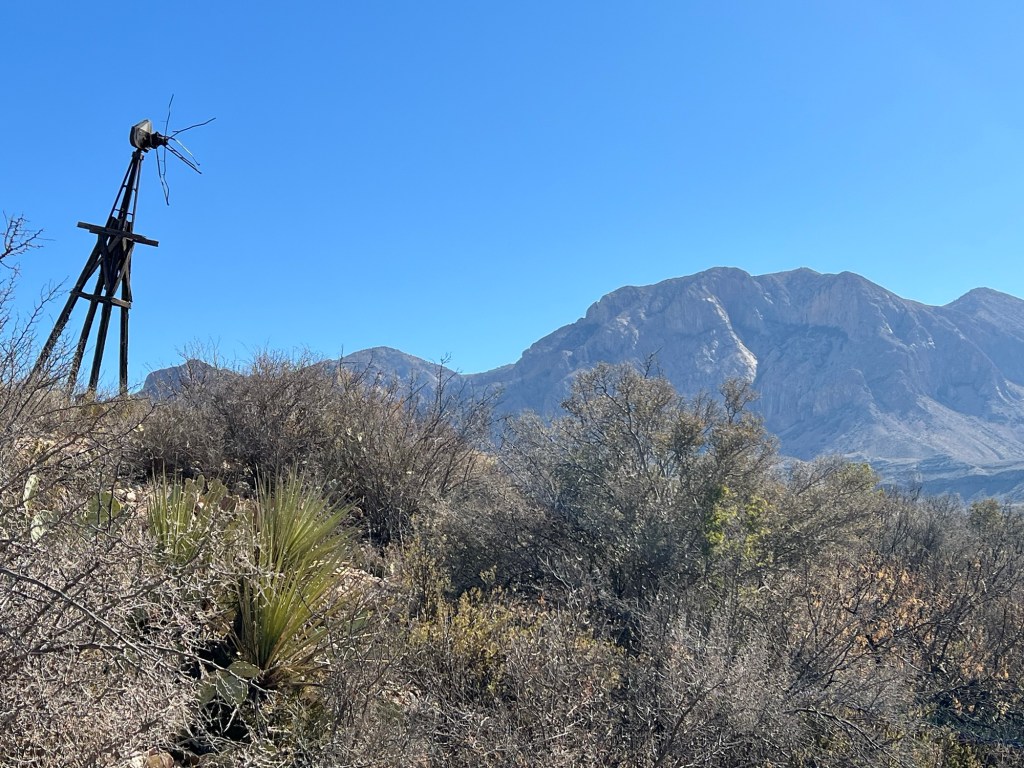
the back up windmill,
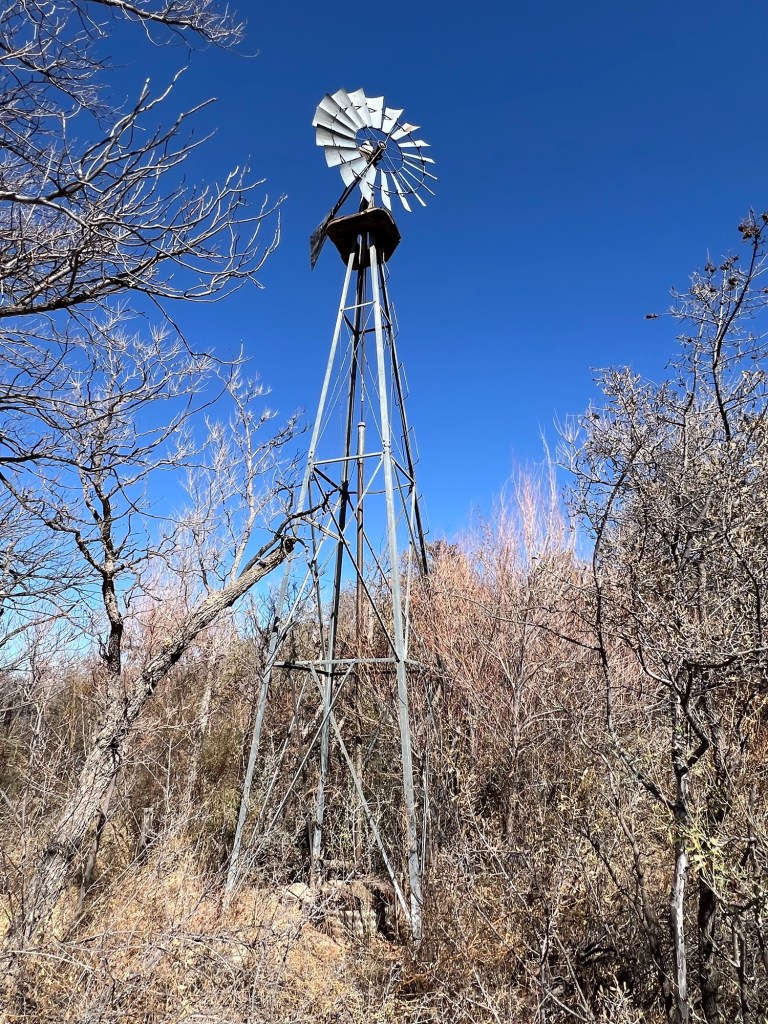
and the main windmill, which is now being used to bring the runoff from Burro Mesa that flows in Cottonwood Creek, above and below the ground, to tanks for the wildlife.
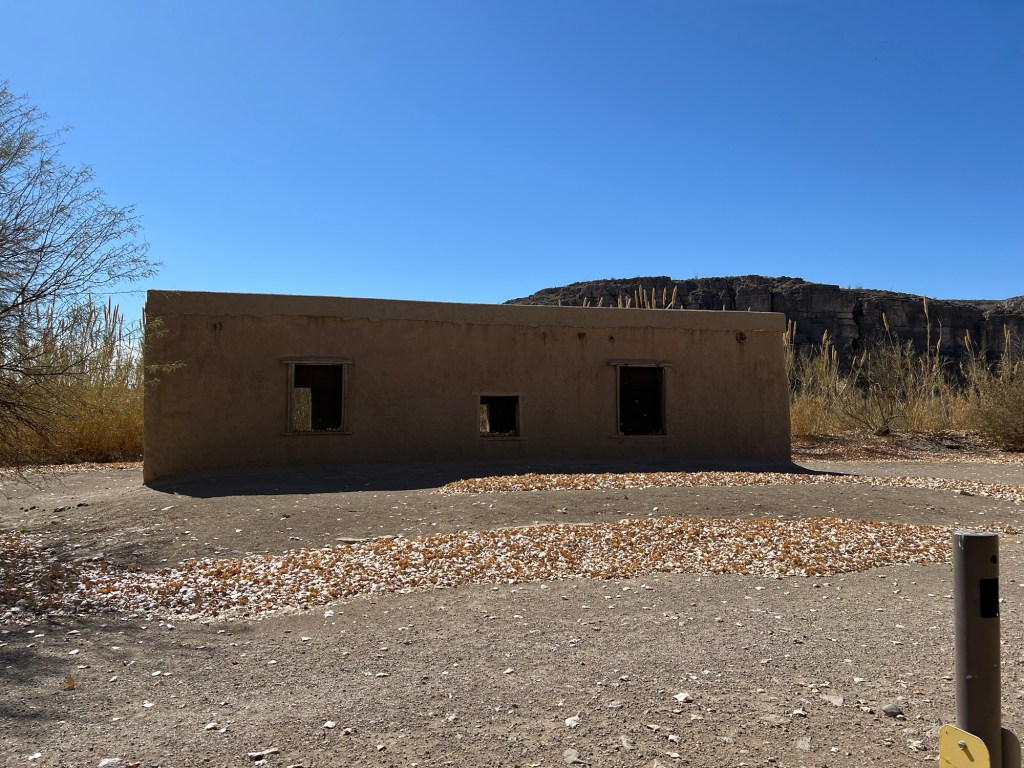
No mention was made in the book of the Daniel’s Ranch. Our campground is located on that land.
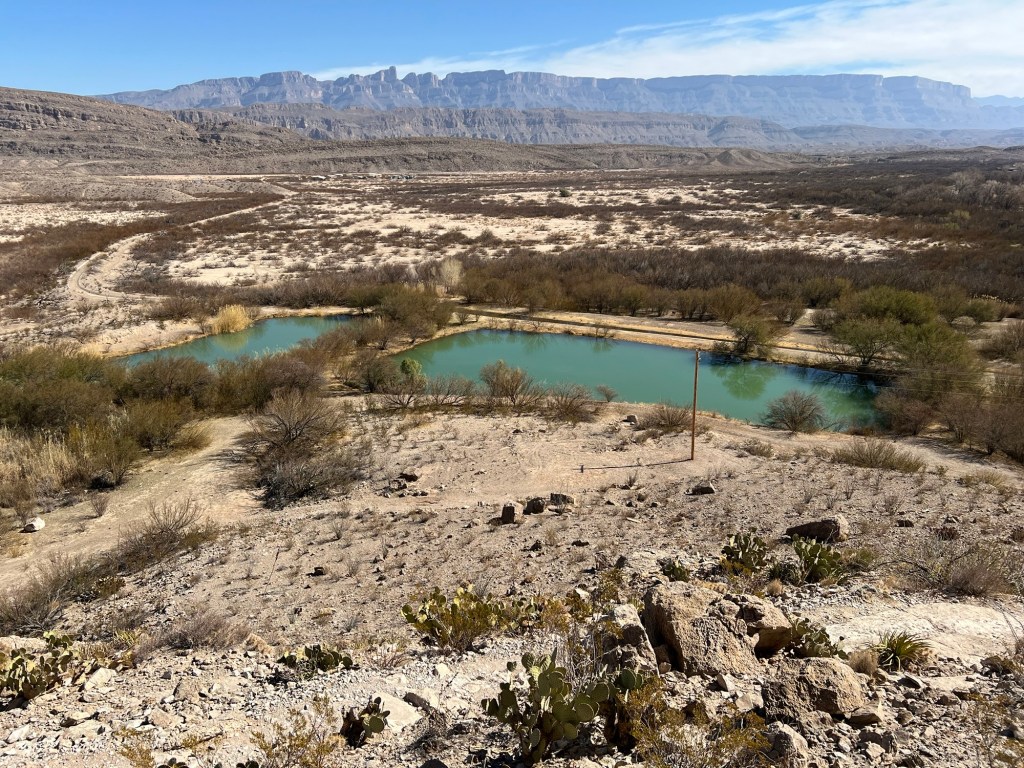
That ranch was a floodplain ranch and also operated from the 1920’s to the 1940’s. Coming down off Ernst Ridge I looked down on the holding ponds where water from the Rio Grande is pumped.
The ponds are near the old ranch house at the upstream end of the ranch.
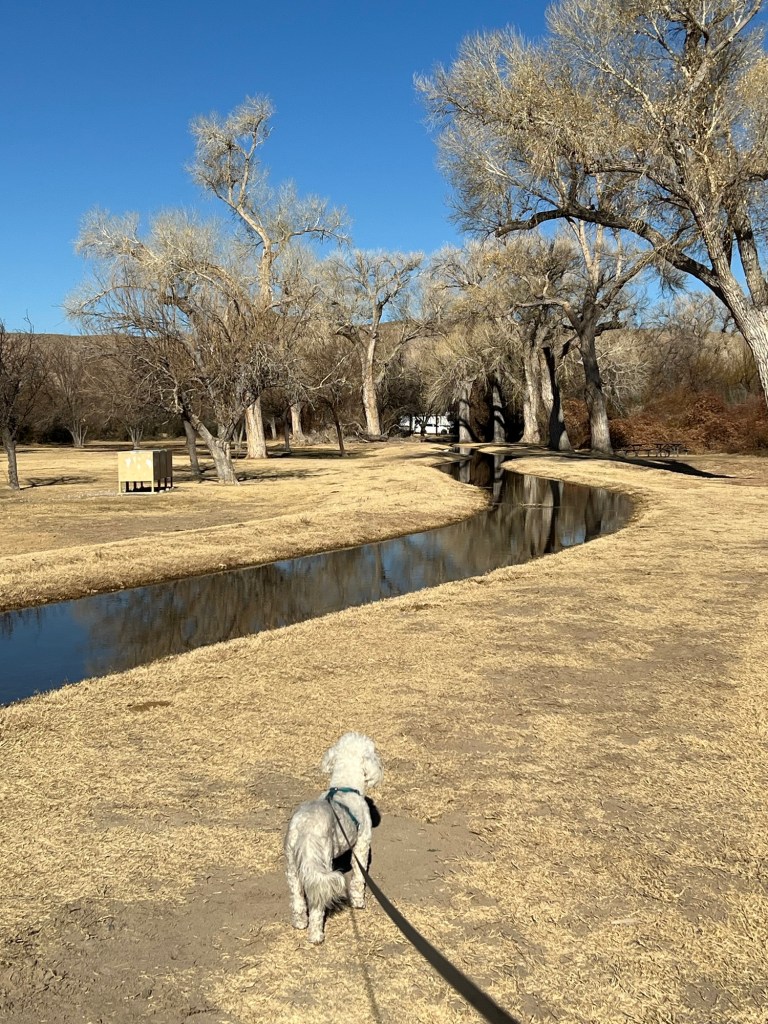
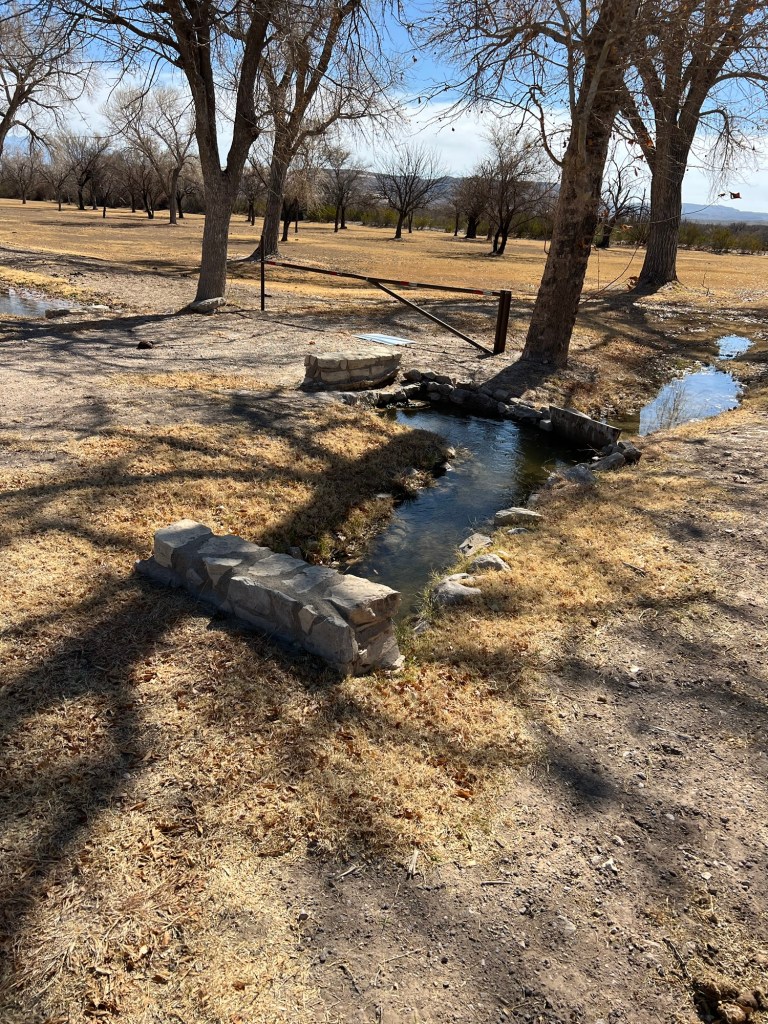
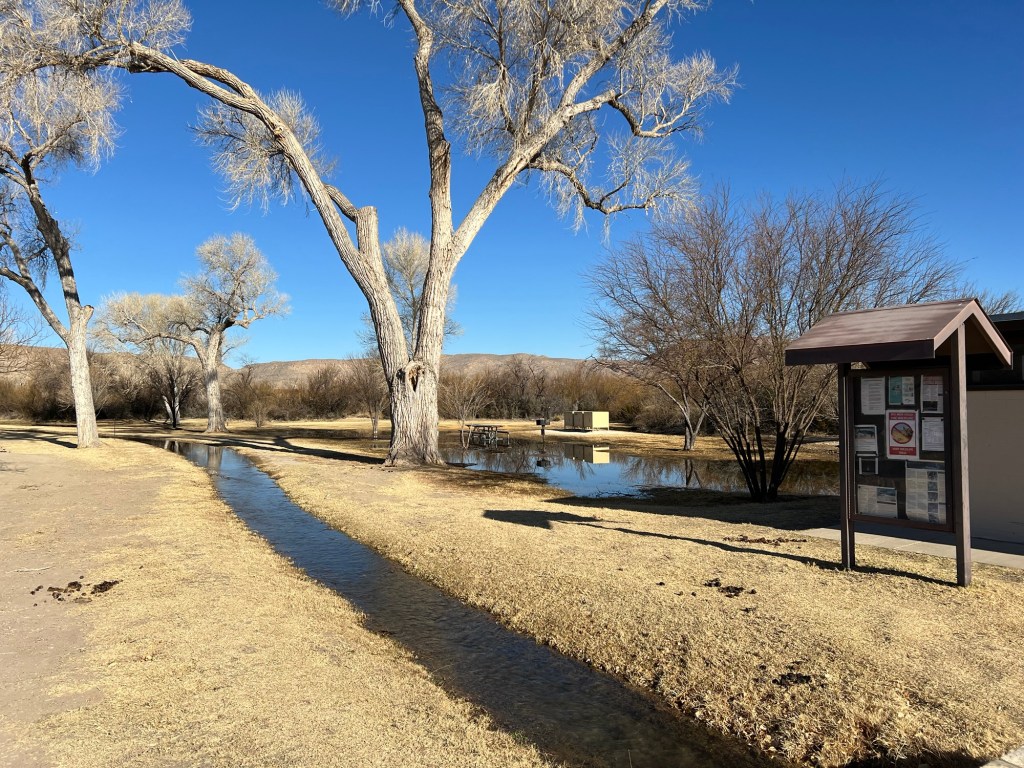
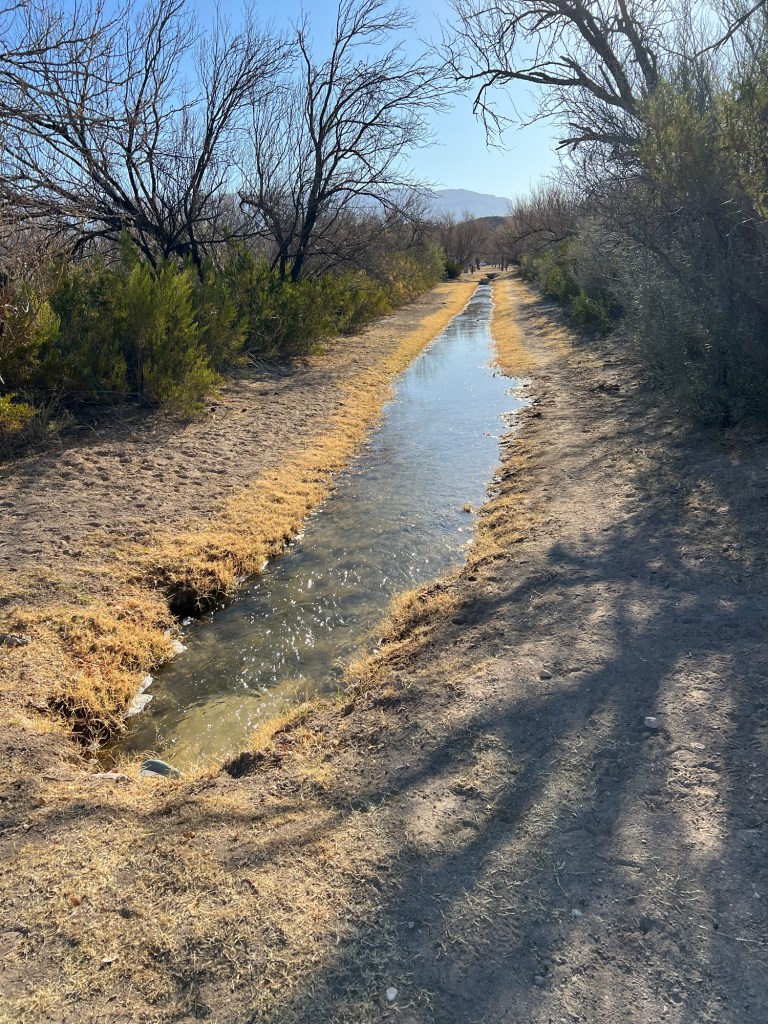
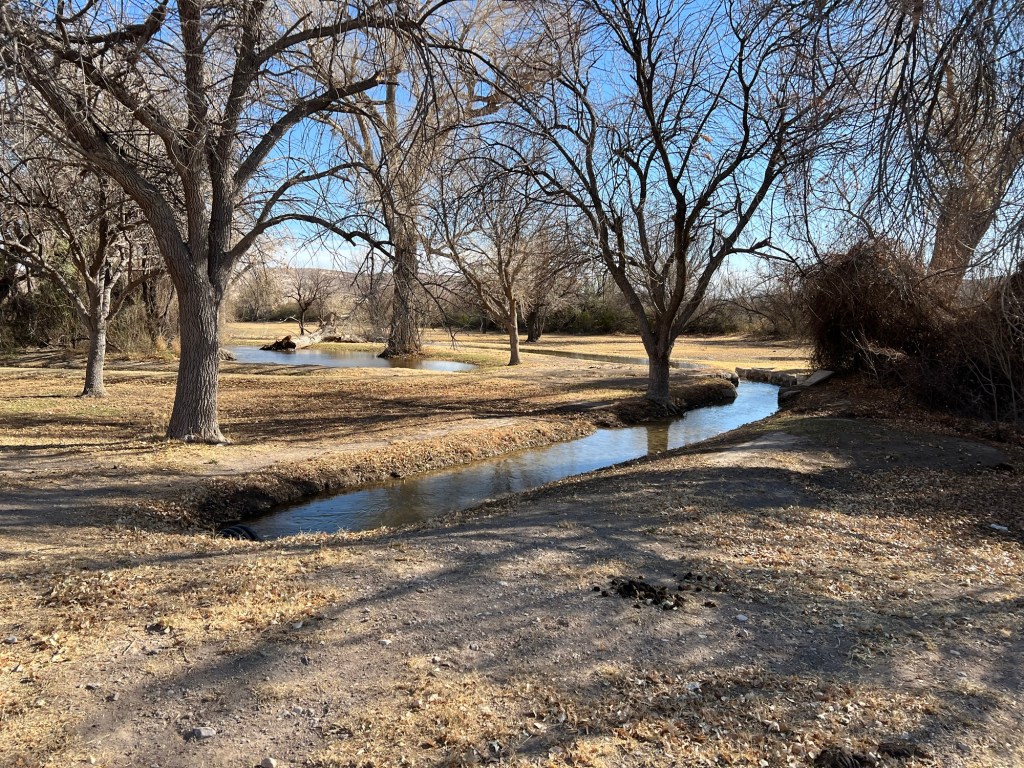
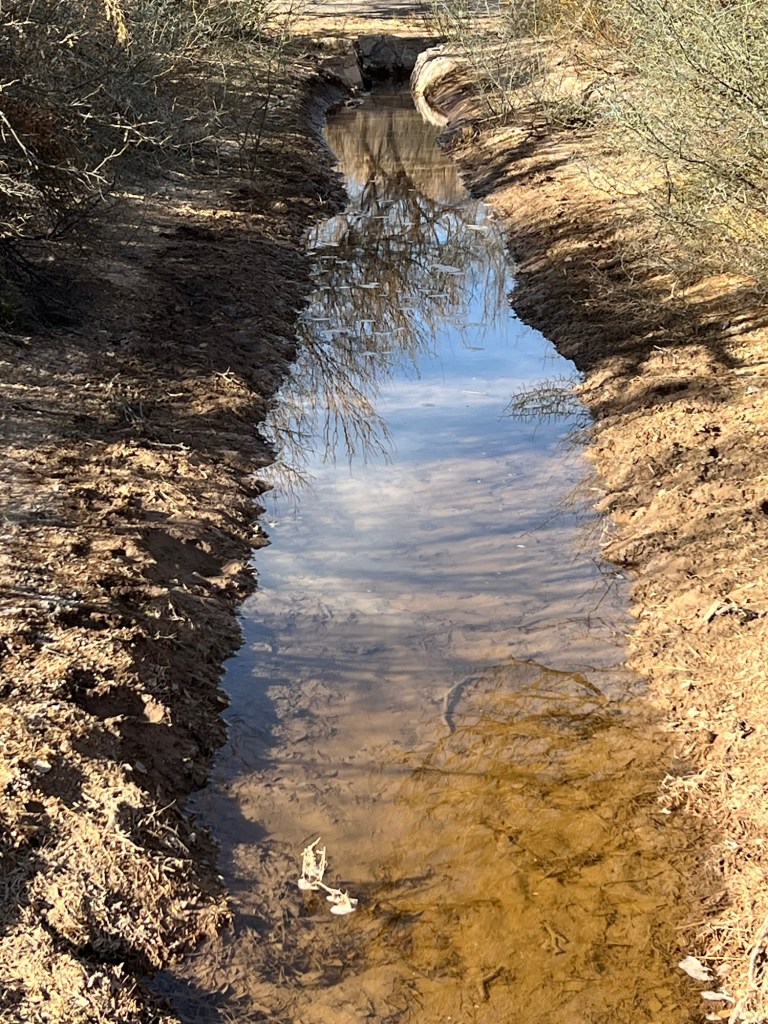
Little canals take the water to the fields.
You can see in this video that the water moves quickly.
Triangular boards direct the flow at junctions and culverts take it under roads.
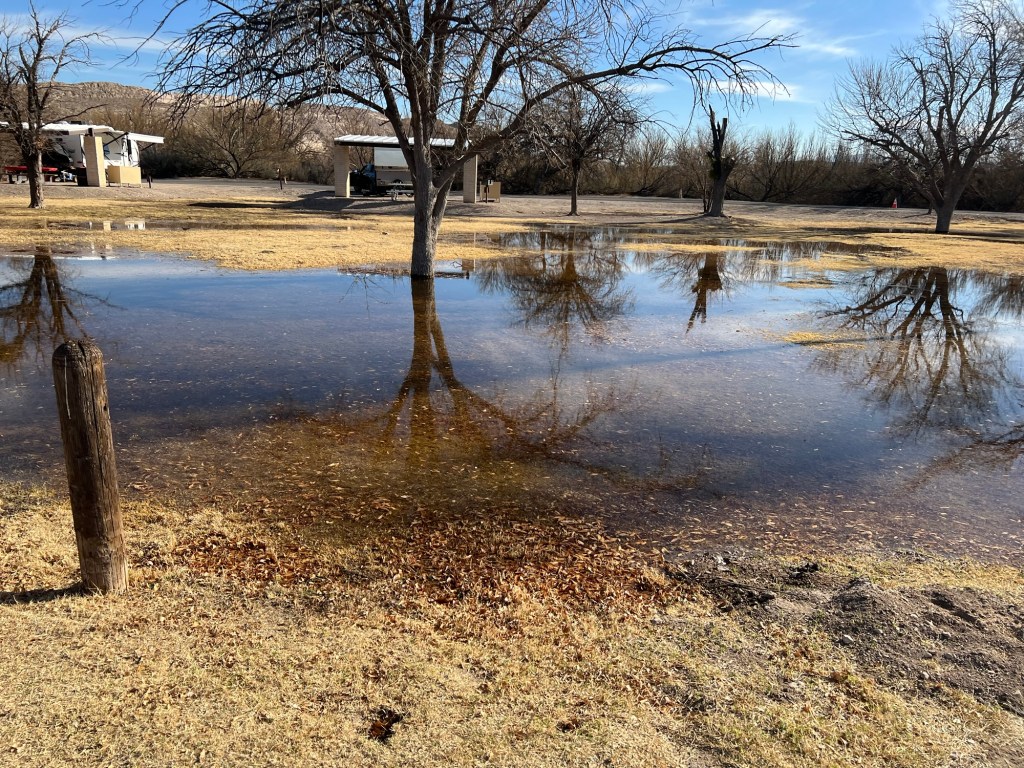
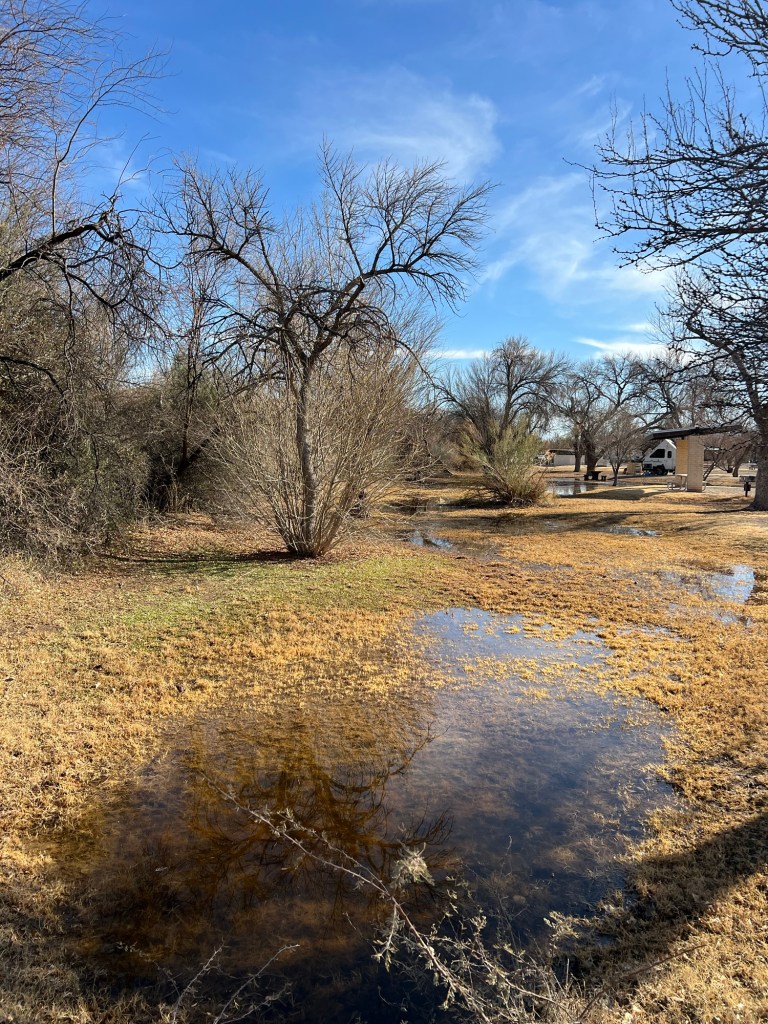
Different fields are flooded in succession.
Altogether the canals run about 2 miles.
Here they are flooding the no services campground; there are signs warning tenters that irrigation happens.
On the far side of that campground the last of the water seeps into the ground.
The Daniels used this system to grow cotton, and even watermelons and to provide shaded pastures.
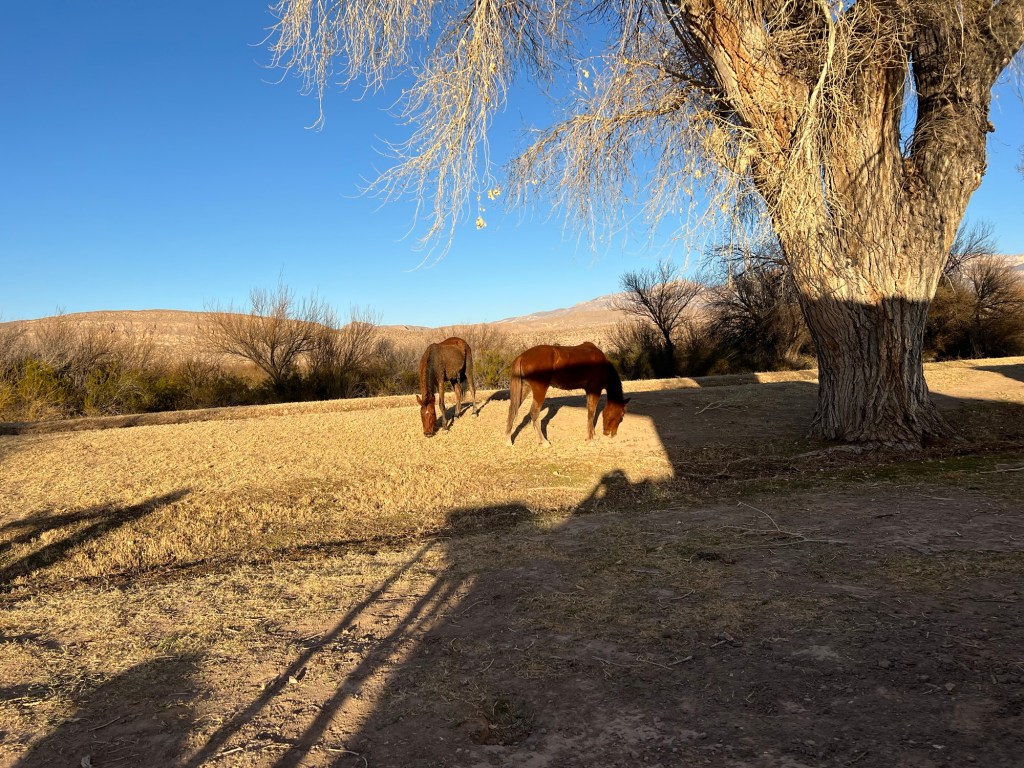
The system is still maintained and used; the cattle, horses and burros share the grass with the campers.
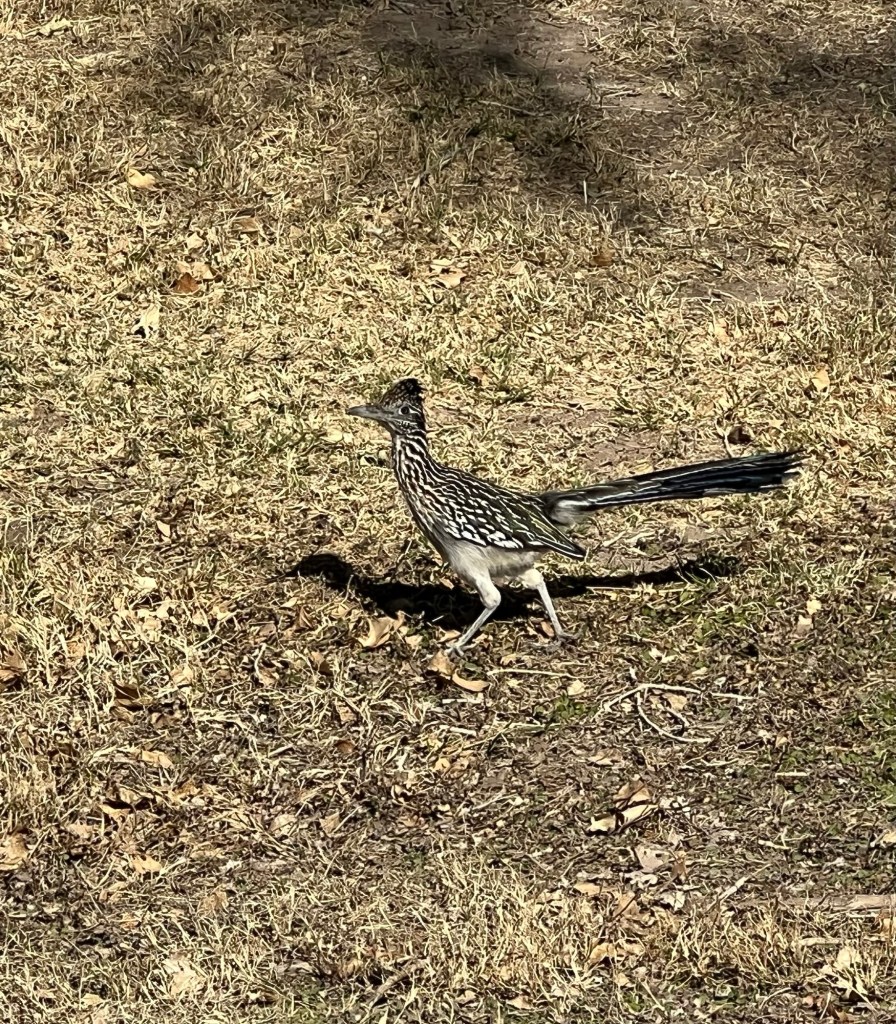
And that’s why we have so much wildlife at Rio Grande Village Campground.

 On the Roam Again