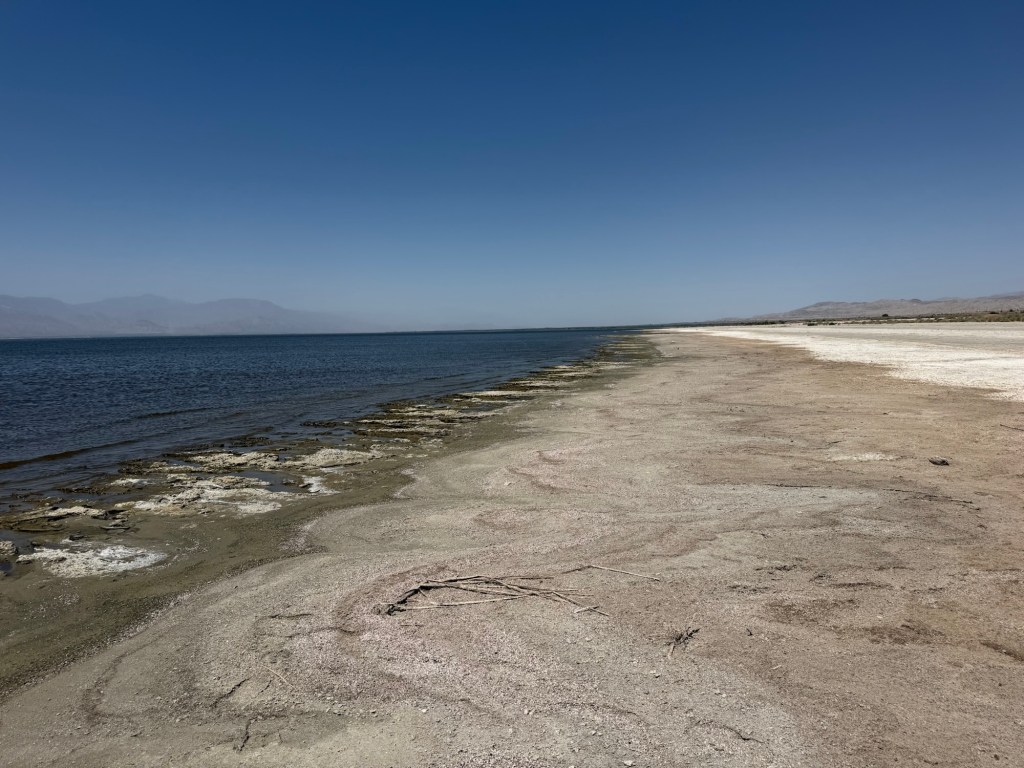
We call this the Salton Sea, but for most of its existence it’s been the Salton Basin.
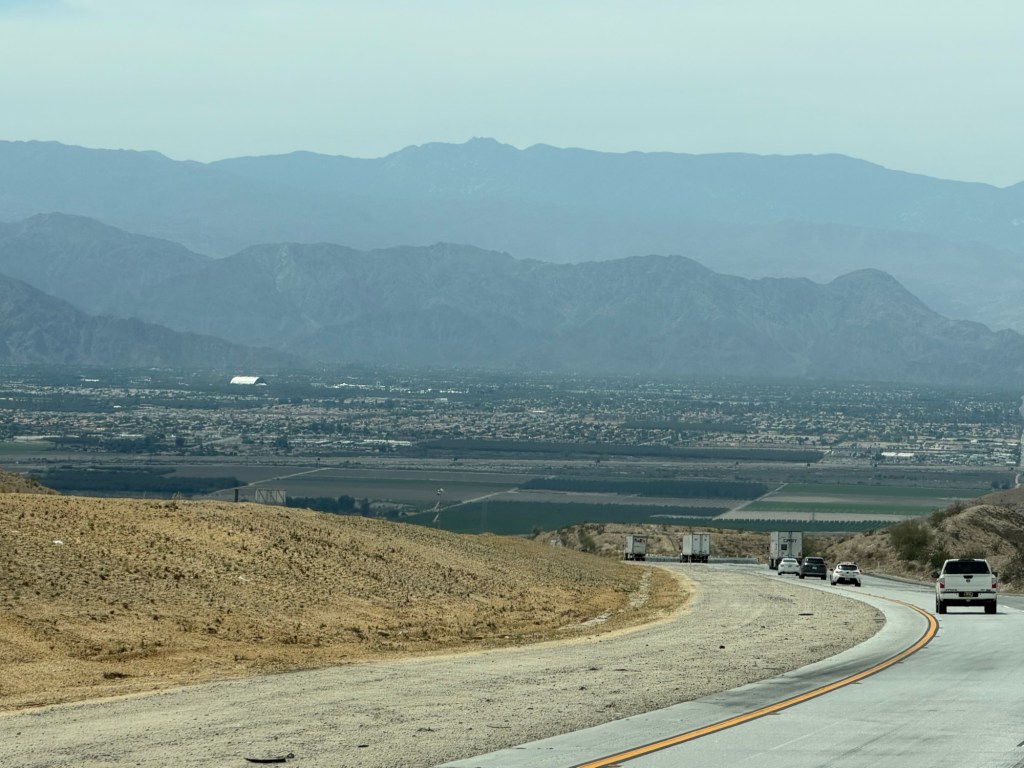
We came down from the hills heading to the Salton Sea State Recreation Area in southeastern California.
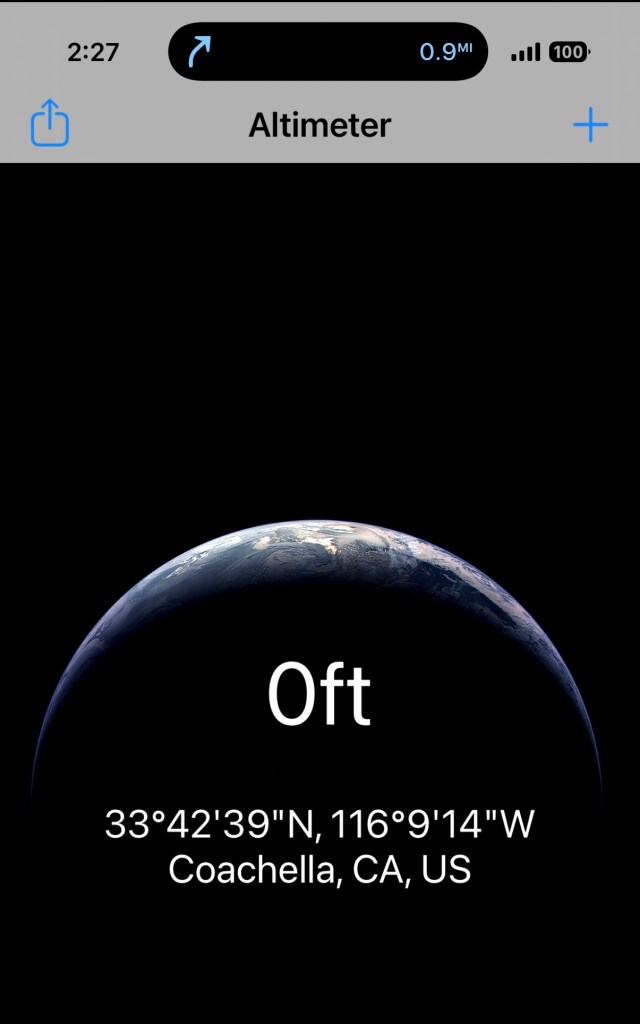
I watched my altimeter, we hit sea level.
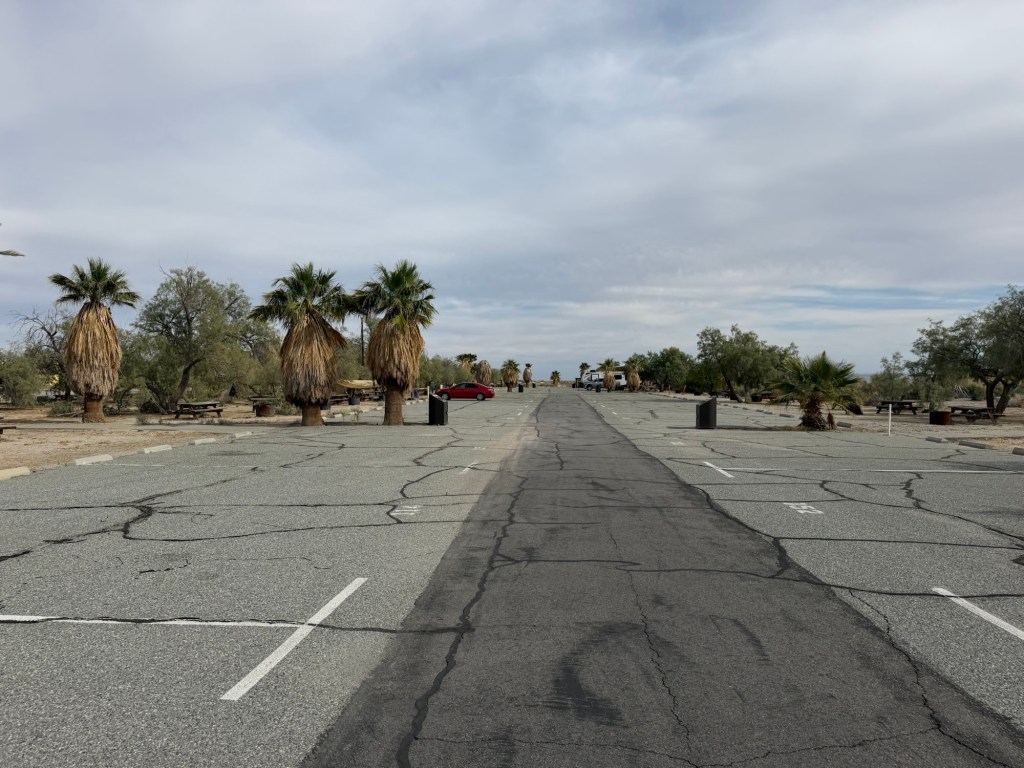
When we got to the rather funky campground, a converted parking lot,
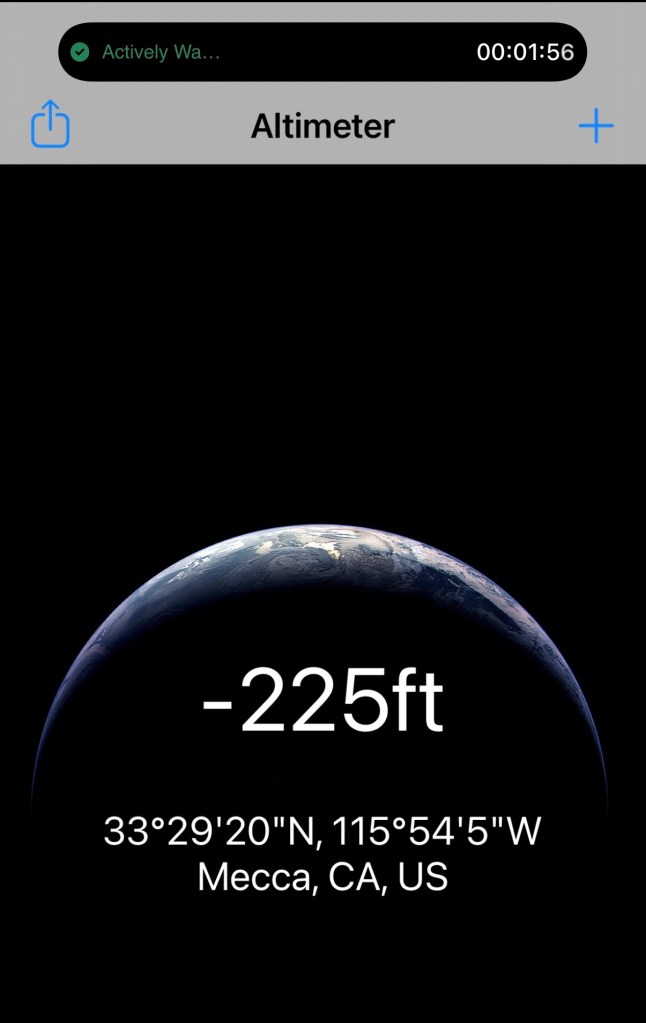
we were 225 feet below sea level. The water has come in here periodically from the Colorado River. Earlier when the delta silted up and the last time in 1905 when a levee on an irrigation canal collapsed and the entire river flowed into the basin for over a year. Whole towns were flooded.
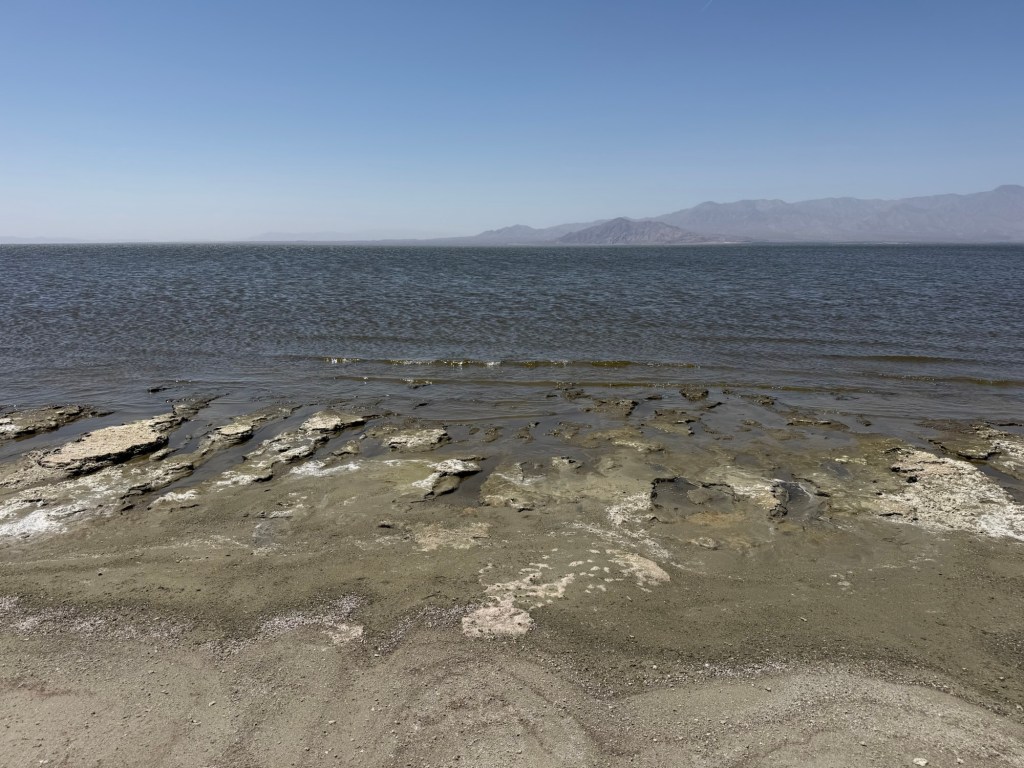
But there’s no outlet for the basin, so as it gradually evaporated the remaining water got saltier.
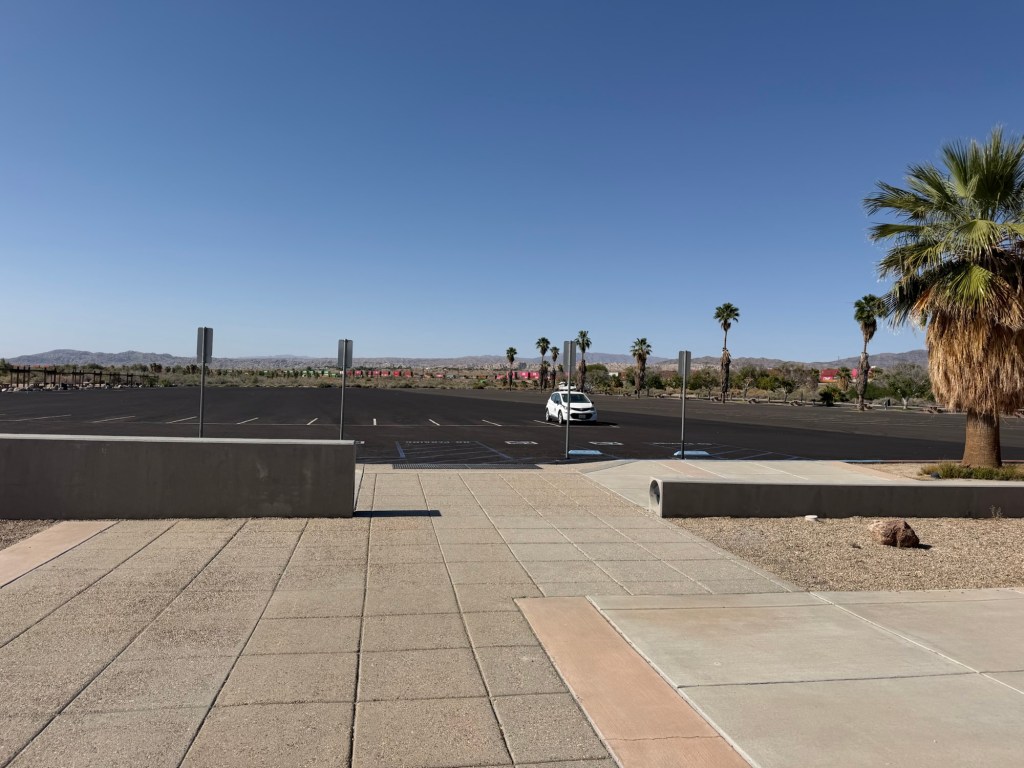
Eventually it got as salty as the sea. It was stocked with marine fishes and in the 50’s and 60’s was a very popular weekend destination. There was a marina here with a 15 boat wide boat launch. Hence the huge parking lots to accommodate all the boats. There were also huge populations of brown and white pelicans. But the water kept evaporating. The only inputs were from agricultural runoff, so the salinity kept increasing and the fish started dying. Two hurricanes destroyed the marina.
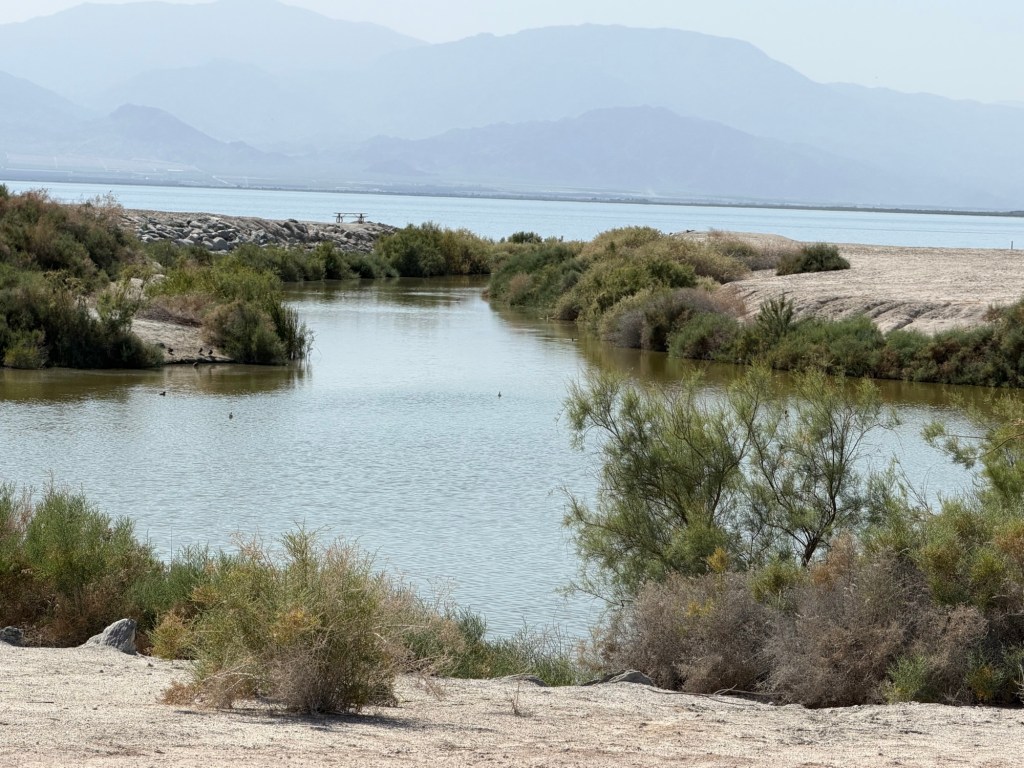
A new smaller one was built.
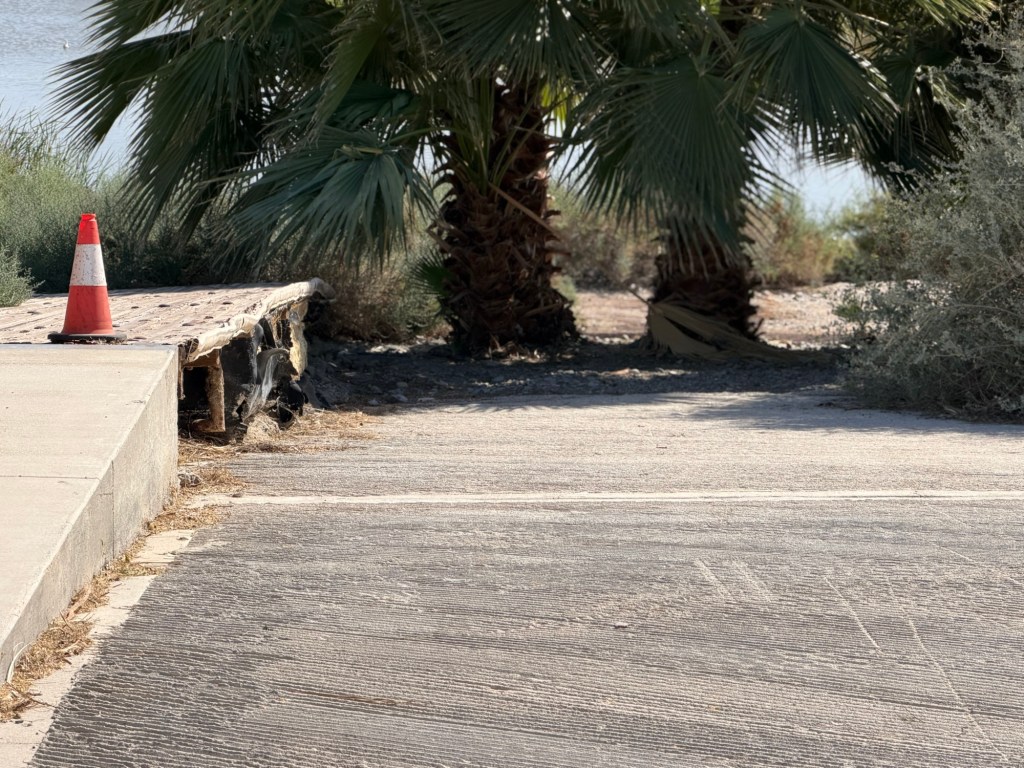
But its boat ramp hasn’t reached the water in years.
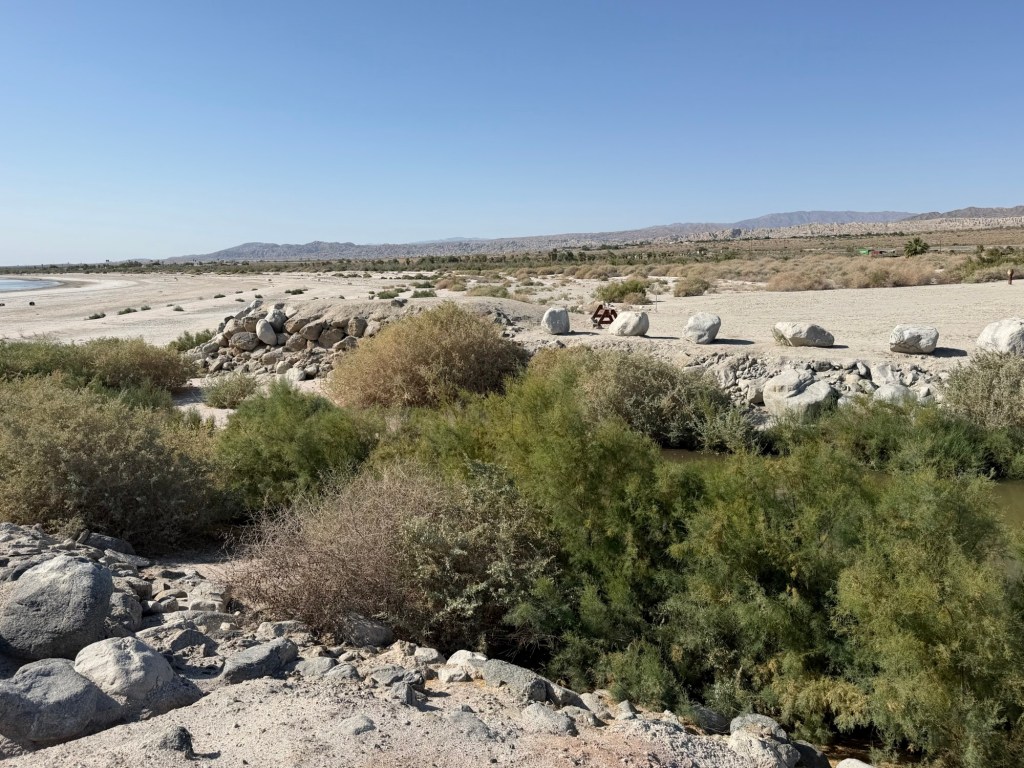
The marina itself is now cut off from the lake, but that’s a good thing.
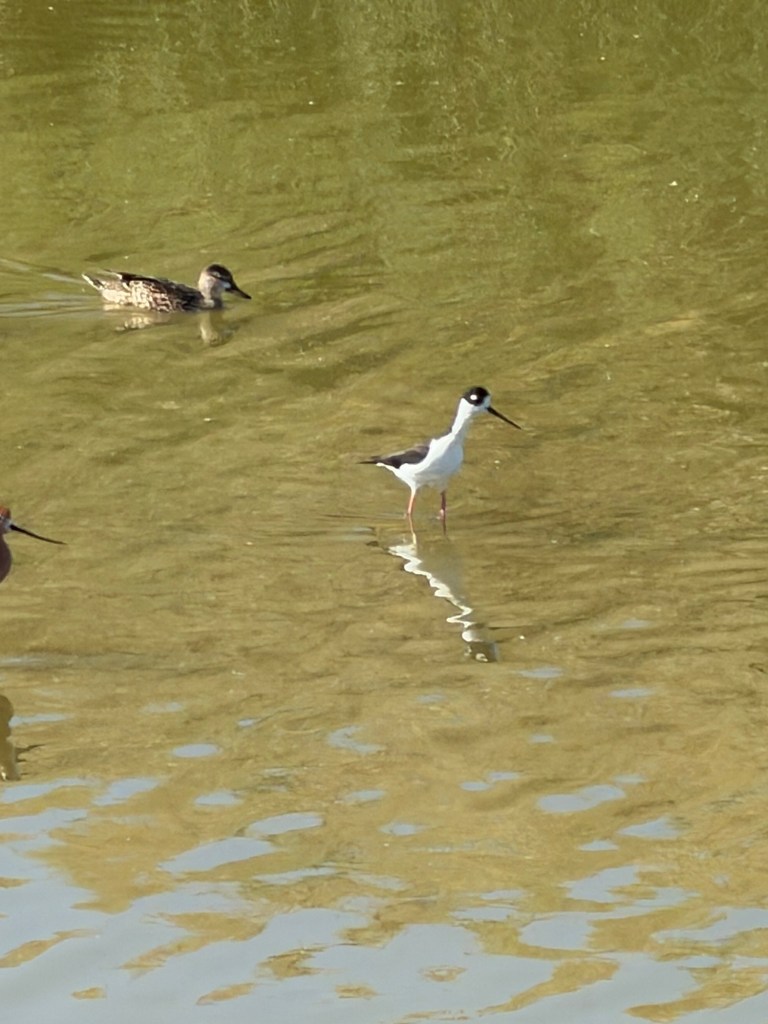
The water in it seeps up from the ground, so the sand has filtered out much of the salt. There are no fish surviving in the lake as it is now 7.8% salt. But desert pupfish live in the marina pond and this black necked rail and
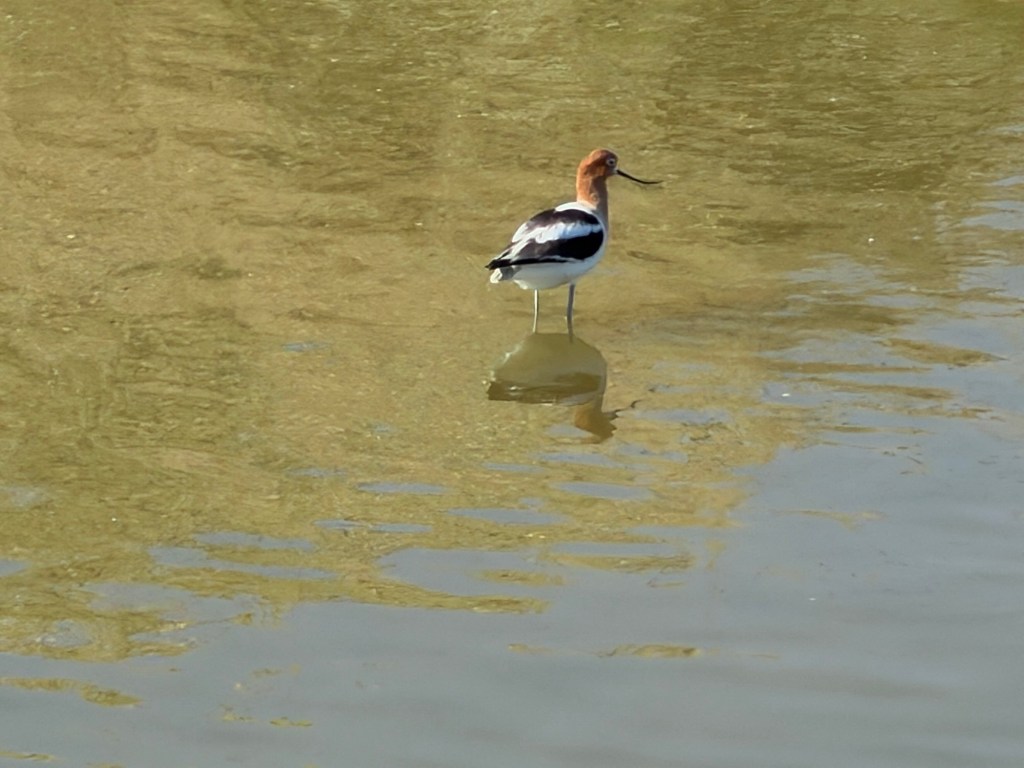
avocet are here to catch them. There are some diked wetlands at the southern end of the lake being fed with sand filtered water from the Alamo and New Rivers, and pelicans are returning there.
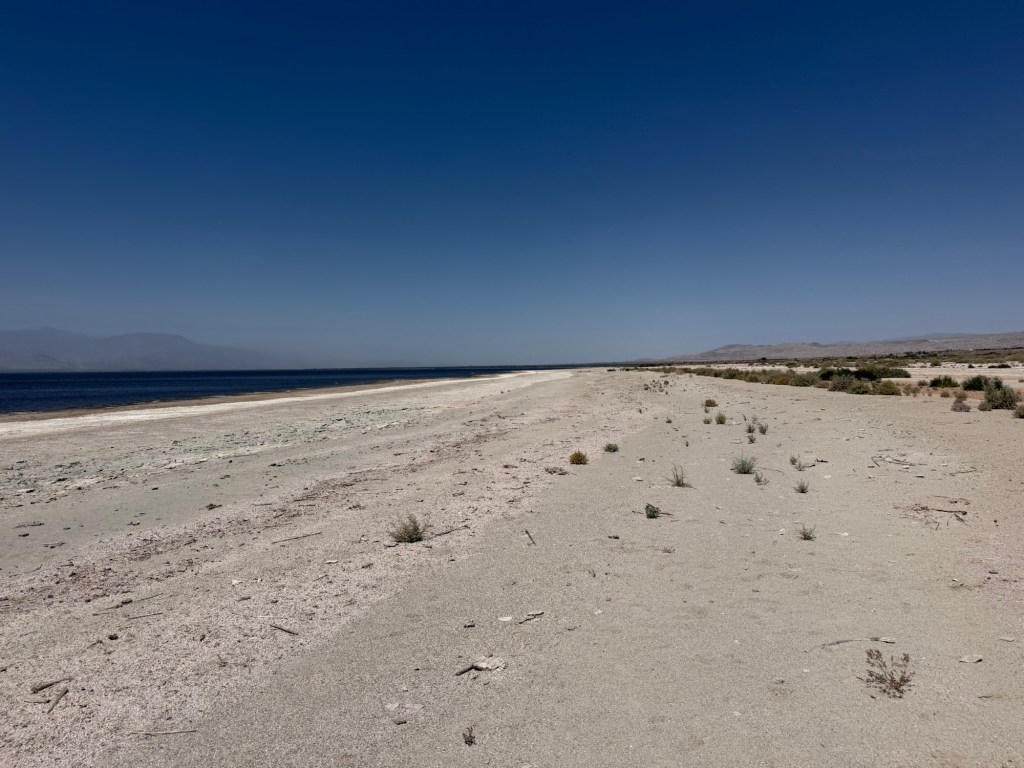
The beach itself is very strange.
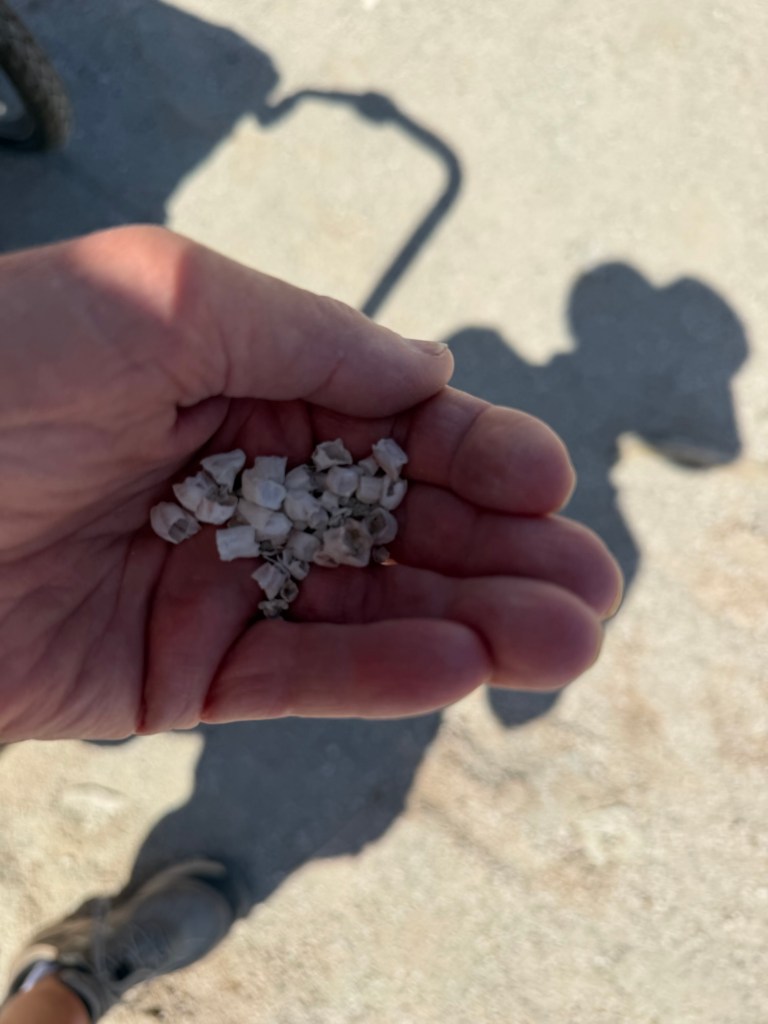
There are huge deposits of barnacle shells. The barnacles are still surviving, having been brought here on navy amphibious aircraft during World War II. They, too, will die when the salinity reaches 8 or 9%.
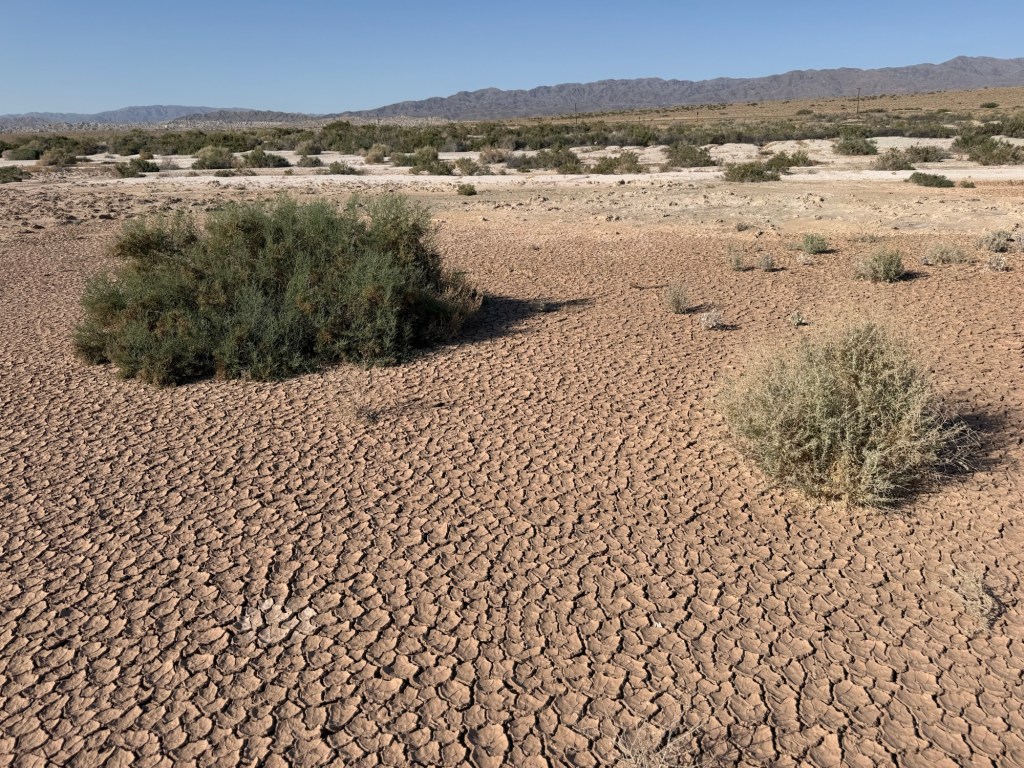
There is also a lot of mud and as you near the edge of the water the ground becomes spongy. We retreated, but the ranger told me many people sink in to their knees and come back mud covered, stinky and missing shoes. Ugh!
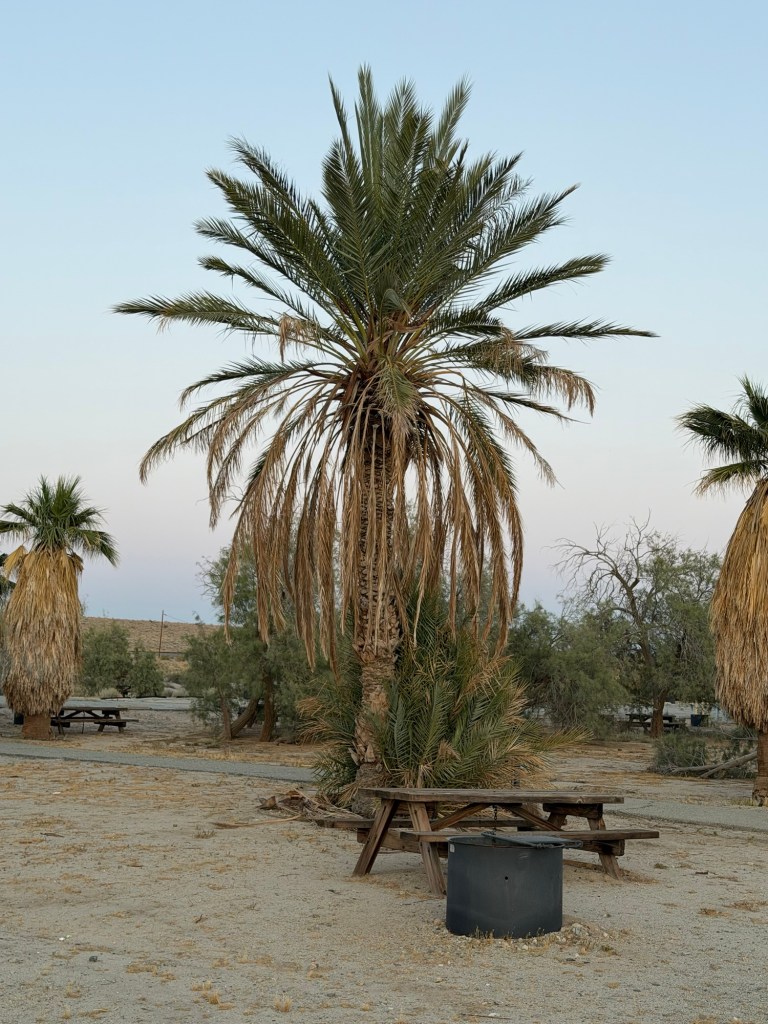
But there is plenty of life here. Date palms and
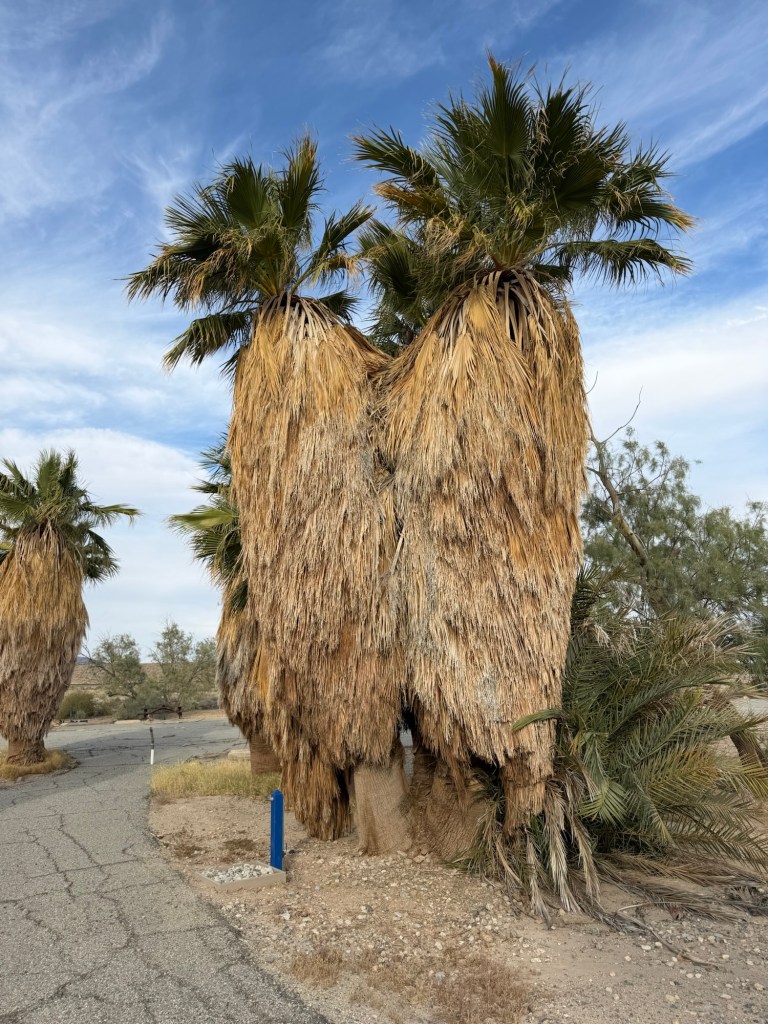
desert palms. The clinging dead fronds of these create places for birds,
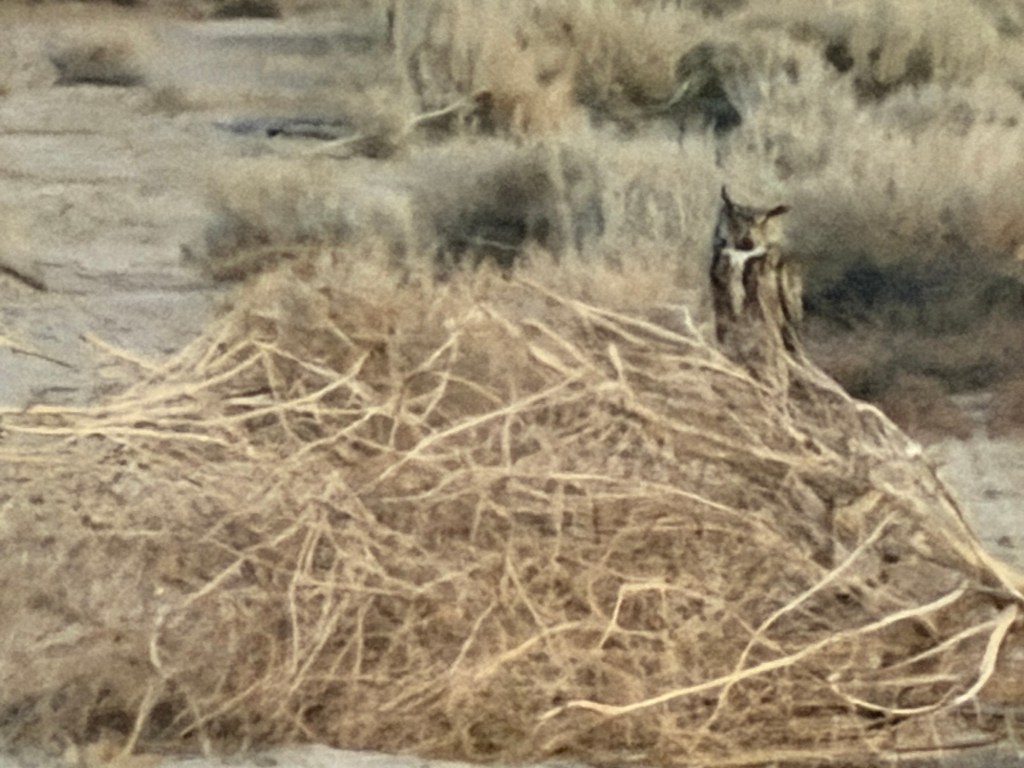
including this horned owl.
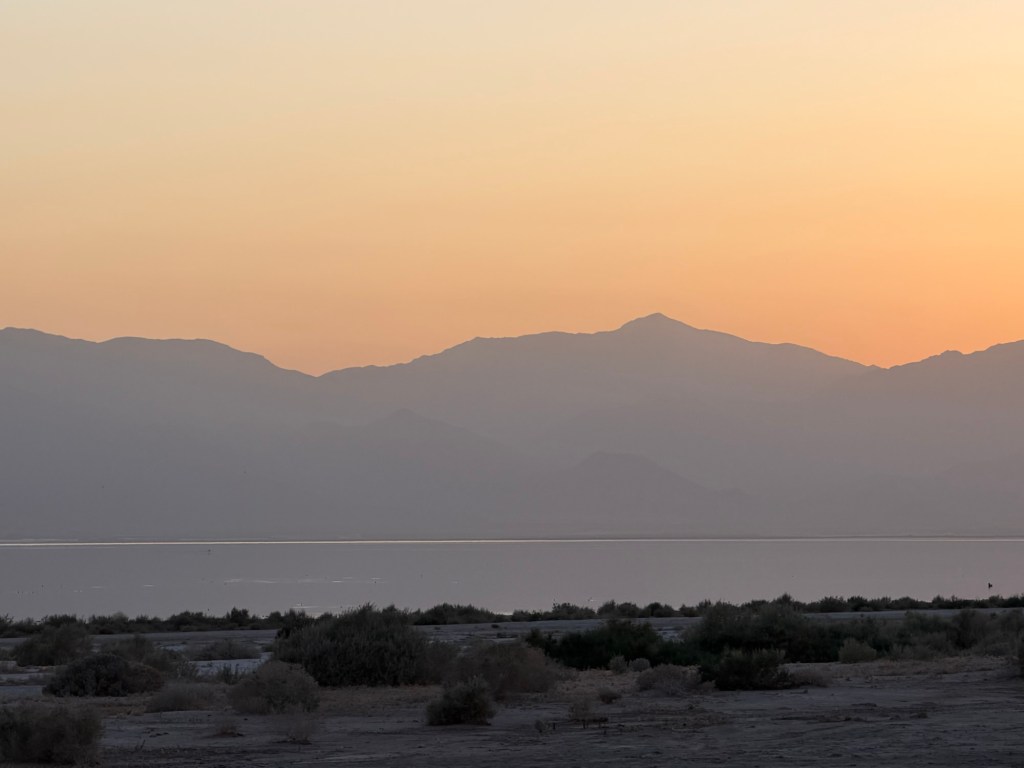
The retreating water exposing more shore and the extensive plowing in the nearby Imperial Valley have resulted in an overload of dust in the air.
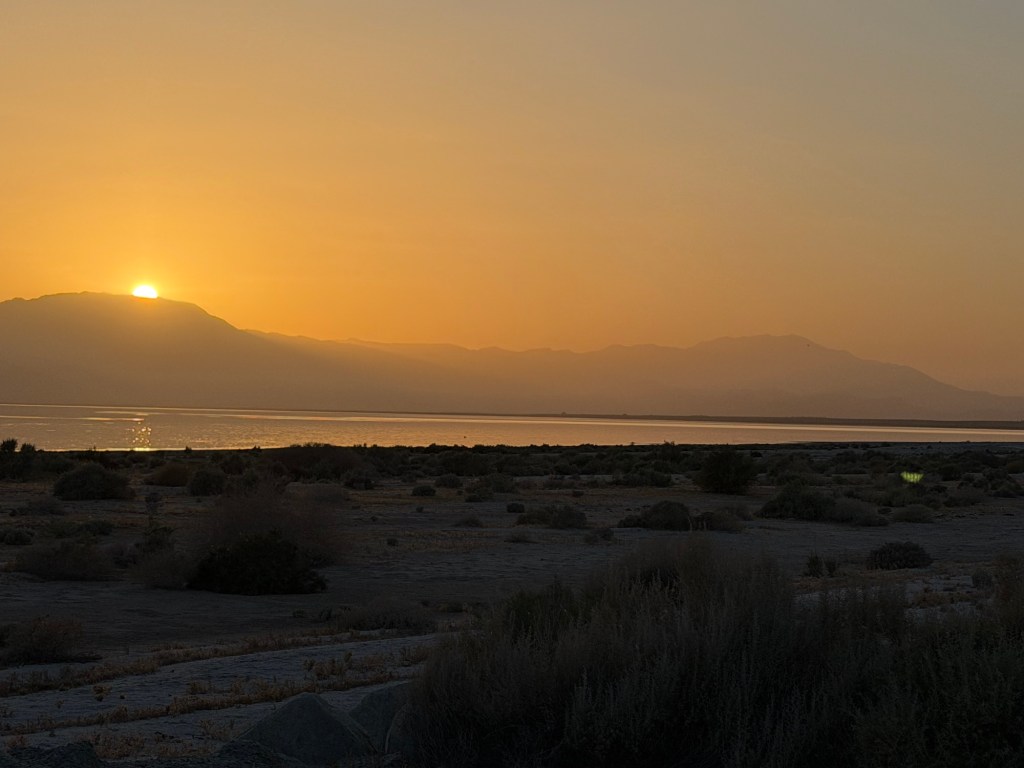
Nice for sunsets but not for lungs.
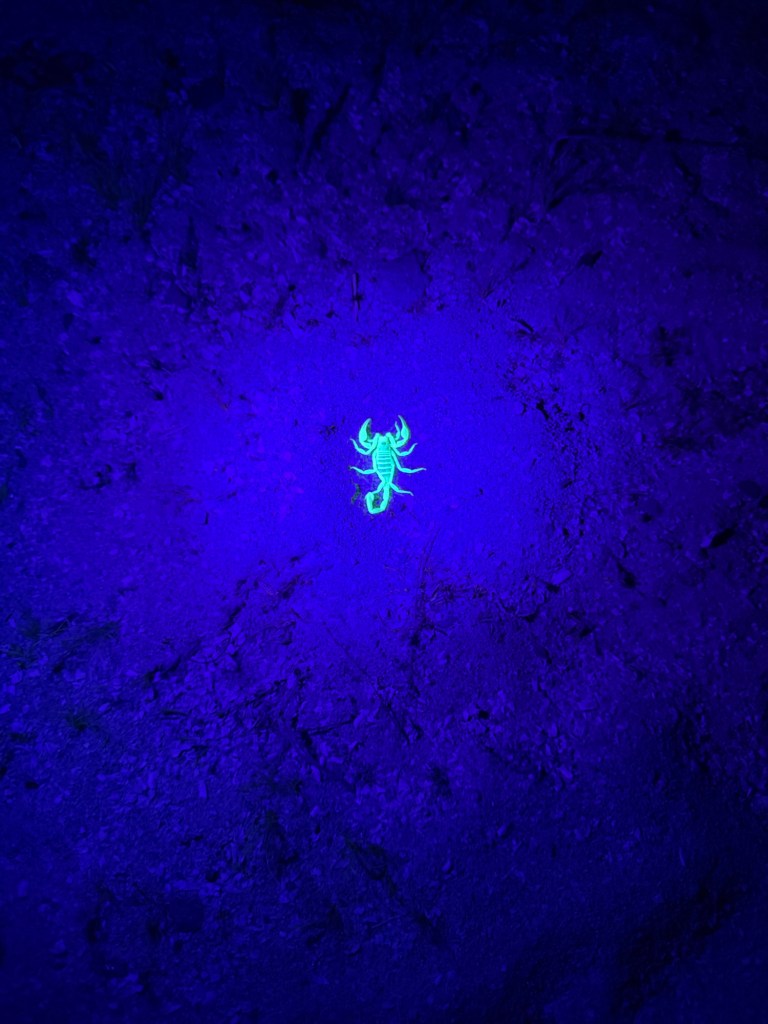
And a final oddity, the little desert scorpions here glow under a black light. The ranger loaned me a black light flashlight and I found this one in about 10 minutes. I got Bud and we went back and he was still there, so I got a better picture. If you use a flashlight and not the black light it’s almost impossible to see it against the sand. Lesson learned, don’t go out at night without shoes on!

 On the Roam Again
So much to learn about the history of places! Thank you for what you shared here! Love your final oddity!
LikeLike