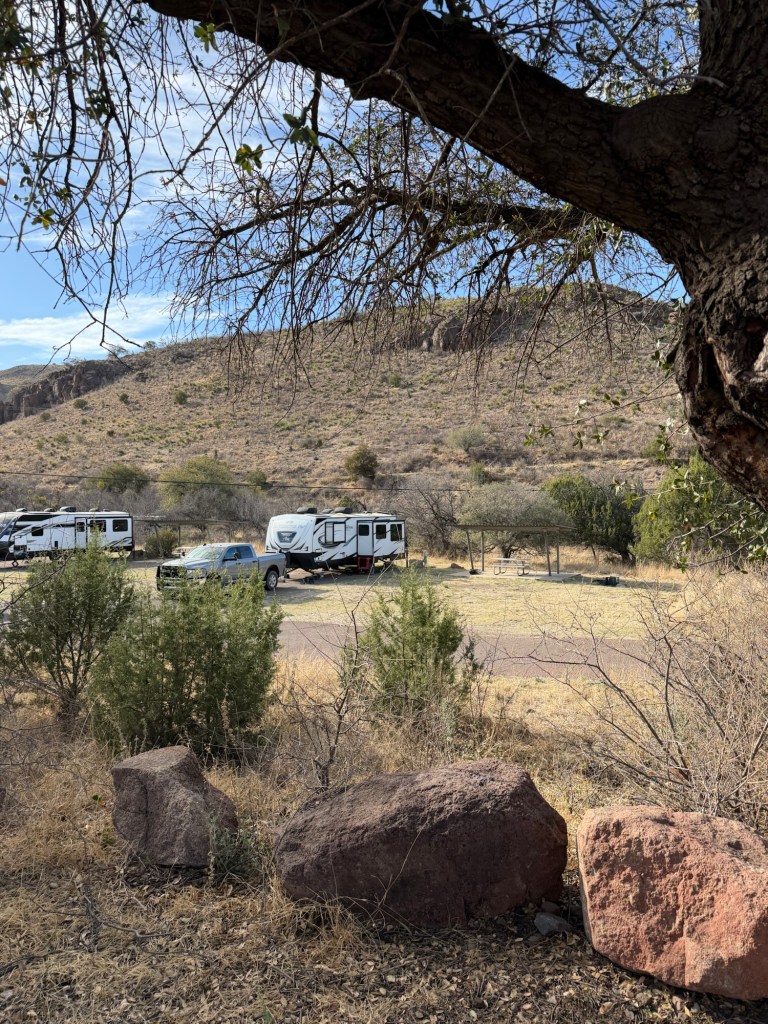
We’re at Davis Mountain State Park, in Fort Davis, Texas. Jack is also here with his Casita camping trailer. I’ll post more on the park later as today Bud and I didn’t really do anything park related.
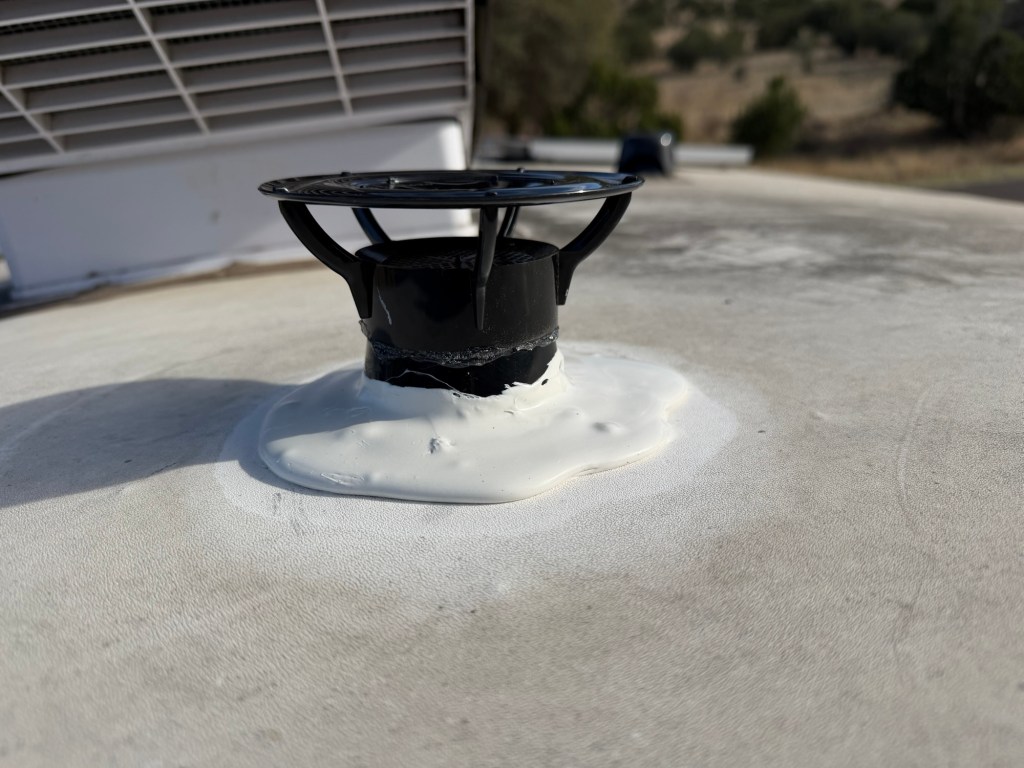
This morning Bud went grocery shopping in town and I replaced the vent cap on our black (sewer) water holding tank with this fancy new one that‘s supposed to suck all the stinky air up the vent tube. The installation was a success, we’ll see how it works.
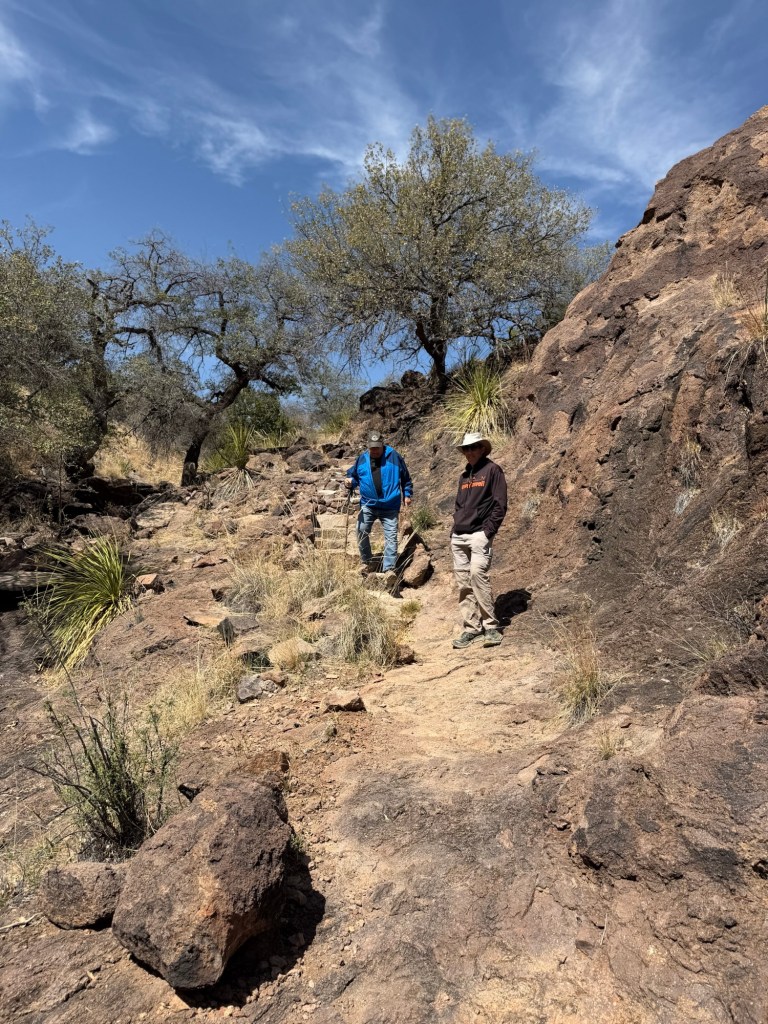
This afternoon the guys agreed to come with me to visit the Chihuahuan Desert Nature Center and Botanical Garden. There are a number of trails on the property. Jack and I decided to hike the Outside Loop, Bud decided to hike with us through the Modesta Canyon and then take a cut through back to the Visitor Center while we finished the loop. We all had on long pants and sweatshirts, this whole area is above 5,000 feet. The temperature at Big Bend is a few degrees cooler than when we were there, Fort Davis today was more than twenty degrees cooler than Big Bend. It was about 60 degrees when we were hiking.
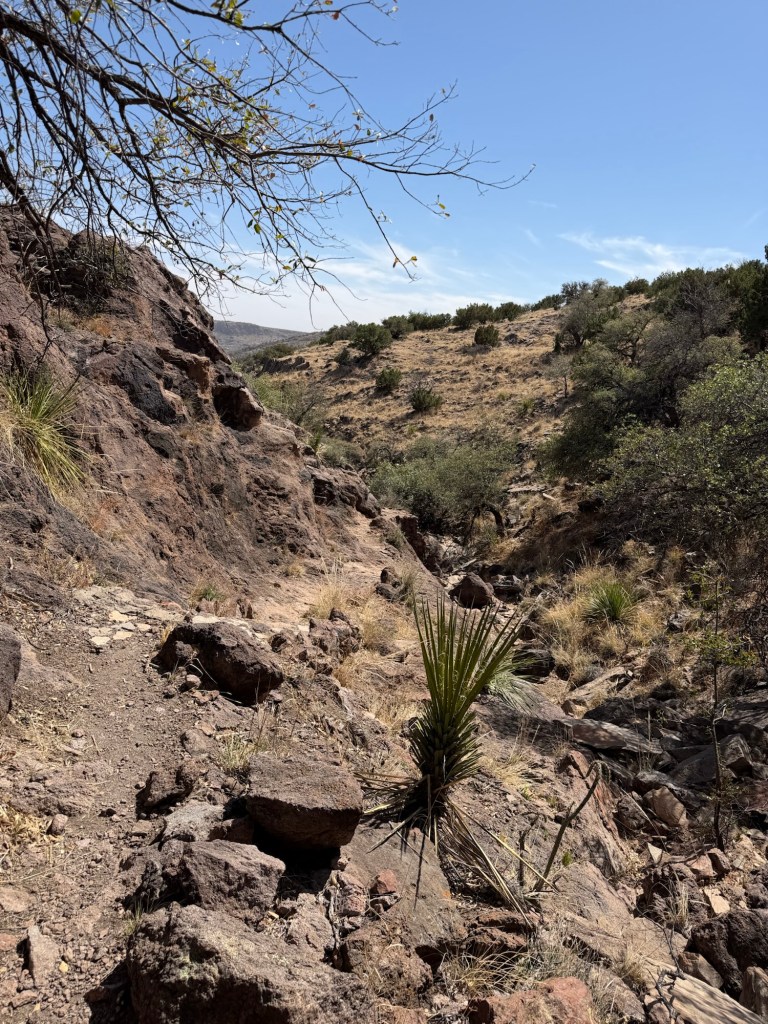
Hiking the direction we did the trail started at the shallow end of the canyon.
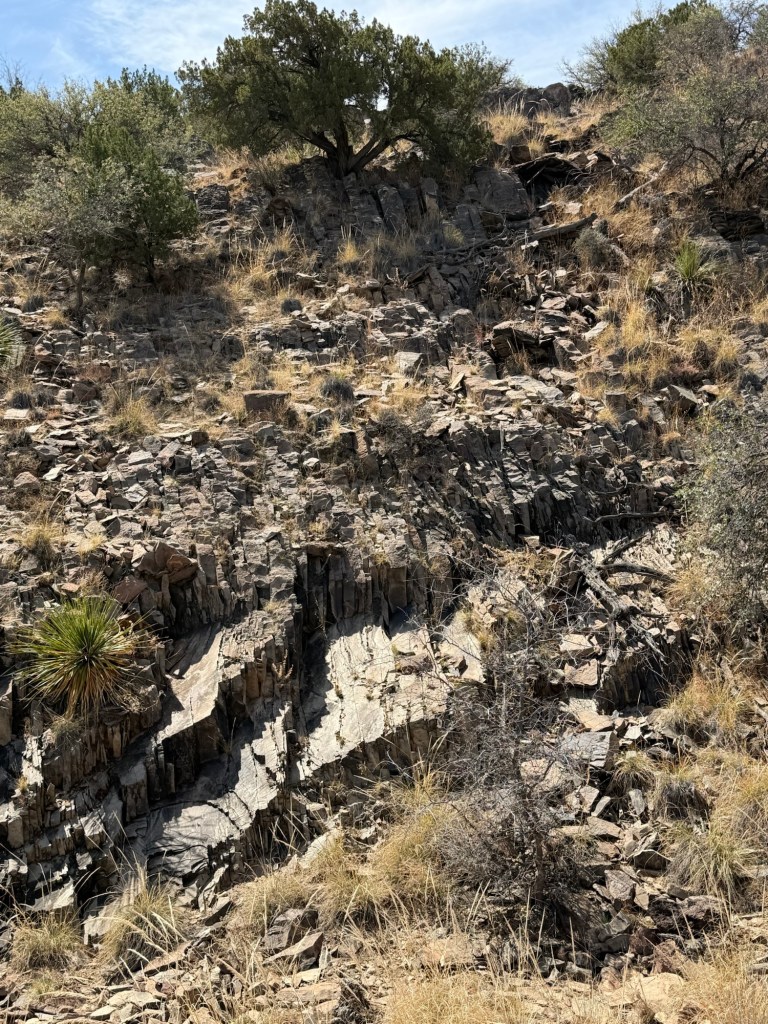
As we walked the canyon deepened and became more rocky.
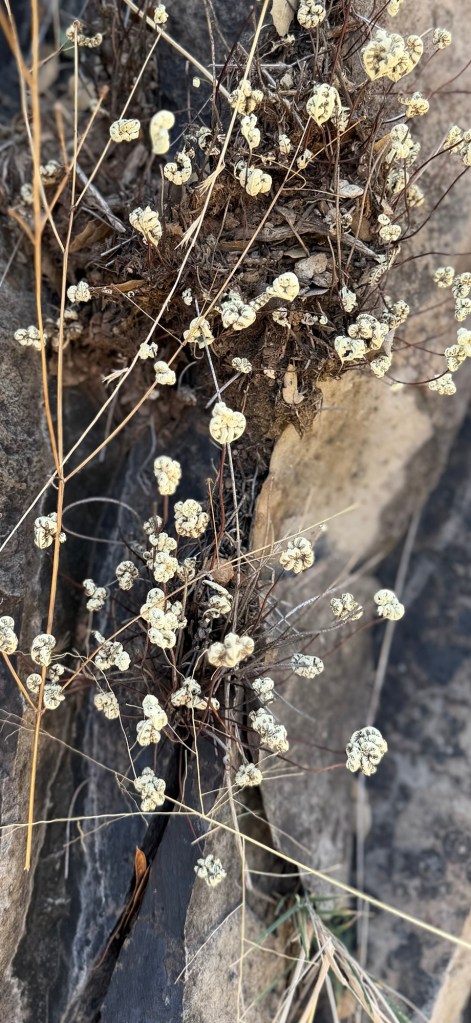
Up on the rocks I spotted these, which I thought were white flowers. They are not, the are the desiccated and curled up fronds of a fern, Notholaena standleyi. When it rains these fronds will turn green and uncurl. Even when unfurled these fronds will be tiny, maybe an inch or two long.
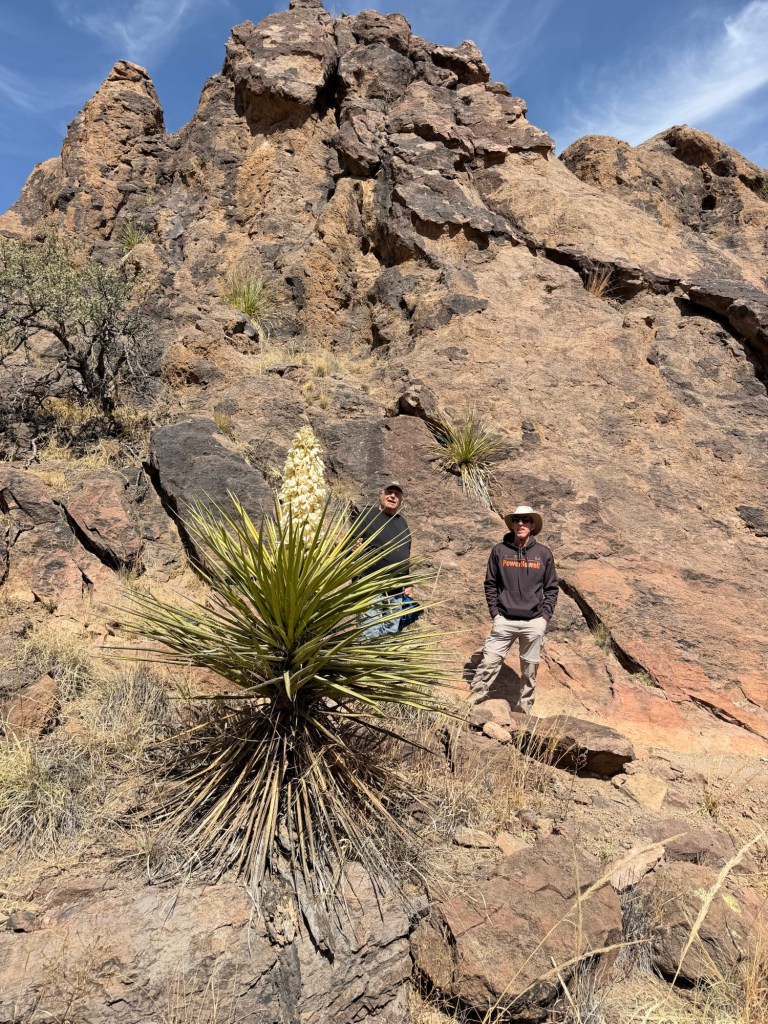
This yucca wasn’t tiny! And it was in bloom. I hope to see a lot more of that.
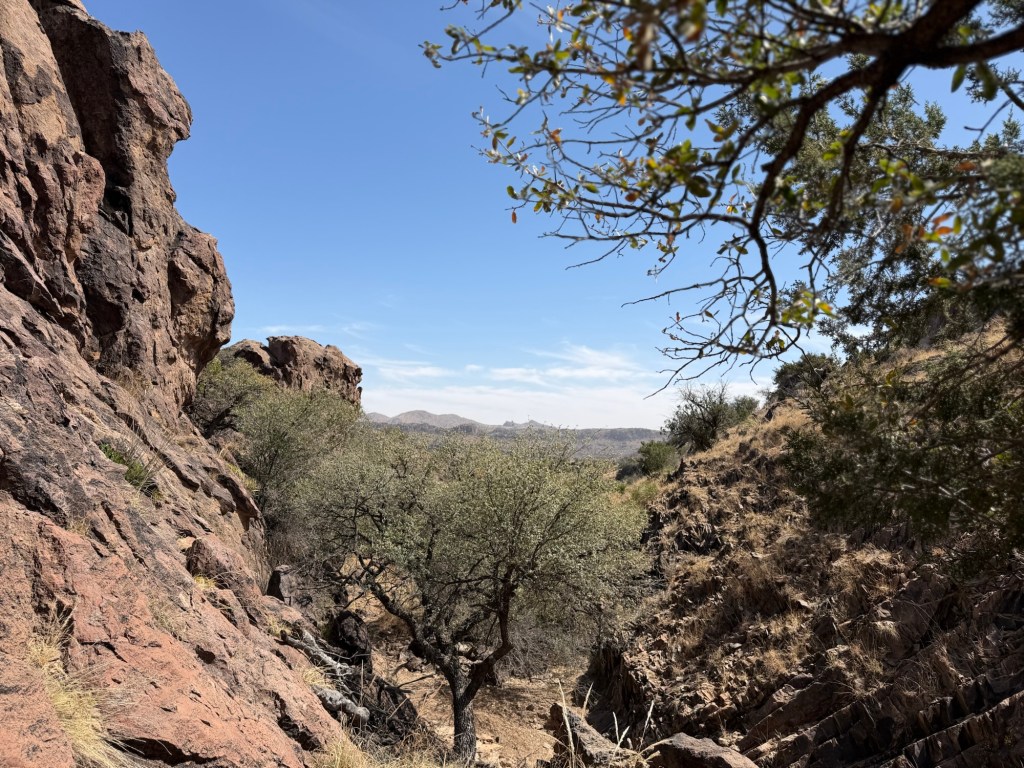
I was going to write that the canyon was getting deeper, and that’s true in that the sides were higher. But the whole canyon is up on a hillside, so we could look down from floor of the canyon to the plains below.
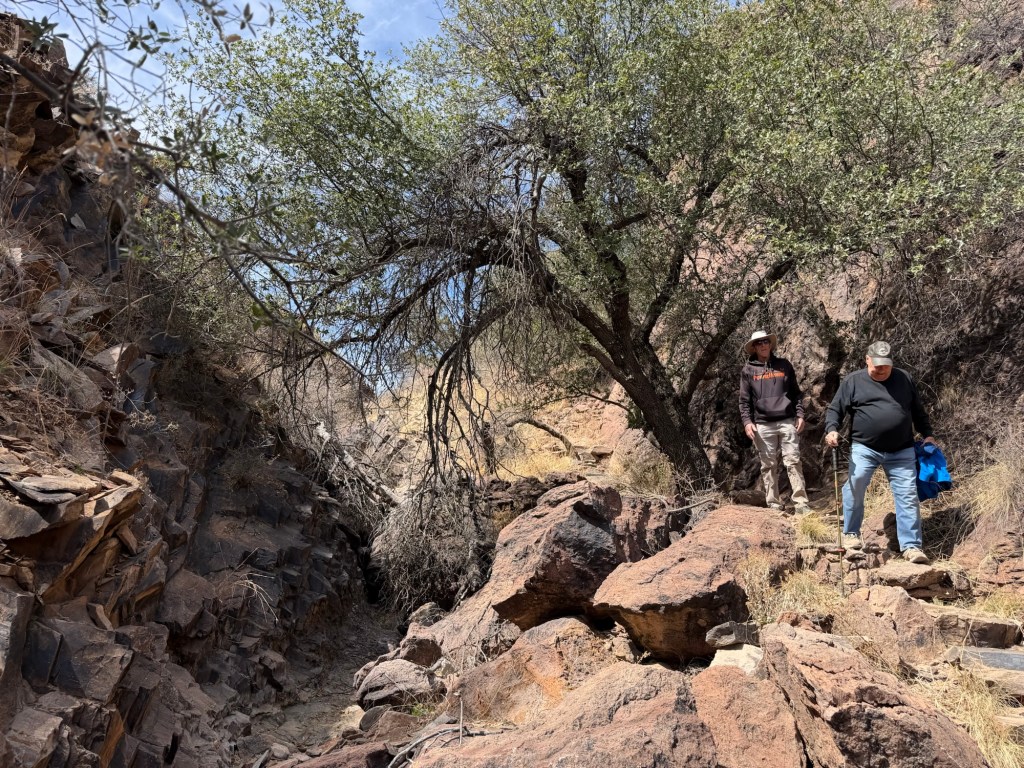
The trail was well done, but it was narrow and rocky,
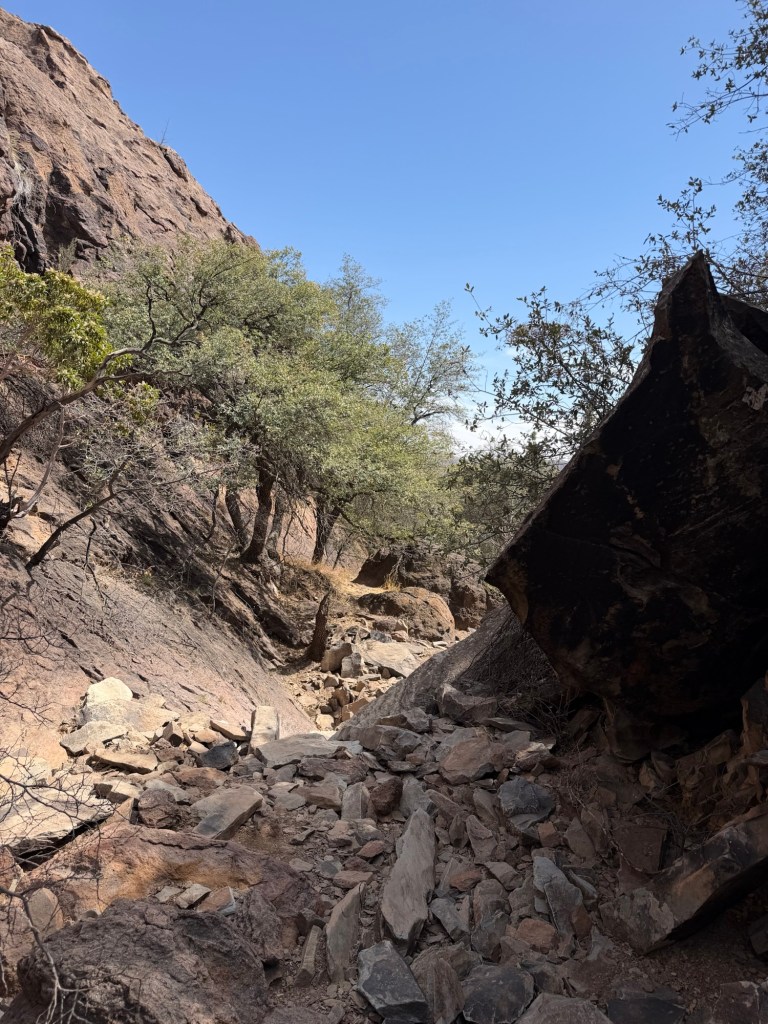
sometimes very rocky.
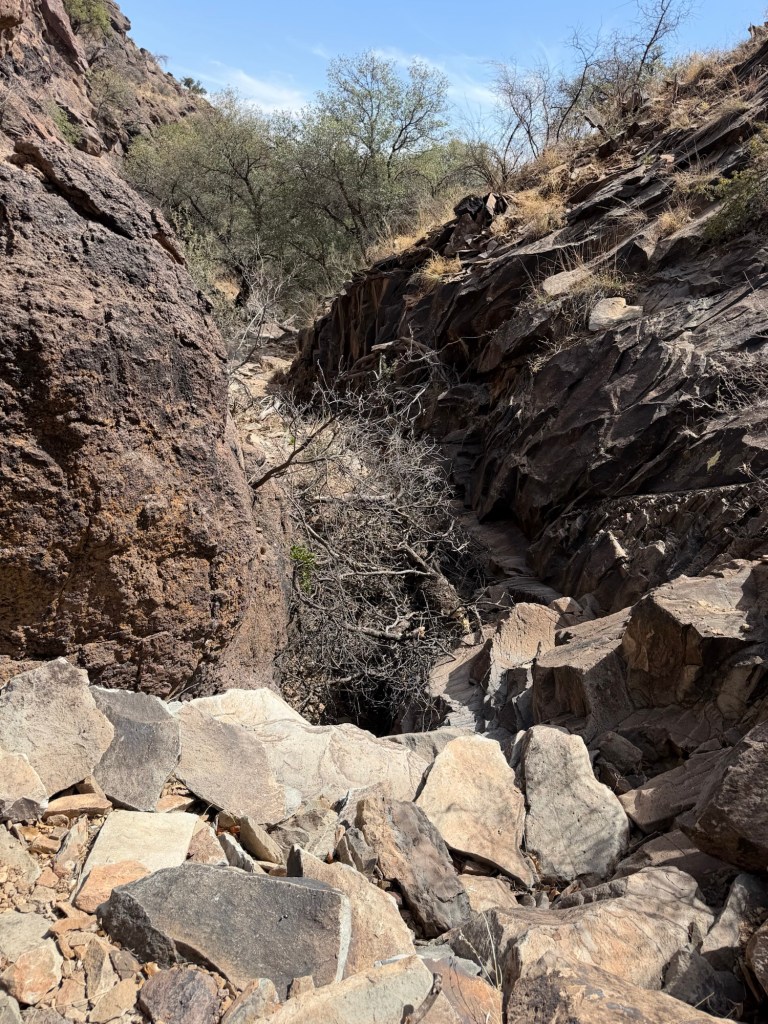
In some places they had to work to find a place for the trail.
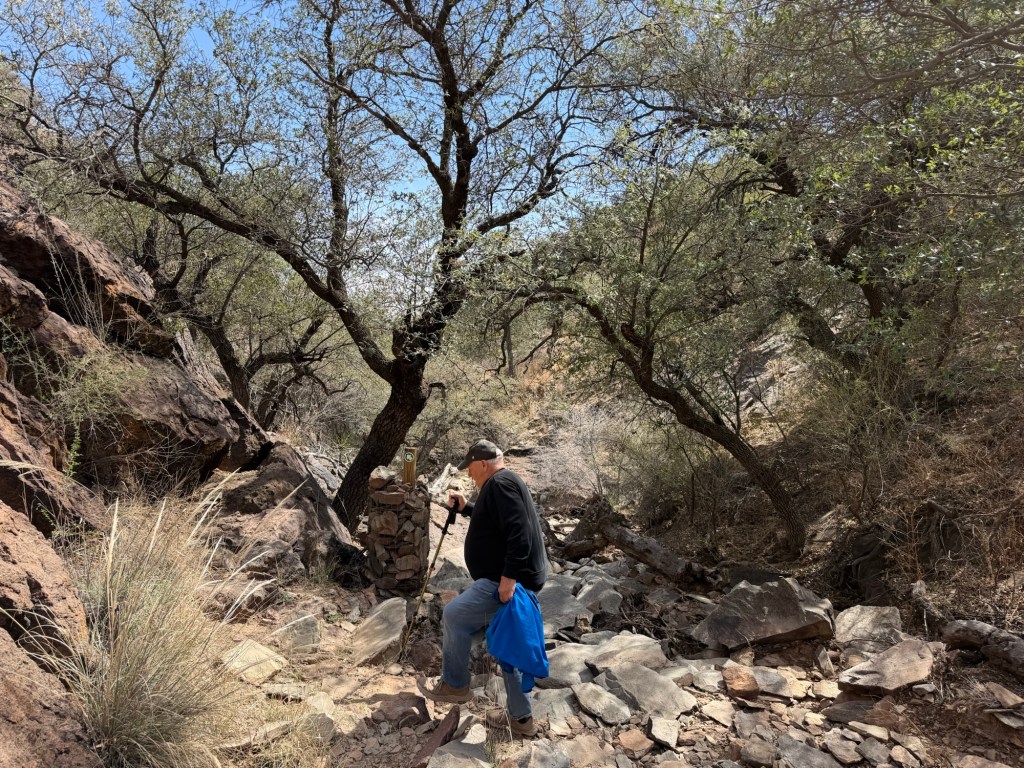
Here Bud is heading up around that tree.
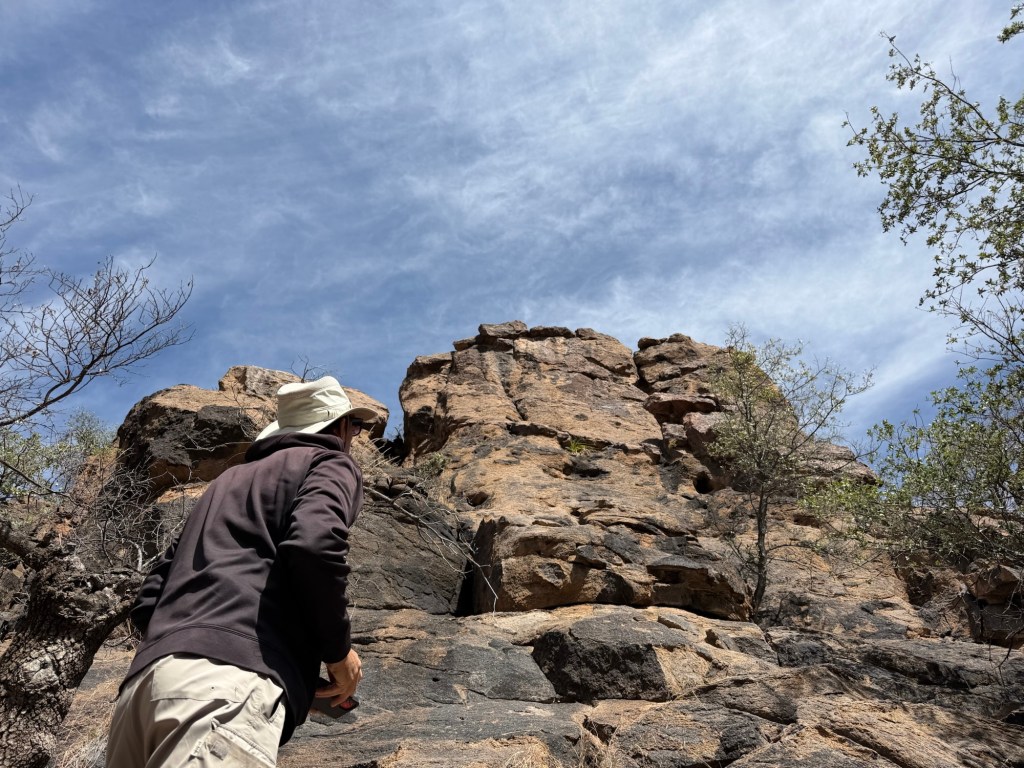
There were some nice rock formations.
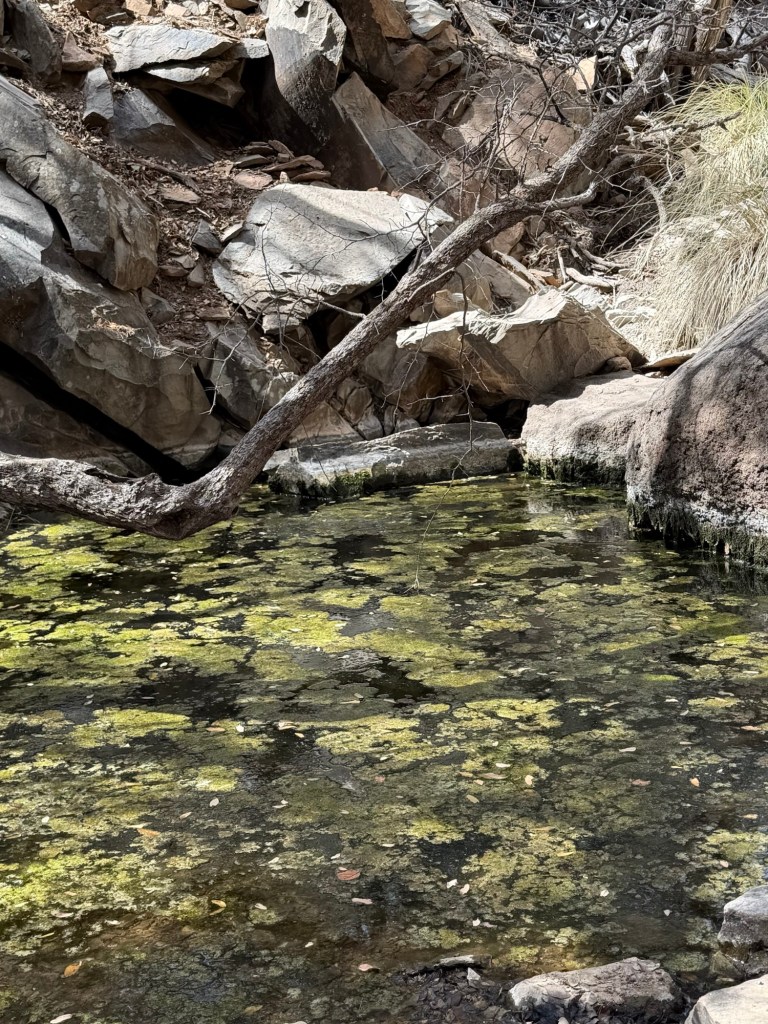
Eventually we reached the spring. That is a pool of water full of algae.
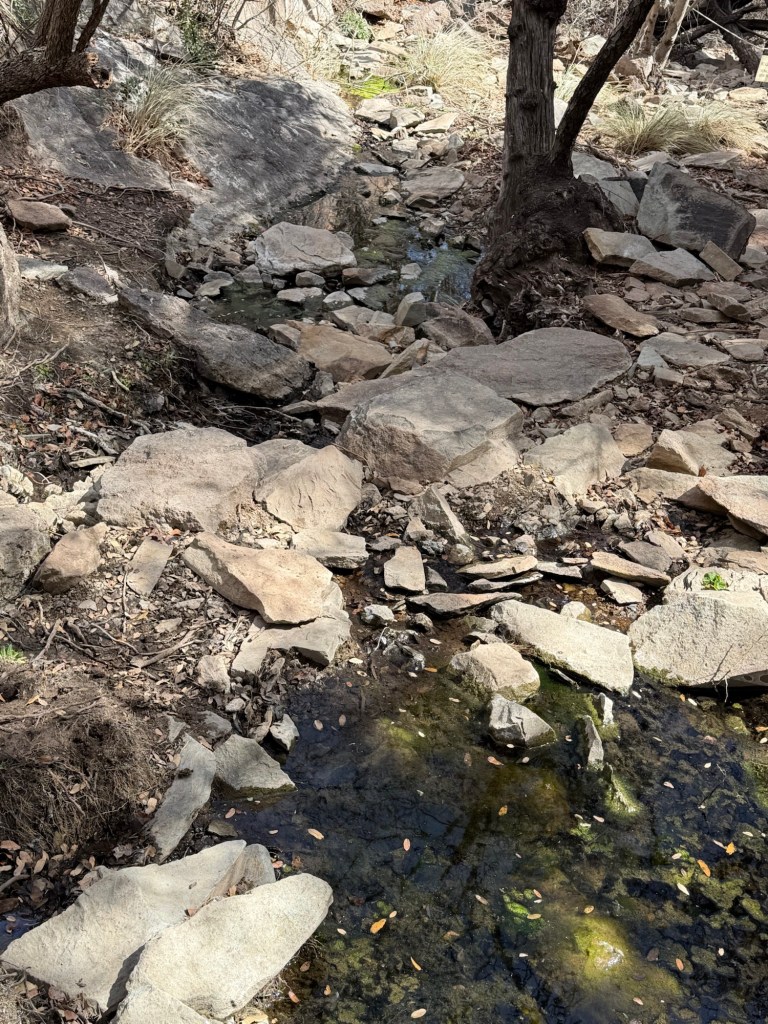
The water continued below the spring. There were water striders on the surface…
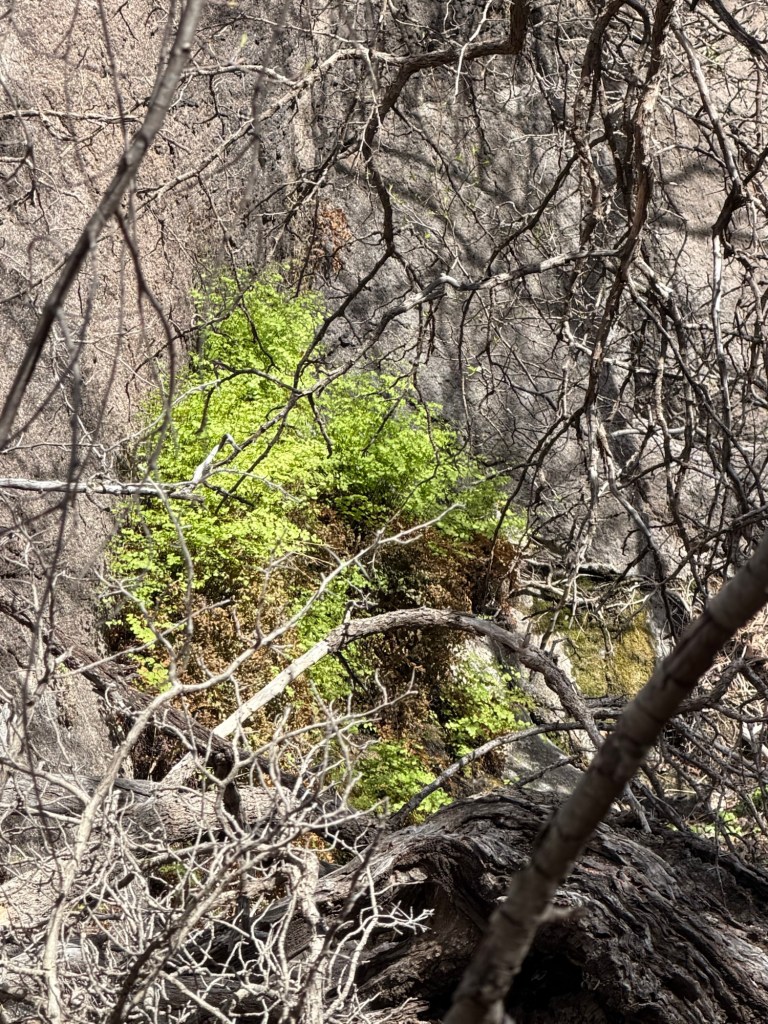
and ferns along the canyon wall. How those water loving species found this tiny bit of water in all the surrounding desert amazes me.
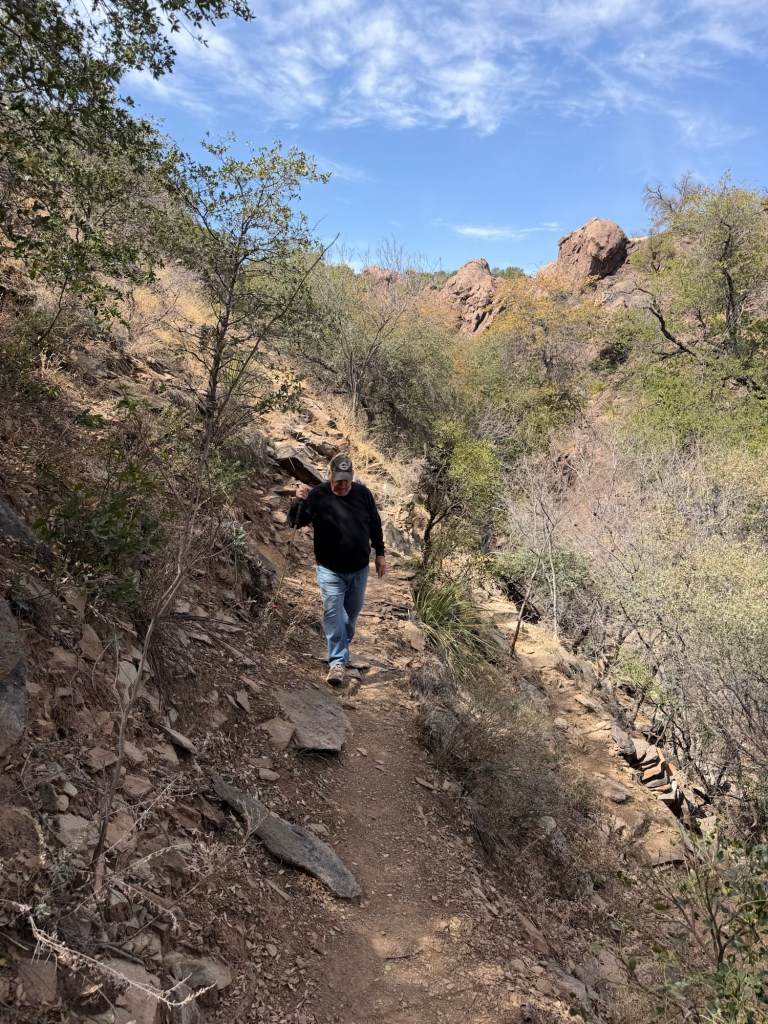
At this point the trail left the canyon bottom and ascended the canyon wall, here much higher and steeper.
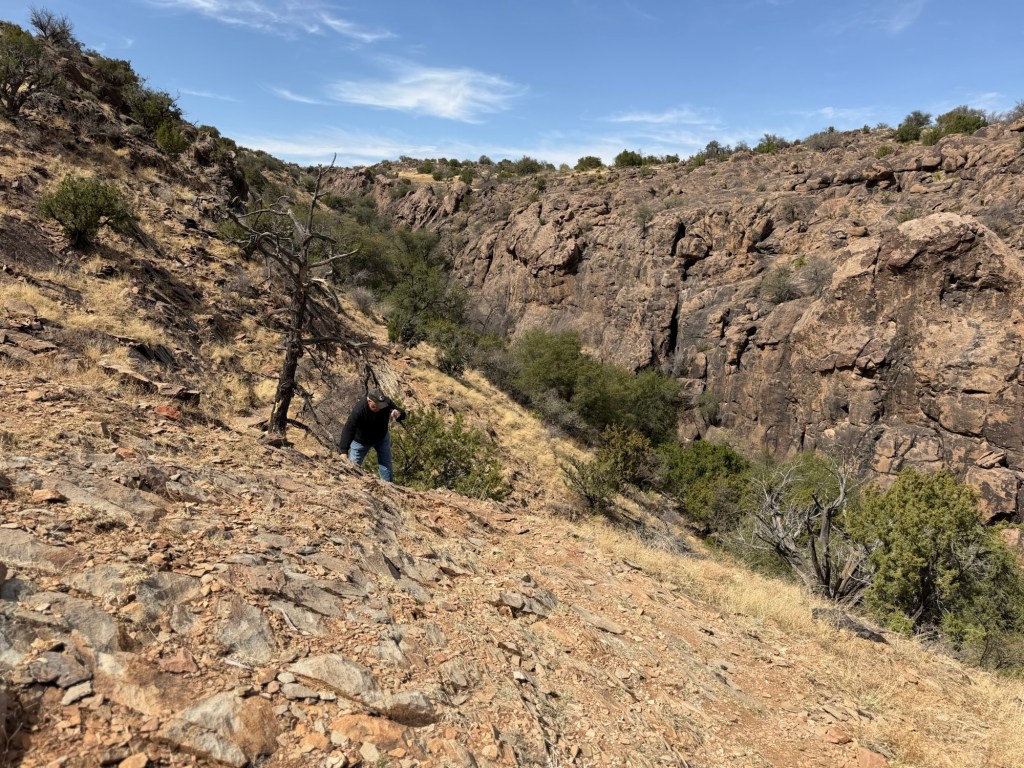
Finally we came to the top.
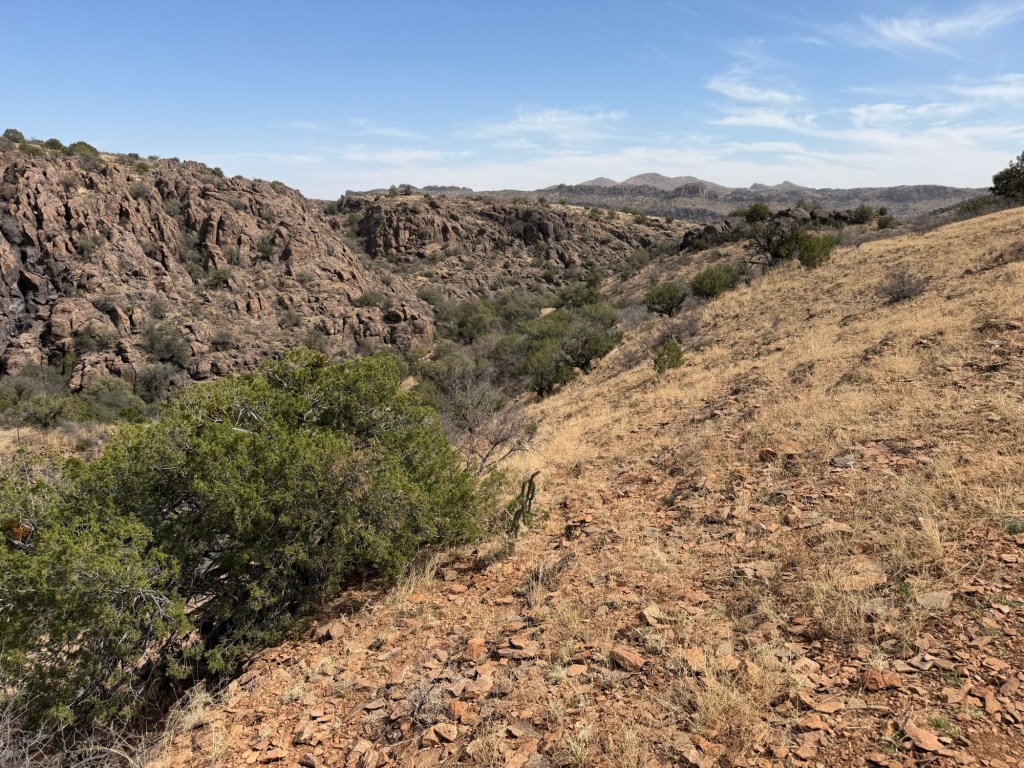
Below us the canyon continued down the hillside.
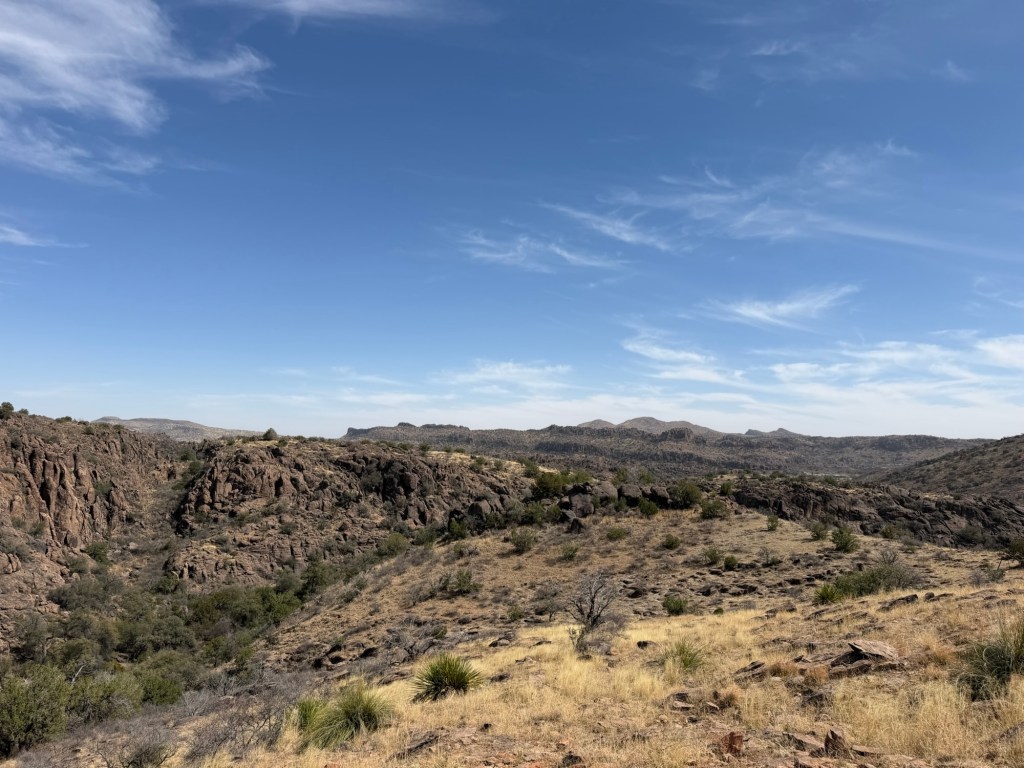
This country is all much rougher than it appears from a distance.
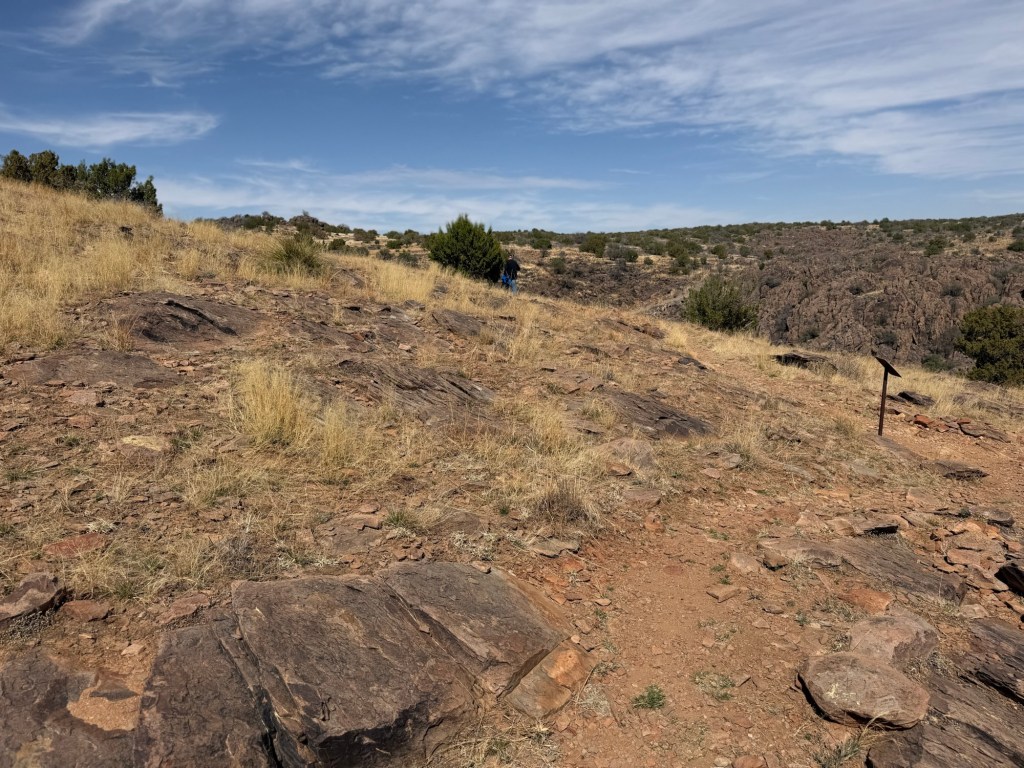
Here Bud took a cut through to a trail back to the Visitor Center. That’s him about to disappear behind the juniper.
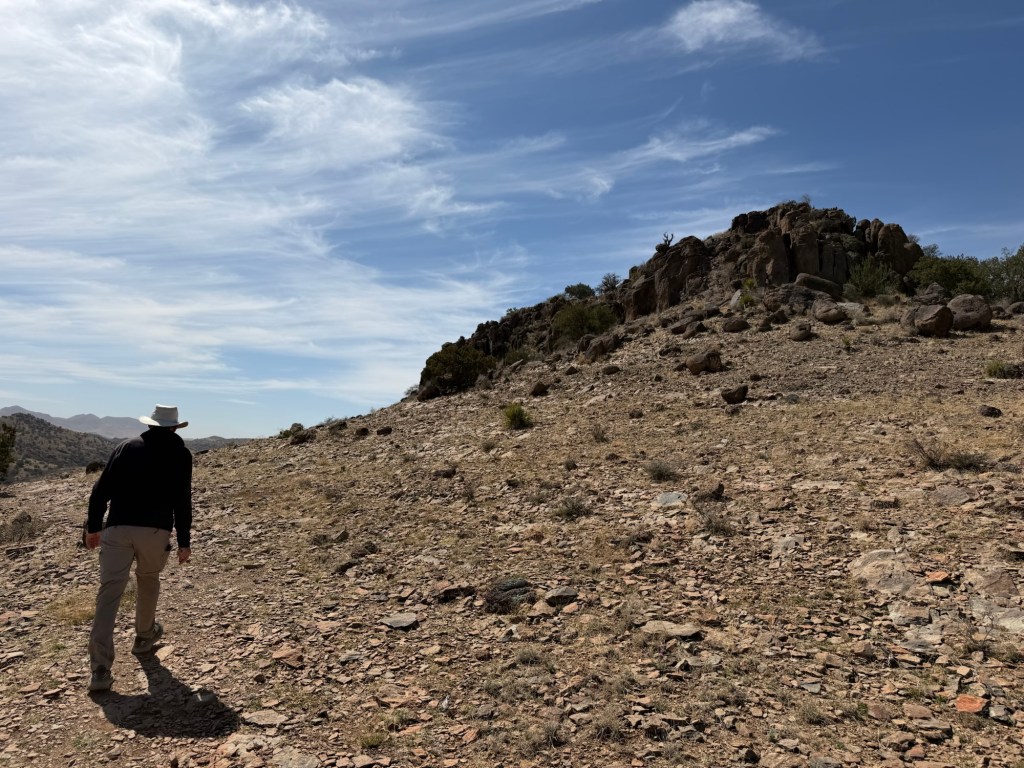
Jack and I continued on the Outer Loop around Lion’s Head Hill.
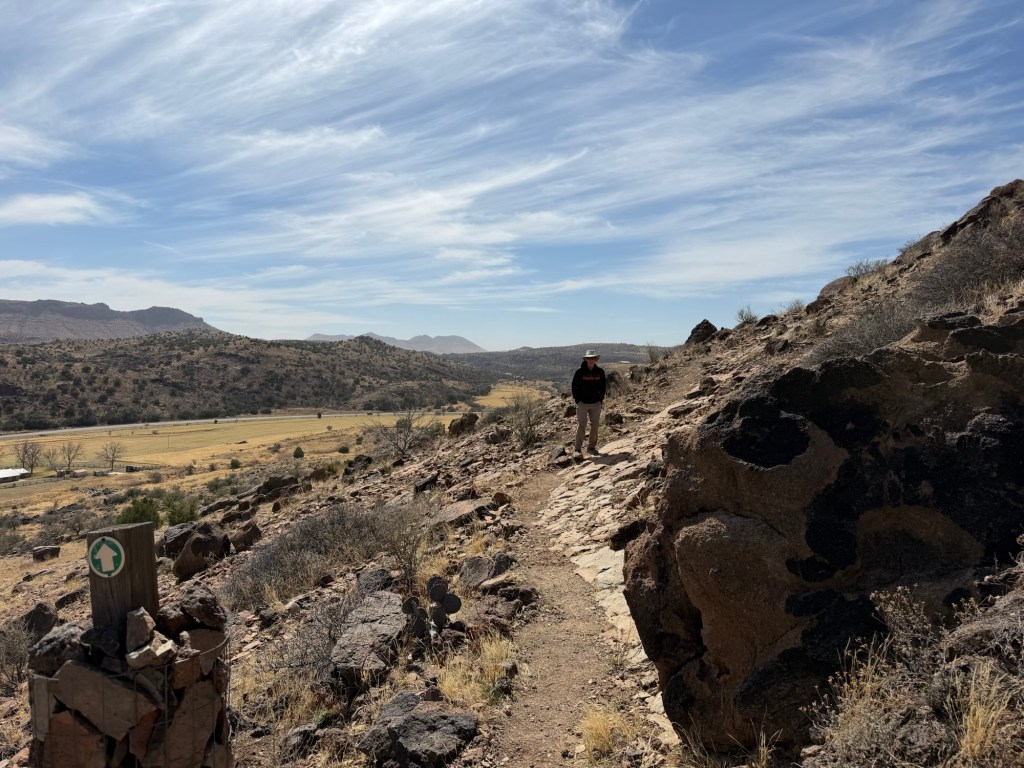
This is stony country. Sometimes the trail markers were on posts, but the posts were held up in chicken wire tubes full of rocks.
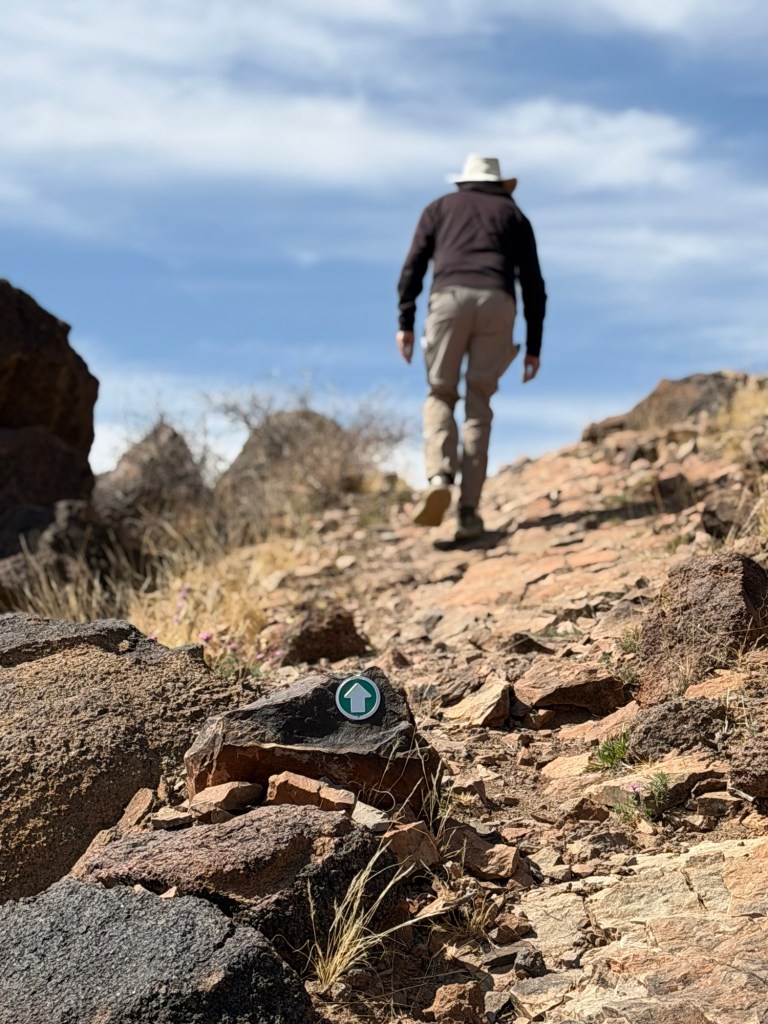
And sometimes the trail markers were just fastened to the rocks.
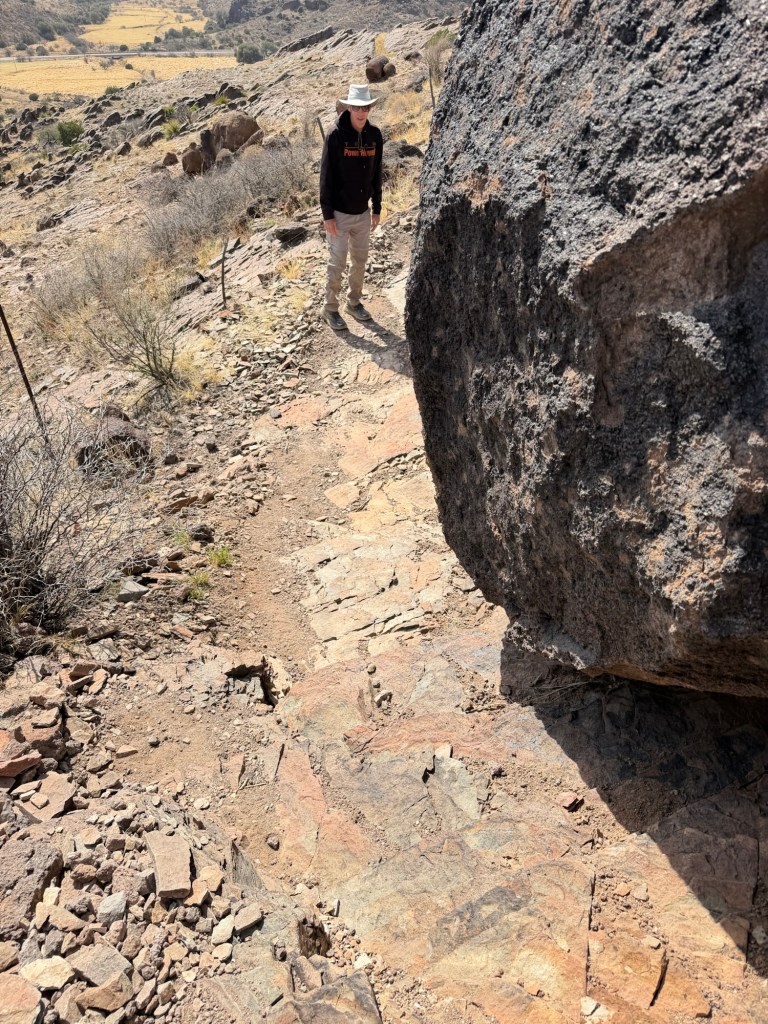
I liked the contrast here between the flat layer of sedimentary rock the trail is on and that great igneous boulder that had fallen on it.
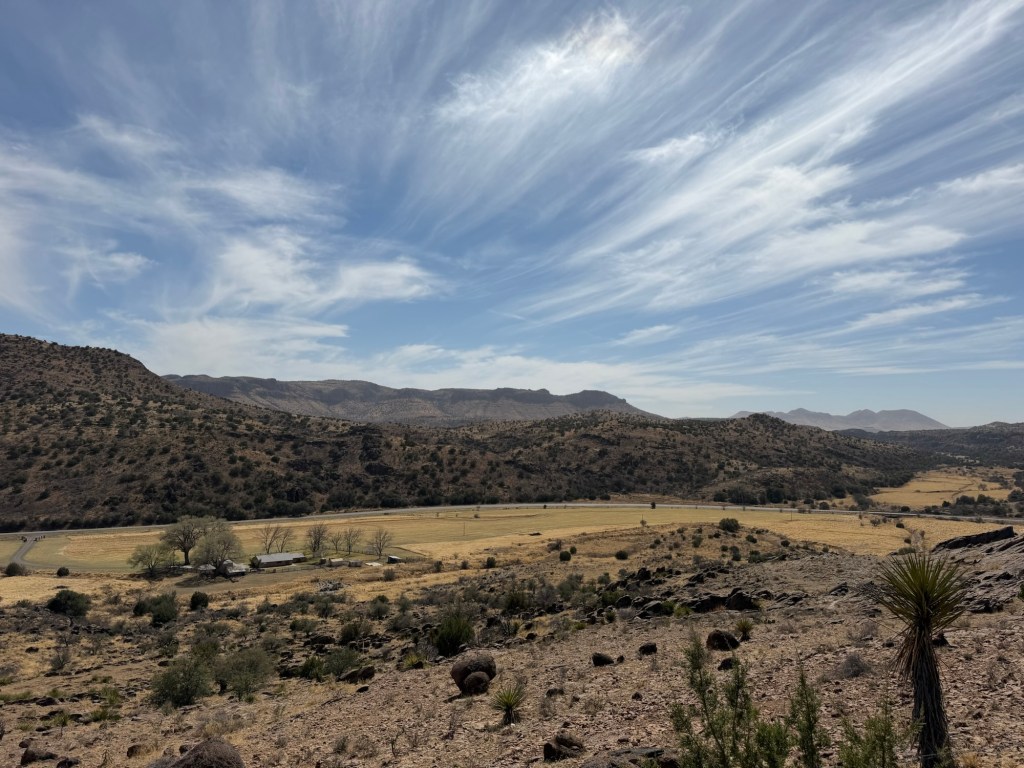
I also liked the view and the sky.
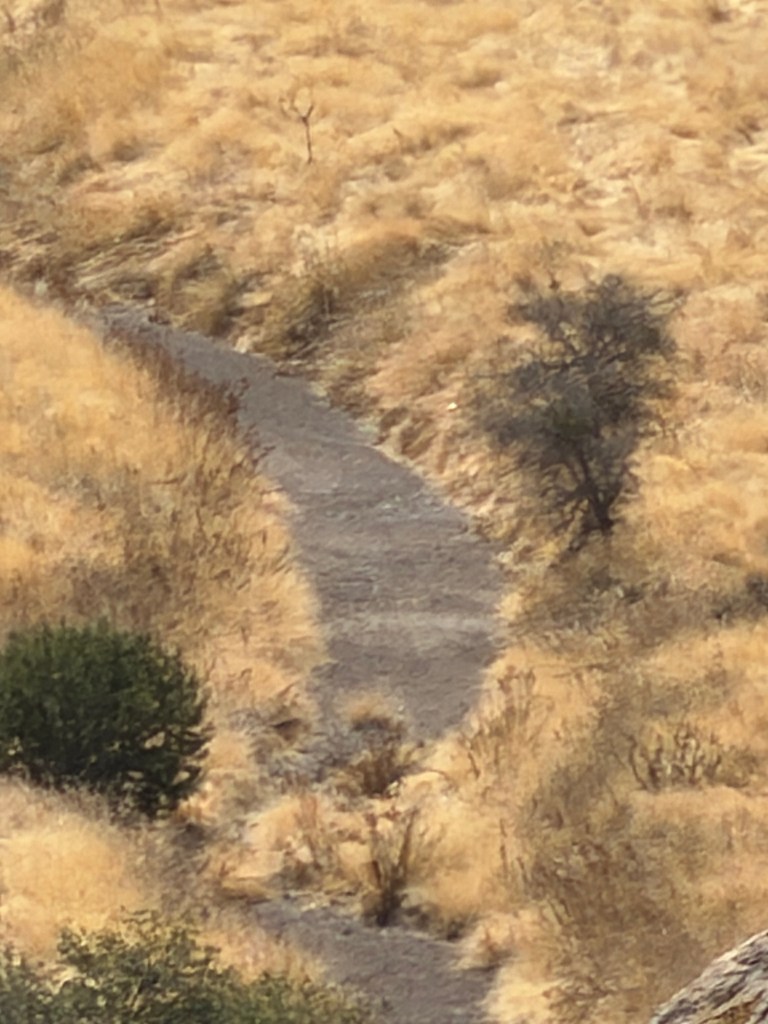
We saw this stream down below. It looked like it might have water in it. But at 40x you can see that’s just gravel.
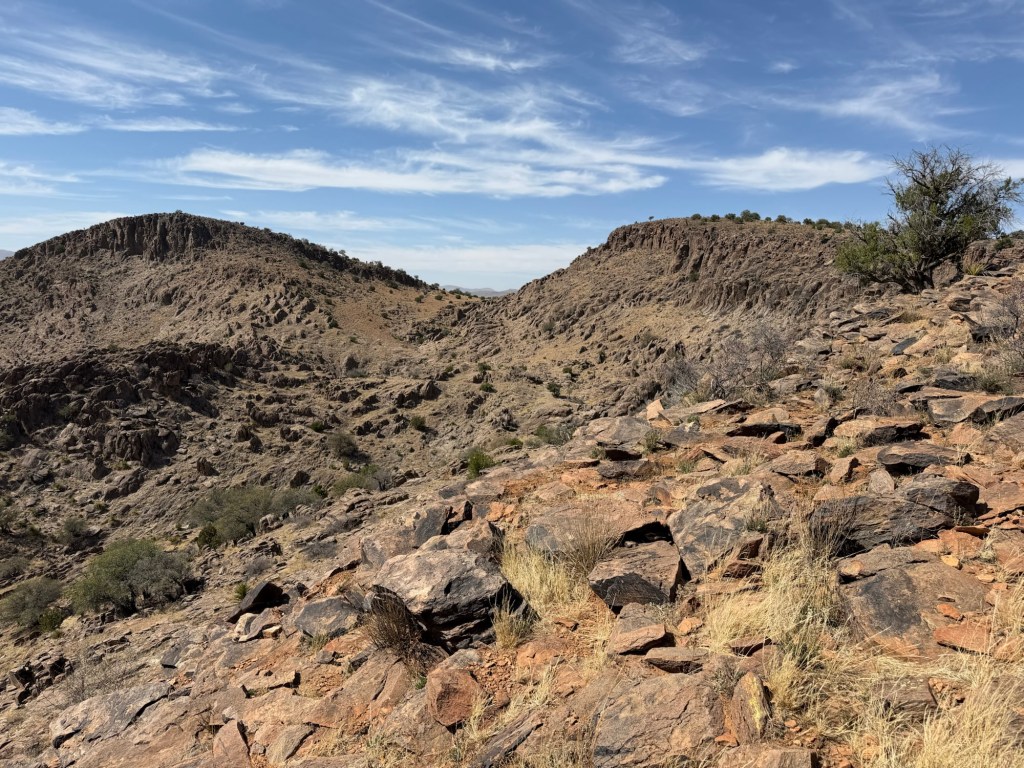
We were now headed towards that nearer hill, and Clayton’s Overlook.
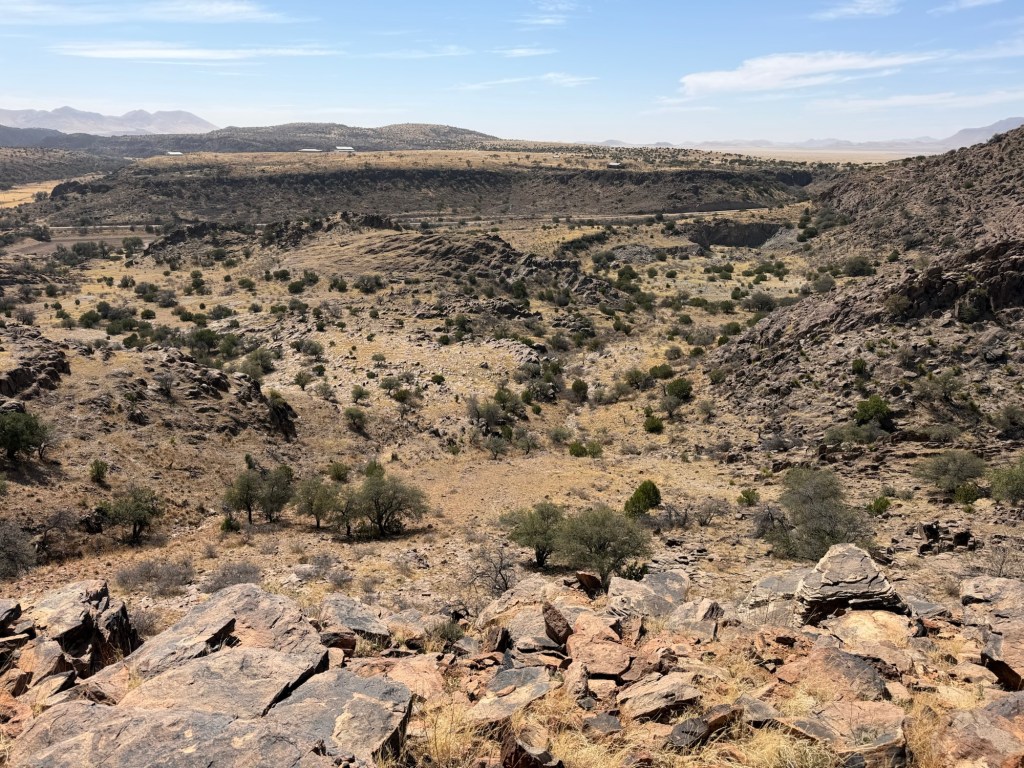
Somewhere here there is supposed to be an old rhyolite quarry, but I’m not sure where.
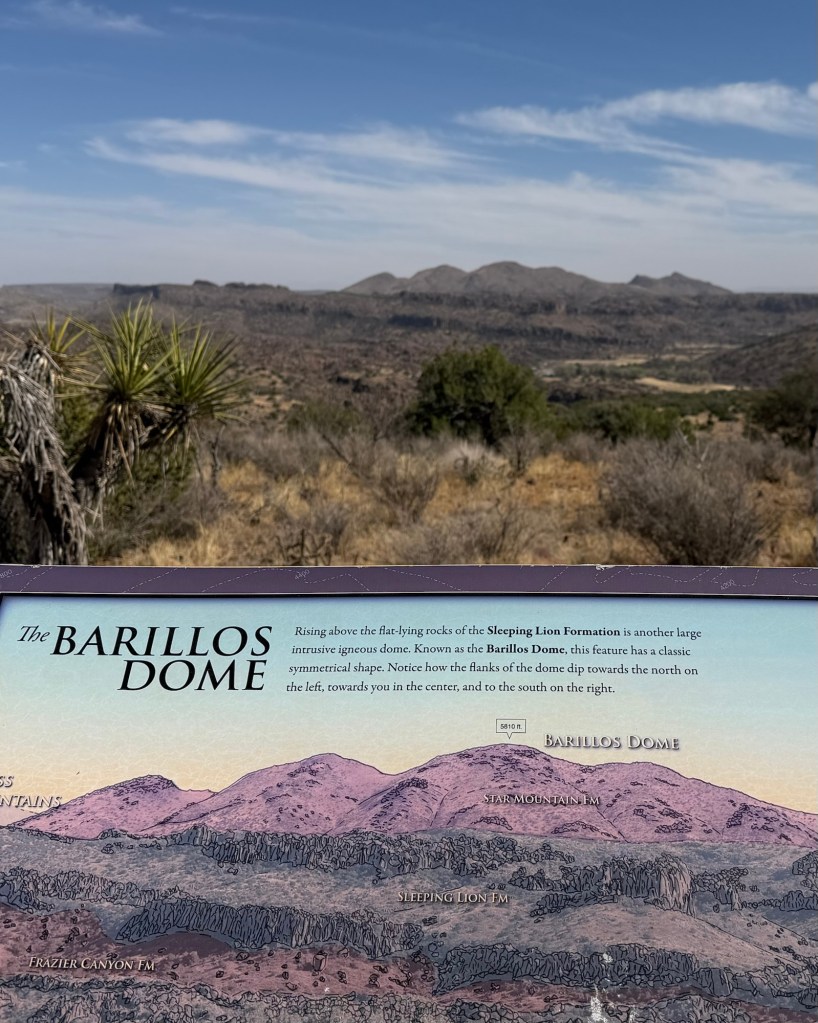
At Clayton’s overlook there was an octagon platform with signs explaining the mountains you could see in the distance. All these mountains are the result of volcanic activity that started about 38 million years ago.
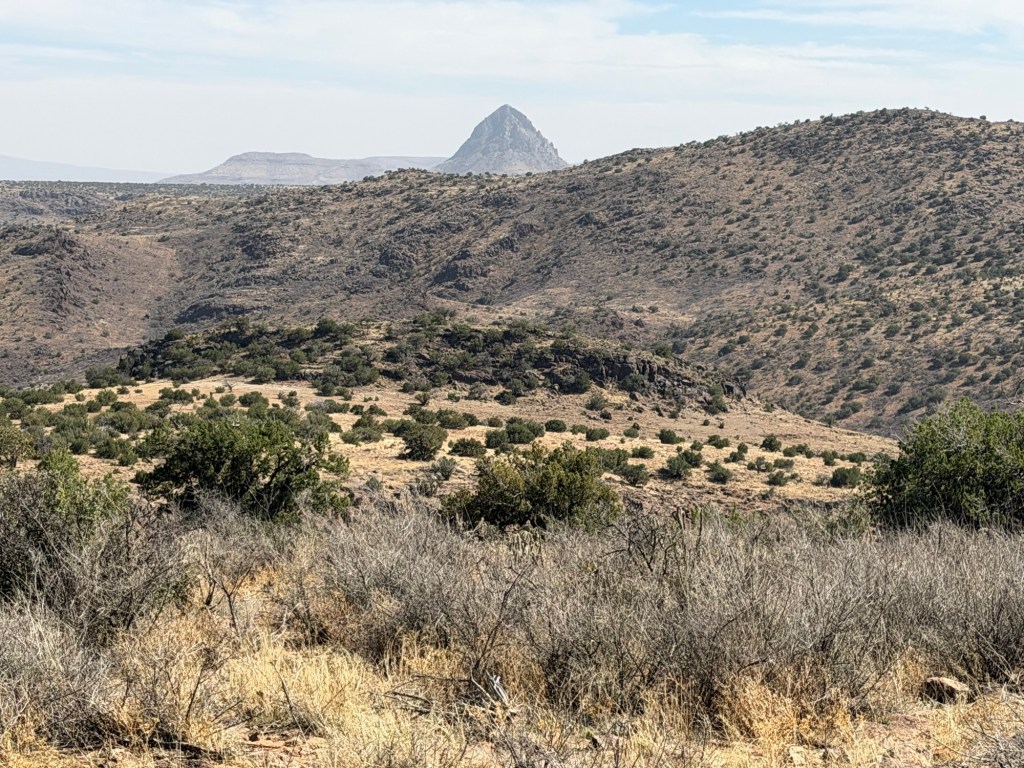
This striking mountain is Mitre Peak. It is six miles away and tops at 6,190 feet. Mitre Peak is the result of magma pushing up into older rock. That rock eroded leaving this peak which resembles a volcano.

To the northwest you could see Fort Davis. That line down the picture is some kind of antenna. The cliffs are the result of lava flows 36 million years ago. The lava cooled, contracted and formed vertical cracks. Those cracks eroded to form the vertical columns you see.
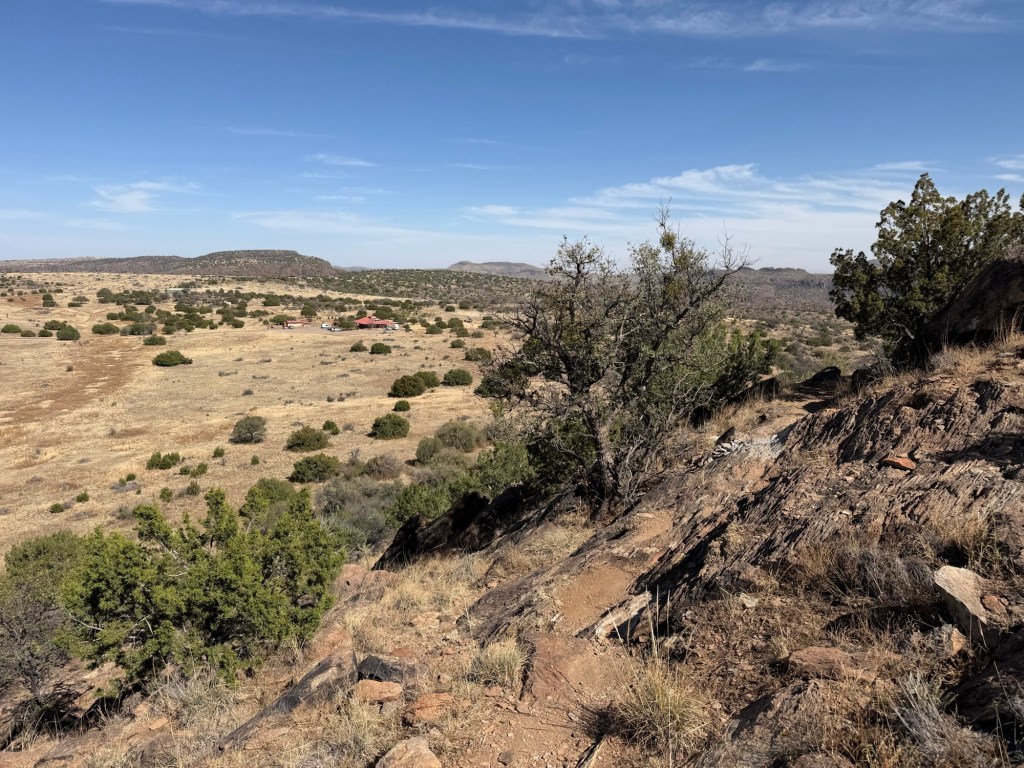
Leaving Clayton’s Overlook we headed around the side of the hill and back to the Visitor’s Center where Bud was waiting. He’d had a nice hike back along the top of the canyon.
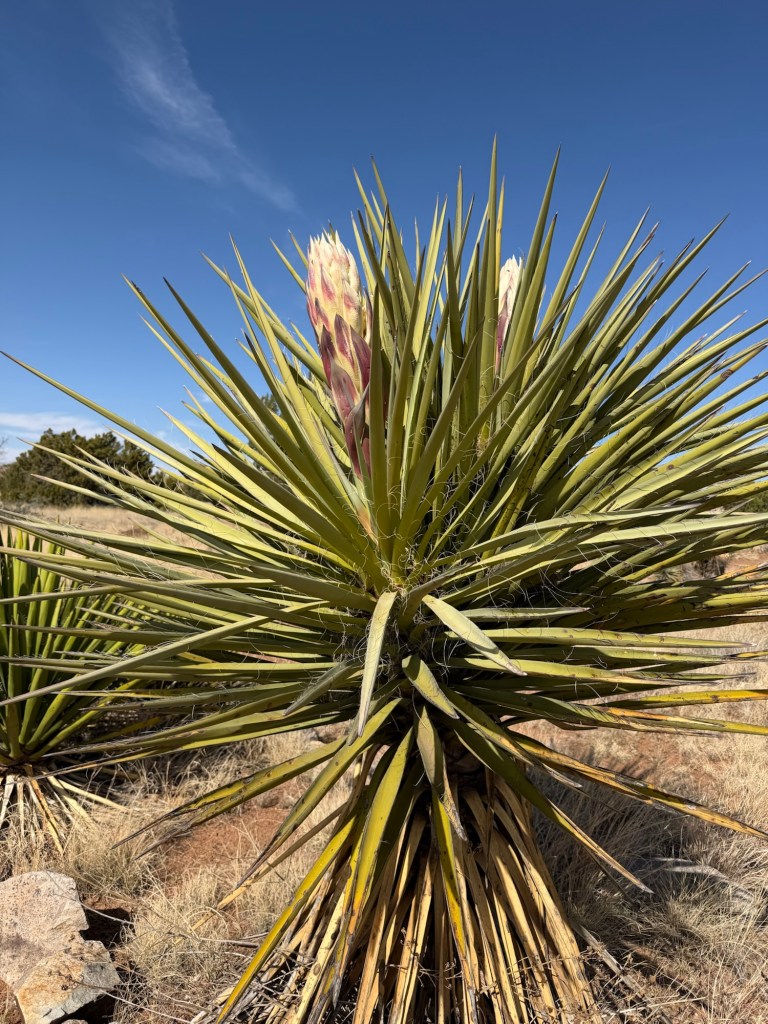
We then walked out to the botanical garden. There were some great specimens, like this yucca,
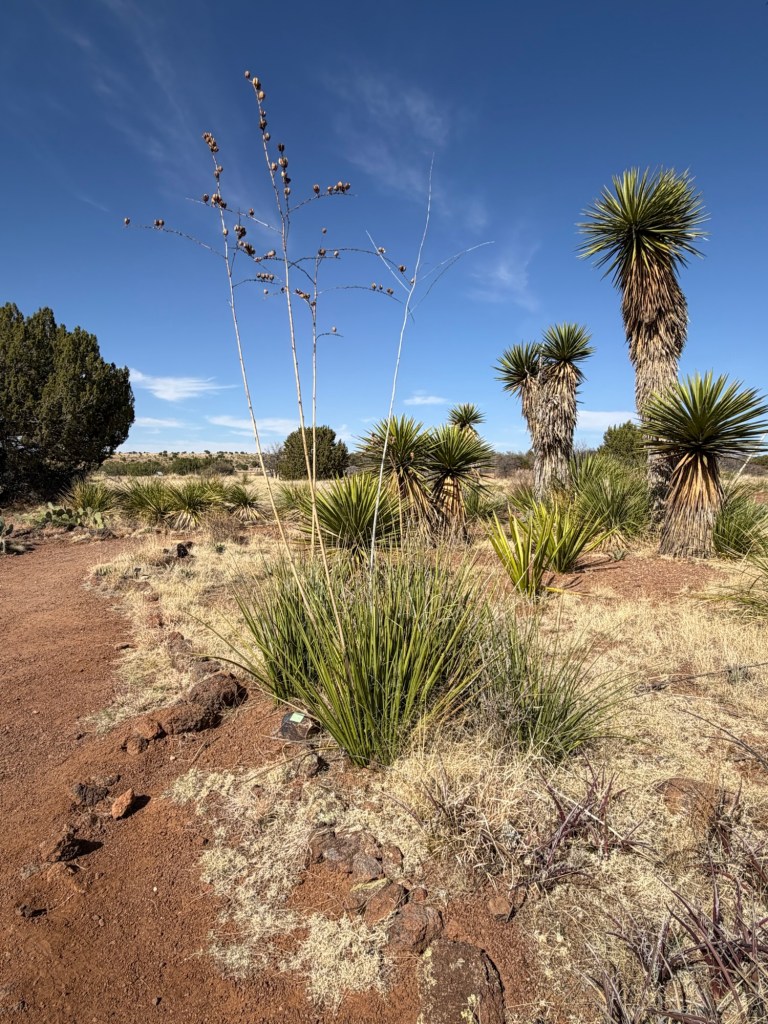
this false yucca,
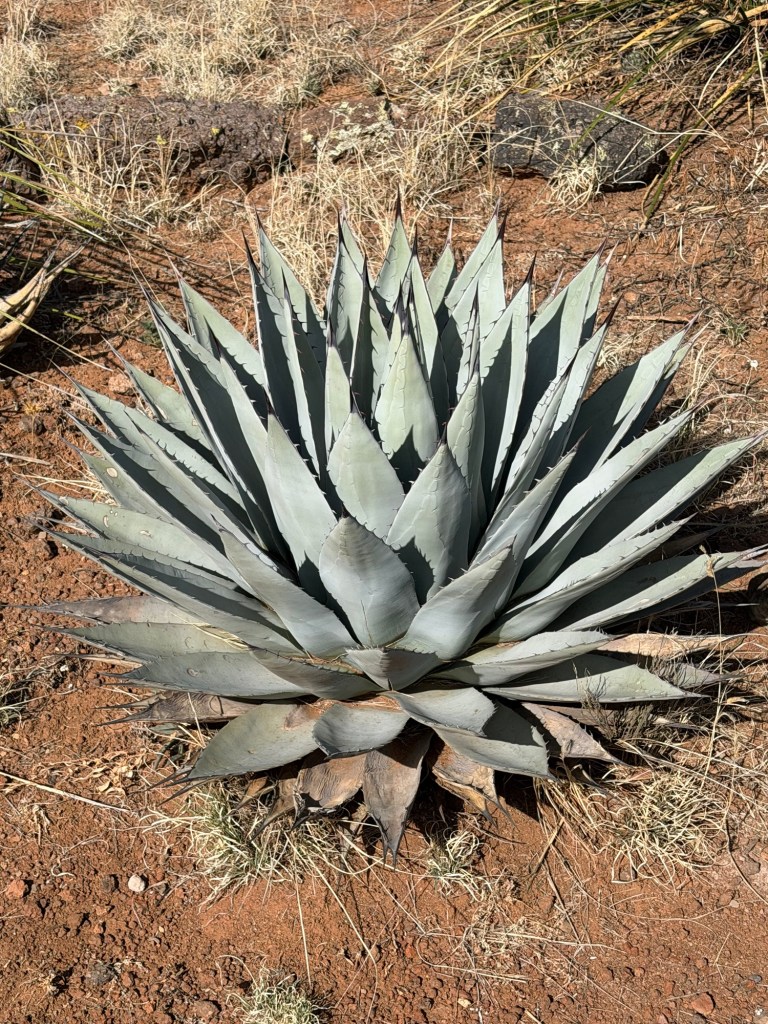
and this agave.
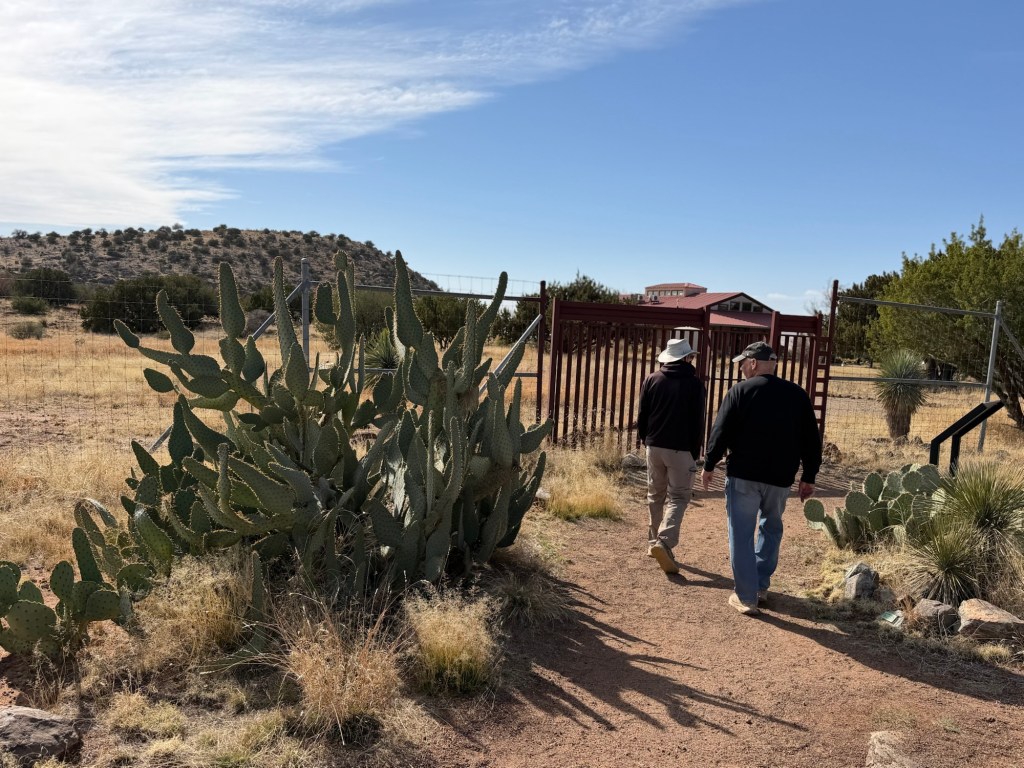
Unfortunately it was getting late and we didn’t want to leave Matey any longer so we decided to we had to leave.
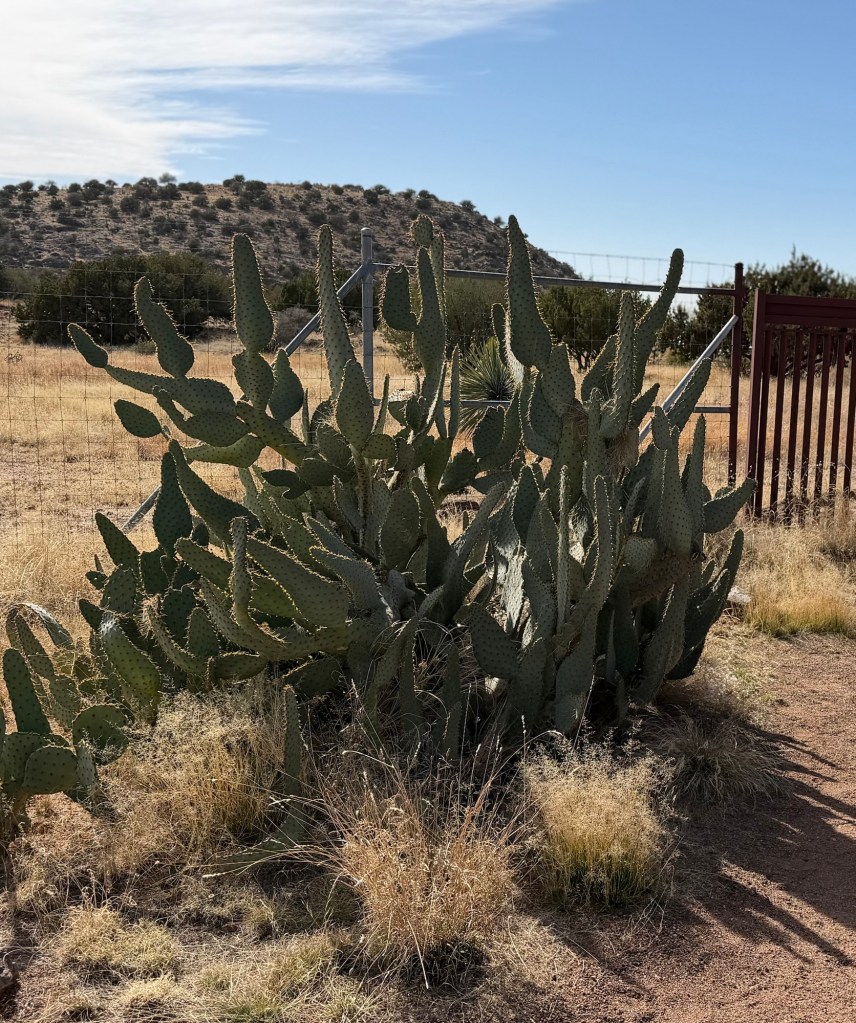
We just got to see how large the garden was. I don’t know if there will be time this visit, but I hope eventually to come back.
“The mission of the Chihuahuan Desert Research Institute is to promote public awareness, appreciation and concern for nature generally and the natural diversity of the Chihuahuan Desert region specifically, through education, the visitor experience, and through the support of research.”
I like their mission and I like their place.

 On the Roam Again
You find interesting and beautiful things everywhere you go! I really like those vertical-column rocks! Are the water striders a type of insect?
LikeLike