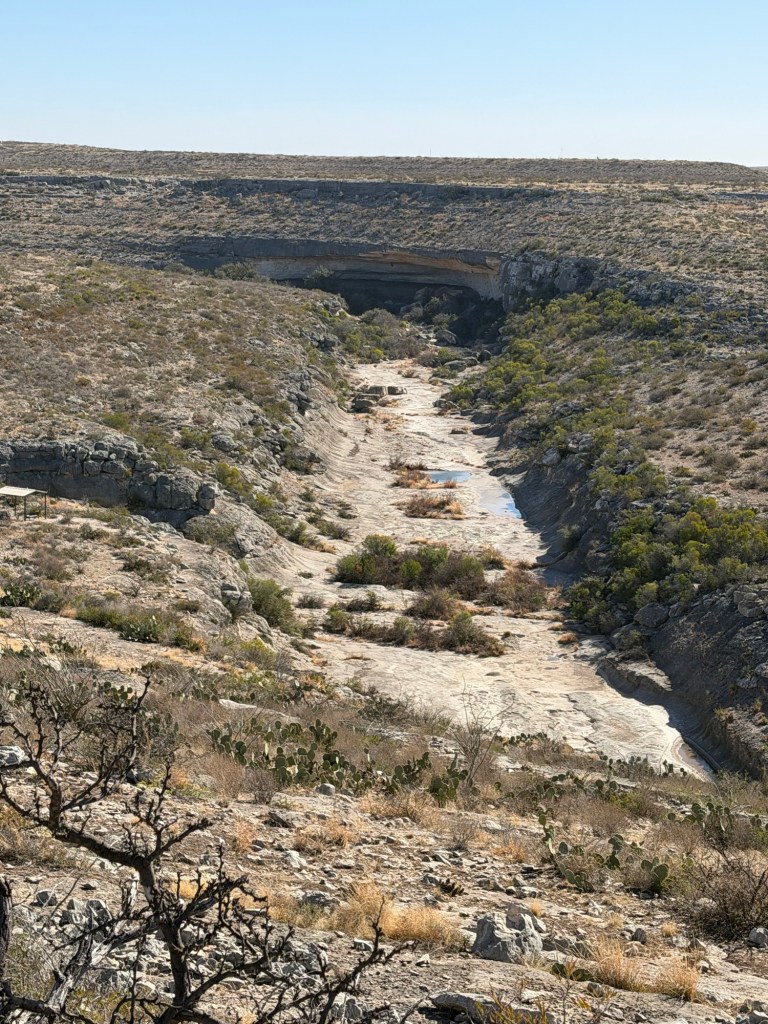
At every curve in the Seminole Canyon is a rock alcove carved by the periodic rushing water through the canyon walls. One of the largest is the one you can see near the top of this photo, the Fate Bell Shelter.
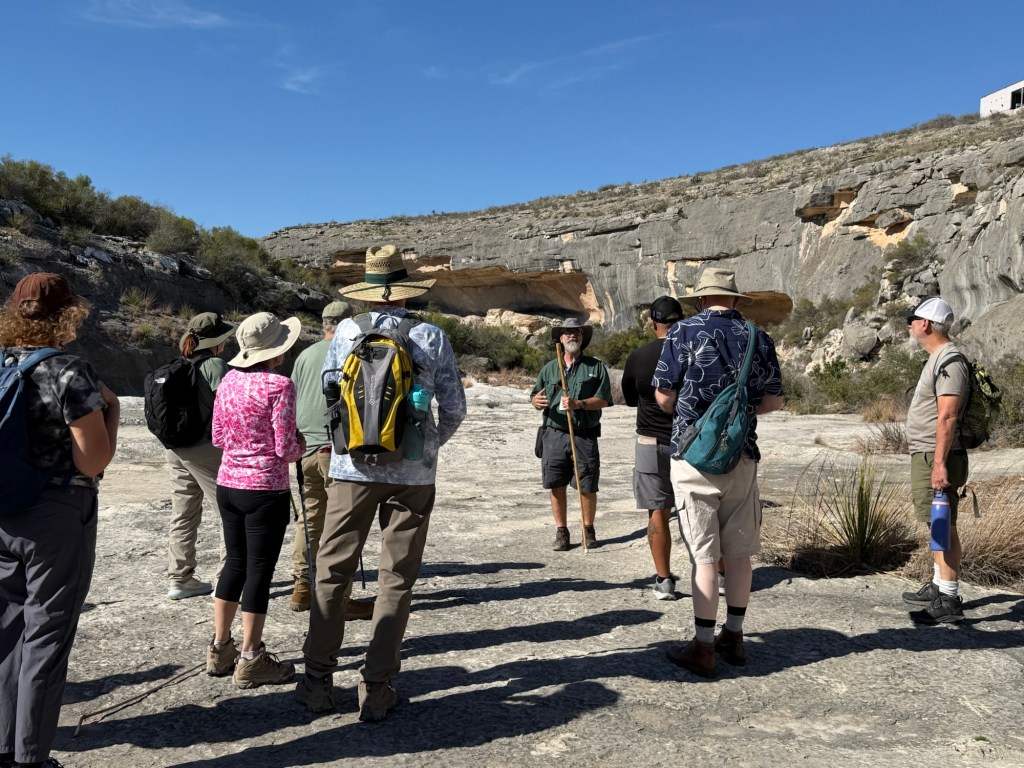
You can only visit with a guided tour and on Thursday I took the tour.
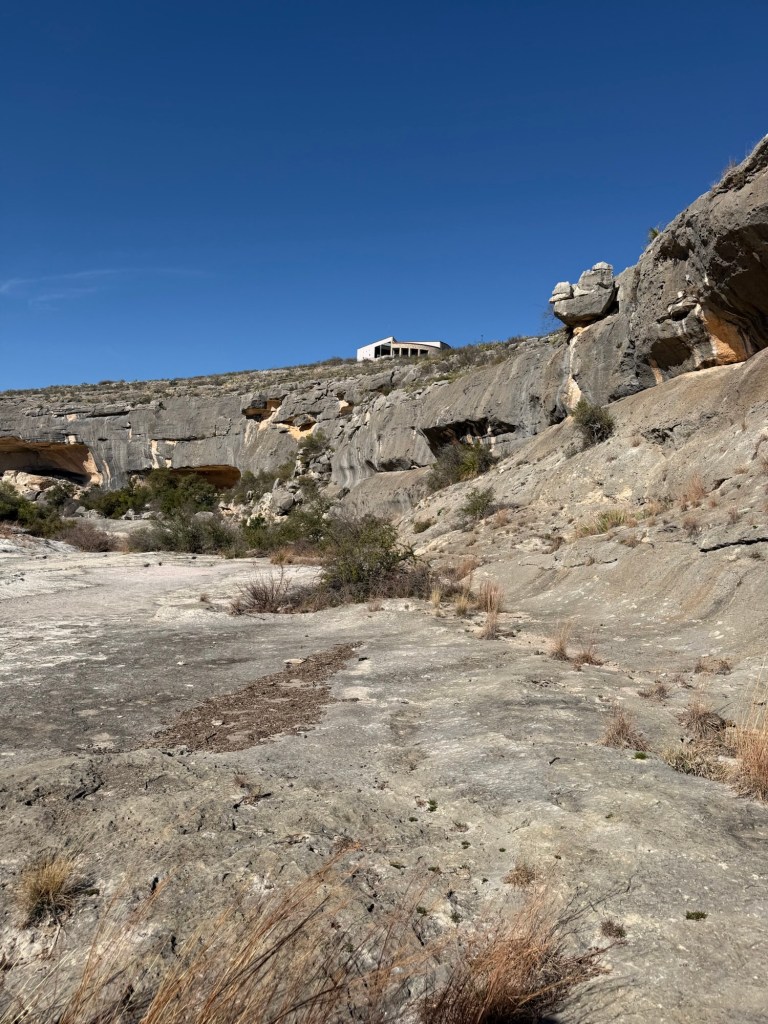
That’s the Visitor’s Center at the top of the canyon where the tour starts. The only trail into the canyon in the park is the one from the visitors center.
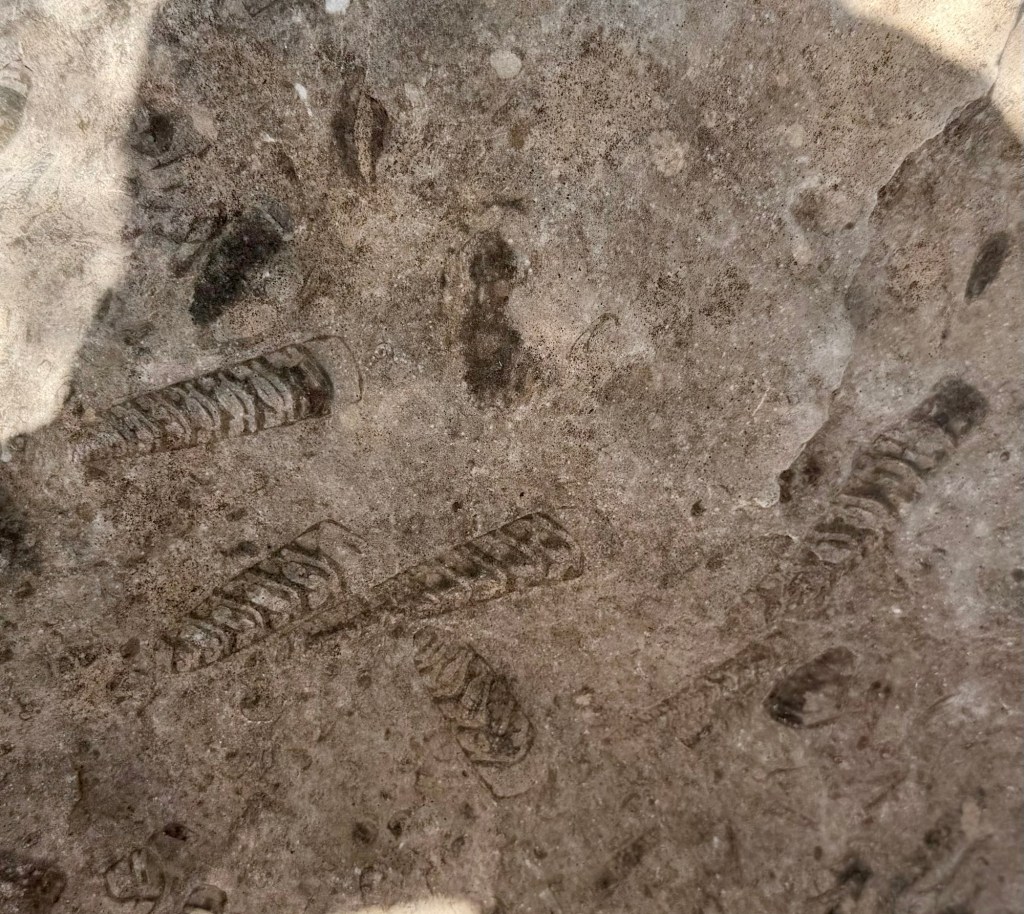
This whole area was once a shallow inland sea and the limestone of the surrounding desert and the canyon is composed of the shells of ancient sea creatures. There are fossils all around and our guide pointed out these as we walked by.
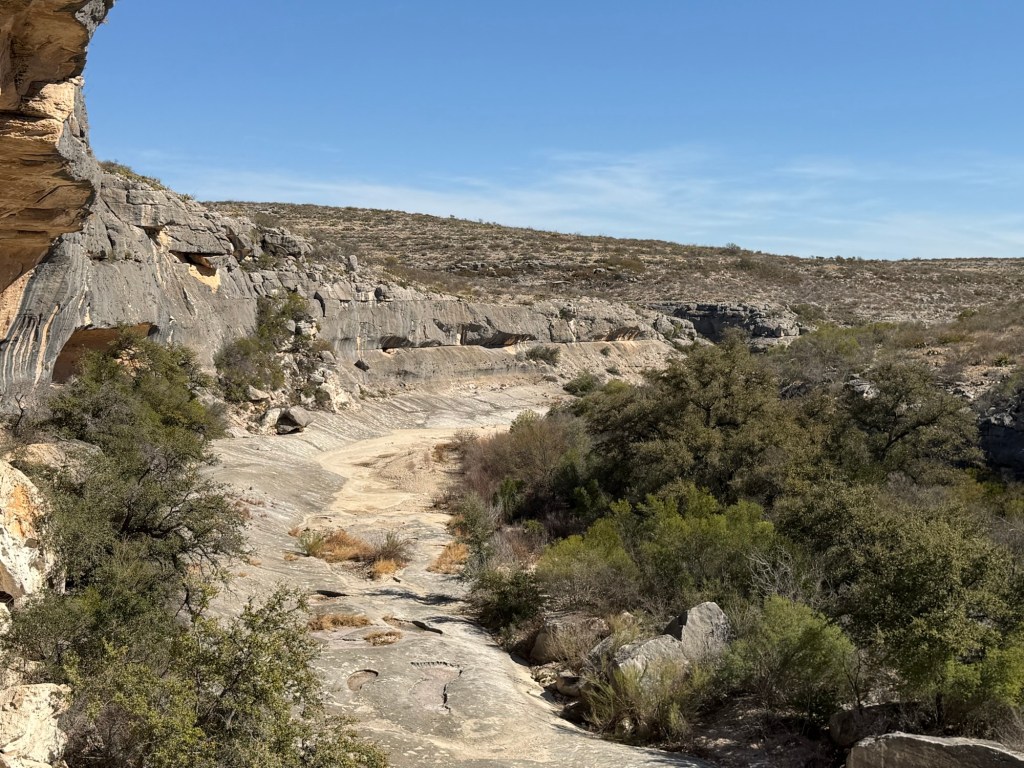
Our guide also explained why a canyon in south-central Texas is named after an Indian tribe from Florida. A group of blacks had fled slavery and lived and fought with the Seminoles. They were also exiled to Oklahoma with the Seminoles. Some fled to Mexico and some came to join the army as scouts. These Black Seminole Indian Scouts were stationed at Fort Clark. They patrolled west from there protecting white settlers from Apache and Comanche Indians who were still trying to repel the whites. There is a spring in the canyon floor not far north of here that they used as an outpost. It became known as the Seminole Spring and the canyon as the Seminole Canyon. The Black Seminole Indian Scouts have a storied history and a group of their descendants has a web site which I would recommend if you are interested.
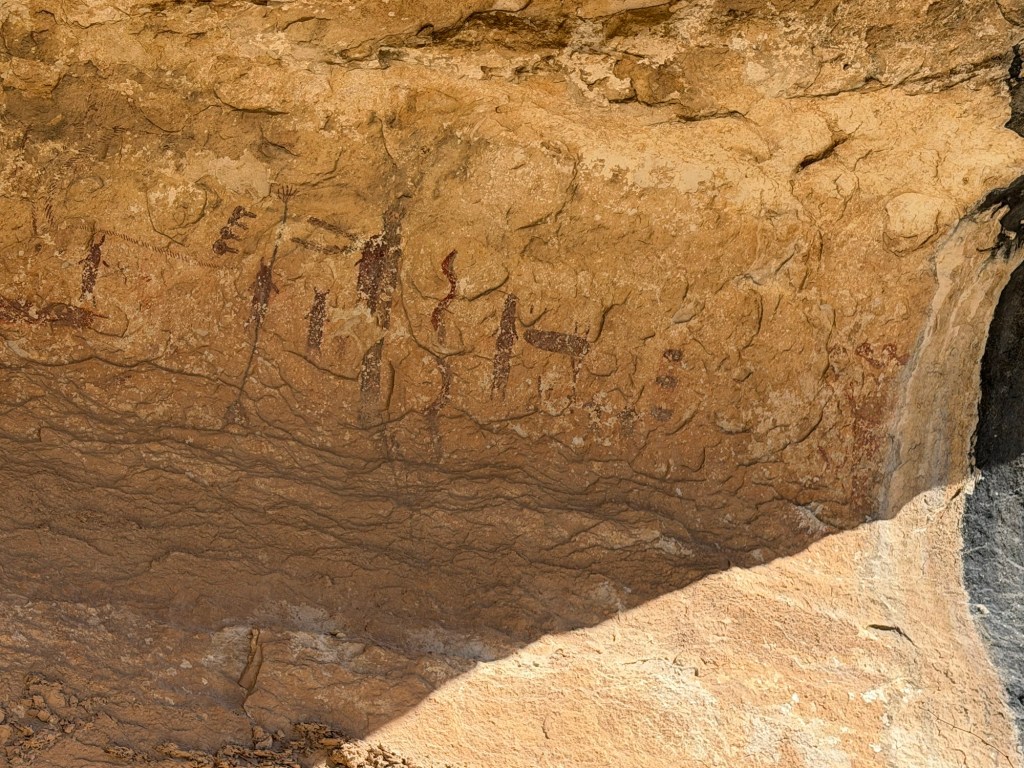
Meanwhile, at least 5,000 years ago other people were sheltering in the canyon.
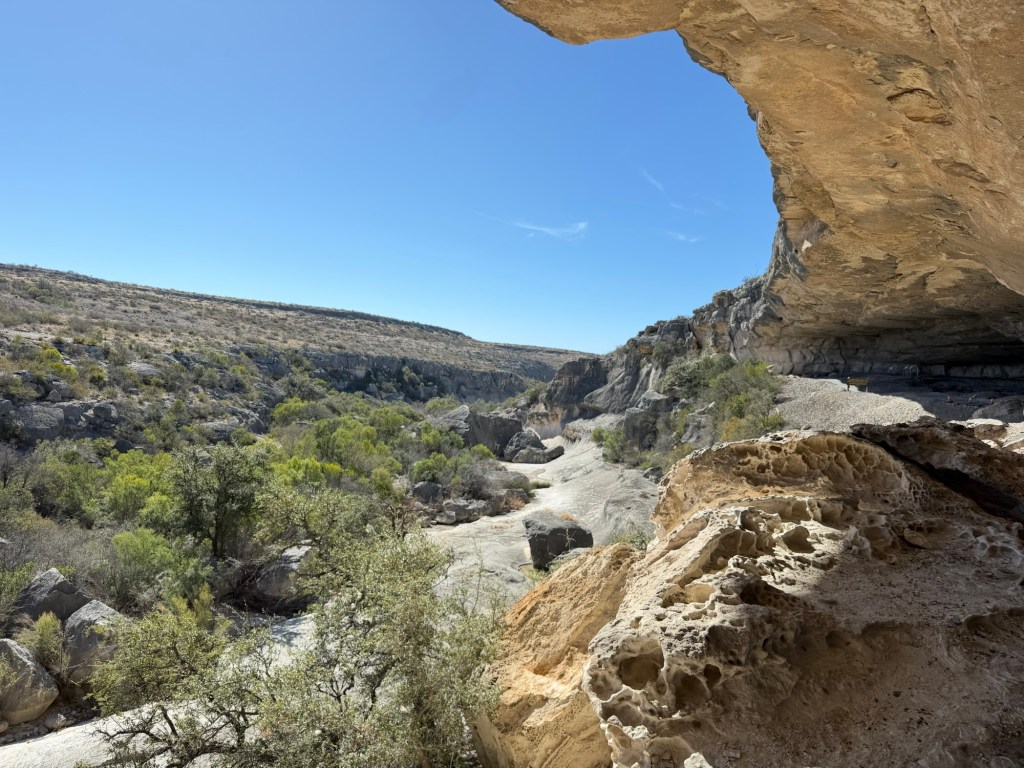
High on the canyon wall is the huge Fate Bell Shelter (named for an early land owner, Fayette Bell, whom everyone just called Fate).
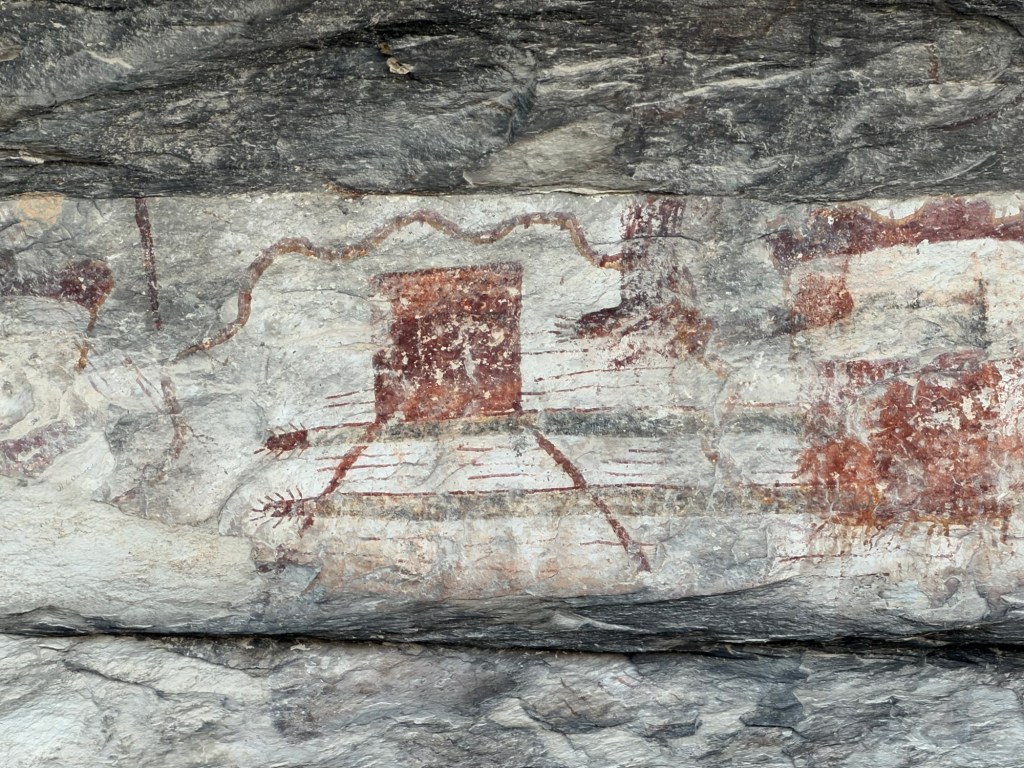
And for over 4,000 years people had been painting on the shelter walls using crushed minerals mixed with animal fat, water, and a soapy substance from yucca plants that acts as an emulsifier.
5,000 years later their paint is still adhering to the walls.
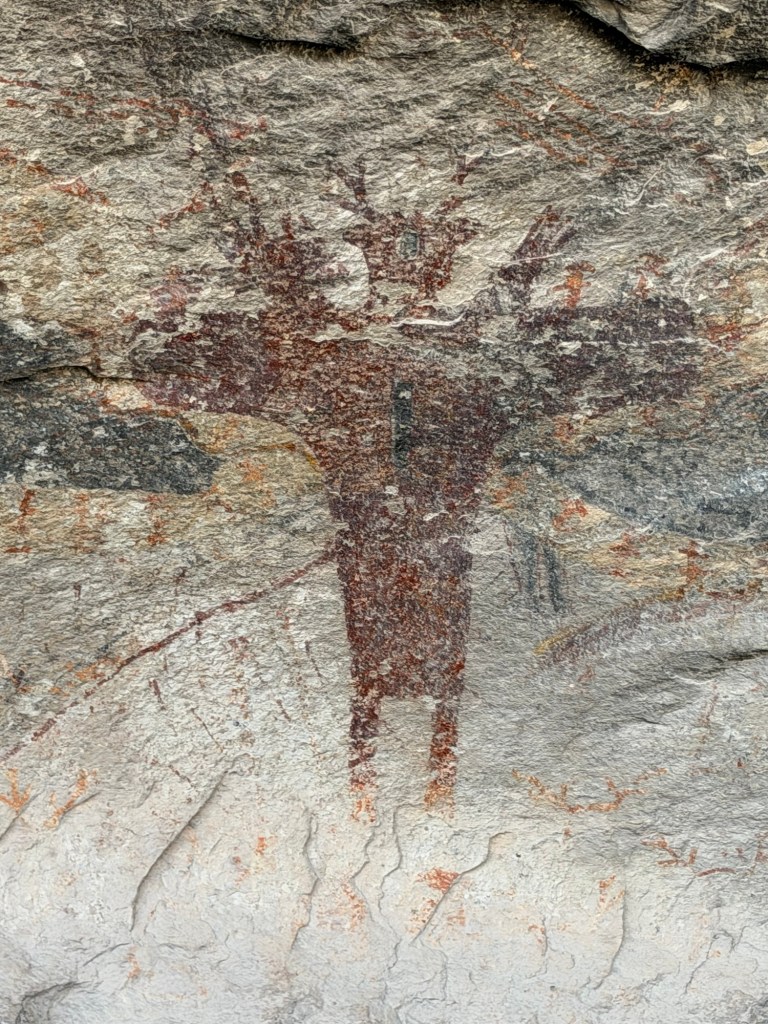
Lance, our guide told us about recent research done with digital microscopy by a team led by Carolyn Boyd that has shown that the colors of paint are always applied in the same order; first black, then red, yellow and lastly white. And the later colors are not just placed over the earlier colors. So the whole image has to be mapped out in some way before the first color is finished.
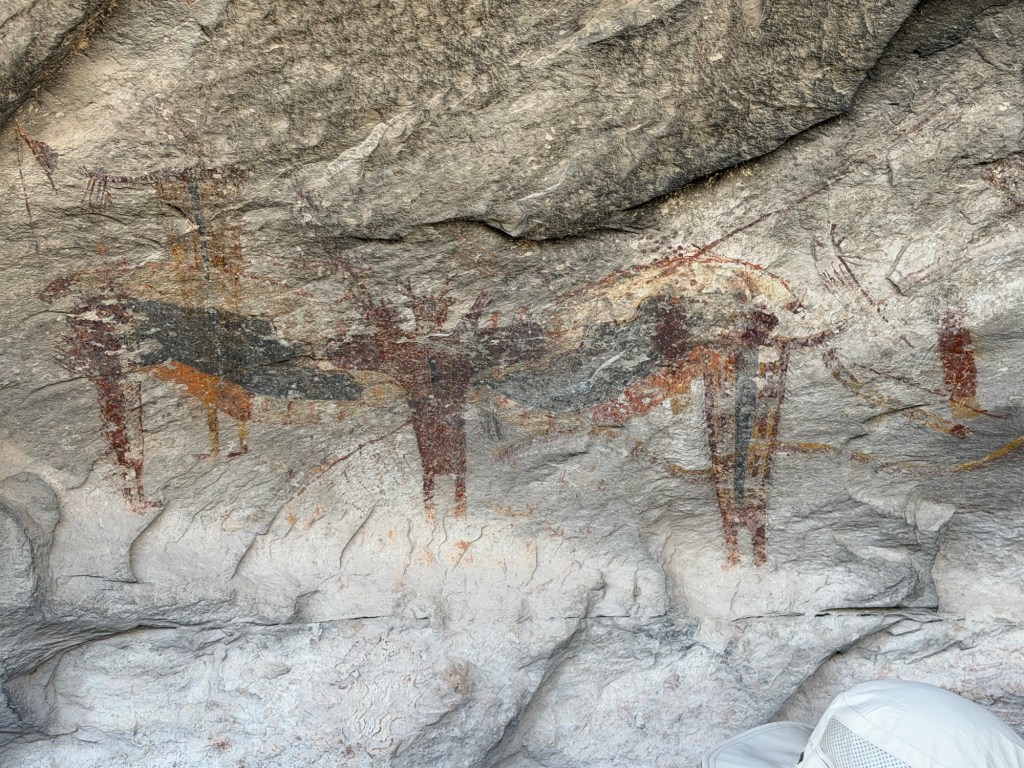
They also found that the images and techniques are consistent over that 4,000 year span. What an accomplishment!
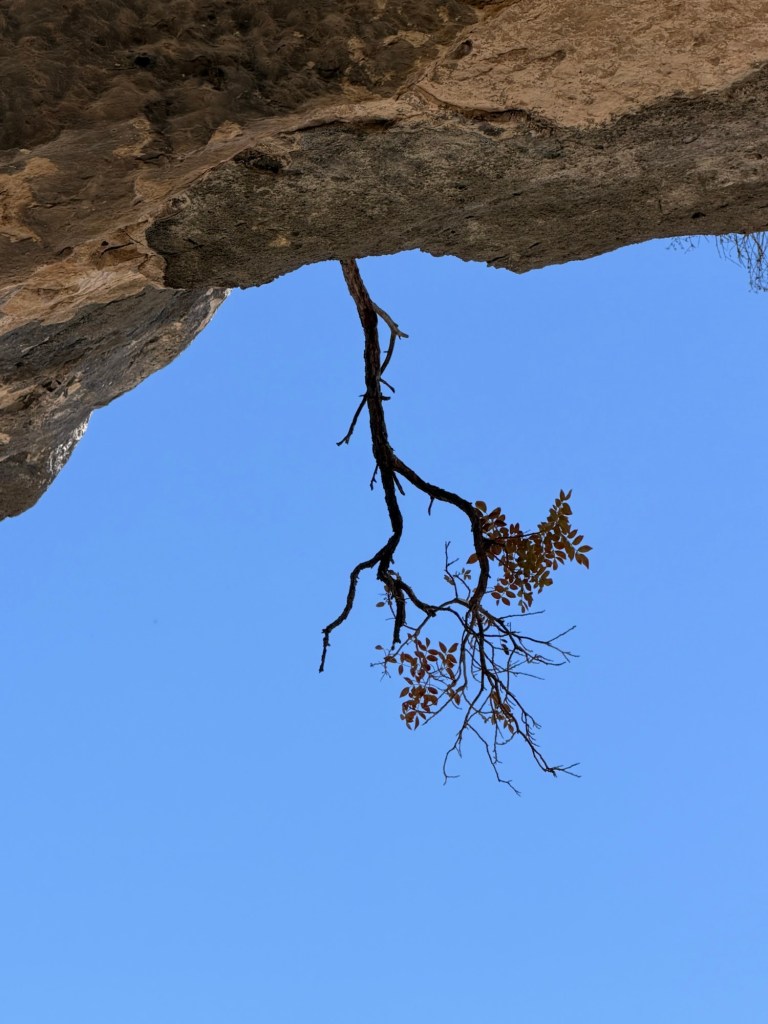
Speaking of accomplishments, this little tree was growing upside down on the lip of the huge alcove.
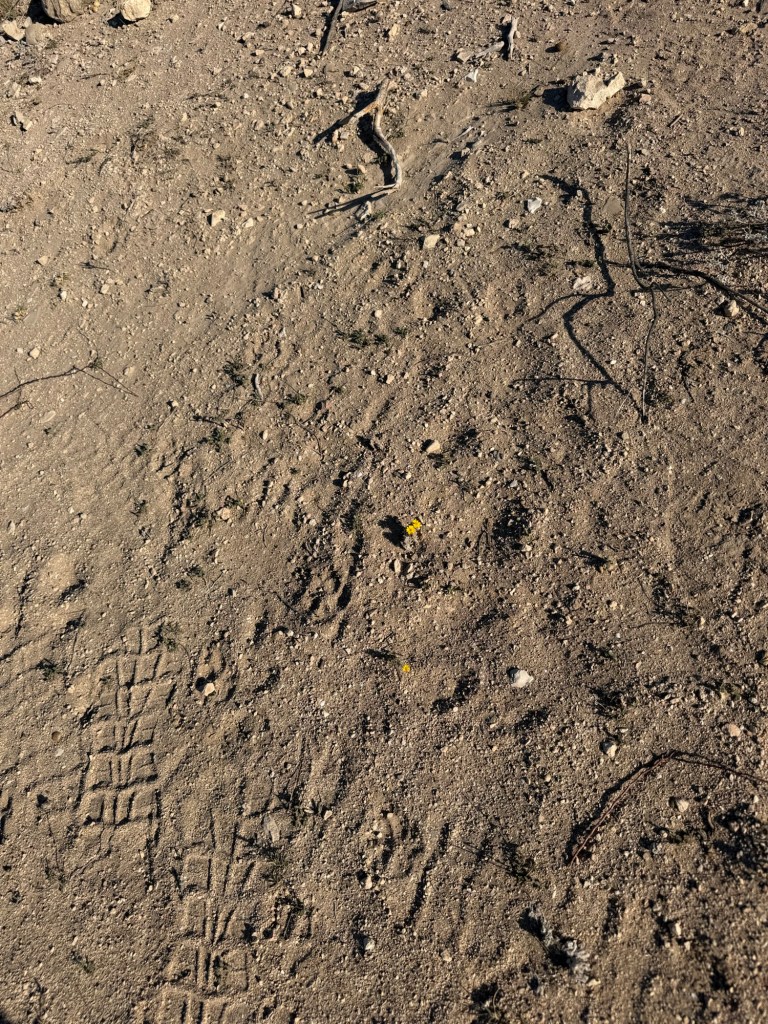
And back at the campsite I spotted on this patch of inhospitable ground…
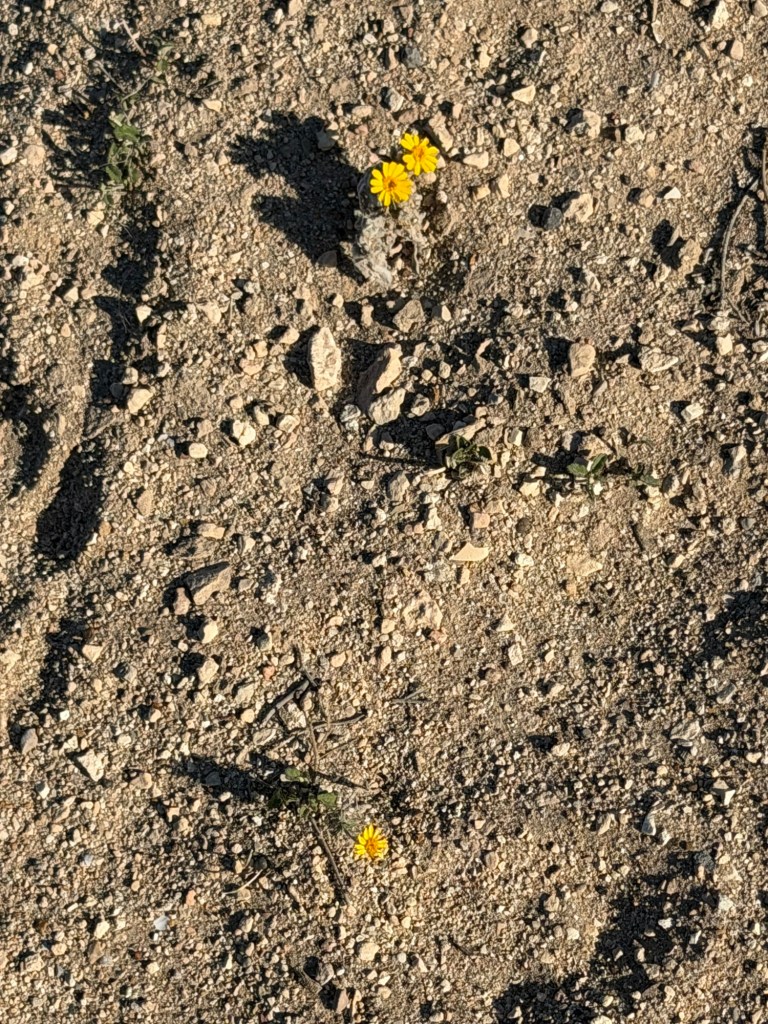
three tiny flowers
The things I see on my travels both inspire and humble me.

 On the Roam Again
All very interesting, including the tiny flowers growing in the inhospitable ground! Thanks for sharing your tour!
LikeLike