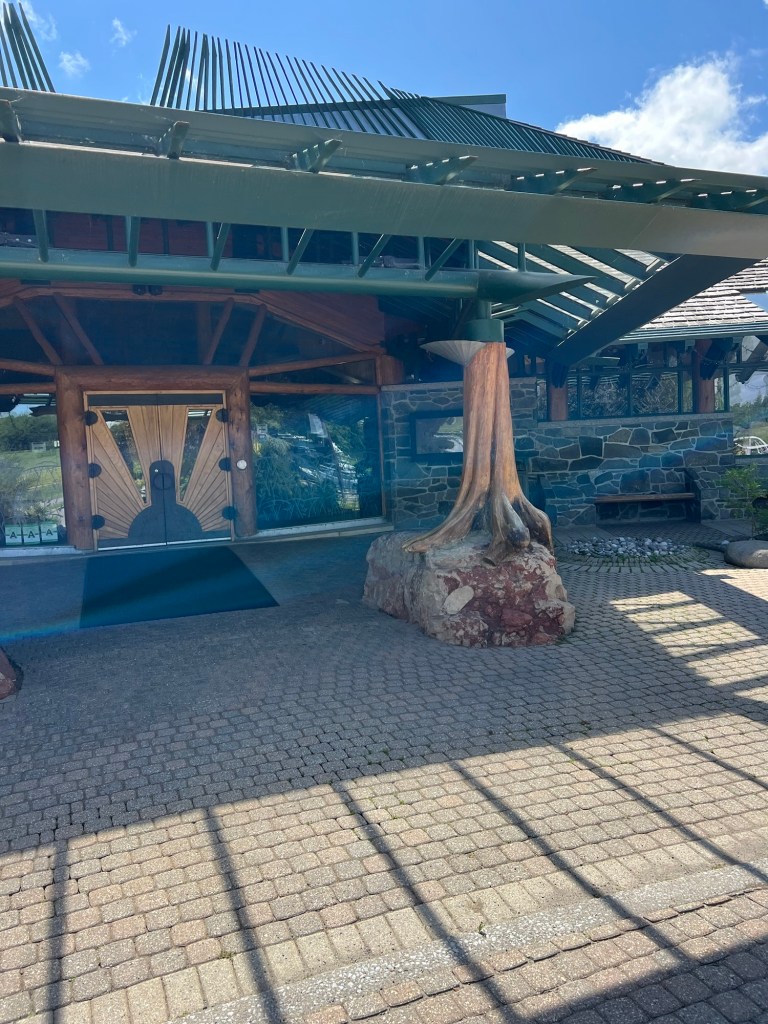
On the southern edge of Thunder Bay sits the Fort William Historical Park. The heart of the site is the reconstructed Fort William, which wasn’t a fort at all, but the inland headquarters of the North West Company. This is the entrance building, the Visitor Center.
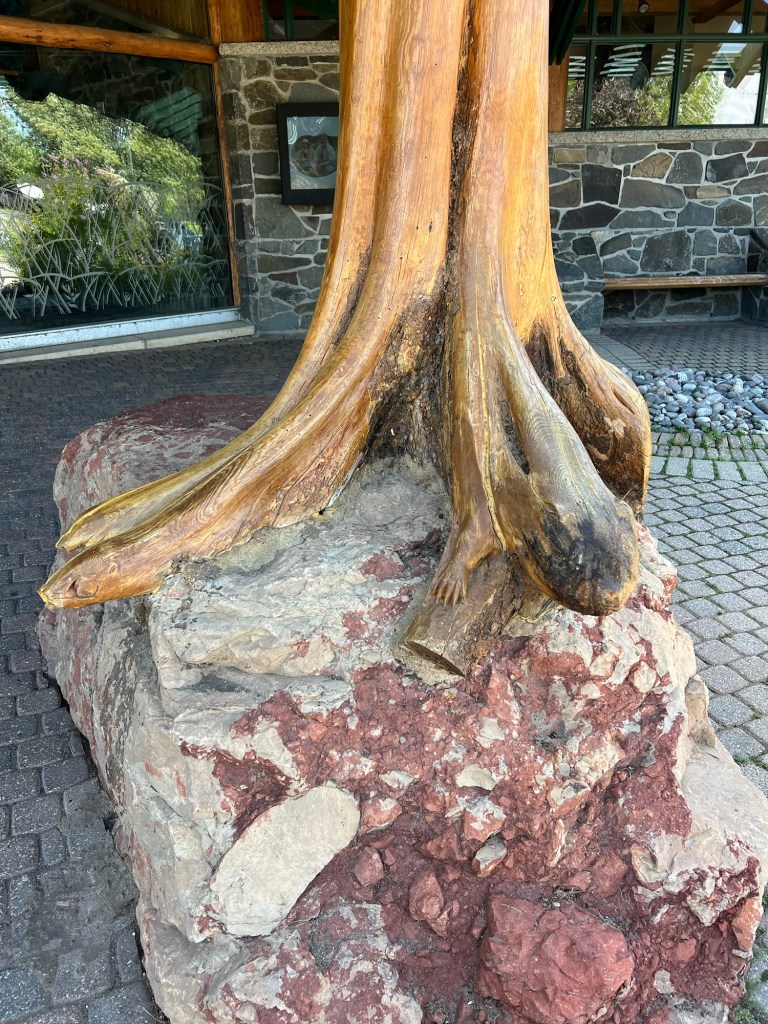
The carvings and details were amazing,
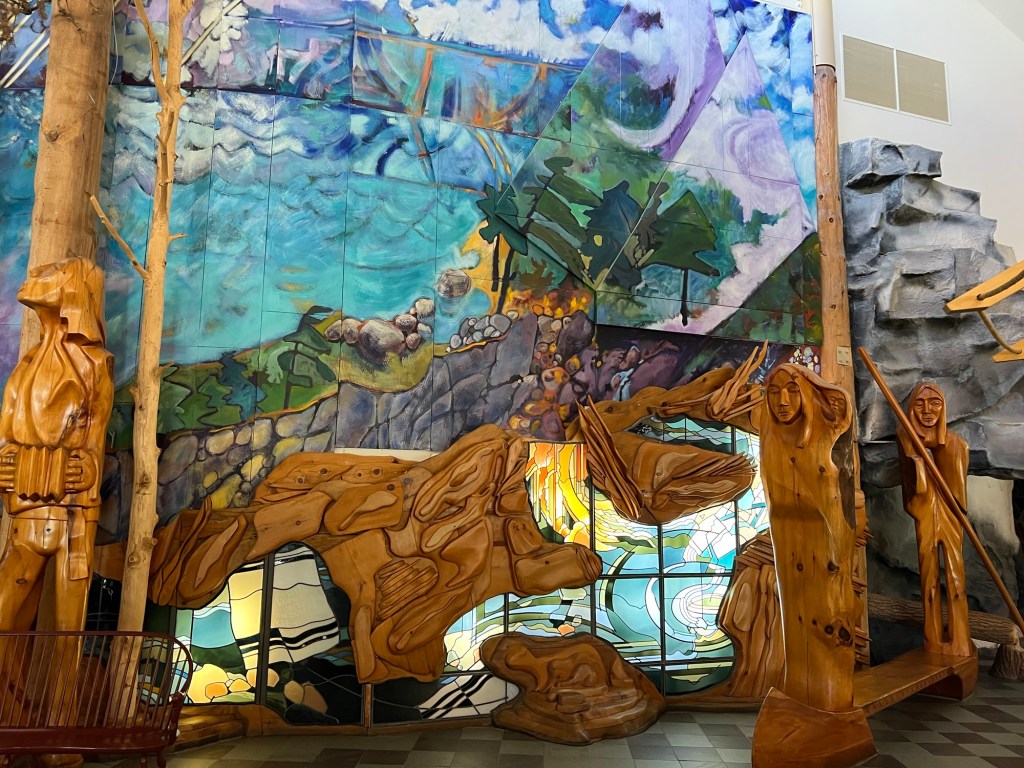
and beautiful.
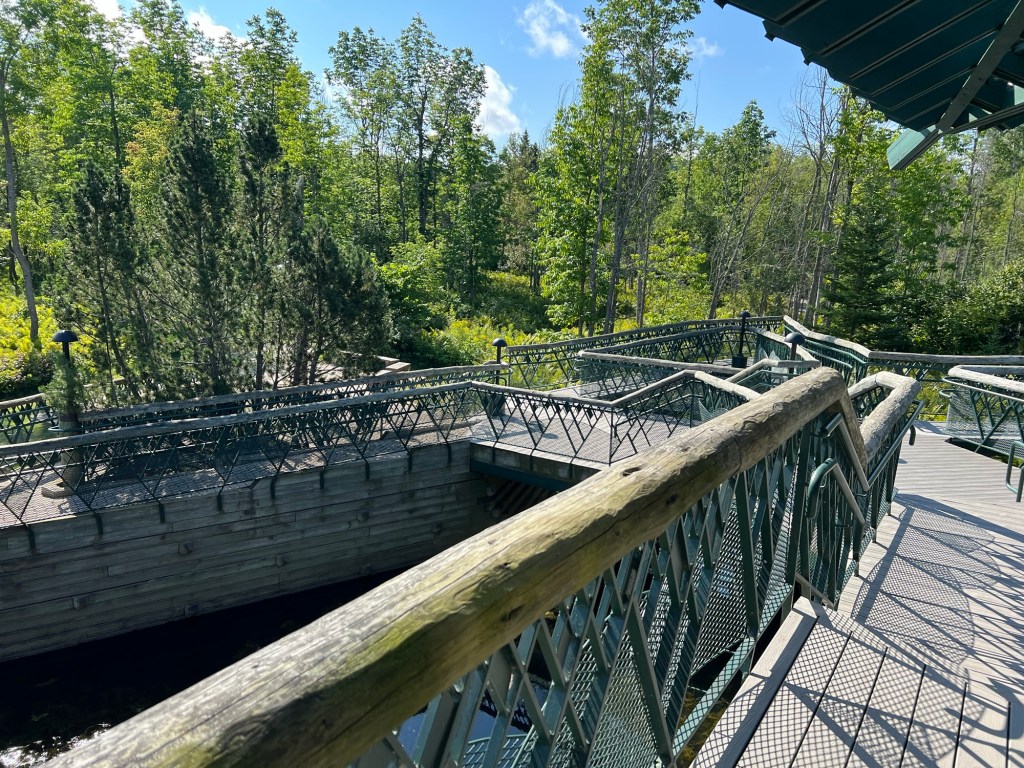
Out the back a series of steps and ramps…
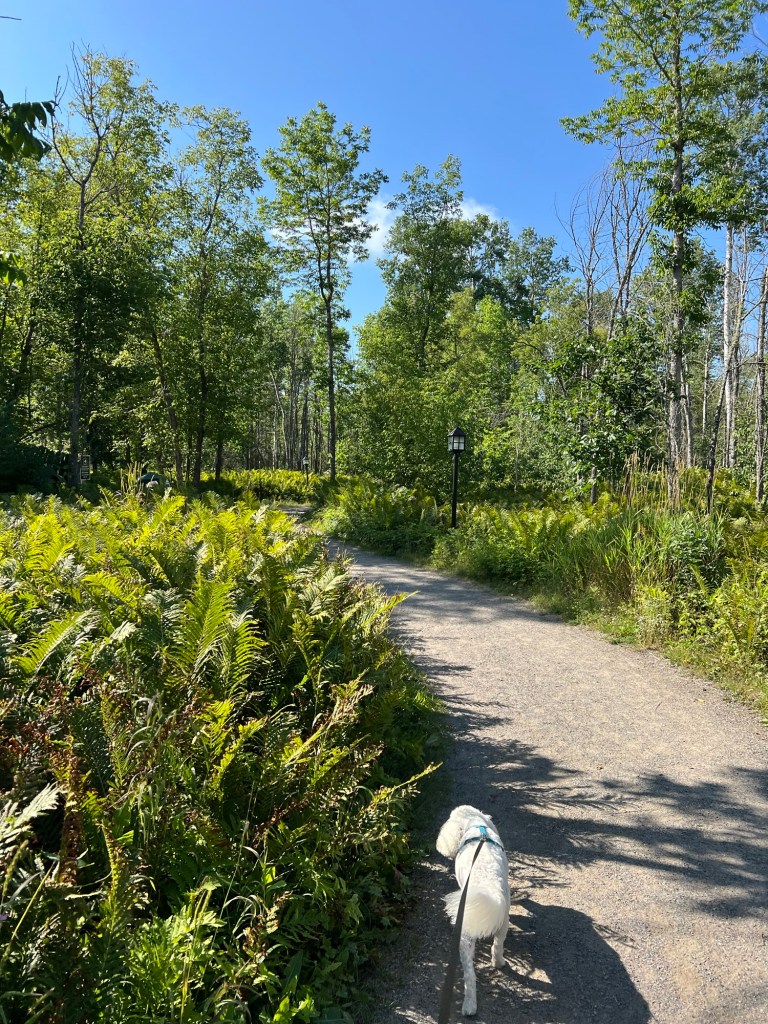
took you to this broad trail that led…
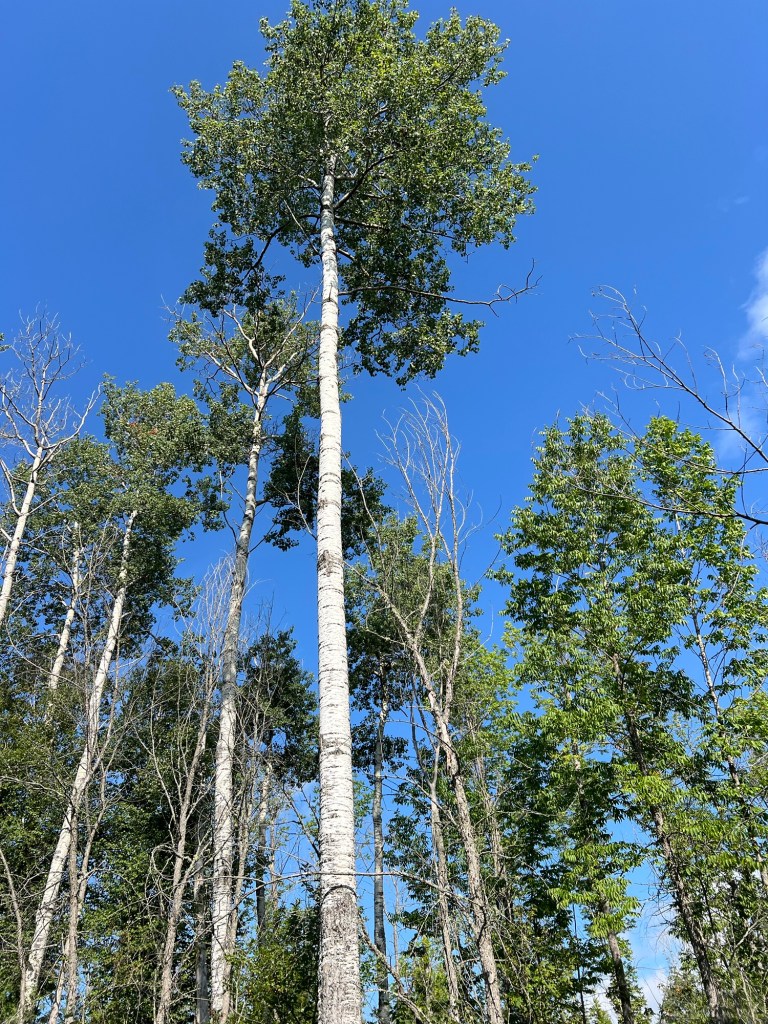
past astonishingly tall birches to the restored fort.
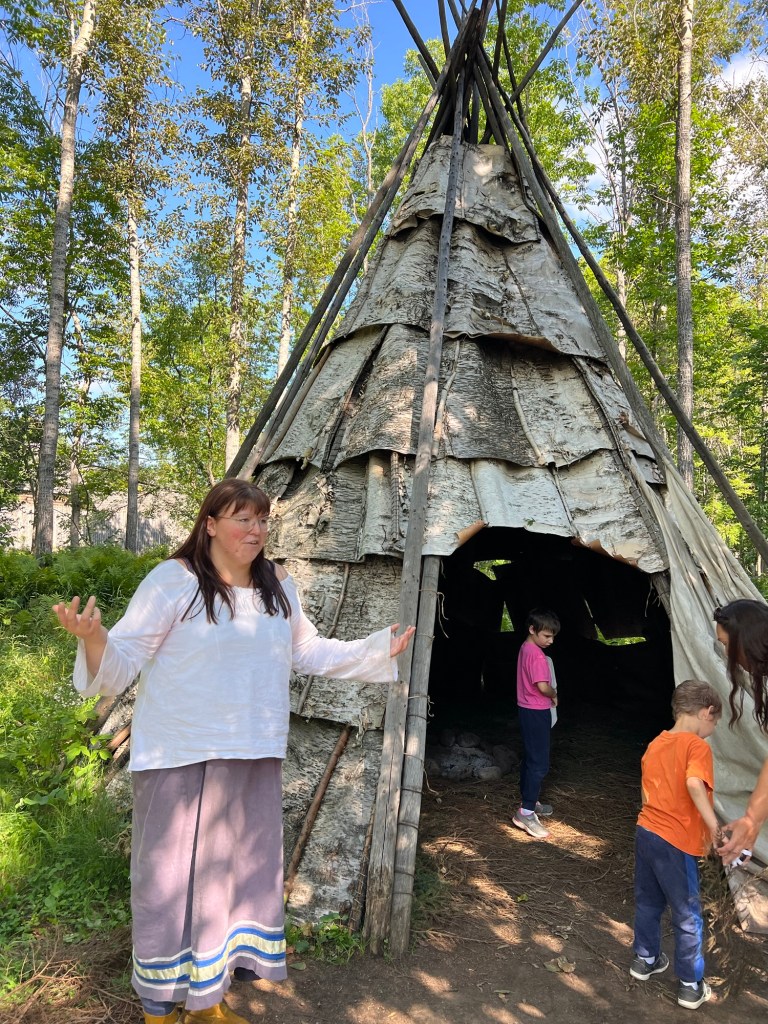
Throughout the site there were people enacting what life was like here in 1815. At the Anishinaabe encampment outside the gate the young woman explained that this wigwam would be used while the group of Anishinaabeg stayed here during rendezvous (July into August) doing day labor at the fort in exchange for trade goods. When they moved on they would leave the poles behind,
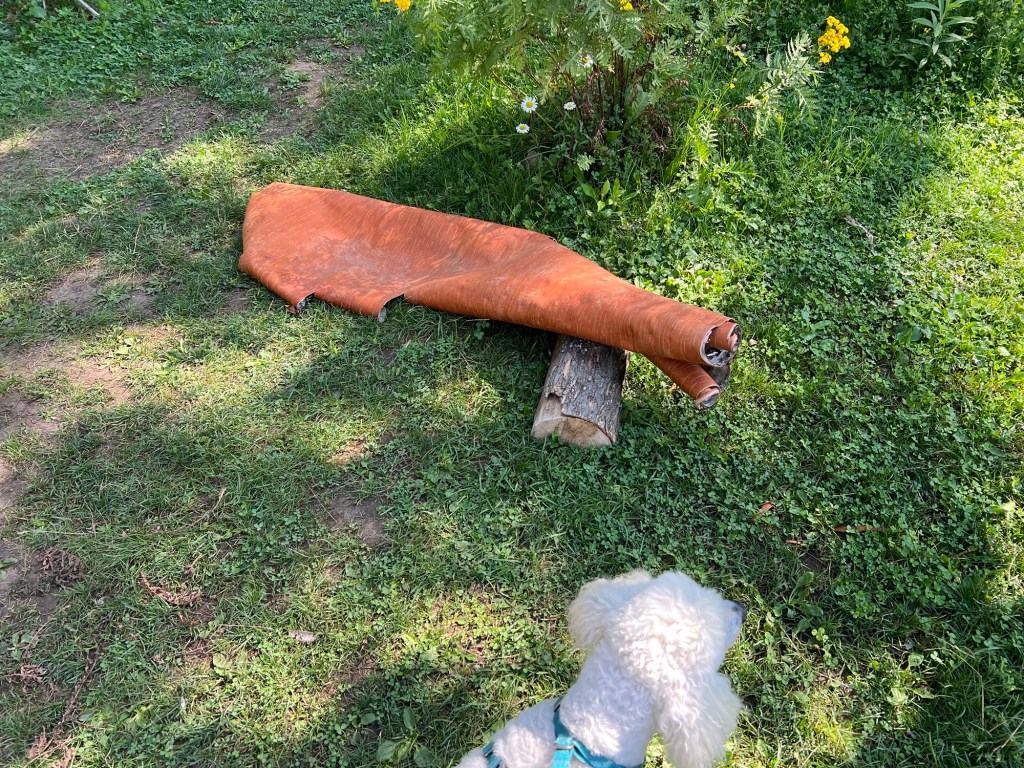
but the birch bark would be heated and rolled to be transported to their next encampment.
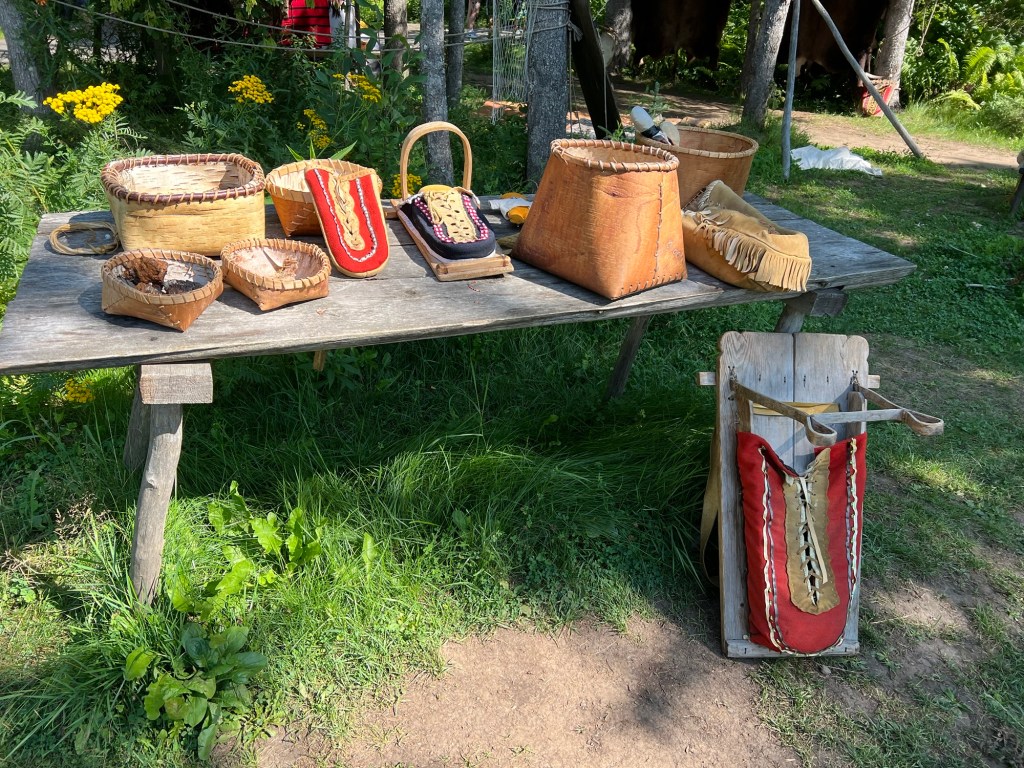
They had on display a number of things they had made.
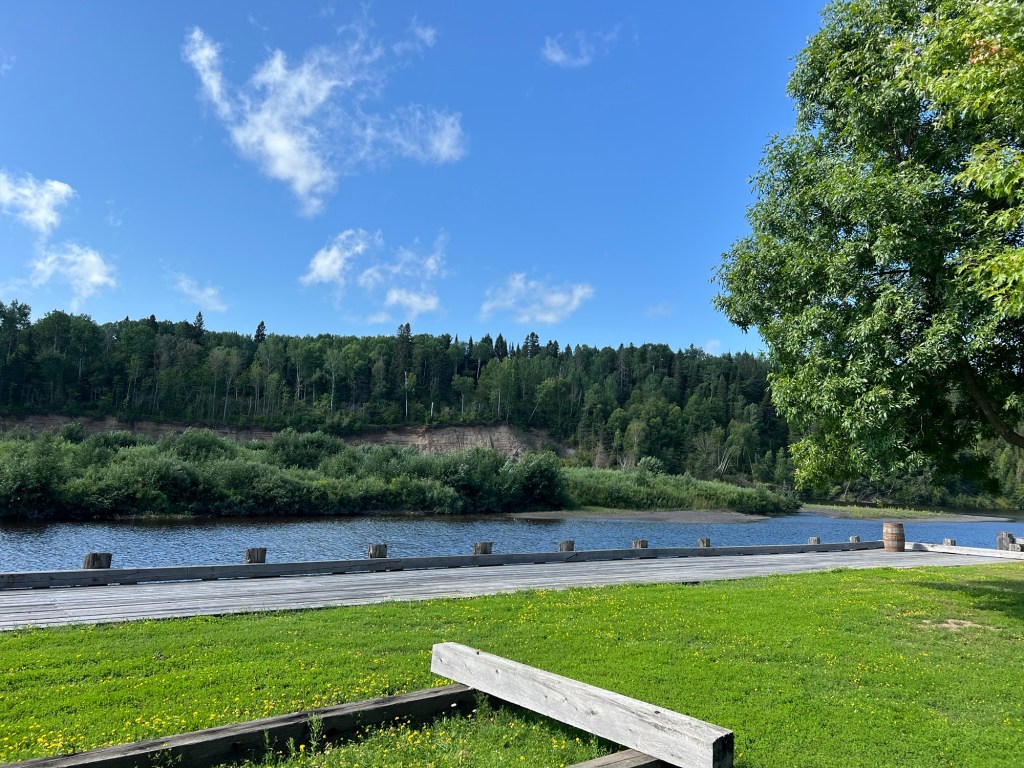
The fort is located on the Kaministiquia River, not far from its mouth on Lake Superior. This is the wharf.
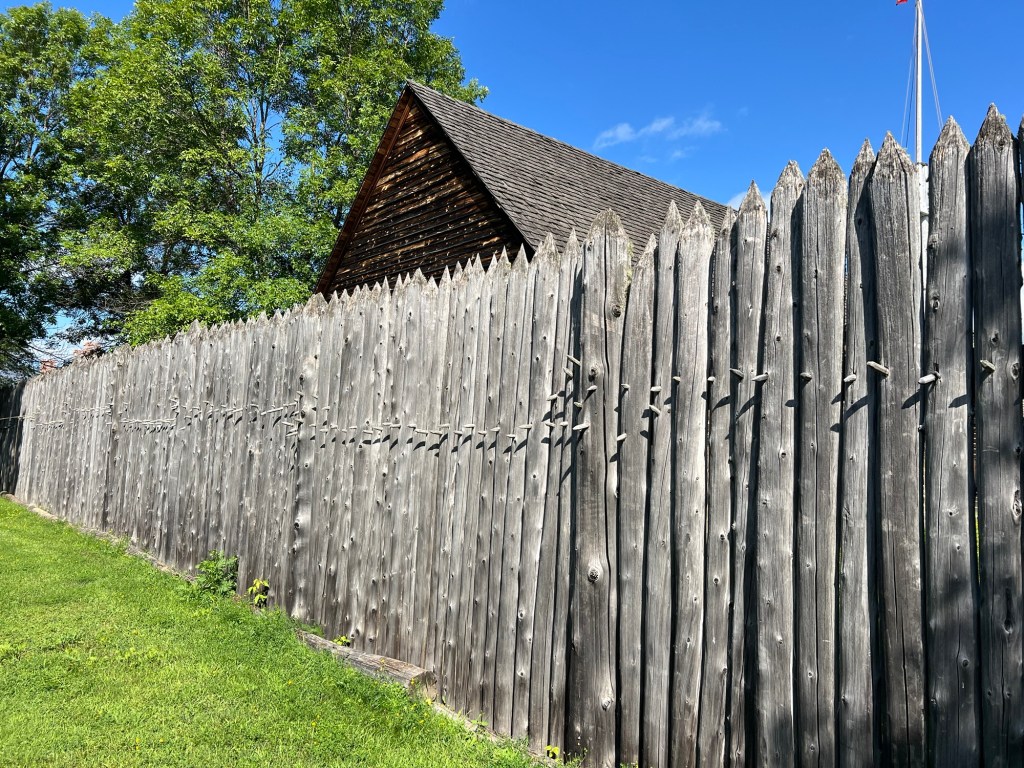
The company buildings were surrounded by this rather bristlely looking wall, but the pointed sticks are used in construction as they are cheaper than nails, and the pointed tops of the logs are to shed rain and snow. None of these were defensive.
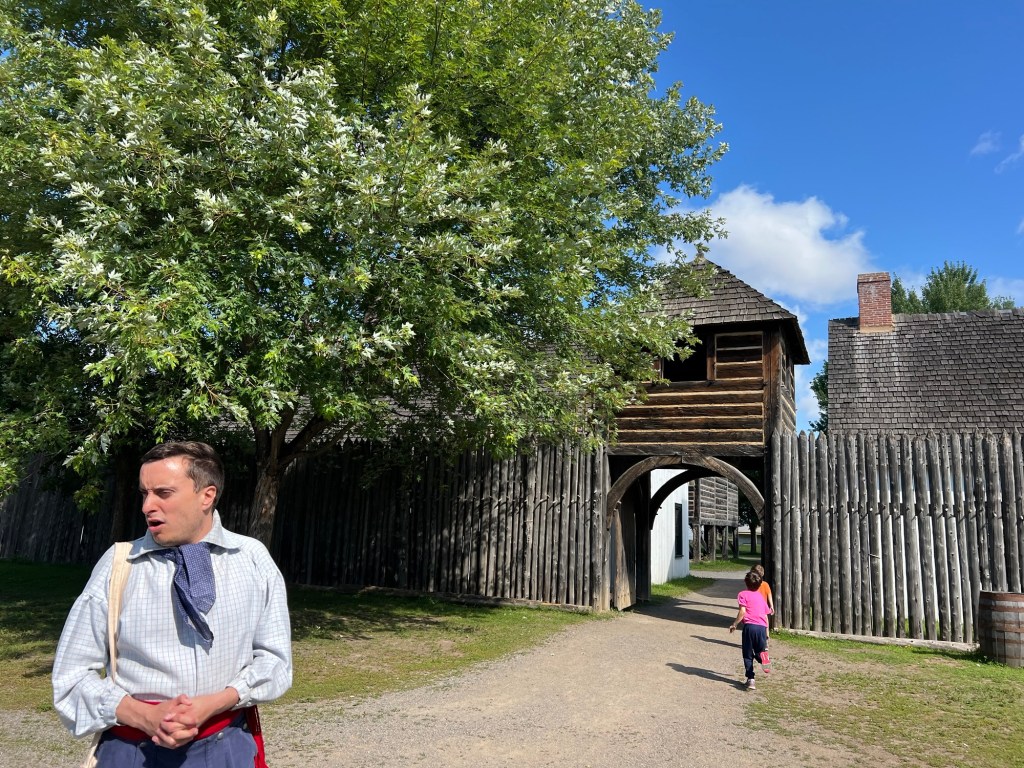
This is one of the tour guides. He is in character as a voyageur. They were the company employees that took canoes out to the trading posts scattered throughout the wilderness where the company had established trade with the natives. They carried the trade goods out and brought furs back. When they brought the furs to rendezvous they also brought back the clerks that worked in the trading posts. Voyageurs camped outside the walls, many slept under their canoes. After 10 years or so a voyageur might be promoted to be a guide or interpreter. These men no longer did the hard manual labor, and they got to bunk inside the fort during rendezvous.
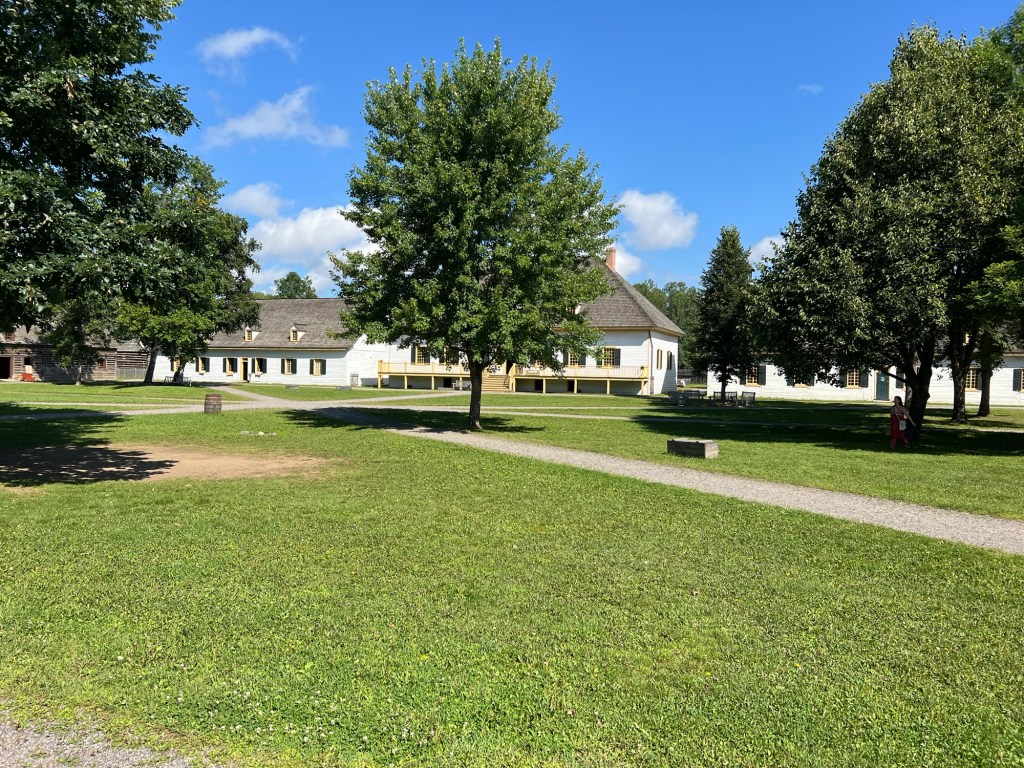
The walls enclosed over 30 buildings, as well as this large central square.
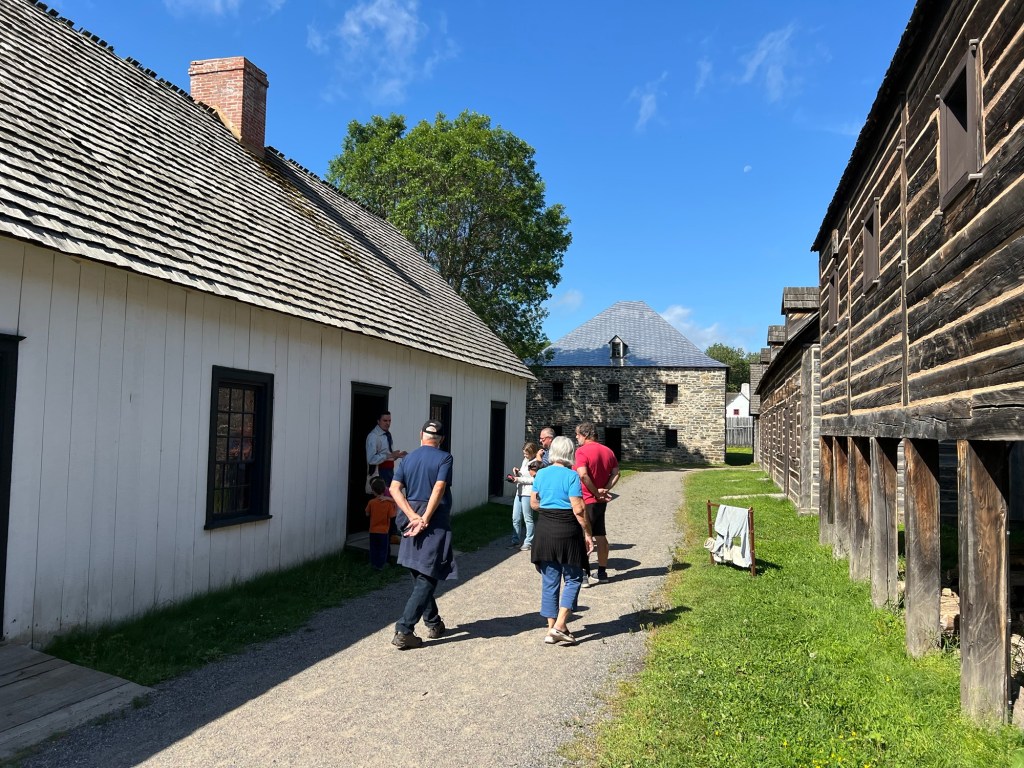
Most of the buildings were empty except during rendezvous but about 30 people stayed year round, including the wintering partner. The white building on the left is the wintering house.
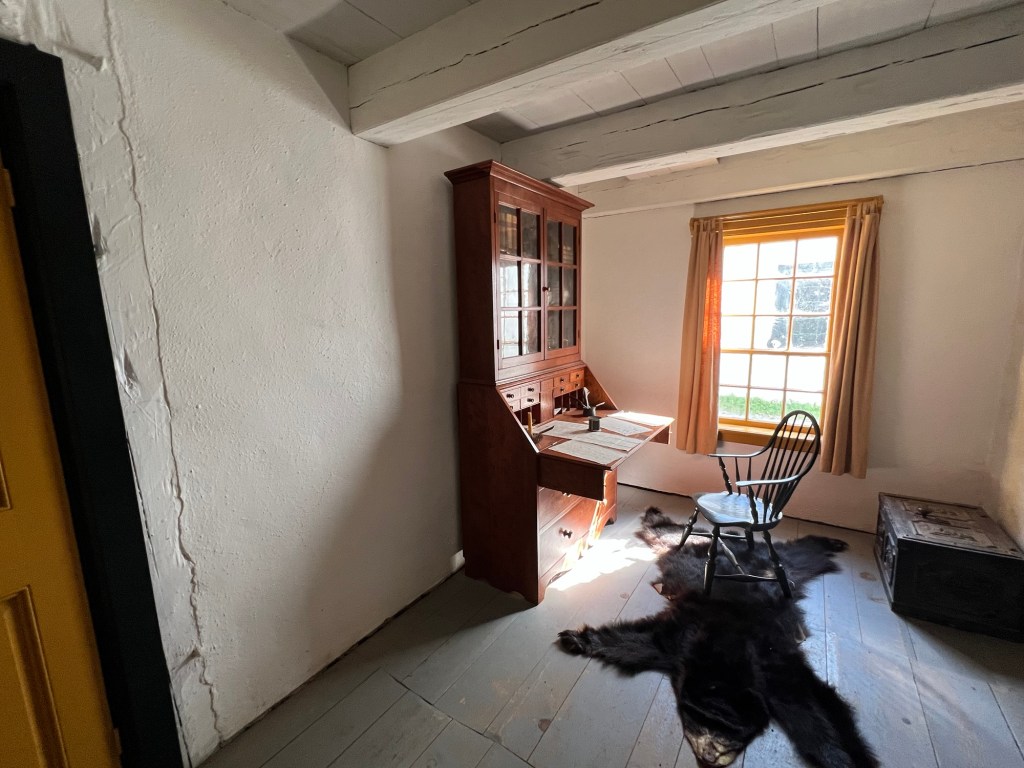
It has low ceilings and raised floors for warmth.
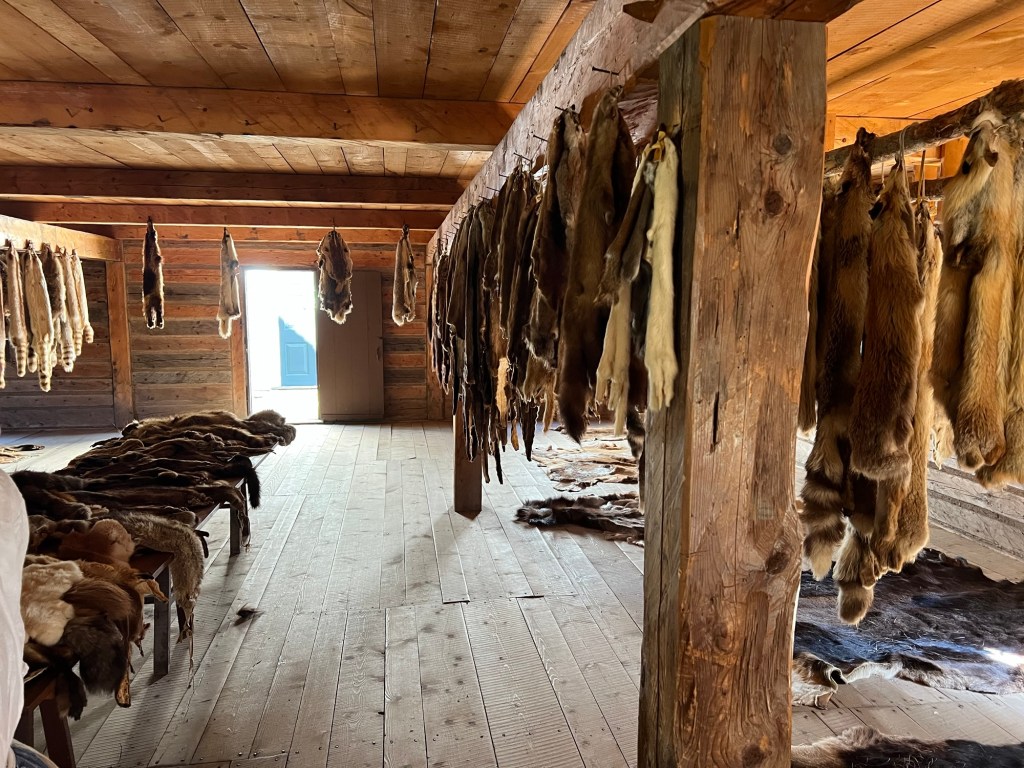
Matey’s favorite building was the Fur Stores.
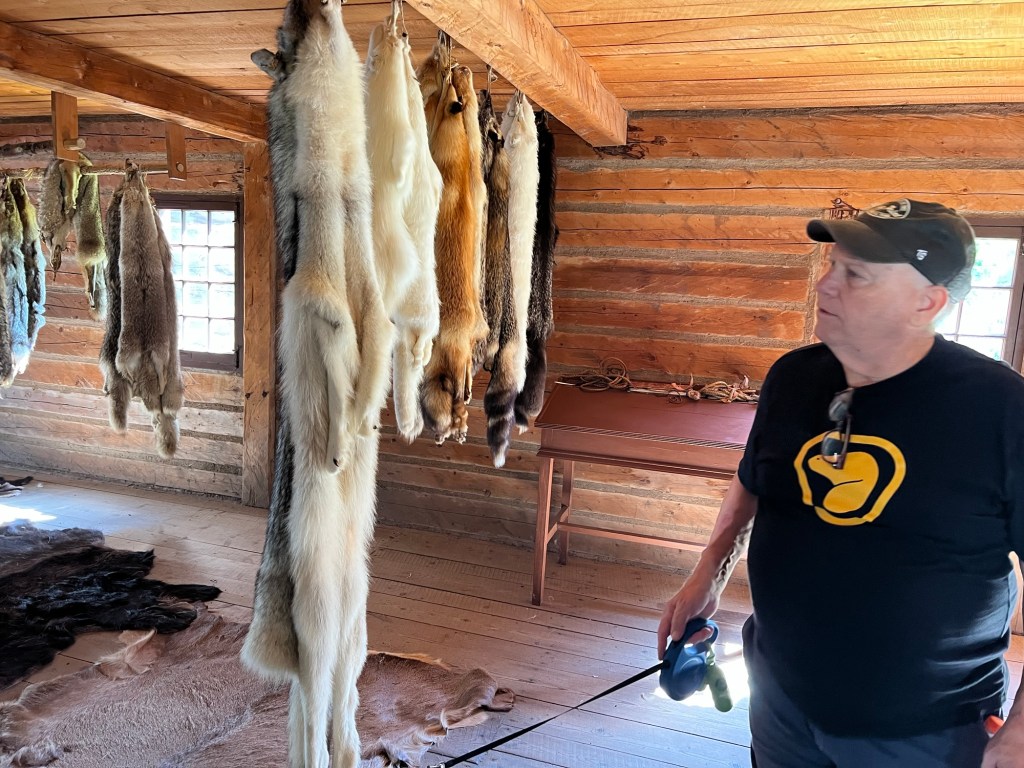
He thought all those animal skins smelled great. (The park people told us these skins all came from animals trapped or hunted illegally, the pelts were confiscated and then given to the park.)
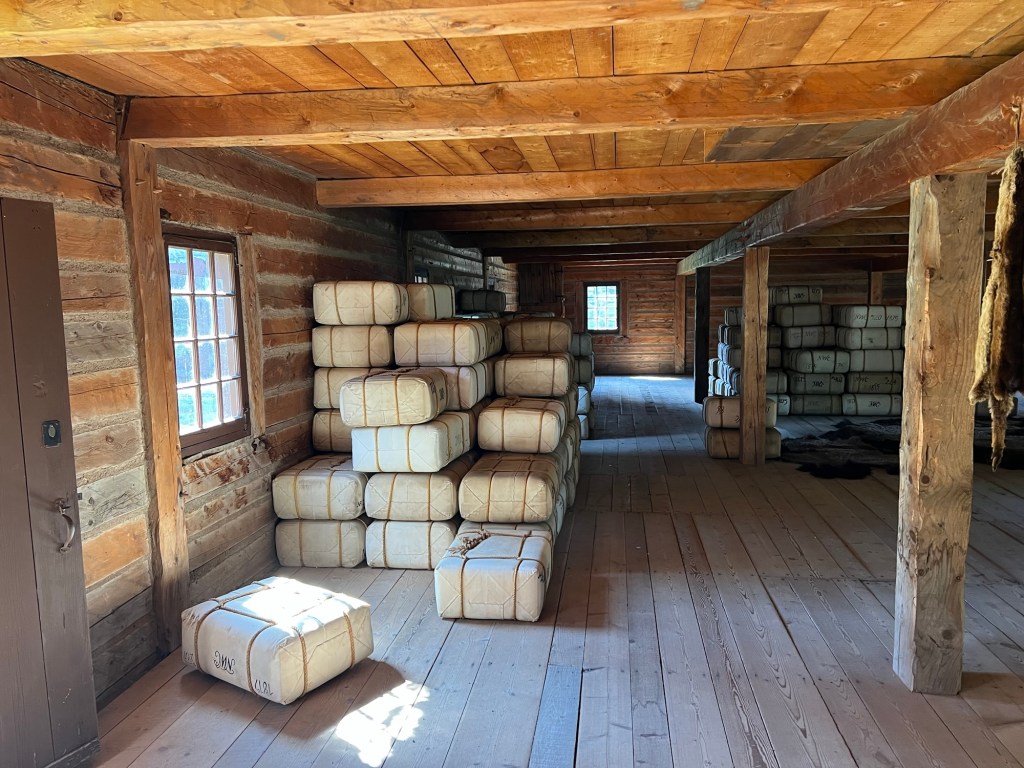
The furs were then compressed and wrapped and sewn into 90 pound bundles to be shipped east.
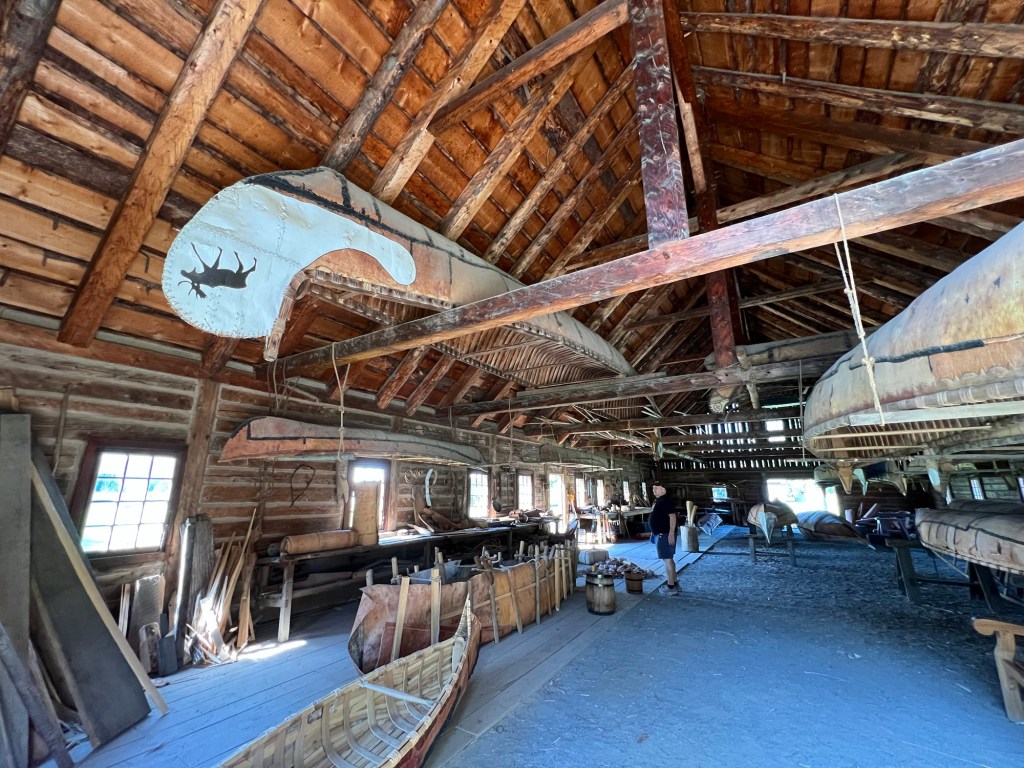
My favorite building was the canoe shed. All of these boats are made using the traditional methods and materials. The frames are ash and cedar and the skins are birch bark. Do you see how huge the one up on the beams is? That is Bud standing below it.
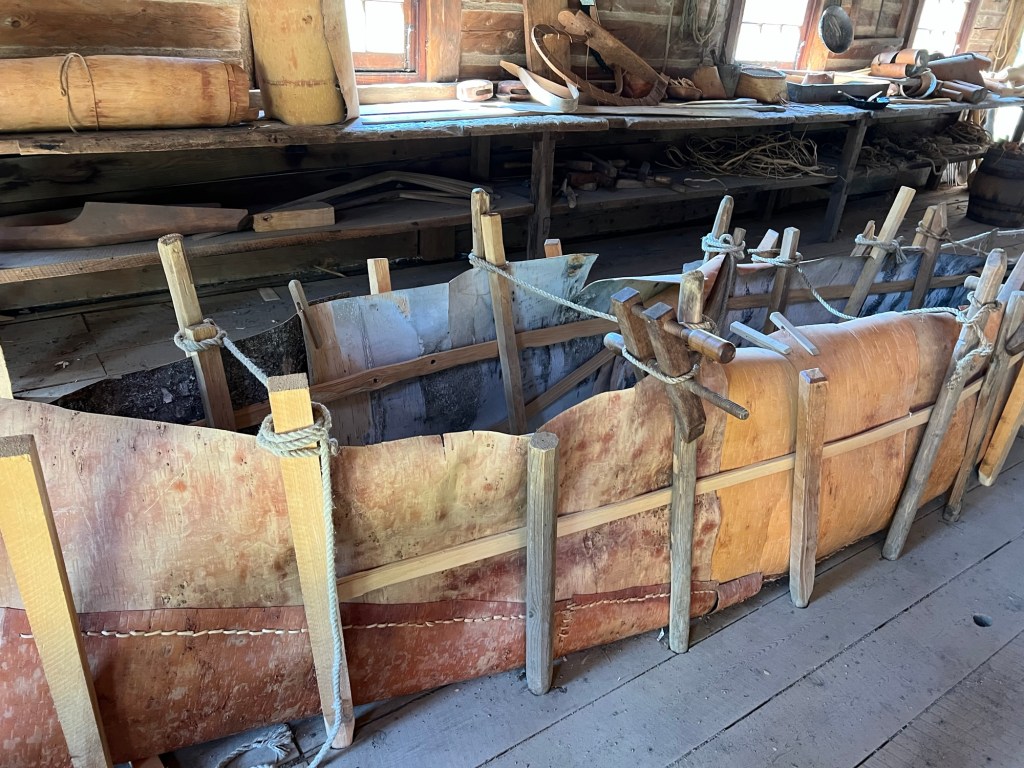
This is one under construction.
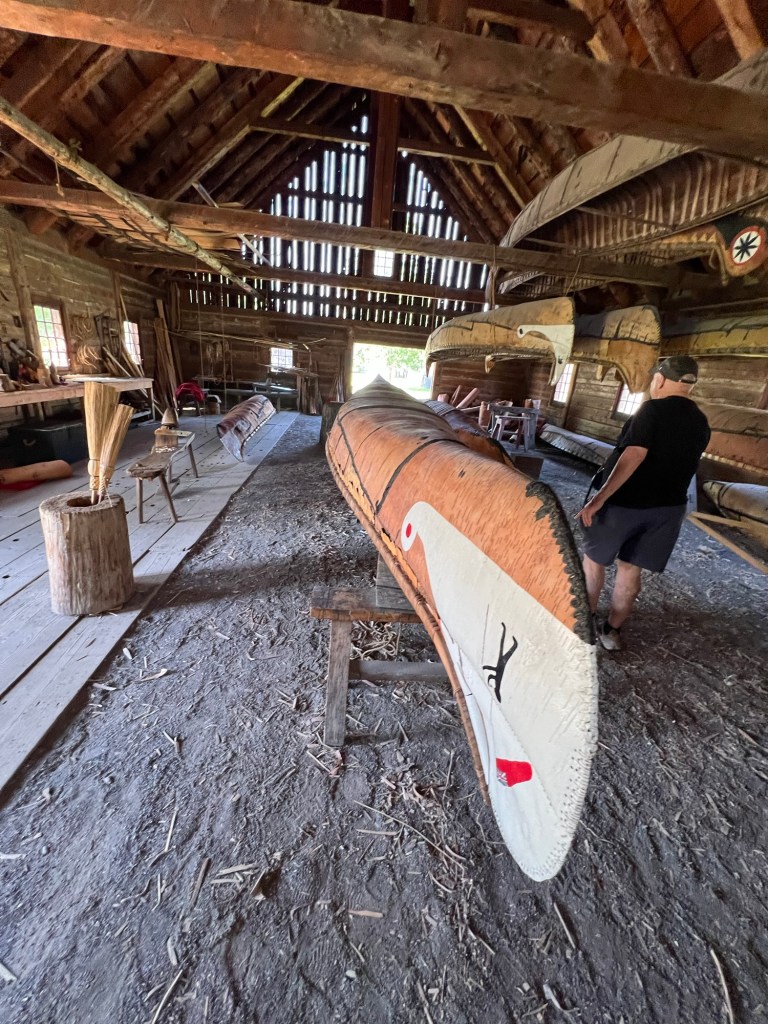
When they are finished the sewn seams are coated with spruce gum.
They also repaired the canoes here. All of the canoes belonged to the company.
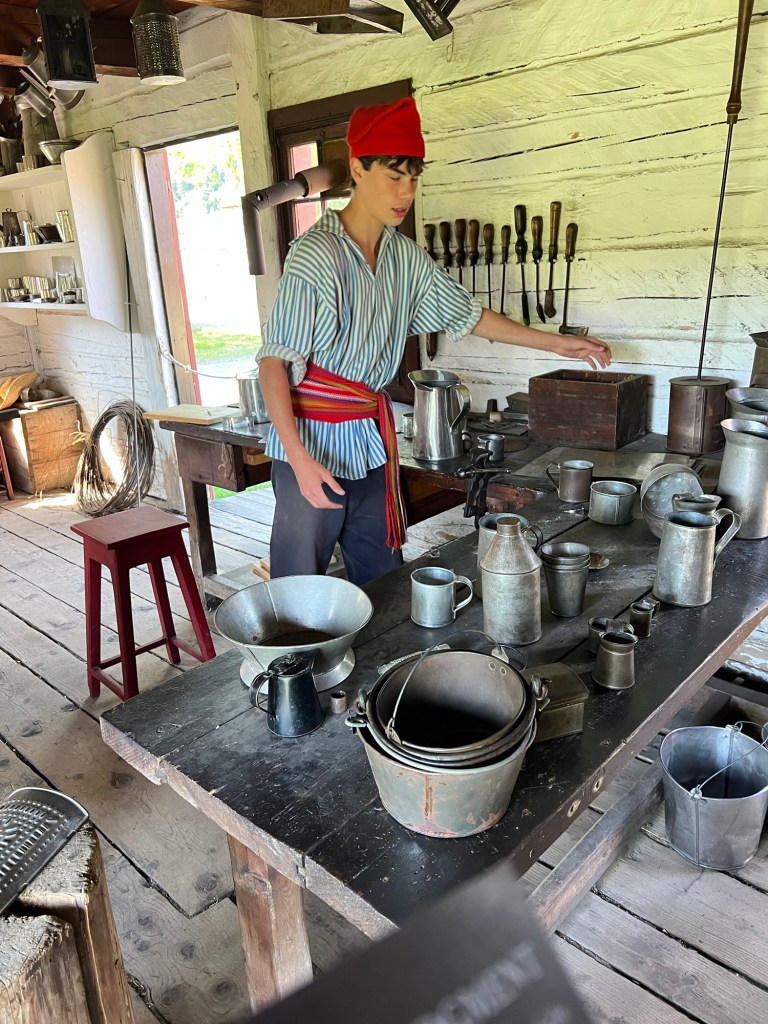
We also visited the tin smith, who finally broke character to tell me that he no longer uses lead in his solder, but silver. He does use pine rosin as flux.
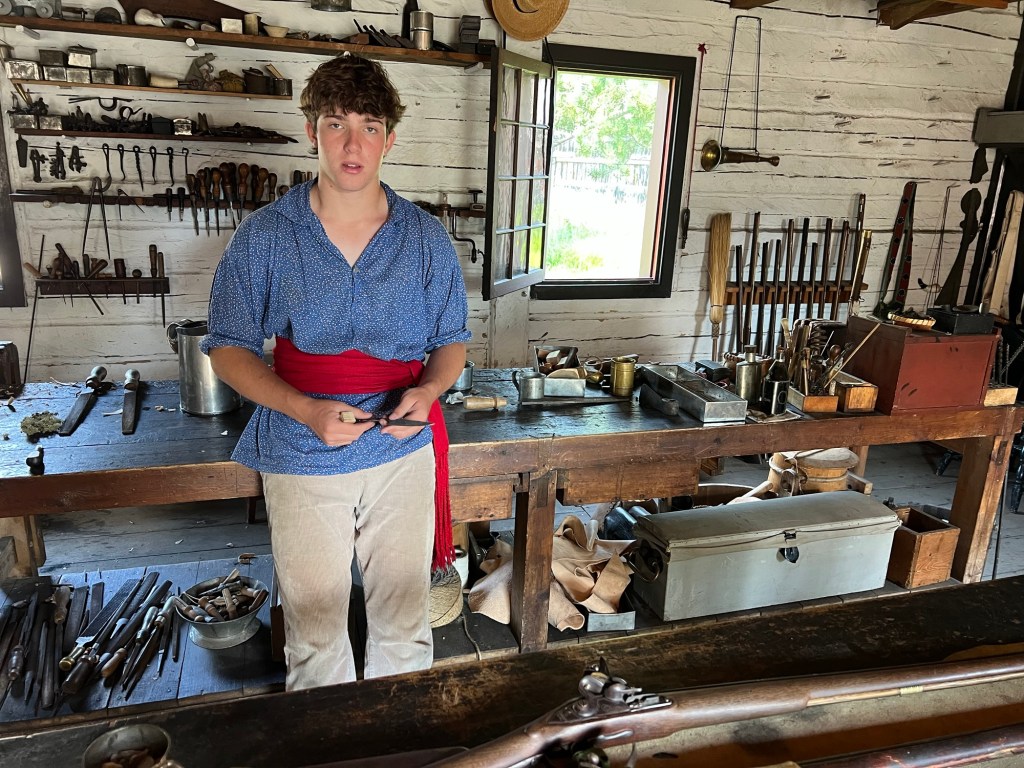
This is where they make and repair arms. The young man was working on a knife blade. He showed us how a flintlock gun worked. He said they made all the parts of the guns except the barrels. Those were bought and shipped here.
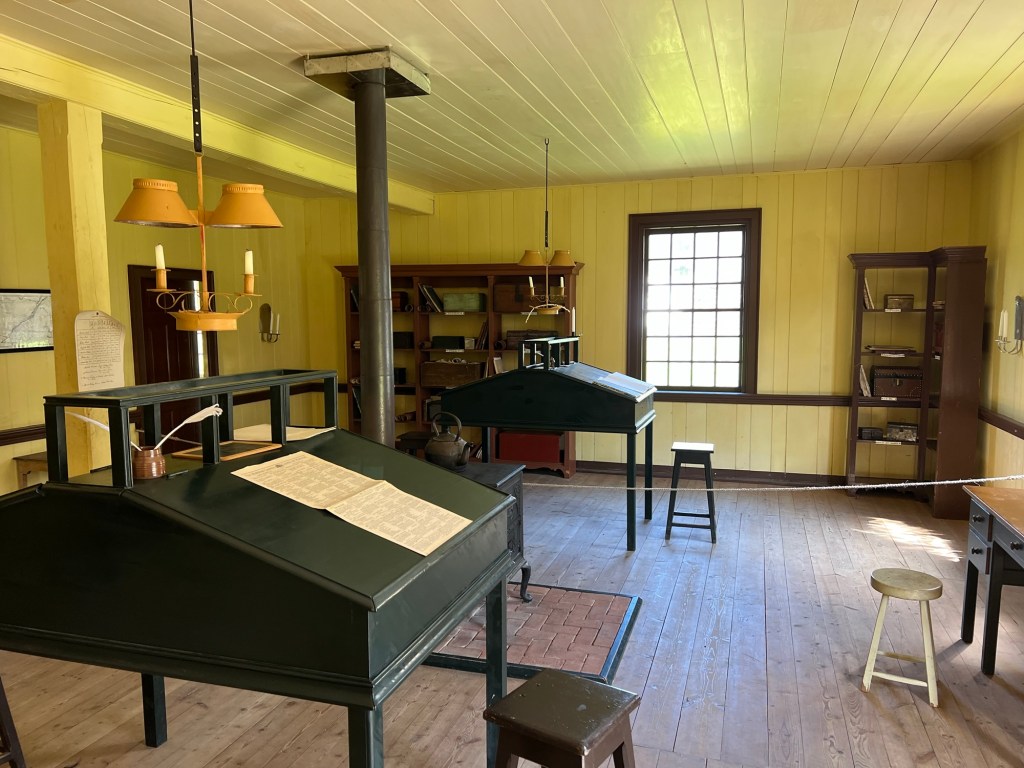
This is the counting house. When Bud walked in he said it looked like Scrooge’s place. There were lots of clerks. Every trading post had a ledger where all goods and furs were recorded. Every fur received at rendezvous was marked and recorded, the bales were numbered and the furs inside were noted.
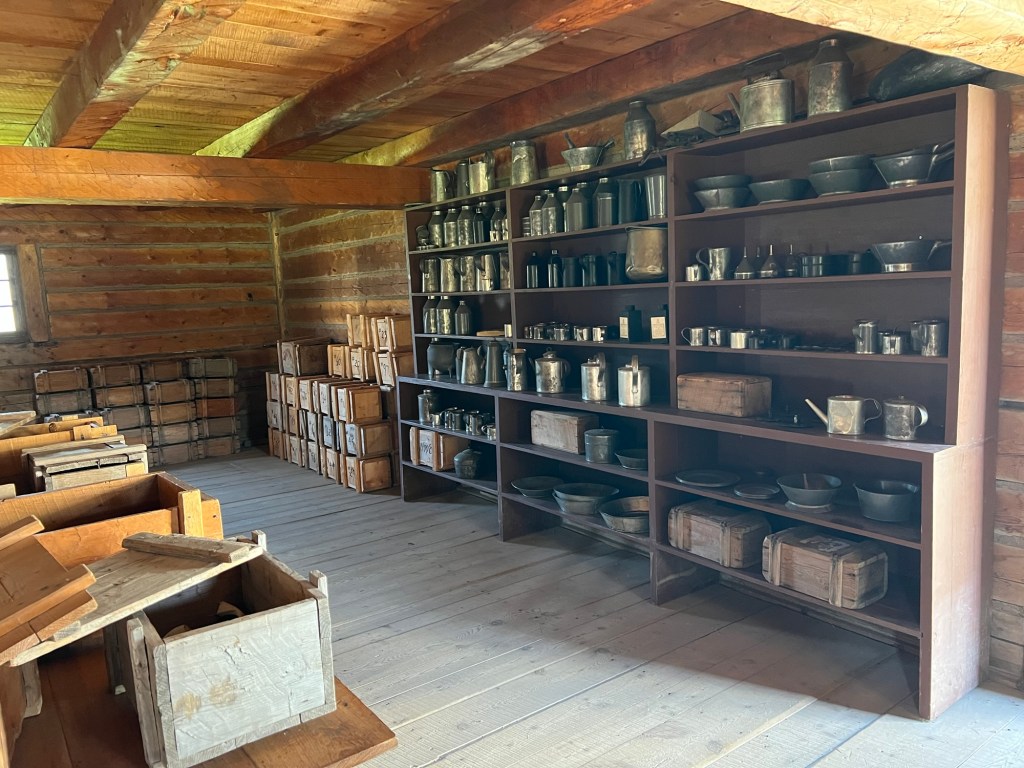
There was another building for the trade goods. Some, like the tinware were made on site.
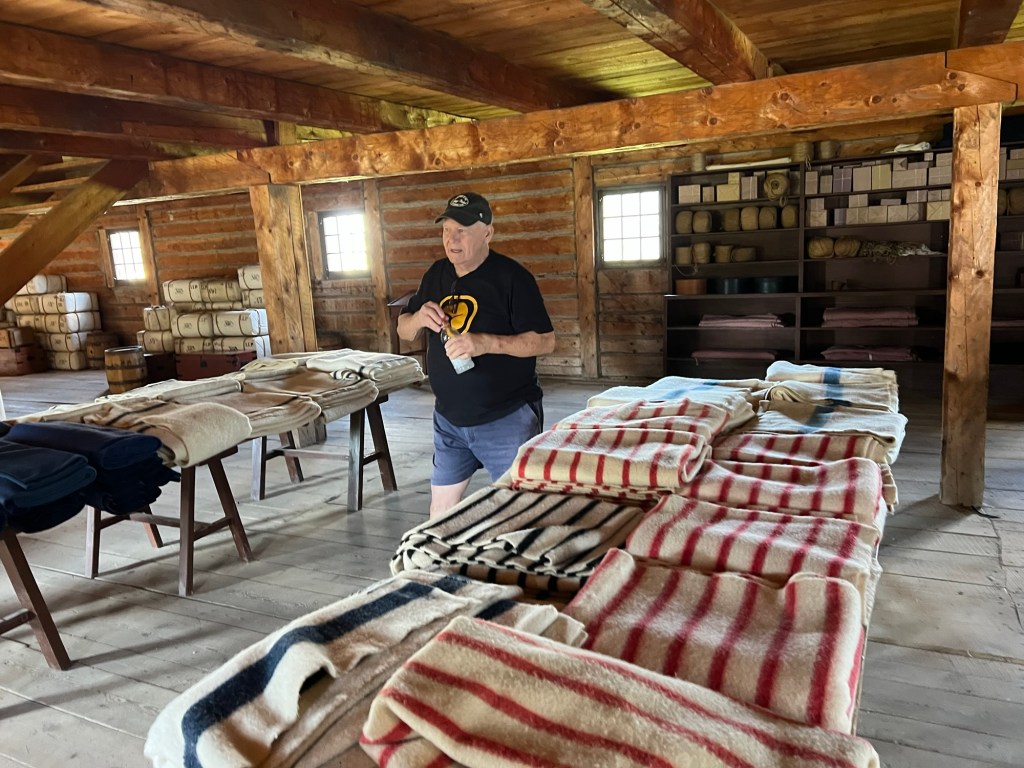
But many other things, like these blankets, were brought on the company schooner.
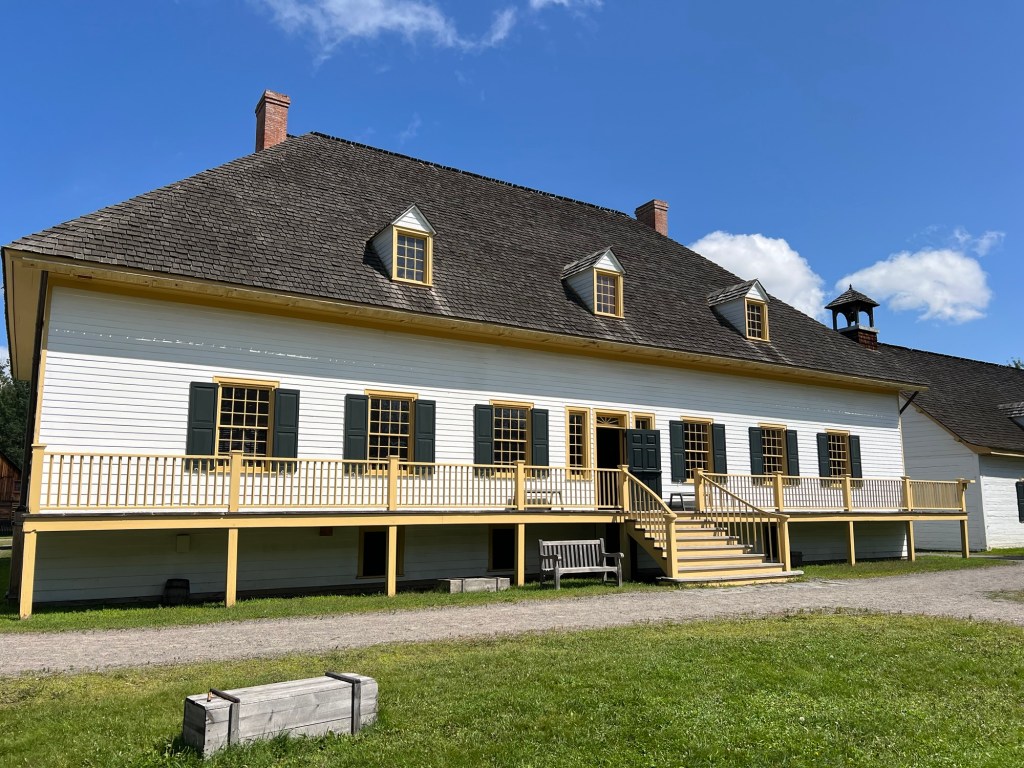
During rendezvous this great hall was used for dining, the rest of the year it sat idle.
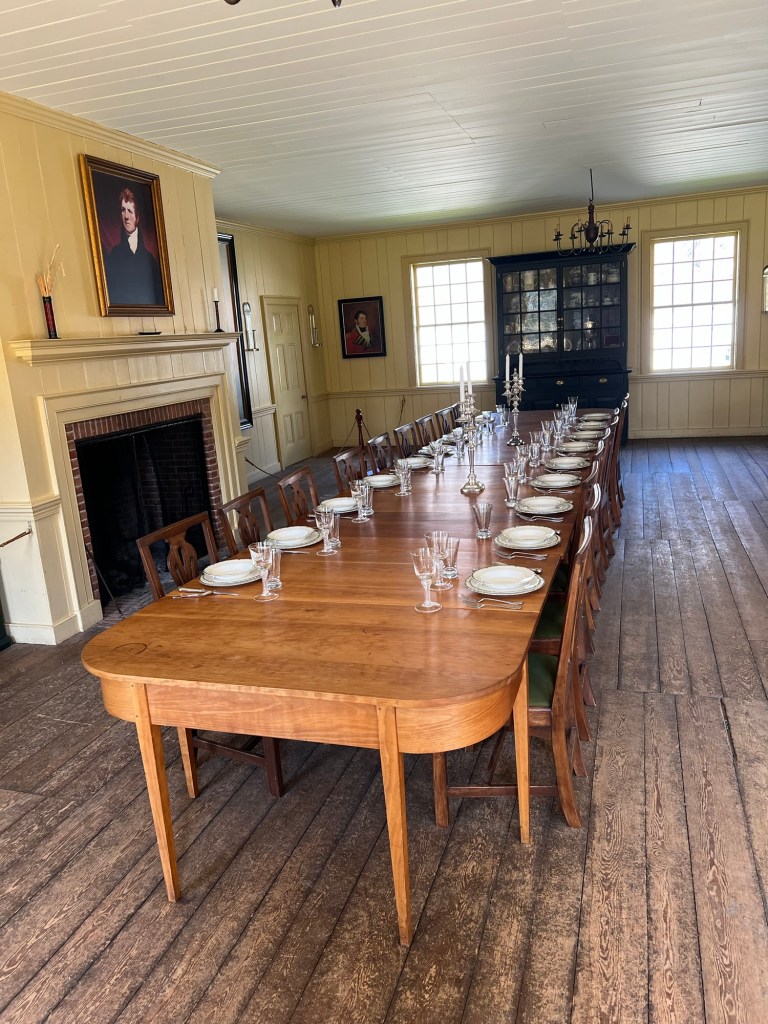
This is where the partners sat. They would come west from Montreal for rendezvous. Next to them, in the middle of the hall, were the largest number of tables, these were for the clerks. At the far end were tables for the guides and interpreters. Of course the voyageurs were outside, in their own encampment.
I learned from the young woman in the Great Hall that the North West Company was formed by a number of independent Scottish traders who joined together to compete more effectively against the Hudson’s Bay Company. It was formed in the late 1790’s and by 1825 was forced to consolidate with the Hudson’s Bay Company. That company finally went bankrupt this year, 2025. But in 1815 the North West Company was the largest fur trader in the world.
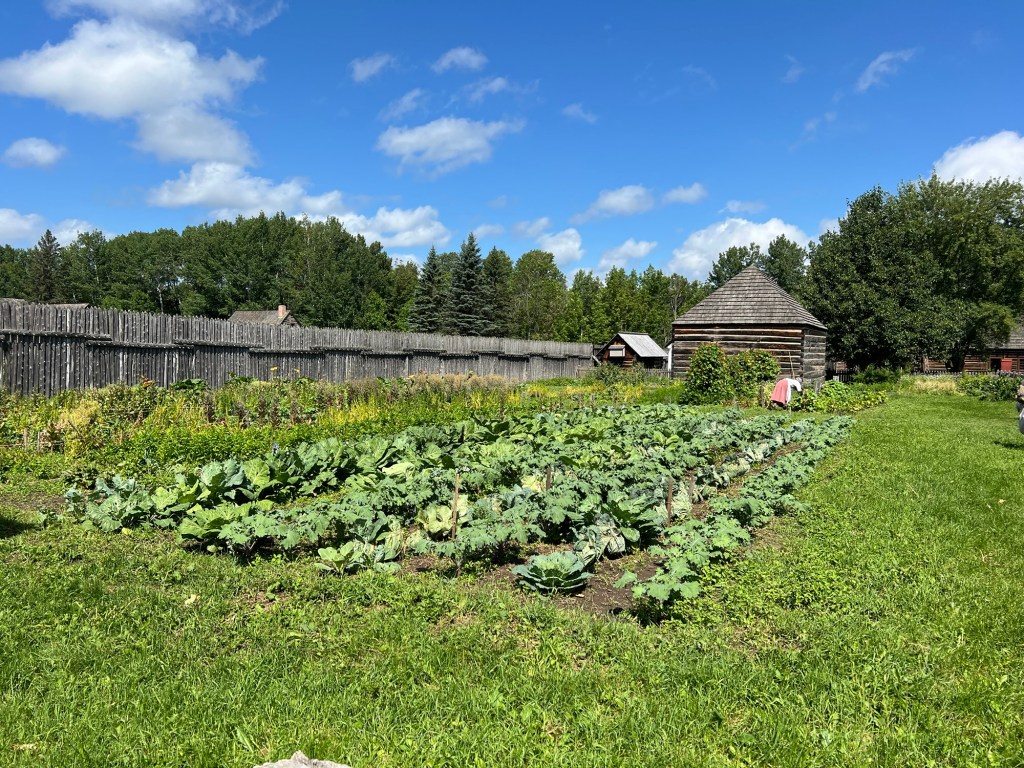
Fort William had its own garden…
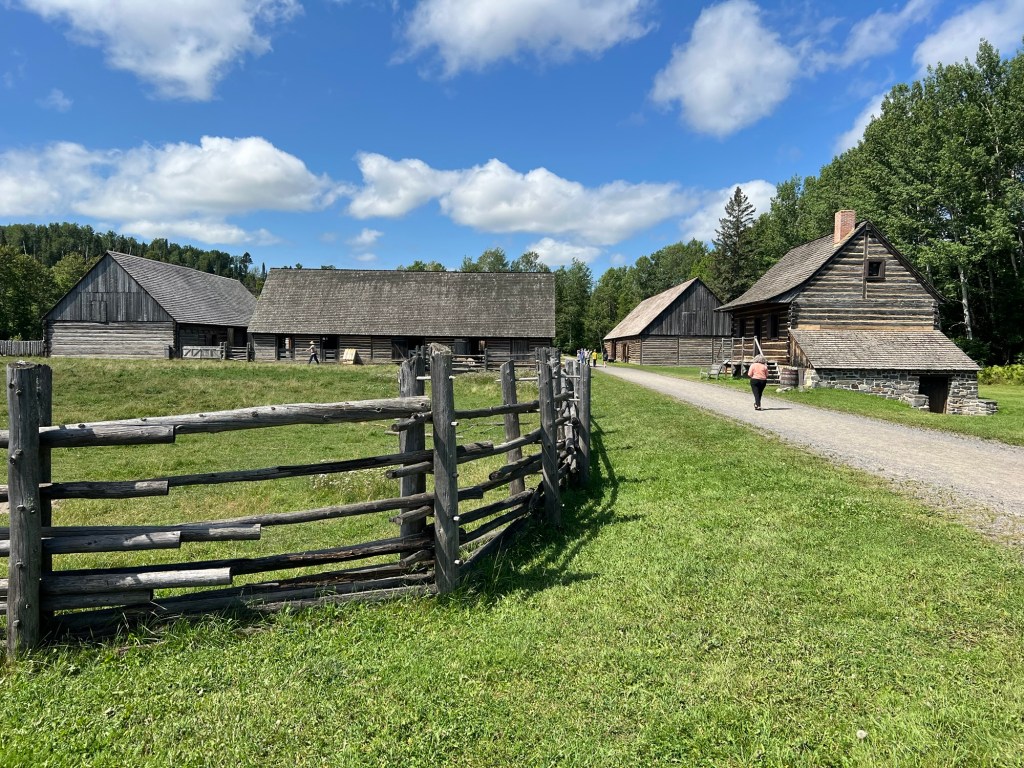
and farm.
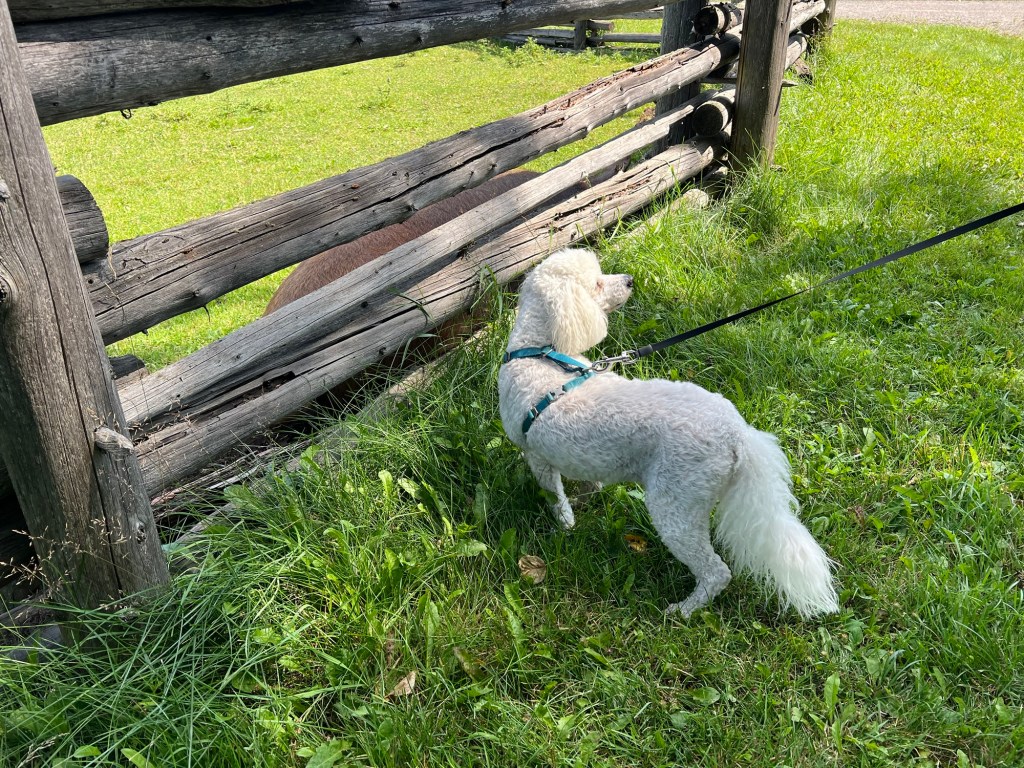
Matey was very curious about what was lying next to this fence.
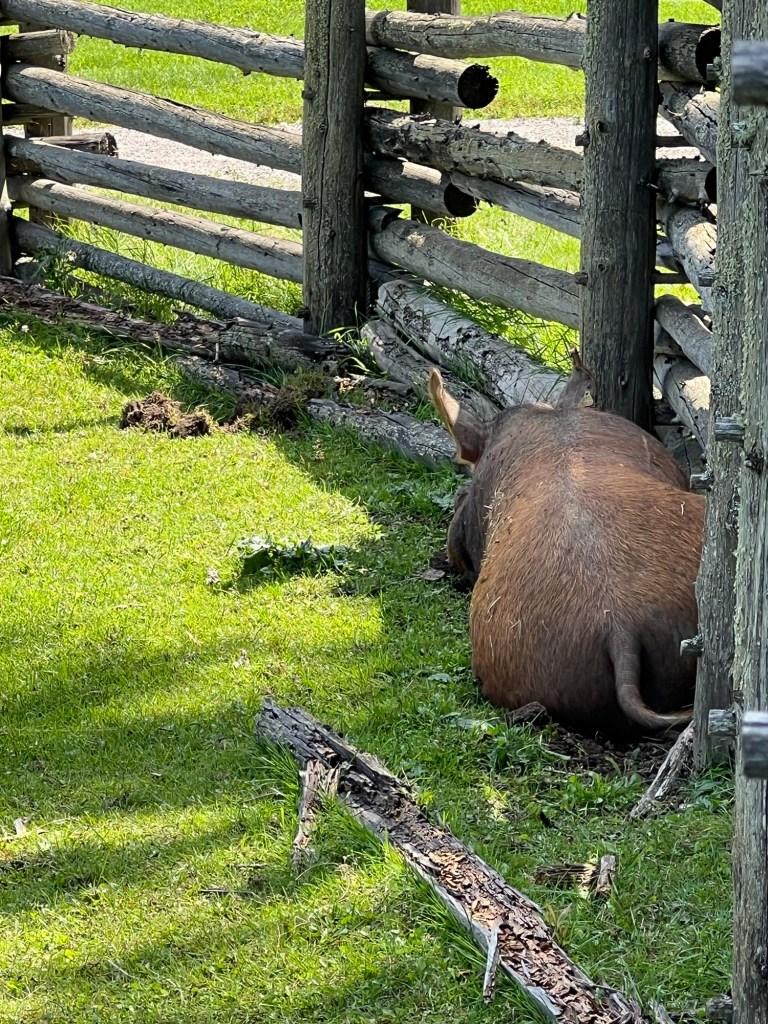
He finally figured out is was a live pig and barked at it. The pig was not fazed.
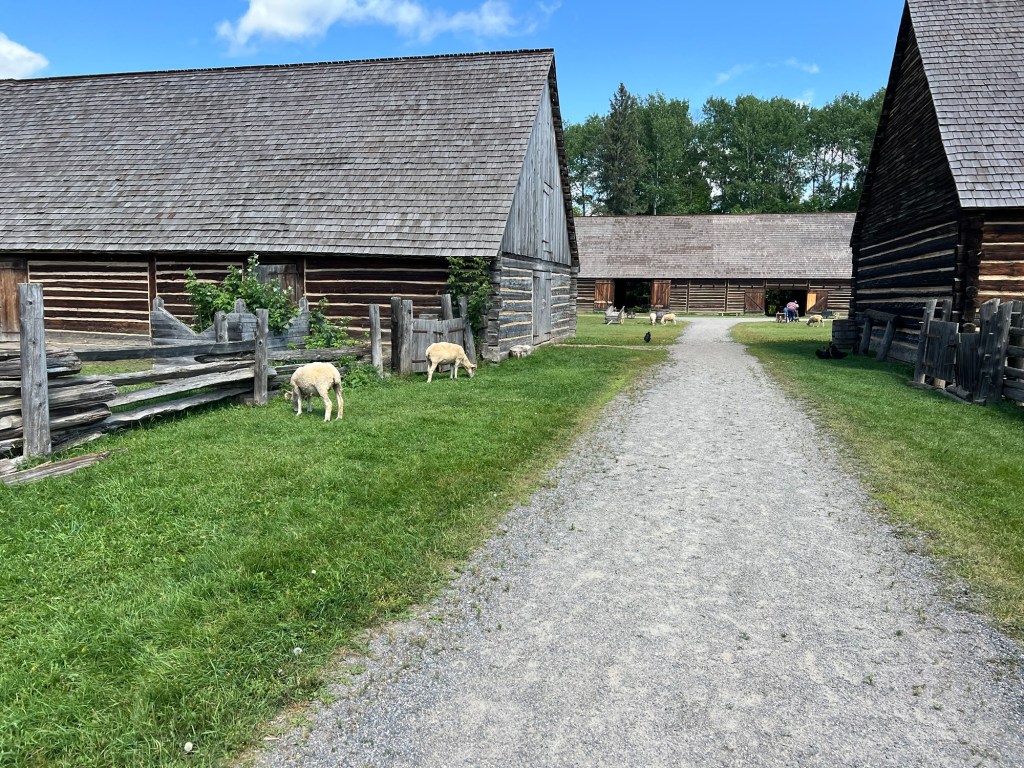
But Matey was now all excited so we decided not to try to walk him past the loose sheep and chickens.
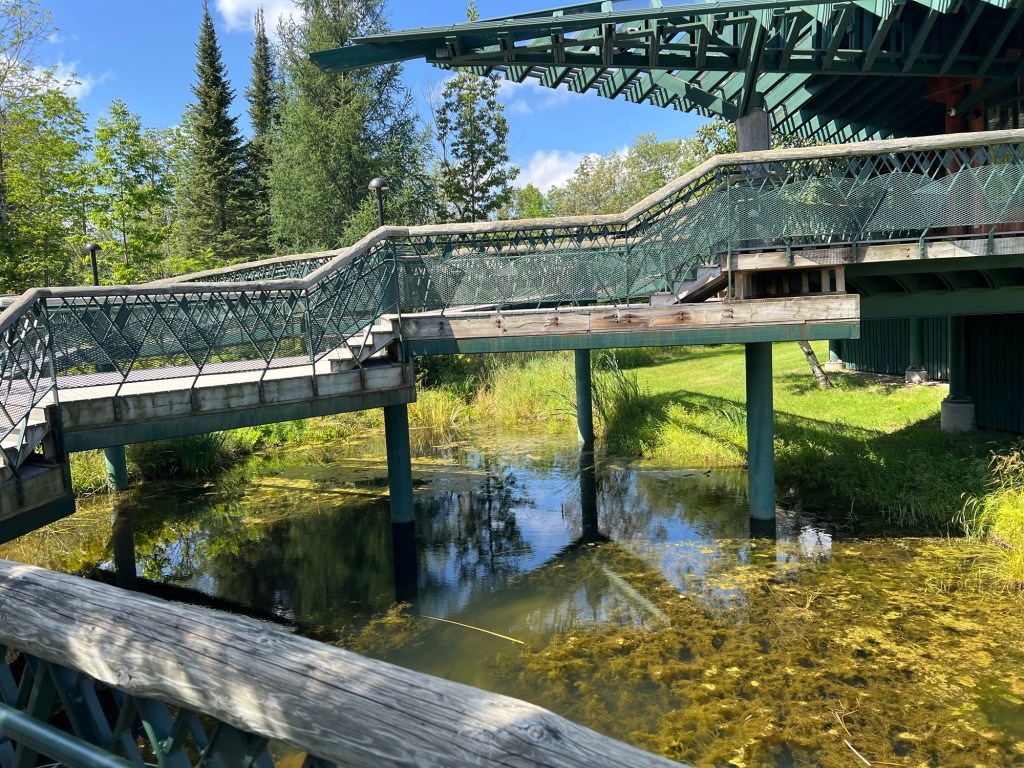
We were all about worn out now, so took the rather long walk back through the Visitor Center and out.
This was a beautifully done site and there was more to see and do than we could manage.

 On the Roam Again
Very interesting! Those posts and beams in some of the buildings are very impressive!!
LikeLike