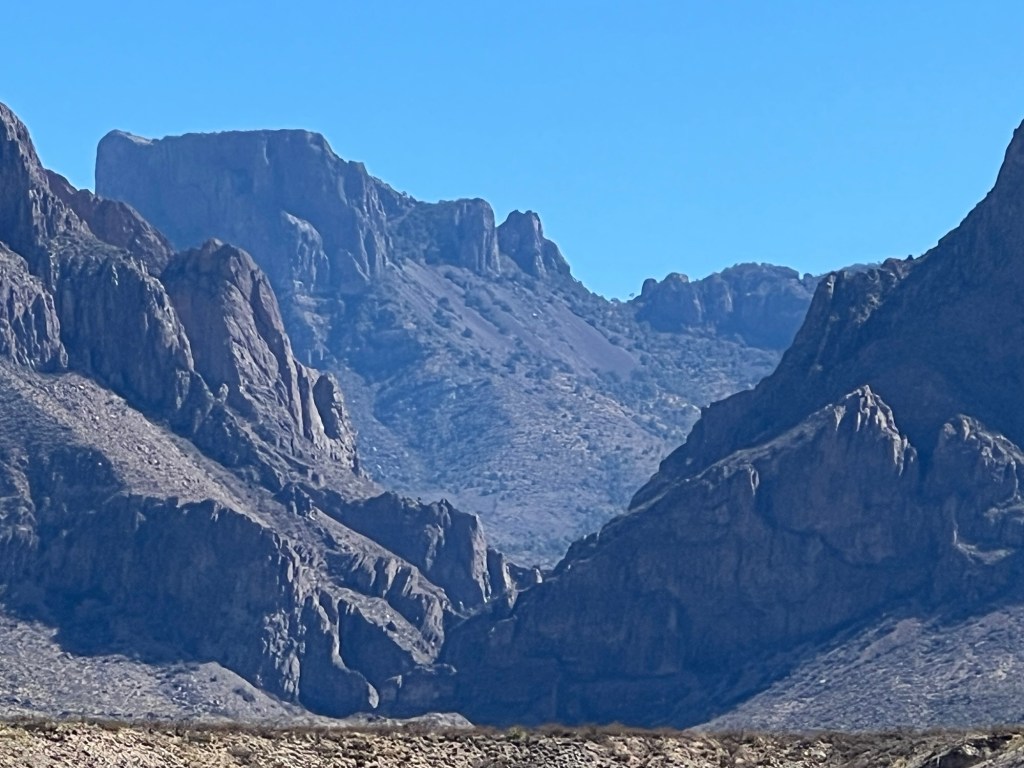
Sharon Gaskill gave me a book to read; “Beneath the Window, Early Ranch Life in the Big Bend Country” by Patricia Wilson Clothier. I read it while we were here, so of course I wanted to check out the two ranches that figured most prominently in her book.
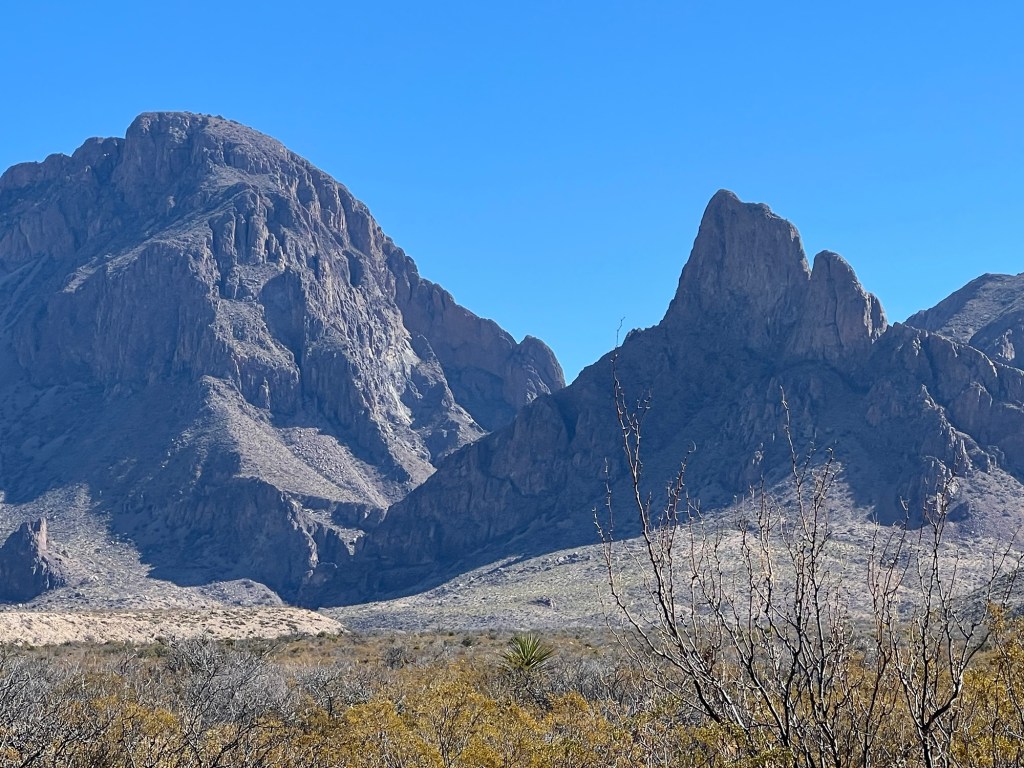
She was born and lived for 14 years in a Sears Roebuck mail order house about two miles towards that notch in the Chisos Mountains, The Window. That notch may look low but it’s still 4600 feet above sea level and high above the surrounding desert.
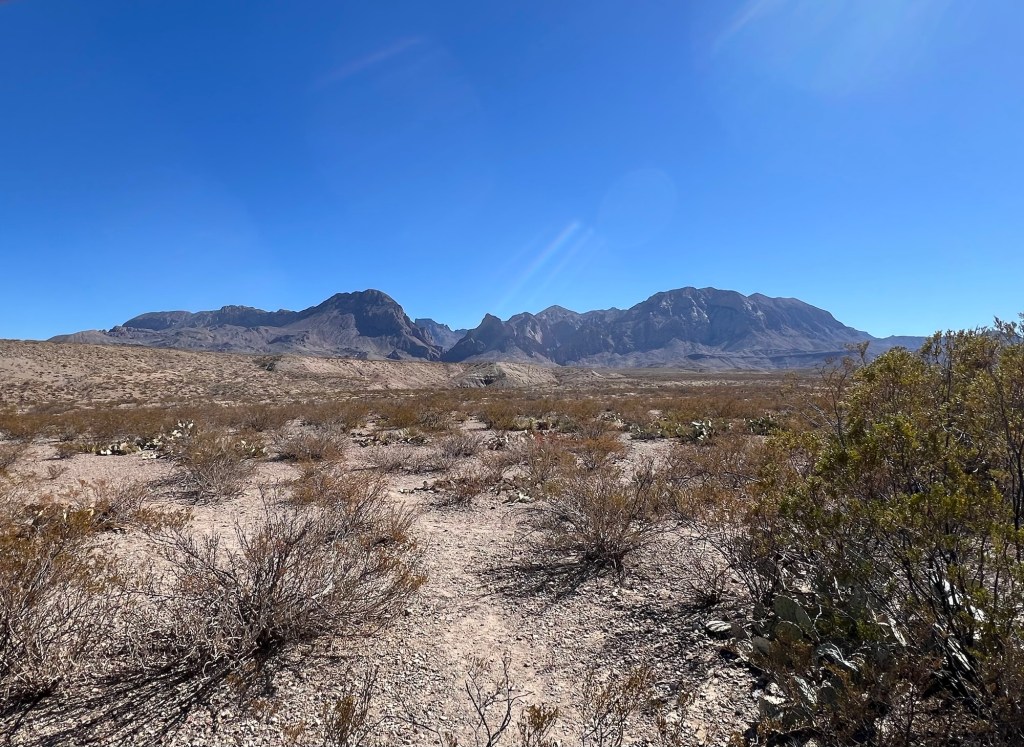
At nearly a mile above the desert floor, the Chisos Mountains are cooler and wetter than the surrounding desert. Patricia’s father, Homer Wilson, ranched land in the western foothills of the mountains, taking advantage of the water from the mountains. Unfortunately, the old house on Oak Creek was bulldozed when the National Park took over the land.
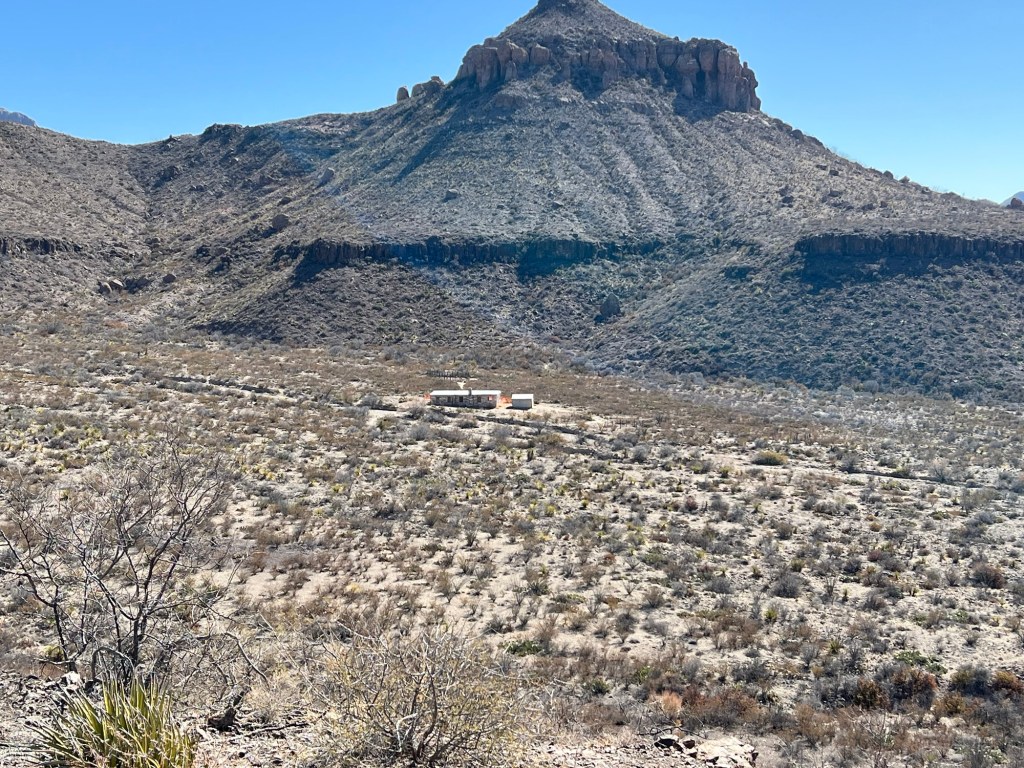
The ranch headquarters on Blue Creek still has some buildings standing.
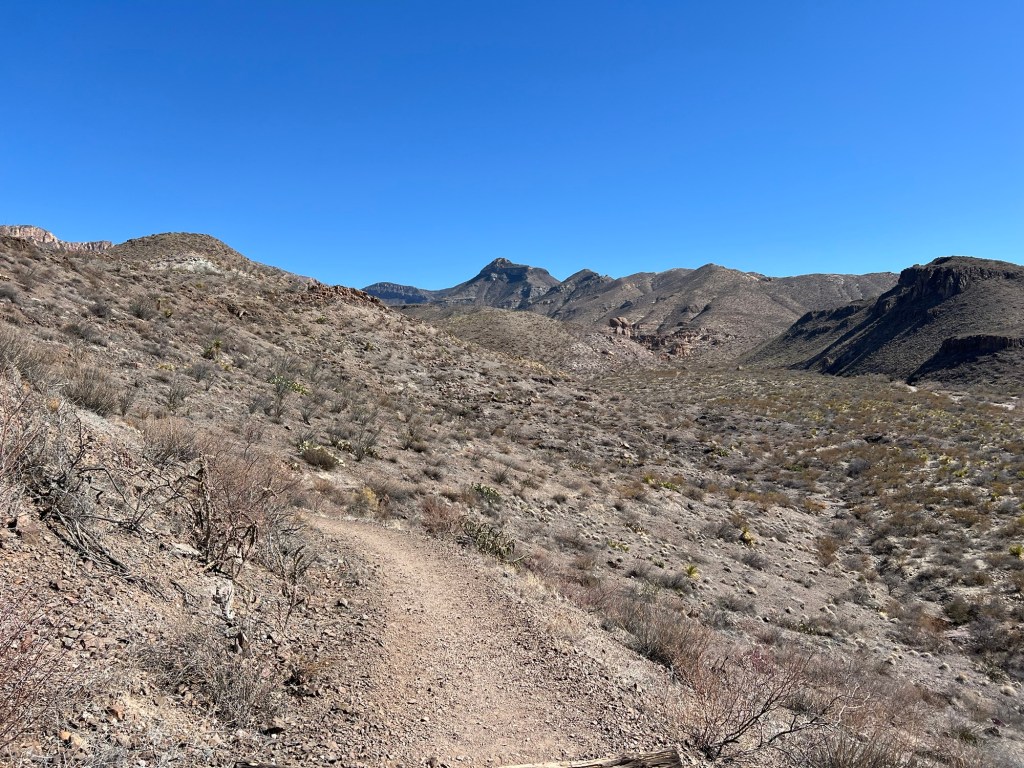
Water came down from the mountains, much of it underground, and was pumped up to high tanks to serve the needs of the ranch. At Oak Creek there was water for vegetable gardens, orchard trees and even a flower garden. I wish there was a trail to that area.
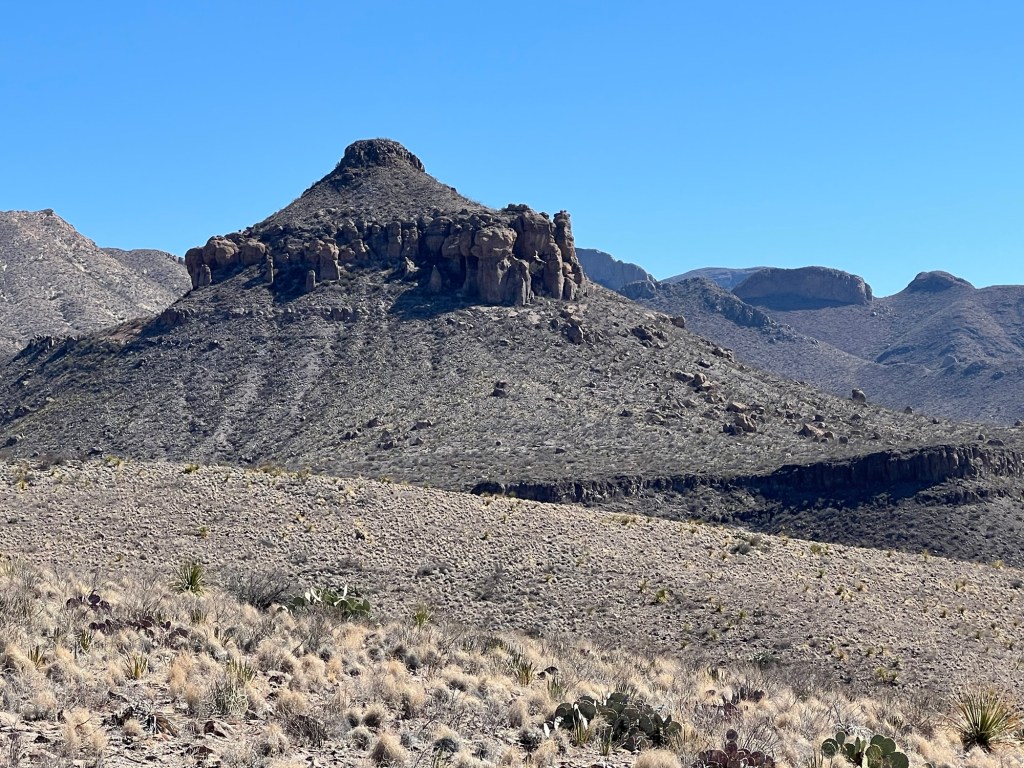
This is Signal Hill and I was a bit astonished when I realized this was the hill Patricia and a friend climbed as kids. They went all the way to that flat top.
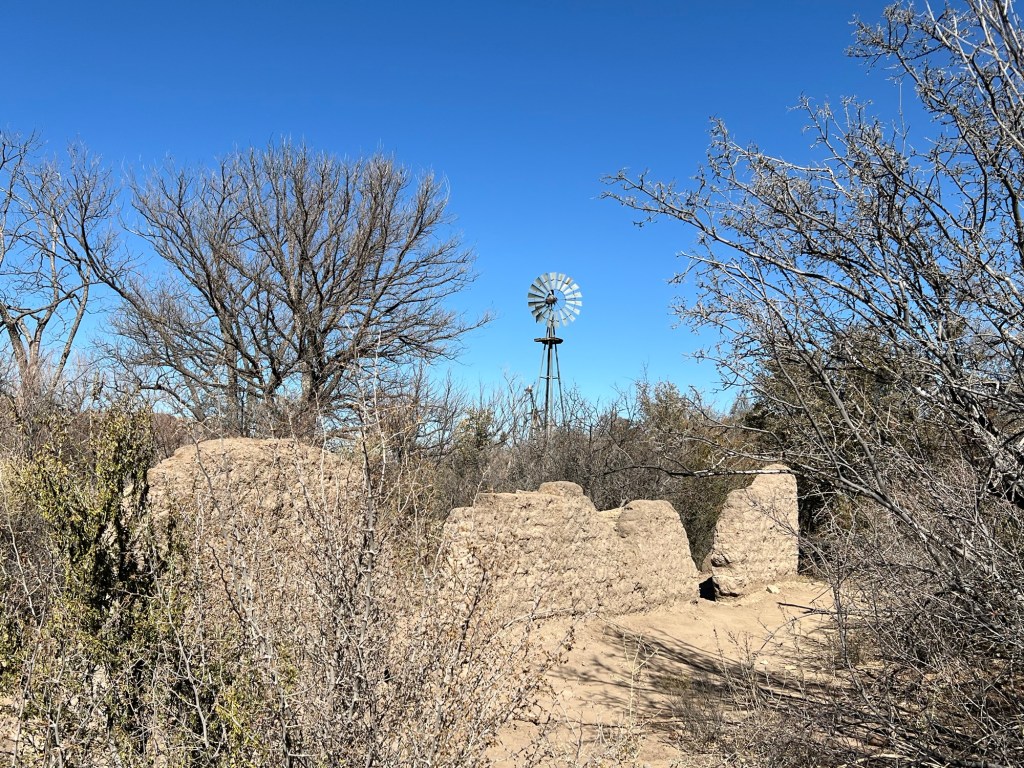
I got a much better sense of the past at the Sam Nail Ranch, their nearest neighbors.
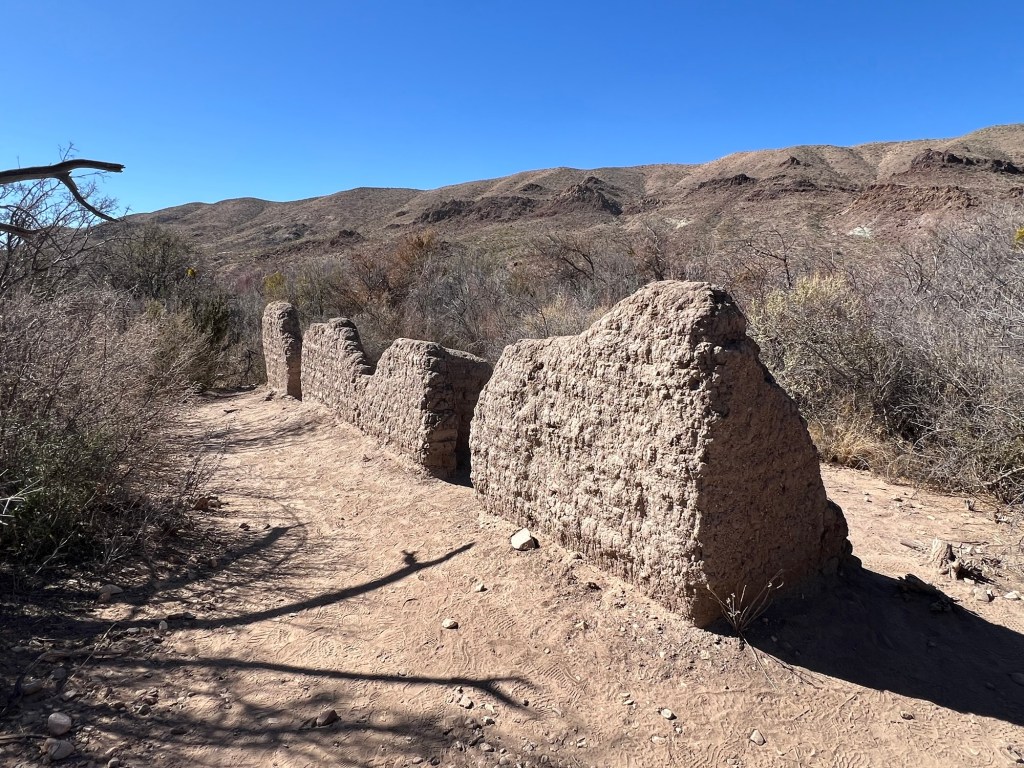
The adobe walls of the house have not yet disappeared.
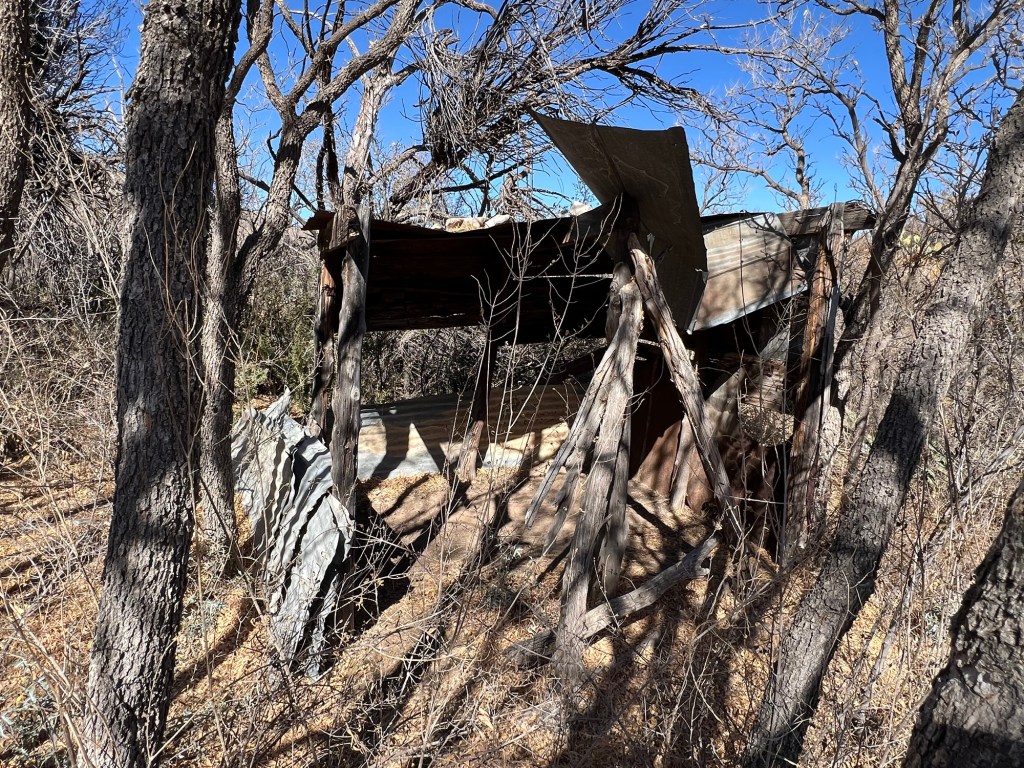
That’s the old chicken coop,
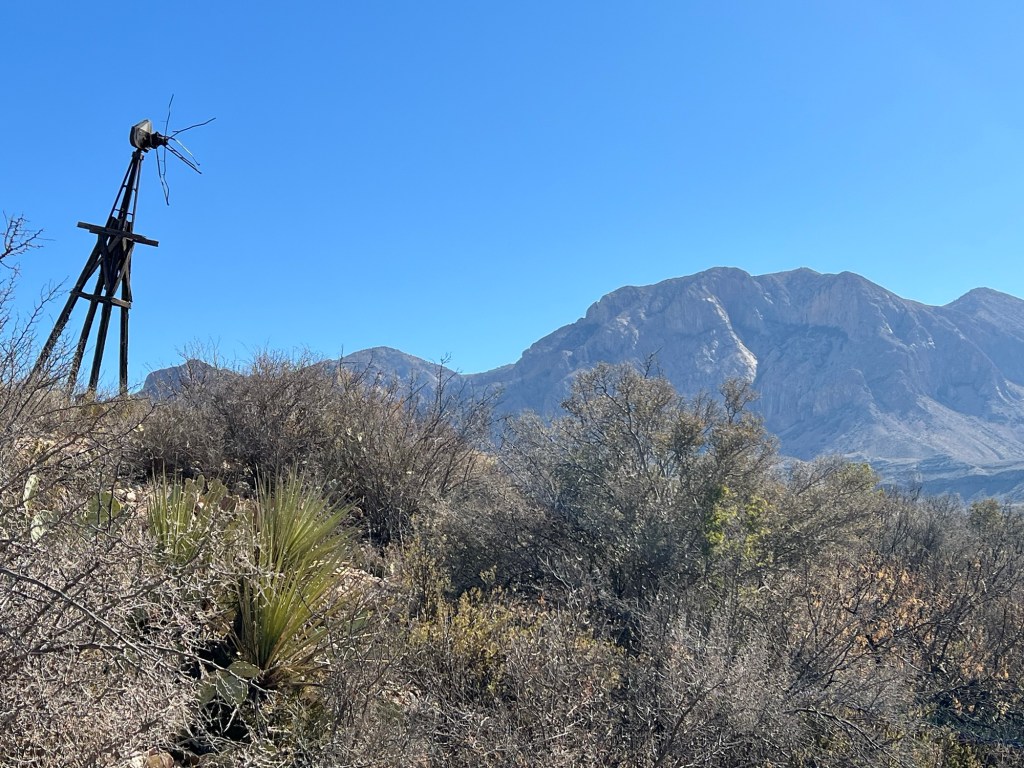
the back up windmill,
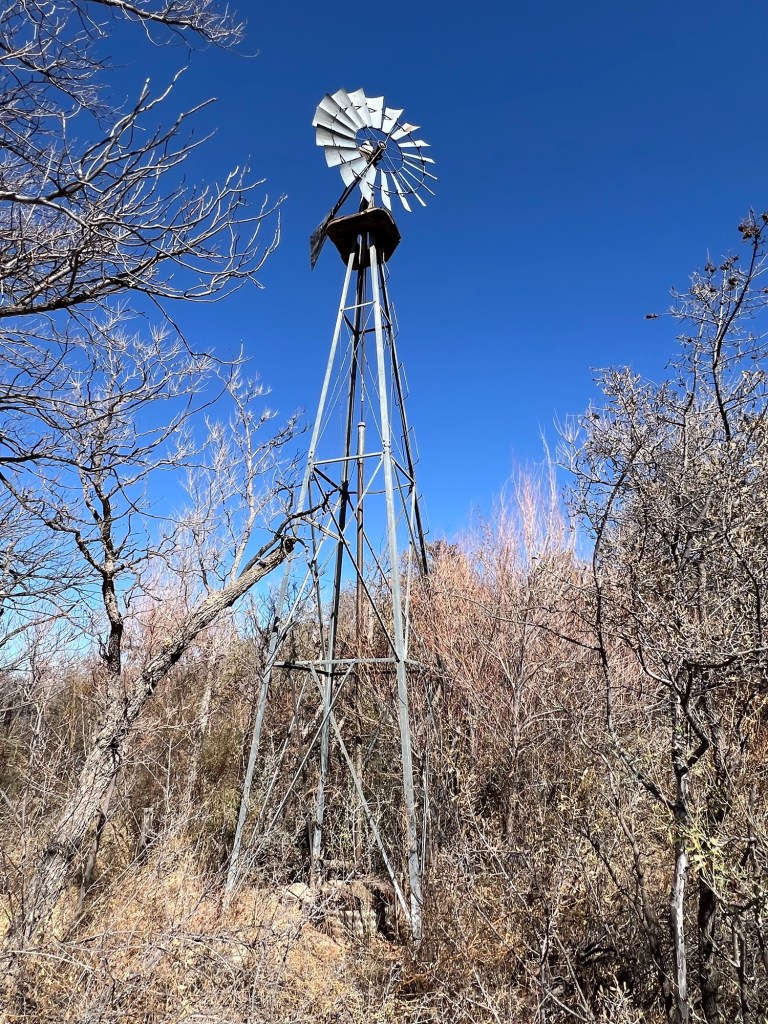
and the main windmill, which is now being used to bring the runoff from Burro Mesa that flows in Cottonwood Creek, above and below the ground, to tanks for the wildlife.
No mention was made in the book of the Daniel’s Ranch. Our campground is located on that land.
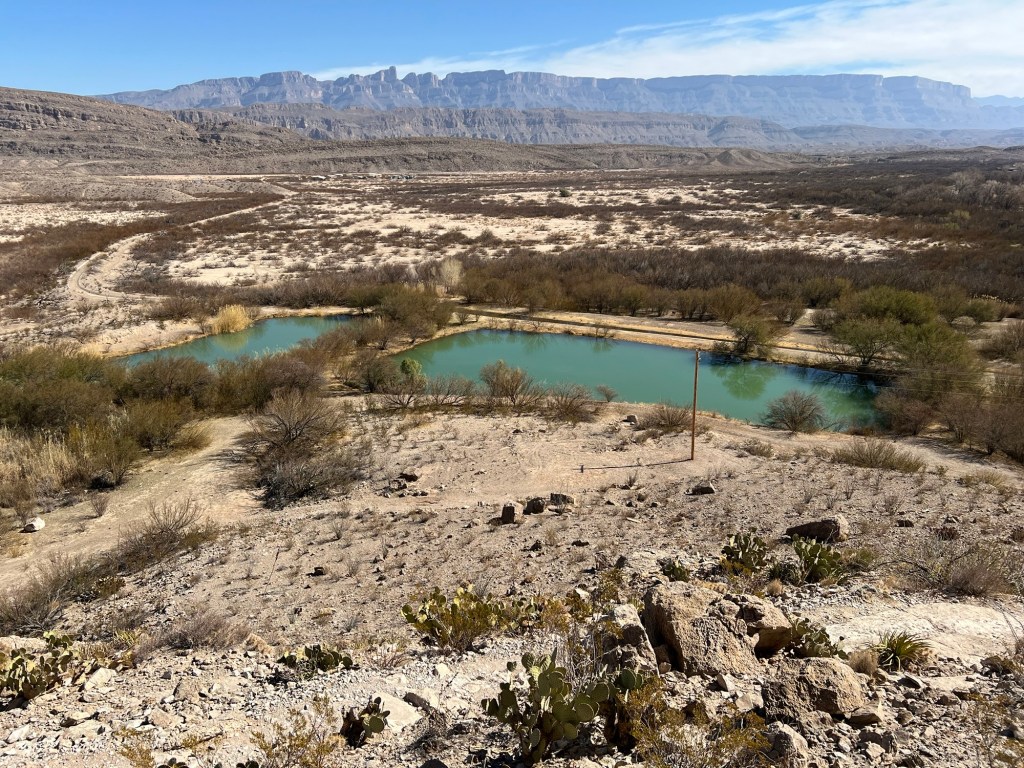
That ranch was a floodplain ranch and also operated from the 1920’s to the 1940’s. Coming down off Ernst Ridge I looked down on the holding ponds where water from the Rio Grande is pumped.
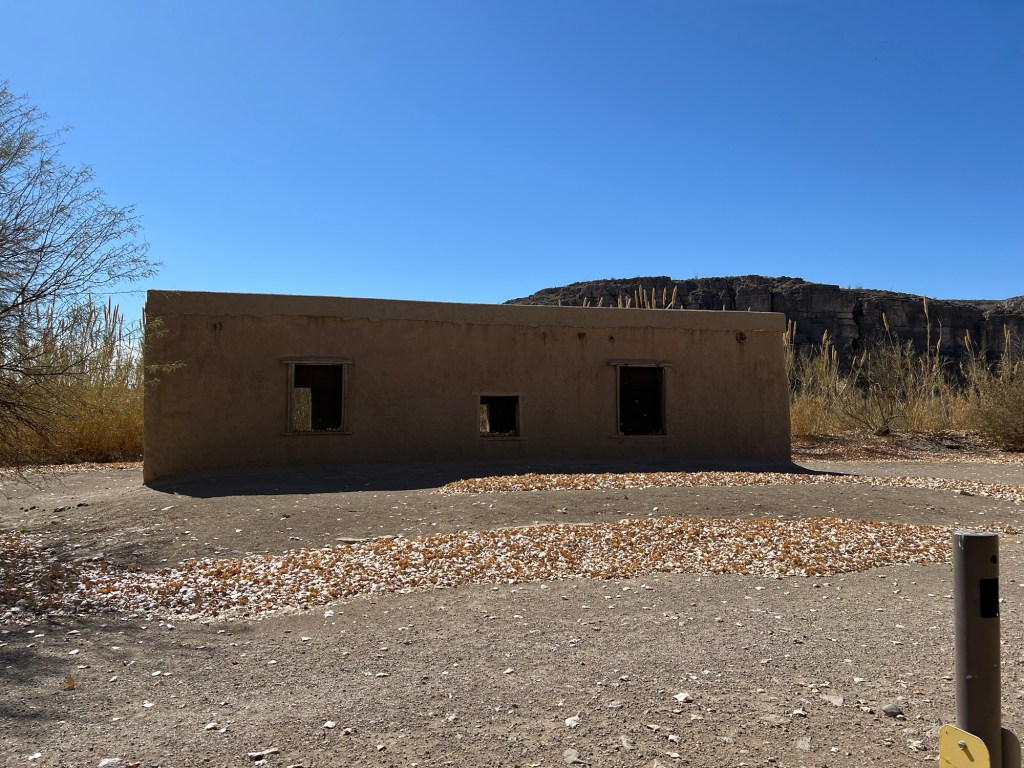
The ponds are near the old ranch house at the upstream end of the ranch.
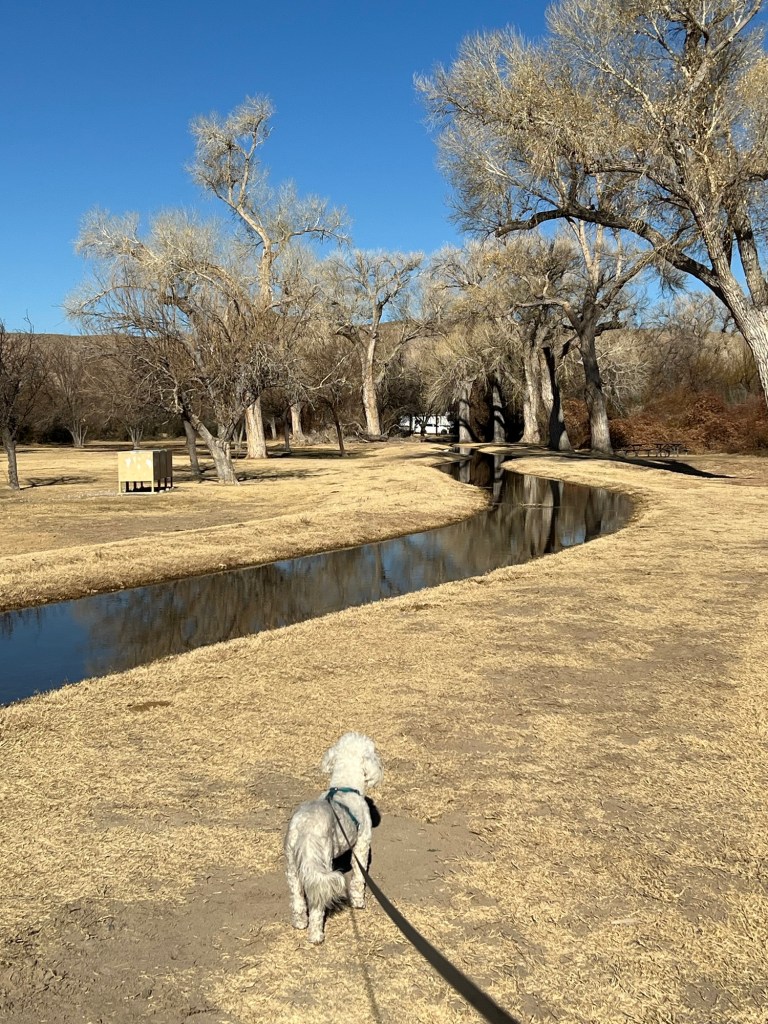
Little canals take the water to the fields.
You can see in this video that the water moves quickly.
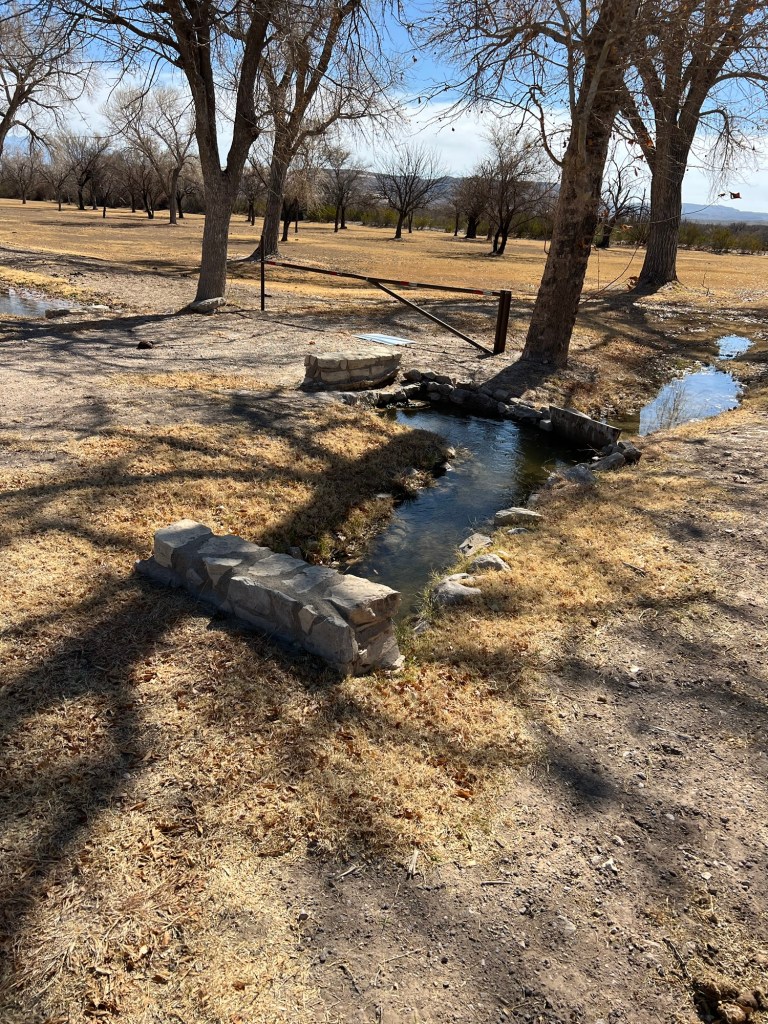
Triangular boards direct the flow at junctions and culverts take it under roads.
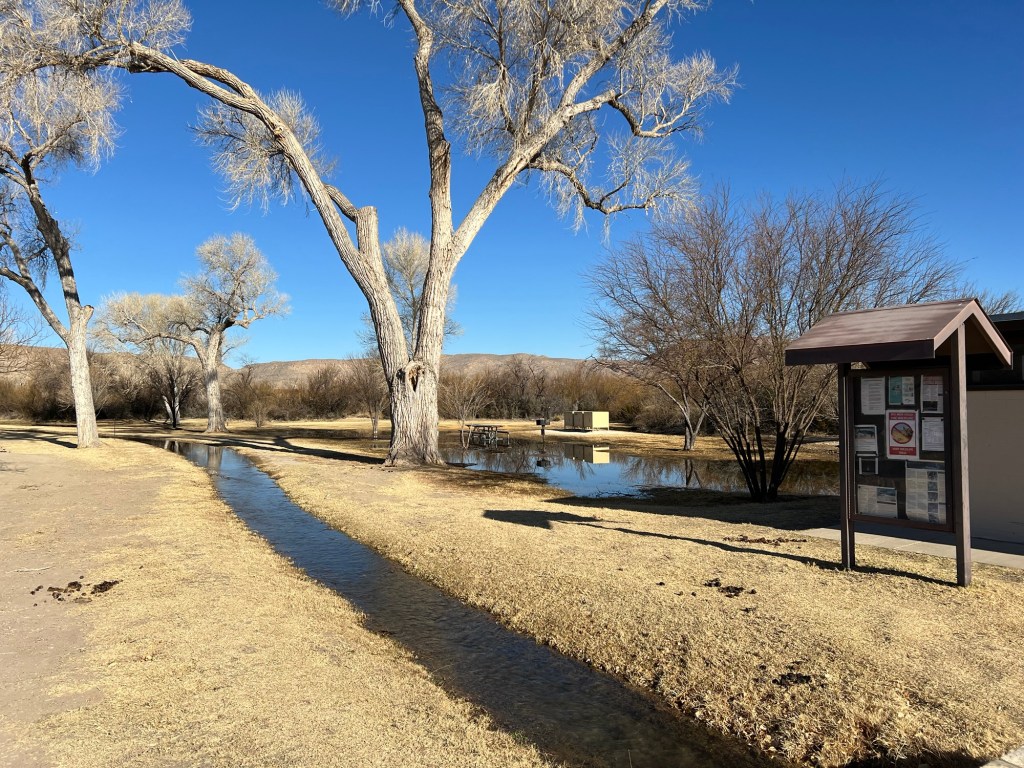
Different fields are flooded in succession.
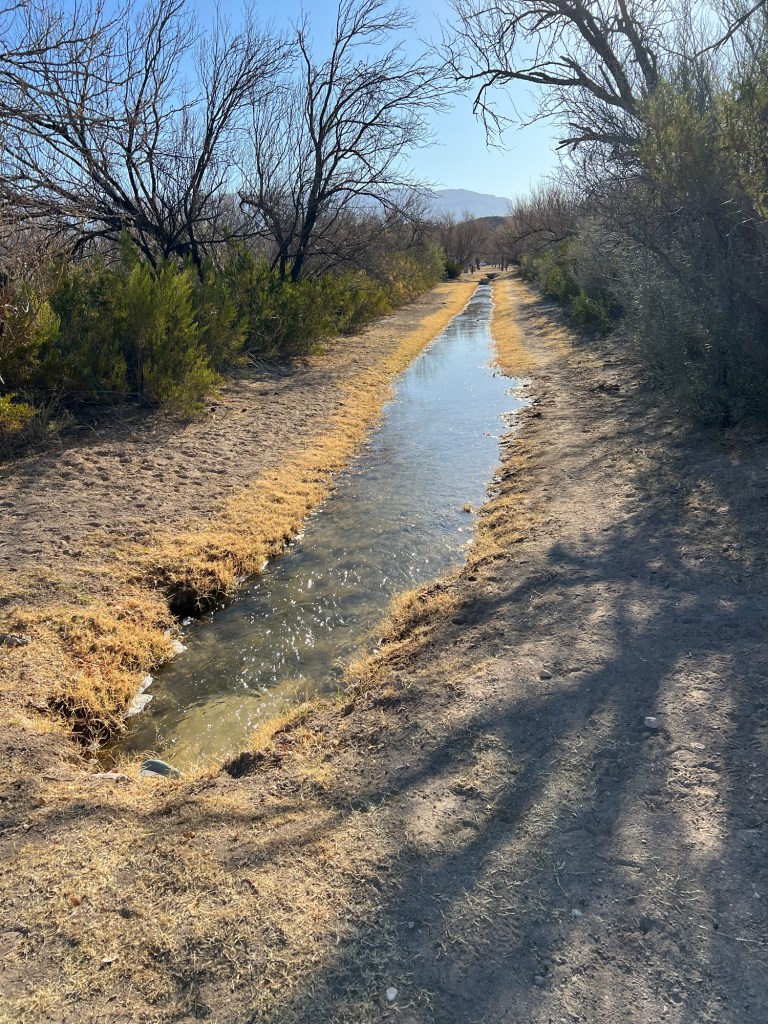
Altogether the canals run about 2 miles.
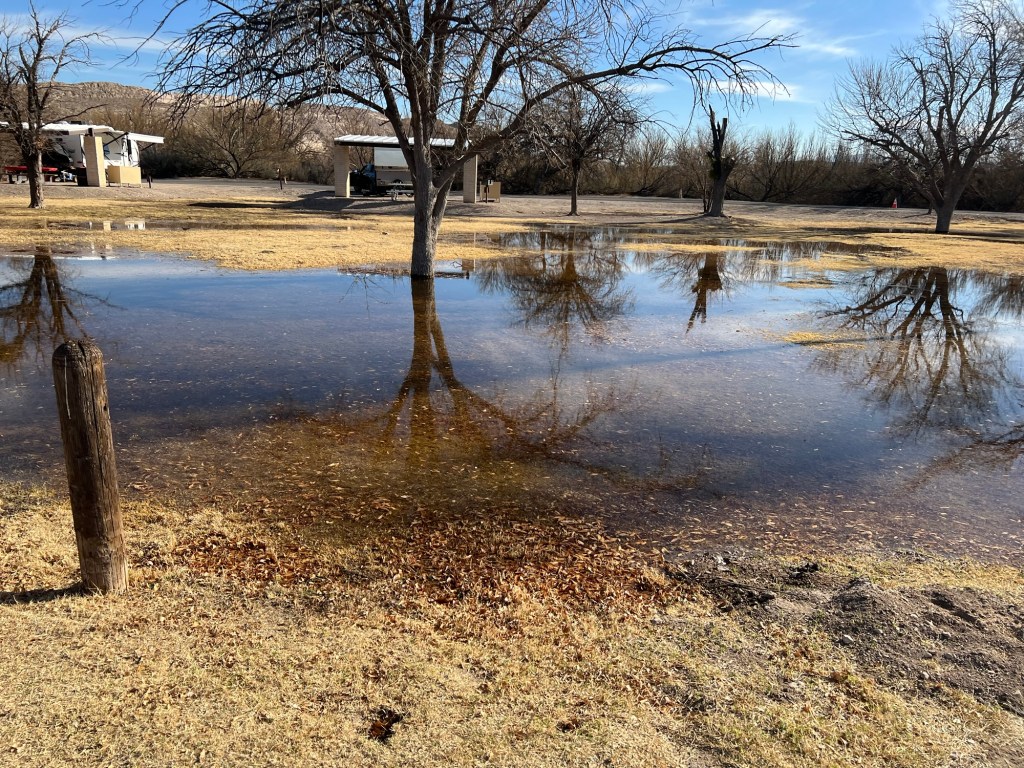
Here they are flooding the no services campground; there are signs warning tenters that irrigation happens.
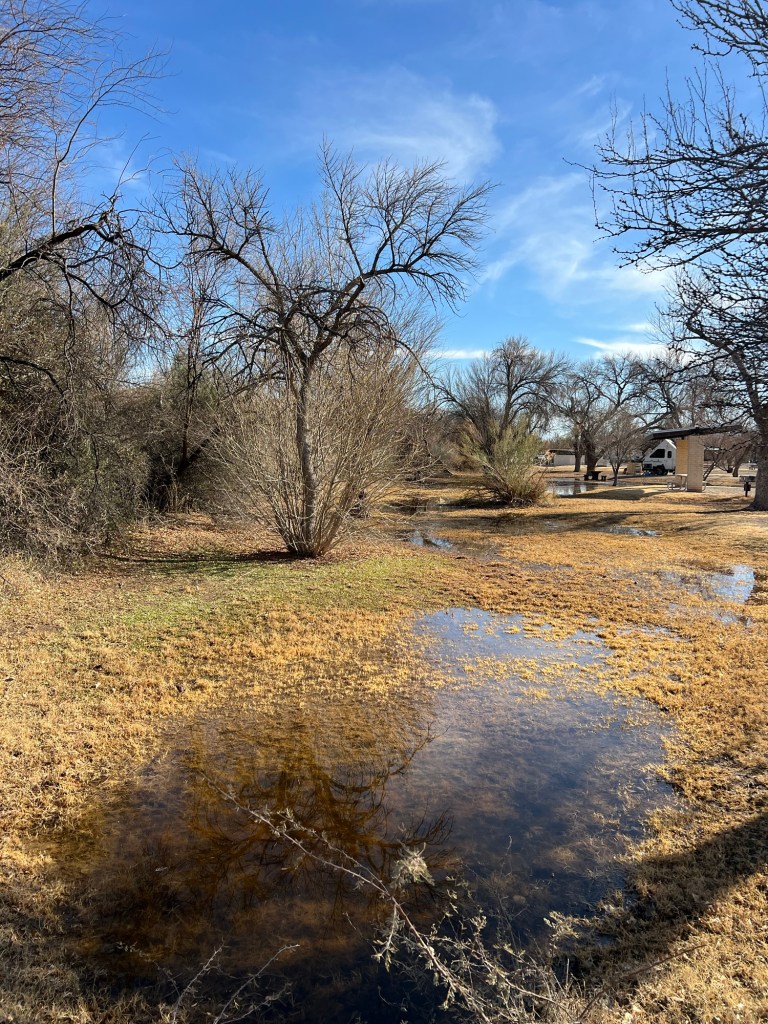
On the far side of that campground the last of the water seeps into the ground.
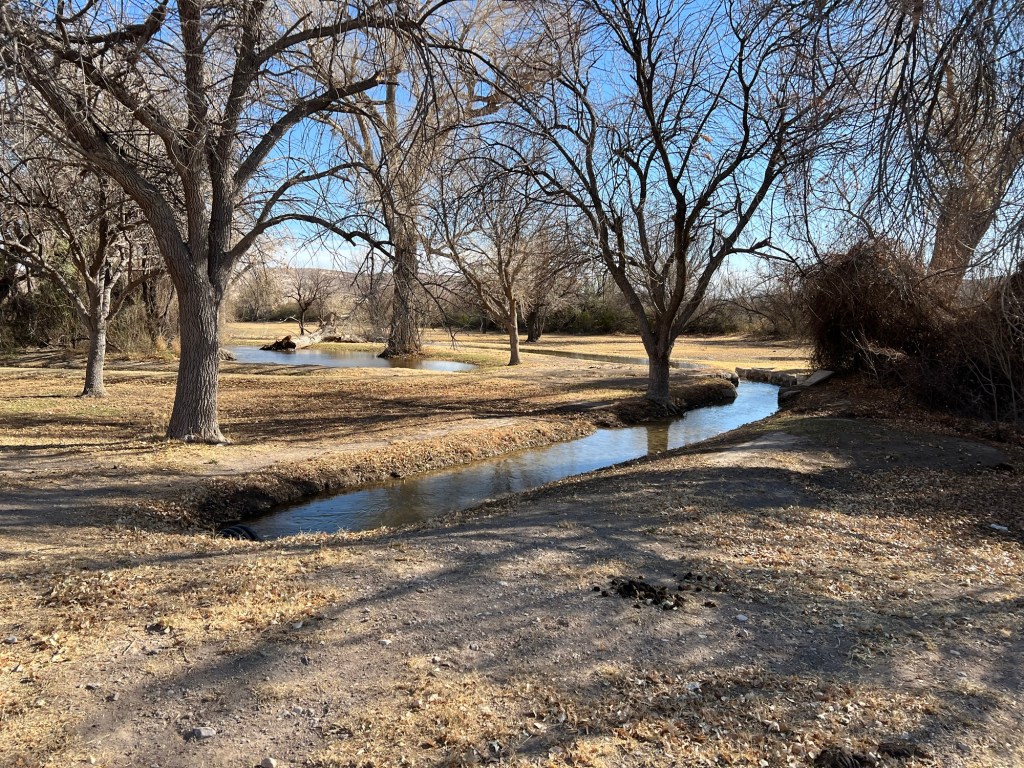
The Daniels used this system to grow cotton, and even watermelons and to provide shaded pastures.
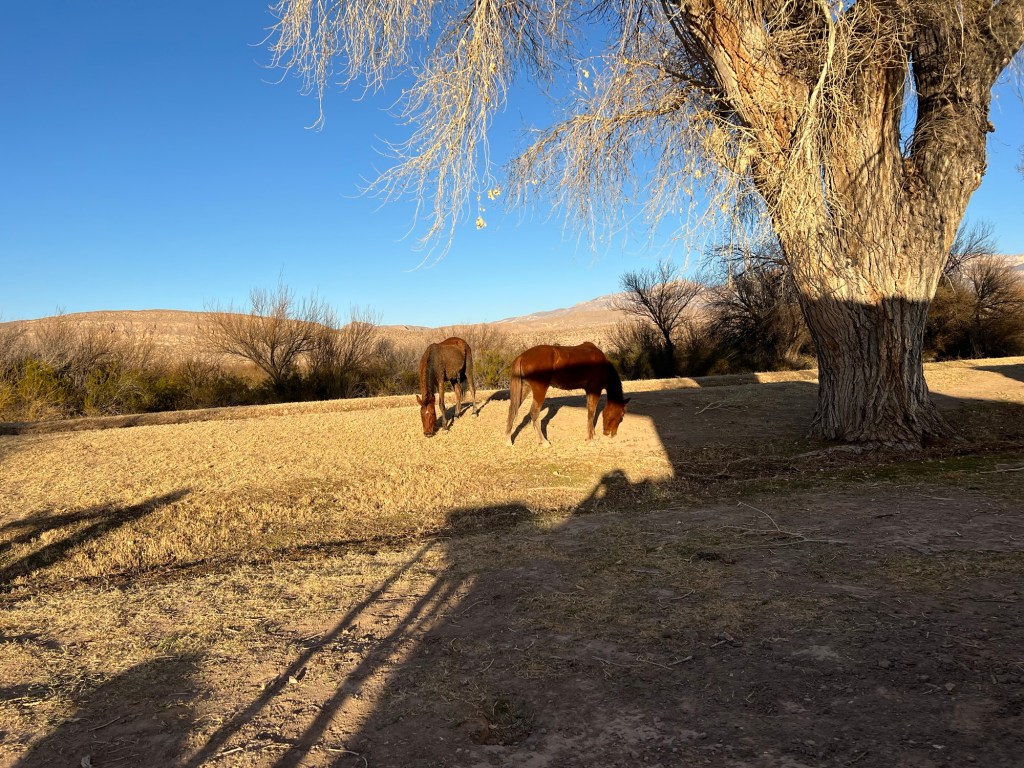
The system is still maintained and used; the cattle, horses and burros share the grass with the campers.
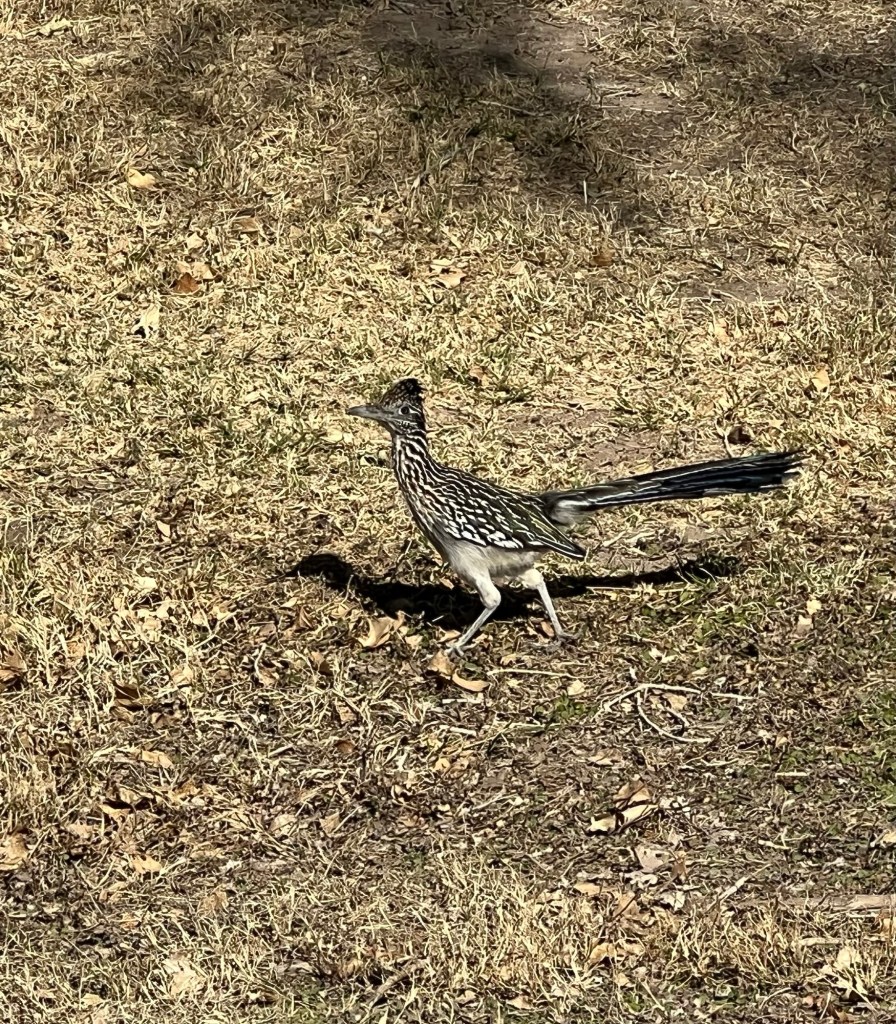
And that’s why we have so much wildlife at Rio Grande Village Campground.
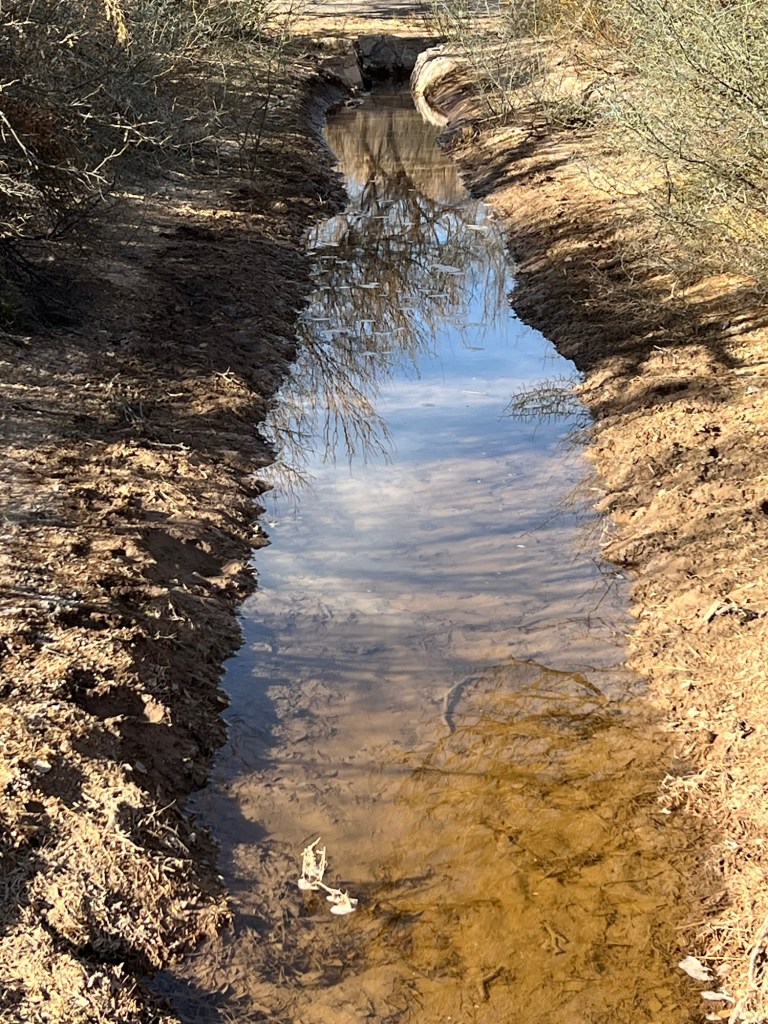
In a desert, water is key.

 On the Roam Again