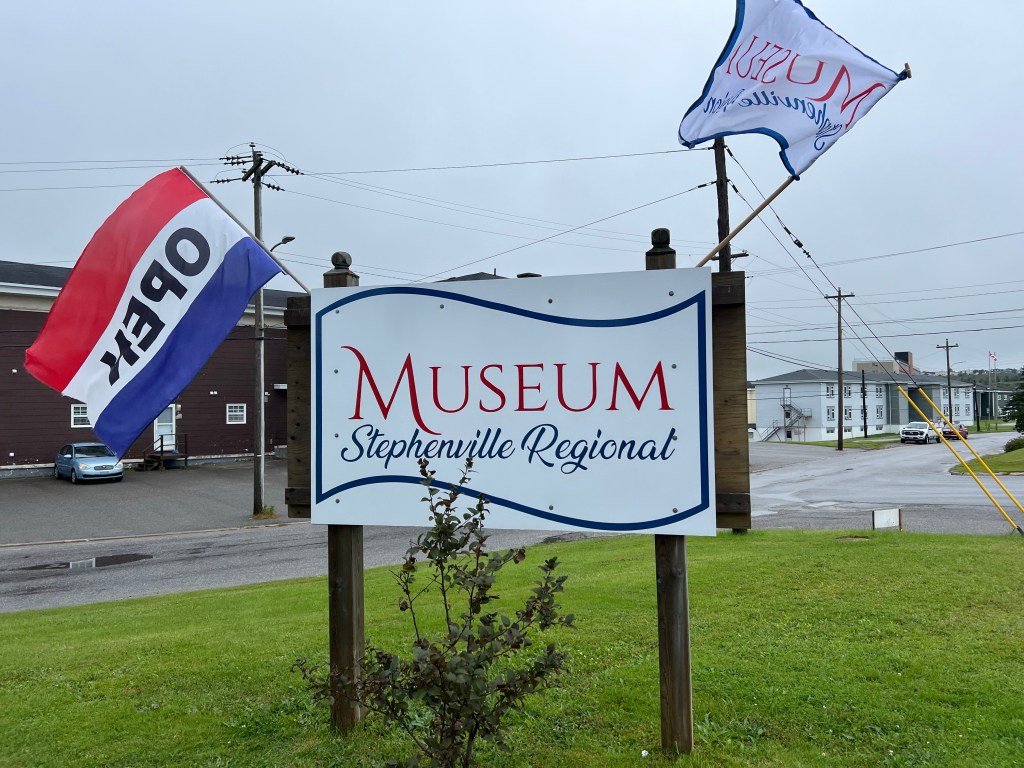
While Matey was getting groomed yesterday Bud and I went to the Stephenville Regional Museum.
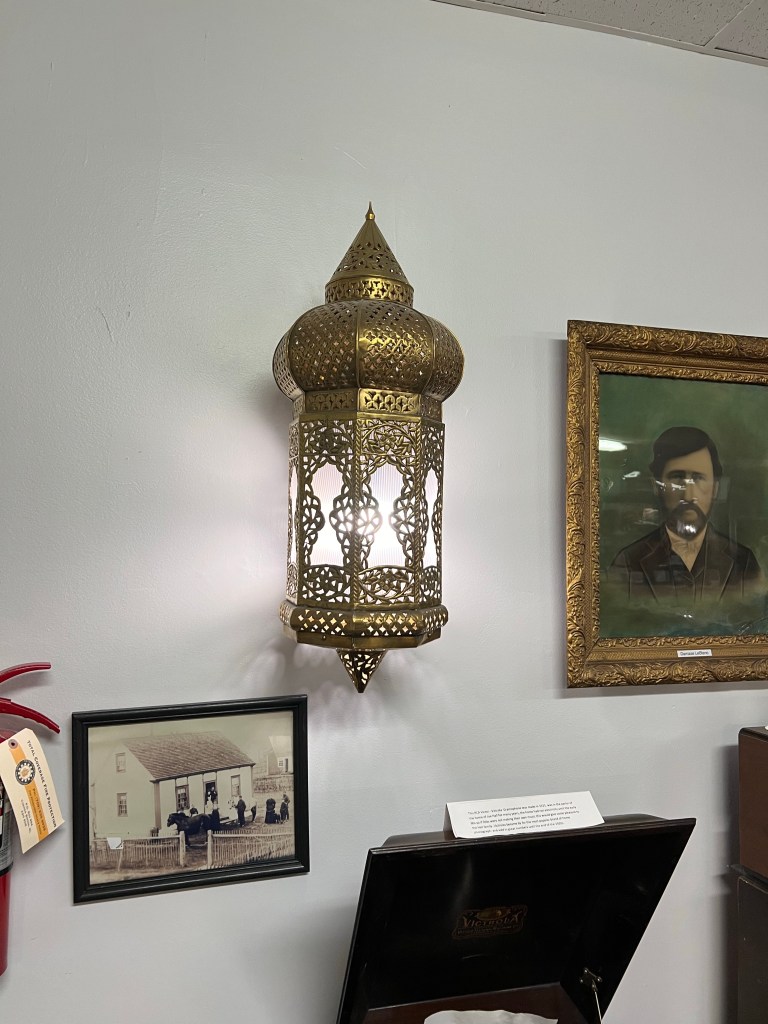
This is the only picture I took of the displays; this is a Moroccan brass sconce, one of several lighting the room, which had once been the officers club at the U.S Air Force base. More on that later.
The reason I didn’t take more pictures is that we spent our hour plus at the museum talking to the two young men working as docents. Both were from Stephenville and both were in college.
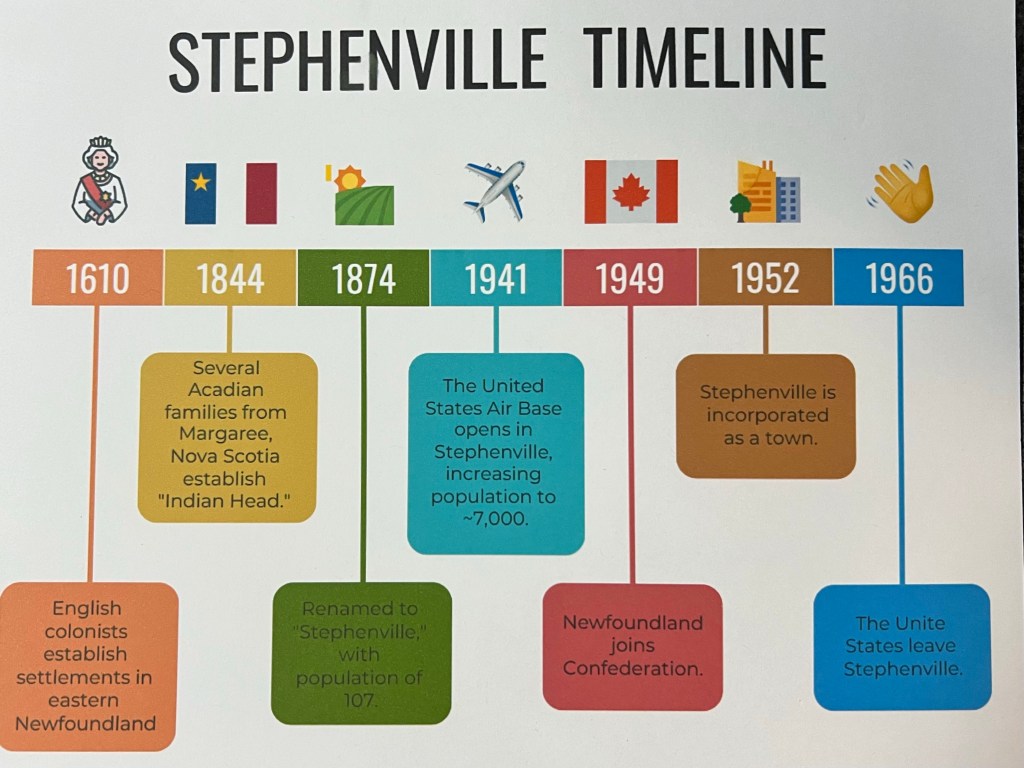
They had this timeline prepared, and I took a picture of that. I asked about the French ancestry, turns out they are both part or mostly French (and both had indigenous ancestors, too). The name Stephenville was in honor of the first son born to a French settler here, Stephen Gallant. One of the young men was a descendant of the Gallants. Pretty much all the information that follows came from our conversation.
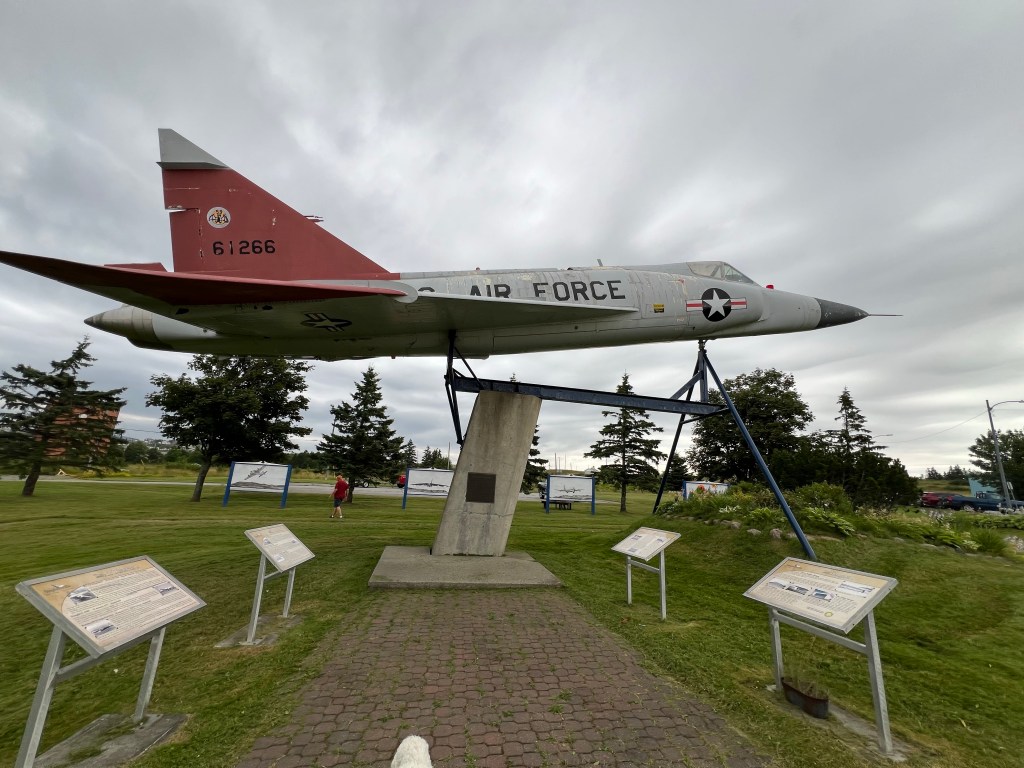
The US Air Force Base that was here from 1941 until 1966 had a profound influence on the town. There are reminders all over town, including this jet. In 1941 Britain desperately needed ships to protect her borders and shipping lanes. The US provided 11 destroyers in exchange for the use of land in Commonwealth countries for military bases. There were actually four bases established in Newfoundland because of its proximity to Europe. The airbase here, one in Gander, a Naval base in Argentia and an army air and coastal defense base in St. John’s.
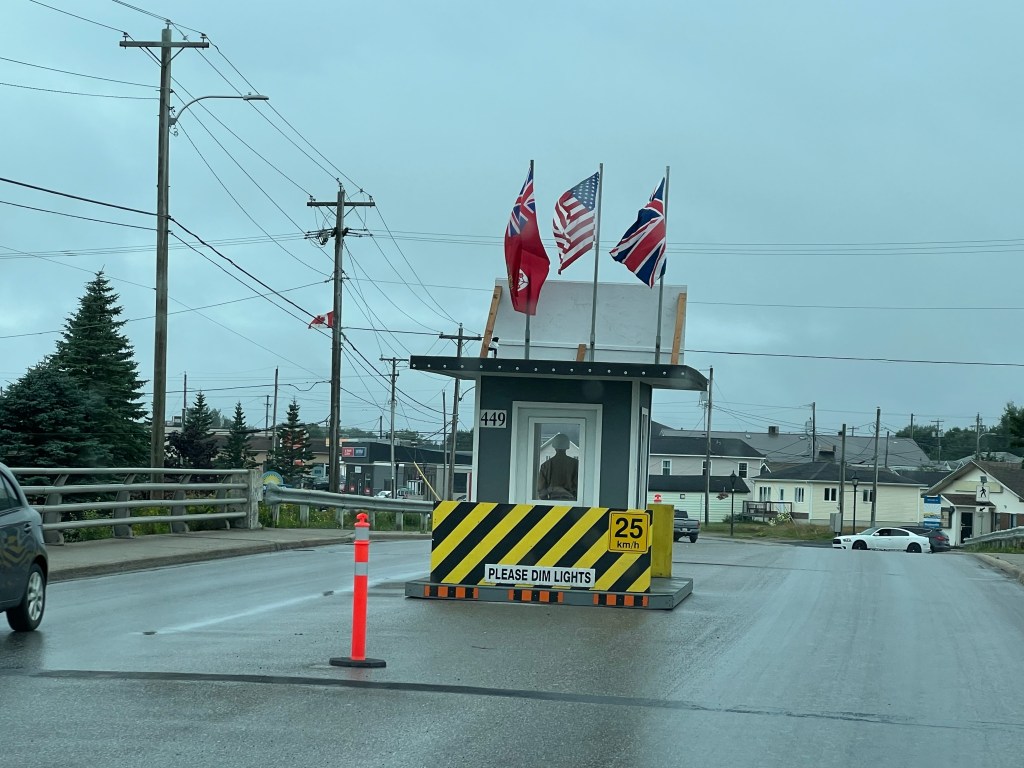
This gave us pause the first time we passed it; yes it’s the gate to the base, but that’s just a mannequin inside.
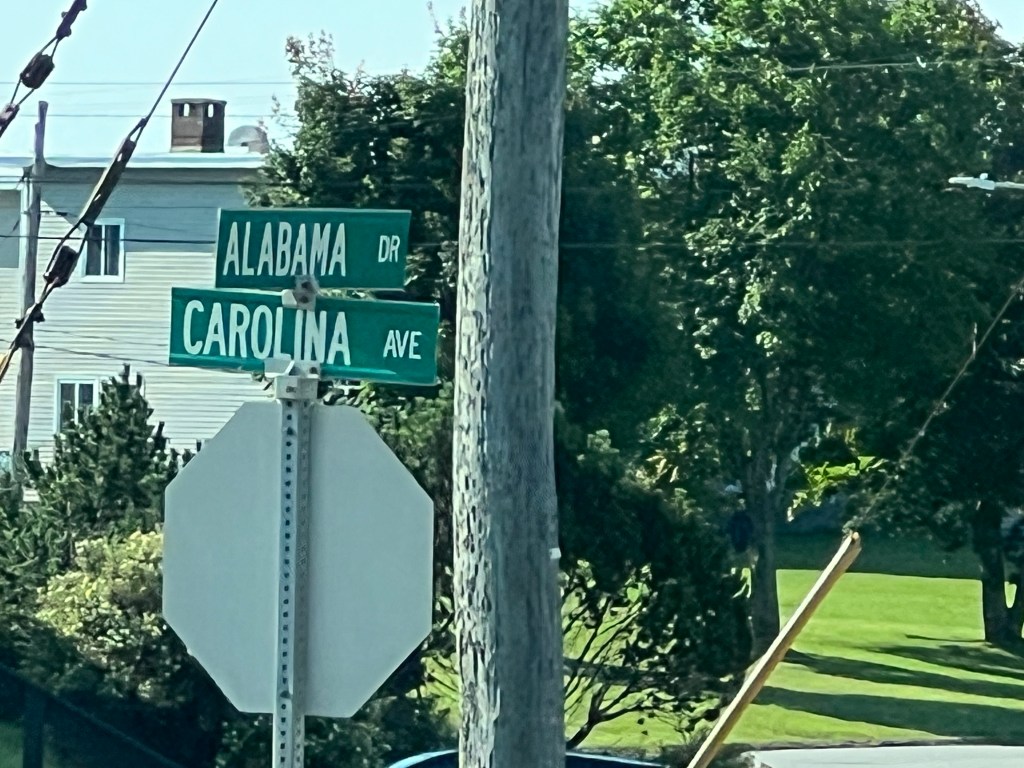
Inside the 8,159 acres of the base (the largest under the lend-lease agreement) all the streets were, and still are, named for states.
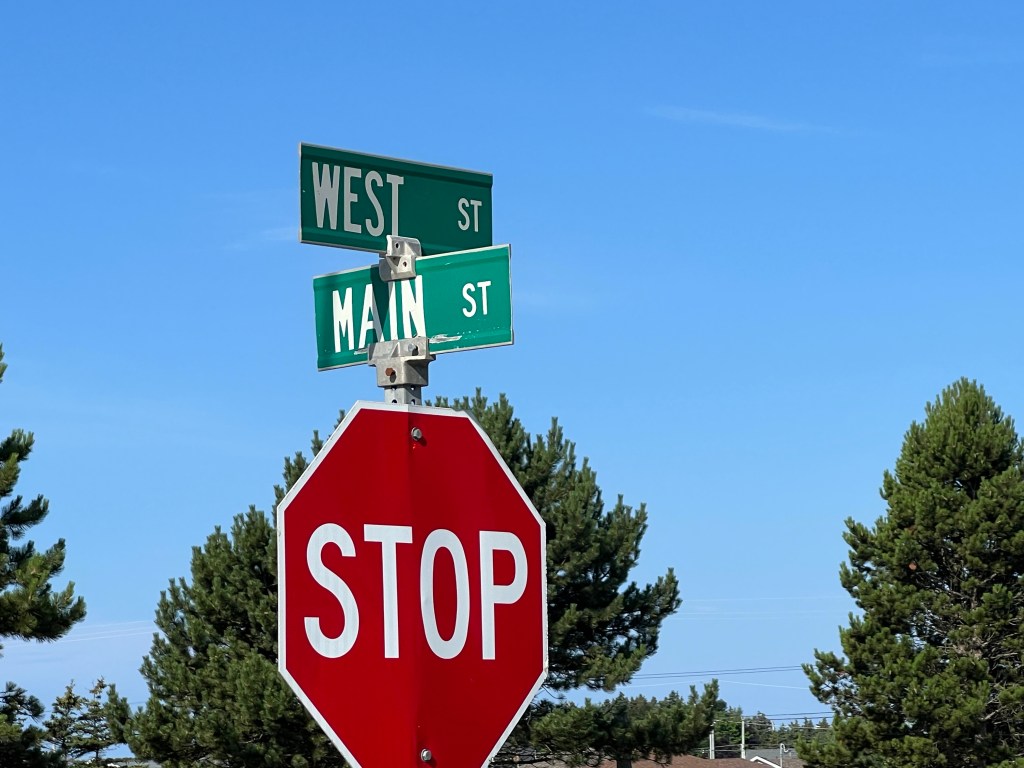
Main Street becomes Carolina Avenue once you pass the old gate.
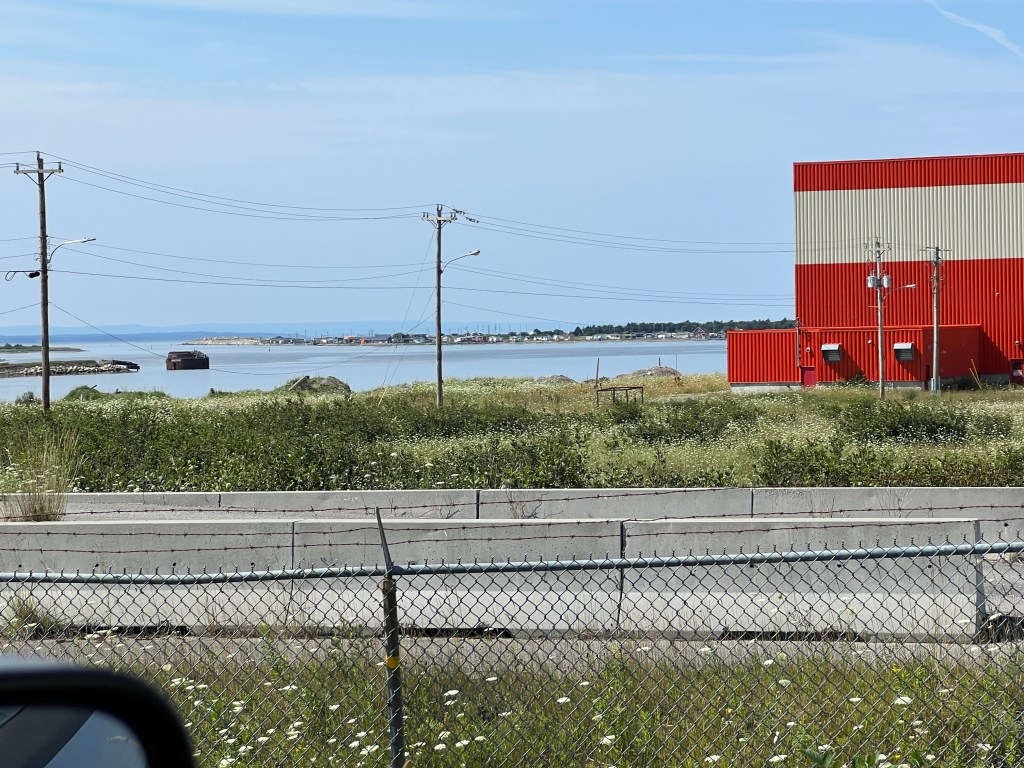
The body of water here was a freshwater pond. It was dredged for material to build up the airfield and the base. Then an opening was blasted to create a deep water port, Port Harmon.
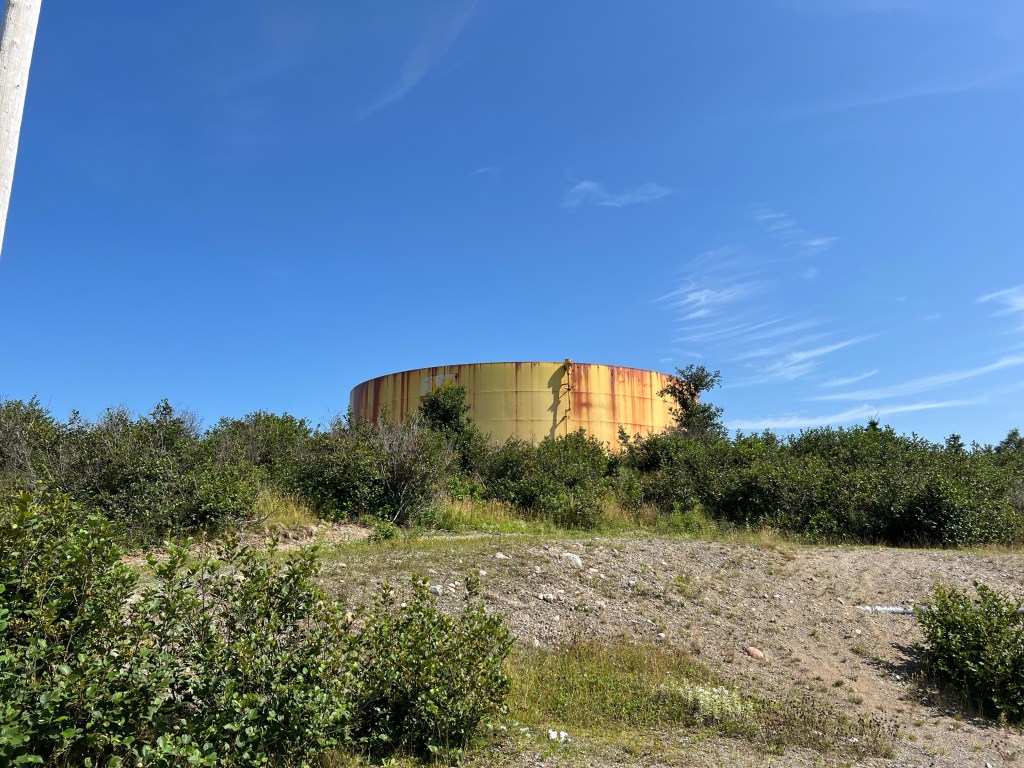
Because of its location and excellent flying conditions this became a stopover and a refueling site. The port allowed mass importation of jet fuel. Tanks like this are scattered around the port.
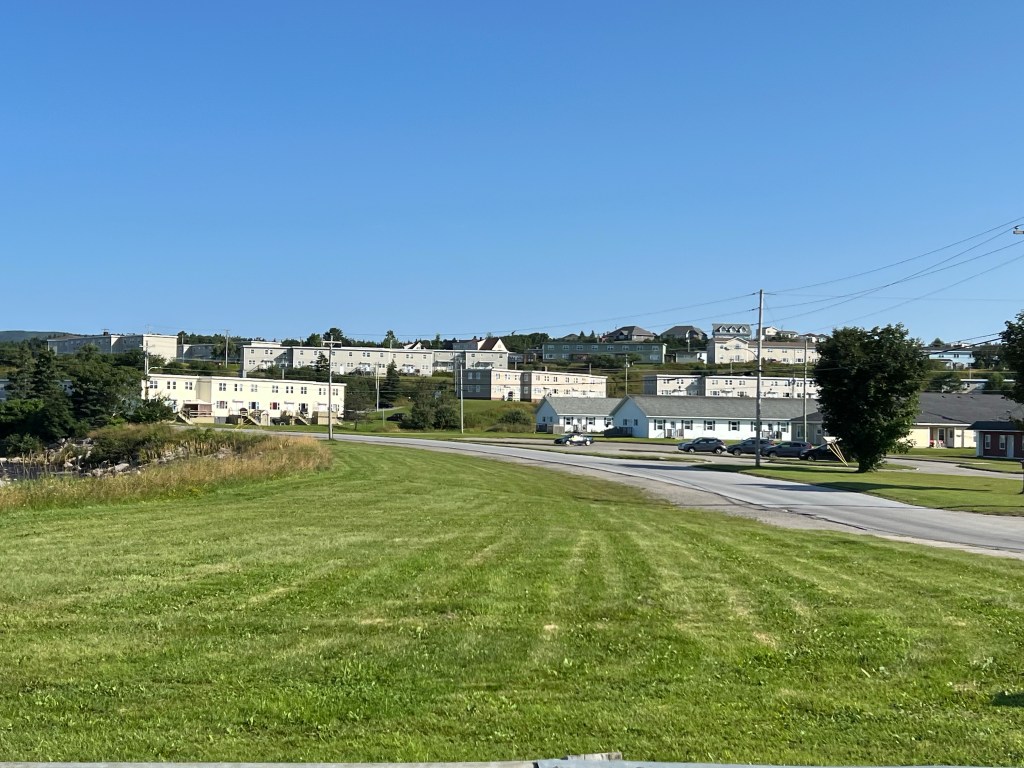
At its peak there were over 4,000 troops stationed here,
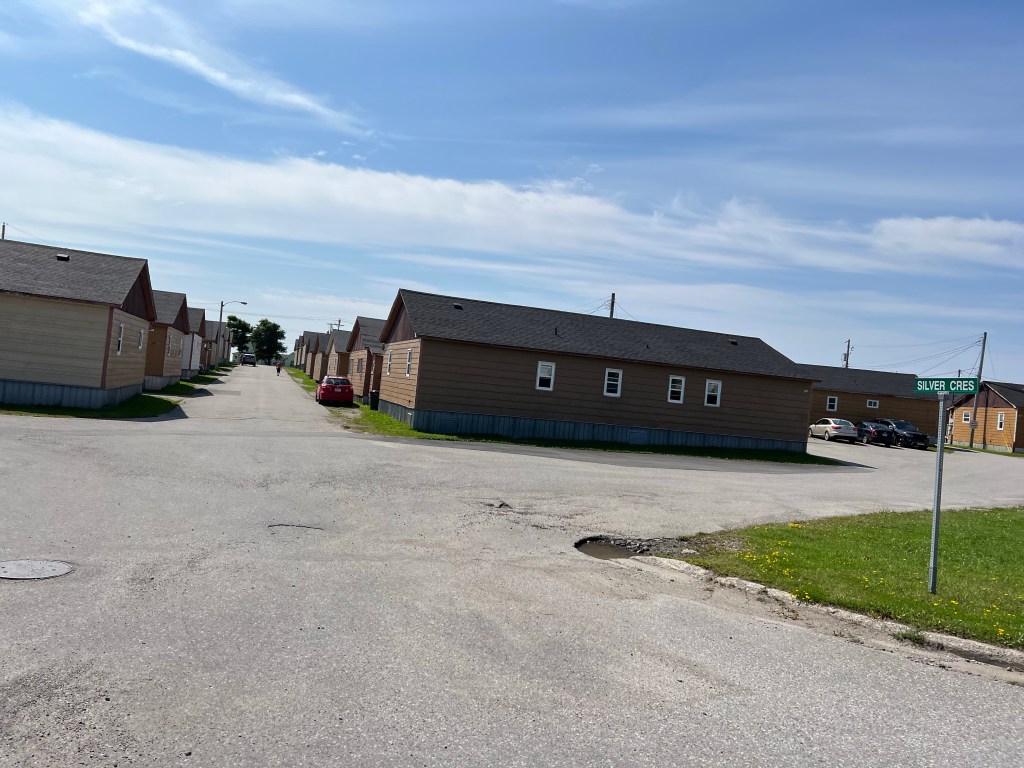
and barracks still dot the landscape.
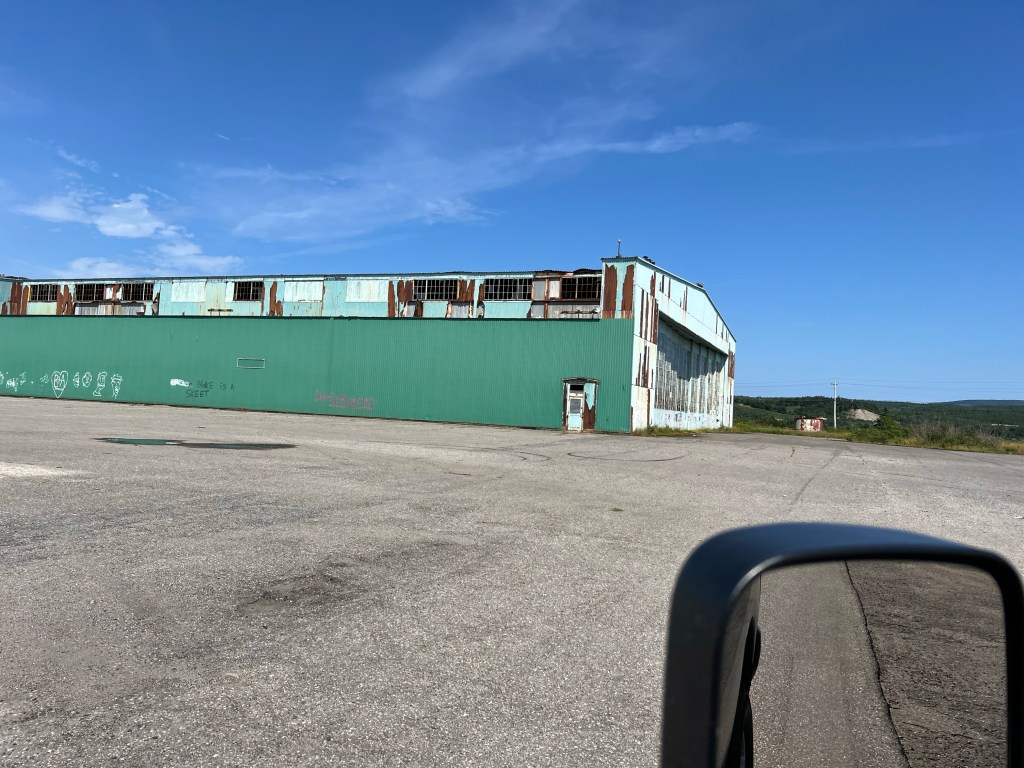
Some of the old hangars sit abandoned,
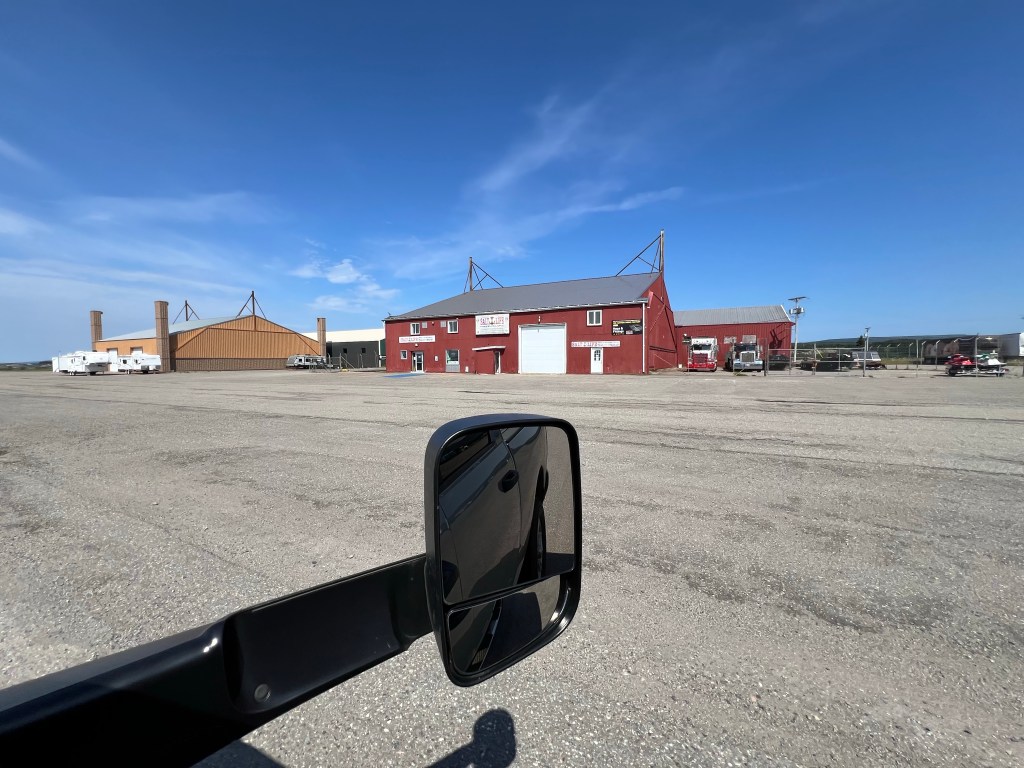
but many of them are still in use.
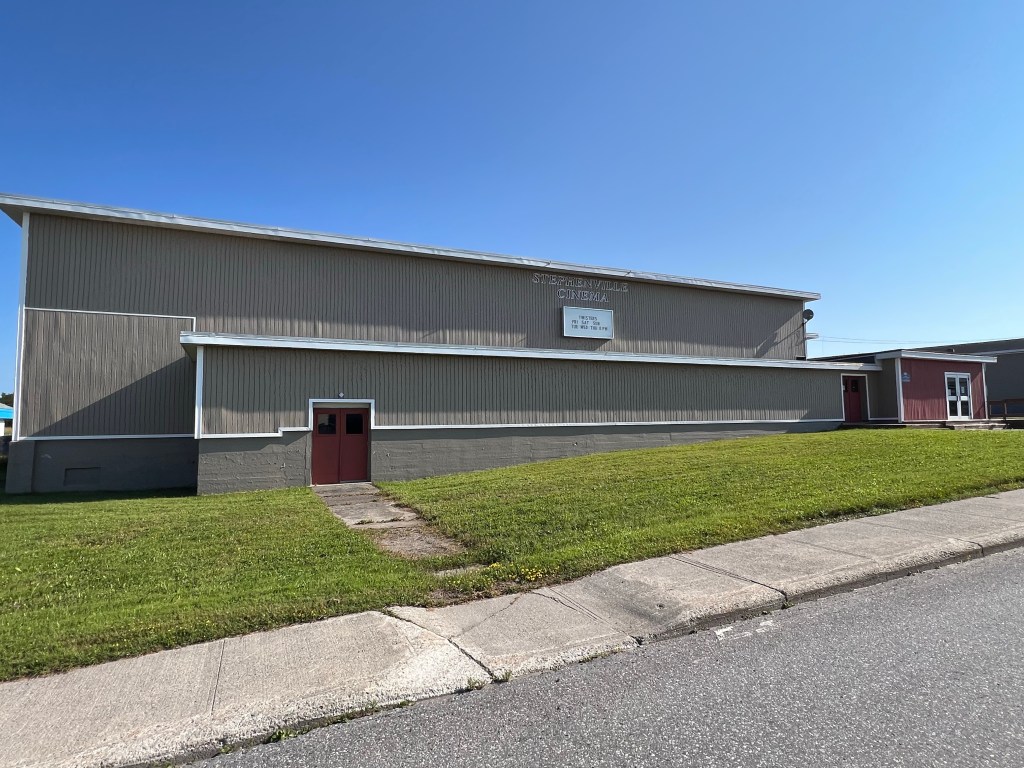
Even the base theater is still the town’s cinema.
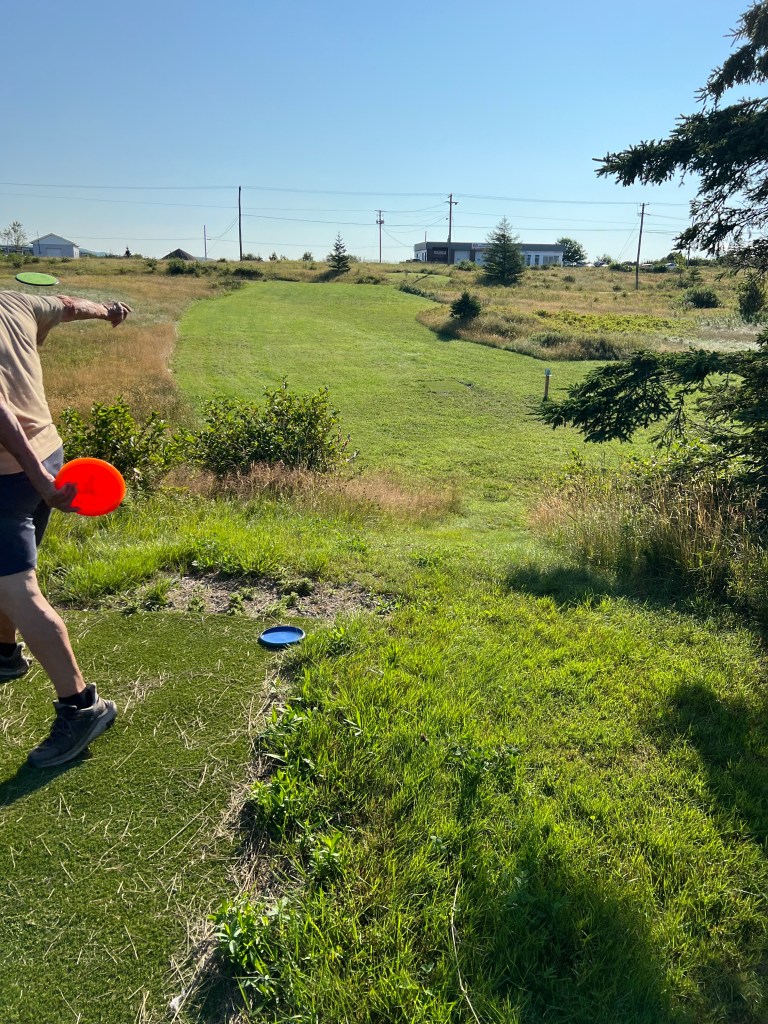
Our favorite disc golf course is made on the old base.
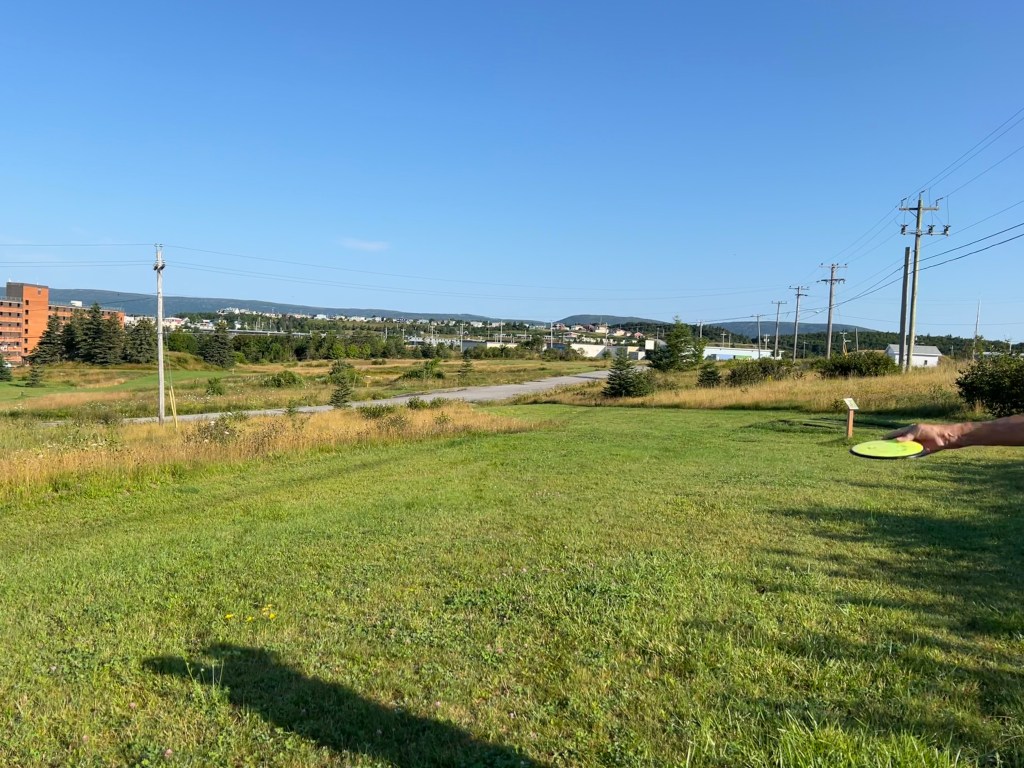
The road that crosses this fairway is no longer used.
After the base closed a paper mill came to repurpose the port and facilities. Unfortunately, they made newsprint and when the demand for that plummeted they closed.
We asked what the current industry was. Our docents looked at each other and said, “None.”
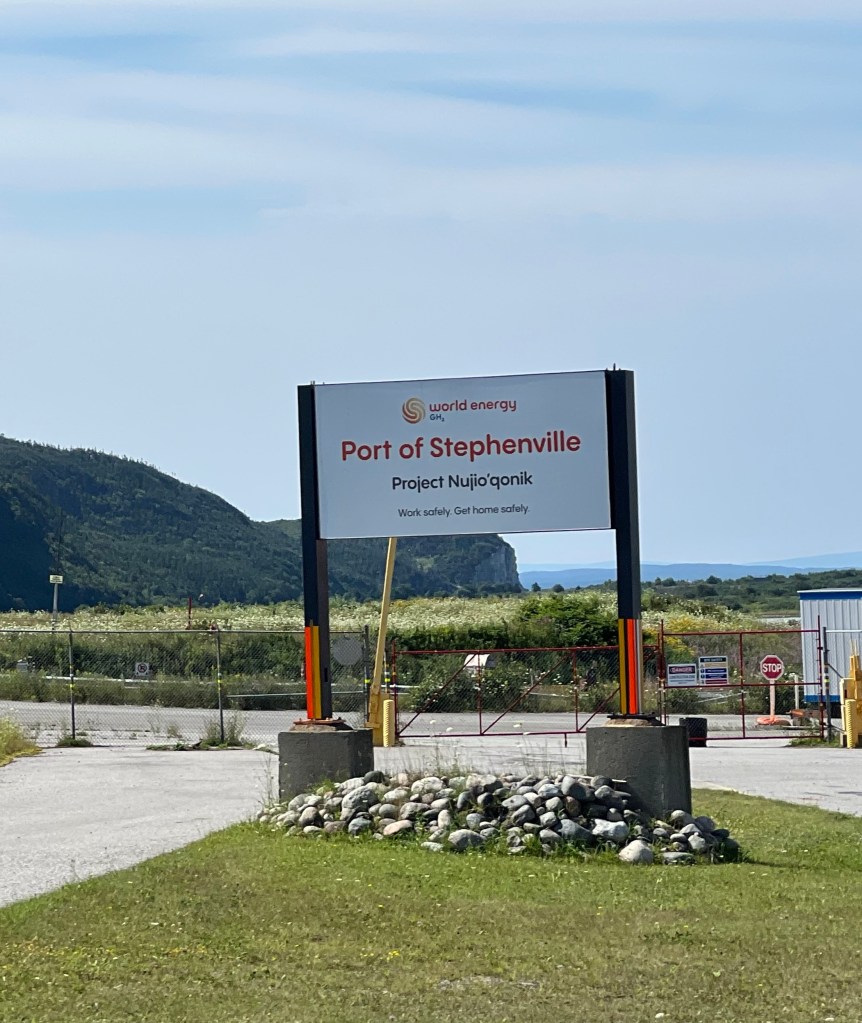
But they were quick to point out a project that has begun to put wind turbines out on Port au Port Peninsula and use that power to make hydrogen and ammonia. They will build their plants on the brown fields left by the paper mill and use Port Harmon to ship their product worldwide.
Our docents were optimistic about a future built on green energy with the input and consideration of the locals, including the indigenous community.
One of our docents was working on a degree in chemistry and math, the other had a master’s in philosophy, but was now taking accounting. They seemed to have the new project in mind.

 On the Roam Again
Very interesting! I had no idea we ever had an airbase in NF! My favorite scenery is what shows in the background of your last picture – the “Port of Stephenville” sign.
LikeLike
We tried to get up there but the only roads were for ATV’s. I can understand why everyone has a “bike” here! There’s so much of the island that’s off-road.
LikeLike